
We have a generally pro-Quebec stance; however, these annual meltdowns because Some Anglo Said Something Mean About Quebec are getting really tiresome. Somehow this province has managed to prove itself to be even more thin-skinned than Alberta — yes, we said it. Quebec is more reactive than the province that last week suffered a fit over an unflattering children’s cartoon.
And for some reason, the rest of Canada continues to treat these tantrums as if they are very weighty and serious matters meriting news coverage and discussion by very weighty and serious people. Canada’s indulgence of Quebec’s inability to tolerate pointed criticism is probably why the province gets away with passing racist legislation like Bill 21. And no one — least of all politicians — dare say boo because they’re all too eager to win seats in a populous province perpetually in play.
Attaran’s tweets wouldn’t even be worth our lowly mention, except that they prompted response from Justin Trudeau himself, who responded by saying: “Enough of the Quebec bashing.” That’s right, what we have here is Prime Minister Brownface condemning the tweets of an Iranian-Canadian professor who called Quebec racist by declaring such comments “Quebec bashing.” People, we are down the rabbit hole.
Earlier in this dispatch, we called Attaran a bit of a dumbass, and maybe some of you found that assessment a bit harsh. Others, perhaps not. We leave ourselves open to be capably judged by you, our dear readers. But we must ask this: What kind of dumbass do you have to be to make a figure like Amir Attaran into a national hero on free speech grounds? Good lord.
“Dispatch from The Front Line: Doing the Code Dance”, The Line, 2021-03-26.
July 2, 2021
July 1, 2021
Woodrow Wilson, Isolationism, and the Birth of the Charleston | B2W:ZEITGEIST! I E.20 Harvest 1923
TimeGhost History
Published 30 Jun 2021Wilson won the Nobel Peace Prize for crafting the League of Nations at Versailles, but even he couldn’t bring America out of its isolationism. This season he pours out his disappointment in his first-ever radio address. Optimism still reigns in the world of popular culture though, this season the Charleston is born.
(more…)
June 30, 2021
Questions the dying media daren’t ask Biden
Kurt Schlichter offers a few questions that an American media with any credibility would already have been asking after Biden’s ramble about F-15 aircraft and nuclear weapons:
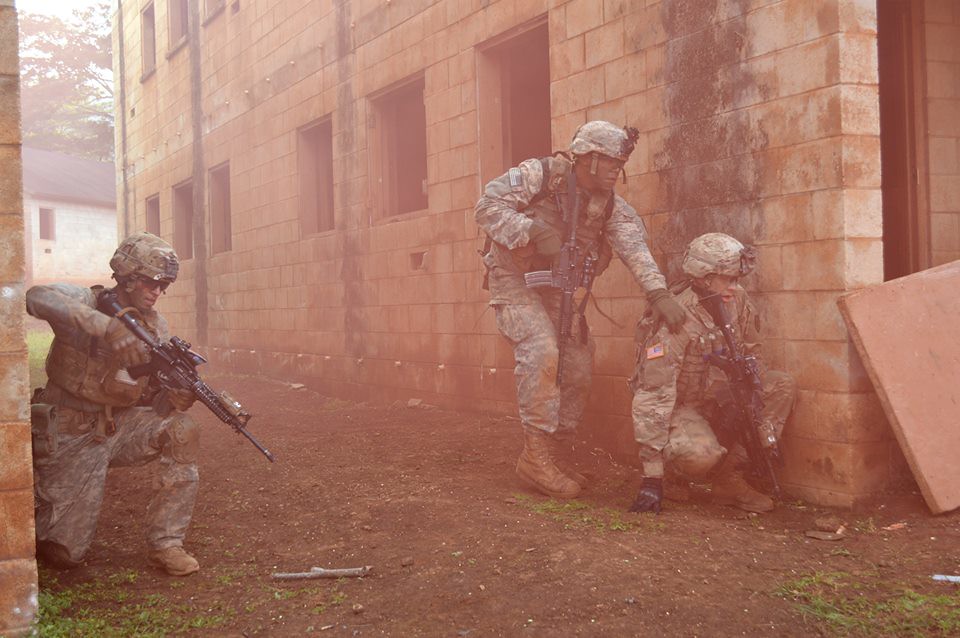
“2-35 Infantry Battalion, 3rd Brigade Combat Team, 25th Infantry Division” by The U.S. Army is licensed under CC BY 2.0

“Are you saying that you would use bombers like F-15s against Americans? Would you ever use nuclear weapons against Americans?”
That seems like an important coule of threshold queries. Say “No” and you look like a fool. Say “Yes” and you’re a fool and a psycho.
“Mr. President, since using force against American citizens is on the table, can you tell us how many BCTs the American military has currently deployable within the United States? Do you know how many troops are in a brigade combat team? Do you understand the logistical needs of a BCT and its vulnerabilities in an insurgency environment?”
A “BCT” is a brigade combat team, 4,000-5,000 troops and the basic ground combat unit. Now, if you are going to pick a fight with 165 million Americans, specifically the half who like America and who own a whole bunch of those accursed AR-15s, you might wanna know how many dudes you have on your side first (I estimate about 80 active and reserve BCTs and equivalents in the whole active and reserve force, including the Marines). One might also want to understand why you would have problems using them here at home.
“How many BCTs do you think you would need to secure an urban area the size of Los Angeles. Didn’t it take three divisions, about 12 brigades, to secure it during the Riots? How long could you logistically support that?”
It did take three divisions (approximately 12 BCTs) to quell the riot in LA in 1992. I was there. Now, that was largely idiots burning and looting. What if the next time it is guys shooting back with evil AR-15s? And America is a zillion times bigger than Los Angeles. How do you hold all that ground? You don’t.
“Have your generals staffed exactly how many American military personnel they could count on to attack American citizens if you ordered it? What percentage do you believe would comply and why?”
Oh, awkward. I was informed – by them, the geniuses in the Pentagon – that “extremists in the ranks” are our gravest threat (except for the weather, of course), so I assume they will have analyzed the number of “extremists” in the ranks who would be averse to killing their own friends and family at the behest of coastal elitists and who would desert or go full Niedermeyer on the guys urging them to wage war on the American people. This would be a good number to have as a planning factor, since when 50% of his troops go *poof* overnight, it would mean a significant reduction in the *’s combat power.
“You mentioned F-15s. How many bombers of all types does the United States have deployable within the continental US? How many are operational? How many sorties could the military fly a day against American citizens? Can you explain how you would employ bombers to hold territory, like a city?”
Bombers are nice. But if they were decisive, you could walk around Kabul without a dozen guys with AKs keeping your Schumer safe. We bombed Afghanistan back into the Stone Age – albeit, it was not much of a trip, but the point remains. You control dirt by having a guy with a rifle standing on it, not plinking at targets from 30,000 feet. And speaking of targeting …
“We’re having a heat wave/A tropical heat wave …”
Jay Currie is apparently melting in the heat somewhere out on the left coast of Canada:
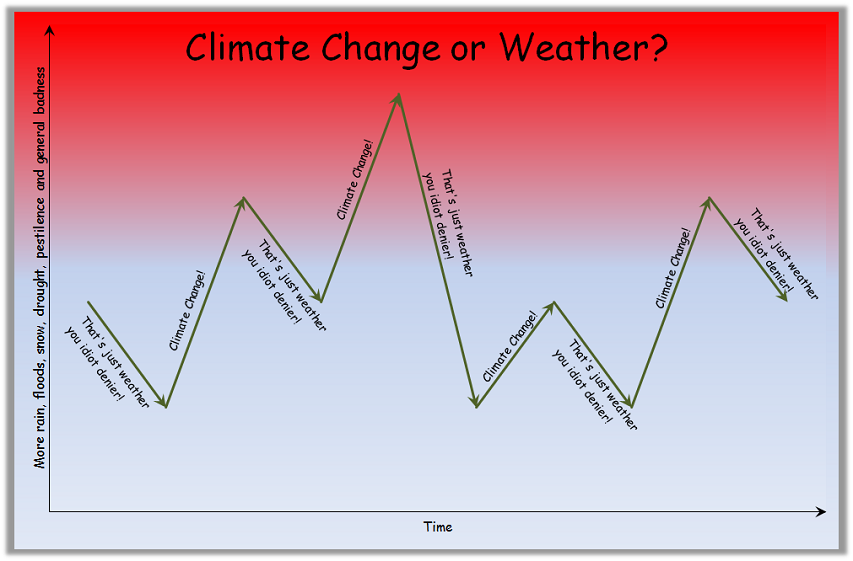
As my readers know I live on Vancouver Island right by the ocean. Normally, it is too cool to be comfortable having the evening g&t on the deck. Well, yesterday and today and very possibly tomorrow it will be way too hot.
The thing about heat waves is that they bring out the climatistas ready to ascribe weather to climate change. On #bcpoli Twitter it is a dead heat between the unscientific “I will wear a mask until there is no COVID anywhere on Earth” people and the people who insist that the present heat wave “proves” global warming. Well it doesn’t.
What we are in the grips of is a jet stream excursion. A big loop of hot air is sitting on top of us. It is practically the definition of “weather”. Three weeks ago Victoria set an all time record for coldest June day in the middle of a series of anomalously cold days. This too was “weather”.
The warmists are not deterred. “Well, over all the ‘weather’ is getting hotter because of climate change.” “The jet stream is behaving eccentrically because the Arctic is getting warmer and that’s climate change.” And then they add their policy prescription d’jour – Save Old Growth, Raise the carbon tax, Stop LNG exports and so on.
The brutal narcissism of the climate crusaders is touching. The problem and its solution are all about them. Other than the Pacific North West, the rest of the world is normal to cold. The Eastern US has been wet and cool, South America is freezing, Australia and New Zealand are experiencing an early ferociously cold winter, summer snow is falling in Scandinavia. The fact the major factor in the northern and jet stream’s preignitions is the level of solar activity is borne out by the general coolness of 2021. Guess what, the Sun is very quiet at the moment which is historically linked to cooling rather than warming.
But, for fun, let’s propose that the climate change fanatics are right and there is a direct link between CO2 and the present heat wave – not one of their favoured solutions will make the slightest difference. We could all walk to hug the trees and it would not matter.
Here’s why […]
June 28, 2021
Warren’s terminal law of progress
David Warren considers the sudden rash of “revelations” about UFOs we’re getting in the dying media:
Yeah, I know: wrong UFO
This is a demonstration of Warren’s terminal law of progress. As it extends towards “infinity”, all technical progress becomes terminally boring. This also applies to more modest attainments. A civilization that has merely made itself comfortable, and remained so for too long, must find a pretext to demolish itself. Antifa, Black Lives Matter, and the various more advanced “human rights” campaigns, simply expand in a vacuum of irreparable ennui. Their revolutionary demands can only be answered with wilful destruction — until the offending society is erased.
It follows that everything on this planet, made with human hands, however beautifully, must eventually come to a bad end, even though the majority of its inhabitants have good intentions, and are simply trying to get on with their lives, and would if the aggressive would leave them alone.
For instance, the Portland, Oregon police estimate it took only 200 insurrectionists to turn that city into a revolutionary hell-hole.
Perhaps our alien visitors came to discover the secret of our self-destruction. Or they were bored with the place they came from, but decided to leave before they were tempted to destroy it.
June 24, 2021
“[M]any of the woke genuinely do not understand why anyone finds their politics, or their political tactics, threatening”
In The Line, Joseph Heath tries to explain why many adherents of the wokist ideology fail to understand why anyone could possibly be against their policies or their tactics:
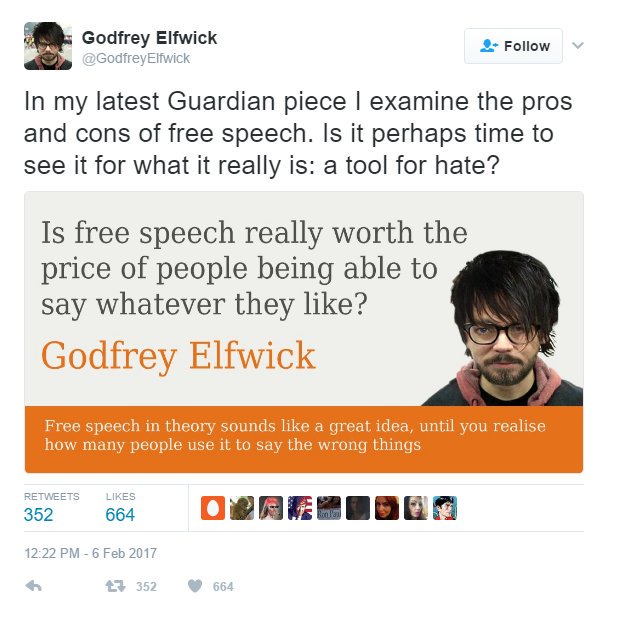
Godfrey Elfwick’s disturbingly accurate summary of free speech support among the woke.
After several years of creeping illiberalism under the guise of progressive politics, American liberals are finally getting their act together. They are pushing back, creating several organizations committed to combating the influence of “woke” politics and ideology. They have momentum, not just because many woke mantras like “defund the police” have proven spectacularly unpopular, but also because there is genuine growing alarm about the intolerant and authoritarian brand of politics that has become associated with the woke left.
Unfortunately, many of the woke genuinely do not understand why anyone finds their politics, or their political tactics, threatening. In particular, the accusation that they are being authoritarian, or that “cancel culture” is a threat to freedom of expression, is one that they are simply unable to process.
There is a reason for this — and one that’s worth understanding. There are several key phrases that play an enormously important role in woke politics (e.g. “safety”, “mental health”, “microaggression”, “bullying” and even “human rights”) which they use to deflect the accusation of authoritarianism. If you adopt the right words, it’s easier to convince yourself that you’re the good guys even as you’re acting like the bad ones.
I want to take a shot at explaining how this works.
The most important thing to understand about woke politics is that it is not a conventional form of illiberalism, it is better thought of as a type of “illiberal liberalism”. It involves making a set of political demands that are fundamentally illiberal, but then articulating them in a way that fits the conventional structure of liberal political discourse. Because of the way that their complaints are packaged, the woke are able to brush off criticism of their tactics.
Take an issue like freedom of speech. There are various versions of this traditionally liberal virtue; predominant among them, is that those who hold this belief are opposed to content-based restrictions on speech. In the old days, lots of politicians didn’t really believe in freedom of speech, as many among the ruling class maintained straightforwardly illiberal views.
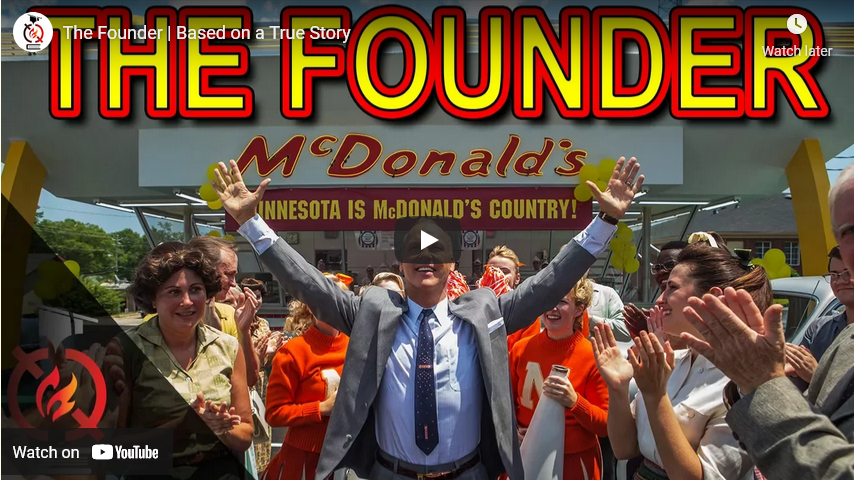
The Founder | Based on a True Story
The Cynical Historian
Published 27 Jul 2017This one is a contender for best historical film of 2016. The Founder is an amazing movie about the beginning of the McDonald’s food chain. Seriously, more films should take cues from this.
————————————————————
references:
http://www.historyvshollywood.com/ree…http://time.com/money/4602541/the-fou…
http://content.time.com/time/magazine…
https://www.bustle.com/p/how-accurate…
https://www.washingtonpost.com/entert…
https://www.theatlantic.com/entertain…
https://www.nytimes.com/2016/05/20/bu…
http://www.abc.net.au/news/2016-11-24…
http://www.cbsnews.com/news/the-real-…
https://en.wikipedia.org/wiki/Ray_Kroc
https://en.wikipedia.org/wiki/Richard…
————————————————————
contribute to my Patreon:
https://www.patreon.com/CynicalHistorianLET’S CONNECT:
https://twitter.com/Cynical_History
————————————————————
Wiki:
The Founder is a 2016 American biographical drama film directed by John Lee Hancock and written by Robert Siegel. The film stars Michael Keaton as businessman Ray Kroc, and portrays the story of his creation of the McDonald’s fast food chain. Nick Offerman and John Carroll Lynch co-star as McDonald’s founders Richard and Maurice McDonald.The film premiered at Arclight Hollywood on December 7, 2016 and was released in the United States on January 20, 2017, by The Weinstein Company. It grossed $23 million worldwide and received generally positive reviews from critics, with praise for Keaton’s performance.
————————————————————
Hashtags: #History #TheFounder #McDonalds #Review #BasedOnATrueStory #RayKroc
June 21, 2021
“… the GOP needs an inflammatory issue to rile their racist base, and so this entire foofaraw is really just an astro-turfed, ginned-up partisan gambit about nothing”
An excerpt from Andrew Sullivan’s most recent Weekly Dish looks at the burgeoning fight over the use of Critical Race Theory in public schools:
The stories in the mainstream media this past week about the broadening campaign to ban critical race theory in public schools have been fascinating — and particularly in how they describe what CRT is. Here’s the Atlantic‘s benign summary of CRT: “recent reexaminations of the role that slavery and segregation have played in American history and the attempts to redress those historical offenses.” NBC News calls it the “academic study of racism’s pervasive impact.” NPR calls CRT: “teaching about the effects of racism.” The New York Times calls it, with a straight face, “classroom discussion of race, racism” and goes on to describe it as a “framework used to look at how racism is woven into seemingly neutral laws and institutions.”
How on earth could merely teaching students about the history of racism and its pervasiveness in the United States provoke such a fuss? No wonder Charles Blow is mystified. But don’t worry. The MSM have a ready explanation: the GOP needs an inflammatory issue to rile their racist base, and so this entire foofaraw is really just an astro-turfed, ginned-up partisan gambit about nothing. The MSM get particular pleasure in ridiculing parents who use the term “critical race theory” as shorthand for things that just, well, make them uncomfortable — when the parents obviously have no idea what CRT really is.
When pushed to describe it themselves, elite journalists refer to the legal theories Derrick Bell came up with, in the 1970s — obscure, esoteric and nothing really to do with high-school teaching. “If your kid is learning CRT, your kid is in law/grad school,” snarked one. Marc Lamont Hill even tried to pull off some strained references to Gramsci to prove his Marxian intellectual cred, and to condescend to his opponents.
This rubric achieves several things at once. It denies that there is anything really radical or new about CRT; it flatters the half-educated; it blames the controversy entirely on Republican opportunism; and it urges all fair-minded people to defend intellectual freedom and racial sensitivity against these ugly white supremacists.
What could be more convenient? NBC News “reporter”, Brandy Zadrozny, even decried parents’ attempts to discover through FOIA requests just what their children are being taught — and argued this week that, “for longtime ultra conservative activists, CRT is the opportunity of a lifetime.” CRT, she explains, is not a threat at all, and there is no proof that it is even being taught. It’s “just a catch-all term repurposed as a conservative boogeyman.” She goes on: “it harnesses pushback against 2020’s racial justice movement, covid denialism, and depends on a base still energized by Trump and misinformation, looking for political power.”
I’m sure the MSM will continue to push this narrative indefinitely. They are still insisting, after all, that “white supremacy” is behind hateful attacks on Asian-Americans, and that soaring murder rates are purely a function of Covid19. And you can see why: this dismissive take is extremely helpful in avoiding what is actually happening. It diverts attention from the stories and leaks and documents that keep popping up all over the place about extraordinary indoctrination sessions that have become mandatory for children as early as kindergarten.
June 20, 2021
L’Affaire Annamie Paul – “… it’s like every Liberal across the land forgot about politics”
The weekly wrap-up from The Line wonders why Canadian media outlets pay so much attention to the Green Party (far in excess of their political influence normally), but recent Green Party fratricidal bun-fighting merits attention just because of the injured bystander, the Prime Minister of the current year:
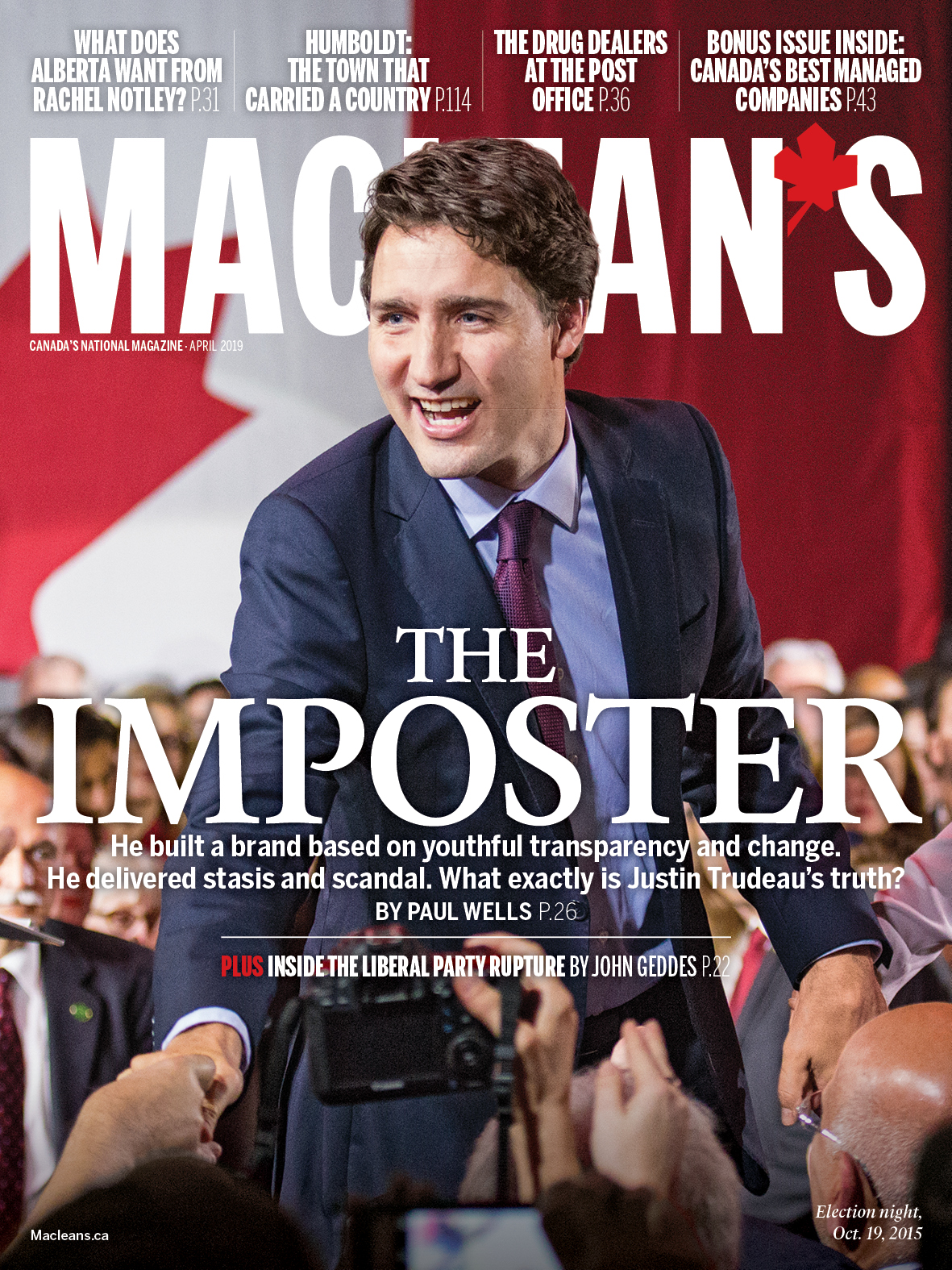
The background of all of this is complicated, and we’re not going to bother recapping it. If you care enough about Canadian politics to follow the Greens, you know it all already. What’s interesting to us — and funny as all hell — is how angry the PM’s die-hard fanbase was, how shocked and sincerely surprised they were, when Paul turned her guns on the PM instead of her own rebelling party executives and grassroots:
“To the prime minister, Justin Trudeau,” Paul said at a press conference, “I say to you today, you are no ally. And you are no feminist. Your deeds and your words over these past weeks prove that definitively. A real ally and feminist doesn’t end their commitment to those principles whenever they come up against their personal ambition.”
And, gosh. Liberals everywhere were just stunned.
It was cute. As we said, it’s like every Liberal across the land forgot about politics. And that’s ridiculous. Canadian Liberals are the most ruthlessly effective vote winners precisely because they are relentlessly amoral and craven. We don’t even mean this as an insult! Your typical Canadian Liberal constitutes the purest sample of raw partisanship known to human science — which is why they’re so good at winning.
And that’s why they should have instantly understood what Paul was doing when she attacked the PM. She was picking a fight she could win because she’s losing the one she’s actually facing. Paul is a black woman. She’s Jewish. She’s obviously lost control of her own party. The only chance in hell she has of surviving is to lay every possible identity group card down on the table, declare herself the champion of those oppressed groups, and then dare her own party to purge her. She’s adopting the mantle of the WOC woke champion. It’s a lot easier for Paul to fight that battle against the PM than it is for her to fight it against her own party.
As much as Liberals hate to admit it — and they really, really, really hate to admit it — the PM is vulnerable to accusations of hypocrisy on the feminism and racial equality files. Obviously.
Paul is desperate. She’s in a fight for her political life, and she seems to be losing. So she’s picked a fight with a powerful white man to play up her own “voice of the oppressed” credentials. It’s cynical and desperate. Frankly, the Liberals ought to be honoured. What’s that they say about imitation and flattery?
Is racism a bigger problem than terrorism?
With Americans being urged to report on “radicalized” friends and family by the government and white supremacy being called the greatest threat, have we reached the point that being seen as racist is worse than allowing a terrorist to kill many people? The inquiry into the Manchester Arena bombing shows that’s exactly the state most of the western world is in:
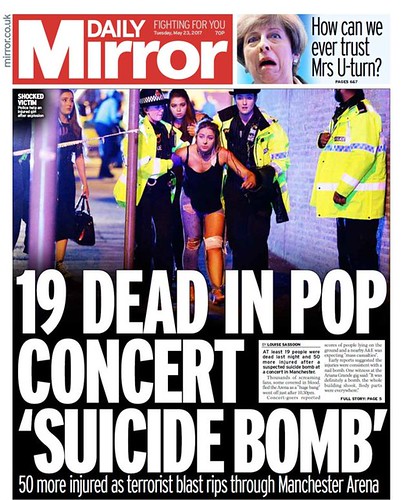
“Manchester Arena Bomb (22 May 2017) – Daily Mirror – 19 dead in pop concert ‘suicide bomb'” by Bradford Timeline is licensed under CC BY-NC 2.0

The independent inquiry into the Manchester Arena bombing of May 2017, in which 22 pop fans were killed by an Islamist extremist, has published the first volume of its report. It makes for chilling reading. The inquiry has found there were numerous “missed opportunities” to confront Salman Abedi, the bomber, and potentially stop him from detonating the device in his rucksack. Most chilling of all is the reason given by one of the key security guards on patrol that evening as to why he failed to question Abedi. He was worried, he said, that asking a brown-skinned man why he was hanging around the arena might be construed as racist.
Take that in. There was a very shifty-looking young man around the foyer and mezzanine of the Manchester Arena towards the end of an Ariana Grande concert, carrying a “bulging” rucksack so large he “struggled” under the weight of it, and a security guard was reluctant to confront him lest he be accused of racism. In the words of the report, this was a significant “missed opportunity”. The “inadequacy” of the security guard’s response to the presence of a highly suspicious individual was one of the many misjudgements made on that black, fateful night, the report says. Is it possible that the fear of being thought of as racist is screwing up everyday life, and even hindering sensible action in threatening situations?
To be clear, the security guard who was cagey about questioning Abedi is not responsible for the failure to stop Abedi from detonating his device. The first volume of the inquiry’s report – which covers security at and around the arena on the night of 22 May 2017 – criticises certain individuals, including the security guard, for not doing their jobs diligently enough. But it says that it was the organisations responsible for security at the arena – the arena’s own security firm and also the British Transport Police – that were “principally” to blame for the “missed opportunities”. It also makes the reasonable point that it is impossible to know what would have happened if Abedi had been confronted. It proposes that there may still have been loss of life – if, for example, he had detonated his device while being questioned – but that it would have been less severe than the horrors that shortly unfolded.
It is disturbing to read the list of “missed opportunities”. Abedi was in the arena for more than an hour and a half before he detonated his bomb. He arrived at 20.51 and blew himself up at 22.31, as the concert attendees started to leave. In that time, this young man with a massive rucksack was seen by numerous people. He was described by some of them as “nervous” and “fidgety”. He looked out of place – his age “meant that he did not fit the demographic of a parent waiting for a child”, as the inquiry says. And yet as a result of individual and organisational failure – including, the inquiry says, insufficient training of the security guards on duty that night – the message didn’t get through that there was a fidgeting, agitated man with a bulging rucksack hanging around for 90 minutes at the exit area of a venue that was largely packed with children and teenagers.
Remarkably, some people at the arena who saw Abedi thought to themselves that he was a suicide bomber. Christopher Wild and his partner, Julie Whitley, who were picking up Whitley’s daughter, discussed the possibility that Abedi had a bomb in his rucksack. Wild actually did confront Abedi and asked him what was in his bag. Abedi nervously brushed him off. Wild reported his concerns to security guards at 22.15 – 16 minutes before the explosion – but he was “fobbed off”. Another parent said the security guards were “really quite dismissive” of Wild’s concerns. It is deeply disturbing that parents at the arena rightly suspected Abedi was a bomber and yet nothing was done to challenge or remove him.
June 19, 2021
“Defence of Moscow” – Autumn 1941- Sabaton History 103
Sabaton History
Published 17 Jun 2021While it is legendary, there is a lot of confusion and a lot of myths about Operation Typhoon, the German drive on Moscow in the fall of 1941, and Operation Barbarossa, the invasion of the Soviet Union that summer. Today I talk about the first 5.5 months of Barbarossa, and then Joakim and I discuss covers and covers of covers.
Support Sabaton History on Patreon: https://www.patreon.com/sabatonhistory
Listen to “Defence Of Moscow”: https://music.sabaton.net/DefenceOfMo…
Watch the Official Music Video of “Defence Of Moscow” here: https://www.youtube.com/watch?v=i7K4v…
Listen to Sabaton on Spotify: http://smarturl.it/SabatonSpotify
Official Sabaton Merchandise Shop: http://bit.ly/SabatonOfficialShopHosted by: Indy Neidell
Written by: Markus Linke and Indy Neidell
Directed by: Astrid Deinhard and Wieke Kapteijns
Produced by: Pär Sundström, Astrid Deinhard and Spartacus Olsson
Creative Producer: Maria Kyhle
Executive Producers: Pär Sundström, Joakim Brodén, Tomas Sunmo, Indy Neidell, Astrid Deinhard, and Spartacus Olsson
Community Manager: Maria Kyhle
Post-Production Director: Wieke Kapteijns
Editor: Karolina Dołęga
Sound Editor: Marek Kaminski
Maps by: Eastory – https://www.youtube.com/c/eastory
Archive: Reuters/Screenocean – https://www.screenocean.comColorizations by:
– Mikołaj Uchmann
– Julius Jääskeläinen – https://www.facebook.com/JJcolorization/Sources:
– National Archives Nara
– Narodowe Archiwum Cyfrowe NARA
– Bundesarchiv
– New York Public Library
– Train tracks icon by Danishicon from the Noun Project
– Picture of singer Loona courtesy of Sandstein https://commons.wikimedia.org/wiki/Ca…
– Imperial War Museums: HU 75543, PST 4712
– Australian War MemorialAll music by: Sabaton
RADIO TAPOK – Битва за Москву (В стиле Sabaton / ИзиРок / – Defence Of Moscow)An OnLion Entertainment GmbH and Raging Beaver Publishing AB co-Production.
© Raging Beaver Publishing AB, 2021 – all rights reserved.

June 17, 2021
QotD: Declaring war on the Upper-Class Media
67% of US families watch the Super Bowl — what percent of New York Times editors and reporters do? 20% of Americans go to religious services weekly — how many of those work for the New York Times? How come 96% of political donations from journalists go to Democrats? Your job is to take a page from the Democratic playbook and insist there is no reason any of this could be true except systemic classism, that any other explanation is offensive, and it’s the upper-class media’s moral duty to do something about this immediately. Until they do so you are absolutely justified in ignoring them and trusting less bigoted and exclusionary sources (I hear Substack is pretty good!)
Insist that working-class people have the right to communicate with each other without interference from upper-class gatekeepers. Make sure people know every single fact about @Jack and what a completely ridiculous person he is, and point out that somehow this is the guy who decides what you’re allowed to communicate with your Twitter friends. Every time tech companies censor social media, even if they’re censoring left-wing views, call their CEOs in for long and annoying Congressional hearings where you use the words “Silicon Valley elites” a lot.
Scott Alexander, “A Modest Proposal For Republicans: Use The Word ‘Class'”, Astral Codex Ten, 2021-02-26.
June 14, 2021
Movies based on “classic literature”
Severian considers the relative glut of movies more-or-less based on the classics of literature from his formative years:
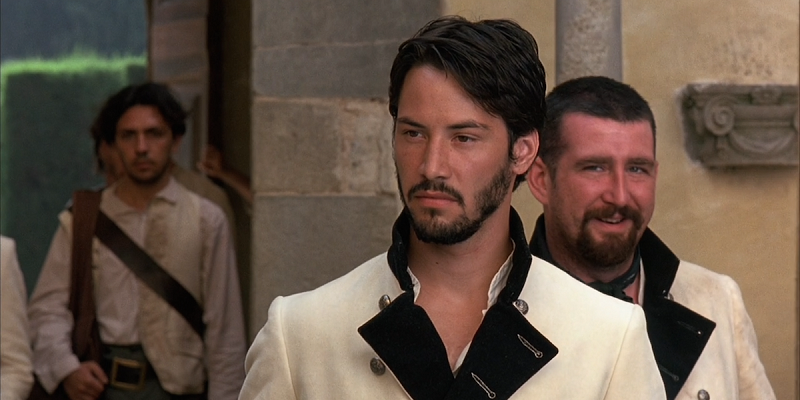
When I was a young buck, there was a fad for making movies out of “classic literature”. Scads of chick flicks, of course — Jane Austen’s complete works, the Brontës, and so on — but they also took a stab at Shakespeare. Mostly they stuck to the comedies — and trust me, watching Keanu Reeves trying to handle Much Ado About Nothing is hilarious, in all the wrong ways — but they’d occasionally give the tragedies a shot. Kenneth Branagh’s Hamlet is pretty good despite all the distracting cameos, his Othello is at least sincere (ye gods, imagine trying to make that today!), I think I’m forgetting a few. Mel Gibson gave Hamlet a go back in the early 1990s, and so on. Again, I’m pretty sure I’m forgetting a few.
It always struck me as odd. Unless they timed the theatrical releases to midterm and finals week, hoping to hoover up the dollars of desperate sophomores who didn’t do the homework, it didn’t make much sense, marketing-wise. We were a much more culturally literate people once, it’s true*, but there’s just not much of an audience for the Bard anymore. Nor was it a case of SJWs trying to destroy something good just on general principles. I’m sure Gwyneth Paltrow was bad as Emma, but the idea of retconning every single female in the Western Canon into a Strong, Confident Woman(TM) was still in its infancy. My only other guess was that, since college enrollments were skyrocketing, maybe the parents of all those first-gen college kids were feeling mal-educated and trying to catch up …? Lame, I know, but it was the best I could do.
Looking back on it now, I see my problem: I was looking at it from the demand side. Silly and naive as I was, I assumed that Hollywood’s primary concern was making money, so they went out and found what the people wanted to see, then gave it to them. For instance, I thought Titanic was going to be a huge flop. I mean, the boat sinks. We know that. How do you squeeze any dramatic tension out of it? I should’ve realized they’d be playing it as a doomed-lovers tragedy — girls love that shit, what with the big flouncy costumes and all. Once I realized that, I thought I had it all figured out — every girl I, personally, knew found the works of Jane Austen tedious, but that’s because (I reasoned) you have to supply the images for yourself. Put Hunky McBeef up there in breeches and a peruke, Waify Beecup in a Regency dress, and it’s chick crack …
Or so I thought. Looking back on it now, that’s as dumb as my opinion that Titanic would bomb. Hollywood doesn’t care what you want. I doubt if Hollywood has ever cared what you want, but if they ever did, that time probably ended in tandem with Clara Bow’s career. Hollywood wants what they want, and so will you, because whaddaya gonna do, not watch it? The reason they made all those “classic literature” films in the 1990s, then, wasn’t because they thought we wanted (or needed) some cultural uplift.
No, the reason was: By the 1990s, the last of the old guard in Hollywood was dying off, replaced by the new guard, the Baby Boomers. As we know, it’s not enough for Boomers to control everything while making a shitload of money. No no, for them everything has to be deep and meaningful. They thought of themselves as artistes, not entertainers, so they had to put out a bunch of highbrow stuff, and we had to watch it. This is the sole reason goofy-looking Kenneth Branagh and his horse-faced wife (at the time) were a big cultural force. They made Shakespeare sexy, by which I mean, they allowed the studio heads to think of themselves as the arbiters of culture, not the carny trash they were and are. That some decent movies got made because of it, is entirely incidental.**
*Last summer, during the worst of lockdown mania, I introduced my little nephews to Bugs Bunny. The real ones, from the 40s and 50s, not the crap they put out ten, twenty years ago. I am an educated man by modern standards, but a lot of that stuff flew over my head … and they used to show these in front of popular movies, on military bases, etc.! There’s the classic Wagner one, of course — kill da wabbit!! — but another one involves The Barber of Seville, which I haven’t seen performed and had to look up. Even the “throwaway” music was classical — they could assume, in other words, that your average workaday guy or GI had a fairly large repertoire of classical pieces in his head, enough to recognize bits from Strauss, Chopin, Schumann, etc.
**I do kinda regret bashing Sir Kenneth, as wiki tells me he now is. I enjoyed Hamlet (again, despite the annoying cameos), and some of his other work was pretty entertaining, even, in a limited way, visionary — a quirky little picture like Dead Again didn’t do much in 1991, but it would clean up now (a PoMo costume drama!). I’m one of the few people who liked Mary Shelley’s Frankenstein, which again despite terrible casting (Robert De Niro? Seriously?) was loads of fun. Shelley’s novel as written is ludicrous, therefore unfilmable, but Branagh admirably captured the spirit of it. It’s as Goth as can be, in the original sense of “Gothic”. Wonderful stuff.
June 13, 2021
Fundamentally unserious nation – “… for Canada’s leaders, all the world’s a ‘gram”
In the Friday wrap-up edition of The Line, a consideration of how shallow, insincere posturing, and performing became the hallmarks of Canadian government leadership:
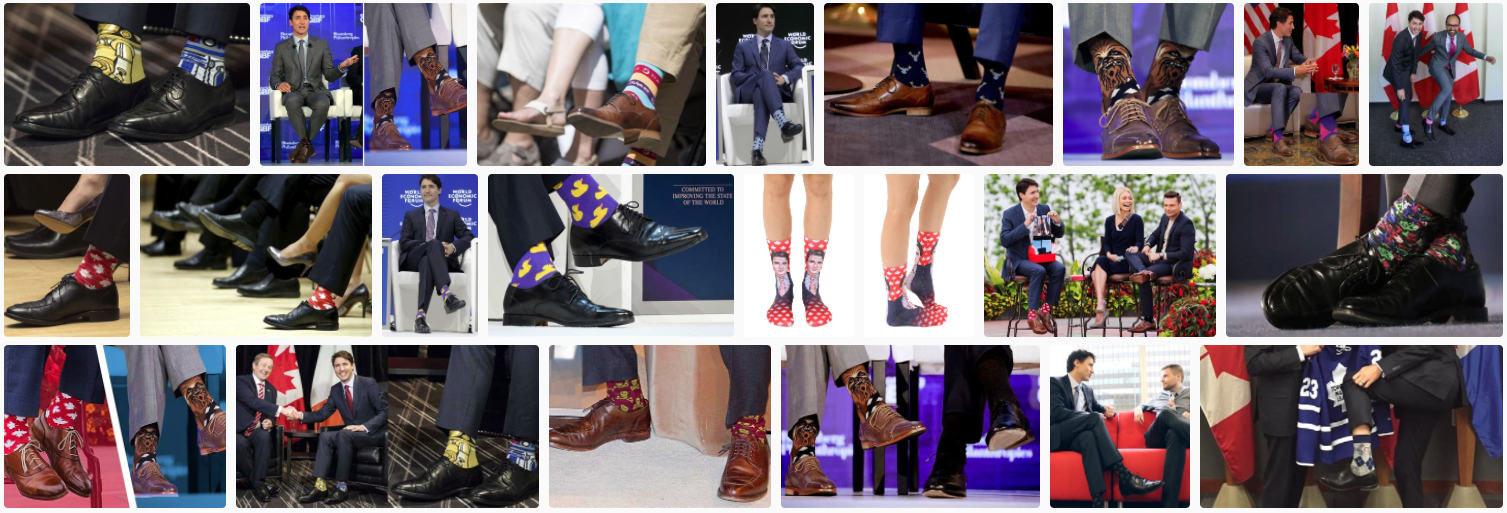
Typical image search results for “Justin Trudeau socks”
Look, we at The Line are as tired as you are about the more, shall we say, theatrical aspects of Justin Trudeau’s approach to being prime minister. Whether it was his Day One “because it’s 2015!” smirk, his obsession with showing off his socks to foreign dignitaries, his fashion sense while vacationing in India, and countless other Trudeauvian trips of the light fantastic, the man has always seemed more interested in performance than in the substance of governing.
But that’s not quite right. Because if there is one thing we’ve come to realize over the past five years and a bit, it is that for the Trudeau Liberals, the performance is the governing. For example, we used to wonder at the amount of time and energy that Cabinet ministers spent working on their Instagram accounts, since it went far beyond what would seem to be necessary for promoting and communicating policy. But once we understood that it was the job of policy to promote the Instagram account, and not the other way around, all of this proudly vacuous behaviour started to make a lot more sense.
But while we’ve gotten more or less used to it here in Canada (or maybe the right word is “numb”), we’ve always wondered how it looks through foreign eyes. Those abstract wonderings became a little more concrete over the past few weeks. Countries are opening up, people are starting to travel, politicians are going back to their old habits of holding regular meetings to make sure the world is still ticking along. And for Canada’s leaders, all the world’s a ‘gram.
So it was that at the G7 summit in Cornwall England this week, Prime-Minister-In-All-But-Name Chrystia Freeland was the only finance minster to wear a mask in a group photo taken outdoors. Ok, we thought, maybe she’s not fully vaxxed, maybe she has reason to be extra cautious. Except in a string of photos taken just before the official photo, Freeland was captured scrambling to put on her mask, not for safety, but for show.
Freeland was just getting the crowd warmed up for her nominal boss, Justin Trudeau. At his official G7 welcome on Friday, Trudeau was the only leader to put a mask on to give Boris Johnson the chummy elbow, only to remove it a few seconds later. We get it. It’s a version of the old “what lie did I tell?” problem, but for acting. Which audience am I playing to at this exact moment? It’s hard for even an old luvvie like Trudeau to keep track.
Once he’s back in Canada, Trudeau is going to hole up in a hotel for a few days, which the Globe‘s Cam Clark aptly referred to as “symbolic penance for a symbolic policy.” We agree with Clark that there’s some good fun in seeing someone get tied up in their own moral posturing. But while Clark is unhappy at the prospect of the prime minister cooling his heels for three days, we’re less fussed about Trudeau’s prospective stay in Hotel Q. Because while Clark thinks “there are real things” for the prime minister to be doing, we doubt that very much.
QotD: Defending the undefendable – Brutalist architecture
The newly-gained attractivity [of architectural brutalism] is growing by the day. In troubled times where societal divides are stronger than ever around the globe and in a world where instantaneous rhymes with tenuous, brutalism offers a grounded style. It’s a simple, massive and timeless base upon which one can feel safe, it’s reassuring.
It is rather difficult to argue with, let alone refute, the vague propositions of such a paragraph, which nevertheless intends (I imagine) to connote approval and judgment based upon sophisticated, wide, and deep intellectual considerations. But what exactly is a “grounded style” in contrast to a “world where instantaneous rhymes with tenuous”? This is verbiage, if not outright verbigeration, though it might serve to intimidate those with little confidence in their own judgment. The idea that brute concrete could create any kind of security rather than unease or fear is laughable.
When defenders of or apologists for brutalism illustrate their articles with supposed masterpieces of the genre, it is hardly a coincidence that they do so with pictures of buildings utterly devoid of human beings. A human being would be about as out of place in such a picture, and a fortiori in such a building, as he would be in a textbook of Euclidean geometry, and would be as welcome as a termite in a wooden floor or a policeman in a thieves’ kitchen. For such defenders and apologists of brutalism, architecture is a matter of the application of an abstract principle alone, and they see the results through the lenses of their abstraction, which they cherish as others cherish their pet.
Theodore Dalrymple, “The Brutalist Strain”, Taki’s Magazine, 2019-11-02.


