
Rome wasn’t destroyed in a day, of course, but it was destroyed. That, at any rate, was the thought that occurred to me when, in a Parisian bookshop (patronized, as you would expect, by bourgeois bohemians), I came across a book with the title of Le Goût du moche (“The Taste for the Ugly”), by a fashion journalist called Alice Pfeiffer.
The word ugly does not quite capture the connotations of the word “moche“, which include those of bad taste. If I were to try to make a table, it would probably be ugly due to my incapacity as a woodworker, but not moche.
I must say that the publishers of the book (Fayard) have done the author proud. The shiny cover of the book is vivid purple at the top, descending by various shades of unpleasant colours to a bilious yellow at the bottom. The typeface is also in purple, and the pages the same shade of yellow where they are bound into the spine. It is, as an artifact, aesthetically appalling, as obviously it was meant to be.
If we lived in a normal world, the deliberate creation of something ugly would be regarded as reprehensible: but we do not live in such a world.
The author is an apologist for the ugly, seeing the search for beauty as a kind of totalitarian dictatorship against which the ugly is a justified or necessary revolt or uprising, a cry for individual freedom.
She is a Parisian bourgeoise who has been taught to decry and therefore to reject her own previous privilege. In her own estimate, she was unfortunate to have been so fortunate as to have been surrounded by beauty.
This highly ideological, dog-in-the-manger attitude to beauty is commonplace and has almost been made the basis of official policy — or if it has not, it might just as well have been.
Theodore Dalrymple, “Kitsch and Our Taste for the Ugly”, The Iconoclast, 2021-06-18.
October 10, 2021
QotD: The taste for ugliness
October 9, 2021
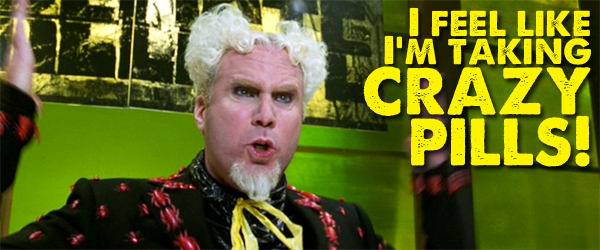
You need to ask yourself “Am I the crazy one?” (and hope you don’t hear yourself answering…)
In The Line, Jen Gerson considers the widely predicted epidemic of mental health issues the experts thought would follow the Wuhan Coronavirus pandemic as it faded:
That warning doesn’t seem to have panned out, exactly. As this more recent op-ed in the Atlantic pointed out, rates of depression and anxiety spiked at the beginning of the pandemic, but then receded. Rates of life satisfaction are near pre-pandemic norms. And the suicide rate has actually declined for reasons no one can quite pin.
“The pandemic has been a test of the global psychological immune system, which appears more robust than we would have guessed. When familiar sources of enjoyment evaporated in the spring of 2020, people got creative. They participated in drive-by birthday parties, mutual-assistance groups, virtual cocktail evenings with old friends, and nightly cheers for health-care workers. Some people got really good at baking,” the authors wrote, optimistically.
I think they’re wrong. Or, rather, I think we proved to be resilient in all the ways that the authors were looking at, and far more fragile in the ways they weren’t.
I think we’re in the middle of the mental-health pandemic right now; I think we’re in it so deep that we can’t even see it anymore. And I think we can’t see it because the crisis is not taking the form we expected it to take.
We expected the post-pandemic mental-health crisis to look the way they used to look — invisible. The depressed sister who hasn’t called for months. The anxiety-ridden best friend who drowns her tics in pills and alcohol. For the majority of the population that doesn’t suffer from a diagnosable mental-health issue, mental-health crises are often hidden. We expected a traumatic post-pandemic mental-health crisis to look a lot like this — another person’s problem — but on a grander scale.
This assumption leaves our entire framework with a missing link. A mental-health pandemic isn’t necessarily going to show up on a self-reported survey about anxiety and depression levels.
It’s going to show up in behaviour — and often behaviour that can be rationalized.
Because crazy people don’t think they’re crazy. You can’t see it when you’re in it.
Look around; are people acting normal lately? Think of the protests we saw during the election, or the anti-vaccine marches through our downtown cores. Think of the mom wearing two masks who screamed because your kid got too close on the playground — was that rational, grounded, sane behaviour?
Something is happening to a lot of people, and you see it in both the COVID deniers and also those who have made a religion out of the dangers of the disease. There are people out there that still can’t collect the mail without taking “precautions”. How about the people who are still sanitizing their groceries? That might have been reasonable in the Spring of 2020, when we weren’t sure how COVID spread. Now it looks a lot more like OCD.
Have you not noticed that some of the most brilliant people, after spending months devoid of much human contact, are now acting like raving loons on outlets like Twitter? Increased dependency on a gamified and polarizing social media for socialization during periods of extended isolation seems to have broken the ability to think clearly or behave civilly. This is hard to quantify, but I can’t be the only one to feel as if social media has grown palpably worse over the last year.
October 7, 2021
Alberta’s pantomime election to nominate a Senate candidate that Trudeau can ignore with great relish
In the latest NP Platformed newsletter, Colby Cosh discusses the apparently ongoing non-binding election for Alberta’s next Senate seat:
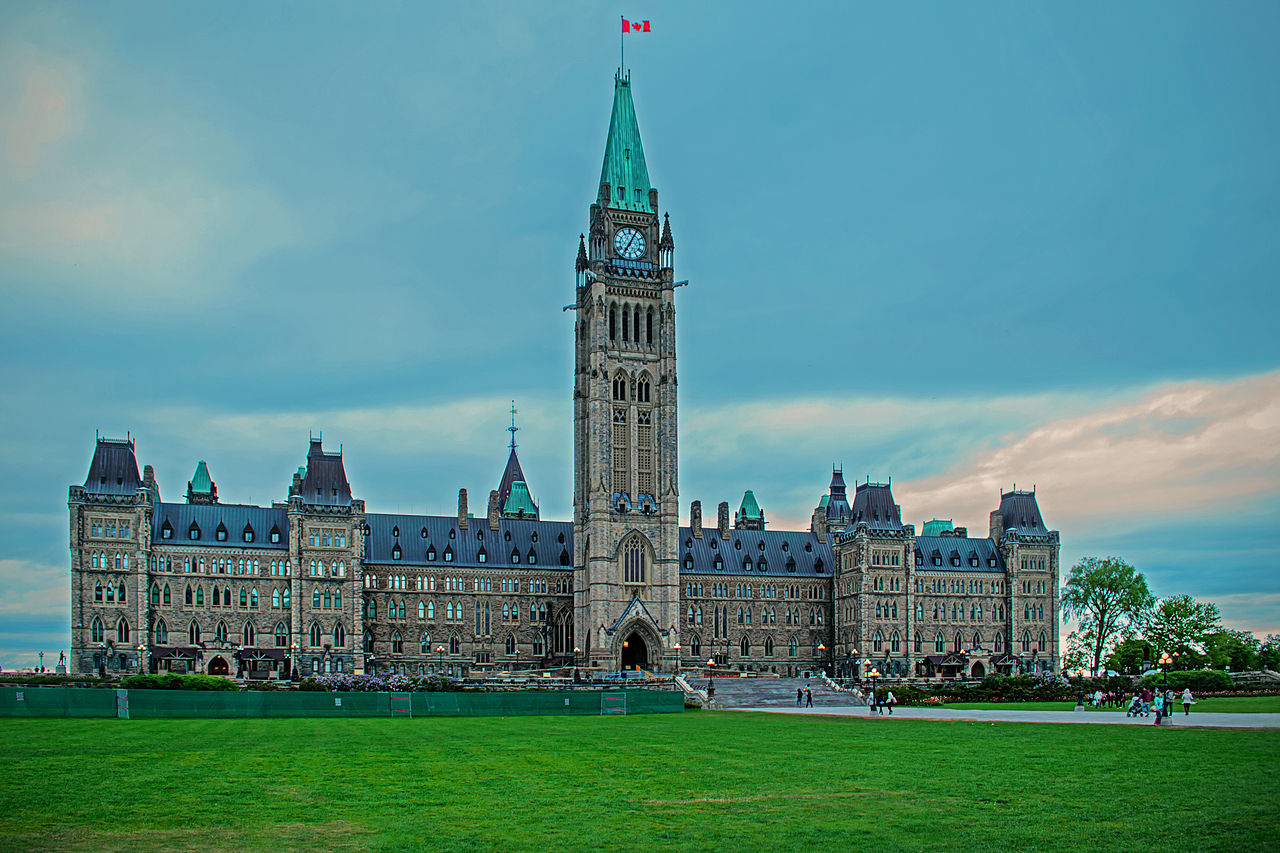
Parliament Hill in Ottawa.
Photo by S. Nameirakpam via Wikimedia Commons.
The prestige of Trudeau’s Independent Advisory Board for Senate Appointments must be maintained at all hazards, which is why the Prime Minister’s Office undertook, a little surprisingly, to provide our Ryan Tumilty with an official response to Alberta’s Senate election. The board, says the voice of the PMO, “evaluates candidates based on public, merit-based criteria”; it was not deemed necessary to finish the sentence with “… unlike the demented, bloodthirsty populace of Alberta, who will presumably just vote for the candidate who can devour the most tar sand at a COVID party.”
For our part, NP Platformed has always been a tad frustrated that smaller political groupings don’t welcome Alberta Senate elections as a chance for a low-stakes, low-cost electoral push toward the limelight. Now that federal and provincial Conservative parties are united, for the moment, 2021’s Senate election has not been accompanied even by the quiet campaigning or the minuscule media attention that the first four elections involved. It is probably to be expected that the three Conservative Party of Canada candidates on the Senate ballot will accumulate enough semi-automatic votes to be nominated.
The Liberals and New Democrats, on an official level, stayed further away from the Senate election process than ever. Duncan Kinney, a totally-independent-from-the-NDP left-wing journalist and fellow of the Broadbent Institute, is appearing on the ballot as part of a sort of none-of-the-above campaign. His entire platform is “this Senate election is illegitimate and stupid, but wouldn’t it be amusing if I won anyhow?” (We’ll take the bait: yes, it would!)
And the People’s party has taken the opportunity to pick three official nominees. If you ask us, the Mad Max party absolutely ought to have hung onto some of what it spent on the federal election and devoted the funds to making a big splash in this one. The TV networks and newspapers would ululate with helpful rage if some PPC creature topped the Senate ballot. Heck, Maxime Bernier has always been able to personally attract big crowds in Alberta. If he had planned ahead and squatted here for six months to meet the residency requirement, he could have run in the Senate election himself.
His proxies probably won’t get anywhere, but we’ll see. There really is an opportunity for a bit of chaos here, since anyone who can break into the top three on this ballot would become an Alberta “senator-in-waiting”. Some of the independent candidates, including former Slave Lake mayor Karina Pillay and former Alberta finance minister Doug Horner, have name recognition that could count for a lot in a low-turnout vote.
QotD: Music as a career choice
James Lileks, The Bleat, 2005-06-03.
October 6, 2021
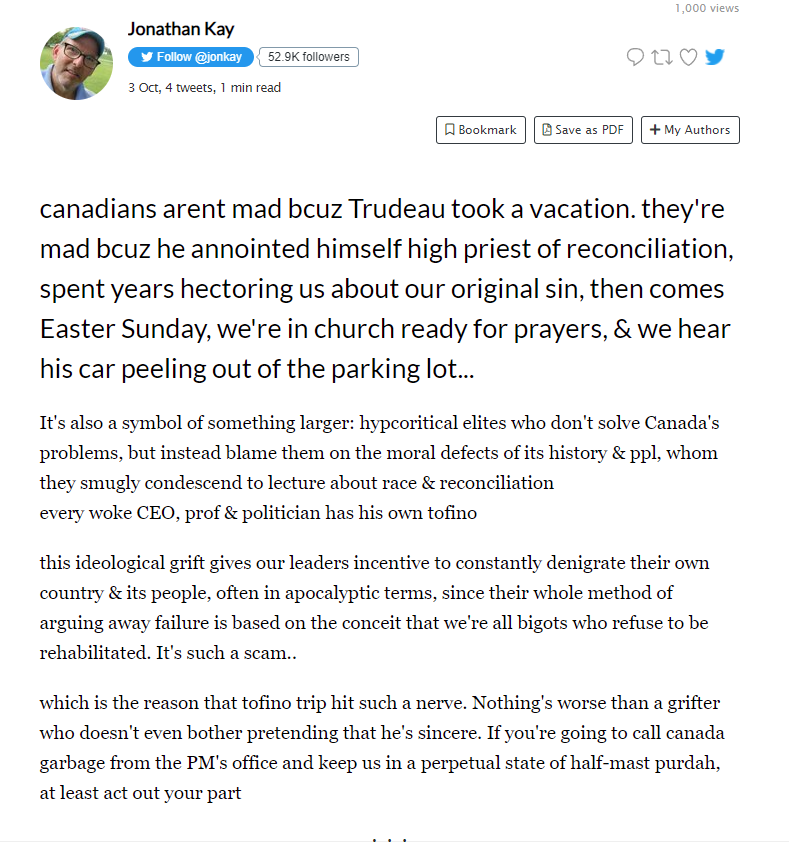
Jonathan Kay explains why Justin Trudeau’s no-show got a lot of Canadians mad
Linked from Small Dead Animals, Jonathan Kay took to the twits to summarize why this particular Justin Trudeau flake-out seems to have impacted his reputation so much more than all the other flake-outs he’s pulled over the years (screencapped for those who find Threadreader links objectionable):
October 3, 2021
Trudeau’s no-show on the very first “National Day for Truth and Reconciliation” wasn’t accidental
In The Line, an explanation of sorts for the Prime Minister effectively boycotting his own National Day for Truth and Reconciliation to go on a family vacation in British Columbia:
Thursday was Canada’s first National Day for Truth and Reconciliation. According to Heritage Canada, it is a day that “honours the lost children and Survivors of residential schools, their families and communities. Public commemoration of the tragic and painful history and ongoing impacts of residential schools is a vital component of the reconciliation process.”
To mark the occasion, ceremonies were held in Indigenous communities across the country. Politicians from every level of government took part. In those provinces where it was not a holiday, schoolchildren wore orange shirts and learned about a shameful part of their country’s past, and came home telling their parents that “every child matters”.
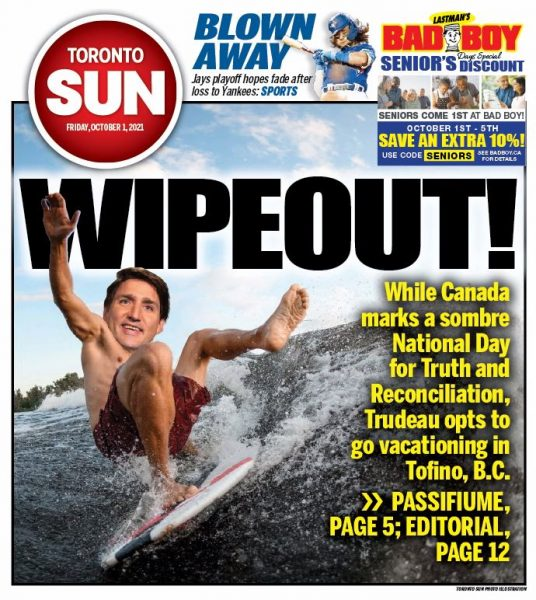
And Justin Trudeau, the prime minister of Canada, who lowered the flag on federal buildings and has kept it down ever since, who has made reconciliation the centrepiece of his leadership, went surfing in Tofino. But not before lying about it — his official itinerary had him in private meetings in Ottawa, and it was only after Toronto Sun reporter Bryan Passifiume noticed that a federal jet had taken off from Ottawa and made its way to one of the most gorgeously isolated parts of the country that the PMO admitted that Trudeau wasn’t in Ottawa working the phones, he was in Tofino playing in the waves. When he was tracked down by a team from Global news, he turned his back to the camera and walked sullenly away along the beach.
What are we to make of this behaviour? Social media was full of people calling it an “own goal” or an “unforced error” or a “self-inflicted wound”, and that Trudeau’s officials should have known that this trip was a bad idea, and urged him to put it off by a day or two.
We think these people are getting it wrong. To call this an error in judgment fundamentally misunderstands Justin Trudeau’s psychology and what motivates him. As far as we at The Line can tell, the timing of this trip, the location, and the predictable negative reaction, was very deliberate, and is entirely in keeping with the prime minister’s previous behaviour. To put it bluntly, the prime minister is taking a suck attack.
When the Liberals came to power in 2015, winning a very surprising majority government, it was almost completely due to the perceived magnetism of Justin Trudeau. He charmed Canadians, he charmed the press, and he charmed foreigners; his “because it’s 2015” line made international headlines and made him the figurehead of youthful, global progressive politics. He was the handsome noble young prince here to save us all.
The problem is, when you’re at the top there is only one way to go in politics and that’s down. And so inevitably came the 2019 federal election, in which Liberal fortunes were undermined by two main things: the fallout from the SNC-Lavalin scandal that saw two ministers and his senior adviser resign, and the emergence of a number of photos showing a very grownup, but very immature, Justin Trudeau cavorting around in blackface. After the Liberals were reduced to a minority, with his own reputation heavily, er, stained, Trudeau disappeared in what was clearly an epic sulk. When he re-emerged in the public eye, he’d grown a beard that was clearly designed to Add Gravitas to his public image.
He did it because he could do it, and he’d do it again just to show Canadians just how disappointed he is in them and how much harder they will need to work to regain the privilege of his leadership. We could use a man like Bertolt Brecht again…
October 1, 2021
Social media proves Derrida correct – “il n’y a pas de hors-texte” (“there is nothing outside the text”)
A look at how social media — especially Twitter — shows that Derrida had a valid point … even if that isn’t the original intent.
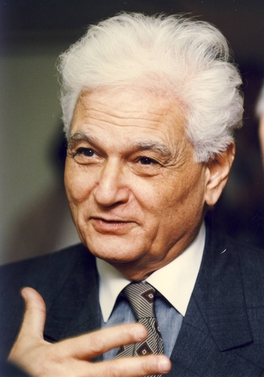
Jacques Derrida (1930-2004).
Photo from https://bettyrojtman.huji.ac.il/media-gallery/detail/15698/15538 via Wikimedia Commons.
Derrida once said “il n’y a pas de hors-texte“, “there is nothing outside the text”, and since the social damage to words uttered ratio of that phrase must be among the highest in history, it’s worth exploring. Just so we’re clear, I have no idea what Derrida was trying to do with “deconstruction”, outside of the most basic general concept (I often doubt Derrida his own self had any idea what he was trying to do, but that’s irrelevant). But let’s do some “deconstruction” of our own on that phrase, since that has some interesting implications.
If you take it as written — that there is nothing outside the text; that is, that the text exists as a complete unit of meaning, for its own sake — then it seems to argue for a kind of “positivism” in communications. Something like Orwell’s desire to develop “window pane” prose — writing so clear that the author would disappear and only the ideas would come through, unfiltered. Alas, this is a habit of mind that seems impossible to develop. No matter how clear your prose is, “writing” is one of those dialectical relationships so beloved of Marxists and stoned sophomores (lot of overlap between those groups, admittedly). In some vague, yet real and obvious, way, “writing” doesn’t exist apart from “reading”. Sure, sure, you can make marks on a page, but that’s all it is, until someone sits down to read it …
… at which point his personality comes into play, his worldview, his circumstances, his history, to be somewhat pretentious about it. And this will be true even if — in a lot of cases, especially if — you confine your prose to simple statements of fact. For instance, back in the early days of smartphones, I watched a minor miscommunication between a buddy and his girlfriend escalate into something very close to a relationship-ending fight, simply because neither party would stop texting and, you know, actually use the telephone they were texting with. A five minute phone call would’ve straightened it all out, and needless to say a face-to-face chat would’ve solved the “problem” in about ten seconds, but since text messages are devoid of subcommunication and, crucially, context, each party naturally brings his or her own biases to it, and, well … screaming, relationship-ending blowout for the win.
See also: Twitter. Like most people, I gave it a look-see when I first heard about it. I quickly concluded that it wasn’t for me. Not because it was vapid garbage, you understand — Facebook was always vapid garbage, but it had some utility for all that, as Twitter does — but because I just don’t think in discrete chunks the way Twitter requires. I just can’t process the fact that “replies” are their own distinct utterances, devoid of all other context, that can come in at random times. A Twitter “thread” is a mad babble of people shouting past each other; it’s not “communication” in any sense my brain can handle, so I dropped it …
September 30, 2021
Petrol shortages in the UK
I’ve seen several reports on the somewhat sudden rash of petrol (gasoline to US/Canadian readers) shortages in Britain, and most of those reports airily pin the blame for the situation on Brexit. To the media, Brexit seems to be an all-purpose explanation for anything that goes wrong (in the same way that previous administrations get the blame for current problems even many years after they left power). Sean Gabb says that despite the frequent glib blaming of Brexit, in this case it is part of the reason:
There is in the United Kingdom a shortage of lorry drivers. This means a dislocation of much economic activity. Because it cannot be delivered, there is no petrol in the filling stations. Because there are not enough drivers, and a shortage of fuel, we may soon have shortages of food in the shops. Christmas this year may not involve its usual material abundance.
These difficulties are wholly an effect of the new political economy that has emerged in England and in many other Western countries since about 1980. An army of managers, of agents, of administrators, of consultants and advisers and trainers, and of other middle class parasites has appropriated a growing share of the national income. This has happened with at least the active connivance of the rich and the powerful. Since, in the short term, the distribution of the national income is a zero-sum game, the necessary result is low and falling real wages for those who actually produce. So long as the productive classes can be kept up by immigration from countries where even lower wages are on offer, the system will remain stable. Because leaving the European Union has reduced the supply of cheap labour, the system is no longer stable in England.
There are two obvious solutions. The first is to rearrange the distribution of income, to make the productive classes more able and more willing to produce. Since this would mean reducing the numbers or incomes or both of the parasite classes, the second is the solution we mostly read about in the newspapers. This is to restore the flow of cheap foreign labour.
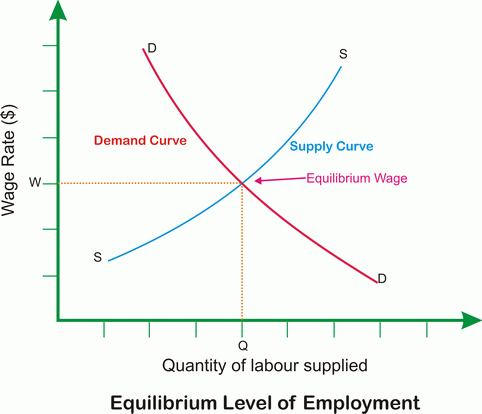
In summary, that is my explanation of what is happening. For those who are interested, I will now explain at greater length. According to the mainstream theory of wages, labour is a commodity. Though workers are human beings, the labour they supply to employers is of the same general nature as machine tools and copper wire and cash registers and whatever else is bought and sold in the markets for producer goods. A wage therefore is a price, and we can illustrate the formation of wage rates with the same supply and demand diagrams as we use for illustrating the formation of prices:
The supply curve slopes upwards because most work is a nuisance. Every hour of labour supplied is an hour that cannot be spent doing something more enjoyable. Beyond a certain level, workers can only be persuaded to supply more labour if more money is offered for each additional hour of labour. As with other producer goods, the shape of the demand curve is determined both by the price of what labour can be used to produce and by the law of diminishing returns.
[…]
Our problem in England is that large areas of economic activity have been rigged. There is an immensely large state sector, paid for by taxes on the productive. Most formally private activity is engrossed by large organisations that are able to be so large either because of limited liability laws or by regulations that only large organisations can obey. The result is that wages are often determined less by market forces than by administrative choice. In this kind of rigged market, we cannot explain the distribution of income as a matter of continual choice between marginal increments of competing inputs until the whole has been distributed. It may be better to look at a modified wages fund theory. A large organisation has a pot of money left over from the sale of whatever its product may be, minus payments to outside suppliers, and minus whatever the directors choose to classify as profit. This is then distributed according to the free choice of the directors, or how hard they can be pushed. Or we can keep the mainstream cross-diagrams, but accept that the demand curve is determined less by marginal productivity than by the overall prejudices of those in charge.
Therefore the growth of a large and unproductive middle class, and the screwing down of all other wages to pay for this. This is not inevitable in rigged markets, but is possible. It has come about since the 1980s for three reasons:
First, the otherwise unemployable products of an expanded higher education sector have used all possible means to get nice jobs for themselves and their friends;
Second, the rich and the powerful have accommodated this because higher wages and greater security for the productive might encourage them to become as assertive as they were before the 1980s;
Third, that these rich and powerful see the parasite classes as a useful transmitter of their own political and moral prejudices.
September 29, 2021
The federal Conservatives, post-election
As Erin O’Toole ably demonstrated in the September 20th federal election, when you deliberately exclude the SoCons, the libertarians, the gun-owners, the free speech advocates, and the fiscal conservatives, what you have left is a party that doesn’t have a lot to differentiate itself from the Liberals. Ben Woodfinden offers some thoughts on the Conservative Party’s immediate post-election phases:
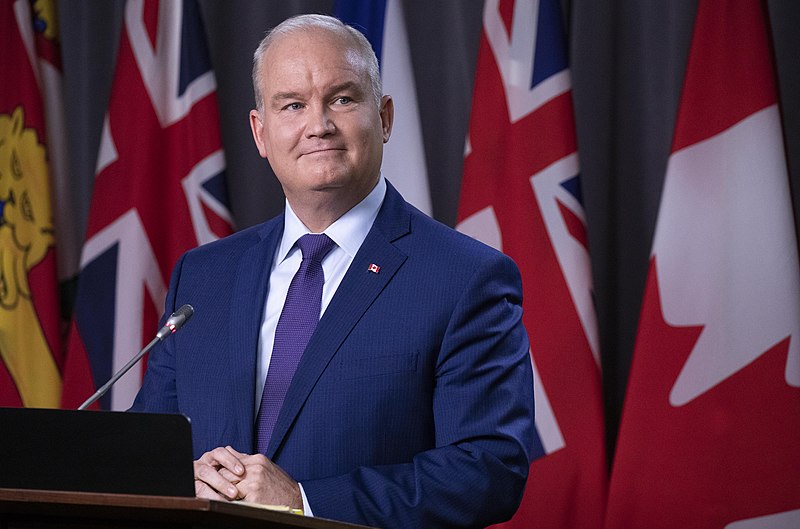
I don’t want to spend long on this point because I find this kind of Conservative infighting (the tory syndrome), which is often about a combination of both ideology mixed in with personal feuds and rivalries, extremely frustrating. I think O’Toole deserves a second shot for a few reasons. I thought there was a lot to like in the platform, because O’Toole himself performed fairly well during the campaign for the most part, and the Conservatives are on the path to form government. I also think another leadership election is a bad idea and this habit of dumping leaders after single election results is extremely shortsighted. Changes are needed, but I don’t think replacing O’Toole is one of them.
Before some of you send furious responses about how I’ve “sold out” or how O’Toole sold out and therefore needs to go, I absolutely do think that portions of the base have every right to be angry. As I wrote in the Post column, what has angered many is not simply the campaign O’Toole ran, it was that he won the leadership running as a “true blue” and then pivoted to something else.
The Conservative Party is not a party of one. O’Toole needs to show some humility and work to rebuild some trust with these parts of the base (and caucus) who are upset and angry over this. The Conservative Party is very much a coalition of different groups who disagree on all sorts of things. Keeping these groups together is a delicate and at times challenging task. […]
Anyways, to summarize where I stand on this, and I have no plans of getting dragged into this too much – there needs to be some efforts on behalf of O’Toole to restore some trust with the various factions within the party that are unhappy, but I think overall some of the shifts that are being made are worthwhile ones. It would improve the discourse on conservatism in Canada if we moved beyond the red versus blue tory, liberal lite versus true blue framing that serves us poorly. While we need to wait for a full post-mortem and analysis of the results, there also seem to me to have been some positive signs that this realignment/blue collar shift can work. Matt Gurney interviewed an anonymous senior campaign official after the election for TVO, and something the official said intrigued me:
Gurney: Whoa, hang on. That sounds like something we just shouldn’t blow past! What was the old Conservative coalition, and what happened to it?
Conservative: [Laughs] Okay, obviously it varies by place, but think of it this way: our three legs were big business and corporate, rural and farmers, and a swing component. That third one was tricky. Mulroney brought the Quebec nationalists. Harper, we got them with ethno-community suburban outreach. But I think the Liberals are beating us on big business, and we need to accept that and pivot to small business, working-class, things like that. We just started doing that, and it’s already working. We did shockingly well in Hamilton. And look at northern Ontario. These places are in play for us now. Northern Ontario is going to get very interesting. But if I’m being honest, the question of who the new Canadian Conservative voter isn’t one we’ve fully answered yet. We’re winning the popular vote, but we still need to grow, and I think that needs more time.
I went and did some digging myself and what this anonymous official is saying here appears to check out, and if you combine this with the gains made in Atlantic Canada I think there are real reasons for optimism on this front. This election could be comparable to what happened with the Conservatives in 2017 in the UK, but in a positive way. Hear me out here. In that election Theresa May came close, but just fell short, on breakthroughs across the board that would have fully inaugurated her as the champion of this realignment conservatism. While it didn’t materialize in 2017, it did in 2019. The progress is there, and I really think Conservatives should give this another shot next chance they get, it really could pay off. The party needs to break through in suburban seats, and I think this “thoughtful populism” as John Ibbitson described it can absolutely do that in the next election.
QotD: Lizard people
In this telling, to understand UFO reports and the weird little subculture that has grown up around their believers, you need to understand that for those people the imagery of the cheesiest sort of B-movie science fiction has taken up the same receptors in their minds that religious mythology does for the conventionally devout. What they are really grappling with is mystical experience – altered states of consciousness, mindstorms that are very real phenomena in themselves but one which they lack any context to understand in a rational and generative way.
When I remembered this, I found a fruitful question to ask. That is, what is it about their experience of reality that believers in lizard people are coding in this cheesy SFnal imagery? What are they actually trying to talk about?
The answer came to me almost immediately once I managed to formulate the question. That was the moment at which I realized that, barring one unimportant detail, lizard-people theory is actually true.
The unimportant detail is the part about the lizard people being actual extraterrestrials. But let’s look at the rest of it. The believer says: Our elites behave as though they are heavily infiltrated by beings hostile to the interests of ordinary humans. They hide behind a mask of humanity but they have alien minds. They are predators and exploiters, cunning at hiding their nature – but sometimes the mask slips.
Nothing about this is in any way wrong, once you realize that “lizard” is code for “sociopath”. Sociopaths do, differentially, seek power over others, and are rather good at getting it. The few studies that have dared to look have found they are concentrated in political and business elites where drive and ruthlessness are rewarded.
“Lizard” is actually a rather clever code, if you happen to know your evolutionary neuroanatomy. Oversimplifying a little, humans have an exceptionally elaborate neocortex wrapped around a monkey brain wrapped around a lizard brain. The neocortex does what we are pleased to consider higher cognitive functions, the monkey brain does emotions and social behavior, and the lizard brain does territoriality/aggression/dominance.
What is wrong with sociopaths (and psychopaths – these categories are not clearly distinguished) is not entirely clear, but it is certain that their ability to experience emotions is damaged. The monkey brain is compromised; sociopaths live more in their lizard brain and display a lizard-like ability to go from flat affect to aggressive violence and back again in two blinks of an eye.
So, yeah, aliens. We have a live conspiracy theory because a lot of people can sense the alienness in their sociopathic/psychopathic bosses and politicians – and sometimes the mask slips. Not having any grasp of the language of abnormal psychology, they reach for the nearest metaphor handy. There’s a close relative of lizard-people theory in which which many of our elites are held to be members of an ancient Satanic conspiracy and have become demon-ridden; this is different language carrying the same freight.
Eric S. Raymond, “The reality of the lizard people”, Armed and Dangerous, 2020-02-15.
September 26, 2021
QotD: Euphemism
Andrew Coyne, “False Sensitivity”, andrewcoyne.com, 2005-05-07.
September 25, 2021
Samizdat from “Ozcatraz”
Through some miracle of invisible ink, blind mail drops, and all the necessary modern cloak-and-dagger technical equivalents, James Morrow manages to get some news out of locked-down-to-the-nth-degree Australia:
You really have to feel for the poor people at Tourism Australia.
Having spent decades happily if not particularly creatively pitching their product to the world with the time honoured formula of “beaches, Opera House, outback, crocs”, they now have to figure out how to sell a country that looks more and more like a tropical North Korea.
That is, of course, if the federal government ever lets visitors in again without forcing them to first spend a week or two quarantined in some prefab hotel or desert facility in the name of “keeping Australians safe”.
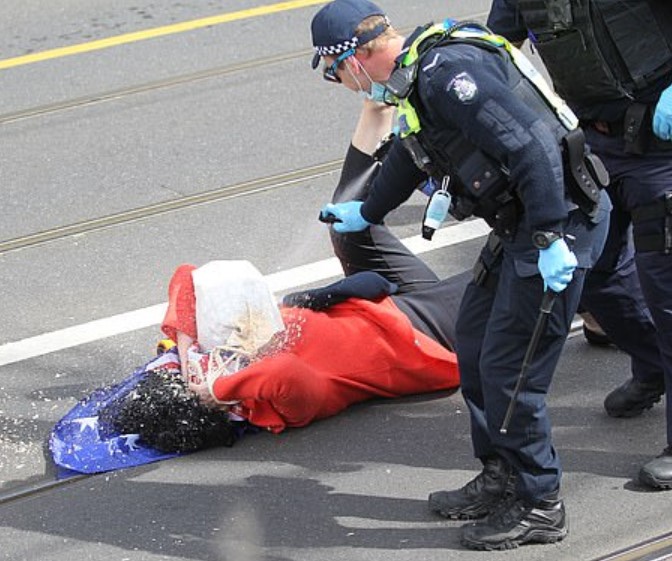
The question thus becomes, both for those of us trapped here in Ozcatraz as well as bemused outside onlookers, how did a free and easy land of opportunity become gripped by a neurotic covid puritanism that truly believes any sort of fun or joy or sociability is deadly, and a place where protesters and cops are having pitched battles in the street over mandatory vaccinations?
If you don’t believe me, consider that in Melbourne — ground zero for Australia’s covid madness, the city just crossed the line to become the most locked-down city in the world — the state premier ordered playgrounds shut and had concrete bollards hoisted into skate parks to stop kids from riding their bikes.
A few weeks ago, after some wags took advantage of a loophole that allowed bars to offer takeaway cocktails and organised an al fresco pub crawl, outdoor consumption of alcohol was banned always and everywhere.
Even a tiny loosening of restrictions there to allow beleaguered residents to meet up for a brief, vaccinated, socially distanced picnics left the prohibition on alcohol in place, all in the name of the Holy Blessed Science.
In Sydney, which is comparatively sane and where there is at least a decent plan to get back to some sort of vague simulacrum of normal over the next few months, everyone still has to “mask up” when outdoors, even if not around anyone else. The only socialising allowed is under very limited outdoor circumstances, among the fully vaccinated, who are not allowed to travel too far to meet up with one another.
What makes it most bizarre is that even the state’s health minister recently admitted outdoors was the safest place to be and everyone understands that the mask rule was imposed largely to shut up a depressingly totalitarian press gallery that wasn’t going to shut up until everyone was welded into their homes Wuhan-style.
Yet, as Sydney moves into summer, every weekend sees Twitter flooded with photos of sunbakers on local beaches asking WHY IS THIS ALLOWED? and demanding police action.
On any given Monday in the local park where I exercise my spaniel, my very earnest bourgeoise-left neighbours grumble about it all not being “in the spirit” of the health orders while rabbinically parsing whatever latest decree has just come down from the Temple, er, Ministry of Health.
Update: Alex Berenson confirms much of the situation in Oz (h/t to SDA for the link).
Americans have the wrong idea about Australia.
Thanks to some brilliant tourism branding and Crocodile Dundee, we think of it as rough-n-ready frontier country, Montana with bigger beer cans. The dingo ate my baby!
In reality it’s Canada with a mean streak. The Karens are in charge and they are mad.
[…]
So when Covid rolled in, the Australian government (and lots of Aussies) saw it as just another ugly export from China that needed to be beaten back at all costs. To its credit, Australia pushed hard for an independent investigation of the origins of Sars-Cov-2 last year (the Chinese pushed back, going so far as to call for a boycott of Australia’s delicious wine).
But Australia also went cray-cray — the technical term — for the fantasy of zero Covid. It effectively closed its borders not just to other countries but to its own citizens. For most of the last two years, they have had a hard time coming home — and an even harder time leaving.
[…]
Until the last couple of months, the frogs were not just luxuriating in the pot but asking for a little more heat! Australians were so pleased to be Covid-free — for the entire first half of 2021, they had only one Covid death — that the majority happily tolerated these restrictions.
Yes, a few rabble-rousers complained, but even videos of police arresting people inside their homes or attacking (truly) peaceful protestors didn’t dent support for the creeping police state.
But in the last couple of months, and especially the last few days, the equilibrium has shifted. And — inevitably — the response of Australia’s fearless leaders has been to try even harder to stamp down unrest. As a result, the situation is increasingly unstable.
“Steel Commanders” – Tanks and Panzer! – Sabaton History 106 [Official]
Sabaton History
Published 24 Sep 2021From the first landships of the Great War to the massive armor-battles of Prokhorovka and El-Alamein — the introduction of the tank to the battlefield had changed warfare forever. Impregnable to small-arms fire, they crushed barbed-wire and field fortifications underneath their tracks, paving the way for the infantry’s advance. In independent formations they surged forward at the head of the offensive, outmaneuvering the enemy’s defenses and wreaking havoc in their lines. From the Mark V to the T-34, from the Tiger to the Centurion — the evolution of armor is the history of Steel Commanders.
Support Sabaton History on Patreon: https://www.patreon.com/sabatonhistory
Watch the Official Music Video of “Steel Commanders” here: https://www.youtube.com/watch?v=peTCe…
Listen to Sabaton on Spotify: http://smarturl.it/SabatonSpotify
Official Sabaton Merchandise Shop: http://bit.ly/SabatonOfficialShopHosted by: Indy Neidell
Written by: Markus Linke and Indy Neidell
Directed by: Astrid Deinhard and Wieke Kapteijns
Produced by: Pär Sundström, Astrid Deinhard and Spartacus Olsson
Creative Producer: Maria Kyhle
Executive Producers: Pär Sundström, Joakim Brodén, Tomas Sunmo, Indy Neidell, Astrid Deinhard, and Spartacus Olsson
Community Manager: Maria Kyhle
Post-Production Director: Wieke Kapteijns
Editor: Iryna Dulka
Sound Editor: Marek Kaminski
Archive: Reuters/Screenocean – https://www.screenocean.com
Sources:
– IWM E 18376, IWM 357, Q 9249, IWM 1198, IWM 130-09+10, Q 107828, IWM 508-70, KID 109, UKY 502, E 7070, H 37169, MH4107
– wall by mara julieta G., Tree by Joni Ramadhan; from the Noun Project
All music by: SabatonAn OnLion Entertainment GmbH and Raging Beaver Publishing AB co-Production.
© Raging Beaver Publishing AB, 2019 – all rights reserved.

September 24, 2021
From Handmaid’s Tale cosplay to eco-terrorism
Connor Tomlinson outlines the many performative and disruptive projects of Roger Hallam:
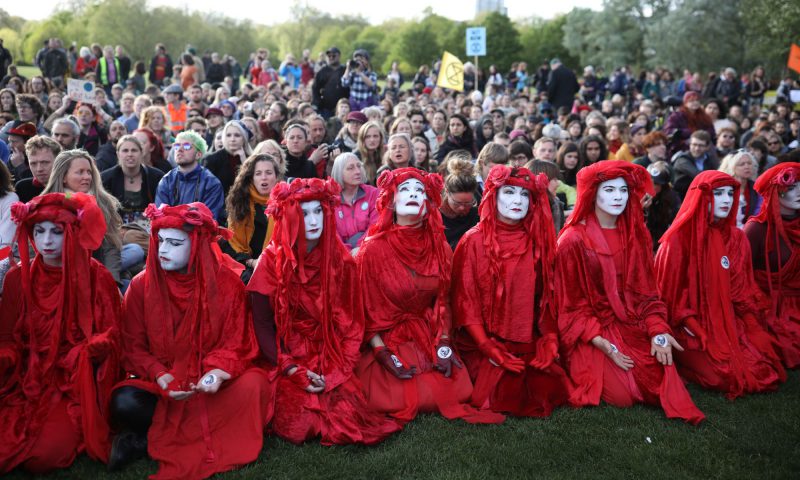
Insulate Britain gluing themselves to the M25 for a week has already produced a four-car collision, with victims airlifted to hospital, and delayed a mother’s treatment, leaving her paralysed by a stroke. Despite these events, activists claim they “don’t accept that we put lives at risk”. It’s vital that legal and cultural action is taken to insulate Britons from this dangerous brand of eco-extremism.
As Dan Wootton’s interview with activist Liam Norton explained, the endangerment of lives to exercise political pressure would classify Insulate Britain as ecological terrorists. The action Insulate Britain wishes to force government to take is “to produce within four months a legally binding national plan to fully fund” the insulation of all Britain’s 29 million homes with taxpayer cash. Essentially, they’re sitting in the motorway, blocking your work commute, so the state can take and spend more of your pay-check.
Insulate Britain is another in a long line of activist vanity projects engineered to make headlines by founder Roger Hallam. Starting with “Stop Killing Londoners” in 2017, Hallam went on to co-create Extinction Rebellion; before being ousted over his comments concerning the Holocaust. But Hallam’s alarmist and extremist rhetoric preceded this insensitive remark. In, 2019, Hallam said “forcing the governments to act” or “bring[ing] them down and create[ing] a democracy fit for purpose” will require “some [to] die in the process”. This “democracy” would, paradoxically, be a “socialist project”, with Hallam in the ideological driving seat.
Hallam’s prior protests demonstrated a similar indifference to human suffering. Hallam was arrested at Heathrow Airport for aiming to fly drones into active airspace and ground commercial flights. His “Heathrow Pause” protests constituted a terror threat, in that drones could cause flights to be grounded or collide and crash. Again, Hallam was willing to risk lives to make headlines.
All of these movements claim the sole solutions to apocalyptic emergencies are the appointment of Hallam himself to a position of public power which lets him implement whichever solutions he deems necessary. His PhD at Kings College on “civil disobedience” exposes Hallam’s own egoism in comparing himself to MLK and Gandhi. This was also an indictment of modern university radicalism; echoed by Dr. Charlie Gardner of the University of Kent making the same comparison in a lecture, calling himself “a hero of our times”, and refusing to disavow Hallam when I challenged him on it.
When I first heard of the M25 protests, I thought they’d be allowed to carry on for a token amount of time to get their actions into the media and then they’d be cleared off by the police. I was quite astonished to find that they were permitted to stay in place for several hours and that the police were being quite solicitous of their health and protecting them from any attempt at counter-protest by the stranded motorists. I’m now worried that the next time they try this, the motorists will have learned that the police aren’t there to enforce the law and be tempted to take it into their own hands.
September 23, 2021
Nazi Fanatics and Gangland Executions | B2W: ZEITGEIST! I E.26 Winter 1925
TimeGhost History
Publisheed 22 Sep 2021The winter of 1925 is a season of gun battles and assassinations. Al Capone is fighting both the Chicago police and rival gangs to gain control of the bootlegging racket, and a Nazi party fanatic murders a Viennese author for his writings on anti-Semitism and eroticism. It’s not all violence, though. This season, a landmark documentary film is released.
(more…)


