Quotulatiousness

May 31, 2022

Conspiracy theorists, like the deeply paranoid, aren’t always wrong

Chris Bray responds to a common response he’s encountered from people who are worried that everything we’re seeing is somehow part of a deep-laid, nefarious plan to … do something. Something evil, something terrible, something … undefined but wrong:

If all of our problems are caused by a secret cabal who are having a new Wannsee Conference [Wiki]— twelve assholes sitting around a table and carefully planning our destruction — then we could solve that problem in half an hour with a dozen lampposts. We just need some names and an address: problem solved.

I think it’s much harder if there’s no they and no plan behind an event like the Uvalde school shooting. You can kill a few plotters, but how do you fix a broadly distributed collapse of courage, honor, decency, competence, knowledge, skill, morality and … a bunch of other things, but that list is a good start. If identifiable actors are tearing things apart, you can know where to put your hands to stop them; you can act. If we’re just trapped in a miasma of vicious mediocrity and weakness, where are the levers that change our course? What’s the solution to widespread societal degradation, to a suicidal loss of shared values and ordinary ability?

Facing an endless string of metastasizing and coalescing implosions — the lockdown-induced mental health crisis among children, appalling growth in energy prices, severe fertilizer shortages, supply chain collapse, unacknowledged vaccine injuries, vaccines that make illness more likely, military failure and the madness of the Afghanistan debacle, an emerging food shortage that’s starting to look really disturbing — the easiest way to deal with it is to say that it’s all one crisis planned and implemented by one set of people. If that’s true, the solution doesn’t even require a full box of ammunition, and we could wake up tomorrow morning in a world that we’ve repaired.

But the problem is that I mostly don’t think it’s true. I think it’s all one interwoven societal crisis, but that it’s connected by the uselessness of overcredentialed weak people. As for the view that they’re planning all of this, I increasingly think that our bullshit elites, our highly compliant social climbers in positions of power, mostly couldn’t plan a plate of toast.

Now, this is important: This doesn’t mean that I don’t think any of it is ever true. Of course there’s fake news. There are false flags, there are staged ops, and there are crisis actors. (The Ghost Of Kyiv, Ukraine’s boldest fighter pilot, agrees with me.) It seems pretty clear at this point that the plot to kidnap Gretchen Whitmer, that terrifying thing, was some socially awkward dorks being urgently and persistently goaded by FBI provocateurs. And it’s no longer possible to pretend that the Capitol Police didn’t just open the doors on January 6 to the “mob” that “broke in”.

But the transition from “some things are fake” to it’s all a lie and a plan every step of the way is a bigger claim — he says, carefully — and one that doesn’t make that much sense. With regard to Uvalde and the cops who wouldn’t act, for example, cowardice and incompetence work just fine as an explanation, because we have examples to compare the moment to. Peacetime militaries build an officer corps around rules-focused behavior, around the ability to comply and to operate within a hierarchy; then wartime militaries go through a period of officer purges, as they work to find high-functioning leaders who can tolerate the chaos and pain of battle. Confronted with a high level of brutality and danger, some people just can’t do it. This strikes me as an unremarkable fact, and one that doesn’t require extraordinary explanations. The school district police chief, a bureaucrat for decades, pushing paper and going to meetings, was confronted with sudden shock and horror on an extraordinarily harrowing scale, and he lacked the ability to respond. McClellan also couldn’t bring himself to attack Richmond.

May 30, 2022

The Line on Pierre Poilievre’s campaign for Conservative leader

Filed under: Cancon, Media, Politics — Tags: , , , — Nicholas @ 05:00

I honestly haven’t been paying much attention to the never-ending leadership contest the federal Conservatives have been running for what feels like years at this point. If I had to choose, Pierre Poilievre would probably be my choice — since Mad Max won’t go back to the party that stabbed him in the back — and he appears to be the one to beat as the contest enters its third decade. In the abbreviated-for-nonpaying-cheapskates weekly post from The Line, the editors have concerns about Poilievre and how he may operate first as the leader of the Official Opposition and then potentially as Prime Minister:

Conservative MP Pierre Poilievre at a Manning Centre event, 1 March 2014.
Manning Centre photo via Wikimedia Commons.

We at The Line are going to preface this little blurb about CPC leadership contender Pierre Poilievre with the following two points; firstly, we suspect he’s going to win the leadership race. Secondly, we suspect he’s probably on a trajectory to become prime minister. The usual caveats apply: campaigns matter, polls can be wrong, it’s a long time to go and anything can happen. Of course, of course. But at this godforsaken moment, PP’s got the mo. The gatekeepers are down at heel, and the populists are on the march. We don’t have to agree with any of this, or even like it, to acknowledge that we can feel the current of the wind.

So take these critiques with those expectations in mind. Still: Skippy had a bad week.

Look, the general assumption of the Canadian punditocracy to date has been that Pierre Poilievre is not only dangerous and corrosive — but that he’s also full of shit, that he’s disingenuously stoking populist anger in order to win the leadership of the CPC. Most — who happen to think he’s too smart to actually fall for any of his own rhetoric — genuinely believe he’ll slip back to some kind of sensible, slightly more tribal, but still broadly sane centrist form of conservatism after he scores the leadership mandate. Win from the right, govern from the centre: this is generally a winning formula for Conservatives.

We have a different take.

What if Poilievre is 100 per cent genuine in his beliefs about bitcoin, central bankers, the WEF, banning foreign oil, the lot of it? We’ve said it here at The Line before: COVID has driven everybody a little bit nuts. What if this week, we really just started to see the mask slip?

Because if that’s the case, this is what we could be looking at by 2025, or sooner: a prime minister who probably doesn’t respect imperfect institutions well enough to leave them alone, whether those institutions be the central bank or the Supreme Court. We’d have a prime minister more inclined to take his financial cues from Robert Breedlove than Tiff Macklem; we’d have a prime minister who seems to genuinely believe that the World Economic Forum is some kind of sinister cabal of (((globalists))) led by Klaus Schwab, and is pulling the strings of government because the forum bestowed ego-stoking titles like “Young Global Leaders” on a bunch of up-and-coming Canadian politicians — including Conservative politicians. And it means we’re looking at a prime minister who thinks that banning the import of foreign oil, potentially cutting ourselves off from the global market and forcing western producers to supply energy resources to Canadians first, sounds like a dandy idea. (Does the term: “integrated North American Energy Market” hold any sway, here? You know how much a refinery costs? Just don’t call it a National Energy Program, we guess.)

Look, we think that Pierre is ahead for a reason. On the general sweep of the state of politics, we suspect he’s got the best grasp of his electorate. He’s young, he’s smart, and he’s willing to litigate serious problems and entertain novel ideas to solve them. We’re heading into a period of increased inflation, war, and potentially global famine, and Poilievre could use his considerable intellect to identify Canada’s crucial problems, and steer us in a credible direction.

But not if he’s acting like a goddamn lunatic. Because nothing says “conservatism” like protectionist economic policies, conspiracy theories, and railing against norms and institutions, right?

So Poilievre, Jenni, if you’re listening (are you listening?) don’t make the mistake that Jason Kenney did in Alberta. Don’t win on promises you can’t deliver on and by talking about problems you only half understand. Don’t insulate yourself with people who don’t challenge you intellectually. If you’re going to actually be prime minister, you’re going to need to work with the very experts and gatekeepers that you hold in such obvious contempt. You’re going to need to network with major global leaders — perhaps even at major global conferences hosted to discuss economic and geopolitical issues — without being beholden to said fora’s attendees and organizers. You’re going to need to be able to determine fact from fantasy and critique from conspiracy.

We don’t doubt Poilievre’s ability to win. Rather, we’re getting awfully nervous about his ability to govern once/if he does.

Kitaro – “Caravansary” (live)

Filed under: Media — Tags: , , — Nicholas @ 02:00

Kitaro
Published 17 Feb 2022

Listen at Spotify: https://spoti.fi/2Q2T9qx
Listen at Apple Music: https://apple.co/2Iyx1QC
Listen at Amazon: https://amzn.to/2Q0opGp
for more info, visit: https://bit.ly/2W6CQMo

#Kitaro #DomoMusicGroup

May 29, 2022

We’ve evolved to the point that you don’t even need to turn the page for Gell-Mann Amnesia to kick in

Chris Bray has an almost unbelievable example of Gell-Mann Amnesia … literally on the same page of the site, two stories show how un-self-aware — and reflexively critical of non-progressives — the media can be:

Take exactly the same argument about exactly the same event and wedge it into two very different frames. Watch the result.

Here’s Politico, today, attending the NRA convention in Texas in the aftermath of a mass shooting at a school …

… and finding that NRA members are still gun-addled idiots who deflect concerns about guns by inventing a stupid fantasy argument — a conspiracy theory! — about mental illness:

    Here, amid acres of guns and tactical gear inside a cavernous convention hall, the proximate cause of the mass shooting in Uvalde, Texas, was not a rifle, but mental illness, shadowy forces of evil or, as one man in a “Let’s Go Brandon” T-shirt put it, the “destruction of our children” by the teachings of the left.

These idiots, can you believe that? They were actually dumb enough to argue that the rifle didn’t cause the shooting, and instead they blamed — wait for it, because OMFG — mental illness. What morons! Imagine being so caught up in stupid far-right conspiracy theories that you’d blame a school shooting on mental illness.

Okay, now. Watch this.

On the very same day, Politico posted this story, right underneath the NRA story on the front page:

And this is what Politico says those professors found:

    POLITICO: Can you take us through the profile of mass shooters that emerged from your research?

    Peterson: There’s this really consistent pathway. Early childhood trauma seems to be the foundation, whether violence in the home, sexual assault, parental suicides, extreme bullying. Then you see the build toward hopelessness, despair, isolation, self-loathing, oftentimes rejection from peers. That turns into a really identifiable crisis point where they’re acting differently. Sometimes they have previous suicide attempts.

The professors go on to say that the start of the solution to the crisis of school shootings is to improve the quality of childhood mental health services: “We need to build teams to investigate when kids are in crisis and then link those kids to mental health services. The problem is that in a lot of places, those services are not there. There’s no community mental health and no school-based mental health.”

Same publication, same day, same page.

May 28, 2022

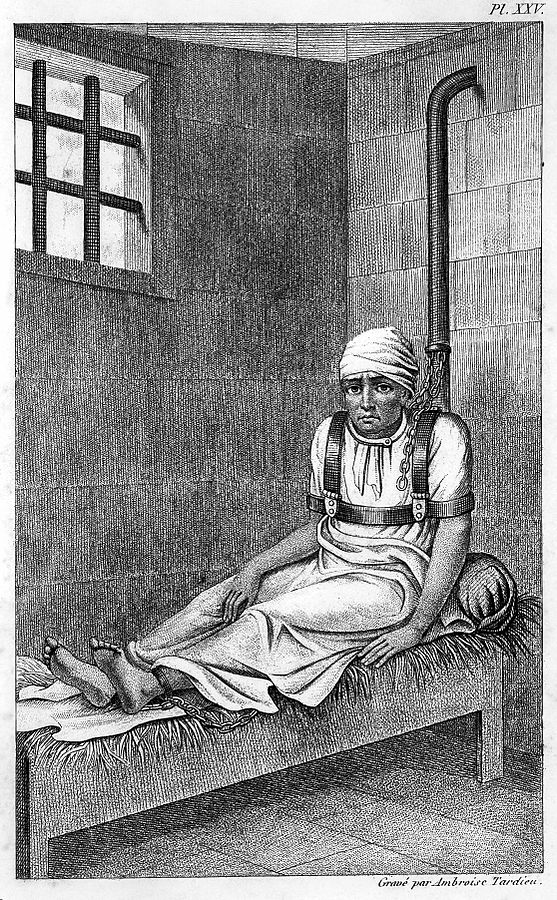
Scott Alexander on the “Hearing Voices Movement”

Filed under: Health, Media, USA — Tags: , , — Nicholas @ 05:00

I’d never heard of the Hearing Voices Movement, but I don’t read the [spit] New York Times [spit]. Scott Alexander almost certainly also avoids reading the NYT, but he responds to a recent article there on the phenomenon that some of his psychiatric patients have reported:

The New York Times has an article out on the Hearing Voices Movement — ie people with hallucinations and delusions who want this to be treated as normal and okay rather than medicalized. Freddie deBoer has a pretty passionate response here. Other people have differently passionate responses:

I’ve met some Hearing Voices members. My impression is that everyone on every side of this discussion is a good person trying to make the best of a bad situation (except of course New York Times journalists, who are evil people destroying America). Some specific thoughts:

2:

Plenty of people hear voices. Some of these people are your typical homeless schizophrenic, but many aren’t. One of my patients was a successful computer programmer who had near-daily auditory hallucinations. He realized they weren’t real, did his best to ignore them, and got on with his successful life — just like he had been doing for the past twenty years. He was seeing me for unrelated depression.

This guy kept his condition secret from his friends and co-workers. I don’t blame him for this choice at all. But when everybody who can hide it does, we only hear about the people who can’t keep it hidden, who are usually worst-case scenarios. Also (as a bunch of 1980s gay people can tell you) keeping a basic fact about yourself hidden from everyone you know sucks.

I recommended Hearing Voices Movement to this guy. I can’t remember whether he took me up on it or not. But I thought it would be helpful for him to have people he could talk to about his situation who wouldn’t think he was crazy, or try to get him locked up.

3:

People hate admitting that some cases are mild, and others are severe. Especially the kind of people who work at the New York Times

I talked about this a while back in the context of the autism rights movement. Many autistic people live great lives, enjoy the beneficial parts of their condition, and find it annoying or oppressive when psychiatrists keep trying to medicate them. Many other autistic people can’t live outside of institutions and constantly try to chew off their own body parts. A reasonable conclusion might be “the first group seem mild and should be left alone, the second group seem severe and probably need intensive treatment”, but it’s surprisingly hard to convince people of this.

Calling some cases “mild” sounds trivializing. Calling other cases “severe” sounds stigmatizing. Whatever your criteria for a mild case are, there will be someone who fits those criteria, but says the condition ruined their life and you are dismissing their pain. Whatever your criteria for a severe case are, there will be someone who fits those criteria but is thriving and living their best life and accuses you of wanting to imprison them in a hospital 24-7.

And that’s just the activists! We psychiatrists have the same problem from a different direction: we have seen some crazy @#!$. No matter how mild your case is, we’ve seen some case that looked like that at first glance, then slowly descended into a horror movie premise. Our instinct is naturally to round off the person who uses Xanax once a month to the lifetime drug abuser, the mildly depressed housewife to the gory suicide victim, and the occasional voice-hearer to the guy who needs to be in a straitjacket.

Still, some cases are mild and others are severe. People with mild psychosis — like my patient the programmer — probably don’t need to be on really strong medications with severe side effects. They probably just need support. In a perfect world, expert psychiatrists would have a major role in providing that support. In the real world, a lot of these patients expect their psychiatrist to freak out, overmedicate them, and maybe even commit them to a hospital. This being the real world, many of those patients are right. So they look elsewhere.

Morality is Dead. Hollywood Killed It.

Filed under: Media, USA — Tags: , , , , , — Nicholas @ 04:00

Foundation for Economic Education
Published 27 May 2022

What’s with all the nihilistic, amoral, dark anti-hero leads in movies and shows? Are we supposed to treat horrible characters as pinnacles of human behavior now?

The bleak content that’s crept its way mainstream over the last 10 years should concern us all. The stories we tell matter, for they influence what we believe and what values we adopt.

Fortunately, a renewed appreciation for natural rights and individualism could be the antidote to the immense darkness that’s blanketed American culture as of late. That’s what we’ll get down to on this feature episode of Out of Frame.
______________________________
FOLLOW/SUPPORT US:

Support Out of Frame on Patreon or SubscribeStar:
https://www.patreon.com/OutofFrameShow
https://www.subscribestar.com/outoffr…

Join our Discord: https://discord.gg/RKc4AcGQ9k

Sign up for our mailing list and never miss an episode again:
https://fee.org/oof-newsletter

Check out our podcast, Out of Frame: Behind the Scenes: https://www.youtube.com/channel/UCiS5…

Follow us EVERYWHERE!
https://linktr.ee/outofframefee
______________________________
CREDITS:
Written by Sean W. Malone
Produced by Sean W. Malone
Edited by Michael Ozias
Asst. Edited by Abby Richardson

“… the only thing that is history are any immediate hopes for a more competitive communications marketplace in Canada”

Filed under: Business, Cancon, Government, Media, Technology — Tags: , , , , — Nicholas @ 03:00

Michael Geist pans the latest official misinformation from the federal government on telecommunications legislation:

Innovation, Science and Industry François-Philippe Champagne unveiled the government’s proposed new telecom policy directive yesterday, hailing it as a “historic step”. However, a closer look at the policy suggests that the only thing that is history are any immediate hopes for a more competitive communications marketplace in Canada. Once again, the government has shown itself unwilling to take a strong stand in favour of consumers and competition, instead releasing a directive that largely retains the status quo and sends the message to CRTC Chair Ian Scott to stay the course. Indeed, the primary purpose behind the announcement would appear to be an attempt to shield the government from criticism over its decision to leave the controversial CRTC decision on wholesale Internet access intact, thereby denying consumers the prospect of lower costs for Internet services.

While the new proposed policy directive features much needed details and helpfully replaces the 2006 and 2019 directives that often conflicted and enabled the CRTC to pay little more than lip service to the issue, it sends a strong signal that it is happy with the Commission’s current approach. For example, the directive’s summary on measures to address wholesale Internet access are all about the status quo: “requiring large companies to continue to give access to competitors” or “directing the CRTC not to phase out the existing model for wholesale access.” These are not instructions to change.

The same is true for mobile wireless competition. Rather that using the opportunity to accelerate competition through mobile virtual network operators, the CRTC is instead to directed to improve its hybrid MVNO model “as necessary”. A full MVNO model? The government says it is prepared to support it “if needed”. Based on the current market, it apparently believes it isn’t needed.

May 27, 2022

The cognitive dissonance of the elites

Chris Bray on yet another example of our kakistocrats congratulating themselves after presiding over failure:

[Los Angeles County Public Health Director Barbara] Ferrer is a relentless and enthusiastic interventionist, one of the highest-profile lockdowners and mask fetishists in the country, and here she is still wearing a mask — in the third year of a pandemic that hasn’t been ended by the widespread mask-wearing that has prevailed, and still largely prevails, in Los Angeles. Do X to cause Y, she says, doing X for a third straight year but still rather obviously not causing Y. Again, here’s Ferrer’s chart showing the effect of her bold public health interventions:

You can really see how that infections trendline came right down as Barbara Ferrer boldly threw herself in front of the virus.

But here’s the part that I find most telling: After Ferrer offers a long presentation on mitigations showing clearly that they haven’t worked as advertised, and after she says repeatedly and explicitly that the available Covid-19 vaccines “don’t work so great at preventing infection”, and that vaccinated people will be infected, Ferrer sits down for a discussion with several members of an expert panel. One of the panelists is Michele Kipke, a psychology PhD who serves as a clinical professor at USC and the vice-chair of research at Children’s Hospital Los Angeles (and as a school board member in my own small town in the suburbs). Having heard repeated statements about the unmistakably limited effectiveness of the available Covid-19 vaccines, Kipke offers this as a question:

“So, first of all, I just need to say, it is such an honor to be on the same stage with you. Barbara, you are my hero, and I am so glad that you have been our leader through these extremely difficult two years. So thank you.” And then there’s a long round of applause from the panel and the audience. You can just feel the scholarly skepticism and clinical rigor in that auditorium. This, ladies and gentlemen, is obviously the room where the tough questions are asked.

And then she goes on: “And so, as I think about this, I’ve really been asking the questions, what are, just picking up on the, I think, the discussion here, what are those lessons learned? There are, you know, sort of obviously a very difficult couple of years, but we’ve seen some really phenomenal successes that have come out of the last couple years. As Dr. Hu mentioned earlier, I had the good fortune of being a part of leading Vaccinate L.A., where we brought fourteen schools and programmatic units within USC together, and all harmonized our efforts, to get out there and support our communities, and to think about how to support vaccinations. And we engaged local artists. We — it was a community driven initiative, we wanted to listen and learn from the community, and then partner with them …”

And so on, but you get the point. “But through that work we’ve achieved so much,” she eventually says. The video is cued to the start of her “question”, if you want to see it all, but her question, in short, is, Why, in your view, did we do such an amazing job? Pivoting from Ferrer’s extremely open and direct discussion about the obvious limits of the vaccines — again, that actual direct quote is, “Vaccinated people are very likely to get infected” — Kipke asks about the success of the vaccination program.

May 26, 2022

The hierarchy of scientific journals

Filed under: Books, Media, Science — Tags: , — Nicholas @ 05:00

One of the readers of Scott Alexander’s Astral Codex Ten has contributed a review of Melinda Baldwin’s Making Nature: The History of a Scientific Journal. This is one of perhaps a dozen or so anonymous reviews that Scott publishes every year with the readers voting for the best review and the names of the contributors withheld until after the voting is finished:

The world of scientific publishing is organized as a hierarchy of status, much like the hierarchy of angels in the Abrahamic religions. At the bottom are the non-peer-reviewed blog posts and Twitter threads. Slightly above are the preprint servers like arXiv, and then big peer-reviewed journals like PLOS One. Above those are all the field-specific journals, some with higher reputation than others. And at the top, near the divine presence, are the CNS journals: Cell, Nature, and Science.

Full title: The Assumption of the Virgin..Artist: Francesco Botticini..Date made: probably about 1475-6..

For an actual hierarchy of journals based on citation data, see this paper, which puts Nature and Science at the top. Might be worth mentioning that it comes from a journal in the Nature Publishing Group family.

Leaving aside Cell, a more specialized biology journal that seems to have gotten into the CNS acronym the same way Netflix got into the FAANG acronym, Nature and Science are very similar. They both publish articles in all scientific fields. They both date from the 19th century. They’re published weekly. They jointly won a fancy prize for services to humanity in 2007. And having your paper in either is one of the best things that can happen to a scientist’s career, thanks to their immense prestige.

But how, exactly, did Nature and Science become so prestigious? This is the question I hoped Making Nature: The History of a Scientific Journal, a 2015 book by historian of science Melinda Baldwin, might answer. It focuses on Nature, but much of its lessons can likely be extrapolated to Science considering their similarity.

I grew curious about this when I realized that most researchers treat journal prestige as a given. Everyone knows that Nature and Science matter enormously, yet few would be able to say why exactly. But this is important! Prestigious institutions, from universities to media companies to major sports competitions, have a huge impact on the world. It’s useful to understand how they came to be, beyond “being famous for being famous”.

One reason this is more difficult than it sounds is that we often settle for superficial answers. Selectivity, for instance, is a common explanation: prestige simply comes from obtaining what is hard to obtain, such as a Harvard degree, an Olympic medal or a Nobel Prize. Nature is indeed highly selective, accepting less than 10% of submitted articles (and the vast majority of papers are not even deemed worthy of a submission to Nature by their authors). Yet harsh selectivity alone cannot explain prestige, or it would be trivial to launch a prestigious journal or university just by setting an artificially low acceptance rate.

Another facile explanation is longevity. It’s true that prestigious institutions are often old, and indeed Nature has been around for more than 150 years since its birth in 1869. Science is only slightly younger, having been founded in 1880. But there are many older scientific journals: the oldest one, the Philosophical Transactions of the Royal Society, was created two hundred years before Nature, in 1665. Then there are more recent publications that are prestigious: Cell, for instance, was founded in 1974. The correlation between prestige and longevity is real, but imperfect. It also says nothing of causation: does longevity cause prestige, or does prestige cause longevity?

What matters is not the span of time per se, but the specific events that happened — in other words, the history. Making Nature, while not specifically about prestige, gives us exactly that.

QotD: They don’t make good music any more

Filed under: Media, Quotations — Tags: , — Nicholas @ 01:00

The Lindy effect, recently popularised by Nassim Nicholas Taleb in Skin in the Game, tries to explain the “Test of Time”, or granny’s wisdom. It’s a heuristic to streamline decisionmaking over the long term, and it has predictive qualities. For example, if a business is only a year old, the most likely scenario is that it will last one year more. However, if it does last two years, then the likelihood that it will last an additional two years increases.

To state the hypothesis as it applies to music: If a song or an album has been remembered for 20 years, then it’s more likely to be remembered for another 20 years. If it’s been remembered for 50 years, then it’s probably pretty damn good. If it’s been remembered for centuries, then it’s probably better than you can understand.

If this is true, then it might explain why anyone who has been listening to music for more than a decade has the sense that music was simply better back in the day. It’s not that music is necessarily worse now, on average – we’re in the moment, and it’s difficult to sort the wheat from the chaff.

What we hear in the daily soundtrack of life, when you’re getting your hair cut, out shopping, something coming from someone’s phone at the other end of the bus, is noise. The quality of this music is going to vary wildly because what is popular doesn’t necessarily correlate to what is good. The signal is the true state of music, which fluctuates, and can come from anywhere from the top of the pop charts to underground niche movements.

What we think of as “good older music” is not representative of the general state of music back then. It might be the case those songs that are remembered, and still played on the radio, TV and movies, happen to be the exceptional outliers. The Lindy effect is about filtering: Time has sifted out the mediocre songs that were popular for arbitrary or non-universal reasons, or were just faddish. If you’re going to go to the trouble of looking back to the 1980s now, what you bring back for us better be good.

And what is considered as great music from decades ago wasn’t necessarily chart material. But in the long term, they have been rediscovered by subsequent generations.

James Smith, “The myth of ‘bad’ modern music”, Being Libertarian, 2019-02-25.

May 21, 2022

Despite government denials, CRTC will have the power to censor YouTube videos confirms CRTC Chair

Filed under: Bureaucracy, Cancon, Liberty, Media — Tags: , , , , — Nicholas @ 03:00

It’s long since got to the point that you never can take a Liberal cabinet minister’s word without verifying it for yourself. Today’s example is the constant denial from the government that their Bill C-11 would enable censorship of things like YouTube videos by the CRTC. In a Senate appearance on Wednesday, the head of the CRTC agreed that such censorship is allowed under the proposed legislation:

CRTC Chair Ian Scott appeared before the Standing Committee on Canadian Heritage yesterday and Bill C-11 proved to be a popular topic of discussion. The exchanges got testy at times as Scott seemingly stepped outside of his role as an independent regulatory by regularly defending government legislation, even veering into commenting on newspapers, which clearly falls outside the CRTC’s jurisdiction. With respect to Bill C-11, most newsworthy were two comments regarding the regulation of user content and the timelines for implementing the bill if it receives royal assent.

First, Scott was asked about the regulation of user content, confirming what has been obvious for months despite denials from Canadian Heritage Minister Pablo Rodriguez. The following exchange with Conservative MP Rachael Thomas got Scott on the record:

    Thomas: Bill C-11 does in fact leave it open to user generated content being regulated by the CRTC. I recognize that there have been arguments against this, however, Dr. Michael Geist has said “the indisputable reality is that the net result of those provisions is that user generated content is in the bill.” Jeanette Patel from Youtube Canada said “the draft law’s wording gives the broadcast regulator” – in other words you – “scope to oversee everyday videos posted for other users to watch.” Scott Benzie from Digital First Canada has also said that “while the government says the legislation will not capture digital first creators, the bill clearly does capture them.”

    So all these individuals are individual users creating content. It would appear that the bill does, or could in fact, capture them, correct?

    Scott: As constructed, there is a provision that would allow us to do it as required.

While Scott continued by arguing that the Commission already has equivalent regulatory powers and is not interested in regulating user content, the confirmation that Bill C-11 currently does cover user generated content should put an end to the government’s gaslighting that it does not.

QotD: People on social media

Filed under: Humour, Media, Quotations — Tags: , — Nicholas @ 01:00

I’ve come to the conclusion that at least 1 in 5 people on social media are the reason silica gel packets need to have “Do Not Eat” on them.

Amanda (Pandamoanimum) on Twitter, 2015-09-13.

May 19, 2022

Alas, poor MiniTru … sent off to the knacker’s yard so soon

Filed under: Bureaucracy, Government, Media, USA — Tags: , , , — Nicholas @ 03:00

Apparently the Biden administration is reconsidering the decision to set up a “Ministry of Truth” — at least for the time being — and as Chris Bray shows, the media wants to talk about the evil, Nazi trolls who brought it down:

Labeling instead of describing; a narrative frame instead of factual discussion. Be grateful for Taylor Lorenz, because her cartoon journalism makes the game so gloriously obvious.

Cartoon Lady sort of “reports”, this morning, on the apparent demise of another cultural cartoon: Nina Jankowicz is on her way out at DHS, which is probably disbanding the Disinformation Governance Board. Here, via Revolver, is a non-paywalled copy of the story:

The story is an assemblage of right-out-of-the-gate assumptions, all relentlessly untested. Jankowicz is a “victim”, all disagreement with the decision to start the Disinformation Governance Board was part of a campaign of “coordinated online attacks”, the work of the board was good, disagreement with its creation was bad. None of that is established or explained — it merely is. Here’s the Big Frame, the here’s-what-it-all-means:

    Jankowicz’s experience is a prime example of how the right-wing Internet apparatus operates, where far-right influencers attempt to identify a target, present a narrative and then repeat mischaracterizations across social media and websites with the aim of discrediting and attacking anyone who seeks to challenge them. It also shows what happens when institutions, when confronted with these attacks, don’t respond effectively.

The federal government created a new organization, and people discussed its existence. Criticism and questions necessarily centered on, wait for it, the person identified as the executive director of the new board, the only person publicly identified as a staff member at the organization. The far-right monsters used the tactic of attempting to “identify a target” by … talking about the person chosen, and publicly identified by government, as the leader and public face of a government operation. See how cleverly the extremists choose their targets!?!?!? I mean, who else would you talk about if you wanted to discuss the Disinformation Governance Board? She ran it.

Then, known demon Jack Posobiec tweeted stuff, the monster, and his “early tweets shaped the narrative and Jankowicz was positioned as the primary target.” Again, the person positioned as the primary target of criticism of a government board was the director of the board — after the building burned down, cruel extremists maliciously singled out the fire chief as their target — but Cartoon Lady presents it as a dark and ominous maneuver:

    Just hours after Jankowicz tweeted about her new job, far-right influencer Jack Posobiec posted a tweets accusing the Biden administration of creating a “Ministry of Truth”. Posobiec’s 1.7 million followers quickly sprung into action. By the end of the day, there were at least 53,235 posts on Twitter mentioning “Disinformation Governance Board”, many referencing Jankowicz by name, according to a report by Advance Democracy, a nonpartisan, nonprofit organization that conducts public-interest research. In the days following, that number skyrocketed.

My goodness, people referenced her by name! They referenced the executive director of the board while discussing the creation of the board! nOw dO YoU SeE HOw thE DaRK ArTs oF thE NaZI tRolLs WoRk!?!?!?

May 18, 2022

For the Canadian government, announcing new programs is far more important than implementing them

Filed under: Cancon, Europe, Government, Media, Politics — Tags: , , , — Nicholas @ 03:00

It often appears that the Liberal government in Ottawa operates almost exclusively on an “appearance only” basis: whatever the situation, it’s the “optics” that matter the most and actual delivery on announcements barely counts at all. It doesn’t help at all that the media generally has the same set of priorities, because they need things to talk about on news shows and the headlines don’t write themselves in the newspapers — and legacy media’s social media concerns are even more about flash and clickbait than their primary product.

Canada has been quick to announce new initiatives to help Ukrainian refugees, but true to form, very slow to actually make any of these initiatives happen, as Joti Heir discusses in The Line:

Justin Trudeau has always had a strong affinity for the symbolic gesture, especially when the media are around to record it.

It’s almost as though the Canadian federal government is working buttocks-backward when it comes to the Ukrainian refugee file. After Russia invaded Ukraine on February 24, helping Ukrainian refugees get to a safe place fast was the biggest concern. However, now, close to three months later, the bigger concern is how to help the refugees that are in Canada or making their way here.

“We are seeing an increasing amount of frustration within our community about the pace with which programs and announcements are being implemented,” says Orest Zakydalsky, senior policy analyst with the Ukrainian Canadian Congress (UCC).

“For example, a month ago, the prime minister announced income support when he co-hosted the [StandWithUkraine] telethon with the European Council president, he announced there would be income support for people coming to Canada. A month later, they’re not available.”

The announcement on April 9 indicated that Ukrainian refugees would be able to access $500 per week for a period of up to six weeks. At the same time, it was also announced that housing support in the form of two-week hotel stays would be provided. Both programs do not appear to have been implemented.

“We appreciate this is a very difficult situation for governments, this is a crisis that emerged very suddenly,” says Zakydalsky.

“On the other side, the other problem is that the people that are in Europe, that have left Ukraine, that are looking to come to Canada, see these announcements and quite reasonably think that when a program is announced it is available.”

May 17, 2022

Mary Whitehouse, “The avenging angel of Middle England”

Filed under: Britain, History, Media, Politics — Tags: , , , , , , , , — Nicholas @ 05:00

At First Things, Jonathon Van Maren considers the legacy of Mary Whitehouse, the often mocked champion of public decency and crusader against pornography and blasphemy in the media from the mid-60s onwards:

I was surprised to find few public domain images of Mary Whitehouse available, so here is a selection of thumbnails (hopefully this won’t violate any copyright restrictions)

We have reached the point where our post-Christian elites, having safely enshrined the sexual revolution in law, can afford the luxury of occasionally admitting that their opponents were right. Exhibit A is the new BBC documentary Banned! The Mary Whitehouse Story, which details the life of Great Britain’s most infamous morality campaigner. Beginning with a crusade to keep smut and blasphemy off TV in 1964, Whitehouse rallied hundreds of thousands of women (and ordinary Britons) to her campaigns against “the permissive society”, culminating in her war against the porn industry. Alas, she lost most of her battles — but her warnings proved prophetic.

Mary Whitehouse was born in Warwickshire in 1910. She first started organizing in the 1960s because she — and millions of other mothers — did not like what her children were seeing on TV. A committed traditional Christian, she watched with dismay as the country she loved began to change around her. The metropolitan elites she faced off with thought she was “a provincial Birmingham housewife”. They didn’t underestimate her for long. She hosted her first mass meeting in 1964, and her organizing skills soon highlighted the subterranean power of Britain’s women. Whitehouse tapped into the gardening associations, the mothers’ unions, and other grassroots community organizations filled with folks who cared deeply about their children and the moral fabric of their nation. She brought them together, and when she spoke, it was with the voices of legions of little people. Her nickname summed it up: “The avenging angel of Middle England”.

Whitehouse’s first major campaign was to “Clean Up TV”, and her parliamentary petition to that end garnered around 500,000 signatures. In 1971, Whitehouse began organizing against sex ed in schools, triggered by an “educational” video she saw that was filled with pornographic scenes. Whitehouse was accused of hysteria — but Banned! features a pornographer admitting that, by using sex ed, “we gradually pushed back the barriers”, much as Whitehouse warned they would. Now that they’ve won, they can admit they were lying.

Whitehouse and others appalled by attempts to corrupt their children were accused of being “horrified by sex”. In reality, they were horrified by the version of sex presented by sex educators — in much the same way an art lover would be appalled to see vandals approaching a great masterpiece with cans of spray-paint and lewd laughter. Progressives never understood this, and consequently Whitehouse has been almost entirely defined by what she fought against rather than what she fought for.

Whitehouse’s lobbying resulted in several pieces of legislation, including the 1981 Indecent Displays Act, which sought to restrain sex shops and the display of porn, as well as the 1984 Video Recordings Act, intended to limit the sale of extreme video content. Unfortunately, these acts were rendered moot by the internet. But her greatest achievement was the 1978 Protection of Children Act, which criminalized child pornography. It seems remarkable that such a law did not already exist, but in the ’70s the Paedophile Information Exchange (PIE) was operating openly in Britain; it was supported by some British elites who believed that sex with children was the natural next step in sexual liberation.

« Newer PostsOlder Posts »

Powered by WordPress