Quotulatiousness

May 3, 2018

“[T]hose who cry ‘cultural appropriation’ are merely whingers with too much time on their hands”

Filed under: Britain, Liberty, Politics, USA — Tags: , , , — Nicholas @ 05:00

Naomi Firsht rightly calls cultural appropriation “the ultimate first world problem”:

If ever there was an entirely invented problem, it is ‘cultural appropriation’. No one had even heard of it five years ago. Now it pops up in news stories on an almost weekly basis.

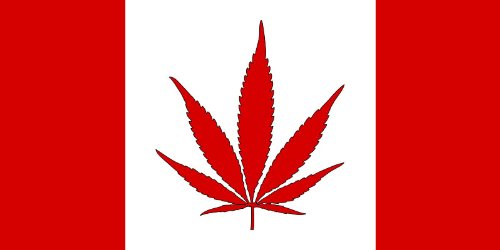
Mansfield College at Oxford University cancelled a cannabis-themed party a few weeks ago because some students feared it could lead to cultural appropriation. It seems some were concerned that the team organising the event drew on the music and culture of the Caribbean in its invitation.

That anyone could care so much as to complain about an event that encouraged students to ‘Get creative with puns’ for fancy-dress ideas – ‘Ganjalf’, ‘The Grim Reefer’ and ‘Ganja Claus’ were among the suggestions – is just sad.

The people most likely to denounce others for their “cultural appropriation” are also the ones most likely to suffer at the sight (or thought) of anyone having fun. They’re modern-day Puritans with tattoos, piercings, and multi-coloured hair.

Let’s be honest, those who cry ‘cultural appropriation’ are merely whingers with too much time on their hands. Not only is this a non-problem, it is also an inherently First World, middle-class problem. Just take a look at Teen Vogue’s article on this year’s Coachella – the annual music and arts festival held in California.

Writer Dillon Johnson complains about ‘appropriative fashion’ at the festival, including bindis, box braids and warbonnets. ‘It’s never okay to wear someone’s culture as a costume, especially not for the sake of getting double taps’, writes Johnson, before generously offering to ‘inform and educate those that are willing to learn’.

Considering a ticket to this year’s Coachella cost a minimum of $429 (and that’s before you’ve paid for accommodation, travel and food), it’s unlikey the festival-goers’ fashion choices will be of much importance to most people.

One of the greatest things about culture is its unifying power. One group borrowing cultural aspects of another is a sign of a diverse society that is proud and admiring of its many influences. As an Ashkenazi (of Eastern Europe descent) Jew, I take immense pleasure in hearing Yiddish words (the language of my grandparents and great-grandparents) being used so liberally in the US. You’d be hard pressed to find a New Yorker who doesn’t know words like schmuck, bubbe and chutzpah. And the liberal littering of Yiddish phrases in Hollywood films always makes me smile. It breathes new life into an old language.

The rage against cultural appropriation sucks the fun out of culture, and, even worse, encourages a new kind of segregation. We should encourage cultural sharing – it enriches our society. Only a schmuck would think otherwise.

April 26, 2018

Britain drops down a league table that really matters, for a change

Filed under: Britain, Liberty, Media, Politics — Tags: , , — Nicholas @ 05:00

Mick Hume on the parlous state of press freedoms in Britain:

Britain prides itself on being an historic home of freedom and the free press. So how come we are languishing in 40th place in the international press-freedom table?

Imagine the crowds singing an updated version of Rule Britannia at the Last Night of the Proms, about how Britain ‘shall flourish great and free / The dread and envy of them all / Except for the 39 freer nations, obvs’.

According to the 2018 World Press Freedom Index, published on Wednesday by Reporters Without Borders (RSF), the UK is now ‘one of the worst-ranked countries in Western Europe in terms of respect for press freedom’.

Its 40th place puts the UK one ahead of Burkina Faso and two clear of Taiwan, and suggests that journalists working in Britain have less freedom to hold the powerful to account than those in such liberal states as South Africa, Chile or Lithuania.

British observers are far more likely to bemoan how far we have fallen down the world rankings in football, another field we claim to have invented. Unlike the glorious irrelevance of football, however, freedom of the press really is a matter of life and death for a democratic society.

The UK’s 40th place is unchanged from 2017. But that is 18 lower than its ranking in the first Index, published in 2002 – and 12 places down on six years ago, before the publication of the Leveson report.

That should give a clue as to the new threats press freedom faces in the UK. Unlike in some other illiberal parts of the world, we are not confronted by old-fashioned government repression and state control of the press. Instead, and especially since the Leveson Inquiry, press freedom in the UK has been threatened by a more underhand assault from allegedly liberal political and cultural elites – backed, to their shame, by the Labour Party leadership and the Corbynite left.

George Orwell and 1984: How Freedom Dies

Filed under: Books, History, Liberty, Politics — Tags: , , , — Nicholas @ 02:00

Academy of Ideas
Published on 30 Dec 2017

In this video we explore why Orwell believed totalitarianism was a great risk in the modern West, contrasting his ideas with those of Aldous Huxley, author of Brave New World.
===
Get the transcript ►
https://academyofideas.com/2017/12/george-orwell-1984-how-freedom-dies/

April 24, 2018

Sweden’s free speech problem

Hugo Brundin explains why the social unrest Sweden is experiencing over immigration issues today is made much worse by restrictions on free speech:

Few in Sweden have escaped the circus of its migration politics. During the migration crisis of 2015, we had the somewhat dubious claim to fame of receiving record-breaking numbers of asylum-seekers. A year later, in Spring 2016, the ruling Social Democrats closed the borders. For a while, calling attention to problems in Sweden’s immigrant-dominated suburbs would have you branded an alarmist or a racist. Then in January 2018, the Swedish PM Stefan Löfven said he would consider using the military to curb gang violence in those same suburbs (a comment he later retracted). More recently, the Social Democrats have proposed a ban on all religious schools, clearly aimed at those of the Muslim faith. No party in the Swedish parliament supported such a ban a couple of years ago.

Those concerned with immigration have held Sweden up as a warning of the consequences of open-door migration. But the deeper problem in Sweden is one of public discourse, debate and freedom of speech. You see, Sweden has a consensus culture. The Overton Window is so notoriously narrow that it has been termed the ‘opinion corridor’. And when you’re hurtling down the corridor, unable to see what is around the next corner, much less the one after that, you never know where its twists and turns will take you. Opinions that would have had you vilified a few years ago are now part of the political mainstream, and frankly this can feel downright creepy. Sweden should not be a warning of how not to handle migration – it should be a warning of how not to handle public discussion.

Proposals such as the one to ban religious schools, a deeply intolerant and authoritarian idea, are exactly the sort of thing you get when public opinion changes on a dime, when conflicts have not been properly hashed out in public debate. It used to be said that open-door migration would save the economy and welfare state (rather than put strain on them) and that talk of cultural differences between the Middle East and Sweden was just racist myth-making. Yet now, Islamism is the issue du jour, and the political class is desperate to signal that it is doing something about it, with little thought paid to civil liberties.

April 19, 2018

Freedom of speech and scientific inquiry

Filed under: Liberty, Science — Tags: , , , — Nicholas @ 03:00

Adam Perkins on the critical importance of free speech in the scientific world:

A quick Google search suggests that free speech is a regarded as an important virtue for a functional, enlightened society. For example, according to George Orwell: “If liberty means anything at all, it means the right to tell people what they do not want to hear.” Likewise, Ayaan Hirsi Ali remarked: “Free speech is the bedrock of liberty and a free society, and yes, it includes the right to blaspheme and offend.” In a similar vein, Bill Hicks declared: “Freedom of speech means you support the right of people to say exactly those ideas which you do not agree with”.

But why do we specifically need free speech in science? Surely we just take measurements and publish our data? No chit chat required. We need free speech in science because science is not really about microscopes, or pipettes, or test tubes, or even Large Hadron Colliders. These are merely tools that help us to accomplish a far greater mission, which is to choose between rival narratives, in the vicious, no-holds-barred battle of ideas that we call “science”.

For example, stomach problems such as gastritis and ulcers were historically viewed as the products of stress. This opinion was challenged in the late 1970s by the Australian doctors Robin Warren and Barry Marshall, who suspected that stomach problems were caused by infection with the bacteria Helicobacter pylori. Frustrated by skepticism from the medical establishment and by difficulties publishing his academic papers, in 1984, Barry Marshall appointed himself his own experimental subject and drank a Petri dish full of H. pylori culture. He promptly developed gastritis which was then cured with antibiotics, suggesting that H. pylori has a causal role in this type of illness. You would have thought that given this clear-cut evidence supporting Warren and Marshall’s opinion, their opponents would immediately concede defeat. But scientists are only human and opposition to Warren and Marshall persisted. In the end it was two decades before their crucial work on H. pylori gained the recognition it deserved, with the award of the 2005 Nobel Prize in Physiology or Medicine.

From this episode we can see that even in situations where laboratory experiments can provide clear evidence in favour of a particular scientific opinion, opponents will typically refuse to accept it. Instead scientists tend cling so stubbornly to their pet theories that no amount of evidence will change their minds and only death can bring an end to the argument, as famously observed by Max Planck:

    A new scientific truth does not triumph by convincing its opponents and making them see the light, but rather because its opponents eventually die, and a new generation grows up that is familiar with it.

April 13, 2018

The free speech views of “Gen Z”

Filed under: Education, Liberty, Politics, USA — Tags: , , , — Nicholas @ 06:00

Sean Stevens and Jonathan Haidt argue that despite many nay-sayers, there really is a freedom of speech crisis on university campuses:

In our first post responding to the skeptics, we showed that the skeptics support their skepticism primarily by relying on data about the Millennial generation (those born 1982-1994). The skeptics are correct that Millennials are not much different than previous generations when asked about free speech issues. We also argued that this debate has nothing to do with Millennials; it is about CURRENT college students, who are not Millennials. By the fall of 2015, most college students (especially at elite four year schools) were members of iGen, the “Internet generation” (sometimes called “Gen Z”), which begins around birth year 1995, and which first arrived at college around 2013.

We noted that the new attitudes about speech — including the idea that speech can be violence (even when it includes no threat), and corresponding requests for safe spaces and trigger warnings — only began to appear on select campuses around 2013 or 2014, and we noted that these ideas only became widely known after the wave of student protests that began at the tail end of 2015. Therefore, we pointed out, it is unlikely that nationally representative samples, drawing on students in America’s 4,700 institutions of higher education, could have picked up any changes before 2015, when colleges were still full of Millennials who had never heard of trigger warnings and microaggressions. We proposed that the best way to evaluate whether or not things have changed on campus is to examine data collected on current college students in 2016 or later, and compare it to data on current college students from 2014 and before.

When we performed such comparisons, we found some evidence that in fact things are changing. There is not yet much data available to make direct comparisons, but the GSS does show a change for the little bit of iGen data that it has (see figure 1 in post 1), and the larger Knight study showed a change just from 2016 to 2017. In this post we do a much deeper dive. We present far more data on current college students and we assess whether the campus climate has changed in the last few years with regard to speaking up and sharing one’s views.

The key question is this: are students and professors today more reluctant than they were a few years ago to share their views or to question dominant views? If so, then there is a climate or culture problem on campuses where that change has occurred. We note that the overall climate can change rapidly even if there has been no change in average attitudes about speech. All that needs to happen is that a small group of students begins imposing social costs on those who say things they don’t like, while at the same time college administrators do nothing to stop them. (For a fuller explanation, see this essay by Lee Jussim, or this one by Nassim Taleb, whose title explains the key point: The most intolerant wins: The dictatorship of the small minority.) If college students are more likely to report the feeling of “walking on eggshells” in the years after 2015 than they did in the years before 2015, then there has been a change in the campus culture, even if the average student’s support for free speech has not changed.

April 12, 2018

Alex Tabarrok profiled in the Washington Monthly

Filed under: Business, Cancon, Economics, Liberty — Tags: , , , — Nicholas @ 03:00

Alex Tabarrok is a friend-of-a-friend (does that make us “friends once removed”?) I’ve read lots of his blog posts and watched many of his videos, but I’ve never actually met him in real life, so this profile was quite interesting:

Tabarrok came by his libertarianism early. When he was growing up in Toronto, his family would debate political and ethical issues over dinner every night. One evening the Tabarroks were debating the moral value of rock and roll. “I said, ‘Well, look at this band, Rush: they even quote this philosopher Ayn Rand in their songs,’ ” he recalled recently. “My mother said, ‘Oh yeah, you’d probably like her,’ and I felt embarrassed because I was using this in an argument and I actually hadn’t read any Ayn Rand before.” Tabarrok thinks his mother probably regrets her suggestion to this day.

Tabarrok made his way to the U.S. for graduate studies at George Mason, returning there as a professor in 2002. He now directs its Center for Study of Public Choice and is the economics chair at GMU’s Mercatus Center, a research institute heavily funded by Charles Koch and cofounded by Richard Fink, a former Koch Industries executive. The center, which boasts ties to prominent right-wing groups like the American Legislative Exchange Council, funds research to promote free-market policy solutions and the rollback of regulations. (Mercatus is Latin for “market.”) The Wall Street Journal has called Mercatus “the most important think tank you’ve never heard of.”

A few years ago, Tabarrok got a new toy to play with. Until recently, there was never great data available for researchers who wanted to empirically study the effects of regulation. But, in 2014, two other Mercatus Center research fellows developed a new public-use database called RegData, which captures everything published in the Code of Federal Regulations each year. Measuring regulation has always been surprisingly tricky, because when an agency puts out a rule, it can contain any number of new individual legal requirements. RegData addresses that problem by scrubbing the Code for key words such as “shall,” “required,” and “may not.” The theory is that this more accurately measures the number of regulations than simply counting the total number of pages in the Code, as past studies tended to do. RegData also uses artificial intelligence techniques to predict which industry each regulation will affect. The upshot is that, for the first time, economists could more confidently measure federal regulations over time and by industry. In theory, that would make it easier to build the case that regulations were hurting the economy.

QotD: “Hate” speech

Filed under: Law, Liberty, Quotations — Tags: , — Nicholas @ 01:00

The whole idea of ‘hate speech’ needs to be removed from our legal system immediately. Aside from the numerous problems involved with deciding what is and what isn’t ‘hate speech’ (and who gets to define what it is), allowing the most timorous snowflakes to set the boundaries is a surefire recipe for tyranny. And besides all that, the expectation that you somehow have a right not to be offended is ludicrous. Being offended is good. Being offended is healthy. Being offended leads to self-examination. That’s how discourse progresses. Anything new is bound to offend at least one person. If nobody is offended, then nobody is thinking.

“OregonMuse”, “The Morning Rant”, Ace of Spades H.Q., 2018-03-21.

March 25, 2018

Policing speech

Filed under: Britain, Law, Liberty — Tags: , , , , — Nicholas @ 03:00

British police forces don’t seem to have enough resources to track down and disrupt organized rape gangs, but they do have a burning desire to clamp down on what you say on social media. Priorities, I guess: it might be dangerous to tackle actual criminals, but it’s as safe as can be to bring the full force of law down on orange-fingered basement-dwelling keyboard warriors, critics of transgender policies, and other clear and present threats to the social order.

Patrick West sums up the situation:

It’s been a strange month for free speech. First comes the news that a stay-at-home mother of four has been contacted by the police for making comments critical of transgender ideology on Twitter.

Then, we read that the Canadian vlogger Lauren Southern was refused entry to the UK because, according to the Home Office, her presence was ‘not conducive to the public good’. Then, most absurdly, we hear that ‘self-confessed shitposter’ Markus Meechan – known on YouTube as Count Dankula – was found guilty in a Scottish court of hate speech for teaching his dog to perform a Nazi salute.

It doesn’t matter if the Count Dankula incident seems innocuous, or that he has many unpleasant supporters online. Nor does it matter that Southern is a leading ‘alt-right’ figurehead. Free speech means standing up for people you don’t care for, because if your enemies aren’t safe from the encroaching powers of the state, then you and you friends won’t be safe, either. You don’t have to be a libertarian fundamentalist to be worried about the state now prosecuting people for jokes.

But these incidents have been thrown into even sharper relief, owing to the fact that this week has also seen supporters of Tommy Robinson – not a particularly endearing character either, but an important one nonetheless – clash with extremist Muslims at Speakers’ Corner in London, of all places.

At a time when there are an estimated 20,000 Islamists at large in the country – 3,000 of whom are deemed particularly dangerous – it is perverse that the police and the courts are instead pursuing such soft targets. Because it’s far better for a police force’s profile to be seen as an ‘anti-Nazi’ rather than ‘Islamophobic’, the scandal of grooming gangs in Telford and elsewhere is ignored or brushed under the carpet. For similar reasons of denial and sheer cowardice, the issue of Sharia Patrols in London, threatening gay people with violence, is met with a proverbial fingers in the ears. If only the police and courts had been so vigilant about those who planned and then executed last year’s atrocities in London and Manchester.

The first duty of a state is to protect its citizens and their safety. The last duty of a state is to tell them what they can and can’t say. Being offensive should never be a crime.

March 22, 2018

The social media mistake

Filed under: Liberty, Media, Politics, Technology — Tags: , , , , — Nicholas @ 03:00

Robert Tracinski explains why the move to social media was dangerous to free public discourse despite the otherwise-attractive nature of TwitFaceTube and other factions of the social media Borg:

Was social media a mistake? Two recent events crystallized my answer to this question. First, conservative comedian Steven Crowder had his Twitter account suspended for a week because he posted a video on YouTube that was critical of “gender fluidity” and used a Bad Word. The video was also pulled from YouTube, which you might not think of as a social media platform, even though it definitely is.

Then Brandon Morse noticed Twitter was preventing him from tweeting a link to an article by a controversial conservative columnist. This follows stories of Google-owned YouTube “demonetizing” videos by conservatives, unplugging them from the ability to make money from ads, and Facebook and Google targeting conservative sites for hilariously inaccurate and tendentious “fact checks.” It’s becoming clear that the big social media companies are targeting ideas and thinkers on the Right, and not just the far-out provocateurs and trolls like Milo Yianopoulos, but everyone.

What strikes me most is the contrast between this and the Internet era before social media, before Facebook, Twitter, and YouTube swallowed up everything. I’m talking about the 2000s, the great era of the blogs. Do you remember what that blog era was like? It felt like liberation.

The era of blogging offered the promise of a decentralized media. Anybody could publish and comment on the news and find an audience. Guys writing in their pajamas could take down Dan Rather. We were bypassing the old media gatekeepers. And we had control over it! We posted on our own sites. We had good discussions in our own comment fields, which we moderated. I had and still have an extensive e-mail list of readers who are interested in my work, most of which I built up in that period, before everybody moved onto social media.

But then Facebook, Twitter, and YouTube came along and killed the blogs. There were three main reasons they took over.

I have various social media accounts, but in most cases I just use them to link to my blog posts. The old saw about never reading the comments applies with even greater force to most of the social media platforms. I don’t do “breaking news” on the blog, because that’s one thing social media can do better — most of my regular visitors come here once a day to see what I’ve posted since their last visit, not to check for smoking hot takes on something that happened in the last fifteen minutes. For immediacy, the social media sites will win over the blogs (and even the mainstream media, in many cases).

H/T to American Digest for the link.

March 21, 2018

Free speech at risk on campus

Filed under: Education, Liberty, Politics — Tags: , , , — Nicholas @ 03:00

Sean Stevens and Jonathan Haidt on the claims and counter-claims about the threat to freedom of speech in today’s universities:

Over the past two weeks, Jeffrey Sachs (a political scientist at Acadia U; not the economist at Columbia) has made the argument that There Is No Campus Free Speech Crisis, as he put it in a long twitter thread on March 9. Matt Yglesias then expanded on Sachs’ argument in a post titled Everything we think about the political correctness debate is wrong, and Sachs expanded his case in a Washington Post Monkey Cage essay with a similar title: The ‘campus free speech crisis’ is a myth. Here are the facts. Sachs and Yglesias both draw heavily on analyses of the speech questions in the General Social Survey, which were plotted and analyzed well by Justin Murphy on Feb. 16. In this blog post we will show a reliance on older datasets and the failure to formulate the question properly have led Sachs and Yglesias to a premature conclusion. Something is changing on campus, but only in the last few years.

Sachs and Yglesias claim that the current wave of concern about speech on campus that began around 2014 (with media reports about safe spaces and trigger warnings), and that intensified in 2015 (after the Yale Halloween controversy, and the earlier publication of The Coddling of the American Mind, by Lukianoff & Haidt) is a classic moral panic. They believe it is merely a media frenzy in response to a few high profile incidents. In a typical moral panic, people on one side of the political spectrum get riled up because stories about outrageous incidents appeal to their desire to believe the worst about a group on the other side. Sachs and Yglesias claim that conservatives and conservative media have gleefully exploited a handful of campus stories to fuel hatred of left-leaning students, or “social justice warriors,” when in in fact nothing has changed on campus.

Given how frequent moral panics are, especially as political polarization and cross-party hatred increases, and as social media makes it easy to whip up a panic, it is vital to have skeptics. It is important for people with different biases and prior beliefs to dig into survey data that bears on the question. It is also crucial to formulate the question properly. What exactly is it that has changed, or not changed, on campus in recent years?

Here are the three major positions in the current debate, along with our proposal for how each should be operationalized.

H/T to Claire Lehmann for the link.

March 20, 2018

Free speech on the ropes

Filed under: Liberty, Politics, USA — Tags: , , , , — Nicholas @ 03:00

J.D. Tuccille says the right to freedom of speech isn’t dead, but it might not qualify for a new life insurance policy:

We have an environment in which the president of the United States is dismissive of the free speech rights of his opponents, prominent constitutional scholars sniff at free speech unless it’s used by the “right” people for their favored goals, and the country’s leading civil liberties organization is suffering an internal revolt by staffers who oppose “rigid” support for free speech protections.

Last October, President Trump said “It’s frankly disgusting the way the press is able to write whatever they want to write.” That came just hours after he tweeted, “With all of the Fake News coming out of NBC and the Networks, at what point is it appropriate to challenge their License? Bad for country!” And even before Trump took the oath of office, he’d huffed that protesters who burn American flags should face loss of citizenship or jail.

So if you’re an academic with expertise in constitutional law, and you have months to watch a populist politician who commands the power of the presidency fulminate about punishing those who criticize him, what do you do? If you’re Georgetown Law’s Louis Michael Seidman, you suggest that the president might be on to something.

In a forthcoming paper, Seidman’s main complaint is that free speech doesn’t inherently favor progressivism — it allows too much voice to people who disagree. “At its core, free speech law entrenches a social view at war with key progressive objectives,” writes Seidman.

Sure, “the speech right has instrumental utility in isolated cases,” he adds. But “significant upside potential”? Nah.

[…]

In its early days, the American Civil Liberties Union (ACLU) viewed free speech as a tool of social justice, suited to particular purposes under particular conditions,” wrote Weinrib, calling on the modern organization to rededicate itself to progressive political goals over civil libertarian advocacy.

The ACLU may be close to taking her advice. Last fall, about 200 of the organization’s staff members signed a letter objecting to the groups’ “rigid stance” on the First Amendment. The letter was characterized by former ACLU board member Michael Meyers as “a repudiation of free-speech principles.”

Huh. With a president who openly chafes at criticism and suggests media naysayers should be punished with the force of law, now seems like a perfect time for opponents to rally around unfettered debate and the First Amendment. Instead, lefty academics and activists are lining up to agree with Trump that a free press and individual rights to freedom of speech, belief, and association are indeed overrated overall.

March 18, 2018

Border privacy issue should (eventually) get to the US Supreme Court

Filed under: Law, Liberty, USA — Tags: , , , — Nicholas @ 03:00

In Reason, Damon Root reports on two duelling precedents about US citizens’ right to privacy and the government’s interest in what’s on your smartphone when you re-enter the United States:

In its 2014 decision in Riley v. California [PDF], the U.S. Supreme Court held that law enforcement officials violated the Fourth Amendment when they searched an arrestee’s cell phone without a warrant. “Modern cell phones are not just another technological convenience,” Chief Justice John Roberts wrote for the majority. “With all they contain and all they may reveal, they hold for many Americans ‘the privacies of life.’ The fact that technology now allows an individual to carry such information in his hand does not make the information any less worthy of the protection for which the Founders fought.”

But what about when an American citizen is returning home from abroad and U.S. border officials want to thoroughly search the contents of that person’s cell phone? Does the Fourth Amendment require the government to get a warrant before searching cell phones at the border? According to a decision issued this week by the U.S. Court of Appeals for the 11th Circuit, the answer to that question is no.

[…] a divided panel of the 11th Circuit took a different view. “The forensic searches of Vergara’s cell phones occurred at the border, not as searches incident to arrest,” declared the majority opinion of Judge William H. Pryor. “And border searches never require a warrant or probable cause.”

Writing in dissent, Judge Jill Pryor wrote that while she agrees “with the majority that the government’s interest in protecting the nation is at its peak at the border,” she disagrees “with the majority’s dismissal of the significant privacy interests implicated in cell phone searches.” In Riley, she noted, the Supreme Court recognized “the significant privacy interests that individuals hold in the contents of their cell phones.” And in her view, “the privacy interests implicated in forensic searches are even greater than those involved in the manual searches at issue in Riley.” If it were up to her, “a forensic search of a cell phone at the border [should require] a warrant supported by probable cause.”

One thing is clear: We have not heard the last of this debate. Either this case, or one very much like it, is almost certainly headed for the Supreme Court.

March 17, 2018

“Schedule 7 of [Britain’s] Terrorism Act … effectively treats speech as terror, ideas as violence”

Filed under: Britain, Law, Liberty, Religion — Tags: , , , , — Nicholas @ 05:00

Brendan O’Neill on the British government’s decision to refuse admission to Canadian videographer Lauren Southern:

In Britain in the 21st century you can be punished for mocking gods. You can be expelled from the kingdom, frozen out, if you dare to diss Allah. Perversely adopting medieval Islamic blasphemy laws, modern Britain has made it clear that it will tolerate no individual who says scurrilous or reviling things about the Islamic god or prophet. Witness the authorities’ refusal to grant entrance to the nation to the alt-right Christian YouTuber Lauren Southern. Her crime? She once distributed a leaflet in Luton with the words ‘Allah is gay, Allah is trans, Allah is lesbian…’, and according to the letter she received from the Home Office informing her of her ban from Britain, such behaviour poses a ‘threat to the fundamental interests of [British] society’.

This is a very serious matter and the lack of outrage about it in the mainstream press, not least among those who call themselves liberal, is deeply disturbing. For what we have here is the ringfencing of Britain from anti-Islam blasphemy. The purification of the kingdom against those who would take the mick out of the Muslim faith. In refusing leave to enter to Ms Southern because she handed out those leaflets, the UK authorities are making it clear that this is a nation in which certain things cannot be said about Allah. They are sending a message not only to Ms Southern but to Britons, too: trolling of Islam is a ‘threat’ to society and counter to ‘the public policy of the United Kingdom’. They haven’t only banned one woman; they have sought to chill an entire sphere of ‘blasphemy’.

Ms Southern was stopped at the border in Calais. She was reportedly questioned under Schedule 7 of the Terrorism Act. This is an extraordinarily broad and illiberal part of the law. It can be used to stop anyone at Britain’s borders, even if there is no suspicion that they are involved in terrorism. The individual can be detained and questioned for up to nine hours. There is no right to silence. There is no right to a publicly funded lawyer if the person is at a border. That such a repressive measure was allegedly deployed in the questioning of someone for distributing leaflets, for speech, should horrify anyone who cares about liberty. This effectively treats speech as terror, ideas as violence, mere words as things to be kept out of the nation, setting a terrible precedent for free speech in this country.

H/T to Perry de Havilland for the link.

March 13, 2018

From slavery to Jim Crow to the civil rights movement

Filed under: History, Liberty, USA — Tags: , , , , , — Nicholas @ 03:00

In the latest Libertarian Enterprise, Sean Gabb discusses the role of international affairs in reducing racial inequality in the United States from 1877 to 1981:

The year 1877 is significant in America history, as this was the year in which the Federal Government ceased to interfere in the affairs of its Southern States, and these States began to construct the system of white racial supremacy known as “Jim Crow.” It is also a useful starting point for charting the rise of America to world supremacy. In the years before 1914, the Americans regarded opposition to European colonial rule as a prime foreign policy objective. They resented British/Indian control of the far East and they were strongly opposed to any division of China between the European colonial powers. They preached an ’Open Door Policy’ for China in which none of the white powers would have political control.

Again, this concern for the independence and self-determination of others was inconsistent with their own internal policies. As put by Paul Gilroy in the introduction of The Autobiography of Malcolm X, “the American civil war did not end in 1865.” Until the 1960s and even later blacks remained systematically at a legal and social and economic disadvantage in America. In most of the Southern States, blacks were not allowed to vote or to sit on juries, public and most private services were racially segregated, racial intermarriage was made illegal.

[…]

In the end America did not sign the treaty of Versailles and did not join the League of Nations. American domestic affairs remained insulated from foreign affairs. Wilson himself did much to keep them so. The early twentieth century saw a grown of racial consciousness among American blacks, and a number of charismatic leaders emerged to press the case for black equality. These included intellectual activist W. E. B. Du Bois, entrepreneur C. J. Walker, National Equal Rights League founder William Monroe Trotter, and activist Wells-Barnett, and Marcus Garvey, founder of The Universal Negro Improvement Association. These men wanted to attend and address the Paris Peace Conference in 1919. Wilson ensured that they were kept out.

By the 1930s, we see a growing realisation of the conflict between foreign and domestic policy. Look, for example, at chapter 26 of Harper Lee’s classic novel To Kill A Mockingbird. It is the 1930s and a teacher in the protagonists’ school denounces Nazi mistreatment of the Jews in Germany. She seems completely unaware that the Nuremburg decrees may have compared rather well with the ‘Jim Crow’ system in which she lived.

[…]

What matters about the Cold war for America is that its race relations became a serious embarrassment to its foreign policy. In order to oppose Communism the Americans had to preach their own versions of human rights which included all the usual liberal freedoms – i.e. freedom of speech, freedom of association, equality before the law, and so forth. It also needed the cooperation of an increasing number of non-white post-colonial governments. At every opportunity the Soviets tried to embarrass the Americans by drawing attention to their internal race relations.

Take, for example, the memorandum written in June 1963 by Thomas Hughes, Assistant Secretary of State for Intelligence and Research at the State Department. He summarises some of the main themes of Soviet broadcasts to the Third World: Capitalism provides a natural environment for racism, which will never end so long as the American system needs cheap labour; the federal government’s policy of limited intervention in Southern conflicts is tantamount to support of Southern racism; the United States cannot claim to be the leader of the free world while hypocritically refusing to support civil rights within its own borders.

Hughes adds that, most politically damaging, Soviet broadcasters were arguing that American domestic policy toward its black citizens was ‘indicative of its policy toward peoples of color throughout the world.’ Emerging African, Asian, and South American nations, in other words, should not count on Americans to support their independence.

The journalist Walter Lippmann had noted in 1957 that

    the work of the American propagandist is not at present a happy one…. [Segregation] mocks us and haunts us whenever we become eloquent and indignant in the United Nations…The caste system in this country, particularly when as in Little Rock it is maintained by troops, is an enormous, indeed an almost insuperable, obstacle to our leadership in the cause of freedom and human equality.

We can write the history of the American civil rights movement purely in terms of domestic politics. We can for example write about the Brown decision and ’Massive Resistance’ and the crisis in Little Rock. Of course this is entirely legitimate. The struggle for racial equality has deep roots in American history and may well have triumphed even had there been no other countries in the world. However it does seem reasonable to see an international dimension in the rapid progress of racial equality after the 1940s.

« Newer PostsOlder Posts »

Powered by WordPress