
It is a settled assumption among most libertarians, classical liberals and English-speaking conservatives that market behaviour is part of human nature. Whether or not we care to make a point of it, we stand with John Locke and, through him, with the men of the Middle Ages and with the Greeks and Romans, in trying to derive what is right from what is natural.
We believe that there is a natural inclination to promote our own welfare and that of our loved ones. We further believe that, given reasonable security of life and property, this inclination will lead to the emergence of a system of voluntary exchange. That is, we will seek to trade the things we have or can create for other things that we regard as of greater value to ourselves.
In doing so, ratios of exchange that we call prices will be revealed. These prices, in turn, will provide general information about what should be produced, in what ways and in what quantities. Furthermore, changes in price will provide information about changes in preferences or in abilities to produce. Custom will set aside one or more goods to serve as money. Institutions will emerge that channel savings into productive investment, that spread risk, and that moderate expected fluctuations in price. Laws will develop to police the transfer of property and performance of contracts.
We believe that market economies emerge spontaneously and are self-regulating and self-sustaining. This is not to say that all market societies will be the same. Their exact shape will depend on the intellectual and moral qualities of the individuals who comprise them. They will reflect pre-existing patterns of trust and honesty and the general cultural and religious values of a people. They will also be more or less distorted by government intervention. But we do say that market behaviour is natural — that, in the absence of extreme government coercion, or extreme disorder, buying and selling to increase our own welfare is what we naturally do.
Sean Gabb, “Market Behaviour in the Ancient World: An Overview of the Debate”, 2008-05.
November 27, 2019
QotD: The evolution of markets
November 25, 2019
How to Be an Epicurean
In City Journal, Michael Gibson reviews a recent book on Epicureanism by Catherine Wilson:
The Atomic Age had its anxieties, but Hugh Hefner believed he had a good diversion. “We aren’t a family magazine,” he announced in the first issue of Playboy in 1953. “We enjoy mixing up cocktails, an hors d’oeuvres or two, putting a little mood music on the phonograph, and inviting in a female acquaintance for a quiet discussion on Picasso, Nietzsche, jazz, sex.” By the 1960s, the music had grown louder, the colors more lurid, the conversations steamier. When Hefner died in 2017, he was considered either a hero of hedonism or an object lesson in the period’s squalid obsessions. Run a Google search today on Hefner, and you’ll often find the word “Epicurean” to describe him. Is this fair to Epicurus, the man who set forth the philosophy starting in 306 BC?
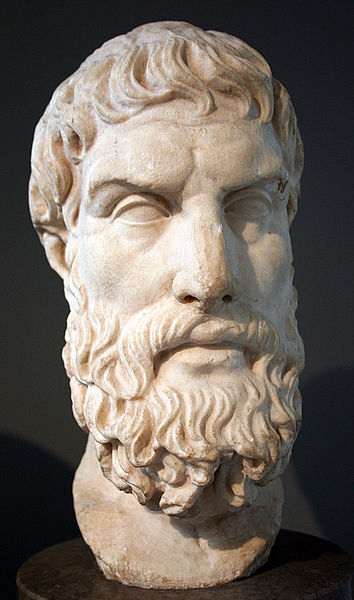
Marble bust of Epicurus. Roman copy of Greek original, 3rd century BC/2nd century BC. On display in the British Museum, London.
Photo by ChrisO via Wikimedia Commons.For 23 centuries now, Epicureans have struggled mightily against variations of the Hefner caricature. If pleasure is the highest good, the goal of the best life, must we all strive to live in pajamas, smoking a pipe in a decadent Hollywood Hills estate? Though he didn’t live in a mansion off Sunset Boulevard, at the end of the fourth century BC, at the age of 32, the philosopher Epicurus founded the Garden, a school removed from Athens’s monuments of power and politics. An inscription at the entrance read: “Stranger, here you will do well to stay; here our highest good is pleasure.” (In Chicago, Hefner’s door bore an inscription: Si Non Oscillas, Noli Tintinnare, or “If you don’t swing, don’t ring.”)
Leading life in a modern Garden is the subject of Catherine Wilson’s latest book, How to Be an Epicurean: The Ancient Art of Living Well. There was always an air of Peter Pan-like anarchy at the Playboy Mansion, but as Wilson shows us, life in the Garden was quite different. Her book is a spirited tour and defense of Epicurean philosophy, as reconstructed by the fragments Epicurus left behind in tattered papyrus and as set forth in the epic poem De Rerum Natura, “On the Nature of Things,” by the Roman poet Lucretius.
What did these pleasure-seekers believe? They start with the elementary particles, atoms — tiny, colorless, without smell, shaped this way and that, indestructible, reshuffling themselves infinitely into all the marvelous forms we see, including ourselves. Their forms get swept away by time, only to recombine again into something new — possibly another universe. Blurred in this haze of metaphysics, most atoms fall straight downward into the void, but a few swerve, and from these deviations arise our free will and all that we see. At the California Institute of Technology, physicist Richard Feynman began his lectures by wondering what single sentence would be passed on to future generations, if, in a cataclysm, all scientific knowledge was destroyed. His answer: “The atomic hypothesis that all things are made of atoms.”
With the Epicureans, we have a historical test of Feynman’s thought. The world is made of nothing more than atoms in the void, but where did that take the ancient Greeks and Romans who believed it? Wilson begins with these basic building blocks because she asserts that mistaken beliefs about nature are the source of our deepest fears and hang-ups: death, punishment in an afterlife, failure in this one, lust for power, greed, jealousy, unrequited love, and status-jockeying. “Epicurean philosophy might be said to be based on the notion of the limit,” Wilson writes. By understanding the atom and the void, by knowing that the soul is mortal and the gods indifferent, that all things pass and are forgotten, we might then liberate ourselves from the grinding weight of superstition and the vanity of ambition and pursue pleasure without guilt.
November 20, 2019
QotD: Theorizing an American police state
Kevin D. Williamson, “O’Rourke’s America”, National Review, 2019-10-16.
November 12, 2019
QotD: The crimes of the Righteous
Later, with time, I learned that although all men are capable of good and evil, the worst among them are those who, when they commit evil, do so by shielding themselves in the authority of others, in their subordination, or in the excuse of following orders. And even worse are those who believe they are justified by their God. Because in the secret dungeons of Toledo, nearly at the cost of my life, I learned that there is nothing more despicable or more dangerous than the malevolent individual who goes to sleep every night with a clear conscience. That is true evil. Especially when paired with ignorance, superstition, stupidity, or power, all of which often travel together.
And worst of all is the person who acts as exegete of The Word — whether it be from the Talmud, the Bible, the Koran, or any other book already written or yet to come. I am not fond of giving advice — no one can pound opinions into another’s head — but here is a piece that costs you nothing: Never trust a man who reads only one book.
Arturo Pérez-Reverte, Purity of Blood, 1997.
November 8, 2019
Don’t hold your breath waiting for the Feds to tackle Quebec’s ongoing repression against minorities
Chris Selley on the situation in Quebec, where first-class citizenship is only available to those who speak French and don’t expect their religious beliefs to be respected:

One of the fascinating things about Quebec politics is that it’s often impossible to predict which absurdities will become controversial and which will be accepted as reasonable. The province’s linguistic and more recently cultural debates operate in an atmosphere so divorced from normal reality that it’s impossible to know how any new idea or event might react to its unique and volatile mixture of gases.
The classic example is Pastagate: An inspector from the Office québécois de la langue française found an Italian restaurant’s menu was riddled with Italian — calamari, antipasti — and issued the appropriate cease-and-desist notice. At no point did anyone suggest he had misinterpreted the law. Despite universal scorn and worldwide mockery, at no point did anyone successfully explain why this inspector’s actions were obviously ultra vires, while the OQLF’s other insane diktats — say, forcing a bilingual community newspaper to segregate English-language and French-language content such that English-only advertising will never appear on the same page as a French-language article — were reasonable.
As a result, Quebec politics is like a festival of trial balloons. Most recently we saw languages minister Simon Jolin-Barrette float the idea of banning merchants from greeting customers with “bonjour-hi” — a Downtown Montreal-ism that turns language hawks crimson with rage — only to have Premier François Legault shoot it down a couple of days later amidst widespread ridicule.
By contrast, we’re supposed to think it’s totally reasonable that the National Assembly voted merely to request that merchants use state-sanctioned greetings. Unanimously. Twice.
Ban religious symbols for all civil servants, or only those “in a position of authority”? Which civil servants are “in a position of authority”? Should currently employed civil servants affected by Bill 21 be grandfathered in or not? You can poll all you like, but until any given idea goes through Quebec’s intense media ringer, no one knows how it’ll shake out. With fundamental rights at stake, the majoritarian randomness of it all is truly alarming.
November 5, 2019
The three ways human beings can organize themselves
In the latest Libertarian Enterprise, L. Neil Smith relates the time he took a week-long seminar with Robert LeFevre:
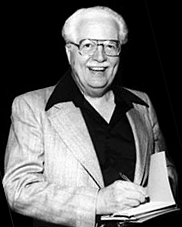
I already considered myself a libertarian — of the Randian variety — when I first met Bob in 1972, at a seminar he delivered in Wichita, Kansas, sponsored by the Love Box Company and the local 7-up bottlers. I spent five magical 8-hour days in a motel basement meeting room, with about forty other people, listening to Bob’s moral, historical, and economic observations. Nearly half a century later, I can still remember large swatches of them, virtually verbatim. Bob reminded me of Frank Morgan in The Wizard of Oz. I didn’t agree with everything the Wzard of Libz said and thought (most notably, Bob was a Gandhian pacifist, while anyone who knows me or my work will tell you that, I, decidedly am not.)
But it was Bob’s unique view of history that won me over and changed my life. There are only three ways, he said, for human beings to organize themselves: (A), one guy tells everybody what to do; (B), everybody tells everybody else what to do; and (C) nobody tells anybody what to do. The last, he insisted, is the very definition of libertarianism.
Inevitably, Bob was an advocate of (C), and so was I, once he had rid me of the cob-webs in my head and the myth of “limited government”, which, he pointed out, somehow never manages to stay limited. Option (A), he suggested, was the way that the world had turned for ten thousand years or longer.
(B) is supposed to be the be-all and end-all of sociopolitical arrangements. It encompasses various forms of collectivism, including socialism, fascism, and the most dangerous of all, democracy, under which you are encouraged to believe that you’re free, but your neighbors can vote to control your life and impoverish you any time they want. As Robert A, Heinlein (a friend of Bob’s) put it, “‘Vox populi, vox dei‘ usually means ‘How the hell did we get into this mess?'”
The violent transition to (B) in 1776 accomplished two important things. It may yet prove to be a pathway to real liberty (no, I’m not holding my breath). In terms of what I’ve written here, it also pissed off all the right people. It schmussed humble pie in the face of the insane King George III and the rest of his inbred, slithery, pampered ilk. And when British General Corwallis surrendered his sword to George Washington, the band (where the hell did that come from?) played a little ditty called “The World Turned Upside-down.”
Most of history since then, according to Bob, has been a series of attempts — the War Between the States, public schooling, World War I, the Federal Reserve banks and the income tax, World War II, the United Nations, communism’s rise in Europe and Asia, the overpopulation and Global Warming hoaxes, the Silicon Valley commisars, the socioeconomic war on the Productive Class — by the pre-Revolutionary elites (who all seem to be related to each other) to regain the power they once wielded over the rest of the human race.
Aside from what I’ve written in The Libertarian Enterprise about the political significance of gun ownership, if you want to see who’s really on what side, take a look at the war on cattle and red meat. For centuries, the aristocrat class have hunted, and they have dined lavishly on animal protein, while trying to forbid the peasantry — us deplorables — the same rights and forcing them to subsist on boiled turnips. There’s a good reason for this: meat is mind. If you remembver nothing else of what I’ve said here, remember that: meat is mind. It contains certain components that let you build a strong and efficient nervous system (look up myelin), creating uppity peons, the last thing any right-minded upper cruster wants.
For decades, these creepy, perverted parasites have been sneaking up on us, falsely calling themselves “Progressives”, hoping to reverse the American Revolution and everything it has meant to humanity. Since socialism was invented in the early 19th century by Pierre-Joseph Proudhon, they’ve made more and more of what they regard as “progress”. By the beginning of the 21st century, they thought their victory was inevitable — until it was rudely snatched out of their blood-soaked hands by those uppity meat-eating peasants, eventually led by Donald J. Trump. The patricians and their surrogates are the swamp Trump wants to drain.
November 2, 2019
Notepad++ release 7.8.1, also known as the “Free Uyghur” edition, draws unfriendly Chinese attention
I’ve been using Notepad++ as one of my text editor options for a long time. It’s a very useful tool, and I heartily commend it to anyone needing a Windows text editor that can do a lot more than just edit text. I hadn’t downloaded the most recent version, so I was unaware that the developer was under attack from Chinese government supporters for his explicit designation of version 7.8.1 as the Free Uyghur edition:
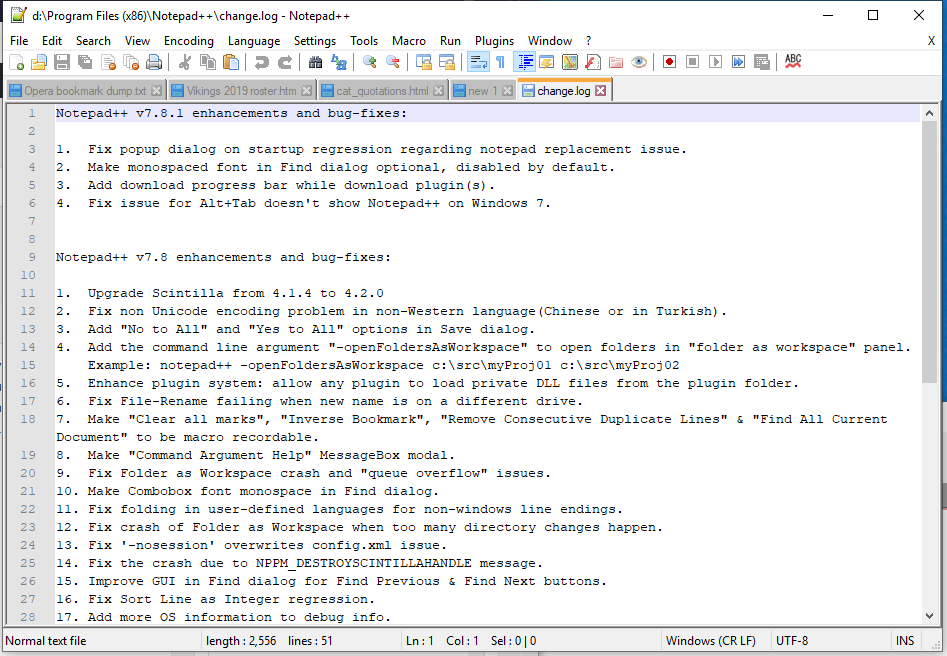
On Tuesday, Don HO, the developer of Notepad++, a free GPL source code editor and notepad application for Microsoft Windows, released version 7.8.1, prompting a social media firestorm and a distributed denial of service attack.
Notepad++ v7.8.1 was designated “the Free Uyghur edition,” in reference to the predominantly Muslim ethnic group in western China that faces ongoing human rights violations and persecution at the hands of Beijing.
“The site notepad-plus-plus.org has suffered DDoS attack from 1230 to 1330 Paris time,” HO said in an email to The Register. “I saw the [reduced] amount of visitors via Google analytics then the support of my host confirmed the attack. The DDoS attack has been stopped by an anti-DDoS service provided by our host [Cloudflare].”
Previous politically-themed Notepad++ releases have focused on Tiananmen Square and the terrorist attack on French satirical publication Charlie Hebdo.
A post on the project’s website explains HO’s decision to criticize the Chinese government, something companies with business interests in China generally try not to do for fear of retribution.
From the Notepad++ website:
Human rights in China is always a hotly contested topic. Since 2017, numerous reports have emerged of the Uyghur people being detained in extrajudicial “re-education camps”, subjected to political indoctrination, and sometimes even torture. 2018 estimates place the number of detainees in the hundreds of thousands.
The Uyghurs are not ethnically Chinese but live in China’s so-called autonomous Xinjiang region. The region’s name suggests the Uyghurs have autonomy and self-governance. But similarly to Tibet, Xinjiang is a tightly controlled region of China. After the recent Xinjiang conflict, Beijing has recast the Uyghur ethnic group as a terrorist collective. This has allowed Beijing to justify its transformation of Xinjiang into a surveillance state. There has also been a marked rise of Islamophobia across China.
At least 120,000 members of Kashgar’s Muslim Uyghur minority have been detained in Xinjiang’s re-education camps which aim to change the political thinking of detainees, their identities, and their religious beliefs. Reports from the World Uyghur Congress submitted to the United Nations in July 2018 suggest that 1 million Uyghurs are currently being held in the re-education camps.
October 27, 2019
Freedom of speech under threat (again)
In The Atlantic, Ken White strongly urges pro-free-speech advocates to avoid using some arguments that have been bandied around recently:

What speech should be protected by the First Amendment is open to debate. Americans can, and should, argue about what the law ought to be. That’s what free people do. But while we’re all entitled to our own opinions, we’re not entitled to our own facts, even in 2019. In fact, the First Amendment is broad, robust, aggressively and consistently protected by the Supreme Court, and not subject to the many exceptions and qualifications that commentators seek to graft upon it. The majority of contemptible, bigoted speech is protected.
If you’ve read op-eds about free speech in America, or listened to talking heads on the news, you’ve almost certainly encountered empty, misleading, or simply false tropes about the First Amendment. Those tired tropes are barriers to serious discussions about free speech. Any useful discussion of what the law should be must be informed by an accurate view of what the law is.
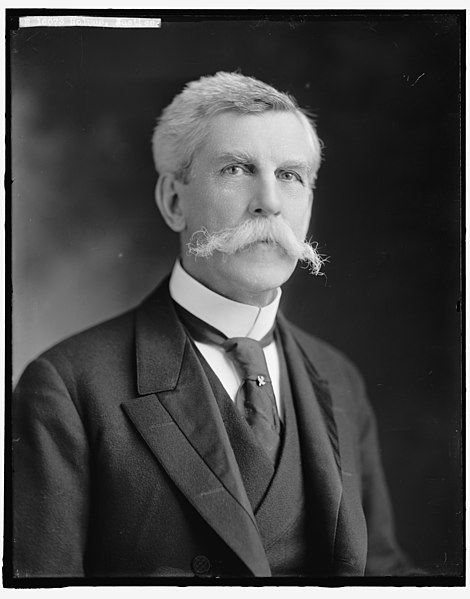
Supreme Court Justice Oliver Wendell Holmes, Jr.
Photo by Harris & Ewing via Wikimedia Commons.
[…]“This speech isn’t protected, because you can’t shout ‘Fire!’ in a crowded theater.”
This line, though ubiquitous, is just another way to convey that “not all speech is protected by the First Amendment.” As an argument, it is just as useless.
But the phrase is not just empty. It’s also a historically ignorant way to convey the point. It dates back to a 1919 Supreme Court decision allowing the imprisonment of Charles Schenck for urging resistance to the draft in World War I. Justice Oliver Wendell Holmes Jr. wrote that the “most stringent protection of free speech would not protect a man in falsely shouting fire in a theatre and causing a panic.” This decision led to a series of cases broadly endorsing the government’s ability to suppress speech that questioned official policy. But for more than half a century Schenck has unequivocally and universally been acknowledged as bad law.
Holmes himself repented of the decision — though he continued to indulge his taste for pithy phrases with lines like “Three generations of imbeciles are enough” to justify forcible government sterilization of the handicapped.
So when you smugly drop “You can’t shout ‘Fire!’ in a crowded theater” in a First Amendment debate, you’re misquoting an empty rhetorical device uttered by a career totalitarian in a long-overturned case about jailing draft protesters. This is not persuasive or helpful.
October 18, 2019
Hong Kong
David Warren on how Hong Kong got to be Hong Kong:

“Hong Kong night Panorama” by Andos_pics is licensed under CC BY-NC-SA 2.0


The motto of the resistance in Hong Kong is on my lips much lately, though often I am not applying it to Hong Kong. Nor am I not. I look at this “Oriental entrepôt” (as we used to say before political correctness), where once I lived for a couple of months, from a great and widening distance. The people there are quite another generation from that which I remember; of course they seem much younger. The idea of the inhabitants of Hong Kong nearly closing the city with demonstrations, week after week, was not formerly possible to imagine. But their enthusiasm for the personal freedom they once enjoyed (under the aegis of British imperialism and colonialism, descending from opium wars), hardly surprises me.
The British approach was finally, live and let live; but it had an administrative basis. From the 1950s, Hong Kong was an experiment. What would happen if they deregulated almost everything, and cut taxes to match? If they consciously de-politicized the colonial administration? If they shrank police functions to what was needed only to direct traffic, and defeat crime? The result was, as ever, unprecedented prosperity, but more: a people who forgot the habit even of kow-towing to men “dress’d in a little brief authority.”
People were transformed, from indifferent parts in a rusting machine, to free agents. (Unfortunately, in a broader view, prosperity also kills, as people use their freedom only for material gain, and a new jackboot state grows around the need to protect against the consequences.)
Hong Kong is a city now of seven million souls. It has, as it had, economic and social classes — plenty of them — yet the present “troubles” have nought to do with class. Opposition to the Communist government is as broad as it was in all ex-Soviet states, as we discovered when the Berlin Wall fell, and nearly discovered across China in the moment of Tiananmen. Rebellion, to start, is an urban phenomenon; it begins with a sudden collective sense that “we have the numbers.” The fear, upon which all tyrannical regimes depend, evaporates. What happens next is anyone’s guess, except, we can know the regime is doomed.

2019 Hong Kong anti-extradition law protest on 16 June, captured by Studio Incendo from Flickr.
Photo via Wikimedia Commons
October 11, 2019
The National Basketball Appeasement Association
Colby Cosh discusses the moral squalor, cowardice, avarice, and reflex appeasement gesturing of the NBA and finds a Canadian angle to the whole mess:
The National Basketball Association has spent the week trying to control the effects of a tweet by Daryl Morey, general manager of the Houston Rockets, who jeopardized his job on Friday when he told readers “Fight for freedom, stand with Hong Kong.” The tweet winked out of existence quickly, but it had prodded a sore spot. Morey faced immediate criticism from the Rockets’ owner and from the Chinese consul in Houston. Steps were taken within China to declare the Rockets personae non gratae and to cancel some NBA broadcasts.
[…]
Which leads to us to the true Canadian angle, copyright Colby J. Cosh 2019 (all rights reserved). Daryl Morey’s tweet was the 21st century’s “Vive le Quebec libre.”
All right, Morey isn’t a statesman, as de Gaulle was — but the NBA itself wants us to believe that it is a force for international harmony, and Morey is a prominent figure in the NBA. There is an amusing subplot here in that Morey has traditionally been regarded as an outsider in the league, a computer nerd who barged his way in by using technical analytics to improve team performance both on the court and at the gate. The natural assumption of a person who went to university in the 1990s is that he would be perfectly free as a matter of course to blurt out a political opinion — one that is in no way remotely controversial in the free world — on Twitter. Well, we are all learning to revise such assumptions.
When General de Gaulle uttered the 1967 version of an ill-advised, impulsive tweet, it created a small spasm of anger in English Canada, as Morey’s endorsement of an increasingly separatist protest movement in Hong Kong has. (Chinese sovereignty in Hong Kong is supposed to be as much an accepted fact as Canadian sovereignty in Quebec, and from the Party point of view, the Hong Kong protests are internal civil disorder. The same, of course, would go for China’s re-education camps full of Uyghurs, who represent the fate that pro-democracy Hong Kongers are trying to avert.)
But it was the Canadian political establishment that de Gaulle really provoked to rage with his sly, ambivalent remark. It was seen as an offence against hospitality. Canada’s mandarins — pardon the inadvertent pun — knew that de Gaulle’s resounding “liiibre” would give, above all, moral impetus to the enemies of Confederation. This proved to be the case, as far as history can tell. Et donc — vive Hong Kong! Vive Hong Kong libre!

October 5, 2019
QotD: Individual liberty
John Stuart Mill, On Liberty, 1859.
October 4, 2019
QotD: Freedom of thought
Robert A. Heinlein, “If This Goes On —”, 1940.
September 19, 2019
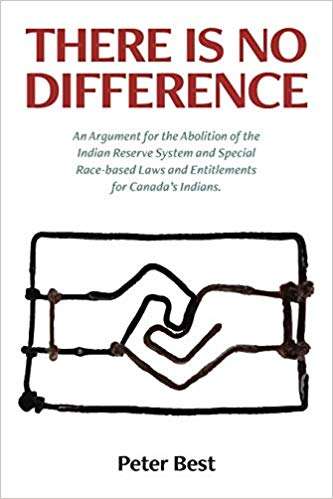
“[T]he Indian Act is a benign form of apartheid”
In the National Post, Barbara Kay discusses a recent book on the key legislation that regulates relations between the Canadian federal government and the various First Nations groups:
Few and far between are disinterested scholars of Canada’s Aboriginal history who have the tough hide and principled will to publicly depart from the approved Indigenous “nation-to-nation” narrative that keeps the guilt and money flowing, but perpetuates a dysfunctional status quo on many reserves. Most of the dissenters are university academics. But Best is simply an intelligent man with a passion for his subject, a deep impatience with political correctness, and unremitting determination to weather whatever storms afflict him as he shepherds his views to a public market.
I’ve written before in the National Post and elsewhere about Best’s lonely battles with our society’s forces of repression. There Is No Difference began its public life as a post on a dedicated online site in 2014, copied to his legal firm’s. Shortly afterward, complaints were filed against him with the Law Society of Upper Canada (now the Law Society of Ontario), asking that Best be “disbarred or suspended” and that he be forced to apologize for using his law practice “to disseminate racist materials.”
After two years of stressful limbo, the Law Society graciously allowed that the excerpts submitted by the (unnamed) complainant were “not enough to merit a finding of any form of professional misconduct on their face.” (The last three words telegraph the ardent wish that they had been; apart from a dissenting group of new benchers, the Law Society’s board has increasingly demonstrated worrying Thought Police tendencies.)
Best believes the Indian Act is a benign form of apartheid, and advocates for the integration model of equal citizenship for all, a model promoted, for example, by Pierre Elliott Trudeau (who called the system “apartheid”), and the late Aboriginal lawyer William Wuttunee, author of Ruffled Feathers, who was marginalized and discredited as an “apple,” red on the outside, white on the inside.
Best believes the federal government must be the ultimate master in its own house for Canada to function as a healthy nation. He is fiercely critical of the Supreme Court’s 2004 emphasis on the “honour of the Crown” concept in its Haida Nation vs. British Columbia ruling, with key words “to consult and where appropriate, accommodate the Aboriginal interest” virtually decreeing a devolution of Crown sovereignty to Aboriginals, and effectively turning Indigenous bands into a third order of government with the power arbitrarily to advance or restrict Canada’s economic fortunes.
It’s easy for Indigenous activists to bash a white historian, or even an Aboriginal dissident without special standing like Wuttunee. But it will be more difficult to dismiss the opinion of a former Supreme Court justice. Best just came in for an unexpected stroke of luck. Former Supreme Court justice Jack Major (1992-2005) has given the book his endorsement in a letter discussed in an article by the Frontier Centre for Public Policy (FCPP).
September 18, 2019
The Canadian Charter of Rights and Freedoms* (*not all sections apply in Quebec)
Andrew Coyne on the disgraceful habit of the federal government (and nine provincial governments) to look the other way when Quebec decides that some of the guarantees in the Charter don’t apply in La Belle Province:
For many observant persons, particularly Muslims, Sikhs and orthodox Jews, this amounts to a religious hiring bar: the wearing of the hijab, the turban and the kippa are key requirements of their faith, and as such core elements of their identity. To demand that they work uncovered is, in effect, to post a sign saying Muslims, Sikhs and Jews need not apply.
We should be clear on this. It’s not just a dress code, or an infringement of religious freedom, or religious discrimination, or those other abstract phrases you hear tossed about. We are talking about a law barring employment in much of the public sector — not just police and judges, but government lawyers and teachers — to certain religious minorities.
Existing workers may have been grandfathered, but only so long as they remain in their current jobs. Should they ever move, or seek a promotion, they will face the same restrictions. The signal to the province’s religious and, let’s say it, racial minorities, vulnerable as they will be feeling already after the mounting public vitriol to which they have been exposed in the name of the endless “reasonable accommodation” debate, is unmistakable: you are not wanted here. Not surprisingly, many are getting out — out of the public service, out of Quebec.
That this is actually happening, in 2019, in a province of Canada — members of religious minorities being driven from their jobs, and for no reason other than their religion — is sickening, and shameful. That shame is not reserved to Premier Francois Legault or his CAQ government, the people responsible for designing and implementing this disgraceful exercise in segregation, this manifestly cruel attempt to cleanse the province’s schools and courts of religious minorities. It is no less shaming to the rest of us, everywhere across Canada, so long as we permit it to continue.
That is, so far as we are capable of feeling it. But experience has taught us to look the other way when it comes to Quebec, to tell ourselves that it is none of our affair, that we must not raise a fuss when the province explicitly elevates the interests of its ethnic and linguistic majority over those of its minorities, or threatens the country’s life for long years at a time — the beloved “knife at the throat” strategy — to back its escalating fiscal and constitutional demands. We dare not. We cannot. For then Quebec would leave.
September 10, 2019
QotD: Mere words are not “violence”
He adds: “Everybody involved in education needs to be dampening down violence and the acceptance of violence. Telling students that words are violence is counterproductive to that effort.”
Jonathan Haidt, quoted by Naomi Firsht, “The Fragile Generation”, Spiked, 2017-08-31.


