
Published on 3 Oct 2015
Japan invaded Korea after a series of long civil wars that had finally culminated in Toyotomi Hideyoshi leading a unified Japanese army. Their martial society had trained extensively with weapons like the arquebus, early guns, and the civil war had given them tremendous experience with siegecraft. By contrast, Korea had not been at war for hundreds of years: they were mostly troubled by raiders from without and corrupt government officials from within. However, their unique situation meant that they had great cannons for fighting off pirates and secure if minimal hill-top forts. As a tributary ally of the Chinese, the Koreans were startled and confused when Japan asked permission to march through their territory and make war on China. Many officials thought the Japanese were only bluffing, but Ryu Seong-ryong recognized the threat and made sure his friend Yi was moved to naval service to help defend the country. Yi trained his men and commissioned a new ironside ship design called the Turtle Ship. Unfortunately, other commanders did not take the threat seriously: even when Japanese ships appeared on the horizon, the southern commander convinced himself it was a trade fleet and took no action while the ships docked, then unloaded their soldiers onto Korean soil. The well-trained Japanese army crushed the Korean army and quickly advanced to Seoul. Meanwhile, Yi organized his small fleet of warships and launched quick strikes against the Japanese navy, catching them off-guard and on-patrol. He destroyed 43 enemy ships without losing a single one of his own, and was promoted accordingly to become the new Southern Commander of the Korean navy.
November 12, 2015
Korea: Admiral Yi – II: Be Like a Mountain – Extra History
November 11, 2015
In memoriam
A simple recognition of some of our family members who served in the First and Second World Wars:
The Great War
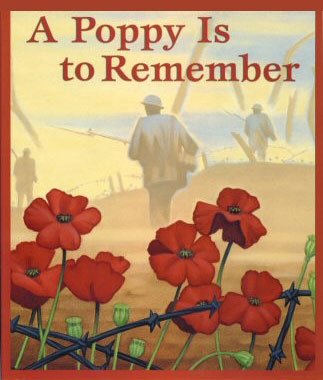 Private William Penman, Scots Guards, died 1915 at Le Touret, age 25
(Elizabeth’s great uncle)- Private David Buller, Highland Light Infantry, died 1915 at Loos, age 35
(Elizabeth’s great grandfather) - Private Walter Porteous, Northumberland Fusiliers, died 1917 at Passchendaele, age 18
(my great uncle) - Corporal John Mulholland, Royal Tank Corps, died 1918 at Harbonnieres, age 24
(Elizabeth’s great uncle)
The Second World War
- Flying Officer Richard Porteous, RAF, survived the defeat in Malaya and lived through the war
(my great uncle) - Able Seaman John Penman, RN, served in the Defensively Equipped Merchant fleet on the Murmansk Run (and other convoy routes), lived through the war
(Elizabeth’s father) - Private Archie Black (commissioned after the war and retired as a Major), Gordon Highlanders, captured at Singapore (aged 15) and survived a Japanese POW camp
(Elizabeth’s uncle) - Elizabeth Buller, “Lumberjill” in the Women’s Land Army in Scotland through the war.
(Elizabeth’s mother) - Trooper Leslie Taplan Russon, 3rd Royal Tank Regiment, died at Tobruk, 19 December, 1942 (aged 23).
A recently discovered relative. Leslie was my father’s first cousin, once removed (and therefore my first cousin, twice removed).
In Flanders fields the poppies blow
Between the crosses row on row,
That mark our place; and in the sky
The larks, still bravely singing, fly
Scarce heard amid the guns below.We are the Dead. Short days ago
We lived, felt dawn, saw sunset glow,
Loved and were loved, and now we lie
In Flanders fields.Take up our quarrel with the foe:
To you from failing hands we throw
The torch; be yours to hold it high.
If ye break faith with us who die
We shall not sleep, though poppies grow
In Flanders fields.Lieutenant Colonel John McCrae, MD Canadian Army Medical Corps (1872-1918)
Mark Knopfler – “Remembrance Day”
A Remembrance Day slideshow using Mark Knopfler’s wonderful “Remembrance Day” song from the album Get Lucky (2009). The early part of the song conveys many British images, but I have added some very Canadian images also which fit with many of the lyrics. The theme and message is universal… ‘we will remember them’.
QotD: The meaning of Remembrance Day
The Canada of 1914 was, by modern standards, intensely monarchist and very pro-military. I wouldn’t go so far as calling the Canadians of a century ago militaristic, in fact the term was used extensively to describe contemporary German government and society. It wasn’t a compliment. Genuinely militaristic societies organize their political, economic and educational systems around military development and warfare. That has never described Canadian society except for the very brief periods of the two world wars.
For most of Canadian history the military was out of sight and out mind. It existed, it was probably necessary and when war came a flood of money and enthusiasm would be thrown at it. When the war was over the medals were handed out, everyone went home and most people tried to forget. That’s why the phrase “lest we forget” has such poignancy. Because it is human nature to forget things, especially that which is hard and unpleasant. It’s why we call it Remembrance Day. A hope, at times seemingly vain, to drive into the minds of comfortable, peaceful and prosperous Canadians their astonishing good luck.
Richard Anderson, “Monarchy and Militarism”, The Gods of the Copybook Headings, 2014-05-27.
November 10, 2015
The USA Before Joining World War 1 I THE GREAT WAR – Special
Published on 9 Nov 2015
Even though the United States only joined the First World War in 1917, the affects of World War 1 were felt way before. Woodrow Wilson initially wanted the USA to stay neutral but also increased the number of the US Army and expanded the US Navy. Economically, the United States of America had already chosen a side in the conflict before the declaration of war was signed. They supported the Entente with ammunition and other supplies. Things like the sinking of the Lusitania and unrestricted submarine warfare only made it easier to convince the public.
QotD: The Imperial Roman navy
The navy maintained by the emperors might seem inadequate to their greatness; but it was fully sufficient for every useful purpose of government. The ambition of the Romans was confined to the land; nor was that warlike people ever actuated by the enterprising spirit which had prompted the navigators of Tyre, of Carthage, and even of Marseilles, to enlarge the bounds of the world, and to explore the most remote coasts of the ocean. To the Romans the ocean remained an object of terror rather than of curiosity; the whole extent of the Mediterranean, after the destruction of Carthage, and the extirpation of the pirates, was included within their provinces. The policy of the emperors was directed only to preserve the peaceful dominion of that sea, and to protect the commerce of their subjects. With these moderate views, Augustus stationed two permanent fleets in the most convenient ports of Italy, the one at Ravenna, on the Adriatic, the other at Misenum, in the Bay of Naples. Experience seems at length to have convinced the ancients, that as soon as their galleys exceeded two, or at the most three ranks of oars, they were suited rather for vain pomp than for real service. Augustus himself, in the victory of Actium, had seen the superiority of his own light frigates (they were called Liburnians) over the lofty but unwieldy castles of his rival. Of these Liburnians he composed the two fleets of Ravenna and Misenum, destined to command, the one the eastern, the other the western division of the Mediterranean; and to each of the squadrons he attached a body of several thousand marines. Besides these two ports, which may be considered as the principal seats of the Roman navy, a very considerable force was stationed at Frejus, on the coast of Provence, and the Euxine was guarded by forty ships, and three thousand soldiers. To all these we add the fleet which preserved the communication between Gaul and Britain, and a great number of vessels constantly maintained on the Rhine and Danube, to harass the country, or to intercept the passage of the barbarians. If we review this general state of the Imperial forces; of the cavalry as well as infantry; of the legions, the auxiliaries, the guards, and the navy; the most liberal computation will not allow us to fix the entire establishment by sea and by land at more than four hundred and fifty thousand men: a military power, which, however formidable it may seem, was equalled by a monarch of the last century, whose kingdom was confined within a single province of the Roman empire.
Edward Gibbon, “Chapter I: The Extent Of The Empire In The Age Of The Antonines — Part III”, History of the Decline and Fall of the Roman Empire, 1782.
November 9, 2015
Premature revolutionaries
Nigel Davies doesn’t post frequently, so it sometimes takes me a while to see his latest effort. Back in September, he posted a discussion of the “Arab Spring” revolutions and the inability of western intellectuals to derive any lessons from them:
When journalists were going nuts a few years ago about the wonders of the wave of ‘revolutions’ that they decided to refer to as an ‘Arab Spring’, I was reminded how few modern academics, let alone journalists, have any understanding of history. None of the political analysts or professional pundits seemed to have much more of a clue about how things would INEVITABLY turn out, than babes in a wood.
Which is ridiculous, because you would imagine that anyone with a pretense of being worth consulting might have at least a clue that there might be historical parallels worth considering. Frankly it is terrifying that our modern ‘chattering classes’ honestly seem to imagine that they are above being able to learn anything from history.
1848 of course saw a wave of ‘revolutions’ all across Europe, which many people at the time hailed as the inevitable downfall of the ancient regimes, and the prelude of the rise of true modern democracy. How sweet.
In fact, of course, the revolutions led to a re-imposition of the ancient regimes, or much worse dictatorships: often with harder edges to prevent such things happening again. In fact it can be credibly argued that the results of this wave of revolutions was to slow down the democratization of Europe by at least 50 years.
I suspect the same thing will result from the Arab Spring.
‘Revolutions’ tend to kick off way before the society as a whole is really ready for them. Usually as pre-emptive takeover attempts by the newly educated middle class ‘intelligentsia’, (or chattering class as we would call them, or ‘twitteratti’ as I have recently heard the political ‘pundits’ ruthlessly described).
Unsurprisingly these newly graduated minor functionaries, petty civil servants, and junior lawyers, want more say in the power structure of the state than the traditional ruling class has previously allowed them. Unsurprisingly – I suppose – they want it immediately… Or as Billy Connelly said in a skit, “We want it now, we want it yesterday, we want to control half of that, most of that, f….ing ALL of that, and stay awake, because tomorrow the demands will change!”
The problem with the proto middle classes jumping the gun and trying to impose their idealized version of democracy before the working class (read average voter) is even half way down the trail to a similar level of literacy and political interest and philosophical conceptualization: is that the resulting mad theories are far too complex for the voters, and NO imagined safe-guard can stand up to the combined ignorance and misunderstanding of the newly enfranchised. The result is, absolutely inevitably, a dictatorship.
November 6, 2015
The Third Battle of the Isonzo – French Despair On The Western Front I THE GREAT WAR Week 67
Published on 5 Nov 2015
For the third time the Italians had tried to conquer the Austrian positions at the Isonzo front and for the third time they had failed. And like the other defeats before, the Third Battle of the Isonzo came with an extreme amount of casualties due to the difficult terrain in the Alps. At the same time, Lord Kitchener visits the front in Gallipoli and realises that evacuation is the only logical decision to make. On the Western Front, the French had suffered well over 200.000 casualties during the autumn offensives at Artois and in the Champagne.
The evolution of the Royal Navy’s ship designs
This post is a nice summary of the Royal Navy’s frigates, destroyers, and cruisers from the Second World War through to the present day:
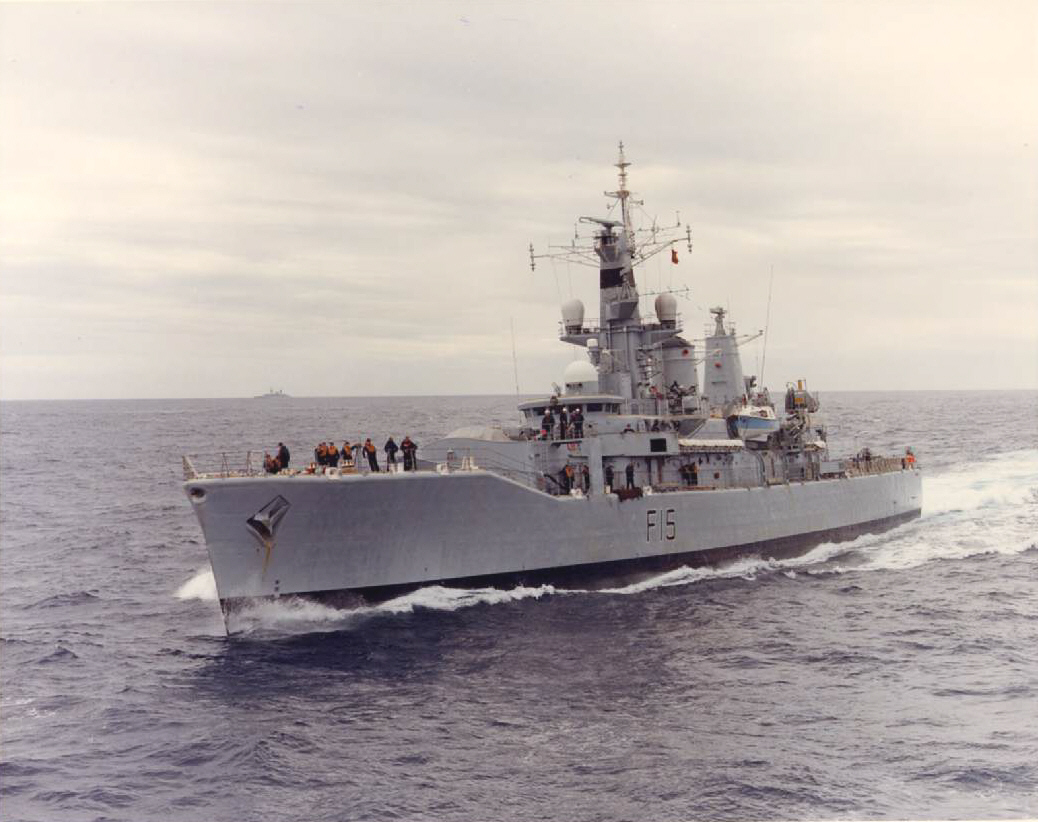
Before the Second World War the RN was predominantly a “cruiser navy”, holding down a range of global deployments with its 15 heavy and 41 light cruisers. These ships had endurance and combat power at the core of their designs, each could operate alone for extended periods, effectively defend itself in most circumstances and demonstrate the interest or resolve of the government in a particular region. The ensuing World War and the Cold War radically changed the type of warships the RN needed. Instead of cruisers built for endurance and complex warfighting the navy built a profusion of smaller frigates and destroyers, mainly to guard convoys and fight submarines close to the UK and in the North Atlantic. To carry out these tasks the navy could make do with smaller, cheaper, ships with relatively shorter legs and far less ability to act independently in high threat environments. Trade-offs like these were made in order to ensure the navy got enough escorts to protect the convoys which would be vital to Britain’s survival in the event of a war; and to hunt the Soviet ballistic missile submarines that threatened NATO. These were ships designed to act as part of a military system that would defeat the threat posed by hostile submarines. This system also included land based aircraft, anti submarine helicopters, aircraft and helicopter carriers and the enormous US/NATO SOSUS fixed sonar array. The Leander class is probably the most famous example of these sort of light frigates, operated by the RN into the early 1990s. When the immediate and pressing threat from submarines operating in the North Atlantic, be they German or Soviet, ceased to exist so the naval forces the UK had constructed to defeat them also fell by the wayside. These ships were, broadly speaking, a product of their time and a deviation from the much older structure that had served the RN well for centuries. This structure consisted of a core “battle fleet”, made up of capital ships; mainly there to act as a deterrent, supported by powerful forward deployed cruisers that conducted most of the day to day activity.
HMS Euryalus, one of 26 Leander Class frigates built for the RN
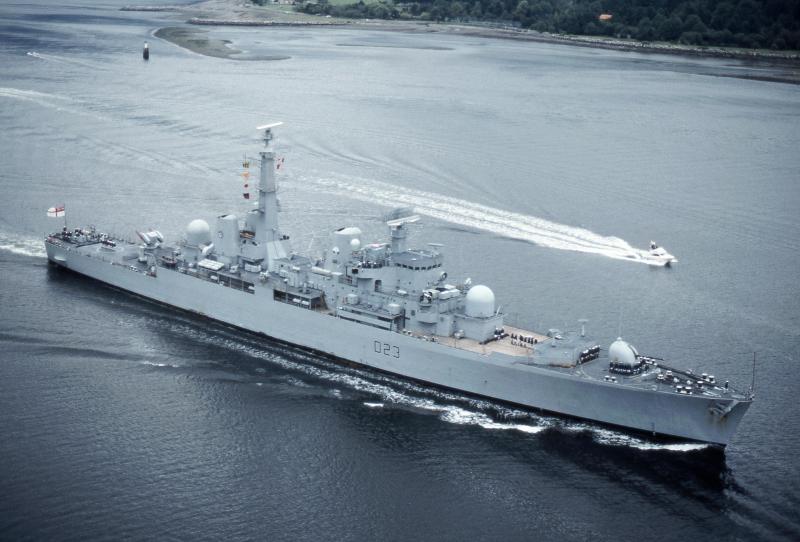
By modern standards almost all of the cheap and numerous frigates and destroyers of the past, even the excellent Leanders, would be classed as lightly armed corvettes. The simple fact was that these cheap and numerous ships sacrificed a lot of capability in order to achieve the affordability necessary to build them in numbers. They were still recognisable as frigates built in the convoy escort mold. Similarly the Type 42 anti-aircraft warfare destroyers, in service from the mid-1970s, were also a design that compromised range and armament for numbers. At only 3500 tonnes the Batch 1 Type 42s were clearly a very light and economical design. When compared with their American counterparts, the 8000 tonne Spruance class, it’s clear that these ships sacrificed range and armament for economy and numbers. Both the Leanders and the Type 42s are recognisable as frigates and destroyers, light warships designed to act in groups and alongside other warships, auxiliaries and aircraft to be effective in combat. The closest the RN came to “cruiser” designs during the Cold War were the eight County Class missile destroyers commissioned in the early 1960s and HMS Bristol, the sole survivor of the pre-1968 carrier escort programme. While these destroyer classes were cruiser-like in some aspects, they carried a far more comprehensive armament and had a greater range (in terms of fuel) than their contemporaries, they lacked the self-sustainment ability, protection, survivability and range of “true” cruisers. While Bristol was initially labelled a light cruiser by Jane’s, the Royal Navy always saw her for what she was: an oversize missile destroyer with the similar limitations to the navy’s other destroyers.
HMS Bristol, the closest the RN came to a new cruiser during the Cold War
With the later Type 22 and 23 frigates the RN moved to fewer, more individually capable, platforms. This change was partly necessitated by the introduction of a new generation of bigger towed array sonars which required larger ships to operate effectively. Despite their greatly improved self defence ability, achieved by fitting the Sea Wolf point defence missile system, these ships were still designed to be expendable escorts and lacked the endurance of cruisers. That said, these two classes signalled the start of the navy’s shift from a fleet of numerous, small and cheap escorts to fewer, larger ships capable of independent operations in a high threat environment.
November 5, 2015
Korea: Admiral Yi – I: Keep Beating the Drum – Extra History
Published on 26 Sep 2015
Admiral Yi Sun-sin of Korea began his legendary career with a series of disasters. Fate (and corrupt officials) conspired against him to have him repeatedly knocked down from the success he had earned, often because his insistence on strict military codes and refusal to ignore corruption made enemies of his fellow officers. Even when his superior had him tortured and blamed after a loss to the Jurchen raiders from the north, Yi persevered. Stripped of his rank and now reduced to a common enlisted man, Yi nevertheless served Korea with distinction. Meanwhile his childhood friend, Ryu Seong-ryong, had risen to become the prime minister of Korea. Ryu recognized the threat of war from Japan looming on the horizon, so when Yi asked to retire in 1588, Ryu convinced him to stay.
QotD: The Berlin Wall
The Berlin Wall was a symbol of the depravity and viciousness of the Marxist idea. Karl Marx was a pure hate monger masquerading as a social philosopher. His ideas may, in the end, be summarized thus: wealth can be gained only by stealing from others, and thus successful people are evil, and thus it is okay to threaten or kill rich people (or even people who are just a bit better off than you are), to steal their belongings, and to threaten anyone who might in the future have more stuff than you do. If you somehow get more things than other people, it is okay for other people to take your stuff, and if you resist, it is okay to beat you up or kill you.
Even more succinctly, Marxism is the idea that envy is laudable, and should be turned into social policy with the use of pervasive violence.
I am putting this more bluntly and baldly than the average Marxist would. They prefer concealing their central idea beneath a heavy blanket of words. They dress up their “philosophy” in avant garde costumes, adding layers of verbiage, complicated and counterfactual claims about language and logic, bizarre ideas about the nature of history, etc., all in the service of keeping people from seeing what they’re actually suggesting. What lies underneath is nothing much more than hate of people who have more stuff than you do, justified by little or nothing more than wanting to take what they have for yourself.
When you base your beliefs on this sort of foundation, the violence that proceeds is not an accident or the result of an improper understanding or implementation of an otherwise fine program. The violence is the direct and intentional result of the underlying program. The violence is the entire purpose of the underlying program.
In spite of the claims of apologists, the Marxism that fell twenty five years ago was the true Marxism. You cannot force people to work whether they get any benefit of it or not if they can flee from you, so you have to build walls. The Berlin Wall was not an aberration, it was the the only way to keep the quite literal slaves from fleeing their bondage. You cannot take stuff from people who have it without goons with guns, since they will not want to hand their material possessions over, so you bring in goons with guns to scour your population. In a free market, you get ahead by making things people want like bread or telephones, but in a Marxist society, the only way to get ahead is through gaining political power, and so people who are exceptionally talented at deploying violence and thuggery and are ambitious rise to the top of your society. Stalin or someone like him was not an accident, he was an inevitability.
Perry Metzger, “A memorable anniversary, and those who would forget it”, Samizdata, 2014-11-09.
November 3, 2015
J.R.R. Tolkien – The Father of Lord of The Rings I WHO DID WHAT IN WORLD WAR 1?
Published on 2 Nov 2015
John Ronald Reuel Tolkien (JRR Tolkien) served on the Western Front of World War 1. It is believed that his experiences of the horrors war were a direct inspiration for his Lord of the Rings books. The struggle between good and evil and the price for victory are strong motives in his work. Find out which other similarities there are between the Lord of the Rings and the First World War.
November 2, 2015
A different view of Macbeth
Anthony King looks at Macbeth as a PTSD sufferer:
Although the descriptions are graphic, Shakespeare’s play itself includes few on-stage battle scenes. Only at the very end does Macbeth actually fight on stage, a last stand in which he kills the young Siward (his last victim) and is in turn killed by MacDuff. For the rest of the play, all of Macbeth’s violence is set off stage, described but never seen. The audience imagines his violence — they do not witness it.
Justin Kurzel’s striking new adaptation of Macbeth, released on October 2, 2015 to critical acclaim and starring Marion Cotillard and Michael Fassbender, represents a cinematographic inversion of the original. In his film, battle predominates. The film begins with an extended combat sequence. Macbeth and his army are gathered on a bleak moor as they prepare for battle against Macdonaldwald’s army, unseen in the dense fog. The camera pans across the black-striped war-painted faces until, initiated by Macbeth, the host issues a war cry and plunges toward their enemies, who appear spectrally in the distance through the murk. In ultra-slow motion, the two armies clash and brutal fighting follows. Most notably, one of Macbeth’s boy soldiers, on whom the camera dwells tellingly before the battle, has his throat cut during the fighting and bleeds out darkly on screen. Eventually, Macbeth charges Macdonaldwald and slashes him to the ground. The scene is followed by a long sequence in which the dead are gathered and prepared for cremation, including the boy soldier, whose image haunts the rest of the film.
Macbeth’s apparently fearless heroism and remorseless violence is on display throughout these sequences. Yet the sequences highlight an aspect of Macbeth’s character normally absent from adaptations of the play and presumably from the original play, but highly relevant to a 21st-century audience. Macbeth is a combat veteran and, despite his courage, he is plainly severely traumatized by his war experiences. Kurzel and Fassbender construct him as a victim of PTSD, and he displays the classic symptoms of this perturbing condition.
The National Air Force Museum of Canada
Elizabeth and I spent the weekend in the Bay of Quinte area, visiting Prince Edward County, Belleville, and Trenton. While we were in Trenton, we stopped in at the National Air Force Museum of Canada. While the Sea King may not be in the collection yet (at least, not in the collection visible to the public), many other Canadian Armed Forces aircraft are, including the prize of the museum, the Handley Page Halifax heavy bomber:
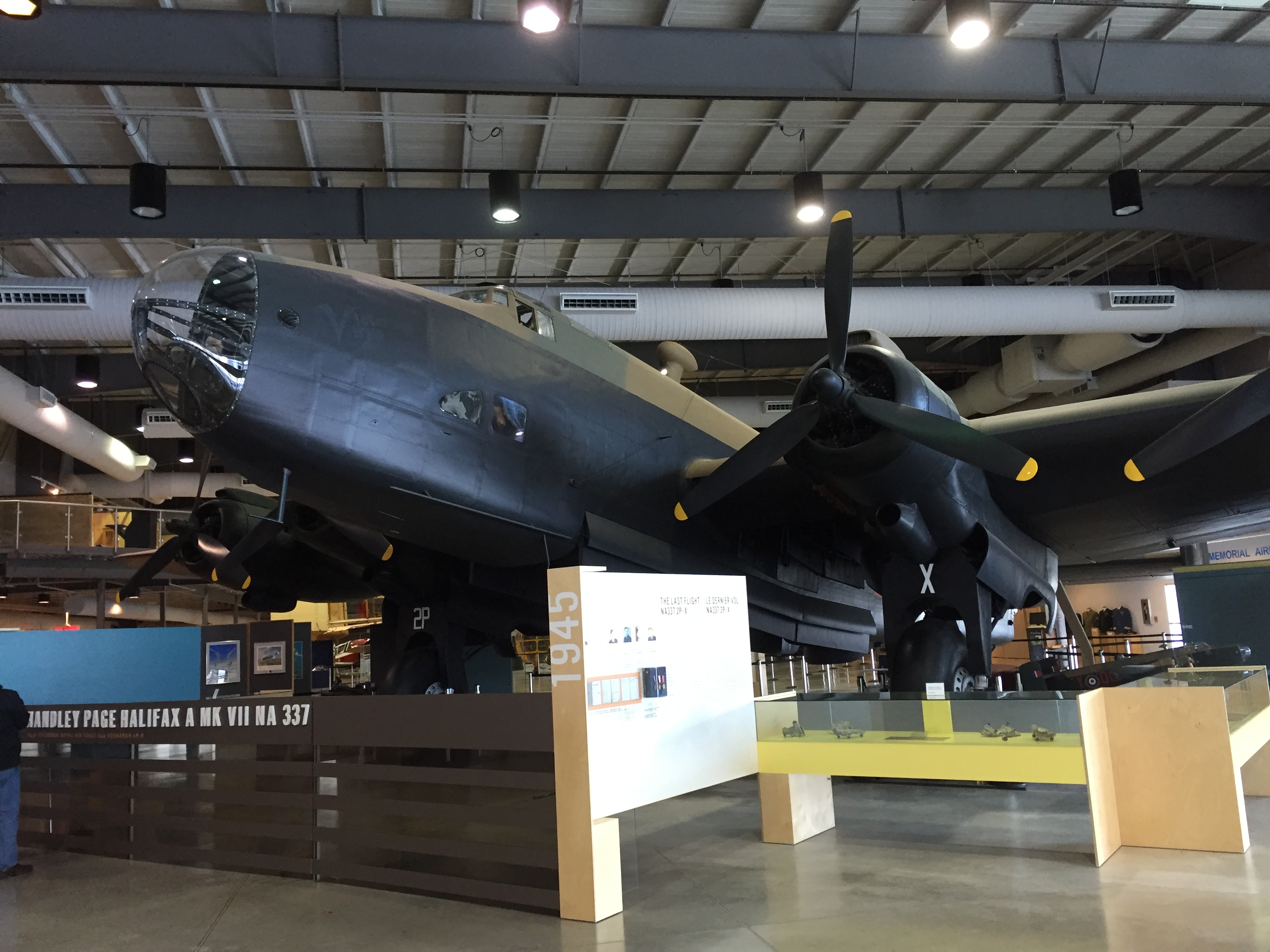
It’s a big enough aircraft that it’s hard to do it justice in a photograph.
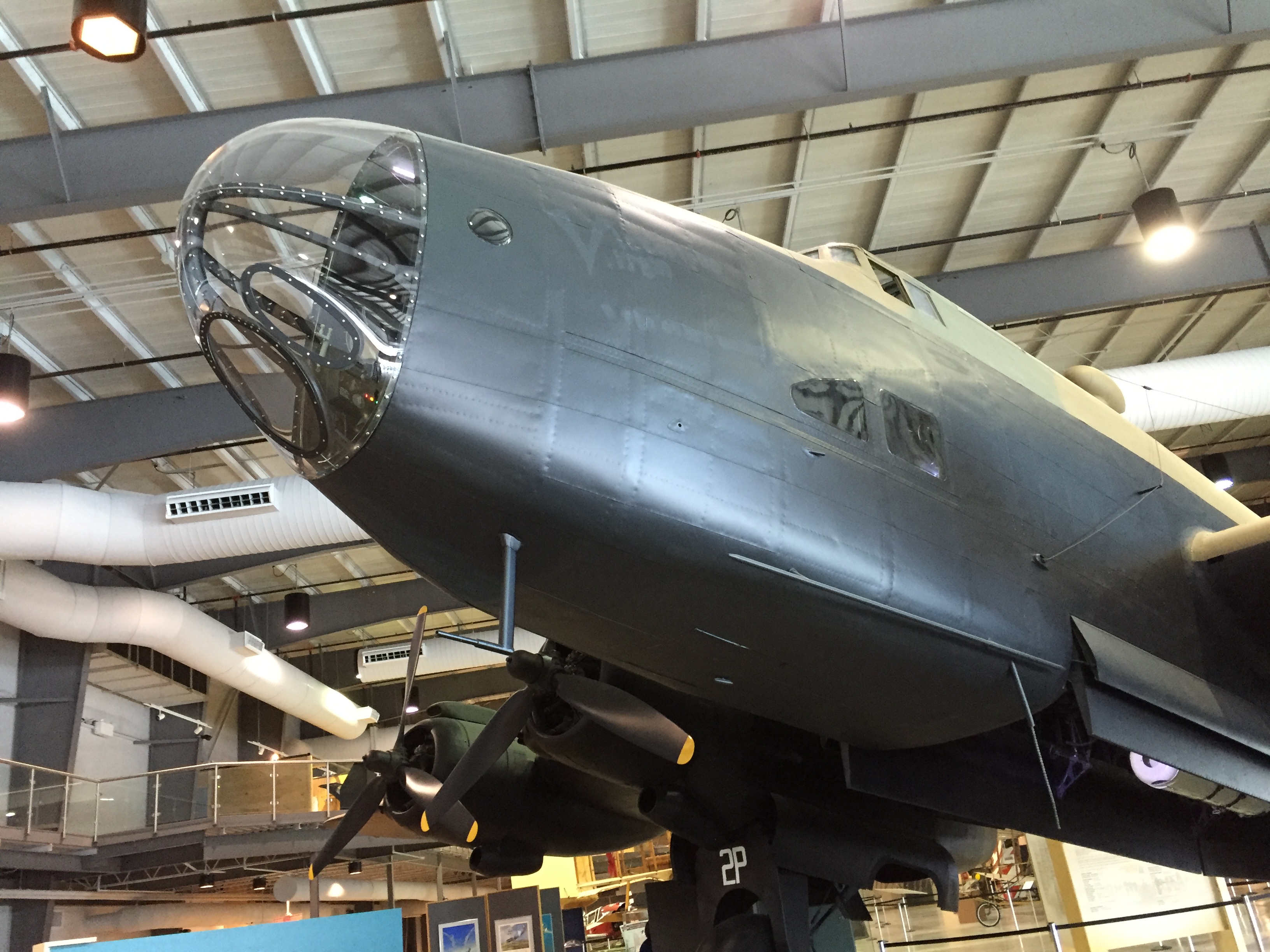
This particular restored aircraft was shot down late in the war on a mission to deliver supplies to Norwegian resistance fighters and later recovered from a Norwegian lake.
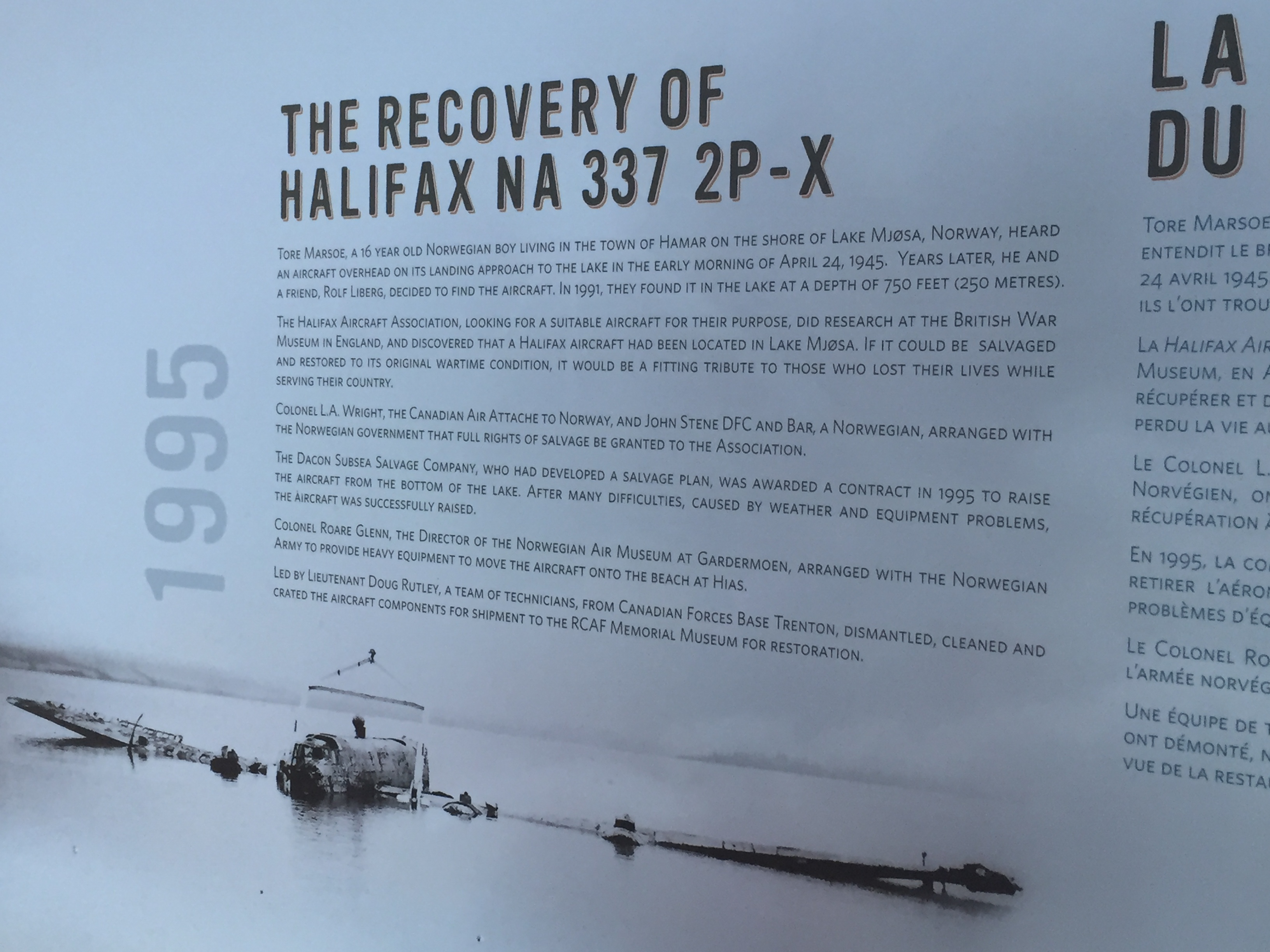
Other aircraft in the collection include a replica of the Silver Dart, the first powered aircraft to fly in Canada (February 23, 1909), a replica of the Burgess-Dunne floatplane, the first aircraft purchased for the Canadian military (September, 1914), a CF-86 Sabre, a CF-100 Canuck, a CF-5 Freedom Fighter, a CF-104 Starfighter, a CF-101 Voodoo, a CF-18 Hornet, a CP-107 Argus, a CC-130 Hercules, and a CP-102 Tracker among other aircraft.
The Top 10 Moustaches of World War 1 I THE GREAT WAR Top List
Published on 28 Oct 2015
Grow your own World War 1 moustache and send a picture to us on Facebook, Twitter or Instagram using the hashtag #TGWmovember. We will collect the best for an upcoming OUT OF THE TRENCHES.
November is the month of the year to celebrate moustaches and beards in all forms and fashions. To celebrate the start of #movember we made a new top list ranking the beards of World War 1.


