
TimeGhost History
Published on 27 Jul 2018In 1920 the colonial powers of the British Empire and France reverse course on their commitment to grant independence to the peoples of the Middle East. In a game to grab the oil fields of Arabia, Syria and Mesopotamia, and to control the Suez Canal they tighten their grip on the region, with far ranging consequences that will shape the world well into the 21st century.
Join us on Patreon: https://www.patreon.com/TimeGhostHistory
Hosted by: Indy Neidell
Written and directed by: Spartacus Olsson
Research Contributed by: Jonas Yazo Srouji
Produced by: Astrid Deinhard
Executive Producers: Bodo Rittenauer, Astrid Deinhard, Indy Neidell, Spartacus OlssonA TimeGhost chronological documentary produced by OnLion Entertainment GmbH
July 29, 2018
Carving up the Middle East and Preempting Rommel I BETWEEN 2 WARS I 1920 Part 3 of 4
A poor tank, a useless tank, and the worst tank in the world
Lindybeige
Published on 10 Jul 2018Tigers? Why talk about Tigers when one can talk about tanks that were even worse? More tank banter with The Chieftain.
Support me on Patreon: https://www.patreon.com/LindybeigeA low-tech tank with fragile armour, a tank that never saw the enemy, and the tank used to teach how not to build tanks. Thanks to Nicholas Moran (AKA The Chieftain) and Matt Sampson, the cameraman at Bovington Tank Museum.
The third of these three segments was shot with my new camera, and it really shows.
Lindybeige: a channel of archaeology, ancient and medieval warfare, rants, swing dance, travelogues, evolution, and whatever else occurs to me to make.
▼ Follow me…
Twitter: https://twitter.com/Lindybeige I may have some drivel to contribute to the Twittersphere, plus you get notice of uploads.
Facebook: https://www.facebook.com/Lindybeige (it’s a ‘page’ and now seems to be working).
Google+: “google.com/+lindybeige”
website: http://www.LloydianAspects.co.uk
July 28, 2018
Pellagra – A Medical Mystery – Extra History
Extra Credits
Published on 26 Jul 2018Pellagra can cause depression, dementia, and diarrhea, eventually leading to death. Dr. Joseph Goldberger was put on the case to crack it.
Historical vandalism at Stonehenge
Jocelyn Sears on the barbaric “souvenir” habits of 18th century English “tourists”:
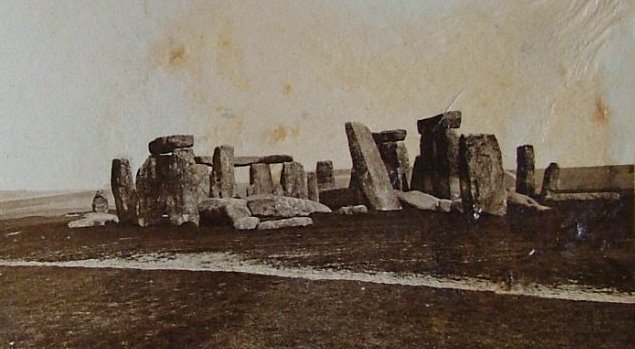
A photograph of Stonehenge taken in July 1877 by Philip Rupert Acott
Via Wikimedia Commons
In 1860, a concerned tourist wrote to the London Times decrying the “foolish, vulgar and ruthless practice of the majority of visitors” to Stonehenge “of breaking off portions of it as keepsakes.” Today, taking a hammer and chisel to a Neolithic monument seems like obvious vandalism, but during the Victorian era, such behavior was not only common but expected.
English antiquarian tourists, who were mostly upper class, had developed the habit of taking makeshift relics from the historical sites they visited during the 18th century. By 1830, the practice was so widespread that the English painter Benjamin Robert Haydon dubbed it “the English disease,” writing, “On every English chimney piece, you will see a bit of the real Pyramids, a bit of Stonehenge! […] You can’t admit the English into your gardens but they will strip your trees, cut their names on your statues, eat your fruit, & stuff their pockets with bits for their musaeums.”
For centuries, both locals and visitors had taken pieces of Stonehenge for use in folk remedies. As early as the 12th century, rumors of the stones’ healing properties appear in the writing of Geoffrey of Monmouth, and in 1707, Reverend James Brome wrote that their scrapings were still thought to “heal any green Wound, or old Sore.” In the 1660s, the English antiquarian John Aubrey reported a local superstition that “pieces or powder of these stones, putt into their wells, doe drive away the Toades.”
Eventually, tourists were not just taking from Stonehenge, but also leaving their mark, too. By the middle of the 17th century, tourist graffiti was appearing on the stones. The name of Johannes Ludovicus de Ferre — abbreviated “IOH : LVD : DEFERRE” — is etched, and so is the engraving “I WREN,” which may refer to Christopher Wren, the famed architect who designed St. Paul’s Cathedral.
As early as 1740, the archaeologist William Stukeley was decrying “the unaccountable folly of mankind in breaking pieces off [the stones] with great hammers,” and by the end of the 19th century, according an 1886 commenter, “Almost every day takes some fragment from the ruins, or adds something to the network of scrawling with which the surface of the stone is defaced.”
July 27, 2018
Ludendorff’s Last Swing I THE GREAT WAR Week 209
The Great War
Published on 26 Jul 2018All of Germany’s recent offensives have been building up to Operation Hagen: An offensive in Flanders that was to divide the Allies and drive the British off the continent. But this week German High Command realizes that they don’t have the manpower left to even start the offensive.
July 26, 2018
Isaac Asimov – Laws of Robotics – Extra Sci Fi – #2
Extra Credits
Published on 24 Jul 2018Asimov is famous for coining the Three Laws of Robotics, but to him they weren’t the “answer” to how robots could be used in the future — they were an intentional reflection of humanity’s potential failings.
Forgotten History: The Capture of Fort Douaumont
Forgotten Weapons
Published on 26 Jun 2018http://www.patreon.com/ForgottenWeapons
Welcome to out first episode of Forgotten History! This will be an occasional series looking at interesting events and places in military history. We will begin with the capture of Fort Douaumont on February 25, 1916…
This video was made possible by Military History Tours, and it is the first of a bunch you will be seeing from their Spring 2018 tour of American WW1 battlefields in France. If you are interested in seeing places like this (or WW2, or Korea, or many others) firsthand yourself with a guided tour, check them out:
July 25, 2018
Forgotten History: The Underground Hell of Fort Vaux
Forgotten Weapons
Published on 24 Jul 2018http://www.patreon.com/ForgottenWeapons
With the surprise capture of Fort Douaumont in February 1916, the French reinforced all the remaining forts around the city of Verdun, and would hold them all successfully for many months. In fact, the only other fort in the area to fall would be Fort Vaux, in June of 1916.
In the chaos of the early battle, orders had actually gone out to evacuate Vaux and destroy it, but these were countermanded, and the fort remained a major lynchpin of French defenses in the sector. Critically, before they could be removed, demolition charges set in the fort’s main gun turret were detonated by a massive German shell, destroying the weapon.
In May, German advances seriously threatened the fort, and a new commander was assigned – Major Sylvain Eugene Raynal. Upon arrival, he found the fort in a terrible condition – heavily damaged by German bombardments and hugely overcrowded with as many as 500 soldiers, most of them wounded and sheltering in the fort (it had been designed to garrison 150 men). Shelling had broken through the fort’s walls in several places, and unbeknownst to Raynal or his men, the water cistern had been damaged and was nearly empty despite its gauge reading substantial levels of water.
The climactic German assault began on June 1st 1916, and by the end of the day only 71 French soldiers remained in unwounded inside. On June 2nd, the cistern damage was discovered – at that point it held just 8 gallons of putrid dregs. Intense fighting would continue for nearly another week, without any relief forces or supplies able to reach the fort. On the 5th, a bit of water was collected from rain, but not much. A relief force attempted to reinforce the fort, but was virtually obliterated, with only 37 men reaching its walls.
The Germans would storm the fort on June 5th, and the most horrific of combat would rage for two days inside its tunnels and galleries. Raynal ordered barricades erected inside the fort, and the French forces fought from one to the next, with only a few dozen men remaining. The battle would include machine gun and hand grenades in these tight passageways, and eventually a German attempt to burn out the defenders with flamethrowers.
Finally on the morning of June 7th, the combination of casualties and a complete lack of water meant the end of the resistance. Raynal and his surviving men surrendered, and Germans soldiers finally occupied the fort they had spent months attempting to conquer. In recognition of his valiant defense, Raynal’s sword was returned to him by German Crown Prince Wilhelm.
The German occupation of the fort would last only a few months – by late October it was abandoned quietly, and a French scouting force would find it empty and retake it on November 2nd, 1916.
If you enjoy Forgotten Weapons, check out its sister channel, InRangeTV! http://www.youtube.com/InRangeTVShow
July 24, 2018
Ayn Rand and the Hollywood blacklist
In the August/September issue of Reason, Jesse Walker discusses the role Ayn Rand played in the House Committee on Un-American Activities’ anti-Communist hearings on Tinseltown’s great and good:
Ayn Rand was a blacklist truther. The novelist and screenwriter had been a friendly witness during the House Committee on Un-American Activities’ 1947 hearings on Hollywood subversion — the probe that prompted the studios to announce that they would not hire Communists. But when she was asked about her testimony two decades later, she claimed that the blacklist was a myth.
“I do not know of any red blacklisted in Hollywood,” Rand told a Boston audience in 1967.
“I do know, if the newspaper stories can be trusted, that many of those ‘blacklisted’ people … were working in Hollywood thereafter under assumed names.” The real victims, she insisted, were the hearings’ friendly witnesses. “You talk about the blacklisting of reds. I don’t know of one leftist who has suffered for his views, and conversely, I don’t know of one pro-capitalist who in one form or another did not have to suffer for his views.”
This was misleading, to put it mildly. The blacklist really did exist. It was an organized effort to remove people from the movie industry for their political opinions, and the federal government played a major role in launching it. Anyone who cares about free expression should object to that sort of censorship by proxy, both as it manifested itself in the early days of the Cold War and as it threatens to re-emerge in social media today.
Yes, some of the more talented blacklisted writers continued to find work under assumed names or behind fronts. Dalton Trumbo knew how to write a movie that audiences would pay to see, and so Trumbo’s screenplays remained in demand. But others didn’t do studio work for a long time or left the industry altogether. (Blacklistee Alvah Bessie wound up taking a job as stage manager in a San Francisco nightclub and writing novels on the side.) And even folks like Trumbo found themselves getting paid a lot less. The blacklist eventually dissolved, but that took years. It is simply untrue that no Communists, real or alleged, lost work because of it.
On the other hand, it is true that some of the friendly witnesses of ’47 fared pretty badly. Rand mentioned a few examples at that Boston speech, among them Morrie Ryskind, who worked for those other Marxes when he scripted three Marx Brothers movies. “In Hollywood, he was getting $3,000 a week, which at the time was top money for writers,” she said. But “he has not worked as a writer one day since appearing as a friendly witness.” In Show Trial (Columbia University Press), his engrossing new book about those hearings, the Brandeis historian Thomas Doherty lists several examples of his own, from Jack Moffitt, who stopped getting hired to write motion pictures and fell back on reviewing movies for The Hollywood Reporter, to Fred Niblo Jr., who wound up leaving Hollywood to write religious films for television and documentaries for the State Department. In risk-averse Hollywood, anyone who stuck his head out might lose work for his trouble, especially if he came from the low end of the industry’s totem pole.
But this should not be equated, Doherty writes, “with the state-coerced, institutionally enforced blacklist of Communists, fellow travelers, and stubborn liberals.” That was a more fearsome and intrusive beast.
A Farewell to Arms – Ernest Hemingway I WHO DID WHAT IN WW1?
The Great War
Published on 23 Jul 2018He is regarded as one of the greatest writers of the 20th century, but before that, he was an ambulance driver on the Italian Front in the Great War and also took part in the Spanish Civil War and World War Two.
The Amazing Life of Ulysses S. Grant
PragerU
Published on 2 Jul 2018No American led a more eventful life than Ulysses S. Grant, the 18th President of the United States and the Union Army’s most celebrated general. Garry Adelman, director of history and education at the Civil War Trust, tells Grant’s amazing story in this inspiring video.
Donate today to PragerU! http://l.prageru.com/2eB2p0hThis video was made in partnership with the American Battlefield Trust. Learn more about the Civil War and America’s Battlefields at: https://goo.gl/mmJMPk
July 23, 2018
1918 Flu Pandemic – Order More Coffins – Extra History – #3
Extra Credits
Published on 21 Jul 2018Dr. Welch, Dr. Avery, Dr. Park, and Dr. Williams are on the hunt now to correctly identify this new pathogen and make a vaccine. But public officials are in denial. In Philadelphia, the mayor and his health officials are telling the press that the outbreak is nearly over. They continue doing so, day after day, as the death toll mounts and hospital wards fill.
July 22, 2018
Austro-Hungarian Artillery – Choctaw Code Talkers I OUT OF THE TRENCHES
The Great War
Published on 21 Jul 2018
Debunking the “King Cotton” school of history
In the current issue of Reason, Dierdre McCloskey discusses the claim that America became rich only or primarily due to exploitation of slave labour in the south:
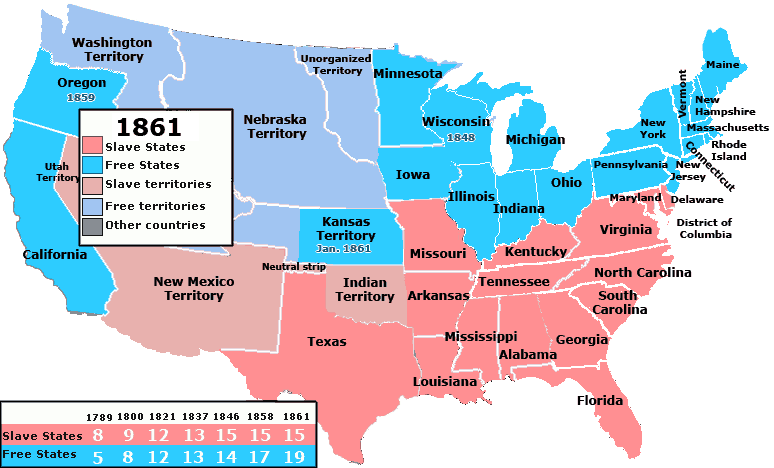
Map showing which areas of the United States did and did not allow slavery between January 1861 to February 4 1861. On February 4 1861, the Confederate States of America was created. Territories and states which had not specifically banned slavery are colored red/pink.
Map by Golbez, via Wikimedia Commons.
In his second inaugural, Abraham Lincoln declared that “if God wills that [the Civil War] continue until all the wealth piled by the bondsman’s 250 years of unrequited toil shall be sunk…as was said 3,000 years ago, so still it must be said, ‘the judgments of the Lord are true and righteous altogether.'”
It is a noble sentiment. Yet the economic idea implied — that exploitation made us rich — is mistaken. Slavery made a few Southerners rich; a few Northerners, too. But it was ingenuity and innovation that enriched Americans generally, including at last the descendants of the slaves.
It’s hard to dispel the idea embedded in Lincoln’s poetry. TeachUSHistory.org assumes “that northern finance made the Cotton Kingdom possible” because “northern factories required that cotton.” The idea underlies recent books of a new King Cotton school of history: Walter Johnson’s River of Dark Dreams (Harvard University Press), Sven Beckert’s Empire of Cotton: A Global History (Knopf), and Edward Baptist’s The Half Has Never Been Told: Slavery and the Making of American Capitalism (Basic Books).
The rise of capitalism depended, the King Cottoners claim, on the making of cotton cloth in Manchester, England, and Manchester, New Hampshire. The raw cotton, they say, could come only from the South. The growing of cotton, in turn, is said to have depended on slavery. The conclusion — just as our good friends on the left have been saying all these years — is that capitalism was conceived in sin, the sin of slavery.
Yet each step in the logic of the King Cotton historians is mistaken. The enrichment of the modern world did not depend on cotton textiles. Cotton mills, true, were pioneers of some industrial techniques, techniques applied to wool and linen as well. And many other techniques, in iron making and engineering and mining and farming, had nothing to do with cotton. Britain in 1790 and the U.S. in 1860 were not nation-sized cotton mills.
Nor is it true that if a supply chain is interrupted there are no possible substitutes. Such is the theory behind strategic bombing, as of the Ho Chi Minh trail. Yet only in the short run is it “necessary” for a good to come from a particular region by a particular route. A missing link can be replaced, as in fact it was during the blockade of raw cotton from the South during the war. British and other European manufacturers turned to Egypt to provide some of what the South could not.


