
British Pathé
Published on 13 Apr 2014This Pathé ‘Extra!’ segment depicts the carrier HMS Eagle in 1969, which was the 15th in a long line of Royal Navy ships to carry that name. This particular ship was an Audacious-class aircraft carrier that hosted all manner of planes from the de Havilland Sea Vixen to the McDonnell Douglas Phantom.
#BritishPathé #RoyalNavy #RAF #Ships #Navy #Military
(FILM ID:2221.15)
Extra ! HMS Eagle.Aerial shot of the aircraft carrier HMS Eagle of the Royal Navy. M/S of radar tower. Several shots of jet aircraft on the deck of the ship including Sea Vixens, Gannets and Phantoms. Shots of jet plane taxiing on runway. M/S to L/S of Sea Vixen taking off from the deck. M/Ss of three men working in the control tower. M/Ss of pilot sitting in cockpit of jet on the deck. Good shot of deck crew at work preparing jet plane for takeoff. L/Ss of Phantom aircraft taking-off. L/S and M/S of the aircraft in-flight. L/S of deck of ship. An aircraft lands on the deck of the ship. M/S of arrester wire. Another shot of plane landing. M/S of Westland Wessex helicopter hovering nearby. Air to air shot of phantom in-flight. M/S shots of plane landing. L/Ss of the aircraft carrier.
September 2, 2018
HMS Eagle: Royal Aircraft Carrier (1969) | Extra! | British Pathé
September 1, 2018
Cribs – Introducing the WW2 set and our producer Astrid
TimeGhost History
Published on 29 Aug 2018Indy and Astrid chat about the WW2 and The Great War sets, and we take a brief look at the nation of Tannu Tuva!
Join us on Patreon: https://www.patreon.com/TimeGhostHistory
Executive Producers: Bodo Rittenauer, Astrid Deinhard, Indy Neidell, Spartacus Olsson
A TimeGhost public announcement produced by OnLion Entertainment GmbH
The Tartan Myth | Stuff That I Find Interesting
Jabzy
Published on 22 Jun 2017
August 31, 2018
World War 2 in Real Time w. Indy Neidell Starts Tomorrow 1 Sep 2018
TimeGhost History
Published on 31 Aug 2018This is it! The moment we’ve been working up to all year is here – time for Indy and Spartacus to tell what has gone on and what will happen!
Join us on Patreon: https://www.patreon.com/TimeGhostHistory
Executive Producers: Bodo Rittenauer, Astrid Deinhard, Indy Neidell, Spartacus Olsson
A TimeGhost public announcement produced by OnLion Entertainment GmbH
Experimental strip farm demonstrates why strip farming was eventually abandoned
Tim Worstall uses an article in the Guardian about a National Trust experimental replication of medieval farming patterns to point out exactly why modern farms do not use them:
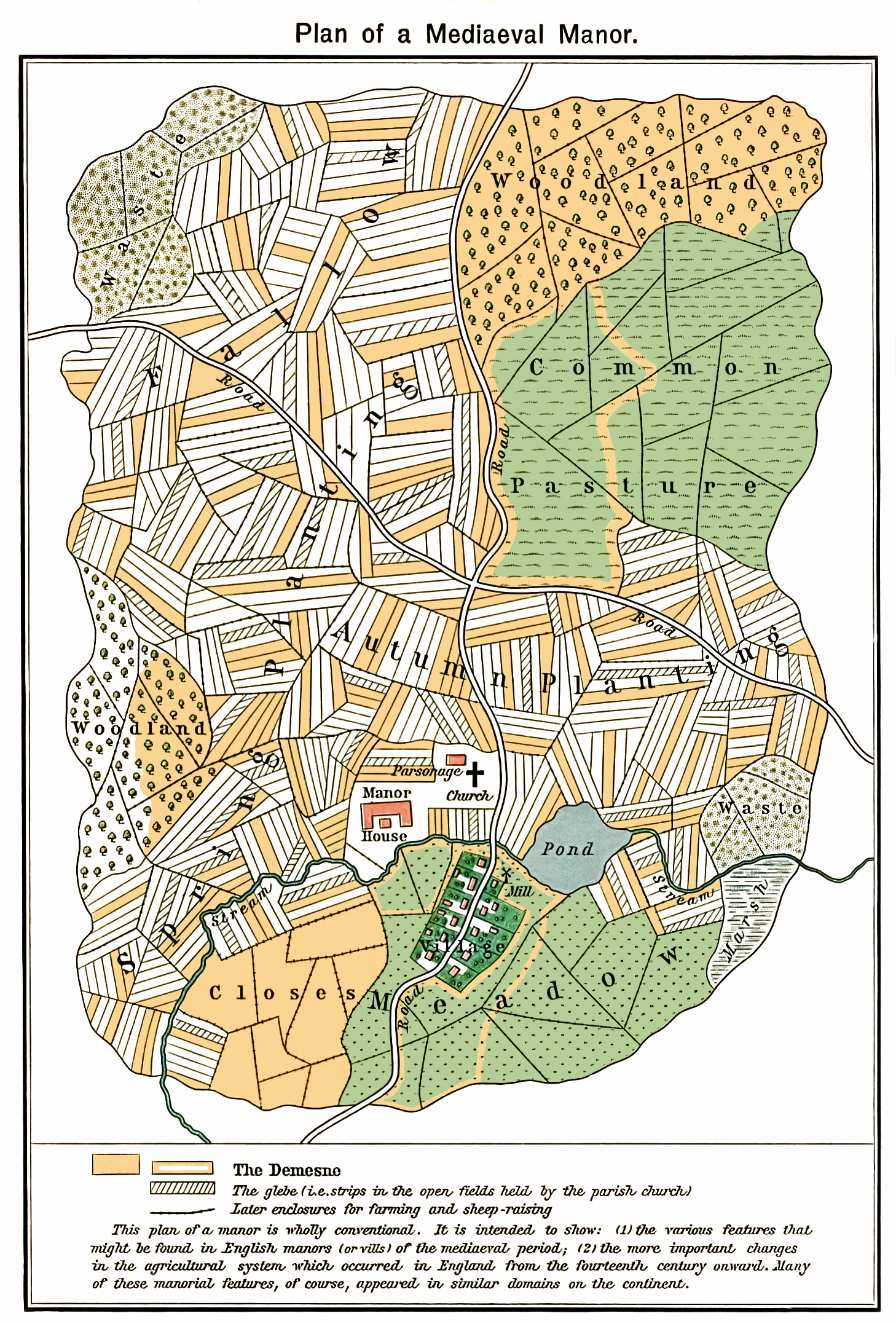
Plan of a fictional medieval manor. The mustard-coloured areas are part of the demesne (owned by the lord), the hatched areas part of the glebe (reserved to support the parish priest).
Illustration from William R. Shepherd’s Historical Atlas, 1923 via Wikimedia Commons.
The proof of the inefficiency is in the presence of that lots more wildlife. We’re trying to grow food for humans to eat recall. So, more wildlife eating off the same earth is less food for humans. We have more butterflies around? That’s nice, but that does mean more caterpillars munching on those now not for humans crops. Hen harriers? Great, but they’re eating the mice and the voles living off those crops. Land that’s growing wildflowers isn’t growing grain or veggies for us, is it?
Sure, it’s nice to have hen harriers, great to have wildflowers. But their very existence on this land shows that this method of farming is less efficient at doing the job of farming – growing food for us. Which is why we abandoned this method of farming of course. Under the simple and basic pressures of trying to gain more output from our inputs. And yes, land is, obviously enough, an input into farming.
And if we’d like to have flowers and harriers? Then we should be using the most efficient farming methods on those areas we do farm so as to leave more space, more land, for the pretty things we’d also like to have. That is, prairies of glycophosphate drenched wheat for us, the other 30 or 50 or 70% of the land left alone for them. And the more chemicals we use on our bit the smaller that bit devoted to us is going to be.
The very fact that we’ve more wildlife as a result of this inefficient farming method shows us that we must be using the more efficient industrial methods. You know, to save the wildlife?
The American First Army Gears Up – Germany Retreats I THE GREAT WAR – Week 214
The Great War
Published on 30 Aug 2018As the German Army withdraws along the Western Front, the Entente prepares for ever more offensives. This includes the newly founded American First Army which will have the task to attack the Germans in the Meuse-Argonnes area.
How did Britain Conquer India? | Animated History
The Armchair Historian
Published on 10 Aug 2018Check out History With Hilbert: https://www.youtube.com/watch?v=Hs1sw…
Our Patreon: https://www.patreon.com/armchairhistory
Our Twitter: https://twitter.com/ArmchairHist
Sources:
https://dailyhistory.org/Why_was_Brit…
1857 Indian War of Independence: 1857 Indian Sepoys’ Mutiny, Shahid Hussain Raja
The East India Company, Brian Gardner
The Corporation that Changed the World: How the East India Company Shaped the Modern Multinational, Nick Robins
A History of India, Peter Robb
August 30, 2018
August 29, 2018
The History of Virtual Reality – Cyberpunk, Anime, and the Movies – Extra Sci Fi – #2
Extra Credits
Published on 28 Aug 2018From William Gibson’s Burning Chrome which introduced the word “cyberpunk” into pop culture, to modern-day anime like Sword Art Online that explore if technology really isn’t in our control, our anticipation for VR has only accelerated in the last 30 years. Many thanks to Oculus Rift for sponsoring the next two episodes of Extra Sci Fi and giving us a chance to explore our collective definition of virtual reality.
Out of Context: How to Make Bad History Worse | World War 2
Knowing Better
Published on 5 Mar 2018Churchill was a genocidal maniac. The Japanese were rounded up into concentration camps. FDR let Pearl Harbor happen. When you take history out of context, you can make it say whatever you want – including making bad things worse.
A long list of links to sources is included, but I’m too lazy to re-link ’em all, just go to YouTube to see them. Back in 2009, I did a short fisking of Pat Buchanan’s hit-piece on Churchill’s “reponsibility” for the outbreak of WW2.
August 28, 2018
Inside the Medium Mark A “Whippet” Tank I THE GREAT WAR On The Road
The Great War
Published on 27 Aug 2018Check out the Tank Museum’s YouTube Channel: http://youtube.com/thetankmuseum
The Medium Mark A “Whippet” Tank was a new kind of tank design for exploiting breakthroughs and wrecking havoc in the rear of enemy positions. It could could reach a, for the time pretty fast, top speed of 8 miles per hour. When looking at the tanks of the First World War it is often overlooked.
Stross in conversation with Heinlein
Charles Stross explains why so many Baby Boomer SF writers fall so far short when they write in imitation of Robert Heinlein:
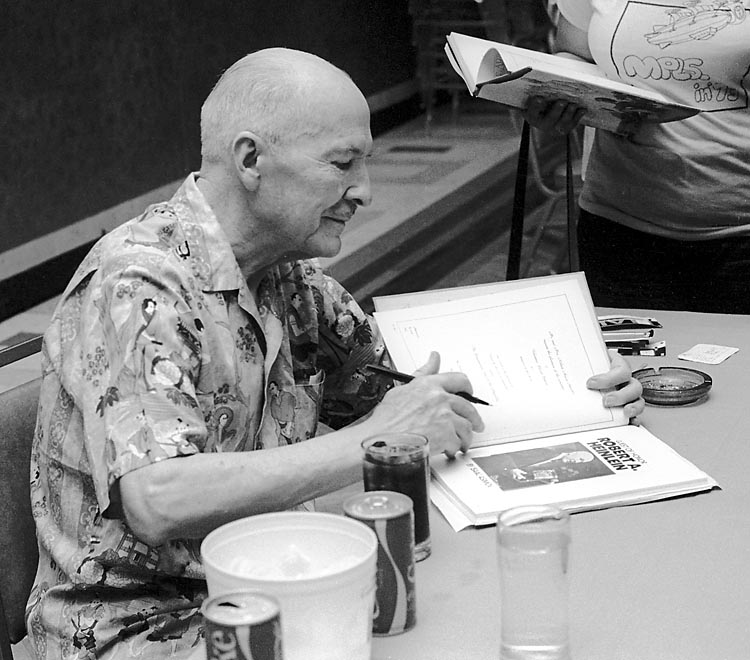
Robert A. Heinlein at the 1976 World Science Fiction Convention
Via Wikimedia Commons.
RAH was, for better or worse, one of the dominant figures of American SF between roughly 1945 and 1990 (he died in 1988 but the publishing pipeline drips very slowly). During his extended career (he first began publishing short fiction in the mid-1930s) he moved through a number of distinct phases. One that’s particularly notable is the period from 1946 onwards when, with Scribners, he began publishing what today would be categorized as middle-grade SF novels (but were then more specifically boys adventure stories or childrens fiction): books such as Rocket Ship Galileo, Space Cadet, Red Planet, and Have Space Suit, Will Travel. There were in all roughly a dozen of these books published from 1947 to 1958, and as critic John Clute notes, they included some of the very best juvenile SF ever written (certainly at that point), and were free of many of the flaws that affected Heinlein’s later works — they maintained a strong narrative drive, were relatively free from his tendency to lecture the reader (which could become overwhelming in his later adult novels), and were well-structured as stories.
But most importantly, these were the go-to reading matter for the baby boom generation, kids born from 1945 onwards. It used to be said, somewhat snidely, that “the golden age of SF is 12”; if you were an American boy (or girl) born in 1945 you’d have turned 12 in 1957, just in time to read Time for the Stars or Citizen of the Galaxy. And you might well have begun publishing your own SF novels in the mid-1970s — if your name was Spider Robinson, or John Varley, or Gregory Benford, for example.
Then a disturbing pattern begins to show up.
The pattern: a white male author, born in the Boomer generation (1945-1964), with some or all of the P7 traits (Pale Patriarchal Protestant Plutocratic Penis-People of Power) returns to the reading of their childhood and decides that what the Youth of Today need is more of the same. Only Famous Dead Guy is Dead and no longer around to write more of the good stuff. Whereupon they endeavour to copy Famous Dead Guy’s methods but pay rather less attention to Famous Dead Guy’s twisty mind-set. The result (and the cause of James’s sinking feeling) is frequently an unironic pastiche that propagandizes an inherently conservative perception of Heinlein’s value-set.
It should be noted that Charles Stross is politically left, so calling something “conservative” is intended to be understood as a pejorative connotation, not merely descriptive.
But here’s the thing: as often as not, when you pick up a Heinlein tribute novel by a male boomer author, you’re getting a classic example of the second artist effect.
Heinlein, when he wasn’t cranking out 50K word short tie-in novels for the Boy Scouts of America, was actually trying to write about topics for which he (as a straight white male Californian who grew up from 1907-1930) had no developed vocabulary because such things simply weren’t talked about in Polite Society.
Unlike most of his peers, he at least tried to look outside the box he grew up in. (A naturist and member of the Free Love movement in the 1920s, he hung out with Thelemites back when they were beyond the pale, and was considered too politically subversive to be called up for active duty in the US Navy during WW2.) But when he tried to look too far outside his zone of enculturation, Heinlein often got things horribly wrong. Writing before second-wave feminism (never mind third- or fourth-), he ended up producing Podkayne of Mars.
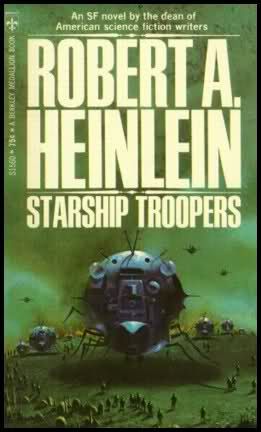
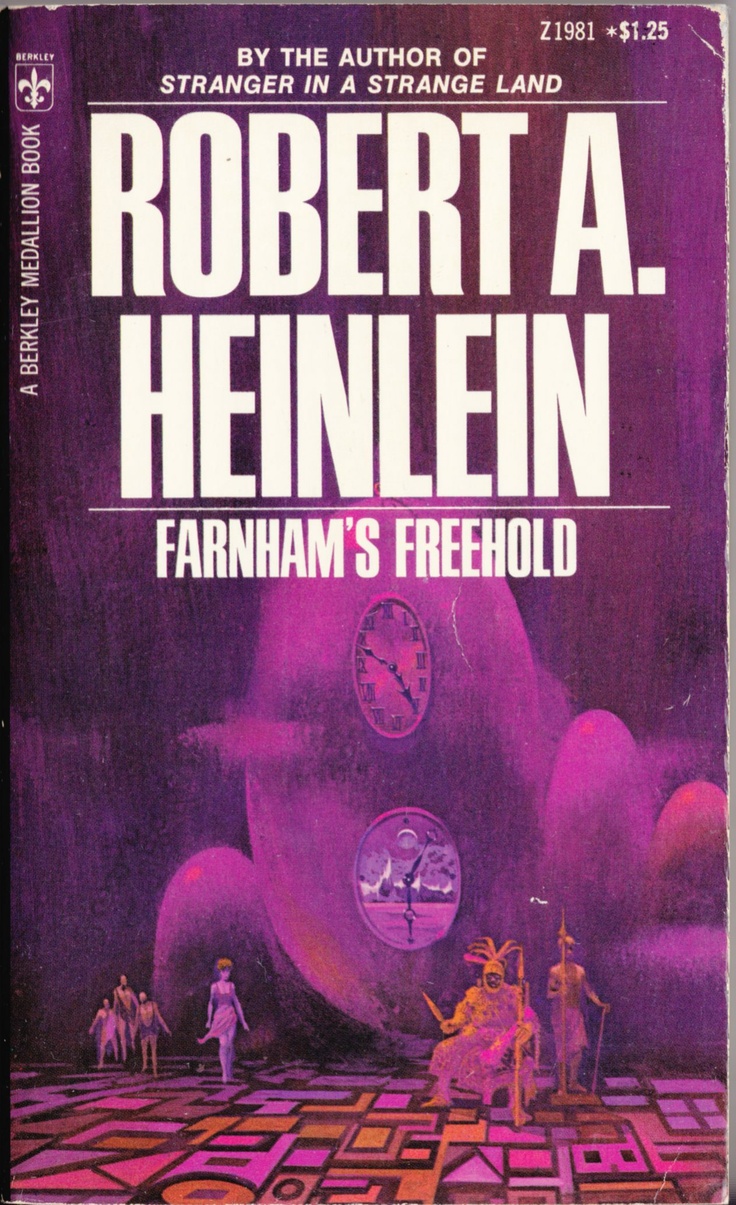
Trying to examine the systemic racism of mid-20th century US society without being plugged into the internal dialog of the civil rights movement resulted in the execrable Farnham’s Freehold. But at least he was trying to engage, unlike many of his contemporaries (the cohort of authors fostered by John W. Campbell, SF editor extraordinaire and all-around horrible bigot). And sometimes he nailed his targets: The Moon is a Harsh Mistress as an attack on colonialism, for example (alas, it has mostly been claimed by the libertarian right), Starship Troopers with its slyly embedded messages that racial integration is the future and women are allowed to be starship captains (think how subversive this was in the mid-to-late 1950s when he was writing it).
In contrast, Heinlein’s boomer fans rarely seemed to notice that Heinlein was all about the inadmissible thought experiment, so their homages frequently came out as flat whitebread 1950s adventure yarns with blunt edges and not even the remotest whiff of edgy introspection, of consideration of the possibility that in the future things might be different (even if Heinlein’s version of diversity ultimately faltered and fell short).
August 27, 2018
Critique of a retro-futuristic battleship design
At Naval Gazing, a bit of informed criticism of a September 1940 Popular Mechanics article on the future of battleships:
I recently ran across the following spread from a 1940 edition of Popular Mechanics. It’s an interesting study in the way that outsiders get warship design very, very wrong.
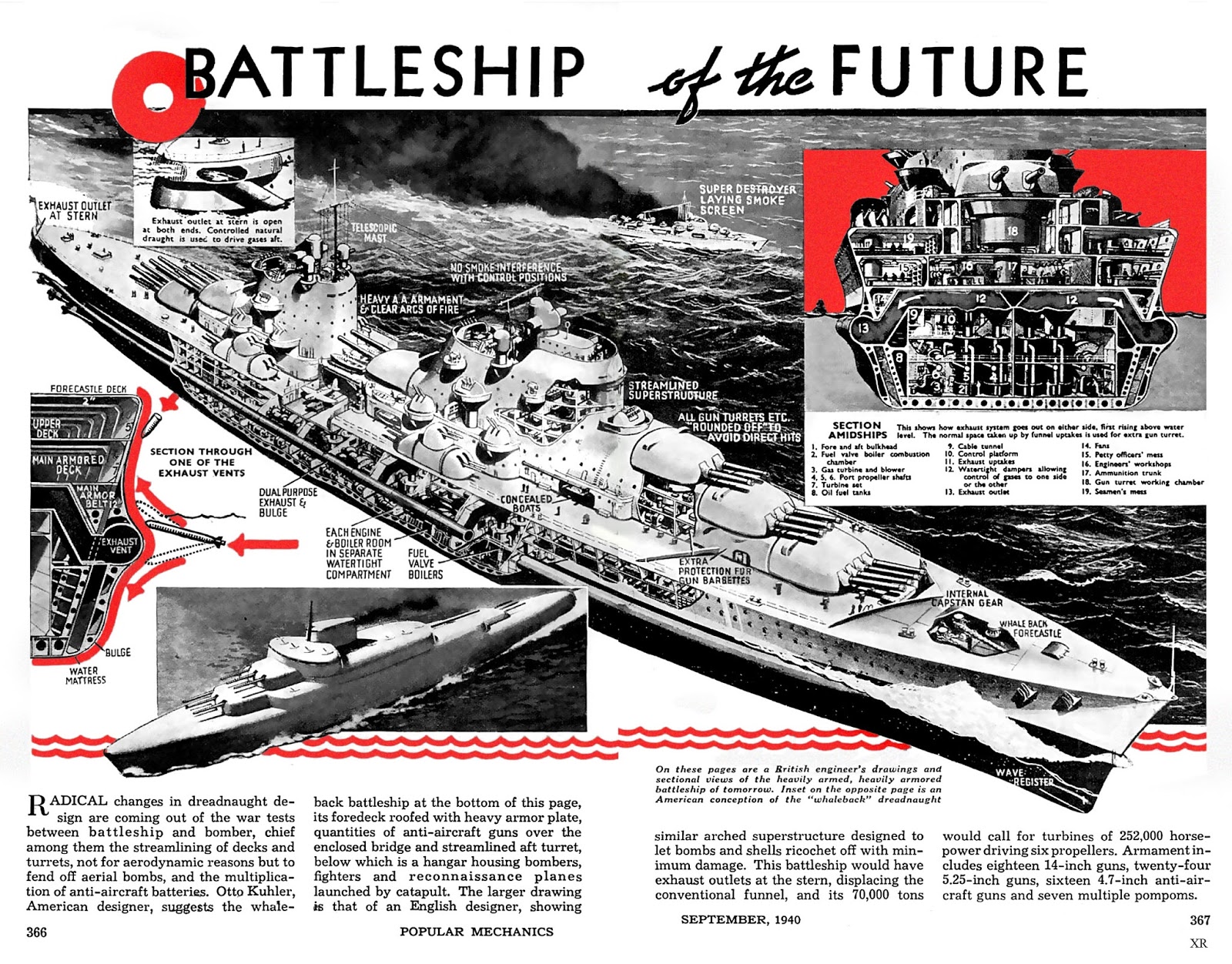
Click to see full-size image.
Kingdom of Majapahit – An Empire of Water – Extra History – #1
Extra Credits
Published on 25 Aug 2018In this series we will explore the history of a short-lived kingdom that united the diverse, 13,000+ islands of Indonesia: Majapahit. Before Majapahit came along, however, the Kingdom of Srivijaya and the Kingdom of Mataram laid the stepping stones.
Please note: The next episode of Majapahit will be published on September 15 and will continue every Saturday thereafter. The EC team is taking a well-deserved short upload break for a few weeks!
Feature History – Peninsular War
Feature History
Published on 20 Aug 2017Hello and welcome to Feature History, featuring the Peninsular War and not much else. It’s not called Peninsular War and other stuff, just Peninsular War so really you can’t complain.
Help me defeat Napoleon (or not)
https://www.paypal.me/FeatureHistory
Patreon
https://www.patreon.com/FeatureHistory
https://twitter.com/Feature_History
Discord
https://discord.gg/Zbk4CvR
———————————————————————————————————–
I do the research, writing, narration, art, and animation. Yes, it is very lonely


