
The theory that minimum wages discharged the least productive workers had been a constant of Anglophone political economy, dating to John Stuart Mill’s (1848) Principles of Political Economy. When England established a minimum wage with the Trades Board Act in 1909, it did so notwithstanding the objections of a generation of England’s most eminent economists – Henry Sidgwick, Alfred Marshall, Philip Wicksteed, and A.C. Pigou – all of whom observed that while the law could make it criminal to pay a worker less than the minimum, it could not compel firms to hire someone at that rate. Even the intellectual champions of the English minimum wage conceded the point.
Thomas Leonard, Illiberal Reformers, 2016.
September 9, 2018
QotD: Minimum wages hurt the very poorest workers
Comments Off on QotD: Minimum wages hurt the very poorest workers
September 8, 2018
Battle of Saipan – Steel and Coral – Extra History – #1
Extra Credits
Published on 6 Sep 2018The battle of Saipan would decide the fate of the Pacific War. On a tiny island, just five miles wide, thousands died under advanced artillery and amphibious tanks. This series is brought to you by World of Tanks PC. Check out the game at the link below and use the invite code FORAGER for extra goodies. https://redir.wargaming.net/r06pve1j/…
Support us on Patreon! http://bit.ly/EHPatreon
Comments Off on Battle of Saipan – Steel and Coral – Extra History – #1
QotD: Reactions to, and criticisms of, Epicureanism
Hedonism has always been a controversial doctrine, so far as it is opposed to the teachings of the explicitly altruistic philosophies and religious systems. There are difficulties with hedonism when it comes to the exact comparison of pleasures. We do not have any of the more detailed works in which Epicurus might have attempted what Jeremy Bentham later called a “felicific calculus”. But, bearing in mind the difficulties that Bentham and the 19th century utilitarians found when they tried to move from principles to details, there is no reason to suppose he was more successful.
However, it is hard to see anything so scandalous in the pursuit of happiness through moderation and through friendship that should have brought on a flood of often hysterical denunciation and misrepresentation in antiquity that began in his own lifetime and did not end even with the loss of virtually the whole body of Epicurean writings.
The early accusations are very detailed, and are cited by Diogenes Laertius. Among much else, it is alleged:
- That he wrote 50 obscene letters;
- That one of his brothers was a pimp;
- That his understanding of philosophy was small and his understanding of life even smaller;
- That he put forward as his own the doctrines of Democritus about atoms and of Aristippus about pleasure;
- That in his On Nature Epicurus says the same things over and over again and writes largely in sheer opposition to others, especially against his former teacher Nausiphanes;
- That he was not a genuine Athenian;
- That he vomited twice a day from over-indulgence.
Three centuries after his death, Plutarch (46-127 AD) wrote against him in almost hysterical tone. He says:
Epicurus… actually advises a cultivated monarch to put up with recitals of stratagems and with vulgar buffooneries at his drinking parties sooner than with the discussion of problems in music and poetry.
And again:
Colotes himself, for another, while hearing a lecture of Epicurus on natural philosophy, suddenly cast himself down before him and embraced his knees; and this is what Epicurus himself writes about it in a tone of solemn pride: ‘You, as one revering my remarks on that occasion, were seized with a desire, not accounted for by my lecture, to embrace me by clasping my knees and lay hold of me to the whole extent of the contact that is customarily established in revering and supplicating certain personages. You therefore caused me,’ he says, ‘to consecrate you in return and demonstrate my reverence.’ My word! We can pardon those who say that they would pay any price to see a painting of that scene, one kneeling at the feet of the other and embracing his knees while the other returns the supplication and worship. Yet that act of homage, though skillfully contrived by Colotes, bore no proper fruit: he was not proclaimed a Sage. Epicurus merely says: ‘Go about as one immortal in my eyes, and think of me as immortal too.’
Now, all this and more was said against Epicurus when the whole body of his writings was still available, and by men who had access to those writings. It is unlikely, bearing in mind their general ability, that they were incapable of understanding plain Greek. So what could have been their motivation for misrepresenting him in defiance of the evidence, or in repeating personal libels irrelevant to his philosophy?
A possible answer is that they hated his philosophy for other reasons that they were not able or did not wish fully to discuss.
What does make Epicurus and his philosophy so controversial is one further piece of advice on the pursuit of happiness. It is impossible to be happy, he insists, unless we understand the nature of the universe and our own place within the universe.
Sean Gabb, “Epicurus: Father of the Enlightenment”, speaking to the 6/20 Club in London, 2007-09-06.
Comments Off on QotD: Reactions to, and criticisms of, Epicureanism
September 7, 2018
Red Terror in Soviet Russia I THE GREAT WAR Week 215
The Great War
Published on 6 Sep 2018After an almost successful attempt on Lenin’s live, the Tscheka under Felix Dzerzhinsky responds with a terror campaign to consolidate Soviet power through fear. At the same time, a supposed Allied plot is unveiled that would get Russia back into the war.
Comments Off on Red Terror in Soviet Russia I THE GREAT WAR Week 215
Suomi m/31 – Finland’s Excellent Submachine Gun
Forgotten Weapons
Published on 17 Aug 2018More info: https://www.forgottenweapons.com/suomi-m-31-finlands-excellent-submachine-gun/
http://www.patreon.com/ForgottenWeapons
Designed by Aimo Lahti, the Suomi m/31 submachine gun is in my opinion one of the standout submachine guns of the World War Two era. Despite its hefty weight (10.4lb / 4.7kg) and lack of a good pistol grip stock, it still manages to be tremendously controllable and accurate, with a very high rate of fire (about 900 rpm).
For a detailed written description of the history and development of the weapon, I would refer you to the excellent article by Jaeger Platoon: http://www.jaegerplatoon.net/MACHINEP…
If you enjoy Forgotten Weapons, check out its sister channel, InRangeTV! http://www.youtube.com/InRangeTVShow
Comments Off on Suomi m/31 – Finland’s Excellent Submachine Gun
September 6, 2018
Feature History – Chinese Civil War
Feature History
Published on 25 Jul 2017Hello and welcome to Feature History, featuring a civil war that done happened in China.
Help me recognise Taiwan (or not)
https://www.paypal.me/FeatureHistory
Patreon
https://www.patreon.com/FeatureHistory
Discord
https://discord.gg/Zbk4CvR
———————————————————————————————————–
I do the research, writing, narration, art, and animation. Yes, it is very lonely
Comments Off on Feature History – Chinese Civil War
September 5, 2018
Germany’s New Light Howitzer: the 7.5cm le.IG 18
Forgotten Weapons
Published on 15 Aug 2018More info: https://www.forgottenweapons.com/germ…
http://www.patreon.com/ForgottenWeapons
In the aftermath of World War One, every military force immediately began to assess what they thought was most important to improve in their arsenals for the next war. For Germany, one thing they felt lacking was a light howitzer that could be organic to infantry units, mobile enough to remain with the front lines in an advance to provide easy and immediate supporting fire. The Rheinmetall company would develop just such a gun and the German military adopted it in 1932 under the designation 7.5cm leichtes Infanteriegeschutz 18.
The 7.5cm le.IG 18 fired a roughly 12 pound (5.5-6 kg) 75mm high explosive shell out to 4,000 meters, and was capable of both direct and indirect fire (elevation maxed out at 90 degrees). These guns would see service on all fronts with the German military in World War Two, remaining inservice throughout the entire war.
The mechanical operation of the gun is rather unusual for an artillery piece, with a fixed breech and a barrel which tips up from the muzzle for loading and ejection. This did not really convey any particular advantage, but it also did not have any particular weakness and was quite satisfactory in action.
If you enjoy Forgotten Weapons, check out its sister channel, InRangeTV! http://www.youtube.com/InRangeTVShow
Comments Off on Germany’s New Light Howitzer: the 7.5cm le.IG 18
QotD: Why did appeasing the Fascist dictators seem such a sensible policy?
It is a familiar student essay question, whether the revolution could have been averted, but for the world war and resultant loss of up to three million Russian lives. It seems more useful merely to suggest that, in the political and ideological climate of the early 20th century, the collectivist experiment was bound to be attempted somewhere, and Russia or China were obvious testbeds. The consequences for millions of Russian peasants, together with the ferocity of Soviet oppression, were successfully concealed from most western eyes for half a century. The 1789 French revolution killed only a few thousand aristocrats and transferred land to peasants, who thus became ardent upholders of property rights. The Russian version required liquidation of the entire governing class and transfer of land to collective ownership, an incomparably more radical proceeding. Douglas Smith’s 2012 book Former People gives a harrowing account of the fate of the Tsarist aristocracy.
In the West, the gullibility of the Webbs, Bernard Shaw and the rest of the ‘true believers’ was fed by a desperation to suppose the Soviet example viable. ‘Looking around us at our own hells,’ wrote the historian Philip Toynbee, who became a communist at Cambridge, ‘we had to invent an earthly paradise somewhere else’. As late as 1945, the leftist publisher Victor Gollancz brought posterity’s contempt upon himself by declining to publish Animal Farm, George Orwell’s great satire on Bolshevism.
For a counter-revolutionary contemporary perspective, it is impossible to understand the 1930s appeasement of the dictators without grasping the traumatic impact of events in Russia on the propertied classes everywhere. The Winter Palace was stormed only 16 years before Hitler came to power. For at least two decades, Europe’s ‘haves’ were far more frightened of Bolshevism than of fascism.
The ‘clubland hero’ novels of John Buchan and Sapper offer embarrassing glimpses of the British bourgeois view of Lenin’s people and their followers in the decades following the revolution. A belief took hold in polite circles that the bloodiest revolutionaries were not merely communists but also Jews, which meant they were doubly damned in St James’s clubs.
Max Hastings, “The centenary of the Russian revolution should be mourned, not celebrated”, The Spectator, 2016-12-10.
Comments Off on QotD: Why did appeasing the Fascist dictators seem such a sensible policy?
September 4, 2018
Debunking claims from The Technology of Orgasm
Alex Tabarrok linked to this paper [PDF] examining the claims that have long since become embedded in academia but appear to have no factual basis at all:
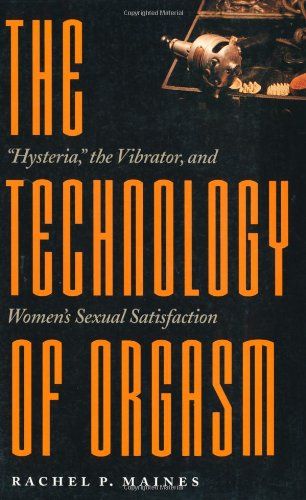
You know the story about the male Victorian physicians who unwittingly produced orgasms in their female clients by treating them for “hysteria” with newly-invented, labor-saving, mechanical vibrators? It’s little more than an urban legend albeit one transmitted through academic books and articles. Hallie Lieberman and Eric Schatzberg, the authors of a shocking new paper, A Failure of Academic Quality Control: The Technology of Orgasm, don’t quite use the word fraud but they come close.
The Technology of Orgasm by Rachel Maines is one of the most widely cited works on the history of sex and technology. Maines argues that Victorian physicians routinely used electromechanical vibrators to stimulate female patients to orgasm as a treatment for hysteria. She claims that physicians did not perceive the practice as sexual because it did not involve vaginal penetration. The vibrator was, according to Maines, a labor-saving technology to replace the well-established medical practice of clitoral massage for hysteria. This argument has been repeated almost verbatim in dozens of scholarly works, popular books and articles, a Broadway play, and a feature-length film. Although a few scholars have challenged parts of the book, no one has contested her central argument in the peer-reviewed literature. In this article, we carefully assess the sources cited in the book. We found no evidence in these sources that physicians ever used electromechanical vibrators to induce orgasms in female patients as a medical treatment. The success of Technology of Orgasm serves as a cautionary tale for how easily falsehoods can become embedded in the humanities.
I was not surprised when I ran a quick search for the cover of the Maines book (embedded above) and the vast majority of images returned were NSFW.
Comments Off on Debunking claims from The Technology of Orgasm
WW1 Trucks and Logistics I THE GREAT WAR On The Road
The Great War
Published on 3 Sep 2018Indy and David Willey of the Tank Museum talk a bit about trucks and logistics during WW1 while sitting in some sweet vintage World War 1 trucks.
Comments Off on WW1 Trucks and Logistics I THE GREAT WAR On The Road
How do plasma TVs work? I James May Q&A I Head Squeeze
BBC Earth Lab
Published on 18 Oct 2013So how do plasma TV’s work? Believe it or not the concept of plasma displays had been invented as long ago as the 1930’s, Not quite 21st cutting edge technology! The idea is that instead of using electrons to create lines, the plasma screen uses three fluorescent light cells, one in each primary colour.
Plasma displays are considerably shallower than older TVs, you can mount them on a wall and conveniently hide them behind a well-placed curtain. They can also be scaled up by adding more pixels and enough power to run them. The biggest plasma TV we found was a 152 inch! That’s pretty much 3 meters long and will set you back a measly £380,000.
I bet your TV is not as big as 152 inches! If you enjoyed this vid then why not give us a thumbs up or share it with your friends.
Comments Off on How do plasma TVs work? I James May Q&A I Head Squeeze
September 3, 2018
WW2 – September 1 1939 – The Polish German War
World War Two
Published on 1 Sep 2018When Germany invades Poland on September 1 1939, the world is already at the brink of a new world war…
Between 2 Wars: https://www.youtube.com/playlist?list…
Written and Hosted by: Indy Neidell
Produced and Directed by: Spartacus Olsson and Astrid Deinhard
Executive Producers: Bodo Rittenauer, Astrid Deinhard, Indy Neidell, Spartacus Olsson
Research by: Indy Neidell
Edited by: Spartacus OlssonJoin us on Patreon: https://www.patreon.com/TimeGhostHistory
Or join The TimeGhost Army directly at: https://timeghost.tvA TimeGhost chronological documentary produced by OnLion Entertainment GmbH
Apologies for this going out a day later than usual … I was out of town on the weekend with very limited internet connectivity. Future TimeGhost/Between2Wars episodes will appear closer to their release days (usually the next day).
Comments Off on WW2 – September 1 1939 – The Polish German War
Planes, Trains, and… Actually, just Trains
Knowing Better
Published on 18 Sep 2016The railroad has affected your life more than you may have realized. From starting the mail order business to creating some of America’s greatest landmarks, see how this simple transportation system shaped the country we live in today.
Patreon ► http://patreon.com/knowingbetter
Twitter ► https://twitter.com/KnowingBetterYT
Facebook ► https://facebook.com/KnowingBetterYT/
Reddit ► https://reddit.com/r/KnowingBetter/—
Why Trains Suck in America – Wendover Productions – https://youtu.be/mbEfzuCLoAQ
Photo Credits –
American Waterways/Canals are edits of images I used to teach in 2011 – The originals were from Wikicommons and have long since been removed or updated. No Copyright Information can be found.
The Three Proposed Railroad Routes are edits of images I used to teach in 2013 – The originals were from Wikicommons and have long since been removed or updated. No Copyright Information can be found.
I don’t normally add comments about the daily 2:00am videos, but there are a couple of things in this video that I think needed to be addressed. First, he rather casually skips over the vast increase in American railway building even before the enabling legislation for the transcontinental lines, and misses a great opportunity to explain how important they were in determining the outcome of the American Civil War. Second, and rather more irritatingly, he blithely asserts the common myth about the “Big Oil” conspiracy to buy up and shut down municipal light rail (streetcars, interurban railways, and radials). The various streetcar systems had almost all been economically shaky since the Great Depression (many had to be taken over by the municipalities involved to keep them out of bankruptcy), and the huge increase in private car ownership after World War 2 was the coup de grâce that finished off most of the rest. During the same time, bus routes were encroaching on the streetcar’s territory and had the huge advantage of not being tied to rails (allowing relatively easy re-routing without huge construction costs).
Comments Off on Planes, Trains, and… Actually, just Trains
September 2, 2018
Adrian Carton de Wiart – WW1 Paratroopers? I OUT OF THE TRENCHES
The Great War
Published on 1 Sep 2018Chair of Wisdom Time!
Comments Off on Adrian Carton de Wiart – WW1 Paratroopers? I OUT OF THE TRENCHES
HMS Eagle: Royal Aircraft Carrier (1969) | Extra! | British Pathé
British Pathé
Published on 13 Apr 2014This Pathé ‘Extra!’ segment depicts the carrier HMS Eagle in 1969, which was the 15th in a long line of Royal Navy ships to carry that name. This particular ship was an Audacious-class aircraft carrier that hosted all manner of planes from the de Havilland Sea Vixen to the McDonnell Douglas Phantom.
#BritishPathé #RoyalNavy #RAF #Ships #Navy #Military
(FILM ID:2221.15)
Extra ! HMS Eagle.Aerial shot of the aircraft carrier HMS Eagle of the Royal Navy. M/S of radar tower. Several shots of jet aircraft on the deck of the ship including Sea Vixens, Gannets and Phantoms. Shots of jet plane taxiing on runway. M/S to L/S of Sea Vixen taking off from the deck. M/Ss of three men working in the control tower. M/Ss of pilot sitting in cockpit of jet on the deck. Good shot of deck crew at work preparing jet plane for takeoff. L/Ss of Phantom aircraft taking-off. L/S and M/S of the aircraft in-flight. L/S of deck of ship. An aircraft lands on the deck of the ship. M/S of arrester wire. Another shot of plane landing. M/S of Westland Wessex helicopter hovering nearby. Air to air shot of phantom in-flight. M/S shots of plane landing. L/Ss of the aircraft carrier.
Comments Off on HMS Eagle: Royal Aircraft Carrier (1969) | Extra! | British Pathé


