Atun-Shei Films
Published 1 Jul 2020In this three-part series, I review a classic Ron Maxwell film about a little known historical event that no one talks about called the Battle of Gettysburg. I also present an abbreviated and oversimplified history of the battle, while simultaneously criticizing the movie for presenting an abbreviated and oversimplified history of the battle.
In this first episode, I discuss the first day of fighting on July 1, 1863 – including Buford’s cavalry, the Iron Brigade, the Railroad Cut, and John Burns.
Support Atun-Shei Films on Patreon ► https://www.patreon.com/atunsheifilms
Leave a Tip via Paypal ► https://www.paypal.me/atunsheifilms (Between now and October, all donations made here will go toward the production of The Sudbury Devil, our historical feature film)
#Gettysburg #CivilWar #VideoEssay
Watch our film ALIEN, BABY! free with Prime ► http://a.co/d/3QjqOWv
Reddit ► https://www.reddit.com/r/atunsheifilms
Twitter ► https://twitter.com/atun_shei
Instagram ► https://www.instagram.com/atunsheifilms
Merch ► https://atun-sheifilms.bandcamp.com~REFERENCES~
[1] “General John Buford’s Report of his Cavalry’s Action at Gettysburg” (2015). Iron Brigader https://ironbrigader.com/2015/06/22/g…
[2] W.C. Storrick: The Battle of Gettysburg (1931). J Horace McFarland Company, Page 11
[3] “The First Day at Gettysburg: Then and Now.” American Battlefield Trust https://www.battlefields.org/learn/ar…
[4] “Lt. Colonel Rufus Dawes Describes the Fighting of the 6th Wisconsin Infantry at Gettysburg” (2013). Iron Brigader https://ironbrigader.com/2013/06/13/l…
[5] “Civilian John Burns at the Battle of Gettysburg (2018)”. C-Span https://www.c-span.org/video/?447809-…
[5 1/2] Allen C. Redwood: “The Confederate in the Field”. Civil War Home https://www.civilwarhome.com/confeder…
[6] Codie Eash: “The Wounded Wisconsinite Who Witnessed Pickett’s Charge” (2018). National Museum of Civil War Medicine https://www.civilwarmed.org/reed/?fbc…
[7] Cooper Wingert: “The Confederate ‘Slave Hunt’ and the Gettysburg Campaign” (2020). Emerging Civil War https://emergingcivilwar.com/2020/05/…
July 2, 2020
Fixing Gettysburg: The First Day
Kennedy, the Lying Politician | The Cuban Missile Crisis I Prelude 2
TimeGhost History
Published 1 Jul 2020The Cold War grows gets more and more tense as both the USSR and the US try to get the upper hand through the volume of nuclear weapons and strategic launching sites – including Cuba.
Join us on Patreon: https://www.patreon.com/TimeGhostHistory
Hosted by: Indy Neidell
Written by: Spartacus Olsson
Director: Astrid Deinhard
Producers: Astrid Deinhard and Spartacus Olsson
Executive Producers: Astrid Deinhard, Indy Neidell, Spartacus Olsson, Bodo Rittenauer
Creative Producer: Joram Appel
Post-Production Director: Wieke Kapteijns
Research by: Spartacus Olsson
Edited by: Daniel Weiss
Sound design: Marek KaminskiColorizations:
– Carlos Ortega Pereira (BlauColorizations) – https://www.instagram.com/blaucoloriz…
– Daniel WeissSources:
– New Georgia EncyclopediaSoundtracks from Epidemic Sound:
– “Cold Eyes” – Elliot Holmes
– “Juvenile Delinquent” – Elliot Holmes
– “Nightclub Standoff” – Elliot Holmes
– “Scope” – Got Happy
– “Zoot Suit” – Elliot Holmes
– “Car Chase in Virginia” – White Bones
– “When They Fell” – Wendel Scherer
– “Kissed by Thunder” – Elliot HolmesArchive by Screenocean/Reuters https://www.screenocean.com.
A TimeGhost chronological documentary produced by OnLion Entertainment GmbH.
Fallen flag — the Toronto, Hamilton & Buffalo Railway
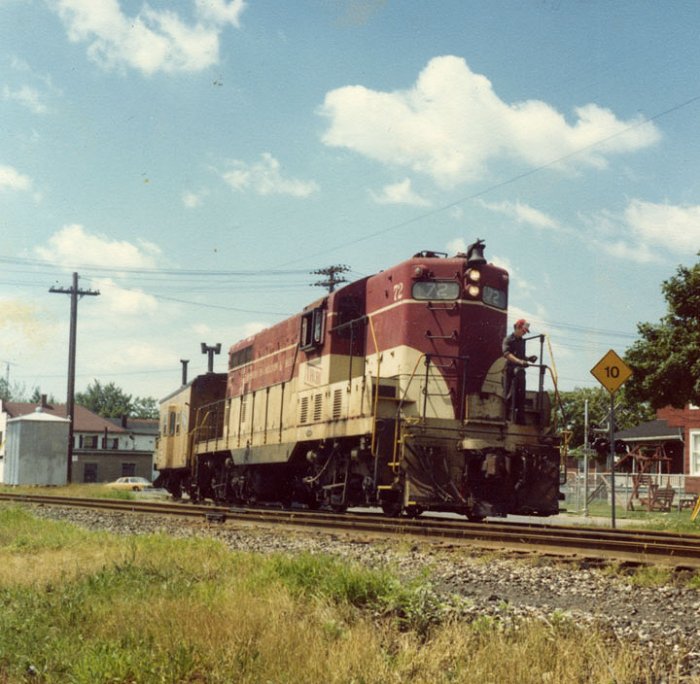
This month’s Classic Trains featured fallen flag is my favourite Canadian railway … I founded the TH&B Railway Historical Society many years ago (you can download a PDF of the first newsletter I did here … I didn’t have access to any TH&B photo I could use in the publication at that point, so it’s pretty much all text and tables). I put together as much information as I had about the railway at that time and printed up a few hundred copies to distribute at a regional railfan event (the CN Lines event in Oakville during October 1997), hoping to find fellow fans of the TH&B (back in those long-distant days when you couldn’t just run a quick search from your web browser, and most people didn’t yet have email addresses). The gamble worked and we had a formal historical society up and running for the following issue. I published the newsletter for five years before finally burning out and handing it over to more capable hands.
The society is still in operation, and the newsletter (now called The Ontarian) is mailed out four times per year. Membership information available at the society website.
Greg McDonnell begins the article with a quick look at the TH&B’s early history:

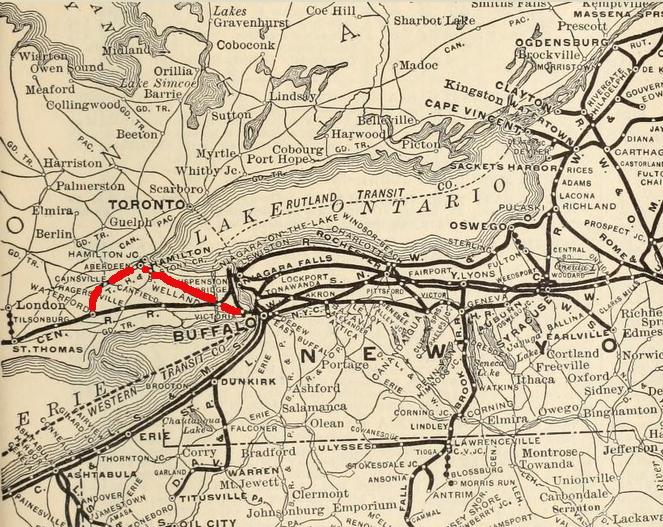
Detail from a map published in The Commercial and Financial Chronicle in 1908. TH&B trackage has been marked in red (not on the original image).
Wikimedia Commons.
Canada, thanks to its two transcontinental giants after 1923, had few small “regional” railroads. One, though, was the 111-mile Toronto, Hamilton & Buffalo Railway, which vanished in 1987.
Little TH&B had a larger-than-life presence that belied the reality of its being merely the southern Ontario stepchild that linked parents New York Central and Canadian Pacific. TH&B never realized its dream of being an independent road linking its three namesake cities, but in its heyday, it did haul sleeping cars from Toronto for New York, Boston, Cleveland, Pittsburgh, and Philadelphia. In 1911, it became the first North American railroad to install Absolute Permissive Block signaling; it erected a splendid art deco station and office tower in Hamilton, Ontario; and it had Canada’s only 2-8-4 steam locomotives, not to mention two ex-NYC Hudsons.
In 1890, even before a rail was laid, TH&B deviated from its chartered intentions, dropping Buffalo from its plans in favor of an eastern terminus and connection with the Canada Southern, a subsidiary of NYC’s Michigan Central, at Welland, Ontario. In 1892, TH&B acquired its first operating trackage, the faltering 18-mile Brantford, Waterloo & Lake Erie, a Brantford–Waterford line that was extending itself to Hamilton.
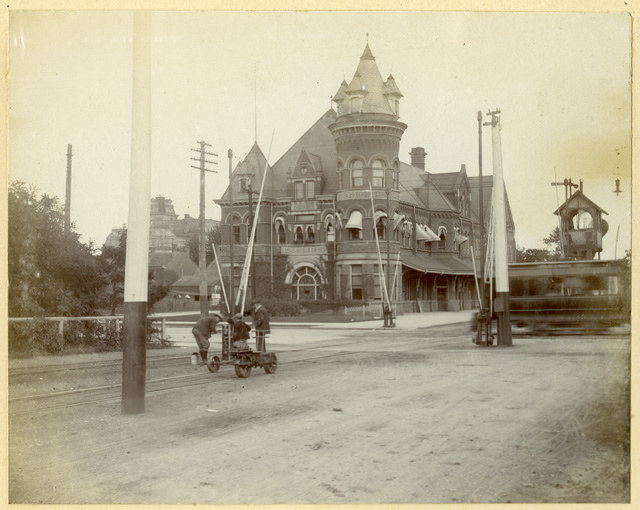
The original Hunter Street station in Hamilton, replaced in 1929 with the current Art Deco station now operated by GO Transit.
Local History & Archives, Hamilton Public Library via Wikimedia Commons.As crews spiked TH&B rails from Hamilton to Welland, the line’s strategic importance attracted suitors. And not just anyone, for on July 9, 1895, the still-incomplete railway was sold to a consortium headed by two of the most powerful men in North American railroading: NYC’s Cornelius Vanderbilt and CPR’s William Van Horne.
NYC, dividing its holdings with subsidiaries MC and CASO, took a 73% stake in the fledgling bridge line; CP held the remaining 27%, an arrangement that would endure for 80-plus years. TH&B was afforded a considerable measure of autonomy, but parental influence from New York and Montreal gave TH&B its unique international character.
The TH&B Society picks up the history in somewhat more detail (the original draft was mine, but several others have made additions and changes since then):
The next phase of construction was to be the line from Hamilton to Toronto. The surveyed route to Toronto closely paralleled the existing Grand Trunk Railway mainline. In order to avoid construction of a parallel line (and the potential loss of traffic to the competing line), the GTR granted running rights to the Canadian Pacific Railway between Toronto and Hamilton in 1896. That same year the TH&B constructed what became known as the Hamilton Connection between its line and the GTR at Hamilton Junction. The Hamilton Connection was subsequently leased to the CPR and became their physical connection to the TH&B.
In 1897, the TH&B obtained running rights over the Hamilton & Dundas Railway for the provision of freight service into the Town of Dundas. The H&D Railway, a local interurban line, ceased operations in 1923 and the TH&B acquired the former H&D right of way into Dundas to continue freight operations. The line into Dundas was known as the H&D Branch.
In order to tap into Hamilton’s expanding industrial sector, construction began on the Hamilton Belt Line in 1900. The Belt Line expanded with the construction of two additional branch lines in 1911 to allow access to all industrial sectors of the city, many of which were previously serviced exclusively by the GTR. Although the Belt Line was only six miles in length, it contained over 40 miles of yard and industrial sidings and would provide much financial sustenance to the TH&B over the years.
In 1914, the 14-mile Dunnville Subdivision was constructed southward from Smithville to the Town of Dunnville and extended five miles further to the shores of Lake Erie at Port Maitland in 1916. Access to Lake Erie allowed the creation of the TH&B Navigation Co. that operated between Port Maitland and Ashtabula, Ohio, from 1916 until discontinuance in 1932.
The TH&B’s final expansion occurred in 1927 when running rights were awarded over the Canadian National Railways to gain access to the industrial City of Port Colborne.
1935 saw the first abandonment of trackage when the Ridgeville Spur, a small four-mile branch extending off the Welland Subdivision just outside of Welland, was abandoned and the rails were removed in 1936.
The St. Lawrence Seaway Authority completed the construction of the present-day Welland Canal in 1972 resulting in the relocation of several rail lines in the area. The Welland Subdivision was realigned between Fenwick and Welland where a new yard was constructed and operated in conjunction with New York Central’s corporate successor, Penn Central. The new shared facility allowed the closure and removal of the original and independent TH&B and Penn Central operations located within the city. Welland Yard continues to operate today as a Canadian Pacific’s marshalling facility for the Niagara Region.
In 1976, the United States Government amalgamated six bankrupt railroads, including the New York Central’s corporate successor, Penn Central, into a new entity called Conrail. In an effort to reduce debt, Conrail began shedding foreign investments including their controlling interest in the TH&B. In 1977, CP Rail acquired Conrail’s 73% interest giving CP 100% control of the railway.
In 1985, CP Rail and Canadian National jointly acquired the assets of Conrail’s Canada Division, the former Canada Southern Railway. CP Rail acquired exclusive ownership of the eastern end of the line between the TH&B connection at Welland and the international border crossings at Niagara Falls and Fort Erie, Ontario. While CP equipment was used to operate this portion of the line, known as CP CASO, the TH&B provided the managerial and administrative functions on CP Rail’s behalf.
The TH&B would continue to operate as a separate entity until 1987 when it was amalgamated into the Eastern Region of the London Division of CP Rail.
CP Rail abandoned the H&D Branch in 1988 with the Waterford Subdivision following in 1989. Also in that year, CP discontinued operations into Port Colborne, opting not to renew the running rights agreement over the CNR.
Today, the surviving portions of the TH&B, including the Hamilton Belt Line, the former Welland Subdivision and a portion of the Dunnville Subdivision operate as part of Canadian Pacific’s Hamilton Subdivision in CPR’s Southern Ontario Service Area.
Early Automatic Pistol Cartridges – What, When & Why?
Forgotten Weapons
Published 12 Oct 2016http://www.patreon.com/ForgottenWeapons
Cool Forgotten Weapons Merch! http://shop.bbtv.com/collections/forg…
In discussion with a friend recently, the topic of early automatic pistol cartridges came up. Specifically, looking at the context of which cartridges were actually available at which times, and how this might provide helpful context for understanding why particular cartridges were adopted (or commercially successful) or were not.
I decided to see if I could put together a useful video on the subject, and this is the result. We will look at the cartridges available prior to 1900, the ones developed or introduced between 1900 and 1904, and then a few followups which appeared between 1905 and 1910.
Some cartridges became popular because of their ballistic characteristics — like the 7.63mm Mauser and the C96 “Broomhandle” — while others became popular because of the handgun much more than the cartridge itself — like the Browning 1900 and the .32ACP / 7.65mm Browning.
July 1, 2020
British Railways: Goodbye To Steam aka Railway Modernisation (1958) | British Pathé
British Pathé
Published 13 Apr 2014This archive footage from 1958 depicts British Railways’ journey to modernisation and the transition away from steam-powered trains.
For Archive Licensing Enquiries Visit: https://goo.gl/W4hZBv
#BritishPathé #History #Railway #Trains #BritishRailways
(FILM ID:1549.07)
Full title reads: “Goodbye To Steam”Intertitle reads: “British Railways meet the challenge of the age of abundant power”
Angle shot, railway engine going past camera. GV Outside one of the large London Railway stations showing railway lines and train coming out of station. CU Man in signal box, pan to show him pulling levers. CU Signal going up. GV Train coming towards camera. GV Steam train. GV Aerial shots steam train. CU Man filming from plane. CU man in plane fitting equipment and then giving thumb’s up sign. GV Aerial shot, railway lines. CU Man filming from plane. Steam train going along line. SV Draughtsmen in office. CU Men looking through magnifier at a plan. CU Magnified picture of plan, zoom to show Railway chiefs seated round table with plan, among them is Sir Philip Warter. SV Elevated, railway chiefs looking at plan. CU One of the railway executives. SV Man with model of section of railway line which he places on the table and the railway executives study it. CU Sign reading “Kent Coast Electrification Widening to Provide Four Tracks”, pan to show railway line with only two tracks. GV Kent Coast line with men on bridge. SV Bridge with surveyor. CU Surveyor looking through theodolite. GV Tracking shot of men working. GV Men working at side of railway line with clouds of smoke coming from wood. CU New diesel engine. CU Sir Brian Robertson talking to train driver. CU People watching. CU Sir Brian Robertson blowing whistle. CU Int. diesel engine with driver operating controls. SV Diesel train moving out of station. CU Driver of diesel train. CU. Sir Brian Robertson sitting in carriage. LV Through window of diesel cab as train enters tunnel. SV Three engines on lines. CU Front of one of the engines with plate reading “Cornish Riviera Express”. CU Driver. SV Cornish Riviera Express in station. SV Woman taking in washing because smoke is billowing up from railway lines beside her garden. GV Cornish Riviera Express coming towards camera.
CU Front of steam train “The Bristolian”. SV along top of engine as blows off steam. CU Hand pulling chain. CU valve. GV Platform. CU shovelling coal. GV As train goes along. CU Driver of train. CU Driver. CU Fireman. CU Fire with coal being shovelled. SV Looking over coal tender. SV From driver’s cab of train going under bridge and out the other side. CU Driver. GV From driver’s cab of railway lines with another steam train. SV Int. class for instruction of diesel engine drivers. CU Lecturer talks about metal object. CU Men looking at machinery. SV Royal Scot in station. CU Driver of Royal Scot. GV Activities on platform in which Royal Scot is standing. GV Royal Scot leaving station. GV Building with sign, “English Electric Co. Ltd. Preston”. GV Int. of workshop showing men working on armatures. GV Ext. of building with “Vulcan Locomotives” painted on wall. GV Int. of workshop showing men working on railway engines. CU Man working inside railway engine. GV Workshop. SV Diesel train in station. CU Driver of diesel. GV railway lines in front of train as it moves along. SV Int. dining car in diesel train with attendant pouring coffee. GV Looking through cab window of railway lines in front of train as it goes under bridge and straight past station. CU Glass panel in door with “York Signal Box, Strictly Private”, door opens. SV Man sitting at control panel of box, he reaches over to controls. CU Man’s hands working controls. CU Plan on wall showing different lines and points. CU Hand pushing buttons. CU Signals. CU Point on lines. GV Steam train along lines. CU Train in museum. CU Compartment of old train. SV Ancient train “Locomotion 1828”. SV Diesel Locomotive. CU “Deltic” written on side. GV Deltic. GV Train in station. Various shots in Deltic carriage. SV Coal trucks. SV Railway worker attaching pipe to train. GV Calder Hall Nuclear / Atomic Power station. GV Electrical pylons and cables. GV Diesel train “Sir Brian Robertson” in platform with crowds. GV Crowds. SV “Sir Brian Robertson” unveiled by Mr Grand, General Manager of the Western Region of British Railways. SV Crowd. SV Sir Brian Robertson by train. CU Sign “Sir Brian Robertson”. GV The “Sir Brian Robertson” leaving Paddington Station. SV Steam train letting out smoke. CU Signals. GV Steam train. CU Train over the points. GV steam train leaving clouds of smoke.
BRITISH PATHÉ’S STORY
Before television, people came to movie theatres to watch the news. British Pathé was at the forefront of cinematic journalism, blending information with entertainment.
The Somme then and now … in full HD
MC C
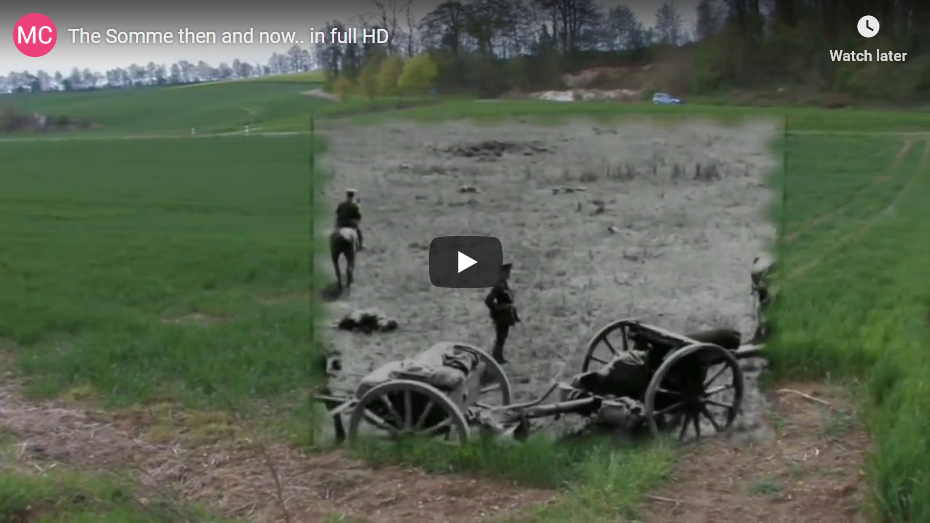
Published 1 Aug 2016100 years ago Malins and McDowell exposed their film to the light capturing a moment in time.
It’s very difficult to understand and watch the original film as they were very limited by technology and the danger. Malins risked his life on several occasions making this film, being right on the front line with a huge box camera sticking out above the trench. After watching the film many times, over many years, I wanted to find these locations and stand in their foot prints and re-film.
Some locations were easy to find, some took much research and some I haven’t yet been able to locate, but all the ones in this documentary are within yards to feet of where they filmed originally, none are guesses or just possibilities. I hope you enjoy watching and it helps you to understand please leave comments this is worth more to me than earning money I ask for nothing but love remarks.
June 30, 2020
The Mycenaeans – The Real Civilization who fought the Trojan War
Epimetheus
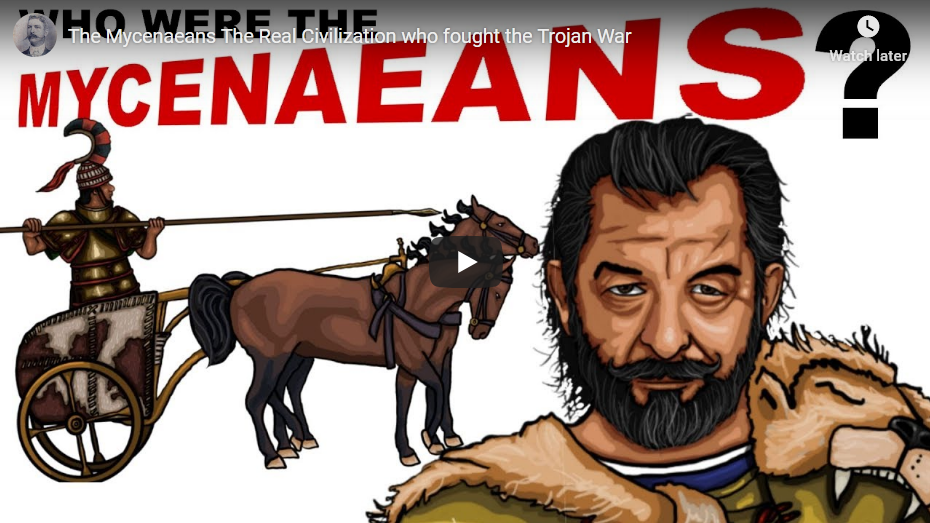
Published 2 Nov 2018The true ancient civilization behind the Trojan war (The Iliad and Odyssey – the Greek and Trojan heroes Agamemnon, Hector, and Achilles), the Mycenaeans. The history of how they interacted with the Bronze Age world including the Egyptians and the Hittites. From the early days with the Minoans to the Trojan War and the Sea Peoples. Rediscover this lost civilization.
Help my 1 man team of me to make more videos like this, so I can have better equipment and software to make you better content. https://www.patreon.com/Epimetheus1776
I draw, write, edit, research and narrate I love it and hope to make many more videos in the future with your help. Thank you 🙂
David Irving – Can you trust ANYTHING he wrote?
TIK
Published 29 Jun 2020Can you trust ANYTHING that David Irving wrote? In 1996, David Irving sued Deborah Lipstadt for libel (in the “Irving vs Penguin Books Ltd” trial) because Deborah Lipstadt had said Irving was a Holocaust Denier. Historian Richard Evans was called upon as an expert witness, and he examined Irving’s works for two years, discovering many major factual errors in David Irving’s works. Richard Evans came to the conclusion that Irving cannot even be classed as a “historian”, and says “not one sentence” in any of his speeches or written works can be trusted. Richard Evan’s Telling Lies About Hitler presents a solid case against David Irving that casts serious doubt about every “historical” text that Irving wrote, and this video presents 3 examples from Evan’s brilliant book (this video is not a sponsored video, I genuinely think Evan’s book is brilliant and you should get yourself a copy) that really should make you question the opinions of those who still promote Irving’s works.
Holocaust deniers may continue to deny that the “Final Solution to the Jewish Question” took place, but in actively distorting the evidence, they undermine their own cause. The term “distorian” describes their “writers” better than the term “historian”.
And, in case it isn’t blatantly obvious, I’m NOT a Fascist, NOT a Nazi, NOT a Marxist, and am NOT promoting said evil ideologies. This video is for educational and historical purposes, so that we may learn from the past and prevent it from repeating.
– – – – –
📚 BIBLIOGRAPHY / SOURCES 📚
Evans, R. In Defence of History. Granta Books, Kindle.
Evans, R. Telling Lies About Hitler: The Holocaust, History and the David Irving Trial. Verso, 2002.
Irving, D. Hitler’s War:1939-1942. PAPERMAC 1983.
Irving, D. Hitler’s War:1942-1945 PAPERMAC 1983.
Lipstadt, D. Denying the Holocaust: The Growing Assault on Truth and Memory Penguin Books, 2016.
Rees, L. The Holocaust: A New History. Penguin Books, 2017.
Seidel, G. The Holocaust Denial: Antisemitism, Racism, & the New Right. Beyond the Pale Collective, 1986.
Shermer, M. & Grobman, A. Denying History: Who Says the Holocaust Never Happened and Why Do They Say It? University of California Press, 2009.
Steinbacher, S. Auschwitz: A History. Penguin Books, 2005.The FULL list of all my sources: https://docs.google.com/spreadsheets/…
– – – – –
⭐ SUPPORT TIK ⭐
A big thank you to my Patreon, Craig Heinrich, for asking today’s question!
Do you want to ask a question? Please consider supporting me on either Patreon or SubscribeStar and help make more videos like this possible. For $5 or more you can ask questions which I will answer in future Q&A videos. Thank you to my current Patrons! You’re AWESOME! https://www.patreon.com/TIKhistory or https://www.subscribestar.com/tikhistory
– – – – –ABOUT TIK 📝
History isn’t as boring as some people think, and my goal is to get people talking about it. I also want to dispel the myths and distortions that ruin our perception of the past by asking a simple question – “But is this really the case?” I have a 2:1 Degree in History and a passion for early 20th Century conflicts (mainly WW2). I’m therefore approaching this like I would an academic essay. Lots of sources, quotes, references and so on. Only the truth will do.
This video is discussing events or concepts that are academic, educational and historical in nature. This video is for informational purposes and was created so we may better understand the past and learn from the mistakes others have made.
“The Squadrons Are Coming” – HMS Ark Royal aviation operations
Aircraft Games Movies
Published 1 Jul 2010In the Western Approaches, Ark Royal welcomes her air group back aboard, with the occasional hairy approach for newly qualified aviators.
This appears to be footage from episode 3 of Sailor, a BBC television series from 1976 about life aboard HMS Ark Royal.
The Wikipedia entry for HMS Ark Royal (R09) begins:
HMS Ark Royal (R09) was an Audacious-class aircraft carrier of the Royal Navy and, when she was decommissioned in 1979, was the Royal Navy’s last remaining conventional catapult and arrested-landing aircraft carrier. She was the first aircraft carrier to be equipped with angled flight deck at its commissioning; her sister ship, HMS Eagle, was the Royal Navy’s first angle-decked aircraft carrier after modification in 1954. Ark Royal was the only non-United States vessel to operate the McDonnell Douglas Phantom at sea.
[…]
While Ark Royal‘s career spanned 24 years from the time of her commissioning (her name was a household word), she spent as much time in refit; repair and reserve and modernisation as in commissioned service (12 years). It required a lot of effort from her engineers to keep her serviceable between yard periods. Ark Royal had been poorly preserved during its lengthy construction from 1942 to 1955, and much of its machinery was obsolete by its completion, including its dated DC electrics, supplemented later by some AC systems, resulting in a ship which experienced regular defects and mechanical failure. Eagle was a more reliable and well-built ship, and spent far more time at sea than her sister. The scrapping of Ark Royal in 1980, two years after Eagle, marked the end of conventional fixed-wing aircraft operations aboard Royal Navy carriers. She had borne so many innovations, yet her replacement was not equipped with any of these. There was some discussion about preserving her as a museum ship, and some private funds were raised; the MOD would not sanction these efforts.
QotD: Ideologies and belief systems
It’s really not a good thing because it manifests itself not only in individual psychopathologies, but also in social psychopathologies. That’s this proclivity of people to get tangled up in ideologies, and I really do think of them as crippled religions. That’s the right way to think about them. They’re like religion that’s missing an arm and a leg but can still hobble along. It provides a certain amount of security and group identity, but it’s warped and twisted and demented and bent, and it’s a parasite on something underlying that’s rich and true. That’s how it looks to me, anyways. I think it’s very important that we sort out this problem. I think that there isn’t anything more important that needs to be done than that. I’ve thought that for a long, long time, probably since the early ’80s when I started looking at the role that belief systems played in regulating psychological and social health. You can tell that they do that because of how upset people get if you challenge their belief systems. Why the hell do they care, exactly? What difference does it make if all of your ideological axioms are 100 percent correct?
People get unbelievable upset when you poke them in the axioms, so to speak, and it is not by any stretch of the imagination obvious why. There’s a fundamental truth that they’re standing on. It’s like they’re on a raft in the middle of the ocean. You’re starting to pull out the logs, and they’re afraid they’re going to fall in and drown. Drown in what? What are the logs protecting them from? Why are they so afraid to move beyond the confines of the ideological system? These are not obvious things. I’ve been trying to puzzle that out for a very long time. […]
Nietzsche’s idea was that human beings were going to have to create their own values. He understood that we had bodies and that we had motivations and emotions. He was a romantic thinker, in some sense, but way ahead of his time. He knew that our capacity to think wasn’t some free-floating soul but was embedded in our physiology, constrained by our emotions, shaped by our motivations, shaped by our body. He understood that. But he still believed that the only possible way out of the problem would be for human beings themselves to become something akin to God and to create their own values. He talked about the person who created their own values as the overman, or the superman. That was one part of the Nietzschean philosophy that the Nazis took out of context and used to fuel their superior man ideology. We know what happened with that. That didn’t seem to turn out very well, that’s for sure.
Jordan B. Peterson, “Biblical Series I: Introduction to the Idea of God” {transcript], jordanbpeterson.com, 2018-03-12.
June 29, 2020
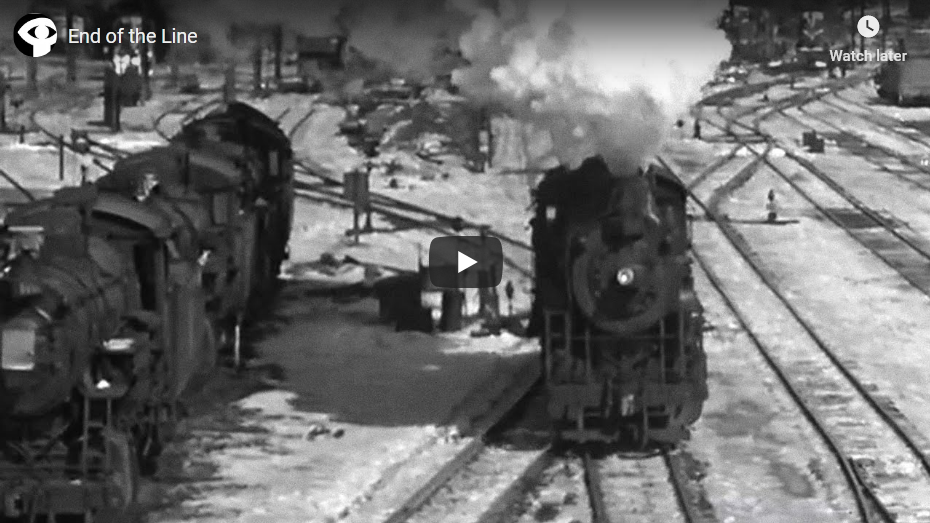
The End of the Line
NFB
Published 2 Sep 2015This documentary short offers a nostalgic look at the steam locomotive as it passes from reality to history. In its heyday, the big smoke-belching steam engine seemed immortal. Now, powerful and efficient diesels are pushing the old coal-burning locomotives to the sidelines, and the lonely echo of their whistles may soon be a thing of the past.
Directed by Terence Macartney-Filgate – 1959.
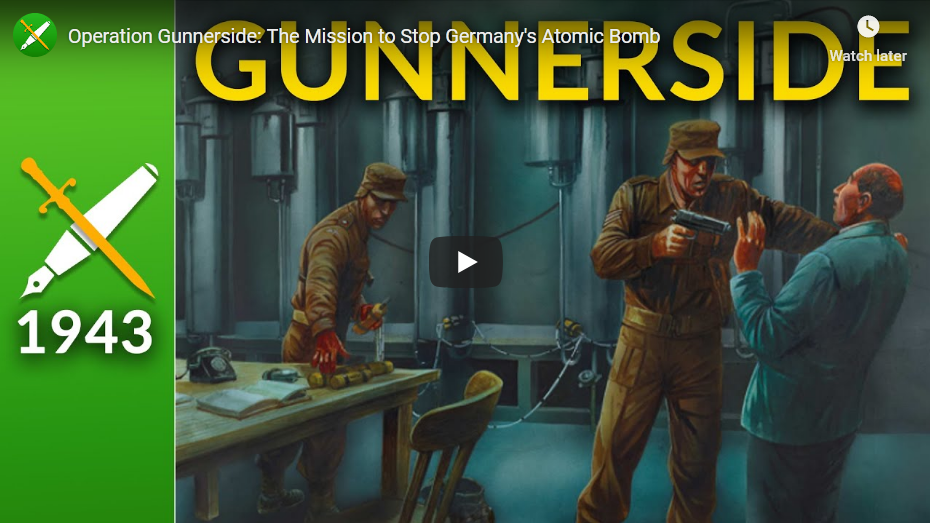
Operation Gunnerside: The Mission to Stop Germany’s Atomic Bomb
Historigraph
Published 21 Mar 2020Buy Historigraph Posters here! https://teespring.com/stores/historig…
Support the channel on Patreon: https://www.patreon.com/historigraph#OperationGunnerside #Historigraph #Historigraph #CuriosityStream
►Twitter: https://twitter.com/historigraph
►Instagram: https://www.instagram.com/historigraph
►Patreon: https://www.patreon.com/historigraph
►Follow me on Twitch: https://www.twitch.tv/historigraphSources:
Richard Petrow, The Bitter Years
David Greentree, Heroes of Telemark: Sabotaging Hitler’s Atomic Bomb
Clips:
1948 film Kampen om tungtvannet
Clips from contemporary documentary; https://www.youtube.com/watch?v=c3jSW…
Music:
“Crypto” by Kevin MacLeod
Link: https://incompetech.filmmusic.io/song…
License: http://creativecommons.org/licenses/b…“Rynos Theme”, Incompetech https://incompetech.com
“Hitman” by Kevin MacLeod
Link: https://incompetech.filmmusic.io/song…
License: http://creativecommons.org/licenses/b…
QotD: Gandhi’s religious views
I am sure that almost everyone who sees the movie Gandhi is aware that, from a religious point of view, the Mahatma was something called a “Hindu” — but I do not think one in a thousand has the dimmest notion of the fundamental beliefs of the Hindu religion. The simplest example is Gandhi’s use of the word “God,” which, for members of the great Western religions — Christianity, Judaism, and Islam, all interrelated — means a personal god, a godhead. But when Gandhi said “God” in speaking English, he was merely translating from Gujarati or Hindi, and from the Hindu culture. Gandhi, in fact, simply did not believe in a personal God, and wrote in so many words, “God is not a person … but a force; the undefinable mysterious Power that pervades everything; a living Power that is Love …” And Gandhi’s very favorite definition of God, repeated many thousands of times, was, “God is Truth,” which reduces God to some kind of abstract principle.
Like all Hindus, Gandhi also believed in the “Great Oneness,” according to which everything is part of God, meaning not just you and me and everyone else, but every living creature, every dead creature, every plant, the pitcher of milk, the milk in the pitcher, the tumbler into which the milk is poured … After all of which, he could suddenly pop up with a declaration that God is “the Maker, the Law-Giver, a jealous Lord,” phrases he had probably picked up in the Bible and, with Hindu fluidity, felt he could throw in so as to embrace even more of the Great Oneness. So when Gandhi said, “I am a Hindu and a Muslim and a Christian and a Jew,” it was (from a Western standpoint) Hindu double-talk. Hindu holy men, some of them reformers like Gandhi, have actually even “converted” to Islam, then Christianity, or whatever, to worship different “aspects” of the Great Oneness, before reconverting to Hinduism. Now for Christians, fastidious in matters of doctrine, a man who converts to Islam is an apostate (or vice versa), but a Hindu is a Hindu is a Hindu. The better to experience the Great Oneness, many Hindu holy men feel they should be women as well as men, and one quite famous one even claimed he could menstruate (I will spare the reader the details).
In this ecumenical age, it is extremely hard to shake Westerners loose from the notion that the devout of all religions, after all, worship “the one God.” But Gandhi did not worship the one God. He did not worship the God of mercy. He did not worship the God of forgiveness. And this for the simple reason that the concepts of mercy and forgiveness are absent from Hinduism. In Hinduism, men do not pray to God for forgiveness, and a man’s sins are never forgiven — indeed, there is no one out there to do the forgiving. In your next life you may be born someone higher up the caste scale, but in this life there is no hope. For Gandhi, a true Hindu, did not believe in man’s immortal soul. He believed with every ounce of his being in karma, a series, perhaps a long series, of reincarnations, and at the end, with great good fortune: mukti, liberation from suffering and the necessity of rebirth, nothingness. Gandhi once wrote to Tolstoy (of all people) that reincarnation explained “reasonably the many mysteries of life.” So if Hindus today still treat an Untouchable as barely human, this is thought to be perfectly right and fitting because of his actions in earlier lives. As can be seen, Hinduism, by its very theology, with its sacred triad of karma, reincarnation, and caste (with caste an absolutely indispensable part of the system) offers the most complacent justification of inhumanity of any of the world’s great religious faiths.
Gandhi, needless to say, was a Hindu reformer, one of many. Until well into his fifties, however, he accepted the caste system in toto as the “natural order of society,” promoting control and discipline and sanctioned by his religion. Later, in bursts of zeal, he favored moderating it in a number of ways. But he stuck by the basic varna system (the four main caste groupings plus the Untouchables) until the end of his days, insisting that a man’s position and occupation should be determined essentially by birth. Gandhi favored milder treatment of Untouchables, renaming them Harijans, “children of God,” but a Harijan was still a Harijan. Perhaps because his frenzies of compassion were so extreme (no, no, he would clean the Harijan’s latrine), Hindu reverence for him as a holy man became immense, but his prescriptions were rarely followed. Industrialization and modernization have introduced new occupations and sizable social and political changes in India, but the caste system has dexterously adapted and remains largely intact today. The Sudras still labor. The sweepers still sweep. Max Weber, in his The Religion of India, after quoting the last line of the Communist Manifesto, suggests somewhat sardonically that low-caste Hindus, too, have “nothing to lose but their chains,” that they, too, have “a world to win” — the only problem being that they have to die first and get born again, higher, it is to be hoped, in the immutable system of caste. Hinduism in general, wrote Weber, “is characterized by a dread of the magical evil of innovation.” Its very essence is to guarantee stasis.
In addition to its literally thousands of castes and sub-castes, Hinduism has countless sects, with discordant rites and beliefs. It has no clear ecclesiastical organization and no universal body of doctrine. What I have described above is your standard, no-frills Hindu, of which in many ways Gandhi was an excellent example. With the reader’s permission I will skip over the Upanishads, Vedanta, Yoga, the Puranas, Tantra, Bhakti, the Bhagavad-Gita (which contains theistic elements), Brahma, Vishnu, Shiva, and the terrible Kali or Durga, to concentrate on those central beliefs that most motivated Gandhi’s behavior as a public figure.
Richard Grenier, “The Gandhi Nobody Knows”, Commentary, 1983-03-01.

June 28, 2020
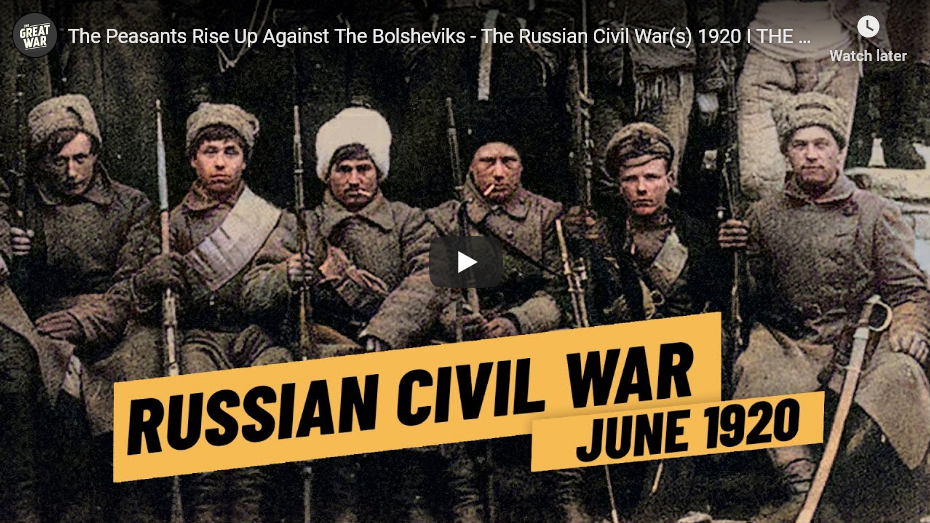
The Peasants Rise Up Against The Bolsheviks – The Russian Civil War(s) 1920 I THE GREAT WAR 1920
The Great War
Published 27 Jun 2020Sign up for Curiosity Stream and get Nebula bundled in: https://curiositystream.com/thegreatwar
Freeing peasants and workers from oppression was one of the main messages of the Bolsheviks. The peasants in the countryside were happy to get rid of the landowning class and supported socialist ideas of land reform but once the Bolsheviks turned to “War Communism” to maintain their power against the Whites and other forces, the reluctant support of the peasants dropped — and in 1920 they turned to open revolt.
» SUPPORT THE CHANNEL
Patreon: https://www.patreon.com/thegreatwar
Merchandise: https://shop.spreadshirt.de/thegreatwar/» SOURCES
Figes, Orlando. A People’s Tragedy. The Russian Revolution (London: The Bodley Head, 2017 [1996]).
Mawdsley, Evan. The Russian Civil War (New York: Pegasus Books, 2005).
Smele, Jonathan. The “Russian” Civil Wars 1916-1926 (London: Hurst, 2015).
Sumpf, Alexandre. “Russian Civil War,” in 1914-1918 online. International Encyclopedia of the First World War. https://encyclopedia.1914-1918-online.
Engelstein, Laura. Russia in Flames (Oxford University Press, 2017).
Wolf, Eric R. Peasant Wars of the Twentieth Century (New York: Harper, 1969)» SOCIAL MEDIA
Instagram: https://instagram.com/the_great_war
Twitter: https://twitter.com/WW1_Series
Reddit: https://reddit.com/r/TheGreatWarChannel»CREDITS
Presented by: Jesse Alexander
Written by: Jesse Alexander
Director: Toni Steller & Florian Wittig
Director of Photography: Toni Steller
Sound: Toni Steller
Editing: Toni Steller
Mixing, Mastering & Sound Design: http://above-zero.com
Maps: Daniel Kogosov (https://www.patreon.com/Zalezsky)
Research by: Jesse Alexander
Fact checking: Florian WittigChannel Design: Alexander Clark
Original Logo: David van StepholdContains licensed material by getty images
All rights reserved – Real Time History GmbH 2020