Quotulatiousness

July 8, 2020

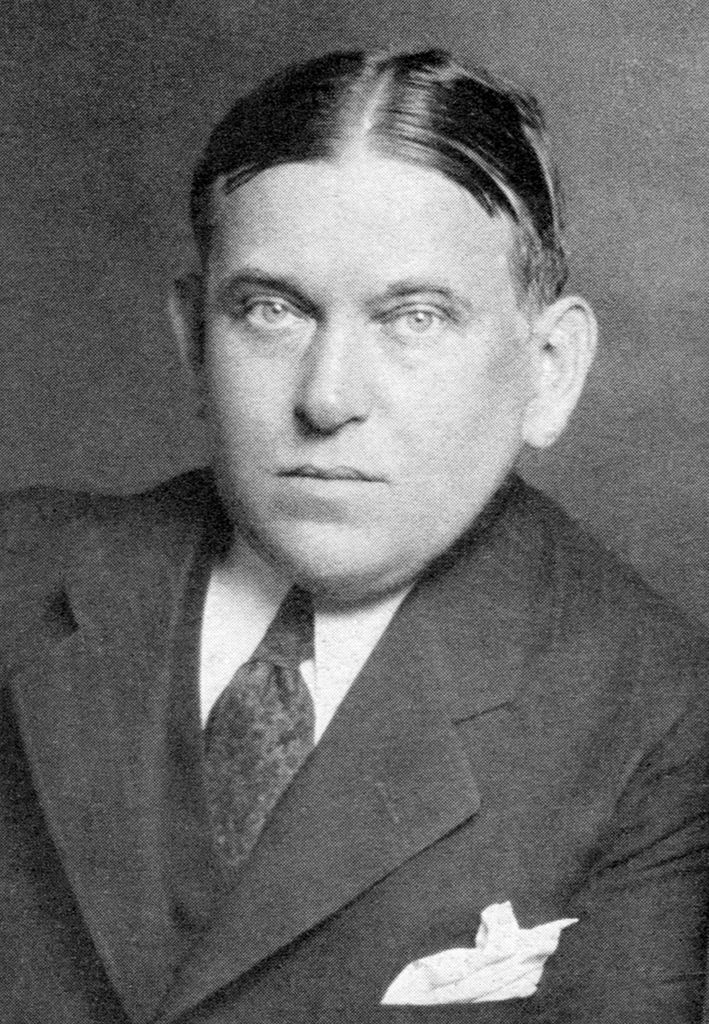
H.G. Wells, fortunately for his reputation, is mostly remembered for his science fiction writings

Filed under: Books, Britain, History, Politics, WW2 — Tags: , , , , , , — Nicholas @ 03:00

I was well into my twenties before I found out that H.G. Wells the science fiction writer was only a small slice of his career. I picked up a one-volume edition of his Outline of History, but it didn’t seem to have the same interest for me that The War of the Worlds or The Time Machine had done (and honestly, it was Jeff Wayne’s musical interpretation of War of the Worlds that pushed me to read any of his writing). His analysis of the events of his day fell well short of his reputation, as George Orwell pointed out:

In March or April, say the wiseacres, there is to be a stupendous knockout blow at Britain … What Hitler has to do it with, I cannot imagine. His ebbing and dispersed military resources are now probably not so very much greater than the Italians’ before they were put to the test in Greece and Africa.

    The German air power has been largely spent. It is behind the times and its first-rate men are mostly dead or disheartened or worn out.

    In 1914 the Hohenzollern army was the best in the world. Behind that screaming little defective in Berlin there is nothing of the sort … Yet our military “experts” discuss the waiting phantom. In their imaginations it is perfect in its equipment and invincible in its discipline. Sometimes it is to strike a decisive “blow” through Spain and North Africa and on, or march through the Balkans, march from the Danube to Ankara, to Persia, to India, or “crush Russia”, or “pour” over the Brenner into Italy. The weeks pass and the phantom does none of these things — for one excellent reason. It does not exist to that extent. Most of such inadequate guns and munitions as it possessed must have been taken away form it and fooled away in Hitler’s silly feints to invade Britain. And its raw jerry-built discipline is wilting under the creeping realisation that the Blitzkrieg is spent, and the war is coming home to roost.

These quotations are not taken from The Cavalry Quarterly but from a series of newspaper articles by Mr. H. G. Wells, written at the beginning of this year and now reprinted in a book entitled Guide to the New World. Since they were written, the German Army has overrun the Balkans and reconquered Cyrenaica, it can march through Turkey or Spain at such time as may suit it, and it has undertaken the invasion of Russia. How that campaign will turn out I do not know, but it is worth noticing that the German general staff, whose opinion is probably worth something, would not have begun it if they had not felt fairly certain of finishing it within three months. So much for the idea that the German Army is a bogey, its equipment inadequate, its morale breaking down, etc. etc.

What has Wells to set against the “screaming little defective in Berlin”? The usual rigmarole about a World State, plus the Sankey Declaration, which is an attempted definition of fundamental human rights, of anti-totalitarian tendency. Except that he is now especially concerned with federal world control of air power, it is the same gospel as he has been preaching almost without interruption for the past forty years, always with an air of angry surprise at the human beings who can fail to grasp anything so obvious.

[…]

Mr. Wells, like Dickens, belongs to the non-military middle class. The thunder of guns, the jingle of spurs, the catch in the throat when the old flag goes by, leave him manifestly cold. He has an invincible hatred of the fighting, hunting, swashbuckling side of life, symbolised in all his early books by a violent propaganda against horses. The principal villain of his Outline of History is the military adventurer, Napoleon. If one looks through nearly any book that he has written in the last forty years one finds the same idea constantly recurring: the supposed antithesis between the man of science who is working towards a planned World State and the reactionary who is trying to restore a disorderly past. In novels, Utopias, essays, films, pamphlets, the antithesis crops up, always more or less the same. On the one side science, order, progress, internationalism, aeroplanes, steel, concrete, hygiene: on the other side war, nationalism, religion, monarchy, peasants, Greek professors, poets, horses. History as he sees it is a series of victories won by the scientific man over the romantic man.

In addition to being a surprisingly consistent one-note proponent of the same solution to every problem, he was, as Michael Coren relates, a nasty piece of work in his personal life:

There’s an anecdote concerning H.G. Wells that rather exemplifies his character. A London theatre in the 1920s. Wells was approached by a nervous, eager young fan. “Mr. Wells, you probably don’t remember me”, he said, holding out his hand. “Yes, I bloody do!” replied Wells, and rudely turned his back. Personality aside, Wells also embraced anti-Semitism, racism, and social engineering, and in this atmosphere of outrage and iconoclasm it’s surprising that he hasn’t been more targeted for symbolic removal. Then again, perhaps not. Because while the undoubtedly gifted author said and believed some dreadful things he was also a man of the left. And when it comes to cancel culture, socialism is the ultimate prophylactic.

George Bernard Shaw said of his nastiness and his ugly views, “Multiply the total by ten; square the result. Raise it again to the millionth power and square it again; and you will still fall short of the truth about Wells — yet the worse he behaved the more he was indulged; and the more he was indulged the worse he behaved.”

In fact, for much of the 20th-century eugenics was a creature of the left as much if not more than the right. Shaw himself, Sydney and Beatrice Webb and many other left-wing intellectuals were convinced that for the lives of the majority to improve there had to be a harsh control of the minority.

Wells argued that the existing social and economic structure would collapse and a new order would emerge, led by “people throughout the world whose minds were adapted to the demands of the big-scale conditions of the new time … a naturally and informally organized educated class, an unprecedented sort of people.” The “base,” the class at the bottom of the scale, “people who had given evidence of a strong anti-social disposition,” would be in trouble. “This thing, this euthanasia of the weak and the sensual, is possible. I have little or no doubt that in the future it will be planned and achieved.” He wrote of, “boys and girls and youth and maidens, full of zest and new life, full of an abundant joyful receptivity … helpers behind us in the struggle.” Then chillingly, “And for the rest, these swarms of black and brown and dingy white and yellow people who do not come into the needs of efficiency … I take it they will have to go.”

US M2/M2A1 Flamethrower

Filed under: History, Military, USA, Weapons, WW2 — Tags: , , , — Nicholas @ 02:00

Forgotten Weapons
Published 12 May 2016

http://www.patreon.com/ForgottenWeapons

After a dismal first attempt at designing a flamethrower (the M1) in 1941, the US Chemical Corps along with several universities and industrial partners put in a lot of research to develop a more usable and effective flamethrower. The result was the M2, which went into production in early 1944. It would prove to be an exceptionally effective weapon in the island-hopping campaign towards the end of the war.

The M2 was arguably the best flamethrower fielded by any military during the war, with a number of excellent design features. These included:

* A constant-pressure regulator to ensure that the range stayed the same from the first to the last shot of a tank of fuel
* An on/off main valve easily accessible to the operator
* A supremely waterproof and reliable pyrotechnic cartridge ignition system
* An auto-shutoff valve which sealed at the nozzle, preventing dribble (and cutting off fuel flow should the operator lose control of the weapon)

The M2 would see service into the Vietnam War even as its successor the M9 was being issued. It was a truly outstanding design, and remains viable to this day.

Thanks to Charlie Hobson for showing us the unit and teaching me to fire it, and also thanks to Adaptive Firearms for letting us use their range facilities!

You can find Charlie Hobson’s book, US Portable Flamethrowers here:
http://amzn.to/1SP9yc5

July 7, 2020

If Paris Was Nuked | The Cuban Missile Crisis | Day 00

TimeGhost History
Published 6 Jul 2020

The year before Soviet Premier Nikita Khrushchev places nuclear missiles on Cuba, the Soviets blow up the biggest atomic bomb ever detonated. If it blew up over Paris, millions would die.

Join us on Patreon: https://www.patreon.com/TimeGhostHistory

Try Nukemap here: https://nuclearsecrecy.com/nukemap/

Hosted by: Indy Neidell
Written by: Spartacus Olsson
Director: Astrid Deinhard
Producers: Astrid Deinhard and Spartacus Olsson
Executive Producers: Astrid Deinhard, Indy Neidell, Spartacus Olsson, Bodo Rittenauer
Creative Producer: Joram Appel
Post-Production Director: Wieke Kapteijns
Research by: Spartacus Olsson
Edited by: Daniel Weiss
Sound design: Marek Kaminski

Colorizations:
– Carlos Ortega Pereira (BlauColorizations) – https://www.instagram.com/blaucoloriz…

Sources:
RIA Novosti archive, image #35173, image #793499.
https://flickr.com/photos/102221463@N…

From the Noun Project:
Mountain – By Harold Weaver
Mushroom Cloud – By yanti, ID
destroyed house – by Gan Khoon Lay
Hospital – By Hare Krishna, IN
Fire Station – By Florian Maier
School – David
Church – by Karla Design
Paris – By Vonn Weisenberger

Soundtracks from Epidemic Sound:
– “Cold Eyes” – Elliot Holmes
– “Scope” – Got Happy
– “Juvenile Delinquent” – Elliot Holmes
– “Moving to Disturbia” – Experia
– “Zoot Suit” – Elliot Holmes
– “From the Depths” – Walt Adams
– “Car Chase in Virginia” – White Bones

Archive by Screenocean/Reuters https://www.screenocean.com.

A TimeGhost chronological documentary produced by OnLion Entertainment GmbH.

QotD: The first invasion of Britain

Filed under: Britain, History, Quotations, Science — Tags: , , , — Nicholas @ 01:00

Before about 2500 BC, ancient Albion was inhabited largely by farmers tracing back to the Fertile Crescent. Suddenly, steppe barbarians, bearing the Bell Beaker culture, arrived, and almost immediately most of the old Britons died off.

Since then, 90 percent of subsequent skeletons in England reflect the DNA of the steppe invaders.

What happened to most of England’s earlier inhabitants? One of the less violent scenarios is that the steppe migrants introduced bubonic plague.

In general, “migration” and “mixture” tend in Reich’s book to serve as euphemisms for genocide of the native males and rape of the native females. Reich lists numerous examples from around the world where genetic data show that newcomers enslaved or murdered the local men and turned their women into concubines.

Fortunately, for the past 4,500 years, “ancient Britons harbored a blend of ancestries very similar to that of present-day Britons.” The Roman conquest didn’t leave much of a genetic mark, and the later Anglo-Saxon, Danish, and Norman invaders were genetically similar enough to earlier Britons that geneticists have only recently begun to disentangle them.

After 1066, the island race enjoyed a long halcyon era without new invaders raping and pillaging. But all good things evidently have to come to an end. As Benjamin Schwarz has pointed out, “In fact, Britain today receives more immigrants in a single year than it did in the entire period from 1066 to 1950.”

Steve Sailer, “Reich’s Laboratory”, Taki’s Magazine, 2018-03-28.

July 6, 2020

The Healthcare Crisis of 1941 – WW2 – On the Homefront 005

Filed under: Britain, Germany, Health, History, WW2 — Tags: , , , , — Nicholas @ 04:00

World War Two
Published 2 Jul 2020

When WWII breaks out many parts of the world are still missing population-wide healthcare. The pressure of the war deteriorates healthcare services even further. By 1941, both the British Commonwealth and Germany are facing an outright healthcare crisis on the home front.

Join us on Patreon: https://www.patreon.com/TimeGhostHistory
Or join The TimeGhost Army directly at: https://timeghost.tv

Follow WW2 day by day on Instagram @World_war_two_realtime https://www.instagram.com/world_war_two_realtime
Between 2 Wars: https://www.youtube.com/playlist?list…
Source list: http://bit.ly/WW2sources

Hosted by: Anna Deinhard
Written by: Fiona Rachel Fischer and Spartacus Olsson
Director: Astrid Deinhard
Producers: Astrid Deinhard and Spartacus Olsson
Executive Producers: Astrid Deinhard, Indy Neidell, Spartacus Olsson, Bodo Rittenauer
Creative Producer: Joram Appel
Post-Production Director: Wieke Kapteijns
Research by: Fiona Rachel Fischer
Edited by: Mikołaj Cackowski
Sound design: Marek Kamiński
Map animations: Eastory (https://www.youtube.com/c/eastory)

Sources:
IWM D 2373, D 2318, B 14299, D 2315, D 2078, D 14318, D 2334
Narodowe Archiwum Cyfrowe
Bundesarchiv
Wellcome Images no. L0028759
From the Noun Project: london by Pablo Fernández Vallejo, Patient by Miho Suzuki-Robinson, Patient by Binpodo, Doctor by Wilson Joseph, Hospital by Hare Krishna, School by David, Apartment by Victoruler, Bus by Eucalyp
University of Liverpool Faculty of Health & Life Sciences

Soundtracks from the Epidemic Sound:
Farrell Wooten – “Blunt Object”
Johannes Bornlof – “Deviation In Time”
Skrya – “First Responders”
Gunnar Johnsen – “Not Safe Yet”
Johannes Bornlof – “The Inspector 4”
Jon Bjork – “For the Many”
Reynard Seidel – “Deflection”
Rannar Sillard – “March Of The Brave 4”
Cobby Costa – “From the Past”
Fabien Tell – “Last Point of Safe Return”
Cobby Costa – “Flight Path”
Andreas Jamsheree – “Guilty Shadows 4”
Jo Wandrini – “Puzzle of Complexity”

Archive by Screenocean/Reuters https://www.screenocean.com.

A TimeGhost chronological documentary produced by OnLion Entertainment GmbH.

From the comments:

World War Two
2 days ago (edited)
It might be surprising that the global healthcare crisis of 2020 has an immediate relationship to WW2, but it does. Although, when you look at it, it’s logical — with every crisis humanity learns a little — it was still a little bit of a surprise to us how direct this relationship was when researching and writing this episode. Was it surprising to you too?

On the topic of writing, this is the first episode by our new co-writer, Fiona Rachel Fischer, who will now be a regular contributor to the On the Homefront series — please give her a warm welcome.

Sober Sailors – Rum Rations In The Navy: Grog

Filed under: Britain, Food, Health, History, Military, USA — Tags: , , — Nicholas @ 02:00

Townsends
Published 24 Feb 2020

Visit Our Website! ➧ http://www.townsends.us/ ➧➧

Help support the channel with Patreon ➧ https://www.patreon.com/townsend ➧➧

Instagram ➧ townsends_official

July 5, 2020

Wehrmacht 1/3 of Way to Moscow – WW2 – 097 – July 4 1941

World War Two
Published 4 Jul 2020

Operation Barbarossa continues this week but is already running into problems that are gonna be hard to fix. The Japanese are thinking future war strategy, while the British set up a focused research program on nuclear power and atom bombs…

Join us on Patreon: https://www.patreon.com/TimeGhostHistory
Or join The TimeGhost Army directly at: https://timeghost.tv

Follow WW2 day by day on Instagram @World_war_two_realtime https://www.instagram.com/world_war_two_realtime
Between 2 Wars: https://www.youtube.com/playlist?list…
Source list: http://bit.ly/WW2sources

Written and Hosted by: Indy Neidell
Director: Astrid Deinhard
Producers: Astrid Deinhard and Spartacus Olsson
Executive Producers: Astrid Deinhard, Indy Neidell, Spartacus Olsson, Bodo Rittenauer
Creative Producer: Joram Appel
Post-Production Director: Wieke Kapteijns
Research by: Indy Neidell
Edited by: Iryna Dulka
Sound design: Marek Kamiński
Map animations: Eastory (https://www.youtube.com/c/eastory)
Map consultants: Rabih Rached and Patrick Adaimy

Colorizations by:
– Daniel Weiss
– Julius Jääskeläinen – https://www.facebook.com/JJcolorization/
– Cassowary Colorizations
– Jaris Almazani (Artistic Man) – https://instagram.com/artistic.man?ig…

Sources:
– SA-Kuva
– museum.ru
– National Portrait Gallery
– Weight by Vadim Solomakhin from the Noun Project
– Imperial War Museum: FL1204
– Narodowe Archiwum Cyfrowe
– Bundesarchiv, CC-BY-SA 3.0: Bild_101I-186-0199-12A, Bild_101I-208-0027-04A, Bild_183-B10901
– Yad Vashem Photo Archives, 46405, https://photos.yadvashem.org/photo-de…

Archive by Screenocean/Reuters https://www.screenocean.com.

A TimeGhost chronological documentary produced by OnLion Entertainment GmbH.

History Summarized: Colonial India

Overly Sarcastic Productions
Published 4 Jul 2020

Start your free trial at http://squarespace.com/overlysarcastic and use code OVERLYSARCASTIC to get 10% off your first purchase.

Indian History has always been a story of peoples coming and going, but the subcontinent’s modern history takes that up to 11, with the arrival of Central Asian Mughals and boatloads of Europeans. See how India transforms from Medieval to Modern in this final act of our History of India.

SOURCES & Further Reading: The Discovery of India by Jawaharlal Nehru, A History of India by Michael H. Fisher (a lecture series by The Great Courses).

This video was edited by Sophia Ricciardi AKA “Indigo”. https://www.sophiakricci.com/
Our content is intended for teenage audiences and up.

Special thanks to Varda Alighieri for coaching me through my (hopefully serviceable) pronunciations!

PATREON: https://www.Patreon.com/OSP

MERCH LINKS: https://www.redbubble.com/people/OSPY…

OUR WEBSITE: https://www.OverlySarcasticProductions.com
Find us on Twitter https://www.Twitter.com/OSPYouTube
Find us on Reddit https://www.Reddit.com/r/OSP/

Light, Mobile, and Deadly: the French Mle 1937 25mm Puteaux AT Gun

Filed under: France, History, Military, Weapons, WW2 — Tags: , , , , — Nicholas @ 02:00

Forgotten Weapons
Published 20 Mar 2020

http://www.patreon.com/ForgottenWeapons

https://www.floatplane.com/channel/Fo…

Cool Forgotten Weapons merch! http://shop.bbtv.com/collections/forg…

After World War One, the French military set up a program to modernize all of its weaponry, and that included a replacement for the Mle 1916 light infantry cannon. An anti-tank gun had not been necessary during the Great War, as Germany never fielded tanks in substantial numbers — but as a pioneer of the modern tank, the French recognized the need for a good AT gun. Taking a lesson from World War One, they wanted a light gun that was flexible and mobile, easily moved around the battlefield and easily concealed from enemy fire. A 25mm cartridge was specified, and both the Hotchkiss company and the Puteaux arsenal created guns to use it. Both were adopted into service, with the Hotchkiss Mle 1934 being a bit heavier and the Puteaux Mle 1937 being a bit lighter, at only about 600 pounds. The Puteaux gun was quite small, easily moved by a horse or virtually any motorized vehicle. It had a long barrel and the 25mm AP projectile had a muzzle velocity of about 3150 fps, making it quite effective on the light and medium tanks of the 1930s. It was also remarkably accurate, and the long barrel and flash hider gave it a very small firing signature. Aiming was done with either a 4x magnified optic or a set of backup iron sights.

A total of 1285 of these guns were made before the armistice of June 1940, and they served ably in the Battle of France. A few were also used by the British before Dunkirk, and after the armistice they were used by German forces in limited numbers, and also supplied to Spain and Finland as military aid (this particular one has a Finnish property tag on it).

Thanks to DriveTanks.com in Uvalde Texas for giving me access to film this Puteaux cannon for you!

Contact:
Forgotten Weapons
6281 N. Oracle #36270
Tucson, AZ 85740

QotD: Gandhi and sanitation

Filed under: Health, History, India, Quotations — Tags: , , , — Nicholas @ 01:00

It should be plain by now that there is much in the Hindu culture that is distasteful to the Western mind, and consequently is largely unknown in the West — not because Hindus do not go on and on about these subjects, but because a Western squeamishness usually prevents these preoccupations from reaching print (not to mention film). When Gandhi attended his first Indian National Congress he was most distressed at seeing the Hindus — not laborers but high-caste Hindus, civic leaders — defecating all over the place, as if to pay attention to where the feces fell was somehow unclean. (For, as V.S. Naipaul puts it, in a twisted Hindu way it is unclean to clean. It is unclean even to notice. “It was the business of the sweepers to remove excrement, and until the sweepers came, people were content to live in the midst of their own excrement.”) Gandhi exhorted Indians endlessly on the subject, saying that sanitation was the first need of India, but he retained an obvious obsession with excreta, gleefully designing latrines and latrine drills for all hands at the ashram, and, all in all, what with giving and taking enemas, and his public bowel movements, and his deep concern with everyone else’s bowel movements (much correspondence), and endless dietary experiments as a function of bowel movements, he devoted a rather large share of his life to the matter. Despite his constant campaigning for sanitation, it is hard to believe that Gandhi was not permanently marked by what Arthur Koestler terms the Hindu “morbid infatuation with filth,” and what V.S. Naipaul goes as far as to call the Indian “deification of filth.”

Richard Grenier, “The Gandhi Nobody Knows”, Commentary, 1983-03-01.

July 4, 2020

Fixing Gettysburg: The Third Day

Filed under: Books, History, Humour, Media, Military, USA — Tags: , , , — Nicholas @ 06:00

Atun-Shei Films
Published 3 Jul 2020

In this three-part series, I review a classic Ron Maxwell film about a little known historical event that no one talks about called the Battle of Gettysburg. I also present an abbreviated and oversimplified history of the battle, while simultaneously criticizing the movie for presenting an abbreviated and oversimplified history of the battle.

In the third episode, I discuss the third day of fighting on July 3, 1863 – including the morning scrap on Culp’s Hill, East Cavalry Field, and Pickett’s Charge.

Support Atun-Shei Films on Patreon ► https://www.patreon.com/atunsheifilms

Leave a Tip via Paypal ► https://www.paypal.me/atunsheifilms (Between now and October, all donations made here will go toward the production of The Sudbury Devil, our historical feature film)

#Gettysburg #CivilWar #VideoEssay

Watch our film ALIEN, BABY! free with Prime ► http://a.co/d/3QjqOWv
Reddit ► https://www.reddit.com/r/atunsheifilms
Twitter ► https://twitter.com/atun_shei
Instagram ► https://www.instagram.com/atunsheifilms
Merch ► https://atun-sheifilms.bandcamp.com

~REFERENCES~

[1] Frederick Tilberg, Scott Hartwig, John Heiser: Gettysburg National Military Park Handbook (2013). Historic Map and Print Company, Page 49

[2] James Longstreet: From Manassas to Appomattox, Da Capo Edition (1992). Da Capo Press, Page 392

[3] “Haskell’s Account of the Battle of Gettysburg”. Bartleby: Great Books Online https://www.bartleby.com/43/3504.html

[4] “East Cavalry Battlefield – Ranger John Nicholas” (2014). GettysburgNPS https://youtu.be/AfwBOOFFlXQ

The birth of the steam age

Filed under: Britain, Economics, History, Science, Technology — Tags: , , , , — Nicholas @ 03:00

In the latest installment of his Age of Invention newsletter, Anton Howes explores the very early steam age in England:

Why was the steam engine invented in England? An awful lot hinges on this question, because the answer often depends on our broader theories of what caused the British Industrial Revolution as a whole. And while I never tire of saying that Britain’s acceleration of innovation was about much, much more than just the “poster boy” industries of cotton, iron, and coal, the economy’s transition to burning fossil fuels was still an unprecedented and remarkable event. Before the rise of coal, land traditionally had to be devoted to either fuel, food, or clothing: typically forest for firewood, fields for grain, and pastures for wool-bearing sheep. By 1800, however, English coal was providing fuel each year equivalent to 11 million acres of forest — an area that would have taken up a third of the country’s entire surface area, and which was many times larger than its actual forest. By digging downward for coal, Britain effectively increased its breadth.

And coal found new uses, too. It had traditionally just been one among many different fuels that could be used to heat homes, alongside turf, gorse, firewood, charcoal, and even cow dung. When such fuels were used for industry, they were generally confined to the direct application of heat, such as in baking bricks, evaporating seawater to extract salt, firing the forges for blacksmiths, and heating the furnaces for glass-makers. Over the course of the seventeenth century, however, coal had increasingly become the fuel of choice for both heating homes and for industry. Despite its drawbacks — it was sooty, smelly, and unhealthy — in places like London it remained cheap while the price of other fuels like firewood steadily increased. More and more industries were adapted to burning it. It took decades of tinkering and experimentation, for example, to reliable use coal in the smelting of iron.

3D animation of an aeolipile or Hero’s engine.
Animation by Michael Frey via Wikimedia Commons.

Yet with the invention of the steam engine, the industrial uses of coal multiplied further. Although the earliest steam engines generally just sucked the water out of flooded mines, by the 1780s they were turning machinery too. By the 1830s, steam engines were having a noticeable impact on British economic growth, and had been applied to locomotion. Steam boats, steam carriages, steam trains, and steam ships proliferated and began to shrink the world. Rather than just a source of heat, coal became a substitute for the motive power of water, wind, and muscle.

So where did this revolutionary invention come from? There were, of course, ancient forms of steam-powered devices, such as the “aeolipile”. Described by Hero of Alexandria in the 1st century, the aeolipile consisted of a hollow ball with nozzles, configured in such a way that the steam passing into the ball and exiting through the nozzles would cause the ball to spin. But this was more like a steam turbine than a steam engine. It could not do a whole lot of lifting. The key breakthroughs came later, in the late seventeenth and early eighteenth centuries, and instead exploited vacuums. In a steam engine the main force was applied, not by the steam itself pushing a piston, but by the steam within the cylinder being doused in cold water, causing it to rapidly condense. The resulting partial vacuum meant that the weight of the air — the atmospheric pressure — did the real lifting work. The steam was not there to push, but to be condensed and thus pull. It saw its first practical applications in the 1700s thanks to the work of a Devon ironmonger, Thomas Newcomen.

Science was important here. Newcomen’s engine could never have been conceived had it not been for the basic and not at all obvious observation that the air weighed something. It then required decades of experimentation with air pumps, barometers, and even gunpowder, before it was realised that a vacuum could rapidly be created through the condensation of steam rather than by trying to suck the air out with a pump. And it was still more decades before this observation was reliably applied to exerting force. An important factor in the creation of the steam engine was thus that there was a sufficiently large and well-organised group of people experimenting with the very nature of air, sharing their observations with one another and publishing — a group of people who, in England, formalised their socialising and correspondence in the early 1660s with the creation of the Royal Society.

Newcomen’s Atmospheric Steam Engine. The steam was generated in the boiler A. The piston P moved in a cylinder B. When the valve V was opened, the steam pushed up the piston. At the top of the stroke, the valve was closed, the valve V’ was opened, and a jet of cold water from the tank C was injected into the cylinder, thus condensing the steam and reducing the pressure under the piston. The atmospheric pressure above then pushed the piston down again.
Original illustration from Practical Physics for Secondary Schools. Fundamental principles and applications to daily life, by Newton Henry Black and Harvey Nathaniel Davis, 1913, via Wikimedia Commons.

Crusader helmets

Filed under: Europe, History, Middle East, Military — Tags: , , , , — Nicholas @ 02:00

Lindybeige
Published 4 Sep 2014

Here I show you three common styles of crusader helmet, and I comment upon them.

Thanks to Dr David Tetard for the loan of his helmets. These particular ones were bought here:

www.getdressedforbattle.co.uk
http://www.kovexars.cz/index.php (HL 007 and 103)

Lindybeige: a channel of archaeology, ancient and medieval warfare, rants, swing dance, travelogues, evolution, and whatever else occurs to me to make.

▼ Follow me…

Twitter: https://twitter.com/Lindybeige I may have some drivel to contribute to the Twittersphere, plus you get notice of uploads.

website: www.LloydianAspects.co.uk

July 3, 2020

Fixing Gettysburg: The Second Day

Filed under: Books, History, Humour, Media, Military, USA — Tags: , , , — Nicholas @ 06:00

Atun-Shei Films
Published 2 Jul 2020

In this three-part series, I review a classic Ron Maxwell film about a little known historical event that no one talks about called the Battle of Gettysburg. I also present an abbreviated and oversimplified history of the battle, while simultaneously criticizing the movie for presenting an abbreviated and oversimplified history of the battle.

In the second episode, I discuss the first day of fighting on July 2, 1863 – including Dan Sickles’ shenanigans on the left, the 20th Maine on Little Round Top, the 1st Minnesota, and the night battle on Culp’s Hill.

Support Atun-Shei Films on Patreon ► https://www.patreon.com/atunsheifilms

Leave a Tip via Paypal ► https://www.paypal.me/atunsheifilms (Between now and October, all donations made here will go toward the production of The Sudbury Devil, our historical feature film)

#Gettysburg #CivilWar #VideoEssay

Watch our film ALIEN, BABY! free with Prime ► http://a.co/d/3QjqOWv
Reddit ► https://www.reddit.com/r/atunsheifilms
Twitter ► https://twitter.com/atun_shei
Instagram ► https://www.instagram.com/atunsheifilms
Merch ► https://atun-sheifilms.bandcamp.com

~REFERENCES~

[1] Stephen W. Sears: “General Longstreet and the Lost Cause” (2005). American Heritage Magazine https://www.americanheritage.com/gene…

[2] W.C. Storrick: The Battle of Gettysburg (1931). J Horace McFarland Company, Page 26

[3] Frederick Tilberg, Scott Hartwig, John Heiser: Gettysburg National Military Park Handbook (2013). Historic Map and Print Company, Page 31-32

[4] Storrick, Page 27

[5] William B. Styple: Generals in Bronze (2005). Belle Grove Publishing Company, Page 222

[6] “The 1st Minnesota Infantry at Gettysburg” (2014). Iron Brigader https://ironbrigader.com/2014/01/03/1…

[7] Storrick, Page 29-30

[8] Tilberg, Hartwig, Heiser, Page 45

Back to the Future Middle Ages

At Spiked, Dominic Frisby takes us back to a time when today’s progressive temper tantrums would fit in perfectly with accepted behaviours of the age … the Middle Ages:

A social media heretic faces trial

How much of what went on in the Middle Ages and early-modern periods do we look back on with abhorrence and a certain amount of perplexity? Burning witches at the stake, lynch mobs, self-flagellation – what possessed people to do such things, we wonder.

But take a step back, look about and you see many of these practices are still flourishing today, though they go by different names.

Here are just some of them.

Let’s start with excommunication. Excommunication meant so much more than being banned from taking communion. It involved you being shunned, shamed, spiritually condemned, even banished. Only through some kind of heavy penance – often a very public, lengthy and humiliating contrition – could you and your reputation be redeemed.

Excommunication became a powerful political weapon. It was dished out to enemies of the faith to destroy their legitimacy. Often it was used as a punishment for sins as minor as uttering the wrong opinion.

What are No Platforming and cancel culture if not a modern form of excommunication? Qualified, competent professionals are hounded out of their jobs and publicly shamed just for uttering the wrong opinion, often simply for a misjudged choice of words. Even just the wrong pronouns.

As often as not, their employer wants a quiet life, so he bows to activist pressure and sacks the target of the witch hunt. Cancel culture is excommunication.

Today’s religions, however, are not the many sects of Christianity that once perforated Europe, but climate change, education, the NHS, gay rights, trans rights, the European Union and multiculturalism. Even coronavirus and the lockdown have become sacrosanct.

Intellectuals of the right and left, from Polly Toynbee to Nigel Lawson, have described the NHS as Britain’s religion. It has replaced the Virgin Mary as the divine matriarch. Why this worship? I suggest it goes back to the late 19th and early 20th centuries, when the state began to replace the church as the main provider of education, welfare and healthcare. After 1945, it was just a matter of time before the welfare state achieved altar status.

« Newer PostsOlder Posts »

Powered by WordPress