
seangabb
Published 10 Feb 2021In 120 BC, Rome was a republic with touches of democracy. A century later, it was a divine right military dictatorship. Between January and March 2021, Sean Gabb explored this transformation with his students. Here is one of his lectures. All student contributions have been removed.
(more…)
March 21, 2022
Republic to Empire: Sulla A Failed Reaction
Comments Off on Republic to Empire: Sulla A Failed Reaction
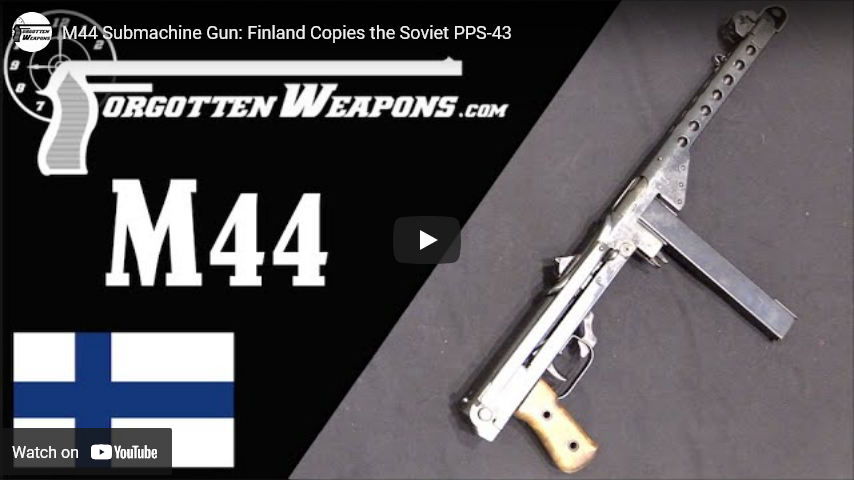
M44 Submachine Gun: Finland Copies the Soviet PPS-43
Forgotten Weapons
Published 17 Nov 2021http://www.patreon.com/ForgottenWeapons
https://www.floatplane.com/channel/Fo…
Cool Forgotten Weapons merch! http://shop.forgottenweapons.com
The kp/31 Suomi submachine gun in Finnish service was an outstanding weapon, but it was slow and expensive to manufacture. When Finnish forces began capturing Soviet PPS-42 and PPS-43 submachine guns from the Soviets in the Continuation War, it was very quickly decided that Finland should copy the design. This was a far simpler, far cheaper stamped sheet-metal design that was not as refined as the Suomi, but much more efficient to make.
The Sudayev design was changed only minimally; primarily to fit the Finnish cartridge (9x19mm Parabellum) and magazines. The guns were originally designed to use the 50-round quad-stack boxes and 71/72 round drums of the Suomi, but also used the Swedish Carl Gustaf m/45 magazine that was adopted by Finland after WW2.
Two companies were approached to produce the M44; Tikkakoski and Ammus Oy. Ammus was unable to source raw materials for the project, and only Tikka put the guns into production. Marshal Mannerheim initially wanted 50,000, but the order was reduced to 20,000 — of which only 10,000 were actually made, due to limited material availability before the end of the war led to production ending. Another 400 were assembled from remaining parts after the war.
In the 1950s, a plan was begun to resume M44 production in order to completely replace the Suomi in Finnish inventory. However, this plan was interrupted when Sam Cummings of InterArms made a deal to trade Finland about 75,000 surplus Sten guns for Finland’s supply of 7.35mm Carcano rifle (received as aid from Italy during the war) along with a melange of old machine guns. This was a sufficient quantity of Stens to handle the duties of the Suomi, and so the Sten went into Finnish service and M44 production was never resumed.
Those Carcano rifles were in turn imported into the United States, and this is why the majority of 7.35mm Carcano here bear Finnish “SA” property stamps. The same is true for the significant number of Chauchat automatic rifles in the US with Finnish property marks, which were also part of the deal.
Contact:
Forgotten Weapons
6281 N. Oracle 36270
Tucson, AZ 85740
Comments Off on M44 Submachine Gun: Finland Copies the Soviet PPS-43
March 20, 2022
Kharkov Falls Once Again – WW2 – 186 – March 19, 1943
World War Two
Published 19 Mar 2022The British are attacking the Mareth Line in North Africa while the Americans hit the Axis flank, but the Allies are withdrawing in Burma. It’s the Germans who are pulling back in the USSR, though, and there is another attempt from within German command to assassinate Adolf Hitler.
(more…)
Comments Off on Kharkov Falls Once Again – WW2 – 186 – March 19, 1943
Canada Carries On — The Fighting Sea Fleas (1944)
PeriscopeFilm
Published 24 Dec 2012Support Our Channel: https://www.patreon.com/PeriscopeFilm
World War 2 propaganda film narrated by Lorne Greene about Canadian Motor Torpedo Boats crews and their actions. Shows life aboard Motor Torpedo Boats during the Battle of the Atlantic, fending off attacks by German U-Boats and commerce raiders. Motor Torpedo Boat (MTB) was the name given to fast torpedo boats by the Royal Navy and the Royal Canadian Navy. The “Motor” in the formal designation, referring to the use of petrol engines, was to distinguish them from the majority of other naval craft that used steam turbines or reciprocating engines. Produced & Directed by Sydney Newman, and released in 1944.
This film is part of the Periscope Film LLC archive, one of the largest historic military, transportation, and aviation stock footage collections in the USA. Entirely film backed, this material is available for licensing in 24p HD. For more information visit http://www.PeriscopeFilm.com
Comments Off on Canada Carries On — The Fighting Sea Fleas (1944)
QotD: The mythical Victorian conformity
The Victorians were and are usually derided as a society of stuffy, conformist fuddy-duddies. These are the people, we’re told, who put little doilies over piano legs, lest the sight of something vaguely resembling the naked female form get everyone in the room overheated. In reality, though, the Victorians were a wonderfully weird bunch, as tolerant as all get out. You’d find far, far more actual diversity — of thought, of opinion, of dress and manners — in a small English country village in 1881 than you can in some entire US states in 2021.
Back in my youth, the “lifestyle” sections of big newspapers and magazines were always reporting on families cleaning out granny’s attic, only to find boxes full of great-grandpa’s translation of the Poetic Edda into Spenserian sonnets. Or great-grandma’s recreation of the Bayeux Tapestry in multicolored yarn. Or what have you. Everyday, plain-jane people back then were always undertaking these massively ambitious, frankly weird projects — great-grandpa was the village parson, and so far as is known, he never left his home parish, and yet he somehow got it in his head to write a history of the Assyrian Empire … and actually did write it, hundreds if not thousands of pages of it, based only on books in the parsonage library, or that he could borrow from the local squire.
In other words, the Victorians were extremely tolerant of “eccentricity”, sometimes extreme eccentricity, the kind of thing we Postmoderns would call “off their meds”. Just because the postmaster spends his off hours trying to commune with the fey folk doesn’t mean he’s not an effective postmaster …
That‘s the kind of thing we need to encourage. What kind of world do we want? A world where, above all, we recognize that people aren’t the same. “Reason” is just a tool, and a crude tool at that. Trying to force people to live “reasonably” always ends in tyranny. What we want is actual diversity. So long as he’s not harming himself or others — and the threshold here is actual physical harm, not feelz — who cares what the postmaster gets up to on his off hours? The supposedly stuffy, rigidly conformist Victorians didn’t, because c’est la vie.
Severian, “Truly Special Snowflakes”, Rotten Chestnuts, 2021-09-02.
Comments Off on QotD: The mythical Victorian conformity
March 19, 2022
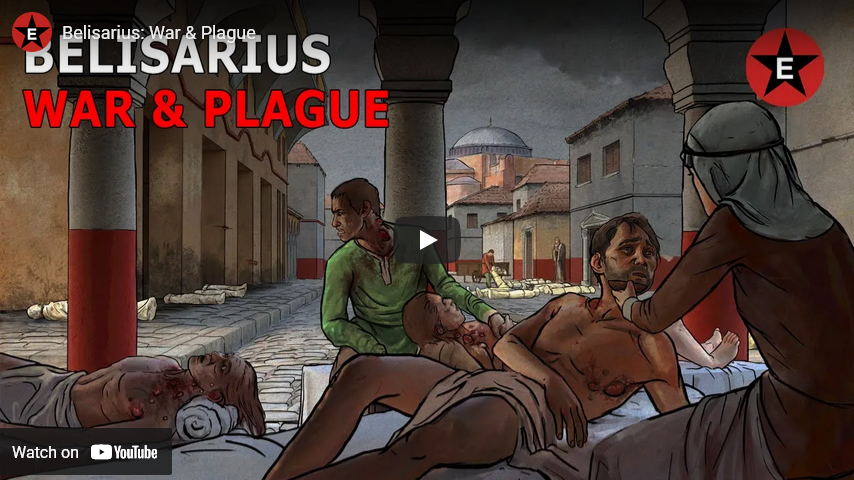
Belisarius: War & Plague
Epic History TV
Published 18 Mar 2022Download Endel here, first 100 downloads get 1 week of free audio experiences!
https://app.adjust.com/b8wxub6?campai…Big thanks to Legendarian for Total War: Attila gameplay footage, check out his YouTube channel here: https://www.youtube.com/channel/UCOI2…
Big thanks also to our series consultant Professor David Parnell of Indiana University Northwest, who you can follow on Twitter here: https://twitter.com/byzantineprof
Total War: Attila gameplay footage used with kind permission of Creative Assembly – buy the game here: https://geni.us/qDreR
Support Epic History TV on Patreon from $1 per video, and get perks including ad-free early access & votes on future topics https://www.patreon.com/EpicHistoryTV
🎨 Original artwork by Miłek Jakubiec https://www.artstation.com/milek
📚 Recommended reading (as an Amazon Associate I earn from qualifying purchases):
📖 Procopius, History of the Wars https://geni.us/L3Pgc
📖 The Wars of Justinian by Michael Whitby https://geni.us/Xxrd3
📖 Rome Resurgent by Peter Heather https://geni.us/ZFoU1
📖 The Armies of Ancient Persia: the Sassanians by Kaveh Farrokh https://geni.us/jMQo3z
📖 Late Roman Cavalryman AD 236–565 (Osprey) by Simon MacDowall https://geni.us/XMGl👕 Buy EHTV t-shirts, hoodies, mugs and stickers here! teespring.com/en-GB/stores/epic-histo…
🎶Music from Filmstro: https://filmstro.com/?ref=7765
Get 20% off an annual license with this exclusive code:EPICHISTORYTV_ANN“Rites” by Kevin MacLeod https://incompetech.filmmusic.io/song…
License: https://filmmusic.io/standard-license#EpicHistoryTV #RomanEmpire #EasternRomanEmpire #Justinian #Belisarius #ByzantineEmpire #Romans #Ostrogoths
Comments Off on Belisarius: War & Plague
History of Rome in 15 Buildings 01. The Hut of Romulus
toldinstone
Published 27 Sep 2018This first episode of my History of Rome in Fifteen Buildings discusses the origins of Rome in relation to the enigmatic and frequently-rebuilt structure known as the Hut of Romulus. Along the way, we’ll encounter a floating phallus, a remarkably accommodating she-wolf, and, of course, the homicidal demigod who founded the city of Rome.
If you enjoyed this video, you might be interested in my forthcoming book Naked Statues, Fat Gladiators, and War Elephants: Frequently Asked Questions about the Ancient Greeks and Romans.
https://toldinstone.com/naked-statues…
If you’re so inclined, you can follow me elsewhere on the web:https://www.reddit.com/r/AskHistorian…
https://www.instagram.com/toldinstone/To see the story and photo essay associated with this video, go to:
https://toldinstone.com/the-hut-of-ro…
Thanks for watching!

Comments Off on History of Rome in 15 Buildings 01. The Hut of Romulus
March 18, 2022
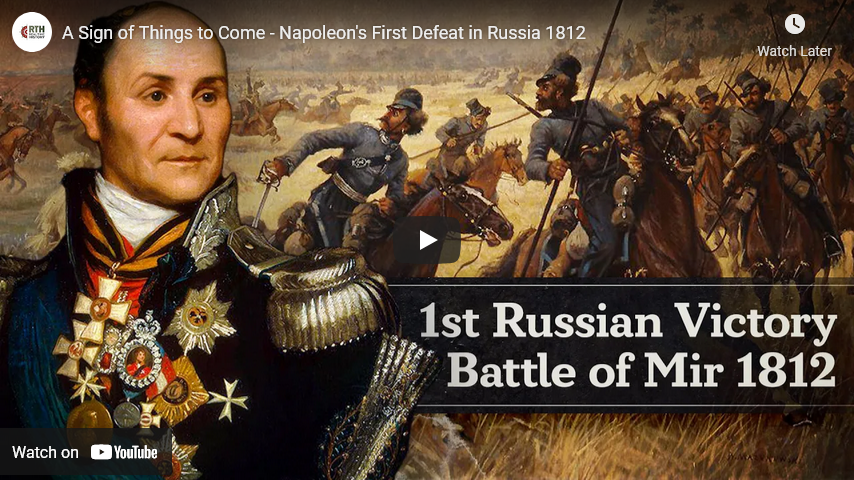
A Sign of Things to Come – Napoleon’s First Defeat in Russia 1812
Real Time History
Published 17 Mar 2022» SUPPORT US ON PATREON
https://patreon.com/realtimehistoryThe Battle of Mir in 1812 was the first battle of Napoleon’s invasion of Russia. Polish Uhlans ride right into a trap set by Platov’s Cossacks and under the Russian summer sun a cavalry skirmish ensues.
» THANK YOU TO OUR CO-PRODUCERS
John Ozment, James Darcangelo, Jacob Carter Landt, Thomas Brendan, Kurt Gillies, Scott Deederly, John Belland, Adam Smith, Taylor Allen, Rustem Sharipov, Christoph Wolf, Simen Røste, Marcus Bondura, Ramon Rijkhoek, Theodore Patrick Shannon, Philip Schoffman, Avi Woolf,» SOURCES
Boudon, Jacques-Olivier. Napoléon et la campagne de Russie en 1812. 2021.Chandler, David. The Campaigns of Napoleon. 1978.
Dujil, Nicolas. “Les armées russes en 1812”, in Rey, Marie-Pierre and Thierry Lentz, eds. 1812, la campagne de Russie. 2012.
Kagan Frederick. Russia’s Wars with Napoleon 1805-1815. The Military History of Tsarist Russia (NY.: Palgrave, 2002).
Lieven, Dominic. Russia Against Napoleon. 2010.
Mikaberidze, Alexander. “The Lion of the Russian Army”: Life and Military Career of General Prince
Peter Bagration 1765-1812. PhD Dissertation, 2003.
Rey, Marie-Pierre. L’effroyable tragédie : une nouvelle histoire de la campagne de Russie. 2012.
Zamoyski, Adam. 1812: Napoleon’s Fatal March on Moscow. 2005.
[Other Russian-language sources listed on the YouTube description]
» OUR STORE
Website: https://realtimehistory.net»CREDITS
Presented by: Jesse Alexander
Written by: Jesse Alexander
Director: Toni Steller & Florian Wittig
Director of Photography: Toni Steller
Sound: Above Zero
Editing: Toni Steller
Motion Design: Toni Steller
Mixing, Mastering & Sound Design: http://above-zero.com
Digital Maps: Canadian Research and Mapping Association (CRMA)
Research by: Sofia Shirogorova, Jesse Alexander
Fact checking: Florian WittigChannel Design: Simon Buckmaster
Contains licensed material by getty images
Maps: MapTiler/OpenStreetMap Contributors & GEOlayers3
All rights reserved – Real Time History GmbH 2022
Comments Off on A Sign of Things to Come – Napoleon’s First Defeat in Russia 1812
Schindler’s First Rescue Mission – WAH 054 – March 1943, Pt. 1
World War Two
Published 17 Mar 2022In the weeks after Goebbels’ Sportpalast speech, we realize that Total War might mean an apocalyptic end for Germany, with Hitler’s blessing. No wonder that some Germans are looking to end Hitler before he ends them, and what a blessing that at least one Nazi with influence on the fate of thousands of Jews turns out to have a heart and soul.
(more…)
Comments Off on Schindler’s First Rescue Mission – WAH 054 – March 1943, Pt. 1
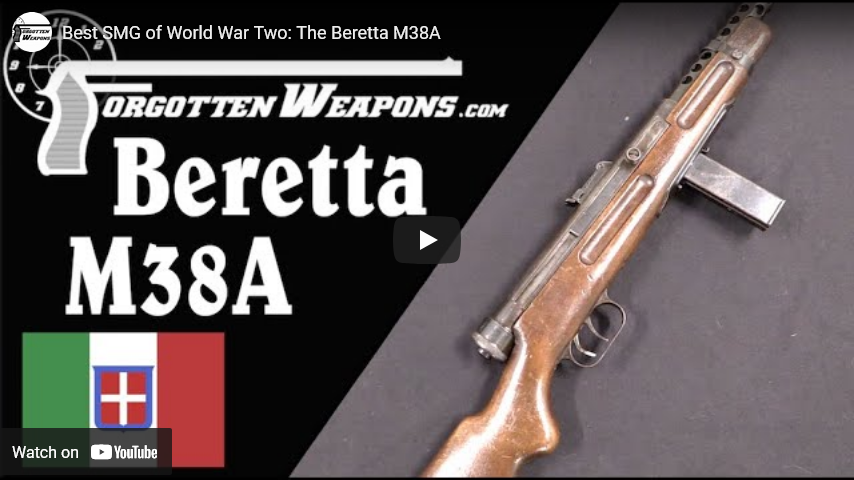
Best SMG of World War Two: The Beretta M38A
Forgotten Weapons
Published 15 Nov 2021http://www.patreon.com/ForgottenWeapons
https://www.floatplane.com/channel/Fo…
Cool Forgotten Weapons merch! http://shop.forgottenweapons.com
The Beretta Model 38A was one of the very best submachine guns of World War Two. Designed by veteran Beretta engineer Tullio Marengoni (who designed most of Beretta’s pistols as well as the Beretta M1918 SMG and 1918/30 carbine), it was the first Italian weapon to use a cartridge equivalent to 9x19mm Parabellum instead of 9mm Glisenti. Development began in 1935, and the final version entered production in January 1938.
The change from the Model 38 to 38A is unclear, but seem most likely to be the change from the top ejection of the prototypes to the left-side ejection of the production model. The 38A was formally adopted by the Italian Army in July 1938, but issue was delayed until 1940/41 because Beretta first produced a 20,000-unit order for the Romanian military.
By 1941, the basic design had been significantly simplified, and the Model 38/42 would significantly reduce production cost by removing the magazine well cover, barrel shroud, and removable firing pin. Simplified 38/42, 38/43, and 38/44 models would enter production, but original 38As were also manufactured until 1944 (this particular example is dated 1943). The gun was very popular with both Italian and German troops, and production continued under German occupation late in the war. Total numbers are unavailable, but are probably in excess of 500,000. The gun was so popular that Beretta was able to restart production after the war and continue selling them until the early 1960s.
Contact:
Forgotten Weapons
6281 N. Oracle 36270
Tucson, AZ 85740
Comments Off on Best SMG of World War Two: The Beretta M38A
QotD: Tactics, operations, and strategy
We break these layers into tactics, operations and strategy. Put very simply, tactics is the layer of military thinking that concerns how an army fights; […] Operations is the layer of thinking that is concerned with getting the army to the fight – large-scale coordination and logistics live here. Strategy is concerned with bigger picture questions: what wars are worth fighting and for what objectives? Grand strategy extends this thinking to cover not only the military, but also political, cultural and economic institutions.
Bret Devereaux, “Collections: This. Isn’t. Sparta. Part VII: Spartan Ends”, A Collection of Unmitigated Pedantry, 2019-09-27.
Comments Off on QotD: Tactics, operations, and strategy
March 17, 2022
The “Three-Block”, “Four-Block”, or “n-Block” war
In The Line, Andrew Potter explains the genesis of the original “Three-Block War” idea and how a Canadian general tried to put theory into practice:

During General Rick Hillier’s first visit to Colorado Springs as Chief of Defence Staff, he takes a few minutes to talk with Tech. Sgt. Devin Fisher of NORAD and USNORTHCOM Public Affairs about Canada-U.S. Relations
Public domain image via Wikimedia Commons.
In 1999, a US Marine general named Charles Krulak wrote a piece in which he claimed that the future of combat for the Marines would be in urban environments in failed or failing states. In these situations, front line infantry might be doing humanitarian relief in one part of the city, performing peacekeeping duties in another, while doing intense urban combat in a third. He called this the “Three Block War“. Figuring out how to prepare and train for this scenario would be the central military challenge of the 21st century.
While the Three Block War was picked up and booted around as an interesting idea, it was never formalized into Marine doctrine. But one person who did take it seriously was Rick Hillier, the former head of the Canadian military who brought it into the Canadian forces when he took over as chief of the land staff in 2003, arguing that the Three Block War in failed and failing states was the future of warfare. He wanted a CAF that was trained and kitted out for this reality. When he became Chief of the Defence Staff in 2005, Hillier kept pushing this idea on Paul Martin and the Liberals, who loved his “vision” and firm sense of priority-setting.
In Hillier’s hands, the Three Block War concept was a disaster. Some American analysts blamed the strategy for Canada’s elevated casualty rates in Kandahar. The concept also came under considerable scrutiny from Canadian military analysts. In a highly critical paper, Walter Dorn and Michael Varey described the three block war idea as “fatally flawed“. While the Three Block War concept might have served as a useful description of a certain type of tactical reality (amplified maybe by a few too many viewings of Black Hawk Down), as a strategic concept it had a number of problems. For example, it wasn’t clear how it would apply to other armed services, or to theatres other than urban centres. It seemed to threaten the specificity of mandate and mission that is crucial to military operations. It clearly ran the risk of “block inflation” — why not throw governance, economic development, general nation building, and anything else you think you can get the military to do into the hopper? Indeed, in 2005 General James Mathis co-authored a piece proposing the concept of the four block war, which added psychological and information operations to the mix.
Ultimately, Dorn and Varey were concerned that crucial distinctions central to warfare were being elided. As they put it, the whole point of doctrine is to make a clear delineation between things that are “war” and things that are “not war”, and the Three Block War threatens to make everything into a type of war.
Two decades later the verdict is in, and it looks like everyone was right. When it comes to the tactical environment, people like Krulak, Hillier, and Mathis were more prescient than they might ever have imagined, at least if Ukraine is any template for how modern warfare is evolving. Yet at the same time, everything the critics of the Three Block War concept worried about has also come to pass: the confusion of mission and mandates, the endless proliferation of “blocks”, and most seriously, the assimilation of everything, and everyone, into “war”.
In his original article, Krulak argued that the reality of the Three Block War meant that any local engagement or interaction could have repercussions on the mission as a whole. For example, if a squad of Marines based in a “peacekeeping” block of the city gets jumpy and opens fire on a civilian truck carrying humanitarian aid (and not a truck bomb), that could have serious impacts for the entire strategic effort. And so he coined the notion of the “strategic corporal”, a front line soldier who would have the training, judgement, and moral fibre to do his or her job in a way that would always support strategic objectives.
Comments Off on The “Three-Block”, “Four-Block”, or “n-Block” war
Irish Stew From 1900 & The Irish Potato Famine
Tasting History with Max Miller
Published 16 Mar 2021Help Support the Channel with Patreon: https://www.patreon.com/tastinghistory
Tasting History Merchandise: crowdmade.com/collections/tastinghistoryFollow Tasting History here:
Instagram: https://www.instagram.com/tastinghist…
Twitter: https://twitter.com/TastingHistory1
Tiktok: TastingHistory
Reddit: r/TastingHistory
Discord: https://discord.gg/d7nbEpyLINKS TO INGREDIENTS & EQUIPMENT**
Sony Alpha 7C Camera: https://amzn.to/2MQbNTK
Sigma 24-70mm f/2.8 Lens: https://amzn.to/35tjyoW
Le Creuset Cast Iron Round Casserole: https://amzn.to/2N5rTJKLINKS TO SOURCES**
Tamales Video: https://www.youtube.com/watch?v=s2JyN…
Quesadilla Video: https://www.youtube.com/watch?v=NPxjQ…
The History of the Great Irish Famine of 1847 by John O’Rourke: https://amzn.to/3qCM8fD
Great Irish Potato Famine: https://amzn.to/3kZg58j**Some of the links and other products that appear on this video are from companies which Tasting History will earn an affiliate commission or referral bonus. Each purchase made from these links will help to support this channel with no additional cost to you. The content in this video is accurate as of the posting date. Some of the offers mentioned may no longer be available.
Subtitles: Jose Mendoza
PHOTO CREDITS
Saint Patrick Catholic Church: By Nheyob – Own work, CC BY-SA 4.0, https://commons.wikimedia.org/w/index…
Kindred Spirits: By Gavin Sheridan – Own work, CC BY-SA 4.0, https://commons.wikimedia.org/w/index…MUSIC CREDITS
“Fiddles McGinty” by Kevin MacLeod is licensed under a Creative Commons Attribution 4.0 license. https://creativecommons.org/licenses/…
Source: http://incompetech.com/music/royalty-…
Artist: http://incompetech.com/“Achaidh Cheide – Celtic” by Kevin MacLeod is licensed under a Creative Commons Attribution 4.0 license. https://creativecommons.org/licenses/…
Source: http://incompetech.com/music/royalty-…
Artist: http://incompetech.com/#tastinghistory #stpatricksday #ireland

Comments Off on Irish Stew From 1900 & The Irish Potato Famine
March 16, 2022
Etruscan Cities and Civilization
Thersites the Historian
Published 9 Apr 2020The Etruscans were one of the most interesting civilizations of antiquity. In this video, I explore some of the distinctive features of Etruscan civilization and also look at some of the key urban sites in Etruria.
Patreon link: https://www.patreon.com/thersites
PayPal link: paypal.me/thersites
Twitter link: https://twitter.com/ThersitesAthens
Minds.com link: https://www.minds.com/ThersitestheHis…
Steemit/dtube link: https://steemit.com/@thersites/feed
BitChute: https://www.bitchute.com/channel/jbyg…

Comments Off on Etruscan Cities and Civilization
Al Stewart – “Josephine Baker” – LIVE
James Bone
Published 7 Mar 2021A live performance from Al Stewart’s Last Days Of The Century album, featuring Al’s 1988 band of Peter White on accordion, with Stephen Recker, Robin Lamble, Dave Camp, and Steve Chapman. One of Al Stewart’s historical topics, this time on 1920s sensation, American Josephine Baker, who became quite the talk of Paris. Recorded at the Bottom Line in New York City in 1988.

Comments Off on Al Stewart – “Josephine Baker” – LIVE


