
It’s important to note at the outset that the Romans had no written constitution and indeed most of the rules for how the Roman Republic functioned were, well, customary. The Roman term for this was the mos maiorum, the “custom of the ancestors”, but Roman practice here isn’t that different from how common law and precedent guide the functioning of something like the British government (which also lacks a written constitution). Later Roman writers, particularly Cicero, occasionally offer theoretical commentary on the “rules” of the Republic (as a retrojected, ideal version), but just as often their observations do not actually conform to the practice we can observe from earlier periods. In practice, the idea here was that the “constitution” of the Republic consisting in doing things as they had always been done, or at least as they were understood to have always been done.
Consequently, as historians, we adopt the formulation that the Republic is what the Republic does – that is that one determines the rules of offices and laws based on how they are implemented, not through a hard-and-fast firm legal framework. Thus “how does the dictatorship work?” is less a question of formal rules and more a question of, “how did the eighty-odd Roman dictatorships work?”
The basic idea behind the office was that the dictator was a special official, appointed only in times of crisis (typically a military crisis), who could direct the immediate solution to that crisis. Rome’s government was in many ways unlike a modern government; in most modern governments the activities of the government are carried out by a large professional bureaucracy which typically reports to a single executive, be that a Prime Minister or a President or what have you. By contrast, the Roman Republic divided the various major tasks between a bunch of different magistrates, each of whom was directly elected and notionally had full authority to carry out their duties within that sphere, independent of any of the other magistrates. In crude analogy, it would be as if every member of the United States cabinet was directly elected and none of them reported to any of the rest of them but instead all of them were advised by Congress (but in a non-binding manner). Notionally, the more senior magistrates (particularly the consuls) could command more junior magistrates, but this wasn’t a “direct-report” sort of relationship, but rather an unusual imposition of a more senior magistrate on a less senior one, governed as much by the informal auctoritas of the consul as by law.
In that context, you can see the value, when rapid action was required, of consolidating the direction of a given crisis into a single individual. This is, after all, why we have single executive magistrates or officials in most countries. So, assuming you have a crisis, how does this process work?
The typical first step is that the Senate would issue its non-binding advice, a senatus consultum, suggesting that one or both of the consuls appoint a dictator. The consuls could ignore this direct, but almost never did (save once in 431, Liv. 4.26.5-7). The consuls would then have to nominate someone; they might agree on the choice (which would make things simple) or one of them might be indisposed (out of the city, etc.), which would leave the choice to the one that remained. If both consuls were present and did not agree, they’d draw lots to determine who got to pick (which happens in the aforementioned instance in 431 after the tribunes got the consuls of that year to relent and pick someone, Liv. 4.26.11).
The nominating consul could pick anyone except himself; if you, as consul, wanted to be dictator, you would need your co-consul to so nominate you. There were no formal requirements; of course nominations tended to go to experienced commanders, which tended to mean former consuls, but this was not a requirement. Publius Claudius Pulcher (cos. 249), enraged when the Senate directed him to appoint a dictator (because of his own bungled military command) infamously nominated his own freedman, Claudius Glicia, as dictator (Liv. Per. 19.2; Seut. Tib. 2.2), which was apparently a bridge too far; Glicia was forced to abdicate but his name was duly entered onto the Fasti because the appointment was valid, if ill-advised (despite the fact that, as a freedman, Glicia would have been ineligible to run for any [office]). Nevertheless, dictators were usually former consuls.
Once the name was picked, in at some cases the appointment may have been confirmed by a vote of the Comitia Curiata, Rome’s oldest voting assembly, which was responsible for conferring imperium (the power to command armies and organize law courts; essentially “the power of the kings”) on magistrates; not all magistrates had imperium (consuls, praetors, proconsuls, propraetors, dictators and their magistri equitum did; quaestors, aediles, tribunes, both plebeian and military, and censors did not). We do not know of any instance where the Comitia Curiata put the kibosh on the appointment of a dictator, so this step was little more than a rubber-stamp, and may have been entirely optional (Lintott, op. cit., 110, n. 75), but it may have also reflected the notion that all imperium had to be conferred by the people through a voting assembly. It is often hard to know with clarity about pro forma elements of Roman politics because the sources rarely report such things.
The dictator was appointed to respond to a specific issue or causa, the formula for which are occasionally recorded in our sources. The most common was rei gerundae causa, “for the business to be done” which in practice meant a military campaign or crisis. In cases where the consuls were absent (out on campaign), a dictator might also be nominated comitiorum habendorum causa, “for having an assembly”, that is, to preside over elections for the next year’s consuls, so that neither of the current consuls had to rush back to the city to do it. Dictators might also be appointed to do a few religious tasks which required someone with imperium. Less commonly but still significantly, a dictator might be appointed seditionis sedenae causa, “to quell sedition”; only one instance clearly under this causa is known, P. Manlius Capitolinus in 368, but several other instances, e.g. L. Quinctius Cincinnatus in 439, also dealt with internal matters. Finally, once in 216, Marcus Fabius Buteo held the office of dictator senatus legendi causa, “to enroll the Senate”, as the Battle of Cannae, earlier that year, had killed so many Senators that new inductions were needed (Liv. 23.23).
The dictator then named a subordinate, the magister equitum (“master of the horse”). The magister equitum was a lieutenant, not a colleague, but interestingly once selected by a dictator could not be unselected or removed, though his office ended when the dictator laid down his powers. We should note Marcus Minucius, magister equitum for Q. Fabius Maximus in 217 as an exception; his selection was forced by the people via a law and his powers were later made equal to Fabius’ powers. This turned out to be a substantial mistake, with Fabius having to bail the less prudent Minucius out at Geronium – the undermining of Fabius generally during 217 was, in retrospect viewed as a disaster, since the abandonment of his strategy led directly to the crushing defeat at Cannae in 216.
One of the ways that legal power was visually communicated in Rome was through lictors, attendants to the magistrates who carried the fasces, a bundle of rods (with an axe inserted when outside the sacred bounds of the city, called the pomerium). More lictors generally indicated a greater power of imperium (consuls, for instance, could in theory give orders to the praetors). Praetors were accompanied by six lictors; consuls by 12. The dictator had 24 lictors when outside of the pomerium to indicate his absolute power in that sphere (that is, in war), but only 12 inside the city. The magister equitum, as the dictator’s subordinate, got only six, like the praetors.
It also seems fairly clear that while dictators had almost complete power within their causa, those powers didn’t necessarily extend beyond it (e.g. Liv. 2.31.9-11, the dictator Manius Valerius, having been made dictator to resolve a military problem, insists to the Senate that he cannot resolve internal strife through his dictatorial powers and instead lays down his office early). The appointment of a dictator did not abolish the other offices (Cicero thinks they do, but he is clearly mistaken on the matter, Cic. De Leg. 3.9, see Lintott, 111). In essence then, the dictator was both a supreme military commander and also expected to coordinate the other magistrates with his greater degree of imperium, though of course in practice the ability to do that is going to substantially depend on the individual dictator’s ability to get cooperation from the other magistrates (but then, on the flip side, the dictator has just been designated as the leader in the crisis, so the social pressure to conform to his vision must have been intense). Notably, dictators could not make a law (a lex) on their own power or legislate by fiat outside of their causa; they could and did call assemblies which could by vote approve laws proposed by a dictator, however.
The dictator served for six months or until the task for which he was appointed was resolved, whichever came first. There is a tendency in teaching Roman history to represent a figure like Cincinnatus, who laid down his dictatorship after just fifteen days in 458, as exceptional but while the extreme shortness of term was exceptional, laying down power was not. Indeed, Cincinnatus (or perhaps a relative) served as dictator again in 439 and again laid down his power, this time in merely 21 days. In practice, the time-limited nature of the dictatorship meant there were few incentives to “run out the clock” on the office since it was so short anyway – better, politically, to solve the crisis quickly and lay down power ostentatiously early and “bank” the political capital than try to run out the period of power, accomplish relatively little and squander a reputation for being public-spirited.
Bret Devereaux, “Collections: The Roman Dictatorship: How Did It Work? Did It Work?”, A Collection of Unmitigated Pedantry, 2022-03-18.
January 5, 2025
QotD: The customary Dictatorship in the Roman Republic before 82BC
January 4, 2025
January 2, 2025
How to solve Britain’s housing crisis
Tim Worstall outlines why just increasing the number of building permits allowed won’t — by itself — increase the total number of houses built. This is because the process of awarding the permits has been largely captured by the biggest players, and the supply is artificially restricted by local governments:
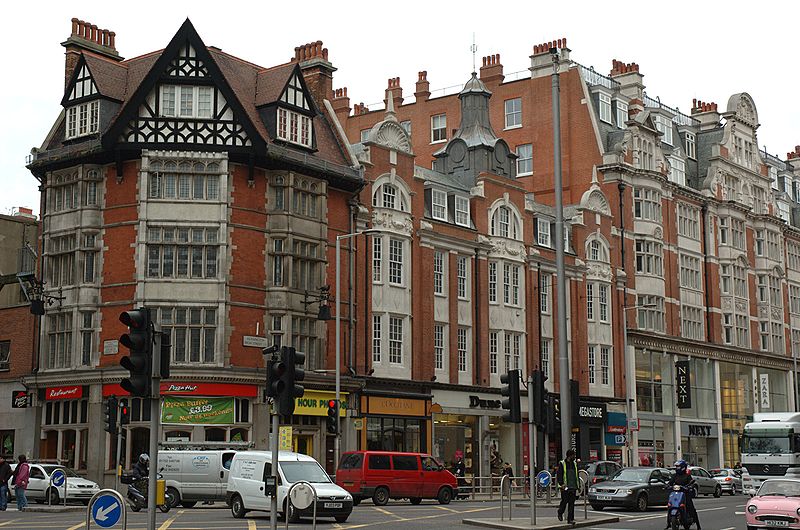
Kensington High Street at the intersection with Kensington Church Street. Kensington, London, England.
Photo by Ghouston via Wikimedia Commons.
The first bit is to diagnose the problem properly. If the big builders won’t build because they don’t want to then and therefore we want to find other builders who will and do want to. And the important part of this is that the big builders do indeed have market power. It costs a lot — a lorra lots — of money to be able to get a scheme through planning. Thus we not only have that problem of a shortage of places to build — because planning — but we’ve also handed market power to those able to build — because planning.
The answer is to shoot the planners, obviously. But then that always is the correct answer. Here, more specifically, we need to flood the zone with permissions. Really, grossly, oversupply. Like issue 15 million permits. Say. At which point the value of a permit is zero. So, anyone with a scrap of land can gain a permit and build.
This brings back the small housebuilder. Instead of being held back by the ideals of half a dozen national builders we’ve got 50,000 blokes all looking to build 2 or 3 houses a year. Or 10 or 20 even.
There’s no way that the big builders can then delay building on their plots. For they don’t have market power any more. And even if they do want to delay then it doesn’t matter a damn.
And this always is the way that you deal with those with market power. You flood that zone with supply so as to destroy their market power.
DOGE has a lot of low-hanging fruit to pick
Patrick Carroll selects some of the least-defendable ways the US government has been spending taxpayer money from Senator Rand Paul’s 2024 Festivus Report, including pickleball courts, $10B in unused office space, DEI initiatives for birdwatchers, crop fertilizer in foreign countries, and literal circus performances:
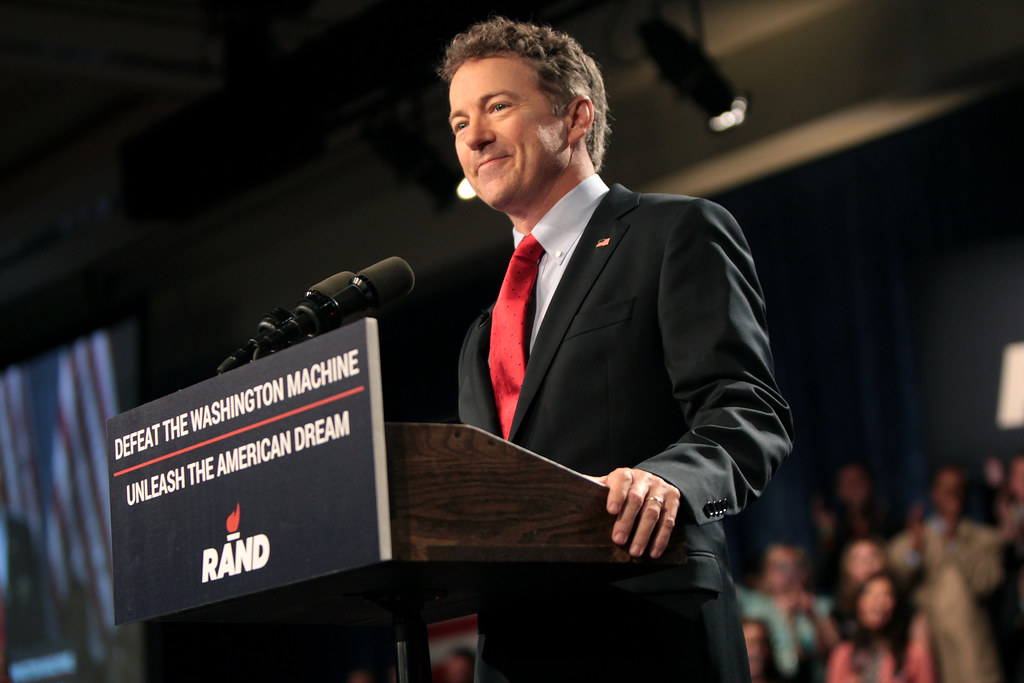
Rand Paul by Gage Skidmore is licensed under CC BY-SA 2.0 

 .
.
Why does such government waste persist year after year? A significant part of the explanation traces back to the concept of concentrated benefits and dispersed costs. Essentially, the beneficiaries tend to be a small, concentrated group, so they lobby hard for these outlays because they stand to gain a lot from them. Taxpayers, on the other hand, tend to be dispersed and only minimally affected by any single expense, so it’s not usually worth it for them to lobby against the spending, or even learn about it in the first place.
Economist Gordon Tullock famously illustrated this concept with his fictional Tullock Economic Development Plan. The plan “involves placing a dollar of additional tax on each income tax form in the United States and paying the resulting funds to Tullock, whose economy would develop rapidly”.
Think about the incentive Tullock would have to advocate for this plan, compared to the incentive that an ordinary taxpayer would have to look into it and voice their objections. With campaign contributions and votes to be gained from the special interest beneficiaries, is it any wonder politicians often go for these kinds of wealth transfers?
The ubiquity and stubborn persistence — year after year — of all this waste, combined with the economic theory that explains why it happens, suggests that there is a fundamental problem with the process of government as we know it. This is not, as many are itching to believe, a “Democrat” problem or a “Republican” problem. The degree of government waste changes very little with changing administrations. No, this is a problem with the government as such.
To solve this problem, we need to ask not just who should run the government, but what the government should be allowed to spend money on in the first place, given what we know about its entirely predictable and repeatedly demonstrated propensity for waste and dysfunction.
Milei has already started that conversation in Argentina. Let’s hope that with the new Trump administration and DOGE, that’s a conversation we can have here as well.
January 1, 2025
Mark Steyn – “This is not a healthy development in world affairs”
Mark comments on the ongoing political punch-up over the US government’s H1B visa program for foreign workers:

Elon Musk and Vivek Ramaswamy as the figureheads of D.O.G.E.
As you’ll have noticed, the world’s most uniquely unique peaceful transition of power turned suddenly violent over Christmas with various of America’s super-brainy Indians beating up on each other: Nikki Haley, the Boeing board’s token Sikh, lit up Hindu monotheist Vivek Ramaswamy’s tweet like Air Canada overhead baggage in objection to Vivek’s remarks on US “mediocrity”. The offending Ramaswamy tweet was in response to MAGA objections to Trump’s appointment of Madras techie and open-borders fanatic Sriram Krishnan as his AI advisor. This was a very 2025 brouhaha: while you knuckle-draggers down in flyover country were arguing about sub-minimum-wage Hispanics turning down the sheets at Motel Six, the Hindu billionaires have been busy taking over the country.
Is everyone in this all-American punch-up an Indian? Well, no, eventually a South African weighed in. The Boers don’t like the Hindus, do they? I think I got that from Gandhi. Ah, but in this case Elon agrees with Sriram and Vivek.
A couple of very general observations:
1) The MAGA base intuits that H1B visas are a racket. Why wouldn’t they be? Everything else the federal government touches is — from presidential pardons to West Point to Jan 6 justice. America is the third largest nation on earth — a third-of-a-billion people, officially (rather more in actual reality). Why does it need to hire entry-level workers from the first and second largest nations? Yes, yes, too many Americans graduate in non-binary studies rather than any serious academic discipline but simply because you’ve bollocksed up your entire education system is no reason to (as my former National Review colleague John Derbyshire puts it) “import an overclass“.
The MAGA objections to mass immigration (ie, not just illegal immigration) are primarily cultural. They didn’t like it eight years ago when Trump would add to his wall-building promises the line about “and that wall will have a big beautiful door”, and he should have got that by now. Besides, to address the counter-argument more seriously than it merits, a nation of a third-of-a-billion that “needs” to import entry-level accountants is so structurally dysfunctional that no amount of immigration can save it. How about entry-level lawyers? Do we need more of those?
As an aside to that, for all you Constitution fetishists, I’m increasingly sceptical that a Constitution designed for an homogeneous population of two-and-a-half million people can be applied to a third-of-a-billion with a cratering fertility rate of 1.6. The only two more populous nations — China and India — are both more or less conventional ethnostates. Which is a great advantage. America is the only large-scale polity founded on a proposition — that, simply by setting foot on US soil, one becomes American. Immigration on the present transformative scale will nullify the Constitution. So the Dance of the Constitution Fetishists will get even sadder.
The Constitution is increasingly for judges rather than citizens. May be time to import more Supreme Court justices.
2) Besides, H1B is what the government calls, correctly, a “nonimmigrant” visa. One of Rupert Murdoch’s minions offered me an H1B thirty years ago. I looked up the terms and declined to sign on to indentured servitude. You’re not importing “the best and brightest”. You’re assisting well-connected corporations in advantaging themselves at the cost of the citizenry among whom they nominally live. [NR: Emphasis mine.]
3) Have you noticed that almost everyone involved in this spat is a billionaire? Today’s rich are not just rich in the old Scott Fitzgerald they-are-different sense. They approximate more to the condition articulated by Lord Palmerston in his observation that England had no eternal friends or enemies, only eternal interests. For a billionaire, friends and enemies come and go, but, like any medium-sized nation-state, he has his interests.
To most Americans, Elon was largely unknown until he started weighing in on and then buying social media; Vivek was entirely unknown until he ran for president; Sriram is still unknown. But they are far above not just the schlubs who lost their jobs to cheaper H1B types but also to the more famous political class whose poll numbers in Iowa so obsess the hamster-wheel media but which are increasingly irrelevant to anything that matters. Among Sriram Krishnan’s minor claims to “fame” is that he’s the guy who introduced Boris Johnson (remember him?) to Elon Musk — and you can bet that was after desperate wheedling and pleading from the Shagger, not because Elon had any desire for dating tips.
This is not a healthy development in world affairs.
4) Vivek Ramaswamy’s sweeping paean to American “mediocrity” as manifested by everything from prom queens to sitcoms was probably ill-advised but it was certainly entirely sincere — and would be widely shared by his fellow members of the Hindu overclass. The Indian tycoon (and David Cameron advisor) Ratan Tata, who died in October, is best remembered in the UK for his 2011 Vivek-like attack on the natives’ “work ethic“. As Sir Ratan marvelled after buying Jaguar-Land Rover:
I feel if you have come from Bombay to have a meeting and the meeting goes till 6pm, I would expect that you won’t, at 5 o’clock, say, ‘Sorry, I have my train to catch. I have to go home.’
Friday, from 3.30pm, you can’t find anybody in the office.
That may well be true, as Vivek’s musings re Urkel and football jocks may be true. On the other hand, as a rather precocious lad, I observed to my mum that, five years after the Gambia’s independence, nothing seemed to work as well as it did under colonial rule. True, conceded my mother, then added: “But in the end people want to be themselves, as themselves. At least it’s their chaos.”
December 31, 2024
No matter what Poilievre does, it’s still Trudeau’s decision to stay or go
Conservative leader Pierre Poilievre has been doing a masterful job of staying on top of the Canadian news cycle even through the normally dormant holiday period, but he does not have a way to eject Justin Trudeau ahead of the inauguration of US President Donald Trump or for many weeks afterwards:
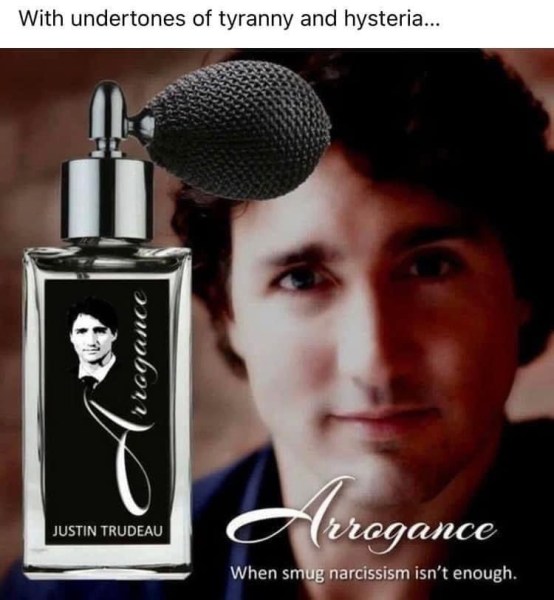
During a time of year when Canadian politics typically descend into a semi-coma, the Conservatives are leading an all-out drive to bring down the Liberal government before Prime Minister Justin Trudeau has a chance to save it.
Whatever they do, though, Trudeau continues to hold all the cards. The Tories can shame him, they can rally the opposition against him and they can call for the intervention of the Governor General. But – as per every available constitutional precedent – this only ends when Trudeau says it does.
Just before Christmas, Conservative leader Pierre Poilievre called on Governor General Mary Simon to recall Parliament before New Year’s Eve in order to hold a vote of non-confidence in the Liberal government.
When that didn’t work, the Conservatives announced an early recall of the Public Accounts Committee. It’s one of the more influential House of Commons committees headed by a Conservative, New Brunswick MP John Williamson, and it’s thus one of the only organs of state that the Conservatives can order back to work.
The committee obviously has no power to decide the Liberal government’s future, but the idea is to have them draft a shovel-ready non-confidence motion that can be fast-tracked to the House of Commons when it reconvenes on Jan. 27.
This campaign all makes political sense: Just as NDP leader Jagmeet Singh is finally signalling a willingness to bring down the Trudeau government, the Conservatives are hammering on him to actually make good on the pledge.
“Conservatives are now presenting the NDP with this first opportunity to bring down the Liberal Government and force an election,” reads a Friday statement outlining the Conservatives’ Public Accounts Committee plan.
But whatever else the Tories do between now and Jan. 27, Trudeau’s ability to head them off is virtually absolute.
There was never any realistic chance of Governor General Mary Simon calling Parliament back to work. And if Trudeau ultimately decides to prorogue Parliament past Jan. 27 to prevent a confidence vote, it’s extremely unlikely that she or any other occupant of Rideau Hall would stop him.
December 30, 2024
RIP Jimmy Carter, “The Great Deregulator”, 1924-2024
ReasonTV
Published 29 Dec 2024Nobel-Winning Economist Vernon Smith says the 39th president radically improved air travel, freight rail, and trucking in ways that still benefit us immensely.
______Jimmy Carter was perhaps the most successful ex-president in American history, winning the Nobel Peace Prize in 2002 for his work promoting human rights and economic and social development.
But his single term as president (1977–1981) is largely remembered as a series of failures and missteps, sometimes literally. Gas lines, a record-high combination of unemployment and inflation on the “misery index”, and Americans being held hostage by Iranian revolutionaries for over a year all fueled the perception that Carter was a weak and ineffective leader. When he collapsed during a six-mile run, it personified for many the exhaustion of the country under his leadership.
But there was at least one way in which Carter excelled as president. He was, in the words of 2002 Nobel–winning economist Vernon Smith, the great deregulator. Carter forced the airline industry, along with interstate trucking and freight rail, to compete for business, with powerful and positive effects that continue to this day.
I talked to Smith about Carter, whom he met at a White House event for American Nobel Prize winners, and what it was like to fly in the days when the government controlled air travel.
December 23, 2024
Trump’s second term – “The counterrevolution begins now”
A few weeks back in City Journal, Christopher Rufo provided a blueprint for President-elect Donald Trump’s second term with emphasis on “dewokification” of the executive branch:
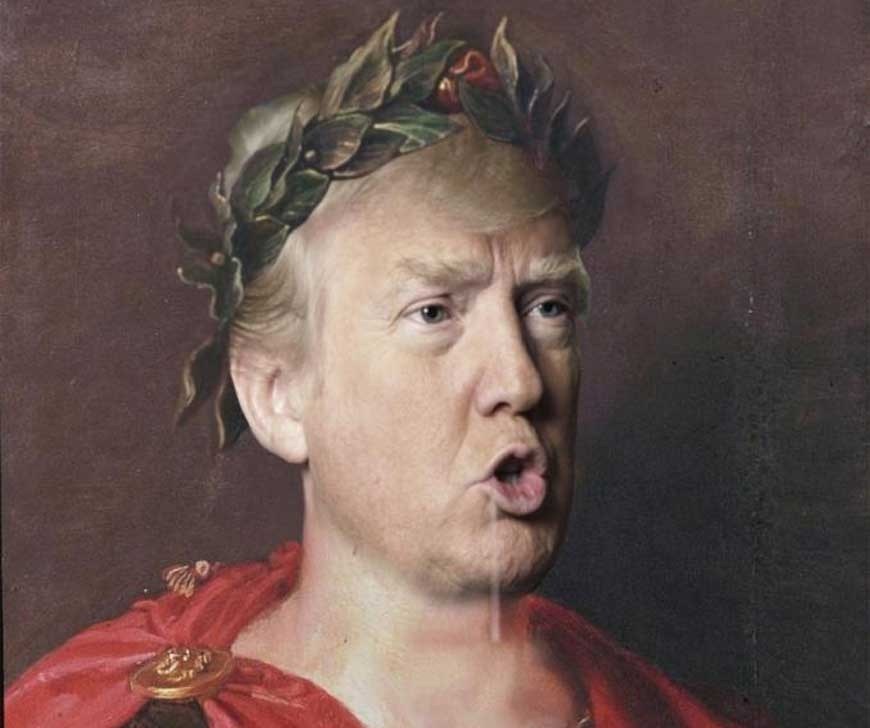
The second election of Donald Trump, along with Republican victories in both houses of Congress, sets the stage in the United States for a confrontation between democracy, which depends on representative institutions to form a government, and the rule of unelected elites, which relies on claims of expertise to control the state.
Already, internal opposition to Trump is organizing within the federal agencies. CNN reports that Pentagon officials are discussing disobeying official policy. Federal Reserve Chairman Jerome Powell has declared that he would refuse if Trump asked for his resignation. Some would like to see a reprise of the orchestrated counteractions against Trump, from the Russia collusion hoax to the Hunter Biden laptop censorship to the political prosecutions that led to his arrest and felony convictions.
The coming political confrontation is unusual because the specific antagonist is hard to identify. Trump is not contending against Joe Biden or Kamala Harris, or even the Democratic minority in Congress. Instead, the president-elect’s post-electoral opposition comes from inside the executive branch itself, in defiance of Article II of the Constitution, which opens with the unqualified statement: “The executive Power shall be vested in a President of the United States of America”.
In recent years, phrases like “the deep state” have arisen in American political discourse to describe this phenomenon, in which administrators, bureaucrats, and unelected officials seem to wield a kind of power that we still lack appropriate language to describe. Part of the motivation is self-interest — bureaucrats want to protect their positions — but another is ideological: the federal government is steeped in left-wing race and gender ideology, and its adherents see Trump as an existential threat.
By rights, he should be. The incoming president has, under the Constitution, every right to bend the administration to his vision, which is contrary to the tenets of left-wing racialism. But those ideologies, which the Biden administration has entrenched through its “whole-of-government” diversity agenda, have long ruled the agencies that control the details of federal policymaking. Hence, the conflict: the president, who has formal authority, versus the ideological bureaucracy, which has real power.
At the end of his first term, Trump attempted to correct this problem through actions such as an executive order banning critical race theory in the federal government. The second Trump administration must go further and dedicate itself to a process that Vice President–elect J. D. Vance has described as “dewokeification”. This is the most urgent policy problem facing the administration, because without representative institutions and a restoration of constitutional authority, it is not possible to govern America.
The Trump administration has a unique opportunity to take decisive action on Day One, through executive orders that can serve as the opening salvo in a counterrevolution. The basic premise: the U.S. should strip left-wing racialism from the federal government and recommit the country to the principle of color-blind equality. Through an aggressive campaign, Trump and his cabinet can put an end to forms of discrimination disguised under the name of “diversity, equity, and inclusion” (DEI) and make government work again.
The process of ideological capture has taken decades. But the counterrevolution can, and must, quickly retake those institutions in the name of the people and reorient them toward the enduring principles of liberty and equality. Bureaucrats abusing the public trust to advance their own ideologies should be put on notice: they will be shut down, their departments abolished, and their employment terminated. The administration will work to rid America of this ideological corruption before it further rots our institutions, demoralizes our citizens, and renders the government totally incompetent.
The counterrevolution begins now.
December 18, 2024
Justin Trudeau at bay
However much you may dislike the man — and there’s just so much to dislike — it’s impossible to write him off no matter how bad the situation may look. In The Free Press, Rupa Subramanya explains to non-Canadian audiences what has been going on in the Deranged Dominion lately:
Justin Trudeau’s government could be at the point of collapse. And a social media post from Donald Trump about tariffs may have set off the latest in a chain of dominoes for Canada’s prime minister.
On November 25, Trump posted on his platform Truth Social that, as one of his first executive orders, he would “sign all necessary documents to charge Mexico and Canada a 25% Tariff on ALL products coming into the United States, and its ridiculous Open Borders”. Four days later, Trudeau flew to Mar-a-Lago to meet Trump for dinner. Although the content of their discussion has not been made public, Trump’s tariff threat may have landed a death blow to Trudeau’s cabinet.
On Monday morning, Trudeau’s most important ally — his number two, finance minister Chrystia Freeland — resigned in a fiery letter directed at her boss, which she posted on X.
“Our country today faces a grave challenge,” she wrote. “The incoming administration in the United States is pursuing a policy of aggressive economic nationalism, including a threat of 25 percent tariffs. We need to take that threat extremely seriously.” She continued: “That means pushing back against ‘America First’ economic nationalism with a determined effort to fight for capital and investment and the jobs they bring”.
The same morning, Trudeau’s housing minister Sean Fraser also announced his departure, saying he wanted to spend more time with his family. This brings the total number of cabinet members who’ve resigned under Trudeau in 2024 to nine. But a walkout from Freeland, his most trusted lieutenant, who was expected to release her fall economic statement Monday, is by far the biggest. That such a loyal servant who has worked for Trudeau since 2015 would resign so publicly shows just how deep the rot is these days. Freeland stood by the prime minister as his popularity began to tank in February 2022 when Canadian truckers protested his harsh Covid vaccine mandates. She even authorized the debanking of those protesters, freezing their bank accounts as a means of punishment [NR: with no legal authority, it must be noted].
Now, her resignation is feeding feverish speculation that the longtime progressive darling could finally be on his way out, amid his sinking popularity and the country’s economic slump. By Monday night, a prominent member of Trudeau’s Liberal Party, Anthony Housefather, went on TV to say the prime minister is “past his shelf life“.
December 17, 2024
The rejection-in-advance of Bovaer as a “climate-friendly” “solution” to the “problem” of climate change
At Watts Up With That?, Charles Rotter documents yet another imposed-from-above bright idea that consumers are already eager to reject:

When global elites and bureaucrats decide they must “fix” the world, the results often speak for themselves. Take the latest technocratic debacle: Bovaer, a feed additive designed to reduce methane emissions from cows, marketed as a “climate-friendly” solution. It’s now being shelved by Norwegian dairy producer Q-Meieriene after consumers flatly rejected its so-called “climate milk”.
This is more than a simple story of market rejection. It’s a cautionary tale of what happens when governments, corporations, and globalists push policies and products that tamper with the food supply to address a problem that may not even exist.
The Quest to Solve a “Crisis”
Bovaer, developed by DSM-Firmenich, has been touted as a game-changer in the fight against methane emissions — a major target of climate policies. The additive is said to suppress a key enzyme in the cow’s digestive process, reducing methane emissions by up to 30%. Regulatory bodies in over 68 countries, including the EU, Australia, and the U.S., have approved its use.
But let’s step back for a moment. Why are we targeting cow burps and farts in the first place? Methane is indeed a greenhouse gas, but it’s also a short-lived one that breaks down in the atmosphere within about a decade. Moreover, cows and bison have been emitting methane for millennia without triggering apocalyptic climate shifts. Yet suddenly, livestock emissions are treated as a planetary emergency demanding immediate action.
This myopic focus on cow methane is a prime example of how climate zealotry warps priorities. Rather than addressing real and immediate issues — like the energy crises their own policies create — governments and globalists have decided to micromanage how your milk is produced, all to reduce emissions by an imperceptible fraction of a percentage point.
Consumer Rebellion
The backlash against Bovaer has been swift and fierce. In Norway, Q-Meieriene began using the additive in 2023, branding the resulting product as “climate milk”. The response? Consumers overwhelmingly rejected it, leaving supermarket shelves stocked with unsold cartons while Bovaer-free milk flew off the shelves.
Facing dismal sales, Q-Meieriene recently announced it would discontinue the use of Bovaer, stating:
Demand for Q climate milk has not been high enough to continue production … we phased out the use of methane suppressants in cow feed and are putting this project on pause.
https://www.nettavisen.no/nyheter/ville-redde-klimaet-med-prompe-fri-kumelk-snur/s/5-95-2166980
This is not merely a marketing failure. It reflects a broader consumer revolt against the technocratic imposition of “solutions” no one asked for. People are increasingly skeptical of being told that their daily choices — what they eat, how they travel, how they heat their homes — must be sacrificed on the altar of climate orthodoxy.
Canada’s deputy prime minister heads for the exits
After being informed by Justin Trudeau that he no longer wanted her to be the finance minister on Friday, but still apparently expecting her to present the fall economic statement on Monday, Chrystia Freeland instead submitted her resignation from cabinet:

In the National Post, John Ivison calls it her “gangster move” against Trudeau:
Who saw Chrystia Freeland pulling a gun, after Justin Trudeau unsheathed a knife?
The finance minister is an unlikely champion of the Chicago Way, but she has just pulled off a coup that may end up toppling this government.
Just hours before she was due to give her fall economic statement, she quit.
Despite the widespread media speculation about a falling out between Freeland and Trudeau, it’s a good bet that no one was more surprised at the finance minister’s gangster move than the prime minister.
Her resignation letter was savage. She said that on Friday, Trudeau had told her he no longer wanted her as finance minister and offered her another job in cabinet.
She said that she concluded she had no option but to resign because she had lost the prime minister’s confidence.
The casus belli was the multi-billion-dollar affordability package that included a two-month GST holiday and mailing $250 cheques to nearly 19 million working Canadians.
As the National Post reported late Sunday, Freeland had already reversed the government’s position on the rebate cheques that would have cost an estimated $4.68 billion. One person with knowledge of the plans said that the measure will not be in the fiscal update but the government hopes to take another look in the new year, if it can find another party to support it.
Oh, and the financial update Freeland was still expected to deliver after being underbussed by Trudeau? It apparently did get released:

You can always count on the Babylon Bee to find the most accurate and tasteful way to present the news:

December 14, 2024
Tulsi Gabbard as the Director of National Intelligence
To the left, Gabbard is widely criticized as some sort of Russian pawn, while to many on the right she’s unacceptable as a former Democrat and “girlboss”. Despite this, J.D. Tuccille says President-elect Donald Trump seems quite confident that she’s the right person for the job:
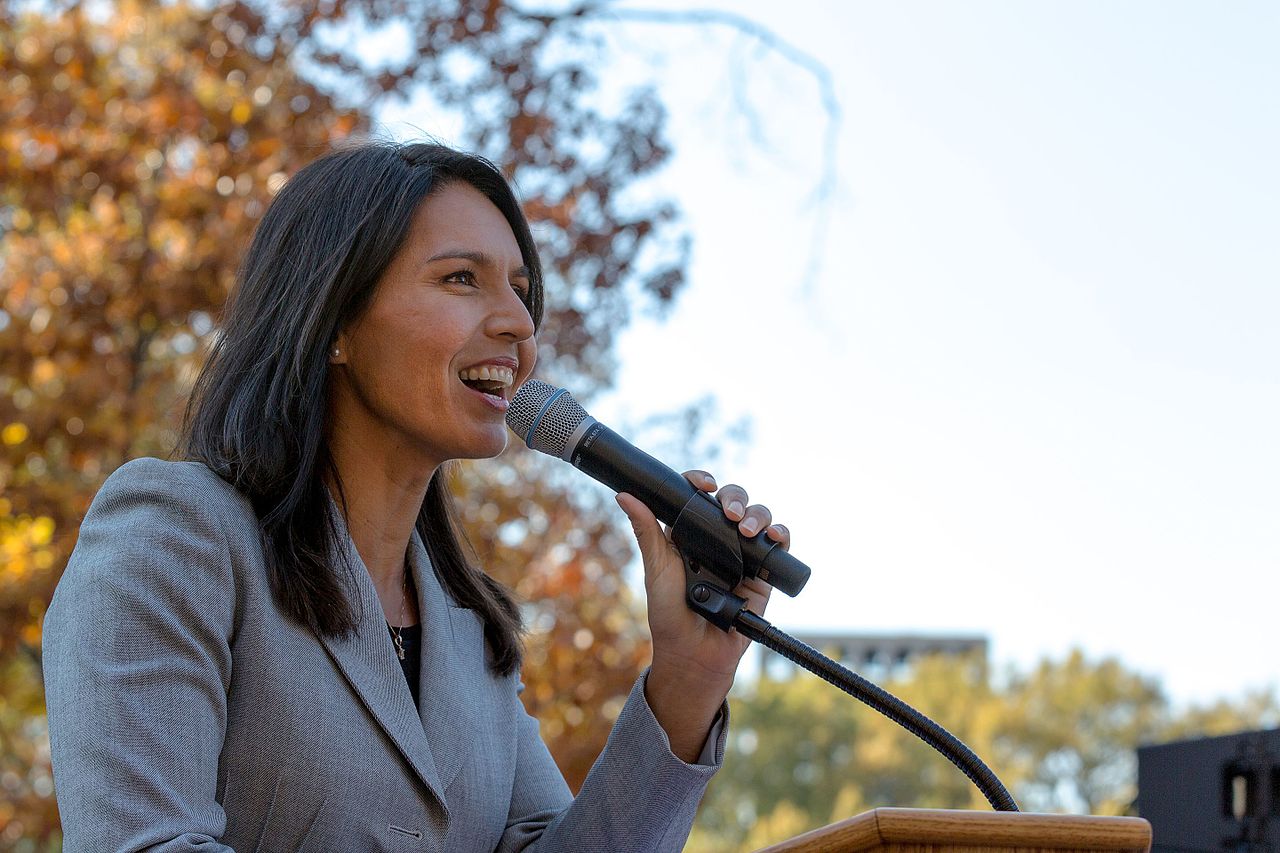
Tulsi Gabbard speaks at the “People’s Rally” in Washington DC on 17 November, 2016.
Photo by Lorie Shaull via Wikimedia Commons.
United States President-elect Donald Trump is standing behind Tulsi Gabbard, his pick to be director of national intelligence. Like several of Trump’s nominees, former Democratic congresswoman Gabbard is controversial in D.C.-insider circles, and understandably so; she’s skeptical of the political establishment, often criticizes foreign policy and was apparently subject to surveillance and put on a terrorist watch list because of her dissident ways. In other words, she’s a rather promising nominee for an incoming administration that wants to completely revamp government institutions that desperately need reform.
Asked this week by NBC’s Kristen Welker if he has confidence in Gabbard despite objections raised in certain circles to her past actions and positions, Trump responded, “I do. I mean, she’s a very respected person.”
Trump was specifically asked about two meetings Gabbard had in 2017 with then-Syrian dictator Bashar al-Assad. Now in exile, al-Assad and his relationships with American politicians shouldn’t be much of a worry anymore, but he plays a part in the official panic over Gabbard’s views on foreign policy.
In 2019, former Democratic presidential candidate Hillary Clinton famously called Gabbard a “Russian asset“. Gabbard, a veteran of the Iraq war, aroused Clinton’s ire with her anti-interventionism in foreign policy matters and criticism of the political establishment and its hawkishness during the course of a short-lived campaign for her party’s presidential nomination.
“There are brutal dictators in the world. Assad of Syria is one of them. That does not mean the U.S. should be waging regime-change wars around the world,” Gabbard told CNN in early 2019. Her long-standing fears of Islamist extremism led her to consider al-Assad a less-bad alternative to a potential fundamentalist regime.
Gabbard returned Clinton’s slight by calling her “the queen of warmongers” and the “embodiment of corruption”. It’s unsurprising that the two no longer share a political party.
Gabbard’s dissent from establishment orthodoxy doesn’t stop at military matters. In 2020, she joined with libertarian-leaning Republican Thomas Massie, from Kentucky, to call on the U.S. government to cease its persecution of Wikileaks founder Julian Assange. Assange ran afoul of the U.S. government when he published leaked documents revealing embarrassing details about official misconduct in Iraq and elsewhere.
December 11, 2024
Canada’s current situation, as viewed by Fortissax
Fortissax recently spoke to an audience in Toronto. This is part of the transcript of his speech:

No doubt, many of you already have an idea.
The fact of the matter is this: 25% of the people in this country are, or soon will be, foreigners. Most of them are not the children of immigrants but fresh-off-the-boat migrants.
The economy? It’s in the dumps. Canada has the lowest upward mobility in the OECD for young people. One of the lowest fertility rates in the Western world. And the fastest-changing demographics in the Western world — as I’m sure you’ve all noticed here in the streets of Toronto, the old capital of Anglo-Canadians.
Think about this: approximately 4.9 million foreigners are classified as “temporary migrants.” Combine that with permanent residents, refugees, and immigrants, and that number swells to 6.2 million in just four years.
And it doesn’t stop there.
Crime is reportedly the highest it’s ever been. We have no military. The Canadian Armed Forces has faced retention issues for two decades. And what is command preoccupied with? Men’s bathrooms stocked with tampons and servicemen being “radicalized” by wearing extremist clothing like MAGA hats.
Let’s not forget foreign influence.
The Chinese Communist Party exploited the Hong Kong handover in the 1990s to infiltrate Canada, using British Columbia as their foothold. As Sam Cooper exposes in Claws of the Panda and Willful Blindness, they established a stronghold in Metro Vancouver, taking over the business community.
This “Vancouver Model”, as we Canadians ironically call it, normalizes our capitulation to foreign hostiles. Triads, working hand-in-glove with the Chinese communists, built a global drug empire. Fentanyl, mass-produced in football field-sized factories in China, is shipped to Vancouver and distributed across the entire Western Hemisphere.
Let this sink in: more Canadians have died from this economic warfare than all our soldiers lost in the Second World War.
And now, there’s India.
Intelligence agencies from the Republic of India have demonstrated their ability to conduct assassinations on Canadian soil. Recently, a Khalistani nationalist and separatist was killed — a figure I’ll leave to your sympathies or judgments. Regardless, this marks a disturbing shift.
India weaponizes its diaspora against the international community. In exchange for non-alignment with China, the West — particularly the Anglosphere — uses Indian migrants as wage-slave labor to suppress costs.
The result? A disaster.
In Canada, Australia, the U.K., and increasingly the United States, we see Indians climbing the ladders of power, pursuing their own interests — often brazenly. In Brampton, part of Greater Toronto, a 50-foot statue of the Hindu god Hanuman looms.
And let’s not forget the Punjabi Sikh population. They openly support an independent Khalistan — or remain at best indifferent to the cause. They have infiltrated Canada’s state apparatus, even reaching the Ministry of National Defense, where Harjit Sajjan prioritized rescuing Afghan Sikhs during Kabul operations over broader Canadian interests.
In Surrey, British Columbia, the trucking industry is effectively controlled by Sikhs. In online spaces, Sikh nationalists demand Brampton be recognized as a province, seemingly aware that their homeland exists more abroad than in Punjab itself. The leader of the NDP, Jagmeet Singh, serves as yet another example — barred from entering India due to his sympathies for separatism.
But foreign influence is only half the story. Among our own lies another problem: disintegration.
Decades of Western alienation and economic parasitism by the federal government are fueling separatist movements in places like Alberta and Saskatchewan. In Quebec, the Parti Québécois is polling higher than the ruling CAQ, openly advocating for secession from Confederation.
Meanwhile, the federal Conservatives court immigrant voters, alienating native Canadians and abandoning their base.
And then there’s the economic misery.
The average Canadian home costs $700,000. The median income? Just $48,000. Upward mobility is nonexistent. The managerial regime hoards wealth and power, gatekeeping opportunity through credentialism, exorbitant tuition, and crushing taxes.
55% of Canadians have post-secondary education, and yet most have nothing to show for it. The regime is not run by titans of intelligence or visionaries. It’s run by ideologues — loyal to their cause, not to competence or merit.
The final insult: demographics.
Over the next six years, British Columbia, Alberta, Saskatchewan, and Manitoba will become majority non-Canadian. The 50% threshold will be breached, with profound consequences for local politics.
Ontario will hover just above 50%, while Quebec and the Maritime provinces will remain over 70% and 80% Canadian, respectively. This is not a death sentence, but it is a profound transformation for Western Canada, which has historically been more propositional and less identitarian than the East.
This is where we are.
Our sovereignty is compromised. Our identity is eroded. But we are not yet defeated. What happens next depends entirely on us.
Norway finds the perfect tool to drive away those pesky entrepreneurs
Don’t you just hate having all these bothersome start-up companies in your country, creating new jobs and new investment opportunities? Norway sure does, but good news: they’ve found an almost perfect way to not only deter existing entrepreneurs but to punish those who try to leave after they’ve been successful:
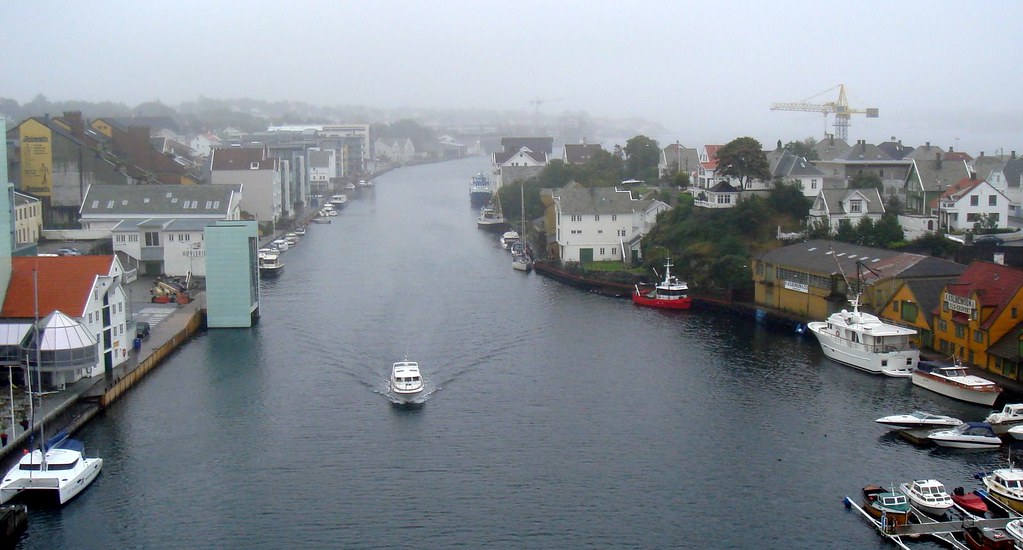
Norway is a fantastically beautiful country, but lately they’ve decided they want as few new companies as possible.
“Norway” by Nouhailler is licensed under CC BY-SA 2.0 .
Norway’s entrepreneurs are disappearing. In the past two years alone, 100 of Norway’s top 400 taxpayers, representing about 50 percent of that group’s wealth, have fled the country to protect their businesses.
In Atlas Shrugged, Ayn Rand paints a vivid picture of a dystopian society where government overreach and socialist policies kill innovation and demonize entrepreneurs. Present-day Norway mirrors this scenario in unsettling ways. The Nordic countries have long operated on an egalitarian ideal—citizens pay high tax rates for a generous safety net and effective public services. But Norway has taken the ideal to destructive and bizarre extremes.
Norway spends 45 percent more than Sweden on healthcare per capita with approximately the same health outcomes. Norway spends 50 percent more than Finland on primary and secondary school with worse results. And it splurges on green virtue-signaling with, for example, a $3.2 billion offshore wind project that industry experts believe is financially unworkable. That $3.2 billion, by the way, is roughly equivalent to the total revenue raised by the wealth tax.
To socialist politicians in Norway, entrepreneurs are mere piggy banks to be raided for ever more spending. When confronted with the reality that you can’t pay taxes with money you don’t have, the response is a vague moralism like “those with the broadest shoulders must bear the heaviest burdens.” Any dissent is waved away, deemed invalid because. . . free healthcare.
Earlier this year, instead of scaling back the tax blowout, the government doubled down, not only increasing the wealth tax but adding a vise grip on business owners in the form of an “exit tax” on unrealized gains as well. That means if you move from Norway, you’re immediately liable to pay 38 percent of the market value of your assets. It doesn’t matter if you have no cash on hand, if your assets are risky and could plummet in value, or even if your company fails after you leave—you still owe the tax. (Luckily for me, I left before this tax became law.)
The intent is to corral entrepreneurs inside Norway, impeding them from heading for the exits. The inevitable result: They’ll leave even before starting their businesses. After shooting itself in one foot, the government is now aiming a bazooka at the other one.
December 8, 2024
The potential for retribution in a second Trump presidency
Francis Christian meditates on whether or how President-elect Donald Trump will indulge in eye-for-an-eye revenge against the individuals most clearly involved in the lawfare and other attempts to derail his re-election:
It was the English poet Alexander Pope who admonished us in the manner of the New Testament that “to err is human; to forgive, divine” — Errare humanum est, ignoscere divino.
The Old Testament in contrast, has the equally familiar and perhaps far more popular, “eye for an eye“, and in one of the most revolutionary statements ever uttered, Jesus in the Sermon on the Mount talked about us “having heard that it was said, ‘an eye for an eye’ — but I say unto you, love your enemies“.
To wish to take revenge upon one’s enemies is therefore human, but Jesus is asking mankind to rise above this basic instinct and instead, to forgive and love one’s enemies. This was all of course part of His Mission on earth — to change by His Life, His Cross and the Resurrection, the destiny of human beings from being bound to basic instincts and death — to being bound for eternal life, a different destiny and a new creation.
The mavens of Hollywood of course march to a different and more ancient tune (which has been handed down unchanged to them) and generations of movie goers and consumers of media have been brought up on the idea that revenge of the most explosively visceral kind is a good thing, even a noble thing.
My readers will undoubtedly have their own sincerely held beliefs about Jesus’ command to love our enemies and to do good to those who hate us and once again, I do not wish this essay to turn out to be a sermon! What I wish to address instead, is to ask the question: what is the place for retribution, vengeance and revenge in the conduct of statecraft?
In other words, when President elect Trump said in a recently widely publicized interview that he was, “not looking for retribution, grandstanding or to destroy people who treated me very unfairly“, was he declaring a principle of statecraft that makes for a fulfilling and productive Presidency? And is this also a principle of statecraft that will “make American great again?”
In typical, inimitable and endearing Trumpian fashion, the President-elect also added the tongue in cheek comment: “I am always looking to give a second and even third chance, but never willing to give a fourth chance — that is where I hold the line!”
It could be argued from the life of no less a colossal figure than Julius Caesar that decisive and devastating revenge upon one’s enemies makes for a strong and respected ruler and nation. Whilst still a private citizen, Julius Caesar was captured by pirates on the way to the Greek island of Rhodes (to which he was travelling in order to learn oratory from the famous professor Molon). Caesar raised his own ransom — then raised a naval force, captured his pirate captors and had them all crucified.
The later assassination of Caesar and the subsequent civil wars that rocked and roiled Rome is the subject of Shakespeare’s magnificent, Tragedy of Julius Caesar. The subsequent rule of Augustus Caesar was marked by stability, expansion of the empire, the building of roads and bridges (via which the Gospel was to travel), the making of sea and land routes safe for travellers (again, to the advantage of the early Christians taking the Gospel to Asia and Europe) the consolidation of Roman power — and the rule of (Roman) law. It was also during the reign of this austere, learned emperor that Jesus was born in a manger, in the Roman province of Palestine.
H/T to Brian Peckford for the link.


