
You may have noticed that [Against the Grain author] James C. Scott is not a fan of the state. He tends to describe it as a sort of alien intrusion into the human world, an aggressive meme that’s colonized first our material environment and then our minds, imposing its demands for legibility in order to expropriate innocent peasants:
Peasantries with long experience of on-the-ground statecraft have always understood that the state is a recording, registering, and measuring machine. So when a government surveyor arrives with a plane table, or census takers come with their clipboards and questionnaires to register households, the subjects understand that trouble in the form of conscription, forced labor, land seizures, head taxes, or new taxes on cropland cannot be far behind. They understand implicitly that behind the coercive machinery lie piles of paperwork: lists, documents, tax rolls, population registers, regulations, requisitions, orders — paperwork that is for the most part mystifying and beyond their ken. The firm identification in their minds between paper documents and the source of their oppression has meant that the first act of many peasant rebellions has been to burn down the local records office where these documents are housed. Grasping the fact that the state saw its land and subjects through record keeping, the peasantry implicitly assumed that blinding the state might end their woes. As an ancient Sumerian saying aptly puts it: “You can have a king and you can have a lord, but the man to fear is the tax collector”.
This “state as egregore” language recurs throughout the book. Scott writes that the state “arises by harnessing the late Neolithic grain and manpower module as a basis of control and appropriation”. It “battens itself” on the concentration of grain and manpower to “maximiz[e] the possibilities of appropriation, stratification, and inequality”, and with its birth “thousands of cultivators, artisans, traders, and laborers [are] … repurposed as subjects and … counted, taxed, conscripted, put to work, and subordinated to a new form of control”.1 But it’s vital to remember that this metaphor is just a metaphor: the state isn’t actually an alien brainworm or a memetic infohazard that will hijack your neocortex the moment you set eyes on a triumphal arch and force you to spend the rest of your life making lists of things and renaming roads with numbers;2 it’s just an institution that people have invented, because hierarchy and inequality are inescapable facts of life in a society of any scale and the state is a particularly effective bundle of social technologies to leverage those hierarchies. There’s a reason that, after states had their “pristine” invention at least three separate times, they’ve proliferated across every part of the world that can support them!
But more interesting than “are we better off with the state?” is to ask ourselves, as Ronald Blythe does in Akenfield, what has been lost. Here Scott offers some fascinating musings on the way not merely the state but the entire agriculturalist life-world limits us:
We might … think of hunters and gatherers as having an entire library of almanacs: one for natural stands of cereals, subdivided into wheats, barleys and oats; one for forest nuts and fruits, subdivided into acorns, beechnuts, and various berries; one for fishing, subdivided by shellfish, eels, herring, and shad; and so on. … one might think of hunters and gatherers as attentive to the distinct metronome of a great diversity of natural rhythms. Farmers, especially fixed-field, cereal-grain farmers, are largely confined to a single food web, and their routines are geared to its particular tempo. … It is no exaggeration to say that hunting and foraging are, in terms of complexity, as different from cereal-grain farming as cereal-grain farming is, in turn, removed from repetitive work on a modern assembly line. Each step represents a substantial narrowing of focus and a simplification of tasks.
The Neolithic Revolution, he argues, was like the Industrial Revolution, a great boost to human productivity and social complexity but at the same time a de-skilling. The surface area of our contact with the world shrank from hundreds of plants and animals, used in different ways at different times of year, to a mere handful of domesticates whose biological clocks became the measure of our lives. Of course, the modern contact area is smaller still — dimensional lumber purchased from a store in place of felling and milling your own trees, natural gas at the turn of a knob with nary a need to build a fire — and is sometimes reduced all the way to your fingertip on a smooth glass screen. The ease and efficiency are undeniable, and I’m sure a forager or premodern farmer would kill for Home Depot and seamless pizza delivery (I certainly wouldn’t want to give them up). But there has been “a contraction of our species’ attention to and practical knowledge of the natural world” because that knowledge and attention is no longer necessary, and I think that Scott is right to suggest that there is something richer about a more extensive involvement with the world. That said, Scott’s case is somewhat overstated: after all, even hunter-gatherers have specialized craftsmen who engage deeply with particular materials at the expense of other endeavors, and farmers3 have a far more intimate relationship with their animals than a hunter does with his many different kinds of prey. Similarly, farmers may be on one particular bit of land but (especially in a preindustrial context) all that plowing and hedging and draining and spiling, not to mention the gathering of various woodland foodstuffs, can rival forager familiarity when it comes to their bit of landscape. (My new favorite poem is Kipling’s “The Land“, on just this idea.)
Scott closes the book with an elegy for the “late barbarians”, who had the best of both worlds: healthier and longer-lived than farmers, and with greater leisure, they were “not subordinated or domesticated to the hierarchical social order of sedentary agriculture and the state” but were still able to benefit tremendously from lucrative trade with those states. Unfortunately, much of that trade was in weaker non-state peoples whom they captured and sold as agricultural slaves, thereby “reinforc[ing] the state core at the expense of their fellow barbarians”, and much of the rest was in their own martial skills as mercenaries (which of course also served to protect and expand the influence of the state). It’s a salutary reminder for the aspiring modern barbarian: the best place to be is just outside the purview of the state, where you can reap its benefits4 without being under its control. But beware, because in a world of states even those “outside the map” must fill niches created by the state. It’s great to have a cushy work-from-home laptop job that lets you live somewhere nice, with trees and no screaming meth-heads on your subway commute, but more land comes under the plow every year, and your time, too, may come.
Jane Psmith, “REVIEW: Against the Grain, by James C. Scott”, Mr. and Mrs. Psmith’s Bookshelf, 2023-08-21.
- And of course Scott argues that the state is a parasite in the most literal way, since the word derives from the Greek παρά “beside” + σῖτος “grain.”
- Although this would be a pretty sweet novel, sort of a Tim Powers alt-history: anarcho-primitivist occultists go back in time to ancient Mesopotamia to destroy the me of kingship and render the state metaphysically impossible. Someone write this.
- Like Scott, in fact, who keeps sheep on 46 acres of Connecticut. There’s a funny little aside in the book where he complains about people using “sheeplike” in a derogatory sense, given that we’ve spent several millennia selectively breeding sheep to behave that way.
- Better yet, wait for the peasants to do the reaping then ride in on your shaggy little ponies and take it all. Uh, metaphorically.
August 25, 2025
QotD: The rise of the state … the rise of the egregore
August 23, 2025
“Trump … sees transshipment and nearshoring as sneaky workarounds”
At the Foundation for Economic Education, Jake Scott explains Donald Trump’s latest anti-trade moves:

President Donald Trump’s executive order of July 31st, effective August 7th, has upended global trade dynamics in a single stroke. Slapping a 40% tariff on all “transshipped goods” — products rerouted through third countries to dodge US duties — this is merely the natural development of his evolving protectionist agenda.
Just a week after the order, the move is a clear shot at China’s sprawling manufacturing empire, which has long exploited methods like transshipment and “nearshoring” to skirt American tariffs in general, and Trump’s tariff policies in particular.
While applied globally, China stands to take the biggest hit (and likely already is), with its vast factory networks and knack for rerouting goods through Southeast Asia, Mexico, and beyond. This isn’t just a tariff hike; it’s a calculated escalation in Trump’s ongoing crusade to reshape US trade policy and the global economy in the United States’ favor. But ripple effects that bruise consumers are already visible — and this move is likely to strain relationships with key allies as well.
The new tariffs build on Trump’s first-term strategy — so extensive that it now has a Wikipedia entry — when he wielded America’s economic heft like a sledgehammer to renegotiate or smash trade deals he deemed unfair. Back then, Chinese firms sidestepped US tariffs by setting up shop in countries like Vietnam and Mexico, funneling goods through these hubs to mask their origins.
This nearshoring strategy buoyed many economies that had pre-existing arrangements with the United States or were treated more favorably than China, such as Canada and Latin American nations. It is also seen as a natural part of globalization: shipping parts from where they are constructed (like China), assembling them in developing nations (like Mexico), and then exporting to high-value markets (like the United States). Nearshoring has a long history, but the fragility of extended global supply chains was exposed in the Covid pandemic; since then, manufacturers have sought to mitigate their damage.
The US trade deficit with China (roughly $295 billion) has long been a sore point for Trump, who sees transshipment and nearshoring as sneaky workarounds. The 40% duty on these goods, layered atop existing tariffs, aims to plug this loophole. As Stephen Olson, a former US trade negotiator, noted in the New York Times, China will likely view this as a direct attempt to “box them in”, potentially souring already tense talks.
August 22, 2025
Resolved – This country’s youth will not fight to defend this country
On Tuesday, John Robson discussed the results of a recent Angus Reid survey that, among other things, indicated that Canadians are at least as anti-military as they’ve been since the first Trudeau government:
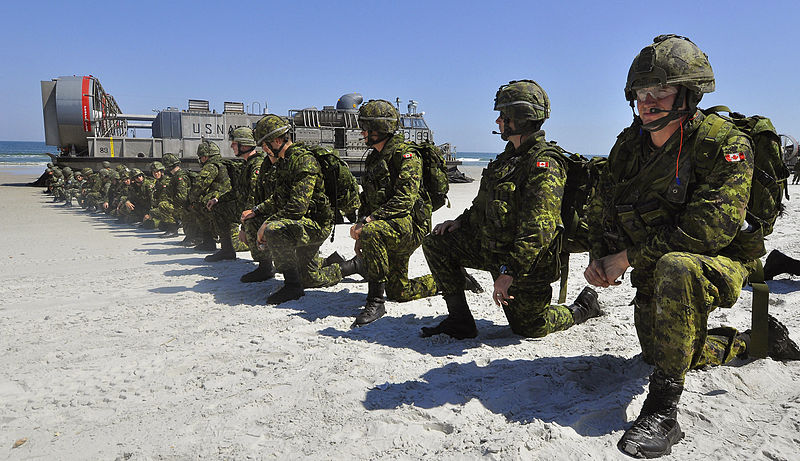
Canadian soldiers set a perimeter position after disembarking a U.S. Navy landing craft during a simulated amphibious landing, 24 April 2009.
U.S. Coast Guard photo by Petty Officer Seth Johnson via Wikimedia Commons.
The National Post reports an Angus Reid survey finding that a significant majority of us favour compulsory voluntary service by the youth of today. Which might sound like a bracingly traditional Jordan Peterson clean-your-room, stand-up-straight, shoulders-back attitude until you read the fine print, which would risk making Peterson ill if he weren’t already. Because it turns out we want to conscript them to work in health care so we get stuff we didn’t pay for, not to defend the country because if ye break faith and so on.
According to the survey, 74 per cent of respondents want young people to have to give a year of their lives to bolstering our failing, structurally unsound socialized medical system. Respondents were also in favour of mandatory service in support of the environment (73 per cent), “youth services” (72 per cent), whatever it might be, and “civil protection” (70 per cent). But when it comes to (ugh) national defence, just 43 per cent supported it, with 44 per cent opposed.
Spending on comfort while barbarians undermine the city walls lacks prudence as well as dignity. As I observed in a long-ago graduate-school debate about American national security, it didn’t matter how wonderfully progressive the Dutch social welfare system was in 1940 when the Nazis came calling. And we too seem to have our priorities backward.
If I might confuse the government by discussing principles of political economy, there are good reasons why national defence is considered a binding duty on those able to contribute to it. First is the “free rider” problem that everyone benefits from successful protection of the community, especially, at least in a narrow and hedonistic sense, if you send some other chump to die for your freedom while you recline comfortably at home.
Second is the moral consideration that, as John Stuart Mill famously if uncharacteristically put it, “War is an ugly thing, but not the ugliest of things: the decayed and degraded state of moral and patriotic feeling which thinks that nothing is worth a war, is much worse”. Which comes from, yes, his “Principles of Political Economy”.
Mill was no warmonger. As he immediately continued, “When a people are used as mere human instruments for firing cannon or thrusting bayonets, in the service and for the selfish purposes of a master, such war degrades a people”.
But not all wars are like Russian President Vladimir Putin’s invasion of Ukraine, let alone Hamas’s attack on Israel. As the anything-but-bellicose Mill added, “A war to protect other human beings against tyrannical injustice; a war to give victory to their own ideas of right and good, and which is their own war, carried on for an honest purpose by their free choice — is often the means of their regeneration”.
August 21, 2025
QotD: Computer models
But note: for 100 dollars or negotiable, I will produce a minority report that will explain everything, infallibly. I will not preview the report in this Idlepost, however, because it might be worth money to me.
Aw, heck. Since I am rich beyond the dreams of avarice, let me just go ahead and blow all the beans. Let me recklessly tell gentle reader why computer models are always mistaken.
It is because their makers decide the result, before they design the model.
This does not mean they are self-interested phanatics, consciously preying on the gullibility of a drooling, ignorant public; although usually it does. For even if, by disposition, they are lofty, objective types, they will need, objectively, a lofty budget to perform a “credible” study. This means they must beg huge sums of money, and this will only be available from a source with an unhealthy interest in the result.
You see, the problem has nothing to do with computers. Even among humans, the phenomenon of “garbage in, garbage out” is well attested. The intention of following the evidence where it leads, is transient. I should think only a saint could sustain it, for longer than he could hold his breath under water.
David Warren, “A note on sternutation”, Essays in Idleness, 2020-06-19.
August 20, 2025
“All politics is local” … except when it isn’t
Lorenzo Warby on a recent study of the vast chasm between what European voters want in areas like crime and immigration and what their elected representatives want:
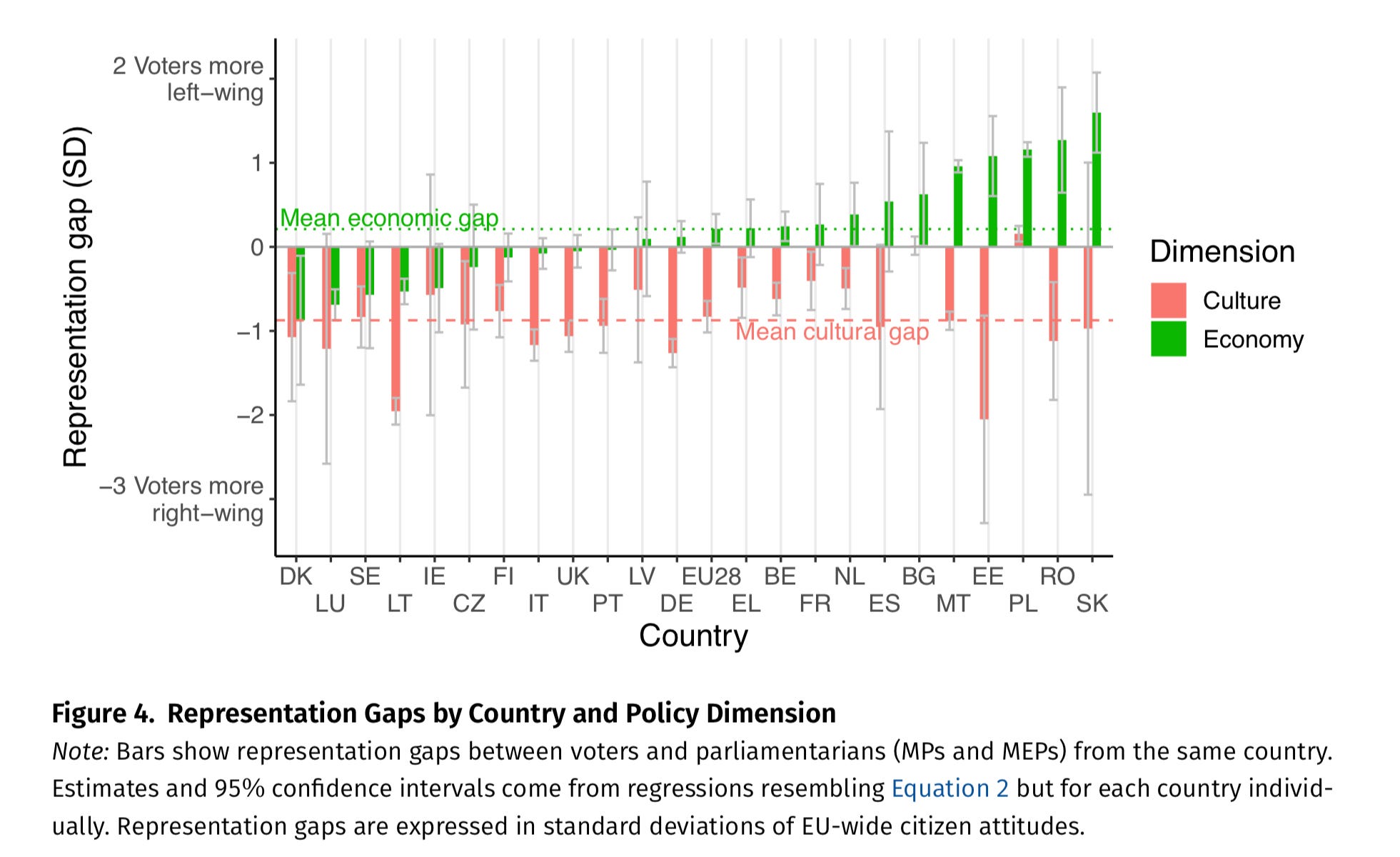
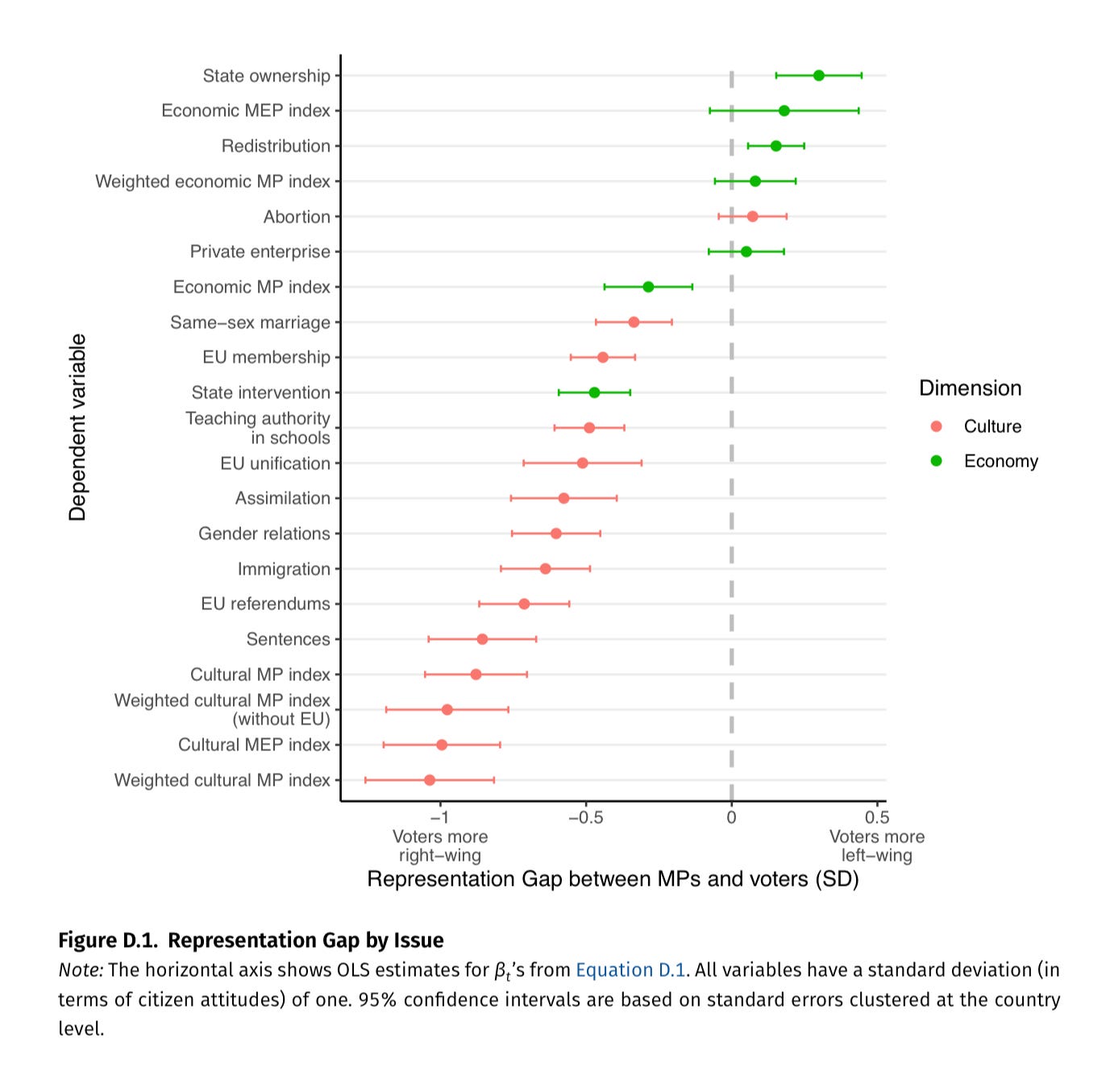
Economist Laurenz Guenther has performed the very useful exercise of quantifying how unrepresentative the views of European politicians are of their voters on cultural issues, such as crime and immigration. This is not true of economic issues, where the views of politicians tend to be quite representative of their voters.
In the case of economic issues, in some countries the politicians are more pro-market (“right”) then their voters, in others they are more dirigiste (“left”) than their voters, in others still they are very similar to their voters. There is simply no consistent pattern, and the average gap between voters and politicians across European countries on economic issues is fairly small.
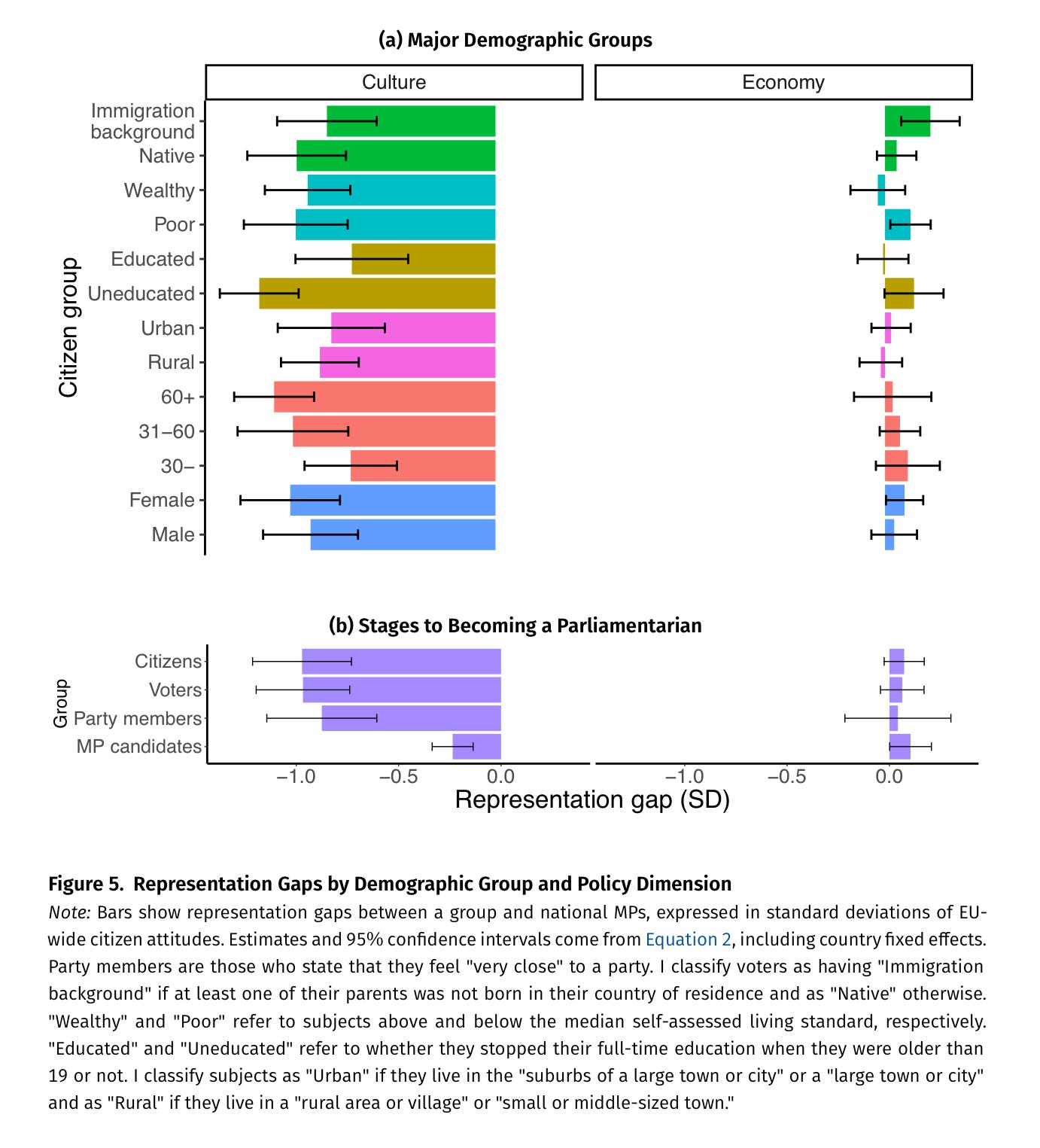
With cultural issues, such as crime and immigration, we get a very different pattern. There, politicians are consistently more socially liberal (“left”) than their voters and by a considerable margin. While education levels explain some of this difference, they do not explain very much, as politicians are significantly more socially liberal than even university-educated voters.
Moreover, politicians are unrepresentative even of their own Party members/base on cultural issues and, again, in being much more liberal than their core supporters. There is some factor or factors specific to being a contemporary politician that systematically separates them out from voters on cultural issues yet does not operate with economic issues.
Veteran politician Tip O’Neill famously said that all politics is local. This is particularly true of cultural issues such as crime and immigration, where the effects vary wildly by location. This is much less true of economic issues, which are much more economy-wide in their operation.
There are various features we can identify here. First, executive function(s) — including such features as patience (aka time horizon) — varies between people and is highly heritable. Localities that have lots of people with poor executive function operate very differently from those where it is very much normal for people to have strong executive function.
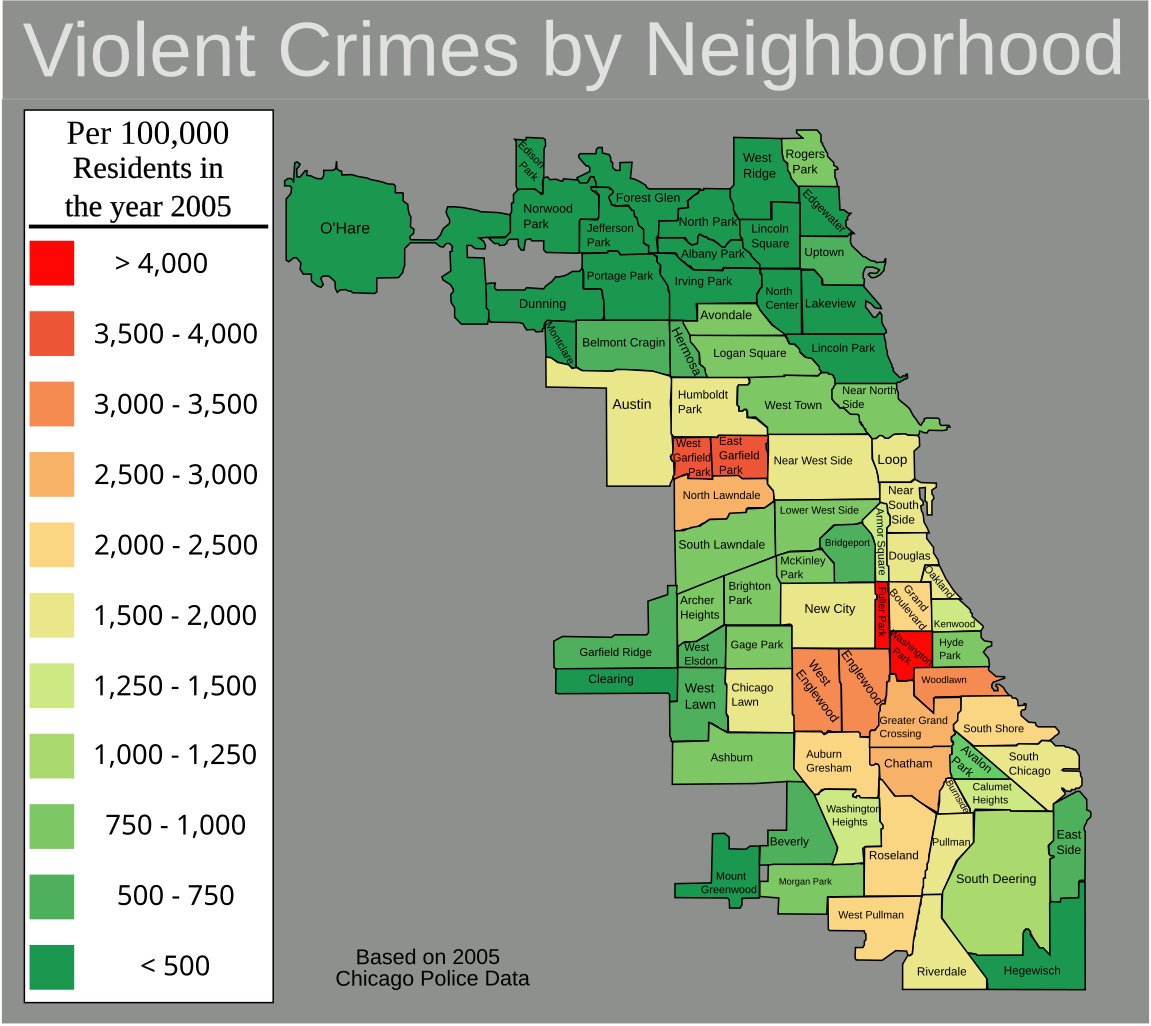
As the combination of physical robustness and weak executive function predicts criminal behaviour, this has a great deal to do with why crime varies so dramatically by locality. This is especially as crime is very much a power law phenomenon, where a small minority of (overwhelmingly) men commit the vast majority of violent crimes.
Source – Wikimedia Commons.
It also means that people who have spent their lives in social milieus full of people with high executive function can have little or no sense of what happens when one has to deal with weak executive function folk. This is the people unlike me problem that so bedevils contemporary politics and commentary.
California’s ever-receding High Speed Rail dream
Chris Bray provides an on-the-ground update of California’s ultra-expensive high speed rail project which still has yet to deliver a single passenger from one station to another after nearly 20 years of funding:

Start with a description: “In 2008, California voters approved $9.95 billion of state bond funding as seed money to build an 800-mile high-speed rail (HSR) network connecting Los Angeles and San Francisco, and the Central Valley to coastal cities, at speeds of up to 220 miles per hour, with an expected completion date of 2020.”
Construction started in 2015. Pause for a moment and really notice the date.
Ten years later, the project has consumed $18 billion, and an effort to connect Los Angeles and San Francisco has turned into a much more modest “Phase One” plan to connect the cities of the Central Valley, well east of the coast. The modest declared cost of the proposed LA-to-SF bullet train now looks like this for the much shorter line: “a cost range of $89 billion to $128 billion.” The Trump administration has declined to provide more federal funding for the project, but California is suing to try to keep the federal spigot open.
[…]
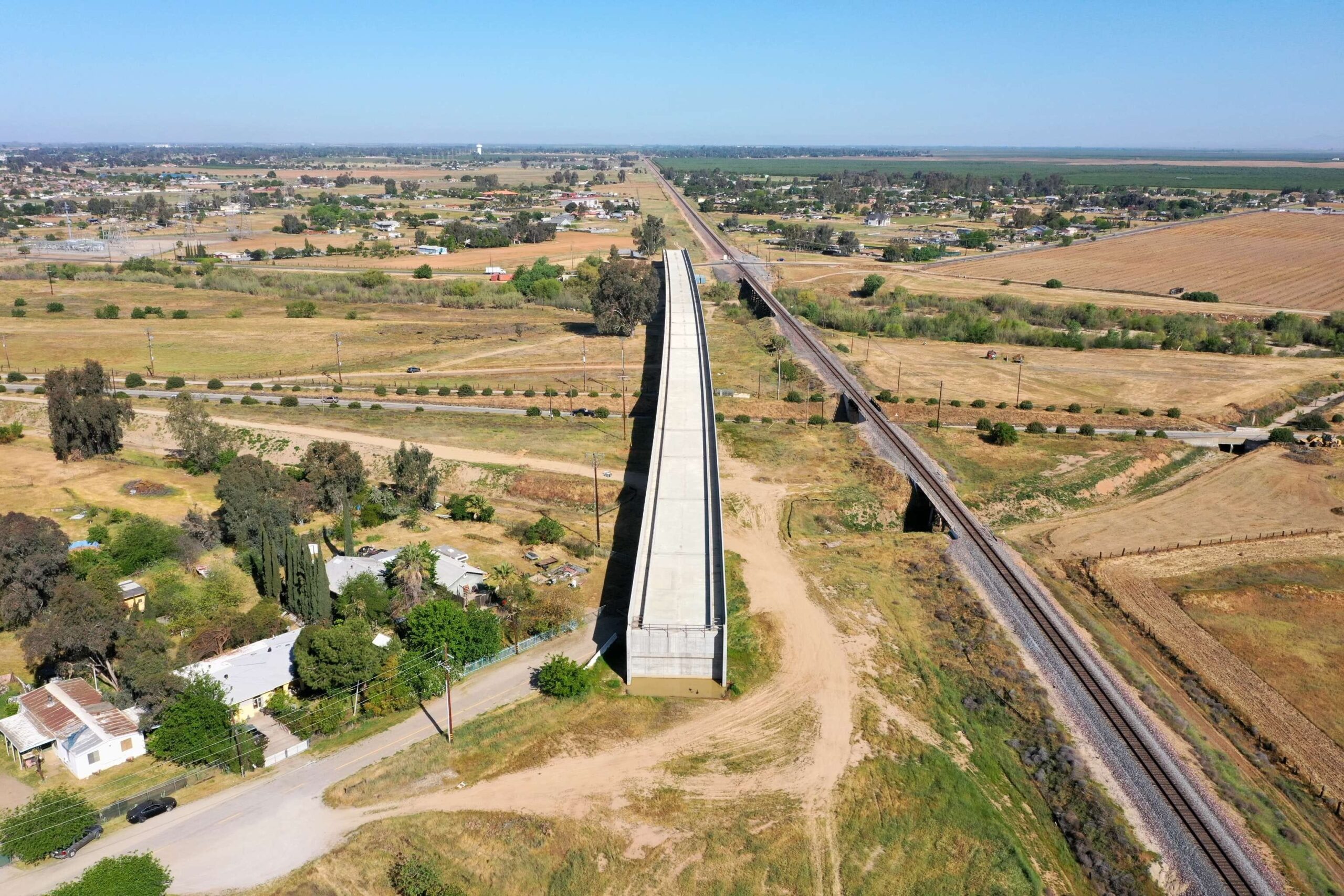
Famously, the California High-Speed Rail Authority has been posting pictures of its huge construction successes on social media:
See, that’s … almost a whole rail line for a bullet train. Obviously!
So!
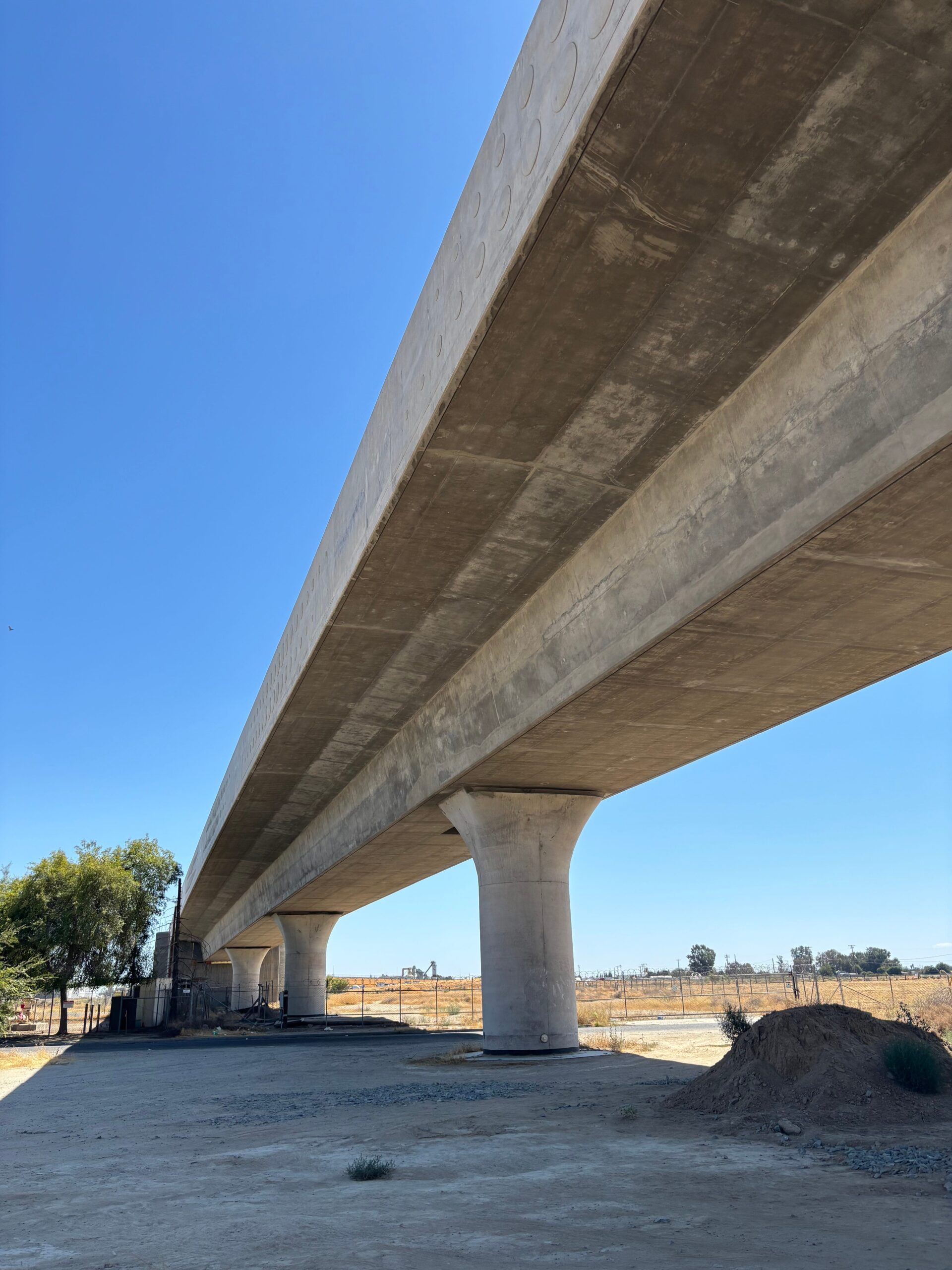
If you ever find yourself in Fresno, and I sincerely hope you don’t, the structures that have been built for “high-speed rail” are surprisingly easy to access. There are several places where those structures aren’t fenced in or guarded. At all. […] So when you see this:
…it’s not that hard to just head up onto the thing. It’s also very dangerous, legally dubious, and something you definitely shouldn’t do. Since it’s an elevated construction site, there are a lot of places without guardrails where you can just fall off the thing, and it’s a long way down.
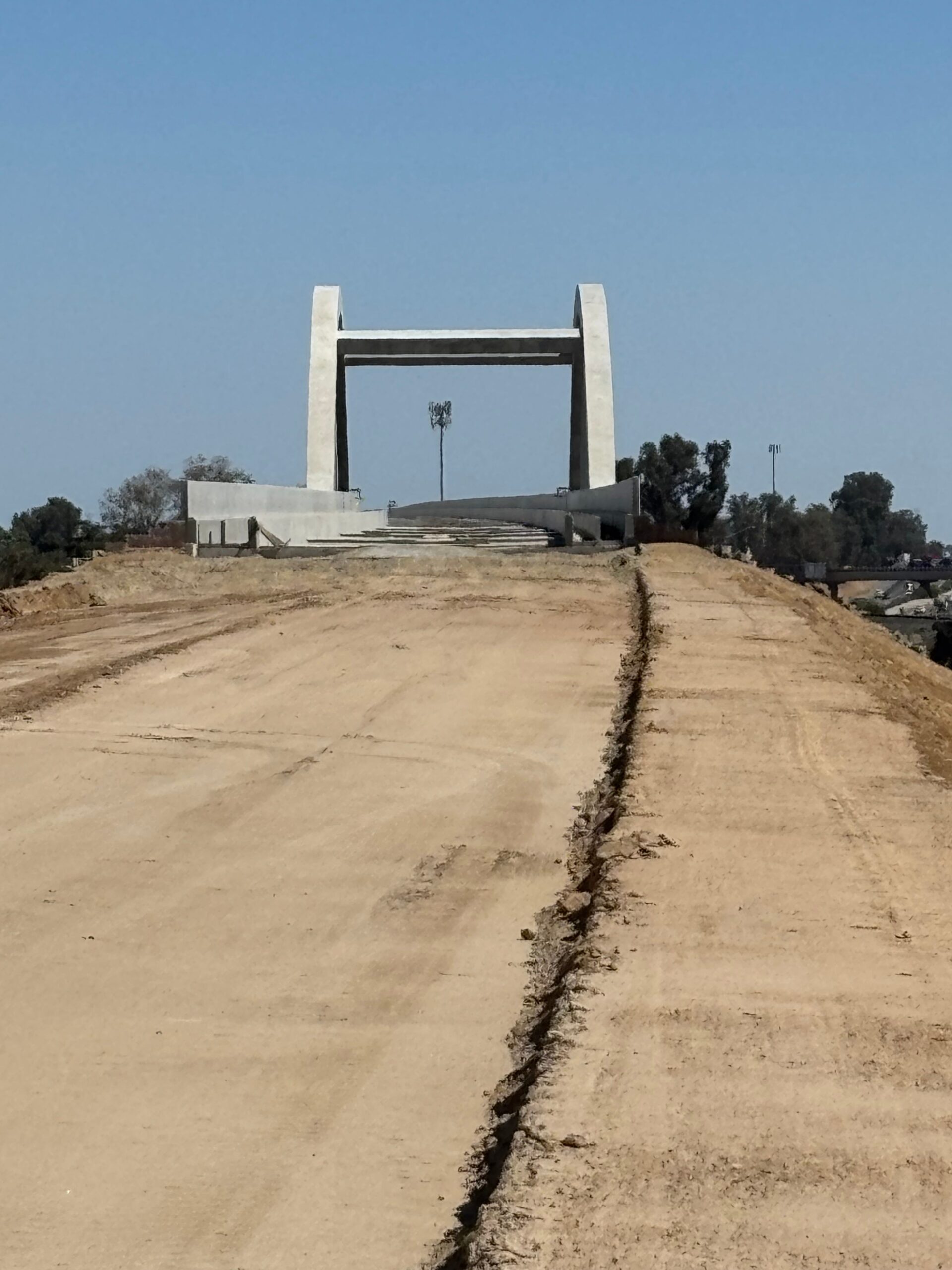
Everyone see this part: Don’t go up there. It’s dangerous. You can fall and die. […] But if you were to climb up onto the thing, which you absolutely should never do, you would see a whole bunch of this:
That’s a section at the northern end of Fresno, looking south.
Of course, California isn’t the only jurisdiction struggling to complete big infrastructure projects: Toronto’s long-awaited Crosstown LRT project got started in 2007 and still has no confirmed completion date, although a faint possibility exists that a portion of the line may open later in 2025.
August 19, 2025
Bad laws in Canada must be challenged in court
At Rigid Thinking, Damian Penny says — and I wholeheartedly agree — that it’s a good thing for laws to be challenged in the courts, but especially when it’s called an “emergency”:
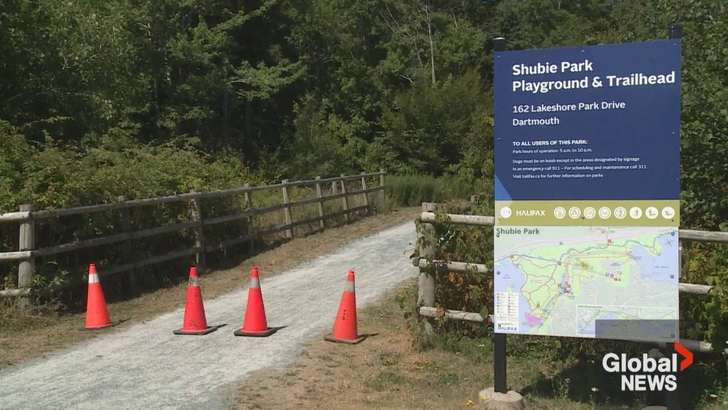
[Retired Canadian veteran Jeff] Evely, with the help of some conservative/libertarian-ish legal organizations, plans to challenge the woods ban in court as a violation of the Canadian Charter of Rights and Freedoms. This is not a popular position here in Nova Scotia (in online discussions, the phrases “Maple MAGA” and the venerable “American-style” come up a lot) and I am not sure he’ll be successful.
But, honestly, I give him credit for trying. In fact, I’d argue his Charter challenge is win-win for everyone in Nova Scotia, whether one supports, opposes or remains indifferent to the policy.
That’s not despite the pressing emergency posed by the forest fire threat, but because of it.
When we’re faced with a crisis, that’s precisely when governments are tempted to seize as much power and authority as possible – and, more importantly, when the public is more inclined to go along with it.
Hence, Trudeau I imposing War Measures Act provisions during the 1970 October crisis, the PATRIOT Act debate after 9/11, COVID-19 restrictions during the pandemic, Trudeau II using the Emergencies Act when the “Freedom Convoy” set up shop in downtown Ottawa, and now Premier Houston (whom I support, despite some misgivings about this issue) using sweeping measures to tramp down the forest fire risk.
And sometimes such powers are justified under the circumstances. Even self-professed libertarians will admit as such when the emergency is something they’re personally worried about, and when a leader from the “good” team is in power.1
But they aren’t always justified. And governments definitely can’t be trusted to handle such power responsibly the longer the “emergency” goes on.
- The rise of Trump has allowed many “libertarians” to reveal themselves as authoritarians, but that’s for another post.
August 18, 2025
Canada’s state-subsidized media now seem to see their job as pro-government PR
At The Rewrite, Peter Menzies considers the state of Canadian media in how they reported on the Maritime provinces’ draconian policies during the ongoing wildfire season:

Screencaptured image of one of the August 2025 wildfires in the Maritimes from Global News via The Rewrite
There will always be conflicts between collective rights and individual liberties. One is valuable in ensuring there is order in society, which is important. The other is necessary to maintain freedom, which lots of people live without but is nevertheless desirable. When there’s too much freedom, people look for politicians who will restore order. When there is too much order, people rebel and demand freedom (see everything from the French Revolution to the Freedom Convoy).
Traditionally, those inclined to the order side if the ledger have been viewed as conservatives while “liberals” have led the fight for individual freedom manifest in the civil rights movement, the emancipation and advancement of women, freedom of speech, etc. that are now viewed as fundamental to the maintenance of a modern, liberal democracy.
But as Pete Townsend wrote a little more than half a century ago, the parting on the left is now the parting on the right (and the beards have all grown longer overnight). Journalists tend to lean left, which means their traditional opposition to the imposition of order has been replaced by a collectivist tendency to sympathize with those imposing it. It is left to the newsroom minorities on the right to carry the torch for individual liberties.
To wit, this CBC story on Nova Scotia’s wild fire-induced ban — enforced with a $25,000 fine until Oct. 15 — on walking anywhere in the woods was oblivious to the impact on personal freedom. Never crossed their minds. When the issue was raised on social media, Twitter journos took up the cause. Stephen Maher dismissed individual liberty concerns as fringe views and maintained that the restrictions could be justified as “reasonable” limitations of Charter rights. While the Globe and Mail‘s editorial board called the Nova Scotia move “draconian”, Globe columnist Andrew Coyne nevertheless wondered “How the hell did the right to walk in the woods of Nova Scotia during a forest fire emergency get elevated into the right’s latest cultural obsession?”
It was left to commentators such as Marco Navarro-Genie to point out the intellectual flaccidity fueling parts of the collectivist argument when New Brunswick followed Nova Scotia’s lead and NB Premier Susan Holt said this:
Me going for a walk in the woods is gonna cause a fire. I can understand why people, uh, think that that’s, that’s. That’s ridiculous. But the reality is, it’s not that you might cause a fire, it’s that if you’re out there walking in the woods and you break your leg, we’re not gonna come and get you because we have emergency responders that are out focused on a fire that is, uh, threatening the lives of New Brunswickers.
That, believe it or not, was a good enough explanation for the collectivist thinking in most mainstream newsrooms.
If journalism is to be useful in defending democracy, those involved in it need to be intellectually equipped to understand the stakes. And their first instinct must be to treat the suppression of liberty as a serious issue whenever the powerful indulge in it at the expense of the powerless. That doesn’t mean liberty should always trump order (traffic lights are eminently reasonable). But it does mean that journos should demand that politicians justify their actions rather than simply helping them explain them to the Great Unwashed. To do otherwise is to fail.
August 17, 2025
To replace a people, first you need to induce guilt and self-hate
On his Substack, Frank Furedi discusses just how negatively the British establishment views the national flag and those uncultured boors who display it:
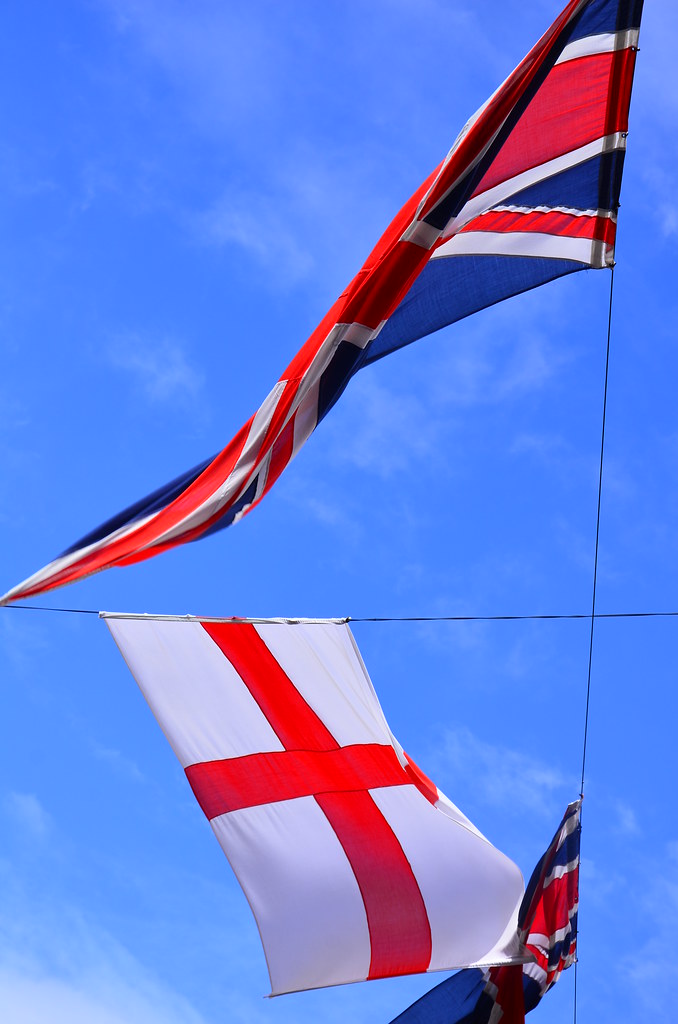
“Union Jacks and crosses of St George” by Ben Sutherland is licensed under CC BY 2.0 
 .
.
First a confession. I am not a serial flag-waver. In fact, one of the features of British history that I always appreciate is that its people possessed so much confidence about itself that it did not see the need for ostentatious displays of patriotism and flag waving. However, today matters are different. The nation’s cultural and political elites regard the Union Jack and the St George’s Cross — the flag of England — with embarrassment and studied contempt. Today many British institutions would rather fly the Palestinian flag or the LGBTQ+ or of Ukraine than flags that bear the nation’s symbols. Outwardly pride in Britain is in danger of being displaced by the sentiment of self-loathing.
Foreign observers are often surprised by the relative absence of Britain’s flag in public spaces. As one such observer noted recently, in Oxford Pride flags are outnumbered the Union Jack “by at least fifty to one”. He noted that the “next day in London, I saw Pride flags all about, with the Union Jack reserved for tourist sites like the Tower of London, which also sported Pride flags”.
In fact, the British Establishment’s reaction towards England’s flag is often communicated through the sentiment of ridicule and hatred. This sentiment has been embraced by local councils, particularly ones that are under the influence of Labour and the Lib Dems. Many of them feel entitled to prevent these flags from being displayed. Most recently the Birmingham’s Labour dominated council has ordered the removal of Union and St George’s flags from lamp posts in this city. The Council announced its decision to remove the flag on the ground that they put the lives of pedestrians and motorists “at risk” despite being up to 25ft off the ground! Needless to say, the Council applies a different standard of judgment when it comes flying the Palestinian flag, which are flown all over the City. Presumably this flag does not constitute a danger to motorists and pedestrians.
In Birmingham, Britain’s second largest city flying the flag of the nation is regarded by local officialdom as a risk to safety.
The British Establishment feels contempt towards not only Britain’s flags but also towards the people who enthusiastically identify with them with patriotic pride. An incident involving Emily Thornberry, Labour MP for Islington South, in November 2014 captures well the contempt that significant sections of the British political class have towards the symbolic displays of patriotism. During a by-election campaign in Rochester, she posted a photo of a house displaying three St George’s flags, with a white van parked outside, and accompanied it with the arch caption, “Image from #Rochester”. The implication of her post was that those who decorated their house with the flags of England were a legitimate target of disdain. Since they were obviously morally inferior to her superior kind there was no need for a caption explaining this on her post.
Millennial Woes discusses how the contempt of the elites for the British people is leading to increasing possibility of civil unrest … or worse:
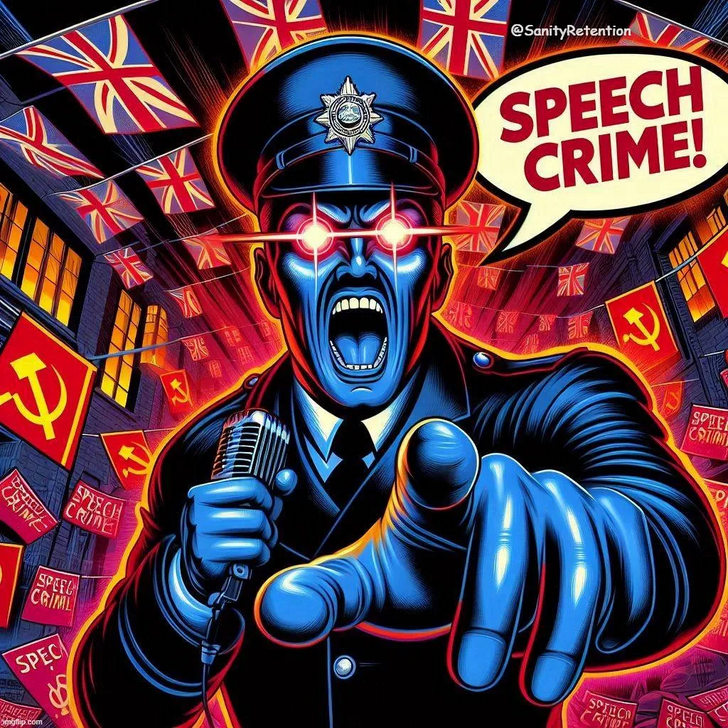
The short answer as to “why?” is that, even in mid 2025 when many people are sensing a mood developing, the government is still doing all the things that are bringing that mood about. They have no reverse gear. Despite their rhetoric, they are not reducing immigration and are certainly not doing mass deportation. In addition we have learned that, for years, they have been covertly propagandising us. Meantime the hate speech laws which muzzle us are still in force and being strengthened. Recently, the Online Safety Act came into force and the very next day numerous internet platforms had to start censoring content. We can literally see our oppression increasing in real-time. And even now, they want more. Always, we feel the government trying to stop us talking about its abuse of us. (Even as I type these words, I am aware that they could get the police raiding my home and seizing my devices.)
Image from Millennial Woes
The same is true in the media. This morning I heard that the BBC are making a high-profile drama about 11th Century Britain in which a key historical figure will be played by a Black actor. Our news media is still biased in favour of mass immigration at any cost. Adverts are still full of black-man-white-woman couples. It is relentless.
In business, White people are handicapped by preferential treatment for non-whites in employment, business loans and career opportunities. A few days ago I got an advert on YouTube featuring a business consultant woman who defiantly said “at the end of the day, diversity is the key to success”. Middle-class White people habitually work against each other and their group interests, causing personal failure and burning resentment for many of their ethnic kin.
It doesn’t actually matter whether the people who perpetuate all of this truly “believe” in it. What matters is that they are prepared to behave as if they do. The incentives have taken on a life of their own, become self-perpetuating, making alternatives almost illegal and certainly a guarantor of “social death” and “professional death”. Even with all the evidence that diversity is bad, nobody in the professional class will dare to speak against it because, even now, that would be the end of their career. And so the poisoning continues.
In short, I feel that my country’s mainstream is working constantly against my ethnic group surviving. Furthermore I see no end in sight for this ethnic sabotage.
And many other people think the same – more and more all the time, in fact. This is why they are getting ever more angry.
Among young people there are more reasons still, economic pressures which mean they can’t get on the property ladder and build the security to start a family. That is immensely frustrating for a lot of energetic young adults, and they haven’t got (haven’t been able to get) much to lose. When a society doesn’t facilitate this most basic desire in people, it should expect upheaval.
However, against this backdrop of oppression, dysfunction and madness, the main catalyst for civil unrest will be something much more concrete: refugees sexually assaulting White women and children. Such crimes are now occurring every day. Unfortunately, there is no reason why they will lessen in frequency. (I will not endanger myself further by explaining why. Everyone knows.)
And it is the fact that, indeed, “everyone knows” which makes civil unrest inevitable. It isn’t just spergs, theorycels, doomers, basement-dwellers and politics or race science obsessives any more; it’s the apolitical working-class who just want a decent chance at life. When they believe their own government is denying them that, it is inevitable that they will “rise up”. It is only a question of when, where, how and how many.
It has been pointed out that, during covid, the public didn’t “rise up”. But I say this was because, despite the restrictions and the perversity of that situation, throughout it people were still comfortable. Most importantly, they didn’t feel their children were in danger. That is the key thing. Dangers that never attended raising a child in Britain thirty years ago are now ubiquitous, even if you live in a nice middle-class town.
Update, 18 August: Welcome, visitors from Instapundit. Please do have a look around at other posts you may find of interest. I send out a daily summary of posts here through my Substack – https://substack.com/@nicholasrusson that you can subscribe to if you’d like to be informed of new posts in the future.
August 16, 2025
This is just crazy enough to work …
Disclaimer: I’m not an American and I don’t know the details of the US immigration system, but from what I’ve read elsewhere, Copernican‘s suggestion has a lot of merit:
I can’t be the only one sick of H1Bs destroying the western labor market, particularly in tech, but across the board. Out-of-work tech workers further compress the labor market in other areas. This problem is not unique to the United States, but I understand the laws of the US better, so I’ll be arguing from that perspective.
I know it. Walt Bismarck has a whole organization dedicated to trying to find reasonable employment by job-stacking. A few new and interesting resources have appeared, dedicated to screwing with these companies that open the floodgates to a horde of foreign software engineers. Seven-eleven clerks, and SAAR YOU MUST REDEEMs, that can crash our software, our ships, and our interstate semi-trucks for us.
Fortunately, there’s something we can do to fight back.
[…]
Well, while the government doesn’t seem intent on doing anything about it, the Millennials and Zoomers that have been fucked-over appear to finally have enough cultural weight to start pushing back. Here’s the thing about hiring H1B workers: doing so requires that the company demonstrate that no American Citizens can fulfill the role. That demonstration usually takes the form of a listing in a newspaper with 500 readers, the back-end of a website with black text on a black background, or something similar. They don’t want Americans to apply for these jobs; they want to successfully demonstrate that no Americans even applied.
So they make the application process nearly impossible.
Usually, the way this is done is that when an H1B is hired, they are permitted to remain in the country for up to 6 years (2 renewals of 2 years). Once that’s completed, either the H1B worker is forced to return to where they came from, or the job must be re-posted for 2 weeks for a potential American worker. If no American worker applies (because they didn’t see it because it was posted in a hidden corern of the website or a newspaper with no readers), then the H1B may be sponsored for perminent US residency.
What was clearly once a method for gaining the Best and Brightest as potential employees in the United States has become a system of exploitation. H1Bs are underpaid, undervalued, and often booted from the country, so there’s no impetus for them to assimilate. It’s a mess all the way around, and the only ones who benefit are stockholders for billion-dollar tech companies.
For the most part, we all know the story.
But … what if during that 2-week posting, a qualified American candidate does apply for the job? Well, then everything goes to shit. The company is legally not allowed to deny an American Candidate that job without opening themselves up to a massive lawsuit and fines, and penalties. If only one American candidate has applied, then the company has to hire that individual … and if they don’t hire the American candidate and then apply for another H1B to fill that slot, the company is in deep shit in a legal sense.
Britain slides further down the free speech rankings
At The Conservative Woman, Bruce Newsome reports on the parlous state of free speech in the United Kingdom:

SINCE 2021, the Index on Censorship has ranked Britain as “partially open” (the third tier). Britain ranks 20th for press freedom (worse than Trinidad and Tobago).
Just released: The US State Department concludes that in 2024, Britain’s human rights “worsened” and the British government is partial in protecting rights and freedoms: “Significant human rights issues included credible reports of serious restrictions on freedom of expression, including enforcement of or threat of criminal or civil laws in order to limit expression; and crimes, violence, or threats of violence motivated by antisemitism. The government sometimes took credible steps to identify and punish officials who committed human rights abuses, but prosecution and punishment for such abuses was inconsistent.”
There are three main categorical freedoms being routinely violated in Britain. In US Constitutional law, they are known as speech, assembly and press. British authorities need a reminder.
Let’s fully understand how this started, more than 25 years ago. In 1999, the Macpherson inquiry into the 1993 murder of Stephen Lawrence recommended that police should record hateful incidents as a matter of intelligence, even if the incidents were not criminal. Quangos led by the College of Policing encouraged police forces to record non-crime hate incidents (NCHIs). Police took it upon themselves to visit the supposed haters, to “correct your thinking“, to intimidate them with warnings of escalation, and even to strong-arm them into taking thought-correction classes with the police, at cost.
The 2006 Racial and Religious Hatred Act criminalises hatred of protected characteristics. It was once sold as a protection against violence, but was soon wielded to criminalise speech.
Police make more than 30 arrests a day (more than 10,000 per year) for online speech and record 66 non-crime hate incidents per day.
Despite several administrations claiming to review and restrict the definitions of hate speech and NCHIs, the definitions remain too vague to prevent police from repressing speech they don’t like. In 2024, the Free Speech Union submitted freedom of information (FoI) requests to all 43 police forces in England and Wales to see if recording went down since a new code of practice of June 2023. The number has actually increased. This year the current government sneakily signalled its appreciation of NCHIs in response to a petition to abolish them.
The latest statute aimed at free speech came into force on July 25: the Online Safety Act. The Bill was marketed as a necessary legislation to protect minors from harmful material such as pornography, self-harm forums, and bullying towards suicide. Like the Hatred Act, the Online Safety Act is being used to suppress politically inconvenient content.
British public authorities (and social media) are suppressing speech and the press selectively with political, religious and ethnic prejudice.
August 13, 2025
“[A]ll those land acknowledgments weren’t just symbolic: they [were] advance notice”
In The Free Press, Rupa Subramanya discusses the — in my opinion, insane — court ruling in British Columbia that invalidated existing land titles in part of the Vancouver area, handing the titles to the properties over to the Cowichan First Nation:

A B.C. Supreme Court judge has granted several First Nations a portion of a 1,846-acre land claim on Lulu Island. B.C. Supreme Court
It turns out that all those land acknowledgments weren’t just symbolic. They may have been advance notice.
When Canada adopted its constitution in 1982, Prime Minister Pierre Trudeau slipped in a ticking time bomb: an explicit recognition of indigenous land rights without constitutional protection for property rights for other Canadians. That constitutional clause has fueled decades of lawsuits from First Nations — Canada’s indigenous people — asserting claims to huge portions of their ancestral territories.
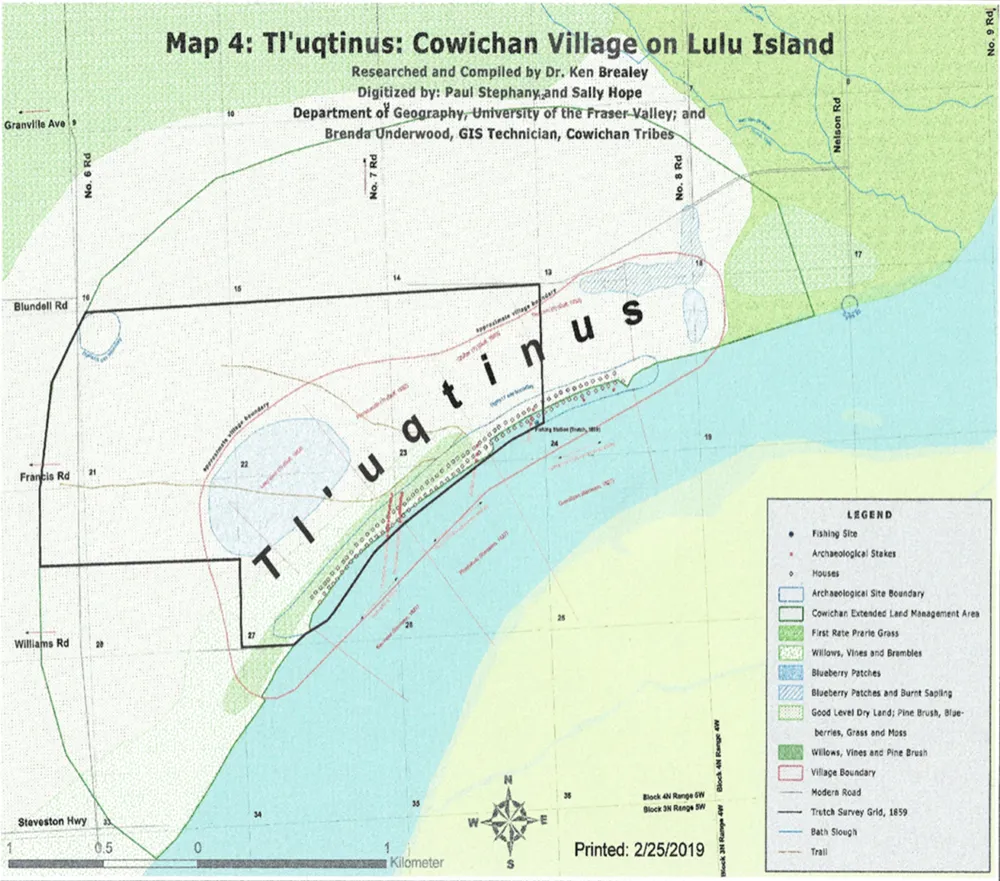
Last Thursday, the British Columbia Supreme Court ruled that the Cowichan Nation holds “Aboriginal title” to about 1,846 acres of land on the south shore of Lulu Island in Richmond, and constitutionally protected rights to fish in the south arm of the Fraser River.
This 275,000-word judgment doesn’t just affect government-owned lands. It also includes private property now owned by third parties. So if you’re a Canadian who is a property owner in British Columbia and not indigenous, your claim on what you think you own has just been superseded by indigenous claims, called a “senior” claim in legalese. Down the road, your land or house could be expropriated by the federal government and turned over to an indigenous group that claims ownership.
That has already happened in Ontario, where three northern Ontario First Nations claimed in a lawsuit last month that a 14-acre public park in Kenora called Anicinabe Park is actually unceded territory and should be returned.
“In constitutional terms, aboriginal rights trump private property rights,” Bruce Pardy, a professor of constitutional law at Queen’s University in Kingston, Ontario, told me. He pointed to last November’s ruling by a New Brunswick judge that the court might be in position to order the government to seize private property and turn it over to an indigenous group making a claim on it.
As Prime Minister Mark Carney tries to fast-track major infrastructure projects — roads, bridges, pipelines, power plants, and more — all part of his plan to boost Canada’s global competitiveness and reduce reliance on the U.S., some of those ambitions might be snarled by indigenous land claims that take years to resolve. The British Columbia case began in 2019 and is considered to be the longest trial in Canadian history.
The day before the Cowichan Nation ruling in British Columbia, a Yukon First Nation announced that it would oppose all new mining claims on its traditional territory while a regional land-use plan is developed. Yukon First Nations leaders said that new claims are “unwelcome” and “unlawful”, and that they plan to challenge the mining industry to protect the land from further industrial activity.
Stefan Labbé in BIV last week:
A B.C. court has handed the Cowichan Tribes and other First Nations title over a chunk of federal and city land in Richmond that for centuries was used as a winter fishing village, before colonial administrators evicted the people who lived there.
The landmark Aug. 7 ruling was handed down after more than 500 days of litigation before the B.C. Supreme Court.
It gives the Cowichan Tribes, the Stz’uminus First Nation, Penelakut Tribe, Halalt First Nation — as well as the Lyackson First Nation in a supporting role — Aboriginal title over the Tribes’ historic Tl’uqtinus village on the southeast side of Lulu Island.
The ruling also gives the First Nations fishing rights at the mouth of the Fraser River.
In a joint statement, the First Nation plaintiffs said: “We raise our hands to the generations of leaders” who fought for the return of the Tl’uqtinus village lands and their fishing rights in the Fraser River.
B.C. Supreme Court Justice Barbara Young suspended her decision for 18 months “to allow for an orderly transition of the lands” in keeping with the principle of reconciliation.
“Now that this multi-year journey has concluded, it is my sincere hope that the parties have the answers they need to return to negotiations and reconcile the outstanding issues,” she wrote.
Jamie Sarkonak in the National Post wrote on Monday:
This case of “land back” in action (Cowichan Tribes v. Canada) casts a shadow over the country’s property system. It jeopardizes the default means of owning land in Canada — the estate in fee simple, where owners have exclusive rights to sell land — wherever Aboriginal title is found to exist.
Aboriginal title is the right of an Indigenous group to use, control and reap benefits from the land. It’s granted to claimant groups that can prove they are descended from the sole occupants of an area at the time the British asserted sovereignty. Unlike regular fee simple ownership, it’s enshrined in Section 35 of the 1982 Constitution and impossible to sell to anyone but the Crown.
The Cowichan claim covered the site of their summer village near the mouth of the Fraser River, where they had established continuous, exclusive seasonal occupancy dating back to European contact in the 1790s.
In 1846, the British Crown asserted sovereignty over that land and the rest of what would become B.C. The following years would see property being surveyed and auctioned off to public and private buyers — but not the Cowichan summer village. Instead, it was set aside in 1860 and continued to be used as a settlement for the group. Colonial officials considered the possibility of making it into a reserve, and took initial steps to do so. After B.C. joined Canada in 1871, however, the summer village was carved into parcels and sold over the years until 1914. Purchasers included private parties (including “well-placed men” in the colony) and even the municipality itself; some of the land purchased privately would eventually be sold back to the Crown. Today, about half of these lots are held by public bodies, with the other half falling under private ownership.
A map shows the Cowichan title lands outlined in black. (B.C. Supreme Court) Photo by B.C. Supreme Court
The question before the B.C. Supreme Court was whether the taking of those village lands was legal to begin with. Justice Barbara Young (a Harper appointee, by the way) concluded it was not.
August 12, 2025
Britain warns online platforms about “overzealous” interpretation of online safety law
“Ben the Layabout” posted a note over at Founding Questions linking to a Telegraph article [archive.ph link] that seems to indicate the British government is demanding that online services both enforce the letter of the law and the spirit … whatever that might mean at any given moment in time:
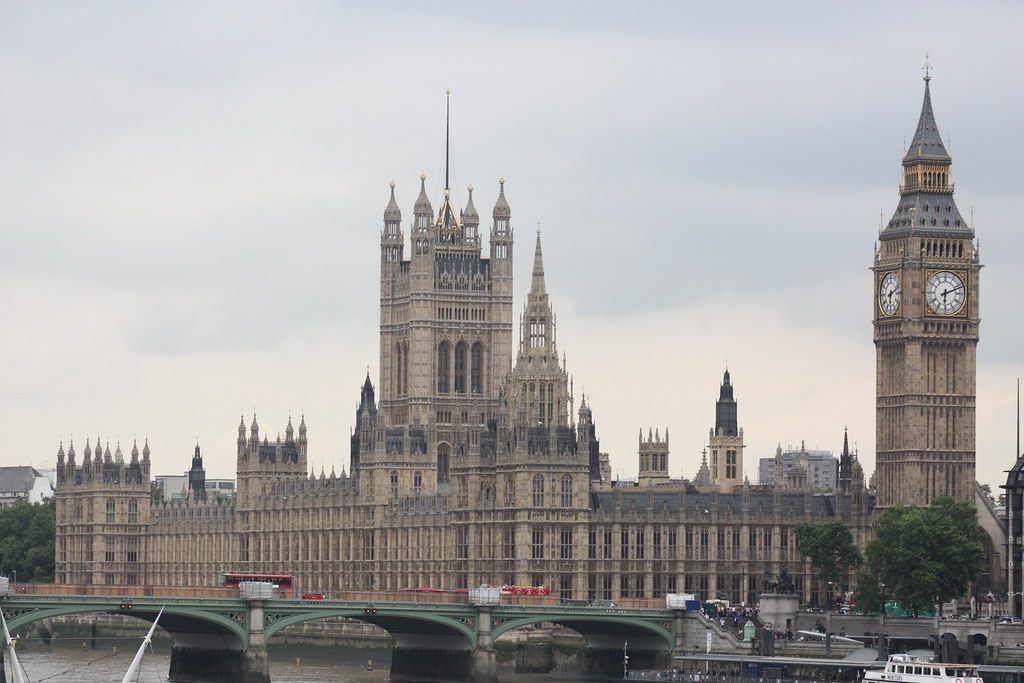
“Palace of Westminster”by michaelhenley is licensed under CC BY-NC-SA 2.0


Social media giants face huge fines for curbing free speech by “overzealous” enforcement of online safety laws.
Ministers have told platforms including Facebook, X, Instagram and TikTok they must not restrict access to posts that express lawfully held views.
The warning, in an apparent change of tone from ministers, comes amid a backlash over websites blocking users from viewing material, including parliamentary debates about grooming gangs.
Campaigners have said that free speech is threatened by the Government’s application of the Online Safety Act, which is meant to protect children from harmful content.
JD Vance, the US vice-president, used a visit to the UK this week to warn ministers against going down the “dark path” of censorship.
Whitehall sources have expressed concern that social media firms, some of which have criticised the law, “have been overzealous” in enforcing it and must be “mindful” of the right to freedom of expression.
The Science Department, which oversees the legislation, told companies they could face fines if they failed to uphold free speech rules.
A spokesman said:
As well as legal duties to keep children safe, the very same law places clear and unequivocal duties on platforms to protect freedom of expression.
Failure to meet either obligation can lead to severe penalties, including fines of up to 10 per cent of global revenue or £18m, whichever is greater.
The Act is not designed to censor political debate and does not require platforms to age gate any content other than those which present the most serious risks to children such as pornography or suicide and self-harm content.
Platforms have had several months to prepare for this law. It is a disservice to their users to hide behind deadlines as an excuse for failing to properly implement it.
So online sites big and small are required to obey the British law, but only as and how the British government wants it enforced or they’ll levy massive punishment. Too lax? Punishment. Too strict? Also punishment. It’s almost as if Britain wants to be cut off from the rest of the internet …
August 11, 2025
Smug Canadian boomer autohagiography rightly antagonizes the under-35s
Fortissax had an argument with one of his readers over a smug, self-congratulating meme about how wonderful Canada was in the 1990s and early 2000s:

What we lived through long before Trudeau was the Shattering, the breakdown of Canada’s social cohesion, driven by left-liberalism with communist characteristics applied to race, ethnicity, sex, and gender, and punitive almost exclusively toward visibly White men. My generation, those millennials born on the cusp of Gen Z, saw post-national Canada take shape not in the comfortable suburban rings of the GTA or the posh boroughs of Outremont and Westmount, but in self-segregated, ghettoised enclaves of immigrants whose parents never integrated and were never required to.
Memes like that are dishonest because they feed a false memory. The 2000s were not normal. Wages were stagnant, housing was already an asset bubble, and immigration was still flooding in under a policy that explicitly forbade assimilation. Brian Mulroney had enshrined multiculturalism into law in 1988. Quebec alone resisted, carving out the right to limit immigration under the 1992 Quebec–Canada Accord. After Chrétien, Stephen Harper brought in three million immigrants, primarily from China, India, and the Philippines in that order.
The Don Cherry conservatives of that era were Bush lite. They were rootless, cut off from their history, their identities manufactured from the top down since the days of Lester B. Pearson. They conserved nothing. For Canadian youth, it was the dawn of a civic religion of wokeness, totalitarian self-policing by striver peers, and the quiet coercion of every institution. My memories of that decade are of constant assault — mental, physical, spiritual — from leftists in power, from encroaching foreigners, and from the cowardice of conservatives.
Your 2000s might have been great. For us, they were communist struggle sessions. In 2009 we were pulled from class to watch the inauguration of Barack Obama, a foreign president, as a historic moment for civil rights. Our schools excluded us while granting space to every group under the sun: LGBT safe spaces and cultural clubs for Italians, Jamaicans, Jews, Indians, Indigenous, Balkaners, Greeks, Slavs, Portuguese, Quebecois, Iroquois, Pakistanis — every culture celebrated except our own. Anglo-Quebecers and Anglo-Canadians got nothing but an Irish club, closely monitored for “white supremacy” and “racism” by the HR grandmas of the gyno-gerontocracy of English Montreal. Students self-segregated, sitting at different cafeteria tables and smoking at different bus shelters. At Vanier, Dawson, and John Abbott College, these divisions were institutionalised. I remember walking into the atrium of Dawson, my first post-secondary experience, greeted by a wigger rolling a joint while a Jamaican beatboxed to Soulja Boy.
We became amateur anthropologists out of necessity, forced to navigate a nationwide cosmopolitan experiment from birth. We learned the distinctions between squabbling southeastern Europeans of the former Yugoslavia, and we did not care if Kosovo was Serbia or whether Romanians and Albanians were Slavic, they all acted the same way. We learned the divides within South Asia, the rivalries between Hindutva and Khalistani, the differences between a Punjabi, a Gujarati, a Telugu, a Pakistani, a Hong Konger, a mainlander, and a Taiwanese. We know the shades of Caribbean identity, the factions of the Middle East, and the intricacies of North African identity. We should never have needed to know these things, but we do.
For us, childhood in this cesspit was the seedbed of radicalism. We never knew an era when contact with foreigners was limited to sampling food at Loblaws. All we know is being surrounded by those who hate us, governed by a state that wants to erase us, with no healthcare, no homes, no jobs that are not contested by foreigners, and no money to start families.
Stalin’s Death: The Day the USSR Changed Forever! – W2W 39
TimeGhost History
Published 10 Aug 2025March 1953: Stalin’s sudden death triggers a whirlwind of conspiracies, paranoia, and a deadly battle for control inside the Kremlin. As Beria, Khrushchev, and the Soviet elite scramble for power, the fate of the world’s largest superpower hangs in the balance. Was Stalin murdered by his inner circle, or did his own regime consume him? Discover the truth behind the downfall, the rise of Khrushchev, and the birth of the KGB in the Cold War’s most dramatic turning point.
(more…)


