Quotulatiousness

April 15, 2022

Vladimir Putin as real-life Bond villain

Filed under: Books, Military, Russia — Tags: , , , , — Nicholas @ 03:00

In The Critic, Peter Caddick-Adams makes a case for Vladimir Putin being all of Ian Fleming’s fictional 007 adversaries brought to life in a single person:

I am certain Vladimir Putin has a giant coloured globe, or maybe a huge map set in a wall, which at the tap of a button, silently slides in and out of view. In his mind, he will no doubt have experimented with his artist’s palette, of coating many of his geographical neighbours with his favourite shade of bright, bloody crimson.

Talking of sliding panels operated by secret switches, I would be surprised if the Russian leader has not watched all the James Bond movies, if only out of professional interest. He would see, if so, that he is every one of Ian Fleming’s villainous creations — Ernst Stavro Blofeld, Le Chiffre, Sir Hugo Drax, Auric Goldfinger, Emilio Largo, Dr Julius No and Francisco Scaramanga — all rolled into one person.

Presiding over the robber state that is the Russian Federation, Putin is at once militarily and politically all-powerful, but also the master international criminal. At a 2017 US Senate Judiciary Hearing, the Putin arch-critic and American financier, Bill Browder, estimated the Russian had “accumulated $200 billion of ill-gotten gains”, describing him as “one of the richest men in the world, if not the richest”.

It was the Second World War espionage boss, Commander Ian Fleming, who brought not only his world famous spy to life, but also the lairs of James Bond’s opponents. Fleming had inspected many of the Nazi underground factories and subterranean rocket bases immediately after the defeat of the Fatherland in 1945. In print, they appeared as his villains’ secret headquarters.

Fleming’s novels were in turn translated into celluloid by the talent of set designer Ken Adam. He worked on seven Bond movies, beginning with Dr No in 1962, via You Only Live Twice, and Diamonds Are Forever, and devised the circular War Room in Stanley Kubrick’s Dr Strangelove of 1964. If you don’t remember the scene, you’ll recall its most poignant line: “Please, gentlemen, you can’t fight in here. This is the War Room.”

Adam was also working with inside knowledge, for he was born in Berlin, to Jewish parents, who fled to Britain in 1934. On the outbreak of war, Adam enlisted into a British army engineering unit composed of Axis nationals, designing bomb shelters. He later joined the Royal Air Force as a fighter pilot, where he was known as “Heiney the Tank Buster”. After VE-Day, Adam toured the concrete structures and German bases he had attacked. “I flew fighters in the war, made some great movies and was Knighted by the Queen [in 2003]. Not bad for a Jewish lad from Berlin,” he told me in an interview.


A screen capture from Alexei Navalny’s YouTube video on Vladimir Putin’s Black Sea palace.

In a bizarre case of real life imitating fiction, it was Alexei Navalny, now rotting in Russia’s harshest penal colony for his exposé, who discovered Putin’s covert lair. Sprawling on the Black Sea coast, it might have been designed by Ken Adam. The Russian leader’s $1.9 billion palace comes with a below-ground grand salon, hollowed-out of the cliff-face, lit by a gigantic panoramic window, that, at the touch of another button, can be retracted to let in the sea breezes. Access to the beach or the rest of the complex is by tunnels carved into the rock.

Its existence is naturally denied by the Kremlin, but the site, at Cape Idokopas, near the village of Praskoveevka, is equipped with two helipads, and reputedly 39 times the size of Monaco. I make the basic assumption that scores of designer-stubbled security muscle, dressed in black, toting sub-machine-guns, with a shoot-on-sight brief, will be prowling about.

April 14, 2022

“This might just be the dumbest, most ill-advised and lethally consequential thing Biden has said since taking office”

Filed under: Europe, Government, Military, Politics, Russia, USA — Tags: , , — Nicholas @ 05:00

Brendan O’Neill on Joe Biden’s most recent maybe official/maybe “Joe being Joe” moment on the Russia-Ukraine conflict:

Once considered a gaffe, Biden doing this again might have been a good move.

Bumbling Joe Biden isn’t funny anymore. It might be amusing when your crazy uncle blurts out something unexpected at a family dinner. But when the most powerful man on Earth does it? Not so much. Yesterday, “in passing”, as the Guardian put it, President Biden referred to Russia’s war in Ukraine as a “genocide”. This might just be the dumbest, most ill-advised and lethally consequential thing Biden has said since taking office.

The circumstances in which he uttered the g-word, in which he made the most serious accusation you can make against a nation state, were bizarre. He was in Iowa, at a public discussion on the use of ethanol in petrol, of all things. Then – “in passing” – he said: “Your family budget, your ability to fill up your tank, none of it should hinge on whether a dictator declares war and commits genocide half a world away.” And so did an announcement about the lifting of restrictions on ethanol use in order to reduce the price of fuel turn – “in passing” – into the United States of America accusing the Russian Federation of committing the most heinous crime known to man.

It is unclear whether accusing Putin of genocide is White House policy now, or if Biden was just running his mumbling mouth, as is his wont. Pressed by reporters as to whether he really meant to say “genocide”, Biden said: “Yes, I called it genocide because it’s become clearer and clearer that Putin is just trying to wipe out the idea of even being Ukrainian.” Not surprisingly, other world leaders were a tad alarmed. French president Emmanuel Macron rebuked Biden for his “verbal escalations”. We need to be “careful” with our terminology, he said, rightly.

It remains to be seen whether this is the White House consciously upping the ante or just Biden having another senior moment. He has form, after all. At the end of March – again in passing – he called for regime change in Russia. “This man cannot remain in power”, he said about Putin in an “off the cuff” remark at the end of March. Most of us make jokes off the cuff or express exasperation off the cuff – Biden expands America’s war aims off the cuff. The White House swiftly walked back this unscripted declaration of regime-change hostilities. Before that, Biden made a blunder that suggested US troops had been deployed to Ukraine. The White House walked that back, too. “[We] are not sending US troops to Ukraine”, a spokesman clarified.

Maybe the White House will walk back the “genocide” thing as well. Though it might be too late. The word’s out there now. And not just from the mouths of those irritating liberal commentators and laptop bombardiers who think every war is a genocide (except the ones they support, of course, like Iraq, Afghanistan, Libya), but from the mouth of the American president himself. Make no mistake – this is incredibly dangerous war talk. It transforms Ukraine from an undoubtedly bloody conflict that has global implications into a possible site of further external intervention and fighting. Indeed, the United Nations’ policy on “The Responsibility to Protect” expressly obliges the Security Council to take action – ideally diplomatic action, but if that fails, then military action – in order to “protect populations from genocide”. If Russia is committing genocide, then the US and its allies have a responsibility to stop it somehow. This is the dire, destabilising situation Biden has either blunderingly or consciously pushed the world towards.

April 10, 2022

Mussolini is Tired of War – WW2 – 189 – April 9th , 1943

World War Two
Published 9 Apr 2022

Adolf Hitler meets with Benito Mussolini to hopefully restore his flagging morale and convince him that the Axis can hold out in North Africa, but the situation there grows more precarious and this week there the Allies advancing from the west and the east link up for the first time. The Axis are also holding out in the Caucasus, as new Soviet attacks to take Krymskaya begin.
(more…)

April 8, 2022

Napoleon Conquers A Heap of Ashes – Battle of Smolensk 1812

Filed under: Europe, France, History, Military, Russia — Tags: , , — Nicholas @ 04:00

Real Time History
Published 7 Apr 2022

Sign up at https://curiositystream.com/realtimeh… and get Nebula bundled in.

Smolensk is an important symbolic city to the Russians in 1812, for Napoleon it’s a strategic objective he wants to conquer to improve is deteriorating supply situation. The Battle of Smolensk leads to an inferno in the city, it gets virtually destroyed and nearly all residents flee.

» SUPPORT US ON PATREON
https://patreon.com/realtimehistory

» THANK YOU TO OUR CO-PRODUCERS
John Ozment, James Darcangelo, Jacob Carter Landt, Thomas Brendan, Kurt Gillies, Scott Deederly, John Belland, Adam Smith, Taylor Allen, Rustem Sharipov, Christoph Wolf, Simen Røste, Marcus Bondura, Ramon Rijkhoek, Theodore Patrick Shannon, Philip Schoffman, Avi Woolf,

» SOURCES
Der Feldzug der Österreicher gegen Rußland im Jahre 1812. Aus offiziellen Quellen von Ludwig Freiherrn von Welden, Wien 1870.
Vojtêch Kessler: Der österreichische Pyrrhos – Der Feldzug des österreichischen Auxiliar-Korps im Jahre 1812 in den Briefen des Oberbefehlshabers Karl Fürst von Schwarzenberg an seine Frau.
Boudon, Jacques-Olivier. Napoléon et la campagne de Russie en 1812. 2021.
Holzhausen, Paul. Die Deutschen in Russland 1812. Leben und Leiden auf der Moskauer Heerfahrt. Berlin 1912.
Lieven, Dominic. Russia Against Napoleon. 2010.
Rey, Marie-Pierre. L’effroyable tragédie: une nouvelle histoire de la campagne de Russie. 2012.
Zamoyski, Adam. 1812: Napoleon’s Fatal March on Moscow. 2005.

» OUR STORE
Website: https://realtimehistory.net

»CREDITS
Presented by: Jesse Alexander
Written by: Jesse Alexander
Director: Toni Steller & Florian Wittig
Director of Photography: Toni Steller
Sound: Above Zero
Editing: Toni Steller
Motion Design: Toni Steller
Mixing, Mastering & Sound Design: http://above-zero.com
Digital Maps: Canadian Research and Mapping Association (CRMA)
Research by: Jesse Alexander
Fact checking: Florian Wittig

Channel Design: Simon Buckmaster

Contains licensed material by getty images
Maps: MapTiler/OpenStreetMap Contributors & GEOlayers3
All rights reserved – Real Time History GmbH 2022

April 4, 2022

The Congress of Vienna (Part 2) (1814 to 1815)

Historia Civilis
Published 2 Apr 2022

Patreon | http://historiacivilis.com/patreon
Donate | http://historiacivilis.com/donate
Merch | historiacivilis.com/merch
Mailing List | http://historiacivilis.com/mailinglist
Twitter | http://historiacivilis.com/twitter
Website | http://historiacivilis.com

Sources:
Eric Hobsbawm, The Age of Revolution, 1789-1848
Adam Zamoyski, Rites of Peace: The Fall of Napoleon and the Congress of Vienna
Richard J. Evans, The Pursuit of Power: Europe 1815-1914
Wolfram Siemann, Metternich: Strategist and Visionary
A. Wess Mitchell, The Grand Strategy of the Habsburg Empire
Robert K. Massie, Dreadnought: Britain, Germany, and the Coming of the Great War
Adam Hochschild, Bury the Chains: Prophets and Rebels in the Fight to Free an Empire’s Slaves
Harry Dickinson, Public Opinion and the Abolition of the Slave Trade | https://bit.ly/2XRMLJC
The History of Parliament: The 5th Parliament of the United Kingdom | https://www.historyofparliamentonline…

Music:
“Past,” by Nctrnm
“While She Sleeps (Morning Edit),” by The Lights Galaxia
“Mell’s Parade,” by Broke For Free
“Day Bird,” by Broke For Free
“Thomas Neutrality,” by Enrique Molano
“Infados,” by Kevin MacLeod
“The House Glows (With Almost No Help),” by Chris Zabriskie
“Hallon,” by Christian Bjoerklund

April 3, 2022

Patton Has a Plan, and it’s Bad – WW2 – 188 – April 2, 1943

World War Two
Published 2 Apr 2022

American attacks in Tunisia meet with local disaster, but in general the Axis forces are withdrawing there. The Allies learn about the German rocketry plans this week, and both sides are making plans for action in the Pacific.
(more…)

April 1, 2022

Denazify the World. Resist Now. – WAH 055 – March 1943, Pt. 2

Filed under: Europe, France, Germany, Greece, History, Italy, Military, Russia, WW2 — Tags: , , , , , — Nicholas @ 06:00

World War Two
Published 31 Mar 2022

The Nazis and the Soviets discover each other’s atrocities, while resistance is on the rise, and a half-dormant conspiracy against Hitler comes back to life to take his life.
(more…)

Russia’s Fighting Retreat 1812 – Battles of Mogilev and Vitebsk

Filed under: Europe, France, History, Military, Russia — Tags: , , , — Nicholas @ 04:00

Real Time History
Published 31 Mar 2022

Support our Napoleon Series on Patreon: https://patreon.com/realtimehistory

The two Russian western armies are trying to join up to mount a defense against Napoleon’s invasion of Russia. But the speed of the French advance, particularly Marshal Davout and Marshal Murat, are putting pressure on the Russians. And so late July sees a series of battles at Mogilev/Saltanovka and Vitebsk/Ostrovno. Meanwhile the Russian 3rd Observation Army is dangerously close to the border of the Duchy of Warsaw — the Austrians under Schwarzenberg and Reynier’s Corps need to stand and fight around Kobryn.

» THANK YOU TO OUR CO-PRODUCERS
John Ozment, James Darcangelo, Jacob Carter Landt, Thomas Brendan, Kurt Gillies, Scott Deederly, John Belland, Adam Smith, Taylor Allen, Rustem Sharipov, Christoph Wolf, Simen Røste, Marcus Bondura, Ramon Rijkhoek, Theodore Patrick Shannon, Philip Schoffman, Avi Woolf,

» SOURCES
Becker, Carl August. Tagebuch 28.03.1812-21.09.1812 (Beiträge zur sächsischen Militärgeschichte zwischen 1793 und 1815). Ed Joerg Titze, 2019.
Boudon, Jacques-Olivier. Napoléon et la campagne de Russie en 1812. 2021.
Durova, Nadezhda. Cavalry Maiden. Journals of a Female Russian Officer in the Napoleonic Wars. 1990.
Holzhausen, Paul. Die Deutschen in Russland 1812. Leben und Leiden auf der Moskauer Heerfahrt. Berlin 1912.
Lieven, Dominic. Russia Against Napoleon. 2010.
Rey, Marie-Pierre. L’effroyable tragédie: une nouvelle histoire de la campagne de Russie. 2012.
Zamoyski, Adam. 1812: Napoleon’s Fatal March on Moscow. 2005.
[Additional Russian resources listed on the YouTube description]

» OUR STORE
Website: https://realtimehistory.net

»CREDITS
Presented by: Jesse Alexander
Written by: Jesse Alexander
Director: Toni Steller & Florian Wittig
Director of Photography: Toni Steller
Sound: Above Zero
Editing: Toni Steller
Motion Design: Toni Steller
Mixing, Mastering & Sound Design: http://above-zero.com
Digital Maps: Canadian Research and Mapping Association (CRMA)
Research by: Jesse Alexander, Sofia Shiorogova
Fact checking: Florian Wittig

Channel Design: Simon Buckmaster

Contains licensed material by getty images
Maps: MapTiler/OpenStreetMap Contributors & GEOlayers3
All rights reserved – Real Time History GmbH 2022

Sarah Hoyt on the “Irrational Regime Hypothesis”

Sarah Hoyt on finding ways to make sense of the irrational-to-us actions of western governments since the start of the Wuhan Coronavirus pandemic:

I have the same need to make sense, to see “reason” out of things that don’t seem to. And I can’t stand it when something doesn’t FIT. If you want to drive me insane, you do something completely out of character for which there is no rational explanation. I’ll obsess over it for years, whether it’s in my favor or not.

This is why I knew the covidiocy was a sham of some sort. Not only weren’t the homeless dying like flies; the third world, despite some reports, also weren’t dying like flies. And the big cities in the US were encouraging homeless to crowd and congregate while everyone else was locked up. It didn’t add, unless the whole thing were a sham perpetrated by several groups for several related goals. (A prospiracy more than a conspiracy. I could expound on the cross-purpose goals I’ve uncovered so far, but that’s another post, right?)

In the same way, this whole “We really are in a shadow war with Putin! The cold war is back! Putin is crazy! He’s invading the Ukraine for funsies! Putin is invading because we crowded him! Biolabs in Ukraine!!!!!!” But at the same time — to give Trump his due — Putin, in this head to head (supposed) context, hasn’t dumped the contents of Biden’s laptop (of course they have it. I mean our FBI has it, and they are rapidly approaching status of enemy, domestic) into our national discourse. (I mean, it would complete disorganize us, and lose us whatever international prestige we still have, such as it is.) Or Putin could have dumped all the other Kompromat I’m sure they have on the not-very-bright and not particularly stealthy Biden crime family. Why hasn’t he?

And Biden, despite his continuous gaffes that take us to the brink of nuclear exchange, at least in theory, is STILL USING PUTIN TO BROKER THE SUICIDAL IRAN DEAL. And hasn’t opened up the Keystone pipeline and started authorizing drilling, which would sink Putin and possibly save the Democratic party. (Yes, Greens, but seriously. It’s either a war and an emergency or it’s not.)

This morning, this thread hit my mailbox from three separate sources (and if you’re not following Trent Telenko on Twitter, create a burner account to do so. I’m going to need to do it, since I refuse to log in to my real account (I just use it to echo my blogs) and Twitter is getting pushy about logging in. It’s worth dipping a toe into the sewer for the man’s insights, honest).

You should go and read the whole thing, but until you do, let me quote a bit, so you get what we’re talking about. Again, the thread is here:

    Alright, this is the promised thread🧵explaining the “Irrational Regime Hypothesis.”
    This is a national/institutional behavior template.
    Warning: once you see this template. You cannot unsee it.

    The basic concept is that for certain unstable regimes (or even stable ones with no effective means of resolving internal disputes peacefully, particularly the succession of power) domestic power games are far more important than anything foreign, and that foreigners are

    … only symbols to use in domestic factional fights.
    The need to show ideological purity & resolve – “virtue signaling” in modern terms – as a means of achieving power inside the ruling in-group becomes more important than objective reality
    Only the internal power matters

    … as outside reality is merely a symbol to be used in the internal power game.

    The ruling Imperial Japanese military faction of 1931 – 1945 was a classic example of this irrational regime hypothesis.

    Trent Telenko, on twitter

And suddenly the back of my mind clicked. Not conspiracy, which is hard on this scale — Not kabuki which didn’t feel quite right — but like the Covidiocy? Prospiracy. “We’re all going this way because we think it fits our goals.”

Now I want you to consider that it’s not one, but two irrational regimes, we’re dealing with.

This has been bothering the heck out of me, because it smells like they’re cooperating, only that’s not QUITE the right pattern.

None of this makes sense, unless you have TWO irrational regimes (Ours and Russia’s. China is too, but it’s another ball of wax. China doesn’t really believe other nations are real, anyway. They’re just Barbarians and China is all-under-heaven, so this is all much of a muchness on that front.) that are using each other as scarecrows to quiet the opposition at home.

March 30, 2022

Combat Boots Save Lives – WW2 Special

Filed under: Britain, Germany, History, Japan, Military, Russia, USA, WW2 — Tags: , , , , — Nicholas @ 04:00

World War Two
Published 29 Mar 2022

Boots on the ground! Despite all the mobility provided by tanks, trucks and planes, the infantryman had to rely on his own two feet above all else. To march, run and fight, soldiers needed sturdy and comfortable footwear. Choosing between ankle-boots, service-shoes and jackboots, the warring nations were looking for the perfect combat-boot for their soldiers.
(more…)

“It was as if millions of voices suddenly cried out in cringe …”

Filed under: Books, Europe, History, Media, Politics, Russia, USA — Tags: , , , , , — Nicholas @ 03:00

Ed West on recent events concerning the fighting in Ukraine:

Emperor PALPUTIN
Image by “usernameau” at funnyjunk.com

“Let me make this perfectly clear. Putin is Emperor Palpatine. The Ukrainian people and all those who stand up for democracy around the world and here in America are Rey Skywalker, Jyn Erso, and the Rebel alliance. Pick your side.”

Put like that, I think I’m with Putin.

This tweet, by former George Bush strategist Matthew Dowd, attracted much amusing scorn at the start of the war between Russia and Ukraine. It was as if millions of voices suddenly cried out in cringe …

American political commentary has for some time been dominated by pop culture references, in particular those two great modern fables, Star Wars and Harry Potter, which have replaced the classics as the source of communal knowledge. I’m not convinced that children’s books or films aimed at selling toys, enjoyable though they are, have that much to offer in the way of deep wisdom, compared to more ancient texts; I may be a declinist, but it is not commented on enough that America’s most-praised public intellectual didn’t know who St Augustine was.

These epic children’s stories serve as modern-day myths for a reason, drawing so heavily on older narratives and archetypes. Star Wars creator George Lucas studied anthropology and borrowed heroic narratives from around the world for his story; it also drew on historical folk memories of recent and ancient conflicts, in particular the Second World War, which has become the modern West’s origin story, its epic struggle between God and the Devil.

The most recent Lucas trilogy featured a plucky band of rebels in an existential struggle with a great empire (a story that drew heavily on … previous Star Wars films). In this tale of good and evil there was on one side a band of allies from every race on earth, and on the other a group joined by ethnic descent, a dynamic true to life and seen in countless wars and conquests since the Bronze Age. It’s the story of the Old Testament, the Persian Wars, and of such modern conflicts as the Vietnam War.

Yet of course Star Wars performed a role reversal to suit the sympathies of modern American audiences. For in reality, it is empires which are multi-cultural, and plucky rebels who tend to be linked by blood — whether it was ancient Greeks fighting off a Persian army of Medes, Babylonians, Egyptians and Sumerians, or Vietnamese nationalists in combat with French, Senegalese and North African troops.

So it is today in Ukraine, a rebel nation fighting off conquest by a neighbour 50 times its size. Ukraine’s position on the cultural fault lines of Europe has left it a multicultural inheritance, even after the depredations of Hitler and Stalin. Its heroic president Volodymyr Zelenskyy is a member of a 40,000-strong Jewish population, vastly reduced by the horrors of the early 20th century, but still surviving; indeed for three months in 2019 Ukraine had a Jewish president and prime minister, a first outside of Israel and quite an achievement for a supposedly “Nazi” state. There are also Tartars, although many were cut off by Russia’s annexation of the Crimea, having only been allowed back from their central Asian exile in the 1980s. There are Romanians, and, of course, a substantial Russian minority.

Yet these groups are relatively small in number, and Ukraine still has the composition of a typical European nation-state, built around a dominant ethnic group enjoying a super-majority.

Russia, in contrast, is home to around 50 ethnic groups, including — just the European ethnicities with more than half a million people — the Tatars, Bashkir, Chuvash, Mordvins and Udmurts, the latter known for having the reddest hair in the world (their homeland is an eastern outpost in this red hair map of Europe.)

March 28, 2022

QotD: The evolution of tanks through World War 2

Filed under: Germany, History, Military, Quotations, Russia, Technology, USA, Weapons, WW2 — Tags: , , , — Nicholas @ 01:00

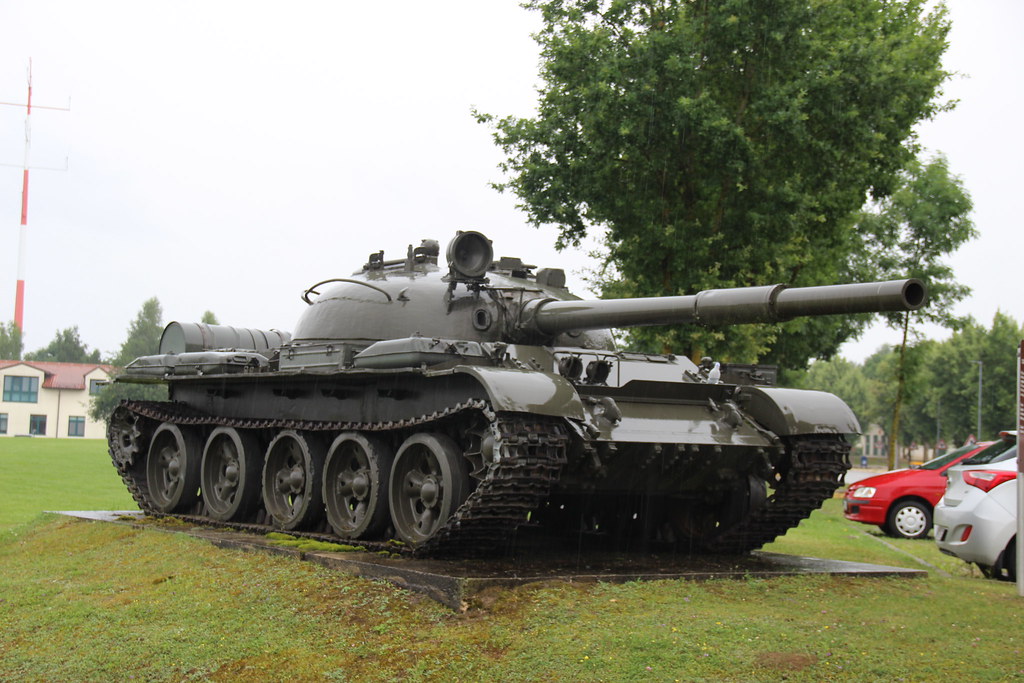
One interesting thing about tank evolution that never gets mentioned in America is just how good the Soviets were at making tanks. The Germans are always assumed to have been the great tank builders, followed by the Americans, but it was the Russians who dominated the field in the tank game. Russian tanks were fast, powerful and easy to operate by their crews. Most important, they were reliable in all weather. The Russians assumed they would be fighting in horrible conditions and built a tank for it.

The Germans, in contrast, made one error after another when it came to tank design and tank building. They were obsessed with coming up with the biggest, most powerful tank, rather than making lots of good enough tanks. The result was lots of innovative designs, but most were failures and there was never enough of them. The Panzer IV was a very good tank with a platform that was flexible, but the Germans kept trying to come up with a super tank, rather than make lots of these. That was a costly error.

The American tank, which was used by the British, was not a great tank, but they were cheap and reliable, which meant there were loads of them. It was also a flexible platform for all sorts of other uses. The Sherman tank was about using the two advantages the Americans had over the Germans. One was more industry and the other was more soldiers. The plan was to beat the Germans with volume. While it would take five Sherman tanks to take out a German tank, that was math that worked in favor of the Americans.

This conflict between the perfect and the good enough showed up in many places during the war. The Germans seemed to look at the whole thing as an engineering project. The first step was to accept the restraints and then solve for the variables. The Russian and American view was always to limit the constraints and thereby increase the number of possible right answers. The Germans had much better human capital, but their opponents always had many more choices. They also had numbers, which counts for a lot.

The Z Man, “Tanking It”, The Z Blog, 2019-03-01.

March 27, 2022

American Army Finally Does Something Right – WW2 – 187 – March 26, 1943

World War Two
Published 26 Mar 2021

The British are attacking the Mareth Line in North Africa while the Americans hit the Axis flank, but the Allies are withdrawing in Burma. It’s the Germans who are pulling back in the USSR, though, and there is another attempt from within German Command to assassinate Adolf Hitler.
(more…)

The zombie Russian empire under Tsar Vladimir I

Filed under: Europe, History, Military, Russia — Tags: , , , , , — Nicholas @ 03:00

In the most recent Weekly Dish, Andrew Sullivan looks at the quasi-Imperial goals of Vladimir Putin:

Imperial Standard of the Emperor of Russia, used from 1858 to 1917.
Image by Trajan 117 via Wikimedia Commons.

    “The huge iceberg Russia, frozen by the Putin regime, cracked after the events in Crimea; it has split from the European world, and sailed off into the unknown,” – Vladimir Sorokin, New York Review of Books, 2017.

The greatest mistake liberals make when assessing reactionaryism is to underestimate it. There is a profound, mesmerizing allure — intensified by disillusion with the shallows of modernity — to the idea of recovering some great meaning from decades or centuries gone by, to resurrect and resuscitate it, to blast away all the incoherence and instability of post-modern life into a new collective, ancient meaning.

Even when it’s based on bullshit. You’d be amazed how vacuous slogans about returning to a mythical past — “Make America Great Again!”, “Take Back Control!” — can move public opinion dramatically in even the most successful modern democracies. That’s one reason it’s self-defeating for liberals to press for maximal change in as many things as possible. National identity, fused often with ethnic heritage, has not disappeared in the human psyche — as so many hoped or predicted. It has been reborn in new and strange forms. Now is the time of monsters, so to speak. Best not to summon up too many.

This, it seems to me, is what many of us have missed about the newly visible monster of post-Communist Russia. It would be hard to conjure up a period of post-modern bewilderment more vividly than Russia in the post-Soviet 1990s. A vast empire collapsed overnight; an entire totalitarian system, long since discredited but still acting as some kind of social glue and cultural meaning, unraveled in chaos and confusion.

Take away a totalitarian ideology in an instant, and a huge vacuum of meaning will open up, to be filled by something else. We once understood this. When Nazi Germany collapsed in total military defeat, the West immediately arrived to reconstruct the society from the bottom up. We de-Nazified West Germany; we created a new constitution; we invested massively with the Marshall Plan, doing more for our previous foe than we did for a devastated ally like Britain. We filled the gap. Ditto post-1945 Japan.

But we left post-1991 Russia flailing, offering it shock therapy for freer markets, insisting that a democratic nation-state could be built — tada! — on the ruins of the Evil Empire. We expected it to be reconstructed even as many of its Soviet functionaries remained in place, and without the searing experience of consciousness-changing national defeat. What followed in Russia was a grasping for coherence, in the midst of national humiliation. It was more like Germany after 1918 than 1945. It is no surprise that this was a near-perfect moment for reactionism to stake its claim.

It came, like all reactionary movements, not from some continuous, existing tradition waiting to be tweaked or deepened, but from intellectuals, making shit up. They created a near-absurd mythology they rescued from the 19th and early 20th centuries — packed with pseudo-science and pseudo-history. Russia was not just a nation-state, they argued; it was a “civilization-state”, a whole way of being, straddling half the globe and wrapping countless other nations and cultures into Mother Russia’s spiritual bosom. Russians were genetically different — infused with what the reactionary theorist Lev Gumilev called “passionarity” — a kind of preternatural energy or will to power. They belonged to a new order — “Eurasia” — which would balance the Atlantic powers of the US and the UK, and help govern the rest of the world.

March 25, 2022

All-Out War Against Napoleon – The Grand Manifesto of Alexander I

Filed under: Europe, France, History, Military, Russia — Tags: , , , , , — Nicholas @ 04:00

Real Time History
Published 24 Mar 2022

Get Nebula and CuriosityStream in a great bundle deal: https://curiositystream.com/realtimeh…

In the beginning of Napoleon’s invasion of Russia, the Russian Tsar Alexander I was under pressure to rally his people. A month into the campaign he declared the The Patriotic War (Отечественная война) to fight back Napoleon — who was already having serious supply issues and a deteriorating logistics network.

» SUPPORT US ON PATREON
https://patreon.com/realtimehistory

» THANK YOU TO OUR CO-PRODUCERS
John Ozment, James Darcangelo, Jacob Carter Landt, Thomas Brendan, Kurt Gillies, Scott Deederly, John Belland, Adam Smith, Taylor Allen, Rustem Sharipov, Christoph Wolf, Simen Røste, Marcus Bondura, Ramon Rijkhoek, Theodore Patrick Shannon, Philip Schoffman, Avi Woolf,

» SOURCES
Boudon, Jacques-Olivier. Napoléon et la campagne de Russie en 1812. 2021.
Chandler, David. The Campaigns of Napoleon, Volume 1. New York 1966.
Clausewitz, Carl von. Hinterlassene Werke des Generals Carl von Clausewitz über Krieg und Kriegsführung. Siebenter Band, Der Feldzug von 1812 in Rußland, der Feldzug von 1813 bis zum Waffenstillstand und der Feldzug von 1814 in Frankreich. Berlin 1835.
Geschichte der Kriege in Europa seit dem Jahre 1792 als Folgen der Staatsveränderung in Frankreich unter König Ludwig XVI., neunter Teil, 1. Band. Berlin 1839.
Hartwich, Julius von. 1812. Der Feldzug in Kurland. Nach den Tagebüchern und Briefen des Leutnants Julius v. Hartwich. Berlin 1910.
Holzhausen, Paul. Die Deutschen in Russland 1812. Leben und Leiden auf der Moskauer Heerfahrt. Berlin 1912.
Lieven, Dominic. Russia Against Napoleon. 2010.
Mikaberidze, Alexander. “The Lion of the Russian Army”: Life and Military Career of General Prince Peter Bagration 1765-1812. PhD Dissertation, 2003.
Rey, Marie-Pierre. L’effroyable tragédie: une nouvelle histoire de la campagne de Russie. 2012.
Robson, Martin. A History of the Royal Navy: the Napoleonic Wars. 2014.
Tagebuch des Königlich Preußischen Armeekorps unter Befehl des General-Leutnants von Yorck im Feldzug von 1812. Berlin 1823.
Zamoyski, Adam. 1812: Napoleon’s Fatal March on Moscow. 2005.
Безотосный В. М. Россия в наполеоновских войнах 1805–1815 гг. (Москва: Политическая энциклопедия, 2014)
Отечественная война 1812 года. Энциклопедия (Москва: РОССПЭН, 2004)

» OUR STORE
Website: https://realtimehistory.net

»CREDITS
Presented by: Jesse Alexander
Written by: Jesse Alexander
Director: Toni Steller & Florian Wittig
Director of Photography: Toni Steller
Sound: Above Zero
Editing: Toni Steller
Motion Design: Toni Steller
Mixing, Mastering & Sound Design: http://above-zero.com
Digital Maps: Canadian Research and Mapping Association (CRMA)
Research by: Sofia Shiogorova, Jesse Alexander
Fact checking: Florian Wittig

Channel Design: Simon Buckmaster

Contains licensed material by getty images
Maps: MapTiler/OpenStreetMap Contributors & GEOlayers3
All rights reserved – Real Time History GmbH 2022

« Newer PostsOlder Posts »

Powered by WordPress