
The Tank Museum
Published 18 Apr 2025Jagdpanther vs Churchill. Tank destroyer vs tank. New technology vs proven veteran. Who will emerge victorious?
It’s 6pm on 30th July 1944. Outnumbered 6 to 1, a platoon of 3 German Jagdpanthers is about to go into action for the first time. Facing them will be a squadron of 18 British Churchill tanks. Within 5 minutes, 11 tanks will be knocked out.
The Jagdpanther is the latest German armoured vehicle to arrive in Normandy. With a devastating gun, and a heavily armoured superstructure, this tank hunter is quick, reliable and deadly.
The Churchill has been fighting with Allied armies in North Africa, Italy and on the Eastern Front. The early marks struggled with a range of issues, but by 1944 it is an essential part of the British and Canadian tank force.
It’s during Operation Bluecoat where these two machines would come face-to-face for the very first time. The Churchills of S Squadron, 3rd Battalion, Scots Guards, have captured Hill 226 – a strategically important area to the south of Caumont. They are preparing for a German counterattack, but their infantry is yet to arrive – leaving their left flank dangerously exposed. And a platoon of Jagdpanthers is ready to take full advantage of their vulnerable state …
00:00 | Introduction
00:35 | The Jagdpanther
02:38 | The Churchill
05:43 | Operation Bluecoat
07:46 | A Turkey Shoot?
12:25 | Aftermath
17:40 | Roll of Honour
(more…)
August 26, 2025
When Jagdpanther Fought Churchill
August 25, 2025
George Orwell’s Down and Out in Paris and London
Down and Out was one of the first Orwell works I read as an adult, having encountered Animal Farm and Nineteen Eighty-Four as school texts. I would not say that I enjoyed the book so much as it gave me a very different view of both cities between the wars and encouraged me to seek out more of Orwell’s work. On his Substack, Rob Henderson considers the book and its author:
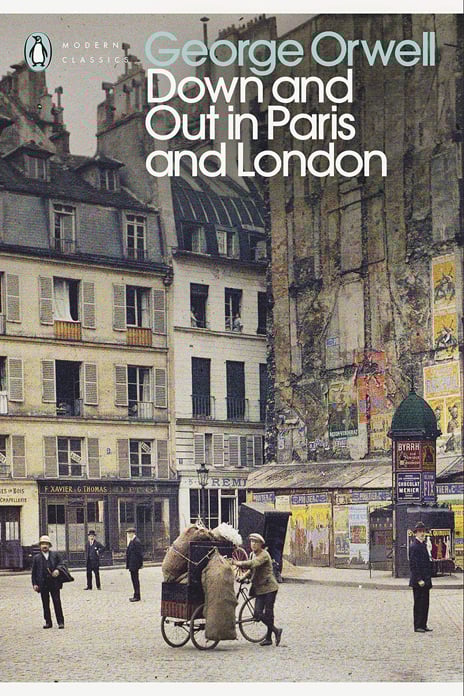
I was in high school the first time I read Down and Out in Paris and London (1933) by George Orwell. A memoir about his time in the slums of France and England.1 Orwell, while in Paris, worked as a plongeur — a person employed to wash dishes and carry out other menial tasks in a restaurant or hotel. Plongeur sounds much better than “bus boy”.
Because, at the time, I was also working as a busboy and dishwasher, I enjoyed Orwell’s description of employment in a busy restaurant. He wrote that the work itself was simple, like sorting a deck of cards, but when done against the clock it became exhausting. That captured exactly how I felt on my Friday and Saturday evening shifts.
Later I was disappointed to learn that Orwell had come from privilege. The guy went to Eton, a prestigious all-boys school. The book recounted his experiences with slum tourism. When he was penniless during the periods described in Down and Out, particularly during his return to London, his well-to-do family could and did take him back in for temporary periods so he could eat well and shower. At first this made the story feel less authentic.
Over time, though, I came to see it differently. It took someone like Orwell to write about life in the slums in a way that other educated people would pay attention to. I had to go through something similar. Only after spending time around the upper middle class did I understand how to describe my life in a way that would actually make them pay attention.
[…]
In the second half of Down and Out in Paris and London, Orwell describes living rough in London’s East End, staying in lodging houses and casual wards. He worked alongside the city’s laborers to understand poverty from the inside.
Down and Out in Paris and London was Orwell’s first published book, written when he was in his mid-twenties. It is striking is how little he romanticized the idea of being an impoverished bohemian in world-class cities, the way so many others of his background might have done. Instead, he treated his immersion in the Parisian and London underworlds as an attempt to strip away the prejudices he had inherited as an upper-middle-class Etonian.
The book is restrained in its politics. Orwell rarely pauses for commentary, preferring to tell the story as it happened and saving his more general conclusions for a couple of chapters at the end. This is more or less the same approach I took with Troubled; describe the world as it was, or at least as I remember it, and let the meaning emerge on its own.
One of the strongest features of Down and Out is its focus on the psychological effects of petty humiliations. Orwell describes kitchens where people from every corner of Europe are screaming at each other in different languages, frantically trying to keep pace with the chaos. If you have ever watched one of those Gordon Ramsay shows, you have some idea. He admired the strange order that somehow emerged from the chaos.
This voyeuristic quality is part of the book’s appeal. We all go to restaurants and see only the polished surface, knowing almost nothing about what happens behind the doors. Likewise, we all encounter homeless people in daily life and know little about how they live. Back in the 1930s, you didn’t have to make many mistakes to find yourself in a tough spot. My guess is that because society today is wealthier, there are more social services available, and powerful recreational drugs more accessible, the typical homeless person (he uses the word “tramp”, which was a prevailing term at the time) Orwell encountered nearly a century ago is very different from those we see today.
During his year and a half working menial jobs in Paris, Orwell wrote a few books, all rejected by publishers in London. None of this appears in Down and Out. He never dwells on his literary ambitions or his many failures. He does not even treat “writing” as a subject worth mentioning. For him, sleeping on a bench along the Embankment was a detail that mattered more than discussing proofs with an editor. Struggle is more interesting to read about than success. Sometimes people ask me if I’ll write a follow up to Troubled. No way. No one wants to read a whole book about a guy who went to elite universities and then blathers on about his subsequent prosperity. The thought of it induces a feeling in me of both amusement and nausea. Even if I focused on the unexpected struggles and costs of upward mobility, the stakes are so low that I can’t bring myself to take it seriously.
- It just occurred to me that this was in 2005. Around once a week I’d stop by my high school library after class and browse the shelves. By 2006 and 2007, I noticed fewer and fewer students actually reading in the library and more and more of them on the desktop computers, watching videos on a new website called “YouTube”. Can’t help but wonder how much streaming videos have reduced interest in reading among young people.
Vietnam 1950: Giáp Crushes France on Route Coloniale 4 – W2W 41
TimeGhost History
Published 24 Aug 2025Viet Minh forces shift to the offensive, attacking French troops up and down the country. As guerilla war reigns in the southern half of Vietnam, more organised attacks begin in the north up near Hanoi. France cycles through multiple new commanders, trying to stem the tide. But do they truly have a hope of turning this around? Or are they just delaying the inevitable?
(more…)
The Sharpest Pen of the Edwardian Age | Who Was Saki?
Vault of Lost Tales
Published 5 Apr 2025Delve into the razor-sharp world of Saki in this engaging author talk exploring his chillingly clever short story, “The Open Window”. Discover the man behind the pen name — H.H. Munro — and uncover how his biting satire, Edwardian upbringing, and darkly humorous worldview shaped this unforgettable tale. Perfect for fans of classic literature, Oscar Wilde-style wit, and unsettling plot twists, this literary deep dive offers historical context, thematic insights, and just enough spookiness to keep you on edge. Whether you’re a student, a short story lover, or just curious about the mind that created one of literature’s most deviously satisfying endings, this talk is your open invitation.
“Saki”, the wickedly sharp pen name of Hector Hugh Munro, masked a man whose wit could slice through Edwardian society like a silver butter knife through scandal.
Born in 1870 in British Burma and raised in England, Munro brought an acerbic wit to the drawing rooms of empire, crafting tales that balanced dry humor, social critique, and sudden, often shocking twists. Writing under the name “Saki”, he produced short stories that mocked the pretensions of the upper class, exposed the darkness beneath genteel facades, and made readers laugh — sometimes uncomfortably. His life, marked by loss, repressed identity, and service in World War I, ended tragically in 1916 on the battlefield, but his stories continue to delight and disturb to this day.
(more…)
August 24, 2025
Much of our prosperity is based on trust, and we’re rapidly losing it
Ted Gioia foresees a precipitous fall in trust coming at us very soon, and I’m afraid he might be being too optimistic:
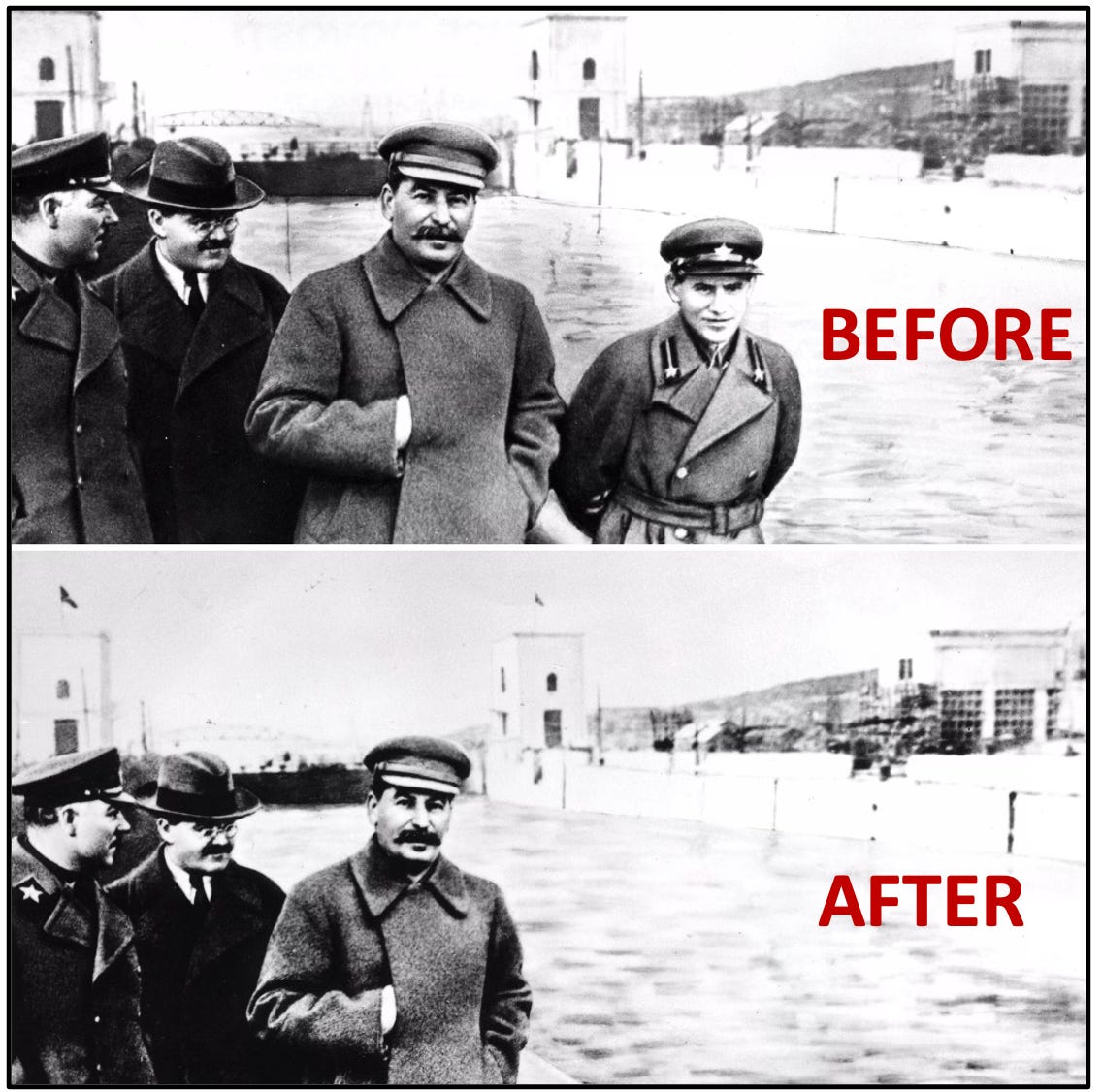
During the great purges of the 1930s, Stalin ordered the execution of a million people, including some of his closest associates. But it wasn’t enough to kill these victims — they also had to disappear from photographs.
In a famous case, Nikolai Yezhov got removed from his position next to Stalin in a photo taken by the Moscow Canal. This erasure alarmed many party elites because Yezhov, head of the secret police, had been one of the most feared men in the Soviet Union.
And now he got totally deleted.
Well, not totally. In those days of print media, original photos survived, and a paper trail made it difficult to erase history.
So this photo was later used to mock Stalin, and the pretensions of dictators. They can try to change reality, but that’s not possible.
Or is it? Maybe dictators now get the last laugh. Because in the last few months, reality has been defeated — totally, completely, unquestionably.
It is now possible to alter reality and every kind of historical record — and perhaps irrevocably. The technology for creating fake audio, video, and text has improved enormously in just the last few months. We will soon reach — or may have already reached — a tipping point where it’s impossible to tell the difference between truth and deception.
- Can I tell the difference between a fake AI video and a real video? A few months ago, I would have said yes. But now I’m not so sure.
- Can I tell the difference between fake AI music and human music? I still think I can discern a difference in complex genres, but this is a lot harder than it was just a few months ago.
- Can I tell the difference between a fake AI book and a real book by a human author? I’m fairly confident I can do this for a book on a subject I know well, but if I’m operating outside my core expertise, I might fail.
At the current rate of technological advance, all reliable ways of validating truth will soon be gone. My best guess is that we have another 12 months to enjoy some degree of confidence in our shared sense of reality.
But what happens when it’s gone?
Back in 2023, I asserted that trust is the most scarce thing in society. But that was before all these tech deceptions came online. Trust will soon get even more scarce — or perhaps disappear completely from the public sphere.
This is not a small matter.
Most discussions of this issue focus on the technology. I believe that’s a mistake. The real turmoil will take place in social cohesion and individual psychology. They will both fracture in a world where our shared benchmarks of truth and actuality disappear.
We will be — already are — in desperate need of Robert Heinlein’s Fair Witnesses:
A Fair Witness is an individual trained to observe events and report exactly what is seen and heard, making no extrapolations or assumptions. While wearing the Fair Witness uniform of a white robe, they are presumed to be observing and opining in their professional capacity. Works that refer to the Fair Witness emphasize the profession’s impartiality, integrity, objectivity, and reliability.
An example from the book [Stranger in a Strange Land] illustrates the role of Fair Witness when Anne is asked what color a house is. She answers, “It’s white on this side.” The character Jubal then explains, “You see? It doesn’t occur to Anne to infer that the other side is white, too. All the King’s horses couldn’t force her to commit herself … unless she went there and looked – and even then she wouldn’t assume that it stayed white after she left.”
This is Westland Helicopters (1960s)
British Helicopters History
Published 17 Jan 2020Major rationalisation of the UK aircraft industry occurred during the 1960s. With the acquisition of Bristol Helicopters, Fairey Aviation and Saunders-Roe, Westland Helicopters transformed itself into Britain’s only helicopter maker with plants at Yeovil, Weston-super-Mare, Eastleigh, and Hayes, producing helicopters for all roles.
August 23, 2025
T-55: 70 Years Old. Still in Service
The Tank Museum
Published 22 Aug 2025No tank in history has been produced in the quantities that the T-55 and its relatives have. Some sources suggest as many as 100,000 have been built since 1946, this tank is still seeing service across the globe. So how come this 80-year-old tank is still in service in 2025?
When looking at its predecessor, the T-34, the move to the T-55 looks like a massive leap in design. But there is a clear evolutionary progression – there is just a missing link. The T-44 laid the groundwork for future Soviet tank design – pioneering torsion bar suspension and a transverse engine.
It was soon decided that the T-44 would require a new 100mm gun to replace the 85mm. This new model would be called the T-54. While NATO classes both the T-54 and 55 as the same vehicle, the T-55 is a substantially better tank. A comprehensive series of upgrades made this an effective force on the battlefield.The T-55 would prove popular with forces around the world. It would even go head-to-head against itself in the Iran-Iraq War of the 1980s. Eventually the T-55 would become outdated as NATO technology became more and more advanced. But it is still in service in the conflict in Ukraine – why?
The Russian army, despite the stereotype of having unending stockpiles of weaponry, have been struggling to keep up with the astounding loss rate the Ukrainians have been able to inflict on them. This has resulted in older and older vehicles being dragged out of those large storage depots across Russia, mainly being used as mobile, protected artillery.
The T-55 has endured partly due to its sheer numbers, availability and upgradability. Its performance on the battlefield has varied, but its basic but effective design has proven itself again and again throughout the decades. It is worth reiterating how remarkable it that a vehicle conceived at the end of the Second World War is still even a consideration for armies 80 years on.
In this video, historian James Donaldson explores the history of the most-produced tank in history – the T-55. This Soviet design has its roots in the iconic T-34, evolving through the years to become an effective fighting machine that was sold around the world. Despite manufacturing ending in the 1980s, this tank is still a feature on the battlefield, with both sides making use of T-55s in the current conflict in Ukraine. It may not be engaging in tank-on-tank combat as initially intended, but the T-55 is still providing a useful, effective and relatively cheap addition to the arsenal of many armies in the 21st Century.
00:00 | Introduction
00:43 | The Missing Link
02:31 | Making the T-55
05:24 | Upgrades
08:34 | A Numbers Game
12:51 | In Action
16:41 | T-55 Today
(more…)
KH-9: B&T Remakes the SITES Spectre Just Because It’s Cool
Forgotten Weapons
Published 9 Apr 2025Karl Brügger, CEO of B&T, is a true gun nerd and avid competitive shooter. When he got his hands on the Spectre SMG with its quad-stack magazine and weird DA/decocker fire control system, he thought it was really neat. So neat that he decided to buy the project from its Italian creators and put it back into production. But they had thrown out all the drawings and tooling when the gun wasn’t successful, and so Brügger had to recreate it from scratch on his own. Cue the Karl’s Hobby 9!
Without Spectre magazines to use, or the tooling to make them, B&T instead found a batch of quad-stack Suomi magazines and used those. They faithfully recreated the DA firing system and decocker, and decided to make a limited back of 222, because this was just a fun side project and not something that would be commercially popular. Except that they sold out really fast. And so another batch was done, this time using APC-9 magazines, since the supply of Suomi mags had been exhausted. Then when they found some Suomi drums, they did another limited batch for those. All of these sold out rapidly, and so the project grew legs. Next up, it became the KH-9 Covert, because what makes a gun cooler than adding folding bits to it?
It remains a limited-production item made in both Switzerland and in the US. Turns out that Karl Brügger isn’t the only guy who thinks they are really neat …
(more…)
QotD: The background of Tiberius Gracchus
Now I should note at the outset that our sources for the Gracchi are not what we might like. Tiberius Gracchus’ year as tribune was in 133 and the late second century is a period where our best sources largely cut out. Polybius, of course, was writing in the 140s and so is unavailable for later events. Livy, always useful, did write the history of this period, but it is lost save for extremely brief summaries of his books known as the Periochae. Instead, we’re reliant primarily on Plutarch and Appian. Both sources are writing much later, in the second century AD and are writing in a context where we might question if we’re getting an entirely straight narrative. As I’ve noted before, Plutarch’s biographies in his Parallel Lives (of which there is one for Tiberius Gracchus and one for Gaius Gracchus) are intended to be moralizing essays rather than straight historical accounts and Plutarch is not above bending the truth to fit his narrative; he also tends to leave out details if they don’t fit his narrative.
Meanwhile, as D.J. Gargola has noted, Appian is also bending his account of Tiberius Gracchus’ reforms, in particular by presenting the Lex Sempronia Agraria as an entirely traditional, conventional response to a pressing crisis.1 But in fact, the provisions of the Lex Sempronia Agraria were not traditional: no similar law (save for a re-enactment by Gaius Gracchus) – had ever or would ever be passed in Rome and the legal precedent that Appian presents as providing the foundation for Tiberius’ law appears to be at least substantially an anachronistic invention. Meanwhile, the crisis Appian thinks Tiberius Gracchus thought he was addressing probably didn’t exist in the form he understood it.
But that’s what we have, so it is what we must work with. And we should note that both Plutarch and Appian are quite favorable to the Gracchi, even though both men were clearly very controversial in their day. So in a sense this is a reverse of the situation we had with Cleopatra, where we had to contend with relentlessly negative sources: here the sources are broadly positive.
So, on with what we know.
Tiberius Gracchus was elected tribune in 133. His election was already unusual in that he seems to have run on something like a program (land reform, which we’ll get to); Romans generally ran on character and background rather than promising specific political actions if elected, so this was unusual. Part of the reason for it was doubtless that Tiberius Gracchus’ political fortunes were in difficulties. Now we should note here that while Tiberius Gracchus was a plebian (that is, not a patrician) that doesn’t make him a political outsider: Tiberius Gracchus was not remotely a political outsider or poor man or lacking in influence. His father (also Ti. Sempronius Gracchus) had been consul in 177 and 163 and censor in 169; his father (or grandfather) was consul in 215 and 213. Our Tiberius Gracchus’ mother, Cornelia, was the daughter of P. Cornelius Scipio Africanus, the man who defeated Hannibal. Tiberius Gracchus was born into substantial wealth and influence, the sort of man whose eventual political ascent was almost guaranteed.
(Indeed, it was so guaranteed that he gets to bend the rules and hold many of his offices early. He’s quaestor at just 26, which implies that he started his military service at 15 or 16 instead of the normal 17, doing so as a military tribune, not a common soldier. I do think this is relevant to understanding Tiberius Gracchus: this was a man born with a silver spoon and a carefully paved, flat-and-easy road to power and influence laid out for him by his family and his political backers, the most notable among whom was his key supporter Scipio Aemilianus (destroyer of Carthage and shortly Numantia).)
Except. Except he got wrapped up in something of a nasty foreign policy scandal during his year as quaestor, when he was assigned to the amazingly named but less amazingly capable C. Hostilius Mancinus who as consul in 137 was supposed to deal with Numantia in Spain. Mancinus blew it and got his army effectively trapped and sent Tiberius – his quaestor and the next highest ranking Roman present – to negotiate to get his army out. Tiberius did this, but the whole thing caused a great stink and a scandal at Rome (Roman armies are supposed to go down fighting, not negotiate shameful retreats!). Indeed, the Senate was so enraged they rejected the treaty and instead sent Mancinus, bound in chains, to the Numantines as part of a ritual process by which his treaty was disowned. Tiberius doesn’t get packed off to Numantia, but some of the political stink does rub off on him, so while he’s connected enough to get elected as a plebeian tribune in 133, he must know he needs a big second act to get his political career back on track, or he may never reach the consulship. That context – a political insider who had a golden ticket but must now win it back, rather than an outsider without connections – is important for understanding the reaction he is going to get.
Bret Devereaux, “Collections: On the Gracchi, Part I: Tiberius Gracchus”, A Collection of Unmitigated Pedantry, 2025-01-17.
- 1. D.J. Gargola, “The Gracchan Reform and Appian’s Representation of an Agrarian Crisis” in People, Land and Politics, eds. L. De Ligt and S.J. Northwood (2008).
August 21, 2025
Six Reasons Operation Market Garden FAILED
The Tank Museum
Published 3 April 2025Operation Market Garden failed because the tanks of XXX Corps did not reach the Paras in Arnhem in time. Many historians have argued that the British armoured column “let the side down”. But is this actually true?
We reckon there are six reasons why the operation was a total disaster. It was a poor plan from the get-go, relying on a rate of advance that would outmatch the German invasion of France in 1940. Bad weather prevented the deployment of badly-needed reinforcements, and the terrain Guards Armoured were expected to traverse – a single road with impassable conditions on either side – significantly hampered the efforts of the tank crews.
Poor intelligence also meant that the British column was not prepared for resistance from a retreating and desperate German Army. It was a combination of all these factors that caused Market Garden to unravel completely.
Despite the complications, many acts of valour were carried out by both the airborne and armoured divisions, including the legendary assault across the Waal by the US 82nd Airborne.
So, join us as we explore these six reasons why Operation Market Garden failed and decide for yourself whether XXX Corps could have done anymore.
00:00 | Introduction
02:23 | #1 – A Bad Plan
06:22 | #2 – Poor Intelligence
07:51 | #3 – Difficult Terrain
11:27 | #4 – Determined Resistance
13:45 | #5 – Bad Weather
14:38 | #6 – Loss of Surprise
19:45 | What Went Wrong?
(more…)
August 20, 2025
“All politics is local” … except when it isn’t
Lorenzo Warby on a recent study of the vast chasm between what European voters want in areas like crime and immigration and what their elected representatives want:
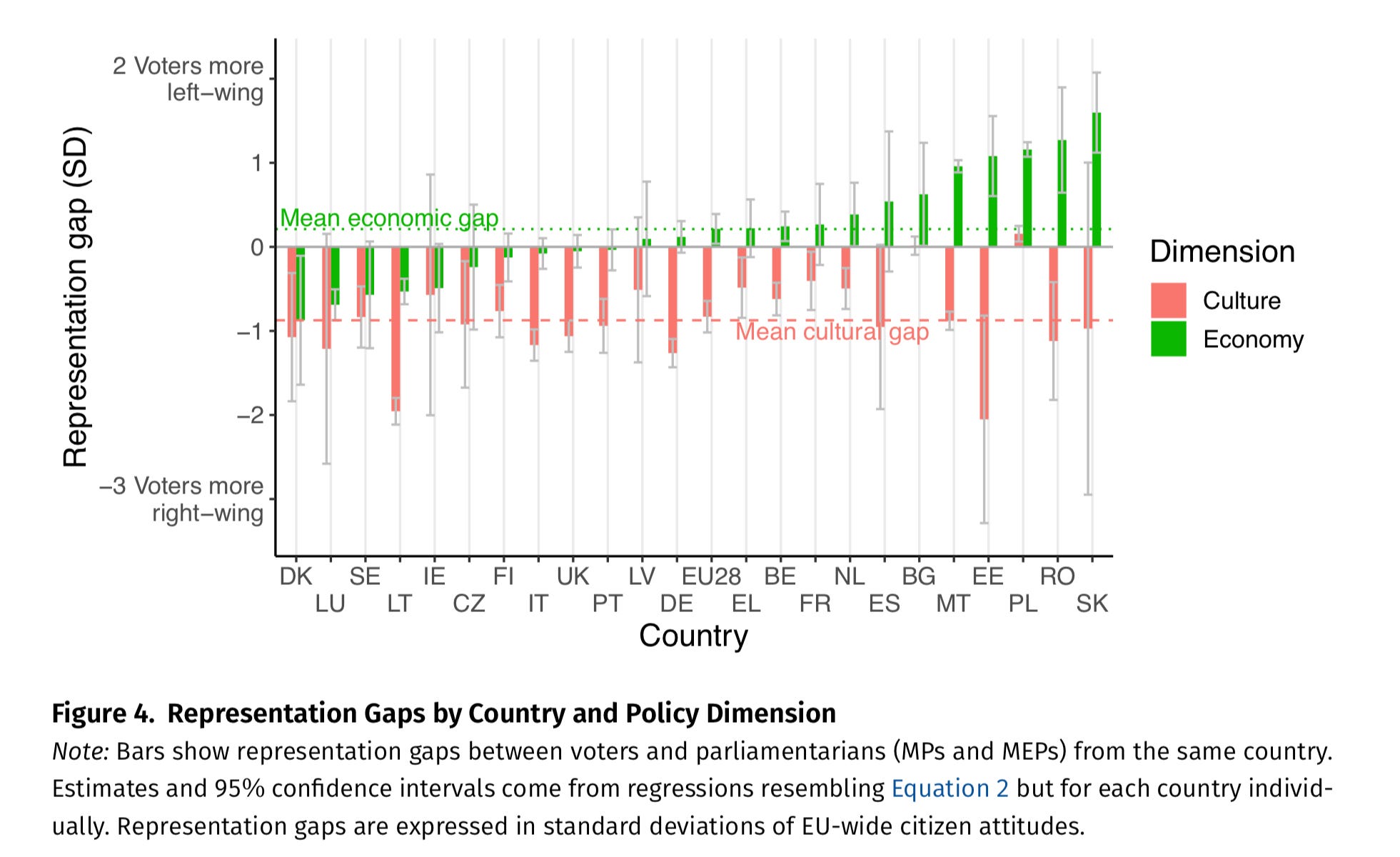
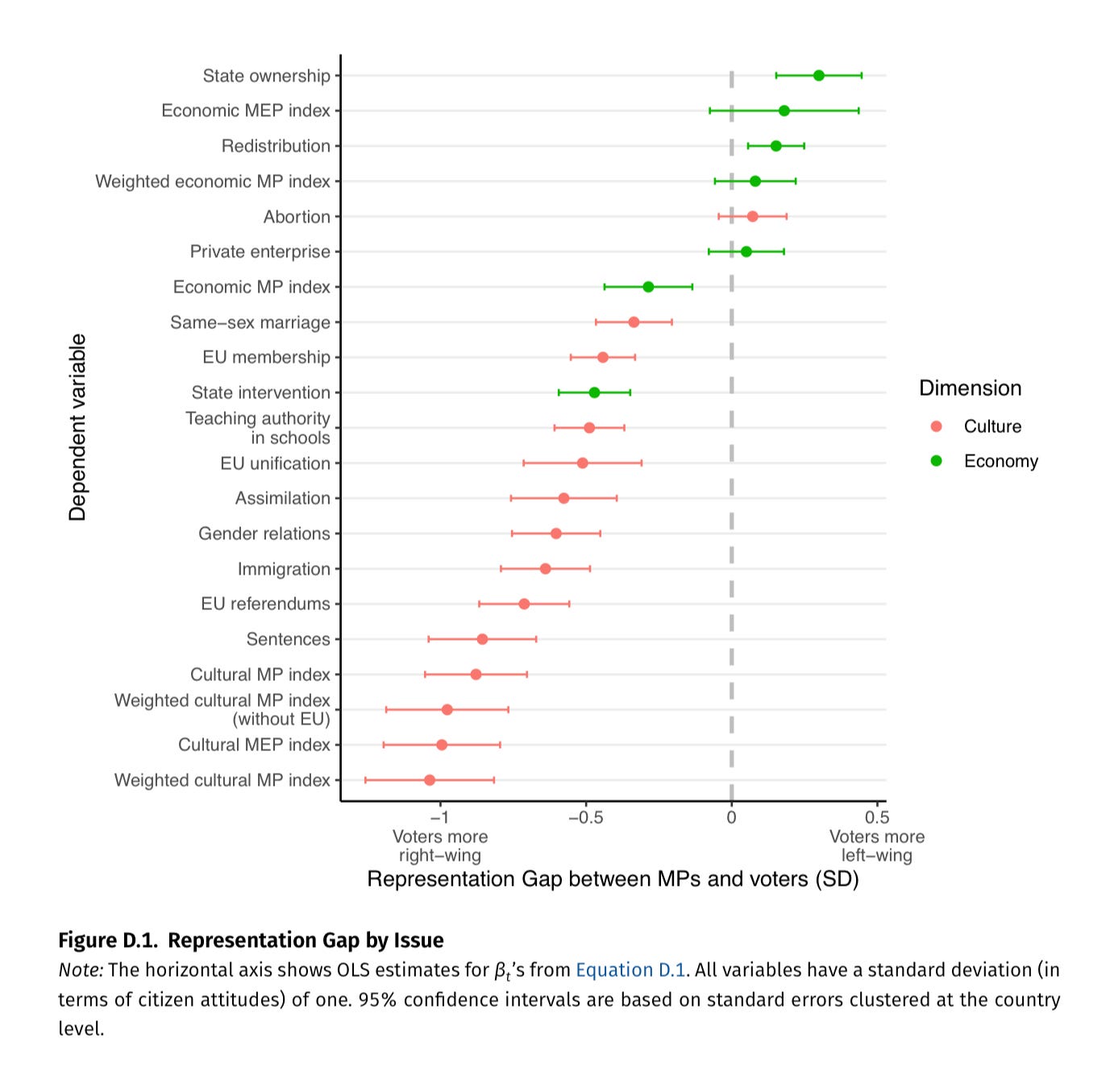
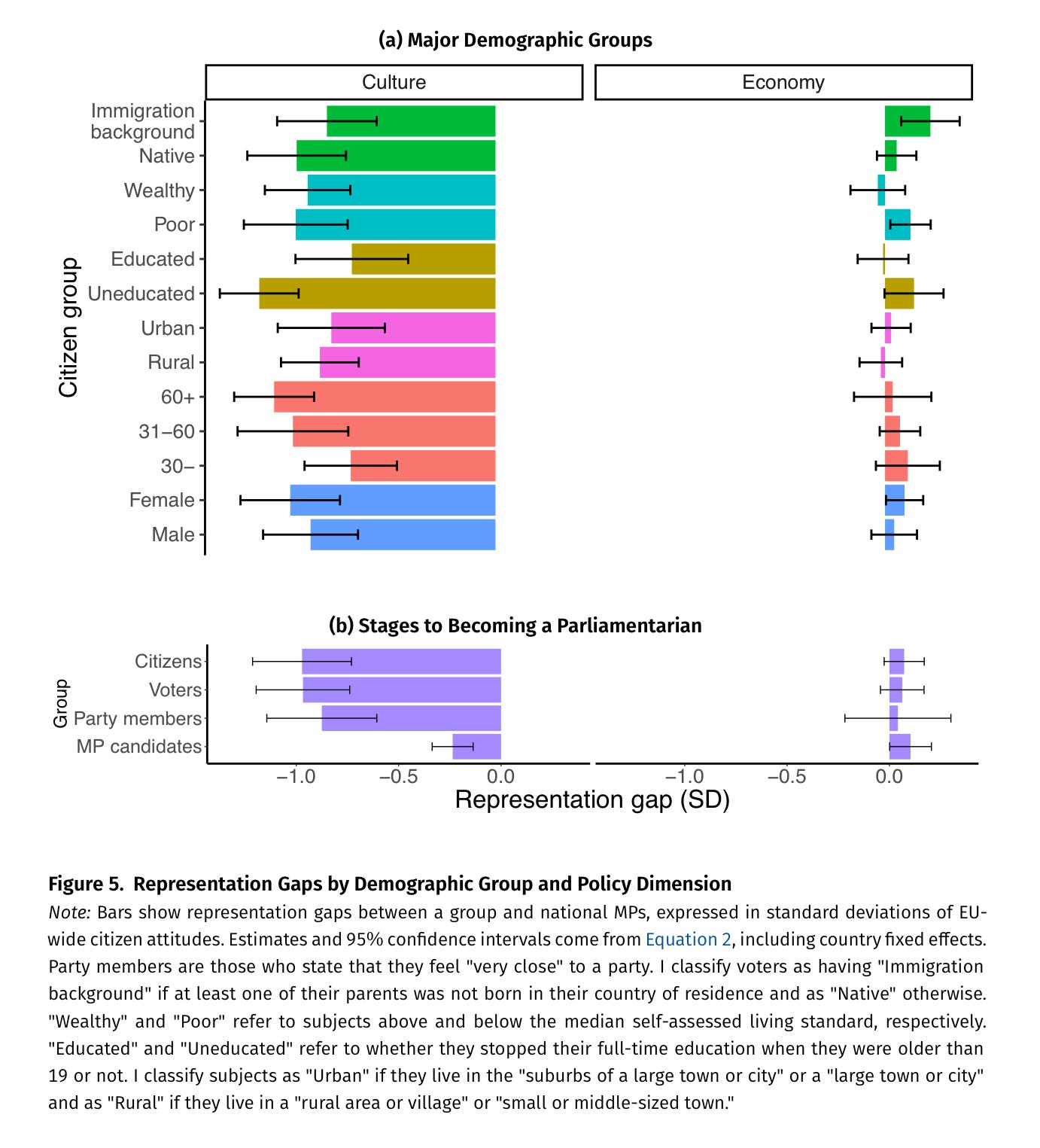
Economist Laurenz Guenther has performed the very useful exercise of quantifying how unrepresentative the views of European politicians are of their voters on cultural issues, such as crime and immigration. This is not true of economic issues, where the views of politicians tend to be quite representative of their voters.
In the case of economic issues, in some countries the politicians are more pro-market (“right”) then their voters, in others they are more dirigiste (“left”) than their voters, in others still they are very similar to their voters. There is simply no consistent pattern, and the average gap between voters and politicians across European countries on economic issues is fairly small.
With cultural issues, such as crime and immigration, we get a very different pattern. There, politicians are consistently more socially liberal (“left”) than their voters and by a considerable margin. While education levels explain some of this difference, they do not explain very much, as politicians are significantly more socially liberal than even university-educated voters.
Moreover, politicians are unrepresentative even of their own Party members/base on cultural issues and, again, in being much more liberal than their core supporters. There is some factor or factors specific to being a contemporary politician that systematically separates them out from voters on cultural issues yet does not operate with economic issues.
Veteran politician Tip O’Neill famously said that all politics is local. This is particularly true of cultural issues such as crime and immigration, where the effects vary wildly by location. This is much less true of economic issues, which are much more economy-wide in their operation.
There are various features we can identify here. First, executive function(s) — including such features as patience (aka time horizon) — varies between people and is highly heritable. Localities that have lots of people with poor executive function operate very differently from those where it is very much normal for people to have strong executive function.
As the combination of physical robustness and weak executive function predicts criminal behaviour, this has a great deal to do with why crime varies so dramatically by locality. This is especially as crime is very much a power law phenomenon, where a small minority of (overwhelmingly) men commit the vast majority of violent crimes.
Source – Wikimedia Commons.
It also means that people who have spent their lives in social milieus full of people with high executive function can have little or no sense of what happens when one has to deal with weak executive function folk. This is the people unlike me problem that so bedevils contemporary politics and commentary.

UK vz.59 Czech Universal Machine Gun: History and Mechanics
Forgotten Weapons
Published 21 Mar 2018In 1952, Czechoslovakia adopted a whole new family of small arms, including the vz.52 pistol, vz.52 rifle, and vz.52 light machine gun. The rifle and LMG were both chambered in the Czech 7.62x45mm cartridge, and both would be adapted to the Soviet standard 7.62x39mm a few years later, in 1957. Very shortly thereafter, the Czechs would also introduce a heavier universal machine gun version in 7.62x54mmR under the designation UK vz.59 (universal machine gun model 59).
The UK 59 was basically a scaled up sibling of the vz.52 and vz.52/57 machine guns, although it fed from a belt only, where its smaller predecessors had allowed either belt or magazine feed. It used a pivoting locking block system much like the Walther P38 and Beretta pistols, in conjunction with a long stroke gas piston much like that of the vz.26 light machine gun.
The weapon did not see much interest outside of Czechoslovakia, although it does remain in service in that region in the modernized 7.62x51mm iteration.
Thanks to Marstar for letting me examine and shoot their UK vz.59!
August 19, 2025
Dieppe 1942: The Failed Raid That Shaped D-Day
Battle Guide
Published 2 May 2025On 19th August 1942, as dawn was breaking along the coast of occupied France, a force of just over 6,000 men stormed the beaches around the port town of Dieppe in the first major allied strike against Hitler’s Atlantic Wall. Within a matter of minutes hundreds lay dead or wounded, washed up against seawalls, hung on wire entanglements or incinerated in the burning landing craft. Over 60% of the mainly Canadian assault force were killed, wounded or captured by the end of the day, and the Dieppe Raid has, for the allies, gone down as one of the most infamous days of the Second World War.
(more…)
Roman Hellenism
In his post “A Pagan Confession“, Fortissax provides an explanation of Roman Hellenism, the most widespread religious system in Europe before Christianity:
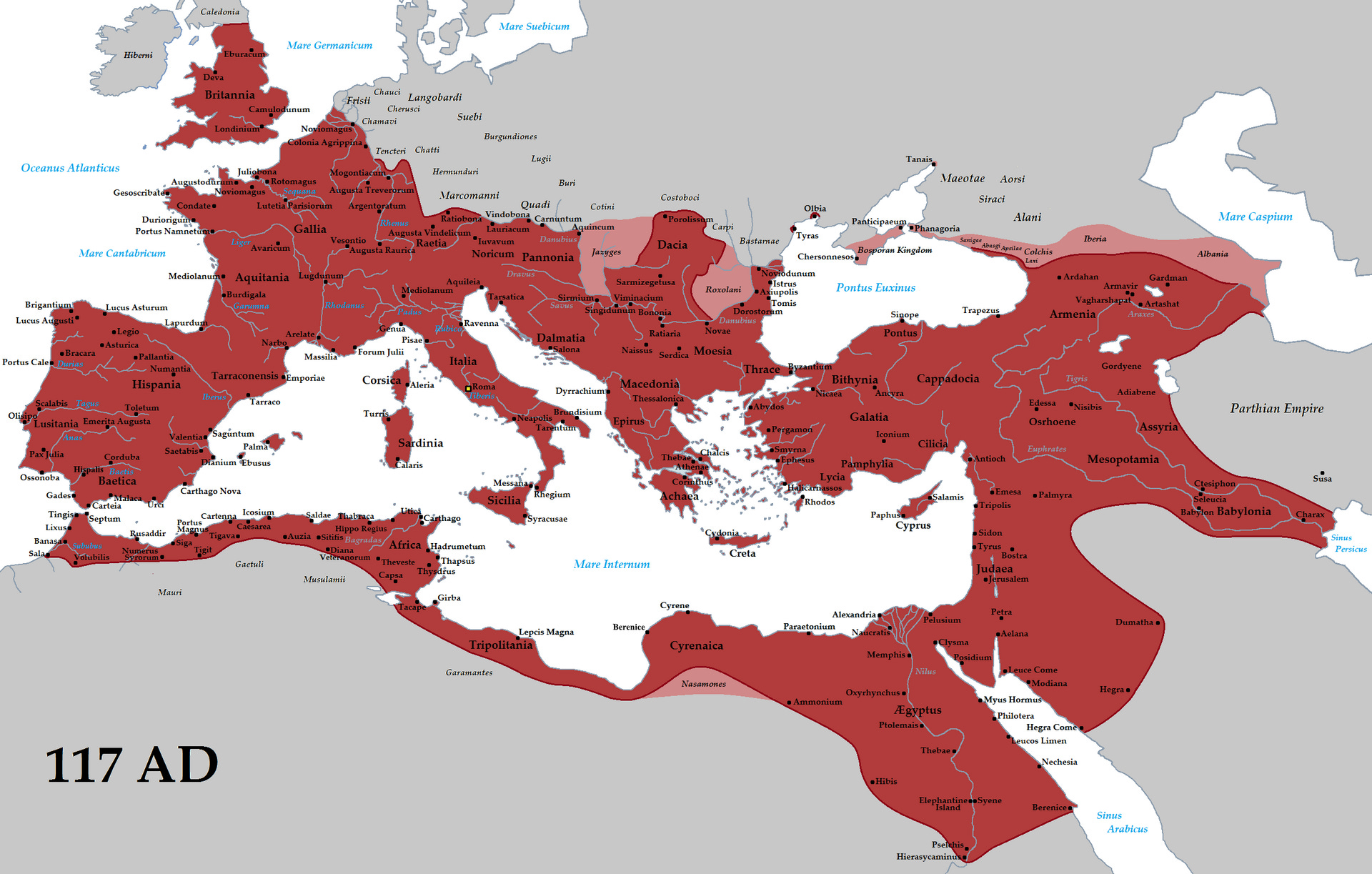
The Roman Empire at its maximum extent
The closest term that would describe me is “Roman Hellenist”.
Roman Hellenism was the largest religion in the Western world prior to the rise of Christianity. It was followed from Britain to Greece, from Spain to Romania, and was the first civilization-wide faith for Europeans.
At its height under the Roman Empire, Hellenism was a vast and adaptable religious tradition that united Greek mythology, Roman state religion and cults, household rites, and philosophical schools into a coherent spiritual world. As the organized state religion, the Dii Consentes were worshipped in every corner of the empire under both Latin and Greek names. Jupiter, Mars, Venus, Apollo, Minerva, and others were honoured through public festivals, imperial temples, military devotions, and local folk religion. This civic devotion was shaped by writers such as Cicero, Livy, and Plutarch, who emphasized the importance of piety, order, and divine ancestry.
Hellenism offered more than just myth or folklore. It provided a structured understanding of the cosmos, where the gods represented natural and moral forces, and where religion was interwoven with daily life, civic duty, and personal virtue. Mystery cults such as those of Dionysus and the Eleusinian rites offered deeper initiatory experiences, described by authors like Herodotus and Euripides. Philosophers such as Plato, Plotinus, Porphyry, Iamblichus, Proclus, Damascius, and Hierocles were considered divinely inspired and were often trained by the augurs, or in the College of Pontiffs, established in 400 B.C., and the inspiration for the College of Cardinals. These were priests within the state religion.
They built the theology of the faith. These philosophers were not monotheists or atheists, but pagans, and their theology came from Hellenism. Ordinary people prayed, sacrificed, and kept sacred fires at home. This marks the distinction between the folk religion of the everyman and the theological work of the priestly and philosophical elite, though they formed a whole, similar to Christian folk religion compared to the sophistication of the clergy. Hellenism in the Roman world was participation in a divine order that shaped identity, politics, culture, and destiny.
It had a core, but it was a dynamic tapestry. It often accommodated or incorporated local and regional gods of subject peoples throughout the empire, including other Europeans. It was normal to find shrines or temples dedicated to syncretic deities where Roman and provincial traditions were blended. This reflected a deeper truth shared by many Indo-European peoples. Across vast distances, from the Celts and Germans to the Greeks and Romans, there was a common spiritual grammar. Their gods often held similar roles, attributes, and origins. Rather than destroy or suppress local belief, Roman Hellenism often absorbed and integrated it within a universal metaphysical framework, though one without too strict of a dogma, which allowed spiritual continuity across cultures.
The Romans referred to this process as interpretatio graeca, the identification of foreign gods with Greek ones, and interpretatio romana, the application of Roman names and attributes. In Gaul and Germania, local deities such as Lugh or Wodan were equated with Hermes or Mercury. Camulos and Tyr equated with Mars, Taranis with Jupiter through interpretatio gallica and interpretatio germanica.
These interpretive traditions allowed theological bridges across linguistic and ethnic boundaries, fostering religious continuity and civic unity. Writers like Varro, Tacitus, and Strabo observed this continuity, noting that while names and symbols differed, the gods themselves were one in essence. This interpretive unity was ritualized practically in temple, altar, hymn, and law.
This faith, was shaped by the Iliad and the Aeneid, the rituals of Rome and the hymns of Orpheus, the Chaldean Oracles, the laws of the Twelve Tables and the meditations of Aurelius. It spoke through the Sibyl and the Stoic, the philosopher and the priest, the hearth and the polis. It is the soul of the West in its first religious form, a religion of cosmic order, virtue, memory, and return. Its path leads from the One to the many, and back again through sacrifice, contemplation, and union.
To be a Hellenist, in this fuller sense, is to honour the gods as real beings and divine intelligences who participate in the life of the soul and the order of the cosmos. It is to seek harmony with this order through philosophy, ritual, moral striving, and ancestral memory. It is a way of life, rooted in reason and reverence.


