
Royal Armouries
Published 21 Jan 2026Following last week’s look at the very first L1A1 SLR ever produced (1957), we’re sharing a remarkable Royal Small Arms Factory (RSAF) Enfield archive film, shot in the 1960s, showing the key stages of L1A1 manufacture and a rare glimpse of the original Enfield pattern room.
Then we step back and let the film speak for itself, nearly an hour of pure production and engineering process.
0:00 Intro
3:05 Enfield + Pattern Room
3:57 Planning & Tooling
4:37 Rifle body: Heat treat → Machining → Inspection
18:16 Barrels: Drilling, Rifling, Plating & Production line
34:28 Housing/Trigger, Furniture & Magazines
50:16 Assembly → Proofing/Testing → Packing & Dispatch
(more…)
June 21, 2026
How Britain Made the L1A1 SLR: archive film with intro by Jonathan Ferguson
Comments Off on How Britain Made the L1A1 SLR: archive film with intro by Jonathan Ferguson
June 20, 2026
“Every system on display is an answer to a question the war in Ukraine asked out loud”
Most wars are not significant drivers of technological change and military innovation. The Franco-Prussian War, the Boer Wars, World War 1, and World War 2 are some of the exceptions where the fighting accelerated innovation and adoption of new and untested technologies that were proven or discarded on the battlefield. The Russo-Ukraine war has been going on long enough and requiring new and improved weapons to such a degree that modern arms shows clearly reflect at least some of the technological changes in response to the ongoing combat:

Thales RapidStriker SHORAD, I think. Oddly, what struck me about this image was how much it reminded me of very early WW1 armoured cars, both in general outline and in its being a quick reaction development to a current combat situation.
Photo from Eyes Only with Wes O’Donnell
I was thinking recently about the good ole pandemic days; ah, what a simpler time …
At the time, I was writing for military and cybersecurity magazines about whether NASA spacesuits can be hacked and hypersonic tomfoolery.
Six years ago, a defense expo like this was mostly about better armored boxes. Things like thicker protection, a nicer turret, an upgraded engine, a fire-control system with a new acronym.
The headline acts were tanks and infantry fighting vehicles, things that go very high and very fast, and the unspoken assumption underneath all of it was that war would look roughly like it always had, just with more cowbell.
Then 2022 happened.
Then Operation Spiderweb.
Then a year of Russian glide bombs and Ukrainian refinery strikes and FPV drones turning hundred-dollar quadcopters into tank-killers.
Then the Gulf woke up to Iranian missiles in March. And the entire defense industry got the same text message at the same time, written in other people’s blood.
You can read that message on the Eurosatory floor this year.
Almost every serious system on display is an answer to a question the war in Ukraine asked out loud:
How do I shoot from farther away so I don’t die?
How do I kill cheap drones without going bankrupt?
How do I send a robot instead of a soldier?
How do I keep my tank’s roof from becoming a Thermador pizza oven set to “broil?”
Back then, I also used to write listicles, like “Top Ten Gifts for Veterans!” In that tradition, I’ve put together a hand-picked list of ten weapon systems emerging this year at Eurosatory in Paris, and every one of them is really a story about how much war has changed since 2020.
Comments Off on “Every system on display is an answer to a question the war in Ukraine asked out loud”
Lessons learned: “In Ballymena and Belfast, violence worked; in Epping, peaceful protest did not”
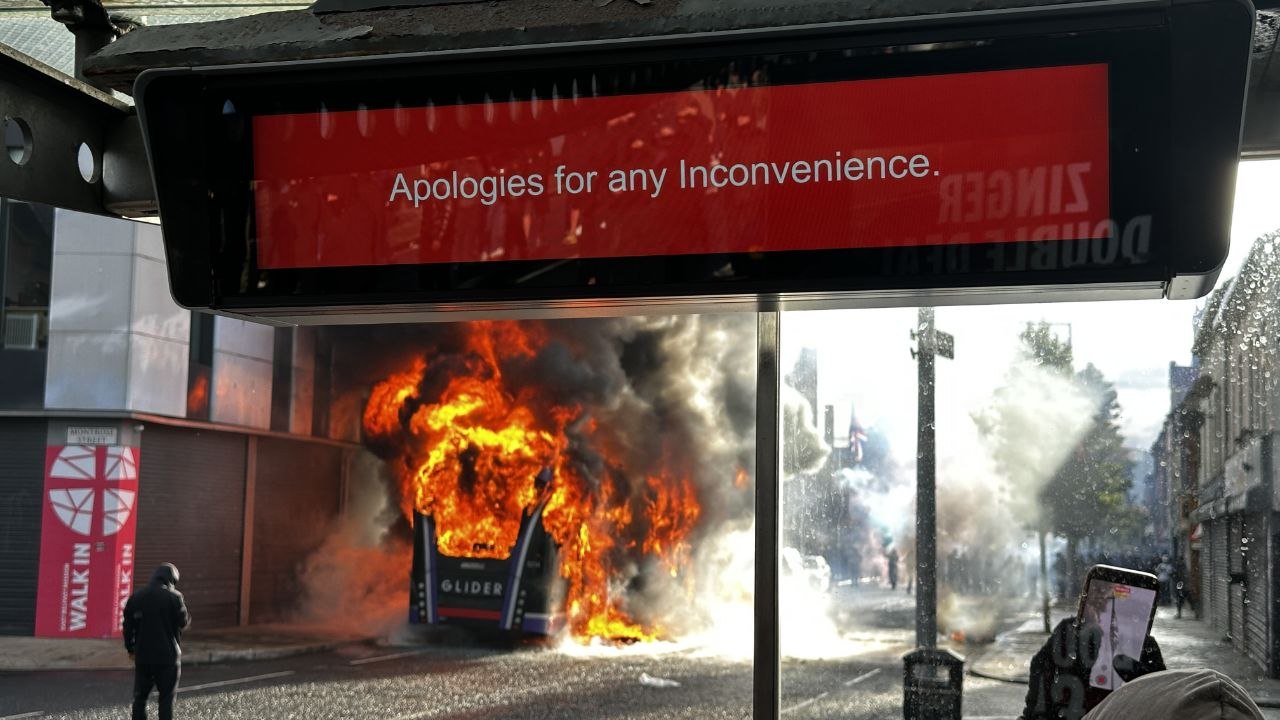
The flare-up of anti-immigrant/anti-government violence in Belfast has drifted out of the headlines lately, as state-oriented media try to get their audiences back onto safer topics like footy and hissing at the Bad Orange Man. But the situation in Northern Ireland has not resolved itself in the preferred way — preferred, that is, by the British government. John Carter responds to some American social media users who loudly wonder why British men generally are not “doing something” now:

In response to the migroid atrocity du jour, one often hears Americans ask “why haven’t British men done anything?”, to which Americans will flatteringly reply to themselves, “It’s because those BRITCUCKS have gone SOFT, they gave up their GUNS like little BITCHES, but you won’t see anyone trying THAT in a SMALL TOWN”. Which conveniently elides the awkward detail that American men, armed to the teeth as no other people on Earth, have allowed themselves to be pushed around this way and that since the sleep of the good Reverend Doctor Martin Luther King, Junior (PBUH) was disturbed by his little dream. “Just you wait”, Americans will promise when this is pointed out, “The electric boogaloo will come any day now, you’ll see!” Sure we will. In the meantime, all those guns have done precisely nothing to prevent the relentless incursions of Section 8 housing, disparate impact, affirmative action, DEI, anti-discrimination training, Title IX, human resources, and all the rest of the soft tyrannies that flew out of the Pandora’s box of America’s ersatz race communist constitution. There was no resistance to any of this. Heavily armed red state Americans abandoned the cities for the suburbs rather than standing and fighting for them, and then stolidly watched as their kids were sidelined in education and employment while being terrorized by black criminals.
American speech is protected by the first amendment and backstopped by the second, yet nevertheless you will not find many Americans daring to even so much as mutter the forbidden word of power. This is not because white Americans don’t understand the problems. They have developed an elaborate vocabulary of “bad neighbourhoods” and “good schools” and “urban crime” and “troubled youth” and so on and so forth with which to discuss, in whispers, after glancing twice over their shoulders, the realities of life in the USSA. There is no law against parrhesia [Wiki], technically an American citizen may say whatever he pleases without consequence, but of course frank speech in this Greek sense requires courage by definition, and there has been a great shortage of that. You can say whatever you please, yes, of course, fill your boots, but you will find yourself ostracized, divorced, unemployed, and homeless if you speak too directly, so you know, shut up. The unspoken strictures of the longhouse are a more effective prison than iron bars for those whose spirits have been cowed.
Meanwhile, last week there was a minor uprising in Belfast. Hadi Alodid, a gentlemen of Sudanese extraction, enriched the face of Stephen Ogilvie, a local bloke with special needs, providing him with extensive tribal scarring in a generous act of cross-cultural exchange, and only claiming two of his eyes in payment. The entire incident was caught on video. Ogilvie’s life, though not his sight (and he was already hard of hearing) was saved by three Irish men who rushed in to beat the innocent Sudanese rocket surgeon off with their hurling sticks. In the aftermath, it emerged that Ogilvie had helped Alodid move in to his new accommodations just a few days before. No good deed, etc.
[…]
The uprising was variously described as a protest and as a riot, but it was neither of these. A protest is when an angry crowd gathers to chant some slogans and wave around some signs, pretending that their numbers are a display of power, and deluding themselves that Power will redress their grievances because a noisy lump of quivering biomass is somehow intimidating to Power. A riot is an explosive release of emotional energy that results in some property destruction and futile confrontations with armoured riot police, typically ending with the rioters being rounded up and jailed. In some cases, it’s true, protests and riots appear to produce political change, but this is almost invariably because Power has orchestrated these little carnivals in order to sanctify the policies it’s already decided upon under the guise of “bowing” to “pressure” from the “public”. The Canadian government, by the way, has long since mastered a non-violent variant of this dark art: practically every “public policy research group” in the country is funded by the government to pressure the government to do what the government already wants to do. Show me what Our Democracy looks like; this is what Our Democracy looks like.
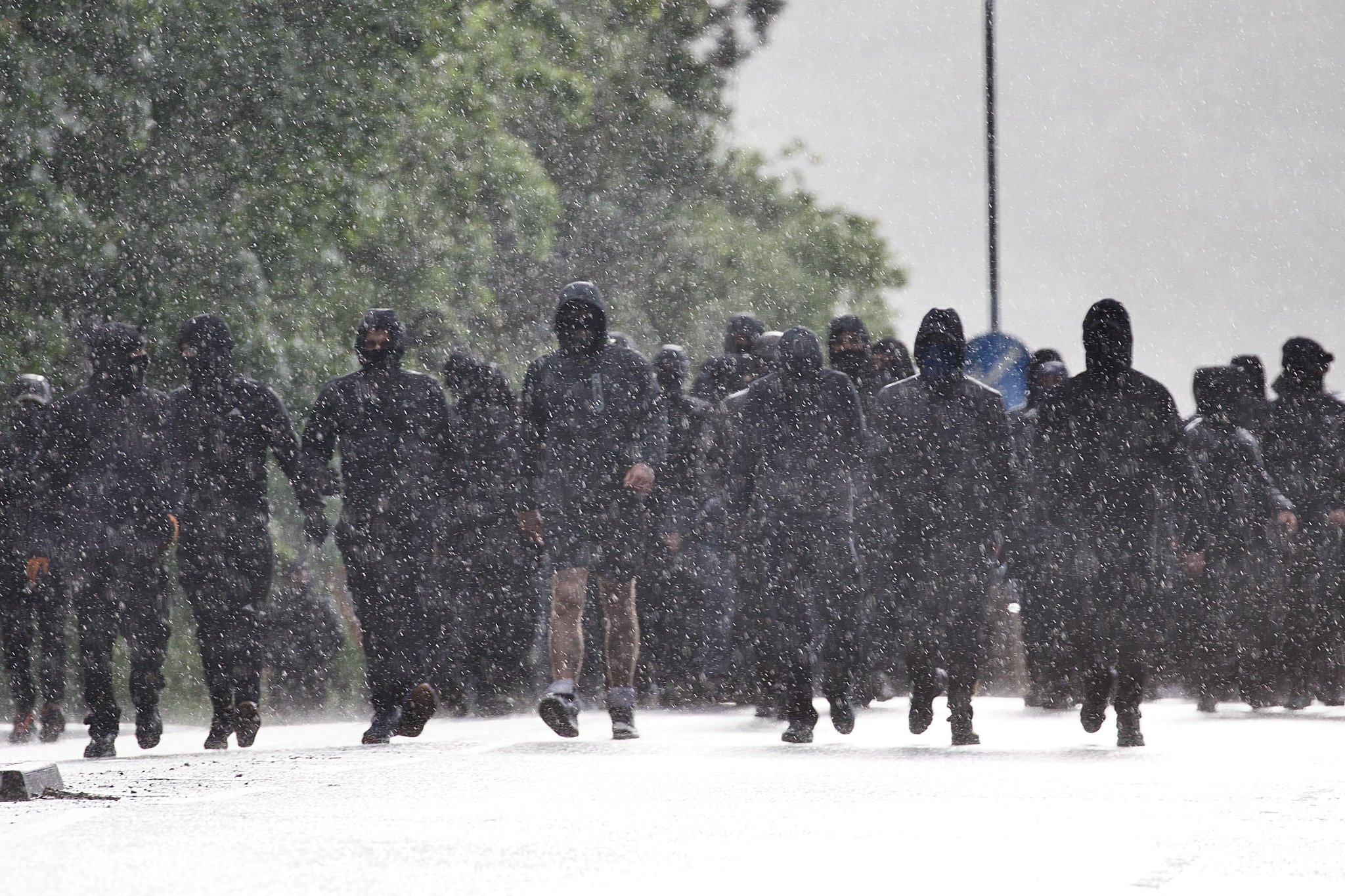
There were no signs being waved around in Belfast, no chanting of slogans. While there was a great deal of violence, it was not random and senseless, but methodical and carefully targeted. It unfolded with the tight discipline of a coordinated military operation.
The day before the uprising started, a communique was sent out to local businesses, instructing them to close before the fun started. At the appointed hour loose formations of young men, indistinguishable in black hoodies, fanned out across the city.
[…]
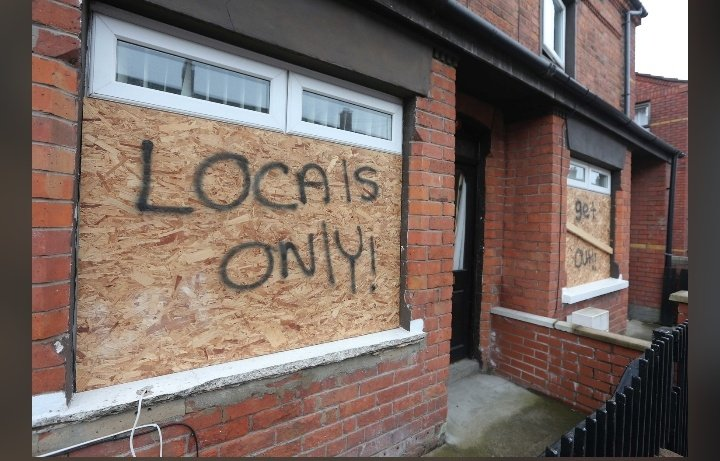
The uprising in Belfast was not nihilistic violence for the sake of violence, though I’ve no doubt the lads were enjoying the opportunity for mayhem. It was violence towards a specific political objective: driving the foreigners out. Migrants whose domiciles were destroyed were directly deprived of housing. Migrants who managed to avoid this were made to worry that they will be next. Landlords taking government money to house migrants, or even thinking about doing so, now need to worry about the immediate cost of repairs and the ongoing expense of higher insurance premiums, making the Home Office’s lucre a lot less attractive. Landlords also need to worry about escalation: reportedly, letters were circulated which heavily implied that bricks and petrol bombs were just the first step on the violence ladder, and that the paramilitaries would be quite happy to take more decisive measures against the landlords themselves should the message not be received.
All of this is very sad, and I don’t want to seem heartless. The immigrants whose houses were destroyed were probably innocent; there was one particularly touching video of a nurse from Ghana or somewhere. Unfortunately, that is the nature of these things. They were brought in by the government en masse as a form of biological warfare against the native population. The government wants them there, the people want them gone, and the government refuses to listen, so, this is what happens.
Only 27 migrants were actually made homeless by the arson, but reportedly, quite a few are already clearing out on their own. The British government quite naturally condemned the violence, organizing a rally against racism in the aftermath, but it also responded by instructing the media to emphasize that it would be cracking down on illegal immigration into Northern Ireland. Underneath the condemnation, there is a clear message to all of this: in this case, violence worked.
That message has been sent before in Northern Ireland. Exactly one year to the day before the uprising in Belfast, there were riots in the small town of Ballymena after the courts let two gypsy boys off with delicate wrist taps for raping an Irish girl. The rioting went on for two weeks, and resulted in two thirds of the gypsy population clearing out. Again: violence worked.
Contrast Ballymena with the other major British protest movement last summer: the anti-migrant hotel protest in Epping, a London exurb populated largely by Londoners driven out of their city by diversity, which started when one of the migrants diversified a teenage girl. In contrast to the eruption in Ballymena, the protest in Epping was explicitly non-violent: the only violence came at the hands of the cops arresting people for flying Union Jacks. The mothers of Epping spent months gathering outside the migrant hotel, holding signs and raising awareness. The council also fought the migrant hotel in the courts, and enjoyed early success when a judge found that the location was zoned as a hotel but not as a migrant dormitory, essentially telling the Home Office that they didn’t have a loicense for that. This legal victory was short-lived. The decision was overturned almost immediately by a higher court judge, who explicitly found that whatever the concerns of the people of Epping as to their children’s safety, these were outweighed by the human rights of the mystery meat that had washed up on Britain’s shores, and by the government’s interest in housing them. As a result, parallel lawsuits that had been launched by councils across the country were dropped. The migrant hotel in Epping was eventually shut down, but this likely had more to do with the government’s switch to “Operation Scatter” in which migrants were garrisoned in smaller houses all over the country, rather than concentrated in a few large centres, than it did with the government responding to the concerns of British subjects.
In Ballymena and Belfast, violence worked; in Epping, peaceful protest did not.

Update, 22 June: Welcome, Instapundit readers! Have a look around at some of my other posts you may find of interest. I send out a daily summary of posts here through my Substack – https://substack.com/@nicholasrusson that you can subscribe to if you’d like to be informed of new posts in the future.
Caesar Augustus – The man and his story
Adrian Goldsworthy. Historian and Novelist
Published 28 Jan 2026An overview of the career of the man who became Rome’s first princeps (or emperor as we would call him). Heir to Julius Caesar’s private estate, he somehow managed to make himself Caesar’s adopted son and political successor, plunging himself into Rome’s violent politics at the age of just nineteen and in turn beating all his rivals. Supreme master of the Roman empire in his early thirties, he then ruled for four decades, profoundly changing Rome, its empire — and by extension shaping the modern world.
My biography of the man — Augustus: First Emperor of Rome is being released as a new edition from Basic Books in the USA on 27th January 2026.
Comments Off on Caesar Augustus – The man and his story
QotD: The word “alchemy”
My favourite thing in this chapter is an etymological nugget that I suspect is too good to be true, but which I desperately want to believe. The word “alchemy” comes from the Arabic al-kīmiyāʾ (الكيمياء), which in turn comes from the Greek khēmeia (χημεία), but that’s where our knowledge of this word stops. χημεία has no known Indo-European origin, and no obvious cognates that would suggest a borrowing. There are some hand-wavy theories that it might derive from khēmet, the word for Egypt in ancient Egyptian, but it’s a stretch to put it mildly. Needham proposes the Chinese 金 meaning “gold” as the ultimate source. In modern Mandarin, this word is pronounced like jin, but the Classical Chinese pronunciation is better preserved by the Southern dialects, which variously render it as gum, gim, or, in Hakka and Southern Min, as kim. The list of English words with Chinese origins is short,1 and it would be nice to add this one.
But the Chinese alchemists by and large weren’t after gold, their goal was eternal life instead. In fact aurifaction originated as an instrumental “warm-up” exercise for the main event. Everybody knew that the reason gold was the most perfect metal was because it was a harmonious and balanced combination of the elements. So if the same harmoniousness and lack of internal contradiction could be achieved within a living organism, then the consequences would obviously be physical immortality and superhuman abilities. Elemental harmony, biological harmony, social harmony — in the light of Chinese metaphysics these goals were all reflections and intimations of one another. And the first two at least could be brought about by the same methods: the application of various potions and elixirs designed to increase or reduce the influence of a particular element. The same principle forms the cornerstone of Chinese medicine today.2
John Psmith, “REVIEW: Science in Traditional China, by Joseph Needham”, Mr. and Mrs. Psmith’s Bookshelf, 2023-08-14.
- My favourite of these, since it seems so unlikely, is “ketchup” deriving from 茄汁 (“tomato sauce” in Cantonese), perhaps via the Malay kicap.
- Needham’s third lecture is about the most recognizable and well-traveled example of Chinese medicine — acupuncture — and contains the intriguing assertion that naloxone administration totally cancels acupuncture’s efficacy for pain relief. This suggests that acupuncture’s mechanism of action may have to do with stimulating the body’s production of naturally-occurring opioids. There’s some evidence the placebo effect could be related (fascinatingly, naloxone also appears to eliminate the placebo effect).
Comments Off on QotD: The word “alchemy”
June 19, 2026
Sparta vs Athens – 2(a): Two Greek Worlds (Citizens, Helots, Power)
seangabb
Published 8 Feb 2026Greece: A Brief History, c.700 BC – 500 AD
In this lecture segment I set out the fundamental contrast between Sparta and Athens as social and political systems. Sparta was a permanent military state built on coerced labour and internal discipline. Athens was a quarrelsome democracy that relied on participation, persuasion, and a wider civic culture of debate.
We begin with the basic structures: who counted, who did the work, and how each society organised its citizen body. This is not moral theatre. It is institutional reality. By the end, the students should see why Sparta could produce cohesion and battlefield reliability, while Athens produced instability, argument, and a public life that made intellectual achievement possible.
Comments Off on Sparta vs Athens – 2(a): Two Greek Worlds (Citizens, Helots, Power)
QotD: The Prince is a … satire?
Let me back up. The occasion where I first heard the “it’s a satire” thesis was an “advanced placement” History class back in high school. They probably don’t have those anymore as part of the regular curriculum — dat be rayciss — so in case you’ve never endured one, it’s a bunch of mega-nerds who only care about pleasing Teacher trying to do History. For our unit on “The Renaissance”, we had to read both The Prince and More’s Utopia, and do our term paper on one or the other.
Naturally I picked The Prince, and since you all know the kind of kids who were in that kind of class, naturally everyone else picked Utopia. I might’ve been the only kid who ever did his paper on Machiavelli; certainly the teacher acted like she’d never seen one before. We didn’t have the phrase “trigger warning” back then, but that’s what it amounted to — Teacher hastened to inform everyone in the class that The Prince was really a satire, and so of course I was just kidding too, ha ha, because otherwise we were in the presence of very, very, very bad thought …
“Yes, kidding, ha ha ha,” I muttered, because while I obviously wasn’t the quickest on the uptake back then — I should’ve just done the stupid paper on goddamn Utopia like the rest of the sheep — even I could figure out that I was gonna get sent to the school counselor if I didn’t get with the program …
… and that’s when I learned the aforementioned lesson. Kidding? You think Machiavelli’s kidding? Didn’t we just do this whole unit on the Renaissance? Your main man Thomas More was burning people at the stake, for fuck’s sake! And as for the Italians, they were straight whacking people out in church, with the active connivance of the fucking Pope himself. Satire, fuhgetaboudit, that’s Godfather shit, Machiavelli’s as serious as cancer. You just don’t want to believe that people are actually the way they so obviously are, so you’ll tell yourselves he’s kidding … and Teacher will back you up on it, because she doesn’t want to believe it either.
(Meanwhile, I’ll get an A for my excellent “satire”, in exchange for which I will never ever bring it up again or I’ll fail the rest of the semester).
Severian, “End States and Inverted Incentives”, Founding Questions, 2022-06-22.
Comments Off on QotD: The Prince is a … satire?
June 18, 2026
The Rape Gang Inquiry Report
At The Bugscuffle Gazette, Ian expresses his disgust and contempt at the British government which has categorically failed to protect a quarter of a million girls and young women from sexual predators imported by that government, which then actively covered up the crimes. It’s impossible to put into words just how cowardly every politician, every police officer, and every “social worker” has been for decades in allowing these crimes to flourish:

Click the image to open the report PDF
I was not expecting to learn that the grooming gangs have been operating since 1955. Seventy-one years. At least two generations of British children have been savagely sacrificed on the altar of multiculturalism, willingly helped and encouraged by not only the State, but by our “Journalistic Betters”.
I was not expecting to learn that the victims number a quarter of a million. At minimum.
The least job of a society — the very minimal function expected — is the protection of the innocent and the defence of those who cannot protect themselves.
The Government of Great Britain — from the least to the highest — not only failed in this most minor of duties, but actively aided and abetted the destruction of the innocent and the depredation of the defenceless — with the enthusiastic assistance of “professional” “journalists”.
Seventy-one (71) years. Two-hundred and fifty-thousand (250,000) children raped. Trafficked. Tortured.
I don’t ever bloody well want to hear any English person tell me I don’t need guns again. “The police will protect you” you say, with that supercilious smirk. Read that report again — especially the part about the police failing to protect children, CHILDREN for God’s sake — and then get sodding bent.
I am furious. I don’t want apologies — I want officers executed. I want politicians hung in the public square, their possessions seized. I want journalistic edifices chained shut and set on fire.
I want the bloodshed and retribution visited upon those responsible, those who enabled, and those who willingly ignored to be of a level that will snarl softly to British people for ages to come:
“Do. Not. Fail. Again.”
Bastards.
On the social media site formerly known as Twitter, X Freeze summarizes some of the findings from the report:
Perpetrators:
~87% of convicted group-based CSE offenders had Muslim names. Estimates put the real figure at ~95% Muslim. Networks were almost entirely Muslim men — overwhelmingly Pakistani. Massively disproportionate to population share.Enabled by honour-shame clan culture and Islamic doctrines that treat non-Muslim girls as available property: Muslim superiority over kuffar, al-walā‘ wa-l-barā‘ enmity to non-Muslims, no fixed age of consent, and rules allowing sexual use of captives.
How the grooming worked:
Girls as young as 11 were befriended by young Muslim men who treated them like adults, supplied alcohol, drugs and cigarettes. They were collected in taxis from school gates, care homes and streets, taken to houses, flats, restaurants and hotels, then raped repeatedly by groups of men, passed between perpetrators, tortured, filmed, and told they were “white trash” or “kuffar” who deserved punishment. Many became pregnant while still children. Some were trafficked to the Middle East for Islamic marriage.
failure & cover-up
Every pillar of the state failed catastrophically for decades:
- Police ignored reports, criminalised victims instead of perpetrators, destroyed evidence and bailed known rapists.
- Social services placed children in trafficking hubs inside children’s homes, closed cases despite clear signs, and retaliated against whistleblowers.
- NHS recorded genital injuries, multiple STIs in children as young as 13, and rape pregnancies — then discharged victims back to their abusers.
- Schools saw older men collecting girls at the gates and heard disclosures, yet often excluded the victims rather than protecting them.
- Politicians (especially Labour-controlled councils and the party nationally) denied knowledge, blocked or watered down inquiries, suppressed ethnicity data, and prioritised electoral support from Muslim voting blocs and “community cohesion” over child protection. Fear of being called “racist” paralysed action. Sadiq Khan repeatedly insisted there were no grooming gangs in London, despite the Metropolitan Police holding reports of girls being raped by groups of men in hotels and other locations across the capital.
On her Substack, Celina identifies the specific state failures that perpetuated what started as isolated, local crimes:
The central thesis of the Rape Gang Inquiry Report is unequivocal: the estimated 250,000 victims were the victims of a deliberate collapse of the British state’s safeguarding architecture. Across every crucial sector, the state chose institutional convenience over the lives of children.
The Police: Criminalisation and Complicity
The Inquiry documents how officers frequently arrived hours late to missing persons reports, actively discouraged parents from filing complaints, and routinely closed cases without conducting basic forensic or digital examinations.
The most pervasive failure was the ideological decision to view the victims as willing participants in their own destruction. Children like Chloe, found highly intoxicated in the cars of adult men, were labelled “prostitutes” making “lifestyle choices”. By framing the organised rape of children as consensual sex work, the police absolved themselves of the legal requirement to launch resource-heavy investigations into organised crime syndicates.
When victims or their families did provide actionable evidence, it was routinely mishandled, ignored, or actively destroyed. Ross, the father of a survivor named Phoebe, testified that vital digital evidence handed over to the police was inexplicably deleted from the device while in police custody. When Grace’s abusers repeatedly breached their bail conditions and stalked her family, the police took no action, rendering protective non-molestation orders entirely meaningless.
The bureaucratic responses were often farcical. In some instances, the only formal action taken by police was issuing “harbouring notices” to the men, pieces of paper warning them not to associate with the child. When the men inevitably ignored these notices, no further enforcement followed. Furthermore, the Inquiry uncovered a deeply entrenched “two-tier” policing system. While forces surrendered to the fear of disorder from certain communities, they aggressively targeted the victims and their families. Chloe was arrested in her pyjamas after her mother called the police for help, kept in a cell until 2:00 AM, and released onto the streets without transportation, leading directly to her being picked up by a gang member and trafficked nationwide.
Most disturbingly, the report highlights allegations of direct police complicity, referencing whistleblower accounts of “cop nights” where officers were allegedly active participants in the trafficking and abuse of girls using police vehicles. The revelation that an abuser could be legally accepted as an “appropriate adult” for Michelle during police questioning underscores a force either dangerously incompetent or wilfully blind to the dynamics of coercive control.
Social Services: Abandonment and Retaliation
If the police failed to enforce the law, social services failed to enforce basic humanity. Across multiple districts, social care systems identified the precise markers of severe exploitation, truancy, self-harm, sudden wealth, STIs, missing episodes and consistently chose to look away.
The Inquiry demonstrates that social workers frequently undermined protective parents, isolating children from their families and placing them in residential care homes and semi-independent units that functioned as drive-through delivery systems for the gangs. Children were centralised, making them easier targets.
Jane, a victim placed in semi-independent living at 16, was trafficked directly from her state-provided accommodation. When she disclosed the abuse and the exchange of money to the staff, she was told it did not constitute trafficking because she was over 16. The staff then blackmailed her, threatening to blame her for the exploitation if she complained further. Following a psychiatric hospitalisation, Jane discovered that all statutory care records from her placement had been mysteriously “lost or destroyed,” legally obstructing any path to future accountability.
When internal whistleblowers attempted to expose the ongoing grooming, trafficking, and financial abuse of children in these units, they were met with severe retaliation. An unnamed social worker who acted as an Interim Co-Manager testified that after raising concerns about untreated exploitation risks and unlawful housing practices, she faced sudden suspensions, the removal of payments, fabricated allegations, and career-ending professional isolation orchestrated by senior leadership to protect the council’s reputation. Social services actively punished those who tried to protect children.
Schools:
Teachers and school administrators observed older men waiting at the school gates to collect young girls in taxis. They noted sudden drops in attendance, drastic changes in behaviour, and physical exhaustion.
Instead of recognising these as textbook indicators of exploitation, schools responded with punitive measures that pushed the children further to the margins. When Chloe’s trauma manifested as truancy, the school repeatedly placed her in isolation, compounding her emotional distress and alienation. When Jen was bullied to the point of wetting herself because a teacher refused her access to the toilet, the school ignored her subsequent self-harm and suicidal ideation, failing to initiate any safeguarding response.
In the most tragic instances, schools actively protected the abusers to avoid scandal. When Rachel’s autistic daughter disclosed that she had been orally raped by a peer, the school failed to effectively safeguard her, allowing the alleged perpetrator to remain on the premises. She was subjected to relentless physical and online bullying by students linked to the abuser, which was filmed and shared online. The intimidation escalated until the twelve-year-old took a fatal overdose of colchicine, stating she “just wanted everything to stop”.
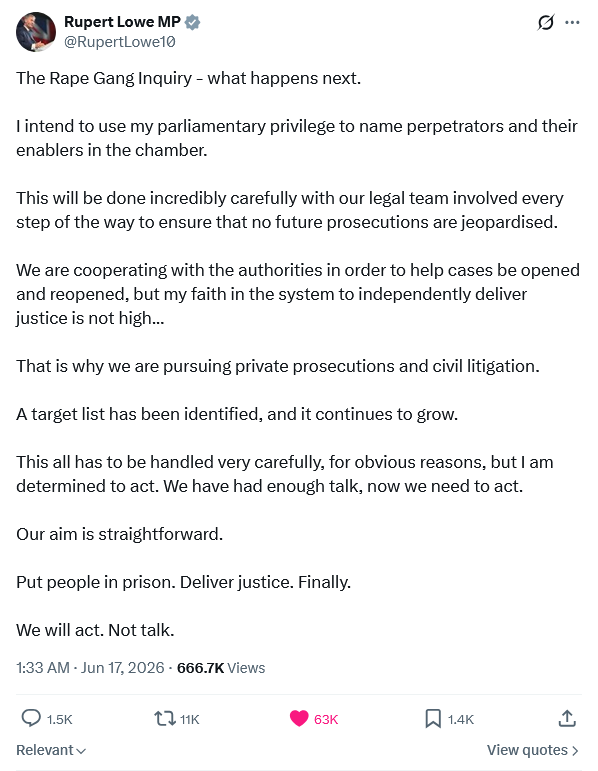
Rupert Lowe explains his next steps after the publication of the inquiry report:
June 17, 2026
QotD: The artillery
Combat Boot, “So, ‘capbadges’, what’s that all about then?”, combatboot.co.uk, 2020-11-13.
Comments Off on QotD: The artillery
June 16, 2026
Piketty’s bid for another fifteen minutes
I’m not an economist, so my personal opinion on Thomas Piketty’s work is based purely on the reports of others … you could say I’m not a fan. In the National Post, J.D. Tuccille discusses Piketty’s latest push to impoverish the rich nations for the noble cause of “global justice”:

Piketty’s 2021 paean to socialism and central panning.
Celebrity economist Thomas Piketty won fame with a claim that, in market economies, capital accumulates in the hands of the already wealthy, leading to increased inequality. The message found a receptive audience among people eager to believe economic success isn’t earned. Canada’s Prime Minister Mark Carney cited Piketty in his own 2021 book-length argument that economic activity should be managed by people like Carney.
And now Piketty is back seeking new fans with a scheme for top-down central planning of the world’s economy. He is the co-director of the new Global Justice Report from the World Inequality Lab.
Introducing the project, Piketty posted on X, “The world today is characterized by large-scale inequalities. And a climate crisis is looming over us. We urgently need a new vision for global progress in the 21st Century. One that grounds human development and equality in planetary habitability.”
Piketty shoehorns an impressive number of buzz phrases into a few lines. He includes concerns about equality and inequality, climate change and progress that should send thrills through college campuses. But Piketty has a talent for tapping into the moment. In this case, at a time when Freedom House’s annual report finds that “Global freedom declined for the 20th consecutive year in 2025,” the economist and his colleagues propose authoritarian policies for shaping the entire planet to their liking.
In his post, Piketty asks, “What would it take to achieve high prosperity and equality while remaining within planetary boundaries?” He answers that “energy transition” (meaning moving away from power sources that produce carbon) is necessary, as well as “labour hour reductions, growth caps in rich countries, less material consumption, and changes in food habits.”
The report itself asserts, “The compression of global inequality is not only compatible with deep decarbonization; it is a necessary condition for shared prosperity on a finite planet.”
To fight climate change and battle inequality, Piketty and company want “full income convergence across countries by 2100.” This requires, in part, limiting growth to “around 0-0.5% in today’s richest regions (North America/Oceania, Europe).” They argue that near-zero growth in rich countries “does not mean that their living standards stagnate” because people will benefit from flattened incomes.
On his Substack, Tim Worstall says that the latest Piketty emission disproves the “we need a global wealth tax” case of fellow French economist Gabriel Zucman:
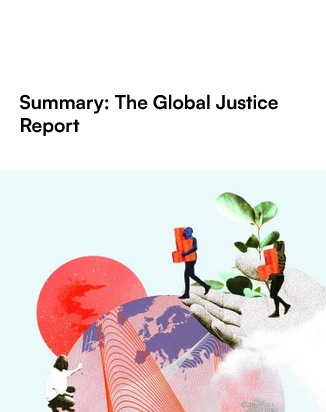
So Tommy Piketty has released his big report self-pleasuring over how a few Frogs are going to run the global economy forever. The Guardian, of course, thinks there’s merit in it:
One of the report’s key aims is to bring every country to today’s rich-country level of €5,000 per person per month in purchasing-power terms. The figure for sub-Saharan Africa is €290. The report proposes a new global fiscal and monetary architecture: taxes on the very rich would build the public realm, while a Keynesian “clearing union” and new international currency would ease the external constraints that limit poorer countries’ state spending.
Super, eh?
But the plan doesn’t just try to get the poor up to our standard of living — an excellent goal in and of itself, obviously. It also insists that we don’t increase our standard of living. For a century. Which is, you know, going to be a little more difficult.
So, how is this to be achieved? Well, this is Piketty — Frogs, eh? — so it’s going to be truly swingeing taxation of anyone who puts their head up above the parapet. The global 1% in fact.
And, well, this isn’t wholly true but it’s a useful rule of thumb, the top 1% globally is about the top 10% of the UK. -Ish, you know? Somewhere just above £50k a year for an individual in the UK. £150k for a two adult w/children household perhaps. That’s the level at which the 90% income tax swinges into action.
Oh, and, lovely wealth taxes on top too.
The effect of this is to kill economic growth. That’s what it’s designed to do too. You’ve enough, you rich bourgeois bastard, you, so that’s all you’re going to get and we’re going to use punitive taxation to make sure that’s true.
Well, OK, it’s a plan, right?
The ever-declining (yet still effective) British military
Britain’s military needs have shifted a great deal since the United States took over the unofficial role of “world policeman” after the Second World War. As Imperial commitments overseas were reduced by former colonies achieving independence, the British armed forces have also diminished. In UnHerd, Edward Luttwak considers the current state of the British army, the Royal Air Force, and the Royal Navy in the wake of the sudden resignation of Defence Minister John Healey from Sir Keir Starmer’s cabinet:

Britain’s armed forces have undergone a very long recessional. In 1945, the Army alone had some three million men under arms, with millions more in the navy, air force and various colonial forces. At the start of this year, by contrast, the “trained strength” total of the Royal Navy, RAF, Marines, and Army came to just 126,440, a figure that has actually fallen since Putin’s invasion of Ukraine. But it was not just that very low figure that explains John Healey’s dramatic resignation last week.
Until relatively recently, British defence secretaries were much envied by their European counterparts — because they were allowed to conserve as much real combat strength as possible by cutting everything else to conserve money for training and realistic exercises, as well as the continuous maintenance it requires. Typical in that regard was Healey’s namesake Denis, a fiery socialist and decorated beachmaster at Anzio, who served as Labour’s defence secretary from 1964-70. No relation to his 21st-century successor, this elder Healey worked closely with his cabinet colleagues to cut costs on buying warships, aircraft, bases and the like, to focus instead on what really matters: training, munitions and maintenance.
That may seem like mere common sense. But since the post-Cold War drawdown that was underway by 1991, almost every European defence ministry has wasted increasing proportions of their diminishing defence spending to keep increasingly empty bases open — often just to preserve civilian janitors and ground-keepers in a job, and retired NCOs in their attached housing. Also bloated are the officer corps of most European forces, increasingly disproportionate to their shrinking personnel totals. The Spanish army is perhaps the leading champion here. Despite shrinking from 280,000 men in 1990 to just 75,000 today, it has preserved every formation command, and every regional headquarters and geographic command, including one for the Canary Islands, headed by a three-star army general and flanked by navy and air force counterparts.
Altogether, these commands absorb a remarkable percentage of the total armed force personnel: all just to keep up appearances, and jobs for generals and admirals. Nor is the Spanish army unique in this self-sabotage; Madrid’s wasted defence spending, which may even reflect the policy preferences of its pacifist government, is merely an exaggerated version of knowingly wasteful policies across Europe. By a remarkable coincidence, for instance, every branch of the Italian armed forces — as well as the civilian police, the customs police, and the carabinieri military police present in every town — buy almost all of their pistols, rifles and machine guns from privately owned Beretta. The French are arguably even worse offenders: all their combat aircraft are slated to come from the privately-owned Dassault Aviation, and for all the lobbying of British firms they are not allowed to become monopolies.
The root cause of John Healey’s complaint is that to preserve those envied British defence practices, to retain a disciplined focus in using taxpayers’ money to buy actually usable combat capabilities, there are minimum funding levels which must be respected. All concerned know perfectly well that spending on “combat readiness” is like buying cut flowers: which must be bought anew each day, at the expense of furniture that can last for decades or even centuries. In other words, doing defence for real is, much more than anything else a government does, like running a restaurant open 24 hours a day, 365 days a year. This is true even when compared with health care, in which the vast majority of patients do not require round-the-clock intensive care.
Luttwak pointedly differentiates the way the British armed services operate to most of the other NATO allies: “In sober strategic terms, there is nothing especially important about these examples. But think of the alternative: 3.5 million active NATO personnel, from Canada to Turkey, who eat breakfast, lunch and dinner in uniform every day — almost none of whom is ready to fight in earnest for any reason whatsoever.” The emphasis on the “soft” investment of skills and training has to be contrasted with the kinds of military organizations who boast vast numbers of tanks, artillery pieces, helicopters, fighter jets and bombers, but who lack the crews, maintenance technicians, and parts supply to keep them operational.
Update, 17 June: Welcome, Instapundit readers! Have a look around at some of my other posts you may find of interest. I send out a daily summary of posts here through my Substack – https://substack.com/@nicholasrusson that you can subscribe to if you’d like to be informed of new posts in the future.
Why Argentina Lost the Falklands War
Real Time History
Published 6 Feb 2026On March 28, 1982 almost the entire Argentinian navy, carrying 900 troops, invaded the Falkland Islands (Islas Malvinas). The ruling junta was confident Britain wouldn’t oppose the Argentinian fait accompli. But Britain’s political will and military ability to carry out a successful campaign at the end of an 12,500 km supply line surprise many.
(more…)
Comments Off on Why Argentina Lost the Falklands War
QotD: Nitpicking the field fortifications in Gladiator (2000)
What we are shown is pretty clearly a prepared defense on a hillside, with a series of raised terraces, with a mix of abatis (sharpened wood obstacles, often crudely cut wood stakes set in an X pattern) and mantlets, with gaps in those defenses to allow units to move and a whole bunch of catapults positioned up on the hill. The terraces make for a layered, multi-stage fighting position at each level. On the one hand, the Romans were hardly averse to field fortifications and one wonders again if this set was a product of someone with an active imagination looking at the Column of Trajan [Wiki], which features a lot of scenes of Roman soldiers cutting trees and building bridges, roads and forts.
The problem isn’t that there are field fortifications, it is everything else about them: the style of field fortification, their position, layout and use. As we’ve noted before, Roman armies on campaign built fortified marching camps nightly, so we would expect Maximus’ army to have such a camp, but as we’ve discussed even more so, one of the classic, famous features of Roman armies is that they build the same layout of camp wherever they go, the famous Roman “playing card” forts, generally built on flat, open ground (rather than hillsides). That defense would not look like this, instead consisting of a ditch (the fossa) behind which would have been a earthwork rampart (the agger) topped with a wooden palisade (the vallum); thus rather than successive layers, you’d have a single clear fighting position (the vallum) on a mount with the ditch directly in front of it. And that would be a continuous line, with just four gates (at the center of each side), rather than this kind of checkerboard pattern of fortifications, because of course the purpose of this defense was to prohibit entry. Moreover, the line of field fortifications we see are not part of, nor connected to, a marching camp: it is simply a line of fortifications on the side of the hill with nothing on the flanks, rather than the distinctive “playing card shape”. We don’t see the camp sitting behind it either.
But the really immediate problem is that Maximus’ army has formed up within his troops strung through the field fortifications, with legionary soldiers mostly in front of them (but some are behind them) and the archers in between the stakes and mantlets. This may seem like a sensible way to form up a defense, but it is not the Roman way. Maximus is very intentionally “offering battle”, – inviting his opponent into an open field engagement. The way a Roman army did this was invariably forming up on the flat, open, unfortified ground in front of the camp, toward the enemy, signalling that they would fight in the open, outside of their walls (as Maximus does indeed intend to do).
So what we ought to see is Maximus’ army formed up outside in the open field, with the camp likely visible some distance behind them. That camp would be protected by very different fortifications: you’d be able to make out its “playing-card” shape, with watch-towers on the corners and the raised vallum running the exterior and the relatively neat grid of tents in the interior.
Finally, before we get to the battle plan, I want to note one more oddity here, which is the battlefield itself. The battlefield is a muddy field, which it looks to have been recently clear-cut, otherwise surrounded by dense forest. Of course part of the reason is that this is Bourne Wood, a coniferous tree plantation (and frequent filming location) in Surrey, England (which is why the trees are all the same species, so neatly spaced out) rather than the edge of an old-growth forest somewhere in southern Germany.
But the thing is, the Marcomanni, Quadi and other Germanic-language speaking peoples were an agrarian society, same as the Romans: their villages were surrounded by farm and pastureland. Of course a lot of the forest – old-growth forest, rather than tree-farms as here – remained, but if a Roman army wanted a flat, open space to offer battle in, they needn’t have cleared it themselves (and indeed probably couldn’t, at least not in the time frame they’d have to prepare for a pitched battle), but could simply march to the nearest village with its patches of farmland. Getting a Roman army to fight in dense, old-growth forest, after all, famously required clever ambushes, as a Teutoberg Forest (modern Kalkriese) in 9 AD. And if the enemy didn’t want to fight in the open, Roman armies were perfectly happy to burn villages and pillage crops as the standard way of attempting to force an enemy to accept an offer to battle or else vacate the area.
Bret Devereaux, “Collections: Nitpicking Gladiator’s Iconic Opening Battle, Part I”, A Collection of Unmitigated Pedantry, 2025-06-06.
Comments Off on QotD: Nitpicking the field fortifications in Gladiator (2000)
June 15, 2026
The British by-election in Makerfield and the split on the right
Normally, single seat contests are not all that newsworthy in countries using the Westminster-style of Parliamentary democracy, but the Makerfield by-election in the Manchester region of England seems to be rather more significant. The Labour Party candidate is widely seen as the successor-in-waiting to Sir Keir Starmer (by everyone but Starmer, apparently). The main opposition was expected to be Nigel Farage’s Reform party’s candidate, but the vote on the right is also being contested by Rupert Lowe’s breakaway Restore Britain party. Splitting the vote between Reform and Restore might let an unpopular Labour party win the by-election and start the process of ousting Starmer from Number 10 Downing Street. This might keep Labour in power for another year or so, which is plenty of time to bring in a few hundred thousand “refugees” or enact stricter censorship rules, or any of a number of other hugely unpopular things.
Sean Gabb explains the situation from a libertarian point of view:
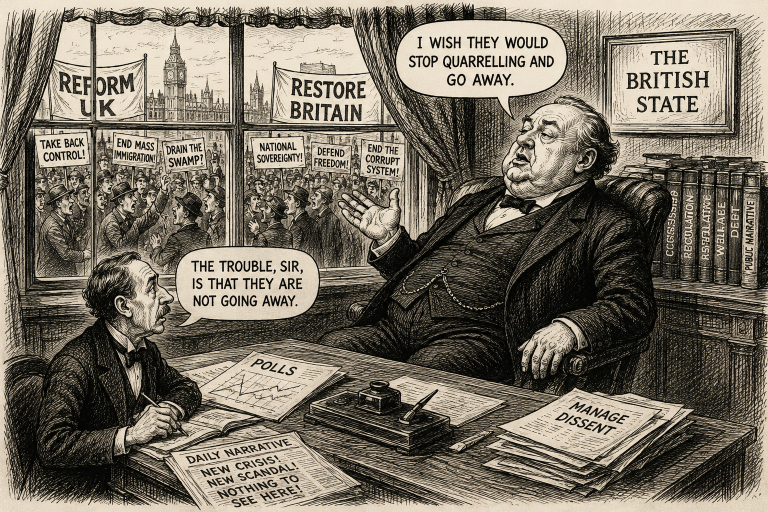
The coming by-election at Makerfield has provoked a familiar argument on the patriotic right. On one side are those who denounce the intervention of Rupert Lowe and his Restore Britain movement. Labour is vulnerable. Reform has a realistic chance of victory. Any division of the anti-Labour vote therefore appears self-indulgent and destructive. Rupert Lowe, they say, may have legitimate grievances against Nigel Farage. He was certainly treated badly by Reform UK. But personal grievances ought to be put aside when the national interest is at stake. If Labour can be defeated, then Labour should be defeated.
On the other side are those who see Nigel Farage as the problem rather than the solution. They argue that Reform UK is little more than a vehicle for containing public anger. Every time popular discontent threatens to escape the boundaries of acceptable politics, Farage appears, gathers up the protest vote, makes a series of compromises, and then leaves the underlying structure untouched. In this view, Rupert Lowe is valuable because he threatens Farage’s position. The sooner Farage is challenged and replaced by a man of greater integrity, the better for the country.
Both positions have a certain logic. Both also rest on assumptions that do not survive contact with political reality.
The first assumption is that Britain stands on the verge of some great political rupture. If only the correct party can gather enough votes, or if only the correct leader can emerge, the existing order will be swept away and replaced with something fundamentally different. Of course, there are examples of such transformations. Russia in 1917 saw the destruction of one ruling class and its replacement by another. Iran in 1979 witnessed the collapse of a monarchy and the rise of a revolutionary theocracy. Similar examples can be found elsewhere. Yet these events were exceptional. They occurred when the existing state apparatus had ceased to function effectively. The old order was no longer capable of commanding obedience. Administrative structures had broken down. The loyalty of key institutions could no longer be relied upon. Under those conditions, revolution became possible.
Britain is not presently in that condition. The country may be badly governed. Its political class may be incompetent. Its institutions may be corrupt and increasingly detached from the interests of the population. None of this amounts to state collapse. Modern Britain remains one of the most centralised and administratively sophisticated states in the world. It possesses powers of surveillance, regulation and information management that previous generations could scarcely have imagined. The police state is often clumsy. It is frequently absurd. It is not, however, weak.
This matters because fantasies of imminent revolution are often based on a misunderstanding of where Britain actually stands. People look at social decay, demographic change, collapsing public services, and widespread public dissatisfaction, and assume that these conditions must shortly produce some decisive confrontation. They forget that highly organised states can survive astonishing levels of dysfunction. The late Soviet Union endured decades of stagnation. The Ottoman Empire acquired the nickname “the sick man of Europe” long before it finally disappeared, and that needed the Great War. It was the same with the Hapsburg Empire. Decay and collapse are not the same thing.
If revolution is improbable, perhaps the answer lies in electoral victory. This is the second assumption behind much of the argument over Makerfield. Perhaps Nigel Farage or Rupert Lowe will eventually enter government through the ballot box. Once there, they will make the necessary reforms. Immigration will be reversed. The bureaucracies will be cut back. The censorship apparatus will be dismantled. Industry will be restored. The country will begin moving in a healthier direction. This belief is less implausible than dreams of barricades and insurrection. But less implausible is not the same as plausible.
The great theorists of elite rule explained the truth of democracy more than a century ago. Gaetano Mosca observed that every society is governed by an organised minority. Vilfredo Pareto described the circulation of elites, whereby personnel change while underlying structures remain. Robert Michels formulated his famous Iron Law of Oligarchy, according to which every large organisation develops a permanent leadership class that becomes increasingly independent of its nominal supporters. These men disagreed about many things. On one point they were united. Democracy changes faces more readily than it changes systems.
The reason is obvious enough. Every viable state possesses a permanent administrative core. Civil servants, judges, regulators, military officers, police officials, academics, media managers and corporate functionaries form an interconnected network of expertise and influence. Governments come and go. This network remains. It possesses continuity, institutional memory, technical knowledge and the immense advantage of permanence. The elected politician arrives promising radical change. The permanent apparatus replies with delay, obstruction, reinterpretation, consultation, procedural complexity, judicial review, regulatory resistance and media hostility. The shock is absorbed. The energy dissipates. The machine grinds on.
Comments Off on The British by-election in Makerfield and the split on the right
European World Cup tourists in the US
On the social media site formerly known as Twitter, Larry Correia notes that Europeans’ reactions to visiting the United States changes once they get out of the big cities:

The posts from World Cup Europeans seeing actual America has been great. The shock and awe is hilarious.
I think it’s because their perspective has been based on TV shows (overwhelmingly set in LA or NYC, which get everything wrong about the rest of the nation because the writers are usually provincial liberal dorks who despise the rest of the country) and when they do come here as tourists it is to the same handful of tourist places. Which are always artificial, weird, and crowded.
It turns out that when you get away from our big stupid blue cities, and all the societal decay that comes from liberals not being able to govern worth a shit, America is actually really awesome.
I’ve been to 45 US states. I’ve enjoyed all of them. Even the blue ones, once I’m away from the parts that are entirely paved where lawless crazy people are allowed to shit in the streets and threaten everyone. It’s just a collapse of leadership, and democrats being inept, not giving a fuck as long as they’re still getting paid, or actively rooting for society’s destruction because they’re deluded morons who think they’re going to build a socialist utopia from the ashes.
America has managed to isolate that retarded shit tier philosophy mostly to our big blue city liberal enclaves, where lawless dumb shit can rule, while the rest of us live relatively normal lives, and our politics are primarily based on keeping those assholes away from our stuff as much as possible.
But the cool Europeans have been trapped on a continent where that philosophy rules EVERYWHERE. They’ve got nowhere to escape from their mediocre control freaks. Their shocking discovery that normal sane people can still just do things, and make things, and build, and have fun, and be safe, and raise their kids, is what’s making this whole thing fun.
I don’t follow soccer, futbol, whatever. But I am cheering on some Europeans right now. 😀
Update: Fixed broken link.


