
World War Two
Published 14 Feb 2022Another installment of Across the Airwaves, where we highlight some of the best viewer comments under our videos. It’s Valentine’s Day and we’re feeling pretty romantic, so Indy and Spartacus will be reading comments that are all about love, humanity, and relationships.
(more…)
February 15, 2022
Total War on Valentine’s Day – WW2 – Reading Comments
Comments Off on Total War on Valentine’s Day – WW2 – Reading Comments
QotD: Breaking the trench stalemate with tanks
Where the Germans tried tactics, the British tried tools. If the problems were trenches, what was needed was a trench removal machine: the tank.
In theory, a good tank ought to be effectively immune to machine-gun fire, able to cross trenches without slowing and physically protect the infantry (who could advance huddled behind the mass of it), all while bringing its own firepower to the battle. Tracked armored vehicles had been an idea considered casually by a number of the pre-war powers but not seriously attempted. The British put the first serious effort into tank development with the Landship Committee, formed in February of 1915; the first real tanks, 49 British Mark I tanks, made their first battlefield appearance during the Battle of the Somme in 1916. Reliability proved to be a problem: of the 49 tanks that stepped off on the attack on September 15th, only three were operational on the 16th, mostly due to mechanical failures and breakdowns.
Nevertheless there was promise in the idea that was clearly recognized and a major effort to show what tanks could do what attempted at Cambrai in November of 1917; this time hundreds of tanks were deployed and they had a real impact, breaking through the barbed wire and scattering the initial German defenses. But then came the inevitable German counter-attacks and most of the ground taken was lost. It was obvious that tanks had great potential; the French had by 1917 already developed their own, the light Renault FT tank, which would end up being the most successful tank of the war despite its small size (it is the first tank to have its main armament in a rotating turret and so in some sense the first “real” tank). This was hardly an under-invested-in technology. So did tanks break the trench stalemate?
No.
It’s understandable that many people have the impression that they did. Interwar armored doctrine, particularly German Maneuver Warfare (bewegungskrieg) and Soviet Deep Battle both aimed to use the mobility and striking power of tanks in concentrated actions to break the trench stalemate in future wars (the two doctrines are not identical, mind you, but in this they share an objective). But these were doctrines constructed around the performance capabilities of interwar tanks, particularly by two countries (Germany and the USSR) who were not saddled with large numbers of WWI era tanks (and so could premise their doctrine entirely on more advanced models). The Panzer II, with a 24.5mph top speed and an operational range of around 100 miles, depending on conditions, was actually in a position to race the train and win; the same of course true of the Soviet interwar T-26 light tank (19.3mph on roads, 81-150 mile operational range). Such tanks could have radios for coordination and communication on the move (something not done with WWI tanks or even French tanks in WWII).
By contrast, that Renault FT had a top speed of 4.3mph and an operational range of just 37 miles. The British Mark V tank, introduced in 1918, moved at only 5mph and had just 45 miles of range. Such tanks struggled to keep up with the infantry; they certainly were not going to win any race the infantry could not. It is little surprise that the French, posed with the doctrinal problem of having to make use of the many thousands of WWI tanks they had, settled on a doctrine whereby most tanks would simply be the armored gauntlet stretched over the infantry’s fist: it was all those tanks could do! The sort of tank that could do more than just dent the trench-lines (the same way a good infiltration assault with infantry could) were a decade or more away when the war ended.
Moreover, of course, the doctrine – briefly the systems of thinking and patterns of training, habit and action – to actually pull off what tanks would do in 1939 and 1940 were also years away. It seems absurd to fault World War I era commanders for not coming up with a novel tactical and operational system in 1918 for using vehicles that wouldn’t exist for another 15 years and yet more so assuming that they would get it right (since there were quite a number of different ideas post-war about how tanks ought to be used and while many of them seemed plausible, not all of them were practical or effective in the field). It is hard to see how any amount of support into R&D or doctrine was going to make tanks capable of breakthroughs even in the late 1920s or early 1930s (honestly, look at the “best” tanks of the early 1930s; they’re still not up to the task in most cases) much less by 1918.
Bret Devereaux, “Collections: No Man’s Land, Part II: Breaking the Stalemate”, A Collection of Unmitigated Pedantry, 2021-09-24.
Comments Off on QotD: Breaking the trench stalemate with tanks
February 11, 2022
Eat the Nazis, There’s Nothing Else – WAH 052 – February 1943, Pt. 1
World War Two
Published 10 Feb 2022As the United Nations alliance, and the Resistance in occupied Europe increase their pressure on Nazi Germany, they continue to escalate their war on humanity. Meanwhile, in more and more parts of the world there is little to eat.
(more…)
Comments Off on Eat the Nazis, There’s Nothing Else – WAH 052 – February 1943, Pt. 1
February 10, 2022
MI6’s Secret War – WW2 – Spies & Ties 13
World War Two
Published 9 Feb 2022Britain’s MI6 is caught off guard when war breaks out. As the Germans advance across Western Europe MI6’s networks collapse, and Britain becomes almost blind. MI6 have their secret weapons at Bletchley Park but they now face a painful struggle to rebuild their eyes in Europe.
(more…)
Comments Off on MI6’s Secret War – WW2 – Spies & Ties 13
February 9, 2022
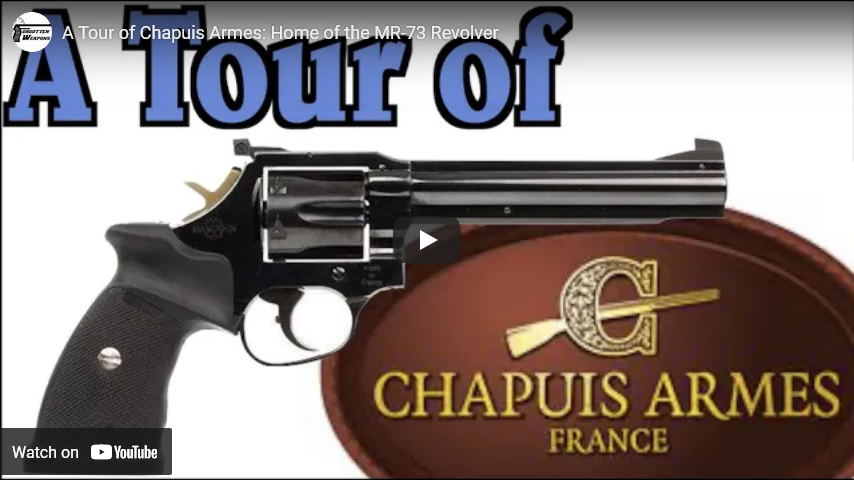
A Tour of Chapuis Armes: Home of the MR-73 Revolver
Forgotten Weapons
Published 5 Oct 2021http://www.patreon.com/ForgottenWeapons
https://www.floatplane.com/channel/Fo…
Cool Forgotten Weapons merch! http://shop.forgottenweapons.com
With the MR-73 revolvers finally becoming regularly available in the US, I figured it would be really interesting to see how they are made! So, I headed over to Chapuis Armes, where the Directeur Général, Vincent Chapuis, gave me a really nice tour. Want to see? Let’s go in …
Contact:
Forgotten Weapons
6281 N. Oracle 36270
Tucson, AZ 85740
Comments Off on A Tour of Chapuis Armes: Home of the MR-73 Revolver
February 7, 2022
History Summarized: Vikings
Overly Sarcastic Productions
Published 14 Jul 2017Huge thanks to our friend Shad at Shadiversity! Check out his channel for historical weaponry and much more: https://www.youtube.com/user/shadmbrooks
Grab your swords and hop in your longboats, because it’s time to learn a thing or two about the Vikings!
This video was produced with assistance from the Boston University Undergraduate Research Opportunities Program.
Thanks to patron Karl Erik L Hoftaniska for suggesting this topic!
PATREON: www.patreon.com/user?u=4664797
MERCH LINKS:
Shirts – https://overlysarcasticproducts.threa…
All the other stuff – http://www.cafepress.com/OverlySarcas…Find us on Twitter @OSPYouTube!
From the comments:
Finn Chitwood
4 years ago
In the words of a brilliant Icelandic magazine: “Viking was a seasonal, temporary occupation, not an ethnicity.”
Comments Off on History Summarized: Vikings
February 4, 2022
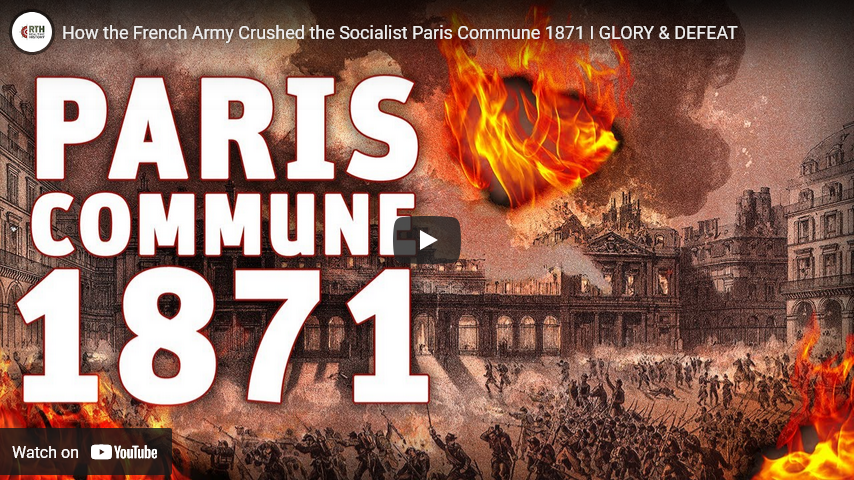
How the French Army Crushed the Socialist Paris Commune 1871 I GLORY & DEFEAT
Real Time History
Published 3 Feb 2022https://curiositystream.com/realtimeh… – get Nebula and CuriosityStream for less than $15 for an entire year.
The siege of Paris and the end of the Franco-Prussian War had brought social unrest in Paris (and other French cities) to a boiling point. Radical citizens take up arms and proclaim La Commune, a self-organized alternative to the French Republic. But soon the French Army is cracking down and Paris experiences a Week of Blood.
» THANK YOU TO OUR CO-PRODUCERS
John Ozment, James Darcangelo, Jacob Carter Landt, Thomas Brendan, Kurt Gillies, Scott Deederly, John Belland, Adam Smith, Taylor Allen, Rustem Sharipov, Christoph Wolf, Simen Røste, Marcus Bondura, Ramon Rijkhoek, Theodore Patrick Shannon, Philip Schoffman, Avi Woolf, Daniel L Garza, Chris Daley, Manfred Billenstein, Simdoom, Malcolm Swan» OUR PODCAST
https://realtimehistory.net/podcast – interviews with historians and background info for the show.» LITERATURE
Arand, Tobias: 1870/71. Der Deutsch-Französische Krieg erzählt in Einzelschicksalen. Hamburg 2018Bauer, Gerhard u.a. (Hrsg.): Ausst.-Kat. MHM Dresden‚ Krieg – Macht – Nation. Wie das deutsche Kaiserreich entstand. Dresden 2020
Buk-Swienty, Tom: Feuer und Blut. Hauptmann Dinesen. Hamburg 2014
Gouttman, Alain: La grande défaite. 1870-1871. Paris 2015
Horne, Alistair: Es zogen die Preußen wohl über den Rhein. Bern, München, Wien 1967
» SOURCES
Bernhardt, Sarah: Ma double vie. Memoires. Paris 1907
Déclaration de la Commune de Paris. (19 avril 1871) https://gallica.bnf.fr/ark:/12148/bpt…
Goncourt, Edmond de: Journal des Goncourts. II.1. 1870-1871. Paris 1890
Hérisson, Maurice d’: Nouveau Journal d’un officier d’ordonannce. Paris 1889
Hoppenstedt, Julius von: Ein neues Wörth. Ein Schlachtenbild der Zukunft. Berlin 1909
Hugo, Victor: Choses vues, 2e série. Ollendorf 1913.
Kühnhauser, Florian: Kriegs-Erinnerungen eines Soldaten des königlich-bayerischen Infanterie-Leib-Regiments. Partenkirchen 1898
Meisner, Heinrich Otto (Hrsg.). Kaiser Friedrich III. Kriegstagebuch 1870/71. Berlin, Leipzig 1926
Plitt, Franz: Rückerinnerungen eines Dreiundachtzigers. Kassel 1903
Zola, Émile: La Débâcle. Paris 1892
» OUR STORE
Website: https://realtimehistory.net»CREDITS
Presented by: Jesse Alexander
Written by: Cathérine Pfauth, Prof. Dr. Tobias Arand, Jesse Alexander
Director: Toni Steller & Florian Wittig
Director of Photography: Toni Steller
Sound: Above Zero
Editing: Toni Steller
Motion Design: Philipp Appelt
Mixing, Mastering & Sound Design: http://above-zero.com
Maps: Battlefield Design
Research by: Cathérine Pfauth, Prof. Dr. Tobias Arand
Fact checking: Cathérine Pfauth, Prof. Dr. Tobias ArandChannel Design: Battlefield Design
Contains licensed material by getty images
All rights reserved – Real Time History GmbH 2022
Comments Off on How the French Army Crushed the Socialist Paris Commune 1871 I GLORY & DEFEAT
February 2, 2022
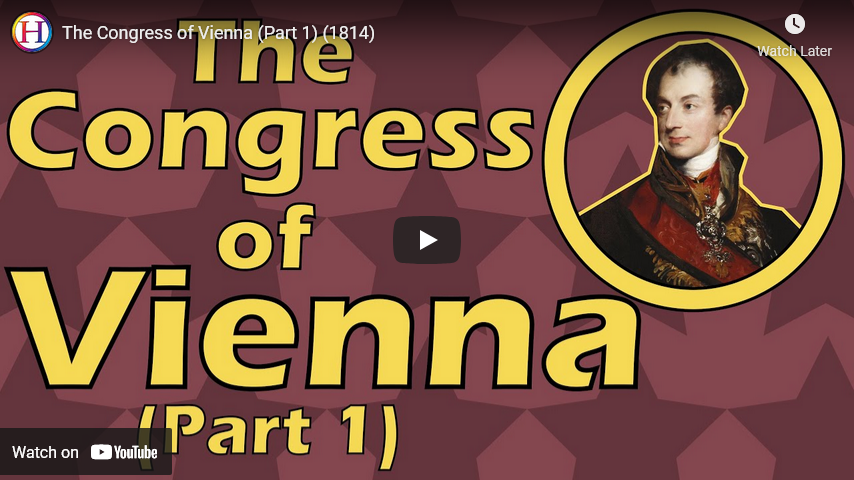
The Congress of Vienna (Part 1) (1814)
Historia Civilis
Published 29 Jan 2022Patreon | http://historiacivilis.com/patreon
Donate | http://historiacivilis.com/donate
Merch | historiacivilis.com/merch
Mailing List | http://historiacivilis.com/mailinglist
Twitter | http://historiacivilis.com/twitter
Website | http://historiacivilis.comSources:
Wolfram Siemann, Metternich: Strategist and Visionary | https://amzn.to/3Glc5c8
Eric Hobsbawm, The Age of Revolution, 1789-1848 | https://amzn.to/3zOQWV4
Adam Zamoyski, Rites of Peace: The Fall of Napoleon and the Congress of Vienna | https://amzn.to/3zSpcir
Richard J. Evans, The Pursuit of Power: Europe 1815-1914 | https://amzn.to/3qhFE8G
A. Wess Mitchell, The Grand Strategy of the Habsburg Empire | https://amzn.to/332Sorj
Robert K. Massie, Dreadnought: Britain, Germany, and the Coming of the Great War | https://amzn.to/3r6jllP
—
N. Gash, “After Waterloo: British Society and the Legacy of the Napoleonic Wars”, from Transactions of the Royal Historical Society, vol. 28, 1978, pp. 145-157. | https://www.jstor.org/stable/3679205
The Annual Register, 1815, Preface | https://hdl.handle.net/2027/mdp.39015…
Voltaire, “An Essay on Universal History, the Manners, and Spirit of Nations” | https://amzn.to/34BGbtL
The History of Parliament: The 5th Parliament of the United Kingdom | https://www.historyofparliamentonline…Music:
“Like,” by Nctrnm
“But Enough About Me Bill Paxton,” by Chris Zabriskie
“I Don’t See the Branches, I See the Leaves,” by Chris Zabriskie
“Orion,” by Josh Stewart
“CGI Snake,” by Chris Zabriskie
“Gown,” by Nctrnm
“Hallon,” by Christian BjoerklundWe are a participant in the Amazon Services LLC Associates Program, an affiliate advertising program designed to provide a means for us to earn fees by linking to Amazon.com and affiliated sites.
Comments Off on The Congress of Vienna (Part 1) (1814)
January 30, 2022
Time to Fire Rommel? – WW2 – 179 – January 29, 1943
World War Two
Published 29 Jan 2022The Allies are unable to win in Tunisia, though further east Bernard Montgomery has achieved his goal of driving the enemy out of Libya. To the west, the Casablanca Conference comes to its end and the Allies write a list of their war priorities. The Soviets, however, are on the move everywhere, closing in on Stalingrad, and launching new operations up and down the eastern front, to the dismay and detriment of the Axis forces.
(more…)
Comments Off on Time to Fire Rommel? – WW2 – 179 – January 29, 1943
January 29, 2022
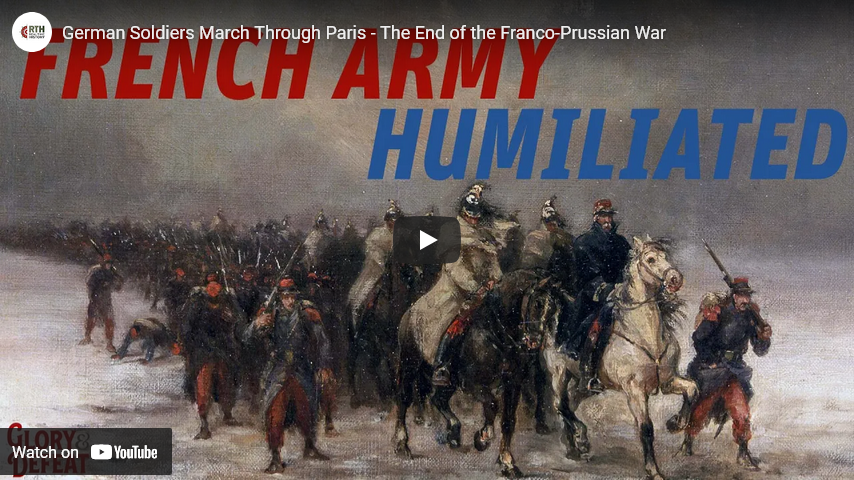
German Soldiers March Through Paris – The End of the Franco-Prussian War
Real Time History
Published 27 Jan 2022https://patreon.com/realtimehistory – support future Real Time History series on Patreon
The end of the Franco-Prussian War is marked by humiliation for France. German soldiers march into Paris and the French Army of the East under Bourbaki flees to neutral Switzerland to surrender there.
» THANK YOU TO OUR CO-PRODUCERS
John Ozment, James Darcangelo, Jacob Carter Landt, Thomas Brendan, Kurt Gillies, Scott Deederly, John Belland, Adam Smith, Taylor Allen, Rustem Sharipov, Christoph Wolf, Simen Røste, Marcus Bondura, Ramon Rijkhoek, Theodore Patrick Shannon, Philip Schoffman, Avi Woolf,» OUR PODCAST
https://realtimehistory.net/podcast – interviews with historians and background info for the show.» LITERATURE
Arand, Tobias: 1870/71. Der Deutsch-Französische Krieg erzählt in Einzelschicksalen. Hamburg 2018Bauer, Gerhard u.a. (Hrsg.): Ausst.-Kat. MHM Dresden‚ Krieg – Macht – Nation. Wie das deutsche Kaiserreich entstand. Dresden 2020
Bolek, Nina: “Die Regelungen des Frankfurter Friedensvertrages zur Kriegerbestattung”, in: Das Schlachtfeld von Woerth – Geschichtsort, Erinnerungsort, Lernort, hrsg. v. T. Arand und Ch. Bunnenberg. Münster. 2012: 109-130
Buk-Swienty, Tom: Feuer und Blut. Hauptmann Dinesen. Hamburg 2014
Gouttman, Alain: La grande défaite. 1870-1871. Paris 2015
Joland, Gérard: “La variole et la guerre de 1870”, in Les Tribunes de la santé 33/4 (2011): 25-30
Tomasetti, Philippe: “L’œvre des tombes et des prières et l’érection des premiers monuments commémoratifs français de la guerre de 1870-1871”, in: L’Outre-Fôret 155 (2011): 3-17
» SOURCES
Deuerlein, Ernst: Die Gründung des Deutschen Reichs 1870/71 in Augenzeugenberichten. Gerlingen 2011 (Neuauflage)Engels, Friedrich: Der Deutsch-Französische Krieg. Sechzig Artikel aus der “Pall Mall Gazette”. Berlin (Ost) 1957
Gerstäcker, Friedrich: “Um Paris herum. IV. Die Brücke von Sèvres”, in: Die Gartenlaube, Heft 11 (1871). SW. 183-186
Goncourt, Edmond de: Journal des Goncourts. II.1. 1870-1871. Paris 1890
Pietsch, Ludwig: Von Berlin bis Paris. Kriegsbilder 1870-1871. Berlin 1871
Reich-Gesetzblatt Nr 26. 1871. Berlin 1872
Russell, William Howard: My diary during the last great war. London 1874
Schellendorf, Paul Bronsart von: Geheimes Kriegstagebuch 1870-71, hrsg. v. Peter Rassow. Bonn 1954
Zeitz, Karl: Kriegserinnerungen eines Feldzugsfreiwilligen aus den Jahren 1870 und 1871. Altenburg 1905
» OUR STORE
Website: https://realtimehistory.net»CREDITS
Presented by: Jesse Alexander
Written by: Cathérine Pfauth, Prof. Dr. Tobias Arand, Jesse Alexander
Director: Toni Steller & Florian Wittig
Director of Photography: Toni Steller
Sound: Above Zero
Editing: Toni Steller
Motion Design: Philipp Appelt
Mixing, Mastering & Sound Design: http://above-zero.com
Maps: Battlefield Design
Research by: Cathérine Pfauth, Prof. Dr. Tobias Arand
Fact checking: Cathérine Pfauth, Prof. Dr. Tobias ArandChannel Design: Battlefield Design
Contains licensed material by getty images
All rights reserved – Real Time History GmbH 2022
Comments Off on German Soldiers March Through Paris – The End of the Franco-Prussian War
QotD: English patriotism
George Orwell, “The Lion And The Unicorn: Socialism and the English Genius”, 1941-02-19.
Comments Off on QotD: English patriotism
January 24, 2022
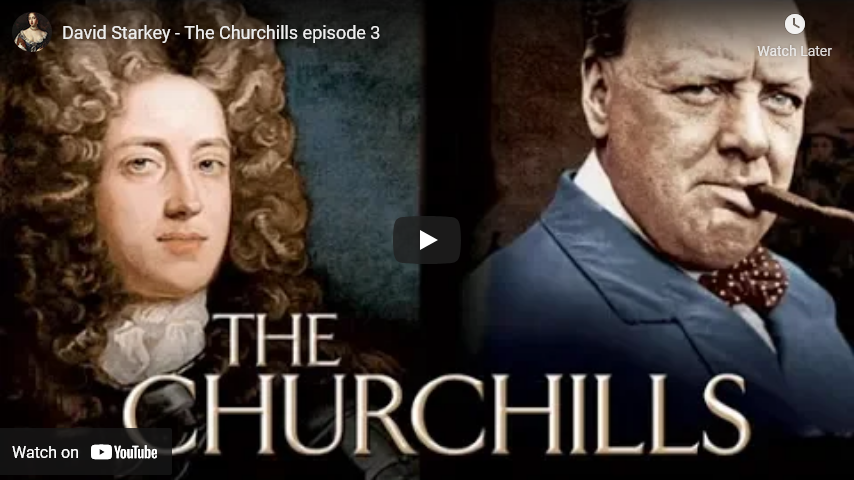
David Starkey – The Churchills episode 3
Whitehall Moll History Clips
Published 29 May 2019How did Winston Churchill draw on the lessons of his ancestor John Churchill to fight World War II? The Duke of Marlborough’s influence is apparent as Dr David Starkey explains
Comments Off on David Starkey – The Churchills episode 3
January 21, 2022
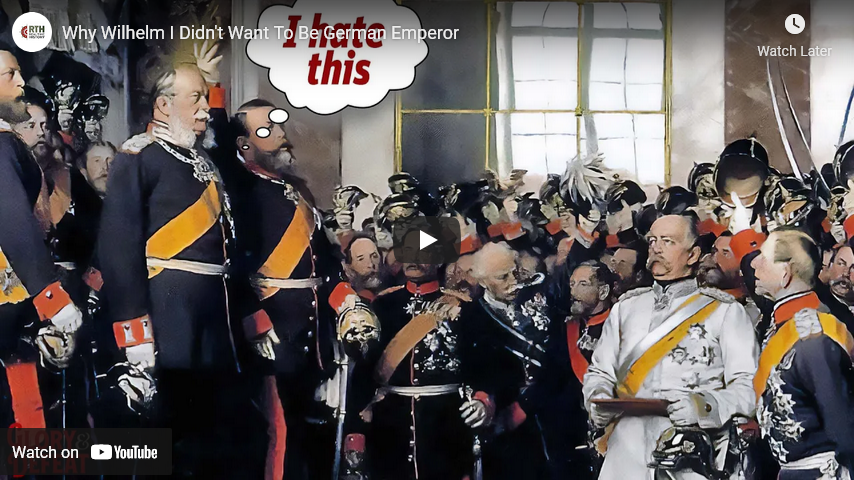
Why Wilhelm I Didn’t Want To Be German Emperor
Real Time History
Published 20 Jan 2022Get the Smartest Bundle in Streaming: https://smartbundle.com/thegreatwarsb
The proclamation of the German Empire on 18 January 1871 is usually portraited as a glorious ceremony. Most people associated it with the famous paintings from Anton von Werner. But the ceremony itself was far from well organized and the soon-to-be Emperor Wilhlem I himself was not to thrilled about the whole affair.
» THANK YOU TO OUR CO-PRODUCERS
John Ozment, James Darcangelo, Jacob Carter Landt, Thomas Brendan, Kurt Gillies, Scott Deederly, John Belland, Adam Smith, Taylor Allen, Rustem Sharipov, Christoph Wolf, Simen Røste, Marcus Bondura, Ramon Rijkhoek, Theodore Patrick Shannon, Philip Schoffman, Avi Woolf,» OUR PODCAST
https://realtimehistory.net/podcast – interviews with historians and background info for the show.» LITERATURE
Arand, Tobias: 1870/71. Der Deutsch-Französische Krieg erzählt in Einzelschicksalen. Hamburg 2018Bartmann, Dominik (Hrsg.): “Ausst.-Kat. DHM‚ Anton von Werner. Geschichte in Bildern.” Berlin 1993
Bauer, Gerhard u.a. (Hrsg.): Ausst.-Kat. MHM Dresden “Krieg – Macht – Nation. Wie das deutsche Kaiserreich entstand”. Dresden 2020
Bühl-Gramer, Charlotte: Anton von Werner – “Die Proklamierung des Deutschen Kaiserreichs 1871”, in: Der Europäische Bildersaal. Europa und seine Bilder, hrsg. v. Michael Wobring und Susanne Popp. Schwalbach/Ts. 2014. S. 86-97
Gouttman, Alain: La grande défaite. 1870-1871. Paris 2015
» SOURCES
Deuerlein, Ernst: Die Gründung des Deutschen Reichs 1870/71 in Augenzeugenberichten. Gerlingen 2011 (Neuauflage)Goncourt, Edmond de: Journal des Goncourts. II.1. 1870-1871. Paris 1890
Meisner, Heinrich Otto (Hrsg.): Kaiser Friedrich III. Das Kriegstagebuch von 1870/71. Berlin, Leipzig 1926
Merkelbach, Thea (Hrsg.): Ferdinand Viebig. Der Krieg 1870/71. Aus den Erinnerungen eines preußischen Offiziers. Zell/Mosel 2021
N.N. (Hrsg.): Bismarcks Briefe an seine Gattin aus dem Kriege 1870/71. Stuttgart, Berlin 1903
Werner, Anton von: Erlebnisse und Eindrücke 1870-1890. Berlin 1913
» OUR STORE
Website: https://realtimehistory.net»CREDITS
Presented by: Jesse Alexander
Written by: Cathérine Pfauth, Prof. Dr. Tobias Arand, Jesse Alexander
Director: Toni Steller & Florian Wittig
Director of Photography: Toni Steller
Sound: Above Zero
Editing: Toni Steller
Motion Design: Philipp Appelt
Mixing, Mastering & Sound Design: http://above-zero.com
Maps: Battlefield Design
Research by: Cathérine Pfauth, Prof. Dr. Tobias Arand
Fact checking: Cathérine Pfauth, Prof. Dr. Tobias ArandChannel Design: Battlefield Design
Contains licensed material by getty images
All rights reserved – Real Time History GmbH 2022
Comments Off on Why Wilhelm I Didn’t Want To Be German Emperor
January 20, 2022
David Starkey — The Churchills episode 2
Whitehall Moll History Clips
Published 11 Feb 2019Dr David Starkey reveals how Winston Churchill’s biography of his ancestor John Churchill marked out Winston as the only politician who truly understood war — just as WWII loomed.
Comments Off on David Starkey — The Churchills episode 2
January 18, 2022
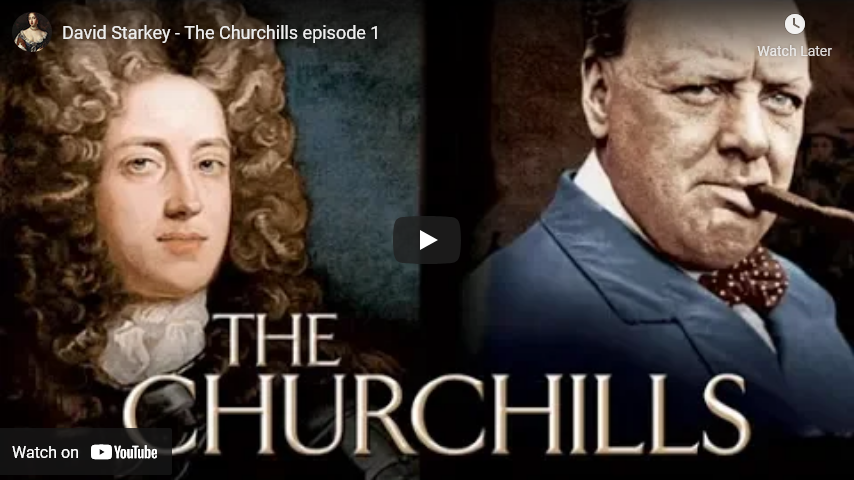
David Starkey – The Churchills episode 1
Whitehall Moll History Clips
Published 7 Jan 2019David Starkey weaves the stories of two great British war leaders: John and Winston Churchill. Hear how John Churchill rose from obscurity to be King James II’s right-hand man.
Comments Off on David Starkey – The Churchills episode 1


