
seangabb
Published 18 Mar 2021The Crusades are the defining event of the Middle Ages. They brought the very different civilisations of Western Europe, Byzantium and Islam into an extended period of both conflict and peaceful co-existence. Between January and March 2021, Sean Gabb explored this long encounter with his students. Here is one of his lectures. All student contributions have been removed.
(more…)
May 31, 2022
The Crusades: Part 9 – The Other Crusades
Comments Off on The Crusades: Part 9 – The Other Crusades
May 30, 2022
The Deadliest Job in World War Two – WAH 062 – May 29, 1943
World War Two
Published 29 May 2022Arthur Harris and the RAF set another record in bombing Germany, and the outnumbered Yugoslav Partisans show the Axis that numbers mean little when you’re clever.
(more…)
Comments Off on The Deadliest Job in World War Two – WAH 062 – May 29, 1943
May 28, 2022
Modele 1890 Berthier Cuirassier Carbine
Forgotten Weapons
Published 17 Jul 2017http://www.patreon.com/ForgottenWeapons
When the Modele 1890 Berthier carbine was adopted for the French cavalry, the decision was made to produce a special version for the Cuirassier troops. These were the elite heavy cavalry, equipped with steel breastplates and elaborate plumed helmets. They existed in that very brief window where the worlds of Napoleon and the smokeless-powder rifle coexisted.
The armor worn by the Cuirassier required some special adaptations to their firearms, specifically to the stocks. The scaled chinstrap of the helmet interfered with a normal cheek weld to the carbine, so the comb was removed from the stock. The metal buttplate also was a poor match for the metal cuirass, as it was difficult to hold the gun in position to aim. To account for this, a leather buttplate was used on these carbine, which would be much less slippery on armor.
Aside from these changes to the stock, the carbine was identical to the standard 1890 cavalry carbine. A total of 20,000 Cuirassier carbines were made in 1891 at the Chatellerault arsenal, and few survived World War One. By fairly early in 1915 the cavalry units had been repurposed as infantry, and the Cuirassier went into the trenches with the armor and carbines — perhaps better equipped, ironically, than the infantry in the greatcoats, kepis, and with Lebel rifles.
Thanks to Justin for finding this rifle for me!
If you enjoy Forgotten Weapons, check out its sister channel, InRangeTV! http://www.youtube.com/InRangeTVShow

Comments Off on Modele 1890 Berthier Cuirassier Carbine
QotD: Breaking the trench stalemate with tactical air power
The first function aircraft were put to in WWI was reconnaissance. In 1914, that might mean locating the enemy in a fast-moving battlefield, but as soon as the trench stalemate set in, reconnaissance mostly meant identifying enemy buildups along the line and – still more importantly – serving as spotters for artillery. It wasn’t a huge cognitive leap to go from having aircraft which identified targets for the artillery to thinking that the aircraft could be the artillery. But as with tanks, the technical limitations of the platforms in use meant that actually meaningful close air support was still two decades away when the war ended. The rapid development of aircraft in these early days means that there is a truly bewildering array of aircraft designs in use during the war, but the Farman F.50 is a good sample for what the most advanced bombers in common use looked like towards the war’s end. It carried a maximum of eight 44kg (totalling 352kg) bombs under the wings, which were dropped unguided. With a maximum speed of less than 100mph and a service ceiling under 5000m, it was also an extremely vulnerable platform: fragile, slow and with a relatively low flight ceiling. The French mainly used bombers at night for this reason.
But how much airpower does it take to really move a division out of position? In 1944, at the start of Operation Cobra as part of the Normandy breakout, it was necessary for US forces to move the powerful armored division Panzer Lehr out of its prepared positions outside of St. Lo. Over the course of an hour and a half, the U.S. Eighth Air Force hit Panzer Lehr with approximately three thousand aircraft, including 1,800 heavy bombers (each of which might have had bomb-loads of c. 2-3,500kg; the attack would have been the equivalent of about 13,000 Farman F.50s (of which only a hundred or so were built!)). By this point, even medium bombers carried bomb loads in the thousands of pounds, like the B-25 Mitchell medium bomber, with a bomb load of 3000lbs (1360kg). This was followed by a hurricane artillery barrage! Despite this almost absurdly awesome amount of firepower (which, to be clear, inflicted tremendous damage; by the end of Operation Cobra, Panzer Lehr – the heaviest and most powerful Panzer division in the west – had effectively ceased to exist), Panzer Lehr, badly weakened was still very capable of resisting and had to be pushed out of position by ground attack over the next three days.
Needless to say, nothing on offer in 1918 or for a decade or more after, was prepared to offer that kind of offensive potential from the air. That kind of assault would have required many thousands of aircraft with capabilities far exceeding what even the best late-war WWI bombers could do. Once again, while close air support doctrine was developed with one eye on the trench stalemate and the role airpower could play in facilitating a breakthrough and restoring maneuver (either by blasting the breakthrough or – as in Soviet Deep Battle doctrine – engaging enemy rear echelon units to bog down reinforcements). But the technology wasn’t anywhere near the decisive point by 1918. Instead, the most important thing aircraft could do was spot for the artillery, which is mostly what aircraft continued to do, even in late 1918.
Bret Devereaux, “Collections: No Man’s Land, Part II: Breaking the Stalemate”, A Collection of Unmitigated Pedantry, 2021-09-24.
Comments Off on QotD: Breaking the trench stalemate with tactical air power
May 26, 2022
Why Napoleon’s Invasion of Russia Imploded in Moscow
Real Time History
Published 25 May 2022Sign up for the CuriosityStream + Nebula Bundle: https://curiositystream.com/realtimeh…
When Napoleon took Moscow, he expected victory over Russia was just a matter of time. But six weeks later he has to flee the city as his entire Russia campaign collapses. The strengthened Russian Army is attacking from three sides, winter is coming and in far away Paris a coup is underway.
» SUPPORT US ON PATREON
https://patreon.com/realtimehistory» THANK YOU TO OUR CO-PRODUCERS
John Ozment, James Darcangelo, Jacob Carter Landt, Thomas Brendan, Kurt Gillies, Scott Deederly, John Belland, Adam Smith, Taylor Allen, Rustem Sharipov, Christoph Wolf, Simen Røste, Marcus Bondura, Ramon Rijkhoek, Theodore Patrick Shannon, Philip Schoffman, Avi Woolf,» SOURCES
Boudon, Jacques-Olivier. Napoléon et la campagne de Russie en 1812. 2021.
Chandler, David. The Campaigns of Napoleon, Volume 1, New York 1966.
Lieven, Dominic. Russia Against Napoleon. 2010.
Maag, Albert. Die Schicksale der Schweizerregimente in Napoleons I. Feldzug nach Russland 1812. 1900.
Rey, Marie-Pierre. L’effroyable tragédie: une nouvelle histoire de la campagne de Russie. 2012.
Zamoyski, Adam. 1812: Napoleon’s Fatal March on Moscow. 2005.» OUR STORE
Website: https://realtimehistory.net»CREDITS
Presented by: Jesse Alexander
Written by: Jesse Alexander
Director: Toni Steller & Florian Wittig
Director of Photography: Toni Steller
Sound: Above Zero
Editing: Toni Steller
Motion Design: Toni Steller
Mixing, Mastering & Sound Design: http://above-zero.com
Digital Maps: Canadian Research and Mapping Association (CRMA)
Research by: Jesse Alexander
Fact checking: Florian WittigChannel Design: Simon Buckmaster
Contains licensed material by getty images
Maps: MapTiler/OpenStreetMap Contributors & GEOlayers3
All rights reserved – Real Time History GmbH 2022
Comments Off on Why Napoleon’s Invasion of Russia Imploded in Moscow
May 22, 2022
Axis Prisoners Face French Wrath – WW2 – 195 – May 21 1943
World War Two
Published 21 May 2022The Allies have won the battle for Africa, but now they have nearly 250,000 POWs to care for, and do not have the facilities to do so. The Trident Conference continues in Washington to try and decide the direction of the Allied war effort, but they launch the Dambuster Raids this week in Germany to try and cripple German water power — and thus, industry — with a new type of bomb.
(more…)
Comments Off on Axis Prisoners Face French Wrath – WW2 – 195 – May 21 1943
May 20, 2022
The Crusades: Part 7 – The Third Crusade
seangabb
Published 5 Mar 2021The Crusades are the defining event of the Middle Ages. They brought the very different civilisations of Western Europe, Byzantium and Islam into an extended period of both conflict and peaceful co-existence. Between January and March 2021, Sean Gabb explored this long encounter with his students. Here is one of his lectures. All student contributions have been removed.
(more…)
Comments Off on The Crusades: Part 7 – The Third Crusade
May 14, 2022
Operation Chariot, the “Greatest Raid of All”
The raid on the French port of St. Nazaire in March 1942, codenamed “Operation Chariot” by the British, was one of the most daring and successful special forces operation of the Second World War. In The Critic, Richard Hopton reviews a new history of this operation by Giles Whittell:
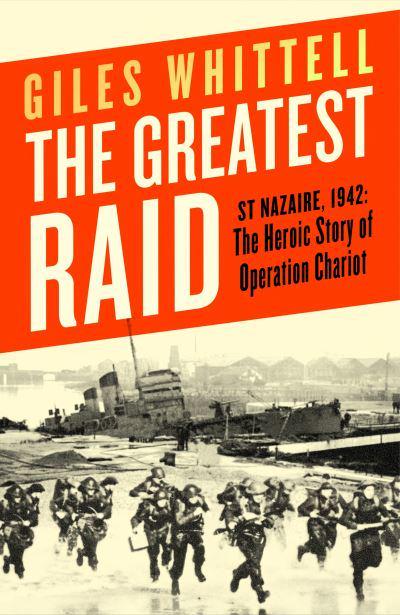
Operation Chariot, the Raid on St Nazaire, has long been known as “The Greatest Raid of All”. The audacity of the plan, the lethal danger of the operation, the inadequacy of the equipment provided, the astonishing courage of the participants and the spectacular success of its primary object have ensured its place in the annals of British martial heroism.
In the early hours of 28 March 1942, a force of 623 commandos and naval personnel stole up the Loire estuary to attack the port of St Nazaire. Leading the force was HMS Campbeltown, a superannuated destroyer acquired from the Americans, which had been converted into a floating bomb by the addition of four tons of high explosive secreted in her bows.
The plan was that she would ram the steel gate of the port’s immense dry dock where the charge would explode, demolishing the dock gate. The commandos would then swarm ashore to attack the dockyard installations, particularly the pumps and winding mechanisms which operated the dry dock. With the dock out of action, Hitler would not risk his battleship Tirpitz in the Atlantic where she could wreak havoc among the convoys supporting the war effort in Britain. This was the immediate, supposed object of the raid.
Giles Whittell’s new book is not the first full-length history of the event. C.E. Lucas-Phillips’s account, The Greatest Raid of All, was published in 1958 followed 40 years later by James Dorrian’s Storming St Nazaire, which remains the most detailed, authoritative account of the operation. In 2013 Robert Lyman published Into The Jaws of Death which told the story of the raid anew, with a greater concentration on the genesis and planning of the operation.
In 2007 Jeremy Clarkson took time away from messing around with cars to make a documentary for the BBC about the raid. The result was an “affectionate and enthralling” piece of television which brought the exploits of the Charioteers — as the men who took part in the raid have always been known — to a wider audience.
Although the ostensible object of the raid was to discourage the Germans from risking the Tirpitz in the Atlantic, it is now known that, by the spring of 1942, the German high command had already decided to keep the battleship moored safely in a distant Norwegian fjord. Accordingly, destroying the dry dock at St Nazaire was, strategically, a futile gesture.
Comments Off on Operation Chariot, the “Greatest Raid of All”
May 13, 2022
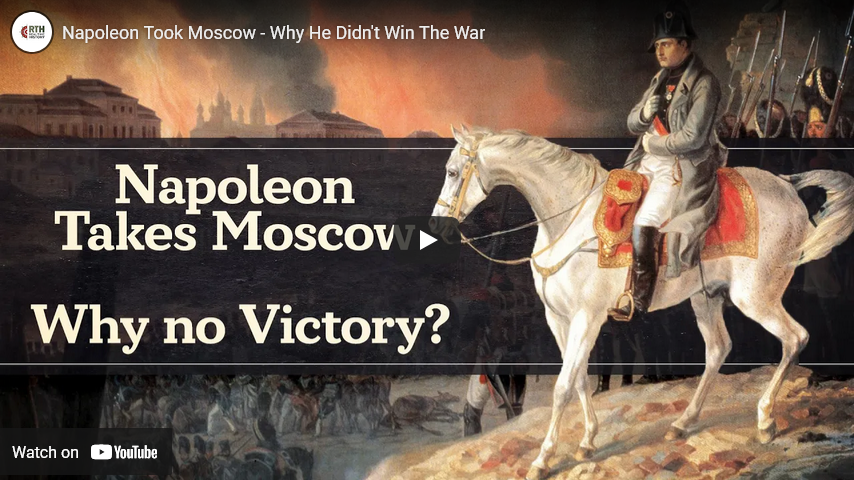
Napoleon Took Moscow – Why He Didn’t Win The War
Real Time History
Published 12 May 2022Support us on Patreon: https://patreon.com/realtimehistory
After the Battle of Borodino, both sides are badly mauled. Napoleon’s army marches on and reaches Moscow, the old Russian capital. In the Emperor’s eyes, capturing the city should win him the war. But while the local Russians set fire to the city, the Tsar in St. Petersburg and the Russian army command are thinking about turning the tide of the war — and not about accepting a French victory.
» THANK YOU TO OUR CO-PRODUCERS
John Ozment, James Darcangelo, Jacob Carter Landt, Thomas Brendan, Kurt Gillies, Scott Deederly, John Belland, Adam Smith, Taylor Allen, Rustem Sharipov, Christoph Wolf, Simen Røste, Marcus Bondura, Ramon Rijkhoek, Theodore Patrick Shannon, Philip Schoffman, Avi Woolf,» SOURCES
Boudon, Jacques-Olivier. Napoléon et la campagne de Russie en 1812. 2021.
Lieven, Dominic. Russia Against Napoleon. 2010.
Rey, Marie-Pierre. L’effroyable tragédie: une nouvelle histoire de la campagne de Russie. 2012.
Zamoyski, Adam. 1812: Napoleon’s Fatal March on Moscow. 2005.» OUR STORE
Website: https://realtimehistory.net»CREDITS
Presented by: Jesse Alexander
Written by: Jesse Alexander
Director: Toni Steller & Florian Wittig
Director of Photography: Toni Steller
Sound: Above Zero
Editing: Toni Steller
Motion Design: Toni Steller
Mixing, Mastering & Sound Design: http://above-zero.com
Digital Maps: Canadian Research and Mapping Association (CRMA)
Research by: Jesse Alexander
Fact checking: Florian WittigChannel Design: Simon Buckmaster
Contains licensed material by getty images
Maps: MapTiler/OpenStreetMap Contributors & GEOlayers3
All rights reserved – Real Time History GmbH 2022
Comments Off on Napoleon Took Moscow – Why He Didn’t Win The War
May 12, 2022
QotD: De Gaulle and FDR
De Gaulle’s struggles with Churchill were, by comparison, lovers’ tiffs. Churchill, like most civilized Englishmen, loved France, “that sweet enemy”, as Philip Sidney called her. While de Gaulle was cold to veterans of the Resistance, Churchill — when he went to Paris to meet them — was so moved by their bravery that he was in tears for most of the day.
De Gaulle’s quarrel with Roosevelt was based on real loathing. Washington’s vision for postwar Europe, in which the old nations would be diminished and homogenized, was directly opposed to de Gaulle’s idea of a French resurrection in glory and might. Washington loved and promoted the idea of a Europe dominated by supranational bodies, and would later use Marshall aid and the CIA to spread the idea of a European union. Jean Monnet, one of the founders of the eventual European superstate, was much more welcome in the U.S.A. than de Gaulle, whom FDR once airily dismissed as “the head of some French committee.” No doubt, this was what Roosevelt wished he was. Nancy Mitford, in her satirical 1951 novel, The Blessing, neatly caricatured this American unifying vision of the new Europe in the figure of the appalling American world-reforming bore, Hector Dexter, who dreamed of seeing a bottle of Coca-Cola on every European table:
When I say a bottle of Coca-Cola I mean it metaphorically speaking, I mean it as an outward and visible sign of something inward and spiritual. I mean it as if each Coca-Cola bottle contained a djinn, and as if that djinn was our great American civilization ready to spring out of each bottle and cover the whole global universe with its great wide wings.
In May 1962, de Gaulle would oppose to this his assertion that Europe could not be real “without France and her Frenchmen, Germany and her Germans, Italy and her Italians.” He said (a recording of the performance still exists) that Dante, Goethe, and Chateaubriand “belong to Europe,” precisely because they spoke and wrote as Italians, Germans, or Frenchmen. They would not, he jeered, have served Europe much if they had been stateless and had written in some form of Esperanto or Volapük.
Peter Hitchens, “A Certain Idea of France”, First Things, 2019-04.
Comments Off on QotD: De Gaulle and FDR
May 9, 2022
Barbie and the Trail of Blood – WAH 059 – May 8, 1943
World War Two
Published 8 May 2022Europe is burning and it seems there is little that will end the suffering except victory over Naziism.
(more…)
Comments Off on Barbie and the Trail of Blood – WAH 059 – May 8, 1943
QotD: Mayonnaise
The mystery of mayonnaise — and others besides Dickie Goldwire have surely puzzled over this — is how egg yolks, vegetable oil, vinegar (wine’s angry brother), salt, sugar (earth’s primal grain-energy), lemon juice, water, and, naturally, a pinch of the ol’ calcium disodium EDTA could be combined in such a way as to produce a condiment so versatile, satisfying, and outright majestic that mustard, ketchup, and their ilk must bow down before it (though, at two bucks a jar, mayonnaise certainly doesn’t put on airs) or else slink away in disgrace. Who but the French could have wrought this gastronomic miracle? Mayonnaise is France’s gift to the New World’s muddled palate, a boon that combines humanity’s ancient instinctive craving for the cellular warmth of pure fat with the modern, romantic fondness for complex flavors: mayo (as the lazy call it) may appear mild and prosaic, but behind its creamy veil it fairly seethes with tangy disposition. Cholesterol aside, it projects the luster that we astro-orphans have identified with well-being ever since we fell from the stars.
Tom Robbins, Villa Incognito, 2004.
Comments Off on QotD: Mayonnaise
May 7, 2022
Modele 1890 Berthier Cavalry Carbine
Forgotten Weapons
Published 14 Jul 2017Get the shirt here: https://shop.bbtv.com/collections/for…
http://www.patreon.com/ForgottenWeapons
The Berthier was adopted in 1890 as a new repeating rifle for the French cavalry, who were at that time still using single shot Gras carbines. The Lebel rifle had been adopted in 1886 for the infantry, but because of its tube magazine it was not conducive to being shortened into carbine form. Andre Berthier devised a way to combine the basic action of the Lebel with the Mannlicher clip system, resulting in a light and handy repeating carbine.
The majority of these carbines were made in 1890 and 1891, and have full length stocks without any provision for bayonets (since the cavalry already had their sabers). A few more were made between 1900 and 1904, and a final order for 40,000 was placed in 1905, but it is unknown if they were actually built. Total production was either 160,000 or 200,000, depending on that last order.
It was not long into World War One when it became clear that cavalry were not suited to trench warfare, and the French cavalry units were repurposed as infantry. As a result, these cavalry carbines were rebuilt in the 1892 infantry pattern when damaged, and after the war all the surviving examples in original configuration were rebuilt as well. This makes them quite rare today in original form.
If you enjoy Forgotten Weapons, check out its sister channel, InRangeTV! http://www.youtube.com/InRangeTVShow

Comments Off on Modele 1890 Berthier Cavalry Carbine
QotD: De Gaulle’s France
Peter Hitchens, “A Certain Idea of France”, First Things, 2019-04.
Comments Off on QotD: De Gaulle’s France
May 6, 2022
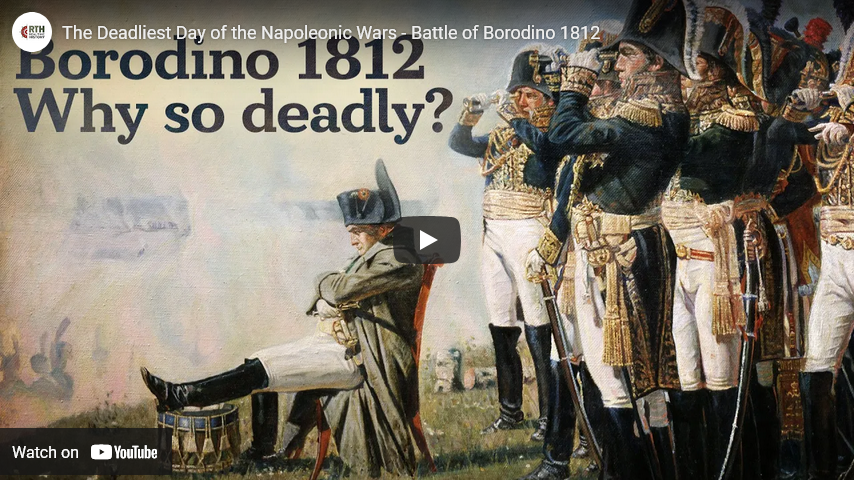
The Deadliest Day of the Napoleonic Wars – Battle of Borodino 1812
Real Time History
Published 5 May 2022Sign up for the CuriosityStream + Nebula Bundle: https://curiositystream.com/realtimeh…
The Battle of Borodino was the deadliest single day in history until the outbreak of the First World War. It was the culmination of Napoleon’s advance on Moscow. Due to the terrain and the Russian positions, it was a gigantic battle of attrition — which Napoleon won at a high cost.
» SUPPORT US ON PATREON
https://patreon.com/realtimehistory» THANK YOU TO OUR CO-PRODUCERS
John Ozment, James Darcangelo, Jacob Carter Landt, Thomas Brendan, Kurt Gillies, Scott Deederly, John Belland, Adam Smith, Taylor Allen, Rustem Sharipov, Christoph Wolf, Simen Røste, Marcus Bondura, Ramon Rijkhoek, Theodore Patrick Shannon, Philip Schoffman, Avi Woolf,» SOURCES
Boudon, Jacques-Olivier. Napoléon et la campagne de Russie en 1812. 2021.
Fileaux, Christian. “La bataille de la Moskova – 7 septembre 1812. Récit,” in Rey, Marie-Pierre and Thierry Lentz, eds. 1812, la campagne de Russie. 2012.
Lieven, Dominic. Russia Against Napoleon. 2010.
Mikaberidze, Alexander. The Battle of Borodino: Napoleon against Kutuzov. 2007.
Rey, Marie-Pierre. L’effroyable tragédie: une nouvelle histoire de la campagne de Russie. 2012.
Zamoyski, Adam. 1812: Napoleon’s Fatal March on Moscow. 2005.» OUR STORE
Website: https://realtimehistory.net»CREDITS
Presented by: Jesse Alexander
Written by: Jesse Alexander
Director: Toni Steller & Florian Wittig
Director of Photography: Toni Steller
Sound: Above Zero
Editing: Toni Steller
Motion Design: Toni Steller
Mixing, Mastering & Sound Design: http://above-zero.com
Digital Maps: Canadian Research and Mapping Association (CRMA)
Research by: Jesse Alexander
Fact checking: Florian WittigChannel Design: Simon Buckmaster
Contains licensed material by getty images
Maps: MapTiler/OpenStreetMap Contributors & GEOlayers3
All rights reserved – Real Time History GmbH 2022
Comments Off on The Deadliest Day of the Napoleonic Wars – Battle of Borodino 1812


