Quotulatiousness

January 17, 2012

Details on the British defence cuts

Filed under: Britain, Bureaucracy, Military — Tags: , , , — Nicholas @ 09:43

The unit hardest hit by the reductions will be the Brigade of Gurkhas:

In a statement, the MoD revealed it was looking to shed 2,900 posts from the army, around 1,000 from the RAF and 300 from the Royal Navy.

The total is higher than the first round of the process last year, and there are expected to be more compulsory redundancy notices this time.

The MoD announced it was looking to shed approximately 400 Gurkhas — one in eight of the brigade. Approximately 500 infantry privates with more than six years’ service will also be axed.

The senior ranks of the army have not been spared. Eight brigadiers and 60 lieutenant colonels are expected to go.

The Royal Navy will lose five commodores and 17 captains. Nineteen Royal Marine officers will be shed, but no one from the ranks.

The RAF will lose up to 15 air commodores and 30 group captains. The MoD believes that by slowing recruiting, and not replacing those who leave, the navy and the RAF will be able to achieve the cuts they need without a “tranche 3” of redundancies. The army needs to shed almost 20,000 jobs over the next eight years and will continue to make cuts for years to come.

January 16, 2012

Journalism warning stickers

Filed under: Britain, Humour, Media — Tags: , — Nicholas @ 10:50

A timely addition to your media toolkit from Tom Scott:

It seems a bit strange to me that the media carefully warn about and label any content that involves sex, violence or strong language — but there’s no similar labelling system for, say, sloppy journalism and other questionable content.

I figured it was time to fix that, so I made some stickers. I’ve been putting them on copies of the free papers that I find on the London Underground. You might want to as well.

H/T to Tim Harford for the link.

Cory Doctorow recommends a book on English libel law

Filed under: Books, Britain, Law, Media — Tags: , , , , — Nicholas @ 10:17

There’s a reason that individuals and organizations try to sue for libel under English law, rather than their own national legal system:

The Guardian published a long excerpt from Nick Cohen’s forthcoming You Can’t Read This Book: Censorship in an Age of Freedom, a fantastic-looking book that reveals the dirty truth of English libel law, where “money buys silence” for some of the world’s most notorious dictators, thieves, and bad guys. English libel law is so broad that it allows, for example, Russian oligarchs to sue Russian newspapers for punitive sums (“the cost of libel actions in England and Wales is 140 times higher than the European average”) in an English court, merely by demonstrating that someone, somewhere in England looked at the paper’s website. And yet, the libel law in England and Wales doesn’t actually protect people from the most common forms of libelous publication: false declarations of criminal suspicion by the police, false claims of financial irregularities from credit reporting bureaux and false statements in former employers’ reference letters are protected unless they can be shown to have been malicious and negligent.

January 14, 2012

How much is your time worth?

Filed under: Britain, Economics, Railways, Randomness — Tags: , , , , — Nicholas @ 12:00

In an article about the recently approved high speed train link between London and Birmingham, Tim Harford points out a few oddities in the calculations that supposedly show how beneficial the new railway connection will be:

But it’s not just about forecasts — it’s about the value of time saved because of a faster journey, right?

That’s true. The high-speed link would save about 40 minutes on a journey from London to Birmingham. How much that is worth is an interesting question.

If you have a morning meeting it might mean an extra 40 minutes in bed.

It might indeed, which is priceless. HS2 Ltd told me that they use numbers from the Department for Transport. The DfT apparently values leisure time at about £6 an hour — this, intriguingly, implies that the UK government’s official position is that anyone under the age of 21 is wasting their time earning the young person’s minimum wage and would be wise to chillax in front of the Nintendo.

What about business travel?

Well, business travel is valued at £50 an hour. Unless the business travel in question is commuting, in which case it’s £7 an hour.

What?

Doesn’t make a bit of sense to me, either. Perhaps the idea is that commuting is eating into your leisure time, which is almost valueless apparently, whereas business travel is eating into your employer’s time, which is precious indeed. Complain to the DfT if you don’t like it.

QotD: In praise of memorization

Filed under: Britain, Education, History, Quotations — Tags: , — Nicholas @ 11:17

I didn’t mean only memorising poetry or prose passages, but anything that requires memorisation.

Two instances to chew on.

1. To me the most crippling side-effect of “modularisation” in education — i.e. self-contained courses, no terminal examinations etc. — is that it obviates what is actually a principle purpose of exams based on several years’ work, forcing the transfer of information from short- to long-term memory. Students who take only end-of-semester course exams or write final papers retain far less of the data than those who undergo old-fashioned final exams. Methodological competence can certainly be learned in modularised systems, but detailed memory is not fostered.

2. I will never forget the candidate for Cambridge admission (15+ years ago) who had done O-level modules (9th and 10th grade) on the English Civil War and the Industrial Revolution but did not know which came first. Honest to Betsy; didn’t have a clue and couldn’t work it out either. Even before that I made my own undergrads learn a regnal list, from at least Richard III to Elizabeth II with dates, so that they had at least one continuous historical frame to which they could attach other dates they learned or came across. I wasn’t bigoted about it — it could be a list of popes, archbishops of Canterbury, or Dalai Lamas (Dalais Lama?) if they wanted, though English monarchs are more useful in English literature — but they had to know something that gave accurate chronological depth to their grasps of history, not just sit grinning ignorance on a jumble of impressions and quasi-factual fragments. They used to moan about it loudly … for a while and then start being grateful. Heh.

Memorising poems is dandy, and there’s no reason it has to be the saccharine and long-line stuff that was the pedagogic legacy of late C19 tastes and pieties — lots of good strong stuff out there that anyone’s better off knowing than not knowing — but there are bigger issues at stake.

(Excerpt from a much longer discussion on the Lois McMaster Bujold mailing list)

John Lennard, MA DPhil. (Oxon.), MA (WU)
General editor, Humanities-E-Books Genre Fiction Sightlines and Monographs

January 12, 2012

When is an “insult” a criminal offence?

Filed under: Britain, Law, Liberty — Tags: , , , , — Nicholas @ 10:18

The answer, in the UK anyway, may well be “any time the insultee cares to call in the police“:

If you are reading this, chances are, you are a moron. There, have I insulted you? I’m asking because I have no idea if what I just stated has insulted you. Only YOU can be the judge of what you find insulting, yet plans are afoot for it to be a criminal offence to “insult” someone. So if you feel insulted, there is nothing to stop you ringing 999 and having the evil perpetrator banged up, DNA’ed and given a criminal record, although they will have had absolutely no idea that their actions or words have insulted you. If we criminalise “insults”, we shut up everyone and everything. For ever. Do you want to live in a society where you dare not speak in case the State decides your words may cause offence to people you will never meet? Now’s your chance to speak against it, USE IT, whilst you still can.

Now, I choose to be anonymous on my many public outings because, well, my face is my business. Unless I am actually committing a crime, it is not the business of the State to know what I look like anymore than it is the business of the State to randomly sweep bus stop queues for fingerprints. One of the reasons I wear a mask is because of the habit of the state to record the faces of those “who might” cause trouble, “for future reference”. The Met employ teams of photographers to take photos of any members of public who may be dissenting, sticks them on a database and cross references them. No thanks. My face belongs to me, it is my property, I will cover it when and if I choose. Naturally, this proposal is stop women wearing Burqas because some sensitive souls “may be offended” (see above), but as always, I say it is not the role of the State to dictate how I may dress.

January 10, 2012

Scottish independence on the front-burner

Filed under: Britain, Government, History — Tags: , , , — Nicholas @ 09:31

An interesting summary of the independence debate in Scotland from The Economist:

Put up or shut up. That is the risky (but arguably rather canny) message that David Cameron has sent to the pro-independence head of the Scottish devolved government in Edinburgh, Alex Salmond. Specifically, Mr Cameron has announced that the British government and Westminster Parliament are willing to give Mr Salmond the referendum on Scotland’s future that he says he wants — as long as it is a proper, straight up-and-down vote on whether to stay in the United Kingdom or leave, and is held sooner rather than later.

It is not that Mr Cameron wants to break the three hundred year old union between London and Edinburgh. Both emotionally and intellectually, he is fiercely committed to the union as a source of strength for both Scotland and Britain, insist Conservative colleagues who have discussed the question with him. Publicly, he has pledged to oppose Scottish independence with “every fibre” of his being.

But Mr Cameron and his ministers also feel that Scotland has been drifting in a constitutional limbo, ever since Mr Salmond’s Scottish National Party (SNP) won an outright majority at Scottish parliamentary elections in 2011 (a feat that was supposed to be impossible, under the complex voting system used in Scotland). The SNP campaigned on a simple manifesto pledge to hold a referendum on the future of Scotland. But after his thumping win Mr Salmond slammed on the brakes and started talking about holding a consultative vote in the second half of his term in office, ie, some time between 2014 and 2016.

January 7, 2012

Conrad Black: Current events vindicate Margaret Thatcher

Filed under: Britain, Economics, Europe — Tags: , , , , , — Nicholas @ 11:25

The current situation in Europe proves that British prime minister Margaret Thatcher was right all along:

Though it is probably happening too late to be overly gratifying to her, events are piling on to vindicate Margaret Thatcher completely in her reservations about British integration in Europe. Her response to the proposal to reduce Britain to a local government in a federal Europe was, memorably: “No, no, no, and never.” And her reward for her refusal to get on board what was then the thundering bandwagon of Eurofederalism, was to be sent packing by her own ungrateful party, though she was the only British political leader who had won three consecutive, full-term election majorities since before the First Reform Act expanded the electorate in 1832.

She was immensely popular with millions of Britons as a patriotic and courageous leader who took Britain off financial life support, saved it from strangulation by over-mighty, almost anarchistic unions, built a prosperous, home-owning democracy, threw the Argentinians out of the little corner of the British Empire they had wrongfully seized (the Falkland Islands), and played a starring role in winning the Cold War.

[. . .]

And as she liberalized the economy; imposed a free, secret ballot for labour strikes; lowered all taxes; privatized industry, housing, airports, almost everything except the National Health Service and the BBC; jolting economic growth resulted. Unfortunately, its most conspicuous exemplars included many successful entrepreneurs and financier types who offended British sensibilities by their garish and spivvy ostentation. The basis of Margaret Thatcher’s support was the Daily Telegraph-reading, gin and tonic-drinking, cricket-loving middle class, the backbone of the nation. But her enemies identified her with an infelicitous combination of Colonel Blimp fuddy-duddies and sticky-fingered, vulgar parvenus.

She had a somewhat hectoring manner in debates, and was notoriously impatient with what she considered pusillanimity from senior colleagues, sometimes calling cabinet members “blanc-manges,” or “suet puddings,” or even “spineless, boneless, men” (not necessarily inaccurately). Naturally less known was her exquisite courtesy and unaffected and egalitarian kindness to subordinates and strangers. It annoyed feminists that she was such a traditionalist, and weak men that she was a strong woman. But she triumphed by perseverance and courage; to the end, though a stirring speaker, she was nervous before a speech. She was a strong woman, but not at all a mannish one.

January 5, 2012

The quest to re-create Shackleton’s whisky

Filed under: Britain, History, Science — Tags: , , — Nicholas @ 14:01

AntarcticaYour wee dram of SCIENCE! How they managed to re-create the whisky from Mackinlay & Co. that Ernest Shackleton’s Antarctic expedition took along in 1907:

How was the re-creation carried out? Dr. James Pryde, chief chemist at Whyte and Mackay, subjected the samples to a comprehensive chemical analysis, in conjunction with a rigorous sensory analysis (that is, sniffing and tasting). Firstly, it was established that the alcoholic strength of the whisky was high enough that it very likely never froze over the years it spent interred in Antarctica. In winter, the hut reached a minimum temperature of -32.5°C, but, at 47 percent alcohol, the whisky remained liquid down to a couple of degrees cooler than that extreme. This eliminated what had been a significant source of concern about the quality of the sample, that decades of freezing and thawing had altered or ruined it. Carbon dating verified that the whisky did indeed date from the Shackleton era.

Phenol and related phenolic compounds show up in Scotch whiskies, giving them the unmistakable character that’s referred to “peaty,” because the flavor is introduced when the grain is exposed to peat smoke during the malting process. Chemical analysis revealed not only the quantity of phenolics in the Mackinlay — surprisingly low, given that era’s reputation for heavily peated malts — but also the particular balance of compounds, which enabled the experts to pinpoint what region the peat used had likely come from. The answer? Orkney.

Similarly, analysis of the compounds that result from barrel-aging was able to finger the barrels in which the whisky was aged as ones made from American oak and probably used once before to age wine or sherry. Gas chromatograph olfactometry, in which the spirit is broken down into its volatile components and each of these smelled individually by experts, gave clues as to details of the fermentation and distilling process.

Double-jeopardy falls to political correctness

Filed under: Britain, History, Law, Liberty — Tags: , , , — Nicholas @ 10:14

Brendan O’Neill on the terrible precedent of a recent British government decision and it’s most recent mis-use:

On Nick Ferrari’s breakfast show on London’s LBC radio this morning, I argued that all the people describing this case as a victory for justice are overlooking the fact that it is a victory built upon the wreckage of some pretty important legal principles. One longstanding legal protection in particular — the double jeopardy rule, the idea that no one should be tried twice for the same crime — had to be dismantled in order to get Dobson back in the dock. Having been acquitted of the murder of Lawrence in 1996, Dobson was what we used to call ‘autrefois acquit‘, previously acquitted, which in the past would have meant that he could not have been tried for the murder a second time. That all changed in 2003, when New Labour ditched the double-jeopardy rule.

[. . .]

Double jeopardy is the elephant in the room of the Dobson and Norris conviction. Sure, journalists are mentioning it, usually in fluffy factboxes titled ‘How this case came to court’, but no one wants to discuss it in detail. No one wants to discuss the extraordinary amount of history and progressive tradition that had to be consigned to the dustbin of ‘bad ideas’ in order to secure one conviction against two nasty blokes.

The double-jeopardy rule had existed in some form or other for centuries. There was a Roman maxim which said ‘nemo bis in idem debet vexari‘ — no man shall be punished twice for the same. It’s there in early Christianity, too, in St Jerome’s insistence in the fourth century that ‘there shall not rise up a double affliction’. It’s also in the sixth-century Digest of Justinian, the seed of much of modern jurisprudence, which insisted that, ‘The governor should not permit the same person to be accused of a crime of which he has been acquitted’. An academic study of the double jeopardy rule in history points out that it is one of the ‘few legal rights recognised by the Christian fathers throughout the Dark and Middle Ages’.

In twelfth-century England, a form of double jeopardy was codified in the Constitutions of Clarendon, which, in an attempt to rein in the authoritarian instincts of Henry II, stipulated that no man could be tried for the same offence in both the ecclesiastical courts and the king’s courts. It had to be one or the other. From England it spread to the US, where the eighteenth-century revolutionaries and their successors made a bar against double jeopardy a key plank of their new republic’s constitutional guarantee of liberty against state power. In each historic period, the purpose of the rule against ‘double afflictions’ was strikingly similar: to protect individuals from potentially being hounded and interminably retried by governors, crown forces or cops determined to stick them in jail. That’s because being permanently at risk of prosecution is itself a kind of life sentence.

January 4, 2012

A call to reform the welfare state … from the pages of the Guardian

Filed under: Britain, Economics, Government — Tags: , , , , — Nicholas @ 09:27

Brendan O’Neill links to Liam Byrne’s column in the Guardian, suggesting not only is Byrne right, but that he doesn’t go far enough:

The Left won’t thank him for it, but in the Guardian Liam Byrne has tried to kickstart a potentially interesting debate about the welfare state. For many well-off Liberal commentators — who, notably, have no interaction with the welfare state, except in the sense that buddies of theirs probably manage huge chunks of it for a fat wage packet — the welfare state is a sacred thing and criticism of it is the equivalent of blasphemy. Yet Byrne surely has a point when he says the welfare state is in need of “radical reform” and we should seriously explore how to get “communities working again”. Indeed, I would go further and say that the expansion of the welfare state into more and more areas of less well-off people’s lives is one of the worst developments of recent years, seriously zapping resourcefulness and social solidarity from working-class communities.

Byrne’s mistake is that he seems motivated by a narrow desire to save the state money. The financial cost of social welfare is “simply too high”, he says, and we should “bring down [the] benefits bill to help pay down the national debt”. That is a Scrooge’s approach to the problem of the welfare state. The really terrible cost of ever-expanding welfarism is measured not in cash, but in the impact welfarism has on working communities, on those who have been made increasingly reliant upon the charity, largesse and therapeutic meddling of the massive and monolithic welfare machine. Relentless financial and therapeutic intervention by the state into poor people’s lives has, not surprisingly, had a pretty devastating impact both on social interaction and individual aspiration.

When people come to be more reliant on the state than they are on each other, community bonds fray and social solidarity falls into disrepair. When the struggling mum looks to the state for help, rather than turning to family, friends, neighbours, the end result is that she becomes more isolated from her community. When a 17-year-old school student short of cash turns to the state for a weekly handout, he never really develops skills of self-sufficiency or dependency on friends and neighbours.

December 29, 2011

Girls from single-parent homes “more resilient” at school than boys

Filed under: Britain, Education, Health, USA — Tags: , — Nicholas @ 10:55

An article in the Guardian summarizes a recent study’s findings:

Girls appear to be more resilient than boys in preventing problems at home from affecting their behaviour in school, according to a study which aims to explain the educational achievement gap between the genders.

The tendency for girls to perform better in the later years of school has become increasingly pronounced in the UK in the past two decades. In 2011 the percentage point gap between the proportion of girls gaining A* or A grades in GCSE subjects and that for boys hit a record 6.7, up from just 1.5 percentage points in 1989.

Educational researchers have sought to explain the difference through a variety of factors connected to both physiology and environment, including theorising that boys are inherently more resistant to a formal educational system.

But the new study, based on detailed data from 20,000 US children over a decade, found no particular evidence of school-based factors being significant. Instead, it discovered that boys raised outside a traditional two-parent family were more likely to display behavioural and self-control problems in school and were suspended more often. The data ended when the children were about 14, but suspensions are seen as a strong indicator of subsequent poorer educational performance.

This finding, if validated by other studies, implies that the gender gap will continue to widen as more children are being raised in single-parent households now than ever before. Girls’ increasing share of university entrance will continue to grow — although the system will still likely consider girls and young women “more vulnerable” and in need of more systemic support.

December 23, 2011

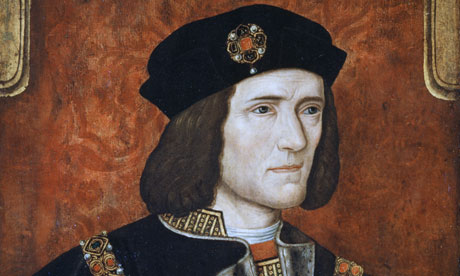
Correcting Shakespeare’s sources: the real Richard III

Filed under: Britain, History, Media — Tags: , , , — Nicholas @ 10:37

Robert Fripp talks about the historical Richard III and the vicious caricatures that Shakespeare drew upon to produce his famous play:

In 1983, I was working a high-stress job pulling together CBC TV’s weekly investigative program The Fifth Estate. I still ask myself: Why, on top of that, did I spend my nights and weekends imitating a long-dead playwright? My labour of love was a play called Dark Sovereign, which I wrote in the four-century-old English of William Shakespeare and his 17th-century contemporaries.

The same year, 1983, also happened to be the 500th anniversary of King Richard III’s accession to the English throne. Richard III, the last Plantagenet king, is widely believed to have murdered his two nephews in the Tower of London, usurping the elder boy’s crown and reigning just 25 months before the upstart Henry Tudor (Henry VII) killed Richard in battle in 1485 and displayed his body for three days.

King Henry went on to inflict judicial murder on many whose claim to the throne was better than his. Nearly 20 existing portraits of Richard III were disfigured after his death to show humps painted onto the subject’s back. Writers, principally Sir Thomas More and Raphael Holinshed, gave the dead king a hostile press.

Then Shakespeare borrowed from Holinshed to write The Tragedy of Richard III. (It may be significant that the first edition’s title omits the word “King.”) Shakespeare wrote his character assassination around 1591. It was probably performed first for the Court of Queen Elizabeth I shortly thereafter. Tudor monarchs had been ruling for more than a century by then, but their tenuous claim to the throne still seemed to trouble them. Having denied Richard a decent burial a century earlier, they still had need to heap dirt on his reputation.

In the interests of full disclosure, I should point out that I portrayed the Earl of Northumberland in the 1983 re-enactment of the coronation of Richard III (at the Cathedral Church of St. James in Toronto) on local TV, and I portrayed the Earl of Lincoln in the (non-televised) version on the actual anniversary date. You could say I’m biased in favour of the revisionist view of the character of good King Richard.

December 22, 2011

Britain, Argentina, and the Falkland Islands

Filed under: Americas, Britain, History, Military — Tags: , , , , , — Nicholas @ 15:39

Yesterday, I sent a Twitter update linking an article about rising tensions between Argentina and the United Kingdom over the Falkland Islands:

The South American trade group Mercosur, wrapping up a two-day summit in Uruguay, has sided with Argentina in its ongoing dispute about the Falkland Islands, which it calls the Malvinas, announcing it will ban boats with Falkland Islands flags from their ports.

[. . .]

Note the flurry of activity since 2010. The dispute has become heightened over resources, as British firms explore for oil in the waters surrounding the islands.

I described the article at the link as “early moves in the next Falklands War”. I then followed up with a another Tweet: “Of course, if Argentina decides to take the Falkland Islands, Britain no longer has the navy to stop them. No carriers = no force projection”

This struck Craig Chandler as seriously misunderstanding the risks: “War can still happen. Do not delude yourself.” I responded that I was “Not deluded about risk of war. Just realistic about outcome.” That is, I didn’t think Britain had any chance of pulling off a victory if Argentina resorted to the military option (again).

Craig had a remarkably positive view of British military power: “Britain would crush them. Missiles, Jets etc… Lot’s of ways to fight a modern war” and “Britain allies would join with them. An attack on one of us is an attack on all of us. Thus, victory would be 100% for Britain”. I responded “Even Reagan had to be cajoled into supporting Thatcher in 82. Obama? Doubt he feels any strong attachment to the UK.” “The UK would have to lodge protest in UN, impose trade sanctions, sit back and accept facts on the ground.”

I was starting to struggle with Twitter’s 140 character limit, as there was much I wanted to say that couldn’t easily be condensed into Twitter-friendly lengths. I’ve said on the blog that Britain’s scrapping of the Harriers and decommissioning/scrapping the remaining aircraft carriers was an open invitation to Argentina to try the Falklands issue again. Argentina’s President Cristina Kirchner wouldn’t be using words like “arrogant” (describing the British government) and characterizing the Prime Minister’s comments as an “expression of mediocrity and almost of stupidity” without good reason.

Britain was lucky in 1982, as the government of the day was desperately seeking economies in the budget and (as there was no war with anyone on the horizon), scrapping their aircraft carriers looked like a great way of reducing costs. They’d reduced their military presence in the South Atlantic in an attempt to both save money and appease Argentinian feelings. The announced reductions prompted Argentina’s military rulers to use an external war for internal political benefit. Argentina struck before the intended “economizing” took place. Had they waited six months, Britain would not have had the means to launch the counter-attack that retook the Falklands.

Even with the aircraft carriers HMS Hermes and HMS Invincible each operating several extra Harriers, the British were just barely able to keep enough aircraft going to fend off the majority of Argentinian attacks (losing two destroyers, two frigates, and several support ships sunk or severely damaged). With the Argentinian navy almost entirely confined to base after the sinking of the ARA Belgrano, the British could concentrate on air defence.

Having fought the fleet into position for the invasion, it was possible to pull the more vulnerable ships further out of range for Argentinian air strikes (as even at this stage, losing one of the carriers would endanger the entire mission). While it was much more than a “mere matter of marching”, the smaller but much better trained British forces (primarily Royal Marines, paratroops, Guards, and Gurkhas) were able to defeat the Argentinian troops and bring the military campaign to a close.

Anyway, Craig had an even more positive view of Britain’s likely political and military support today: “The USA owes the UK much for Iraq and Afghanistan there is also the entire Common Wealth. Argentina would be invaded.” “It would be all out war. No acceptance. The Common Wealth and other UK allies would come to support.” I think there’d be some forms of support short of military action: in 1982, for example, New Zealand sent a frigate to the Indian Ocean to replace a Royal Navy ship that was needed to support the Task Force. The rest of the Commonwealth gave verbal and diplomatic support, but no significant military assistance. Today’s Commonwealth is hardly a significant military player — Canada, Australia, and New Zealand combined could not even provide a full division of troops, and none of them would be willing to get involved in a land war in South America on Britain’s behalf.

As far as the islands themselves, there have been some significant changes since 1982, the most significant being a new Royal Air Force base with permanently stationed modern Typhoon fighters (although only four of them at last report). The island transportation net has vastly improved since 1982 — when the only permanent roads were within Port Stanley proper — with all-weather roads now linking all mainland settlements. In addition to the RAF base personnel, there is a British garrison force of a reinforced infantry company and supporting troops, and the Falkland Islands Defence Force which is a company-sized unit of part-time troops.

Argentina’s armed forces have also changed significantly since the war. Two of the most significant changes were post-war fall of the military Junta and the elimination of conscription (creating a more modern, better-trained professional army, navy and air force). The Argentinian navy no longer has a purpose-built landing ship (the ARA Cabo San Antonio was retired shortly after the war and replaced with a modified cargo vessel). They have three submarines in service (replacing the one sub active in 1982), and have replaced all their WW2-vintage ships with more modern designs from France and Germany. The marines, who were the best of the Argentinian troops in 1982, are organized in five battalions of infantry, with supporting artillery, anti-aircraft, engineering and special forces detachments.

Anyway, back to the Twitter exchange that started this. After I’d responded to Craig’s last comment, Colby Cosh joined the discussion: “Sign me up for a bet on 2 PARA if it comes to that, will you?”. I’ll just reproduce the rest of the exchange in approximately correct order below:

NR: “Admire the Paras, but you can’t drop from that far away.”
CC: “I guess they must have teleported onto Goose Green last time.”
NR: “They certainly didn’t fly in from Heathrow!”
CC: “I’m guessing they’ll use the Bay-class ships they built for pretty much that exact mission?”
NR: “Not without air cover.”
CC: “I’m no admiral, but somehow I did get the memo about the fetish for “capital ships” being obsolete.”
NR: “Carriers still relevant.”
CC: “Meanwhile, the Argie navy has not exactly thrived under civilian rule. Not sure if that’s relevant?”
NR: “For a short-haul invasion, you don’t need a massive navy. Air cover is the key. UK only has 1 sub in region normally.”
NR: “No way at all to prevent an invasion, but in 82 UK still had (barely enough) carrier air to cover counter-attack. No longer true”
CC: “Air cover *less* important for Bay class now with close-in antimissile guns. And RN is still operating two carriers, you know.”
NR: “UK paid off Ark Royal and Invincible. Replacement ships still years from launching.”
CC: “The RN just tried out HMS Ocean (I think it was Ocean) as a platform for Apache in the Gadhafi raids.”
CC: “Replacements for fixed-wing capability, yes. Ocean & Illustrious are configured for choppers now.”
NR: “Chopper-equipped force versus missile-armed fighters? Outcome not good for choppers without lots of luck.”
CC: “Helicopters are the name of the game in an amphib op anyway; hence the reconfig.”
NR: “For amphibious work, choppers are great support. Not designed to fight against fixed-wing fighters.”
CC: “We’re forgetting that the islands themselves are garrisoned much more heavily than in ’82.”
NR: “Still indefensible vs Arg”
CC: “The Typhoons that are there are certainly at the sharp end until RN’s Harriers are replaced.”
NR: “Not enough of them to matter.”
CC: “You’ve convinced me to worry about this a little more than I would’ve”
NR: “I’ll post a “Mission Accomplished” banner. ;-)”

Colby did point out some weaknesses in my original contention: for example, I’d forgotten about the construction of the new RAF base, but it isn’t equipped to fight a war: it’s an expensive trip-wire. Four aircraft aren’t going to be enough (especially as Britain had, as of the Libya campaign, only 69 qualified Typhoon pilots). I’ll admit I’m a bit less sanguine about Argentina just waltzing in to Port Stanley this time, but I still think if they can pull off a quick disabling strike followed by a landing, Britain will not be able to reverse the outcome like they did in 1982.

Why Nazis?

Filed under: Books, Britain, Education, Europe, Germany, History, Media, WW2 — Tags: , — Nicholas @ 09:56

A British MP is being investigated for attending a “Nazi-themed” party. A member of the royal family is photographed wearing Nazi regalia to a costume party. World War 2 fiction about Nazi Germany vastly outsells similar fiction about Fascist Italy or Imperial Japan. What is it about the Nazis that Brits find so fascinating? In a Spectator article from 2002, Guy Walters tracks the onset of the Nazi fascination in young Brits:

In some Englishmen this interest has mutated into a not-so-guilty admiration for the Nazis and their uniforms, their pageantry, their military brilliance and — this is the really terrible part — their brutality. It is emphatically not a condoning of the Holocaust; rather, a fetish that exists despite it. In its advanced state the fetish will have evolved into a secret yearning to march up and down a bedroom in the togs of a Hauptsturmführer, riding-boots shining, the red swastika armband set smartly against the blackness of the tunic, the silver death’s-head badge glinting on the peaked cap. Of course, the Beevor reader is a far cry from a Nazi fetishist; but I wonder whether Beevor would enjoy such staggering sales figures if he had written only about the war in the Far East.

[. . .]

At the end of term, the flu now conveniently in remission, Mr Priestley unearths the projector and makes a selection from the school’s extensive range of films. The product of a broad mind, the library consists of just two works, The Guns of Navarone and Force 10 from Navarone. Our nascent fetishist will be particularly drawn by the stylish ease with which David Niven carries off the wearing of an SS officer’s uniform. He will be less than impressed, however, with Edward Fox’s absurdly pukka sergeant in the latter film.

His small head brimming with Nazis, our subject goes home for four solid weeks of constructing Airfix Messerschmitts, Stukas, Heinkels and Dorniers. He will know that the correct colour of the underside of most Luftwaffe aircraft corresponds to Humbrol’s ‘duck-egg blue’. If his condition is particularly advanced, the subject’s mother will be asked to purchase a Tamiya Jagdpanther tank, which he will place in a ‘diorama’, a word he will use in no other context. By now, he should be showing further classic early symptoms of a Nazi fetish: Allied aircraft and armour will hold little or no interest. Most of the young fetishist’s exercise books will be adorned with thousands of tiny swastikas.

[. . .]

By puberty, the fetishist will have repeatedly watched every war film available, including A Bridge Too Far, The Night of the Generals, The Dirty Dozen, The Eagle Has Landed, The Boys from Brazil, Cross of Iron and, for a younger generation, Saving Private Ryan and Band of Brothers. He will have read Pat Reid’s Escape from Colditz and Airey Neave’s They Have Their Exits.

When our subject starts in the sixth form, it is here that the fetish can be incorporated into, and disguised by, his academic studies. Naturally he chooses modern history for one of his A-levels, and his special topic will, of course, be Nazi Germany. He will now be introduced to the diaries of Nazi bigwigs such as Albert Speer, which will breathe life into sinister figures such as Himmler and Goering. In fact, the widespread predilection for Nazi Germany as an A-level subject has angered many university tutors, who have complained recently that it is the only period of history about which undergraduates have any real knowledge.

« Newer PostsOlder Posts »

Powered by WordPress