Back in the Cold War, prudent Kremlinologists had to take the marked decline in the Politburo’s collective intelligence very seriously indeed (the old adage “never attribute to malice what is adequately explained by stupidity” is terrifying when the potentially malicious dumbasses have nuclear missiles).
There were two main reasons for the decline, both structural. The first, of course, is Communism itself. A totally ideologized society is a society totally committed to make-believe. You could fill a good-sized book listing the catastrophes make-believe caused the USSR. Just to take the most obvious: Hitler did everything but send the Goodyear Blimp over Moscow, towing a banner announcing his invasion plans. But since everyone who accurately reported the goings-on in Poland ended up in the Gulag, the Wehrmacht walked right on in.
The second has to do with the nature of totalitarian leadership. Obviously sharing power is out of the question, so every Boss who finally claws his way to the top ruthlessly purges everyone who could conceivably challenge him. The purged are replaced by yes-men and toadies, who immediately enact mini-purges of their own inside their new departments. It doesn’t take more than a few rounds of this for smarter functionaries to learn to dig themselves in very, very deep, disguising themselves in a kind of protective stupidity. A few more rounds, and “protective stupidity” drops the modifier, as anyone with anything on the ball has decamped for the safer — and, not coincidentally, very soon much more profitable — havens of technical management.
It doesn’t take long before your “leadership” is nothing but ideology-addled dimbulbs. Sound familiar?
Severian, “How Dumb Are Liberals?”, Rotten Chestnuts, 2020-07-31.
November 29, 2020
QotD: The succession problem of totalitarian leadership
November 24, 2020
The History of Fabric Is the History of Civilization
ReasonTV
Published 23 Nov 2020Virginia Postrel’s new book explores economics, politics, and technology through textiles.
——————
Full text and links: https://reason.com/video/2020/11/23/t…Follow us on Twitter: https://twitter.com/reason
Reason is the planet’s leading source of news, politics, and culture from a libertarian perspective. Go to reason.com for a point of view you won’t get from legacy media and old left-right opinion magazines.
—————-The Fabric of Civilization: How Textiles Made the World, a new book by former Reason editor in chief Virginia Postrel, is a rich, endlessly fascinating history of the remarkable luck, invention, and innovation that made our fabric-rich world possible.
The book aims to make the mundane miraculous. Consider cotton. Most of the cotton we grow today is descended in part from a plant species that evolved in Africa and somehow got over to what is now Peru, where it mixed with New World strains.
“The fact that we have cotton at all, that it exists anywhere, is amazing,” says Postrel. “It happened long before there were human beings, but much more recently than when the continents were together. So we don’t know. It could have gotten caught up in a hurricane. It could have floated on a piece of pumice. So it’s this random, very unlikely happening that had tremendous world-changing consequences.”
The story of textiles is rife with attempts at protectionism and prohibition. In 17th and 18th century Europe, countries banned the importation of super-soft, super-colorful cotton prints from India known as calicos because they threatened domestic producers of everything from lower-quality cotton fabric to luxury silks. “For 73 years, France treated calico the way the U.S. treats cocaine,” Postrel says. “There was this huge amount of smuggling, and they were constantly ratcheting up the penalties [so] that they got quite grotesque, at least for the major traffic.” Some of “the earliest writings of classical liberalism are in this context, people saying not only is this not working, but … it is unjust to be sentencing people to the galleys in order to protect silk makers’ profits.”
Postrel also documents how the Luddites, the 19th century English textile workers famous for smashing the power looms threatening to put them out of work, owed their jobs to an earlier technological breakthrough: the spinning machines that emerged in the late 1700s.
“If you go back to that earlier period, when spinning machines were introduced, the same thing happened,” she says. “They had their own period of rebelling against the new technologies and saying they’re putting people out of work.”
The book also upends some contemporary myths, such as the claim that commercial production of hemp for clothing was a casualty of the war on drugs. “Hemp historically was a very coarse kind of fabric for poor people who didn’t have an alternative,” says Postrel. “It was replaced by cotton for good reasons. Cotton was also affordable, but it was soft and washable and just a much better fabric.”
“Human beings live in history and we inherit the legacies, positive and negative, of that history,” says Postrel, whose previous books include The Power of Glamour, The Substance of Style, and The Future and Its Enemies. Discussing the large themes of her work she says, “All you can do is start from where you are and try to do better from where you are.”
Narrated by Nick Gillespie. Edited by Isaac Reese.
Music: “Thoughts,” by ANBR
Photos: World History Archive/Newscom; The Print Collector Heritage Images/Newsroom; The “Réale” returning to port, Med/CC BY-SA 3.0; Smithsonian National Museum of African American History and Culture/CC0; Battle of Grand Port, Rama/Wikimedia Commons/CC BY-SA 2.0 FR; Fine Art Images Heritage Images/Newscom; Seton, M., Müller, R., Zahirovic, S., Gaina, C., Torsvik, T., Shephard, G., Talsma, A., Gurnis, M., Turner, M., Maus, S., and Chandler, M., 2012, Global continental and ocean basin reconstructions since 200 Ma: Earth-Science Reviews, v. 113, no. 3-4, p. 212-270
QotD: Canada’s economic Stockholm Syndrome
Trade agreements are always about “concessions” in which foreign suppliers are grudgingly given — or, more often, indignantly denied — the right to sell Canadians goods and services at prices lower than what we pay now. Let’s be clear here: lowering the price of consumer goods and services has the exact same effect on household welfare as an increase in incomes. But I defy you to name an elected politician who will list “the ability to buy cheaper stuff” as the most compelling reason to support free trade: more than 200 years since Adam Smith wrote that paragraph, our trade agenda is still written by and for producer interests.
We’re stuck with a system in which producer interests — most notoriously the dairy cartel that operates under the name of “supply management” — hold the rest of us hostage. Dismantling the dairy cartel is an act that would significantly increase consumers’ buying power, but this is a measure that the Conservatives have all but ruled out under any circumstances, and the NDP has made maintaining the cartel a condition for supporting any sort of trade agreement.
Why would the [major parties] stubbornly insist on sticking to a policy that makes consumers worse off at the expense of producers? Because it’s a popular position. It’s one of the marvels of the Canadian electorate. Show Canadians a special interest group that uses its government-granted privileges to fleece consumers, and they’ll embrace it as a “national champion,” a “uniquely Canadian way of life” or some equally vapid catch-phrase.
This is from the Wikipedia entry for Stockholm Syndrome:
Stockholm syndrome, or capture–bonding, is a psychological phenomenon in which hostages express empathy and sympathy and have positive feelings toward their captors, sometimes to the point of defending them.
What we suffer from is the economic policy equivalent. Call it “Canada Syndrome”: a tendency for consumers to identify with the producer interests that are holding them hostage.
Stephen Gordon, “Our Stockholm Syndrome about supply management”, Maclean’s, 2013-03-05.
November 21, 2020
Schwebebahn: Why Wuppertal’s Trains Are Much Cooler Than Yours
The Tim Traveller
Published 12 Apr 2018Wuppertal has possibly the world’s most badass public transport: a 120-year-old swingin’ suspension railway. But the question is: why? When everyone else was busy building trams and undergrounds, what made Wuppertal say “NOPE”, and build this instead?
***
Tom Scott Video:
https://www.youtube.com/watch?v=F4KZL…Kaiserwagen photo:
By Own work – JuergenG, CC BY-SA 3.0, https://commons.wikimedia.org/w/index…
From the comments:
The Tim Traveller
10 months ago
Hi all – just a quick note on this video: I think a few people are mishearing me at 0:43 where I say this is “the world’s oldest suspension railway… it’s also one of the world’s only suspension railways”. I did not call it “the world’s only suspension railway” — there are others, including one not too far away from here at Düsseldorf Airport, another in Memphis, US, and some more in Japan. TLDR: it’s the oldest one but not the only one. Thank you for your attention 🙂
November 20, 2020
The political danger if the “chumps” unite
In City Journal, James B. Meigs describes what he calls the “Chump Effect” in American politics:

Senator Elizabeth Warren speaking at the Iowa Democrats Hall of Fame Celebration in Cedar Rapids, Iowa, on 9 June, 2019.
Photo by Lorie Shaull via Wikimedia Commons.
Last January, a small but telling exchange took place at an Elizabeth Warren campaign event in Grimes, Iowa. At the time, Warren was attracting support from the Democratic Party’s left flank, with her bulging portfolio of progressive proposals. “Warren Has a Plan for That” read her campaign T-shirts. The biggest buzz surrounded her $1.25 trillion plan to pay off student-loan debt for most Americans.
A man approached Warren with a question. “My daughter is getting out of school. I’ve saved all my money [so that] she doesn’t have any student loans. Am I going to get my money back?”
“Of course not,” Warren replied.
“So you’re going to pay for people who didn’t save any money, and those of us who did the right thing get screwed?”
A video of the exchange went viral. It summed up the frustration many feel over the way progressive policies so often benefit select groups, while subtly undermining others. Saving money to send your children to college used to be considered a hallmark of middle-class responsibility. By subsidizing people who run up large debts, Warren’s policy would penalize those who took that responsibility seriously. “You’re laughing at me,” the man said, when Warren seemed to wave off his concerns. “That’s exactly what you’re doing. We did the right thing and we get screwed.”
That father was expressing an emotion growing more common these days: he felt like a chump. Feeling like a chump doesn’t just mean being upset that your taxes are rising or annoyed that you’re missing out on some windfall. It’s more visceral than that. People feel like chumps when they believe that they’ve played a game by the rules, only to discover that the game is rigged. Not only are they losing, they realize, but their good sportsmanship is being exploited. The players flouting the rules are the ones who get the trophy. Like that Iowa dad, the chumps of modern America feel that the life choices they’re most proud of — working hard, taking care of their families, being good citizens — aren’t just undervalued, but scorned.
The word “chump” probably derives from an ancient Norse term for a stump or large chunk of wood. The modern word “blockhead” comes to mind, which — no coincidence — was Lucy’s favorite label for the too-trusting Charlie Brown in the Peanuts comic strip. Lucy never tired of snatching away the football; Charlie fell for it every time. We all know the feeling: when you’re inching forward in the freeway exit lane, say, and another driver flies past and swerves onto the ramp at the last second; when your child has to complete her college-entrance exams within a designated time period, but your neighbor’s child gets twice as long because of a suddenly diagnosed “learning disability”; when you pay extra to have your pet travel in the airplane’s cargo hold but the yipping poodle across the aisle, an “emotional-support animal,” gets to ride on its owner’s lap for free. You didn’t know that you could get an emotional-support card just by claiming an anxiety disorder and paying a fee to an online agency? What are you — a chump?
November 17, 2020
November 12, 2020
QotD: It’s impossible to plan the economy
So, government is this all knowing, all seeing, entity which can plan, in detail, what should be produced, by whom, where, at what price. That’s what we need to be true if we are to have an interventionist government which tries to plan the economy.
Government is so ill-equipped to judge the future that it sold €6 billion’s worth of property off for £1.6 billion – that’s what we need to be true for that £4.5 billion loss, no? This is not a world in which we can trust government to plan our economy, is it?
And which government exists in reality? Well, the complaint is that second. And the people complaining are largely those who insist that we should act as if we’ve government of the first type. No, they don’t note the discord in that logic either. Governments aren’t very good at economic decisions therefore governments must make more economic decisions for us all. If you can manage to believe that you too can join the Labour Party.
Tim Worstall, “That Ministry Of Defence Housing Deal Proves It’s Impossible To Plan The Economy”, Continental Telegraph, 2018-07-13.
November 10, 2020
The amazing mental gymnastics that lead to the US Supreme Court’s unanimous decision in Wickard v. Filburn in 1942
Antony Davies and James R. Harrigan explain how a farmer growing wheat on his own land to feed his own cattle somehow transmogrified into an interstate commerce activity that could be regulated by the federal government:

Panorama of the west facade of United States Supreme Court Building at dusk in Washington, D.C., 10 October, 2011.
Photo by Joe Ravi via Wikimedia Commons.
… who ended up being tasked with deciding what Article One, Section Eight actually meant? Herein lies the wrinkle that enables all manner of constitutional mischief in the United States. The institution that ended up deciding what the federal government is empowered to do is itself a branch of the federal government. And it should come as no surprise that when push comes to shove, the Supreme Court routinely finds in favor of empowering the federal government.
This sort of mischief flowered fully in the decade following ratification of the 21st Amendment. In 1942, the Supreme Court decided a case, Wickard v. Filburn, in which farmer Roscoe Filburn ran afoul of a federal law that limited how much wheat he was allowed to grow.
A careful reader might, and should, ask where the federal government’s right to legislate the wheat market is to be found — because the word “wheat” is nowhere to be found in the Constitution. Be that as it may, the federal government’s aim was clear enough. It was to keep the price of wheat high enough for farmers to remain profitable. The Agricultural Adjustment Act of 1938 put an upper limit on how much wheat farmers were allowed to grow, which would serve to keep prices high by limiting supply.
Roscoe Filburn had grown 12 more acres of wheat than the law allowed. But not only did he not sell the excess wheat outside of his home state, but he also didn’t sell it at all. He used the wheat from those 12 acres to feed his cattle. Filburn was very clearly not engaging in commerce, let alone interstate commerce, yet the Supreme Court found (unanimously) that because Congress had the authority to regulate interstate commerce, Congress also had the authority to prohibit Filburn from growing those 12 acres of wheat for his own use. The Supreme Court’s “reasoning”?
Had Filburn not fed his cattle that excess wheat, he would have been forced to purchase wheat on the open market. And even if he purchased wheat that was grown within his home state, doing so would have made less wheat available within his home state for other wheat buyers. Consequently, some wheat buyers within his home state would then have had to buy wheat from outside the state. Therefore, Filburn’s non-commercial activity was, according to the Supreme Court, interstate commerce.
The mental gymnastics that went into this ruling made just about any activity interstate commerce by definition. Since Wickard, any time Congress has wanted to exercise power not authorized by the Constitution, lawmakers have simply had to make an argument that links whatever they want to accomplish to interstate commerce. Why? Because they know they can get away with it.
QotD: The Smartphone, the Eater-of-Gadgets
I’ve been thinking for some time now that the smartphone has achieved a kind of singularity, becoming a black hole that sucks all portable electronics into itself. PDAs – absorbed. Music players – consumed. Handset GPSes – eaten. Travel-alarm clocks, not to mention ordinary watches – subsumed. Calculators – history. E-readers under serious pressure, and surviving only because e-paper displays have lower battery drain and are a bit larger. Compasses – munched. Pocket flashlights – crunched. Fobs for keyless locks – being scarfed down as we speak, though not gone yet.
[…]
But in an entertaining inversion, one device of the future actually works on smartphones now. Because I thought it would be funny, I searched for “tricorder” in the Android market. For those of you who have been living in a hole since 1965, a tricorder is a fictional gadget from the Star Trek universe, an all-purpose sensor package carried by planetary survey parties. I expected a geek joke, a fancy mock-up with mildly impressive visuals and no actual function. I was utterly gobsmacked to discover instead that I had an arguably real tricorder in my hand.
Consider. My Nexus One includes a GPS, an accelerometer, a microphone, and a magnetometer. That is, sensors for location, magnetic field, gravitational fields, and acoustic energy. Hook a bit of visualization and spectral analysis to these sensors, and bugger me with a chainsaw if you don’t have a tricorder. A quad- or quintcorder, actually.
And these sensors are already completely stock on smartphones because sensor electronics is like any other kind; amortized over a large enough production run, their incremental cost approaches epsilon because most of their content is actually design information (cue the shade of Bucky Fuller talking about ephemeralization). Which in turn points at the fundamental reason the smartphone is Eater-of-Gadgets; because, as the tricorder app deftly illustrates, the sum of a computer and a bunch of sensors costing epsilon is so synergistically powerful that it can emulate not just real single-purpose gadgets but gadgets that previously existed only as science fiction!
[…]
I specified “personal” radios because radios have something in common with personal computers; their main design constraints are actually constraints on a peripheral stage. For a computer you’ll be using for hours at a time you really want a full-sized hard keyboard and a display bigger than a smartphone’s; for a really good radio, the kind you supply sound for a party with, you need speakers with resonant cavities that won’t fit in a smartphone enclosure.
Digital cameras are another diagnostic case. The low-end camera with small lenses is already looking like a goner; the survivors will be DSLRs and more generally those with precision optics too large and too expensive to fit in a phone case.
These two examples suggest Raymond’s Rule of Smartphone Subsumption: if neither the physics nor the ergonomics of a gadget’s function require peripherals larger than will fit in a smartphone case, the smartphone will eat it!
Eric S. Raymond, “Smartphone, the Eater-of-Gadgets”, Armed and Dangerous, 2010-07-16.
November 9, 2020
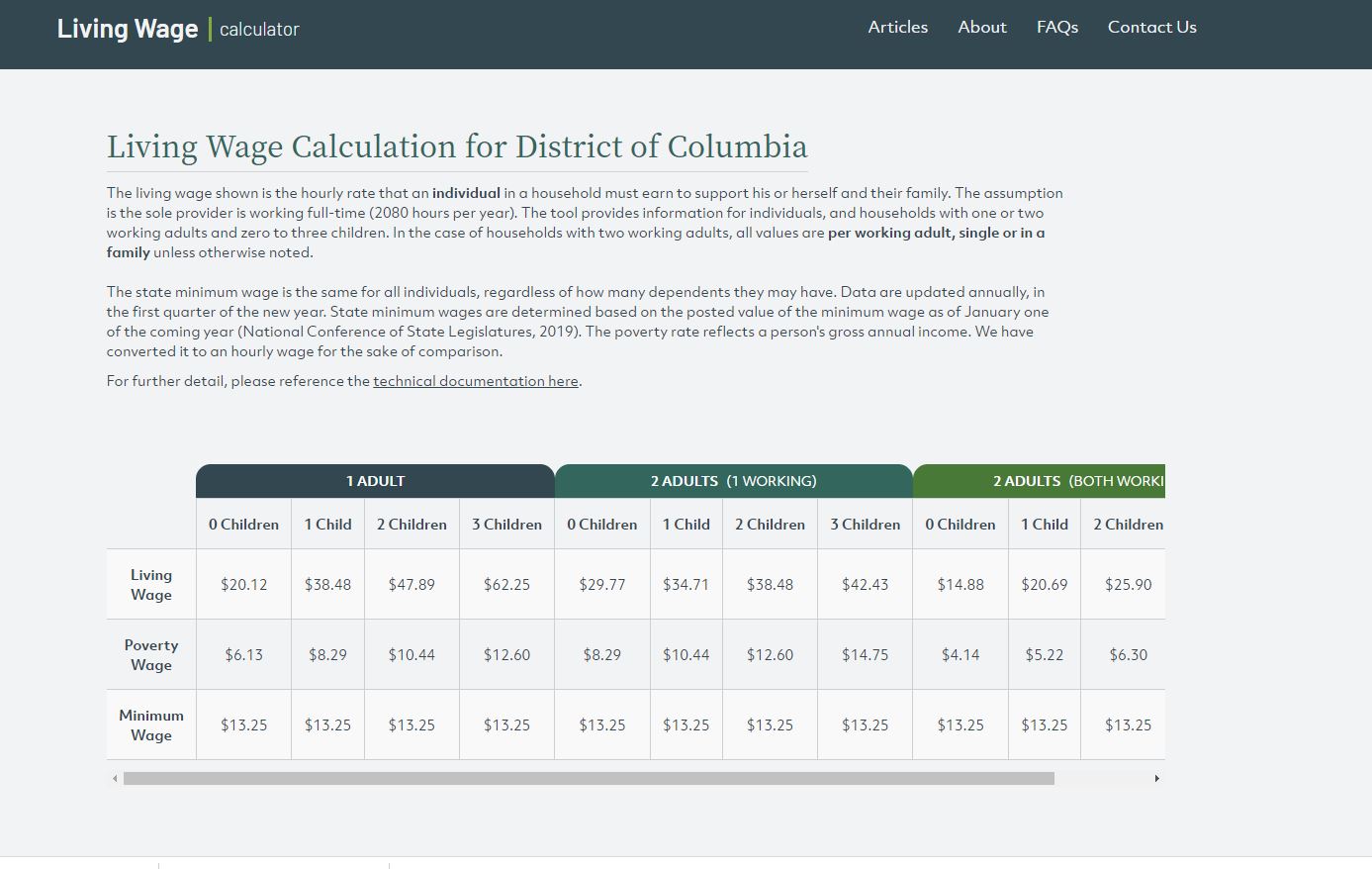
Maine conducts brave and daring experiment with an $18 per hour minimum wage
It’s a bold move, says Jon Miltimore, let’s see if it pays off:
While Florida, which on Tuesday passed a $15 an hour minimum wage referendum, was the only state to have the minimum wage on the ballot in 2020, some localities also voted on the issue.
One of those cities was Portland, the largest city in Maine. The referendum sought to increase the minimum wage from $12 an hour to $15 by 2024. The measure also mandated that workers receive time and a half during a civil emergency (like, say, a pandemic).
Despite opposition from the city’s mayor, seven members of the city council, and dozens of Portland businesses, the measure passed with 60 percent of the vote. That means as early as next month the minimum wage will be $18 an hour, since Maine has declared a civil emergency. (The time-and-a-half will kick in on the $12 minimum wage.)
Businesses already ravaged by stay-at-home orders from the coronavirus have expressed worry about how they will manage to stay in the black.
“In the last 7 months business has dropped from 30 to 50 percent and food costs have skyrocketed. This added increase on a business already depressed due to the pandemic is tough,” one Portland business owner who declined to speak on camera told WCSH, an NBC-affiliate. “We may have to either cut employee hours or cut back on business hours.”
Cutting employee hours is just one of the ways employers negatively respond to laws that artificially raise the price of labor. Other responses include cutting other forms of compensation, such as health care or 401k benefits, replacing workers with robots, and simply assigning employees to do more work.
These are hardly the only unintended consequences. For example, economists David Neumark and William Wascher found that higher minimum wages decrease the number of teens enrolled in high school because they encourage high-skilled teens to drop out; this in turn displaces low-skilled workers.
November 8, 2020
QotD: Tribal and post-tribal economies
… it was a problem of permitting, by and large. Portugal isn’t as bad, mind, nowhere near but in the seventies a lot of places were designated “green belts” everywhere, so that to build on them (and you had to build on them, or you were stymied in growth) you had to know who to bribe, and of course have the money to do it. This isn’t the only reason why favelas end up housing even the middle class. There’s a ton of other reasons, including but not limited to land ownership and property rights, and a shit-ton of stuff. But permitting is part of it.
This is because people don’t view their public posts as something they do to make society better/serve society or even do a job, but as a way to enrich themselves/benefit their friends/make it easier to make money in the future.
Everything, from truly shoddy workmanship to rushed, corner/cutting work, to outright corruption comes from viewing a job not as something you take pride in and work to do your best at, but from viewing a job as an opportunity to enrich yourself and your family while doing as little work as humanly possible. In fact in some societies, this is viewed as a duty. As someone in comments cited there are places in Africa where locals can’t run a shop, because all their relatives near and distant will expect to be given merchandise for free … or even money out of the till.
A lot of this is because the idea of the individual as independent of the tribe and the family is a very new thing in most of the world. We kind of have a head start on it because we are/are descended from those who left family and tribe behind.
[…]
Also in most of the world working for money is vaguely shameful. Particularly so if you’re working for someone else. […] And even here not only does that attitude persist, but it’s trying to make itself normal. Particularly in politics.
So, take pride in what you do, and do the best job you can. It’s not just important for you, it’s a building block of society. Do the best you can, and control as much as you can, so maybe you will have just reward which is an incentive to do better.
This way is civilization built. This way do things actually improve.
Sarah Hoyt, “BUILD!”, According to Hoyt, 2018-07-25.
November 7, 2020
Misunderstanding what is meant by “mineral reserves”
It seems to happen almost as regularly as Old Faithful, as someone blows a virtual gasket over the reserves of this or that mineral “running out” in x number of years. Tim Worstall explains why this is a silly misunderstanding of what the term “mineral reserves” actually means:

“Aerial view of a small mine near Mt Isa Queensland.” by denisbin is licensed under CC BY-ND 2.0
It’s not exactly unusual to see some environmental type running around screaming because mineral reserves are about to run out. The Club of Rome report, the EU’s “circular economy” ideas, Blueprint for Survival, they’re all based upon the idea that said reserves are going to run out.
They look at the usual listing (USGS, here) and note that at the current rate of usage reserves will run out in 30 to 50 years. Entirely correct they are too. It’s the next step which is such drivelling idiocy. For the claim then becomes that we will run out of those metals, those minerals, when the reserves do. This being idiot bollocks.
For a mineral reserve is, as best colloquial language can put it, the stuff we’ve prepared for use in the next few decades. Like, say, 30 to 50 years. That we’re going to run out of what we’ve got prepared isn’t a problem. For we’ve an entire industry, mining, whose job to to go prepare some more for us to use.
[…] A mineral reserve is something created by the mining company. Created by measuring, testing, test extracting and proving that the mineral can be processed, using current technology, at current prices, and produce a profit. Proving that this is not just dirt but is in fact ore.
Mineral reserves are things we humans make, not things that exist.
November 6, 2020
The World’s Most Recycled Material
Practical Engineering
Published 6 Aug 2020Exploring the complexities that go into the creation and application of asphalt concrete.
Use code80PRACTICALto get $80 off with purchase, including free shipping on your first box https://bit.ly/30sYo7c Go to HelloFresh.com for more details.Of all the ubiquitous things in our environment, roads are probably one of the least noticed. Our roads see tremendous volumes of traffic and withstand considerable variations in weather and climate, and they do it on a pretty tight budget. That’s really only possible because of all the scientists, engineers, contractors, and public works crews keeping up with this simple but incredible material called asphalt.
-Patreon: http://patreon.com/PracticalEngineering
-Website: http://practical.engineeringWriting/Editing/Production: Grady Hillhouse
Editing and Direction Help: Wesley CrumpThis video is sponsored by HelloFresh.
November 5, 2020
QotD: The idiocy of tariffs
The entire point of trade, the very purpose of it, is to gain access to the imports. Those things which Johnny Foreigner makes cheaper or better than we do. To tax ourselves because he makes things cheaper or better than we do is simple idiocy. […] Over and above this stupidity there’s the depressing point that trade and trade protection really is a spiral. Here we’ve got the two largest economies on the planet tripping over themselves to punish their own citizenry for their temerity in buying foreign. And as we can see, it is a tit for tat spiral. A little bit of sabre rattling, a response, a larger amount of shouting, a response, then truly impoverishing levels of rock throwing into own harbours and off we go into making our own people less wealthy.
The true sadness here being that the spiral works the other way too. But hugely, vastly, more slowly. GATT was founded in 1947, it became, the process was transferred to, the WTO and it has taken them since then, that two generations, to reduce tariff levels to where they’re not really all that important in trade matters. Something that is being undone in just a couple of months of foolishness. GATT being something of a response to the economic demolition work done by Smoot Hawley of course.
Trade protection does spiral up and spiral down, the sadness being that here’s an asymmetry to the process. The reductions that make us richer take very much longer than the nonsenses that impoverish.
Tim Worstall, “The China, US, Trade War – It’s All Mutual On The Way Down As Well As Up”, Continental Telegraph, 2018-07-11.
November 3, 2020
QotD: Water pricing
Near all freshwater availability problems come from the fact that farmers get it cheap or for free, diverting it from much more valuable uses like keeping people alive if they drink it. This is true in California – we’ve actually cases of farmers using $400 of water to grow $100 of alfalfa – as it is in Pakistan. There are cases of people growing water hungry crops in near drought areas just because they get that water too cheaply.
[…]
Gaining revenue with which to build dams is useful, it most certainly is. But that’s not the only function of pricing. The cash to increase supply, great, but the very fact of charging will reduce demand. And we should be charging what it costs to produce the water too. So charges should cover 100% of the costs of the dams, not just 25%.
It’s entirely possible that charging that full cost will mean that no farmers want the water. OK, then we shouldn’t build the dam, should we? For if the value of the water – measured by what people will pay – is less than the cost of its provision, then that’s value destroying, providing the water. The dam makes us all poorer, therefore we shouldn’t build it.
The point here being – and it’s an important one – that prices affect both supply and demand. They’re what brings them into balance even. So, yes, charge for water, but not just so that we can pay to increase supply, also so that we, merely by charging, reduce demand.
Tim Worstall, “Pakistan’s Chief Justice Almost Right – Charge For Water, Not For Dams, But To Charge For Water”, Continental Telegraph, 2017-07-17.