
[Responding to a Robert Reich post against tax cuts because they’ll aid the rich more than the average taxpayer]
Anybody who uses the phrase “tax cuts for the wealthy” to gin up opposition to lowering taxes is either a dupe or a villain.
How do I know this? Do some research. Find a graph of how income taxes paid segregates by wealth of the payer. I’d post one here, but X hates links.
The bottom 40% in income pay effectively nothing in income tax. The “rich” pay such a disproportionately high percentage of it that the tax take of entire states can be significantly affected by a handful of high-net-worth individuals moving out. In Europe this happens to small countries.
Because of this, it is effectively impossible to cut taxes in any way at all without disproportionately benefiting the “wealthy”.
When demagogues like Reich honk about “tax cuts for the wealthy”, what they actually mean is: taxes should never decrease. The state should confiscate and reallocate more and more wealth, forever and ever, amen.
March 14, 2025
QotD: You can’t cut taxes without disproportionally benefitting “the wealthy”
March 10, 2025
Deep State delenda est
Elizabeth Nickson calls for the destruction of the deep state, Cato the Censor-style: salt the earth and leave no stone standing upon another stone:
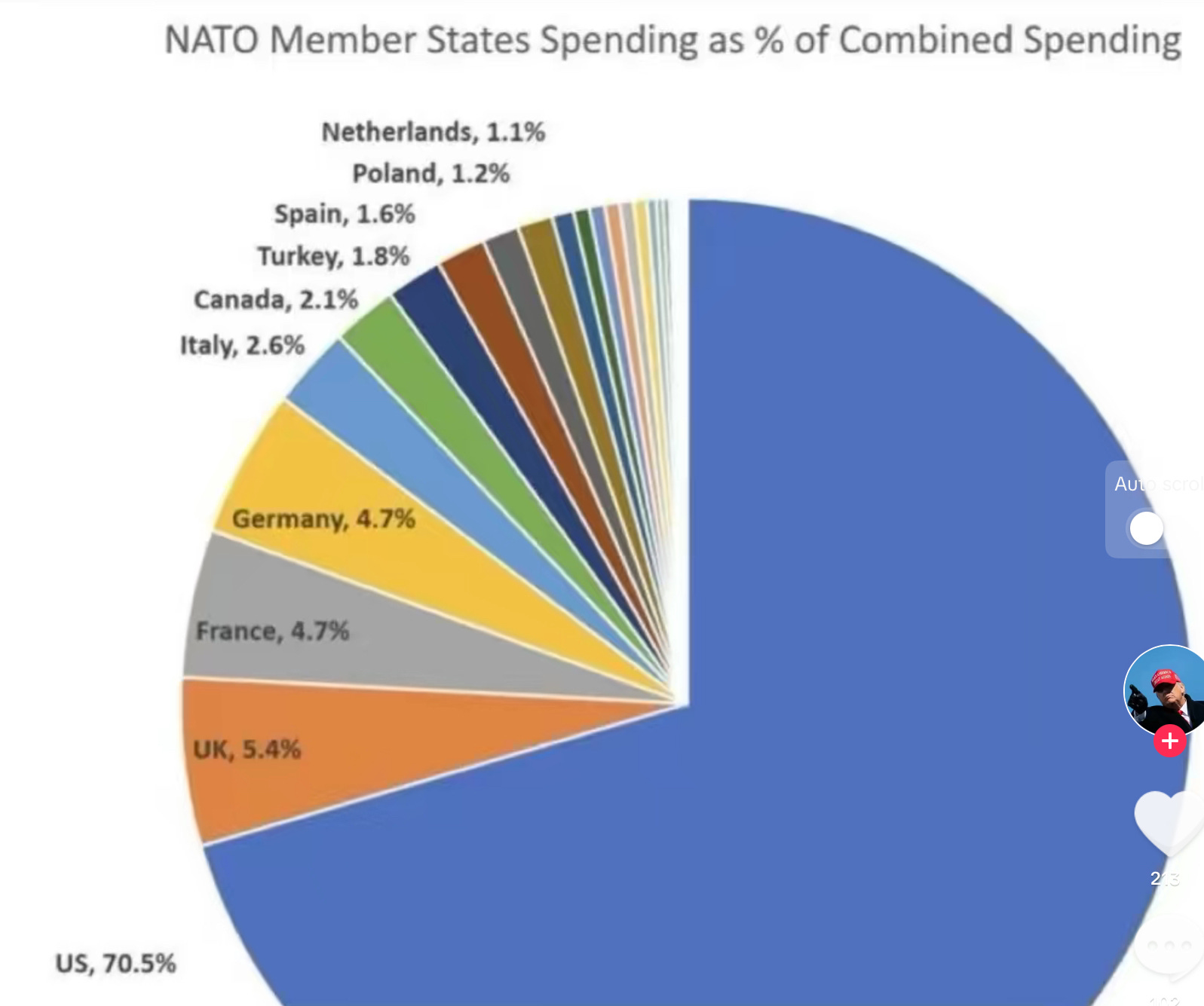
There has been some argument in my house about Trump’s tariffs on Canada, and indeed the rest of the world. I’m on the American side; why on earth should the Americans pay for everything? Because they do. They pay for Europe’s defence, they allow every single country to tariff American products while allowing their goods in for pennies. When anyone, anywhere is in trouble, who do they call? The Yanks. Where do the pleas of all the desperate people all over the world land? America. Who did the Israeli captives hope for? Trump and the Americans. (Actually just Trump. They didn’t think that the Biden people would lift a finger. Which they didn’t.)
Please explain why these countries below, numbering 550 million people, cannot defend themselves?
Why can’t they defend themselves? They are broke.
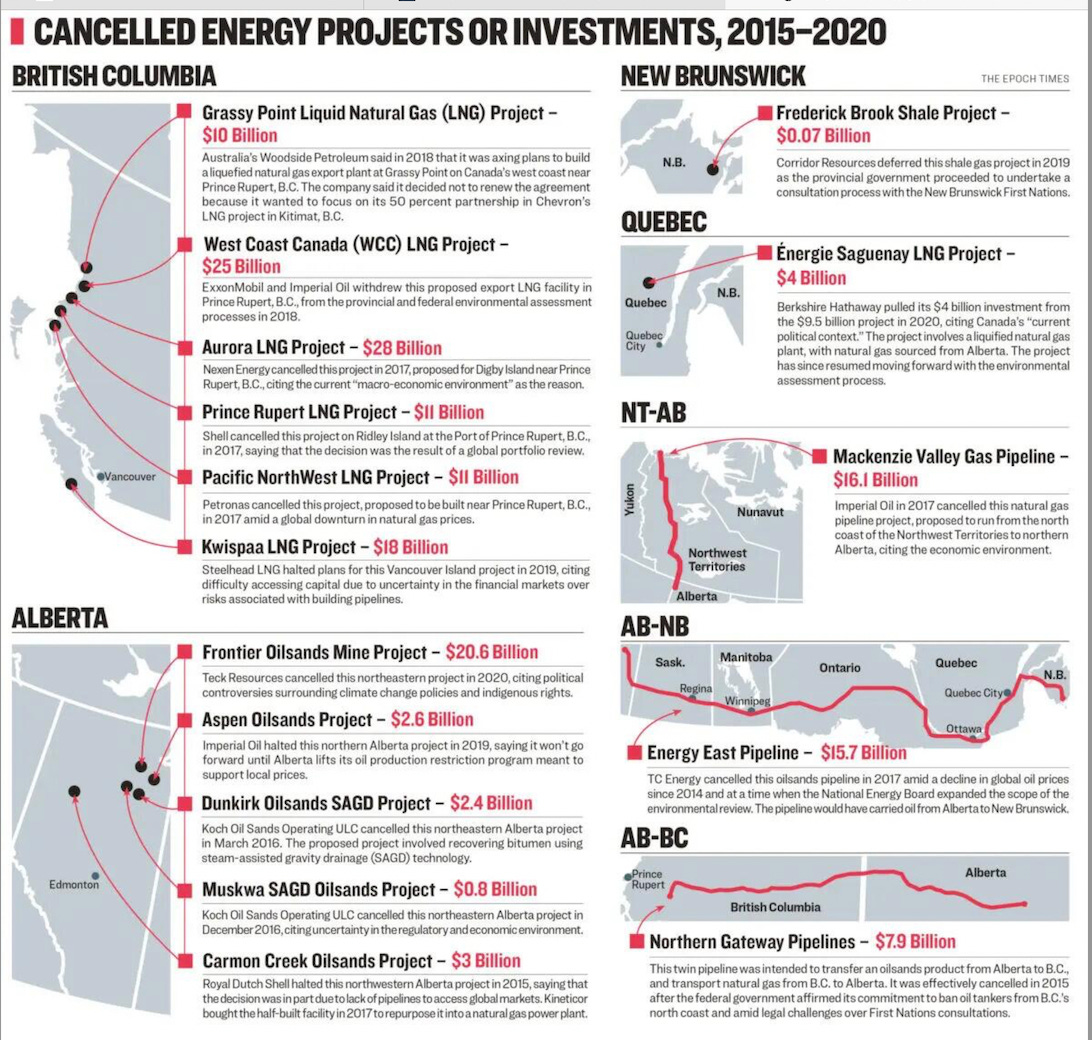
The following represents $150 billion in missed opportunity in the last FIVE years. Canada is so broke, it is broke-ass broke; it is a shriveling carbuncle on the American economy. We send 80% of our exports to you because we are TOO DAMNED LAZY to develop our own country.
If we had built those projects, Canada would be rich, the middle class would be crackling along, creativity would have soared and we would actually be proud. No one is proud of Canada except for the people paid to bloviate or who hope to be paid to bloviate, and those too stupid to bloviate. The rest of us are sullen and angry and so frustrated we don’t know what to do with ourselves.
But no. Climate Change. Look, I am sorry to say this, but anyone who “believes” in climate change being somehow catastrophic is stupid, malignant or has not done the required reading. Which means lazy. Which means childlike. There is no there there. Climate alarmism is nonsense, it is bullshit, it is utter crap made up by subsidized kids looking for “significance” and an endless supply of taxpayer dollars. The science is far too new to be reliable, there are thousands of real (not NGO) scientists in opposition to it and the policy implications are so vast we are looking at a new feudalism. Anyone promoting climate change is unserious.
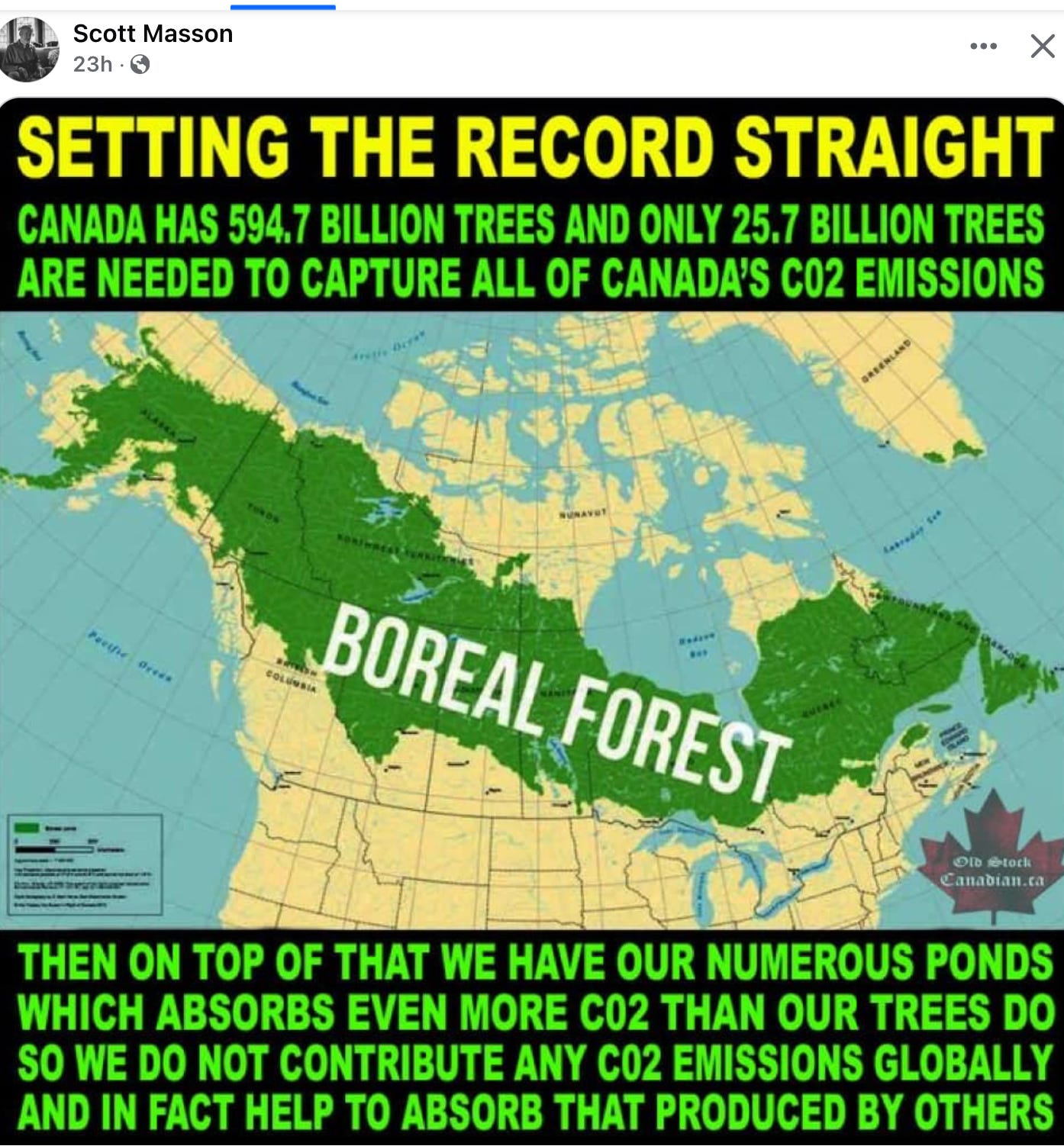
Childhood is where we are. Canada is the only country in the Western Hemisphere which exacts a crippling carbon tax. And this:
The above is a perfect illustration of vanity, of a detachment from reality. And the only way people can detach from reality is that they are subsidized by the Americans. This means the Heartland people, the Flyover people. Those subsidies to the world added to a massive, unsustainable, insane, debt of thirty-seven trillion, created a giant fuzzy rainbow coloured cloud inhabited by perpetual children built by ghastly people like Samantha Powers, Al Gore, Hillary Clinton, and their legion of sick, larcenous, pedophile supporters, the ferociously stupid women on the east coat of America, the idiots at all the Ivies, and the two million federal workers who are about to be reduced by, I wish, 50%.
March 9, 2025
QotD: HR metastasized
The Peter Principle tells us that everyone gets promoted to their own level of incompetence. So, that explains why the people actually running HR departments are incompetent. The second is Parkinson’s Law, which everyone usually takes to be about work expanding to fill the time available etc. In reality the book as a whole is about how bureaucracy will eat an organisation from the inside. Like one of those parasitic wasps where the pupae eat the spider from the inside out. The lesson of this is that proper management of any organisation is a constant battle against the growth of the bureaucracy. Proper managers should — must — spend significant amounts of their time turning a blowtorch on that internal bureaucracy. Real slash and burn, proper Carthaginian Solution on their arses.
The third has the most direct and exact relevance here. Up the Organisation. In which we are told that the personnel department (what we had before Human Resources) should be the secretary of the line manager. Someone wants to hire someone? Sure. The person who decides who to hire is the person doing the hiring. He needs an assistant only in so far as someone should phone up the local rag to put the job ad in.
Now, it is necessary to have someone making sure the details for the paycheque are right, that they enrolled in the company equity scheme, health care is sorted. But that’s some beancounter preferably hundreds of miles away from any actual influence upon anything.
All of which — from that distillation of the finest ponderings upon corporate management civilisation has so far achieved — tells us what to do with Human Resources.
Turn the blowtorches on the power skirts. Possibly even the full Carthaginian. Tho’ who we’ll find to buy as drabs and doxies the usual inhabitants of HR is another matter. Dunno, might be worth ploughing them into the fields and selling the salt instead.
Tim Worstall, “The Invasion Of The Power Skirts”, It’s all obvious or trivial except …, 2024-12-06.
March 8, 2025
QotD: India’s post-independence economic mistake
Strong and centralised control is something that only a rich country can afford because only a rich economy can weather the costs – the inefficiencies, the politically directed nonsenses – that such control insists upon.
Of course, rich countries shouldn’t make themselves poorer in this manner either but an already poor place can’t afford to have them – because if it does then people die.
India’s poor because of that attempt at socialist development. Something we can prove by the manner in which development sped up when even some portion of the socialism was dropped. Sure, the Webbs set up the LSE, the place I started to learn my economics but they were responsible for far greater evils than my views as well.
Tim Worstall, “A Sad Lesson About India’s History”, Continental Telegraph, 2020-05-01.
March 4, 2025
“Rare metals” are not really rare at all
On the social media platform formerly known as Twitter, John Ringo explains why the US doesn’t exploit its own vast reserves of “rare metals”:

I love every single time someone goes ‘CHINA HAS A LOCK ON RARE METALS! WE NEED TO ALLY WITH COUNTRY X TO GET RARE METALS! WE NEED RARE METALS!’
The US has huge deposits of pretty much everything we need. Lithium? Got it. Neodymium? Got it. Silver? Spades. Montana’s practically made of it.
The reason we don’t mine it here is the stupid ways our laws are written and allowing the Chinese to play us.
There’s an area in TX that has as much neodymium as the Chinese deposits that supply 98% of the world’s neodymium. (Critical material in rare earth magnets which are in turn critical in … so many things. Drones. Electric cars. Etc.)
There’s even a registered mine. Which was open.
Why is it closed?
The Chinese drop the prices below production cost (dumping) every time they open. Then jack the price and play political games with it when it closes.
There’s a silver mine in Montana (critical in modern solar) which has been trying to open for FIFTEEN YEARS.
Why can’t it open?
Tied up in environmental lawsuits because Congress won’t amend the EPA act that allows anyone to sue for any reason whatsoever and damn having mining or manufacturing WE DON’T NEED THAT WE NEED TO SAVE THE WORLD!
AND SLAVA UKRAINE YOU MAGA BASTARDS! TRUMP IS PUTIN’S COCK HOLSTER! WE NEED TO MANUFACTURE MORE WEAPONS TO SEND TO UKRAINE BUT ONLY IN A PERFECTLY ENVIRONMENTAL FASHION!
‘Environmental’ emphasis on the ‘mental’.
Autarchy is the idea of a country neither importing nor exporting. Just keep everything in the country. Ourselves alone.
A few have tried it from time to time. India did at one point.
Nobody can do it. There’s ‘something’ that you need from outside.
Except the US. We more or less need some tropical stuff. Like coffee, tea, sugar. Palm oil. (Super important in soap.)
But we can, in reality, even dispense with tree rubber. We can make it all from artificial.
Which comes from oil.
And we have enough oil. Thank a fracker. We’ve got enough oil in Southwest Texas to supply the WORLD for a thousand years.
(Touch expensive compared to Persian Gulf. But the price is constantly coming down.)
All we need to do is change laws, and we can almost go it without any other country. Without import or export.
I’m not suggesting we do.
But I am suggesting we dedicate some serious attention to things like China manipulating trade to ensure they have a lock on rare metals.
That we prioritize internal production.
That we decouple critical issues from other countries.
Cause the way the world is going, we’re reaching a point we’re gonna have to go it alone and if we have allies and trade partners, I’d suggest they be in the Western Hemisphere.
Cause those fuckers cross the pond be crazy.
Fifteen years ago, Tim Worstall explained why China’s rare earth monopoly won’t stand up in the long run.
March 3, 2025
QotD: Arguments around “spontaneous order” and “divine intervention”
It seems to me that this is a bit like the old “irresistible force versus immovable object” paradox. On the one hand, the universe, life, human life, seem impossibly complex to have happened randomly. On the other hand, the universe is actually very large. Perhaps there are enough monkeys banging away at typewriters to produce not just Shakespeare, but the script of every Seinfeld episode.
Esteban, “Evolution, Economies And Spontaneous Order”, Continental Telegraph, 2020-01-22.
March 1, 2025
Canada’s “supply management” system – our literal “sacred cow”
In negotiations with the Trump administration to avert the threat of massive tariffs, our political leaders say that “everything” is on the table … except for one teeny-tiny little massive crony capitalist protection racket that we are apparently willing to destroy the entire national economy to preserve:

Unfortunately, Canada’s stubborn intransigence on a significant trade-related issue once again threatens to undermine our position and, with it, the possibility of a deal. I probably don’t have to tell you, but in case you couldn’t guess … yup. It’s the dairy sector.
At this point it should be noted that there are basically two agricultural industries in Canada. One of those industries relies heavily on exports, has thrived under the various free-trade deals Canada has been party to, and is filled with dread at the prospect of U.S. tariffs. Given the obvious significance of the U.S. as an export market for Canadian goods, one doesn’t have to look too far to find all kinds of nervous folks in these industries. For example, nearly $9 billion in agricultural products were exported to the U.S. in 2023 from just Alberta alone. Beef exports represent about a third of that total, and in fact the U.S. and Canada comprise the world’s largest two-way trade in beef and live cattle. There is much at stake here (pardon the terrible pun).
The other agricultural industry in this country, is, of course, the supply managed sector. That’s dairy, as noted above, but also eggs and poultry. The supply managed sectors of the agricultural industry are governed by a system of quotas, price controls, and sky-high tariffs. It’s essentially a legalized cartel system. This sector not only wants nothing to do with free trade, but actually sees free trade as a threat. To them, “tariff” is not a dirty word because they hide behind a shield of tariffs that are far higher than anything Trump has ever threatened or conceived.
Now, it should also be noted that these two sides of the agricultural sector are vastly different in size and importance. Yet, the vocal and irrational demands of the small, sheltered component seem to be the demands that our politicians remain most beholden to. Consider comments made recently by the contenders for the Liberal leadership: during this week’s debate, nearly all of them bent over backwards to declare fealty to supply management, even while expounding upon the existential threat posed by Trump’s tariffs. Even now, it’s clear that our politicians are afraid to pick this fight.
[…]
While that could have been a wake-up call for Canada, we instead went in the other direction. In the aftermath of the U.K. situation, Parliament went ahead and passed Bill C-282, which would enshrine into law the principle that supply management should never be on the table in any trade talks (the bill ended up being bogged down in the Senate and its future is unclear).
It’s naïve in the extreme to think that any trading partner, including and especially the Americans, would simply shrug and say “Well, shoot, that’s too bad. Let’s move onto other issues.” We’re needlessly harming our position even before talks begin.
February 25, 2025
Argentina’s experience of life with high tariffs
Marcos Falcone explains how Argentina’s unusually high tariff barriers distort ordinary economic activity for Argentines every day:

When Argentines go abroad, they usually go shopping. Many of the products they want cannot be bought at home, ranging from clothes to smartphones and all kinds of home appliances. Because of this, it has become a tradition to return from a trip with one or two extra suitcases filled with smuggled goods. Did you know that it is more expensive to buy an outdated iPhone in Argentina than it is to fly from Buenos Aires to Miami, stay for three days, and get the newest one?
[…]
Tariffs do not just make it difficult to get phones at home — they can make life dangerous as well. Argentina’s most sold car, which is artificially expensive because of protectionist measures, got 0 (zero) stars on one of Latin America’s most renowned safety tests. Cars in Argentina are not only more expensive than elsewhere in the region, but also markedly less safe.
To achieve these terrible results, the only thing Argentina had to do was enact tariffs, and now the US seems to be heading in the same direction. But in the past, protectionism has caused the same damage in the north as it caused in the south. Back in the first Trump administration, protecting the steel-production industry saved some jobs, but eliminated many more. Tariffs have also hurt businesses that rely on imports within the US and can continue to do so in a world of globally integrated supply chains. More generally, the 1933 Buy American Act, which forces the government to pay more for US-made goods, has been proven to be both ineffective and costly.
There is no escaping the negative effects of blocking outside competition. The more barriers a country enacts, the more damage it causes to itself. If we, as individuals, acted in a protectionist way, we should aim to grow our own food, build our own house, or make our own cars. But how does that make any sense? Economist Robert Solow once said, “I have a chronic deficit with my barber, who doesn’t buy a darned thing from me”. He meant it as a joke, but he had a point: What matters is to create wealth, which can be done both by selling and buying from others.
The revival of protectionism in the US is worrisome. To avoid it, Americans should take a look at the enormous destruction of wealth that tariffs have caused in other countries. Despite President Milei’s recent efforts to lift tariffs and take Argentina out of the “prison” in which it exists, the fact that the country shot itself in the foot decades ago has put it in a very delicate economic position. The US should not follow its path.
February 21, 2025
QotD: Why does it cost so much to build modern infrastructure?
But one reason all these things are so expensive is because we’re not doing them on terra nullius. If we start with a bare field a ground source heat pump might well not be that bad an idea. Communal heating systems into an entirely new development, maybe.
But putting ground heat pumps into central London? Can’t do that ‘ere mate, someone’s already built central London right where you want to dig up. HS2 goes right through some of the most expensive — and inhabited by the highly vocal — countryside in the nation. Edinburgh, minor though it is, still has that central London problem.
This also explains why Mercury Comms employed the ferrets. The tubes already existed and fibreoptic could be stuffed down them. They didn’t have to dig up central London, see?
Agreed, this isn’t one of the world’s truly great insights but it is something to keep in mind. The reason building the infrastructure for the next level of civilisation costs so much is because we already have a civilisation. The existence of which gets in the way of the building men …
Tim Worstall, “Why Is Infrastructure So Damn F’n Expensive?”, It’s all obvious or trivial except …, 2024-11-18.
February 19, 2025
A brief nod to the shade of Missouri Representative James Beauchamp “Champ” Clark
I was aware that the greatest Liberal Prime Minister in Canadian history, Sir Wilfred Laurier, had lost an election on the basis of a negotiated free trade deal with the United States, but I was not aware of exactly how that happened. Colby Cosh provides the gory details that got Laurier out of office for good:

Funny thing I noticed: Friday marked the anniversary of the 20th century’s most remarkable explosion in Canadian-American relations, which took place on the floor of the U.S. House of Representatives in 1911. On that day, Feb. 14, Missouri Democratic congressman James Beauchamp “Champ” Clark gave a short speech in defence of a free-trade agreement that had been hammered out between the (Republican) Taft administration and Wilfrid Laurier’s Liberal government.
Clark, a progressive and witty westerner who had already been chosen to become Speaker of the House in April, was widely expected to be the Democratic nominee for president in 1912. He was, in other words, a man who counted. And on the floor of the House, he advocated passage of the free-trade deal on grounds that eventually doomed it: namely, that it was a conscious step toward total American absorption of the Dominion of Canada.
When Clark’s remarks hit the newspapers up north — and no news story hit harder between 1900 and the dawn of the Great War — there was a spasm of anti-American and pro-Empire feeling throughout the country. As any schoolbook will tell you, this helped lead to the defeat of Laurier and the ruin of the trade deal in September 1911’s general election. This gaffe is indeed now what Clark is best remembered for, along with his eventual fumbling away of the 1912 presidential nomination to an unassuming professor named Woodrow Wilson.
When I was an undergraduate, we all had to have it explicitly explained to us that back in Edwardian days, the Liberals were the party of free trade, and the Conservatives the great defenders of tariff protection (although Sir John A. had sometimes sought without success to kick-stark “reciprocity” negotiations with the U.S.). Perhaps the most confusing feature of the 1911 controversy to students of today will be Champ Clark’s idea that the U.S. government would want to lower trade barriers to facilitate eventual annexation of Canada, rather than raising them to mutually punitive levels as a matter of crude antagonism.
Between Confederation and Champ’s time, Americans often just assumed as a matter of course that Canada would fall into their laps without any need for aggression or invasion. We northerners would eventually see that the benefits of American citizenship were more valuable than our romantic imperial attachments, and we would come beat down the door. This was certainly Clark’s own idea, and it created no controversy among Americans themselves when he expressed it.
Of course, in Laurier’s day “liberal” meant something closer to the modern sense of “libertarian” than it does to the current incarnation (or shambling corpse) of that party.
February 16, 2025
Free-market economist grapples with a new kind of tariff
With US President Donald Trump seemingly utterly entranced by the possibilities of killing off as much world trade as he can using tariffs, I did not expect to read that renowned libertarian economist David Friedman is not sure about the latest kind of tariffs being proposed:
I have finally encountered a kind of tariff that I am not sure I am against. The idea is to impose the same tariff on another country’s exports that they impose on your exports. A tariff makes the country that imposes it worse off, a fact that neither Trump or most of the media appear to understand — Vance may — but it makes the country it is imposed against worse off as well. Imposing a tariff can be in the interest of the politicians who impose it for public choice reasons, as a way of buying support from a concentrated and well organized interest group such as the auto industry at the expense of a dispersed interest group such as their customers. That is one of the two reasons tariffs exist, the other being that the false theory of trade economics is simpler and easier to understand than the true theory.1
But another country’s tariff barriers against your exports make both your country and its politicians worse off. So if imposing tariffs on their imports results in tariffs being imposed on their exports, it might be in the interest of the politicians as well as the country they rule to lower, even abolish, their tariffs — and free trade, zero tariffs, is my first best tariff policy.
Reciprocal reduction of tariffs is, of course, a routine objective of trade negotiations. What Trump appears to be proposing is to automate the process. That might have some advantages. It would reduce the amount of time and effort spent on trade negotiations. More important, it would make it harder for a government that wanted to keep its tariffs to pretend to its citizens that negotiations for mutual reductions had broken down over details.
It is not obvious what “reciprocal tariffs” means in practice, because tariffs, typically, are on particular goods. China imports oil and exports textiles. If they impose a tariff on American oil there would be no point to the US retaliating by imposing a tariff on Chinese oil — we don’t import Chinese oil.
Under the Plan, my Administration will work strenuously to counter non-reciprocal trading arrangements with trading partners by determining the equivalent of a reciprocal tariff with respect to each foreign trading partner. (Reciprocal Trade and Tariffs Memo)
It isn’t clear what “the equivalent” means. One possible approach would be to figure how much revenue a country collects from tariffs on American exports and set a uniform tariff on that country’s exports set to bring in the same amount of revenue. That would be simple and would reduce the political support for tariffs, since they could not be targeted to protect specific industries.
For which reason I don’t expect it to happen. The closest version that seems politically plausible is a nonuniform tariff schedule that brings in the equivalent revenue. Unfortunately that would let the administration protect favored industries with tariffs high enough to reduce imports, and revenue, to near zero.
Of course, the target country could, in a true system of reciprocal tariffs, solve the problem by reducing their tariffs to zero.
1. I discuss the relevant economics in Ptolemaic Trade Theory.
QotD: Why we’re stagnating
Their explanation for our doldrums is simple: we’re more risk averse, and we don’t care as much about the future. Risk aversion means stagnation, because any attempt to make things better involves risk: it could also make things worse, or it could fail and turn out to be a waste of time and money. Trying to invent a crazy new technology is risky, going into consulting or finance is safe. Investing in unproven startups or speculative bets is risky, investing in index funds is safe. Trying to overturn the scientific consensus is risky, keeping your head down and publishing papers that don’t say anything is safe. Producing challenging new art is risky, spewing an endless stream of Marvel superhero capeshit is safe. Even if, in every case, the safe option is the “rational” choice for an individual actor in maximin expected value terms, the sum total of these individually rational choices is a catastrophe for society.
So far this is a lame, almost tautological, explanation. Even if it’s all true, we still haven’t explained why people are so much more fearful of failure than they used to be. In fact, we would naively assume the opposite — society is much richer now, social safety nets much more robust, and in the industrialized world even the very poor needn’t fear starvation. In a very real sense, it’s never been safer to take risks. Failing as a startup founder or academic means you experience slightly lower lifetime earnings,1 while, in the great speculative excursions of the past, failure (and sometimes even success) meant death, scurvy, amputations, destitution, children sold into slavery or raised in poorhouses — basically unbounded personal catastrophe. And yet we do it less and less. Why?
Well, for starters, we aren’t the same people. Biologically, that is. We’re old, and old people tend to be more risk-averse in every way. Old people have more to lose. Old people also have less testosterone in their bloodstream. The population structure of our society has shifted drastically older because we aren’t having any children. This not only increases the relative number (and hence relative power) of older people, it also has direct effects on risk-aversion and future-orientation. People with fewer children have all their eggs in fewer baskets. They counsel those kids to go into safe professions and train them from birth to be organization kids. People with no children at all are disconnected from the far future, reinforcing the natural tendency of the elderly to favor consumption in the here and now over investment in a future they may never get to enjoy.
Old age isn’t the only thing that reduces testosterone levels. So does just living in the 21st century. The declines are broad-based, severe, and mysterious. Very plausibly they are downstream of microplastics and other endocrine-disrupting chemicals. The same chemicals may have feminizing effects beyond declines in serum testosterone. They could also be affecting the birth rate, one of many ways that these explanations all swirl around and flow into one another. Or maybe we don’t even need to invoke old age and microplastics to explain the decline in average testosterone of decisionmakers in our society. Many more of those decisionmakers are women, and women are vastly more risk-averse on average.2
John Psmith, “REVIEW: Boom, by Byrne Hobart and Tobias Huber”, Mr. and Mrs. Psmith’s Bookshelf, 2024-11-11.
1. And given the logarithmic hedonic utility of additional money and fame, that hurts even less than it sounds like it would.
2. If you’re too lazy to read Jane’s review of Bronze Age Mindset but just want the evidence that women are more cautious and consensus-seeking than men on average, try this and this and this for starters.
February 13, 2025
From Ruins to Recovery: The Fight to Rebuild – W2W 004
TimeGhost History
Published 12 Feb 2025In 1946, the world is struggling to rebuild from the devastation of WWII. Cities lie in ruins, economies are shattered, and millions are displaced. As the old powers of Britain and France weaken, the rising superpowers — the U.S. and USSR — compete to shape the new world order. Will reconstruction lead to stability, or is the world heading for another conflict?
(more…)
QotD: Social Darwinism
Social Darwinism fails in practice for the most obvious reason: You can’t practice it with the necessary consistency without massive State intervention, and what kind of fool would give a State, any State, that power? It has been tried, 1933-45 being the most prominent example, and it didn’t go well.
Severian, “The Experiment”, Founding Questions, 2021-09-25.
February 11, 2025
The End of Empire? Colonialism in Crisis – W2W 003
TimeGhost History
Published 9 Feb 2025In 1946, the old colonial empires of Britain and France struggle to maintain control as nationalist movements rise and their economies crumble. Meanwhile, two new superpowers — the U.S. and the USSR — seek to reshape the world in their image, using decolonization as both an ideal and a tool for influence. As the colonial order fractures, global power shifts, and the battle for dominance begins.
(more…)


