Quotulatiousness

July 5, 2024

“Private property rights? How do they work?” (U of T students, probably)

Filed under: Cancon, Education, Law, Middle East, Politics — Tags: , , , , , — Nicholas @ 04:00

In The Line, Josh Dehaas rounds up the concept of private property rights for the University of Toronto students (and non-student antisemitic fellow occupiers) who have been squatting for Palestinian terrorists on university property for the last while:

University College, University of Toronto, 31 July, 2008.
Photo by “SurlyDuff” via Wikimedia Commons.

After Justice Koehnen delivered his ruling Tuesday ordering the occupiers to dismantle the People’s Circle for Palestine at the University of Toronto, one of the protesters accused the school of hypocrisy.

“It’s quite interesting that a university that claims to practice decolonization is falling back on this claim of private property,” master’s student Sarah Rasikh told a journalist on the day before the students began taking down their tents.

“U of T and the Court more specifically is quite literally telling Indigenous students to leave and get off of their own land,” she added.

Rasikh has a point, sort of.

As someone who did law school relatively recently, I can attest that many university professors are downright hostile to the concept of private property. They commonly claim that all of Canada belongs to Indigenous people and that Indigenous peoples don’t believe in private property. Rather, they believe in “sharing”. Decolonization therefore requires that land be treated communally, or so the theory goes. University administrators who pay lip service to the concept of decolonization shouldn’t be surprised when students try to turn theory into action.

Thankfully the law still protects private property rights. Students who didn’t get taught how that works by their professors ought to give Justice Koehnen’s decision a read.

As Justice Koehnen explained, “in our society we have decided that the owner of property generally gets to decide what happens on the property”.

“If the protesters can take that power for themselves by seizing Front Campus, there is nothing to stop a stronger group from coming and taking the space over from the current protesters,” he went on. “That leads to chaos. Society needs an orderly way of addressing competing demands on space. The system we have agreed to is that the owner gets to decide how to use the space.”

“If it is not the owner who gets to determine what happens on the property it will become a brutal free-for-all,” Justice Koehnen added.

The shameful Canadian coda to Operation Craven Bugout in Kabul

Filed under: Cancon, Government, Middle East, Military — Tags: , , , — Nicholas @ 03:00

As if there wasn’t already enough to be ashamed about in Canada’s part in the shambolic retreat from Kabul in August of 2021, yet more discreditable actions have come to light recently:

On the second day of the Taliban’s rule in Kabul, the front of Hamid Karzai International Airport was crowded with people trying to travel abroad, but were stopped by Taliban militants, 17 August, 2021.
Public domain image from VOA via Wikimedia Commons.

Last week it came to light through the reporting of Steven Chase and Robert Fife at the Globe and Mail that the then-minister of national defence, Harjit Sajjan, directed the Canadian Armed Forces (CAF) to divert resources during the evacuation of Afghanistan to assist Afghan Sikhs and Hindus leave the collapsing state. What is important to emphasize is how another group, the interpreters and other individuals who directly assisted the Canadian mission, were treated before, during, and after the mission—as well as the shambolic nature of how the evacuation effort unfolded.

Rather than this affair just being a story about a single minister allegedly influencing a poorly planned evacuation for his own partisan interests, the entire episode suggests something more banal and disgraceful about Canada’s foreign policy, both before the crisis and in response. Even in the years and months leading up to the fall of Kabul in August 2021, at nearly every turn the government sought to avoid any responsibility to assist interpreters and others until it became politically untenable to continue that policy.

At the same time, policy amendments were made to assist the Afghan Sikh and Hindu population—a group with strong domestic political backing here in Canada. Indeed, further reporting from Fife and Chase has revealed that Afghan Sikh sponsors even donated to Sajjan’s riding association during the evacuation campaign. Overall, it was these partisan considerations held across the governing Liberal Party that influenced the outcome of events in the retreat from Afghanistan, with terrible consequences for those people who needed Canada’s help the most.

It is important to start by explaining why the Afghan interpreters have become such a focus for many within Canadian society. These individuals put their lives at unimaginable risk to help Canada’s mission in the belief that they were helping to build a better Afghanistan. It explains why so many Canadian Armed Forces members and other individuals who worked in Afghanistan have been so vocally committed to bringing these individuals out of the country.

While Afghan interpreters have commanded the greatest attention in the public’s view since the fall of Kabul, it is a bit misleading to focus solely on them. Local aid workers who undertook program delivery for the government were in many ways as essential for Canada’s objectives as translators, and just as exposed to blowback. They were often the public face for socially liberal programs in a deeply conservative Afghan society and constantly faced retribution for their actions. Thus it is more accurate to use the government of Canada’s collective terminology for these individuals: former locally engaged staff.

They often quite literally put their lives on the line to help Canada’s cause, yet when they needed us most, the government refused to prioritize their aid, effectively abandoning them.

July 3, 2024

The profound, utter, inescapable uselessness of the legacy media

Filed under: Cancon, Government, Media, Politics, USA — Tags: , , , , — Nicholas @ 03:00

As an early and enthusiastic blog reader and eventually a blog creator, I’ve always sought interesting aspects of stories in the news — even when I disagreed with the source or the presentation, it’s always a good thing to approach any topic “in the round” whenever possible. Getting all your information from one viewpoint or even one source is a good way to gaslight yourself. Once upon a time, while the TV networks tended to be as bland as they could (because going too far toward sensationalism would be a good way to get in bad with the regulators who control your broadcasting privileges), newspapers were not under such strong moderation. You could find very progressive, mildly progressive, centrist, and even mildly conservative voices with relative ease. At least, that’s what a rosy view of media history suggests — I think you have to go back before World War II to find really vigorous debates among the major newspapers.

Here in Canada, the mass media were already overly deferential to the government of the day — unless it was a Conservative government, of course — and after the internet and social media ate all the profit out of their business, they turned as one to the government to bail them out. In return, they became even more deferential to official story lines unless the foreign press forced their collective hand to present a more complete story. Over the last few years, as the surviving mainstream media shed jobs, many journalists have “crossed the lines” and become much more like their distant predecessors in the media: diggers of dirt, tellers of uncomfortable truths, and impartial mockers of government incompetence (Canada’s The Line is an excellent example of this … even when I don’t link to them, I almost always find their articles interesting and informative.)

All that throat-clearing out of the way, here’s Chris Bray asking what you have learned from the mainstream media lately:

When was the last time you read something in the mainstream news media — an op-ed piece, a major revelation that some clever and persistent investigative reporter dug up, a sharp bit of news analysis — that surprised you? When was the last time you read something in the news that changed your understanding of a major issue? When was the last time something in the “news” reframed an issue in your head with an argument you hadn’t anticipated, or with new evidence that you hadn’t heard before? “Man, I’d never thought of it that way,” you say, tossing the New York Times down on the coffee table.

Related, when was the last time a report or a panel discussion on television news surprised you and made you see something differently?

My impression is that the public sphere is now made up almost entirely of people saying things that we already know they’re going to say. “Jennifer Rubin will now analyze the presidential debate.” You don’t need to hear that. There’s no need to listen to any of it, ever. Andrea Mitchell is for [current thing]. Of course she is. If you know what [current thing] is, what’s the point of an Andrea Mitchell?

It’s all so dull.

There are at least a couple hundred prominent media and academic figures in the United States who could die tonight without anyone noticing, as long as there was a tape or a computer program of some kind to go on posting the received wisdom of the day under their names.

July 2, 2024

Jonathan Kay on real Canadian history

Canadians have never really been encouraged to learn much about our own history. When I was in school, the history content skewed as far away from anything that might be stirring or exciting as it possibly could (we skipped over all the wars, for example), so that they could emphasize the legislative assemblies, the treaties and conferences, and the mix-and-match bearded and mustachioed “great and the good” of the time. If nothing else, you could catch up on your sleep for an hour. (I exaggerate a bit, but history in the primary grades at least covered the initial discovery and exploration of what would become Canada by French and English fur traders, adventurers, and scoundrels (some were all three). We even got a relatively unbiased (for the time) introduction to some of the First Nations, mostly in Ontario and Quebec.) These days, of course, kids learn that Canada is a genocidal colonialist white supremacist horror show that has no right to exist … hardly the kind of improvement one would hope for.

In the National Post Jonathan Kay suggests the only way to really understand Canadian history is to utterly ignore the politicians (and the bureaucrats) and learn it for yourself:

These guys are important, no question, but you need to go back a long way before them to really understand Canadian history. The nation didn’t burst fully formed from Sir John A.’s forehead, Athena-style.
Libraries and Archives Canada item ID number 3013194.

The surest way to make me treasure something is to take it away. So it was with Canada Day, whose annual appearance I’d once greeted with scarcely more excitement than the Ontario Civic Holiday and Aromantic Spectrum Awareness Week. Then came 2021, when the high priests of social justice demanded that we cancel Canada’s birthday celebrations, so that we might spend July 1 in morbid contemplation of our original sin. Not being one for rituals of confession and penitence, I instead began to think harder about why I love this country, despite its flaws — even if expressing such sentiments in public was now viewed as hate speech.

“This country was built on genocide”, ran one major-newspaper headline, amid the national meltdown following reports that hundreds of unmarked children’s graves had been found at former residential schools. Calgary dropped its fireworks program on the basis that (among other reasons) such scenes of celebration might hamper “truth and reconciliation”. Justin Trudeau, who’d come into office urging Canadians to “celebrate this amazing place we call home”, now took Canada Day as an occasion to instruct us that “the horrific findings of the remains of hundreds of children at the sites of former residential schools in British Columbia and Saskatchewan have rightfully pressed us to reflect on our country’s historical failures”.

The prime minister’s suggestion that children’s corpses were being plucked from the ground en masse turned out to be a reckless falsehood. Even the Tk̓emlúps te Secwépemc Nation, whose chief once claimed that “the remains of 215 children” had been found in Kamloops, now seems to be acknowledging that her original statements were wrong. While Canada has much to answer for when it comes to the legacy of residential schools, no graves or bodies were found at these locations in 2021. And none have been found since.

[…]

The unfortunate truth about Canada’s 19th-century origin story is that our country’s initial contours were sketched out by a group of middle-aged binge drinkers whose focus was less on life, liberty and the pursuit of happiness than on the mundane task of diffusing the high capital costs associated with rail construction and defending northern rivers and ports from rampaging Americans and Irishmen. (Yes, Irishmen: Visitors to Charlottetown’s Victoria Park will find a trio of ocean-facing nine-pounder guns that were installed in 1865 to guard against the Fenian Brotherhood, whose troops, many residents feared, were set to invade and conquer the island. But faith and begorrah, I do digress.) In this project, the Fathers of Confederation were successful. But the ensuing separation from Britain was a slow, bureaucratic affair that makes for dull reading (and duller television). I wish it were otherwise, fellow patriots. But alas, these are the facts.

Which is to say that if we’re looking to develop a compelling, historically accurate and, dare I say, inclusive, understanding of Canada’s national story, the story has to begin earlier. Specifically: the early 1600s — two and a half centuries before John A. Macdonald and his fellow Fathers of Confederation were knocking back the giggle juice in Charlottetown Harbour. As you might imagine, this means giving a starring role to Indigenous peoples — though not as the sacred martyrs and magical forest pixies of modern progressive imagination, but rather as the true-to-life diplomats, traders, craftsmen, hunters and soldiers that the first waves of Europeans knew them to be.

[…]

Toronto-born Greg Koabel spent most of his early academic career studying James I’s England (with a particular focus on the 1641 treason trial of the Earl of Strafford). And so, crucially, he approached the history of Canada laterally, through the prism of English and (primarily) French geopolitics. In telling the story of the first sustained European settlements in North America, he pays Indigenous populations the respect of examining them through this same geopolitical lens.

The resulting narrative, told in his brilliant Nations of Canada podcast, is so fascinating that you’ll have to keep reminding yourself he’s talking about Canada. This past week, Koabel hit a major milestone, releasing his 200th episode. And with his permission, I’ve been adapting his long-form audio chronology to written publication at Quillette. So far, we’ve published more than 100,000 words, and Samuel de Champlain hasn’t even left the stage yet.

I’m not much of a podcast listener, aside from The Rest is History and some Minnesota Vikings-specific sports podcasts, but the Quillette serializations of Koabel’s podcast episodes really are excellent and more than repay the effort to read them.

July 1, 2024

Fifty ways to leave your leader

Okay, I exaggerate in the headline … Mitch Heimpel only offers a list of eight factors that matter when it’s time for a political party to take their leader out behind the barn, so to speak:

Caucus revolts have gotten more common in Canadian politics of late.

They’ve always been commonplace in Westminster politics. In recent years, they’ve dethroned three prime ministers in the U.K. They’re almost as common as general elections for removing prime ministers in Australia. They’re a sign of a healthy parliamentary system … sort of. Our system runs on confidence. Prime ministers are supposed to be responsive to pressure from the backbench.

Canada has been something of an exception to this, and not always to our national benefit. Though less so lately. We’ve seen sitting governments in revolt (Jason Kenney in Alberta, 2022) We’ve also seen opposition leaders taken out by frustrated caucus (Erin O’Toole federally in 2022, Patrick Brown as Ontario Progressive Conservative leader, 2018.) The Chrétien-Martin feud was more of a civil war than a revolt.

Still, despite the examples above, these events remain relatively rare in Canada, compared to many of our Westminster peers, because of how centralized power has become in leaders’ offices (especially in the PMO). Our normal, as described in Jeffrey Simpson’s The Friendly Dictatorship, is how our system evolved, not how it was meant to be.

Now, since there are signs (see here and here and here) that at least some Liberals are musing about taking a shot at Prime Minister Justin Trudeau, it’s perhaps a good time to set some ground rules for caucus revolts. This is what we’ve learned not just from recent Canadian experience, but also from what our British and Australian cousins have learned over the years.

[…]

If things are going so badly that the caucus wants to revolt, you probably do need to make changes. Showing you’re listening, demonstrating accountability at the senior levels and demonstrating change can take the wind out of a caucus revolt before it gets out of hand.

The above are general rules — exceptions can obviously apply. And as noted at the beginning, Canada doesn’t have much experience with these situations. That’s why Australia and the U.K. are so instructive. But things do seem to be changing in Canada, and certainly, things seem to be changing in the Liberal caucus. The above rules are offered free of charge to mutineers and loyalists alike. Good luck!

Letter from Britain / Canadian Soldiers (1945) – British Council Film Collection

Filed under: Britain, Cancon, History, Military, WW2 — Tags: , , , , , — Nicholas @ 02:00

Charlie Dean Archives
Published Sep 22, 2013

Three Canadian servicemen visiting London discuss the experiences of Britain that they have been writing home to loved ones about.

Trivia:
This film was specifically produced for Canadian audiences, in order to boost the relationship between the two countries, although it did receive distribution in other countries as well.

Letter from Britain and Ulster are the only two films in the British Council Film Collection to feature Northern Ireland. It is also unusual in that it features real servicemen, rather than actors.

The poster seen on the Underground train at 06:00 was part of the government-sponsored “Billy Brown of London Town” series.

Letter from Britain was filmed no earlier than March 1945, as this is when the “Merchant Navy” class steam train Elders Fyffes — seen at 04:40 — was built.

Several ships are seen around Londonderry in Letter from Britain. These include HMCS Glace Bay, HMS Launceston Castle, HMS Loch Katrine, HMCS Penetang, and HMCS Petrolia. By comparing convoy listings, it can be deduced that these scenes were filmed around 15 March, 1945.

The song sung by “Paddy” at 13:05 is entitled “If You Ever Go To Ireland”, written by Art Noel. The song sung by the solider around 14:45 is an Irish ballad called “The Rose of Tralee”. The piece sung in the pub around 15:40 is “My Gal’s a Corker”.
(more…)

QotD: Why there’s no “first lady” equivalent in Canada

Filed under: Cancon, Government, History, Media, Quotations, USA — Tags: , , — Nicholas @ 01:00

It’s true that I became irascible when I read a sister newspaper’s headline calling Nazanin MacKay “Canada’s potential first lady.” I mean no disrespect to Mrs. MacKay here. For all I know it is a serious flaw in our democracy that we are speaking of her, and not her husband, as a potential prime-ministerial spouse. It’s this “first lady” business I dislike. This is an un-Canadian invasive species that careless editors try to apply to the wives of PMs at rare but increasing intervals.

But I didn’t get earnestly annoyed until I heard an intelligent acquaintance object to the usage … while admitting that it was a “pedantic” point. Listen, I’ve made as much money out of professional pedantry as any Canadian. This isn’t pedantry. This is about the underwater nine-tenths of our constitutional iceberg. This is about what Confucius called the rectification of names.

So I ask you: what Canadian, in 2020, is still eyeing the paraphernalia of the American presidency with envy? The pedantic point to be made, although it is also a point of etiquette, is that a prime minister’s wife cannot possibly be the “first lady” of a realm currently equipped with a Queen. Not to mention a vicereine who can hire and fire prime ministers.

A “first lady” is a convenience that republics, for social and diplomatic purposes, have instead of reigning queens or consorts. The senior female member of the presidential household is recognized as First Lady of the republic when the president is widowed or single (like Buchanan, whose niece held the title).

The word “princess” is almost literally just the Latin for “first”, and some Americans must have sensed they were tempting fate when they united their social hierarchy with their political one under a title savouring of hospice-stage republicanism. The original vision was of a country that did not have princesses or anything like.

Colby Cosh, “Talk of a Canadian ‘first lady’ is a small step toward American dysfunction”, National Post, 2020-05-26.

June 29, 2024

“So, as the pundits say, everywhere is warming faster than everywhere else”

Terry Etam on the totalitarian controls being imposed on citizens in Canada where under yet another censorship bill being pushed out to ensure that nobody says anything that contravenes some yet-to-be-determined “internationally recognized methodology”:

And then, as a final but impressive gasp of inept state control, witness Canada’s frantic flailing to control the situation by …

Send in the goons: Canada cracks down on any speech it doesn’t like, with sweeping rules measured against undefined regulations, and enters the historical pantheon of legendarily badly run states

We’ve all heard about bill C-59 by now, the government of Canada’s crackdown on any comments related to emissions reduction mitigation efforts that do not adhere to “internationally recognized methodology”. It’s a Soviet-style attempt to crack down on any talk about what companies are doing to reduce emissions, or anything they do that is an attempt to reduce “the environmental, social and ecological causes or effects of climate change”.

The apes in charge, and their sycophants, say hey, it’s not censorship at all, you can talk about emissions reduction all day long, so long as it meets some undefined international standard, and the onus of proof is on anyone making the statement to show that they are not violating some “internationally recognized methodology” that does not exist.

This whole fiasco is of course a one way street; the freedom to say anything that cements the climate emergency narrative remains gloriously unchecked. For example, energy commentator David Blackmon recently catalogued on LinkedIn the number of countries/regions that claim to be warming faster than the global average: Canada, Mexico, Latin America and Caribbean, Arctic, Asia, Africa, the US, Europe, Russia, Australia, China, and Finland all claim to be warming faster than the global average. The high priest of modern politicized science, Scientific American, says that oceans are also warming 40 percent faster than expected, and that oceans absorb up to 90 percent of the warming caused by human carbon emissions, and SA also notes that the South Pole is warming “three times faster than the global average”. So, as the pundits say, everywhere is warming faster than everywhere else.

Extrapolating from this, in keeping with necessary mathematical precedents such as how averages work, then the few remaining regions not mentioned must be plummeting in temperature, because that’s how averages work. And I mean plummeting, if it alone is offsetting the above-average gains in the rest of the world. Strange indeed how not a single headline can be found to that effect.

The speech police have no problem with such math crimes, because the asinine claims are put forth under the banner of “science”. It must be concluded then that math is not one of the “internationally recognized methodologies”.

No matter. The point is, as always, to silence discussions and ram through whatever ideological junk they can while still clinging to power like a bee holding onto an accelerating windshield.

Welcome to Canada, where if global embarrassment were an Olympic sport we’d be wearing perma-gold. Joke’s on us though; we elected these people. We should now clearly understand why Canada’s status as an investment haven is plummeting like a shot duck. (Do not point me towards legendary genius Warren Buffett who says he is comfortable investing in Canada; Buffett buys existing businesses, with moats, and the government of Canada is working to build those moats as fast as it can. Remember this investing rule for the foreseeable future: existing infrastructure is getting more valuable, because building anything gets harder by the day.)

It is probably unfair to single out Canada for such withering criticism when other western countries are on similar energy suicide missions. Australia, England, Germany … all under the spell of radicals that will accept nothing other than total nihilistic energy “victory”, a crown that seems to mean de-industrialization and subjugation of citizens in autos they don’t want, doing things they don’t want to, and not being permitted to say what they want to. (New Zealand was in that club as well, but has recently repealed a ban on oil & gas exploration when it dawned on them that fields decline, and do not produce at flat levels in perpetuity without investment. Yes, western governments really have enacted such legislation while simultaneously holding an astonishing ignorance about how energy really works.)

As far as Canada’s hydrocarbon sector goes, the most important thing to do at this stage is to keep our heads [down] and carry on providing the energy the world desperately needs. And that means every single person, right down to Guilbeault’s Greenpeace and the soup throwing fools of Just Stop Oil. If the feds are going to outlaw emissions talk, let them … the rotten foundations of their world can’t stand for much longer.

No one should stand taller than one that provides reliable and affordable energy for the globe’s citizens. Go back to work, and patiently wait until the inevitable happens, the day when governments are no longer able to pretend they can’t see reality. It’s going to be epic.

June 27, 2024

The Toronto Star wants Ontario to adopt Scottish booze regulation (but ignore the failure)

Filed under: Britain, Cancon, Government, Law, Liberty, Media, Politics, Wine — Tags: , , , , , — Nicholas @ 05:00

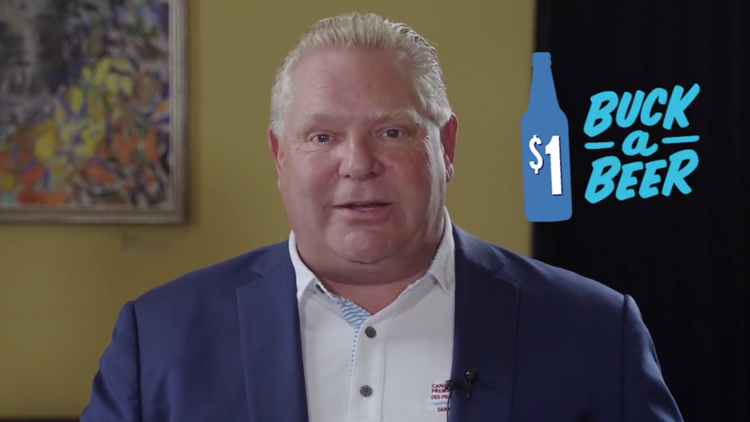
The Toronto Star always loves a good moral crusade, and if it also happens to fly in the face of whatever Premier Ford wants to do, then so much the better:

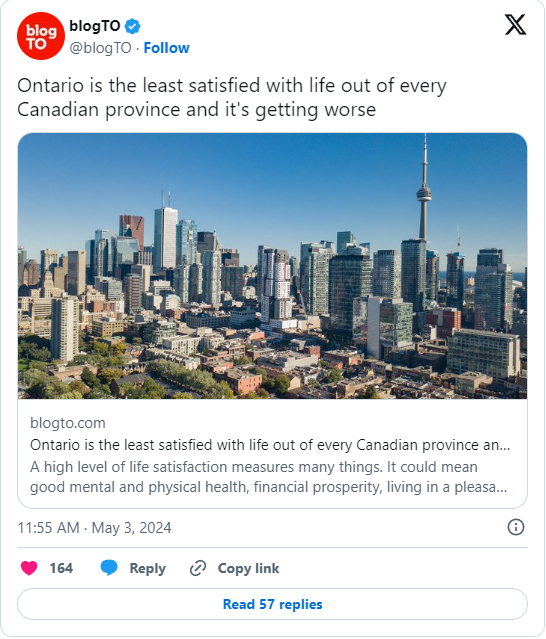
The Toronto Star is looking to Scotland to teach it how to reduce alcohol-related deaths. In an article titled “How Scotland started to kick its alcohol problem — and what Ontario could learn from it“, it pushes back on plans to liberalise Ontario’s state monopoly on alcohol retail, saying:

    Ontario officials say they are fulfilling a 2018 election promise to increase “choice and convenience for shoppers and support Ontario retailers, domestic producers and workers in the alcohol industry”.

    But Scotland has cut alcohol-related hospital admissions by 40 per cent and deaths by almost half. While in Ontario, alcohol-related admissions have risen by a third and deaths by almost half, according to the Canadian Centre on Substance Use and Addiction.

How did Scotland supposedly achieve this public health miracle?

    The key part of Scotland’s landmark policy was aimed at reducing drinking by introducing minimum unit prices to make drinking more expensive.,/p>

Ontario already has minimum pricing and Scotland doesn’t have a state alcohol monopoly, so it is not obvious what lessons Ontarians are supposed to be learning, but put that to one side for a moment and consider the main claim.

Anyone who has been following events in Scotland knows that alcohol-specific deaths have risen since minimum pricing was introduced in 2018 and have generally risen since 2012 following a significant downturn in the years prior.

It is that drop between 2006 and 2012 that the Toronto Star must be referring to when it claims that deaths fell by “almost half” (actually a third). But the Scottish government didn’t pass any anti-alcohol legislation in those six years and it certainly didn’t have minimum pricing. The newspaper mentions that the drink-drive limit was cut, but that didn’t happen until 2014 and the evidence is clear that it had no effect on road accidents.

Since the Toronto Star doesn’t mention when the decline in alcohol-specific deaths took place, it is leading its readers to believe that it coincided with the introduction of minimum pricing and the lowering of the drink-drive limit. I call that lying.

It is strangely fitting that Canadians are being lied to about the “success” of Scotland’s alcohol strategy since the Scottish public were conned into accepting minimum pricing, in part, on the basis of lies told about the “success” of minimum pricing in Canada. The neo-temperance academic Tim Stockwell, who is quoted in the Star article, published a series of studies in the 2010s making some absurd claims about minimum pricing that were parroted by campaigners in the UK.

LAV III RWS NANUK – A Closer Look

Filed under: Cancon, History, Military, Weapons — Tags: , , , , — Nicholas @ 02:00

Ontario Regiment Museum
Published Mar 14, 2024

First look at the newest addition to the museum collection: LAV III RWS (Remote Weapon System variant) aka NANUK.

This Canadian designed and built military vehicle just arrived at the museum. Executive Director Jeremy Neal Blowers (aka @Tank_Museum_Guy) gives a very quick talk on the vehicle and a comparison with the original LAV III in the museum.
(more…)

June 26, 2024

The Toronto-St. Paul’s by-election, part two

Filed under: Cancon, Media, Politics — Tags: , , , — Nicholas @ 05:00

Continuing on from yesterday’s initial post on the outcome of the by-election in Toronto-St. Paul’s — which until 4:30 on Tuesday morning might have been the dictionary definition of a “safe Liberal seat” — as comments from vengeful anti-Liberal and whistling-past-the-graveyard pro-Liberal commentators appear. Here’s noted anti-Liberal David Warren from Parkdale which more often elects NDP candidates over Liberal ones:

The electoral boundaries of Toronto-St. Paul’s and nearby downtown Toronto ridings.
Detail of an Elections Canada map of Toronto.

Toronto-Saint Paul’s is defined, among the political experts, as a “safe Liberal seat”. For one thing, it is in the middle of Toronto, where the Conservatives have no members. (The NDP occasionally wins ridings like Parkdale.) According to a pollster, who is (in my opinion) a Liberal party hack, if the Liberals were to lose Saint Paul’s, it would mean that there were no safe seats left for them in Canada. None is the same as zero, incidentally.

Late last night, we learned that the Liberals had lost Saint Paul’s.

It was just a by-election, however. Toronto’s electorate enjoys the kind of deep somnolence that is not permanently correctible. Its people are typical of urban voters everywhere: they are easily convinced by “progressive” fantasists, and environ-mental snake-oil salesmen. Hence, liberal-lefties control all the big-city municipal governments, and provide marionettes to all the national puppet theatres. Those who voted against them will return to snoring mode after just a moment’s consciousness.

At The Line, a rare Jen Gerson column outside the paywall:

The goose. She cooked.

The toast. It burnt.

The frog. It boiled.

[…]

Anyway, my lack of political dedication was well rewarded because I’m now refreshed and well positioned to opine on the great momentous meaning of Don Stewart’s election to the House of Commons to represent the fine people of this section of midtown Toronto. Normally I wouldn’t get too fussed over a by-election anywhere, but in this case a fuss is impossible to avoid.

Two reasons; the first is that I have — in my lovingly Albertan way — referred to this riding as the Dead Marshes. For those who are not Lord of The Rings fans, this section of land is technically considered a reeking wetland that stretches to the south-east of Emyn Muil; a terrible stretch of land that sits just outside Mordor, and final home to the preserved corpses of many Conservative candidates, staffers, volunteers, and hopes and dreams. Every once in a while, their enchanting methane soul lights flare forth, entrancing the unwary or the naïve into the swamp.

Which is a very nice way of saying that St. Paul’s is a bastion of the ruling Laurentian Consensus, a Liberal fortress long held by Carolyn Bennett, and untainted by the stain of Conservative voting intentions since 1993. And yet, Mr. Stewart ventured forth undaunted, and found his path into Mordor (a metaphorical stand in for either Toronto, or Parliament. Interpret as you see fit).

The second reason that this election cannot be ignored is that both the Liberals and the Conservatives have invested it with so much symbolic weight, that the outcome will herald political changes of one kind or another. A 43 per cent turnout rate in a by-election is healthy — even high. Nobody can chalk that outcome up to numerical wonkery. Conservatives were motivated, and progressives were not. The signal is clear.

It is now impossible for an increasingly unglued Liberal caucus to overlook that they are losing. They are losing very badly. A sustained 20-point Conservative lead has been made manifest. If St. Paul’s can crash, they are all at risk. And they can no longer wave that fact away by sniping at pollsters, or blaming misinformation. A plurality of Canadians think they suck at governmenting. This must now be addressed.

Tristin Hopper on the social media site formerly known as Twitter:

June 25, 2024

The Toronto-St. Paul’s by-election

Filed under: Cancon, Media, Politics — Tags: , , , — Nicholas @ 09:34

Paul Wells uncharacteristically posted his initial reaction to the Toronto-St. Paul’s by-election after the polls closed, but before the counting was over. He chose … poorly:

[Liberal candidate Leslie] Church’s margin of victory over Conservative candidate Don Stewart bounced around 10 points all Monday night. As I get ready to hit Send on this post, it’s closer to 6 points, and I have no way of knowing whether it will shrink or expand as more results come in. But if it were 10 points, that would be 9.9-ish points more than you need for a victory. I’m especially pleased to report that the result constitutes yet another glorious victory for Wells’s First Rule, which holds that for any given situation, Canadian politics will tend toward the least exciting possible outcome. In particular, in the last several days, I’ve been telling friends that this would be a particularly solid Wells’s Rule victory if the night ended with Tyler Meredith boasting on X. Et voilà:

If you slice the returns finely enough, pace Tyler, they might yield more omens and portents. Ten points would be the Liberals’ narrowest margin in TSP (as I’ll call the riding for short) since 2011, and the second-lowest in 31 years. In 2008, when the Liberals under Stéphane Dion were reduced to 77 seats out of 308, the Liberal margin of victory was more than twice what it was in Monday’s by-election. A 10-point margin of victory in TSP is what Liberals get when there’s almost no water left in the pool.

But so what. A win’s a win. By-elections are a blunt measuring tool. Paying subscribers will fill this post’s comment board with theories to explain away the night’s results, and for all I know, some of them might even be correct. Besides, for a few weeks I’ve believed that even if the Liberals had managed to lose TSP, there would have been no public or organized effort within the party to remove Justin Trudeau as leader. You can’t teach an elephant to dance, or a Trudeau Liberal to abandon the internal loyalty that has been one of the hallmarks of his leadership.

So if I’m a Liberal MP — humour me, it’s a thought experiment — I now know what the next year looks like. Justin Trudeau has spent his adult life waiting for the rest of us to realize he was right all along, as we saw in a book that was published last month to extravagant praise. The returns from Toronto will comfort the big guy’s belief that the scales have again begun to fall from Canadians’ eyes, and that therefore this is absolutely the worst time to mess with a winning formula.

He’ll stay. Katie will stay, Ben will stay, Chrystia will stay, Mélanie and Seamus and Max and Clow and all the cats will stay, and the Trudeau team will show new spring in its step as it prepares to get, once more, off the ropes and back into the fray.

To be fair, he did add an update overnight indicating that Stewart had pulled ahead but the counting was still ongoing, and a link to the Elections Canada preliminary results, which I screencapped here just after 9am:

This morning, Mr. Wells posted a follow-up to yesterday’s ever-so-slightly misleading article:

Well, of course I saw it coming all along. What kind of fool could have imagined the Liberal in Toronto — St. Paul’s had any chance?

Hang on. I’m just getting word that I didn’t see it coming. In fact, as recently as Monday night I wrote a post I’ll be hearing about until the cows come home. Sorry about that!

Here are the actual final results, barring any recounts, which may not happen because Conservative Don Stewart’s margin of victory, while slim, is too large to trigger an automatic recount.

Congratulations, Don Stewart! I never doubted you’d win. Hang on. I’m just getting word that I doubted you’d win as recently as last night.

Things will now start to happen quickly. Expect Liberals to work their way through four of the five Kübler-Ross stages of grief before lunch. Denial will come easily, benefiting as it does from long practice. Acceptance may take longer.

In part this is because on paper there isn’t that much to accept. The day’s news is not earth-shaking and, in isolation, should not be taken as definitive. It’s true that by-elections are strange events, though if you add them together they do have some predictive power. It’s true that Leslie Church’s long service as Chrystia Freeland’s chief of staff turned out to be more of a hindrance than a help, a data point whose implications the Deputy Prime Minister won’t want to think much about today. It’s true the Liberals didn’t even try all that hard, if by “didn’t try all that hard” you mean “they tried as hard as they possibly could, my God they tried so hard, my God.”

But a single off-season defeat in a riding the Liberals have, in fact, previously lost during the Paleozoic era is not a larger thing to accept than, say, a punishing loss to Ireland and Norway in a Security Council vote at the UN. Or the loss of two senior cabinet ministers in a controversy in which the ministers who quit were radiantly, obviously in the right. Don’t take my word on that, incidentally: ask David Lametti, who agreed with Jody Wilson-Raybould but managed to keep his job anyway. For a while.

I imagine there’ll be a lot of interesting commentary from other Canadian sources as the day rolls on and the immediate horror starts to recede…

June 24, 2024

Justin Trudeau’s Ominous Online Harms Act: Minority Report Comes to Canada: Conor Friedersdorf

Quillette
Published Jun 19, 2024

Jonathan Kay talks to Atlantic Magazine staff writer Conor Friedersdorf about a censorious government bill that would allow officials to investigate Canadians for things they haven’t done yet.

https://quillette.com/2024/06/19/just…

——

Quillette is an Australian-based online magazine that focuses on long-form analysis and cultural commentary. It is politically non-partisan, but relies on reason, science, and humanism as its guiding values.

Quillette was founded in 2015 by Australian writer Claire Lehmann. It is a platform for free thought and a space for open discussion and debate on a wide range of topics, including politics, culture, science, and technology.

Quillette has gained attention for publishing articles and essays that challenge modern heterodoxy on a variety of topics, including gender and sexuality, race and identity politics, and free speech and censorship.
(more…)

June 20, 2024

Canadian Armed Forces – Snow Machines

Filed under: Cancon, History, Military — Tags: , , , — Nicholas @ 02:00

Ontario Regiment Museum
Published Mar 7, 2024

During the TANK SATURDAY — Winter Warfare event in 2024, we had special guests from the Hussars Military Vehicle Club. They brought their fully restored CAF Arctic equipment to the museum and spoke to our visitors about the history and use of these unique vehicles.
(more…)

QotD: Canadian soldiers of the 1950s and early 1960s

Filed under: Cancon, History, Military, Quotations — Tags: , , , , — Nicholas @ 01:00

In the field in summer, [Canadian] soldiers wore bush clothes, which were adequate enough, though multi-hued depending on how often they had been washed. There were no winter field uniforms, and soldiers wore U.S. Army field jackets. On exercises, black coveralls were the usual dress, the sloppiest uniform in any army at the time. Until the army introduced combat clothing in the mid-1960s, Canadian soldiers looked as though they had been kitted out by a second-hand clothing store.

J.L. Granatstein, Canada’s Army, 2002.

« Newer PostsOlder Posts »

Powered by WordPress