Quotulatiousness

June 1, 2023

Recent discoveries in ancient DNA

Filed under: Africa, Americas, Asia, Books, Europe, History — Tags: , , , — Nicholas @ 04:00

The Psmiths, John and Jane, decided to jointly review a book by David Reich called Who We Are and How We Got Here: Ancient DNA and the New Science of the Human Past. This is Jane’s first contribution to an extended email thread between the Psmiths:

The problem with history is that there just isn’t enough of it. We’ve been around for, what, fifty thousand years? Conservatively.1 And we’ve barely written things down for a tenth of that. Archaeological excavation can take you a little farther back, but as the archaeologists always like to remind us, pots are not people. If you get lucky with a society that made things out of durable materials in a cold and/or dry environment (or you get very lucky with anaerobic preservation of organic materials, like in ice or bogs), maybe you can trace a material culture’s expansion and contraction across time and space. But that won’t tell you whether it’s a function of people moving and taking their stuff with them, or people’s neighbors going “ooh, using string to make patterns on your pots, that’s cool” and copying it. It certainly doesn’t tell you what their descendants were doing several thousand years later, potentially in an entirely different place and probably using an entirely different suite of technologies. Trying to understand what happened in the human past based on the historical and archaeological records is like walking into a room where a bomb has gone off and trying to reconstruct the locations of all the objects before the explosion. You can get some idea, but it’s all very broad strokes. And actually it’s worse than that, because it wasn’t just one explosion, it was lots, and we wouldn’t even know how many if we didn’t have a way of winding the clock back. But these days we do, and it’s ancient DNA.

Sometime between when my grandfather gave me a copy of Luca Cavalli-Sforza’s Genes, Peoples, and Languages for my birthday and when you and I decided to read Reich’s book together, two big things happened: humans got really, really good at sequencing and reading genomes, and Svante Pääbo’s lab in Leipzig got really, really good at extracting DNA from ancient bones. (How they developed their procedures is actually a really interesting story, which Pääbo retells in his book, but Reich — whose lab uses the same techniques on an industrial scale — gives a good, brief summary of how it works.) Together, these two advances unlocked … well, not quite everything about the deep past, but an absolutely enormous amount. Suddenly we can track the people, not just the pots, and the story is more complicated and fascinating than anything we might have expected. I’ve written elsewhere about some of the aDNA discoveries about human evolution (Neanderthal admixture, the Denisovans, etc.), but I’m even more excited about what ancient DNA reveals about our more recent past. Luckily, that’s what Reich spends most of the book on, with discussion of ancient ghost populations who now exist only in admixture and then chapters on the specific population genetic histories of Europe, India, North America, East Asia, and Africa, each of which contains some discoveries that would make (at least the more sensible) archaeologists and historical linguists go “well, duh” and others that are real surprises.

One of the “duh” stories is the final, conclusive identification of the people who brought horses, wagons, and Indo-European languages to Europe with the Yamnaya culture of the Pontic Steppe and their descendants. (David Anthony gives a very good overview of the archaeological case for this in The Wheel, the Horse, and Language, including some very cool experimental archaeology about horse teeth; you have my permission to skim the sections on pots.) My favorite surprising result, though, comes from a little farther north. People usually assume that Native Americans and East Asians share a common ancestor who split from the ancestors of Europeans and Africans before dividing into those two populations, but when Reich’s lab was trying to test the idea they found, to their surprise, that in places where Northern European genomes differ from Africans’, they are closer to Native Americans than to East Asians. Then, using a different set of statistical techniques, they found that Northern European populations were the product of mixture between two groups, one very similar to Sardinians (who are themselves almost-unmixed descendants of the first European farmers) and one that is most similar to Native Americans. They theorized a “ghost” population, which they called the “Ancient North Eurasians”, who had contributed DNA both to the population that would eventually cross the Bering land bridge and to the non-Early European Farmer ancestors of modern Northern Europeans. Several years later, another team sequenced the genome of a boy who died in Siberia 24kya and who was a perfect match for that theorized ghost ANE population.

But we’ve already established that I’m the prehistory nerd in this family; were you as jazzed as I was to read about the discovery of the Ancient North Eurasians?


    1. That’s the latest plausible date for the arrival of full “behavioral modernity” in Africa, though our genus goes back about two million years, tool use probably three million, and I think there’s a good case that Homo was meaningfully “us” by 500kya. (That’s “thousand years ago” in “I talk about deep history so much I need an acronym”, fyi.)

May 31, 2023

Alvin Toffler may have been utterly wrong in Future Shock, but I suspect his huge royalty cheques helped soften the pain

Filed under: Books, Media, Technology, USA — Tags: , , , , , , — Nicholas @ 03:00

Ted Gioia on the huge bestseller by Alvin Toffler that got its predictions backwards:

Back in 1970, Alvin Toffler predicted the future. It was a disturbing forecast, and everybody paid attention.

People saw his book Future Shock everywhere. I was just a freshman in high school, but even I bought a copy (the purple version). And clearly I wasn’t alone — Clark Drugstore in my hometown had them piled high in the front of the store.

The book sold at least six million copies and maybe a lot more (Toffler’s website claims 15 million). It was reviewed, translated, and discussed endlessly. Future Shock turned Toffler — previously a freelance writer with an English degree from NYU — into a tech guru applauded by a devoted global audience.

Toffler showed up on the couch next to Johnny Carson on The Tonight Show. Other talk show hosts (Dick Cavett, Mike Douglas, etc.) invited him to their couches too. CBS featured Toffler alongside Arthur C. Clarke and Buckminster Fuller as trusted guides to the future. Playboy magazine gave him a thousand dollar award just for being so smart.

Toffler parlayed this pop culture stardom into a wide range of follow-up projects and businesses, from consulting to professorships. When he died in 2016, at age 87, obituaries praised Alvin Toffler as “the most influential futurist of the 20th century”.

But did he deserve this notoriety and praise?

Future Shock is a 500 page book, but the premise is simple: Things are changing too damn fast.

Toffler opens an early chapter by telling the story of Ricky Gallant, a youngster in Eastern Canada who died of old age at just eleven. He was only a kid, but already suffered from “senility, hardened arteries, baldness, slack, and wrinkled skin. In effect, Ricky was an old man when he died.”

Toffler didn’t actually say that this was going to happen to all of us. But I’m sure more than a few readers of Future Shock ran to the mirror, trying to assess the tech-driven damage in their own faces.

“The future invades our lives”, he claims on page one. Our bodies and minds can’t cope with this. Future shock is a “real sickness”, he insists. “It is the disease of change.”

As if to prove this, Toffler’s publisher released the paperback edition of Future Shock with six different covers — each one a different color. The concept was brilliant. Not only did Future Shock say that things were constantly changing, but every time you saw somebody reading it, the book itself had changed.

Of course, if you really believed Future Shock was a disease, why would you aggravate it with a stunt like this? But nobody asked questions like that. Maybe they were too busy looking in the mirror for “baldness, slack, and wrinkled skin”.

Toffler worried about all kinds of change, but technological change was the main focus of his musings. When the New York Times reviewed his book, it announced in the opening sentence that “Technology is both hero and villain of Future Shock“.

During his brief stint at Fortune magazine, Toffler often wrote about tech, and warned about “information overload”. The implication was that human beings are a kind of data storage medium — and they’re running out of disk space.

May 30, 2023

Ban all the words!

Chris Bray reflects on the historical context of literature bans:

Before the Civil War, Southern states banned abolitionist literature. That ban meant that postmasters (illegally!) searched the mail, seized anti-slavery tracts, and burned them. And it meant that people caught with abolitionist pamphlets faced the likelihood of arrest. The District of Columbia considered a ban, then didn’t pass the thing, but Reuben Crandall was still arrested and tried for seditious libel in 1833 when he was caught with abolitionist literature. He was acquitted, then died of illness from a brutal pre-trial detention. Seizure, destruction, arrest: abolitionist literature was banned.

The Soviet writer Yevgeny Zamyatin wrote a 1924 novel, We, depicting a world in which an all-powerful government minutely controlled every aspect of life for an enervated population, finding as an endpoint for their ideological project a surgery that destroyed the centers of the brain that allowed ordinary people to have will and imagination. The Soviet government banned Zamyatin’s work: They seized and destroyed all known copies, told editors and publishers the author was no longer to allowed to publish, and sent Zamyatin into exile, where he died without ever seeing his own country again. Seizure, destruction, exile: Yevgeny Zamyatin’s work was banned.

During World War I, the federal government banned literature that discouraged military service, including tracts that criticized conscription. Subsequently, “socialists Charles Schenck and Elizabeth Baer distributed leaflets declaring that the draft violated the Thirteenth Amendment prohibition against involuntary servitude”. They were arrested, convicted, and imprisoned. The Supreme Court upheld the conviction. Anti-conscription literature was banned: It was seized and destroyed, and people caught distributing it were sent to prison.

In 2023, the tedious midwit poet Amanda Gorman posted on Twitter that she was “gutted” — the standard emotion for tedious midwits — to discover that one of her poems had been “banned” by a school in Florida. The news media raced to proclaim that Florida schools are banning books, the leading edge of the Ron DeSantis fascist wave.

As others have already said, Gorman’s boring poem was moved from an elementary school library shelf to a middle school library shelf, without leaving the library

May 29, 2023

QotD: The size of the Great Library

Filed under: Books, History, Middle East, Quotations — Tags: , , , , — Nicholas @ 01:00

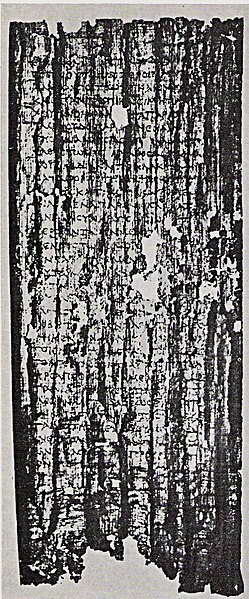
… we can say that the Great Library was an extensive collection of books associated with the famous institute of learning and research that was the shrine of the Muses in Alexandria. That much is clear. But many of the other things often claimed about it are much less clear and some of them are pure fantasy, so it’s time to turn to the list of things that the “Great Library” was not.

    “It was the largest library in the ancient world, containing over 700,000 books.”

It is entirely possible that it was the largest library in the ancient world, though we have no way of confirming this given that we have little reliable information about the size of its collection. Despite this, popular sources regularly repeat the huge figures given for the number of books in the library in several ancient sources, and usually opt for the ones that are the highest. Shakespeare scholar Stephen Greenblatt’s popular history The Swerve: How the Renaissance Began (Vintage, 2012) won critical acclaim and even garnered him a Pulitzer Prize, despite being panned by actual historians for its many howlers and weirdly old-fashioned historiography (see my detailed critical review here, with links to other scathing critiques by historians). Greenblatt’s account sticks closely to the nineteenth century narrative of “the dark ages” beloved by New Atheists, so it’s hardly surprising that the myths about the Great Library feature prominently in his account. Thus he informs his readers with great assurance that:

    “At its height the Museum contained at least half a million papyrus rolls systematically organised, labelled and shelved according to a clever new system … alphabetical order.” (Greenblatt, p. 88)

The figure of “half a million scrolls” (or even “half a million books”) is the one that is usually bandied about, but even that colossal number is not quite enough for some polemicists. Attorney and columnist Jonathan Kirsch plumped for a much higher number in his book God Against the Gods: The History of the War Between Monotheism and Polytheism (Viking, 2004)

    “In 390 AD … a mob of Christian zealots attacked the ancient library of Alexandria, a place where the works of the greatest rarity and antiquity had been collected … some 700,000 volumes and scrolls in all.” (Kirsch, p. 278)

Obviously the larger the collection in the Great Library the more terrible the tragedy of its loss, so those seeking to apportion blame for the supposed destruction of the Library usually go for these much higher numbers (it may be no surprise to learn that it’s the monotheists who are the “bad guys” in Kirsch’s cartoonish book). But did the Great Library really contain this huge number of books given that these numbers would represent a large library collection even today?

As with most things on this subject, it seems the answer is no. […] Some of these figures are interdependent, so for example Ammianus is probably depending, directly or indirectly, on Aulus Gellius for his “700,000” figure, which in turn is where Kirsch gets the same number in the quote above. Others look suspiciously precise, such as Epiphanius’ “54,800”. In summary of a lot of discussion by critical scholars, the best thing to say is that none of these figures is reliable. In her survey of the historiography of the issue, Diana Delia notes “lacking modern inventory systems, ancient librarians, even if they cared to, scarcely had the time or means to count their collections” (see Delia, “From Romance to Rhetoric: The Alexandrian Library in Classical and Islamic Traditions”, The American Historical Review, Vol. 97, No. 5, Dec. 1992, pp. 1449-67, p. 1459). Or as another historian once put it wryly “There are no statistics in ancient sources, just rhetorical flourishes made with numbers.”

One way that historians can make estimates of the size of ancient libraries is by examining the floor plans of their ruins and calculating the space their book niches would have taken up around the walls and then the number of scrolls each niche could hold. This works for some other ancient libraries for which we have surveyable remains, but unfortunately that is not the case for the Mouseion, given that archaeologists still have to guess where exactly it stood. So Columbia University’s Roger S. Bagnall has taken another tack. In a 2002 paper that debunks several of the myths about the Great Library (see Bagnall, “Alexandria: Library of Dreams”, Proceedings of the American Philosophical Society, Vol. 146, No. 4, Dec. 2002, pp. 348-362), he begins with how many authors we know were writing in the early Hellenistic period. He notes that we know of around 450 authors for whom we have, at the very least, some lines of writing whose work existed in the fourth century BC and another 175 from the third century BC. He points out that most of these writers probably only wrote works that filled a couple of scrolls at most, though a small number of them – like the playwrights – would have had a total corpus that filled many more than that, even up to 100 scrolls. So by adopting the almost certainly far too high figure of an average of 50 scrolls to contain the work of each writer, Bagnall arrives as a mere 31,250 scrolls to contain all the works of all the writers we know about to the end of the third century. He notes:

    “We must then assume, to save the ancient figures for the contents of the Library, either that more than 90 percent of classical authors are not even quoted or cited in what survives, or that the Ptolemies acquired a dozen copies of everything, or some combination of these unlikely hypotheses. If we were (more plausibly) to use a lower average output per author, the hypotheses needed to save the numbers would become proportionally more outlandish.” (Bagnall, p. 353)

Bagnall makes other calculations taking into account guesses at what number of completely lost authors there may have been and still does not manage to get close to most of the figures given in our sources. His analysis makes it fairly clear that these numbers, presented so uncritically by popular authors for rhetorical effect, are probable fantasies. As mentioned above, when we can survey the archaeology of an ancient library’s ruins, some estimate can be made of its holdings. The library in the Forum of Trajan in Rome occupied a large space 27 by 20 metres and Lionel Casson estimates it could have held “in the neighbourhood of 20,000 scrolls” (Casson, p. 88). A similar survey of the remains of the Great Library of Pergamon comes to an estimate of 30,000 scrolls there. Given that this library was considered a genuine rival to the Great Library of Alexandria, it is most likely that the latter held around 40-50,000 scrolls at its height, containing a smaller number of works overall given that ancient works usually took up more than one scroll. This still seems to have made it the largest library collection in the ancient world and thus the source of its renown and later myths, but it’s a far cry from the “500,000” or “700,000” claimed by uncritical popular sources and people with axes to grind.

Tim O’Neill, “The Great Myths 5: The Destruction Of The Great Library Of Alexandria”, History for Atheists, 2017-07-02.

May 26, 2023

How domestic use of coal transformed Britain

Filed under: Books, Britain, History — Tags: , , , , , — Nicholas @ 03:00

Jane Psmith reviews The Domestic Revolution: How the Introduction of Coal into Victorian Homes Changed Everything by Ruth Goodman:

… Even today, few people record the mundane details of their daily lives; in the days before social media and widespread literacy it was even more dramatic, so anyone who wants to know how our ancestors cleaned, or slept, or ate has to go poking through the interstices of the historical record in search of the answers — which means they need to recognize that there’s a question there in the first place. When they don’t, we end up with whole swathes of the past we can’t really understand because we’re unfamiliar with the way their inhabitants interacted with the physical world.

The Domestic Revolution is about one of these “unknown unknowns”, the early modern English transition from burning wood to coal in the home, and Ruth Goodman may be the only person in four hundred years who could have written it. With exactly the kind of obsessive attention to getting it right that I can really respect, she turned an increasingly intensive Tudor reënactment hobby into a decades-long career as a “freelance historian”, rediscovering as many domestic details of Tudor-era life as possible and consulting for museums and costume dramas. Her work reminds me of the recreations of ancient Polynesian navigational techniques, a combination of research and practical experiments aimed at contextualizing what got remembered or written down, so of course I would love it. (A Psmith review of her How To Be a Tudor is forthcoming.) She’s also starred in a number of TV shows where she and her colleagues live and work for an extended time in period environs, wearing period costume and using period technology1, and because she was so unusually familiar with running a home fired by wood — “I have probably cooked more meals over a wood fire than I have over gas or electric cookers”, she writes — she immediately noticed the differences when she lived with a coal-burning iron range to film Victorian Farm. A coal-fired home required changes to nearly all parts of daily life, changes that people used to central heating would never think to look for. But once Goodman points them out, you can trace the radiating consequences of these changes almost everywhere.

The English switched from burning wood to burning coal earlier and more thoroughly than anywhere else in the world, and it began in London. Fueling the city with wood had become difficult as far back as the late thirteenth century, when firewood prices nearly doubled over the course of a decade or two, and when the population finally recovered from the rolling crises of the fourteenth and fifteenth centuries the situation became dire once again. Wood requires a lot of land to produce, but it’s bulky and difficult to transport by cart: by the 1570s the court of Elizabeth I found it cheapest to buy firewood that had been floated more than a hundred miles down the Thames. Coal, by contrast, could be mined with relative ease from naturally-draining seams near Newcastle-upon-Tyne and sailed right down the eastern coast of the island to a London dock. It already had been at a small scale throughout the Middle Ages, largely to fuel smithies and lime-burners, but in the generation between 1570 and Elizabeth’s death in 1603 the city had almost entirely switched to burning coal. (It had also ballooned from 80,000 to 200,000 inhabitants in the same time, largely enabled by the cheaper fuel.) By 1700, Britain was burning more coal than wood; by 1900, 95% of all households were coal-burning, a figure North America would never match. Of course the coal trade itself had consequences — Goodman suggests that the regular Newcastle run was key in training up sailors who could join the growing Royal Navy or take on trans-Atlantic voyages — and it certainly strengthened trade networks, but most of The Domestic Revolution is driven by the differences in the materials themselves.

The most interesting part of the book to me, a person who is passionately interested in all of human history right up until about 1600, were the details of woodland management under the wood-burning regime. I had, for instance, always assumed that early modern “woodcutters” like Hansel and Gretel’s father were basically lumberjacks chopping down full-grown trees, but actually most trees aren’t killed by removing their trunks. Instead, the stump (or roots, depending on the species) will send up new, branchless shoots, which can be harvested when they reach their desired diameter — anywhere from a year or two for whippy shoots suitable for weaving baskets or fences to seven years for firewood, or even longer if you want thick ash or oak poles for construction. This procedure, called coppicing, also extends the life of the tree indefinitely: an ash tree might live for two hundred years, but there are coppiced ash stools in England that predate the Norman Conquest. (My ignorance here wasn’t entirely chronological provincialism: the pines and other conifers that make up most North American timberland can’t be coppiced.)2 The downside to coppicing is that the new shoots are very attractive to livestock, so trees can also be pollarded — like a coppice, but six or eight feet up the trunk,3 quite a dramatic photo here — which is harder to harvest but means you can combine timber and pasture. This made pollarded “wood pasture” a particularly appealing option for common land, where multiple people had legal rights to its use.4 The woodcutters of the Grimms’ tales probably had a number of fenced coppiced patches they would harvest in rotation, ideally one fell for each year of growth it took to produce wood of the desired size, though a poor man without the upfront capital to support planting the right kind of trees could make do with whatever nature gave him.

There’s plenty more, of course: Goodman goes into great but fascinating detail about the ways different woods behave on the fire (hazel gets going quickly, which is nice for starting a fire or for frying, but oak has staying power; ash is the best of both worlds), the ways you can change the shape and character of your fire depending on what you’re cooking, and the behavior of other regional sorts of fuel like peat (from bogs) and gorse (from heathland). But most of the book is devoted to the differences between burning wood and burning coal, of which there are three big ones: the flame, the heat, and the smoke. Dealing with each one forced people to make obvious practical changes to their daily lives, and in turn each of those changes had second- and third-order consequences that contributed to the profound transformations of the modern period.

The most obvious difference is the fire itself. The flames of wood fires merge together to form a pyramid or spire shape, perfect for setting your pot over: the flames will curl around its nicely rounded bottom to heat it rapidly. Coal, on the other hand, forms “a series of smaller, lower, hotter and bluer flames, spaced across the upper surface of the bed of embers,” suitable for a large flat-bottomed pot. More importantly, though, burning coal requires a great deal more airflow: a coal fire on the ground is rapidly smothered by its own buildup of ash and clinker (and of course it doesn’t come in nice long straight bits for you to build a pyramid out of). The obvious solution is the grate, a metal basket that lifts the coal off the ground, letting the debris fall away rather than clogging the gaps between coals, and drawing cold air into the fire to fuel its combustion. This confines the fire to one spot, which may not seem like a big deal (especially for people who are used to cooking on stoves with burners of fixed sizes) but is actually quite a dramatic change. As Goodman explains, one of the main features of cooking on a wood fire is the ease with which you can change its size and shape:

    You can spread them out or concentrate them, funnel them into long thin trenches or rake them into wide circles. You can easily divide a big fire into several small separate fires or combine small fires into one. You can build a big ring of fire around a particularly large pot stood at one end of the hearth while a smaller, slower central fire is burning in the middle and a ring of little pots is simmering away at the far end. You can scrape out a pile of burning embers to pop beneath a gridiron when there is a bit of toasting to do, brushing the embers back into the main fire when the job is done.

In other words, the enormous fireplaces you may have seen in historical kitchens aren’t evidence of equally enormous fires; they were used for lots of different fires of varying sizes, to cook lots of different dishes at the same time. The iron grate for coal, on the other hand, is a fixed size and shape, like a modern burner — though unlike a modern burner the heat is not adjustable. The only thing you can do, really, is put your pot on the grate or take it off.


    1. Several of them are streaming on Amazon Prime; I don’t much TV, but I did watch Tudor Monastery Farm with my kids and we all loved it.

    2. Some firs can be regrown in a related practice called “stump culture“, which is particularly common on Christmas tree farms, but it’s much more labor-intensive than coppicing.

    3. If you live in the southern United States, you’ve probably seen pollarded crape myrtles.

    4. Contrary to the impression you may have gotten from the so-called tragedy of the commons, the historical English commons had extremely clearly delineated legal rights. More importantly, these rights all had fabulous names like turbary (the right to cut turves for fuel), piscary (the right to fish), and pannage (the right to let your pigs feed in the woods). I’m also a big fan of the terminology of medieval and early modern tolls, like murage (charged for bringing goods within the walls), pontage (for using a bridge), and pavage (using roads). Since the right to charge these tolls was granted to towns and cities individually, a journey of any length was probably an obnoxious mess of fees (Napoleon had a point with the whole “regulating everything” bit), but you can’t help feeling that “value added tax” is pretty boring by comparison. I suggest “emprowerage”, from the Anglo-Norman emprower (which via Middle English “emprowement” gives us “improvement”) as a much more euphonious name for the VAT. Obviously sales tax should “sellage”. I can do this all day.

May 21, 2023

QotD: Swearing

Filed under: Books, Britain, History, Humour, Quotations — Tags: , — Nicholas @ 01:00

In 1927, Robert Graves published a little book called Lars Porsena or the Future of Swearing and Improper Language. He noted a recent decline in the use of foul language by the English, and predicted that this decline would continue indefinitely, until foul language had all but disappeared from the average man’s vocabulary. History has not borne him out, to say the least: indeed, I have known economists make more accurate predictions.

Theodore Dalrymple, “Get stuffed, sunshine”, The Independent, 1998-10-10.

May 14, 2023

The life of the publishing world, fifty years ago

Filed under: Books, Britain, Business, History — Tags: , , , , , , — Nicholas @ 03:00

I point out things that prove that the past is a foreign country often enough that I have a blog tag for that purpose. When I first entered the work force, the conditions Ken Whyte describes for employees and managers at a publishing company weren’t all that uncommon (although they were already edging toward the endangered species list):

Fifty years ago, when Richard Charkin […] began his career in the book trade, telephones were wired to desktops and editors (male) wrote their letters and memos in longhand, turning them over to women in the typing pool who knocked them out on carbon paper because the publishing world was slow to photocopiers.

Employees smoked at their desks and drank at lunch. Men wore suits and ties and hats; women long skirts. Living wages were paid and even mid-level jobs came with a car. It was not uncommon for people to spend their whole careers at a single company.

Charkin started at Pergamon Press, an Oxford-based scientific publisher. It held an annual Miss Pergamon contest, essentially a beauty pageant for female employees. The winner received a titled sash, cloak, crown, and the opportunity to greet VIP visitors at company events. Pergamon was considered a progressive company for its time. Needless to say, this was before the dawn of the HR department. Also before marketing and IT departments, but publishers did have guilds, members of which met to discuss business at the pub.

In the mid-1970s, Charkin moved from Pergamon to Oxford University Press, which had traditions of its own. For instance, fortnightly editorial conferences were held at 11 a.m. on Tuesdays (but not in summer when everyone was off on extended vacations). Editors attended in robes and sat around an enormous table. In front of them were inkwells filled with fresh ink.

Charkin worked out of OUP’s Ely House offices in Mayfair. Tea ladies pushed trolleys down the corridors once in the morning and again in the afternoon, dispensing drinks and biscuits. There were three dining rooms on the premises: “one in the basement for all staff, which provided hearty and generously subsidized fare, while on the second floor there was an officers’ dining room, reserved for editors and middle managers, where meals were prepared by a fine chef and the drinks were free. At the very top of the building was the publisher’s dining room, which was exclusively for the use of the head of the London office … and his guests. The food here was sourced from Jackson’s of Piccadilly and the wine list was excellent, with the cellar being overseen by a senior manager at OUP whose job involved spending at least a month in France every year researching and ordering directly from vignerons.”

Class distinctions were rigid enough that two sets of bike racks were required, one for editors, the other for printers. There were a lot of printers: OUP still manufactured its own books and made its own paper, that very thin but indestructible variety once common in Bibles.

You’ll be shocked to learn that Oxford University Press, in operation since 1478, was in deep financial trouble by the 1980s.

In Toronto, this sort of thing was common in the bigger, long-established firms like banks, insurance companies, and even the major grocery chains (the Dominion head office facilities were reportedly top-notch in their day). I imagine it was even more the case in places like New York and Chicago.

May 12, 2023

TL;DR Edition Of All 66 Books Of The Bible

Filed under: Books, Humour, Religion — Tags: , — Nicholas @ 02:00

The Babylon Bee
Published 3 Feb 2023

With The TL;DR Edition of the Bible, you can forget about reading through the Bible in a year — now you can read through the Bible in about five minutes!
(more…)

May 8, 2023

QotD: The “science” of history

Filed under: Books, History, Quotations, Science — Tags: , — Nicholas @ 01:00

That’s how they saw it in the 18th century, of course, and even more so in the 19th, when Science — capital S — really did seem triumphant. It’s hard to overstate just how optimistic the 19th century was. In some ways, the earliest statement of this optimism — and, significantly, its most overwrought warning — was the best: Mary Shelley’s 1818 novel Frankenstein. The creation of life itself in the lab! If Science could do that — and there’s a reason Shelley’s rather crappy novel was a massive bestseller, y’all — then it should be child’s play for Science to predict the course of human history …

A moment’s glance at the “science” of history guys like Marx actually produced, though, show the flaw in that line of thought. Here again, Shelley’s novel is instructive. Victor Frankenstein could give his creature life, but it wouldn’t obey him — being alive, it had free will and a mind of its own. So “scientific” history always, in the end, means something like “anthropomorphic History, capital-H”. “Life” obeys certain laws, the way falling objects obey the law of gravity, but just as there’s no such physical object as “gravity”, there’s no such thing as “life”, an abstract notion over and above the behavior of individual living things. I know Aquinas is dead, and we have killed him (to steal a phrase from Nietzsche), but these things only make sense in Thomist terms: Just as “gravity” is mathematical shorthand for the actualization of an object’s potential to fall towards a center of mass, so “life” is just the blanket term for actualization of a living thing’s various potentials. When we say things like “gravity caused the avalanche”, we don’t mean that a living, purposive force decided to pull the rocks down …

… and yet, when you get down to it, “scientific” history always ends up meaning “History — a living, purposive force” — decided to do this or that. We assign a telos to history, in other words, in a way we simply don’t to any other “force” governed by “scientific” “laws”. Sorry for all the quotation marks, but I want to make this as clear as I can. Nobody but a poet would say that Gravity, a living force, longs for all things to return to its bosom, but the authors of “scientific” history all write as if History, a living force, longs for this or that outcome. C.f. Karl Marx and his merry band of murderers getting all lathered up about The Revolution. The words on the page are all about scientific necessity, but the tone is pure hosanna.

Severian, “The Science of History”, Rotten Chestnuts, 2010-09-22.

May 7, 2023

Africa after colonialism

Filed under: Africa, Books, Government, History — Tags: , , , , , — Nicholas @ 03:00

Hannes Wessels on the plight of so many African nations once the various colonial powers were off the scene and they were at least formally independent:

If you have a heart in Africa it’s probably not a good idea to read Martin Meredith’s State of Africa because if you do, it will, in all likelihood, break it. In it, he covers, in gory detail, what has happened on the continent in the postcolonial era, and while it’s riveting, it is also deeply disturbing.

[…] “by the end of the 1980s not a single African head of state in three decades had allowed himself to be voted out of office. Of some 150 heads of state who had trodden the African stage, only six had voluntarily relinquished power”?

Or the fact that, in the Congo alone, in 1964, over a million people, virtually all civilians, died in sectarian strife. Nobody knows precisely how many more millions have died in the benighted country since. Or that Mobutu Sese Seko, prior to coming to power, had $6 in his bank account. By 1987 a team of editors and reporters from Fortune magazine disclosed that he was one of the richest men in the world at an estimated $5 billion.

Or the fact that Jean Bedel Bokassa “combined not only extreme greed and personal violence … unsurpassed by any other African leader. His excesses included seventeen wives, a score of mistresses and an official brood of 55 children … [He] also gained a reputation for cannibalism. Political prisoners … were routinely tortured on Bokassa’s orders, their cries clearly audible to nearby residents”. In an effort to compare himself to Napoleon, he declared himself an emperor and spent a large chunk of the national budget on his coronation while his people suffered and starved.

Or the fact that Uganda’s Idi Amin, in a bid to crush political opposition, ordered the gruesome deaths of thousands of alleged opponents at the hands of his “death squads”. “The Chief Justice was dragged away from the High Court never to be seen again. The university’s Vice Chancellor disappeared. The bullet-riddled body of an Anglican Archbishop, still in ecclesiastical robes, was dumped at the mortuary of a Kampala hospital. One of Amin’s former wives was found with her limbs dismembered in the boot of a car. Amin was widely believed to perform blood rituals over the bodies of his victims.” He was heard on several occasions boasting about his penchant for eating human flesh.

Or the fact that foreign researcher Robert Klintberg reported on oil-rich Equatorial Guinea as being “a land of fear and devastation no better than a concentration camp — the ‘cottage industry Dachau of Africa’.” Under Macias Nguema, more than half of the population was either killed or fled into exile. Finally deposed by his nephew, Obiang was indicted for the murder of 80,000 people. The plunder continued.

Or that in Nigeria, between 1988 and 1993, an official report estimated $12.2 billion was “diverted” from the fiscus. In 1990, the United Nations concluded that Nigeria had one of the worst records for human deprivation of any country in the developing world.

These are only a smattering of an almost endless litany of entirely avoidable man-made catastrophes that have blighted Africa since the imperial exit. One is left wondering if there is any precedent in history for such calamitous misrule that has led to the early, often violent deaths of millions, and delivered unspeakable misery to hundreds of millions more, which is where we are today.

Having read the book, I’m left pondering the fact that Cecil Rhodes, a colonial colossus, looms large in contemporary history as one of the great villains of the last century, better known for his alleged malfeasance than any of the abovementioned leaders. But as far as I know, Rhodes never stole from anyone and never killed anyone, and he certainly didn’t eat anyone. I know he did use his money and military muscle to stop slavery and intertribal slaughter. And I know he plowed most of his fortune into building roads, railways, educational facilities, and other infrastructure needed to transform a wilderness into a developed country. It looks to me like his generosity of spirit is reflected in the Rhodes scholarships he provided for, aimed at nurturing the talents of a select few from across the racial divides in a bid to make the world he was leaving a better place.

May 1, 2023

Balm for a golfer’s soul

Filed under: Books, Britain, Humour, Sports — Tags: , — Nicholas @ 03:00

Alan Ashworth wants to persuade you to read the works of P.G. Wodehouse. In this installment, he appeals to the golfers in the audience:

When Pelham Grenville Wodehouse was at Dulwich College between 1894 and 1900, he was blissfully happy with school life and developed an enduring love of cricket and rugger – he went off boxing because the other blighters kept hitting him. The two sports were central to his early novels and he followed Dulwich’s results throughout his long life.

Yet when Plum began to enjoy success in the US he realised that to mine the rich comic seam of sporting obsession he had to come up with a new ball game.

During a lengthy spell in America, where he had become a big noise in musical theatre, he began to play golf at the Sound View club in Long Island with comic actors including Ed Wynn and Ernest Truex. “The golf course was awfully nice,” he recalled many years later. “However, I wasn’t any good at golf. I suppose I ought to have taken lessons instead of playing. I didn’t mind losing, because it was such good exercise walking around the holes. If only I’d taken up golf immediately after I left school instead of playing cricket.”

He never did get very good at the game. Over the years he won a single trophy, a striped umbrella, at a hotel tournament “where, hitting them squarely on the meat for once, I went through a field of some of the fattest retired businessmen in America like a devouring flame”.

However, golf was to provide the material for some of Wodehouse’s finest short stories, written mainly in the 1920s, which helped to make him a very rich man.

As one of his biographers, Richard Usborne, observed in his marvellous Wodehouse at Work to the End, “in the 1920s and 30s there were many illustrated magazines on both sides of the Atlantic paying high for good humorous short stories, five- to eight-thousand-word episodes, complete with sunny plot, a beginning, middle and end, and the young couple happily paired off in the fade-out. Wodehouse wrote for this profitable market. He became one of the golden boys of the magazines and, not necessarily the same thing, a master of his craft.”

April 30, 2023

David Howarth’s history of the East India Company

Filed under: Books, Britain, Europe, History, India — Tags: , , , , , , — Nicholas @ 05:00

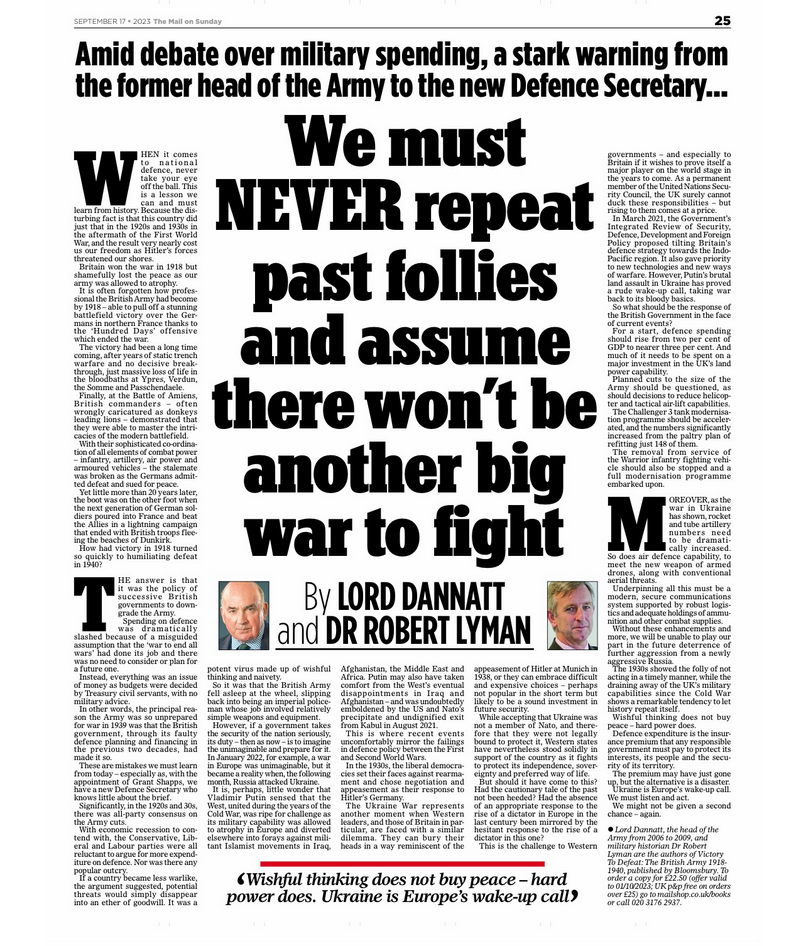
Robert Lyman reviews David Howarth’s recent work Adventurers: The Improbable Rise of the East India Company:

It is the human detail of the EIC and the ultimate triumph of its trading endeavours despite the best efforts of Portugal, the Dutch Republic and of the vicissitudes of Neptune that holds great fascination for me, and which is the triumph of Howarth’s intimate and intricate portrayal of the EIC in the first century of its existence. His great achievement is both to bring the dusty tomes of the Company back to life, not just to humanise one of the greatest trading ventures of all of human history, but to interpret the early years of the Company (his book spans 1600 to 1688, though most of the narrative is pre-1650) as a peculiarly human rather than an institutional endeavour. Is this important? Yes. Humans have agency; institutions consume or act upon the determining agency of human beings, not the other way around. Too much of modern (post 1880) history is based upon determining the perspective of organisations and movements (as interpreted by later historians, many with their own ideological baggage) rather than of actual, real live people making decisions for themselves in the peculiar and particular context of their lives and times.

The means through which Howarth paints his story is by the decisions, actions and activities of actual people, some influential decision-makers and many others who were not, all of which makes up a remarkably vivid tapestry of human intercourse. Each chapter, for instance, is constructed around a person or group of people. One powerfully tells the story of the men of the Peppercorn, an EIC East Indiaman, as it seeks out the riches of a world on the extreme periphery of the consciousness of most Europeans. The ultimate triumph of European expansion into Asia is not difficult to comprehend. Europe was pursuing an adventure, aggressively, relentlessly and determinedly, to bring the riches of the world back to its own shores. At no time did the Chinese, Japanese, Indians or inhabitants of the Spice Islands return the favour. The energetic persistence of Sir Thomas Roe, for instance, the Company’s ambassador to the Mughal court (1615-1619), is easily compared to the intellectual (and alcoholic) indolence of the Great Mughal with whom Roe was attempting to interact. Roe was there, in India: Europeans were interested in the “East” and with travelling to the other side of the world for purposes of human engagement, adventure, patriotism and, yes, greed and selfish self-interest. The Great Mughal, by contrast, was also driven by greed and self-interest, but he just wasn’t interested in exploring. He certainly wasn’t interested in Europe. He was already, in his view, at the top of the human tree and had no need for either the ideas or the money of the red-haired barbarians who came from across the sea, a sea that incidentally few Mughal emperors had (amazingly) ever even seen. Fascinatingly, the Mughal shared with King James I an abhorrence with “trade”, though James knew he needed grubby merchants like Sir John Lyman [the reviewer’s ancestor] as they gave him coin. It wasn’t just about the merchants: Kings and governments needed the money that the merchants delivered by the bucket load because they couldn’t create it themselves. Howarth astutely observes that the “EIC belonged to the globe of politics as much as it did to the sphere of commerce”. Indeed, something of a symbiosis between the two in Tudor and Stewart England created a sense of nationhood – in the face of the resistance of others, in Europe and further afield – for the first time. The Mughal Empire was ultimately swallowed up as a result of a dynamism by European politicians and merchants working in unison which it never bothered to replicate by undergoing the reverse journey.

And power? No. Howarth is remarkably clear that the primary task of the EIC was to make money, not to accrue territory, create power in foreign territories or aggrandise native populations. The role of the executive arm of the EIC (its ships, sailors and factors) was to make money for its investors, many of whom were the very merchant adventurers in the little ships travelling east over vast oceans. The great game of mercantile expansion took place because those who had most to lose were also sailing the ships, negotiating with foreign emissaries, fighting the Portuguese and the Dutch and placing their lives on the line. Amazingly, in 1570 England had only 58,000 tons of marine tonnage compared with Spain’s 300,000, and was very definitely the minnow in the rush to conquer the seas. The men who built and sailed its boats came from a long way behind, and yet in time were to build a seagoing commercial empire which more than rivalled all its competition. Its early growth was fuelled by the wealth provided by spice rather than slaves and, in contradistinction to what some modern historical moralists are keen to tell us, by a “reluctance to use violence and vigilance to avoid land commitments”. Indeed, unlike that of the Dutch, and despite what one might assume if we were to read the British national anthem back into history, “expansion in England happened with no appeal whatever to national glory”.

The amazing thing about the EIC was just how chaotic and disorganised it was. There was nothing inevitable about its rise as a monolithic mercantile overlord destined for instance, in the due course of time, to rule India. Second guessing history is only possible for historians able to look backwards and identify trends and features, convictions that didn’t exist for those when history was happening trying to make their way through the fog of an uncertain and troublesome future. The EIC proved simply to be better organised than the Portuguese, and not distracted as the Dutch were in their long war against Spain. Luck and serendipity played as much a role on the eventual survival of the EIC as did its ability to raise massive amounts of money from venturers in England (every raise or round of financing was heavily over-subscribed) for its adventures and to recruit adventurers to take its ships to sea. The EIC was phenomenally successful in raising voluntary capital to fund its ventures relative to other European states. By comparison, “although Iberian barns might have looked well built and better stocked, once they were given a good kick the rusted hinges flew off”.

QotD: Propaganda, dezinformatsiya, and maskirovka in the Current Year

Filed under: Books, History, Media, Quotations, Russia, USA — Tags: , , , , — Nicholas @ 01:00

… I don’t speak Russian, but as an amateur Sovietologist I’m aware of the KGB’s rich lexicon of “information warfare”. Disinformation is, of course, either a loan word or a calque, depending on how you want to look at it — dezinformatsiya. (A loan word comes over directly, like “concerto”; a calque is a literal translation of a foreign term, like “flea market”). And then there’s the maskirovka, a whole class of specifically military deceptions. No nation poured more resources into this stuff than the Soviets. A KGB defector named Golitsyn wrote a study, New Lies for Old, that’s interesting. A general in the Securitate, the Romanian secret police, named Ion Mihail Pacepa wrote another, called Disinformation. Good stuff.

Looking at the “news” these days is a fraternal socialist experience, comrades. Of course, we must be careful to distinguish between disinformation and propaganda. As we know from Theodore Dalrymple, propaganda is designed to humiliate you. All the “Biden won” stories, obviously, are pure propaganda — we know they’re not true, they know they’re not true, but by shoving them down our throats, they emphasize the almost total power differential between them and us. This is obvious, therefore uninteresting.

The dezinformatsiya, though, that’s fun. You know it’s a lie — is it in the Media? then it’s a lie — but the purpose of the lie is often opaque. For instance, this new variant of COVID supposedly making the rounds in England. You don’t have to wear a tinfoil hat to find the timing of that pretty damn suspicious. After all, we’re all supposed to have our “warp speed” mandatory goop shots here in a month, which means no more masks, no more lockdowns, no more of the führer-iffic fun our Glorious Leaders are jonesing for. We can’t be having that, and so hey, whaddaya know, just in time for Christmas, a new pox …

[…]

The problem with any disinfo op, of course, is that you have to pitch it at not just how smart the enemy actually is, but how smart he thinks he is. The KGB used to use two-stage deceptions all the time. There was a clumsy, obvious ploy that was designed to fail. The counterintelligence people would sniff it out, then congratulate themselves for seeing through those goofy commies and their hilarious misunderstandings of the free world. Meanwhile, the second caper sailed right through, because the counterintel boys stopped looking after busting the first one.

Severian, “Stojak”, Rotten Chestnuts, 2020-12-22.

April 28, 2023

Field Marshal Slim’s secret vice – he also wrote articles and short stories under pseudonym

Filed under: Books, Britain, History, India, Military — Tags: , , , , — Nicholas @ 05:00

It’s no secret that I have a very high regard for Field Marshal William Slim, so I’m quite looking forward to reading some of Slim’s pre-WW2 writings that have just been gathered together by Dr. Robert Lyman in a three-volume set:

Few people during his lifetime, and even fewer now, know that the man who was to become one of the greatest British generals of all time – and I’m not exaggerating – was in fact a secret scribbler. Now, many people know that he was the author of at least two best selling books. In 1956 he wrote his account of the Burma campaign, Defeat into Victory, described by one reviewer, quite rightly in my view, as “the best general’s book of World War II”. Then, in 1959, he published, under the title of Unofficial History, a series of articles about his military experience, some of which had been published previously as articles in Blackwood’s magazine. This was the first indication that there was an unknown literary side to Slim. The fact that he was a secret scribbler, or at least had been one once, was only publicly revealed on the publication of his biography in 1976 by Ronald Lewin – Slim, The Standard Bearer – which incidentally won the W.H. Smith Literary Award that same year. Lewin explained that Slim had written material for publication long before the war. In fact, between 1931 and 1940 he wrote a total of 44 articles, extending in length between two and eight thousand words – a total of 122,000 words in all – for a range of newspapers and magazines, including Blackwood’s Magazine, the Daily Mail, the Evening Express and the Illustrated Weekly of India. According to Lewin, he did this to supplement his earnings as an officer of the Indian Army. He didn’t do it to create a name for himself as a writer, or because he had pretensions to the artistic life, but because he needed the money. As with all other officers at the time who did not have the benefit of what was described euphemistically as “private means” he struggled to live off his army salary, especially to pay school fees for his children, John (born 1927) and Una (born 1930). Accordingly, he turned his hand to writing articles under a pseudonym, mainly of Anthony Mills (Mills being Slim spelt backwards) and, in one instance, that of Judy O’Grady.

With the war over, and senior military rank attained, he never again penned stories of this kind for publication. With it died any common remembrance of his pre-war literary activities. Copies of the articles have languished ever since amidst his papers in the Churchill Archives Centre at the University of Cambridge, from where I rescued them last year. They have been republished this week by Richard Foreman of Sharpe Books.

During the time Slim was writing these the pseudonym protected him from the gaze of those in the military who might believe that serious soldiers didn’t write fiction, and certainly not for public consumption via the newspapers. He certainly went to some lengths to ensure that his military friends and colleagues did not know of this unusual extra-curricular activity. In a letter to Mr S. Jepson, editor of the Illustrated Times of India on 26 July 1939 (he was then Commanding Officer of 2/7 Gurkha Rifles in Shillong, Assam) he warned that he needed to use an additional pseudonym to the one he normally used, because that – Anthony Mills – would then be immediately “known to several people and I do not wish them to identify me also as the writer of certain articles in Blackwood’s and Home newspapers. I am supposed to be a serious soldier and I’m afraid Anthony Mills isn’t.”

What do these 44 articles tell us of Slim? He would never have pretended that his writings represented any higher form of literary art. He certainly had no pretensions to a life as a writer. He was, first and foremost, a soldier. His writing was to supplement the family’s income. But, as readers will attest, he was very good at it. They demonstrate his supreme ability with words. As Defeat into Victory was to demonstrate, he was a master of the telling phrase every bit as much as he was a master of the battlefield. He made words work. They were used simply, sparingly, directly. Nothing was wasted; all achieved their purpose.

The articles also show Slim’s propensity for storytelling. Each story has a purpose. Some were simply to provide a picture of some of the characters in his Gurkha battalion, some to tell the story of a battle or of an incident while on military operations. Some are funny, some not. Some are of an entirely different kind, and have no military context whatsoever. These are often short adventure stories, while some can best be described as morality tales. A couple of them warned his readers not to jump to conclusions about a person’s character. Some showed a romantic tendency to his nature.

The stories can be placed into three broad categories. The first comprises seventeen stories about the Indian Army, of which the Gurkha regiments formed an important part. The second group are eleven stories about India, with no or only a passing military reference. The third, much smaller group, contains seventeen stories with no Indian or military dimension.

Use and misuse of the term “regression to the mean”

Filed under: Books, Business, Football, Sports, USA — Tags: , , , — Nicholas @ 03:00

I still follow my favourite pro football team, the Minnesota Vikings, and last year they hired a new General Manager who was unlike the previous GM in that not only was he a big believer in analytics, he actually had worked in the analytics area for years before moving into an executive position. The first NFL draft under the new GM and head coach was much more in line with what the public analytics fans wanted — although the result on the field is still undetermined as only one player in that draft class got significant playing time. Freddie deBoer is a fan of analytics, but he wants to help people understand what the frequently misunderstood term “regression to the mean” actually … means:

Kwesi Adofo-Mensah, General Manager of the Minnesota Vikings. Adofo-Mensah was hired in 2022 to replace Rick Spielman.
Photo from the team website – https://www.vikings.com/team/front-office-roster/kwesi-adofo-mensah

The sports analytics movement has proven time and again to help teams win games, across sports and leagues, and so unsurprisingly essentially every team in every major sport employs an analytics department. I in fact find it very annoying that there are still statheads that act like they’re David and not Goliath for this reason. I also think that the impact of analytics on baseball has been a disaster from an entertainment standpoint. There’s a whole lot one could say about the general topic. (I frequently think about the fact that Moneyball helped advance the course of analytics, and analytics is fundamentally correct in its claims, and yet the fundamental narrative of the book was wrong.*) But while the predictive claims of analytics continue to evolve, they’ve been wildly successful.

I want to address one particular bugaboo I have with the way analytical concepts are discussed. It was inevitable that popularizing these concepts was going to lead to some distortion. One topic that I see misused all the time is regression/reversion to the mean, or the tendency of outlier performances to be followed up by performances that are closer to the average (mean) performance for that player or league. (I may use reversion and regression interchangeably here, mostly because I’m too forgetful to keep one in my head at a time.) A guy plays pro baseball for five years, he hits around 10 or 12 homeruns a year, then he has a year where he hits 30, then he goes back to hitting in the low 10s again in following seasons – that’s an example of regression to the mean. After deviation from trends we tend (tend) to see returns to trend. Similarly, if the NFL has a league average of about 4.3 yards per carry for a decade, and then the next year the league average is 4.8 without a rule change or other obvious candidate for differences in underlying conditions, that’s a good candidate for regression to the mean the next year, trending back towards that lower average. It certainly doesn’t have to happen, but it’s likely to happen for reasons we’ll talk about.

Intuitively, the actual tendency isn’t hard to understand. But I find that people talk about it in a way that suggests a misunderstanding of why regression to the mean happens, and I want to work through that here.

So. We have a system, like “major league baseball” or “K-12 public education in Baltimore” or “the world”. Within those systems we have quantitative phenomena (like on-base percentage, test scores, or the price of oil) that are explainable by multiple variables, AKA the conditions in which the observed phenomena occur. Over time, we observe trends in those phenomena, which can be in the system as a whole (leaguewide batting average), in subgroups (team batting average), or individuals (a player’s batting average). Those trends are the result of underlying variables/conditions, which include internal factors like an athlete’s level of ability, as well as elements of chance and unaccounted-for variability. (We could go into a big thing about what “chance” really refers to in a complex system, but … let’s not.) The more time goes on, and the more data is collected, the more confidently we can say that a trend is an accurate representation of some underlying reality, again like an athlete’s level of ability. When we say a baseball player is a good hitter, it’s because we’ve observed over time that he has produced good statistics in hitting, and we feel confident that this consistency is the product of his skill and attributes rather than exogenous factors.

However, we know that good hitters have bad games, just as bad hitters have good games. We know that good hitters have slumps where they have bad three or five or ten etc game stretches. We even acknowledge that someone can be a good hitter and have a bad season, or at least a season that’s below their usual standards. However, if a hitter has two or three bad seasons, we’re likely to stop seeing poor performance as an outlier and change our overall perception of the player. The outlier becomes the trend. There is no certain or objective place where that transition happens.

Here’s the really essential point I want to make: outliers tend to revert to the mean because the initial outlier performance was statistically unlikely; a repeat of that outlier performance is statistically unlikely for the same reasons, but not because of the previous outlier. For ease of understanding let’s pretend underlying conditions stay exactly the same, which of course will never happen in a real-world scenario. If that’s true, then the chance of having an equally unlikely outcome is exactly as likely as the first time; repetition of outliers is not made any less likely by the fact that the initial outlier happened. That is, there’s no inherent reason why a repetition of the outlier becomes more unlikely, given consistent underlying conditions. I think it’s really important to avoid the Gambler’s Fallacy here, thinking that a roulette wheel is somehow more likely to come up red because it’s come up black a hundred times in a row. Statistically unlikely outcomes in the past don’t make statistically unlikely outcomes any less likely in the future. The universe doesn’t “remember” that there’s been an outlier before. Reversion to the mean is not a force in the universe. It’s not a matter of results being bent back into the previous trend by the gods. Rather, if underlying conditions are similar (if a player is about as good as he was the previous year and the role of variability and chance remains the same), and he had an unlikely level of success/failure the prior year, he’s unlikely to repeat that performance because reaching that level of performance was unlikely in the first place.


    * – the A’s not only were not a uniquely bad franchise, they had won the most games of any team in major league baseball in the ten years prior to the Moneyball season
    – major league baseball had entered an era of unusual parity at that time, belying Michael Lewis’s implication that it was a game of haves and have-nots
    – readers come away from the book convinced that the A’s won so many games because of Scott Hatteberg and Chad Bradford, the players that epitomize the
    Moneyball ethos, but the numbers tell us they were so successful because of a remarkably effective rotation in Tim Hudson, Barry Zito, and Mark Mulder, and the offensive skill of shortstop Miguel Tejada – all of whom were very highly regarded players according to the old-school scouting approach that the book has such disdain for.
    – Art Howe was not an obstructionist asshole.

« Newer PostsOlder Posts »

Powered by WordPress