Quotulatiousness

May 2, 2020

Saigon memories

Filed under: Asia, History, Media, Military — Tags: , , — Nicholas @ 06:00

I had no idea that David Warren had some brief journalism experience in Vietnam before the US pulled out their military forces:

A member of the CIA helps evacuees up a ladder onto an Air America helicopter on the roof of 22 Gia Long Street on April 29, 1975, shortly before Saigon fell to advancing North Vietnamese troops.
Hubert van Es photo via Wikimedia Commons.

An article in the New York Post (here) brings one historical event back into view, with a bitterness I haven’t yet overcome. It is only an aside on an old photo-caption, which like so many others from the Vietnam War was, shall we say, inaccurate. Taken for a symbol, it has passed into our electronic folk memory, as one of innumerable lies it contains. I wasn’t there, of course, but I had visited that country, and once, too briefly, lived in Saigon. The (very consequential) deceit, dishonesty, and faithlessness of “the mainstream media” was among the lessons I took from my apprenticeship. My ludicrous ambition, to “correct it” some day, will never be fulfilled. But to the link: my praise to one writer who did his homework. Let me be grand and say, the truth has set him free.

It will soon be fifty years since I first attended the “Five O’Clock Follies” at “MAC-V,” where the best hamburgers in South-east Asia could be obtained for the price of a chocolate bar. This press conference format — bluster and counter-bluster — has not changed in all this time. Everything in that vast sprawling compound of military administration was sprayed, swept, and polished; I always entered with wide eyes. There, and in bars along Tu-Do Street (the old rue Catinat, once an exquisite ribbon from the Cathedral down lines of fragrant tamarinds), was where I first fell in with “real professional journalists,” practising their trade.

Those I met were, by and large, pathological liars, and extremely vain. They were also coarsely disrespectful, much like our journalists today: rudely cynical and sarcastic. The only serious exceptions I came to know were a couple of religious weirdos — one a Lutheran ex-pastor from West Germany, the other a reject from a Catholic seminary in southern France. They, like me, had strayed into the field, from a misplaced sense of adventure.

At all levels, and on all sides, I was witnessing a freak show — there and wherever I wandered outside the Unreal City. I owned a reliable Nikkormat camera, that would sometimes earn me much-needed cash, but was quite unsuccessful as a print journalist. My earnest despatches, sent to newspapers on spec, were routinely “spiked” — not, I think, because I was so young (they didn’t know that), but because I kept, often unknowingly, writing things that contradicted what the New York Times and CBS were reporting.

Not only was I learning that the “mainstream” was all lies, but too, that it invariably followed an agenda. The self-appointed purpose of the press was to sabotage the American war effort. (That of the life-or-death desperate Viets was, at best, ignored.)

But then, I was deceitful, too. I was pretending to be over 18 when I was still only 17, in order to get a press pass.

Drawing some conclusions from our Wuhan Coronavirus experiences

At Catallaxy Files, Justinian the Great provides an expanded list of nine lessons we should learn from our still ongoing Wuhan Coronavirus (aka “Chinese Batflu”, “Kung Flu”, “Bat-biter Bronchitis” and other names our betters insist we not use):

1. Models are not infallible.

When dealing with complex subject matter involving lots of uncertainties, unknowns and data gaps, modelling will almost certainly be wrong. That doesn’t make them worthless but nor does it mean they should be elevated to infallible status and acted upon as though they constitute proof of something.

If we can’t get epidemiological models right involving trajectories of months what is the chance of climate models being correct considering they involve substantially greater uncertainty, unknowns and data problems involving trajectories of decades to centuries?

[…]

2. Experts can get it wrong.

The pandemic has shown that epidemiologists and health experts the world over have got COVID-19 wrong at one stage or another.

The most famous example is the Imperial College model that forecast 2.2m deaths in the United States and over 500,000 deaths in the UK. Critics have argued this was never plausible but it was the catalyst for UK lockdown policy.

[…]

3. Experts can disagree

Experts can disagree and this is normal in science (and policy making).

During the pandemic, health experts across the world have disagreed over epidemiology models (e.g. R0) ranging from thousands of deaths to millions, over treatments (i.e. the efficacy of anti-virals and anti-malarials), over who and how to test (targeted (symptomatic) versus broad based (even antibody testing), how to record cases and fatalities (e.g. Italy counting deaths with COVID the same as due to COVID, Belgium recording deaths suspected to be COVID related but not verified), the origin and nature of the virus (laboratory/synthetic or wet market/natural), over what the public health response should be (full lockdowns, targeted lockdowns, Sweden (minimal) or something in-between), and the susceptibility of children to the virus, leading to divergence on school closures.

[…]

4. The Precautionary Principle – No such thing as a free lunch

The COVID-19 crisis is a classic case of the precautionary principle in action. The policy measures put in place have been justified by the worse case scenarios of epidemic models forecasting mass deaths and hospital systems in collapse. These scenarios have been hyped up by an alarmist media presenting such scenarios / predictions as established fact.

Part of the problem stems from politicians abdicating responsibility for decision-making and hiding behind health experts as human shields. These experts have nothing to gain and everything to lose from underestimating the epidemic. No-one wants to be blamed for hundreds of thousands of preventable deaths.

[…]

5. If you can’t trust the WHO in a pandemic why would you trust the IPCC on climate change?

The neo-liberal (in international relations terms) notion that the UN (and other international institutions) are independent actors working altruistically for the global good has been blown to bits during the COVID-19 pandemic.

The conduct of the WHO and its complicity with China throughout the pandemic has demonstrated what realists have always known, i.e. international institutions are not independent actors, but instead reflect the interests of great powers in the international system.

[…]

6. If you can’t trust the Chinese in a pandemic how can you trust them on climate?

The COVID crisis also demonstrates why should not trust a communist dictatorship to act truthfully, transparently or ethically, much less put global interests above national interests even in times of an international crisis.

If we can’t believe China about infection rates, how can we believe their carbon accounting? If we can’t trust China to reduce the spread of a virus, how can we trust China to reduce the growth in CO2 emissions? If we believe China has captured/corrupted the WHO how do we know it hasn’t captured/corrupted the IPCC? If China will prioritise national interest in a health crisis, why won’t China prioritise national interest in a climate crisis? If we don’t believe China action/excuses in a pandemic why would we believe China action/excuses on climate change? If we can acknowledge China is trying to exploit the health crisis geo-strategically (i.e. South China Sea military manoeuvres) and geo-economically (belt and road and coercive threats), why will it not exploit climate change in the exact same way?

May 1, 2020

Why Pearl Harbor? Peaceful Portugal, and the poor Kriegsmarine – WW2 – OOTF 011

Filed under: Britain, Europe, Germany, History, Japan, Military, WW2 — Tags: , , , — Nicholas @ 06:00

World War Two
Published 30 Apr 2020

How were relations between Japan and the United States at the beginning of the war? What were both sides doing to try and make Portugal enter the war? And to what extent did the Kriegsmarine match the Royal Navy? Find out as we answer these questions in this Out of the Foxholes episode!

Links to the Between 2 Wars videos mentioned in the episode:
Japan, the Bureaucratic War Machine | BETWEEN 2 WARS I 1931 Part 2 of 3: https://youtu.be/vVgCy6iwrHQ
The World Takes Advantage of American Isolationism | BETWEEN 2 WARS | 1933 part 3 of 3: https://youtu.be/-iuQcxXAdfw
Did WW2 Start in 1937? – The Rape of China | BETWEEN 2 WARS I 1937 Part 1 of 2: https://youtu.be/_3vPGpamtDI

Join us on Patreon: https://www.patreon.com/TimeGhostHistory
Or join The TimeGhost Army directly at https://timeghost.tv

Follow WW2 day by day on Instagram @World_war_two_realtime https://www.instagram.com/world_war_t…
Between 2 Wars: https://www.youtube.com/playlist?list…
Source list: http://bit.ly/WW2sources

Hosted by: Indy Neidell
Written by: Rune Væver Hartvig
Director: Astrid Deinhard
Producers: Astrid Deinhard and Spartacus Olsson
Executive Producers: Astrid Deinhard, Indy Neidell, Spartacus Olsson, Bodo Rittenauer
Creative Producer: Joram Appel
Post-Production Director: Wieke Kapteijns
Research by: Rune Væver Hartvig
Edited by: Mikołaj Cackowski
Sound design: Marek Kamiński
Map animations: Eastory (https://www.youtube.com/c/eastory)

Colorizations by:
Carlos Ortega Pereira, BlauColorizations, https://www.instagram.com/blaucoloriz…
Dememorabilia – https://www.instagram.com/dememorabilia/

Sources:
BIBLIOTECA DE ARTE DA FUNDAÇÃO CALOUSTE GULBENKIAN
Bundesarchiv

Soundtracks from the Epidemic Sound:
Reynard Seidel – “Deflection”
Fabien Tell – “Last Point of Safe Return”
Johannes Bornlof – “Deviation In Time”

Archive by Screenocean/Reuters https://www.screenocean.com.

A TimeGhost chronological documentary produced by OnLion Entertainment GmbH.

April 30, 2020

1946: Kill and Only Kill – Death to Colonialism | The Indonesian War of Independence Part 2

Filed under: Asia, History, Military — Tags: , , , , , , , — Nicholas @ 06:00

TimeGhost History
Published 29 Apr 2020

The Indonesian War of Independence is heavily fuelled by the gangs of youngsters who go by the name of Pemuda. They engage in clandestine guerrilla fighting as their revolution takes a violent turn.

Join us on Patreon: https://www.patreon.com/TimeGhostHistory

Hosted by: Indy Neidell
Written by: Isabel Wilson and Joram Appel
Director: Astrid Deinhard
Producers: Astrid Deinhard and Spartacus Olsson
Executive Producers: Astrid Deinhard, Indy Neidell, Spartacus Olsson, Bodo Rittenauer
Creative Producer: Joram Appel
Post-Production Director: Wieke Kapteijns
Research by: Isabel Wilson and Joram Appel
Edited by: Karolina Dołęga
Sound design: Marek Kamiński

Colorizations:
Dememorabilia – https://www.instagram.com/dememorabilia/
Jaris Almazani (Artistic Man) – https://instagram.com/artistic.man?ig…
Carlos Ortega Pereira (BlauColorizations) – https://www.instagram.com/blaucoloriz…

Research Sources: https://bit.ly/IndoSources

Sources:
Tropenmuseum part of the National Museum of World Cultures
Nationaal Archief
Imperial Wars Museum: SE7034; SE5663

Music:
“Deviation In Time” – Johannes Bornlof
“Disciples of Sun Tzu” – Christian Andersen
“Epic Adventure Theme 4” – Håkan Eriksson
“Guilty Shadows 4” – Andreas Jamsheree
“Last Point of Safe Return” – Fabien Tell
“Magnificent March 3” – Johannes Bornlöf
“March Of The Brave 10” – Rannar Sillard
“The End Of The World 2” – Håkan Eriksson
“The Inspector 4” – Johannes Bornlöf
“The Unexplored” – Philip Ayers.
“Try and Catch Us Now” – David Celeste

Archive by Screenocean/Reuters https://www.screenocean.com.

A TimeGhost chronological documentary produced by OnLion Entertainment GmbH.

From the comments:

TimeGhost History
1 day ago (edited)
For the research of this episode about Indonesian revolutionary culture in 1946, I mostly turned to the diaries and writings of those who were there. Reading the untouched experiences was so absorbing and allowed for writing a bottom-up narrative. Something that didn’t make it into the video was the work of Chairil Anwar, a poet who died young a few years after the War of Independence. Dwelling about the life and death of the individual during the revolution, his poetry defied Indonesia’s antagonists. In his poem “Notes for 1946”, he writes of how it felt to be among the young generation of Indonesia: “We – running dogs, hunting hounds – we get to see only a moment of this drama we play in.” I’d definitely recommend reading his work if you’re interested!
Cheers, Izzy.

April 23, 2020

1945: Japan Joins the Allies | The Indonesian War of Independence Part 1

Filed under: Asia, Britain, Europe, History, Japan, Military, WW2 — Tags: , , , , , — Nicholas @ 04:00

TimeGhost History
Published 22 Apr 2020

In Indonesia, following the end of the Second World War catalyses the end of brutal Japanese rule. Their exit prompts the Dutch to begin restoring their prewar colonial status over the archipelago. But nationalist spirits are brewing, their opportunity to proclaim Indonesian independence is transpiring.

Join us on Patreon: https://www.patreon.com/TimeGhostHistory

Watch the Prologue to the Indonesian War of Independence series right here: https://youtu.be/IkKJSRaeOik

Hosted by: Indy Neidell
Written by: Isabel Wilson and Joram Appel
Director: Astrid Deinhard
Producers: Astrid Deinhard and Spartacus Olsson
Executive Producers: Astrid Deinhard, Indy Neidell, Spartacus Olsson, Bodo Rittenauer
Creative Producer: Joram Appel
Post-Production Director: Wieke Kapteijns
Research by: Isabel Wilson and Joram Appel
Edited by: Karolina Dołęga
Sound design: Marek Kaminski

Colorizations:
Dememorabilia – https://www.instagram.com/dememorabilia/
Jaris Almazani (Artistic Man) – https://instagram.com/artistic.man?ig…

Sources:
Archive by Screenocean/Reuters https://www.screenocean.com.
Tropenmuseum, part of the National Museum of World Cultures
Imperial War Museum Arts: Ronald Searle, SE5895 , SE-5865, SE5663, SE5724
Rijksmuseum

Music:
“Deviation In Time” – Johannes Bornlof
“Last Point of Safe Return” – Fabien Tell
“Deflection” – Reynard Seidel
“Disciples of Sun Tzu” – Christian Andersen
“Split Decision” – Rannar Sillard
“Other Sides of Glory” – Fabien Tell
“Last Man Standing 3” – Johannes Bornlöf
“Magnificent March 3” – Johannes Bornlöf
“Deviation In Time” – Johannes Bornlof

A TimeGhost chronological documentary produced by OnLion Entertainment GmbH.

From the comments:

TimeGhost History
1 day ago (edited)
For the last decades, writing colonial histories on events such as the Indonesian War of Independence has been a difficult task. Due to the incriminating nature of the events, records were either never made or have been regularly “lost” since. Political interest in the events was minimal in both The Netherlands and Indonesia, but times are changing. In recent years, a lot more research power has been allocated to this topic by Dutch and Indonesian Universities and Research collectives. Finding colonial truths is a huge focus of academia right now and their work has allowed us to get real with colonialism in this series. We’re sure that even more sources and stories will surface in the coming years, allowing for more books and documentary such as ours to be made. We’re interested to hear what you think about this episode! Make sure to let us know in the comments!

Cheers,
Izzy

April 18, 2020

Chairman Xi, the Wuhan Coronavirus, and the “Mandate of Heaven”

Filed under: China, Government, Health, Politics — Tags: , , , — Nicholas @ 03:00

David Warren:

It is a little-known fact that no government can do anything, without the cooperation of its victims. Of course that cooperation may be obtained by force and falsehood, but there will always be a few people who won’t play along. This creates a “technical problem” for the tyrant, which can also be solved by violence and deceit, but in the heart of every dictatorship there must be calculations. At what point do so many people want us dead, that they will actually kill us?

This is a political calculation, and it can turn even a genocidal maniac into a thoughtful politician. A monstrously evil country, such as Red China, can be moderated in this way. Superficially, it may sometimes come to resemble a bourgeois, Westernized, rule-of-law state, like Japan, Taiwan, South Korea. It may, indeed must in its own interest, pretend to be benign. But under sufficient pressure it has only two choices. One is to be openly monstrous, with all the risks that entails; and the other is to disintegrate.

My interest has been piqued as a China-watcher. Recent events have been bringing that kettle back to the boil. That the Peking politburo has been making serious mistakes, we may observe. It could not possibly have intended the Batflu crisis, which its own malign incompetence brought about. But as it tries to manage the crisis, for its own purposes, the mistakes multiply. Even the people it had diligently bought — such as our progressive journalists, politicians, and businessmen — are turning against it.

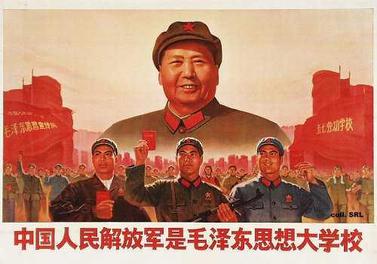
Within China itself, the unthinking default loyalty of the masses, has been disturbed. “Narratives” which conflict with the official ones are circulating, along with the virus — and even among those who “test negative,” as it were. These are people who would never rebel, but they become sympathetic to rebels. Moreover, the state’s image of invincibility — the Mao/Xi portrait, a hundred feet tall — is cracking. Imagined lines of contempt appear in the plaster. Chairman Mao, of course, is dead, but Chairman Xi must be sensing his mortality.

As the Soviet Union was collapsing from within, progressive Westerners tried to ignore it. This wasn’t something they wanted to look at, which is why they were all taken by surprise. The fall of the Berlin Wall inwardly distressed everyone on the Left. For a few years their confidence was shaken, slowing their efforts to regroup around “environmentalism,” or some alternative leftwing cause, that wasn’t in shambles like socialism. But eventually their smugness recovered, and those revealed to have been absolutely wrong about everything they had ever told us, were able to resume their status as “experts.”

From Wikipedia‘s entry on the Mandate of Heaven:

The Mandate of Heaven (Chinese: 天命; pinyin: Tiānmìng; Wade–Giles: T’ien-ming, literally “Heaven’s will”) is a Chinese political and religious teaching used since ancient times to justify the rule of the King or Emperor of China. According to this belief, Heaven (天, Tian) — which embodies the natural order and will of the universe — bestows the mandate on a just ruler of China, the “Son of Heaven” of the “Celestial Empire”. If a ruler was overthrown, this was interpreted as an indication that the ruler was unworthy, and had lost the mandate. It was also a common belief that natural disasters such as famine and flood were divine retributions bearing signs of Heaven’s displeasure with the ruler, so there would often be revolts following major disasters as the people saw these calamities as signs that the Mandate of Heaven had been withdrawn.

[…] The Mandate of Heaven was often invoked by philosophers and scholars in China as a way to curtail the abuse of power by the ruler, in a system that had few other checks. Chinese historians interpreted a successful revolt as evidence that Heaven had withdrawn its mandate from the ruler. Throughout Chinese history, times of poverty and natural disasters were often taken as signs that heaven considered the incumbent ruler unjust and thus in need of replacement.

April 16, 2020

Prologue: The Dutch Colonial Whip | The Indonesian War Of Independence

Filed under: Asia, Europe, History, Military — Tags: , , , , , , — Nicholas @ 04:00

TimeGhost History
Published 15 Apr 2020

This is the prologue to our five-part Indonesian War of Independence Miniseries. It sets the stage of brutal colonial repression, a growing sense of Indonesian Nationalism and ultimately the desire to be free.

Join us on Patreon: https://www.patreon.com/TimeGhostHistory

Hosted by: Indy Neidell

Written by:
Spartacus Olsson and Joram Appel
Directed by: Astrid Deinhard
Produced by: Astrid Deinhard and Spartacus Olsson
Executive Producers: Astrid Deinhard, Indy Neidell, Spartacus Olsson, Bodo Rittenauer
Creative Producer: Joram Appel
Post-Production Director: Wieke Kapteijns
Research by: Joram Appel and Isabel Wilson
Edited by: Wieke Kapteijns, Guido Becker
Sound design: Marek Kamiński

Colorizations by: Dememorabilia – https://www.instagram.com/dememorabilia/

Research Sources: https://bit.ly/IndoSources

Visual Sources:

Tropenmuseum, part of the National Museum of World Cultures
Wellcome Images

Icons retrieved via The Nounproject: gold by Phạm Thanh Lộc, slaves by Salaidinovich, silver by Marie Van den Broeck, spice by ahmad, Opium Poppies by Matt Wasser.

Music:
“Disciples of Sun Tzu” – Christian Andersen
“Weapon of Choice” – Fabien Tell
“Guilty Shadows 4” – Andreas Jamsheree
“Road To Tibet 5” – Rannar Sillard
“Sailing for Gold” – Howard Harper-Barnes
“The Inspector 4” – Johannes Bornlöf
“The Dominion” – Bonnie Grace
“Heroes On Horses” – Gunnar Johnsén
“Not Safe Yet” – Gunnar Johnsen

A TimeGhost chronological documentary produced by OnLion Entertainment GmbH.

From the comments:

TimeGhost History
2 days ago (edited)
This is the prologue to our new ‘Indonesian War of Independence’ mini-series. Now, we initially only wanted to do five episodes, but episode one became double as long as we imagined, so we decided to cut the historical context out and put it in a prologue. These series are mainly written by Joram and Isabel, two historians from the Netherlands and the United Kingdom. Now, you might say that we are not in the best position to talk about European Imperialism because of that. However, as we’re both academically trained historians, we believe that we’re able to overcome any bias through the use of academic methods and peer-reviewed academic sources. If anyone is interested to take a look at our source-list, you can find it right here: https://bit.ly/IndoSources

These mini-series have been chosen out of a bigger selection by our TimeGhost Army. They fund almost our entire production – this would not exist without them. Become one of them to choose future series and to support the creation of content just like this! You can do that at patreon.com/timeghosthistory or https://timeghost.tv.

Cheers,
Joram

April 13, 2020

Increasing hazards to navigation in the East China Sea

Filed under: Asia, China, Japan, Military — Tags: , , , , , , — Nicholas @ 05:00

It’s odd that all the increased collisions seem to involve Chinese vessels:

Japanese Maritime Self-Defence Force ship JS Shimakaze (DDG-172), the second ship of the Hatakaze class, commissioned in 1988. She was slightly damaged in a collision with a Chinese fishing boat in the East China Sea on 30 March 2020.
Image via Wikimedia Commons.

Sci-fi genius Robert Heinlein warned readers never to attribute to villainy behavior that was adequately explained by stupidity. In other words, he believed malice should be the explanation of last resort for puzzling conduct on the part of people or groups of people; it shouldn’t be the default. Better to hunt for more benign explanations first. With apologies to Heinlein, I would amend his “razor,” or heuristic, slightly. It’s too narrow. There are other candidates than stupidity or purposeful villainy to account for misconduct. Factors like incompetence, bureaucratic inertia, and sheer accident form — and sometimes deform — human thought and action. They belong on the stupidity side of Heinlein’s ledger.

How about this: Never attribute to villainy behavior that can be adequately explained by human failings. That preserves the essence of Heinlein’s razor while widening its scope to fit reality.

Let’s use his revised heuristic to evaluate the Sino-Japanese collision. It’s certainly possible the mishap came about by accident. It took place at night, in crowded waters. If the U.S. Navy collisions of 2017 taught us nothing else, it’s that the crews of even frontline warships can suffer from a host of maladies, from overwork to shoddy personnel practices to doctrinal or training shortfalls. No amount of high technology — whether it’s Aegis radar or satellite navigation — can altogether forestall human error. It may be that the Japanese crew, the Chinese crew, or both blundered around in the dark and came to grief. By Heinlein’s lights that’s the generous and proper assumption until the facts become known. If they do.

Nevertheless, a silent corollary has to be appended to Heinlein’s razor: But don’t rule out villainy, either.

Especially when it comes to the Chinese Communist Party (CCP). For decades Beijing has made militiamen embedded in the Chinese fishing fleet an arm of maritime strategy. The maritime militia is an irregular adjunct to regular naval forces, including the People’s Liberation Army Navy (PLA Navy) and especially the musclebound China Coast Guard fielded over the past decade. Beijing touted the militia’s combat prowess as long ago as 1974, when Chinese naval forces wrested a tottering South Vietnam’s holdings in the Paracel Islands from it in a brief but bloody sea battle. Militia craft backed by the coast guard have been a fixture in the South China Sea ever since 2009, when Beijing declared “indisputable sovereignty” over the vast majority of that body of water — including seas allocated to its neighbors by treaty. The irregular force went into overdrive in 2012 during the standoff with the Philippine Navy and Coast Guard at Scarborough Shoal, deep within the Philippines’ exclusive economic zone. Fishing craft flood the zone in CCP-claimed waters and dare local coast guards or navies to repulse them. If the locals resist, the China Coast Guard backs up the militia. PLA regular forces provide a backstop should things go awry.

H/T to Blazing Cat Fur for the link.

April 11, 2020

QotD: Zhou Enlai’s famous “too early to say” comment on the French Revolution

Filed under: China, France, History, Media, Quotations, USA — Tags: , , , , — Nicholas @ 01:00

When Chinese premier Zhou Enlai famously said it was “too early” to assess the implications of the French revolution, he was referring to turmoil in France in 1968 and not — as is commonly thought — to the more distant political upheaval of 1789.

So says a retired American diplomat, Charles W. (Chas) Freeman Jr., who was present when Zhou made the comment during President Richard Nixon’s visit to China in February 1972.

Freeman, who was Nixon’s interpreter during the historic, weeklong trip, made the disclosure last week during a panel discussion in Washington about On China, the latest book by former Secretary of State Henry Kissinger.

The discussion was moderated by Richard McGregor, a journalist and China expert who wrote about Freeman’s comments for the Financial Times of London.

In an interview yesterday, Freeman elaborated on his recollection about Zhou’s comment, the conventional interpretation of which is frequently offered as evidence of China’s sage, patient, and far-sighted ways. Foreign Policy magazine, for example, referred last month to that interpretation, saying the comment was “a cautionary warning of the perils of judgments made in real time.”

The Washington Post‘s recent review of Kissinger’s book likewise referred to the conventional understanding of Zhou’s remark.

Freeman described Zhou’s misconstrued comment as “one of those convenient misunderstandings that never gets corrected.”

He said Zhou’s remark probably was made over lunch or dinner, during a discussion about revolutions that had succeeded and failed. They included, Freeman said, the Prague Spring of 1968 and the Hungarian uprising of 1956, both of which the Soviet Union crushed.

He said it was clear from the context and content of Zhou’s comment that in saying it was “too early to say” the Chinese leader was speaking about the events in France in May 1968, not the years of upheaval that began in 1789.

Freeman acknowledged that the conventional interpretation makes for a better story but added that it was “absolutely clear” from the context of the discussion that Zhou was speaking about 1968.

W. Joseph Campbell, “‘Too early to say’: Zhou was speaking about 1968, not 1789”, Media Myth Alert, 2011-06-14.

April 9, 2020

The True Story of How WW2 Began | BETWEEN 2 WARS I 1939 Part 3 of 3 I SEASON FINALE

Filed under: China, Europe, Germany, History, Japan, Military, Russia, WW2 — Tags: , , , , , — Nicholas @ 04:00

TimeGhost History
Published 8 Apr 2020

In this final episode of Season 1 of Between Two Wars we examine what caused the world to stand on the brink of total war in just two decades after the War to End All Wars. Events that end with three words through a phone line: “Grandmother is dead,” words that launch World War II.

Join us on Patreon: https://www.patreon.com/TimeGhostHistory

Hosted by: Indy Neidell
Written by: Spartacus Olsson
Directed by: Spartacus Olsson and Astrid Deinhard
Executive Producers: Bodo Rittenauer, Astrid Deinhard, Indy Neidell, Spartacus Olsson
Creative Producer: Joram Appel
Post-Production Director: Wieke Kapteijns
Research by: Spartacus Olsson
Edited by: Daniel Weiss
Sound design: Marek Kamiński

Sources:
From the Noun Project:
soldier By Wonmo Kang
coin stacks By emilegraphics

Colorizations by:
– Dememorabilia – https://www.instagram.com/dememorabilia/
– Olga Shirnina
– Spartacus Olsson
– Daniel Weiss

Soundtracks from Epidemic Sound:
– “Sophisticated Gentlemen” – Golden Age Radio
– “First Responders” – Skrya
– “Easy Target” – Rannar Sillard
– “The Inspector 4” – Johannes Bornlöf
– “Last Point of Safe Return” – Fabien Tell
– “Death And Glory 3” – Johannes Bornlöf
– “Split Decision” – Rannar Sillard
– “March Of The Brave 9” – Rannar Sillard
– “Mystery Minutes STEMS INSTRUMENTS” – Farrell Wooten
– “The Charleston 3” – Håkan Eriksson

Archive by Reuters/Screenocean http://www.screenocean.com

A TimeGhost chronological documentary produced by OnLion Entertainment GmbH.

From the comments:

TimeGhost History
1 day ago
Dear friends, this is the 58th and final episode of the first season of Between 2 Wars. Almost exactly two years ago, when the first episode went live, on April 14, 2018 we were three people. We had not started the WW2 channel yet. The TimeGhost Army had less than 100 members, and we had no idea where we would end up. As it turned out, it has been a magnificent journey through twenty years of history.

We are now a team of around sixteen individuals working on three channels and publishing more than five historical videos per week. And this is thanks to all of you who have graced us by watching, liking, commenting, and joining the TimeGhost Army. And it is especially thanks to the now over 4,000 members of the TimeGhost Army and their faithful contributions that we are able to do this at all. Thanks to you all, we can add a little bit of knowledge, a little bit of perspective, and hopefully a little bit of sanity (and also a measure healthy insanity) to the world.

It’s especially in times like these that we feel blessed by your support, so that we can continue our mission of remembrance and education. So it is with humble gratitude and some pride that we deliver this season finale. With your participation we will keep marching on, and try to do even more, even better, and exciting historical content.

Thank you all!

Let’s make history!

Spartacus

Definition note: when we use the term Socialist we always use the academic and dictionary definition: an ideology that aims to abolish private ownership of capital, goods, and enterprise to transfer it to the collective for use rather than profit. The means to achieve that being a violent revolution. We do not use the popular US redefinition of the word that makes it mean something vaguely like “anything the government does.”

April 8, 2020

Debunking the claim that “80% of America’s drugs come from China”

Filed under: Business, China, Health, Media, USA — Tags: , , , , — Nicholas @ 03:00

Eric Boehm tries to sort out where the startling claim came from … because it’s not true:

While reading about the COVID-19 outbreak, you’ve probably encountered this particularly shocking statistic at one time or another: 80 percent of America’s pharmaceutical drug supply comes from China.

It’s a statistic that has made the rounds in right-wing publications for a while — offered as proof that China-heavy global supply chains are putting Americans at risk — but it has also popped up in mainstream outlets, including in pieces published in Politico and The Atlantic. Wherever it is deployed, the stat carries an unstated implication: What if China decides to cut us off in the middle of a pandemic? Could America face a dramatic shortage of key pharmaceutical drugs at the moment when we are most in need? And that distorted claim that says America has been too reliant on China has been seized by politicians like Sen. Josh Hawley (R–Mo.) as evidence that globalization has undermined America’s pandemic response.

[…]

How much is a lot? “In all, 80 percent of the U.S. supply of antibiotics are made in China,” [Politico contributors Doug Palmer and Finbarr Bermingham] wrote, linking back to a press release from Sen. Chuck Grassley (R–Iowa).

But that’s not what the press release says.

Grassley’s statement was publicizing a letter Grassley sent on August 9 to the Department of Health and Human Services (HHS) and the FDA, asking them to conduct more inspections of foreign drug manufacturing facilities to make sure they meet American standards.

“Unbeknownst to many consumers … 80 percent of Active Pharmaceutical Ingredients are produced abroad, the majority in China and India,” Grassley wrote.

There’s the first bit of context collapse: the authors of the Politico piece merged Grassley’s “80 percent … are produced abroad” into “80 percent … are made in China.”

All of this also raises another question: Where is Grassley getting that information? His letter sources that claim to a 2016 Government Accountability Office report which itself cited FDA data on pharmaceutical manufacturers around the world. And that report makes it clear that the U.S. has a diverse supply chain for drugs that goes well beyond India and China.

“Nearly 40 percent of finished drugs and approximately 80 percent of active pharmaceutical ingredients (API) are manufactured in registered establishments in more than 150 countries,” is how the GAO summed up America’s pharmaceutical supply chain.

In two jumps, we’ve gone from “80 percent of American drugs are manufactured in more than 150 countries around the world” to “80 percent of drugs come from two countries” to “80 percent of drugs come from China.”

Now, a further complication. The FDA only tracks drug manufacturing facilities — not the supply chains of specific drugs.

That “lack of structural transparency and available supply chain data about drugs,” researchers at the University of Minnesota researchers wrote last month, is one of the reasons why making accurate assessments about potential drug shortages is difficult. Indeed, it was this same bit of missing information that Grassley was encouraging the FDA to address back in August.

Source: FDA; Safeguarding Pharmaceutical Supply Chains in a Global Economy, October 2019.

April 5, 2020

China’s geostrategic box

ESR looks at the concerns that China may be considering starting a war with the United States in the wake of the Wuhan Coronavirus:

To understand how limited the PRC’s war options are, we can start with a grasp on how difficult and unsatisfying any war of conquest would be due to the geographic box China is in. The obstacles around it are formidable.

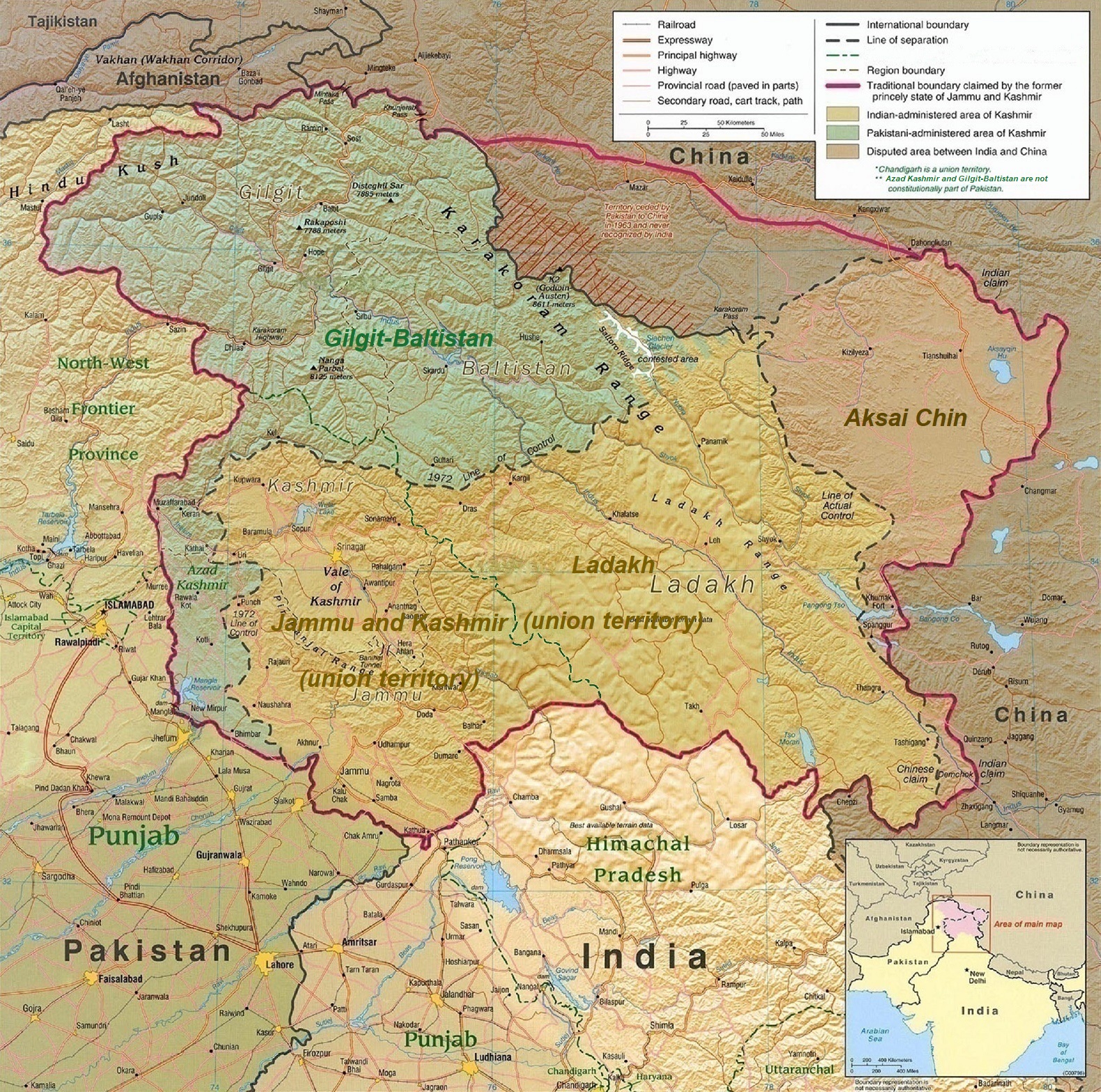
To the south, the Himalayan massif makes all of South Asia other than a narrow coastal plain on the Southeast Asian peninsula inaccessible to serious troop movements. There are no roads or rail links. The last time the Chinese tried pushing in that direction, in 1979, they were unable to sustain an offensive at any distance from their railheads and withdrew after less than a month. Their war aim – forcing the North Vietnamese to withdraw its troops from Cambodia – failed.

To the west, the vastness and comparatively undeveloped state of China’s western hinterland is a serious logistical problem before one even gets to the border. At the borders, the Tien Shan and Pamir ranges present a barrier almost as formidable as the Himalayas. External road and rail links are poor and would be easily interdicted.

To the north, movement would be easier. It might be just within logistical possibility for the PLA to march into Siberia. The problem with this idea is that once you’ve conquered Siberia, what you have is … Siberia. Most of it, except for a small area in the south coastal region of Primorsky Kraye, is so cold that cities aren’t viable without food imports from outside the region. Set this against the risks of invading a nuclear-armed Russia and you don’t have a winning proposition.

To the east is the South China Sea. The brute fact constraining the PRC’s ambitions in that direction is that mass movement of troops by sea is risky and difficult. I recently did the math on Chinese sealift craft and despite an expensive buildup since the 1980s they don’t have the capacity to move even a single division-sized formation over ocean. Ain’t nobody going to take Taiwan with one division, they’ve has too much time to prepare and fortify over the last 60 years.

The PRC leadership is evil and ruthless, but it’s also cautious and historically literate and can read maps. Accordingly, the People’s Liberation Army is designed not to take territory but to hold the territory the PRC already has. Its mission is not conquest but the suppression of regional warlordism inside China itself. The capability for the PLA to wage serious expeditionary warfare doesn’t exist, and can’t be built in the near-term future.

It’s often said that the danger of aggressive war by China is a function of the huge excess of young men produced by covert sexual selection and the one-child policy. But to expend those young men usefully you need to get them to where they can fight and are motivated by some prospect of seizing the wives unavailable for them at home. The PRC can’t do that.

The military threat from China is, therefore, a function of what it can do with its navy, its airpower, and its missiles. And what it can do with those against the U.S. is upper-bounded by the fact that the U.S. has nuclear weapons and would be certain to respond to a PRC nuclear or EMP attack on the U.S. mainland by smashing Chinese cities into radioactive rubble.

Within the constraints of conventional warfare waged by navy and air force it is difficult to imagine an achievable set of PRC war aims that gains more than it costs.

It’s possible — even likely — that the Chinese military has something like the oft-rumoured “ship-killer missiles” that might be able to cripple or sink an American carrier … if it was in range. That makes the South China Sea, the East China Sea, and the west coast of Japan a possible no-go area for US Navy carrier strike groups. A good defensive weapon system to have on hand in case relations with the outside world go “hot”, but not a strategic game-changer. Nobody would be likely to consider anything as dangerous as a seaborne invasion of mainland China, even without the threat of wonder weapons like the ship-killer. And good defensive weapons won’t secure the trade routes that China depends on outside coastal waters.

In a lot of ways your strategic situation is like a scaled-up version of Japan’s in 1941 – you could seize the initiative with a Pearl-Harbor-like initial shock, but you can’t wage a long war because without sealane control you’ll run out of key feedstocks and even food rather rapidly. And unlike the Japanese in 1941, you don’t have the kind of serious blue-water navy that you’d need for sealane control outside the First Island Chain – not with just two carriers you don’t.

There is one way an aggressive naval war could work out in your favor anyway. You can count on the U.S.’s media establishment to be pulling for the U.S. to lose any war it’s in, especially against a Communist or Socialist country. If your war goals are limited to ending U.S. naval power projection in the Western Pacific, playing for a rapid morale collapse orchestrated by agents of influence in the U.S. is not completely unrealistic.

It’s playing with fire, though. One problem is that before you launch your attack you don’t know that your sucker punch will actually work. Another is that, as the Japanese found out after Pearl Harbor, the American public may react to tragic losses with Jacksonian fury. If that happens, you’re seriously screwed. The war will end with your unconditional surrender, and not sooner.

Update: Bone-headed typo in the headline fixed. It’s funny how you can’t see ’em until just after you click the Save button…

April 4, 2020

“Into The Fire” – The Vietnam War – Sabaton History 061 [Official]

Filed under: Asia, Australia, History, Media, Military, USA — Tags: , , , , — Nicholas @ 04:00

Sabaton History
Published 3 Apr 2020

During the height of the Cold War, weapons ran hot in the jungles of Vietnam. Combat along the overgrown trails, the wide open fields of rice-paddies or the marshes of the Mekong Delta, was not only exhausting and relentless, but also the place where many of the old doctrines of warfare did no longer apply. The western coalition had to face the elusive guerilla methods of the North Vietnamese forces, who prepared ambushes and traps along the marching routes. The eerie quietness of the jungle was all too often broken by a sudden explosion of violence as troops marched right into the fire.

Support Sabaton History on Patreon: https://www.patreon.com/sabatonhistory

We would like to thank the World of Tanks team for their contribution and help with the video filming. If you’re not yet a World of Tanks player, join the game and get your hands on cool in-game stuff for free via the link: https://redir.wargaming.net/w7fwclmx/…

Listen to “Into the Fire” on the album Primo Victoria:
CD: http://bit.ly/PrimoVictoriaStore
Spotify: http://bit.ly/PrimoVictoriaSpotify
Apple Music: http://bit.ly/PrimoVictoriaAppleMusic
iTunes: http://bit.ly/PrimoVictoriaiTunes
Amazon: http://bit.ly/PrimoVictoriaAmzn
Google Play: http://bit.ly/PrimoVictoriaGooglePlay

Check out the trailer for Sabaton’s new album The Great War right here: https://www.youtube.com/watch?v=HCZP1…

Listen to Sabaton on Spotify: http://smarturl.it/SabatonSpotify
Official Sabaton Merchandise Shop: http://bit.ly/SabatonOfficialShop

Hosted by: Indy Neidell
Written by: Markus Linke and Indy Neidell
Directed by: Astrid Deinhard and Wieke Kapteijns
Produced by: Pär Sundström, Astrid Deinhard and Spartacus Olsson
Creative Producer: Joram Appel
Executive Producers: Pär Sundström, Joakim Broden, Tomas Sunmo, Indy Neidell, Astrid Deinhard, and Spartacus Olsson
Post-Production Director: Wieke Kapteijns
Edited by: Iryna Dulka
Sound Editing by: Marek Kaminski
Maps by: Eastory – https://www.youtube.com/c/eastory

Archive by: Reuters/Screenocean https://www.screenocean.com
Music by Sabaton.

An OnLion Entertainment GmbH and Raging Beaver Publishing AB co-Production.

© Raging Beaver Publishing AB, 2019 – all rights reserved.

March 29, 2020

Yugoslavia Joins the Axis Powers. and then they don’t – WW2 – 083 – March 28, 1941

Filed under: China, Europe, Germany, History, Italy, Japan, Military, WW2 — Tags: , , , , , — Nicholas @ 06:00

World War Two
Published 28 Mar 2020

Yugoslavia joins the Axis powers, which then triggers a pro-Allied coup, angering Hitler. Meanwhile, the Italians fail to outsmart the British as the Japanese hope to capitalise on their superior army.

Join us on Patreon: https://www.patreon.com/TimeGhostHistory
Or join The TimeGhost Army directly at: https://timeghost.tv

Follow WW2 day by day on Instagram @World_war_two_realtime https://www.instagram.com/world_war_t…
Between 2 Wars: https://www.youtube.com/playlist?list=PLrG5J-K5AYAU1R-HeWSfY2D1jy_sEssNG
Source list: http://bit.ly/WW2sources

Written and Hosted by: Indy Neidell
Produced and Directed by: Spartacus Olsson and Astrid Deinhard
Executive Producers: Bodo Rittenauer, Astrid Deinhard, Indy Neidell, Spartacus Olsson
Creative Producer: Joram Appel
Post-Production Director: Wieke Kapteijns
Research by: Indy Neidell
Edited by: Iryna Dulka
Map animations: Eastory (https://www.youtube.com/c/eastory)

Colorizations by:
– Julius Jääskeläinen – https://www.facebook.com/JJcolorization/
– Daniel Weiss
– Owen Robinson – https://www.instagram.com/owen.colori…
– Dememorabilia – https://www.instagram.com/dememorabilia/

Sources:
– Bundesarchiv
– Wellcome Images
– Narodowe Archiwum Cyfrowe
– Војни архив
– Istorijski arhiv u Pančevu
– IWM: H 10922, A 10274
– Littorio class Battleship drawing by David Orlović from Wikimedia
– Italian heavy cruiser Pola drawing by K.E.Sergeev
– Prison icon by FORMGUT. from the Noun Project

Archive by Screenocean/Reuters https://www.screenocean.com.

A TimeGhost chronological documentary produced by OnLion Entertainment GmbH.

From the comments:

World War Two
2 days ago (edited)
NOTE BY INDY: I researched and wrote this episode in January. Since then I have done deep research on the fighting for Greece and Crete, as well as the Barbarossa planning. I can now say unequivocally that I do NOT believe the actions in Yugoslavia had anything to do with Hitler changing the start of Barbarossa.

I hope everyone is doing well and staying safe in these tumultuous times. Indy was meant to fly back to Stockholm after a very full week of shooting, but his flight was changed to an earlier time (which they didn’t tell him), so now he’s “stuck” in the studio in Bavaria. He hopes to be able to fly back soon, but until then we’re writing and shooting a few more episodes for you. We hope we’re able to bring you all some distraction, relief or perspective. Stay safe!
Cheers, Joram

March 27, 2020

The Wuhan Coronavirus sucks, our data on it sucks … but our media suck most of all

Filed under: China, Government, Health, Media, USA — Tags: , , , , , — Nicholas @ 05:00

The all-hysteria, all the time media will have much to regret once the worst of the Wuhan Coronavirus epidemic has run its course:

  • The data we have sucks, and thus any conclusions we are drawing mostly suck too. The data is worse than just being incomplete or bad — if it was randomly distributed, we could live with that. But the lack of test kits and how we have deployed the few we have means that the data is severely biased. We are only testing people who are strongly symptomatic. If there is a normal distribution of outcomes from this disease, we are only testing on the right side of the distribution. We have no idea where the median is or how long the tail is to the left side of asymptomatic outcomes. The only thing we absolutely know about the disease is its not as deadly as the media is portraying as we are missing hundreds of thousands of cases in the denominator of the mortality rates. The media has also been terrible about reporting on risk factors of those who died. When a bunch of people died suddenly in Seattle, one had to read down 5 paragraphs into the story to find that they were all over 70 in an old-age home. Or when prime-of-life people die, facts such as their being type 1 diabetics — a known severe risk factor for this virus (and one that makes it different from the flu) are left out.
  • The media is constantly confusing changes in measurement technique and intensity with changes in the underlying progress of the virus itself. Changes in case numbers have as much to do with testing patterns and availability than they do with the real spread of the disease.
  • While COVID-19 is likely worse than the normal flu, our perceptions of how much worse are strongly affected by observer bias. Frankly, if every news broadcast every night spent 15 minutes reciting flu deaths each day, we would all be hiding in our homes away from flu. They present a healthy man in his thirties dying clearly as the tragedy it is, but the spoken or unspoken subtext is, “this is abnormal so this thing is much worse.” But it seems abnormal because we do not report on the very real stories of healthy young people who die of the flu. My nephew who was 25 years old and totally healthy with no pre-existing conditions died of the flu last month — and no one featured this tragedy on the national news.
  • The data we are getting sucks worse because the media has decided, as one big group, that for our own good they are going to limit all facts about the virus to only the bad ones. There is a strong sense — you see it on Twitter both in Twitter’s policies as well as Twitter group attacks — that saying anything that might in any way reduce one’s fear of the disease should be banned for our own good. One of the more prominent examples was Medium removing an article NOT because it was proven wrong but because it took one side of a very open question and it was obviously decided it was “unsafe” to allow that side to even be aired.
« Newer PostsOlder Posts »

Powered by WordPress