World War Two
Published 11 Mar 2020Next week our monthly new sub series On The Homefront premieres hosted by Anna Deinhard. This is why…
Join us on Patreon: https://www.patreon.com/TimeGhostHistory
Or join The TimeGhost Army directly at: https://timeghost.tvFollow WW2 day by day on Instagram @World_war_two_realtime https://www.instagram.com/world_war_t…
Between 2 Wars: https://www.youtube.com/playlist?list…
Source list: http://bit.ly/WW2sourcesHosted by: Anna Deinhard
Produced and Directed by: Spartacus Olsson and Astrid Deinhard
Executive Producers: Bodo Rittenauer, Astrid Deinhard, Indy Neidell, Spartacus Olsson
Edited by: Anna Deinhard and Spartacus OlssonArchive by Screenocean/Reuters https://www.screenocean.com.
A TimeGhost chronological documentary produced by OnLion Entertainment GmbH.
March 12, 2020
WW2 On The Homefront Starts next week!
March 6, 2020
August von Mackensen in WW2, Stolen Wine, and America – WW2 – Out of the Foxholes 007
World War Two
Published 5 Mar 2020In this episode of Out of the Foxholes, we answer some community questions on what August von Mackensen did in World War Two, if there was a shortage on French wines and what the Axis’ perception of the Monroe Doctrine was.
Ask your own question for Out of the Foxholes here: https://community.timeghost.tv/c/Out-…
Join us on Patreon: https://www.patreon.com/TimeGhostHistory
Or join The TimeGhost Army directly at: https://timeghost.tvFollow WW2 day by day on Instagram @World_war_two_realtime https://www.instagram.com/world_war_t…
Join our Discord Server: https://discord.gg/D6D2aYN.
Source list: http://bit.ly/WW2sourcesHosted by: Indy Neidell
Written by: Rune Væver Hartvig
Produced and Directed by: Spartacus Olsson and Astrid Deinhard
Executive Producers: Bodo Rittenauer, Astrid Deinhard, Indy Neidell, Spartacus Olsson
Creative Producer: Joram Appel
Post-Production Director: Wieke Kapteijns
Research by: Rune Væver Hartvig
Edited by: Mikołaj Cackowski
Map animations: Eastory (https://www.youtube.com/c/eastory)Colorizations by:
Julius Jääskeläinen – https://www.facebook.com/JJcolorization/
Ruffneck88 – https://commons.wikimedia.org/wiki/Fi…Sources:
Narodowe Archiwum Cyfrowe
IWM F 3551
Library of Congress
Wine Bottles by Ivan from the Noun Project
Spider by Sneha from the Noun Project
Spider Web by Valerie Lamm from the Noun ProjectSoundtracks from the Epidemic Sound:
Trabant 33 – “When in Bavaria”
Philip Ayers – “Trapped in Maze”
Johannes Bornlof – “The Inspector”Archive by Screenocean/Reuters https://www.screenocean.com.
A TimeGhost chronological documentary produced by OnLion Entertainment GmbH.
March 4, 2020
Resistance in China – Myth or Reality? – WW2 – War Against Humanity 009
World War Two
Published 3 Mar 2020The war in China already started in 1931 when Japan invaded Manchuria. Early resistance was small and was met by heavy Japanese retaliations. But throughout the 30’s, the movement started to grow.
Join us on Patreon: https://www.patreon.com/TimeGhostHistory
Or join The TimeGhost Army directly at: https://timeghost.tvFollow WW2 day by day on Instagram @World_war_two_realtime https://www.instagram.com/world_war_t…
Join our Discord Server: https://discord.gg/D6D2aYN.
Between 2 Wars: https://www.youtube.com/playlist?list…
Source list: http://bit.ly/WW2sourcesHosted by: Spartacus Olsson
Written by: Francis van Berkel
Produced and Directed by: Spartacus Olsson and Astrid Deinhard
Executive Producers: Bodo Rittenauer, Astrid Deinhard, Indy Neidell, Spartacus Olsson
Creative Producer: Joram Appel
Post-Production Director: Wieke Kapteijns
Research by: Francis van Berkel
Edited by: Mikołaj Cackowski
Map animations: Eastory (https://www.youtube.com/c/eastory)Colorizations by:
Norman Stewart – https://oldtimesincolor.blogspot.com/Sources:
Library of Congress
Narodowe Archiwum Cyfrowe
Chinese anti-Japanese posters, courtesy of pictoright
SHANGHAI, CHINA-1921Soundtracks from the Epidemic Sound:
Johan Hynynen – “Dark Beginning”
Yi Nantiro – “Watchmen”
Yi Nantiro – “A Single Grain of Rice”
Reynard Seidel – “Deflection”
Fabien Tell – “Last Point of Safe Return”
Andreas Jamsheree – “Guilty Shadows 4”
Rannar Sillard – “Split Decision”Archive by Screenocean/Reuters https://www.screenocean.com.
A TimeGhost chronological documentary produced by OnLion Entertainment GmbH.
March 3, 2020
Type 89 Knee Mortar
Forgotten Weapons
Published 23 Sep 2015http://www.patreon.com/ForgottenWeapons
Hammer price: $2,500
The Type 89 grenade discharger, commonly known as the “knee mortar” was a Japanese light infantry weapon introduced in 1929 which blurs the lines between grenade launcher and mortar. Like a mortar, it fires propelled explosive bombs in a high-angle indirect fire role, but it has a rifled barrel and uses a range adjustment mechanism very different from most mortars.
The knee mortar proved to be a very capable and effective weapon in WWII against US forces. It was accurate, effective, and perhaps most importantly, light and very fast to put into action. The closest comparable US weapon was the 60mm light mortar, which had a more effective projectile but was significantly slower to use.
Of course, the “knee mortar” nickname was based on the theoretical belief that one was supposed to rest the curved baseplate of the weapon on a leg while firing, which would actually have resulted in a broken leg. The baseplate was curved to allow it to dig into soft soil and be used against objects like logs and roots.
March 2, 2020
Downfall of the Superpower China – Ming and Qing Dynasty l HISTORY OF CHINA
IT’S HISTORY
Published 17 Aug 2015With the dynasties of the Ming and the Qing came social security and flourishing international trade. The White Lotus Movement advocated progressive thinking in the time of the conservative Ming dynasty. In 1616 the Qing dynasty came to power. Also known as the Manchu dynasty, the Qing refused to open their borders to limitless trade which led to frustrated European merchants. This caused hostility and mistrust of the “barbaric Chinese”. Shortly thereafter China’s economy lost its race against European Colonialism and would lose military influence after gunpowder reached Europe. All about the fall of the former Chinese superpower in this episode on IT’S HISTORY!
» SOURCES
Videos: British Pathé (https://www.youtube.com/user/britishp…)
Pictures: mainly Picture Alliance
Content:
Twitchett, Denis and Loewe, Michael. The Cambridge History of China. Cambridge University Press.
Wilkinson, Endymion, Chinese History: A New Manual. Harvard University, Asia Center
Loewe, Michael; Shaughnessy, Edward L. The Cambridge History of Ancient China. Cambridge University Press
John M. Roberts A Short History of the World. Oxford University Press
Xu, Pingfang The Formation of Chinese Civilization: An Archaeological Perspective. Yale University Press.
Fairbank, J. K.; Goldman, M. China: A New History. Harvard University Press. ”» ABOUT US
IT’S HISTORY is a ride through history – Join us discovering the world’s most important eras in IN TIME, BIOGRAPHIES of the GREATEST MINDS and the most important INVENTIONS.» HOW CAN I SUPPORT YOUR CHANNEL?
You can support us by sharing our videos with your friends and spreading the word about our work.» CAN I EMBED YOUR VIDEOS ON MY WEBSITE?
Of course, you can embed our videos on your website. We are happy if you show our channel to your friends, fellow students, classmates, professors, teachers or neighbors. Or just share our videos on Facebook, Twitter, Reddit etc. Subscribe to our channel and like our videos with a thumbs up.» CAN I SHOW YOUR VIDEOS IN CLASS?
Of course! Tell your teachers or professors about our channel and our videos. We’re happy if we can contribute with our videos.» CREDITS
Presented by: Guy Kiddey
Script by: Guy Kiddey
Directed by: Daniel Czepelczauer
Director of Photography: Markus Kretzschmar
Music: Markus Kretzschmar
Sound Design: Bojan Novic
Editing: Markus KretzschmarA Mediakraft Networks original channel
Based on a concept by Florian Wittig and Daniel Czepelczauer
Executive Producers: Astrid Deinhard-Olsson, Spartacus Olsson
Head of Production: Michael Wendt
Producer: Daniel Czepelczauer
Social Media Manager: Laura Pagan and Florian WittigContains material licensed from British Pathé
All rights reserved – © Mediakraft Networks GmbH, 2015
February 26, 2020
The Pacific War | Animated History
The Armchair Historian
Published 15 Jun 2018Huge thanks to Kan Shimada for the Japanese translation!
Our Website: https://www.thearmchairhistorian.com/
Our Twitter: https://twitter.com/ArmchairHist
This video has been sponsored and approved by Oasis Games
Sources:
The Pacific War Companion: From Pearl Harbor to Hiroshima, Daniel Marston (editor)
Iwo Jima: World War II Veterans Remember the Greatest Battle of the Pacific, Larry Smith
Hell is Upon Us: D-Day in the Pacific, Victor Brooks
Eyewitness Pacific Theater, Firsthand Accounts of the War in the Pacific from Pearl Harbor to the Atomic Bombs, John T. Kuehn and D.M. Giangreco
Lost in the Pacific: Epic Firsthand Accounts of WWII Survival Against Impossible Odds, L. Douglas Keeney (Editor)
This rather short-changes the Australian contribution to MacArthur’s campaigns in the southwest Pacific theatre, but it is a survey and can only cover so much of such a massive conflict.
February 24, 2020
Canadian-American relations (and Canadian foreign relations in general) in the 21st century
Ted Campbell looks at the undisputable fact that Canada barely matters in Washington DC, and that this has been true since the end of the first Bush administration. He discusses a recent Globe and Mail article by David Mulroney which examines the need for the Canadian government to formally rethink “Canada’s role in the world” in that light:

Justin Trudeau meets with President Donald Trump at the White House, 13 February, 2017.
Photo from the Office of the President of the United States via Wikimedia Commons.
Mr Mulroney sees two major problems that confront Canada fifty years after A Foreign Policy for Canadians was published:
- First, he says, “Canada is again dealing with a threat to our autonomy from a major power, but this time, it comes not from the United States, but from the new world that was coming into being 50 years ago. The threat is now China, which is using its economic power to influence and silence us, is undermining our national security, and is challenging the rules-based international system that the review itself championed;” and
- Second, “we again need to face up to the consequences of our diminished status, but this time much closer to home. Fifty years on, the problem isn’t that the United States wants to dominate us, but that it has largely forgotten us. While it is tempting to blame this on the chaos of the Trump era, the painful reality is that the relationship has been in decline for some time, something that was manifestly evident in the cool detachment that marked Barack Obama’s management of relations with Canada.”
I think that second is, actually, more serious than the first. I believe we can wrap our collective mind around the fact that China doesn’t like us, that it regards us as an irritant and that it is using us as a whipping boy to send a message to its other, more important, trading partners. What has been harder to grasp is that Ameria no longer cares. It isn’t just Donald Trump, it was even just Barack Obama. George W Bush didn’t care either. Despite the great debates in Canada, it seems clear that President Bush never even asked for our help in either Afghanistan or Iraq, the “pressure” to do something to stand with the USA was entirely self-generated within Canada’s own foreign affairs and defence establishments. Bush, Chaney, Rumsfeld and Myers (the latter was Chairman of the Joint Chiefs of Staff from 2001 to 2005) were, possibly, grateful for the help on the ground, when they noticed it at all, but quite uninterested in Canada’s views on any of the issues concerned. Nor did Bill Clinton care about our views on or our actions in e.g. the Balkans. We, as a country, and our leaders, Jean Chrétien, Paul Martin, Stephen Harper and Justin Trudeau, did not and do not count for anything in Washington. Neither Chrystia Freeland nor Erin O’Toole nor any other Canadian prime minister, Conservative or Liberal, will fare any better. The last time Canada mattered was when Brian Mulroney and George H W Bush renegotiated the Canada-US Free Trade deal, making it into NAFTA, over a quarter-century ago. And the end of the halcyon days of Canada-US relations came a full decade before that, in the Mulroney-Reagan years. That can only change if Canada makes itself matter.
[…]
We, Canadians, must accept ~ and millions will not want to accept this ~ that, as Mr Mulroney says, “International influence … [and that includes influence where it counts most, with the USA] … is enabled by a strong economy, robust national infrastructure and institutions, and the willingness to invest in national defence and security.” One of the impacts of Pierre Trudeau’s policies was to divert spending from National Defence to social spending. That was immensely popular with many, actually with most Canadians … something for (a perceived) nothing always is. None of Brian Mulroney, Paul Martin or Stephen Harper, all of whom, it seemed to me, wanted to reverse course and act responsibly were able to change what Pierre Trudeau had put in place. The political price was suicide. But it has been fifty years and Canada is at risk of being totally irrelevant in an increasingly complex and dangerous world.
David Mulroney’s second challenge ~ recovering “the confident elaboration of national identity,” is, I suspect, much more difficult, especially given the “post-national state” quasi-intellectual rubbish that Justin Trudeau says was part of “his father’s vision.” It’s lunacy, of course, but it’s the sort of lunacy that appealed to many in the 1960s and appeals, again, a half-century later.
While I don’t disagree with Mr. Campbell’s analysis (and that of David Mulroney), I think getting our domestic house in order is the top priority, and the current Trudeau government does not appear to be doing much constructive on that sheaf of issues. With the very rule of law threatened at home, there’s little to no point in casting our eyes across the 49th parallel or overseas: we need to address the breakdown of internal governance first.
February 23, 2020
China’s government and the coronavirus epidemic
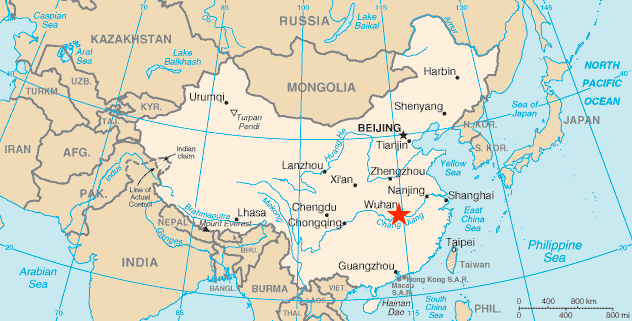
In Quillette, Aaron Sarin shows how the Chinese government has systematically failed to respond adequately to the epidemic which broke out late in 2019in Wuhan and risks “losing the Mandate of Heaven”:
As of this writing, the epidemic’s death toll is still rising, and many of these deaths can ultimately be traced to the paranoid rigidity of the Xi Jinping administration. By late December 2019, doctors in Wuhan were already sounding the alarm over cases of what appeared to them to be SARS. Instead of listening to their warnings, the authorities summoned eight of these doctors for a dressing-down. They were warned of the punishments they could face for “rumour-mongering.” News of their detention was broadcast to tens of millions: a clear message to anyone else who might have been thinking about discussing viruses in public.
The Party’s leaders actually knew enough to be worried by this point — they alerted the World Health Organisation on December 31st — and yet still they hid the truth from the public. This neurotic obsession with secrecy has certainly cost lives. If the medical community had been informed of the outbreak back in December, hospitals could have stockpiled the necessary supplies. But now there are drastic shortages, and patients are dying in hallways and waiting rooms.
Even the critics of authoritarian dictatorship will usually agree that the system beats democracy for sheer efficiency, but the coronavirus debacle has turned that old wisdom on its head. Where we might have expected cold and methodical governance, we have found dithering bureaucrats, unable to take a step in any direction, paralysed by what Xu Zhangrun calls “systemic impotence.” Weeks went by and citizens swarmed in and out of Wuhan, picking up the virus and transporting it to the far corners of the country. Local government officials stayed quiet, wary of the heavy hand of Xi Jinping. On January 23rd, a citywide quarantine was finally announced, but eight long hours passed before it was enacted — time enough for a million or more to flee the city.
The Wuhan lockdown was repeated in other parts of the country (most recently the southern megacity of Guangzhou), and some observers praised the speed with which new hospitals were constructed from scratch. These very visible displays of its power aside, the Party has moved far too slowly at every stage of the crisis. Diagnostic testing required samples to be sent all the way to a laboratory in Beijing, and this delayed the distribution of testing kits to many of the hospitals in Wuhan. Even when testing kits were available, patients still found themselves trapped in a Kafka-esque web of bureaucracy. According to Reuters, the tests have been refused to people who fail to make it through a complex reporting system involving hospital authorities, district authorities, city health authorities, and disease control officials.
None of this should come as a surprise. The cliché about the efficiency of authoritarian systems was always, on closer analysis, something of a low-resolution image. In the old days of the Soviet Union, speedy industrial growth obscured the reality of a fragile system largely devoid of autonomous decision making. During the 1920s, the Communist Party’s state planning committee Gosplan was established with the impressive-sounding mission of creating a series of five-year plans to govern the economy. But over the next 70 years, the vast majority of these plans were radically revised and rewritten, or more frequently ignored altogether in favour of Joseph Stalin’s arbitrary dictates. Indeed, Gosplan actively tried to avoid making decisions at all, because committee members knew Stalin would have them shot and replaced if their ideas produced unwelcome results. In the end, fear saps the efficiency of all authoritarian regimes, and the Chinese Communist Party is no exception.
Li Wenliang has emerged as the most vivid symbol of the Party’s latest failure. Li was one of the Wuhan doctors disgraced for discussing the coronavirus on social media. A few days after his police warning, he contracted the virus himself, and on February 6th he died. It was during the period of Li’s short illness that the Party apparently realised its error and decided to absolve the doctors, but still the central government would accept no blame for the tragedy. Instead, the Supreme Court (which is controlled by the CCP) scolded the local government in Wuhan — an unusual move, no doubt designed to create a scapegoat for surging public anger. The truth is that the city’s officials had been faced with an impossible job. They obediently followed orders, and now they will be punished for it.
February 9, 2020
The lightbulb conspiracy again
I’ve banged on a few times over the years about lightbulbs, specifically about our government’s passionate desire for us to abandon the tried-and-tested (and cheap) incandescent bulbs to move first to (ultra-expensive, dim, and potentially dangerous) compact fluorescent bulbs and now to (cheaper, but still not living up to longevity promises) LED bulbs instead. Tim Worstall explains how governments were persuaded to enforce this crony capitalist plot over the years (he’s discussing the European market, but Canadian regulators were doing exactly the same thing):
We all recall when we used to use incandescent light bulbs. Simple, cheap, the result of a century’s worth of fiddling with the basic technology to make it around and about right for the use to which it was put.
Then they were banned. Sure, there was that energy and thus planet saving argument but that was always very weak indeed. It was an excuse, not the actual reason itself. The reason was that the big three manufacturers, Phillips, Osram and GE, had invested heavily in the next generation of technology, compact fluorescents. These cost not pennies per bulb but pounds. Rather better profit margins that is. Oh, and also, not subject to that crippling competition from China.
So, we get the EU ban on incandescents, driven entirely by the manufacturers. There’s a lot of the Baptist and Bootlegger in here given the environmentalist support for it.
The problem with the technology being the use of mercury in those bulbs.
An aside, I made my living for a number of years selling weird metals that are added to that mercury. I do actually know quite a bit about the nuts and bolts here. I’m also out of the business and have been for a decade and more. So it’s knowledge driving this, not knife sharpening.
Mercury’s not good stuff to have floating around. So, what happens next? Yep, a decade or a bit more after the incandescents were banned so now they’re coming for the CFLs.
The mercury issue was not as well publicized here in Canada as it was in Australia, for example:
How many of them have looked up the Environment Department’s website to find what its bureaucrats falsely describe as the “simple and straightforward” precautions to take against poisoning should one of these lamps smash:
- Open nearby windows and doors to allow the room to ventilate for 15 minutes before cleaning up the broken lamp. Do not leave on any air conditioning or heating equipment which could recirculate mercury vapours back into the room.
- Do not use a vacuum cleaner or broom on hard surfaces because this can spread the contents of the lamp and contaminate the cleaner. Instead scoop up broken material (e.g. using stiff paper or cardboard), if possible into a glass container which can be sealed with a metal lid.
- Use disposable rubber gloves rather than bare hands.
- Use a disposable brush to carefully sweep up the pieces.
- Use sticky tape and/or a damp cloth to wipe up any remaining glass fragments and/or powders.
- On carpets or fabrics, carefully remove as much glass and/or powdered material using a scoop and sticky tape; if vacuuming of the surface is needed to remove residual material, ensure that the vacuum bag is discarded or the canister is wiped thoroughly clean.
- Dispose of cleanup equipment (i.e. gloves, brush, damp paper) and sealed containers containing pieces of the broken lamp in your outside rubbish bin – never in your recycling bin.
- While not all of the recommended cleanup and disposal equipment described above may be available (particularly a suitably sealed glass container), it is important to emphasise that the transfer of the broken CFL and clean-up materials to an outside rubbish bin (preferably sealed) as soon as possible is the most effective way of reducing potential contamination of the indoor environment.
February 8, 2020
ESR on the Wuhan coronavirus
He’s backing away from his — to me unfathomable — earlier belief in the accuracy of official Chinese government statistics:
My willingness to believe the official line didn’t stem from any credulity about what the Chinese government would do if it believed the truth wouldn’t serve. As Communists they are lying evil scum pretty much by definition, and denial would have been politically attractive for as long as they thought they could nip the pandemic in the bud. I thought their incentives had flipped and they would now be honest as a way of assisting their own countermeasures and seeking international help.
My first clue that I was wrong about that came from a friend who is plugged into the diaspora Chinese community. According to him, there is terrifying video being sent from Chinese clans to the overseas branches they planted in the West to prepare a soft landing in case they have to bail out of China. Video of streets littered with corpses. And of living victims exhibiting symptoms like St. Vitus’s Dance (aka Sydenham’s chorea), which means the virus is attacking central nervous systems.
My second clue was the Tencent leak. […] the takeaway is that there is now reason to believe that as of Feb 1st the actual coronavirus toll looked like this: confirmed cases 154023, suspected cases 79808, cured 269, deaths 24589.
Compare that with the Johns Hopkins tracker numbers for today, a week later: Confirmed cases 31207, cured 1733, deaths 638. Allowing for the Tencent leak being roughly one doubling period earlier, the official statistics have been lowballing the confirmed case number by a factor of about 8 and the deaths by a factor of about 80. And then inflating cures by a factor of about 12.
Even given what I’d heard about the video, I might have remained skeptical about the leak numbers if someone (don’t remember who or where) hadn’t pointed out that the ratio between reported cases and deaths has been suspiciously constant in the official Chinese statistics. In uncooked statistics one would expect more noise in that ratio, if only because of reporting problems.
So my present judgment, subject to change on further evidence, is that the Tencent-leak numbers are the PRC’s actual statistics. And that has a lot of grim implications.
February 7, 2020
Did WW2 Start in 1937? – The Rape of China | BETWEEN 2 WARS I 1937 Part 1 of 2
TimeGhost History
Published 6 Feb 20201937 marks the beginning of the Second Sino-Japanese War. And whether or not this is the “actual” starting point of World War Two, it definitely was a devastating conflict which led to the deaths of hundreds of thousands and the displacement of millions.
Join us on Patreon: https://www.patreon.com/TimeGhostHistory
Subscribe to our World War Two series: https://www.youtube.com/c/worldwartwo…
Hosted by: Indy Neidell
Written by: Francis van Berkel
Directed by: Spartacus Olsson and Astrid Deinhard
Executive Producers: Bodo Rittenauer, Astrid Deinhard, Indy Neidell, Spartacus Olsson
Creative Producer: Joram Appel
Post-Production Director: Wieke Kapteijns
Research by: Francis van Berkel
Edited by: Daniel Weiss
Sound design: Marek Kaminski
Research and Writing Assistance: Rune Vaever HartvigSources:
Photo of Shanghai 1932. from 2013 Adrienne Livesey, Elaine Ryder and Irene BrienColorizations by Daniel Weiss
Soundtracks from Epidemic Sound:
– “The Beast” – Dream Cave
– “Split Decision” – Rannar Sillard
– “March Of The Brave 10” – Rannar Sillard – Test
– “Disciples of Sun Tzu” – Christian Andersen
– “The Inspector 4” – Johannes Bornlöf
– “Death And Glory 1” – Johannes Bornlöf
– “Magnificent March 3” – Johannes Bornlöf
– “Trapped in a Maze” – Philip Ayers
– “Last Man Standing 3” – Johannes Bornlöf
– “Not Safe Yet” – Gunnar Johnsen
– “Under the Dome” – Philip Ayers
– “First Responders” – Skrya
– “The Charleston 3” – Håkan ErikssonA TimeGhost chronological documentary produced by OnLion Entertainment GmbH.
From the comments:
TimeGhost History
1 day ago (edited)
Okay, so we’re not actually telling you unequivocally that World War Two started in 1937. Technically things only got global when the European powers became involved with the backing of their colonies (and in Britain’s case, the Commonwealth). What we are trying to tell you here is that how you periodize or define a historical event depends on whose perspective you are writing from. The people of Eastern Asia experienced World War Two as the progressive escalation from 1937 (or even 1931), to 1941, to 1945. In the same way the German invasion of Poland in September 1939 marks for many in Europe the outbreak of war, the Marco Polo Bridge Incident in July 1937 marks for many in Eastern Asia the start of the very same event. Let us know what you think of this in the comments. Does it make you think differently about the war?
Cheers, Francis.
January 21, 2020
The Korean War – THE COLD WAR Turns Hot!
IT’S HISTORY
Published 23 May 2015Not so long after World War 2, the Cold War had its first very hot conflict. After the separation of Korea into a communist north and a pro-western south, the stage was set for war. A war that escalated quickly and brought new innovations to the front that were only in a testing phase a few years earlier. The conflict cooled down into an armistice and created the DMZ that we still know today.
» SOURCES
Videos: British Pathé (https://www.youtube.com/user/britishp…)
Pictures: mainly Picture Alliance
Content:
Mulholland, Andrew: The Korean War: History in an Hour, William Collins, 2013
Malkasian, Carter: The Korean War, Osprey Publishing, 2014
Hastings, Max: The Korean War, Pan, 1987» ABOUT US
IT’S HISTORY is a ride through history – Join us discovering the world’s most important eras in IN TIME, BIOGRAPHIES of the GREATEST MINDS and the most important INVENTIONS.» HOW CAN I SUPPORT YOUR CHANNEL?
You can support us by sharing our videos with your friends and spreading the word about our work.» CAN I EMBED YOUR VIDEOS ON MY WEBSITE?
Of course, you can embed our videos on your website. We are happy if you show our channel to your friends, fellow students, classmates, professors, teachers or neighbors. Or just share our videos on Twitter, Reddit etc. Subscribe to our channel and like our videos with a thumbs up.» CAN I SHOW YOUR VIDEOS IN CLASS?
Of course! Tell your teachers or professors about our channel and our videos. We’re happy if we can contribute with our videos.» CREDITS
Presented by: Indy Neidell
Based on the script by: Daniel Hungerford
Directed By: Daniel Czepelczauer
Director of Photography: Markus Kretzschmar
Music: Markus Kretzschmar and Daniel Czepelczauer
Sound Design: Bojan Novic
Editing: Franz JänichA Mediakraft Networks original channel
Based on a concept by Florian Wittig and Daniel Czepelczauer
Executive Producers: Astrid Deinhard-Olsson, Spartacus Olsson
Producer: Daniel Czepelczauer
Social Media Manager: Florian Wittig and Laura PaganContains material licensed from British Pathé
All rights reserved – © Mediakraft Networks GmbH, 2015
January 20, 2020
Gaming India’s colonial and post-colonial history
In Quillette, Jonathan Kay looks at two wargames that deal with different aspects of Indian history:
… the peoples whom Europeans encountered in the Americas were skilled and inventive combatants who often put white men to flight (or worse) despite their enormous disadvantage in technology and (ultimately) manpower. In many cases, First Nations (as we now call them in Canada) fought fiercely with one another, too, and had well-developed military traditions that Europeans variously feared, admired and adopted. And they would make fitting protagonists for any modern boardgame designer willing to reject the current fashion of presenting indigenous peoples as holy elves of the forest.
What would such a game look like? A good example comes to us in the form of GMT Games’ 2019 release, Gandhi: The Decolonization of British India. This is the latest entry in GMT’s COIN series, which is designed to model guerrilla wars and other unconventional conflicts through the use of cards that represent historical events. As in other games of the genre, such as Fire in the Lake (Vietnam), People Power (Insurgency in the Philippines, 1983-1986) and Colonial Twilight (The French-Algerian War, 1954-62), the game doesn’t present a simple narrative of good versus evil, but a more complex narrative in which all sides have at least some ulterior motives that are at odds with their official propaganda. In Gandhi, there are four players, one each controlling the Raj, the Indian National Congress, the Muslim League and the “Revolutionaries.” The latter three all share the goal of some kind of national independence, but each pursues its own (often mutually antagonistic) methods, with the Revolutionaries using violence to undercut the more pacifistic Congress, and the Muslim League playing off Congress, the Revolutionaries and the Raj in order to protect the interests of the country’s Islamic minority. (Historians of Canada would note that diplomacy and warfare with and among First Nations often was similarly complex.)
The game is unpredictable and complex, since each player will pursue different strategies in the country’s many different zones, making and breaking de facto partnerships depending on the circumstances. Amid all of this gaming chaos, the moral logic of decolonization remains a central theme of the game. But by the end of things, you realize that the ejection of the British from India was a big and messy project, as history typically is. While Spirit Island was created with the goal of mainlining anti-colonialism directly into the boardgame experience, Gandhi gets to the same theme obliquely by way of amoral realism, doing a better job pedagogically in the process.
A key aspect of Gandhi is that the Raj has agency: It is not reduced to the status of automaton-villain, as in Spirit Island. But there are limitations to the imaginative ecosystem that players inhabit: Every one of the four players has to take on their assigned role without questioning their underlying, game-dictated objective — including the Raj player, who must, start to finish, exert himself in defence of a colonial project that now is widely viewed as being on the wrong side of history. The other three factions likewise remain prisoners of their parochial regional, religious and doctrinal differences, which, historically, would contribute to millions of deaths in the chaos that accompanied the British exit.
Which brings me to the fourth and final colonialism-themed game I will discuss: the acclaimed 2017 release John Company, by Indiana-based designer Cole Wehrle. In theory, John Company is also a game about British colonialism in India. But here’s the rub: The players all act as competing factions within the commercial innards of John Company (a nickname for the British East India Company). On one hand, the players have a co-operative goal — to keep the company afloat as it manages the enormous expense of creating and operating a colonial apparatus on the subcontinent. But I can attest that far more of players’ mental energy goes into fighting each other for the spoils of war and trade. Indeed, much of the game consists of exchanging favours and bribes among players, as each attempts to leverage positions of power within the company to extract revenues, plunder and positions of influence.
As the game progresses, you notice, almost as an afterthought, that great things are afoot within India: New trade routes are created, military battles are fought, whole regions go into revolt and are pacified, with many (fictional) lives hanging in the balance. But as a player, you barely notice any of this — except to the narrow extent these events can be exploited as a source of wealth, since the way you win the game is by accumulating enough cash and baubles to retire your functionaries into gilded clubs and country houses back in England.
And what of the actual Indians who lived and died under the Raj? They don’t appear at all in the game, for John Company‘s real play arc exists within the corrupt solipsism of intra-corporate deal-making. Which sounds horrifyingly amoral. But when the game’s over, you realize: That’s the whole point. The colonialists who ran India — like those who came to North America and every other place on the map, from South America to the Belgian Congo to China — typically weren’t motivated by a desire to destroy and subjugate. They were out to make a buck, either as lone freelancers in a canoe, or bureaucrats pulling levers within some gigantic corporate behemoth. The horrifying, often genocidal murder and mayhem was a by-product of greed. Which doesn’t make it better. But it does make the narrative more comprehensible in regard to governing our future behaviour as human societies — since we all are vulnerable to spasms of greed, while true evil for its own sake is a rare thing.
Games teach you about the forces of history not by listing a set of facts for you to memorize, but by creating a rules system that effectively pushes you to act in a certain way — whether as a colonialist, revolutionary or deity. If the game is well-designed, then those actions make a certain kind of internal sense. That dark logic is what stays with you — as an explanation of why people acted a certain way at a certain time. It’s always easy to judge historical figures. It’s harder, but ultimately more interesting and valuable, to understand them.
January 19, 2020
Mao Against Everyone – China at War and Civil War – WW2 – 073 – January 18, 1941
World War Two
Published 18 Jan 2020The Chinese Communists and Nationalists clash while they’re also both facing Japanese armies in the North. And although the Communists are not the obvious victor this week, the battle has bigger ramifications. Other action takes place in Cambodia and the Mediterranean.
Join us on Patreon: https://www.patreon.com/TimeGhostHistory
Or join The TimeGhost Army directly at: https://timeghost.tvFollow WW2 day by day on Instagram @World_war_two_realtime https://www.instagram.com/world_war_t…
Join our Discord Server: https://discord.gg/D6D2aYN.
Between 2 Wars: https://www.youtube.com/playlist?list…
Source list: http://bit.ly/WW2sourcesWritten and Hosted by: Indy Neidell
Produced and Directed by: Spartacus Olsson and Astrid Deinhard
Executive Producers: Bodo Rittenauer, Astrid Deinhard, Indy Neidell, Spartacus Olsson
Creative Producer: Joram Appel
Post-Production Director: Wieke Kapteijns
Research by: Indy Neidell
Edited by: Mikołaj Cackowski
Map animations: Eastory (https://www.youtube.com/c/eastory)Colorizations by:
– Dememorabilia – https://www.instagram.com/dememorabilia/
– Julius Jääskeläinen – https://www.facebook.com/JJcolorization/Sources:
Imperial War Museum (E872; E 6600)
Narodowe Archiwum CyfroweSoundtracks from Epidemic Sound:
Phoenix Tail – “At the Front”
Johannes Bornlof – “Death And Glory 2”
Johannes Bornlof – “Last Man Standing 3”
Yi Nantiro – “Watchman”
Johan Hynynen – “Dark Beginning”
Reynard Seidel – “Deflection”
Bonnie Grace – “Imperious”Archive by Screenocean/Reuters https://www.screenocean.com.
A TimeGhost chronological documentary produced by OnLion Entertainment GmbH.
January 18, 2020
History Summarized: Classical India
Overly Sarcastic Productions
Published 17 Jan 2020Classical and Medieval Indian History is a tale of constant flux — but in between the dozens and hundreds of states at play across the peninsula, there are clear trends that arise. Let’s take this chapter of history as an opportunity to dig into different types of sources, and try and wrap our heads around a story that doesn’t fit neatly into a single chronology.
FURTHER SOURCES: The Discovery of India by Jawaharlal Nehru, “A History of India” by Michael H. Fisher (lecture courtesy of The Great Courses).
Our content is intended for teenage audiences and up.
PATREON: https://www.Patreon.com/OSP
DISCORD: https://discord.gg/y7uUnzJ
MERCH LINKS: https://www.redbubble.com/people/OSPY…
OUR WEBSITE: https://www.OverlySarcasticProductions.com
Find us on Twitter https://www.Twitter.com/OSPYouTube
Find us on Reddit https://www.Reddit.com/r/OSP/