
Army University Press
Published 11 Feb 2022In late 1941 and early 1942 the Imperial Japanese Army swept through the Asia-Pacific region like a wildfire. The Allies appeared powerless to stop them. With the British Army in Asia reeling, and pushed back to the frontier of India, something had to be done to stem the tide. “Prelude to Victory: Burma, 1942” provides context for Field Marshal William J. Slim and the 14th Army’s struggle to retake Burma from the Japanese.
November 19, 2022
Prelude to Victory: Burma, 1942
Comments Off on Prelude to Victory: Burma, 1942
November 18, 2022
Baltic Peoples Join the SS – War Against Humanity 087
World War Two
Published 17 Nov 2022Hitler forces Himmler to betray his promise of independence for the Baltic states, despite giving the Waffen-SS 40,000 of their young men. Ion Antonescu of Romania decides to save the remaining Romanian Jews to save his own ass.
(more…)
Comments Off on Baltic Peoples Join the SS – War Against Humanity 087
November 17, 2022
TikTok (aka “Digital Fentanyl”)
Geoffrey Cain at Common Sense on the malign influence of the massively popular Chinese social media platform on US politics and culture:

The midterm elections of 2022 were many things — a shocker for Republicans, the possible end of Donald Trump, a win for centrist Democrats. Overlooked is the fact that they were also a big turning point for TikTok, the Chinese social-media platform.
TikTok is not only the most trafficked news app for Americans under 30. It was also a major political force this year. Exhibit A: the Senate race in Pennsylvania, in which both Democrat John Fetterman and his Republican rival, Mehmet Oz, deployed TikTok, with Oz railing against the cost of vegetables in one video, and Fetterman slamming Oz for saying “crudité” in a highly effective response. Other candidates who took to TikTok this cycle include Tim Ryan, who ran for Senate in Ohio, and Val Demmings, who ran for Senate in Florida. (Both are Democrats.) The Democratic National Committee, early this year, launched its own TikTok channel.
Now, there are calls to shut it down. Just yesterday, FBI Director Christopher Wray said the bureau has “national-security concerns” about TikTok. Last Friday, the top Republican on the Federal Communications Commission, Brendan Carr, called TikTok “China’s digital fentanyl”. The day before, Senator Marco Rubio and Rep. Mike Gallagher, both Republicans, introduced legislation banning the social-media platform, noting that the data of millions of Americans is “effectively controlled” by the Chinese Communist Party. Earlier in the month, Carr also said the U.S. government should ban TikTok.
It’s about time.
Ever since TikTok began expanding into the United States, more than four years ago, we’ve known that it was a disaster waiting to happen. What’s shocking is that it’s taken this long to get serious political attention.
I know all about this. I used to be an investigative reporter in China. In December 2017, I first heard from friends on social media that a Chinese tech unicorn called ByteDance was planning on entering the American market with a new app. It was called TikTok.
Alongside its sibling app, Douyin, which operates only in China, TikTok was poised to sweep up the Gen Z audience in America, with its preference for video snippets of dancing celebrities, DIY projects, cooking demonstrations, skincare routines and other Gen Z’ers singing and dancing in their parents’ kitchens. As the fastest growing social media app ever, it rankled American competitors Facebook and YouTube, which were banned in China.
By October 2018, ByteDance was the world’s most valuable startup, with a valuation of $75 billion.
Four years later, ByteDance is worth $300 billion. TikTok is expected to reach 1.8 billion users globally by the end of the year. And a quarter of American adults under 30 get their news from the social-media app.
There’s a good reason for this success. TikTok has developed one of the most powerful machine-learning algorithms ever — one that is able to reveal people’s unknown desires to themselves.
Every day, every hour, every waking minute, TikTok is hoovering up seemingly infinite bits of information about its users — their tastes, hobbies, political views, sexual preferences, their facial structure, the sound of their voice. Ostensibly, all this is meant to provide a better product. It should also be noted that this information can be used for spying, influencing millions of users — even waging war. Every time we swipe for the next video, every time we post videos of our own, we are helping the world’s most sophisticated police state learn more about us.
Comments Off on TikTok (aka “Digital Fentanyl”)
November 15, 2022
How Was The Soviet Union Founded?
The Great War
Published 11 Nov 2022Vladimir Lenin had led the Bolshevik movement through the October Revolution and the Russian Civil War but by 1922 his health was failing and infighting among Bolshevik leadership caused friction. In the end Josef Stalin was able to prevail over Leon Trotsky and lead the newly founded Soviet Union until his death in 1953.
(more…)
Comments Off on How Was The Soviet Union Founded?
November 14, 2022
The Auschwitz Business Model – War Against Humanity 086
World War Two
Published 10 Nov 2022Hitler commemorates the twentieth anniversary of the failed Beer Hall Putsch, in Auschwitz 50 men are shot in celebration, and Arthur Liebehenschel replaces Rudolf Höss as commandant.
(more…)
Comments Off on The Auschwitz Business Model – War Against Humanity 086
November 13, 2022
Kiev Liberated! Celebrations in Moscow! – WW2 – 220 – November 12, 1943
World War Two
Published 12 Nov 2022The Red Army has driven the Axis forces out of Kiev, the third largest city in the USSR. The Allies are also advancing, albeit slowly and at great cost, in Italy, but in the South Pacific, they launch a massive air strike against Rabaul … and what is the result?
(more…)
Comments Off on Kiev Liberated! Celebrations in Moscow! – WW2 – 220 – November 12, 1943
November 12, 2022
Climate imperialism
Michael Shellenberger on the breathtaking hypocrisy of first world nations’ rhetoric toward developing countries’ attempts to improve their domestic energy production:
What’s worse, global elites are demanding that poor nations in the global south forgo fossil fuels, including natural gas, the cleanest fossil fuel, at a time of the worst energy crisis in modern history. None of this has stopped European nations from seeking natural gas to import from Africa for their own use.
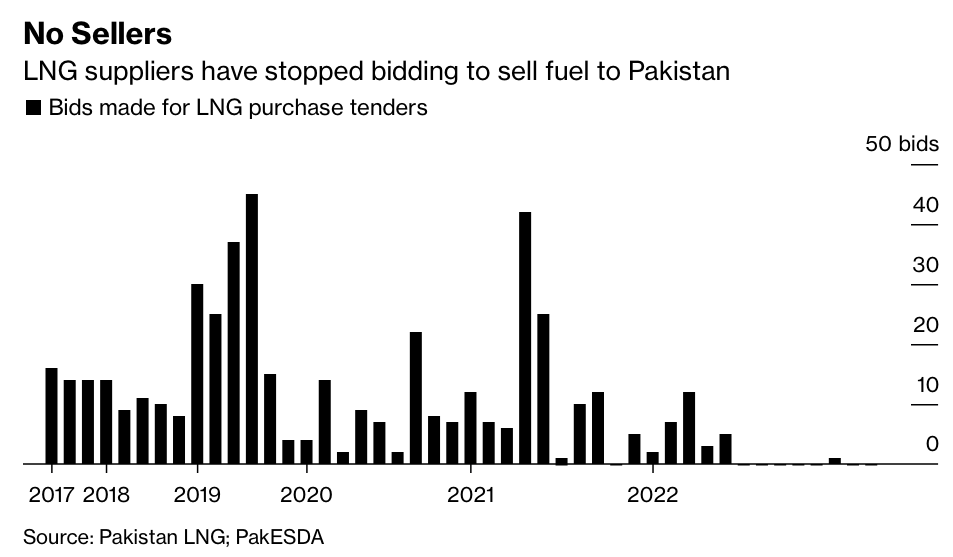
Rich nations have for years demanded that India and Pakistan not burn coal. But now, Europe is bidding up the global price of liquified natural gas (LNG), leaving Pakistan forced to ration limited natural gas supplies this winter because Europeans — the same ones demanding Pakistan not burn coal — have bid up the price of natural gas, making it unaffordable.
At last year’s climate talks, 20 nations promised to stop all funding for fossil fuel projects abroad. Germany paid South Africa $800 million to promise not to burn coal. Since then, Germany’s imports of coal have increased eight-fold. As for India, it will need to build 10 to 20 full-sized (28 gigawatts) coal-fired power plants over the next eight years to meet a doubling of electricity demand.
This is climate imperialism. Rich nations are only agreeing to help poor nations so long as they use energy sources that cannot lift themselves out of poverty.
Consider the case of Norway, Europe’s second-largest gas supplier after Russia. Last year it agreed to increase natural gas exports by 2 billion cubic meters, in order to alleviate energy shortages. At the same time, Norway is working to prevent the world’s poorest nations from producing their own natural gas by lobbying the World Bank to end its financing of natural gas projects in Africa.
The IMF wants to hold hostage $50 billion as part of a “Resilience and Sustainability Trust” that will demand nations give up fossil fuels and thus their chance at developing. Such efforts are working. On Thursday, South Africa received $600 million in “climate loans” from French and German development banks that can only be used for renewables. The Europeans hope to shift the $7.6 billion currently being invested by South Africa in electricity infrastructure away from coal and into renewables.
Celebrities and global leaders say they care about the poor. In 2019, the Duchess of Sussex, Meghan Markle, Prince Harry’s wife, told a group of African women, “I am here with you, and I am here FOR you … as a woman of color.” Why, then, are they demanding climate action on their backs?
Comments Off on Climate imperialism
The Final Bloody Chapter of Operation Reinhard – War Against Humanity 085
World War Two
Published 9 Nov 2022The genocide of the Jews of Eastern Europe concludes with Operation Harvest Festival — Aktion Erntefest when 42,000 are murdered in the Lublin district.
(more…)
Comments Off on The Final Bloody Chapter of Operation Reinhard – War Against Humanity 085
November 9, 2022
The Big Mac’s “peacekeeping magic” is gone
In The Critic, Christopher McCallion illustrates the irrational optimism that countries having McDonald’s restaurants wouldn’t go to war with one another:

“Toledo, McDonald’s, 1967” by DBduo Photography is licensed under CC BY-SA 2.0 

 .
.
In 1910, Norman Angell wrote his famous book The Great Illusion, which argued that it would be irrational for the European great powers to go to war with one another when their prosperity was so interconnected by mutual trade and investment. The subsequent outbreak of WWI confirmed for many observers that competition for relative power and security trumped the pacific pursuit of reciprocal gains in wealth.
Following the Cold War, however, the sheer scope and intensity of globalization convinced many that a new era of capitalist peace had arrived. Thomas Friedman famously proposed a “Golden Arches Theory of Conflict Prevention”, which claimed that no two countries with a McDonalds had ever gone to war. There were many propitious augurs for a new era of peace: the lines stretched for blocks when McDonalds first opened in Moscow, and even still-nominally Communist China proclaimed, “to get rich is glorious.”
Simply put, the “capitalist peace theory” says that mutual gains from trade reduce incentives for conflict between economically engaged states, making the prosperity of each dependent on the other and producing high opportunity costs for war.
Realists have long countered this theory by claiming that states prioritize relative gains over absolute gains. State X and State Y may both be made wealthier in absolute terms by trading with one another, but if Y’s wealth grows at a faster pace than X, X may fear that Y’s rapidly growing wealth could be translated into a surplus of military power putting X’s security at risk. Realists contend that states will ultimately prioritize security over all other goals for the simple reason that without security, no other goals can be assured, including the pursuit of prosperity. Realists tend to reverse the logic of interdependence, claiming that low barriers to the cross-border flow of goods and capital are effects, rather than causes, of peace.
It appears that the realists are being proven right. On the eve of the unveiling of the Nordstream-2 pipeline between Russia and Europe, Moscow decided to invade Ukraine, which (literally) blew up the multi-billion-dollar project and all its future returns. Even McDonald’s, the golden harbinger of perpetual peace, shuttered its operations in Russia.
An even more important example is provided in East Asia. The US and China, the two largest economies in the world, are engaged in a rapidly escalating economic, technological, and military rivalry. Not only did the US initiate a trade war against China, it has also launched an increasingly severe series of export restrictions on advanced technology to China, clearly designed to halt China’s economic growth and limit its growing military power. America’s attempts to cut China off at the knees are reminiscent of the measures taken early in the Cold War to contain the Soviet Union and isolate it from the other industrial centers of the world.
Comments Off on The Big Mac’s “peacekeeping magic” is gone
QotD: Was Temujin (aka Genghis Khan/Chinggis Khan) a “great man”?
Take, for instance, Chinggis Khan (born Temujin; I am going to use Temujin here to mean the man himself and Chinggis Khan to mean his impact as a ruler once the Mongols were fully united). The conditions for Chinggis Khan were not new in 1158; the basic technological factors with made the Steppe way of war possible had existed in the Eurasian Steppe for at least two thousand years by the time Temujin was born. Political fragmentation was also an important factor, but this was hardly the first time that nearby China had been politically fragmented (at the very least the periods 771-221BC, 220-280AD, 304-589 and 907 through to Temujin’s birth in 1158 all qualify) and the steppe had effectively always been politically fragmented. Our evidence for life on the steppe is limited (we’ll come back to this in a second) but by all appearances the key social institutions Temujin either relied on or dismantled were all centuries old at least at his birth.
What had been missing for all that time was Temujin. To buy into the strongest form of “cliodynamics” is to assume that the Steppe always would have produced a Temujin (in part because his impact is so massive that a “general law” of history which cannot predict an event of such titanic import is not actually a functional “general law”). And to be fair, it had produced nearly Temujins before: Attila, Seljuk, etc. But “nearly” here isn’t good enough because so many of the impacts of Chinggis Khan depend on the completeness of his conquests, on a single state interested in trade controlling the entire Eurasian Steppe without meaningful exception. The difference between Temujin and almost-Temujin (which is just basically “Jamukha”) is history-shatteringly tremendous, given that both gunpowder and the Black Death seem to have moved west on the roads that Chinggis opened and the subsequent closure of those routes after his empire fragmented seem to have been a major impetus towards European seaborne expansion.
Moreover, it is not at all clear that, absent Temujin in that particular moment – keeping in mind that Temujin hadn’t appeared in any other moment – that there would have inevitably risen a different Temujin sometime later. After all, for two millennia the steppe had not produced a Temujin and by 1158, the technological window for it to do so was already beginning to close as humans in the agrarian parts of the world (read: China) had already begun harnessing chemical energy in ways that would eventually come to rob the nomad of much of his strength. If Temujin dies as a boy – as he very well might have! – it is not at all clear he’d be replaced before that window closed; his most obvious near peer was Jamukha, but here personalities matter: Jamukha was committed to the old Mongol social hierarchy (this was part of why he and Temujin fell out) and was so unwilling to do the very things that made Chinggis Khan’s great success possible (obliterating clan distinctions and promoting based on merit rather than family pedigree). Jamukha could have been another Seljuk, but he could not have been another Chinggis Khan and in this case that would make all of the difference.
To get briefly into a bit of historical theory, Chinggis is an individual whose actions in life fundamentally altered many of what the “Annales School” of history would call the structures and mentalités of his (and subsequent) times. The Annales school likes to view history through a long duration lens (longue durée) and focus on big shaping structures like climate, geography, culture and so on. The difference between this and cliodynamics is that Annales thinkers propose to describe rather than predict, so it is not fatal to their method if there are occasional, sudden, unpredictable alterations to those underlying structures – indeed those are the moments which are most interesting. But it is fatal to a cliodynamics perspective, which does aim for prediction since “our prediction is absolutely right unless it is completely wrong” hardly inspires confidence and a “general law” of anything is only a “general law” in that it is generally applicable not merely to the past but also to the future.
In short, Chinggis Khan wasn’t a commodity; he couldn’t be replaced by any other Mongol warrior. And figures like that abound through history (for Roman history, it matters greatly for instance that Marius, Sulla, Pompey, Caesar and Octavian had very different personalities when they found themselves in a position to dominate the Republic with military force). Moreover, the figures like that who we think of, generally capital-g “Great Men”, are hardly the only such individuals like that. They’re only the ones we can see. What of, for instance, the old Argive mother – her name lost to history – who killed Pyrrhus of Epirus, considered the greatest general of his generation, with a lucky throw of a roofing tile, both ending his career but also setting in motion a chain of events where the power vacuum left by Epirus would be filled by Carthage and Rome in a way that would bring those former allies (allied against Pyrrhus, in fact) into a shattering conflict which would then pave the way for Roman dominance in the Mediterranean? History must be full of innumerable such figures whose actions created and closed off courses of events in ways we can never know; how do we know that there wasn’t some would-have-been Temujin on the steppe in 100AD but who was killed in some minor dispute so very minor it leaves literally no evidence behind?
(The fancy way of putting the influence of all of those factors, both the big structural ones and the little, subject-to-chance ones, is to say “history is contingent” – that is, the outcomes are not inevitable but are subject to many forces large and small, many of which the lack of evidence render historically invisible.)
Bret Devereaux, “Fireside Friday: October 15, 2021”, A Collection of Unmitigated Pedantry, 2021-10-15.
Comments Off on QotD: Was Temujin (aka Genghis Khan/Chinggis Khan) a “great man”?
November 6, 2022
Allies Launch New Phase in Pacific War – WW2 – 219 – November 5, 1943
World War Two
Published 5 Nov 2022The Allies hit the beaches of Bougainville, largest and last of the Solomon Islands. They create and expand a beachhead there and also win battles there at sea and in the skies. In the USSSR, the Soviets are closing in on Kiev and in the south have isolated the Crimea, but in spite of that, Adolf Hitler issues a new directive that Germany’s focus for the future should be in the west and the threat of an Allied invasion there.
(more…)
Comments Off on Allies Launch New Phase in Pacific War – WW2 – 219 – November 5, 1943
October 31, 2022
Executed for Telling a Joke – October 30, 1943 – WAH 084
World War Two
Published 30 Oct 2022From a conference in Moscow the United Nations Alliance issues a warning to Nazi Germany about their atrocities, while those atrocities continue unabated.
(more…)
Comments Off on Executed for Telling a Joke – October 30, 1943 – WAH 084
October 30, 2022
Fresh German Armor in the USSR! – WW2 – 218 – October 29, 1943
World War Two
Published 29 Oct 2022Erich von Manstein finally gets the reserve armor he’s been begging Hitler for, so he can carry out his counteroffensive in Ukraine. The Soviets are still on the move themselves though. In Italy, though, the Allies are moving at a crawl since the Germans have mined and booby trapped everything. There’s also new action in the Solomons and a celebration in Japan.
(more…)
Comments Off on Fresh German Armor in the USSR! – WW2 – 218 – October 29, 1943
October 25, 2022
A Multi-Trillion Dollar Pipe Dream
PragerU
Published 16 Jun 2022Are we heading toward an all-renewable energy future, spearheaded by wind and solar? Or are those energy sources wholly inadequate for the task? Mark Mills, Senior Fellow at the Manhattan Institute and author of The Cloud Revolution, compares the energy dream to the energy reality.
(more…)
Comments Off on A Multi-Trillion Dollar Pipe Dream
October 24, 2022
Another bombed city – war still not ended – October 23, 1943 – WAH 083
World War Two
Published 23 Oct 2022Trainload after trainload arrives at the slave and murder factories in Auschwitz, and a Fürstin is created in Kassel, while the United Nations War Crimes Committee UNWCC is formed.
(more…)
Comments Off on Another bombed city – war still not ended – October 23, 1943 – WAH 083


