The Japanese make gains in Malaya, Burma, Hong Kong, Borneo, and the Philippines. The Allies also have trouble in the Atlantic and the Mediterranean, where they are beginning to seriously suffer from a lack of capital ships. The Soviet Red Army is advancing, though, and Stalin takes personal control of planning for the upcoming counteroffensive, while Adolf Hitler takes personal control of the German Army.
Written and Hosted by: Indy Neidell
Director: Astrid Deinhard
Producers: Astrid Deinhard and Spartacus Olsson
Executive Producers: Astrid Deinhard, Indy Neidell, Spartacus Olsson, Bodo Rittenauer
Creative Producer: Maria Kyhle
Post-Production Director: Wieke Kapteijns
Research by: Indy Neidell
Edited by: Miki Cackowski
Sound design: Marek Kamiński
Map animations: Eastory (https://www.youtube.com/c/eastory)
Sources:
Bundesarchiv
IWM MH 26392, WPN 298, K 2204, FL 20432, A 12126, A 9257, FL 1203, E 3469E
Mil.ru
Narodowe Archiwum Cyfrowe
Picture of Mark Young, courtesy of National Portrait Gallery
Soundtracks from the Epidemic Sound:
Phoenix Tail – “At the Front”
Reynard Seidel – “Deflection”
Skrya – “First Responders”
Hakan Eriksson – “Epic Adventure Theme 4”
Philip Ayers – “The Unexplored”
Max Anson – “Ancient Saga”
Rannar Sillard – “March Of The Brave 9”
Johannes Bornlof – “Death And Glory 2”
Johan Hynynen – “Dark Beginning”
Fabien Tell – “Last Point of Safe Return”
At the end of July 1943, Hamburg burned. A fleet of British heavy bombers had dropped thousands of incendiaries over the city, turning it into a hearth of unprecedented dimensions. Numerous major fires merged together into a single storm of fire. Structures combusted under the immense heat, as strong winds drove the inferno through the streets at rapid speed. Craving for more oxygen, the firestorm sucked human bodies into the flames and immediately incinerated or mummified them. Thousands of others died slowly of carbon monoxide poisoning in their shelters. By the end of the raid, 60% of Hamburg had been burned out and more than 35,000 of its inhabitants were dead. But while the Germans were shocked to disbelief, for the British the firestorm has worked as intended. And this was just the beginning.
Hosted by: Indy Neidell
Written by: Markus Linke and Indy Neidell
Directed by: Astrid Deinhard and Wieke Kapteijns
Produced by: Pär Sundström, Astrid Deinhard and Spartacus Olsson
Creative Producer: Maria Kyhle
Executive Producers: Pär Sundström, Joakim Brodén, Tomas Sunmo, Indy Neidell, Astrid Deinhard, and Spartacus Olsson
Community Manager: Maria Kyhle
Post-Production Director: Wieke Kapteijns
Editor: Karolina Dołęga
Sound Editor: Marek Kamiński
Maps by: Eastory – https://www.youtube.com/c/eastory
Archive: Reuters/Screenocean – https://www.screenocean.com
Sources:
Imperial War Museums: C3677,HU 63075, HU 63089, MH 27517, CL3400, MH 24747,CL3395, MH 24764, CH 6386, CH 6386, CH 6275, CH 15879, C 3371, CH 18371, C 3918, C2367, HU44269, C 4748, PST 14359, C 4973,
Bundesarchiv
National Archives NARA
Icons from the Noun Project: Arrow by 4B Icons, Bomb by P Thanga Vignesh, fire building by dDara, Skull by Muhamad Ulum
All music by: Sabaton
An OnLion Entertainment GmbH and Raging Beaver Publishing AB co-Production.
The Japanese launch attacks all over Southeast Asia and the Pacific, and launch a preemptive surprise attack on the American Pacific Fleet at Pearl Harbor. The war is suddenly much larger. In the USSR, the Germans find themselves now heavily on the defensive after the failure to take Moscow, while in North Africa, Erwin Rommel decides he must withdraw out of Cyrenaica to await reinforcements.
Written and Hosted by: Indy Neidell
Director: Astrid Deinhard
Producers: Astrid Deinhard and Spartacus Olsson
Executive Producers: Astrid Deinhard, Indy Neidell, Spartacus Olsson, Bodo Rittenauer
Creative Producer: Maria Kyhle
Post-Production Director: Wieke Kapteijns
Research by: Indy Neidell
Edited by: Miki Cackowski
Sound design: Marek Kamiński
Map animations: Eastory (https://www.youtube.com/c/eastory)
Sources:
IWM HU 56120, K 1385, HU 675, TR153, HU 81216, WPN 298
NARA
Bundesarchiv
Narodowe Archiwum Cyfrowe
Picture of a victim of starvation during the siege of Leningrad, courtesy of George Shuklin
Picture of Alfred Godwin-Austen, courtesy of Berserker276 https://commons.wikimedia.org/wiki/Fi…
Picture of Harold Cole, courtesy of Cumbria County Archives
Soundtracks from the Epidemic Sound:
Phoenix Tail – “At the Front”
Johannes Bornlof – “Deviation In Time”
Johan Hynynen – “Dark Beginning”
Rannar Sillard – “March Of The Brave 4”
Jo Wandrini – “To War!”
Reynard Seidel – “Deflection”
Wendel Scherer – “Defeated”
Johannes Bornlof – “Death And Glory 3”
Johannes Bornlof – “The Inspector 4”
Hakan Eriksson – “Epic Adventure Theme 3”
Skrya – “First Responders”
Bonnie Grace – “Imperious”
A TimeGhost chronological documentary produced by OnLion Entertainment GmbH.
From the comments:
World War Two
2 days ago (edited)
Five days ago, we covered the Japanese attacks on Pearl Harbor minute by minute in real time over five hours. If you missed that, then check out episode one right here, you’ll love it: https://www.youtube.com/watch?v=Joh2BXPsrXs&t=4s
NOTE: An error snuck through our controls regarding the Japanese casualties at Wake, we are working with YouTube to have it fixed before the video goes public. We apologize for this inconvenience.
Japan attacked a whole variety of places that day, launching massive offensives all over SE Asia and the Pacific. I’ll be covering them here weekly, of course, but for even more coverage, check out our day by day Instagram coverage of the war: https://www.instagram.com/ww2_day_by_day
Comments Off on Hitler Declares War on the USA and the Jews – WW2 – 120 – December 12, 1941
December 1941 marks the shift to a new chapter in the War Against Humanity. New fronts open up, exposing millions more to the horrors of war. Other developments continue their path of continuous escalation.
Sources:
– Yad Vashem: 76CO9, 3150-122, J3065-2, 85DO1, 1427 83, 1007_31,
– Narodowe Archiwum Cyfrowe
– National Archive NARA
– Library of Congress
– Bundesarchiv
– Berlin Gestapo Museum
– United States Holocaust Museum
Soundtracks from epidemic sounds:
– “Guilty Shadows 4” – Andreas Jamsheree
– “For the Many STEMS INSTRUMENTS” – Jon Bjork
– “Remembrance” – Fabien Tell
– “Not Safe Yet” – Gunnar Johnsen
– “London” – Howard Harper-Barnes
– “Moving to Disturbia” – Experia
A TimeGhost chronological documentary produced by OnLion Entertainment GmbH.
From the comments:
World War Two
3 hours ago
Before we get comments about the countries currently participating in World War Two: in December 1941 there are more countries that are still neutral than we list here, but that won’t last, or as Sparty said these are the ones that will REMAIN neutral. They are without a doubt not at war, not occupied, and not in a state of war. All the other ones are – more or less. Mongolia? Has been in a de-facto state of war with Japan since the Manchurian incident. Ethiopia and Iraq? Both occupied, or at least on the lines of contested territory. The South and North American states? They will mostly enter the war later – but we’d argue that already now the Panama declaration ties them to each other to an extent that the fate of the “neutrals” has been complicated by the countries joining the war in December ’41. Now that you know our reasoning behind this, we encourage you to offer any alternative or additional thoughts on this in the comments.
Comments Off on Pearl Harbor and the Global War Against Humanity – WAH 024 – December 1941, Part 1
Powered by World of Warships – https://wo.ws/PearlHarbor – Register now to receive an exclusive bonus!
In this episode: Japan’s meticulous planning and preparation made it possible to surprise the Americans at Pearl Harbor. Alert on Oahu is largely nonexistent. It is the deep breath before the plunge.
Hosted by: Indy Neidell
Written by: Spartacus Olsson and Indy Neidell
Directed by: Wieke Kapteijns
Executive Producers: Astrid Deinhard, Indy Neidell, Spartacus Olsson, Bodo Rittenauer
Produced by: Astrid Deinhard and Spartacus Olsson
Co-Producers: Maria Kyhle and Francis van Berkel
Edited by: Iryna Dulka
Set Design by: Astrid Deinhard
Graphic Design by: Mikolaj Uchman
Map Animations by: Daniel Haczyk and Eastory
Assistant Editors: Miki Cackowski, Daniel Weiss, Karolina Dołega
Still Colorizers: Adrien Fillon, Norman Stewart, Jaris Almazani, Daniel Weiss, Mikolaj Uchman, Carlos Ortega Pereira
Research by: Indy Neidell, Spartacus Olsson, Markus Linke, Wieke Kapteijns, Bastian Gaete, Lewis Braithwaite, Tim Smith, Ian Irungu
Sound Design by: Marek Kamiński
Dogfights by: Daniel Weiss, Bastian Gaete, Ian Sowden, Dennis Stepanov
Voices:
Mitsuo Fuchida – Daniel Grieb
Ada Peggy Olsson – Shani Neidell Beard
Iyōzō Fujita – Emi Celis
James Anderson – Emi Celis
Dorinda Stagner – Zora Johnson
Jack Kelley – Ryan Socash
James McClelland – Spartacus Olsson
Phil Rasmussen – Spartacus Olsson
Dan Wentrcek – Dennis Stepanov
Thompson Izawa – Samir Mechel
Robert Isacksen – Ian Sowden
Joseph K. Taussig Jr. – Tim Smith
James Cory – Ryan Tebo
Film colorization by: Ricks Film Restoration
Naval Gameplay by: World of Warships
Archive material provided by: Reuters/Screenocean
A TimeGhost chronological documentary produced by OnLion Entertainment GmbH.
From the comments:
World War Two
1 hour ago (edited)
When we set out to do this crazy project we thought we wanted to try some really new things. As anyone knows that follows us regularly, our first and foremost goal is remembrance — to shine a light on our past and learn form our ancestors’ mistakes and achievements. We try our best to do that with a dedication to facts and details liberated from partisan, or ideological historiography. For this purpose, the attack on Pearl Harbor serves very well. It is a compact event over only a few hours that is spectacular in its nature, tragic in its effect, gripping in its drama, and has tremendous impact on WW2 on all fronts. It is also an event that is often simplified to the point of misunderstanding, has been woven into national mythology, and given rise to some pretty nutty conspiracy myths. Simply put: the Attack on Pearl Harbor is short enough, exciting enough, and misunderstood enough for us to do a limited series like this.
But more than that we also wanted to try some new technical and narrative things. Since we started doing historical documentaries with the Great War in 2014 we have tried to be on the forefront of pioneering new ways of creating historiography for the modern media world. Narratively, we have dedicated ourselves to chronologies, which in historiography is nothing new, but it is new in the world of film documentaries (at least to the level we do it) — so we thought; “heck what if we go down to minute by minute for this” — well we did and it taught us an enormous amount about Pearl Harbor, but also about how we can write. We will get back to that in further comment on the series. As for technology, it truly is technology that enables our work, well any media — for us it is social media, affordable ways to capture film, global virtual remote working spaces, digital research opportunities, digital film archives, and so on.
Two areas we had not been able to venture into was recreation of scenes using computer graphics and colorization of moving images. Using a gaming engine to create animation is also nothing new, but usually very, very expensive because you have to first create the world, the assets and the characters for your recreation. But for Pearl Harbor, World of Warships https://worldofwarships.com and World of Warplaneshttps://worldofwarplanes.com opened an opportunity to do this on a new scale at a cost that is only a fraction of what it usually costs. Along the way we also got to know Ricks Film Restorations (https://bit.ly/ricksfilmresorations and https://www.youtube.com/user/Rick88888888) who use AI technology to enhance and colorize film footage. While both of these technologies are only at the beginning of their potential, we think the results are spectacular. More than anything it has enabled us to enhance the emotional and visual experience for this series to a level we never reached before. Last but not least it enabled us to use the financial contributions of the TimeGhost Army, and World of Warships to create five hours of content for less than 1/50th — only 2% — of what it would cost to do with traditional means.
creatingstuff
In the Name of the entire TimeGhost Team,
Astrid, Indy, Spartacus, and Wieke
Episode Guide:
This is a 10 episode limited series within our weekly coverage of WW2 — to see the immediate events leading up to this day watch episode 119 from December 5, https://youtu.be/DYUzmBuX-6Y. Some of the events covered briefly as they start on this day, such as the invasions in the West Pacific will be covered in more detail in the coming weeks, especially in episode 120K (the 11th episode this week).coming out on December 12.
The History Guy: History Deserves to Be Remembered
Published 22 Apr 2019
USS Pennsylvania was in dry dock when the attack came at Pearl Harbor. The History Guy remembers part of her history that may have been forgotten.
This episode was originally posted December 7, 2017. It has been updated to correct some errors in the original, and new footage of USS Pennsylvania has been added.
This is original content based on research by The History Guy. Images in the Public Domain are carefully selected and provide illustration. As images of actual events are sometimes not available, images of similar objects and events are used for illustration.
All events are portrayed in historical context and for educational purposes. No images or content are primarily intended to shock and disgust. Those who do not learn from history are doomed to repeat it. Non censuram.
The History Guy: History Deserves to Be Remembered is the place to find short snippets of forgotten history from five to fifteen minutes long. If you like history too, this is the channel for you.
The Wehrmacht is halted by the Red Army at the gates of Moscow. Not only that, but a Red Army counteroffensive begins pushing the Germans back decisively. The Germans are also beginning to withdraw from their siege of Tobruk in North Africa. Japan, however, is advancing all over the Pacific, sending troop transports into the South China Sea, though it is unclear just whom Japan plans to attack. The Japanese are also — in top secrecy — sending a force of aircraft carriers to soon attack the American Pacific fleet at anchor at Pearl Harbor.
Written and Hosted by: Indy Neidell
Director: Astrid Deinhard
Producers: Astrid Deinhard and Spartacus Olsson
Executive Producers: Astrid Deinhard, Indy Neidell, Spartacus Olsson, Bodo Rittenauer
Creative Producer: Maria Kyhle
Post-Production Director: Wieke Kapteijns
Research by: Indy Neidell
Edited by: Miki Cackowski
Sound design: Marek Kamiński
Map animations: Eastory (https://www.youtube.com/c/eastory)
Sources:
RIA Novosti #2410
Bundesarchiv
IWM A 10499, A 6784, CH 11140
Visuotinė-lietuvių-enciklopedija
Yad Vashem 5705/34
from the Noun Project: low temperature by The Icon Z, Skull by Muhamad Ulum
Soundtracks from the Epidemic Sound:
Johan Hynynen – “Dark Beginning”
Johannes Bornlof – “Death And Glory 3”
Reynard Seidel – “Deflection”
Johannes Bornlof – “Deviation In Time”
Hakan Eriksson – “Epic Adventure Theme 4”
Johannes Bornlof – “The Inspector 4”
Rannar Sillard – “March Of The Brave 4”
Fabien Tell – “Last Point of Safe Return”
Bonnie Grace – “Imperious”
Max Anson – “Maze Heist”
Gunnar Johnsen – “Not Safe Yet”
Jon Bjork – “Force Matrix”
Contrary to popular belief, Imperial Japan was not an absolute monarchy marching (or sailing) to war with singular vision and purpose. Rather, it was a dysfunctional government of competing factions, players and interests.
Written and Hosted by: Indy Neidell
Director: Astrid Deinhard
Producers: Astrid Deinhard and Spartacus Olsson
Executive Producers: Astrid Deinhard, Indy Neidell, Spartacus Olsson, Bodo Rittenauer
Creative Producer: Maria Kyhle
Post-Production Director: Wieke Kapteijns
Research by: Indy Neidell
Edited by: Michał Zbojna
Sound design: Marek Kamiński
Map animations: Eastory (https://www.youtube.com/c/eastory)
Sources:
From the Noun Project: company soldiers by Andrei Yushchenko, Government by Nithinan Tatah, Shiro by Simon Child, War by Nhor, House by Eucalyp from the Noun Project
Soundtracks from the Epidemic Sound:
“ES_Paths of a Samurai” – Mandala Dreams
“ES_Sights of the Tokyo Tower” – Sight of Wonders
“ES_The Bloom of Cherry Blossoms” – Sight of Wonders
“ES_Immovable As The Mountain” – Yi Nantiro
“ES_Pacific Shores” – Mandala Dreams
The German advance has pushed within artillery range of Moscow, but can they reach it — and take it — before the Red Army and the murderously cold weather halt them? Meanwhile in North Africa, both Erwin Rommel and Claude Auchinleck make daring and brilliant moves that save the fight for their sides. A mighty Japanese fleet is now secretly heading for Hawaii to make a surprise attack on American territory while the US worries where in Southeast Asia the Japanese are planning to attack.
Written and Hosted by: Indy Neidell
Director: Astrid Deinhard
Producers: Astrid Deinhard and Spartacus Olsson
Executive Producers: Astrid Deinhard, Indy Neidell, Spartacus Olsson, Bodo Rittenauer
Creative Producer: Maria Kyhle
Post-Production Director: Wieke Kapteijns
Research by: Indy Neidell
Edited by: Miki Cackowski
Sound design: Marek Kamiński
Map animations: Eastory (https://www.youtube.com/c/eastory)
Sources:
Bundesarchiv
IWM E 6661, WPN 298, E 446
Bletchley Park Trust
Mil.ru
RIA Novosti #303890, #2551
Yad Vashem 4562/3
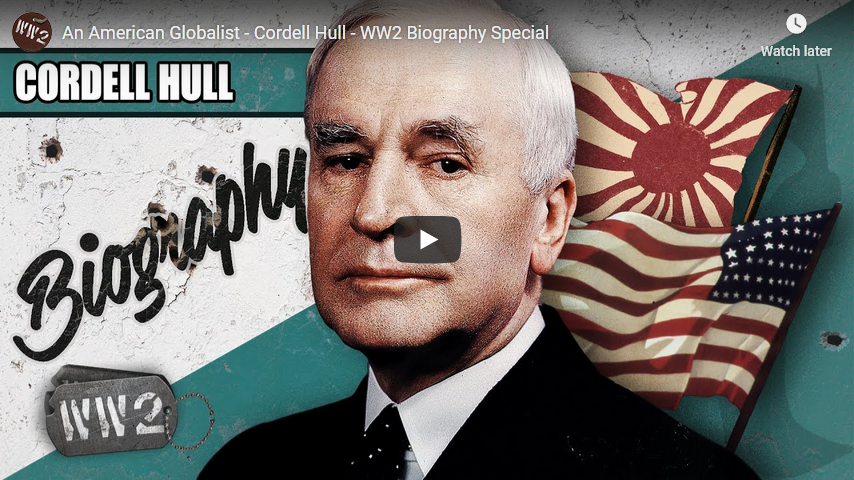
Picture of Cordell Hull, courtesy of National Portrait Gallery
Soundtracks from the Epidemic Sound:
Rannar Sillard – “March Of The Brave 10”
Johan Hynynen – “Dark Beginning”
Hakan Eriksson – “Epic Adventure Theme 3”
Johannes Bornlof – “Death And Glory 2”
Jo Wandrini – “To War!”
Fabien Tell – “Weapon of Choice”
Fabien Tell – “Last Point of Safe Return”
Johannes Bornlof – “The Inspector 4”
Andreas Jamsheree – “Guilty Shadows 4”
Philip Ayers – “Trapped in a Maze”
A TimeGhost chronological documentary produced by OnLion Entertainment GmbH.
From the comments:
World War Two
2 days ago (edited)
– IMPORTANT NOTICE –
Since we’re all busy working on our minute-by-minute coverage of Pearl Harbor, which is edging ever closer, it has been an especially challenging task to follow Operation Crusader in all its complexity. This has resulted in an error on the animated map about which we want to be transparent and honest.
The current map suggests that the 2nd New Zealand Division links up with the Tobruk garrison from the south-east. In reality, it does so from the Via Balba running along the coast, along which it has advanced during the past days. Another thing to note is the position of the Allied 30th Corps, which has withdrawn further south after the Battle of Sidi Rezegh than the map shows. They are positioned near Gabr Saleh as the New Zealanders link up with Tobruk.
We apologize for this inaccuracy and are working to fix this error as soon as possible.
———-
It’s getting closer … 9 days from now is December 7th, and we will cover the Japanese attacks of that day right here in real time for FIVE HOURS. Pearl Harbor minute by minute will be the most exciting documentary series you’ve ever seen. https://youtu.be/5D8c7YvLBUc
Japanse deploys biological weapons in China, leading to un unspecified number of deaths. Meanwhile, European Jews from Germany and their occupied territories are deported to Eastern Europe, where Jews are already being killed by the thousands.
Sources:
Bundesarchiv
Visuotinė-lietuvių-enciklopedija
Yad Vashem 2725/5, 4613/360, 85DO1, 142BO7, 4613/1055, 4147/32, 8747/3, 4360/99, 4613/525, 4572/3, 4572/2, 4572/4
USHMM
Picture of Jezdimir Dangic, courtesy of pogledi.rs
from the Noun Project: Skull by Muhamad Ulum
Soundtracks from the Epidemic Sound:
Farrell Wooten – “Blunt Object”
Yi Nantiro – “A Single Grain Of Rice”
Philip Ayers – “Trapped in a Maze”
Gavin Luke – “Drifting Emotions 3”
Gunnar Johnsen – “Not Safe Yet”
Cobby Costa – “From the Past”
A TimeGhost chronological documentary produced by OnLion Entertainment GmbH.
From the comments:
World War Two
3 hours ago
We often get the question how we cope with researching, editing and hosting a series which is almost exclusively about human suffering. Indeed, for every episode that we make, Miki, Spartacus and I spend hours researching, reading accounts and scrolling through gruesome pictures. It is hard or stressful at times, and of course it impacts us emotionally.
There’s a couple of things that help us get through this. The purpose with which we’re doing this, which is to learn, share and contribute to awareness so that this may never be forgotten definitely adds to our resilience. We have set up a small-scale support system between us, and we try to talk and share our emotions whenever we need to.
We recognise that some of you watching this may deal with similar questions. Talking about it, wether digitally or in person, helps us understand and process. We believe that exploring the motivations and fears of perpetrators and victims also helps to stay in touch with the human dimension behind staggering statistics. We try our best to keep this series down to earth with a close eye on the humane aspect – both in content and our community.
Thank you all for your support and kind comments,
Cheers,
Joram
Comments Off on Japanese Plague Bombs – War Against Humanity 023 – November 1941, Pt. 2
The long planned Allied Offensive in North Africa — Operation Crusader — begins, but the Allies are worrying about how to defend Singapore in case of Japanese aggression. The Germans renew their drive on Moscow, but their number one flying ace perishes, a major PR hit.
Written and Hosted by: Indy Neidell
Director: Astrid Deinhard
Producers: Astrid Deinhard and Spartacus Olsson
Executive Producers: Astrid Deinhard, Indy Neidell, Spartacus Olsson, Bodo Rittenauer
Creative Producer: Maria Kyhle
Post-Production Director: Wieke Kapteijns
Research by: Indy Neidell
Edited by: Miki Cackowski
Sound design: Marek Kamiński
Map animations: Eastory (https://www.youtube.com/c/eastory)
Sources:
Narodowe Archiwum Cyfrowe
Bundesarchiv
Australian War Memorial
Yad Vashem 143BO2
IWM E 6661, K 1261, A 3898, A 10499, FE 487, TR153, E 2384E
Soundtracks from the Epidemic Sound:
Johannes Bornlof – “Death And Glory 2”
Johan Hynynen – “Dark Beginning”
Farrell Wooten – “Blunt Object”
Reynard Seidel – “Deflection”
Johannes Bornlof – “Last Man Standing 3”
Johannes Bornlof – “The Inspector 4”
Philip Ayers – “Under the Dome”
Max Anson – “Ancient Saga”
Johannes Bornlof – “Deviation In Time”
Jon Bjork – “Disposal”
A TimeGhost chronological documentary produced by OnLion Entertainment GmbH.
From the comments:
World War Two
3 days ago
On December 7th we will cover the Japanese attack on Pearl Harbor in real time, minute by minute, as it happens … for five solid hours starting 0610 local Hawaiian time right here on this channel. Don’t miss it!
In the aftermath of World War One, the Japanese military saw the utility of infantry-portable light grenade launchers instead of rifle grenades, and adopted the Type 10 in 1921 (Taisho 10). It went into production in 1923 at the Tokyo Army Arsenal, although the great Tokyo earthquake led to production being moved to Nagoya, where about 11,000 were made between 1925 and 1937. The Type 10 was a remarkably light and handy weapon, weighing just 5.5lb (2.5kg) and disassembling into a transport configuration the size of a wine bottle.
The larger Type 89 grenade launcher was adopted in 1929, which led to the older Type 10s being relegated to use for illumination and signaling, which they did through the end of World War Two.
If you enjoy Forgotten Weapons, check out its sister channel, InRangeTV! http://www.youtube.com/InRangeTVShow
Contact:
Forgotten Weapons
6281 N Oracle #36270
Tucson, AZ 85704
To western eyes, contemporary Japan has a kind of earnest childlike wackiness, all karaoke machines and manga cartoons and nuttily sadistic game shows. But, to us demography bores, it’s a sad place that seems to be turning into a theme park of P.D. James’ great dystopian novel The Children Of Men. Baroness James’ tale is set in Britain in the near future, in a world that is infertile: The last newborn babe emerged from the womb in 1995, and since then nothing. It was an unusual subject for the queen of the police procedural, and, indeed, she is the first baroness to write a book about barrenness. The Hollywood director Alfonso Cuarón took the broad theme and made a rather ordinary little film out of it. But the Japanese seem determined to live up to the book’s every telling detail.
In Lady James’ speculative fiction, pets are doted on as child-substitutes, and churches hold christening ceremonies for cats. In contemporary Japanese reality, Tokyo has some 40 “cat cafés” where lonely solitary citizens can while away an afternoon by renting a feline to touch and pet for a couple of companiable hours.
In Lady James’ speculative fiction, all the unneeded toys are burned, except for the dolls, which childless women seize on as the nearest thing to a baby and wheel through the streets. In contemporary Japanese reality, toy makers, their children’s market dwindling, have instead developed dolls for seniors to be the grandchildren they’ll never have: You can dress them up, and put them in a baby carriage, and the computer chip in the back has several dozen phrases of the kind a real grandchild might use to enable them to engage in rudimentary social pleasantries.
P.D. James’ most audacious fancy is that in a barren land sex itself becomes a bit of a chore. The authorities frantically sponsor state porn emporia promoting ever more recherché forms of erotic activity in an effort to reverse the populace’s flagging sexual desire just in case man’s seed should recover its potency. Alas, to no avail. As Lady James writes, “Women complain increasingly of what they describe as painful orgasms: the spasm achieved but not the pleasure. Pages are devoted to this common phenomenon in the women’s magazines.”
As I said, a bold conceit, at least to those who believe that shorn of all those boring procreation hang-ups we can finally be free to indulge our sexual appetites to the full. But it seems the Japanese have embraced the no-sex-please-we’re-dystopian-Brits plot angle, too. In October, Abigail Haworth of The Observer in London filed a story headlined “Why Have Young People in Japan Stopped Having Sex?” Not all young people but a whopping percentage: A survey by the Japan Family Planning Association reported that over a quarter of men aged 16–24 “were not interested in or despised sexual contact.” For women, it was 45 per cent.
Mark Steyn, The [Un]documented Mark Steyn, 2014.
Comments Off on QotD: The Children of Men becomes disturbingly real in Japan
Don’t miss the special announcement of our new exciting collaboration at the end of this episode!
Register for free at World of Warships here: https://wo.ws/PearlHarbor and receive a special in-game package worth €25, including the ships USS St. Louis, Japanese Cruise Tenryū – and more bonuses.
In this episode:
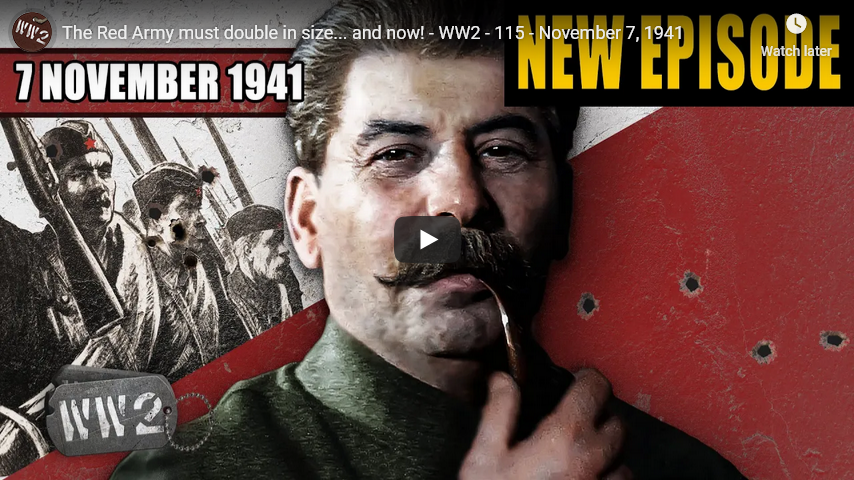
There is a lull now on the Eastern Front, and Adolf Hitler uses the time to plan another drive on Moscow and points beyond, but he’ll be facing a larger Red Army, as reinforcements and recruits hope to nearly double its size in a matter of weeks. The British are counting down the days to their upcoming North African offensive, and the Japanese are sending out orders that will change the world dramatically in a single morning.
Written and Hosted by: Indy Neidell
Director: Astrid Deinhard
Producers: Astrid Deinhard and Spartacus Olsson
Executive Producers: Astrid Deinhard, Indy Neidell, Spartacus Olsson, Bodo Rittenauer
Creative Producer: Maria Kyhle
Post-Production Director: Wieke Kapteijns
Research by: Indy Neidell
Edited by: Miki Cackowski
Sound design: Marek Kamiński
Map animations: Eastory (https://www.youtube.com/c/eastory)
Sources:
Bundesarchiv
Arkiv i Nordland
Narodowe Archiwum Cyfrowe
IWM C 4748, E 6661, WPN 298, E 6724, MH 9292, E 3469E, E 7008, E 759C
Picture of Alfred Godwin-Austin, courtesy of Berserker276 https://commons.wikimedia.org/wiki/Fi…
from the Noun Project: company soldiers by Andrei Yushchenko, Bell by wahyakup
Soundtracks from the Epidemic Sound:
Reynard Seidel – “Deflection”
Johannes Bornlof – “Deviation In Time”
Rannar Sillard – “March Of The Brave 4”
Bonnie Grace – “The Dominion”
Johan Hynynen – “Dark Beginning”
Johannes Bornlof – “The Inspector 4”
Fabien Tell – “Last Point of Safe Return”
Hakan Eriksson – “Epic Adventure Theme 3”
A TimeGhost chronological documentary produced by OnLion Entertainment GmbH.
From the comments:
merdiolu81
22 hours ago (edited)
Meanwhile, on 30 October, Stalin had raised a casual question. “How are we going to do the military parade?” That was the great, traditional 7 November Red Square parade, the celebration of the 1917 “October” Revolution, which had taken place on 24-5 October, Old Style — 6-7 November, New Style. General Pavel Artem’ev, who had been commander of the Moscow Military District and had taken command of the Moscow defence zone as the critical phase began, on 12 October, said it could not happen. Yes, it would, said Stalin. If there was a German air raid, the dead and wounded should be removed quickly, he added. It would happen. The risk was considerable. The potential political response was devastatingly positive, and worth the risk. The “Boss” had his faults (aside being a brutal tyrant) , but this was the decision of a leader. The parade would take place, and the troops, guns and armoured vehicles would then proceed straight to the front. It was a stroke of genius. The military effect would be compounded by the media and political effect. As always, everything was kept secret until the last moment. The officers involved did not receive their final briefing until 02.00. Stalin liked surprises, as most dictators do.
On 7 November, at 08.00 hours, just after dawn, under a steely, overcast Russian sky, with rimy air on the brink of freezing and snow beginning to fall, the troops marched south-east down the “square”, towards St Basil’s Cathedral and the Moskva river, beyond. Red Square, which owes its name to the old Slavic word for “beautiful”, and not to communism at all, is not really a square, either. It is a wide cobbled boulevard, running past the north-east wall of the red-brick, triangular Renaissance fortress. St Basil’s Cathedral is the onion-domed fantasy built for Ivan the Terrible. He was so delighted with it that he had the architect’s eyes put out, so that he could not build for anybody else anything so whimsically fantastic and beautiful. Stalin admired Ivan. The Germans were coming from the north-north-west, so, once the troops, guns and armoured vehicles had passed Lenin’s Mausoleum and reached St Basil’s, they would turn smartly about and head in the opposite direction, up Gor’kiy Street, and then north-west, to face the Germans.
The stars of the show were the new T-34 and KV tanks. But one of the heavy KV tanks screeched to a halt and then turned the wrong way. Another followed. The tanks were all armed, ready for battle, and if anybody wanted to take out the Politburo standing on Lenin’s Mausoleum, that would have been an ideal opportunity. Given the paranoia which prevailed in Moscow at the time, overreaction might have been the order of the day. Artem’ev demanded to know what had happened. The first tank, it turned out, had suffered a mechanical problem, and its commander did not want to cause any embarrassment on the big parade, so he got out of the way. Following the standard operating procedures the newly trained crews had been taught, the second tank went to its aid. This was starting to look like a professional army. The boss classes gathered on the Mausoleum found it amusing, and no one was reprimanded. The big parade was an iconic image of the war, and a stroke of public-relations genius. And, that night, earlier than usual, the Russian winter snow really began to fall.
Absolute War, Soviet Russia in the Second World War – Chris Bellamy
Comments Off on The Red Army must double in size… and now! – WW2 – 115 – November 7, 1941
Hosted by: Indy Neidell
Written by: Francis van Berkel and James Newman
Director: Astrid Deinhard
Producers: Astrid Deinhard and Spartacus Olsson
Executive Producers: Astrid Deinhard, Indy Neidell, Spartacus Olsson, Bodo Rittenauer
Creative Producer: Maria Kyhle
Post-Production Director: Wieke Kapteijns
Research by: James Newman
Edited by: Miki Cackowski
Sound design: Marek Kamiński
Map animations: Eastory (https://www.youtube.com/c/eastory)
Sources:
Naval History & Heritage Command http://maps.bpl.org
FDR Presidential Library & Museum
Picture of MS St. Louis in Hamburg, United States Holocaust Memorial Museum, courtesy of Herbert and Vera Karliner
from the Noun Project: Skull by Muhamad Ulum, Handshake by priyanka, Pickaxe by Luke Anthony Firth, oil barrel by BomSymbols
Soundtracks from the Epidemic Sound:
Howard Harper-Barnes – “London”
Johannes Bornlof – “The Inspector 4”
Farell Wooten – “Blunt Object”
Philip Ayers – “Trapped in a Maze”
Johannes Bornlof – “Deviation In Time”