
HardThrasher
Published 29 Nov 202402:00 – Here We Go Again
06:36 – Perfect Planning
13:16 – Death of a Prophet
14:51 – The Fly In
18:56 – Dazed and Confused (in the Monsoon)
20:40 – Can’t Fly in This
31:54 – Survivor’s ClubPlease consider donations of any size to the Burma Star Memorial Fund who aim to ensure remembrance of those who fought with, in and against 14th Army 1941–1945 — https://burmastarmemorial.org/
(more…)
November 30, 2024
Forgotten War Ep 5 – Chindits 2 – The Empire Strikes
Comments Off on Forgotten War Ep 5 – Chindits 2 – The Empire Strikes
November 25, 2024
QotD: Le Corbusier
If you don’t know much about Le Corbusier, for instance, Scott’s book [Seeing Like A State] will reveal to you that he was as banally evil in his way as Adolf Eichmann, and for the same reason: to him, humans were just cells on spreadsheets. They need so many square feet in which to sleep, shit, and eat, and so the only principle of architecture should be, what’s the most efficient way to get them their bare minimums? “Machines for living”, he called his apartment buildings, and may God have mercy on his shriveled little soul, he meant it. Image search “Chandigarh, India” to see where this leads — an entire city designed for machinelike “living”, totally devoid of anything human.
But most bureaucrats aren’t evil, just ignorant … and as Scott shows, this ignorance isn’t really their fault. They don’t know what they don’t know, because they can’t know. Very few bureaucratic cock-ups are as blatant as Chandigarh, where all anyone has to do is look at pictures for five minutes to conclude “you couldn’t pay me enough to move there”.
Severian, “The Finger is Not the Moon”, Rotten Chestnuts, 2021-09-14.
Comments Off on QotD: Le Corbusier
November 7, 2024
Forgotten War Ep4 – Rise of the Chindits
HardThrasher
Published 4 Nov 2024Please consider donations of any size to the Burma Star Memorial Fund who aim to ensure remembrance of those who fought with, in and against 14th Army 1941–1945 — https://burmastarmemorial.org/
(more…)
Comments Off on Forgotten War Ep4 – Rise of the Chindits
November 4, 2024
Ujjal Dosanjh blames Justin Trudeau for the rise of Sikh extremism in Canada
The Liberal Party normally manages to avoid having any internal differences come to public attention, so having a former Liberal cabinet minister come out and directly criticize Prime Minister Justin Trudeau is rather noteworthy:
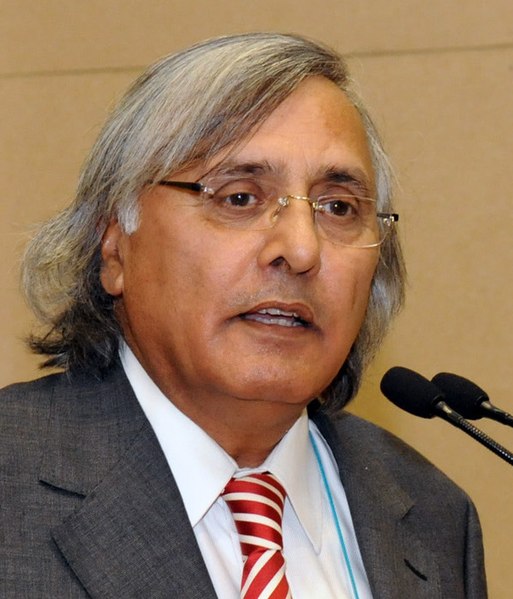
Ujjal Dosanjh speaking at the 12th Pravasi Bharatiya Divas – Engaging Diaspora Connecting Across Generation, in New Delhi on January 08, 2014.
Photo by the Ministry of Overseas Indian Affairs (GODL-India) via Wikimedia Commons.
“A silent majority of the Sikhs do not want to have anything to do with Khalistan. They just don’t speak out because they’re afraid of violence and violent repercussions,” reports Ujjal Dosanjh, as a Sikh living in Vancouver, B.C.
The call for a separate Sikh homeland in Punjab, India — to be called Khalistan — has been brewing since the 1930s, when British rule in India was nearing its end. Although the movement now has marginal support in India, it has taken wings in Canada and escalated into the present derailing of relations between two friendly Commonwealth democracies, India and Canada.
Unlike many of his Sikh peers in Canada, Ujjal — a former NDP premier of British Columbia and a former federal cabinet minister under Liberal prime minister Paul Martin — isn’t afraid to speak out. He’s been extremely vocal, especially since 1985; that’s when the bombing of Air India Flight 182 by Khalistani extremists, killing 329 people, brought the separatist movement to Canada.
Ujjal, now 78, has faced death threats from extremists but remains unwavering in his determination to convince fellow Canadians that the overwhelming majority of the nearly 800,000 Sikhs in Canada do not support the Khalistani movement. “I’d say less than five per cent, less than five per cent,” he emphasizes.
[…]
While accountability for this violence is an imperative, the purpose of my conversation with Uijal is not to sift through the evidence and intelligence. What I want to understand is how we got to this place where Canada’s Sikh population, the largest Sikh diaspora in the world, has in effect been co-opted by the Khalistanis to the point where this obscure separatist movement has become a Canadian problem.
Without hesitation, Ujjal points to Prime Minister Justin Trudeau.
For two reasons, Ujjal blames Trudeau: “One, he’s never really understood the vast majority of Sikhs are quite secular in their outlook, despite the fact that they go to the temple,” he says. And the second reason: “Khalistanis are not a majority, and the fact nobody speaks against them is out of fear”. Through intimidation, Ujjal elaborates, Khalistani supporters control many of the temples in Canada. And it’s Trudeau’s fault, he asserts, “that Canadians now equate Khalistanis with Sikhs, as if we are all Khalistanis if we’re Sikhs”.
Comments Off on Ujjal Dosanjh blames Justin Trudeau for the rise of Sikh extremism in Canada
October 18, 2024
Belton Repeating Flintlock: A Semiautomatic Rifle in 1785
Forgotten Weapons
Published Jul 1, 2024In 1785, Joseph Belton (an American inventor) and William Jover (an English gunmaker) sold 560 repeating flintlock rifles to the British East India Company. The guns were a very remarkable design which used a detachable magazine tube of 7 rounds stacked in series with a seven sequential touch holes. When the first round was fired, the flintlock ignited a piece of “portfire” slow match that would burn for about one minute. Pulling the trigger would move the portfire rearward one touch hole at a time, firing each in sequence as long as it remained burning. In this way, Belton advertised the gun as being able to fire 21 rounds in a single minute (using three preloaded magazine tubes). If the portfire burned out, it could be replaced and the flintlock reprimed and recocked. This was a truly impressive technological feat in 1785!
Belton had been working on firearms designs since 1758, and he actually got an order for 100 roman-candle-type repeaters from the American Continental Congress in 1777 — but there were pricing disputes and the order was never fulfilled. The British military examined the guns, but declined to purchase any. The 560 guns made for the East India Company (200 muskets, 160 carbines, and 100 pairs of pistols) were shipped from England in 1786, half to Madras and half to Bengal. Unfortunately, no further record of their performance has been found and we don’t know how well they worked in practice. This example is one of the muskets, with a .665″ bore and a 39 inch barrel.
(more…)
Comments Off on Belton Repeating Flintlock: A Semiautomatic Rifle in 1785
September 23, 2024
Forgotten War Ep3 – Death in the Arakan
HardThrasher
Published 18 Sept 2024Please consider donations of any size to the Burma Star Memorial Fund who aim to ensure remembrance of those who fought with, in and against 14th Army 1941–1945 — https://burmastarmemorial.org/
(more…)
Comments Off on Forgotten War Ep3 – Death in the Arakan
August 31, 2024
Forgotten War Ep2 – You Walk, You Walk Or You Die Mate
HardThrasher
Published 30 Aug 2024Please consider donations of any size to the Burma Star Memorial Fund who aim to ensure remembrance of those who fought with, in and against 14th Army 1941–1945 – https://burmastarmemorial.org/
(more…)
Comments Off on Forgotten War Ep2 – You Walk, You Walk Or You Die Mate
August 17, 2024
Forgotten War Ep1 – Witness the Rising Sun
HardThrasher
Published Aug 14, 2024In January 1942 the Japanese Army poured over the border with Burma, and pushed back the Indian and British Armies to the border with Burma. Today we look at how that disaster came about, why and the first phase of the campaign
(more…)
Comments Off on Forgotten War Ep1 – Witness the Rising Sun
July 21, 2024
Britain’s Weird Vietnam War
Real Time History
Published Mar 15, 2024Fall 1945: the Second World War is over, but there is fresh fighting in Vietnam. Now, former enemies become allies as British-Indian troops, French Commandos, and surrendered Japanese soldiers join in a rag-tag alliance against Ho Chi Minh’s Communists in Saigon. The outcome will shape Vietnam’s future for decades to come, in Great Britain’s weird Vietnam War.
(more…)
Comments Off on Britain’s Weird Vietnam War
June 20, 2024
The birth of para-rescue
At The War Room, Dr. Robert Lyman discusses an air crash in 1943 and the innovative and daring rescue of the survivors using parachutes:
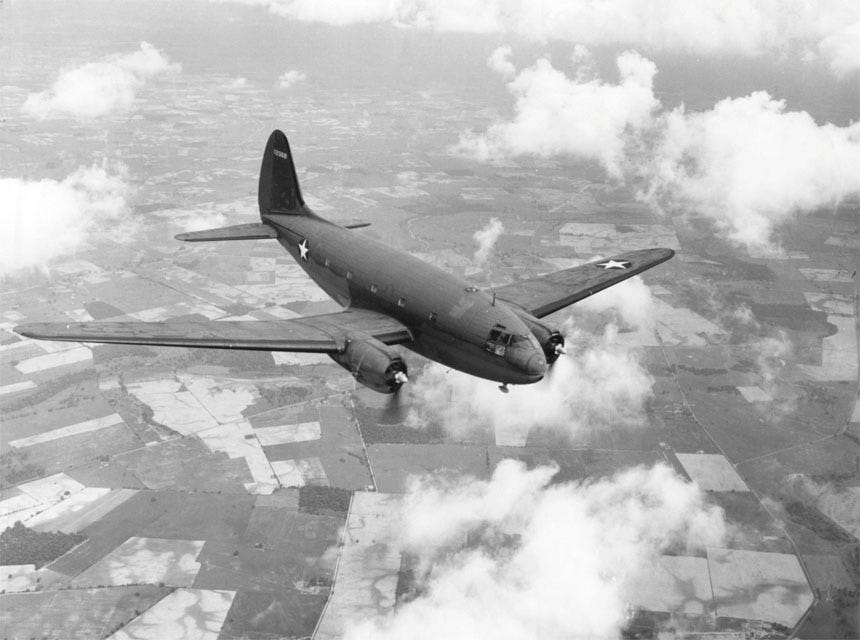
A United States Army Air Force (USAAF) C46 similar to that of Flight 12420.
The birth of para-rescue can be placed in operations across the Hump airlift in 1942 and 1943. The story of the crash of Flight 12420 was a central part of the story.
The story itself is extraordinary. In 1943 a Soviet spy inside the predecessor organization to the CIA and a proud descendant of the famous Southern leader General Robert E Lee, on his way to China to meet General Dai Li, the mysterious and secretive Kuomintang intelligence chief; a celebrated American journalist sent by President Roosevelt to ascertain the “truth about China”; and General “Vinegar Joe” Stilwell’s political adviser; together with eighteen others — American and Chinese — survived a C46 air crash on the mountainous and remote border between India and Burma. It was, and remains, the largest evacuation of an aircraft by parachute, and, given the fact that even the crew had never been trained in the technique, it was a miracle that so many survived. But they fell with their crippled plane from the frying pan into the fire. On disentangling themselves from their parachutes, the twenty shocked survivors soon found that they had arrived in wild country dominated by a tribe that had an especial reason to hate white men. The Nagas of the Patkoi Hills on their remote and unsurveyed land were notorious headhunters, who continued — despite the feeble wrath of distant British imperial authority — to practice both slavery and human sacrifice. Their specialty was the removal of the heads of their enemies — often women and children — achieved with a swipe of ugly, razor-sharp daos. On two occasions in recent years their village, or parts of it, had been burned to the ground and their warriors killed in running battles with sepoys sent to teach the villagers a lesson and to exert the authority of the Raj.
Nevertheless, and against all the odds, all but one of the twenty-one passengers and crew on the doomed aircraft survived. The story of the extraordinary adventure of those men among the Nagas of Pangsha and of their rescue by the young representative of the distant imperial power, the British deputy commissioner who arrived wearing “Bombay bloomers” and stout leather walking shoes, carrying a bamboo cane, and leading an armed party of “friendly” Nagas, is told in my book Among the Headhunters. In their meeting in some of the world’s most inaccessible and previously unmapped terrain, three very different worlds collided. The young, exuberant apostles of the vast industrial democracy of the United States came face-to-face with members of an ancient mongoloid race, uncomprehending of the extent of modernity that existed beyond the remote hills in which they lived and determined to preserve their local power, based on ancient head-hunting and slaving prerogatives. Both groups met — not for the first time for the Nagas, whose village had been burned twice, in 1936 and 1939, because of persistent head-hunting — the vestiges of British authority in India, disintegrating as the Japanese tsunami washed up at its gate.
One of the reasons for the survival of the men whose aircraft fell to earth that tumultuous day was the quick thinking, rapid action and spontaneous sacrifice of a group of US servicemen at the airbase from whence the aircraft departed that morning, Chabua. One in particular needs calling out, thirty-six-year-old ATC wing surgeon Lieutenant Colonel Don Flickinger. He had been duty medical officer at Pearl Harbor during the Japanese attack on December 7, 1941 and in 1943 found himself stationed in the upper reaches of Assam as part of the mammoth Hump airlift to China.
On the day the C46 went down over the rugged Paktoi ranges, the dividing line between astern India and Burma in the first leg of the journey to China, a C47 sent up to see if it could find the wreckage, and found the survivors waving from a remote village high in the hills. Using ground signalling panels the C47 dropped to the survivors they indicated that at least one of the party was badly injured. When the C47 returned to Chabua with the news that survivors were seen in the sprawling village and its location pinpointed on the map, the British deputy commissioner gave the Americans the grave news that the men were likely to be in grave danger. The villagers were, unknown to the survivors, the most practised headhunters of the region, a powerful and unruly tribe who were notorious for their violence. It was unlikely that the men would survive the encounter.
Comments Off on The birth of para-rescue
June 14, 2024
QotD: European “megacorporations” in the east
And the structure of these massive trading companies mirrors some of the elements of a megacorp. While both companies were, in theory, shipping companies, in practice they were massive vertically integrated conglomerates. Conquering the production areas (particularly India for the EIC and Java for the VOC), they essentially controlled the production chain from start to finish. That complete vertical integration meant that the companies also had to supply employees and colonial subjects, which in turn meant controlling trade and production in everything from food and clothes to weapons. Both companies had their own armies and fleets (the EIC boasted more than 25,000 company soldiers at its height, the VOC more than 10,000) and controlled and administered territory.
In short, they were the colonial Dutch and British governments for many millions of colonial subjects. For the people living in territory dominated by these companies, they really would have resembled the megacorps of speculative fiction, operating with effectively impunity and using their vast profits to field armies and navies capable of defeating local states and compelling them to follow the interests of the company (which remained profit-oriented).
(I feel the need to stop and note that “company rule” in India and even more so in the Dutch East Indies was brutally exploitative, living up to – and in many cases quite surpassing – the normal dystopian billing of science fiction megacorporations. At the same time, it seems equally worth noting that the shift to direct colonial rule by the state was not always much better.)
So in one sense, the speculative fiction megacorp has already existed, but in the other, the limits of these historical entities are informative too. First, it seems relevant that none of these companies were creatures of the markets, rather, they were created by state action – they were chartered companies, state monopolies, or both. These massive imperial trading companies (of which the EIC and VOC were the most successful, but not the only ones) were all created by their respective governments, armed with substantial privileges and typically given exclusive rights to certain trade – they were state-sanctioned monopolies (echoes of this also in the Japanese Zaibatsu state-sanctioned vertical monopolies; note that the Roman publicani [tax-farming “companies” of the middle and late Republic] were also state-sanctioned monopolies) whose monopolies were backed by state power to the point that their states (that is, Britain, the Dutch Republic, France and so on) would and did go to war to protect the trading rights of their monopoly trading companies.
Second, these megacorporations, far from being in a position to usurp the states that formed them (as fictional megacorporations often do), turn out to be extremely vulnerable to those states. The EIC was effectively nationalized by an act of parliament in 1858 (after the Indian Mutiny of 1857 discredited company rule in the eyes of the British government) and disbanded in 1874. The VOC was likewise nationalized by its parent government in 1796 and then dissolved in 1799. No effort was made by either company to resist being disbanded with any sort of force; it would have been a pointless gesture in any case. While the resources of the EIC were vast, the military capabilities of the British Empire were far greater. Moreover, the companies simply didn’t have the legitimacy to operate absent their state backing.
This is of course also true for the not-quite-megacorporations, like the great trusts of America’s gilded age (Standard Oil, U.S. Steel, etc.), or the Japanese zaibatsu or even modern super-sized corporate entities. Of the 10 largest companies in the world, four are straight up state-owned enterprises. Even for the private modern massive company, by and large when they try to fight their “home” state, they lose, or at least are badly damaged without seriously inconveniencing the far greater power of the state (just ask AT&T or Microsoft).
Bret Devereaux, “Fireside Friday: January 1, 2021”, A Collection of Unmitigated Pedantry, 2021-01-01.
Comments Off on QotD: European “megacorporations” in the east
June 1, 2024
I plead the Pith: a History of the Pith Helmet
HatHistorian
Published Jun 1, 2022A symbol of exploration, tropical adventure, and colonialism, the pith helmet has had a long history since its origins as the salakot, a Philippine sun hat. Through many iterations, it had become one of the most famous hats out there, a powerful part of popular imagination.
The helmets I wear in this video come respectively from a gift from a family friend (so I don’t know where it was bought, https://www.historicalemporium.com/, and Amazon.com. The red tunic comes from thehistorybunker.co.uk
Title sequence designed by Alexandre Mahler
am.design@live.comThis video was done for entertainment and educational purposes. No copyright infringement of any sort was intended.
Comments Off on I plead the Pith: a History of the Pith Helmet
April 30, 2024
DNA and India’s caste system
Earlier this month, Palladium published Razib Khan‘s look at the genetic components of India’s Caste System:
Though the caste system dominates much of Indian life, it does not dominate Indian American life. At slightly over 1% of the U.S. population, only about half of Indian Americans identify as Hindu, the religion from which the broader categories of caste, or varna, emerge. While caste endogamy — marrying within one’s caste — in India remains in the range of 90%, in the U.S. only 65% of American-born Indians even marry other people of subcontinental heritage, and of these, a quick inspection of The New York Times weddings pages shows that inter-caste marriages are the norm. While tensions between the upper-caste minority and middle and lower castes dominate Indian social and political life, 85% of Indian Americans are upper-caste, broadly defined, and only about 1% are truly lower-caste. Ultimately, the minor moral panic over caste discrimination among a small minority of Americans is more a function of our nation’s current neuroses than the reality of caste in the United States.
But this does not mean that caste is not an important phenomenon to understand. In various ways, caste impacts the lives of the more than 1.4 billion citizens of India — 18% of humans alive today — whatever their religion. While the American system of racial slavery is four centuries old at most, India’s caste system was recorded by the Greek diplomat Megasthenes in 300 BC, and is likely far more ancient, perhaps as old as the Indus Valley Civilization more than 4,000 years ago. Indian caste has a deep pedigree as a social technology, and it illustrates the outer boundary of our species’ ability to organize itself into interconnected but discrete subcultures. And unlike many social institutions, caste is imprinted in the very genes of Indians today.
Of Memes and Genes
Beginning about twenty-five years ago, geneticists finally began to look at the variation within the Indian subcontinent, and were shocked by what they found. In small villages in India, Dalits, formerly called “outcastes,” were as genetically distinct from their Brahmin neighbors as Swedes were from Sicilians. In fact, a Brahmin from the far southern state of Tamil Nadu was genetically closer to a Brahmin from the northern state of Punjab then they were to their fellow non-Brahmin Tamils. Dalits from the north were similar to Dalits from the south, while the three upper castes, Brahmins, Kshatriyas and Vaishyas, tended to cluster together against the Sudras.
Some scholars, like Nicholas Dirks, the former chancellor of UC Berkeley, argued for the mobility and dynamism of the caste system in their scholarship. But the genetic evidence seemed to indicate a level of social stratification that echoes through millennia. Across the subcontinent, Dalit castes engaged in menial and unsanitary labor and therefore were considered ritually impure. Meanwhile, Brahmins were the custodians of the Hindu Vedic tradition that ultimately bound the Indic cultures together with other Indo-European traditions, like that of the ancient Iranians or Greeks. Other castes also had their occupations: Kshatriyas were the warriors, while Vaishyas were merchants and other economically productive occupations.
Brahmins, Kshatriyas, and Vaishyas were traditionally the three “twice-born” castes, allowing them to study the Hindu scriptures after an initiatory ritual. The majority of the population were Sudras (or Shudras), India’s peasant and laboring majority. Shudras could not study the scriptures, and might be excluded from some temples and festivals, but they were integrated into the Hindu fold, and served by Brahmin priests. A traditional ethnohistory posits that elite Brahmin priests and Kshatriya rulers combined with Vaishya commoners formed the core of the early Aryan society in the subcontinent, with Shudras integrated into their tribes as indigenous subalterns. Outcastes were tribes and other assorted latecomers who were assimilated at the very bottom of the social system, performing the most degrading and impure tasks.
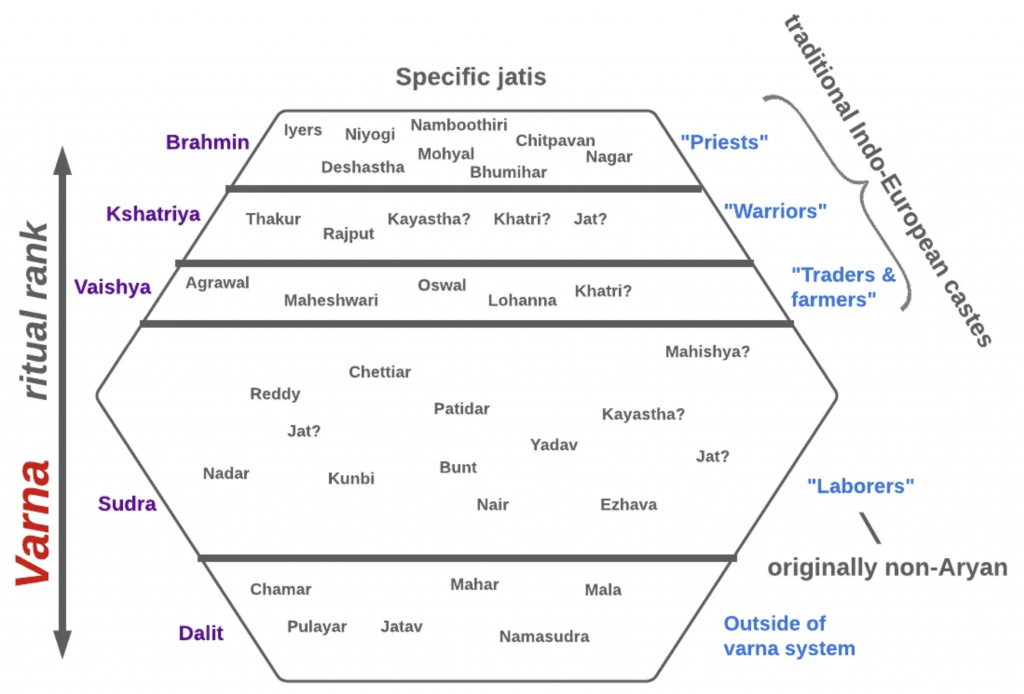
The caste system as a layered varna system with five classes and numerous integrated jati communities.
Razib KhanThis was the theory. Reality is always more complex. In India, the caste system combines two different social categories: varna and jati. Varna derives from the tripartite Indo-European system, in India represented by Brahmins, Kshatriyas, and Vaishyas. It literally translates as “color”, white for Brahmin purity, red for Kshatriya power, and yellow for Vaishya fertility. But India also has Shudras, black for labor. In contrast to the simplicity of varna, with its four classes, jati is fractured into thousands of localized communities. If varna is connected to the deep history of Indo-Aryans and is freighted with religious significance, jati is the concrete expression of Indian communitarianism in local places and times.
Comments Off on DNA and India’s caste system
April 29, 2024
“The disaster at Imphal was perhaps the worst of its kind yet chronicled in the annals of war”
Dr. Robert Lyman makes the case for the Japanese defeat at the battles of Imphal and Kohima being one of the four great turning points in the Second World War:
It is clear to me that the great twin battle of Imphal & Kohima, which raged from March through to late July 1944, was one of four great turning-point battles in the Second World War, when the tide of war changed irreversibly and dramatically against those who initially held the upper hand.
The first great turning point was arguably at Midway in June 1942 when the US Navy successfully challenged Japanese dominance in the Pacific. The second was at Stalingrad between August 1942 and January 1943 when the seemingly unstoppable German juggernaut in the Soviet Union was finally halted in the winter bloodbath of that city, where only 94,000 of the original 300,000 German, Rumanian and Hungarian troops survived. The third was at El Alamein in October 1942 when the British Commonwealth triumphed against Rommel’s Afrika Korps in North Africa and began the process that led to the German surrender in Tunisia in May 1943. The fourth was this battle, that at Kohima and Imphal between March and July 1944 when the Japanese “March on Delhi” was brought to nothing at a huge cost in human life, and the start of their retreat from Asia began. Adjectives such as “climactic” and “titanic”, struggle to give proper impact to the reality and extent of the terrible war that raged across the jungle-clad hills during these fearsome months.
That the Japanese were contemplating an offensive against India in early 1944 was a surprise to Allied planners, who had given no thought to its possibility. By this time Japan had reached the apogee of its power, having extended the violent reach of its Empire across much of Asia since it launched its first surprise attacks in late 1941. Its initial surge in 1942 into what was briefly to be Japan’s “Greater East Asia Co-Prosperity Sphere” was as dramatic as it was rapid and two years further on several millions of peoples across Asia laboured under its heavy yoke. But by early 1944 the tide had turned decisively in the Pacific, the American island-hopping advance reaching steadily but surely towards Japan itself, its humiliated enemies fighting back with desperation, and with every ounce of energy they could muster. They were beginning to prevail in the fight although the struggle on the landmass of Asia was a strategic sideshow in the context of a global conflict: at this time the British and American High Commands were totally occupied with Europe and the Pacific. The British and Americans were preparing for D Day. The Soviets were advancing in Ukraine. There was a stalemate in Italy at Monte Cassino. The Americans were preparing to land in the Philippines. Germany and Japan were both in retreat, but not defeated. In this global context India and Burma appeared strategically peripheral, even inconsequential. Yet in this month, at a time when on every other front the Japanese were on the strategic defensive, Japan launched a vast, audacious offensive deep into India in an attack designed to destroy for ever Britain’s ability to challenge Japan’s hegemony in Burma.
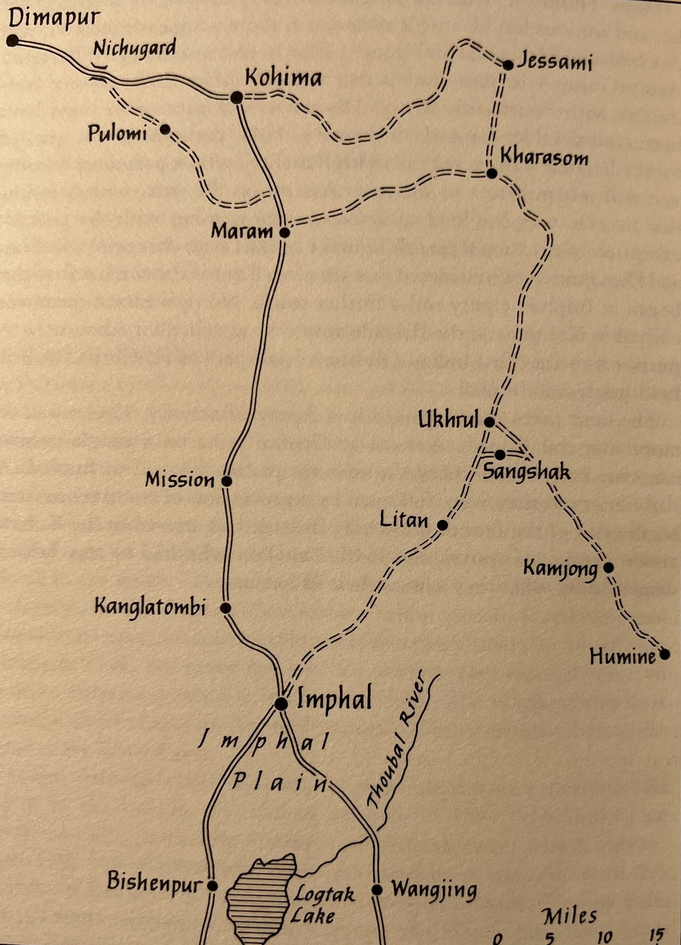
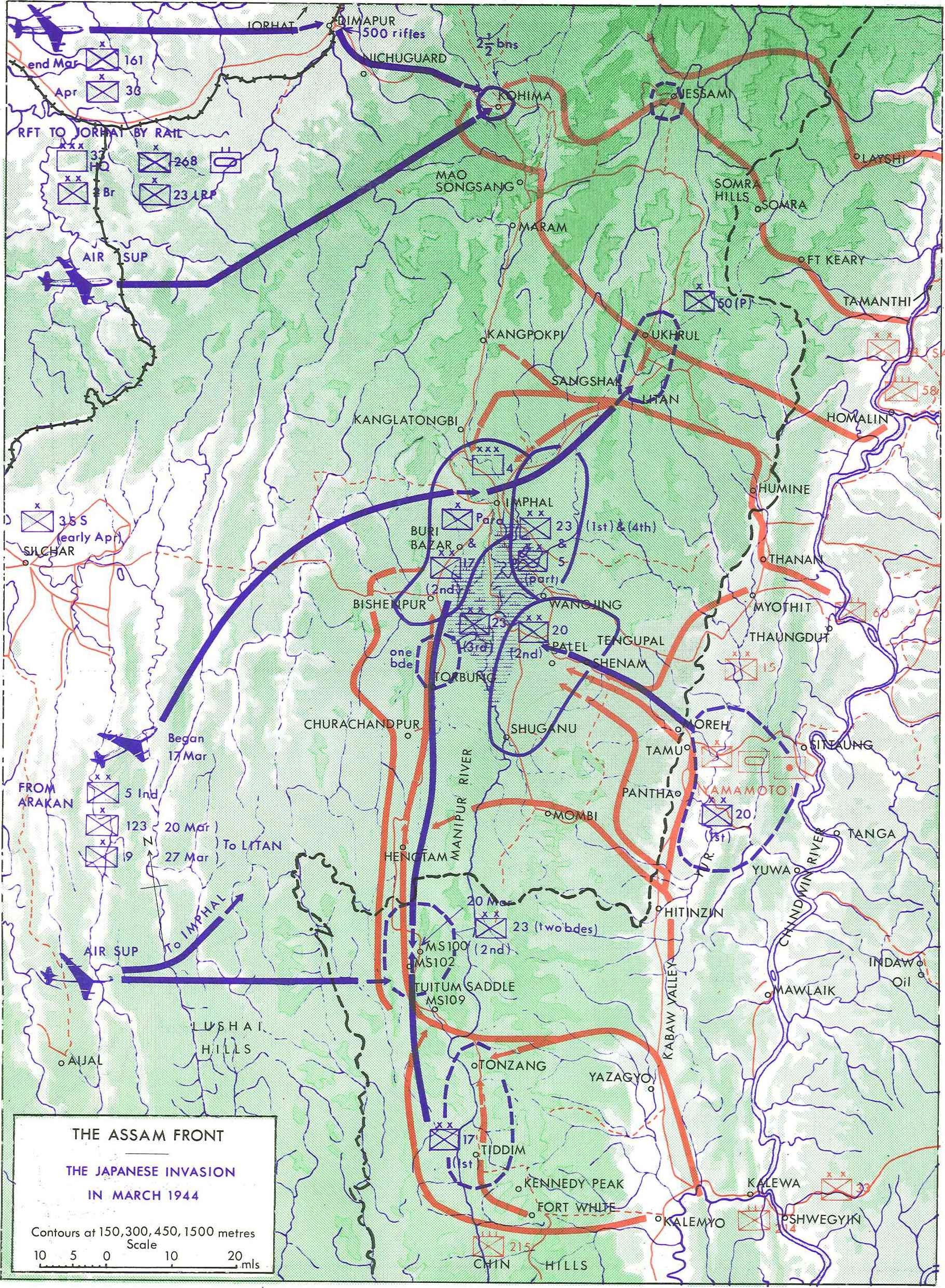
The Japanese commander was General Mutaguchi Renya, a gutsy go-getter who had played a significant role in the collapse of Singapore in February 1942. His evaluation of the British position in northeast India revealed that the three key strategic targets in Assam and Manipur were Imphal; the mountain town of Kohima, and the huge supply base further back on the edge of the Brahmaputra Valley at Dimapur. If Kohima were captured, Imphal would be cut off from the rest of India by land. From the outset Mutaguchi believed that with a good wind Dimapur, in addition to Kohima, could and should be secured. He reasoned that capturing this massive depot would be a devastating, possibly terminal blow to the British ability to defend Imphal, supply the Americans in Northern Burma under Vinegar Joe Stilwell, support the Hump airlift into China and mount an offensive into Burma. It would also enable him to feed his own, conquering army, which would advance across the mountains from the Chindwin on the tightest imaginable supply chain. With Dimapur captured, the Japanese-led Indian National Army under the Bengali nationalist Subhas Chandra Bose could pour into Bengal, initiating the long-awaited anti-British uprising.
(Click to enlarge)
The essence of the battle for India in 1944 can be quickly told. Mutaguchi’s 15th Army advanced in four separate columns into Manipur. The Japanese made determined, even desperate, efforts to seize their objectives: in the north Kohima, with a scratch British and Indian garrison of 1,200 trained fighting soldiers – about two thirds of them Indian – was attacked by an entire division of about 15,000 men in early April. Surrounded and slowly forced back onto a single hill they were supplied by air until relief came on 20 April, although the battle to dislodge the Japanese from Kohima continued bloodily, in appalling weather and battlefield conditions – the annual monsoon was in full spate – through to early June. Further south the Japanese plan entailed attacking Imphal from north, east and south. The plan of the commander of the 14th Army, Lieutenant General Bill Slim, was to withdraw his forces into the hills and there to allow the Japanese to expend themselves fruitlessly against well-supplied and aggressive British bastions, equipped with tanks, artillery and supported by air. The battle for Imphal in Manipur and for Kohima to the north-west in the neighbouring Naga Hills settled down to a bloody hand-to-hand struggle as the Japanese tried to gain the foothold necessary for their survival. They travelled lightly, and reserves soon exhausted themselves and further supplies were almost non-existent. Just as the air situation was becoming critical for Slim through poor weather and shortages of aircraft the relieving division from Kohima – the British 2nd Infantry Division that had last seen action at Dunkirk – began fighting its way towards Imphal, and the four beleaguered divisions began to push out from the Imphal pocket. By 22 June the 2nd Division and the 5th Indian Division met north of Imphal and the road to the plain was open. Four weeks later the Japanese withdrawal to Burma began.
Of all the invading armies of history, it is hard to think of one that was repulsed more decisively, or more ignominiously, than the Japanese 15th Army launched against India in March 1944. Its defeat was not the fault of the Japanese soldiers, who fought courageously, tenaciously and fiercely, but of their commanders, who sacrificed the lives of their troops on the altar of their own hubris. The battle had provided the largest, most prolonged and most intense engagement with a Japanese army yet seen in the war. “It is the most important defeat the Japs have ever suffered in their military career” wrote Mountbatten exultantly to his wife on 22nd June 1944, “because the numbers involved are so much greater than any Pacific Island operation.” The extent of the disaster that befell the 15th Army is captured by a comment by Kase Toshikazu, a member of the wartime Japanese Foreign Office, who lamented: “Most of this force perished in battle or later of starvation. The disaster at Imphal was perhaps the worst of its kind yet chronicled in the annals of war.” The latter might better have included the caveat “Japanese” to avoid charges of exaggeration, but his comment captures something of the enormity of the human disaster that overwhelmed the 15th Army. It might more fairly be described as the greatest Japanese military disaster of all time. The Indian, Gurkha, African and British troops of this remarkably homogeneous organisation had also decisively removed any remaining notions of Japanese superiority on the battlefield.
The importance of this victory was overshadowed at the time, and downplayed for decades afterwards, by the massive victories in 1945 which brought World War II to an end in Europe and the Pacific. But this lack of publicity and of awareness does not remove the fact that, objectively speaking, the battles in India in 1944, epitomized in the fulcrum battle at Kohima, were an epic comparable with Thermopylae, Gallipoli, Stalingrad, and other better known confrontational battles where the arrogant invader became, in time, the ignominious loser.
Comments Off on “The disaster at Imphal was perhaps the worst of its kind yet chronicled in the annals of war”
April 23, 2024
Debating the economic impact of the Raj on India
At The Daily Sceptic, Nigel Biggar looks at a few books making or refuting the narrative on how much or how little British rule in India extracted or contributed to the economic life of the subcontinent:
Beyond slave-trading and slavery, what were the economic effects of British imperial dominance? Can they be reduced to Britain’s leeching wealth from exploited subject peoples?
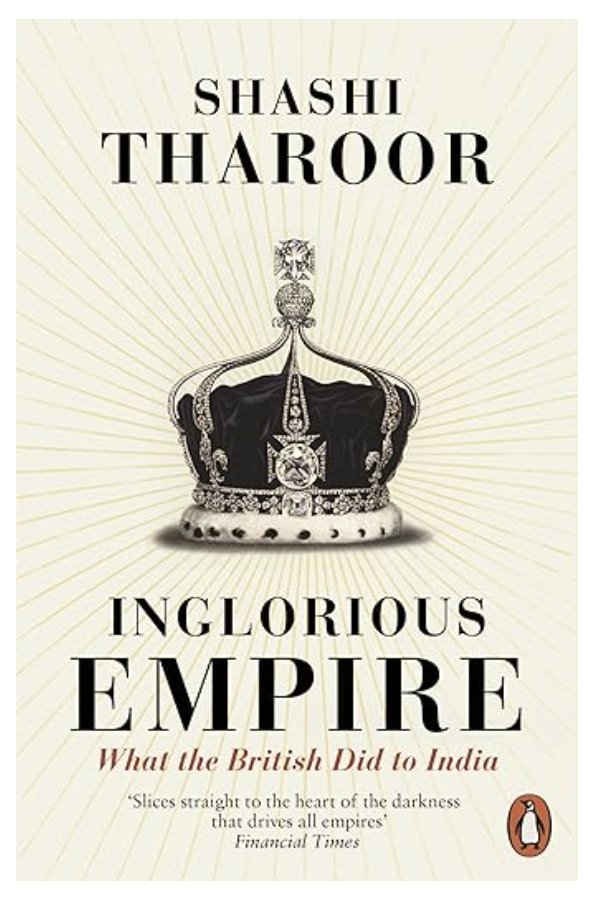
For over a century, that is what Indian nationalists have claimed. It is also what the politician Shashi Tharoor claims in his 2016 book, Inglorious Empire: What the British Did to India. Against him, however, the Bengali-born, LSE-based economic historian Tirthankar Roy has declared of the nationalist critique that “generations of historians … have shown that it is not [true]”. Pace Tharoor, the statistic that India produced 25 per cent of world output in 1800 and 2–4 per cent in 1900 does not prove that India was once rich and became poor: “[i]t only tells that industrial productivity in the West increased four to six times during this period … The proposition that the Empire was at bottom a mechanism of surplus appropriation and transfer has not fared well in global history”.
On the contrary, the British Empire’s commitment to free trade gave Indian entrepreneurs new opportunities to grow. Some of them visited England in the late 19th Century, observed the workings of manufacturing industry, imported machinery and expertise to India, built factories employing Indians, and then outcompeted Manchester. This is exactly how the Tata Iron and Steel Company began in Bombay – the same company that now owns what remains of the British steel industry.
What is more, colonial governments often protected native producers against British business, in order to moderate economic and social disruption, partly because they genuinely cared for the welfare of native people and partly because they didn’t want to have to manage the political unrest that foreign commercial intrusion could excite. Famously, in 1910-11 colonial officials barred Lever Brothers from acquiring concessions in Nigeria on which to establish palm-oil processing mills with widespread hinterlands, since Africans were already producing for the world markets and generating tax revenue and because the alienation of large areas of land risked provoking native opposition.
Further still, the British were the leading exporters of capital from the mid-19th Century to at least 1929. Between 1876 and 1914, Britain invested over a third of its overseas capital in the Empire, over 19% of it in India. Of course, British investors often made a profit out of this. That’s the thing about investment: you tend to want to grow your money, not waste it. But if the British gained, so did colonial peoples. Take railways. By 1947, British India had 45,000 miles of railway track, most of it constructed with private capital, whereas five years later un-colonised China still had less than 18,000 miles. For sure, the railways served military purposes. But they also served commercial and economic ones: one estimate reckons that when the railway network reached the average district, real agricultural income rose by about 16%. And it served the welfare purpose of efficient famine relief, too.
A basic reason why the British sent their capital overseas to the Empire, enabling the growth of businesses and the building of infrastructure, was that colonial states provided sufficient political stability and legal certainty to make the risks of financial ventures worth taking. (Badenoch hints at this in her reference to the economic effects of the Glorious Revolution of 1688.) That explains why Australia’s economic growth compares so favourably with that of many Latin American countries, and why, between the 1860s and 1890s, Australia was the richest country on earth.
In sum, the considered judgement of the Swiss historian Rudolf von Albertini, whose work – according to the world’s “leading imperial economic historian”, David Fieldhouse – was based “on exhaustive examination of the literature on most parts of the colonial world to 1940”, was simply this: “colonial economics cannot be understood through concepts such as plunder economics and exploitation”.
Comments Off on Debating the economic impact of the Raj on India


