
The Liberal Party, having engineered themselves a majority in the House of Commons, are on a speed-run to the kind of dystopian police state we used to read about in science fiction novels:
Millions of Canadians are beginning to see the similarities between communist regimes and the direction of current government policy.
The pattern is always the same.
It begins with noble promises: safety, equality, compassion, protection, the greater good.
It ends with censorship, coercion, surveillance, prisons, ruined lives, and a police state.
Always.
It comes wrapped in slogans, experts, committees, emergency powers, censorship, enemies of the people, and the belief that the state has the right to crush the individual for the greater good.
Consider…
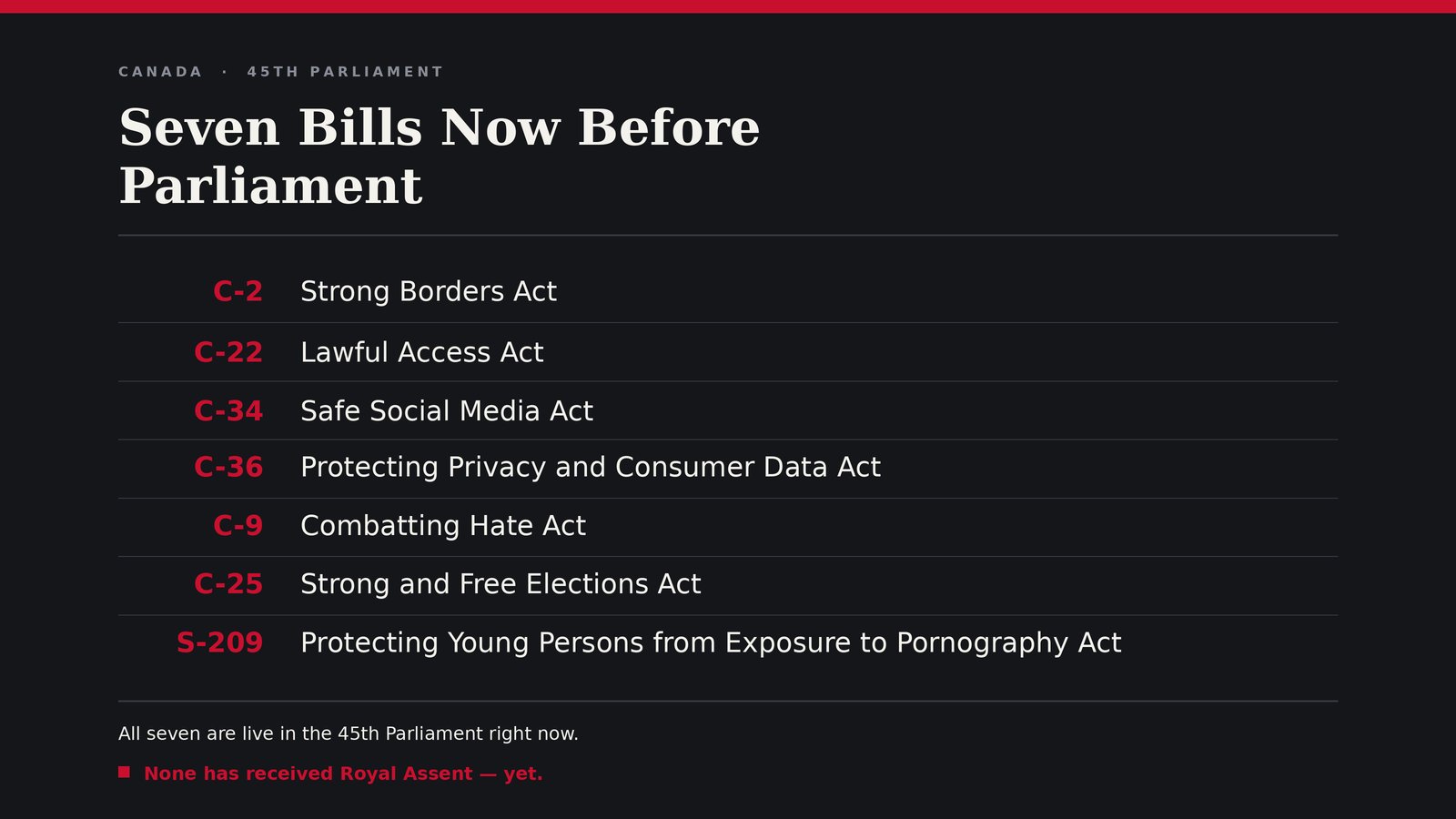
C-2 – Strong Borders Act
C-22 – Lawful Access Act
C-34 – Safe Social Media Act
C-36 – Protecting Privacy and Consumer Data Act
C-9 – Combatting Hate Act
C-25 – Strong and Free Elections Act
S-209 – Protecting Young Persons from Exposure to Pornography ActAll seven are live in the 45th Parliament right now. None has received royal assent yet.
Consider that good, law-abiding Canadians are being gradually and systematically disarmed.
This is not a warning about some distant future.
In 2022 the federal government invoked emergency powers it did not have, froze the bank accounts of citizens over their political views, and banned Canadians from funding a protest. Two levels of court have since ruled it unconstitutional — a violation of the very Charter rights every one of these bills now circles.
That was the trial run. It needed an emergency as the excuse.
The seven bills above are the permanent version — the same reach, made routine — so that next time, no emergency need be declared at all.
A free country is not lost in a single day. It is legislated away in pieces, each one introduced with a reassuring name and defended as necessary, while good people keep assuring themselves it could never happen here.
It already did. The only question is whether enough Canadians notice before it becomes permanent.
Read every bill. Watch every one of them. Because this is the stage where it can still be stopped … and perhaps our last chance.
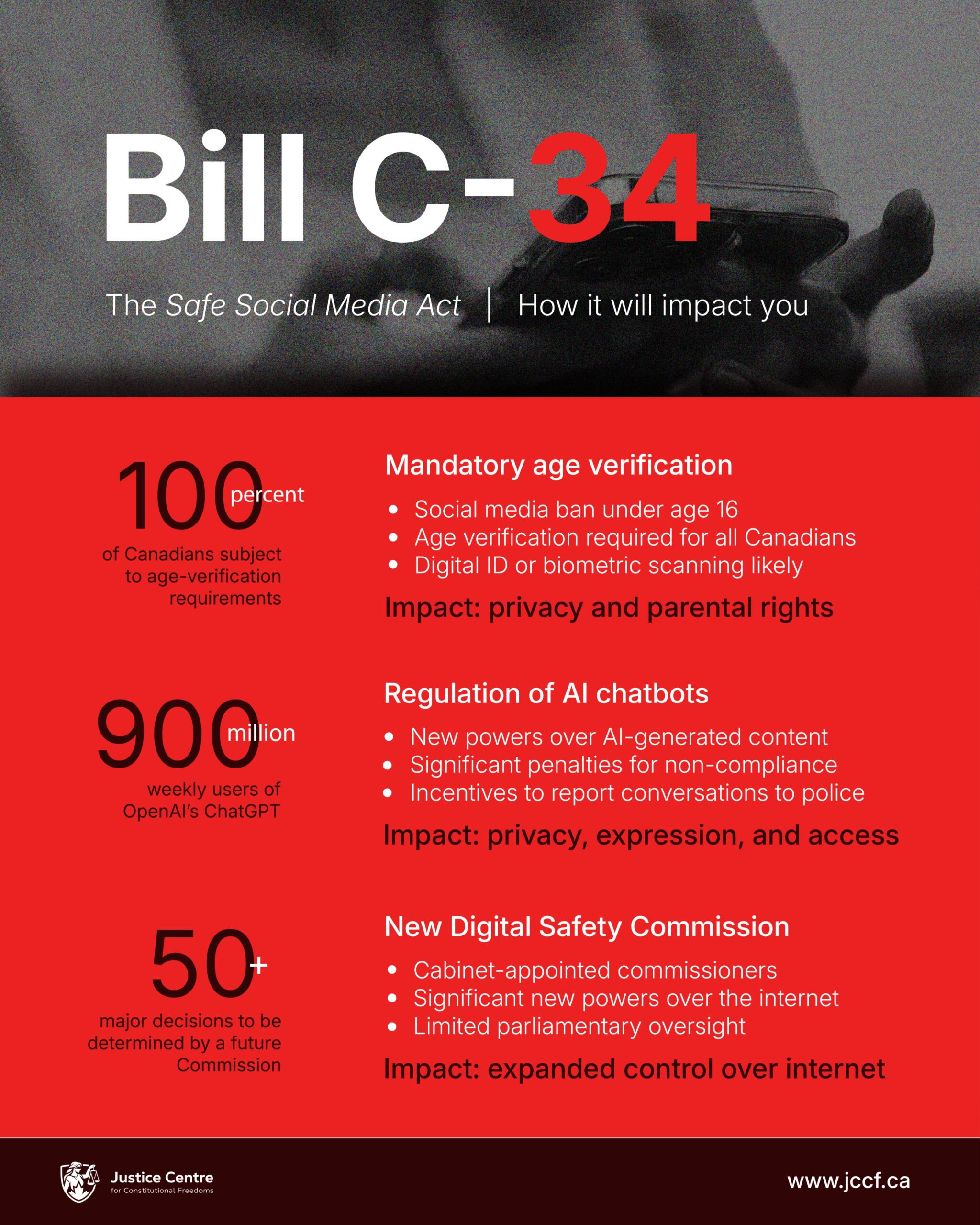
The Justice Centre for Constitutional Freedoms is trying to get Canadians to pay attention to what just one of these bills will do:
Bill C-34 will affect every Canadian. Age verification. AI regulation. A new Digital Safety Commission. Most Canadians have never heard of it. Here’s what it will do.
Michael Geist posts a Substack Note about bill C-22:
Bill C-22, the lawful access bill, has been reported back from committee and is headed toward passage. There are some amendments, but many concerns remain. The updated bill with changes is at
There are two changes to metadata retention. First, the maximum retention period the government can impose drops from 1 year to 6 months. Second, it can now mandate a category of metadata only if satisfied the category and all its elements are essential to investigations.
The committee rewrote the definition of systemic vulnerability. A “substantial risk” becomes a “credible risk, based on recognized international technical standards”. But it also added a carve-out: a flaw exposing only a target’s data is not “systemic”.
Added a new section on decryption that says nothing in the Act can be read to compel a provider to decrypt user-encrypted data, unless the provider supplied the encryption and holds the key. Borrowed from US law, but doesn’t fit the same way.
Compliance with ministerial orders is now expressly subject to the systemic vulnerability exception. That addresses a contradiction in the original text, where the duty to comply appeared to be unconditional.
The original bill set no maximum duration on these ministerial orders. This now changes to a two-year cap without the open-ended review-and-extend mechanism.
The amendments will rightly leave many still concerned. Companies considering exiting Canada due to Bill C-22 are unlikely to conclude that it fully addresses their issues. Yet the government is likely to push it through the House today.


