CDR Salamander considers how the US Navy up-gunned their fleet after the shock of the Pearl Harbour attacks with an eye to the current day, where it appears that modern warships suddenly need far more defensive firepower than they have:
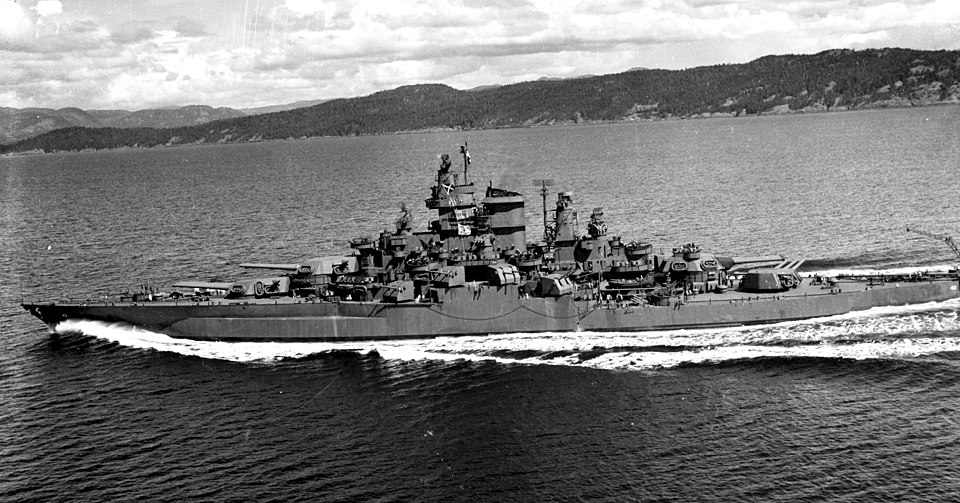
USS Tennessee (BB 43) underway in Puget Sound, Washington, on 12 May 1943, after modernization.
Photograph from the Bureau of Ships Collection in the U.S. National Archives via Wikimedia Commons.One of the many lessons of the modern air threat against surface ships in the last few years is simple: we need more of everything.
It isn’t really a new lesson. It is an old lesson that our peacetime accountants convinced us to pretend we didn’t know.
Since the first war in which the threat from the air targeted the surface fleet, what was a common thread after D+0 from WWII to the Falklands War?
After cursing those responsible for preparing the fleet for the next war, those tasked to fight the war in front of them would, at the first chance, put every possible weapon possible on their warships.
My favorite example is what the U.S. Navy did with its old battleships the first chance after Pearl Harbor.
The picture at the top of the post is the battleship USS Tennessee (BB 43) after the completion of her rebuild, May 12th, 1943.
- The older single 5-inch/25 cal guns were replaced by eight twin 5-inch/38 caliber dual-purpose gun mounts (totaling 16 guns).
- Ten quadruple 40 mm Bofors mounts and 43 single 20 mm Oerlikon guns replaced 1.1-inch and .50 cal machine guns.
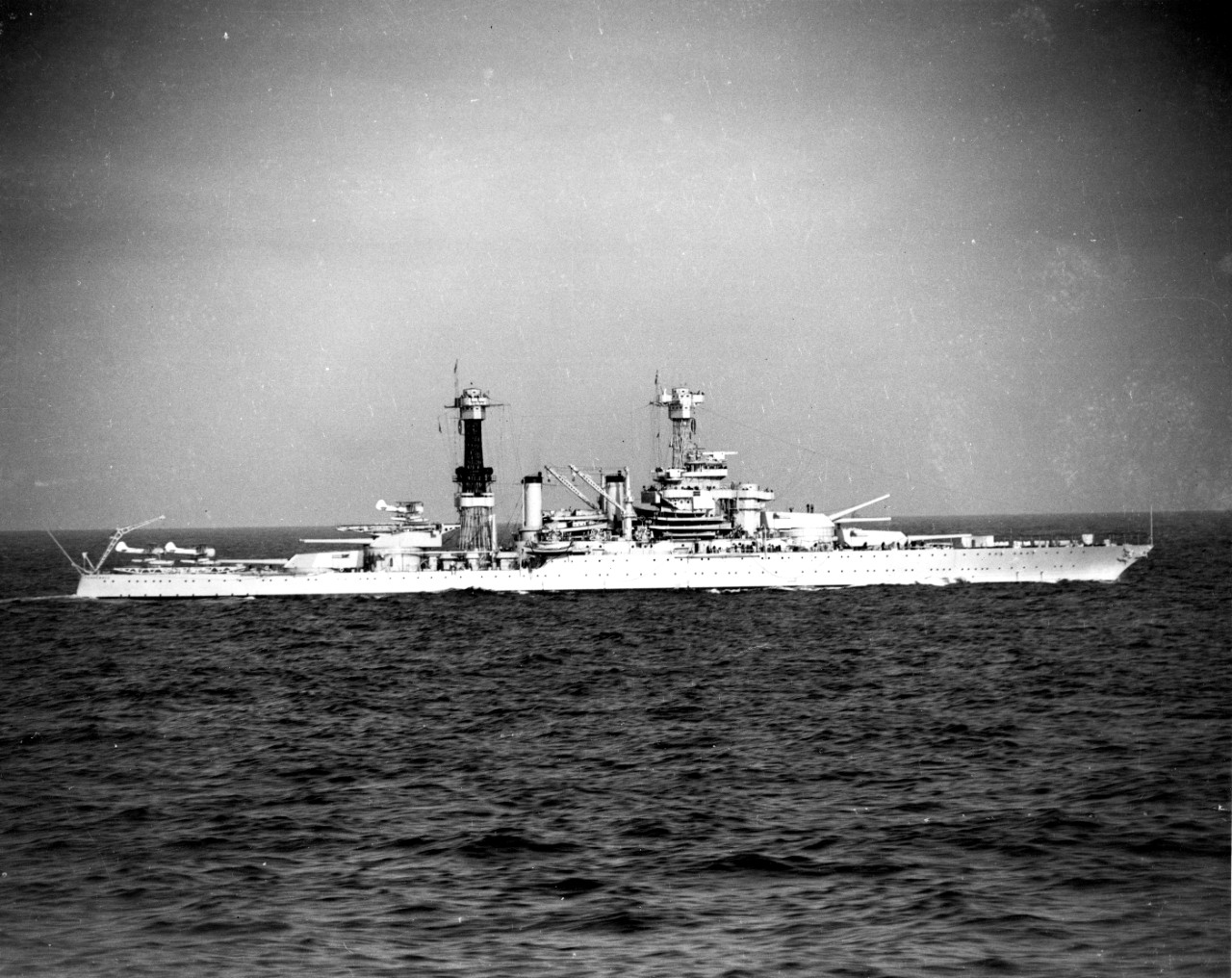
Here she was with her “cleaner” deck from the 1930s.
USS Tennessee in the mid-1930s.
The Royal Navy reached the point in the Falklands War that they resorted to lining the decks with Seamen firing whatever weapons they could find from rifles to crew-served weapons … as they simply did not have the time to up-arm their ships properly.
Like the sudden realization that they did not quite understand the true nature of the threat from the air in the 1930s, here in the mid-2020s we are suddenly realizing that we don’t fully understand — or more likely were comfortable ignoring those warning of the problem — the high/low threat to warships from the air.
The tan, rested, ready, if the not quite battle-tested People’s Liberation Army Navy (PLAN) is comfortably unbothered, moisturized, happy, and staying in their lane as we have been emptying out magazines and wearing out sailors and ships, They continue to be focused on how to defeat the U.S. Navy should it venture west of the International Date Line in response to a future contingency — the very mission the PLAN was built to execute as the world’s largest navy.
I am quite confident, because, especially in the ballistic missile area, they were ahead of everyone, that the PLAN has a whole mix of threats they are ready to throw at our fleet should it be required.
The Houthi who have been providing us unscheduled range time in the Red Sea for over two years, and Iran from Turkey to UAE over the last year. The Houthi are a fourth-rate threat, and the Iranians are on a good day, a second-rate threat. They are throwing everything from slow drones to anti-ship ballistic missiles (ASBM) at ships.
The People’s Republic of China (PRC) is a first-rate threat … and then some. She will do the same, but better and in higher volume. We need to be ready to face that, and we are not.