
Few of the many holidaymakers photographing their artisanal breakfast for a sunlit post on Instagram will have heard of Albert Smith. But they owe him a moment’s reflection: for if anyone can be said to have perfected the packaged visuals of a holiday abroad, it is Smith, a showbusiness titan of mid-Victorian London. Smith’s wildly popular panoramic spectaculars of his travels across Europe drew audiences of thousands. He was a prolific journalist, a bestselling novelist, a man-about-town, a mountaineer, and a dandy, but it was Smith’s innovative talent for boiling down his adventures abroad into a collection of vivid and memorable images that proved his biggest crowd-puller. Panoramas — vast paintings showing a 360-degree view of a landscape — had been part of the London scene since the turn of the century, but Smith took the panoramic experience to new levels of immersion: he was the self-appointed star of his own show, dramatising his own adventures against a sliding background of tableaux complete with music and props.
Smith’s most celebrated panorama relived his ascent of Mont Blanc in 1851 — which had been an astonishing physical feat for a clubbable bon viveur (though he had to be dragged to the summit barely conscious, he claimed to have celebrated by drinking a bottle of champagne and smoking a cigar). He pulled out all the stops to recreate Mont Blanc on the stage of the Egyptian Hall, Piccadilly in 1852, importing woodcarvers from Chamonix to recreate a Swiss chalet. St Bernards roamed the aisles and during the interval hot baked potatoes were dispensed for those in the audience feeling a glacial chill from the buckets of cold water placed around the hall. The stage was decked with alpine plants; there was a waterfall with real water, a mill wheel and a lily pond; the walls of the theatre were hung with chamois skins. “The Ascent of Mont Blanc” ran for six years and 2,000 performances, and on top of the fortune he made in ticket sales, Smith cannily expanded his repertoire by selling colouring books, fans, board games and miniature models of Mont Blanc.
Smith, an unrepentant populist (he liked to shock Thackeray by saying that Shakespeare was “all rot”), knocked the high culture out of the touristic experience. He made the adventure of foreign parts bite-sized and accessible — if not in reality, at least in dreams. He called it “the Alps in a box”. Figuratively speaking, Smith’s panoramas boxed up the great sights of the classical Grand Tour and sold them in miniature form, building them up with a dramatic flourish then cutting them down to size with a knowing dig in the ribs. Smith’s success runs parallel with the emergence of photography, the industrial manufacture of souvenirs, and the “I was here” frame of the postcard. After Smith, it became possible to think of “buying” the travel experience without actually going very far, framing it, and taking it home with you. Antiquarian high-culturists looked for quiddity and oddity when abroad but Smith encouraged a joyful appetite for mass-produced kitsch. His own apartment off Tottenham Court was a riot of knick-knackery from his travels. There was a figure of a Swiss peasant with a clock-face in his waistcoat, Venetian glasses, miniature Swiss chalets, soap from Vienna in the shape of fruit and a working model of a guillotine.
The tourist boom in Chamonix inspired by Smith was viewed with horror by those who thought the mountain were theirs to command. Ruskin found the “white leprosy of hotels” and souvenir shops that followed the visitors into the Alps was a blasphemy against “all the deep and sacred sensations of nature”. Everywhere the new tourists went, reported a journalist in 1856, they brought with them “Cockneyism, Albert Smithery, fun, frolic and vulgarity”. The rise in popular tourism to Europe, sparked most importantly by Thomas Cook, had highlighted a divide which has characterised British travelling ever since. In this paradigm, the tourist is the new bug and the traveller is the old soul. And even when they are gazing at the same view, the latter thinks the former is spoiling the view. The distaste is notable in how often crowds of tourists were, and still are, described in terms of mindless cattle or insects — they come in “herds” and “swarms” and “flocks”.
Lucy Lethbridge, “The snobbery of Brits abroad”, UnHerd, 2022-07-12.
October 24, 2022
QotD: When the “Grand Tour” gave way to the mere “tourists”
September 6, 2022
Scotland’s AMAZING Jacobite Steam Train
Dylan’s Travel Reports
Published 4 Dec 2020An amazing day out on West Coast Railways’ iconic Jacobite steam train from Fort William to Mallaig and back, part of the stunning West Highland Line!
Date of Travel: 21 October 2020
Class of Travel: First Class
Rolling Stock: LMS Stanier Class 5 4-6-0/Mk1
Cost of Ticket: £133.75 ($176.10, €150; price for 2 people)
Origin: Fort William, United Kingdom (Scotland)
Destination: Mallaig, United Kingdom (Scotland)
*Currency conversions correct as of 09/11/2020 to nearest $/€0.05
(more…)
August 20, 2022
The historical tourist attractions of Pisa
In the latest Age of Invention newsletter, Anton Howes talks about a recent trip to Italy, specifically the historically interesting places in Pisa and Lucca:

Galileo Galilei circa 1640.
Detail of an oil portrait by Justus Sustermans (1597-1681) from the National Maritime Museum via Wikimedia Commons.
Some are famous. Galileo Galilei, for example, is said to have used the leaning tower of Pisa to drop two spheres of different masses, to show that they would fall at the same speed — at least, that’s what his disciple Vincenzo Viviani claimed, ten years after Galileo’s death, and many decades after the alleged demonstration. Even if Viviani was being accurate, however, Galileo certainly wasn’t the first to demonstrate the concept. And Viviani mistakenly claimed priority for all sort of other scientific breakthroughs for his master, so like most other historians I’m inclined to doubt the story.
Nonetheless, Pisa was certainly Galileo’s birthplace — though it turns out that there are three different locations in the city to have claimed the honour over the years.
Galileo was initially thought to have been born in or near the fortress (its walls are impressive to look at and contain a pleasant garden). But this location was then refuted on the basis that for Galileo’s father Vincenzo Galilei to have lived in the fortress he would have had to have been a master at arms, which he was not. He was in fact a merchant and lute-maker. So in the nineteenth century a new location emerged: the casa Bocca, on the Stretto Borgo, which Vincenzo rented a few months before Galileo’s birth, and where the Galilei family lived for the next decade. It seemed a secure candidate for a while, except for a weird discrepancy: Galileo’s baptismal certificate assigned his birth to the wrong parish.
It then emerged that Galileo’s mother’s family — the Ammannati — lived in the correct parish, and that the custom of the time was for women to return to their parents’ home for the birth of their first child. Thus, the evidence points to Galileo having been born at the Casa Ammanati on the via Giusti. It’s a neat story of how a tourist destination can jump around based on new research, though there’s unfortunately not much to visit there other than a plaque.
In terms of things to actually see, one of the most impressive things in Pisa is the Museo delle Navi Antiche (Museum of Ancient Ships), which we found to be undeservedly deserted. Housed in the old stables for the city’s cavalry, and once the site of the Medici-era naval arsenal, the museum gives a fantastically thorough overview of the city from its Etruscan beginnings through to Roman subjugation, Ostrogothic invasion, Byzantine reconquest, and Longbeard settlement in the sixth century (although they’re usually called the Lombards, this comes from langobardi — literally, longbeards — so I think calling them that is both more accurate and more fun).
The museum’s highlight, however, is the ancient ships for which it is named, and which are incredibly well-preserved. I was stunned to see a massive actual wooden anchor, not just a reconstruction, of a cargo ship from the second century BC. It’s so well-preserved that you can even make out a decoration, carved into the wood, of a ray fish. The same goes for the rest of the various ships’ timbers. You can see almost all of their original hulls and planking, as well as finer details like rudder-oars, benches for the rowers, and in one case even the ship’s name carved into the wood — the Alkedo, which appears to have been a pleasure boat from the first century. Apparently, during excavation, the archaeologists could even make out the Alkedo‘s original red and white paint, as well as the impression left by an iron sheet that had covered its prow. The ships’ contents are often just as astonishing, with well-preserved baskets, fragments of clothing, and even bits of the rigging like its wooden pulleys and ropes. Well worth a visit.
June 28, 2022
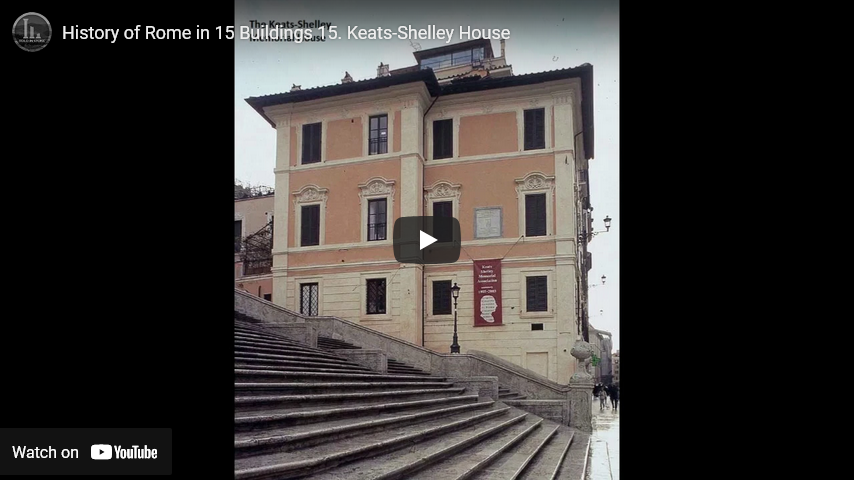
History of Rome in 15 Buildings 15. Keats-Shelley House
toldinstone
Published 2 Oct 2018For well over a century, the “Odes” of John Keats have been boring high school students, enchanting lovers of poetry, and giving scholars of English literature interesting things to overinterpret. When he died in 1821, however, Keats was virtually unknown – an anonymous member of Rome’s large community of travelers and expatriates in the last years of the Grand Tour.
To see the story and photo essay associated with this video, go to:
https://toldinstone.com/keats-shelley…
June 10, 2022
QotD: Talinn, Estonia
My second impression was that it stinks, stinks of diesel exhaust. It seems they have found a way to power everything with diesel, including bicycles and pets. When I walked out of the tunnel from the ferry to land, I was engulfed in a cloud of diesel exhaust from a passing truck. I’m surprised the EU permits it, but maybe they look the other way for the former communist countries. Maybe the Estonians just cheat. Either way, it reminded me of what it was like in America in the 80’s when city buses were like crop dusters …
Rather than follow the crowd to Old Town, I went the other direction and walked a dozen blocks to the east, then another dozen blocks or so south. If you look at a map, the tourist area is to the west, so I figured the real Tallinn was to the east. Given the history and layout of the city, my guess is the east is mostly built in the 20th century, but a lot of it dates to previous centuries. Estonia was a battle ground fought over by Danes, Russians, Germans, Swedes and Poles for most of its history, so it is tough to know.
For example, I walked past an apartment building, probably built in the middle of the last century. It was the drab concrete style popular with communists. Next to it was a cool looking old wood structure that would look at home on Cape Cod. Upon closer inspection, I saw it had undergone a recent renovation, so maybe it was old, but maybe it was just made to look like it dates to the 19th century. You can’t trust anything now. Even in a place like Estonia, everything is becoming a reproduction of a long gone culture of a foreign people.
If you want to get a sense of what life was like under the Soviets, walking around this part of Tallinn is a good way to do it. You see the old buildings and dilapidated old houses. It’s not a slum, but it has that aesthetic the Soviets were so famous for back during the Cold War. Lots of concrete and gray paint. The materialism of the Bolsheviks was really just the total lack of spiritual beauty. They were ugly people and that ugliness was made manifest their building and city planning. They were vulgar and depraved.
The Z Man, “Travelogue: Talinn”, The Z Blog, 2019-04-03.
March 4, 2022
QotD: “Avoid New York City”
Kim du Toit, “Don’t Do That”, Splendid Isolation, 2019-01-28.
February 4, 2022
QotD: Don’t drive on the interstate highways
Kim du Toit, “Don’t Do That”, Splendid Isolation, 2019-01-28.
February 2, 2022
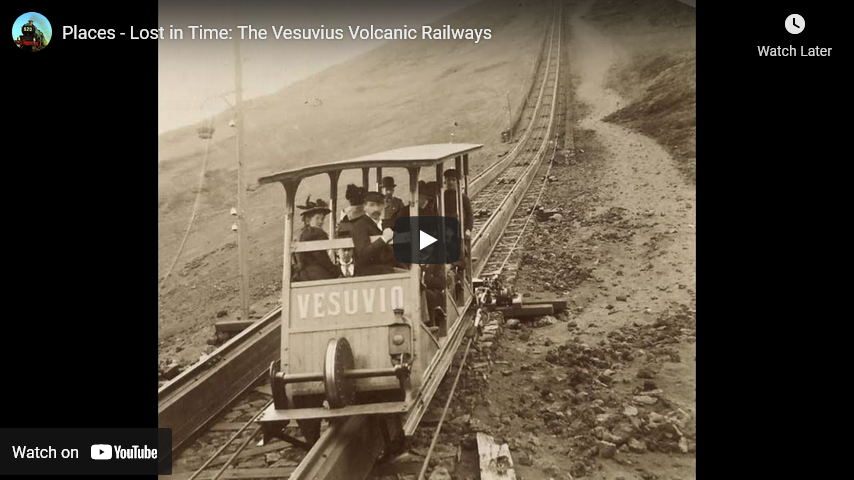
Places – Lost in Time: The Vesuvius Volcanic Railways
Ruairidh MacVeigh
Published 23 Oct 2021Hello, and welcome back to Places – Lost in Time, a series that looks back on the tale of places and locations that existed within living memory or photographic record, but are now lost to the pages of history.
In perhaps one of the most unlikely of places, among the world’s most popular funicular railways once existed on the slopes of Mount Vesuvius, arguably the most dangerous volcano in the world. However, despite the inherent risk of putting a major tourist attraction on its slopes, the Vesuvius funicular railway, and the corresponding mountain railway, were among the biggest visitor magnets in Italy during the late 1800s and early 1900s, but sadly the forces of nature wouldn’t allow this unusual feature to stay in situ for long.
All video content and images in this production have been provided with permission wherever possible. While I endeavour to ensure that all accreditations properly name the original creator, some of my sources do not list them as they are usually provided by other, unrelated YouTubers. Therefore, if I have mistakenly put the accreditation of “Unknown”, and you are aware of the original creator, please send me a personal message at my Gmail (this is more effective than comments as I am often unable to read all of them): rorymacveigh@gmail.com
The views and opinions expressed in this video are my personal appraisal and are not the views and opinions of any of these individuals or bodies who have kindly supplied me with footage and images.
If you enjoyed this video, why not leave a like, and consider subscribing for more great content coming soon.
Thanks again, everyone, and enjoy! 😀
References:
– Thomas Cook Archive (and their respective references)
– Wikipedia (and its respective references)
August 4, 2021
Canadian tourist dollars are helping keep Cuba’s struggling economy afloat
In Tuesday’s NP Platformed newsletter, Colby Cosh praises a CBC News (!!!) article on the massive impact of purely Canadian tourist income on Cuba:
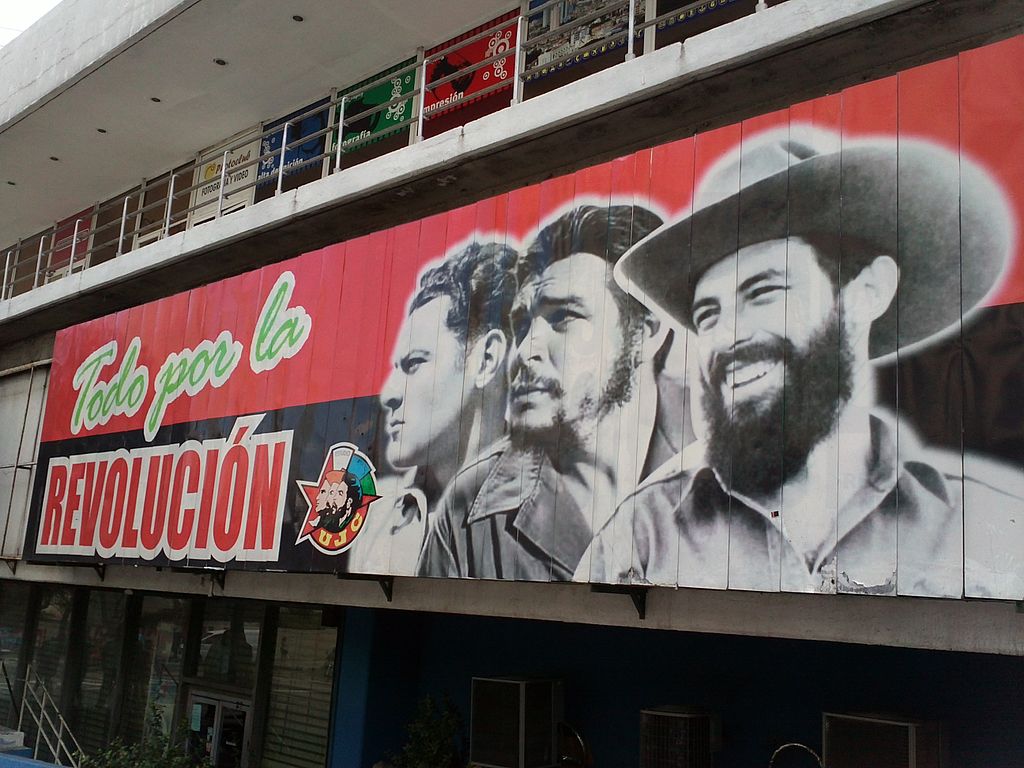
A billboard in Havana, showing Camilo Cienfuegos, Ernesto “Che” Guevara, and Fidel Castro, 4 November 2014.
Photo attributed to Tumpatemcla~commonswiki via Wikimedia Commons.
NP Platformed returns today with that rarest of things in the National Post: an absolutely unironic recommendation to read a CBC News report. The article in question comes from Evan Dyer, and it’s headlined: “How Canadian Tourism Sustains Cuba’s Army And One-Party State“. And it is, we have to confess, a masterpiece of precision. We appreciate the small, uncomfortable barb, for example, concealed in this phrase: “in normal years far more Canadians enter and leave Cuba than citizens of any other country — including Cuba itself.”
Why is Canada a quintessential source of the tourism dollars that flow directly to the Cuban army, or in some cases to partnerships between foreign hospitality providers (like Toronto’s Sunwing Travel Group) and the Cuban army? Last month the world was reminded by Cuban protesters how fragile and miserable the communist island’s economy really is. As people stormed into the streets pleading for food and medicine, sympathizers abroad continued to sing from their moth-eaten hymnal and blame America’s long-standing trade embargo (which allows even American citizens and companies to sell, wait for it, food and medicine to Cuba).
And yet, within Canada, there is no sign of any social stigma attaching to Cuban travel. Perhaps it’s because Latin America is one huge undifferentiated wad in our minds, and if we began to get fussy about the governments of various Caribbean countries (most of which let people leave if they like), we might be forced to … we dunno, winter in Costa Rica or Bermuda or someplace weird like that. Cuba can’t find the cash to keep a fresh coat of paint on a hospital, but the empire of affordable resorts and jineterismo continues to expand. Some of you helped build it.
There is nothing new about this — except the obvious willingness of ordinary Cubans to risk wounds and death to protest against their communist rulers, as Michael Totten reported more than seven years ago:
Cubans in the hotel industry see how foreigners live. The government can’t hide it without shutting the hotels down entirely, and it can’t do that because it needs the money. I changed a few hundred American dollars into convertible pesos at the front desk. The woman at the counter didn’t blink when I handed over my cash — she does this all day — but when she first got the job, it must have been shattering to make such an exchange. That’s why the regime wants to keep foreigners and locals apart.
Tourists tip waiters, taxi drivers, tour guides, and chambermaids in hard currency, and to stave off a revolt from these people, the government lets them keep the additional money, so they’re “rich” compared with everyone else. In fact, they’re an elite class enjoying privileges — enough income to afford a cell phone, go out to restaurants and bars, log on to the Internet once in a while — that ordinary Cubans can’t even dream of. I asked a few people how much chambermaids earn in tips, partly so that I would know how much to leave on my dresser and also to get an idea of just how crazy Cuban economics are. Supposedly, the maids get about $1 per day for each room. If they clean an average of 30 rooms a day and work five days a week, they’ll bring in $600 a month — 30 times what everyone else gets. “All animals are equal,” George Orwell wrote in Animal Farm, his allegory of Stalinism, “but some animals are more equal than others.” Only in the funhouse of a Communist country is the cleaning lady rich compared with the lawyer. Yet elite Cubans are impoverished compared with the middle class and even the poor outside Cuba.
August 28, 2020
Britain’s National Trust decides to go in a radically different direction
If you’ve ever visited the UK, you’ll almost certainly have seen some National Trust historic properties in your travels. Despite the name, it’s not a government-affiliated organization, so the Trust has its mission set by its own leadership … and the current leadership are apparently turning their back on the tradional role of the Trust “due to the pandemic”:
From its establishment in 1895 by Octavia Hill, Sir Robert Hunter and Hardwick Rawnsley “to promote the permanent preservation for the benefit of the Nation of lands and tenements (including buildings) of beauty or historic interest”, it has become the pre-eminent haunt of the tasteful middle classes, and is as much part of national life as that other much-lauded institution, the NHS. I have fond memories from my own childhood, and beyond, of walking round grand houses and of playing in their lavish and beautifully appointed grounds. Even their names produce a kind of Proustian rush in me – Felbrigg, Blickling, Stourhead, Dyrham Park, Kingston Lacy. In an uncertain and constantly changing world, the National Trust seemed to be almost a secular church, a rather well-appointed and comfortable Rock of Ages in its own right.
Yet we live in a time when a grubby little pandemic has turned all certainties upside down, and so even the National Trust has had to rethink its plans for the future. Unfortunately, its method of so doing seems to be both destructive and ill-considered. Some might call it woke, if it weren’t for the fact that its actions do not seem to be dictated by panicked social change, but instead by the reported £200 million loss that the coronavirus outbreak has occasioned. Despite having an endowment of over a billion pounds, and still retaining the annual memberships of over five million people, elements within the organisation that long for disruption seem now to have grasped the initiative, with potentially disastrous consequences for both the Trust and the country at large.
An internal briefing document that was leaked to the Times by a no doubt furious insider represents a chilling account of a cull of both heritage and expertise. It describes the status quo as “an outdated mansion experience”, and one that exists only to serve “a loyal but dwindling audience.” It plans to deal with this old-fashioned situation by firing dozens of its curators, placing large amounts of art and antiquities in storage, and by closing most of the properties to the public, instead letting them be hired by corporate entities and the well-heeled for private events, or “new sources of experience-based income”. As the document put it, the Trust wishes to “flex our mansion offer to create more active, fun and useful experiences.” Flex. Mansion Offer. We are, it seems, at the end of days.
I briefly considered, before writing this article, attempting to hold a séance to try and obtain James Lees-Milne’s views from beyond the grave, but eventually decided against interrupting his eternal rest to inform him of the disappointing and frightening news. Yet this situation does not need the phantoms of long-dead architectural historians to fan the flames. There are plenty of living people who are equally, and vocally, appalled, ranging from those who cancelled their memberships to the Trust when the institutional ties were no longer available in their gift shops to the curators, historians and architectural consultants who stand to lose both income and professional standing if these ill-considered and short-sighted reforms are brought about.
The art historian and broadcaster Bendor Grosvenor has been especially exercised by the revelation of the Trust’s plans. He has described their restructuring ideas in The Art Newspaper as “one of the most damaging assaults on art historical expertise ever seen in the UK.” Grosvenor has since been assiduously passing scathing commentary on the various public statements, of varying degrees of disingenuity, made by various high-up executives at the National Trust, none of which have denied that historic properties will be “repurposed”, that the specialist curator posts will be “closed” and the expert curators fired, nor, perhaps most chillingly of all, that the Trust will be seeking to “dial down” its status as a “major national cultural institution”.
About thirty years ago, when we could afford to travel more often, we had a family membership in the National Trust even though we’d only get to visit National Trust properties for two-to-three weeks in a given year. I’m very disappointed to hear about this planned change to the organization, but the chances of me visiting the UK anytime in the next few years are quite low, so I may not have to worry about it personally.
August 23, 2020
QotD: Herbert Hoover and the American tourists
The US Consulate in London didn’t know how to solve these problems either. But Herbert Hoover, still high on his decision to pivot to philanthropy and public service, calls them up and asks if he can help. They say yes, definitely. Hoover gets in touch with his rich friends, passes around the collection plate, and organizes a Committee For The Assistance Of American Travelers. Then he gets to work, the way only he can:
Within 24 hours, Hoover’s committee had its own stationery, and within forty-eight it was operating a booth in the ballroom of the Savoy Hotel as well as three other London locations. Through his business connections, Hoover managed to bypass restrictions on telegraph service and open a transatlantic line to allow Americans to wire money to stranded friends and relatives. In a city suddenly flooded with refugees, he reserved for American travelers some two thousand rooms in hotels or boardinghouses. He issued a press release proclaiming that his Residents’ Committee was assuming charge of all American relief work in the city, and that in doing so it had the blessings of its honorary chairman, Walter Hines Page, the US ambassador to London.
… which is totally false. Hoover is starting to display a pattern that will stick with him his whole life – that of crushing competing charities. He begins a lobbying effort to get the US Embassy to ban all non-Hoover relief work, focusing on the inefficiency of having multiple groups working on the same problem. When the US Assistant Secretary Of War arrives in London to coordinate a response, he is met on the dock by Hoover employees, who demand he consult with Hoover before interfering in the US tourist issue. Eventually the Embassy, equally exasperated by Hoover’s pestering and impressed with his results, agrees to give him official control of the relief effort.
After two months of work, Hoover and his Committee have repatriated all 120,000 US tourists, supporting them in style until it could find them boat tickets. All of its loans and operating costs have been repaid by grateful tourists, and its budget is in the black. The rescued travelers are universal in their praise for Hoover, partly because Hoover has threatened to ruin any of them who get too critical:
Other complainants were received with less patience, including a hotheaded professor of history from the University of Michigan, who wrote to accuse the Residents’ Committee of mistreatment. Hoover refuted his charges indignantly and comprehensively, copying his response to the president of the university and its board of regents. After a meeting with his employer, the professor returned Hoover an abject retraction and apology.
Scott Alexander, “Book Review: Hoover”, Slate Star Codex, 2020-03-17.
July 28, 2020
How Matt Ridley stopped being an “Enviro-Pessimist”
It was human ingenuity that did it for him:
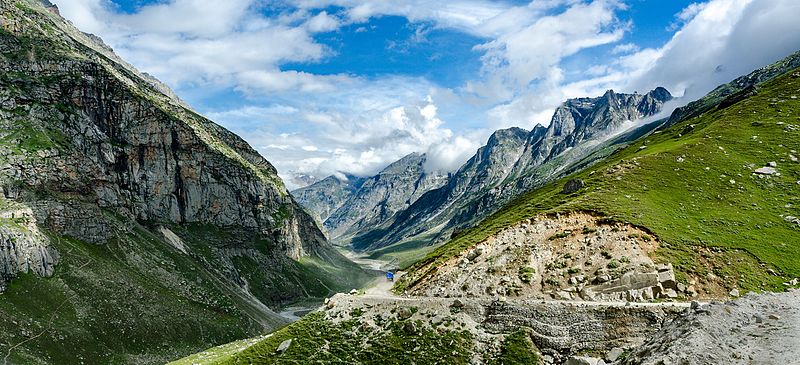
Spiti Valley in the Great Himalayan National Park. (The little blue speck in the middle of the photo is a truck, for scale.)
Photo by Sudhanshu Gupta via Wikimedia Commons.
If you had asked me in 1980 to predict what would happen to that bird and its forest ecosystem, I would have been very pessimistic. I could see the effect on the forests of growing human populations, with their guns and flocks of sheep. More generally, I was marinated in gloom by almost everything I read about the environment. The human population explosion was unstoppable; billions were going to die of famine; malaria and other diseases were going to increase; oil, gas, and metals would soon run out, forcing us to return to burning wood; most forests would then be felled; deserts were expanding; half of all species were heading for extinction; the great whales would soon be gone from the oil-stained oceans; sprawling cities and modern farms were going to swallow up the last wild places; and pollution of the air, rivers, sea, and earth was beginning to threaten a planetary ecological breakdown. I don’t remember reading anything remotely optimistic about the future of the planet.
Today, the valleys we worked in are part of the Great Himalayan National Park, a protected area that gained prestigious World Heritage status in 2014. The logo of the park is an image of the western tragopan, a bird you can now go on a trekking holiday specifically to watch. It has not gone extinct, and although it is still rare and hard to spot, the latest population estimate is considerably higher than anybody expected back then. The area remains mostly a wilderness accessible largely on foot, and the forests and alpine meadows have partly recovered from too much grazing, hunting, and logging. Ecotourism is flourishing.
This is just one small example of things going right in the environment. Let me give some bigger ones. Far from starving, the seven billion people who now inhabit the planet are far better fed than the four billion of 1980. Famine has pretty much gone extinct in recent decades. In the 1960s, about two million people died of famine; in the decade that just ended, tens of thousands died — and those were in countries run by callous tyrants. Paul Ehrlich, the ecologist and best-selling author who declared in 1968 that “[t]he battle to feed all of humanity is over” and forecast that “hundreds of millions of people will starve to death” — and was given a genius award for it — proved to be very badly wrong.
Remarkably, this feeding of seven billion people has happened without taking much new land under the plow and the cow. Instead, in many places farmland has reverted to wilderness. In 2009, Jesse Ausubel of Rockefeller University calculated that thanks to more farmers getting access to better fertilizers, pesticides, and biotechnology, the area of land needed to produce a given quantity of food — averaged for all crops — was 65 percent less than in 1961. As a result, an area the size of India will be freed up by mid-century. That is an enormous boost for wildlife. National parks and other protected areas have expanded steadily as well.
Nor have these agricultural improvements on the whole brought new problems of pollution in their wake. Quite the reverse. The replacement of pesticides like DDT with much less harmful ones that do not persist in the environment and accumulate up the food chain, in addition to advances in biotechnology, has allowed wildlife to begin to recover. In the part of northern England where I live, otters have returned to the rivers, and hawks, kites, ospreys, and falcons to the skies, largely thanks to the elimination of organochlorine pesticides. Where genetically modified crops are grown — not in the European Union — there has been a 37 percent reduction in the use of insecticides, as shown by a recent study done at Gottingen University.
One of the extraordinary features of the past 40 years has been the reappearance of wildlife that was once seemingly headed for extinction. Bald eagles have bounced back so spectacularly that they have been taken off the endangered list. Deer and beavers have spread into the suburbs of cities, followed by coyotes, bears, and even wolves. The wolf has now recolonized much of Germany, France, and even parts of the heavily populated Netherlands. Estuaries have been cleaned up so that fish and birds have recolonized rivers like the Thames.
May 3, 2020
The Great Exhibition of 1851
In the latest Age of Invention newsletter, Anton Howes looks at one of the biggest popular events of Queen Victoria’s reign, the Great Exhibition:
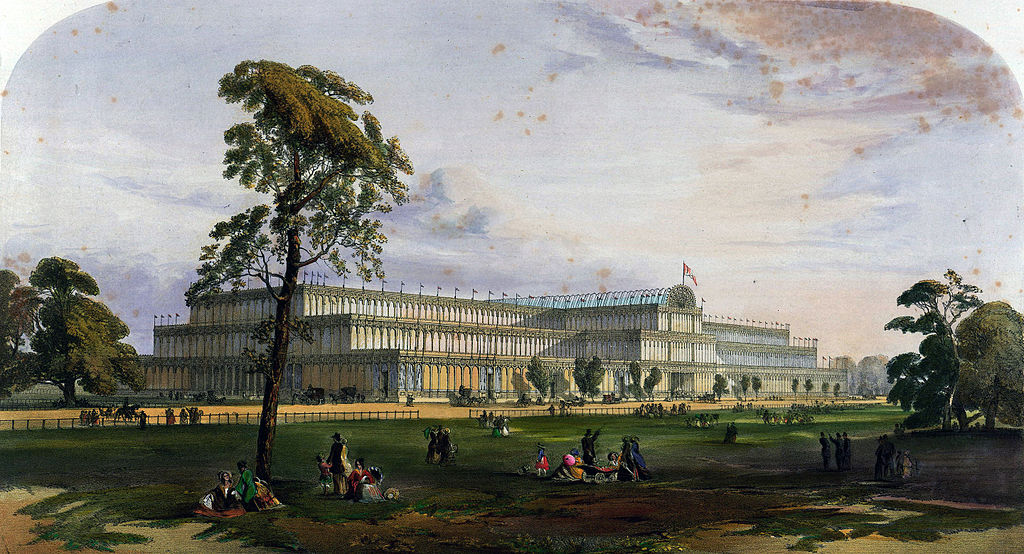
The Crystal Palace from the northeast during the Great Exhibition of 1851, image from the 1852 book Dickinsons’ comprehensive pictures of the Great Exhibition of 1851
Wikimedia Commons.
On this day, in 1851, Londoners were finally allowed to enter one of the most spectacular edifices to grace their city. Over the previous months they had watched it spring up in Hyde Park — the largest enclosed structure that had ever been built, and made with three hundred thousand of the largest panes of glass ever produced. Set against the blackened, soot-stained buildings of London, the massive glass edifice gleamed. It soon became known as the Crystal Palace.
Although it no longer exists — it was rebuilt in Sydenham, but the new version burnt down in the 1930s — the fame of the Crystal Palace endures. The same goes for the event that it was originally built for, the Great Exhibition of 1851. But, despite that name-recognition, I’ve found that most people don’t really know what the Great Exhibition was for. Yes, it attracted six million visitors in the space of just a few months — an estimated two million people, almost a tenth of the entire population of Great Britain, most of them returning again and again. But why? I must admit, despite having mentioned the event before in some of my work, I’d never really considered it properly before I started researching the history of the Society of Arts.
The idea of such an exhibition in Britain originated with the Society’s secretary in the 1840s, the civil engineer Francis Whishaw. He had seen the use of industrial exhibitions in France, as a means of catching up with Britain in terms of technology. Every few years since 1798, the French government had held an exhibition of its national industries in Paris. The state paid for everything — a grand temporary building, as well as the expenses of the exhibitors — and the head of state himself awarded medals and cash prizes for the bet works on display. Some of the very best exhibitors were even admitted to the Légion d’honneur, France’s highest order of merit. The benefits to exhibitors were so high that essentially every manufacturer wished to take part. In the days before GDP statistics, the exhibitions were thus an effective means of getting a detailed snapshot of the nation’s manufacturing capabilities. An exhibition served as the nation’s industrial audit.
[…]
Although there had been a few local exhibitions of industry in Britain in the late 1830s and early 1840s, there had been nothing on a national scale to rival the French ones. So Francis Whishaw began the work of getting the Society to organise such an event — a national exhibition of industry for Britain. His initial plan came to nothing, partly as he left the Society to take another job, but in the late 1840s the project was resurrected by a new member of the Society, a civil servant named Henry Cole. In fact, Cole almost entirely took over the Society in the late 1840s, turning it into an exhibition-holding organisation. It held exhibitions devoted to particular living artists, on ancient and medieval art, on inventions, and especially on industrial design — what Cole liked to call “art-manufactures”. And, at the 1849 national exhibition in Paris, he adopted an idea that had already been floated for some years by French officials: an international exhibition, to show the industry of all nations.
This was the crucial step. The idea of an international exhibition of industry appealed to the free trade movement in Britain, which had achieved success in the 1840s with the abolition of the Corn Laws. By displaying the products of other nations, the argument went, British consumers would demand that they be able to buy them more cheaply. And free trade would hopefully bring an end to war, too. Free trade campaigners argued that the productive classes of rival nations competed peacefully, simply by trying to outdo one another in the quality and quantity of what they produced. It was the landed aristocracy, they argued, who let the competition become violent, feeding their pride by causing destruction. Thus, a grand exhibition of the products of all nations — the Great Exhibition — would be a physical manifestation of free trade and international harmony: a “competition of arts, and not of arms”.
The Great Exhibition thus had many roles. It was partly born of national paranoia, about French industrial catch-up, as well as about Britain being the first to hold such an event. It was also about exciting competitive emulation between manufacturers, showing consumers what they did not know they wanted, and achieving world peace and free trade. It certainly spurred on dozens of examples of international cooperation. In fact, just the other day I discovered that the first international chess tournament was held in London to coincide with the exhibition. And it served as an audit of the world’s industries, allowing people to judge who was ahead and who was behind. It thereby gave domestic reformers the ammunition to push for changes in areas where Britain seemed to be falling behind, in areas like education, intellectual property, and design. But more on those another time.
April 24, 2020
QotD: The best way to see Toronto (aka “Greater Parkdale”)
David Warren, “The scandal of interiors”, Essays in Idleness, 2018-01-25.
February 26, 2020
“… the First World’s most dysfunctional train: The Canadian, which in theory links Vancouver to Toronto”
Chris Selley fires all his guns at the pride of VIA Rail Canada’s passenger services, The Canadian:

VIA dome observation car, on The Canadian in 2007.
Photo by Savannah Grandfather via Wikimedia.
With the Ontario Provincial Police somehow finally roused to action in Tyendinaga, Ont., it seems the CN railway blockade may not last its third week. This outstanding achievement in law enforcement will come as a relief in particular to the nation’s business community, people who enjoy staple foods, and the propane-dependent. The minority of travellers along the Windsor-to-Quebec City corridor who ride VIA Rail were not as imperilled: most essential, tight-budgeted VIA trips can also be made by bus, with only moderate time lost and with money saved as a consolation. But they too will be pleased. As maddening as VIA’s corridor services can be, with their ancient rolling stock, outrageously stale food, mostly theoretical wi-fi, schedules that get slower rather than faster and reliable delays regardless, trains are just genetically superior to buses.
Or at least, most are. The Windsor-to-Quebec City services are practically Japanese in comparison to what must be the First World’s most dysfunctional train: The Canadian, which in theory links Vancouver to Toronto. It has been shut down almost since the blockade began, and hardly anyone has noticed. It’s time we talk about this crazy thing.
What, you may ask, is the most ridiculous thing about The Canadian? Some might point to the astonishing level of subsidy: In 2018, the average corridor passenger enjoyed a subsidy of $32, or 17 cents per mile. The average passenger on The Canadian: $596, or 48 cents a mile, for a total of $49 million.
But never mind the price for a second; look what it’s buying. Fifty years ago, CN’s Super Continental was scheduled to take 67 hours. Today The Canadian, plying the same route and giving way to every freight train, is budgeted a mind-boggling 85 hours eastbound and 97 westbound.
[…]
For all the subsidies, The Canadian is eye-wateringly expensive. For the full one-way trip, a cabin for two will set you back $3,824, meals included. You can take a five-day mid-range Caribbean cruise for that, and that’s no coincidence: The Canadian is essentially a cruise ship on rails. It’s just that, well, Canadian taxpayers don’t subsidize cruise lines. Because that would be nuts.
I’ve always wanted to ride The Canadian, but I never could afford both the time and the money at the same time. (I have the time now, but I’m struggling to pay my bills, so even a GO Train trip into Toronto needs to be carefully budgeted … a trip on The Canadian would be a very significant percentage of my gross annual income!).
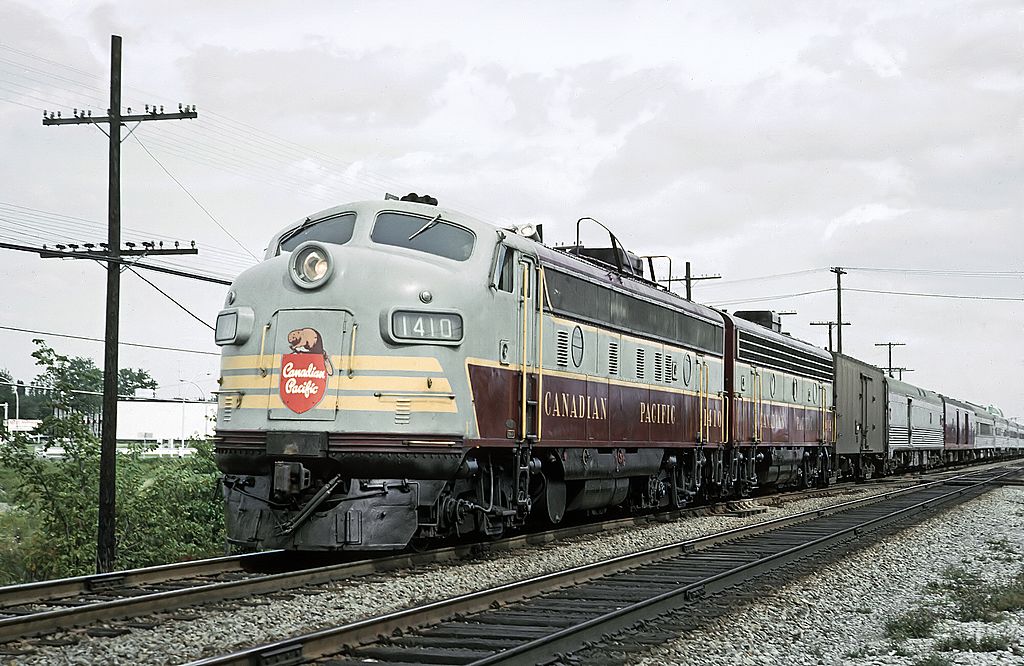
Canadian Pacific FP7 locomotive 1410 at the head of The Canadian stopped at Dorval, Quebec on 6 September, 1965. The Canadian was Canadian Pacific’s premier passenger train before VIA Rail was formed.
Photo by Roger Puta via Wikimedia Commons.


