
Many thanks for your letter. You ask whether totalitarianism, leader-worship etc. are really on the up-grade and instance the fact that they are not apparently growing in this country and the USA.I must say I believe, or fear, that taking the world as a whole these things are on the increase. Hitler, no doubt, will soon disappear, but only at the expense of strengthening (a) Stalin, (b) the Anglo-American millionaires and (c) all sorts of petty führers of the type of de Gaulle. All the national movements everywhere, even those that originate in resistance to German domination, seem to take non-democratic forms, to group themselves round some superhuman führer (Hitler, Stalin, Salazar, Franco, Gandhi, De Valera are all varying examples) and to adopt the theory that the end justifies the means. Everywhere the world movement seems to be in the direction of centralised economies which can be made to “work” in an economic sense but which are not democratically organised and which tend to establish a caste system. With this go the horrors of emotional nationalism and a tendency to disbelieve in the existence of objective truth because all the facts have to fit in with the words and prophecies of some infallible führer. Already history has in a sense ceased to exist, ie. there is no such thing as a history of our own times which could be universally accepted, and the exact sciences are endangered as soon as military necessity ceases to keep people up to the mark. Hitler can say that the Jews started the war, and if he survives that will become official history. He can’t say that two and two are five, because for the purposes of, say, ballistics they have to make four. But if the sort of world that I am afraid of arrives, a world of two or three great superstates which are unable to conquer one another, two and two could become five if the führer wished it. That, so far as I can see, is the direction in which we are actually moving, though, of course, the process is reversible.
As to the comparative immunity of Britain and the USA. Whatever the pacifists etc. may say, we have not gone totalitarian yet and this is a very hopeful symptom. I believe very deeply, as I explained in my book The Lion and the Unicorn, in the English people and in their capacity to centralise their economy without destroying freedom in doing so. But one must remember that Britain and the USA haven’t been really tried, they haven’t known defeat or severe suffering, and there are some bad symptoms to balance the good ones. To begin with there is the general indifference to the decay of democracy. Do you realise, for instance, that no one in England under 26 now has a vote and that so far as one can see the great mass of people of that age don’t give a damn for this? Secondly there is the fact that the intellectuals are more totalitarian in outlook than the common people. On the whole the English intelligentsia have opposed Hitler, but only at the price of accepting Stalin. Most of them are perfectly ready for dictatorial methods, secret police, systematic falsification of history etc. so long as they feel that it is on “our” side. Indeed the statement that we haven’t a Fascist movement in England largely means that the young, at this moment, look for their führer elsewhere. One can’t be sure that that won’t change, nor can one be sure that the common people won’t think ten years hence as the intellectuals do now. I hope they won’t, I even trust they won’t, but if so it will be at the cost of a struggle. If one simply proclaims that all is for the best and doesn’t point to the sinister symptoms, one is merely helping to bring totalitarianism nearer.
You also ask, if I think the world tendency is towards Fascism, why do I support the war. It is a choice of evils — I fancy nearly every war is that. I know enough of British imperialism not to like it, but I would support it against Nazism or Japanese imperialism, as the lesser evil. Similarly I would support the USSR against Germany because I think the USSR cannot altogether escape its past and retains enough of the original ideas of the Revolution to make it a more hopeful phenomenon than Nazi Germany. I think, and have thought ever since the war began, in 1936 or thereabouts, that our cause is the better, but we have to keep on making it the better, which involves constant criticism.
George Orwell, responding to a letter from Noel Willmett, 1944-05-18.
October 20, 2019
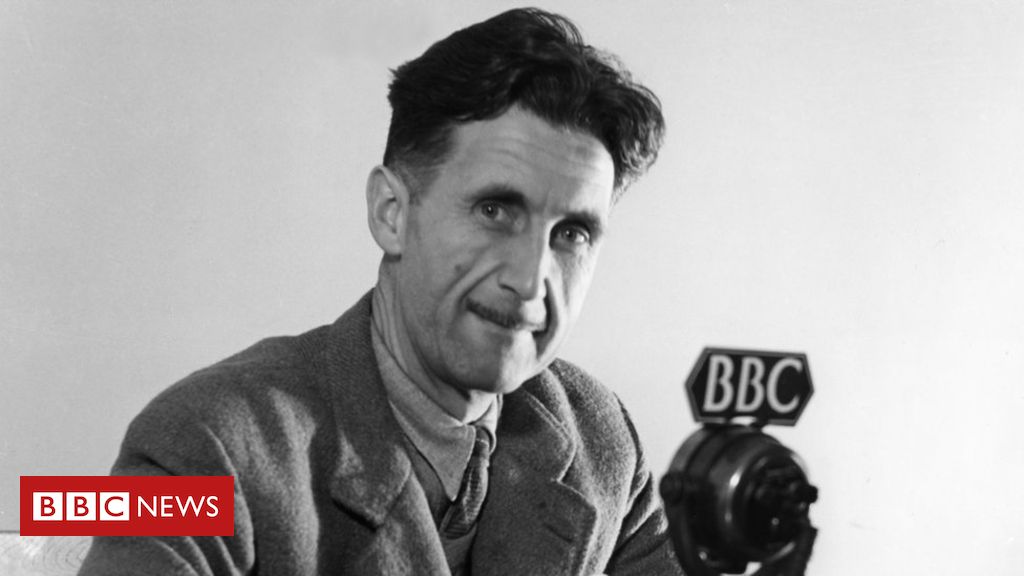
QotD: Why Orwell wrote Nineteen Eighty-Four
October 1, 2019
QotD: The Great Patriotic War
Even by the usual standards of historical irony, it remains astonishing that Hitler’s June 1941 invasion of the Soviet Union not only failed to destroy Bolshevism, but instead conferred a new legitimacy on Stalin’s dictatorship, and probably protracted by a generation the existence of his empire. Successful resistance to Hitler was only possible because of the Soviet leader’s industrialisation programme, which had been carried out at appalling human cost.
The Russian people’s 21st-century notion of what they call “the Great Patriotic War” bears little relationship to our own. It ignores Stalin’s 1939-41 pact with Hitler, and the fact that the Luftwaffe planes that bombed London in the Blitz were powered by Russian fuel. President Putin has made unlawful all published mention of the unspeakable cruelties the Soviet regime inflicted on its own citizens — shooting an estimated 300,000 soldiers for alleged desertion or cowardice — in order to prevail. Antony Beevor’s books, and for that matter my own, are nowadays banned because they describe the Red Army’s 1945 campaign of rape and pillage in Germany.
I have argued elsewhere that the ruthlessness of Stalin’s tyranny was essential to contrive the defeat of Hitler’s tyranny; that if the liberation of Europe had proceeded at a pace determined by the US and British armies, we might still stand short of the Elbe.
Max Hastings, “The centenary of the Russian revolution should be mourned, not celebrated”, The Spectator, 2016-12-10.
September 29, 2019
Being a dictator is a stressful vocation
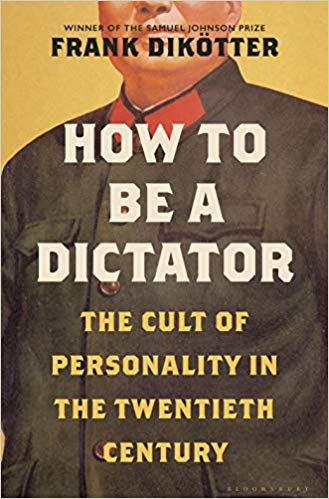
Gustav Jönsson reviews a new book by Professor Frank Dikötter on twentieth-century dictators:
One of the first things to emerge from Professor Frank Dikötter’s eagerly awaited new book How to Be a Dictator is that it is a stressful vocation: there are rivals to assassinate, dissidents to silence, kickbacks to collect, and revolutions to suppress. Quite hard work. Even the most preeminent ones usually meet ignominious ends. Mussolini: summarily shot and strung upside down over a cheering crowd. Hitler: suicide and incineration. Ceausescu: executed outside a toilet block. Or consider the fate of Ethiopia’s Haile Selassie: rumoured to have been murdered on orders of his successor Mengistu Haile Mariam, he was buried underneath the latter’s office desk. Not the most alluring career trajectory, one might say.
Dikötter’s monograph is a study of twentieth century personality cults. He examines eight such cults: those created by Mussolini, Hitler, Stalin, Mao, Kim Il-sung, Duvalier, Ceausescu, and Mengistu. For them, cultism was not mere narcissism, it was what sustained their regimes; foregoing cultism, Dikötter argues, caused swift collapse. Consider Pol Pot and the Khmer Rouge. Cambodians were unsure of Pol Pot’s exact identity for years, even after he had assumed leadership of the country. The Khmer Rouge, meanwhile, was in its initial stages merely called “Angkar” — “The Organisation.” There was no inspiring iconography. There was no ritualised leader worship. There was only dark terror. Dikötter quotes historian Henri Locard: “Failing to induce adulation and submissiveness, the Angkar could only generate hatred.” The Khmer Rouge soon lost its grip on the country. Dikötter makes an obligatory reference: “Even Big Brother, in George Orwell’s 1984, had a face that stared out at people from every street corner.”
Readers of Orwell will remember that INGSOC has no state ideology. There is only what the Party says, which can change from hour to hour. Likewise, Dikötter argues, there was no ideological core to twentieth century dictatorships; there was only the whim of the dictator. Nazism, for example, was not a coherent creed. It contained antisemitism, nationalism, neo-paganism, etc., but its essence was captured in one of its slogans: The Führer is Always Right. That is what the creed amounted to. Indeed, the NSDAP referred to itself simply as “the Hitler movement.” Nazism was synonymous with Hitlerism. Italian Fascism was perhaps even more vacuous. The regime’s slogan was simple: Mussolini is Always Right. Explaining his method of politics, Mussolini said: “We do not believe in dogmatic programmes, in rigid schemes that should contain and defy the changing, uncertain, and complex reality.”
While it is uncontroversial to argue that Nazism and Fascism were without ideology, as Dikötter writes, the “issue is more complicated with communist regimes.” Naturally, Marxism was connected with Stalin, Mao, Ceausescu, Kim, and Mengistu. But Dikötter rightly says that it was Lenin’s revolutionary vanguard, not Marx’s philosophical works, that inspired them. Doctrines can be interpreted in contradictory ways, creating schismatic movements — as shown throughout the history of socialism. In this regard personality cults are far safer because they are substantively empty. Marxist dictators thus subverted Marxism. Engels had said that socialism in one country was impossible, but that is what Stalin’s Soviet Union favoured. Or consider Kim’s North Korea, which in 1972 replaced Marxism with Great Leader Thought. And as Dikötter writes, “Mao read Marx, but turned him on his head by making peasants rather than workers the spearhead of the revolution.” Reading Marx under Marxism, Dikötter says, was highly imprudent: “One was a Stalinist under Stalin, a Maoist under Mao, a Kimist under Kim.” In short, Marxism was whatever the dictator said, and not what Marx had actually written.
September 27, 2019
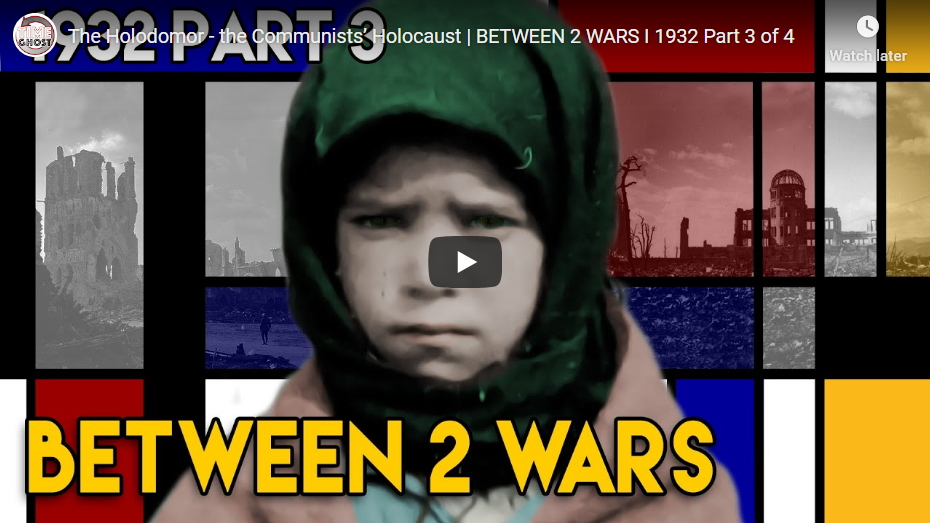
The Holodomor – the Communists’ Holocaust | BETWEEN 2 WARS I 1932 Part 3 of 4
TimeGhost History
Published 26 Sep 2019What do you get when you combine vigorous grain-tax policies, bad harvests with Stalins fear and animosity for the rural population of Ukraine? A man-created murder famine, designed to kill millions of Ukrainian men, women and children.
Join us on Patreon: https://www.patreon.com/TimeGhostHistory
Subscribe to our World War Two series: https://www.youtube.com/c/worldwartwo…
Hosted by: Indy Neidell
Written by: Indy Neidell and Spartacus Olsson
Directed by: Spartacus Olsson and Astrid Deinhard
Executive Producers: Bodo Rittenauer, Astrid Deinhard, Indy Neidell, Spartacus Olsson
Creative Producer: Joram Appel
Post-Production Director: Wieke Kapteijns
Research by: Naman Habtom and Spartacus Olsson
Edited by: Danliel Weiss
Sound design: Marek KaminskiSources:
– Applebaum, Anne, Red Famine: Stalin’s War on Ukraine (2017).
– Davies, R. W. and Stephen G, “Stalin and the Soviet Famine of 1932-33: A Reply to Ellman”, in: Europe-Asia Studies 58-4 (2006), 625-633, https://www.uio.no/studier/emner/hf/i…
– Lewin, M, “The Immediate Background of Soviet Collectivization,” in: Soviet Studies 17-2 (1965) 162–197.
– Kuromiya, Hiraoki, “Ukraine and Russia in the 1930’s”, in Harvard Ukrainian Studies 18-3/4 (1994) 327–341.
– Marples, David R, “Ethnic Issues in the Famine of 1932-1933 in Ukraine,” in: Europe-Asia Studies 61-3 (2009) 505–518.
– Watstein, Joseph, “The Role of Foreign Trade in Financing Soviet Modernization,” in: The American Journal of Economics and Sociology 29-3 (1970) 305–319.
– Wolowyna et al., “Regional Variations of 1932–1934 Famine Losses in Ukraine”.A TimeGhost chronological documentary produced by OnLion Entertainment GmbH.
From the comments:
TimeGhost History
4 hours ago (edited)
This might have been one of the hardest episodes we have written, both historically and emotionally. Nothing could ever do justice to the millions of men, women and children who suffered, starved and died during this episode of history. Let us never forget them. We acknowledge that this topic is surrounded by many opposing agendas, myths so that talking about it can get emotional. This is why, as should be known by now, will UNDER NO CIRCUMSTANCES tolerate any kind of Stalinist apologism, falsification of known facts, or outright denial of the Holodomor. The sources, which are clearly presented in our video, the description and in this comment, are unequivocal about the events covered in this episode. Anywhere were there is an assumption based on deduction from these facts, we mention it. Keep that in mind when discussing this under the episode. We will moderate any comments that can’t abide to these clear and simple rules.
September 14, 2019
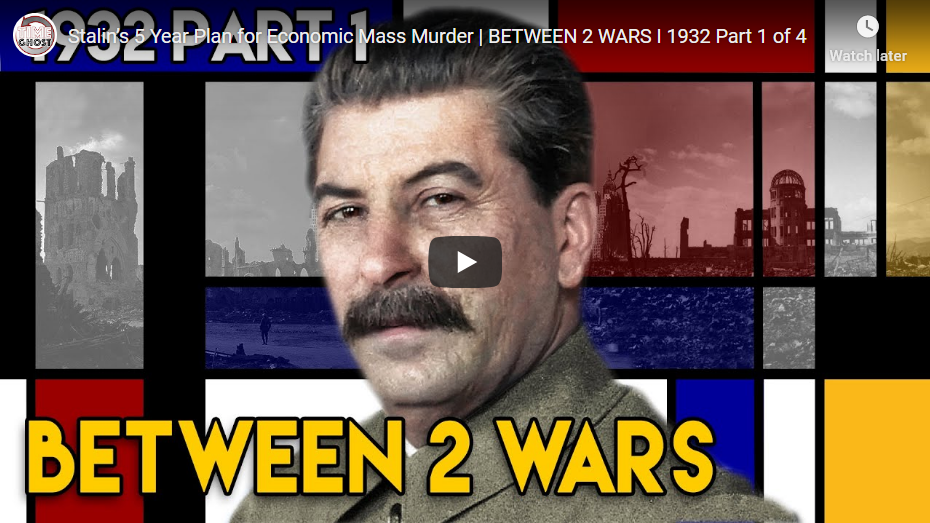
Stalin’s 5 Year Plan for Economic Mass Murder | BETWEEN 2 WARS I 1932 Part 1 of 4
TimeGhost History
Stalin has to deal with the consequences of forcibly changing the Soviet Union from an agrarian economy into a modern industrialized society as his first five-years plan reaches its final year.
Join us on Patreon: https://www.patreon.com/TimeGhostHistory
Hosted by: Indy Neidell
Written by: Spartacus Olsson and Naman Habtom
Directed by: Spartacus Olsson and Astrid Deinhard
Executive Producers: Bodo Rittenauer, Astrid Deinhard, Indy Neidell, Spartacus Olsson
Creative Producer: Joram Appel
Post-Production Director: Wieke Kapteijns
Research by: Naman Habtom
Edited by: Daniel Weiss en Wieke Kapteijns
Sound design: Marek KaminskiA TimeGhost chronological documentary produced by OnLion Entertainment GmbH.
From the comments:
TimeGhost History
1 hour ago (edited)
Debating the concepts, definition and framework of Marxism, Communism and Socialism is something that historians don’t seem to get enough of, much like applying these theories to historical and contemporary phenomena. The study of how these theories turned into ideology and what effect that had on nations, cultures, peoples and wars is a very interesting field of history, which can be debated to great lengths, which we ourselves also like to engage and participate in. However, we want to once again emphasise that we will only allow debate within the generally accepted rules of academic debate. Keep it civil, substantiated, name your sources whenever possible and stay away from pseudo-science and contemporary politics. We are fierce believers in the benefits of academic debate and don’t want to resort to turning off the comments, as other channels might do when talking about subjects like the 5-year plan or the Holodomor.Cheers, Joram
September 3, 2019
An alternative end to the Molotov-Ribbentrop Pact?
On the anniversary of the German invasion of Poland, Arthur Chrenkoff wonders if Stalin’s greatest miscalculation wasn’t refraining from attacking the Nazi forces after they’d been fighting the Polish army for three weeks in 1939:
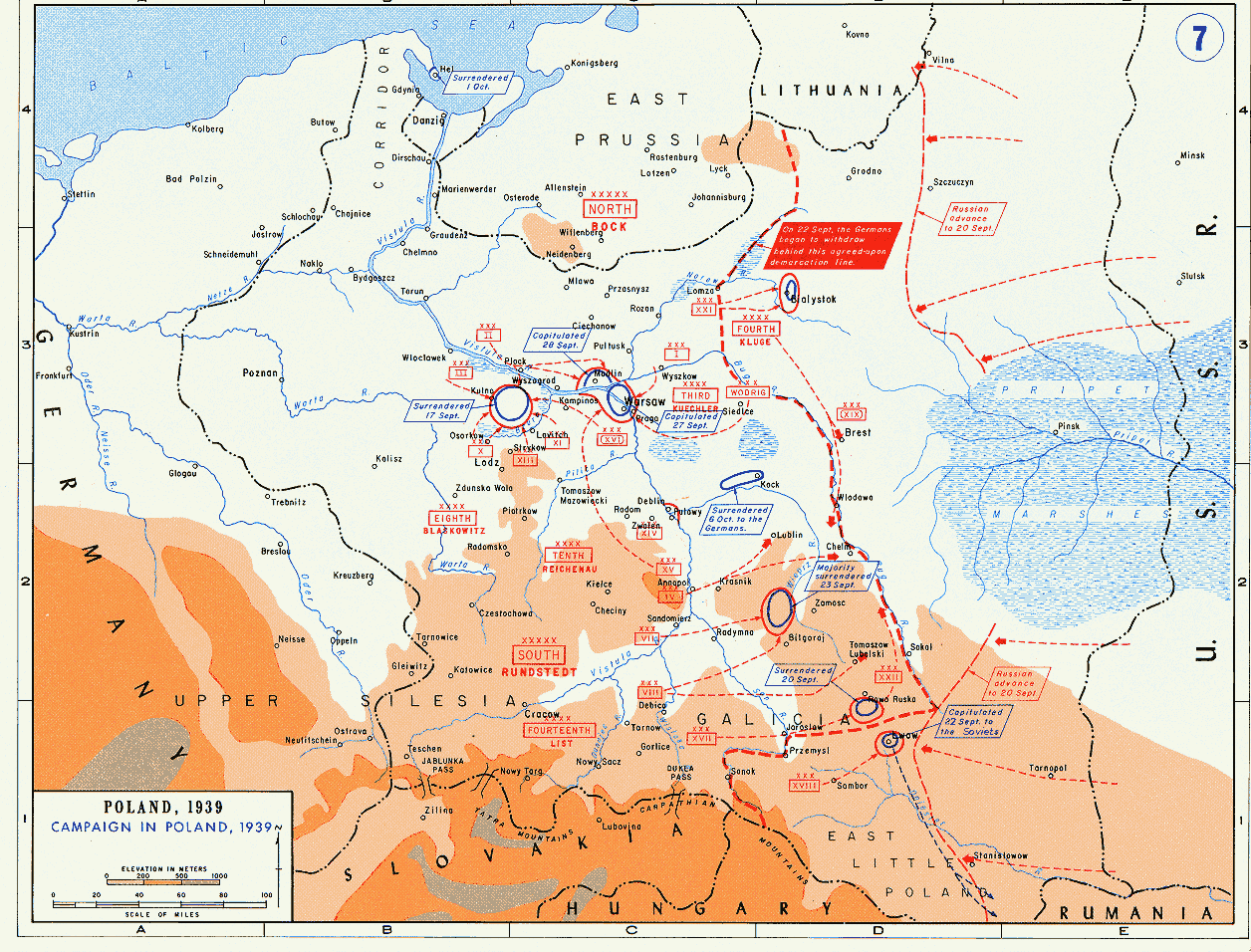
Military situation in Poland, 14 September 1939 (map does not show Slovak Army activity in southern Poland).
United States Military Academy, Department of History via Wikimedia Commons.
In late August, the Soviet Union signed the infamous Ribbentrop-Molotov non-aggression pact with Germany, effectively green-lighting Hitler’s invasion of Poland a few days later. The secret protocols attached to the pact stipulated for the division of Central Europe between the two powers, with the Soviet Union being rewarded for its cooperation with the Nazis with the gift of eastern Poland, the Baltic states and Bessarabia, or the north-eastern Romania (as well as, it transpired later, the German non-interference during the Soviet invasion of Finland).
The Soviets were not naive (even if Stalin discounted all the indications of the coming German attack in 1941) to believe in a long-term friendship with Nazi Germany. There are strong indications that the Soviet Union intended to attack Germany, perhaps sometime in 1942, but Hitler beat it to the punch. The official Russian justification for the Ribbentrop-Molotov pact has certainly always been that the Soviet Union needed to buy itself extra time to prepare for this eventual showdown, since in 1939 it was still nowhere near ready (not least because of Stalin’s decapitation of the Red Army’s top leadership during the Great Terror a few years before).
But what if that was Stalin’s greatest miscalculation ever? By 17 September, when the Red Army crossed the eastern borders of Poland in accordance with the secret partition agreement, it was pretty clear to all that Poland was close to a military defeat (it would have hold on for longer, of course, without the Soviet stab in the back, but this would not have changed much without the Western allies’ military involvement, which never eventuated). While the German armed forces were winning, they were also overcommitted and overstretched. The German high command expected a quicker and easier victory and were taken aback by the ferocity of Polish resistance, despite clear German superiority in armour, air power and logistics. By the second half of September, some ammunition stocks were beginning to run low (particularly bombs) and motorised equipment, from tanks to trucks, has been significantly degraded through a combination of attrition and significant wear and tear in Polish autumn.
So what if the Red Army, instead of eventually coming to a halt along the previously agreed demarcation line, kept going west? There was no significant Polish military force to take into account and German army was tired and weakened after three weeks of hard fighting (losing a third of its tanks and 25 per cent of its air force in the process). While Wehrmacht had numerical advantage on the ground, this was only because the Red Army chose to invade Poland with half a million men, which was certainly enough to subdue the thinly-held eastern marches, but should they have needed it, the Soviets had reserves to draw upon to even out the field against the Germans. Even with their 33 committed divisions, the Red Army had a significant advantage over the German armed forces in the Polish theatre in terms of armour and air power (two to one for the former).
Who would have triumphed in this 1939 clash of the rival totalitarian war machines? We don’t know, of course, except that at the time of the invasion of Poland, Germany was militarily at its weakest point it would be until the final months of World War Two. Should the Red Army have proven victorious in September and October 1939, it would have likely ended up in Berlin in a matter of weeks, instead of years it eventually took. It’s a reasonable guess that Great Britain and France, faced with the Soviet invasion of the Reich and the looming defeat of Hitler, would have overcome their initial inertia and moved into Germany from the west so as to prevent having the communists proverbially water their horses in the Rhine. In this scenario, we would have ended up with a divided Germany and a divided Europe (though without much of the rest of Central and south-Eastern Europe in the Soviet camp) some six years earlier and without the tens of millions of dead, a ruined continent, and the Holocaust that accompanied World War Two as it actually unfolded.
Alas.
June 10, 2019
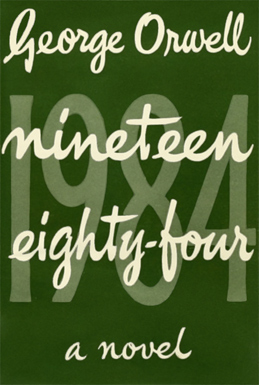
The intended message of George Orwell’s Nineteen Eighty-Four
There are few novels which have been so enthusiastically claimed by partisans of both the right and the left — sometimes simultaneously — for misunderstood reasons. Orwell wasn’t warning us about technology (although he brilliantly illustrated how technology can be harnessed in service of the state), nor was he somehow warning us about the evils of current or recent politicans (Reagan, Bush, Trump). Orwell, a dedicated life-long socialist, was warning us of the dangers of totalitarianism, particularly the communist style of totalitarianism:
June 8, 2019, marks the 70th anniversary of George Orwell’s dystopian novel 1984. There will be no shortage of think pieces that will misinterpret its legacy. They will focus on social media, security cameras, data collection, and “fake news.” The problem? The novel was not a commentary on the downside of technology. It was meant to warn against the growing spread of communism.
In the decades since the time of its publication, the context of Orwell’s magnum opus has been lost. What remains in the cultural memory are simply fragments of the larger picture: government censorship, ubiquitous surveillance cameras, and Orwell’s clever neologisms (Newspeak, doublethink, and thoughtcrime, among others). This selective recall has led to a widespread misreading of the book’s original warning.
[…]
From the left, most present-day articles and blog posts project the character “Big Brother” onto President Donald Trump, like Eliot Namay’s column in the May 6 edition of the Charleston Gazette-Mail. They typically focus on Trump’s fevered populism and his penchant for impulsive speech, which can lead him to play fast and loose with facts.
Sales of 1984 spiked dramatically after his inauguration in 2017 when White House Press Secretary Sean Spicer (incorrectly) touted the “largest audience ever to witness an inauguration.” Trump advisor Kellyanne Conway later defended the claim on Meet the Press, blurting out the now infamous phrase, “alternative facts.” Scores of news stories compared her gaffe to Orwell’s “Newspeak” and “doublethink.” It’s also fairly common to read comparisons of Trump’s rallies to the “Two Minutes Hate” depicted in 1984.
Comparisons from the right, on the other hand, generally focus on the politically correct speech codes of colleges and universities or on the massive data gathering of big tech companies like Facebook and Google, warning readers that “Big Brother is Watching You.” Kalev Leetaru explores both of these issues in his May 6 column in Forbes, where he compares the social media de-platforming trend to Orwell’s “unperson” status. Notably, sales of 1984 also spiked in 2013 after Edward Snowden leaked details of the NSA’s mass collection of internet and phone records. A slew of articles followed, asserting that 1984 had arrived.
A certain amount of hyperbole is a characteristic of today’s reporting and commentary, but current comparisons to 1984 are inappropriate. Again, George Orwell was writing about a specific regime. Big Brother was an obvious reference to “Uncle Joe” Stalin, a uniquely evil dictator. Trump has his shortcomings, but he is no Stalin. A president who is prone to exaggeration does not equal a government-controlled press (which the Soviet Union had). The “Two Minutes Hate” recalled Stalin’s public demonization of Trotzky, who dared to criticize Stalin’s tactics. Data collection is a growing concern, to be sure, but it doesn’t precede a terrifying knock on the door from the KGB.
November 25, 2018
Lenin’s death and Stalin’s rise to Power I BETWEEN 2 WARS I 1924 Part 1 of 2
TimeGhost History
Published on 24 Nov 2018As Lenin’s health starts to fail, the struggle to become his successor picks up speed with Stalin maneuvering closer and closer to power. The outcome of this struggle will define a century of world events.
First off: sorry for some sound issues this was recorded before we built our studio. Again we jump ahead a bit to cover events in the 1920s that have a huge impact on the current events in our WW2 In Real Time series. Our TimeGhost Army member Kamil Szadkowski made this episode possible with his research and balanced views on the events of 1924. Also many, many thanks to Olga Shirnina for providing us with the excellent colorized images for this episode. Check out Olga’s amazing volume of work here: https://klimbim2014.wordpress.com.
Join us on Patreon: https://www.patreon.com/TimeGhostHistory
Hosted by: Indy Neidell
Written and directed by: Spartacus Olsson
Research Contributed by: Kamil Szadkowski
Produced by: Astrid Deinhard
Executive Producers: Bodo Rittenauer, Astrid Deinhard, Indy Neidell, Spartacus Olsson
Community Manager: Joram AppelArchive by Screenocean/Reuter https://www.screenocean.com
A TimeGhost chronological documentary produced by OnLion Entertainment GmbH
Miracle on the Vistula – Polish Soviet War I BETWEEN 2 WARS I 1920 Part 1 of 4
https://www.youtube.com/watch?v=Equ7u…Russia Before the 1917 Revolution I THE GREAT WAR Special
https://www.youtube.com/watch?v=t1b3f…The Russian February Revolution 1917 I THE GREAT WAR Week 137
https://www.youtube.com/watch?v=5SyO5…The Russian October Revolution 1917 I THE GREAT WAR Week 172
https://www.youtube.com/watch?v=2uoLo…The Last Tsar of Russia – Nicholas II I WHO DID WHAT IN WW1?
https://www.youtube.com/watch?v=2OnTL…Lenin & Trotsky – Their Rise To Power I WHO DID WHAT IN WW1?
https://www.youtube.com/watch?v=CPoJ6…
October 28, 2018
Stalin’s Murderous Adventures – WW2 – 009 October 27 1939
World War Two
Published on 27 Oct 2018The persecution, incarceration, enslavement and murder of the Polish people in occupied Poland is driven by ideological hatred for both Nazi Germany and Soviet Russia, but it’s also a personal matter for Joseph Stalin.
WW2 day by day, every day is now live on our Instagram account @World_war_two_realtime
Cuban Missile Crisis Day by Day: https://www.youtube.com/watch?v=oo2Av…
Between 2 Wars: https://www.youtube.com/playlist?list…
Join us on Patreon: https://www.patreon.com/TimeGhostHistory
Or join The TimeGhost Army directly at: https://timeghost.tvWritten and Hosted by: Indy Neidell
Produced and Directed by: Spartacus Olsson and Astrid Deinhard
Executive Producers: Bodo Rittenauer, Astrid Deinhard, Indy Neidell, Spartacus Olsson
Research by: Indy Neidell
Edited by: Spartacus Olsson an Ben Ollerenshaw
Trainee editor SarveshColoring by Spartacus Olsson, Olga Shirnina and Norman Stewart
Olga’s pictures: https://klimbim2014.wordpress.com
Norman’s pictures https://oldtimesincolor.blogspot.com/Archive by Screenocean/Reuters https://www.screenocean.com
A TimeGhost chronological documentary produced by OnLion Entertainment GmbH
October 14, 2018
The Baltic in Stalin’s Squeeze – WW2 – 007 13 October 1939
World War Two
Published on 13 Oct 2018While the Third Reich and USSR consolidate their Polish conquest, their leaders are wary of each other but turn the attention to the next prize. Stalin moves to the North and Hitler pushes for an attack in the West.
Join us on Patreon: https://www.patreon.com/TimeGhostHistory
Or join The TimeGhost Army directly at: https://timeghost.tvWritten and Hosted by: Indy Neidell
Produced and Directed by: Spartacus Olsson and Astrid Deinhard
Executive Producers: Bodo Rittenauer, Astrid Deinhard, Indy Neidell, Spartacus Olsson
Research by: Indy Neidell
Edited by: Spartacus Olsson and Ben OllerenshawColorized Pictures by Spartacus Olsson, Olga Shirnina and Norman Stewart
Olga’s pictures: https://klimbim2014.wordpress.com
Norman’s pictures https://oldtimesincolor.blogspot.com/Archive by Screenocean/Reuters https://www.screenocean.com
A TimeGhost chronological documentary produced by OnLion Entertainment GmbH
August 17, 2018
Assassination attempt on Lenin – German morale plummets I THE GREAT WAR Week 212
The Great War
Published on 16 Aug 2018As the Battle of Amiens is coming to an end, the Germans are desperately trying to stem the Allied advance and fortify new positions. But morale is crumbling and German High Command is running out of time to find a new strategy. Meanwhile in Russia, the struggle between Bolsheviks and Social Revolutionaries reaches a violent climax, as assassins prey on Lenin’s life. The Dunsterforce finally arrives in Baku to help defend the city from the Ottoman advance. But this is not the mighty British force the inhabitants had hoped for. Will Lenin survive? Does Ludendorff choose to abandon all the gains the German army made over the spring? And what about the attack on the Wookies? Find out this and more in the new episode of The Great War.
May 16, 2018
Miracle on the Vistula – Polish Soviet War I BETWEEN 2 WARS I 1920 Part 1 of 4
TimeGhost History
Published on 15 May 2018In 1920 the Bolshevik Russian Red army has more or less routed the Russian counter-revolutionary White armies. Their attention now turns to the West. Lenin wants to take the communist revolution to Germany, France and the United Kingdom. To get there he has to go through Poland though, and he hasn’t counted with Józef Piłsudski, the leader of the Polish Republic.
Most of the amazing colorised pictures in this episode are from Olga Shirnina, who has made a name as one of the best colouring artists there is, especially (but not only) covering Russian historical characters, Check out her website for some amaaaazing eye candy https://klimbim2014.wordpress.com Olga, thanks for letting us use the pictures!
Click here for the rest of the Between 2 Wars series: http://goo.gl/enXJWf
Join the TimeGhost Army at https://timeghost.tv
or on Patreon: https://www.patreon.com/TimeGhostHistoryHosted by: Indy Neidell
Written by Spartacus Olsson and Indy Neidell
Directed by: Spartacus Olsson
Produced by: Astrid Deinhard
Photo Colouring by: Olga Shirnina
Executive Producers: Bodo Rittenauer, Astrid Deinhard, Indy Neidell, Spartacus OlssonA TimeGhost chronological documentary produced by OnLion Entertainment GmbH
April 15, 2018
Stalin in WW1 – Quebec – Scottish Home Rule I OUT OF THE TRENCHES
The Great War
Published on 14 Apr 2018Chair of Wisdom Time!
March 11, 2018
Soviet Leaders in 7 Minutes (History)
Austin Olney
Published on 19 Apr 2016Learn about the leaders of the Soviet Union.
Vladimir Lenin
1917-1922
Joseph Stalin
1922- 1953
Georgy Malenkov
1953-1955
Nikita Khrushchev
1953 – 1964
Leonid Brezhnev
1964 – 1982
Yuri Andropov
1982 – 1984
Konstantin Chernenko
1984 – 1985
Mikhail Gorbachev
1985 – 1991Music – Goldeneye 64 Menu
December 9, 2017
Berlin Airlift: The Cold War Begins – Extra History
Extra Credits
Published on 7 Dec 2017Tension between the Soviet Union and their former World War 2 Allies escalated into a hostile blockade of Berlin. All sides wanted to avoid another war, but the United States, Great Britain, and France refused to bend to Stalin’s pressure. They came up with a daring plan to supply Berlin by air.


