Quotulatiousness

July 20, 2011

Heinlein’s influence on the evolution of the libertarian movement

Filed under: Books, Liberty, Media — Tags: , , , — Nicholas @ 14:14

In a post to correct an assertion by SF author David Brin, Eric S. Raymond shows just how influential the writings of Robert Heinlein were to the early libertarian movement:

Robert Heinlein was a complex man whose views evolved greatly over time. The Heinlein of 1942, who put into the mouth of one of his characters the line “Naturally food is free! What kind of people do you take us for?” was only five years on from having been enchanted by social credit theory, which underpins his “lost” novel For Us, The Living; in later years he was so embarrassed by this enthusiasm that he allowed that manuscript to molder in a drawer somewhere, and it was only published after his death.

Between 1942 and 1966 Heinlein’s politics evolved from New Deal left-liberalism towards what after 1971 would come to be called libertarianism. But that way of putting it is actually misleading, because Heinlein did not merely approach libertarianism, he played a significant part in defining it. His 1966 novel The Moon Is A Harsh Mistress was formative of the movement, with the “rational anarchist” Bernardo de la Paz becoming a role model for later libertarians. By 1978, we have direct evidence (from an interview in Samuel Edward Konkin’s New Libertarian magazine, among other sources) that Heinlein self-identified as a libertarian and regretted his earlier statism.

But if Heinlein’s overall politics changed considerably and wandered down some odd byways during his lifetime, his uncompromising support of civilian firearms rights was a constant on display throughout his life. Brin observes that was already true in 1942, but attempts to attribute this position to John W. Campbell. Multiple lines of evidence refute this claim.

[. . .]

(When time has given us perspective to write really good cultural histories of the 20th century, Heinlein is going to look implausibly gigantic. His achievements didn’t stop with co-inventing science fiction and all its consequences, framing post-1960s libertarianism, energizing the firearms-rights movement, or even merely inspiring me to become the kind of person who not only could write The Cathedral and the Bazaar but had to. No. Heinlein also invented much of the zeitgeist of the 1960s counterculture through his novel Stranger In A Strange Land; it has been aptly noted that he was the only human being ever to become a culture hero both to the hippies of Woodstock and the U.S. Marine Corps. I am told that to this day most Marine noncoms carry a well-thumbed copy of Starship Troopers in their rucksacks.)

February 27, 2011

Sunday book post

Filed under: Books, Economics, History, Media, Military, Wine — Tags: , , , , , — Nicholas @ 10:09

No, not my books: I’ve written lots, but they’re all technical manuals for software products the vast majority of you will never have heard of, and wouldn’t want to read about even if you had. I mean books I’ve read recently that I consider to be very good. I’ll categorize for convenience (both yours and mine):

Science Fiction and Fantasy

  • Darwin’s Watch: The Science of Discworld III, Terry Pratchett, Ian Stewart and Jack Cohen. An entertaining romp through (real) science placed within a fictional context. I read the first Science of Discworld book and quite enjoyed it, and this one is possibly even better. The Discworld, riding happily balanced on the backs of the four great elephants, who are in turn supported by the shell of the great turtle, has very different scientific principles than our own “exotic” roundworld. The most amusing part of the book is the wizards of the Unseen University attempting to ensure that Charles Darwin writes the “correct” book on roundworld. You’ll learn more science than you expect . . .
  • I Shall Wear Midnight, Terry Pratchett. The fourth of the Tiffany Aching sequence in the Discworld series. Although written for a younger audience, Pratchett’s sense of humour and brilliant presentation make this book eminently readable for all ages.
  • Cryoburn, Lois McMaster Bujold. The latest adventure of Miles Vorkosigan deals with the political and social implications of cryogenic preservation. No soaring battles in space, no stunner shootouts, no alien invasions. Sounds deadly dull, I realize, but I don’t think Lois could write a boring shopping list. It perhaps doesn’t stand alone quite as well as it might, but even if you haven’t read any of the other books in the series, I think you’ll find this worth reading.

History

  • The Canadian Army and the Normandy Campaign, John A. English. A book that undermines several widely held beliefs about the efficiency and capability of the Canadian First Army in 1944-45. Between incompetent, scheming generals and political interference, the Canadian Army was less than the sum of its parts, and the importance of training methods and doctrine are highlighted (that is, the faulty training methods in use probably added to the casualty lists in combat). Field Marshal Montgomery didn’t like or trust General Harry Crerar, but was forced to keep him in command due to Canadian government sensitivities. Montgomery’s view of Crerar almost certainly was reflected in the roles assigned to First Canadian Army after the Normandy landings.
  • The Grand Strategy of the Byzantine Empire, Edward N. Luttwak. A fascinating book about the differences between the Byzantine empire’s military and political goals and practices and those of the Roman empire from which it descended. Unlike Rome, the Byzantines were never the “superpower” of their part of the world, and their survival often depended on carefully constructed alliances, allies-of-convenience, and outright bribery of “enemies of their enemies”. Although not well remembered in the west, the survival of Byzantium almost certainly saved central Europe from conquest by the armies of the Caliph during the initial expansion of the Muslim empire. Byzantine armies rarely had much technological or doctrinal advantage over their opponents, so war had to be conducted with the key concept of retention of force: ambush, raid, counter-attack, feint, and misdirection became specialties because they offered (relative) effectiveness at lower risk of outright defeat.
  • In the Name of Rome: The Men Who Won the Roman Empire, Adrian Goldsworthy. A selection of mini-biographies of some of the greatest generals of the Roman empire. What is amazing, in reading about some of their careers, is how little actual military instruction Roman officers received, yet how effective the army could be in spite of that. Being an army officer was viewed as just part of the normal public service — in fact, it would have been problematic for a Roman patrician to remain with the army for an extended period of time, as it would slow down his progress through the civil government ranks.
  • The Defence of the Realm: The Authorized History of MI5, Christopher Andrew. If you wanted a thrilling account of the exciting and dangerous life of counter-espionage, you need to stick to works of fiction. The actual life of an MI5 officer is apparently much less James Bond and much more careful investigation, observation, and data correlation. Not that it isn’t an interesting career, but perhaps the “double oh” agents will get their own book (just kidding).

Economics

  • The Ascent of Money, Niall Ferguson. I enjoyed reading this one far more than I expected to: the author has a knack for carrying you through the less interesting bits without boring or lecturing you. The evolution of the modern monetary system, and the heroic roles played by unlikely characters in the process.
  • The Rational Optimist: How Prosperity Evolves, Matt Ridley. It’s easy to find depressing statistics and dreary anecdotes. Ridley’s view is that progress is a good thing, and that we’re enjoying a golden age even if we don’t realize it right now.

Biography

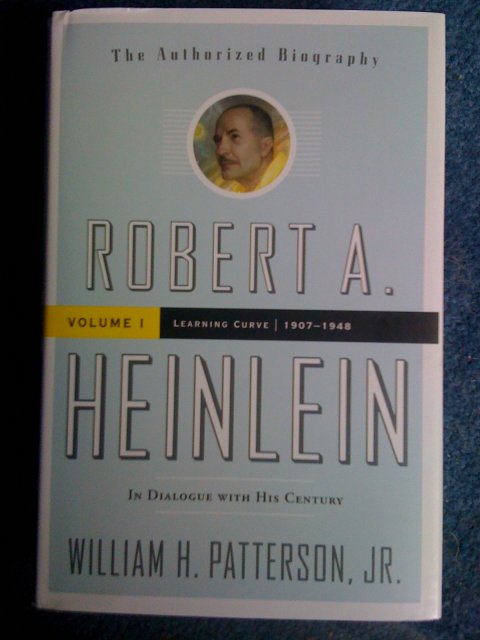
  • Robert A. Heinlein: In dialogue with his century Volume 1, William H. Patterson, Jr. I’ve been a huge fan of Heinlein’s works since I read Starship Troopers at about age 11. This biography more than met my expectations: I’d always regretted never having met Robert Heinlein, but between this book and Heinlein’s own autobiographical writings (Tramp Royale and Grumbles from the grave) I feel I’ve gotten as close to knowing him as possible — until the publication of Volume 2, anyway.
  • Thomas Paine’s Rights of Man, Christopher Hitchens. A lively appreciation of Thomas Paine’s most influential work, and much detail on his life. Paine was far from being the disreputable bomb-throwing anarchist his enemies painted him to be, but he also wasn’t the plaster saint his fans might imagine.

Wine

  • Billy’s Best Bottles: Wines for 2011, Billy Munnelly. Still the best annual wine guide for the everyday wine drinker in Ontario. If you like an occasional bottle of wine, but don’t want to study dozens of books in order to make a decision on what to buy, this is the book for you. He likes more “rustic” wines than I do, so I don’t find his recommendations in that category to be as useful, but he does a great job of sorting through the plethora of $10-20 wines available at the LCBO and tells you which ones are worth buying (and when to serve them).

January 31, 2011

QotD: A hopeful view of Egypt’s way forward

Filed under: Liberty, Middle East, Quotations — Tags: , , , , , — Nicholas @ 17:32

The Old Media — not to mention Hillary Clinton’s comic relief State Department — apparently don’t have a clue what’s really going on. Conservative talk radio already assumes that the whole thing has been orchestrated by militant “Islamists”, in particular, the 80-year-old Muslim Brotherhood. Whenever you see that word, mentally remove the first R to get a clearer picture if what they’re really up to.

The Botherhood of Man is gonna gitcha if you don’t look out.

But I digress.

America’s home grown would-be dictators clearly believe “It can’t happen here”, as demonstrated by their reactions — dazed at first, then hysterical — to the far gentler rise of the Tea Parties and the results of the 2010 election, which they are trying to believe never happened. They’ve spent all of their time since, not changing so that they won’t be despised any more, but trying to shut their critics up by destroying talk radio and requiring individuals to have Internet permits.

[. . .]

Out of sheer habit, if nothing else, it is very difficult not make the same mistake as the pundits and politicians. As Robert A. Heinlein observed, every revolution is a freak. By definition there can be no rules to govern or even understand them, and we must avoid thinking collectively about them. There are as many reasons to rebel as there are rebels, and that’s the only important truth we’ll ever glean from them.

It’s also very difficult to say from what we know now, and I could easily be wrong (I have been before), but it seems to me that this is not a fundamentalist uprising like we saw in Iran a generation ago — although the fundamentalists are desperately trying to coopt it — but an essentially secular revolt by the productive class against both fundamentalism and the fascist management states that dominate the region.

L. Neil Smith, “Egyptian Tea Party”, Libertarian Enterprise, 2011-01-30

August 16, 2010

Cory Doctorow on the new Robert Heinlein biography

RAH by PattersonI finished reading the first volume last night, and I can’t wait for volume two. Cory Doctorow summarizes John Clute’s review with his own observations (Clute compared Heinlein’s work to Doctorow’s):

Heinlein was notoriously recalcitrant about his early life and the two wives he was married to before his epic marriage to Virginia Heinlein. He repeatedly burned correspondence and other writings that related to that period. Clute suggests that this is partly driven by Heinlein’s desire to be Robert A Heinlein, titan of the field, without having to cope with his youthful embarrassments. It’s a good bet — lots of the stuff that drives young people to write science fiction also makes them a pain in the ass to be around until they work some of the kinks out of their system (I wholeheartedly include myself in this generalization).

It’s interesting to see his own growth, from his early priggishness (he was nicknamed “the boy general” as a plebe at the Naval Academy) which undoubtedly was not helped by his health issues and tendency to stammer. He was in the shadow of his older brother Rex Ivar for most of his youth, even following him to the Academy three two years later. Rex Ivar was the favourite child in the family and Robert never seemed to be able to do as well in his parents’ eyes as the older boy.

Robert Heinlein was probably a pretty toxic individual as a teenager, based on the evidence Patterson presents — it’s pretty clear even after most of the information was sanitized by Heinlein’s third wife Virginia. Patterson never met Heinlein, and by the time he took on the biography, most of the people who knew Heinlein were fading from the scene. I think he did a very good job with the information available to him, but the biography definitely improves after the Academy years.

Patterson also puts forward a pretty comprehensive case for the idea that Heinlein’s fiction generally conveys Heinlein’s own political beliefs. This is widely acknowledged among Heinlein fans, save for a few who seem distressed by the idea that the blatant racism and sexism (especially in the earlier works) are the true beliefs of the writer at the time of writing and would prefer to believe that Heinlein didn’t write himself into his works. I got into a pretty heated debate with one such person at the Heinlein panel at the 2007 Comicon, who maintained the absurd position that Heinlein’s views could never be divined by reading his fiction — after all, his characters espouse all manner of contradictory beliefs! (To which I replied: “Yes, but the convincing arguments are always for the same set of beliefs, and the characters who challenge those beliefs are beaten in the argument.”) Not that I fault Heinlein for this — it’s an honorable tradition in SF and the mainstream of literature, and I find Heinlein’s beliefs to be nuanced and complex, anything but the reactionary caricature with which he is often dismissed.

It should be no surprise to anyone over 30 that Robert Heinlein’s political and philosophical views changed over his lifetime. This is discussed in some depth in the book, frequently from Heinlein’s own letters to friends at various points. He lost his religious views very early on (if he ever really had them, other than for conforming to familial expectations), and after leaving the Navy he was deeply involved in Upton Sinclair’s EPIC movement.

His belief in world government must have been hard to sustain, given that he had a great deal of experience of the political process, both in Kansas City during the Pendergast years, and in California with EPIC. Corruption, dirty dealing, and backroom bargaining were the way things got done, and it would be hard to believe that things would be better with a single world-wide government.

What seems to have gotten him involved in EPIC was his first-hand experience of poverty and seeing the plight of the “Okies” who’d come to California after the dust bowl wiped out so many farms in the central states. There were not enough jobs for them, even displacing the Mexican migrant labourers, and they were ineligible for state assistance until after they’d been in California for a year. Sinclair appeared to be the only politician with any plan other than oppressing the Okies enough to force them to move on.


August 13, 2010

Weekend reading material

Filed under: Books, History, Media — Tags: , — Nicholas @ 13:47

When I got back from lunch today, the UPS truck had delivered my weekend reading material:

Update: The first fifty pages have been excellent. It’s interesting how many characters in his fiction are recognizably people from his early life in Missouri.

February 1, 2010

Cookie Monster after visiting Room 101

Filed under: Bureaucracy, Health, Humour — Tags: , , , , — Nicholas @ 09:41

L. Neil Smith looks at the sad remains of a once-great Muppet:

My only child turned twenty years of age early last month, so it has been some time since I kept daily track with her of the various comings and goings of the diverse and colorful inhabitants of Sesame Street.

Thus it was with considerable dismay that I recently learned that my favorite of these denizens had been abducted, tortured, brainwashed by the vile forces of political correctness, and returned to society a broken, pitiable shadow of his former self, rather like Winston Smith in 1984, after rats had been used to force him to scream “Do it to Julia!”

A product of merciless North Korean-style mind-conditioning, the great blue googly-eyed Cookie Monster now mouths mindless, robotic platitudes and slogans like “cookies are a sometimes snack”. He even eats broccoli — the Green Death — in public, like a circus geek consuming broken lightbulbs and handsful of worms. Gone is the joyous hedonist we knew who was a living exemplar of Robert Heinlein’s famous dicta, “Dum vivamus, vivamus!” and “Anything worth doing is worth overdoing!”

He has become just another “progressive” icon, different-looking on the outside, yes, but filled up on the inside with the same bland, gray, unappetizing pablum as Smokey the Bear, Bono, and Janeane Garofalo.

January 25, 2010

Top SF/Fantasy works

Filed under: Books, Media — Tags: , , , , , , — Nicholas @ 17:21

Tyler Cowen linked to Alex Carnevale’s top 100 SF&F works, which has some odd choices (Jack Vance and Ursula K. LeGuin appear to have been the compiler’s favourite authors). In the comments to Tyler’s post, an alternate (unannotated) list by David Pringle was recommended. Pringle’s list doesn’t include Fantasy books, so there’s less overlap between the two than you might expect.

No list of this kind is, or can be, truly authoritative, but there are some common items on each list I can’t criticize as being in the top of the field:

  • The Moon is a Harsh Mistress, Robert Heinlein. Carnevale has this at #2. Pringle doesn’t list it, but has several other (in my opinion, lesser) Heinlein works on his list. This is one of the best libertarian SF novels ever. Even if you’re not over-fond of his work, this short novel is well worth reading.
  • Frankenstein Mary Shelley. This book made #6 for Carnevale, but didn’t make Pringle’s list. I read this when I was 12, and it made quite an impression on me, although I have to admit I like it much more now than I did on first reading it.
  • Dune, Frank Herbert. Carnevale likes it much more than Pringle (#11 versus #48). I liked the original book, but lost interest sometime later in the series.
  • The Hobbit and The Lord of the Rings, J.R.R. Tolkien. Not the original fantasy work, but probably the most common source for inspiration (and verging-on-outright-plagiarism) for an entire sub-field of Fantasy.
  • Stranger in a Strange Land, Robert Heinlein. One of the most subversive books ever published, at least as far as the middle class of the 1960’s was concerned. On the surface, it’s the story of a Martian named Smith. It seems to be one of those books you either love or hate — not much middle ground here.
  • Alice in Wonderland, Lewis Carroll. Pair this with Carroll’s Through the Looking-Glass for the full effect. Another author whose work has been strip-mined for ideas by later writers.
  • 1984 by George Orwell. Pringle’s #1 pick and Carnevale’s #26. I’d certainly put it in my top ten.
  • Fahrenheit 451, Ray Bradbury. This book made both lists (#8 for Pringle,#27 for Carnevale), but I’m afraid I’ve never read it (I tried a couple of Bradbury books when I was in my early teens, but never warmed to him as an author).
  • The Man in the High Castle, Philip K. Dick. Another book that made both lists, but which I haven’t read, and for similar reasons. Early experiences with an author’s work can have long-lasting effects.
  • A Fire upon the Deep by Vernor Vinge. A book that appeals to both fans of the huge stage of deep space and aficionados of the early Internet.
  • Citizen of the Galaxy, Robert Heinlein. One of the very best “young adult” SF novels from before they called them that. Both a coming of age novel and a condemnation of slavery and hypocrisy. Powerful stuff for young minds.
  • Starship Troopers, Robert Heinlein. Another great polarizer: it’s either the best military SF novel ever written or the worst piece of hyper-Fascist propaganda ever written. It’s interesting that Heinlein wrote this book at about the same time as he was working on Stranger. Readers who only knew about the one work might have suffered severe mental whiplash to find he’d written the other one, too. Either way, pretend that the film never happened (aside from the names, it doesn’t have much to do with the novel).
  • The Hitchhiker’s Guide to the Galaxy, Douglas Adams. You want whimsical? HHG took whimsy to a whole different level. What Terry Pratchett did with Fantasy, Adams did with SF.
  • Animal Farm, George Orwell. A book that suffers from being pushed on high school students as mandatory reading. The revolution on the farm, and the aftermath.
  • The Baroque Cycle, Neal Stephenson. A huge four-volume work that repays the effort to work through. Some authors work best at a certain length (short story, novella, novel, etc.). Stephenson seems to work best at the library-shelf level.
  • Ringworld, Larry Niven. I wouldn’t call this a top-ten, but the series of books in this series certainly belong in the top 100.
  • A Canticle for Leibowitz, Walter M. Miller. Post-apocalyptic done well.
  • Snow Crash, Neal Stephenson. Certainly one of the most entertaining books I’ve ever read (it helped that I was working in the computer industry at the time). From Stephenson’s earlier less-than-library-shelf-length period.
  • The Day of the Triffids, John Wyndham. A book I had to read in middle school, yet one I still recall with great affection. Few books can survive being forced down kids’ throats. This one can.
  • Memory, Mirror Dance, and A Civil Campaign, Lois McMaster Bujold. I had trouble stopping at just three of Bujold’s “Vorkosigan” series, as they’re all highly entertaining and deeply engaging. Some call it space opera, but it’s far more involved and well-executed than that easy label would indicate. One of the very best SF authors ever. Her more recent work is predominantly Fantasy, and while they’re very good, I’m more interested in her SF writing.
  • The Atrocity Archive and The Jennifer Morgue, Charles Stross. Imagine if the British secret service had an even more eldritch secret service component. But run strictly according to civil service rules.
  • Pyramids, Men at Arms, Interesting Times, and The Wee Free Men, Terry Pratchett. Another author for whom it is difficult to select even a few examples (they’re all so good). His Discworld series started as a simple pastiche of typical swords-and-sorcery novels, but which quickly outgrew the confines of the first few books. The Wee Free Men is the first of a series of Young Adult novels for the Discworld (including A Hat Full of Sky, Wintersmith and the forthcoming I Shall Wear Midnight).
  • Old Man’s War, John Scalzi. Another military SF story, but so well thought-out and executed as to transcend the ordinary levels of the sub-genre. Follow-on works are equally good (The Ghost Brigades, The Last Colony, and Zoe’s Tale).
  • Island in the Sea of Time, S.M. Stirling. Another time-travel story, but avoiding the usual pitfalls of time travel story lines (the secret was to go back before written history…). This was the first book of a trilogy. Stirling is currently completing a related series of stories hinging on what happened to the world left behind in the original trilogy (starting with Dies the Fire).
  • The Probability Broach, L. Neil Smith. More interesting (and amusing) ideas per page than any other novel of its era. Another libertarian book, but don’t let the label scare you off: great reading.

What’s that? No Clarke? No Asimov? No Sturgeon? No Card? No Zelazny? No Brunner? Not in the top whatever-number-I-stopped-at. Each has strong fans, and some good work, but not top-rank in my view.

July 23, 2009

Realizing Heinlein’s “The Man Who Sold the Moon”

Filed under: Space — Tags: , , , — Nicholas @ 07:40

Unlike in the original story, this isn’t going to be just a ploy to get advertisers to help fund the first moon shot:

“If you’re interested, the logo of your choice could go lunar for as little as the minimum $46,000 bid. (Hurry! Bidding started two days ago.)”

Update, 24 July: For a very interesting discussion of the Apollo program, and the design choices taken, see Charles Stross’s blog post. Good stuff (even if I’m way late in linking to it).

« Newer Posts

Powered by WordPress

