Quotulatiousness

September 20, 2019

The reason we don’t have – and will never have – an Economists Party

Filed under: Cancon, Economics, Politics — Tags: , , — Nicholas @ 03:00

Andrew Coyne points out that the study of economics probably disqualifies you from being an effective politician, because achieving success in the sausage factory of politics requires you to ignore or even work against economic facts:

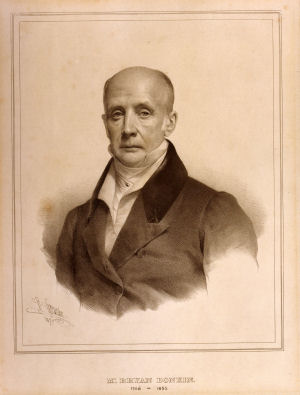
A Mises Institute graphic of some of the key economists in the Austrian tradition (Carl Menger, Ludwig von Mises, Friedrich Hayek, Murray Rothbard, and Hans-Hermann Hoppe.
Mises Institute via Wikimedia Commons.

I believe I was the first to propose the creation of an Economists Party, a political movement that would advocate for the sorts of policies favoured by people who study economics for a living, based on the principles at its core.

It could not happen, of course, any more than the existing parties are likely to suddenly embrace the teachings of economists they have so cheerfully ignored until now, and for the same reason: because politics is, at its core, the opposite of economics.

The basic principle of economics is that everything is scarce. The basic principle of politics is that nothing is scarce. Economics teaches that more of one thing can only be had at the expense of less of another. Politics teaches that we can have more of both things, and of everything else besides.

Since more of one thing means less of another, economics tells us there is no point in favouring one part of the economy over another: the resources diverted to one firm, industry or region are simply resources denied to all the rest. Whereas politics is all about such transfers: a perpetual merry-go-round of redistribution, not from rich to poor, which is appropriate, but from everybody to everybody, which is impossible.

And if, for some reason, a politician were to resist this impulse, he would shortly find himself out of work. For whereas the benefits of a given intervention are typically concentrated on this or that group, the costs are spread widely; its beneficiaries, accordingly, have every incentive to organize and agitate on its behalf, while those footing the bill — consumers, taxpayers, or both — have comparatively little at stake as individuals. They may not even know who they are.

Thus it is that politics inclines, more or less inevitably, to prefer the narrow interest over the broad; producers over consumers; the present over the future. The only difference between the parties is whether this bias to the expedient is dressed up as a philosophy and celebrated as a positive good, or merely yielded to.

September 10, 2019

We’ve noticed this too…

Sarah Hoyt on the increasing “green-ness” of her appliances — and the increasing uselessness of same:

For years we got expensive front loaders, and yet our clothes kept smelling, there were stains that would not come out, and these things seemed to last only 5 years, on the outside. And I knew it wasn’t our problem, as such, because at the same time we started noticing we couldn’t get our clothes clean, the detergent aisle of the supermarket sprouted an entire section of odor removing things, Febreeze got added to detergents, and, in general, people smelled odd …

Then the washer broke while we were also very, very broke (we were paying mortgage and rent in the run up to buying this. I saw an ad for, I THINK a $300 washer, and we went to look. What we found, instead, was a $200, not advertised washer. As we’re looking at it the saleswoman hurries over and tells us we don’t want it. This washer, she says, uses lots of water. For those who don’t know I suffer from an unusual form of eczema. While it’s triggered mostly by stress with a side of carbs, it can also, out of the blue, take offense at a slight trace of detergent left on the clothes. I’ve found that the eczema got markedly worse the less water the washer used. And it required me to run the washer three times, once with soap and two without to avoid major outbreaks. The idea of using lots and lots of water was great, so I was all excited. Which shocked the poor saleswoman halfway to death. I will point out, though, though that this washer washes well enough I can get away with only one extra rinse cycle and if I forget it it’s usually survivable. Also, our clothes don’t smell. Unfortunately, we’ve not found that [type] of washer any of the times we’ve walked through the appliance aisle, so I think that choice has been eliminated.

Certainly the choice of dishwashers that use “lots” (i.e. what they used 20 years ago) of water and electricity was never offered to us. And since we seemed to have really lousy luck with dishwashers, I found every time we replaced one over the last 20 years, they had less space for dishes (more insulation, to allow for less electricity) to the point that I needed to do 3 or even 4 loads for a family of four. I mean, I cook from scratch, but I really don’t use that much stuff. And it ran slower than before. Right now our dishwasher actually washes (a bonus) but it takes four hours to run a cycle. I rarely do more than one wash a day, though, because it’s just Dan and I, and we … well … the kids used a lot more glasses and little plates, and frankly meals get more complicated for four people.

All the same, there was a time there, for like 10 years, where we were running all this “green” approved stuff, and not only was I running the washer and drier more or less continuously, but to make things more “interesting” I was using MORE water and electricity, in the sense that I was running the appliances a ton more.

This of course is what I also found with the “low flush” toilets. We had them in our previous house, and we found that we spent an inordinate amount of time flushing the toilet. Also, since it took four or five flushes to do the job or one, the fact we were actually only using half the water per flush didn’t save any water. We spent instead twice to three times the amount of water the “high flush” toilets had spent.

All this, btw, to appease Paul Ehrlich — the prophet of wrong. As in, if he foresees something it will be wrong — and his ridiculous idea we’d run out of potable water in 1978. Apparently none of these people have noticed that 1978 has come and gone with no problems. And as for electricity, if they stop their idiocy about nuclear, it’s not even a consideration. (And no, Chernobyl isn’t a caution about nuclear energy. It’s a caution about stupid communist regimes. They can’t run anything — not even a nuclear plant — without destroying it.)

Lightbulbs are another favourite … several years back, our provincial government was pushing us all to get rid of our old incandescent bulbs and replace them with these great new energy-efficient compact fluorescent bulbs. The new CFLs cost roughly ten times as much as the old bulbs, but we were assured up and down that they’d last twenty times longer, so we’d not only save money on electricity, but also have to replace the bulbs so infrequently. Of course, the CFL bulbs were pathetically bad — not only were they expensive, the light they gave was (at best) marginal and they didn’t even last as long as typical incandescent bulbs.

So now, of course, we’re being encouraged to use LED bulbs. Sure, they’re more expensive than the old incandescent bulbs, but they save on electricity and last many times longer! Except, of course, they don’t. The old incandescent bulbs in my office started to fail one after another, so when I was down to only one working bulb, I gave in and bought four replacement LED bulbs … they were on sale for only 2-3 times as much as the old bulbs! That was in March. I’ve already had to replace two of the LED bulbs. This is starting to feel familiar…

On the bright side (pun unintentional), the LED bulbs don’t provide the entertainment of a toxic waste cleanup in your home the way the CFL bulbs did when they were broken.

August 26, 2019

Australian fertilizer run-off and the (remains of the) Great Barrier Reef

Filed under: Australia, Environment, Government — Tags: , , , , — Nicholas @ 03:00

The Great Barrier Reef used to be one of the natural wonders of the world, but as we were told about ten years ago, unless Australians gave up fossil fuels (or was it electricity?), the reef had bare months to survive. As we’re years past that inflexible deadline, we have to assume that the reef is now dead, dead, dead. Yet there are apparently still state or federal regulations in place to protect the (former) reef that Australian farmers are struggling against:

Great Barrier Reef by James_W_Thompson
“IMG_5035-1” by James_W_Thompson is licensed under CC BY-NC-SA 2.0

Our man in Tolga (north Queensland) has written to the local press on the absurd green tape tying up farmers.

QUOTE
The ever-tightening regulatory stranglehold on farmers by governments “for the health of the Reef” (The Express, 21/8) is based on what Professor Peter Ridd has called “faulty science”.

Fertilisers are expensive and they aren’t used wastefully. They’re plant food; if the crops don’t consume them then the neighbouring vegetation, on land or in waterways, will – long before they get to the Reef.

If fertilisers were running off farms there’d be big green plumes leading downhill from them, easily visible on Google Earth. There aren’t. Likewise with herbicides and pesticides, there’d be big plumes of dead flora or fauna visible to drones. Again; there aren’t. It may have happened in the past, but these aren’t current problems.

Terrestrial silt run-off is a different matter to fertilisers and herbicides/pesticides. It has been pluming out from rivers since time began. The coastal reefs have always experienced it.

Just 15,000 years ago during the last ice-age the seas were 120 metres lower, the Reef’s current site was a coastal plain, and the Reef clung to the edge of the continental shelf. Everything that came out of the rivers washed over the whole Reef. And, yes, there was a lot of silt during the ice-age. CO2 was much lower due to the cooler seas (Henry’s Law), so plants were sparser. It was colder and drier so there was less rain to water what plants there were.

Aboriginal tribes were doing it tough, so they used firestick farming to get what small game there was. That left a lot of bare earth which blew as dust into valleys and was washed out to sea when the rains did come.

But it’s different now. Much of the main Reef area is 40 to 70 kilometres out to sea, and as Professor Ridd said, the prevailing south-easterly wind and currents keep terrestrial run-off much closer to shore. Professor Ridd also notes that more clean ocean water flows through the Reef each day than flows from our rivers each year.

Nonetheless, the mud-meme is being heavily promoted at present; “Earlier this year, a muddy plume of polluted water hit our Reef. It was so big you could see it from space.” Search the internet for “Muddy plume extends to Great Barrier Reef images from space” and there’s several alarmist websites (including “our” ABC) showing just one obviously-modified image.

August 10, 2019

QotD: Progressives and spontaneous order

I suspect that the single biggest factor that distinguishes “Progressives” from libertarians and free-market conservatives is the simple fact that “Progressives” do not begin to grasp the reality of spontaneous order. “Progressives” seem unable to appreciate the reality that productive and complex economic and social orders not only can, but do, emerge unplanned from the countless local decisions of individuals each pursuing his or her own individual plans. Therefore, “Progressives” naturally adopt a creationist view of society and of the economy: without a conscious and visible (and well-intentioned) guiding hand, society and the economy cannot possibly work very well. Indeed, it seems that for many (most?) “Progressives,” the idea that a spontaneously ordered economy can work better than one directed consciously from above – or, indeed, that a spontaneously ordered economy can work at all – is so absurd that when “Progressives” encounter people who oppose “Progressive” schemes for regulating the economy, “Progressives” instantly and with great confidence conclude that their opponents are either stupid or, more often, evil cronies for the rich and the powerful.

Conduct an on-going experiment: whenever well-meaning “Progressives” (of which there are very many) propose this government intervention or oppose that policy of reducing government’s role in the economy, ask if these “Progressives'” stated reasons can be understood to be nothing more than a reflection of a failure to understand the power and range of spontaneous-ordering forces in private-property settings. The answer will almost always be “yes.” Very often, no further explanation for “Progressives'” policy stances is necessary.

“Progressives” simply don’t “get” spontaneous order in human society. They see a problem and leap to the only conclusion that for them is sensible – namely, that that problem’s only realistic “solution” is that it be directly addressed by government officials. Indeed, even “Progressives'” frequent misdiagnoses of the results of trade-offs as being “problems” (or “market failures”) reflect a failure to understand spontaneous-ordering processes. Many phenomena and patterns that “Progressives” assume to be problems – for example, increasing inequality of monetary incomes – are often the benign results of the countless and nuanced individual trade-offs made by individuals. For “Progressives,” though, these “outcomes” are often assumed to be the consequence of sinister designs.

Don Boudreaux, “Bonus Quotation of the Day…”, Café Hayek, 2017-06-24.

July 11, 2019

From Aerobatics to Terror Bombing | Between 2 Wars | 1927 Part 2 of 2

Filed under: History, Technology, USA — Tags: , , , , , , — Nicholas @ 04:00

TimeGhost History
Published on 10 Jul 2019

With thousands of planes left over from World War One, hobby pilots and entrepreneurs set out to create the modern airline industry. Charles Lindbergh, Amelia Earhart, and many more set record after record, while airplane manufacturers start the creation of passenger, freight planes, and a new generation of aerial weapons.

Join us on Patreon: https://www.patreon.com/TimeGhostHistory

Hosted by: Indy Neidell
Written by: Joram Appel and Spartacus Olsson
Directed and Produced by: Astrid Deinhard and Spartacus Olsson
Executive Producers: Bodo Rittenauer, Astrid Deinhard, Indy Neidell, Spartacus Olsson
Creative Producer : Joram Appel
Post Production Director: Wieke Kapteijns
Research by: Joram Appel
Edited by: Daniel Weiss

Archive by Reuters/Screenocean https://www.screenocean.com

A TimeGhost chronological documentary produced by OnLion Entertainment GmbH

July 10, 2019

QotD: Price controls

Filed under: Economics, Government, Quotations — Tags: , , , , — Nicholas @ 01:00

Price controls – both price ceilings and price floors – reduce the quantities of price-controlled goods and services that consumers actually get. Forcing the money price of a good or service down with a government-imposed price ceiling reduces the amount of this good or service that consumers actually get by reducing the quantity supplied (from what that quantity would be were the money price not forced downward). Forcing the money price of a good or service up with a government-imposed price floor reduces the amount of this good or service that consumers actually get by reducing the quantity demanded (from what that quantity would be were the money price not forced upward). In both cases, the government intervention reduces economic output.

Minimum wages, statutory prohibitions on so-called “price gouging,” and other price controls reflect irrational mysticism. These controls are all premised on the notion that by forcibly changing the nominal reported value of a good or service – that is, by forcibly changing the name of the value – the real value of the good or service will change to correspond to the dictated name. It’s a notion no less batty than is the belief, say, that the New York Times can actually change the number of people killed in a terrorist attack by changing the name of the number. Yet who believes that if, say, 18 people are killed in a terrorist attack that the number of dead people will miraculously be reduced by three if the New York Times reports that “15 people were killed in a terrorist attack”? The answer, of course, is no one. Indeed, anyone who would suppose that reality is changed simply when newspaper reports of it are changed is recognized as being too far detached from reality to take seriously.

Those who support price controls are just as detached from reality. The market-determined price of a good or service is as accurate a report as is possible of the value of each unit of a good or service. This value will not move up or down simply if the government orders it to move up or down.

[…]

None of this matters to proponents of price controls. Such proponents are satisfied with the fact that the names of the values of good or services are changed in ways that please the eye and ear of the economically illiterate. If it is now possible to say that the highest name of the value of a gallon of gasoline is $1.00, then these proponents are content to believe that the real value is indeed $1.00. If it is now possible to say that the lowest name of the value of an hour of low-skilled labor is $7.25, then these proponents are content to believe that the real value is indeed $7.25.

It’s a foolish superstition. It is, however, a superstition that is very widespread, especially among those who today fancy themselves to be immune to superstitions.

Don Boudreaux, “Quotation of the Day…”, Café Hayek, 2017-06-19.

May 22, 2019

QotD: A “conservative” argument for regulating social media companies

There should be a high barrier for any company seeking to interfere with the marketplace of ideas in which the right of free correspondence is practiced.

Critics of regulating dot com monopolies have made valid points.

Regulating Google or Facebook as a public utility is dangerous. And their argument that giving government the power to control content on these platforms would backfire is sensible.

Any solution to the problem should not be based on expanding government control.

But there are two answers.

First, companies that engage in viewpoint discrimination in response to government pressure are acting as government agents. When a pattern of viewpoint discrimination manifests itself on the platform controlled by a monopoly, a civil rights investigation should examine what role government officials played in instigating the suppression of a particular point of view.

Liberals have abandoned the Public Forum Doctrine, once a popular ACLU theme, while embracing censorship. But if the Doctrine could apply to a shopping mall, it certainly applies to the internet.

In Packingham v. North Carolina, the Supreme Court’s decision found that, “A fundamental principle of the First Amendment is that all persons have access to places where they can speak and listen.”

The Packingham case dealt with government interference, but when monopolies silence conservatives on behalf of government actors, they are fulfilling the same role as an ISP that suspends a customer in response to a law.

When dot com monopolies get so big that being banned from their platforms effectively neutralizes political activity, press activity and political speech, then they’re public forums.

Second, rights are threatened by any sufficiently large organization or entity, not just government. Government has traditionally been the most powerful such organization, but the natural rights that our country was founded on are equally immune to every organization. Governments, as the Declaration of Independence asserts, exist as part of a social contract to secure these rights for its citizens.

Government secures these rights, first and foremost, against itself. (Our system effectively exists to answer the question of who watches the watchers.) But it also secures them against foreign powers, a crisis that the Declaration of Independence was written to meet, and against domestic organizations, criminal or political, whether it’s the Communist Party or ISIS, that seek to rob Americans of their rights.

A country in which freedom of speech effectively did not exist, even though it remained a technical right, would not be America. A government that allowed such a thing would have no right to exist.

Only a government whose citizens enjoy the rights of free men legally justifies is existence.

If a private company took control of all the roads and closed them to conservatives every Election Day, elections would become a mockery and the resulting government would be an illegitimate tyranny.

That’s the crisis that conservatives face with the internet.

Daniel Greenfield, “Americans Paid for the Internet, We Deserve Free Speech On It”, Sultan Knish, 2019-05-16.

May 1, 2019

To the surprise of nobody, Ontario’s cannabis stores are still struggling

Filed under: Bureaucracy, Business, Cancon — Tags: , , , , , — Nicholas @ 03:00

The Ontario government created a tightly restricted retail market regime for newly legal cannabis sellers, with a tiny number of licenses issued and highly bureaucratic “safeguards” for the retailers’ guidance and control. The city of Toronto, for example, with a population in the 2.7 million range, was allocated a whopping five stores. Only one of those stores was allowed to open on the first day of legal retail sales, and today there are three in operation, despite penalties and potential loss of licenses at stake for those who haven’t opened yet. The chorus of complaints from would-be customers has not diminished much, if at all since day one:

With legalization day long come and gone (and the euphoria of being able to spark a joint in public gone with it), the turtle-paced roll-out of Toronto’s weed retail scene goes to show the government and the OCS have some work to do before purchasing legal weed can be completely glitch-free (and lineup free, too).

Here are a few of the lows of getting high, courtesy of Toronto weed stores since buying pot became legal.

Weed prices are up
According to Statistics Canada, prices for weed have steadily been on the up and up since legalization last year.

While Nova Cannabis is trying to tackle its biggest competitor (illicit weed stores) with Black Market Buster deals, people who are buying their cannabis from the OCS are now paying an average of about $9.99 per gram—that’s roughly $3 more than those buying their bud from illegal stores.

Black market weed is still thriving
There’s still around 20 illegal dispensaries operating in the city, and at least 100 illegal marijuana delivery services. Why? See above: unlicensed weed stores are significantly cheaper than the legal ones, and loopholes in the city’s laws allow them to operate pretty much undisturbed, save for the occasional raids.

[…]

OCS packaging
Aside from the fact every product coming out of the OCS comes triple-wrapped in excessive, sometimes non-recyclable polypropylene packaging, the containers are just plain confusing.

Lack of packaging standards means your order comes in all shapes and sizes, regardless of whether you’re getting bud or pre-rolled joints, which is as confusing for buyers as it is for those behind the counter.

And that doesn’t even include the even louder chorus of complaints about the quality of the legal product…

April 29, 2019

Cannabis stores struggling against cheaper black market weed outlets

Filed under: Business, Cancon, Law, Liberty — Tags: , , , , , — Nicholas @ 05:00

In a rational world, a license to sell legal cannabis from a storefront where you have almost a legal monopoly would be a license to print money — the market demand is very clearly real and widespread. Yet Toronto’s legal cannabis stores are still suffering:

How much would it suck to go through all the trouble of opening a legal weed store, only to have dozens of people do the exact same thing without paying for permits, inspections or meeting any sort of government regulations?

How much would it suck to then watch these people not only get away with their illegal operations, but do so while luring your customers away with cheaper prices?

Probably as much as it would suck to sink years of your life into building a retail cannabis business and then learning that only 25 of such stores could exist in all of Ontario — and that the owners of those stores would be chosen at random.

It’s been nearly one month since Doug Ford’s PC government allowed the first wave of brick and mortar retail cannabis stores to open across Ontario. Three have launched so far in Toronto, where five licenses were issued in total, but many consumers aren’t pleased with consistently long lines and higher (than pre-legalization) prices.

So, like the rest of Canada, Toronto continues to buy black market weed.

Roughly 20 unlicensed dispensary storefronts are still up and running across the city as of April 25, in addition to more than 100 illegal marijuana delivery services.

You can find them all on WeedMaps, a popular online cannabis community that’s been listing these types of businesses for adult consumers in North America since 2008.

It’s not that police and bylaw enforcement officers can’t find these illicit dispensaries — I mean, operators are advertising their locations and menus online for all to see.

The problem is that no level of government can (or will) shut them down for very long.

“Why not?” you ask? Well, it’s complicated.

April 4, 2019

Of course Facebook is now in favour of government regulation … it’ll keep out their competition

The recent calls for the government to regulate social media got support from Mark Zuckerberg, which seems to have surprised some in the media. It’s not at all uncommon for established firms to not only welcome government oversight but to actively support it — because it’s a highly effective strategy to strangle smaller competitors and keep new competitors from entering the field:

On Saturday, Mark Zuckerberg appealed to the government for increased regulation of the internet including his company Facebook. According to Zuckerberg, increased government action is needed to protect society from harmful content, ensure election integrity, protect people’s privacy, and to guarantee data portability. If enacted, the government would possess a wide range of control over internet businesses. For Zuckerberg, this is for the public’s best interest.

But make no mistake about it, Zuckerberg’s cries for regulation is not an appeal to his humanitarianism. On the other hand, it solves glaring issues that Facebook has faced since the 2016 election.

[…]

With increased government oversight, Facebook’s leadership will finally be able to pass the buck to someone else. The government will provide them with a clear set of rules that they will be accountable for. Any negative press coverage that occurs outside of those guidelines, will not be attributable to their company but to the rule-making body of the government. This will allow Facebook’s leadership to regain credibility within a clearly definable framework that they are not responsible for creating.

But perhaps Zuckerberg’s appeal for regulation is even more cunning. Government regulation will undoubtedly be met with higher costs. Internet companies will have to spend more on staffing to be in compliance with the increased burdens implemented by the rule-making body. We saw this play out in the banking industry after the Great Recession. A study conducted last year found that since 2009, banks have been fined a total of $345 billion dollars in penalties and noncompliance costs. Further, another study found that in 2016 banks spent $100 billion dollars on regulatory compliance alone.

Large internet companies like Facebook and Google will easily absorb the strain of increased regulatory costs. It is the smaller businesses that will feel the financial squeeze. With increased regulatory compliance spending, smaller startups will face an even bigger hill to climb to compete with the likes of Facebook.

Another “feature” of government regulation is what is known as “regulatory capture”, as the regulating body and the regulated organizations, after an initial period of ostentatious “conflict”, settle down into a cosy symbiotic relationship … in only a few years, many of the regulatory staff will find themselves working for one of the regulated organizations, and vice-versa. The regulatory body will — like all bureaucracies — start to care more about keeping itself alive and growing than about the original reason it was set up. Small organizations will stall or go extinct, and only the existing dinosaurs will carry on, protected from competition by their regulator’s powers.

March 22, 2019

Understanding the Great Depression

Marginal Revolution University
Published on 23 May 2017

In this video, we examine the causes behind the Great Depression with the help of the aggregate demand-aggregate supply model.

In 1929, the stock market crashed and an air of pessimism swept across America — making bank depositors nervous. What would you do if you thought your money might not be safe with the bank? You’d probably want it back in your own hands. What happened next? A run on the banks.

Along with the Stock Market Crash of 1929, it’s one of the iconic moments of the early days of Great Depression. However, the Great Depression was an incredibly complex downturn in which the economy experienced a series of aggregate demand shocks. By the end of this video, you’ll walk away with a better understanding of the many factors behind the Great Depression and how to apply the AD-AS model to a real-world scenario.

February 3, 2019

The CBC, Netflix, and the questionable role of mandatory “CanCon”

Filed under: Cancon, Government, Media — Tags: , , , , — Nicholas @ 03:00

Chris Selley explains why the CBC’s own shows are appearing on Netflix and how this undermines the raison d’être for government-funded CBC television:

To the vast majority of Canadians, including those who support the CBC, the idea that Netflix represents any kind of threat — and should thus be taxed or forced to carry minimum amounts of Canadian content or otherwise regulated, as various groups urge — will just seem irretrievably bizarre. Whether or not it’s a good idea, CanCon only works in a restricted market where channels broadcast specific things at specific times. Back in the day you might just find yourself bored enough to watch or listen to something you didn’t really want to, and it might just be Canadian.

No one watches anything on Netflix that they don’t want to — no one single, anyway — so there’s no earthly reason to put stuff there if people don’t want it. The irony, though, is that there’s a ton of Canadian content on Netflix, precisely because people want to watch it. And as University of Ottawa professor Michael Geist explained in a blog post on Friday, Netflix makes it very easy to find: Not only are there direct links to Canadian TV shows and films, but it algorithmically detects a user’s preference for CanCon and recommends other titles.

Goodness, just look at all the Canuck shows: Baroness Von Sketch Show, Workin’ Moms, Mr. D, Kim’s Convenience, Schitt’s Creek, Intelligence … hang on a tic, those are all CBC shows! How did those imperialist Silicon Valley pigdogs get their filthy hands on it? Because as more and more Canadians cut the cord, Netflix is a perfectly logical place for CBC and the production companies it works with to showcase their work — not just to Canada but to the world. In short, there doesn’t seem to be any problem or threat here at all, to anyone — just success, and the opportunity for more.

We cut the cord about six months ago, and haven’t missed broadcast TV in the slightest (so I hear … I wasn’t watching much TV even before then). I watch Minnesota Vikings games on DAZN and The Grand Tour on Amazon Prime, and that’s just about all my screen time (YouTube and other online video sources more than compensate).

January 31, 2019

Coming soon for Canadians – mandatory maple-flavoured search results

Filed under: Business, Cancon, Government, Media, Technology — Tags: , , , , — Nicholas @ 03:00

Michael Geist relates the ongoing efforts of ACTRA to get the federal government to mandate high visibility for Canadian content in search engines:

The escalating battle being waged for new Internet taxes to fund Canadian content does not stop with proposals for new fees on Internet access and online video services. Cultural groups also want to increase the “discoverability” of Canadian content by mandating its inclusion in search results. According to the ACTRA submission to the broadcast and telecom legislative review panel, it has been calling for search engine regulation for the past 20 years:

    ACTRA stated during the 1999 CRTC process that Internet search engines would become the gateway for consumers to access the vast array of entertainment and information now available from around the world. We argued then the CRTC should regulate them.

It now argues for mandated inclusion of Canadian content in search results for cultural content under threat of economic sanction:

    Regulating search engines would be difficult, but ACTRA recommends the government approach search engines like Google, Bing and others, and request they ensure Canadians are offered some Canadian choices in their search results. While it is neither possible nor appropriate to interfere in the final selection made by individuals, Canadian consumers should have a real choice, including Canadian films, television programs and music. We expect companies would concur with the government’s reasonable request to be seen as good corporate citizens. If a particular search engine does not agree to this request, the government should impose an appropriate regulatory constraint or burden, such as amending the Income Tax Act to discourage Canadians from advertising on search engines that fail to comply.

January 29, 2019

Bell Canada wants the feds to crack down on Virtual Private Networks

Filed under: Cancon — Tags: , , , , — Nicholas @ 03:00

Michael Geist discusses some revelations from Bell’s communications with the federal government during the NAFTA negotiations:

Just days after Bell spoke directly with a CRTC commissioner in the summer of 2017 seeking to present on its site blocking proposal to the full commission, it asked Canadian Foreign Affairs Minister Chrystia Freeland to target VPNs as Canada’s key copyright demand in the trade talks. Its submission to the government stated:

    The Canadian cultural industry has long been significantly harmed by the use of virtual-private-network (VPN) services, which facilitate the circumvention of technological protection measures put in place to respect copyright ownership in other jurisdictions such as Canada…When the ability to enforce rights in national markets breaks down it inevitably favours the largest markets (which become the de facto “global” market) at the expense of smaller open economies like Canada. This harms Canada both economically and culturally.

    Canada should seek rules in NAFTA that require each party to explicitly make it unlawful to offer a VPN service used for the purpose of circumventing copyright, to allow rightsholders from the other parties to enforce this rule, and to confirm that is a violation of copyright if a service effectively makes content widely available in territories in which it does not own the copyright due to an ineffective or insufficiently robust geo-gating system.

This is precisely the concern that was raised in the context of the Bell coalition blocking system given fears it would expand to multi-use services such as VPNs just as a growing number of Internet users are turning to the technology to better safeguard their privacy and prevent online tracking.

In fact, the Bell submission went even further than just VPNs, urging the government to consider additional legal requirements on ISPs to enforce copyright rules:

    Notice-and-notice has been a very incomplete solution to the problem of widespread digital piracy. While we do not believe it should be eliminated, the Government should explore other ways to secure the cooperation of service providers whose services are used for piracy (such as the site-blocking regimes required in Europe and also in place in many other countries throughout the world).

January 23, 2019

QotD: Regulation doesn’t scale well

Filed under: Bureaucracy, Business, Government, Quotations, USA — Tags: , , — Nicholas @ 01:00

A nation state is, with certain exceptions such as Kiribati, a very large entity. A modern “nanny state” is conducted on a scale beyond anyone’s comprehension. The single measure that might be good for a given town in, say, West Virginia, cannot possibly be good for another in Idaho, and adds debilitating paperwork at both ends. Meanwhile, the scale of the regulation is so great, that small family operators right across the country, lacking huge resources for lobbying and propaganda, will inevitably be scrood. For the truth is big guvmint and big bidnis interface only with each other.

David Warren, “The no-brainer chronicles”, Essays in Idleness, 2017-02-16.

« Newer PostsOlder Posts »

Powered by WordPress