PragerU
Published on 26 Feb 2018The West is free today thanks in large part to one man – Winston Churchill. Historian and bestselling author Andrew Roberts explains how Churchill saved the world from Nazi Germany.
Script:
In May 1940, Adolf Hitler and his Nazi war machine were sweeping across the European continent.
The future of the free world hung in the balance. An isolationist-leaning United States was an ocean away. There was one man who stood between Hitler’s seemingly invincible army and crushing defeat.
That one man was Winston Churchill.
He was born on November 30, 1874. Though we think of him as the quintessential Englishman, he was actually half American.
His mother, Jennie, was the daughter of a wealthy New York stock speculator. His father, Lord Randolph Churchill, was of English nobility and a major political figure.
From his early school days, Churchill recognized the power of words. Throughout his life, he used them with consummate skill. They never let him down.
He first made a name for himself as a war correspondent in the 1890s, covering conflicts in Cuba, Northern India, the Sudan, and South Africa. Though he never abandoned journalism, and became one the greatest historians of his age, Churchill used his family connections and his own fame to launch himself into politics. His confident manner and matchless oratory marked him as a natural leader.
1914 and World War I found him in the key position of First Lord of the Admiralty where he did much to modernize Britain’s navy. In 1915, Churchill thought he could bring a speedy end to the war by opening a new front in Turkey, which he perceived as the weak link in the German alliance against the allies.
This led to the infamous Gallipoli campaign.
Badly underestimating the fighting strength of the Turks, thousands of British, Australian and New Zealand soldiers were killed in battles that proved to be every bit as indecisive and bloody as the campaigns on Europe’s Western front.
Churchill took the blame.
This was perhaps the low point of his life. Dismissed from the war cabinet, five months later he enlisted in the army, where he saw action in France.
He rose again in British politics throughout the 1920s, making money — as he always did — through his writing and speaking. As Adolph Hitler took power in Germany in the 1930s, Churchill was one of the first and certainly the loudest voice in England sounding the alarm. But it was an alarm few in England wanted to hear.
The English had been traumatized, as had all of Europe, by the shocking amount of death and destruction of the First World War. No one wanted to face the possibility that it could happen again.
Churchill, however, saw that a new confrontation with Germany was inevitable. And when the inevitable arrived with the stunning German attack on France in May 1940, a desperate nation turned to him. He was ready.
His weapons were his pen, his voice and his words. “I have nothing to offer but blood, toil, tears and sweat,” he told the House of Commons in his first speech as Prime Minister.
Things quickly turned from bad to worse. France collapsed, Belgium surrendered, and a quarter of a million British soldiers barely managed to escape from Dunkirk. Even as the war news moved from dangerous to desperate to disastrous, Churchill never wavered. In speech after speech, he infused the British with the spirit to fight on against Hitler’s monstrous tyranny.
“We shall not flag or fail,” he said after Dunkirk. “We shall go on to the end. We shall defend our island, whatever the cost may be…we shall never surrender.”
For the complete script, visit https://www.prageru.com/videos/churchill-man-who-saved-free-world
March 1, 2018
Churchill: The Man Who Saved the Free World
February 9, 2018
QotD: Canadian versus American forms of government
Canada does not bother with palaces; the closest thing we have is Rideau Hall, whose history, appearance, and location all serve to confirm the point. In Canada we pay relatively little heed to social class — a legacy of having been a colony, with its ultimate rulers (and, until 1949, its literal court of last resort) conveniently offshore. We have left formal titles mostly in the dust while Americans resurrect them frantically: the newspapers bow and scrape to “Sen. Clinton” and “Gov. Palin” long after their brief periods in office.
We manage not to admire displays of wealth in the whimpering, craving way that Americans do; our old money avoids ostentation, and our bankers are practically Spartan. (We have a few literal lords, but I suspect even my colleague Conrad Black would resist being addressed as anything but “Mr. Black” by a fellow Canadian in Canada.) We accept higher taxes in exchange for state provision of medical care, but when it comes to welfare we honour the Protestant work ethic more earnestly than the republic to the south does, with its food stamps and its endless disability rolls.
This all emerges partly from having an expatriate monarchy that we can drag onto the scene as needed, and can worship and scrutinize from afar. We get the best of both worlds. If we adopted a real republic, the long-term path to union with the U.S. would be that much shorter; how long could a squeal of “But we’re so much nicer than they are,” a bare assertion of mystical innate superiority, provide a moral basis for independence?
The Romans and the Tudors would perceive the Canadian genius quickly: they would discern more clearly than ourselves that we have pioneered a truly novel political system — an ultra-practical, constitutionally successful version of the old Jewish temple, with its invisible god secreted in a hidden sanctum. Our domestic political leaders can never be glory-hunting priest-emperor types, as long as there is someone above them, far away, who is called “Majesty” and possesses the regalia of state. This is why, when someone refers to the prime minister’s wife as “first lady,” they are really threatening the basis of our political existence, and should be chastised — even if, I hasten to add, they are writers or editors for other Postmedia newspapers.
Colby Cosh, “Why Canadians are better republicans”, National Post, 2016-05-30.
January 29, 2018
QotD: Churchill’s drinking habits
In the not so distant past around the sodden precincts of Westminster you were as likely to spot a yeti as a sober politician. The level of drinking that went on among MPs and their leeches for most of the last century was prodigious and was by and large expected. It was, as Ben Wright describes in his breezy, anecdote-rich and instructive survey of booze and politics, part of a culture which was tolerated and, to a degree, encouraged.
It was not without justification, for instance, that Adolf Hitler, who might have been a nicer fellow had he not been a teetotaller, described Winston Churchill as an “insane drunkard”, a “garrulous drunkard”, and “whisky-happy”.
If Order, Order! has a star it is undoubtedly Churchill who rarely let a day go by able to pass a breathalyser test. On occasion he would have a glass of wine at breakfast followed by a liquid lunch which invariably included Champagne and brandy. At tea-time he would progress to whisky. Then he would wash down dinner with more Champagne and brandy after which he had at least another whisky. According to one loyal aide who may have been sight impaired he was never the worse for wear for this intake and he “never felt the slightest ill-effects in the morning”.
Alan Taylor, “Lush tales of our political classes’ drinking exploits”, The National, 2016-06-20.
January 26, 2018
QotD: Britain’s boozy parliamentarians
It is Wright’s contention [in his book Order! Order!] that alcohol has as many benefits as it does drawbacks. Not only does it help loosen ties and tongues it also boosts confidence and dilutes stress. Most prime ministers drank, many to excess. Herbert Asquith went by the nickname “Squiffy Asquith” and regularly appeared in the Commons three sheets to the wind. Margaret Thatcher did her best to promote the whisky industry, the uncapping of a bottle of Bell’s marking the end of the working day. She believed that whisky rather than gin was good for you because “it will give you energy”, which I fear could be a hard fact to prove scientifically.
Tony Blair, whose reign ushered in an era of 24-hour drinking, thought his relatively modest drinking was getting out of control because he calculated it exceeded the government’s weekly recommended limit. This did not impress Dr John Reid, Bellshill’s finest, who once drank like a navvy. “Where I come from,” Reid told GMTV, “a gin and tonic, two glasses of wine, you wouldn’t give that to a budgie.” Blair, of course, did not have to look further than next door to find an explanation why his consumption increased over the years. Gordon Brown, his nemesis, was fond of Champagne – Möet & Chandon no less – which he did not nurse but washed down in a gulp. “He was like the cookie monster,” recalled one aide. “Down in one, whoosh!” Drinking is of course one of those areas in which we Scots have long punched above our weight and Wright’s pages are replete with examples of intoxicated Jocks carousing nights away and causing mayhem. Former Labour leader John Smith was one such. Occasionally I encountered him on the overnight train that carried Scottish MPs home from Westminster on a Thursday night. Known as “the sleeper of death”, it was a mobile pub that never closed until it reached Waverley, whereupon politicians were disgorged red-eyed and pie-eyed among bemused early morning commuters.
Alan Taylor, “Lush tales of our political classes’ drinking exploits”, The National, 2016-06-20.
October 31, 2017
Yes Minister — The Five Standard Excuses
Hostis Humani Generis
Published on 26 Sep 2015Humphrey Appleby’s five standard excuses from S02E07.
October 16, 2017
Otto von Bismarck – I: The Wildman Bismarck – Extra History
Extra Credits
Published on 13 Oct 2017Otto von Bismarck became the greatest statesman of a generation, but he began as an intransigent and irresponsible youth. He coasted through college, got himself thrown out of an early political appointment, and caused havoc with his divisive opinions during a meeting of parliament.
September 23, 2017
The end of Andrew Scheer’s brief political honeymoon
Being the leader of Her Majesty’s Loyal Opposition isn’t quite the easy job some people seem to think it is. Paul Wells explains why Andrew Scheer’s brief time in office is already becoming much more of a grind than he may have anticipated:
There comes a time in every new opposition leader’s career when he discovers it’s a horrible job. This usually happens early.
The reasons why it seems like it shouldn’t be a horrible job are: (a) all you have to do is make fun of the government; (b) being an opposition leader, and therefore hating the government to your bones already, for reasons of ideology or team allegiance or both, it seems to you that everyone in the country will want to join you in making fun of the government; (c) it’s a nice job in general, with a suite of offices and an excellent seat in the House of Commons.
The reasons why it turns out to be a bad job anyway are: (a) you’re probably in opposition because your party has lost an election, and many Canadians haven’t yet forgotten why they wanted that to happen; (b) the rotten press corps will insist on poking and prodding the opposition’s behaviour, rather than focussing its wrath entirely on the government; (c) the job carries all of the perils of government — gaffes, caucus management, infighting — with none of the institutional clout.
And so hello to Andrew Scheer, who’s having a bit of a week.
Scheer (and his supporters) may have thought that just being not-Harper would be enough. It’s clearly not enough:
I don’t think Scheer’s performance on these files is determined solely by his temperament, either. It’s also structural. He sold himself to his party as a specific kind of cure to Harperism. It’s not clear he has the luxury to be that kind of cure.
By the time Scheer became Conservative leader, many Conservatives, probably most, were heartily sick of the Harper party’s oppressive message-control mechanisms. The forms you had to fill out, the layers of approval. Opinions diverged on whether the party needed to change its policy direction, but in its day-to-day communications and caucus management, the overwhelming consensus was that it needed a lighter touch.
Scheer’s selling proposition to Conservatives was that he could appeal to moderates by being a nicer guy than Harper, but that he could mollify the activist base by letting it act up a bit, without fear of reprisal. Blow off some steam. Have a few debates. The driving assumption seems to be that Harper brought the hammer down on his own people because Harper is the kind of guy who enjoys bringing the hammer down. And there’s some truth to that!
But there’s also the absolutely brutal purgatory the Canadian Alliance went through for two years before Harper became that party’s leader. Plummeting in the polls. Constant MP defections from caucus. Mockery in the news coverage. To some extent, this continued through the 2004 election, which Harper believed he lost because he could not trust his own candidates not to sound crazy. That’s why he clamped down.
Scheer will soon have to decide whether he can afford to let his caucus members say what they want. Until he does, the emerging pattern of his management style — laissez faire, followed by hasty backtracking — will come to define him.
September 21, 2017
TV and Parliament
It’s an old visual joke: two photos of Parliament (Canadian, British, Australian, etc.) or Congress, one showing the attendance for debate on a bill the poster believes to be of utmost importance … with a bare dozen or so on either side of the aisle contrasted with a photo of a jam-packed chamber said to be a debate on politicians’ salaries. The joke works because very few of us have ever been (or wanted to be) in the visitor’s gallery during a session. Our impressions of what actually happens in Parliament are informed by the still photos in the newspapers and the incredibly misleading snippets of TV coverage on TV or on Youtube. In the National Post, Andrew Coyne calls for the TV camera to be allowed to record a non-stage-managed version of what actually happens in the chamber:
A great many things have contributed to Parliament’s decline, but I wonder if it is entirely coincidental that the age in which the Commons mattered, when a good speech could turn a debate and debates were of consequence and giants walked the Earth, predates its televisation.
Look at it from the point of view of a member of Parliament asking a question or giving a speech in the Commons. Before the television cameras were introduced in 1977, who was your audience? Who were you trying to persuade, or impress? Who graded you on your performance? It was the people within its walls — your fellow MPs, mostly, plus the press. That was your world: people who were committed to Parliament, and knowledgeable about its traditions, and who themselves believed in its importance. For it was their world, too.
Perhaps they were wrong to believe this. Perhaps it was no more important, objectively, than it is now. Except that they believed it was, and believing it to be so, acted accordingly. And as it was important to its participants, so that importance was communicated to the country, which after all had no evidence to the contrary. If it was a delusion, it was a shared delusion.
[…]
Worse, the world outside is not even watching. It would be one thing if there were millions of Canadians tuning in. But as in fact the audience is largely limited to journalists and other shut-ins, the effect is simply to reinforce the sense of pointlessness and insignificance. All of that posturing for the cameras, all that canned outrage, and for what? Maybe a few hundred views on YouTube, if you’re lucky.
But of course no one’s watching. Have you watched Parliament? It would be unexciting enough, without the help of the rules governing the parliamentary television service, which allow only a single, fixed camera on a speaker at a time — no cutaways or reaction shots. Not only does this drain the proceedings of any drama, but it presents a stilted, distorted version of what goes on. Witness the little charade wherein a platoon of a speaker’s colleagues are assigned to occupy what would otherwise be the empty chairs around him. The public has been given the pretence of a direct, unfiltered view of Parliament, one that is vastly less interesting than the real thing.
Should you decide to watch the bear pit live, you are not allowed to use a camera or recording device of any kind, and you’re explicitly not allowed to take notes during the session. Those privileges are reserved to the official representatives of the media alone (see the “Live Debates” section of the Parliamentary website.
May 3, 2017
Reforming Canada’s parliament
In the National Post, Andrew Coyne pours scorn on the “reforms” being put forward by Justin Trudeau’s government and suggests some alternatives that might help make the institution more democratic and less like the Prime Minister’s personal court, by scaling back the power of the PM and other party leaders in the house:
What would a package of reforms look like that was genuinely intended to make the government more accountable to Parliament? It would start, reasonably enough, by reducing the powers of the government over Parliament. Rather than allow government to decide when debate had gone on long enough, for example, it would assign that power to the Speaker — as the Speaker, in the best of the government’s current proposals, would be empowered to divide omnibus bills into separate parts, to be voted on separately. (Perhaps it will be applied to the current such exercise, the budget bill.)
Rather than give the government sole power to decide when to prorogue the House, it would make such decisions subject to a vote of the Commons, with a supermajority required to ensure bipartisan support. (The current proposal is merely that the government should be required to declare its reasons.) A similar constraint might be imposed on its power to dissolve the House. We might also place limits on the confidence convention, under which the government can designate any bill it likes as a confidence measure — the gun at the head by which governments ultimately ensure compliance.
I say government, but of course I mean the prime minister, whose control over any government is near absolute. So a genuine reform plan would also reduce some of his personal prerogatives, beginning with the number and range of offices that are his sole purview to appoint, to be doled out as rewards for obedience: notably, it would halve the size of the cabinet, and with it the number of parliamentary secretaries assigned to each minister.
It would likewise seek to reduce the powers of party leaders over ordinary MPs: by restoring the convention that leaders are elected by caucus, and removable by them; by eliminating the power of the leader (or “designate”) to veto the nominations of party candidates, in favour perhaps of a vote of the caucus or riding association presidents. MPs thus liberated, it would be possible to have more genuinely free votes — on everything. (There would still be confidence votes, of course, but MPs are capable of deciding for themselves whether a matter is worth the fall of the government; MPs who go back on a platform promise can likewise answer to their constituents, not the party whip.)
April 2, 2017
Yes, Prime Minister – The need to know
Published on 23 Sep 2014
Scene from season 2, episode 8.
March 20, 2017
Scotland … here they go again
Scottish First Minister Nicola Sturgeon is eager to get the voters back to the polls for another go-around for Scottish independence (well, not independence-independence, but separate-from-Britain-but-desperate-to-stay-in-the-EU-independence). Stephen Daisley comments on the situation as of Saturday:
The SNP has managed to spin normally sceptical hacks the line that Downing Street was caught on the back foot by Miss Sturgeon’s Monday surprise. It’s true that the timing was news to Number 10 — received wisdom ran that the Nationalist leader would unveil her gambit at the SNP annual spring conference in Aberdeen this afternoon.
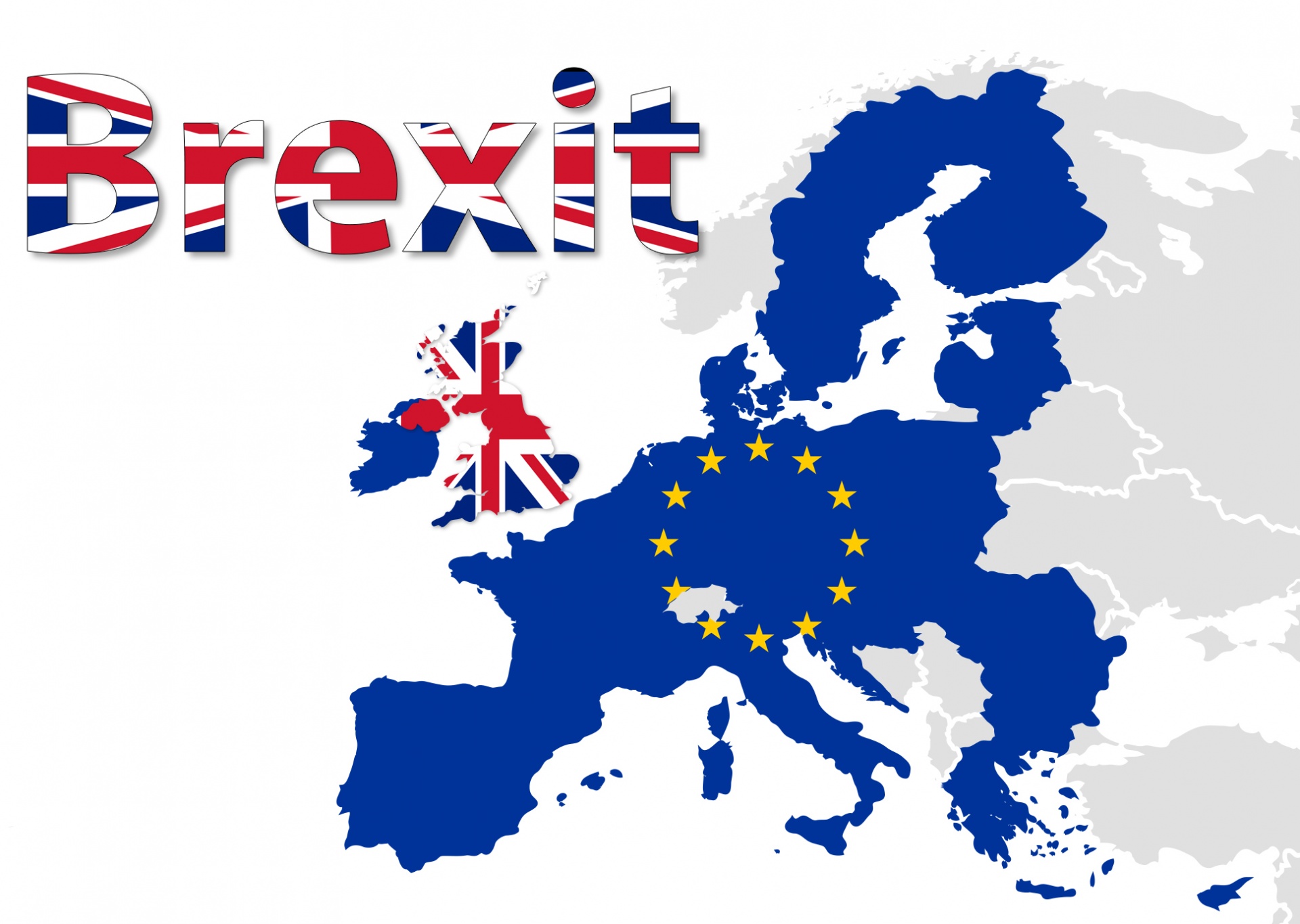
But the UK Government has known since 2014, when Miss Sturgeon’s party refused to accept their 55% to 45% defeat, that another push for separation was a matter of ‘when’, rather than ‘if’. Contingency plans have been in place for some time, both to push back a referendum do-over until after Brexit and, if need be, to fight one immediately. The Nationalists are not dealing with that nice Mr Cameron anymore.
And Theresa May’s response to Miss Sturgeon’s demand was more cautiously-worded, better thought through, than the contributions that became common from David Cameron during the first referendum. Crucially, she did not dole out a flat No; instead, she said Not Yet.
[…]
Next week, she will ask MSPs to vote for a Section 30 request, petitioning Westminster for the power to hold a second referendum. There is no mandate for the Scottish Parliament to pursue such a policy. The constitution is reserved to the UK Parliament; a party winning a Holyrood election on a manifesto of surrendering Britain’s independent nuclear deterrent or withdrawing Scottish troops from an international conflict would not be thought to have grounds for pursuing such policies.
Even if this point were conceded — it is done so from first principles by the eager constitutionalists who populate the Scottish academy — there is another flaw in the Nationalists’ argument. True, they came first in the May 2016 election and their manifesto envisioned ‘Scotland being taken out of the EU against our will’ as cause for a re-run of 2014’s ‘once in a generation’ poll. But the Nationalists failed to secure a majority of seats at Holyrood for that proposition, winning only 63 out of 129. Fortunately for the SNP, they have six to spare in the shape of the Scottish Greens, once a conscientious party of the Left but, under Patrick Harvie, a Me-Too faction for the most triangulating government since New Labour.
Every time the Nats get themselves into a jam, every time it looks like they might finally have to stop girning and start governing, up pop the six little anoraks, festooned with CND badges and brimming with good intentions, and they come to the rescue. Time after time, Mr Harvie drags the SNP out of a hole and gets nothing in return except a pat on the head. That isn’t leadership; it’s the political instincts of Lassie.
The Greens’ amening of Miss Sturgeon’s gambit is different from previous acts of handmaidenry because it breaks the party’s pledge to the voters. In the manifesto they were elected on last May, the Greens promised:
‘Citizens should be able to play a direct role in the legislative process: on presenting a petition signed by an appropriate number of voters, citizens should be able to trigger a vote on important issues of devolved responsibility. As we proposed on the one year anniversary of the Independence Referendum, this is the Scottish Greens’ preferred way of deciding to hold a second referendum on Independence. If a new referendum is to happen, it should come about by the will of the people, and not be driven by calculations of party political advantage. In such a referendum the Scottish Greens will campaign for independence.’
H/T to Colby Cosh for the link.
February 26, 2017
Julie Burchill on Harriet Harman’s memoir
In The Spectator, Julie Burchill isn’t a fan of Harriet Harman’s recent political tell-all, A Woman’s Work:
Like the awful Diane Abbott, Harman is one of those thoughtful, serious-minded Labour women who seems to come alive when saying silly, thoughtless things. She even has the Voice — that more-in-sorrow-than-in-anger Sunday-school drone which remains convinced that if it keeps repeating itself in ever slower permutations, opposition will do the decent thing and crumble. Brexit, of course, was the ripest raspberry ever blown in the face of such wheedling arrogance. Still, it’s hard not to warm to her sharp-nosed, clear-eyed young face on the front cover, peering bravely into a future of policy reviews and quangos galore. Sadly her writing style is so dull it makes ditchwater look like a dry martini — if you had to guess the MP author, you might hazard John Major in his pedantic pomp — and this is rendered comical by the three dynamically named sections of the book: ‘Upheaval’, ‘Transformation’ and ‘Challenge’.
With almost three decades on the front bench, twice acting deputy leader and the first Labour woman to feature at Prime Minister’s Questions, Harman is the definitive Nearly Woman — as are all capable Labour women, trapped in a party which having signed up to the brotherhood of man seems quite happy to ride roughshod over their sisters, forever promising them jam tomorrow so long as they themselves pick the fruit, boil the berries and write the labels. At a time when the Conservatives are on their second female leader and Labour are led by a man who seems as impervious to sexism as any other weirdy beardy from Real Ale Society to mosque, Harman’s book seems especially poignant. But I must say that any sympathy I had for her went out of the window in the first 40 pages when, having already suffered physical and verbal gropings from lecturers, employers and comrades without complaining about it, she gets stalked by a nutter whose case she has been bothering the poor police about through her job with the National Council for Civil Liberties. ‘He was menacing and angry. Having been his solicitor, I was fully aware of every detail of his record of violent crime. I knew that he didn’t just threaten violence, he carried it out’ — and yet she doesn’t tell the coppers for years, until he actually threatens to kill her. ‘As I tipped out the carrier bags full of just some of the letters I’d kept, the police were aghast that I’d done nothing about it before.’
Here is the masochistic madness of do-gooding socialist feminism laid bare — and Labour wonder why women vote Tory! While we’re on the subject of perverts, instead of unreservedly presenting the NCCL as a heroic ‘thorn in the side of government’ forever fighting for the rights of the little man, Harman might have seen fit to mention that, during her time there, they also granted the Paedophile Information Exchange formal affiliate status at a time when this vile lobby group was suggesting that the age of consent be lowered to ten. A little mea culpa might not have gone amiss. Still, it’s in the nature of the great and the good not to admit to anything which might reveal them as the entitled, woolly-minded mediocrities they generally are, and Harman — despite her admirable work for women’s rights — is no exception.
H/T to Kathy Shaidle for the link.
February 5, 2017
Being critical of Quebec can be a career-threatening move…
…which is why this Washington Post piece by J.J. McCullough is so unexpected:
As Canadian politicians and journalists scramble for tidy, ideologically pleasing narratives in the wake of this week’s senseless slaughter at a Quebec City mosque, one disturbing fact has gone conspicuously unmentioned: A disproportionate share of the country’s massacres occur in the province of Quebec.
I was born in 1984. Since then, Quebec has experienced at least six high-profile episodes of attempted public mass murder.
[…]
Criticism of Quebec, meanwhile, is deeply taboo. In a 2006 essay, Globe and Mail columnist Jan Wong posited a theory that Quebec’s various lone nuts, many of whom were not of pure French-Canadian stock, were predictably alienated from a province that places such a high premium on cultural conformity. She was denounced by a unanimous vote in the Canadian Parliament and sank into a career-ruining depression. The current events magazine Maclean’s ran a cover story in 2010 arguing that Quebec, where old-fashioned mafia collusion between government contractors, unions and politicians is still common, was easily “the most corrupt province in Canada.” That, too, was denounced by a unanimous vote of Parliament.
Privately, English Canadians are far less defensive. They grumble about Quebec’s dark history of anti-Semitism, religious bigotry and pro-fascist sentiment, facts which are rarely included in otherwise self-flagellating official narratives of Canadian history. They complain about the exaggerated deference the province gets from Ottawa as a “distinct society” and “nation-within-a-nation,” and its various French-supremacist language and assimilation laws, which they blame for creating a place that’s inhospitable, arrogant and, yes, noticeably more racist than the Canadian norm. And now, they have good reason to observe that the province seems to produce an awful lot of lunatics prone to public massacres, who often explicitly justify their violence with arguments of dissatisfaction towards Quebec’s unique culture.
The mosque shooting has been quickly politicized by the Canadian left who have seized upon its useful victims to say the sort of things they were going to say anyway: Canada is both a wicked Islamophobic place that must check its various privileges and a multicultural utopia whose pride and empathy for its Muslim community knows no bounds. Rather than drag the entire country along for this tendentious ride, it might be more useful to narrow the focus.
H/T to Kathy Shaidle for the link.
January 26, 2017
Poor old Jeremy Corbyn’s bad time in the Commons
Guy Fawkes’ blog on Jeremy Corbyn’s latest terrible outing in the House of Commons:
Karl Marx famously remarked that history repeats itself, “first as tragedy, and then as farce”. He was right. So right in fact that even his own ideological movement would be subject to the same principle. We had the famines, and the massacres, and the icepicks in the skull of the twentieth century: Marxism as tragedy. And now we have the farce, of which there is of course no finer a proponent than Jeremy Corbyn.
In this spirit, the Labour leader decided to come to PMQs today dressed in the most lurid brown suit known to man. One can only imagine the conversation in Holloway Road market:
“Morning Sir, how can we help you?”
“Oh hello there, I was wondering if you had any tailoring in the shade of human excrement? Preferably oversized too, of the sort a Uzbek goat herder would wear at a funeral? You know, a real statement piece?”
“Why you’re in luck Sir”, the merchant would say, his eyes lighting up, “we have this exquisite lounge suit right here, hewn from the very finest turd-brown Soviet polyester sent straight from Vladivostok. It’s going to set you back a grand though I’m afraid. Currency fluctuations post Brexit, you see sir, they really hit us humble artisans hard”.
Having parted with his cash Corbyn marched straight to Parliament no doubt feeling particularly buoyed by his pal Seumas’s six solid questions demanding the PM present a Brexit white paper immediately. But then, no! Disaster struck!
Up popped professional brown nose Chris Philp (formerly of the Remain campaign) to get things underway with a planted question about the need for a “government white paper laying out our vision for a global Britain”. The PM spent a few sentences name-checking other Tory Remainers who had also made such calls before calmly responding: “I can confirm that our plan will be set out in a White Paper published for the House”. This is the point at which more hip leaders would have dropped the mic or said “boom”.
November 5, 2016
The Gunpowder Plot: Exploding the Legend
July 10, 2023: Replaced the replacement video with yet another one. Hopefully this one has a bit more staying power.
April 9, 2019: Replaced the original 2016 YouTube link with a current one. After all, the “only man to ever enter Parliament with honest intentions” should be remembered.
Reel Truth History Documentaries
Published on 20 Mar 2019Richard Hammond looks to provide a definite answer to an outstanding mystery of history… Could Guy Fawkes have succeeded with the Gunpowder Plot? 400 years after of the infamous Gunpowder Plot, when Guy Fawkes planned an explosion that would wipe out the King and the entire British Government, the question still remains what impact the blast would have had but this film sets out to discover what would have happened if he’d lit the fuse.
(more…)