
World War Two
Published 13 Aug 2022From Sicily to Spas-Demensk, the Axis continue conceding ground to the Allies this week. But the fighting is still tough. The Wehrmacht has halted the Red Army offensive in the Kuban, and the British and American armies have neither the strength nor the willpower to press the advantage against Axis troops retreating to the Italian mainland.
(more…)
August 16, 2022
Manstein Goes Great War Style – WW2 – 207 – August 13, 1943
Comments Off on Manstein Goes Great War Style – WW2 – 207 – August 13, 1943
August 13, 2022
Tired – Orange Man Bad. Inspired – Orange Man Radioactive!
Jim Treacher isn’t a Trump fan, didn’t vote for him, and even he is being coerced into very grudging support of the man, thanks to the incredibly ham-handed things the US federal government has been doing:
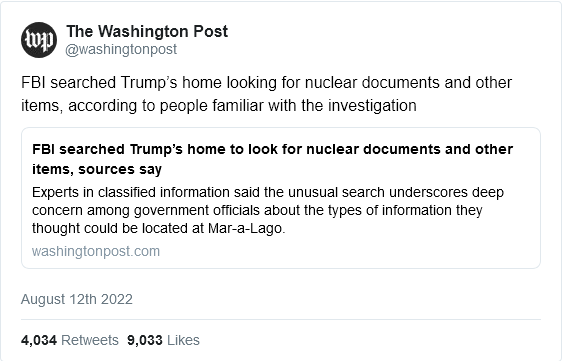
Our moral, ethical, and intellectual betters are now scolding us for referring to the FBI’s search of Mar-a-Lago as a raid. We’re not supposed to call it a raid. Which means, of course, it was definitely a raid.
We still don’t know what they were looking for during this raid. Or do we?
Oh.
Wait.
What?
Nuclear documents? What, like launch codes? Schematics? Locations? What are we talking about here?
What did they think the guy was going to do with this stuff? Is any of it even current? Don’t they change the launch codes every day? And nobody missed these documents for 18 months? What’s the danger here?
Call me a RINO cuck turncoat all you want, but I don’t trust the government, no matter who’s running it. I had to learn that the hard way when the State Department crippled me for life and then lied their asses off about it. That’s what bureaucracies do. They protect themselves at all costs, and the truth is the first thing to go by the wayside.
Sounds like that’s what’s happening here. They really screwed up this time, and now they’re panicking.
It’s been seven years since You-Know-Who rode down that escalator and threw his hat into the ring, and the Democrats have learned absolutely nothing. The more they try to hurt this guy, the more they end up helping him. Now they’re galvanizing the right behind him. Even traitors like me, who think 1/6 was bad and probably wanted Hillary to win, are incredulous that they’re abusing their power like this.
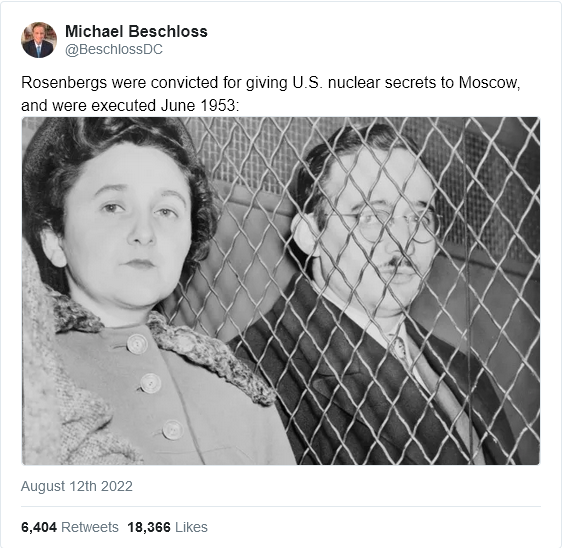
It’s already backfiring, but at least the libs can still air out their bloodthirsty fantasies:
They really do believe that’s what he did. They really do believe that’s what will happen to him. Or at least they’re willing to pander to their insane followers on social media.
Comments Off on Tired – Orange Man Bad. Inspired – Orange Man Radioactive!
August 7, 2022
QotD: The post-WW1 experiment in banning chemical weapons
This week, we’re going to talk briefly about why “we” – and by “we” here, I mean the top-tier of modern militaries – have generally eschewed the systematic or widespread use of chemical weapons after the First World War. And before you begin writing your comment, please note that the mountain of caveats that statement requires are here, just a little bit further down. Bear with me.
Now, when I was in school – this was a topic I was taught about in high school – the narrative I got was fairly clear: we didn’t use chemical weapons because after World War I the nations of the world got together and decided that chemical weapons were just too horrible and banned them, and that this was a sign of something called “progress“. In essence, the narrative I got was, we had become too moral for chemical weapons and so the “civilized” nations (a term sometimes still used unironically in this context) got together and enforced a moral taboo against chemical (and biological) weapons. And, we were told (this was, I should note, the late 90s and early aughts, long before the Syrian Civil War) that this taboo had mostly held.
Which was important, because in this narrative as it was impressed upon that younger version of me, the ban on chemical weapons showed the path towards banning all sorts of other terrible weapons: landmines, cluster-munitions and of course most of all, nuclear weapons. All we would need to do is for the “civilized” nations of the world to summon the moral courage to abandon such brutal weapons of war. Man, the end of history was nice while it lasted! But the example of the “successful” ban on chemical and biological weapons was offered as proof that the dream of a world without nuclear weapons was possible, if only we showed the same will.
When I was a child, I talked like a child, I thought like a child, I reasoned like a child. When I became a man, I put away childish things. But what was my teacher’s excuse? I guess the end of history was a hell of a drug.
[…] all three of these answers (including my high school answer) actually miss the point, because they all assume something fundamental: that chemical weapons are effective weapons, and so the decision not to use them is fundamentally moral, rather than practical.
Quite frankly, we don’t use chemical weapons for the same reason we don’t use war-zeppelin-bombers: they don’t work, at least within our modern tactical systems.
Bret Devereaux, “Collections: Why Don’t We Use Chemical Weapons Anymore?”, A Collection of Unmitigated Pedantry, 2020-03-20.
Comments Off on QotD: The post-WW1 experiment in banning chemical weapons
July 18, 2022
John von Neumann, The Man From The Future
One of the readers of Scott Alexander’s Astral Codex Ten has contributed a review of The Man From The Future: The Visionary Life of John von Neumann by Ananyo Bhattacharya. This is one of perhaps a dozen or so anonymous reviews that Scott publishes every year with the readers voting for the best review and the names of the contributors withheld until after the voting is finished:

John von Neumann invented the digital computer. The fields of game theory and cellular automata. Important pieces of modern economics, set theory, and particle physics. A substantial part of the technology behind the atom and hydrogen bombs. Several whole fields of mathematics I hadn’t previously heard of, like “operator algebras”, “continuous geometry”, and “ergodic theory”.
The Man From The Future, by Ananyo Bhattacharya, touches on all these things. But you don’t read a von Neumann biography to learn more about the invention of ergodic theory. You read it to gawk at an extreme human specimen, maybe the smartest man who ever lived.
By age 6, he could multiply eight-digit numbers in his head. At the same age, he spoke conversational ancient Greek; later, he would add Latin, French, German, English, and Yiddish (sometimes joked about also speaking Spanish, but he would just put “el” before English words and add -o to the end). Rumor had it he memorized everything he ever read. A fellow mathematician once tried to test this by asking him to recite Tale Of Two Cities, and reported that “he immediately began to recite the first chapter and continued until asked to stop after about ten or fifteen minutes”.
A group of scientists encountered a problem that the computers of the day couldn’t handle, and asked von Neumann for advice on designing a new generation of computers that was up to the task. But:
When the presentation was completed, he scribbled on a pad, stared so blankly that a RAND scientist later said he looked as if “his mind had slipped his face out of gear”, then said “Gentlemen, you do not need the computer. I have the answer.” While the scientists sat in stunned silence, Von Neumann reeled off the various steps which would provide the solution to the problem.
Do these sound a little too much like urban legends? The Tale Of Two Cities story comes straight from the mathematician involved — von Neumann’s friend Herman Goldstine, writing about his experience in The Computer From Pascal to von Neumann. The computer anecdote is of less certain provenance, quoted without attribution in a 1957 obituary in Life. But this is part of the fun of reading von Neumann biographies: figuring out what one can or can’t believe about a figure of such mythic proportions.
This is not really what Bhattacharya is here for. He does not entirely resist gawking. But he is at least as interested in giving us a tour of early 20th century mathematics, framed by the life of its most brilliant practitioner. The book devotes more pages to set theory than to von Neumann’s childhood, and spends more time on von Neumann’s formalization of quantum mechanics than on his first marriage (to be fair, so did von Neumann — hence the divorce).
Still, for those of us who never made their high school math tutors cry with joy at ever having met them (another von Neumann story, this one well-attested), the man himself is more of a draw than his ergodic theory. And there’s enough in The Man From The Future — and in some of the few hundred references it cites — to start to get a coherent picture.
Comments Off on John von Neumann, The Man From The Future
June 26, 2022
QotD: Breaking the trench stalemate with strategic air power
What no one could have known in WWI was not merely that the technology for effective conventional strategic bombing wasn’t ready, but that it would probably never be ready. Interwar air-power theorists, seeing the potential of strategic airpower to bypass the trench stalemate by flying over it began to try to work out how this would be done. Giulio Douhet (1869-1930) argued that future wars would be fought and won in the air, with fleets of bombers using high explosives and chemical weapons to massacre enemy civilian centers, until civilians forced their governments to surrender. Douhet was not alone; his vision of airpower as shared, for instance, by the “father of the RAF”, Hugh Trenchard (1873-1956).
This concept, “morale bombing” as it is sometimes called, probably deserves its own post discussing its failures. But in brief, the concept was tested, with far larger amounts of bombs than Douhet or any other interwar theorist could have ever dreamed of, during WWII. The argument by air theorists that high altitude bombers could not be stopped was proved false when the British did exactly this, stopping German bombers over Britain in 1940. Moreover, terror bombing against civilian targets in Britain didn’t lead to surrender, but hardened resolve. Likewise, “morale” bombing against German targets by the allies didn’t lead to surrender, but hardened resolve. Later efforts to demoralize the North Vietnamese through a American bombing campaign in the Vietnam War didn’t lead to surrender, but hardened resolve. More recent efforts to demoralize or destroy terrorists and the Taliban through the use of airpower hasn’t lead to surrender, but rather hardened resolve. Likewise, efforts by the Syrian regime to defeat various opposition groups in Syria through the use of chemical weapon-based terror bombing didn’t lead to surrender (siege-and-starve tactics did), but hardened resolve.
It turns out the fundamental premise of the entire idea of morale bombing – that being bombed will make people want to stop fighting – was flawed. Morale bombing has been, depending on how hard you squint at the US air campaign over Japan in WWII (including the use of nuclear weapons) successful either once (out of many attempts) or never. In most cases, the sustained bombing of civilian centers has been shown to increase a population’s willingness to resist, making the strategy worse than useless.
The case for strategic bombing against industrial targets is marginally better, but only marginally. While airpower advocates, particularly in the United States promised throughout WWII that bombing campaigns against German industry could lead to the collapse of the German war machine, in the end many historians posit that the real achievement of the campaign was to lure the Luftwaffe into the air where it could be destroyed, thus denying the German army of air cover and close air support, particularly on the Eastern Front. Some dimunition of German industrial capabilities was accomplished (though it is not clear that this ever approached the vast resources poured into producing the large numbers of extremely expensive bombers used to do it, though the allies had such an industrial advantage over Germany, forcing the Germans to fight in expensive ways in the sky was a winning trade anyway), but the collapse of German industry never happened. As Richard Overy notes, German industrial output continued to rise during strategic bombing and only began to fall as a result of the loss of territory on the ground. Needless to say, “strategic bombing can sucker the enemy into wasting their close air support” was not the result that airpower advocates had promised, nor could it have broken the stalemate.
I don’t want to oversimplify the continued debate over the efficacy of strategic airpower here too much so let’s just say that the jury is still very much out as to if strategic airpower works even with modern technology; it certainly wouldn’t have worked with WWI era technology.
Bret Devereaux, “Collections: No Man’s Land, Part II: Breaking the Stalemate”, A Collection of Unmitigated Pedantry, 2021-09-24.
Comments Off on QotD: Breaking the trench stalemate with strategic air power
June 13, 2022
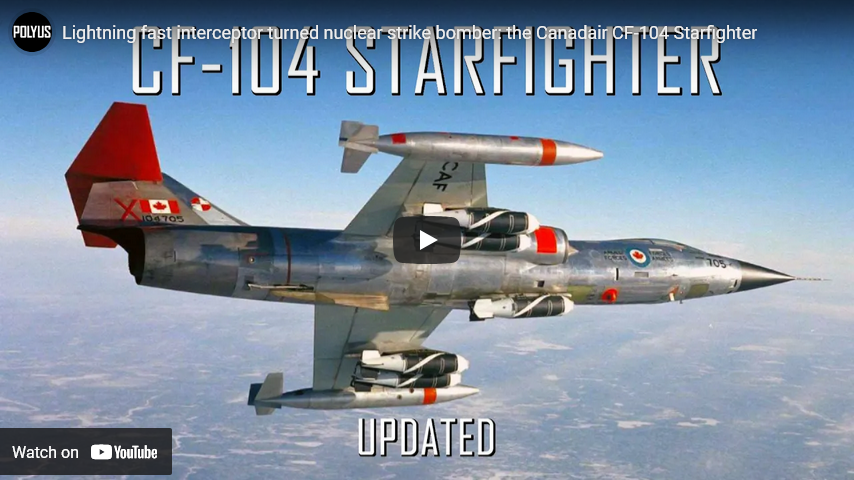
Lightning fast interceptor turned nuclear strike bomber: the Canadair CF-104 Starfighter
Polyus Studios
Published 29 Sep 2020Don’t forget to like the video and subscribe to my channel!
Support me on Patreon – https://www.patreon.com/polyusstudiosThis is an UPDATED version of the video. It includes many changes and corrections to the original video. Many thanks to Gary Watson for all his contributions!
Starting in 1959 Canadair began building Canada’s fastest jet at their plant in Montreal. It was designed as a sleek high altitude and high speed interceptor, but was adapted for low level ground strike missions with conventional and nuclear weapons. It was the Canadair CF-104 Starfighter, Canada’s missile with a man in it.
0:00 Introduction
0:33 Historical Context
2:01 Design Choice
4:15 Canadair’s Production Run
6:50 Configuration and Specifications
11:04 Nuclear Strike Role
12:13 Operational History
16:06 Conventional Role
17:53 Retirement and Replacement
19:28 Accidents, Controversy and Legacy
22:56 ConclusionMusic:
“Denmark” – Portland Cello ProjectResearch Sources:
Canadair CF-104 Starfighter by Harold A. Skaarup (http://silverhawkauthor.com/canadian-…)
Canadair CF-104 Starfighter by Canadian Starfighter Association (http://canadianstarfighterassociation…)
CF-104 Flight Operations by Air Force Museum of Alberta (https://www.rcaf.museum/history/rcaf-…)
Story of the F-104 Starfighter in Norwegian Service by Bjorn Hafsten (http://starfighter.no/hist-en3.html)
Starfighters with Turkey by Joe Baugher (http://www.joebaugher.com/usaf_fighte…)
ASN Aviation Safety Database by Aviation Safety Network (http://aviation-safety.net/wikibase/d…)
Starfighter by David L. Bashow (Fortress Publication, 1990, ISBN: 0-919195-12-1)
Photography credit 6mins10sec: Gary WatsonFootage Sources:
Personal Footage – Gary Watson
Cold War Fighter Pilot – Ken Castle, CD, Flight-Lieutenant (ret’d) – Canada Aviation and Space Museum (https://youtu.be/sEUOFyPLL94)
CF 104 Baden Soellingen 1965 – Gordon Price (https://youtu.be/4UZ9PE58Eq0)
CF104 Germany 1983/4 441 Squadron CAF – Tom Hammond (https://youtu.be/xrqjAKHflCo)
Great Planes Lockheed F-104 Starfighter – Discovery Channel (1996)
Avro Canada CF 100 Canuck – Avro (1956)#Starfighter #CanadianAerospace #PolyusStudios
Comments Off on Lightning fast interceptor turned nuclear strike bomber: the Canadair CF-104 Starfighter
April 15, 2022
Look at Life – Thunder in Waiting (1960)
PauliosVids
Published 20 Nov 2018The deadly cargo of the Vulcan Bomber is a crucial part of Britain’s deterrent force.

Comments Off on Look at Life – Thunder in Waiting (1960)
March 5, 2022
No Nazi Atomic Bomb – Operation Gunnerside – WW2 Special
World War Two
Published 3 Mar 2022By 1943 the German “Uranium-Club” was hoping to harvest the energy of the atoms. One of the things they still needed for their experiments was the moderator “heavy water”, which was produced for them in the hydro-plant “Vemork” in occupied Norway. British High Command authorized a top-secret mission to prevent it from ever reaching Germany. A group of highly trained commandos was to parachute in and destroy the heavy water facility by any means necessary.
(more…)
Comments Off on No Nazi Atomic Bomb – Operation Gunnerside – WW2 Special
February 27, 2022
“Putin finally called our bluff. The question to me is when and if Xi will decide to do the same”
Andrew Sullivan on what Winston Churchill referred to as “the historic life-interests of Russia”, the inability (and unwillingness) of the western nations to do more than send hopes and prayers to Ukraine, and the parallels between the Russia-Ukraine situation and the China-Taiwan potential conflict:

Taiwan relief map.
Library of Congress Geography & Map Division via Wikimedia Commons.
… in one crucial sense, Putin has already won a victory. A nuclear-armed great power has invaded and occupied a neighboring country in Europe, and there is nothing anyone else has been able to do to stop it. Many in the West assumed Putin wouldn’t go that far — surmising that international law, universal condemnation, economic sanctions, and the lack of any serious threat from Ukraine to Russia would restrain him. But he has called our bluff. He has even hinted at Russia’s nuclear capacity to intimidate other states from intervening. And so we have a precedent. Ukraine is a Russian possession. A fact on the ground. All we have been able to do is watch.
All of which brings us to what seems to me to be the larger dimension of this clash: how it will resonate in Beijing and Taiwan. With apologies to Mitt Romney, China is easily the greater geostrategic challenge. And the parallels with Russia are as striking as they are unnerving. China sees Taiwan as part of its national identity in a similar way to how Russia sees Ukraine as part of its. And we are committed to the defense of Taiwan the way we have committed to the defense of Ukraine: kinda, but not really. In the face of this underlying Western ambiguity, the fall of Kiev is news that Xi will be watching closely.
The parallels are not exact, but nonetheless striking. Taiwan is next door to and deeply entangled with China in its history and culture, just as Ukraine is uniquely entangled with Russia. Seeing Taiwan and China (like Ukraine and Russia) as simply random sovereign states with a right to self-determination under international law is correct, so far as it goes. It’s also moral — as majorities of both Ukrainians and especially Taiwanese want independence and have constructed nascent democracies in the wake of autocracy.
But the nationalist passion Russia feels about Ukraine and China feels about Taiwan is real, visceral, and hard for outsiders to understand intuitively. The sense of a rogue region that somehow got away from the homeland is vivid among Russian and Chinese nationalists. This kind of understanding — claiming a “sphere of influence” — is now deemed reactionary by the West’s foreign policy elites, as, perhaps, it should be. But that doesn’t mean that everyone, especially China and Russia, have actually moved past it. Even Americans have very different emotional responses to perceived threats in our own hemisphere compared with the rest of the world. So this is also a culture clash of sorts — globalism and the nation state vs nationalism and spheres of influence.
I’m not saying that this belief in a sphere of influence is a universal view in Russia or China — or that it is justifiable. I’m just saying it is real. And I’m not excusing Putin or Xi from taking a particularly zealous view of this irredentist nationalism, which they both do, for their own personal and political advantage. I’m just noting how national pride deeply informs them, that resentment of the West consumes them, that a sense of historical grievance spurs them on — and that they are not outliers among their compatriots. It is crazy to underestimate the power of this kind of revanchist nationalism — among rulers and ruled. And I fear we underestimated it in the case of Putin.
This means, as Barack Obama once insisted, that Russia will always care much more about Ukraine than we do; and China will always care much more about Taiwan than we do. In those cases, the last thing we should do is promise support that we do not seriously — truly seriously — intend to provide. The vague pledge by the Western powers not to rule out future NATO membership for Ukraine was the worst of all worlds: poking the bear, with no serious intention of fighting it.
The fall of Afghanistan was a margin call … and Ukraine is the point where airy western “guarantees” will have to be backed up with actual force. But western leaders have grown very comfortable in a world where gestures were taken seriously and few if any such gestures actually had to be followed-through with meaningful action. And now, the geopolitical pantomime is over and we’re back in a world where gestures are seen as signs of weakness and do nothing to deter adventurism.
Comments Off on “Putin finally called our bluff. The question to me is when and if Xi will decide to do the same”
December 5, 2021
Axis Armies Facing Starvation – WW2 – 171 – December 4, 1942
World War Two
Published 4 Dec 2021The Soviets have launched offensives on the entire eastern front and by now hundreds of thousands of men are surrounded at Stalingrad. The Japanese win a battle at sea, but are losing a war of attrition.
(more…)
Comments Off on Axis Armies Facing Starvation – WW2 – 171 – December 4, 1942
November 12, 2021
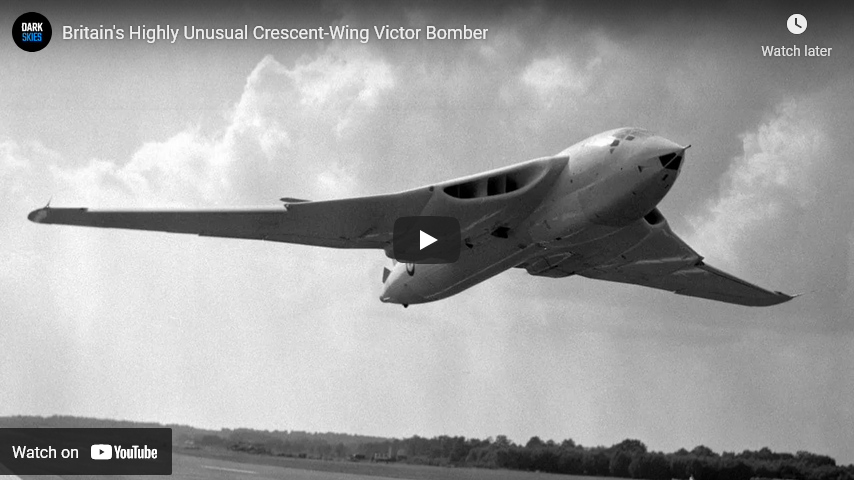
Britain’s Highly Unusual Crescent-Wing Victor Bomber
Dark Skies
Published 2 Nov 2021The V force was a legendary team of bombers built to serve during the post-war crisis. However, they would not carry ordinary bombs, but nuclear weapons.
As World War II ended, the division between the West and the East became a significant threat to world peace, and shortly before the Cold War began, Britain started working on a modern jet bomber force that could rival any other on the planet.
The Handley Page Victor featured a one-of-kind wing, making it the largest aircraft to break the sound barrier up to that point.
As the British mastered the atomic bomb by the mid-1950s with the exceptional V force and the Victor to deliver it, Britain’s stature among the world’s superpowers significantly solidified.
—
Join Dark Skies as we explore the world of aviation with cinematic short documentaries featuring the biggest and fastest airplanes ever built, top-secret military projects, and classified missions with hidden untold true stories. Including US, German, and Soviet warplanes, along with aircraft developments that took place during World War I, World War 2, the Korean War, the Vietnam War, the Cold War, the Gulf War, and special operations missions in between.
As images and footage of actual events are not always available, Dark Skies sometimes utilizes similar historical images and footage for dramatic effect and soundtracks for emotional impact. We do our best to keep it as visually accurate as possible.
All content on Dark Skies is researched, produced, and presented in historical context for educational purposes. We are history enthusiasts and are not always experts in some areas, so please don’t hesitate to reach out to us with corrections, additional information, or new ideas.
Comments Off on Britain’s Highly Unusual Crescent-Wing Victor Bomber
October 9, 2021
The USSR: A Conspiracy Disguised as a Country – WW2 – Spies & Ties 09
World War Two
Published 8 Oct 2021The Soviet Union is built on distrust and paranoia, giving birth to a system of intelligence and a huge spy network ran by agencies such as the GRU and NKVD. But what good is all that information if you don’t believe it?
(more…)
Comments Off on The USSR: A Conspiracy Disguised as a Country – WW2 – Spies & Ties 09
September 25, 2021
QotD: The 2nd Amendment is obsolete because … the government has nukes?
And everybody was like, wait, what?
Of course the congressman is now saying that using nuclear weapons on American gun owners was an exaggeration, he just wanted to rhetorically demonstrate that the all-powerful government could crush us peasants like bugs, they hold our pathetic lives in their iron hand, and he’d never ever advocate for the use of nuclear weapons on American soil (that would be bad for the environment!), and instead he merely wants to send a SWAT team to your house to shoot you in the face if you don’t comply.
See? That’s way better.
Larry Correia, “The 2nd Amendment Is Obsolete, Says Congressman Who Wants To Nuke Omaha”, Monster Hunter Nation, 2018-11-19.
Comments Off on QotD: The 2nd Amendment is obsolete because … the government has nukes?
August 31, 2021
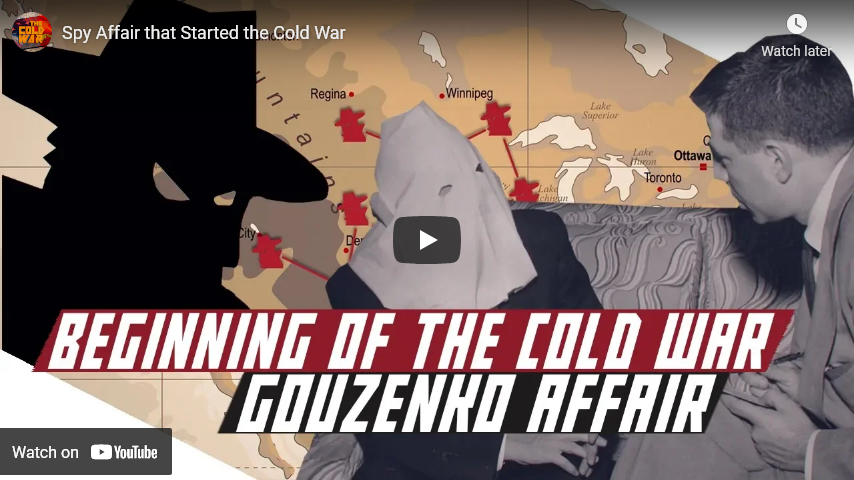
Spy Affair that Started the Cold War
The Cold War
Published 3 Aug 2019Our series on the history of the Cold War period continues with a documentary on Gouzenko affair — a spy thriller that provoked the beginning of the Cold War.
Consider supporting us on Patreon: https://www.patreon.com/thecoldwar
Comments Off on Spy Affair that Started the Cold War
June 30, 2021
Questions the dying media daren’t ask Biden
Kurt Schlichter offers a few questions that an American media with any credibility would already have been asking after Biden’s ramble about F-15 aircraft and nuclear weapons:
“2-35 Infantry Battalion, 3rd Brigade Combat Team, 25th Infantry Division” by The U.S. Army is licensed under CC BY 2.0

“Are you saying that you would use bombers like F-15s against Americans? Would you ever use nuclear weapons against Americans?”
That seems like an important coule of threshold queries. Say “No” and you look like a fool. Say “Yes” and you’re a fool and a psycho.
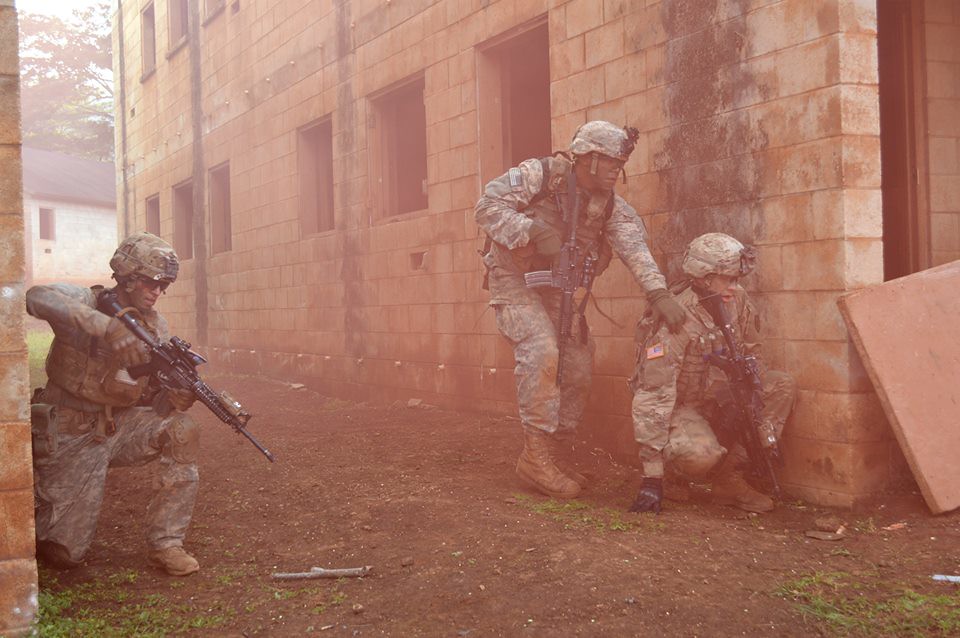
“Mr. President, since using force against American citizens is on the table, can you tell us how many BCTs the American military has currently deployable within the United States? Do you know how many troops are in a brigade combat team? Do you understand the logistical needs of a BCT and its vulnerabilities in an insurgency environment?”
A “BCT” is a brigade combat team, 4,000-5,000 troops and the basic ground combat unit. Now, if you are going to pick a fight with 165 million Americans, specifically the half who like America and who own a whole bunch of those accursed AR-15s, you might wanna know how many dudes you have on your side first (I estimate about 80 active and reserve BCTs and equivalents in the whole active and reserve force, including the Marines). One might also want to understand why you would have problems using them here at home.
“How many BCTs do you think you would need to secure an urban area the size of Los Angeles. Didn’t it take three divisions, about 12 brigades, to secure it during the Riots? How long could you logistically support that?”
It did take three divisions (approximately 12 BCTs) to quell the riot in LA in 1992. I was there. Now, that was largely idiots burning and looting. What if the next time it is guys shooting back with evil AR-15s? And America is a zillion times bigger than Los Angeles. How do you hold all that ground? You don’t.
“Have your generals staffed exactly how many American military personnel they could count on to attack American citizens if you ordered it? What percentage do you believe would comply and why?”
Oh, awkward. I was informed – by them, the geniuses in the Pentagon – that “extremists in the ranks” are our gravest threat (except for the weather, of course), so I assume they will have analyzed the number of “extremists” in the ranks who would be averse to killing their own friends and family at the behest of coastal elitists and who would desert or go full Niedermeyer on the guys urging them to wage war on the American people. This would be a good number to have as a planning factor, since when 50% of his troops go *poof* overnight, it would mean a significant reduction in the *’s combat power.
“You mentioned F-15s. How many bombers of all types does the United States have deployable within the continental US? How many are operational? How many sorties could the military fly a day against American citizens? Can you explain how you would employ bombers to hold territory, like a city?”
Bombers are nice. But if they were decisive, you could walk around Kabul without a dozen guys with AKs keeping your Schumer safe. We bombed Afghanistan back into the Stone Age – albeit, it was not much of a trip, but the point remains. You control dirt by having a guy with a rifle standing on it, not plinking at targets from 30,000 feet. And speaking of targeting …
Comments Off on Questions the dying media daren’t ask Biden


