Quotulatiousness

October 9, 2020

QotD: How to analyze complex multivariate systems for the popular press

Filed under: Media, Quotations, Science — Tags: , , , , — Nicholas @ 01:00

  1. Choose a complex and chaotic system that is characterized by thousands or millions of variables changing simultaneously (e.g. climate, the US economy)
  2. Pick one single output variable to summarize the workings of that system (e.g. temperature, GDP)
  3. Blame (or credit) any changes to your selected output variable on one single pet variable (e.g. capitalism, a President from the other party)
  4. Pick a news outlet aligned with your political tribe and send them a press release
  5. Done! You are now a famous scientist. Congratulations.

Warren Meyer, “Modern Guide to Analyzing Complex Multivariate Systems”, Coyote Blog, 2018-06-25.


September 27, 2020

QotD: The persuasive power of the newspapers

Filed under: Britain, Media, Politics, Quotations — Tags: , , , — Nicholas @ 01:00

It is a standard part of the mythology that newspapers tell their readers what to believe — and the readers believe them. This is why the left keeps shrieking about the barons controlling the press, it could only be that poisoning of the minds of the proletariat which keeps said left from sweeping all before it in politics. The actual study — you know, science — of how this works is that newspapers follow the prejudices of their readers. The Sun is not socially conservative and rightish in its views because Rupert Murdoch is so but because a large portion of the British working class is so.

Or, as we might put it, the reason the left doesn’t sweep the board with the votes of the proletariat is because large numbers of the proletariat think the left either don’t represent them, or are aware that the left are nuts.

Tim Worstall, “This Will Be An Interesting Test – Geordie Greig To Daily Mail Editor”, Continental Telegraph, 2018-06-08.

September 15, 2020

When you mix up cause and effect

In the Continental Telegraph, Esteban remembers a Reagan bon mot that is still observably true today:

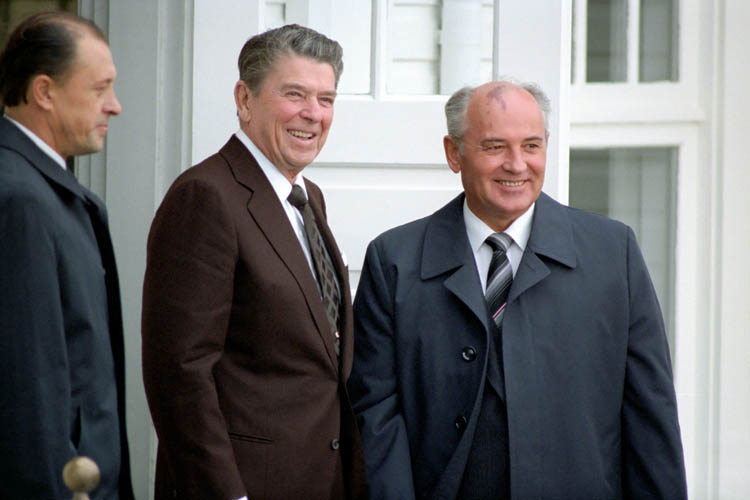
US President Ronald Reagan and Soviet General Secretary Mikhail Gorbachev at the Hofdi House in Reykjavik, Iceland during the Reyjavik Summit in 1986.
Official US government photograph via Wikimedia Commons.

Ronald Reagan once observed that “the trouble with our liberal friends isn’t that they are ignorant, it’s that so much they know isn’t so”. I am repeatedly surprised by Leftists’ ability not to just get something wrong, but to get it spectacularly, 180 degrees wrong.

First, a couple of examples from the archives – some years ago there was an article in the NY Times (or WaPo perhaps) quite distressed that even though crime rates in the U.S. were at historically low levels the percentage of the population in prison was quite high. “Why are we putting so many people in prison when the crime rate is low?” they wondered, seriously. Hmm, how about this – when we put more bad people in prison the crime rate goes down? Keep in mind that the crime rate is what’s happening now, the prison population is who we caught and locked up over the past several years.

Then we had an article in a West Coast newspaper wondering why the homeless population in San Francisco had grown dramatically in recent years despite all the wonderful things the city had done to help them – weekly stipends, free shopping carts, etc. Note that none of this assistance to the homeless enabled them to become independent or required them to better themselves, they were all handouts. How is it that offering lots of goodies to homeless people attracts more of them here?

My point in bringing up these old stories is that it seems impossible that someone could fail to see they had cause and effect reversed. How could someone intelligent enough to write a column get these stories so backwards. The only answer I can see is that their worldview, at least in these areas, flows in only one direction and the underlying premise can never be questioned – putting people in prison is bad, there can be no possible upside, giving homeless people stuff is good, there can be no downside. So, when things get worse it’s a mystery, we can’t reconsider our starting point.

August 8, 2020

Andrew Sullivan – “[T]he Kendi test: does the staff reflect the demographics of New York City as a whole?”

Filed under: Business, Media, Politics, USA — Tags: , , , , — Nicholas @ 05:00

In his latest Weekly Dish, Andrew Sullivan looks at an earnest diversity initiative of The Newspaper Guild of New York:

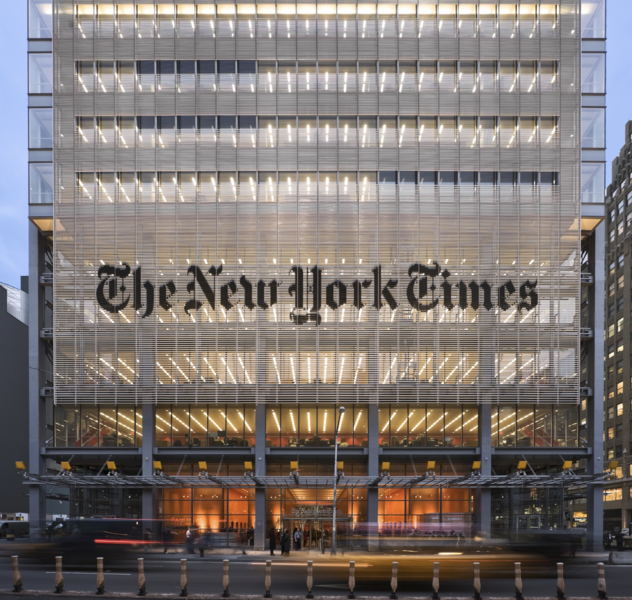
I’m naming this after Ibram X. Kendi because his core contribution to the current debate on race is the notion that “any measure that produces or sustains racial inequity between racial groups” is racist. Intent is irrelevant. I don’t think many sane people believe A.G. Sulzberger or Dean Baquet are closet bigots. But systemic racism, according to Kendi, exists in any institution if there is simply any outcome that isn’t directly reflective of the relevant racial demographics of the surrounding area.

The appeal of this argument is its simplicity. You can tell if a place is enabling systemic racism merely by counting the people of color in it; and you can tell if a place isn’t by the same rubric. The drawback, of course, is that the world isn’t nearly as simple. Take the actual demographics of New York City. On some measures, the NYT is already a mirror of NYC. Its staff is basically 50 – 50 on sex (with women a slight majority of all staff on the business side, and slight minority in editorial). And it’s 15 percent Asian on the business side, 10 percent in editorial, compared with 13.9 percent of NYC’s population.

But its black percentage of staff — 10 percent in business, 9 percent in editorial — needs more than doubling to reflect demographics. Its Hispanic/Latino staff amount to only 8 percent in business and 5 percent in editorial, compared with 29 percent of New York City’s demographics, the worst discrepancy for any group. NYT’s Newsroom Fellowship, bringing in the very next generation, is 80 percent female, 60 percent people of color (including Asians), and, so far as I can tell, one lone white man. And it’s why NYT‘s new hires are 43 percent people of color, a definition that includes Asian-Americans.

But notice how this new goal obviously doesn’t reflect New York City’s demographics in many other ways. It draws overwhelmingly from the college educated, who account for only 37 percent of New Yorkers, leaving more than 60 percent of the city completed unreflected in the staffing. It cannot include the nearly 19 percent of New Yorkers in poverty, because a NYT salary would end that. It would also have to restrict itself to the literate, and, according to Literacy New York, 25 percent of people in Manhattan “lack basic prose literary skills” along with 37 percent in Brooklyn and 41 percent in the Bronx. And obviously, it cannot reflect the 14 percent of New Yorkers who are of retirement age, or the 21 percent who have yet to reach 18. For that matter, I have no idea what the median age of a NYT employee is — but I bet it isn’t the same as all of New York City.

Around 10 percent of staffers would have to be Republicans (and if the paper of record nationally were to reflect the country as a whole, and not just NYC, around 40 percent would have to be). Some 6 percent of the newsroom would also have to be Haredi or Orthodox Jews — a community you rarely hear about in diversity debates, but one horribly hit by a hate crime surge. 48 percent of NYT employees would have to agree that religion is “very important” in their lives; and 33 percent would be Catholic. And the logic of these demographic quotas is that if a group begins to exceed its quota — say Jews, 13 percent — a Jewish journalist would have to retire for any new one to be hired. Taking this proposal seriously, then, really does require explicit use of race in hiring, which is illegal, which is why the News Guild tweet and memo might end up causing some trouble if the policy is enforced.

And all this leaves the category of “white” completely without nuance. We have no idea whether “white” people are Irish or Italian or Russian or Polish or Canadians in origin. Similarly, we do not know if “black” means African immigrants, or native black New Yorkers, or people from the Caribbean. 37 percent of New Yorkers are foreign-born. How does the Guild propose to mirror that? Ditto where staffers live in NYC. How many are from Staten Island, for example, or the Bronx, two places of extremely different ethnic populations? These categories, in other words, are incredibly crude if the goal really is to reflect the actual demographics of New York City. But it isn’t, of course.

My point is that any attempt to make a specific institution entirely representative of the demographics of its location will founder on the sheer complexity of America’s demographic story and the nature of the institution itself. Journalism, for example, is not a profession sought by most people; it’s self-selecting for curious, trouble-making, querulous assholes who enjoy engaging with others and tracking down the truth (at least it used to be). There’s no reason this skillset or attitude will be spread evenly across populations. It seems, for example, that disproportionate numbers of Jews are drawn to it, from a culture of high literacy, intellectualism, and social activism. So why on earth shouldn’t they be over-represented?

And that’s true of other institutions too: are we to police Broadway to make sure that gays constitute only 4 percent of the employees? Or, say, nursing, to ensure that the sex balance is 50-50? Or a construction company for gender parity? Or a bike messenger company’s staff to be reflective of the age demographics of the city? Just take publishing — an industry not far off what the New York Times does. 74 percent of its employees are women. Should there be a hiring freeze until the men catch up?

August 2, 2020

Words are verbal tools, but tools can be weaponized

In this week’s newsletter, Andrew Sullivan analyzes the roots of wokeness:

In the mid-2010s, a curious new vocabulary began to unspool itself in our media. A data site, storywrangling.org, which measures the frequency of words in news stories, revealed some remarkable shifts. Terms that had previously been almost entirely obscure suddenly became ubiquitous — and an analysis of the New York Times, using these tools, is a useful example. Looking at stories from 1970 to 2018, several terms came out of nowhere in the past few years to reach sudden new heights of repetition and frequency. Here’s a list of the most successful neologisms: non-binary, toxic masculinity, white supremacy, traumatizing, queer, transphobia, whiteness, mansplaining. And here are a few that were rising in frequency in the last decade but only took off in the last few years: triggering, hurtful, gender, stereotypes.

Language changes, and we shouldn’t worry about that. Maybe some of these terms will stick around. But the linguistic changes have occurred so rapidly, and touched so many topics, that it has all the appearance of a top-down re-ordering of language, rather than a slow, organic evolution from below. While the New York Times once had a reputation for being a bit stodgy on linguistic matters, pedantic, precise and slow-to-change, as any paper of record might be, in the last few years, its pages have been flushed with so many neologisms that a reader from, say, a decade ago would have a hard time understanding large swathes of it. And for many of us regular readers, we’ve just gotten used to brand new words popping up suddenly to re-describe something we thought we knew already. We notice a new word, make a brief mental check, and move on with our lives.

But we need to do more than that. We need to understand that all these words have one thing in common: they are products of an esoteric, academic discipline called critical theory, which has gained extraordinary popularity in elite education in the past few decades, and appears to have reached a cultural tipping point in the middle of the 2010s. Most normal people have never heard of this theory — or rather an interlocking web of theories — that is nonetheless changing the very words we speak and write and the very rationale of the institutions integral to liberal democracy.

What we have long needed is an intelligible, intelligent description of this theory which most people can grasp. And we’ve just gotten one: Cynical Theories: How Activist Scholarship Made Everything About Race, Gender and Identity, by former math prof James Lindsay and British academic, Helen Pluckrose. It’s as deep a dive into this often impenetrable philosophy as anyone would want to attempt. But it’s well worth grappling with.

What the book helps the layperson to understand is the evolution of postmodern thought since the 1960s until it became the doctrine of Social Justice today. Beginning as a critique of all grand theories of meaning — from Christianity to Marxism — postmodernism is a project to subvert the intellectual foundations of western culture. The entire concept of reason — whether the Enlightenment version or even the ancient Socratic understanding — is a myth designed to serve the interests of those in power, and therefore deserves to be undermined and “problematized” reason whenever possible. Postmodern theory does so mischievously and irreverently — even as it leaves nothing in reason’s place. The idea of objective truth — even if it is viewed as always somewhat beyond our reach — is abandoned. All we have are narratives, stories, whose meaning is entirely provisional, and can in turn be subverted or problematized.

During the 1980s and 1990s, this somewhat aimless critique of everything hardened into a plan for action. Analyzing how truth was a mere function of power, and then seeing that power used against distinct and oppressed identity groups, led to an understandable desire to do something about it, and to turn this critique into a form of activism. Lindsay and Pluckrose call this “applied postmodernism”, which, in turn, hardened into what we now know as Social Justice.

July 25, 2020

Walter Duranty, Stalin’s tame “journalist”

Filed under: History, Media, Russia, USA — Tags: , , , , , , — Nicholas @ 03:00

Francis X. Maier makes the case that the Holodomor — the Soviet Union’s deliberate starvation of millions of its own people in Ukraine and surrounding regions — killed even more than the better-known Nazi Holocaust, then identifies one of the key apologists who lied serially and deliberately to hide the genocide:

A page from the Chicago Herald and Examiner from 3 March, 1935.
Wikimedia Commons.

[S.J.] Taylor’s 1990 article was timed to the release of Stalin’s Apologist, her withering biography of journalist Walter Duranty. A Pulitzer Prize winner, celebrated political analyst, and Moscow correspondent for the New York Times during the 1930s, Duranty interviewed Stalin twice. He also played a significant role in securing American diplomatic recognition for the Soviet regime. Less publicly, he was a prodigious womanizer, longtime opium buddy of Satanist Aleister Crowley, compulsive exploiter of friends, a spendthrift, occasional drunk, and an inventive, always-reliable flack for the Soviet regime.

One of Duranty’s lifelong memories involved his religious grandmother who, after catching the adolescent Duranty in a lie, had warned him that “liars go to hell.” He never forgot or forgave the correction. As an adult, he simply erased all family ties and falsely claimed in his autobiography that he’d been orphaned at age ten. Massaging the truth became one of his core skills. Brilliant, engaging, and widely respected at the time, he was, in the words of Malcolm Muggeridge, who also reported from Moscow and saw Duranty in action, “the greatest liar of any journalist I have met in 50 years of journalism.”

Committed to protecting his own influence and to a future “greater good” promised by the Soviet regime, Duranty at first dismissed rumors of the Ukrainian Famine. Then he downplayed them. Then he claimed that Ukraine’s “food shortages” were the result of local mismanagement and the work of “wreckers” and “spoilers” intent on undermining Soviet progress. He repeatedly denied the mass starvation in his reporting. But he did suggest that “you can’t make an omelet without breaking eggs” … especially when the omelet is the task of modernization, and the cooks are tough-minded Bolsheviks intent on a better tomorrow.

As Taylor notes in her book, Western powers struggling with the Great Depression and the rise of Hitler in Germany had little interest in rumors from Ukraine that might antagonize Stalin as a potential ally. Muggeridge had arrived in Russia in 1932 to string for the Manchester Guardian. A convinced socialist at the time, he intended to stay in Russia and renounce his British passport for Soviet citizenship. Reality interfered. By March 1933, he was reporting on Ukraine’s famine as “one of the most monstrous crimes in history,” and his disillusionment with the Soviet paradise was complete. But back in England, thanks in part to Duranty’s counter-reporting and Soviet propaganda, Muggeridge’s work was dismissed as “a hysterical tirade.” Muggeridge himself was slandered, vilified, and unable to find employment. And that might have buried the Holodomor story successfully, except for one man.

Welshman Gareth Jones was a young Russian Studies graduate of Cambridge and a former secretary to British Prime Minister Lloyd George. Stringing for the same Manchester Guardian as Muggeridge, he eluded Soviet press controls and spent three weeks on his own, walking through the hellish conditions of a starvation-ravaged Ukraine. Then he wrote about it in the spring of 1933, confirming and compounding the impact of Muggeridge’s recent work. Walter Duranty led the ferocious, Soviet-prodded attack on Jones’s credibility. He also bullied most other Moscow-based Western journalists — to their enduring disgrace — into doing the same, lest they lose their visas. Jones, however, had a spine. He did not back off. He continued writing and speaking about the famine in Ukraine with lasting effect, until his death under suspicious circumstances two years later.

July 23, 2020

Justin Trudeau and the Overton Window

Filed under: Cancon, Media, Politics — Tags: , , , , , , — Nicholas @ 05:00

Ted Campbell explains how Canada’s mainstream media work so hard to move the Overton Window to benefit Justin Trudeau and the Liberal Party:

… this explanation from Politico might help:

    The concept of the “Overton window,” the range of ideas outside which lie political exile or pariahdom, was first batted around in a series of conversations by the late free-market advocate Joseph Overton in the 1990s. After Overton’s untimely death in a plane crash in 2003, his friend and colleague at the libertarian Mackinac Center, Joseph Lehman, formalized and named the idea in a presentation meant to educate fellow think-tank warriors on the power of consistent advocacy. Ring the bell loudly for your idea, no matter how unpopular, and back it up with plenty of research and evidence, so the thinking went. Today’s fringe theory can become tomorrow’s conventional wisdom by the shifting of the finely tuned gears that move popular opinion; to Overton and Lehman the role of the think tank was to at least familiarize voters with these ideas, giving them an institutional home when public opinion finally moved their way.

Or, and even more brief visual explanation is:

Anyway, I believe that the Liberal Party of Canada and its allies in e.g. the CBC, The Star, and amongst the others who speak for the Laurentian Elites are working very hard, right now, to move the Overton Window frame of one idea from “Unthinkable” to at least barely “Acceptable.” That idea is that Justin Trudeau’s personal corruption (I believe that’s the right word) is acceptable because the alternative is a Conservative government that is, by Liberal/Laurentian Elite definition, authoritarian (fascist), homophobic, militaristic, racist, and sexist.

That’s right, the Liberal/Laurentian Elites admit that Justin Trudeau is dishonest, that he, unthinkingly, breaks the rules, over and over again ~ because, you see, he’s a really nice person but, sadly, he’s just not very smart. I have even made that case for them. I suggested, almost a year ago, that Justin Trudeau is an intellectual lightweight who is in no way qualified to hold high office … but he has the “second hand” celebrity of a famous name and he’s photogenic, too, and so, in 21st-century Canada he’s electable.

July 21, 2020

“Journalists” and photographers in the media

Filed under: History, Media, Politics — Tags: , , — Nicholas @ 03:00

David Warren considers the decline of boots-on-the-ground reporting and the rise of comfortable bourgeois “journalism”:

Andy Ngo after being assaulted during Antifa protests in Portland, Oregon on 29 June 2019.

When I was a “journalist” — God help me, but it was an increasingly long time ago — my understanding was that the job involved getting into the riot. Andy Ngo may be the only journalist left, unless we count “talking heads” and “scribblers.” Well-informed, at first hand, on events in such towns as Seattle and Portland — where the bourgeoisie now enjoy their “summer of love” — he has been beaten up a few times. For journalism was meant to be a dangerous sport, quite unlike ping-pong.

Alas, and already in Vietnam, I discovered that only the photographers looked directly on the face of battle. This is because they were getting paid for the pics — in cash, but sometimes in prizes. The people who wrote the (frequently misleading) captions were safe in a bar, back in Saigon, or more likely, in the editorial suites of New York. It interested me that the photographers were often rightwing crazies. Whereas, the scribblers were, generally, leftists to a man, or in those days, the very occasional woman. I liked to get my information from photographers, whenever possible, but the scribblers did not. In possession of a fully-formed “narrative” from New York, they had already written their stories.

Am I exaggerating? Less than usual. My caricature points to a flaw in the meejah — cowardice, ignorance, arrogance, and malice, stirred into a rather potent brew. Then we had “editors,” to do the distillation.

July 12, 2020

QotD: “Getting tough on crime”

Filed under: Law, Media, Politics, Quotations, USA — Tags: , , — Nicholas @ 01:00

Whenever some crime becomes prominent in the public eye, some politician inevitably promises to fix it by getting really tough on criminals. No more of this namby-pamby mollycoddling! This time, we’re going to make it so miserable to be a criminal that no one will dare.

It is a bipartisan habit; progressives may talk enthusiastically about ending mass incarceration, but switch the topic to male sex offenders (or, say, 2008 bankers) and what you’ll hear often sounds like a recap from some Republican law-and-order conference, circa 1984. The belief that crime is a soluble problem if we’re willing to be mean enough is apparently nestled deep in the human psyche.

Megan McArdle, “Killing drug dealers won’t stop the opioid epidemic”, Washington Post, 2018-03-20.

June 13, 2020

QotD: The liberal media

Filed under: Humour, Media, Politics, Quotations — Tags: , , , , — Nicholas @ 01:00

As I have pointed out myself, the more one knows about a subject, the more conservative one becomes towards it. Conversely, the less one knows, the more liberal he becomes, and inclined to embrace “progress” and “reforms.” Even a Communist may prove a very conservative stamp collector, once he learns something about philately. It’s only economics he knows nothing about.

This is a universal principle. Everyone knows something about something, and is very backward on that which he knows. The one exception may be journalists, who know nothing about anything, and are therefore liberal all round.

David Warren, “I’ll be a Welshman”, Essays in Idleness, 2018-03-01.

June 3, 2020

QotD: From “the media’s” point of view

Filed under: Business, Cancon, Media, Quotations — Tags: , , — Nicholas @ 01:00

But what if they’re right? The media are most often accused of three things: bias, sensationalism and negativity.

Bias. Everyone leans a certain way politically. Ideally, that wouldn’t affect the way a reporter covered a city council meeting or a police news conference. But to tell the truth, I’ve probably worked with 10 times more liberal-leaning journalists than conservative-leaning journalists over the past three decades. The profession attracts people with an affinity for underdogs. That has to have some impact on the stories we choose to do and the ones we don’t.

Sensationalism. It depends how you define it. If we talk to the relatives of a murder victim, are we doing it to make money? I hope we’re there because we’re trying help the community grieve together. But let’s face it, that story is going to be well-read so maybe it will make more money in some click-based, page-view algorithm that I’ll never understand.

Negativity. We don’t make cars crash. We don’t bomb civilians. The world can be an ugly place and these things won’t stop if we ignore them. On the other hand, I haven’t met many reporters who would rather cover a parade than a murder trial. Darker stories seem, by their nature, more important. So maybe we are negative.

But I’ve already fallen into the trap of thinking in terms of “us” and “them.” There should be no distinction. It’s here where the media are their own worst enemies. We tend to think we’re infallible because we’re doing God’s work. But if we want more people on our side, we could do a much better job of showing the public what we do, why we do it and how we do it. We like to crow about open courts, but what about open newsrooms?

Maybe we should trust people enough to let them in on the process. To boil it down to one example, if the police shoot an Indigenous man and we decide to mention his race in coverage, we should tell people why we thought it was relevant and maybe admit that we agonize over such decisions. It might not stop the haters but it would at least give “them” a chance to understand “us.”

Cam Fuller, “Do people really hate us and if so, why?”, Saskatoon StarPhoenix, 2018-03-03.

May 2, 2020

Saigon memories

Filed under: Asia, History, Media, Military — Tags: , , — Nicholas @ 06:00

I had no idea that David Warren had some brief journalism experience in Vietnam before the US pulled out their military forces:

A member of the CIA helps evacuees up a ladder onto an Air America helicopter on the roof of 22 Gia Long Street on April 29, 1975, shortly before Saigon fell to advancing North Vietnamese troops.
Hubert van Es photo via Wikimedia Commons.

An article in the New York Post (here) brings one historical event back into view, with a bitterness I haven’t yet overcome. It is only an aside on an old photo-caption, which like so many others from the Vietnam War was, shall we say, inaccurate. Taken for a symbol, it has passed into our electronic folk memory, as one of innumerable lies it contains. I wasn’t there, of course, but I had visited that country, and once, too briefly, lived in Saigon. The (very consequential) deceit, dishonesty, and faithlessness of “the mainstream media” was among the lessons I took from my apprenticeship. My ludicrous ambition, to “correct it” some day, will never be fulfilled. But to the link: my praise to one writer who did his homework. Let me be grand and say, the truth has set him free.

It will soon be fifty years since I first attended the “Five O’Clock Follies” at “MAC-V,” where the best hamburgers in South-east Asia could be obtained for the price of a chocolate bar. This press conference format — bluster and counter-bluster — has not changed in all this time. Everything in that vast sprawling compound of military administration was sprayed, swept, and polished; I always entered with wide eyes. There, and in bars along Tu-Do Street (the old rue Catinat, once an exquisite ribbon from the Cathedral down lines of fragrant tamarinds), was where I first fell in with “real professional journalists,” practising their trade.

Those I met were, by and large, pathological liars, and extremely vain. They were also coarsely disrespectful, much like our journalists today: rudely cynical and sarcastic. The only serious exceptions I came to know were a couple of religious weirdos — one a Lutheran ex-pastor from West Germany, the other a reject from a Catholic seminary in southern France. They, like me, had strayed into the field, from a misplaced sense of adventure.

At all levels, and on all sides, I was witnessing a freak show — there and wherever I wandered outside the Unreal City. I owned a reliable Nikkormat camera, that would sometimes earn me much-needed cash, but was quite unsuccessful as a print journalist. My earnest despatches, sent to newspapers on spec, were routinely “spiked” — not, I think, because I was so young (they didn’t know that), but because I kept, often unknowingly, writing things that contradicted what the New York Times and CBS were reporting.

Not only was I learning that the “mainstream” was all lies, but too, that it invariably followed an agenda. The self-appointed purpose of the press was to sabotage the American war effort. (That of the life-or-death desperate Viets was, at best, ignored.)

But then, I was deceitful, too. I was pretending to be over 18 when I was still only 17, in order to get a press pass.

April 4, 2020

The media’s grasp of modern logistics

Kurt Schlicter — who, spoiler, isn’t a fan of our news media in general — on the demands by newsbeings for the impossible to be done immediately:

We Americans are truly blessed by having a mainstream media full of brilliant renaissance men, women, and gender non-specific entities who are masters of so many varied and intermittently useful skills and who are eager to share their knowledge with us benighted souls. The pandemic has revealed that every urban Twitter blue check scribbler, MSNBCNN panelist, NYT/WaPo doofus, and barely legal “senior editor” of a website you never heard of, is a Nobel Prize-winning epidemiologist, a master logistician, and a diversity consultant to boot.

[…]

Another hitherto unknown skill that the media believes it possesses is logistics. “Why hasn’t Trump commanded a million ventilators to appear?!” the reporters demand. It’s pretty easy to see where they might have gotten the idea that the moment one articulates a desire to possess something that it magically appears. Capitalism has pretty much made that a reality. If you want something, you can go to a store and get it 24/7, or you can go on Amazon and it’ll be at your Manhattan apartment in 48 hours. Since they have never built anything or transported anything or distributed anything, only benefited from the labor of the unhip people who do those things, it’s only natural that the delayed adolescents who make up our media class imagine that material goods can be simply wished into being. After all, for all practical purposes during normal times, because of the efforts of Americans they look down upon, material goods pretty much can be simply wished into being. But prosperity takes work, not that the media would know.

[…]

Apparently, the media class thinks there are giant warehouses with an endless supply of goods just sitting there, somewhere, waiting. They have no idea about how logistics work, how goods flow quickly from producer to market and how expected resupply levels need a few days to adjust from a 10 percent daily turnover to a 30 percent daily turnover. They have zero appreciation for inventory management because no one they know does unglamorous stuff like that.

It’s all much easier in a socialist command economy. You get nothing and like it. Or don’t like it. Whatever. Here’s your weekly bean allowance. Workers of the world unite. You have nothing to lose but access to toothpaste and toilet paper.

The best part is when the media – the same media that was collectively soiling its Dockers because that mean old Trump was barring direct flights from China because of racism and stuff – demands to know why, back in December, Trump was not commanding a zillion Wuhan Flu tests, a zillion masks, and a zillion ventilators be created, while locking down all of America. Leaving aside the whole lack of an enumerated power to do that thing, in what world would have Trump have convinced anyone – least of all the media that was slobbering over his bogus impeachment at the time – that some bat soup-derived pathogen in BumFoo, China, was going to black swan all over America’s economy? The lack of seriousness by the people who presume to be reporting the news to us is more breathtaking than the damn ChiCom grippe.

March 23, 2020

The world of woke crossword-puzzlers – a place of horrible, unintentional microaggressions

Filed under: Media, Politics — Tags: , , , — Nicholas @ 03:00

David Thompson takes us on a scary trip to the heart of the woke crossword world:

The world of woke crossword-puzzlers — because that’s a thing that exists — is one in which enthusiasts, via social media, grumble about white men, bemoan the insufficient prominence of “queer or POC colloquialisms,” share “off-colour jokes about hypothetical titles for a Melania Trump memoir,” and fret about the exact ratio of male and female names used as clues. Because a lack of “gender parity” in crossword puzzle clues constitutes one of “the systemic forces that threaten women.”

Crossword puzzles can do that, apparently.

The list of possible crossword-puzzle wrongdoings is, of course, extensive, ever-growing and not entirely straightforward.

Transgressions include clues for ILLEGAL (“One caught by border patrol”); MEN (“Exasperated comment from a feminist”); and HOOD (“Place with homies”).

I’ll give you a moment to steady yourselves, to recover from all that gasping.

A New York Times puzzle triggered agitation with the clue “Pitch to the head, informally,” the solution to which was “beaner.” Given sufficient effort, said word could also, it seems, be construed as a mild and antiquated racial slur, albeit one that had escaped me and which I had to look up. Inevitably, apologies and public prostration ensued, despite both the puzzler-writer and editor confessing their own ignorance and intending no harm. Needless to say, the apology immediately resulted in further hissing and rending of garments by people whose Twitter bios include preferred pronouns and the words liberal and feminist.

Unlike almost every other site on the web, I do encourage you to read the comments at David’s blog … he has a great group of regular commenters (commentators? commentistas? Whatevs…)

March 18, 2020

What is really driving the Wuhan Coronavirus panic

Filed under: China, Europe, Health, Media, Politics, USA — Tags: , , , , , — Nicholas @ 05:00

… besides the wall-to-wall hysteria in the mainstream media, I mean. Severian discusses the insights of “perverted old cokehead” Sigmund Freud on anxiety and its effects, then segues to our current, shared, plight:

Photographic portrait of Sigmund Freud, signed by the sitter (“Prof. Sigmund Freud”) by Max Halberstadt (c. 1921)
Wikimedia Commons

Everyone who has thought about it for five minutes knows that something’s not right. […] As y’all have noted, actual hard information on the coronavirus is hard to come by. Is it fully air-transmissible? What are the infection rates? Hell, what are the death totals? And speaking of the death totals, even if you trust China’s figures (which no reasonable person can possibly do), they seem … low. Like, really low. I actually trust Italy’s government to deliver some vague approximation of the truth, and even there, where they’re in full-blown freakout mode, it seems to kill off old folks with compromised immune systems and lung problems at a fractionally higher rate than your garden-variety flu.

So, you know … it’s the flu. Not great by any means, and more infectious (possibly) than some other flus in our recent past, but for all that just the flu. The ongoing sky-is-falling global freakout has next to nothing to do with the actual bug. We live in a deeply anxious age, and that anxiety has to discharge somehow. It’s global hysteria — classic hysteria, Freudian hysteria, an excess of stress that must be discharged by “converting” it into behavior.

The people who are freaking out about it aren’t worried about dying from it. No, really, they’re not. Nor should they be — no reasonably healthy person under age 70 has any reason to be worried about that. Instead, what they’re worried about is powerlessness. We’ve all long suspected that we’re ruled by idiots and grifters. We’ve all long sensed that our “leaders” hold us in deep contempt. And we’ve long known that none of our problems are worth anything to the global pirate capitalist class. The only reason those bastards care if we all drop dead from the plague is that they can’t sell enough iCrap to each other to keep the company stock price up.

We know this. But we can’t say it, and we can’t act on it, because doing so goes against our self-image. Our media, our education system, our “culture” (such as it is) has spent the last half-century telling us what special and unique snowflakes we all are, even as it’s forcing us into ever-greater conformity. We’ve broken all the taboos, transgressed all the boundaries, liberated all the oppressed. If there ever were to be such a thing as “social justice,” then truly we’ve achieved it, here in this best of all possible worlds where you can lose your job for not addressing your co-worker as a wingless golden-skinned dragonkin and 6’2″ dudes with beards down to their collarbones can go wee-wee in the little girls’ room …

… and yet. And yet. And yet feminists (just to stick with a theme), despite running everything for the last 30 years, still can’t get that lousy 25 cent raise. Seven out of every five college girls are sexually assaulted the minute they step on campus, despite boys being as rare as sasquatches on most campuses (and despite the ever-growing clamor for free college for everyone). You’re free to — hell, you’re practically required to — make up your own pronouns, but you’re not allowed to ask just how a degree in “gender studies” could be worth even one dollar in student loan debt, let alone one hundred thousand dollars. We keep agitating for change, keep voting for it, keep tweeting about it … and nothing happens.

That profound sense of powerlessness is exactly, and I do mean exactly, what screwed up Anna O. She hated her father for not allowing her any personal agency. In her heart of hearts she wanted him dead. And yet she knew herself to be a loving daughter, so that overwhelming sense of relief — indeed, of joy — she felt when he kicked the bucket sent her around the bend.

« Newer PostsOlder Posts »

Powered by WordPress