Quotulatiousness

September 18, 2022

“King Eeyore”

Filed under: Books, Britain, History, Media — Tags: , , , , — Nicholas @ 03:00

In the latest edition of the SHuSH newsletter, Kenneth Whyte recounts some of the anti-Carolean gossip from the early years of King Charles:

My library of royalist literature is thin, but I did find Tina Brown’s The Palace Papers on the shelf. Published last spring, it chronicles the recent history of the House of Windsor and while it treats the whole cast of characters — Elizabeth, Philip, Margaret, Charles, Anne, Andrew, Edward, William, Kate, Harry, Meghan — much is revealed about the new king.

Charles, writes Brown, the former Vanity Fair and New Yorker editor, was never a happy fellow. She calls him “Prince Eeyore”. He “felt bruised by his childhood and miserable school days, misunderstood by his domineering father, and deprived of an emotional connection with his mother”. Among the “brutalities” he endured in his youth: his schoolmates at Gordonstoun beat him with pillow because he snored.

Although an indifferent student, he attended Cambridge where he read anthropology and archaeology. In 1969, a year before graduating, his mother crowned him Prince of Wales. He spent his early twenties in the Royal Air Force and the Royal Navy, distinguishing himself in the latter service by lowering an anchor without noticing on his chart the presence of a telecommunications cable linking Ireland and Britain. “It was snagged,” writes Brown, “and the two divers send down to dislodge it nearly drowned.” Charles earned a “stern rebuke”.

Having done his military duty, he devoted himself to polo, windsurfing, and test-driving prospective wives. Charles’s royal status made him an obvious catch, writes Brown, who judges that his “Dumbo ears were offset by his excellent tailoring and debonair polo prowess.”

Finding a wife proved difficult, not least because of his affinity for married women. At one point he was sleeping with both Camilla Parker Bowles, wife of Andrew Parker Bowles, and Dale “Kanga” Harper, wife of his buddy, Lord Tyron. “In the mid-seventies,” says Brown, “both married women were on call for the Prince while their husbands looked the other way.”

That’s not exactly true. Both men seemed pleased to lay down their wives for their country, as the joke went at the time. Charles was godfather to Tom Parker Bowles, son of Andrew and Camilla Parker Bowles, and also to a middle child of the Tyron’s who, naturally, was named Charles.

What Camilla and Kanga had in common were game personalities and maternal instincts that accommodated the Prince’s “sentimentality and tantrums, and needs to be soothed and amused”.

It wasn’t until 1981, at the age of 32, that the Prince of Wales made his choice of a bride. It was famously awful for all concerned. He married twenty-year-old Diana Spencer who bore him an heir, William, in 1982, and a spare, Harry, in 1984. Brown reports that Charles behaved properly in the marriage until the birth of Harry who, to his disappointment, was not a girl. “Oh God,” he said, “it’s a boy … and he’s even got red hair.”

He was back with Camilla in no time. Diana ratted him out to the author Andrew Morton in 1992 and Charles unwittingly confirmed his infidelity the next year in a notorious telephone conversation with Camilla in which he said that he wanted to “live inside your trousers or something”. You know the rest.

September 2, 2022

US Navy to get its very own Zampolit cadre

Filed under: Bureaucracy, Education, Military, Politics, USA — Tags: , , , — Nicholas @ 03:00

CDR Salamander reports on the latest politically correct doings at the US Naval Academy, which he points out always filter down to the active duty fleet, both good and bad … and I don’t think he considers this particular initiative to be a good one:

The quasi-woke religion as promoted by the CNO provided all the supporting fires they needed and the commissariat decided to make hay while the sun shines.

You know the drill.

Do you want Political Officers, USNA’s own Zampolit? You’ll get them.

Want blue and gold Red Guards? You’re going to have them.

You want red in tooth and claw racism, quotas, and different standards based on self-identified racial groups? You’re going to have more of it.

First let’s pull some nice bits from the governing document; COMDTMIDNINST 1500.5, the “Diversity Education Program” from February of this year. You can read it at the link, or below the pull quotes;

BEHOLD!

    1. Purpose. To provide guidance and designate responsibilities for implementation of the Diversity Peer Educator (DPE) Program.

    b. DPEs support moral development at USNA by facilitating small group conversations that educate and inform midshipmen, faculty, and staff and foster a culture of inclusion across the Yard, resulting in cohesive teams ready to exert maximal performance and win the Naval service’s battles.

I’m not sure you could get more Orwellian … but they’re going to try;

    4. Responsibilities

    a. USNA Chief Diversity Officer. The Chief Diversity Officer is the final approving authority for all matters pertaining to the DPE Program and will ensure the program is in line with Department of the Navy and Superintendent’s guidance in reference (a).

    a. DPE Program Manager. The program manager for DPE is an active-duty officer appointed by the Chief Diversity Officer. Faculty/staff from the Stockdale Center for Ethical Leadership, the Naval Academy Athletic Association (NAAA), or other cost-centers on the Yard will aid the program manager.

Yes, the football booster organization will “help” the Zampolits. Huh. You see that, yes? Pull that thread …

    c. Brigade Dignity and Respect Officer. Reference (c) delineates the roles and responsibilities of the Brigade Dignity and Respect Officer (BDRO) who is accountable for the training, development, and qualification of the DPEs. However, the DPEs are organized and managed by the Midshipman DPE Lead.

    d. Midshipmen DPE Lead. A midshipman selected annually by the DPE Program Manager and confirmed by the USNA Chief Diversity Officer. The Midshipmen DPE Lead is typically a First Class Midshipman. Responsibilities include:

    (1) Work with the DPE Program Manager to ensure the mission of the program is met.
    (2) Provide feedback and keep the DPE Program Manager informed regarding anything that may impact the DPE program.
    (3) Serve as the senior DPE, and as the program representative to the BDRO.
    (4) Lead and provide guidance to the DPE Midshipmen.
    (5) Appoint and manage DPE leads in each battalion, company, varsity athletic team and club sport team.

I’ll let you do the math on how many bodies “each” means. That is a lot of Zampolits. I guess MIDN have a lot of extra time.

Again, I want you to ponder the opportunity cost of this across USNA and how it relates to professional development.

August 25, 2022

The Polish Navy – Founding to the Fall of Poland

Filed under: Britain, Europe, Germany, History, Military, WW2 — Tags: , , , , , — Nicholas @ 02:00

Drachinifel
Published 14 Apr 2021

Today we take a look at the how the Polish Navy came to be, how the core of their ships got away to form the start of the Free Polish Navy, and the last stand the remaining ships and men undertook.
(more…)

August 11, 2022

US Navy Fleet Problems – Now its time to play with carriers (VIII-XII)

Filed under: History, Military, USA — Tags: , , , — Nicholas @ 04:00

Drachinifel
Published 10 Aug 2022

Today we take a look at the background and thinking behind the inter-war USN Fleet Problems, with summaries of Fleet Problems 8 through 12
(more…)

July 31, 2022

Look at Life — Pipeline (1961)

Filed under: Britain, History, Military — Tags: , , , , , — Nicholas @ 02:00

ian16th Jones
Published 20 Aug 2017

Refuelling at Sea and in the Air 1960’s style

(more…)

July 28, 2022

Is the US Navy in crisis?

Filed under: Bureaucracy, China, Government, Military, USA — Tags: , , , , — Nicholas @ 03:00

CDR Salamander outlines why he is very concerned about the current state of the United States Navy:

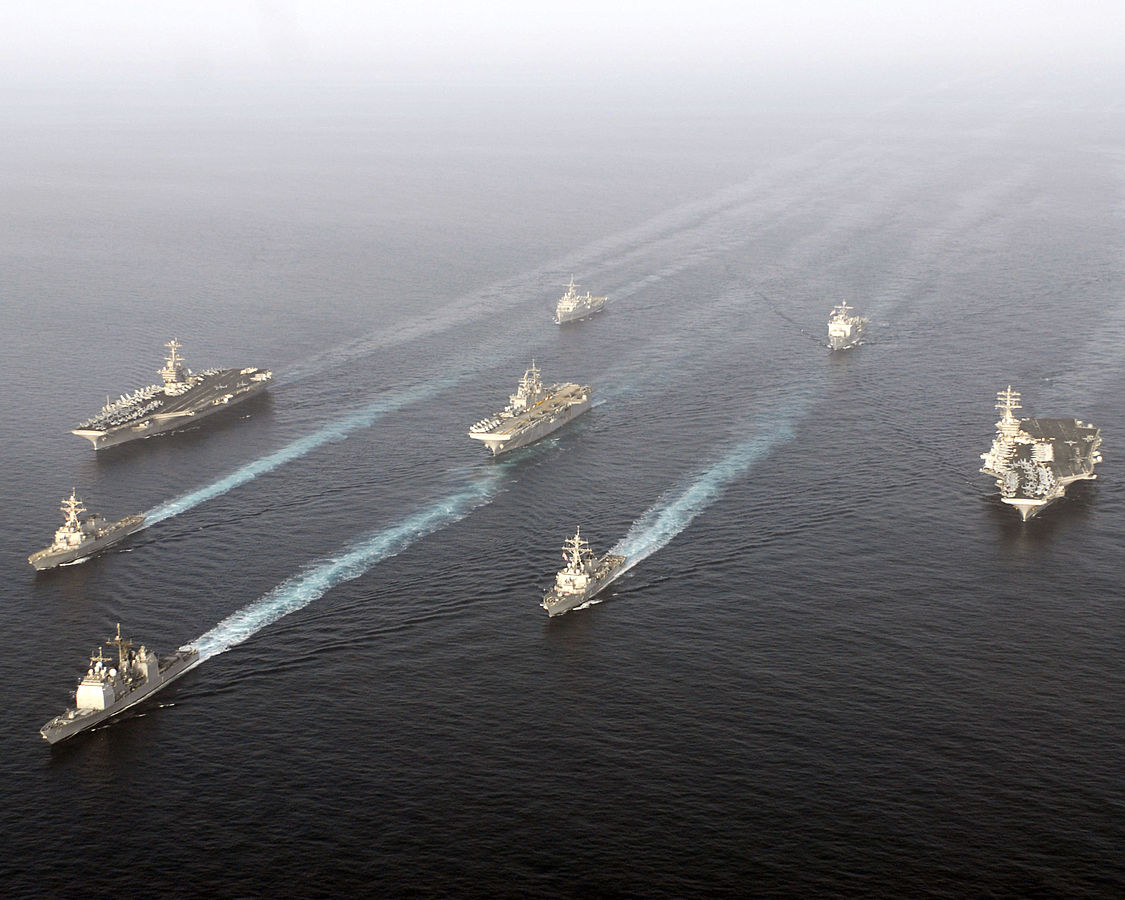
US Navy ships from the John C. Stennis and Nimitz Carrier Strike Groups with ships from the Bonhomme Richard Expeditionary Strike Group in the Gulf of Oman, 22 May 2007.
US Navy photo by Mass Communication Specialist 1st Class Denny Cantrell via Wikimedia Commons.

If you believe the threat from China is overblown, our Navy is well led, and that our fleet is big enough, then this is not the post for you. If you are concerned for all of it, grab a fresh drink and dive right in.

We are facing of something our nation has not had to seriously consider in well over three decades; we do not have free and unfettered access to the sea.

Even when Soviet submarines roamed the world’s oceans at will – though closely watched – and the Red Banner Fleet could send battle groups on cruises through the Gulf of Mexico, we had fair confidence in one thing – the Pacific was an American lake.

No more.

The leaders of the USN seem to have very different notions about what the Navy needs:

f you feel the Navy needs a larger share of the budget to meet the challenge of China, then you need to advocate for it. You need to fight for it … and when I say “you” I mean “we” and the most important and powerful parts of that “we” are our institutions; our maritime power institutions dedicated to seeing the USA remain the premier seapower.

Let’s start with the most obvious. Our uniformed Navy is itself an institution. It reports to its civilian leadership in the Executive Branch with oversight from the Legislative Branch. There are your big pixel maritime governmental institutions; the uniformed and civilian leaders in the Department of the Navy.

As reviewed yesterday, the CNO is engaged in a rather low-energy talking point about 500-ships, but in 2022 that is not even remotely achievable. He knows it, you know it, Congress knows it as well. A number is not an argument, and yet he is investing personal and institutional capital on this line that is almost immediately ignored if it is heard at all. Why?

In the last year one of his highest profile public appearances was when he shoveled heaping piles of personal and institutional capital in a fight defending a red in tooth and claw racial essentialist Ibram X. Kendi against who would normally be the US Navy’s natural allies in Congress. Ultimately he lost that battle and removed Kendi’s racist book and others from his reading list, but in the face of everything else going on in the maritime world, why?

What about the Vice CNO, Admiral William K. Lescher, USN? Maybe he could throw some sharp elbows for the maritime cause? Sadly, not. Just look at his exchange with Rep. Mike Gallagher (R-WI) back in March. He seems to be the “Vice Chief of Joint Force Operations” more than anything else. He is focused on something, but advocating for sea power is not it.

With the night orders from the CNO and VCNO as they are, if you expect any significant advocacy from the uniformed Navy leadership who report to them for — checks notes — the Navy, you are going to have to wait for a long time, time we don’t have. It isn’t going to happen.

[…]

Take a moment and ponder – when was the last time you heard the SECNAV or Under out front on The Hill or to the greater public about our maritime requirements? Yes, I fully understand what goes on behind closed doors, but that slow roll in an ever-slower bureaucracy infested with scoliotic nomenklatura is well past being of use. The American people must be provided the information and motivation to understand how their entire standard of living – and to a great extent their freedoms – is guaranteed by our mastery of the seas. Is even a rudimentary effort being made in this regard?

Just look at the USN’s YouTube feed – a primary communication device for the American people. What has the SECNAV talked about there this year? LGBTQ+ Pride Month, Juneteenth, Army birthday, Asian-Pacific Islander Month, Mental Health Awareness Month, Women’s History Month, carrier air birthday, and Black History Month.

There you go. There’s your communication. Dig harder if you want … but if you read CDRSalamander and you are not readily aware, then imagine the general population’s situational awareness of the dragon just over the horizon.

July 22, 2022

Why Did The First World War Break Out? (July Crisis 1914)

Filed under: Britain, Europe, France, Germany, History, Italy, Military, Russia, WW1 — Tags: , , , , , , — Nicholas @ 04:00

[My 2014 series on “The Origins of World War I” can be read here. Although I’d read a fair bit of history on the period, once I began researching the period, even I was surprised at how many different contributing causes there were.]

The Great War
Published 15 Jul 2022

The assassination of Archduke Franz Ferdinand and his wife in Sarajevo on the 28th of June 1914 kicked off a crisis among the European Powers. Tensions that built up in the decades before erupted and in early August 1914 the world was at war. But what happened in these fateful July weeks 1914?
(more…)

July 17, 2022

Who Let the Dogs Out?! – The Invasion of Sicily – WW2 – 203 – July 16, 1943

Filed under: Britain, Germany, History, Italy, Japan, Military, Pacific, Russia, USA, WW2 — Tags: , , , , , , — Nicholas @ 04:00

World War Two
Published 16 Jul 2022

The Allies have begun their fight to take back Western Europe with Operation Husky. That’s not the only news though. They are also trying to extend their foothold in the Solomons, and Germany and the USSR continue smashing into one another at Kursk.
(more…)

July 12, 2022

Kursk, When Titans Clash – 202 – July 9, 1943

Filed under: Britain, Germany, History, Italy, Japan, Military, Pacific, Russia, USA, WW2 — Tags: , , , , , — Nicholas @ 06:00

World War Two
Published 10 Jul 2022

Adolf Hitler launches his huge summer offensive in the USSR, Operation Citadel, known as the Battle of Kursk. Men in the millions clash. The Allies’ New Georgia campaign continues in the Solomons, both on land and with fighting at sea this week, and the preliminary actions begin for the Allied invasion of Sicily, scheduled to go off tomorrow.
(more…)

July 5, 2022

The Republic of China’s “Porcupine strategy”

Filed under: China, Military — Tags: , , , , , — Nicholas @ 05:00

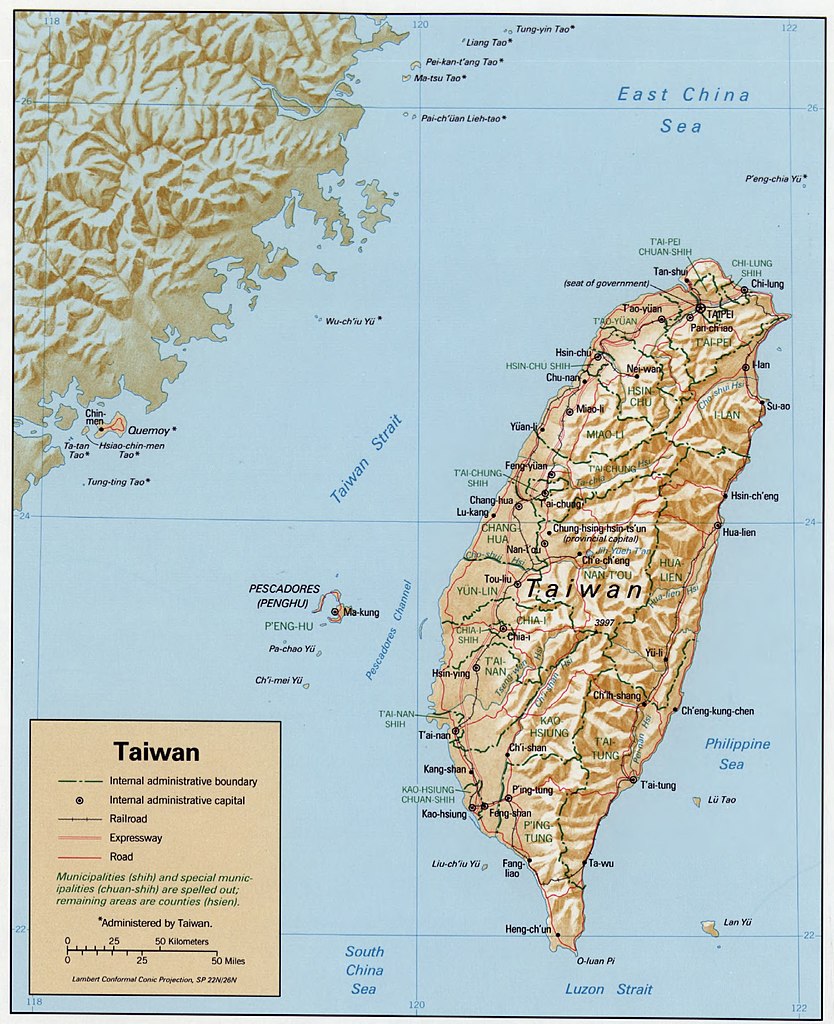
Originally published in the New York Sun and reposted by the New English Review, Conrad Black believes any attempted amphibious invasion of Taiwan will become the worst invasion outcome since the Athenians assaulted Syracuse in 414-413 BC:

Taiwan relief map.
Library of Congress Geography & Map Division via Wikimedia Commons.

There has for some time been a good deal of flippant talk about a Communist Chinese invasion of the Republic of China on Taiwan, as if that would be a simple military undertaking. It seems to be inadequately appreciated that Taiwan has thought of little else for many years, and is, unlike Ukraine, a very prosperous and technologically sophisticated country that is armed to the teeth with the most advanced American weaponry, and has plotted out a defense in depth that is called its “porcupine strategy”.

Though it is probably accidental, “porcupine” is the word applied to Switzerland by Adolf Hitler in 1941, when, after careful analysis by the German General Staff, he concluded Swiss defenders would inflict a much larger number of casualties on a German invasion force than could possibly be justified by the occupation of the country. (It can be lamented that more recent Western strategists did not apply the same test to Afghanistan.)

Comparisons with Ukraine are inapplicable, other than the fanatical determination of the defenders. Most obviously, Taiwan is not only an island but the Formosa Straits are three to four times as wide as the English Channel from the southern British ports to the beaches of Normandy. The People’s Republic of China would have no choice but to attack amphibiously as they could not possibly imagine success with fewer than 500,000 combat soldiers and no force remotely as large could be parachuted onto Taiwan.

A strike force of 500,000 would probably have to be supplemented by a follow-up force at least as large, all conveyed in a huge armada of slow and vulnerable craft. Taiwan has been supplied with the precise ground and air-launched missiles that the Ukrainians have used to such deadly effect in the Black Sea, including the sinking of the Russian flagship, the heavy missile cruiser Moskva.

Taiwan has a front-line Air Force of about 300 of the latest fully equipped fighter and interceptor aircraft that along with shore batteries could rain a dense and prolonged fire of missiles upon any invasion fleet. Such a fleet, even in the best of weather, would plod through open water for at least ten hours. They would be sitting, or at least slowly moving, ducks throughout that journey. It brings to mind the conclusion of one of Churchill’s Demosthenean addresses in the autumn of 1940: “We are still awaiting the long-promised invasion; so are the fishes.”

June 29, 2022

A very charitable view of Canada’s Indo-Pacific naval involvement

Filed under: Cancon, Military, Pacific — Tags: , , , — Nicholas @ 05:00

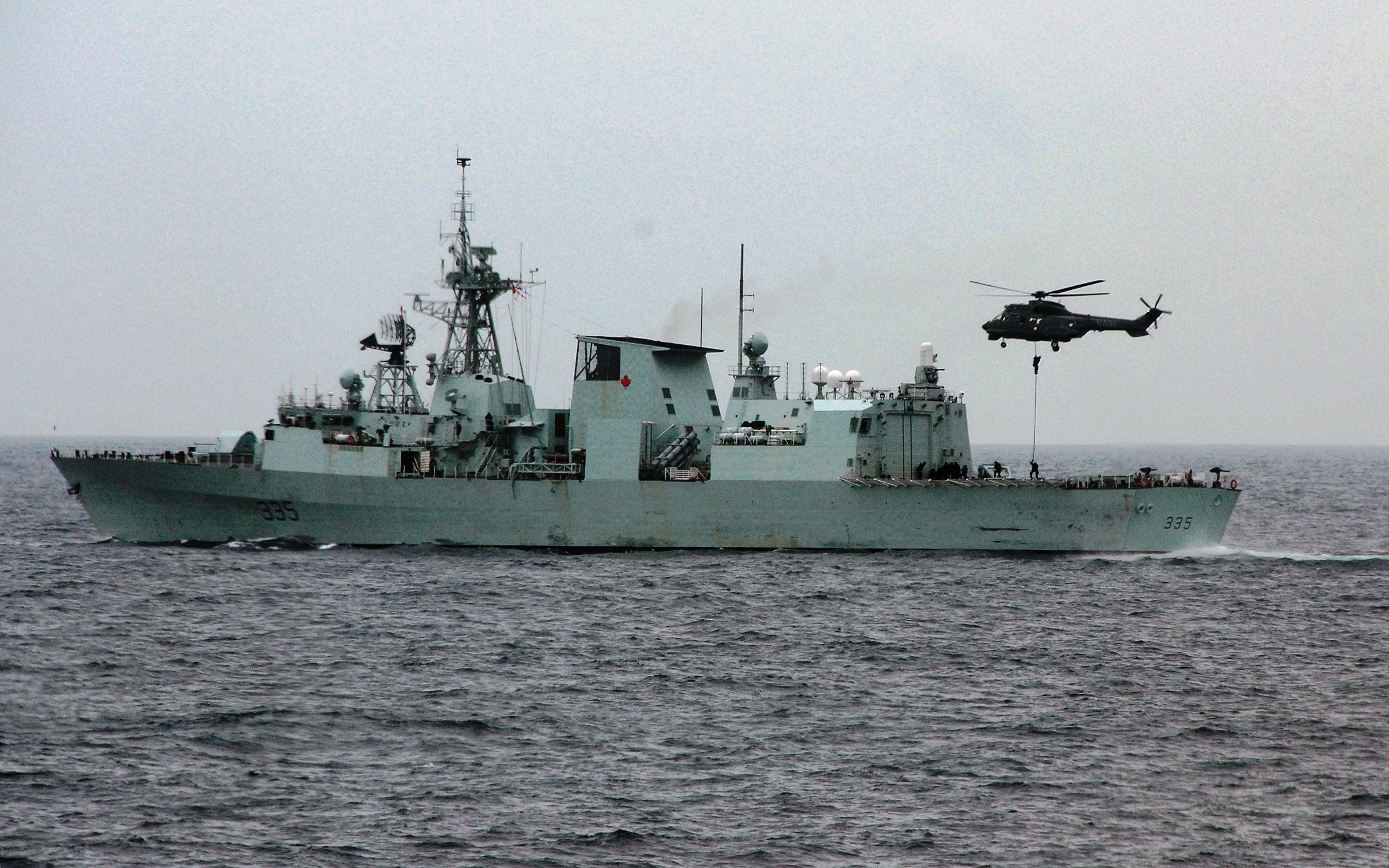
In a post on the IISS Military Balance Blog, James Hackett extends far more charity toward the Canadian government’s “incremental growth” of naval activities in the Pacific and Indian Oceans than it may deserve. Given the already stretched nature of the Royal Canadian Navy under ordinary conditions, a cynic might be tempted to speculate what other activities and training will have to be foregone to allow the noted two-ship deployment for several months overseas:

A Chilean navy boarding team fast-ropes onto the flight deck of RCN Halifax-class frigate HMCS Calgary (FFH 335) during multinational training exercise Fuerzas Aliadas PANAMAX 2009.
US Navy photo via Wikimedia.

On 14 June, Royal Canadian Navy (RCN) frigates HMCS Winnipeg and HMCS Vancouver left their berths at Esquimalt naval base in British Columbia, bound for the US-led Rim of the Pacific (RIMPAC) 2022 exercise, due to take place from 29 June to 4 August. The ships will then set a westerly course for a five-month deployment in the Indo-Pacific, principally to support Canada’s Operation Projection. This is the first twin deployment of its kind since 2017 and heralds a bolstering of Canada’s defence contribution in the region, with new naval investments on the way to help sustain it, but will they be enough?

[…]

However, a number of the building blocks to help sustain Canada’s regional defence ambitions are still being put in place. In 2016 the RCN retired the last of its Protecteur-class oiler and replenishment vessels and, for a time, resorted to hiring Chilean and Spanish ships to maintain replenishment capability amid delays in the project to replace the class. In 2018, as an interim measure it introduced the converted German container vessel MV Asterix into the role of an at-sea replenishment vessel and oiler.

The first of two new Joint Support Ships (JSSs) will be delivered in 2023. Also called the Protecteur-class, these ships are being built in Vancouver. They form a key part of Canada’s ambitious National Shipbuilding Strategy, alongside new class of surface combatants and Arctic patrol vessels. Based on the German Brandenburg-class design, the JSSs are intended to be compatible with Canada’s afloat combat platforms, boasting combat systems, tactical data links and defensive weapons systems. What role Canada’s submarine flotilla might play in an enhanced Indo-Pacific posture is uncertain, although one submarine, HMCS Chicoutimi, undertook an unusual deployment into the region in 2017/18.

Whether two JSSs will be enough in terms of naval logistic support at sea also remains an open question and there has even been talk of extending the lease on MV Asterix. The RCN will, nonetheless, have regenerated its sovereign at-sea replenishment capability once the new ships are in service. Alongside the other planned capability enhancements, the future RCN should be a more capable force than it is today. With the two new Protecteur-class vessels in service, the RCN should be more operationally sustainable and also better able to offer some of the broader non-combat defence assistance that may be required on the engagement and training tasks seen in missions like Operation Projection.

It’s always a foolish bet that any major equipment for the Canadian military will be delivered on time or under budget, and the Joint Support Ship project is unlikely to change that. The ships were originally announced in 2004, but between changes of government and re-imagining the entire RCN shipbuilding program, the contracts were not signed until 2020. Initially, $2.6 billion was allocated to purchase two vessels with an option for a third. It didn’t take long for budget realities to cancel the optional ship, and by 2020, it was reported that the anticipated final cost will be $4.1 billion. Unlike pretty much every other shipbuilding project, the Project Resolve ship MV Asterix was accepted into service in 2018, both on time and within budget … perhaps because this was a conversion of an existing hull rather than an all-new build.

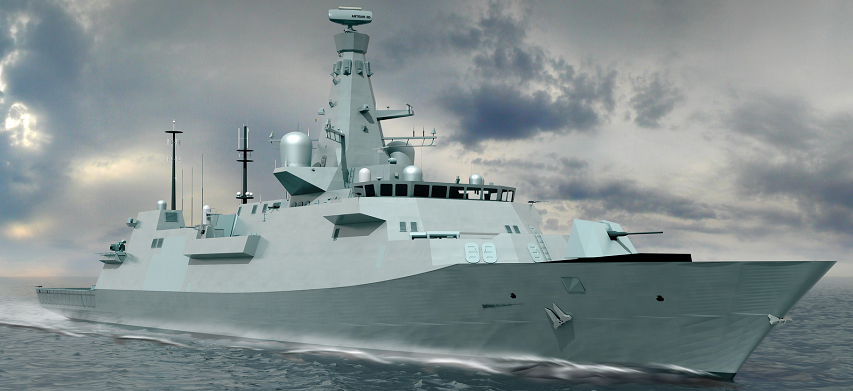
The next major step after the JSS project is completed is to roll out the replacements for the Halifax-class frigates and the already-retired Iroquois-class destroyers. It will theoretically consist of 15 hulls, but as we usually see in naval expenditure, if the RCN ends up getting a dozen they may consider themselves lucky. The ships will be based on the British Type 26 frigate design.

An artist’s rendition of BAE’s Type 26 Global Combat Ship, which was selected as the Canadian Surface Combatant design in 2019, the most recent “largest single expenditure in Canadian government history” (as all major weapon systems purchases tend to be).
(BAE Systems, via Flickr)

Construction of the Canadian Type 26 ships is “expected” to begin in 2024. Gamblers may want to place their bets on how close to that date actual fabrication begins and by just how much the budget will be overshot by the time a few of the ships enter service in the “early 2030s”.

June 26, 2022

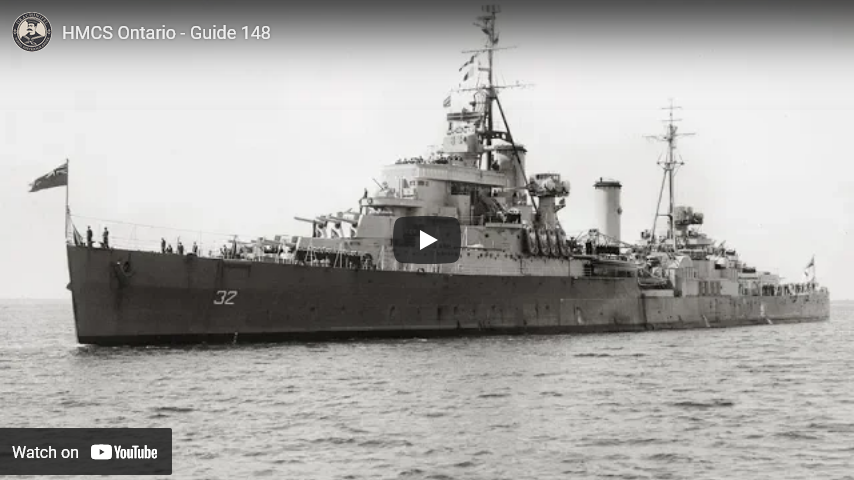
HMCS Ontario – Guide 148

Filed under: Britain, Cancon, History, Military, WW2 — Tags: , , , , — Nicholas @ 02:00

Drachinifel
Published 12 Oct 2019

HMCS Ontario, last of Canada’s cruisers and a Minotaur class vessel, is the second subject of the day.

Want to support the channel? – https://www.patreon.com/Drachinifel

Want a shirt/mug/hoodie – https://shop.spreadshirt.com/drachini…

Want a medal? – https://www.etsy.com/uk/shop/Drachinifel

Want to talk about ships? https://discord.gg/TYu88mt

Want to get some books? www.amazon.co.uk/shop/drachinifel

Drydock Episodes in podcast format – https://soundcloud.com/user-21912004

June 4, 2022

Falklands Conflict Aftermath | The global impact of a 74-day conflict

Filed under: Americas, Britain, History, Military — Tags: , , , , , — Nicholas @ 04:00

Imperial War Museums
Published 1 Jun 2022

The Falklands Conflict of 1982 only lasted for 74 days, but it had lasting consequences which continue to be felt today. Prior to 1982, Margaret Thatcher’s government was planning major defence cuts including withdrawing the military from the South Atlantic. Instead, they spent nearly £3 billion defending British sovereignty of the Falkland Islands, and to this day maintain a garrison there. What was the effect of this short conflict for Argentina, Britain and the Falkland Islands, and what impact did it have around the world?

Correction: The video states that Port Stanley was granted city status in 2002, this should be 2022.

Thanks for watching IWM’s 5 part series on the Falklands Conflict. Please like and subscribe for more, and let us know in the comments below what you’d like to see next.

Explore and licence the archive films in this video: https://film.iwmcollections.org.uk/c/…

CREDITS
Mount Pleasant images, Crown copyright, April 2022
Margaret Thatcher images © University of Salford Press Office
Landmine clearance photos via Safe Lane Global
Sound effects via ZapSplat

June 1, 2022

How To Kill A U-Boat – WW2 Special

World War Two
Published 31 May 2022

How to kill a U-Boat? The threat of the illusive and nearly undetectable submarines had been on the mind of every Allied naval planner since the Great War. As the Kriegsmarine once more unleashed its wolfpacks to the high seas, it became a race against time to find a way to stop the deadly stalkers from beneath the surface.
(more…)

The Battle of The Glorious First of June 1794

Filed under: Britain, France, History, Military — Tags: , , — Nicholas @ 02:00

MaritimeGB
Published 17 Feb 2013

1794 — After the failed harvest, France organises for a desperately needed grain convoy to cross the Atlantic. British Admiral Lord Howe is sent to intercept the French and although the British win the fight, the tactical victory goes to France.

« Newer PostsOlder Posts »

Powered by WordPress