Quotulatiousness

April 18, 2022

Once upon a time, the American military wanted to know precisely nothing about the sex lives of servicemen

Filed under: Health, History, Military, USA — Tags: , , , , — Nicholas @ 05:00

Yet another trip into a far distant past, this time in the US armed forces, long before the Current Year:
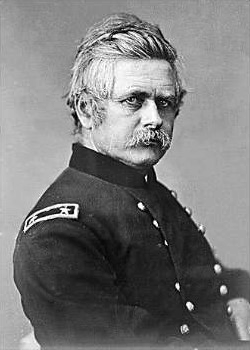
General Edward Ord (1818-1883), the designer of Fort Sam Houston, saw action in the Seminole War, the Indian Wars, and the American Civil War.
Undated photo from before 1883 via Wikimedia Commons.

For much of its history, the American military has had an aversion to hearing in any official way about the sexual conduct of servicemembers. In one of the US Army’s most notorious 19th-century legal conflicts, Captain Andrew Geddes reported from a remote post in Texas that Lieutenant Louis Orleman had been forcing his teenaged daughter to have sex; in a written statement to his commanding officer, Geddes wrote that Orleman “had been having sexual intercourse with her for the past five years, or since she was thirteen years of age, and that he had placed a loaded revolver to her head, threatening that he would blow out her brains if she did not consent to his horrible desires.” Thus informed, then-Brigadier General Edward Ord convened a court-martial — to conduct a trial of Captain Geddes, for putting such an appalling thing in writing.

As Louise Barnett concludes in her book about the trial, “acknowledging the possibility of incest by bringing charges against Orleman would have officially validated and magnified a scandal that would have haunted the Army, and the Department of Texas, for years to come. Fortunately for Orleman, this course of action was unthinkable because incest itself was unthinkable in America in 1879.”

Similarly, a rich and colorful history of the early American navy attempts to count recorded acts of sodomy at sea, and finds them buried in euphemism within official reports of sailor misconduct: “improper conduct too base to mention”, or “filthy conduct”, or “improper conduct on the berth deck”. As the historian James Valle has written, naval courts-martial finding themselves hearing testimony about shipboard sodomy tended to adjourn quickly, or to end testimony and immediately vote to acquit — after which the accused tended to vanish from a ship’s rolls, without explanation, the very next time the ship made port. “Consequently,” Valle concludes, in the early republic “not one navy man was ever convicted of homosexuality by a formal court-martial.” Herman Melville mentioned the unmentionable by writing, in White Jacket, of complaints regarding shipboard acts “from which the deck officer would turn away with loathing.” They didn’t want it to happen, but if it happened, they didn’t want to know about it.

The exceptions are, you know, interesting. In the early years of the Cold War, the sudden arrival of the threat posed by nuclear weapons and the emerging political power of the Eastern Bloc produced a moral panic in which security officials in the federal government hunted communists by looking for homosexuality; the “lavender scare” ran alongside the red scare. And so, as Elizabeth Lutes-Hillman has written, the Cold War military justice system became endlessly obsessed with sexual difference, throwing aside the usual disinclination to take notice of sexual behavior in the ranks: “Courts-martial instead became a performance of military values for the culture at large, setting the boundaries of deviant behavior for the armed forces, and so, to a certain extent, for the American body politic.” To drag that language about the performance of values down to the plane of action, Lutes-Hillman reports the example of the shore patrol in Norfolk, Virginia, which proudly reported in the late-1950s that it had caught 231 sailors in acts of sodomy by drilling holes in the wall of the local YMCA.

Putting all of that together, the American military has mostly preferred to avert its eyes from the sexual behavior of servicemembers, except in moments of transition and political crisis. If the armed forces are really interested in the question of which bed you spent the weekend in, Private Snuffy, something different is happening. For something more than 200 years, the default message from a company commander on Friday afternoon has generally been, “Handle your business, don’t interrupt my weekend with a phone call from a police department, and you’d best be in formation when the flag goes up on Monday morning.” Normal is the view that servicemembers are grown-ups whose intimate matters aren’t military business. Historically, if the armed forces officially have sex on the brain, something has been disrupted; anxiety and disorder outside the military have seeped into the ranks.

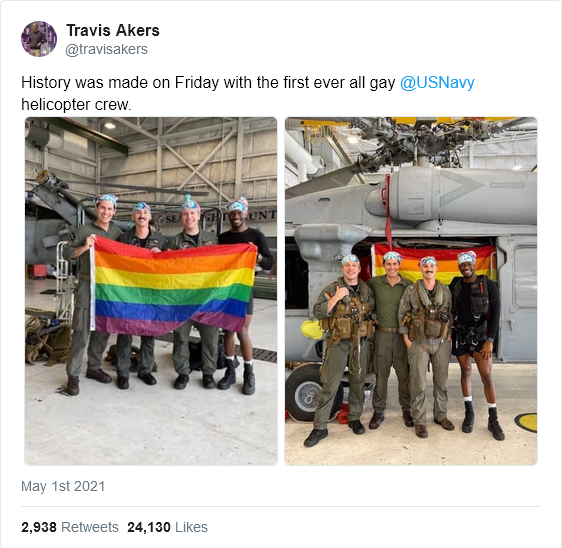
Now. To go back to an example from last year, this:

… suggests a number of obvious questions, starting with how did the United States Navy know this? Is this liberation, or is it intrusion? (BREAKING: The Department of the Navy proudly announces which helicopter pilots are into dudes, and stand by for detailed information on which surface warfare officers are bi-curious. We’re still asking around on that one, so.) It’s like the shore patrol is drilling holes in the wall at the YMCA again, but this time it’s so they can bus in a cheering section. The chain of command is right outside your door, you guys, and we hear what you’re doing in there, and OH MY GOD WE’RE SO PROUD OF YOU DO YOU NEED SOME CONDOMS? The Department of Defense isn’t a regular mom, it’s a cool mom.
April 16, 2022

How much of teenagers identifying as transgender is “social contagion and the development of a new youth subculture”?

Filed under: Health, Media, USA — Tags: , , , , , , — Nicholas @ 03:00

The sheer number of children and teens who are deciding that they are “trans” is far in excess of previous generations. How much of this phenomena may be accounted for by social contagion?

My teenage daughter has decided that she is “trans”. So have all her friends. Not some of them. Not most of them. Every. Single. One.

She had never heard of trans, and had no signs of gender dysphoria, until she was moved to a new, cool trans-friendly school by her unsuspecting, politically liberal parents. There she met a group of geeky (or dare I say nerdy?), smart, slightly (but not very) gender nonconforming, artsy kids. As I understand it, they all discovered “trans” together. The old “cis” friends were swiftly discarded in favour of this exciting new peer group.

Exploring “trans stuff” online with friends is a source of great interest and excitement — a real social event. What’s not to love about 245 gender identities, complete with their own unique flags? Then there are those cool neo-pronouns. Forcing your out-of-touch old parents to refer to you as “ze” or “ey” (how do you pronounce that again??) in the name of “inclusivity” is just too delicious to resist. The manga, the cute avatars in computer games, the blue or pink hair — all part of the fun as well. Mocking the outgroup (in this case so-called “cis” people in general and the dreaded TERFs in particular) is also good for a laugh — especially if they happen to be your parents as well.

There is even a special vocabulary with lots of new terms — deadnaming, misgendering, sex assigned at birth, and much more. If these concepts need to be explained to your uncool parents (accompanied by eye rolls of course), so much the better.

Bonding with friends, searching for their identity and place in life, working out their sexuality, separating from family — these are all normal developmental tasks for teens. For many, youth subcultures can be a natural part of that. Some are harmless. Some, like drug use and extreme dieting, not so much. But in the case of the latter, sensible adults usually intervene to help steer the young people in the right direction. Not in the case of trans. Here we have adults steering kids down a dangerous path, which involves permanent, life altering drugs and surgeries for which there is no good evidence base.

For many of these kids, LGBTQ+ is a youth subculture. It really is as simple as that. Recent surveys have been identifying skyrocketing rates of “trans” or “queer” identification in young people. One found that an astonishing 39% of young adults in the US aged between 18-24 identified with the label LGBT — the figure for teens <18 may well be even higher. Of course this figure includes gay and lesbian people as well as those identifying as trans. Another poll, which looked only at gender, found that nearly 10% of US high schoolers identified as “gender diverse”. Yet another survey gives a lower figure of 1.8%. Whichever figure is correct, this is a huge explosion in numbers over a very short period of time. As endocrinologist Dr Will Malone asks; “How do we reconcile these numbers with 2013 data reporting the prevalence of adult gender dysphoria to be a rare 2-14 in 100,000?”

Social contagion and the development of a new youth subculture, that’s how.

H/T to Blazing Cat Fur for the link.

March 18, 2022

The “DeSantis Doctrine”

Filed under: Business, Government, Media, Politics, USA — Tags: , , , , , — Nicholas @ 05:00

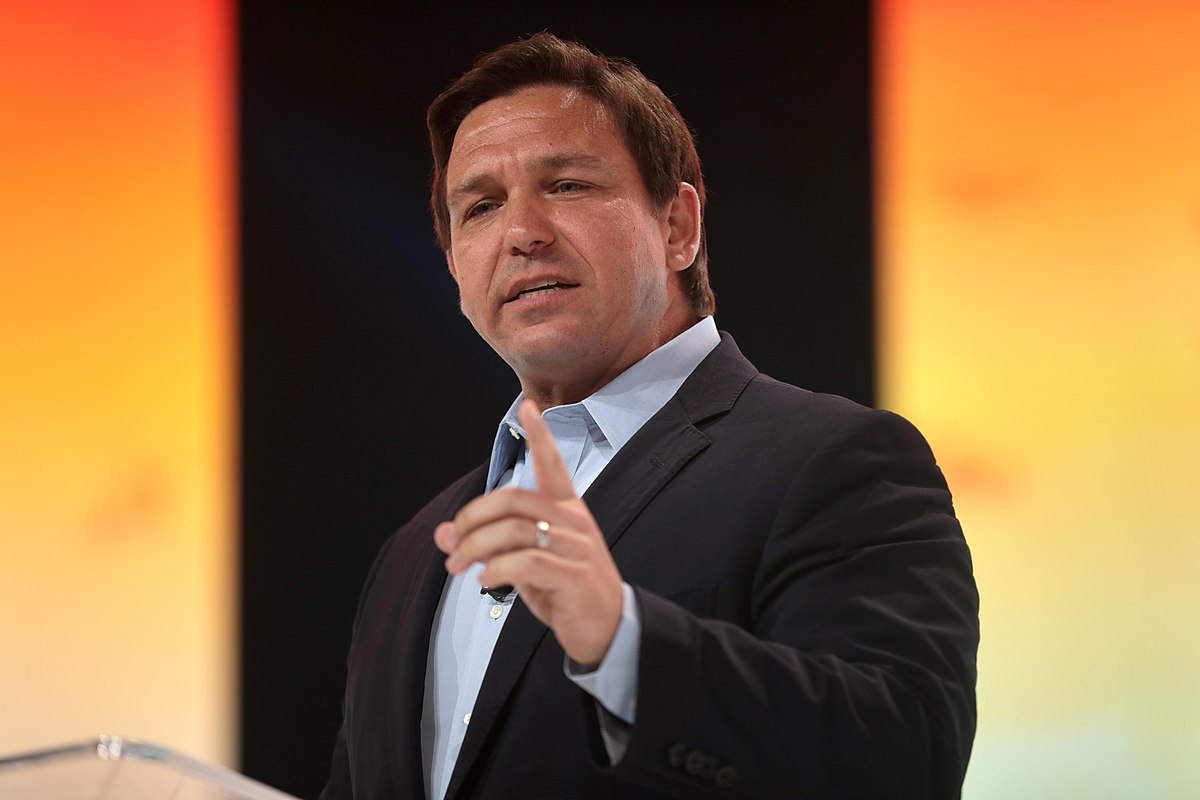
Kurt Schlichter confesses a man-crush on Florida governor Ron DeSantis:

Governor Ron DeSantis speaking at the 2021 Student Action Summit hosted by Turning Point USA at the Tampa Convention Center in Tampa, Florida on 18 July, 2021.
Photo by Gage Skidmore via Wikimedia Commons.

You gotta hand it to a guy who convinces Democrats to die on the hill of defending perverted groomers talking about sex with little school kids. It’s on-brand for their fellow travelers at The Lincoln Project, but you would think that Democrats actually want to win elections. But no – they want to make the schools safe for pedos, and they don’t care who knows it. But they’ll care plenty in November when parents around the country come out and vote for The Party of Not Hitting on Der Kinder.
Donald Trump has his record of achievement – economic success and peace abroad. But Ron DeSantis has the DeSantis Doctrine, sort of like the Monroe Doctrine, except instead of keeping shady foreigners out of our hemisphere, the DeSantis Doctrine keeps woke fascists out of our lives.

It was DeSantis who started the fire that burned the pyre of Democrat hopes and dreams they jumped onto in their campaign against the Florida anti-grooming statute. But that’s only his latest fight with the elite. DeSantis has been laying down the law in Florida, literally, and in a way even Donald Trump never did. At some level, Donald Trump still has some residual respect for the trappings of the elite. He’s impressed by name universities and huge corporations, and for all his much-justified complaining, he still cavorts with institutions that hate him, like the NYT. He’s not yet completely done with the institutions, but DeSantis is. DeSantis is all honey badger, laying waste and making the rubble bounce.

It’s the DeSantis Doctrine, and it’s summed up this way: Your garbage institutions don’t mean Schiff to me. I am going to ruthlessly wield my power to protect normal people from your depredations. And I’m going to smile doing it.

Did the head of China-hugging Disney really think he was going to push Big Ron around? The nattering twenty-somethings and woke pronoun people in his company and on social media thought they could leverage their power to make this huge Florida employer bring DeSantis to heel over the threat that creepy weirdos could no longer chat up kindergartners about sex in schools. So this dude – who shrimps Chi Com toes even as his commie masters torment, torture, and terminate Uighurs and prop up Putin – comes out and really expects that DeSantis will fold. And then DeSantis, delighted at the chance to figuratively post a rodent skull on a pike, told the Mouse to pound some Sunshine State sand.

But I was informed by all the smart people with blue checks trapped in a vortex, which keeps them forever in the year 2005, that conservatives were supposed to hate regulation and love big corporations.

Well, things change – among them, the left, which decided that it was going to weaponize every institution against us, including corporations. A key element of that campaign is neutralizing normal people’s retaliation by barring us – through the application of principles that exist only in a paradigm that no longer does – from exercising our own power. “It’s so unseemly for a governor to attack a corporation!” Perhaps, in a world where corporations tend to literally mind their own business and not use their economic power to affect policy. But it’s ridiculous to expect that, in a world where corporations regularly use their power to affect politics, we normal people are somehow barred from using our own power – political power, including the power to regulate – to protect ourselves. You don’t get to change the rules, then expect us to remain bound by the old ones.

Well, you can expect that – many do, in fact – but Ron DeSantis scoffs at such unilateral disarmament. He’s all about the massive retaliation.

February 15, 2022

King James I and his court favourites

Filed under: Britain, Government, History — Tags: , , , , , — Nicholas @ 03:00

In the latest Age of Invention newsletter, Anton Howes continues the tale of King James I of England (also King James VI of Scotland at the same time, the crowns still being legally separate) and his use of favourites to help him avoid going back to Parliament to ask for money:

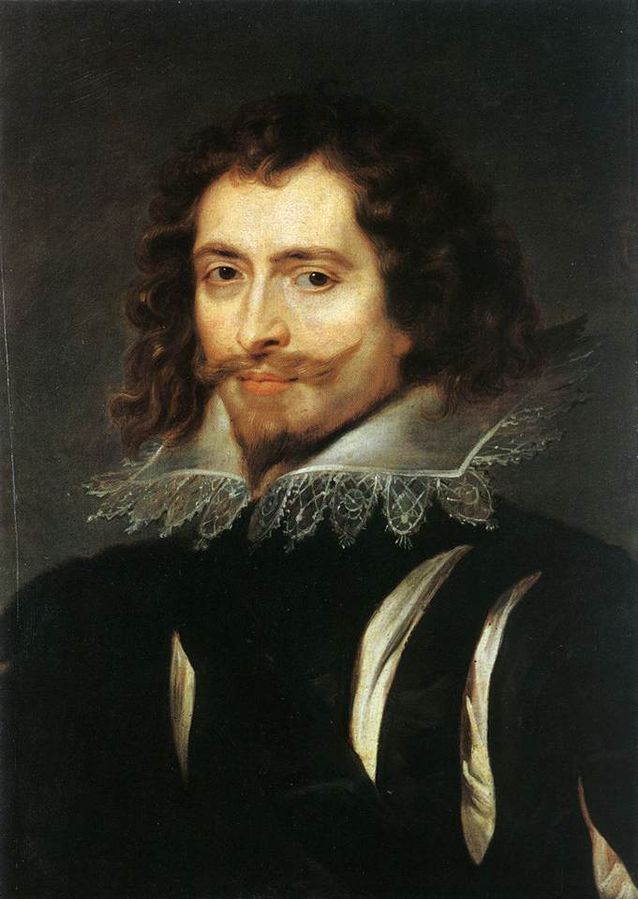
Portrait of George Villiers, First Duke of Buckingham, 1625.
Oil painting by Peter Paul Rubens (1577-1640) via Wikimedia Commons.

At the same time, James found a way to filter many of the petitions before they even reached him. This was something he already did in his original kingdom, Scotland, occasionally sending a noble “favourite” — like his kinsmen the duke of Lennox and the marquess of Hamilton — to dispense patronage and manage its parliament. Yet he increasingly, and even scandalously, relied on favourites in England too.

Using a favourite could make some sense from a political standpoint. Favourites often owed everything they had in terms of wealth, protection, titles and standing to the king personally. As creatures of the king, their loyalty was assured. They served an important practical function by dispensing patronage and absorbing pesky petitions, and could insulate the king himself from blame. Should the king make a mistake, his favourite was the obvious man to take the fall.

But for James, the use of favourites went beyond mere practicality, if they were ever practical at all. His interest could also be romantic.

Although James was married with kids, his favourite by 1607 was one Robert Kerr, the younger son of a minor Scottish laird. A mere groom of the bedchamber, about twenty years James’s junior, he had fallen from his horse in a jousting accident and broken his leg. The king helped nurse him back to health, and was soon besotted. Kerr — often anglicised to Carr — was very rapidly given money, titles, and lands. Within a year he had been knighted, after four years made a viscount, and in 1613 an earl.

But what had been so rapidly gained, could be just as rapidly lost. In 1614, a rival faction at court made sure that another, even younger and more attractive man would catch the king’s eye. This was George Villiers, the 22-year-old younger son of an obscure knight. With his “effeminate and curious” hands and face, as well as a remarkable physique — a clergyman, later a bishop, marvelled at his “well compacted” limbs — Villiers’s rise made Kerr’s seem slow. Every year brought him a new title: in 1615 Villiers was made a knight, 1616 a viscount, 1617 an earl, and 1618 a marquess — a very rare title in England, last given to an influential co-regent of Edward VI, and before that to Anne Boleyn so that she could marry king Henry VIII.

Eventually, incredibly, in 1623 James made Villiers a duke. This was a title that was typically reserved for members of the royal family, or else given by very powerful regents to themselves — Villiers was the first in neither of those categories to be made a duke in 140 years. And he hadn’t even been born into the nobility! The apparent lesson: working on your triceps can really, really pay off.

Yet Villiers had more than just an angelic face and muscles. He seems to have had a real talent for politics, very quickly asserting independence from the faction that had put him before the king. And he would somehow remain the favourite even after James died and was succeeded by his heterosexual son, Charles I. In the dangerous waters of courtly faction — Robert Kerr had meanwhile been found guilty of murder and was imprisoned in the Tower — Villiers knew how to keep himself afloat, and even to chart a course of his own.

And he was extraordinarily corrupt.

January 26, 2022

“Last year, we’re told, was the ‘deadliest’ year for transgender people since records began”

Filed under: Britain, Health, Law — Tags: , , , — Nicholas @ 05:00

Tish Still, parent of a child who identifies as transgender, was worried about the “epidemic” of trans murder victims:

Facts always matter — but they take on a particular importance when they’re being used to claim that your child could be murdered. So I decided to delve into the research used to inform these claims. For me, it was personal.

The Government doesn’t publish data on the number of transgender people in the UK, though in 2018 it “tentatively” estimated that the figure stood between “approximately 200,000-500,000”. What proportion of that number must have been killed to warrant today’s warnings of trans murder epidemic? 10? 100? 1,000?

To find out, I analysed data collected by the trans-led organisation Transgender Europe, which has received more than a million dollars from the Arcus Foundation, who are based in the US and take a keen interest in transgender issues. As well as donating almost $150,000 to Stonewall, in 2015 the Arcus Foundation handed $312,000 to Transgender Europe specifically to supply reliable global data on transgender murders. The website it created provides an interactive map and links to documents naming the transgender victims.

Looking at Transgender Europe’s list of cases, it became clear — to my relief — that the total murders reported for the United Kingdom since 2008 amounted to 11. This translates as a murder rate of around 0.165%.

Now, that is still significantly higher than the murder rate for the UK as a whole: the ONS reports that the homicide rate in the UK for the year ending March 2020 was 11.7 per million people, rising to 17 per million among men. But look a bit closer at the list of trans murder victims, and that figure of 11 becomes increasingly suspect.

For instance, two of the listed victims, Vikki Thompson and Jacqueline Cowdry, appear to have been erroneously included. Thompson died by suicide while incarcerated in HMP Leeds, while Cowdry’s death was ultimately ruled as non-suspicious. This reduces the total to nine unlawful deaths, all of whom were born male. (By contrast, the number of homicides committed by transgender people between 2008 and 2017 was 12.) For context, the number of women killed by men during the same period was 1800. So much for our alleged “cis-privilege”.

Searching for more information led me to the work of Karen Ingala-Smith, who founded the Counting Dead Women project in 2012 after she realised that there was no central record of the extent of femicide here in the UK; thanks to her, a list of murdered women is read out in the House of Commons each year to imprint the rate of femicide on the minds our political class. Ingala-Smith’s tireless work focusses on female victims of, predominantly, male violence, though she made an exception to highlight the discrepancy between the mass hysteria about transgender victims of homicide compared to the treatment of woman-killing as mere background noise. (There is still no equivalent to the Trans Day of Remembrance for the much greater number of women killed by male violence.)

Crucially, her research sheds a vital spotlight on the nine remaining victims identified by the Trans Murder Monitoring report. Reading it, two things become clear. The first is that it is not entirely certain that all the victims themselves identified with the label “transgender”. The second is that the motives behind these crimes are more complex than straightforward “transphobia”.

January 16, 2022

Is the narrative about the Trans Movement about to change?

Filed under: Health, Media, Politics — Tags: , , , , — Nicholas @ 03:00

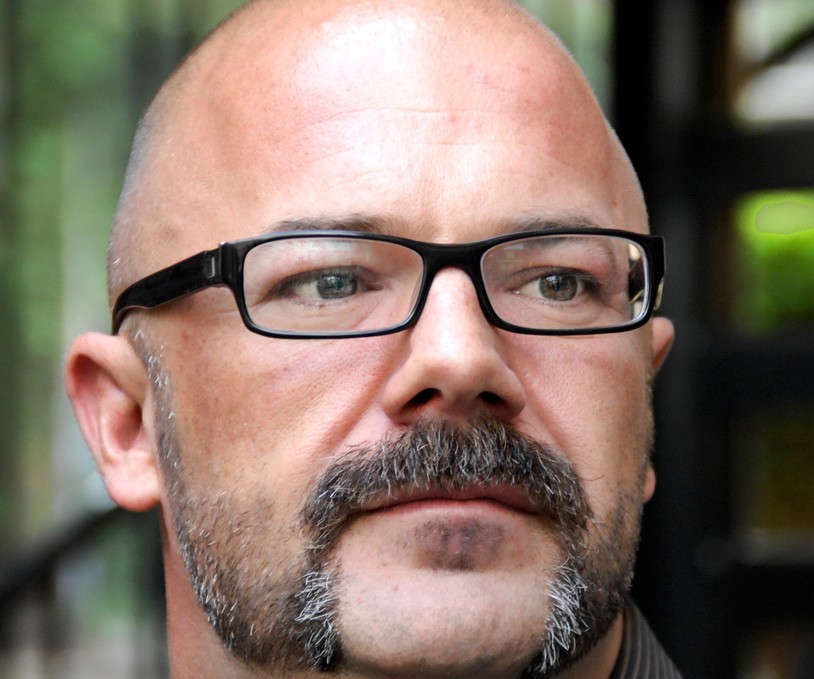
In the latest Weekly Dish, Andrew Sullivan marks a perhaps significant change in how mainstream media outlets are discussing the Trans Movement:

An unusual thing happened in the conversation about transgender identity in America this week. The New York Times conceded that there is, indeed, a debate among medical professionals, transgender people, gays and lesbians and others about medical intervention for pre-pubescent minors who have gender dysphoria. The story pulled some factual punches, but any mildly-fair airing of this debate in the US MSM is a breakthrough of a kind.

Here’s the truth that the NYT was finally forced to acknowledge: “Clinicians are divided” over the role of mental health counseling before making irreversible changes to a child’s body. Among those who are urging more counseling and caution for kids are ground-breaking transgender surgeons. This very public divide was first aired by Abigail Shrier a few months ago on Bari’s Substack, of course, where a trans pioneer in sex-change surgery opined: “It is my considered opinion that due to some of the … I’ll call it just ‘sloppy’, sloppy healthcare work, that we’re going to have more young adults who will regret having gone through this process.” Oof.

The NYT piece also concedes another key fact: that puberty blockers are neither harmless nor totally reversible. Money quote:

    Some of the drug regimens bring long-term risks, such as irreversible fertility loss. And in some cases, thought to be quite rare, transgender people later “detransition” to the gender they were assigned at birth. Given these risks, as well as the increasing number of adolescents seeking these treatments, some clinicians say that teens need more psychological assessment than adults do.

I would think that, just as a general rule, minors making permanent, life-changing decisions should receive more psychological treatment than adults. How on earth is this not the default? In what other field of medicine do patients diagnose themselves, and that alone is justification for dramatic, irreversible medication?

The NYT doesn’t give you the data for the “increasing number” of transitions because it’s hard to find in the US. In the UK, however, the data show a 3,200 percent rise in adolescents seeking transition over a decade — 70 percent of whom are girls seeking to become boys, a break from historical norms where boys/men were much more likely to seek transition. Nor does the NYT give any data for “detransitioners”. But any brief look online suggests they are not exactly “quite rare”. They are, in fact, becoming a small but recognizable and tenacious part of the trans landscape. And among the risks of puberty blockers that the NYT does not mention are neurological damage, bone-density loss, and a permanent inability to experience sexual pleasure. And in almost every case (98 percent in one report), puberty blockers are never reversed.

January 15, 2022

Merely to be accused of transphobia is enough proof for condemnation

Filed under: Britain, Health, Media, Politics — Tags: , , , , — Nicholas @ 03:00

Jean Hatchet on the plight of Staffordshire University professor James Treadwell, who has been anonymously accused of “transphobia” … and therefore must be punished:

Yesterday evening Professor James Treadwell, a criminologist at Staffordshire University, announced his dismay on Twitter at being accused of “transphobia”. The details are vague, even to him. He has not been presented with evidence and he doesn’t and may never know who has accused him.

He wrote: “Ok to hell with it. I have been told by my employer @StaffsUni albeit only verbally that I am being investigated for Transphobia after formal and official complaints about my Twitter conduct. Read my tweets. Go figure.”

Go figure indeed. It is completely baffling. The issue is Professor Treadwell’s tweeting in favour of the right of female inmates to a single-sex prison estate. In a series of tweets on 27 December 2021, Professor Treadwell outlined his experience of the manipulative behaviour of violent sex offenders who will use loopholes to “game” the criminal justice system. He was clear that his tweets were not directed at the transgender community. He wrote:

“The idea that sex offenders are manipulative individuals who would exploit systems and laws could only be unreal to those who do not know how manipulative sexual offenders can be. All groom, seek to exploit and control.”

And he made very clear that his tweets weren’t attacking the transgender community:

“It isn’t about trans people, it’s about bad people who will exploit the law from self interest and work within a legal framework (that could protect women’s spaces) to do as they want and get what they want. You think that won’t happen, you don’t know how many sex offenders act.”

Who would be better placed to discuss this issue than a leading criminologist who has worked with some of the worst sex offenders in the country? The polite and well-informed tweets hit the nerve of public opinion on the topic of trans-identified men incarcerated in the female prison estate and were widely, mostly supportively, distributed.

Today, Professor Treadwell is in the awful position of fearing for his job; for a few tweets about a subject that he is specifically qualified to speak on. Meanwhile an effective message is simultaneously sent to his academic colleagues nationwide, that they could be targeted next. He is not the first and he won’t be the last. Many criminologists are choosing to look the other way. Professor Treadwell felt that he could no longer do so. His professional integrity appears to be exactly what he is being persecuted for.

November 19, 2021

QotD: People who are interested in history versus “academic” historians

Filed under: Education, History, Politics, Quotations, USA — Tags: , , , , , — Nicholas @ 01:00

One of many reasons I never went anywhere in my career as an academic historian is that I actually like history. I find it interesting. That’s because I find people interesting, and history is, above all, the study of people and how they be.

Your average academic historian lives entirely in xzheyr own head. They hate and fear people. They have no interest in how people actually are, only in how they should be. Thus, academic history quickly devolves into the worst kind of Social Justice Mad Lib, a never-ending, ever more frantic search for ever more obscure terms to complete the equation: “Despite [barbarities], the [micro-group] were actually only doing it because they were oppressed by the Pale Penis People, because [reasons].”

For example:

This is one of those things that’s true even if it’s not true, because Clown World, but I actually looked this guy up and yeah, he’s real — he’s a “Professor of Practice in Media and Activism at Harvard University”, which is exactly what it sounds like: basically, a tenured pest, who makes very nice bank making students protest shit for class credit. The “new book” referenced in the screenshot isn’t on Amazon yet, so maybe that’s not real, but again, Clown World — even if it’s not real, it’s real, because that’s exactly the kind of thing academic historians do. You probably remember it well from your own college days, if you were in college at any time between about 1985 through 1995, the heyday of “everyone you’ve ever heard of was secretly gay!” pseudo-scholarship.

Severian, “On Boredom”, Rotten Chestnuts, 2021-08-17.

October 24, 2021

Andrew Sullivan – “They are the Dana Carvey church ladies of our time, except instead of saying ‘Could it be Satan?!’ when confronting some cultural or moral transgression, they turn to the camera, clutch their pearls, and say ‘Could it be whiteness?!'”

Filed under: Media, Politics, USA — Tags: , , , , , , — Nicholas @ 03:00

Andrew Sullivan on what he titles “The Betrayal Of Our Gay Inheritance”:

It was, as it turned out, a bit of a non-event. The walkout by transgender Netflix employees and their supporters to demand that the company take down and apologize for the latest Chappelle special attracted “dozens”, despite media hype.

But the scenes were nonetheless revealing. A self-promoting jokester showed up with a placard with the words “We Like Jokes” and “We Like Dave” to represent an opposing view. He was swiftly accosted by a man who ripped the poster apart, leaving the dude with just a stick, prompting the assailant to shout “He’s got a weapon!” Pushed back by other protestors, he was then confronted by a woman right in front of him — shaking a tambourine — and yelling repeatedly into his face: “Repent, motherfucker! Repent! Repent!”

This is the state of what’s left of the gay rights movement in America. Judgmental, absolutist, intolerant, and hysterical, it looks to shut down speech it dislikes, drive its foes out of the public square, compile enemies’ lists of dangerous writers, artists, and politicians, and cancel and protest anything that does not comport with every tiny aspect of their increasingly deranged ideology.

The generation that now leads the movement does not seem to know the actual history of the gay rights movement, or the centrality of free expression to gay identity. They also seem to have no idea of the history of the movement against gay rights. Because if they did, they might be shocked at the ironies involved.

Anti-gay forces, hegemonic for centuries, were just like these trans activists. They were just as intent on suppressing and stigmatizing magazines, shows, and movies they believed were harmful. They too targeted individual artists and writers for personal destruction. They too believed that movies and comedy needed to be reined in order to prevent social harm. They protested in front of movie theaters. They tried to get shows canceled. And if you’d marched in any gay demo or Pride in the 1990s, you’d always be prepared to confront a grimacing Christianist yelling “Repent! Repent!” in your face.

In fact, it’s hard not to see the trans far left as a farcical replay of the Religious Right of the past. They are the Dana Carvey church ladies of our time, except instead of saying “Could it be Satan?!” when confronting some cultural or moral transgression, they turn to the camera, clutch their pearls, and say “Could it be whiteness?!”

This was never, ever the spirit of the gay rights movement in the past. In fact, it was America’s guarantee of free expression and free association that made the gay rights movement possible. It was the First Amendment, and the spirit of the First Amendment, that was easily the most important right for gays for decades. From the fledgling Society for Human Rights, formed in Chicago in 1924, and its pioneering magazine, Friendship and Freedom, to the struggles against censorship in the 1950s, with One Magazine, and erotic Physique pamphlets under siege, it was the First Amendment that, especially under Oliver Wendell Holmes, allowed gay people to find each other, to develop arguments for their own dignity and self-worth, and to sustain free associations when the entire society viewed them as perverts and undesirables and child molesters.

September 24, 2021

QotD: The LGBT advocacy group Stonewall proves Hoffer right — “every great cause begins as a movement, becomes a business and eventually degenerates into a racket”

Filed under: Britain, Bureaucracy, Health, Politics, Quotations — Tags: , , , — Nicholas @ 01:00

There is a law of nature that governs campaigning groups and charities, which is that an organisation set up to deal with a particular problem will always find a way to exist even after that problem has been addressed.

The reason is simple: by the time an issue has been solved, or almost solved, the business is at its peak. Employees’ salaries and pensions are at stake, reputations have been built and influence has been secured. And so it is that Eric Hoffer’s great insight is fulfilled: every great cause begins as a movement, becomes a business and eventually degenerates into a racket.

Very few causes have degenerated into a racket so completely as the former gay-rights group known as Stonewall. When it was founded in 1989, gay rights in Britain, as across Europe, had some way to go to reach equality. Back then, there was a different age of consent for homosexuals and heterosexuals, homosexuals did not have the right to marry or to have their partnerships legally recognised and, most pertinently, a Conservative government had made it impossible for young gay people to be in any way informed about their sexuality during their time at school.

There was certainly a long way to go, and Ian McKellen, Matthew Parris, Simon Fanshawe and the rest of the group’s founders faced an uphill battle for many years. But it was a battle which they helped to win.

Once most of their objectives had been achieved, though, what were Stonewall to do? There were several options in front of them. The most obvious, one might think, would have been to scale down and remain in place to deal with residual issues, such as the existence of homophobia in schools and other remaining pockets of society.

Douglas Murray, “How Stonewall sacrificed gay rights”, UnHerd, 2021-05-25.

September 6, 2021

QotD: Torturing the English language for “antiracist” ends

Filed under: Media, Politics, Quotations, USA — Tags: , , , , , — Nicholas @ 01:00

I caught a glimpse of Ibram X. Kendi’s recent appearance at the Aspen Ideas Festival, the annual woke, oxygen-deprived hajj for the left-media elites. He was asked to define racism — something you’d think he’d have thought a bit about. This was his response: “Racism is a collection of racist policies that lead to racial inequity that are substantiated by racist ideas.” He does this a lot. He repeats Yoda-stye formulae: “There is no such thing as a nonracist or race-neutral policy … If discrimination is creating equity, then it is antiracist. If discrimination is creating inequity, then it is racist.” These maxims pepper his tomes like deep thoughts in a self-help book. When he proposes specific action to counter racism, for example, he suggests: “Deploy antiracist power to compel or drive from power the unsympathetic racist policymakers in order to institute the antiracist policy.” “Always vote for the leftist” is a bit blunter.

Orwell had Kendi’s number: “The appropriate noises are coming out of his larynx, but his brain is not involved as it would be if he were choosing his words for himself. If the speech he is making is one that he is accustomed to make over and over again, he may be almost unconscious of what he is saying, as one is when one utters the responses in church. And this reduced state of consciousness, if not indispensable, is at any rate favourable to political conformity.” And that conformity is proven by the gawking, moneyed, largely white, Atlantic subscribers hanging on every one of this lightweight’s meaningless words — as if they really were in church.

The most dedicated abusers of the English language, of course, are the alphabet people. They have long since abandoned any pretense at speaking English and instead bombard us with new words: “cisheteropatriarchy”, “homonormativity”, “fraysexuality”, “neutrois”, “transmasculine”, “transmisogynoir”, and on and on. To give you a sense of the completely abstract bullshit involved here, take a style guide given out to journalists by trans activists, instructing them on how to cover transgender questions. (I’m wondering how Orwell would respond if given such a sheet of words he can and cannot use. Let’s just say: not like reporters for the Washington Post.) Here’s the guide’s definition of “gender nonconforming”: “[it] refers to gender presentations outside typical gendered expectations. Note that gender nonconforming is not a synonym for non-binary. While many non-binary people are gender nonconforming, many gender nonconforming people are also cisgender.”

This is a kind of bewildering, private language. But the whole point of the guide is to make it our public language, to force other people to use these invented words, to make the entire society learn and repeat the equivalent of their own post-modern sanskrit. This is our contemporary version of what Orwell went on to describe as “newspeak” in Nineteen Eighty-Four: a vocabulary designed to make certain ideas literally unthinkable because woke language has banished them from use. Repeat the words “structural racism” and “white supremacy” and “cisheteropatriarchy” often enough, and people come to believe these things exist unquestioningly. Talk about the LGBTQIA2S+ community and eventually, people will believe it exists (spoiler alert: it doesn’t).

Andrew Sullivan, “Our Politics and the English Language”, The Weekly Dish, 2021-06-04.

August 7, 2021

QotD: “The English spoke of the ‘German custom’, the French referred to the vice allemande, and Italians called gay men and women ‘Berlinese'”

Filed under: Germany, Health, History, Quotations — Tags: , , , , , — Nicholas @ 01:00

Beginning in the nineteenth century, Germany was closely associated with homosexuality. The English spoke of the “German custom”, the French referred to the vice allemande, and Italians called gay men and women “Berlinese”. Queer people existed across Europe, of course, but German thinkers actively studied non-heteronormative sexualities and openly debated the rights of queer people, inaugurating the field of sexology. In the first decade of the twentieth century, more than a thousand works on homosexuality were published in German. Researchers from England to Japan cited German sexologists as experts and often published their own works in Germany before their home countries.

The Weimar Republic, the zenith of modernism, witnessed new social liberalization and experimentation. Fritz Lang premiered his Expressionist film Metropolis in 1927, Alfred Döblin published his dizzyingly innovative novel Berlin Alexanderplatz in 1929, and the following year Hannah Höch unveiled her Dadaist photomontage Marlene. And alongside reinventing traditional forms of artistic expression, Germans began interrogating gender roles and sexual identities. As the historian Clayton Whisnant observes, “Perhaps more than anywhere else, Weimar Germany became associated with experimentation in sexuality.” Berlin was the undisputed queer capital of Europe. By 1900, over fifty thousand gay men and lesbians lived there, and countless more visited, looking for friendship, love, and sex. By 1923, some hundred gay bars in Berlin catered to diverse groups: men and women, the old and the young, the affluent and the working class. Nightclubs like the Mikado, the Zauberflöte, and the Dorian Gray became international hot spots, and the city’s elaborate queer balls attracted worldwide attention. Associations offered opportunities for socializing and political organization. Crucially, relaxed rules of censorship allowed for the publication of dozens of pulpy gay novels, queer periodicals, and even personal ads. The British writer Christopher Isherwood, whose account of his thirties stay in Germany inspired the musical Cabaret, put it simply: “Berlin meant boys.” In 1928, the poet W. H. Auden similarly described the German capital as “the bugger’s daydream.” In her famous guide to the Berlin lesbian scene from the same year, Ruth Margarete Roellig concluded, “Here each one can find their own happiness, for they make a point of satisfying every taste.”

The experience was different for trans people. The Third Sex [likely the world’s first magazine devoted to trans issues] bore the subtitle “The Transvestites”, but at the time, the historian Laurie Marhoefer notes, the term meant different things to different people. German speakers were in the middle of developing a critical vocabulary to describe the expansion of recognized identities. Karl-Maria Kertbeny coined the word homosexual in 1869, and in 1910 Magnus Hirschfeld invented the term transvestite. It described both cross-dressers and transgender people. According to contemporary self-reports, some transvestites considered themselves homosexual, but most did not. Many wore clothes traditionally associated with the opposite sex only on special occasions. Others lived fully as a gender different from their sex at birth. A majority seemed interested in passing and adhering to expectations of respectability, while a minority sought to challenge the normative order. Gender affirmation surgeries were available — the first such operation was conducted in 1920 by, no surprise, a German doctor — but uncommon. From today’s perspective, it is therefore unclear whether an individual who identified as a transvestite in thirties Germany, including Hans Hannah Berg, was what we would today consider transgender, nonbinary, a cross-dresser, or something else altogether. In the very first issue of The Third Sex, an essay by Dr. Wegner acknowledges the richness of the term. “Just as people are all different in their outward appearance and inner attitudes, so are the characteristics of transvestites.” Many queer activists in the Weimar Republic were concerned that the population of gender variant people was too fragmented. Trans people were not as visible or as organized as gays and lesbians. Friedrich Radszuweit, the leader of the Federation for Human Rights and the publisher of several queer periodicals, saw a solution. To foster a trans community, he produced The Third Sex.

Matthew H. Birkhold, “A Lost Piece of Trans History”, The Paris Review, 2019-01-15.

June 19, 2021

QotD: Living in Alaska

Filed under: Health, Humour, Quotations, USA — Tags: , , — Nicholas @ 01:00

Do you know what the funny thing is about mixed signals, OCC? In most instances mixed signals are actually one loud, clear, unmistakable signal: “I’m a fucking mess! Run! Run! Run!” The reason you can’t decipher the singular signal Alaska Boy is sending you, OCC, is because you’re suffering from a bad case of Wishful Thinking Syndrome (WTS). This man is damaged goods, OCC, but you’re so in love with him that you can’t see him for what he is.

So how do we know he’s damaged goods? Let’s count the ways: For starters he’s a single man who chooses to live in Alaska, which should be renamed the Alaskan National Damaged Goods Refuge.

Dan Savage, Savage Love, 2005-03-23.

June 10, 2021

“That’s a nice Pride flag you’ve got there. Be a shame if something were to happen to it …”

Filed under: Media, Politics, USA — Tags: , , , — Nicholas @ 03:00

In The Line, Allan Stratton argues against replacing the common “rainbow” Pride flag with a new “Progress” variant:

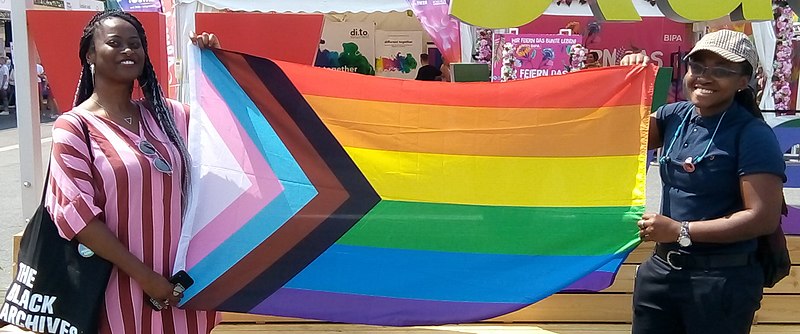
Two people at EuroPride 2019 in Vienna holding an LGBTQ+ pride rainbow flag featuring a design by Daniel Quasar; this variation of the rainbow flag was initially promoted as “Progress” a PRIDE Flag Reboot.
Photo by Bojan Cvetanović via Wikimedia Commons.

Question: What do the following have in common: A hammer and sickle, a Union Jack, five interlocked rings, a Black fist, a cross, a Star of David, and the Rainbow flag?

Answer: They are internationally recognized symbols. Not spring fashions. Not cool memes. No. Symbols that communicate across all languages and countries in the world.

That’s what’s so infuriating about the push by hashtag activists to replace the Rainbow flag with the so-called “Progress flag”. The Progress flag takes the pink, blue, and white stripes of the trans flag, adds black and brown stripes for race, turns those five stripes into a chevron tipped on its side, and ploughs it into the rainbow in an eleven-colour pile-up. It’s a regressive, ill-considered mess that looks like a child’s Crayola box.

Naturally, it’s the creation of a Portland designer who whipped it off one night while suffering insomnia. The story of Daniel Quasar (ze/them) and their flag is a real-life satire, featuring moxie, hustle, viral posts and a Kickstarter campaign. Ze and their (not surprisingly) all-white team have leveraged ze’s design into Quasar Digital, a company that sells Progress flags, pins, patches, T-shirts, tank tops, notebooks, clutch bags, coffee mugs, stickers, slappers, socks and more, individually and in bundles.

Marketed with the trendy buzzwords progress, diversity and inclusion, the Progress flag has been a viral hit with woke straights and nouveau queers as well as corporate PR departments at places like Goldman Sachs and TD Bank, who signal virtue while screwing customers of every gender. But by separating specific races and a single identity from the rainbow, the Progress flag creates divisions, hierarchies and exclusions. And it trashes the power and weight that a 43-year-old symbol of hope and strength gives to people worldwide who continue to be imprisoned, beaten and murdered for being LGBT+.

[…]

Slapping the “Progress” chevron on the Rainbow is like slapping the fleur de lys on the Maple Leaf. It creates resentment and division to the sole benefit of performative social climbers keen to wave their Alphabet status and cachet. Step outside the West to see what it really means to have people out to “deny your very existence”. To trade the Rainbow, the symbol of our suffering and resilience, for a viral craze is bourgeois privilege at its self-indulgent worst.

June 9, 2021

QotD: Failing to account for mere “women’s work”

Filed under: Books, Economics, Health, Quotations — Tags: , , , , — Nicholas @ 01:00

“Oh, certainly, you could produce quantities of infants­ although it would take enormous resources to do so. Highly trained techs, as well as equipment and supplies. But don’t you see, that’s just the beginning. It’s nothing, compared to what it takes to raise a child. Why, on Athos it absorbs most of the planet’s economic resources. Food of course ­housing, ­education, clothing, medical care­ it takes nearly all our efforts just to maintain population replacement, let alone to increase. No government could possibly afford to raise such a specialized, non-productive army.”

Elli Quinn quirked an eyebrow. “How odd. On other worlds, people seem to come in floods, and they’re not necessarily impoverished, either.”

Ethan, diverted, said, “Really? I don’t see how that can be. Why, the labor costs alone of bringing a child to maturity are astronomical. There must be something wrong with your accounting.”

Her eyes screwed up in an expression of sudden ironic insight. “Ah, but on other worlds the labor costs aren’t added in. They’re counted as free.”

Ethan stared. “What an absurd bit of double thinking! Athosians would never sit still for such a hidden labor tax! Don’t the primary nurturers even get social duty credits?”

“I believe,” her voice was edged with a peculiar dryness, “they call it women’s work.”

Lois McMaster Bujold, Ethan of Athos, 1986.

« Newer PostsOlder Posts »

Powered by WordPress