[T]he Nazis’ focus on the threats that risky habits pose to “public health” makes perfect sense in light of their collectivist ideology. “Brother national socialist,” said one bit of Nazi propaganda, “do you know that your Führer is against smoking and thinks that every German is responsible to the whole people for all his deeds and missions, and does not have the right to damage his body with drugs?”
Smith adds: “Clearly there were considerable links between the promotion of particular lifestyles and the racial hygiene movement. Tobacco and alcohol were seen as ‘genetic poisons,’ leading to degeneration of the German people.”
The point, I hasten to add, is not that today’s “public health” paternalists are Nazis. I am not suggesting that everyone who hates smoking is just like Hitler. But there is an unmistakable totalitarian logic to the notion that the government has a responsibility to promote “public health” by preventing us from engaging in activities that might lead to disease or injury. The implication is that we all have a duty to the collective to be as healthy as we can be, an idea the Nazis embraced but one that Americans ought to find troubling.
Jacob Sullum, “So What If Hitler Was an Anti-Smoker?”, Reason Hit and Run, 2004-12-17.
December 5, 2019
QotD: [Literal] Health Nazis
December 3, 2019
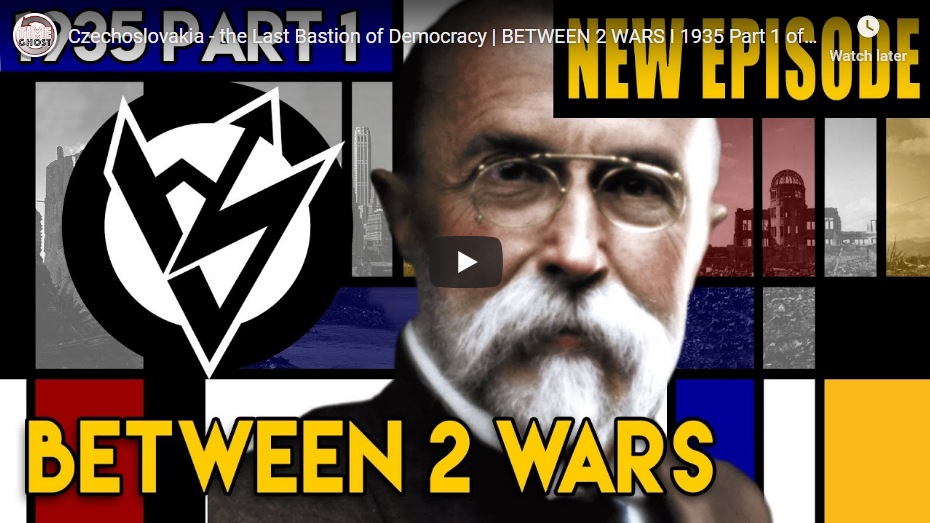
Czechoslovakia – the Last Bastion of Democracy | BETWEEN 2 WARS I 1935 Part 1 of 4
TimeGhost History
Published 2 Dec 2019Czechoslovakia is holding on to democracy by a thread. It even looks like they might be able to integrate the German Czechoslovakians, but Hitler’s rise to power changes everything.
Join us on Patreon: https://www.patreon.com/TimeGhostHistory
Hosted by: Indy Neidell
Written by: Francis van Berkel
Directed by: Spartacus Olsson and Astrid Deinhard
Executive Producers: Bodo Rittenauer, Astrid Deinhard, Indy Neidell, Spartacus Olsson
Creative Producer: Joram Appel
Post-Production Director: Wieke Kapteijns
Research by: Francis van Berkel and Rune Væver Hartvig
Edited by: Daniel Weiss and Wieke Kapteijns
Sound design: Marek KamińskiA TimeGhost chronological documentary produced by OnLion Entertainment GmbH.
From the comments:
TimeGhost History
2 days ago
The year is 1935 CE. Central Europe is entirely dominated by Authoritarians and Fascists. Well not entirely! One small country of indomitable Czechs and Slovaks still holds out for democracy. And life is not easy for the German Nazis who garrison the towns and villages in Bohemia and Moravia…One thing in this episode might go unnoticed. It is how important it is to note that the term Sudeten German has only become widespread after WWI. It shows us how the delicate balance of ethnic groups had been upset after the Great War.
Before 1918, these same people felt comfortable called themselves Bohemian or Moravian. On the other side of the border that now divides Czechoslovakia from Germany, Austria, Poland and Hungary Czech and Slovak speakers felt comfortable calling themselves for instance Carpathian, Silesian, or Bavarian. In only 17 years this regional sense of unity has now been eradicated. It’s really easy to fall into the trap of the identity rhetoric of the time. To say that “Well, what did you expect? You forced people to be part of a country that wasn’t theirs” it’s an easy explanation for all of this conflict.
Well as we have often pointed out it wasn’t that simple. Fanned by identity politics on all sides, the borders have become fevering soars that are spreading infection into all of Europe. It is a disease that now threatens to develop into sepsis for the whole European continent. And think of this; borders are nothing but lines on maps, things invented arbitrarily in people’s minds… isn’t it remarkable how we as a species can invent our own demise?
November 3, 2019
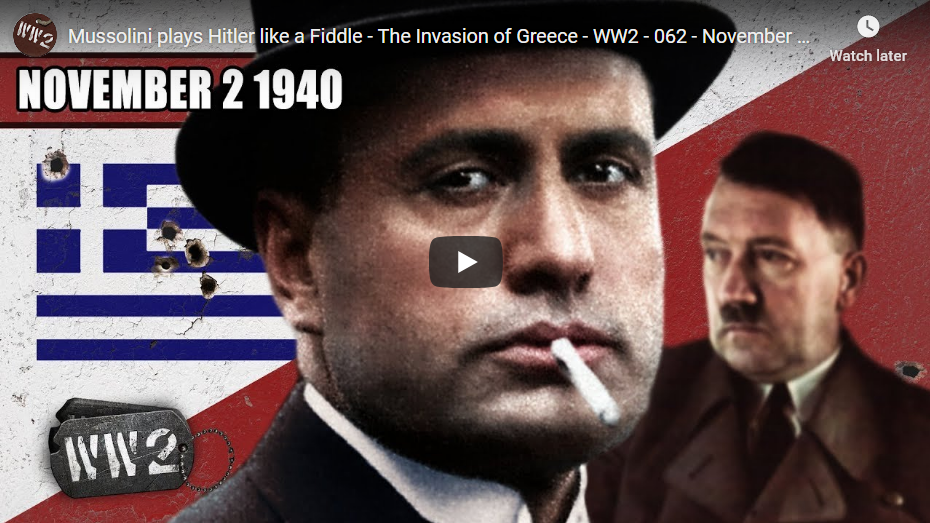
Mussolini plays Hitler like a Fiddle – The Invasion of Greece – WW2 – 062 – November 2, 1940
World War Two
Published 2 Nov 2019A new front opens up in Greece as the Italians invade, while the Battle of Britain seems to come to an end.
Join us on Patreon: https://www.patreon.com/TimeGhostHistory
Or join The TimeGhost Army directly at: https://timeghost.tvFollow WW2 day by day on Instagram @World_war_two_realtime https://www.instagram.com/world_war_t…
Join our Discord Server: https://discord.gg/D6D2aYN.
Between 2 Wars: https://www.youtube.com/playlist?list…
Source list: http://bit.ly/WW2sourcesWritten and Hosted by: Indy Neidell
Produced and Directed by: Spartacus Olsson and Astrid Deinhard
Executive Producers: Bodo Rittenauer, Astrid Deinhard, Indy Neidell, Spartacus Olsson
Creative Producer: Joram Appel
Post-Production Director: Wieke Kapteijns
Research by: Indy Neidell
Edited by: Iryna Dulka
Map animations: EastoryColorisations by Norman Stewart and Julius Jääskeläinen https://www.facebook.com/JJcolorization/
Sources:
– IWM: HU 76031, E 15223, E 450, E 6661, A 22111
– killer by Arthur Shlain from the Noun Project
– National Portrait Gallery, London
– Torpedo body icon by Blaise Sewell from the Noun Project
– FDR Presidential Library & MuseumEastory’s channel: https://www.youtube.com/channel/UCEly…
Archive by Screenocean/Reuters https://www.screenocean.com.A TimeGhost chronological documentary produced by OnLion Entertainment GmbH.
From the comments:
World War Two
3 days ago (edited)
This week covers about two major events with effects that will ripple through the remainder of the war. Actually, both have been attributed by historians for being “the one event” that caused the war to end as it did. You’ll have to stick around to find out how and when that will be though. Though I can tell you one thing now. History is rarely that simple. If you like our series and want to enable us to cover the complex web of events, locations, individuals and techniques that changed the outcome of the war, please consider supporting us on https://www.patreon.com/timeghosthistory or on our own website at https://timeghost.tv. If you would like to make a one-time contribution, you can do so via PayPal to (paypal@timeghost.tv).
Cheers, Joram
November 1, 2019
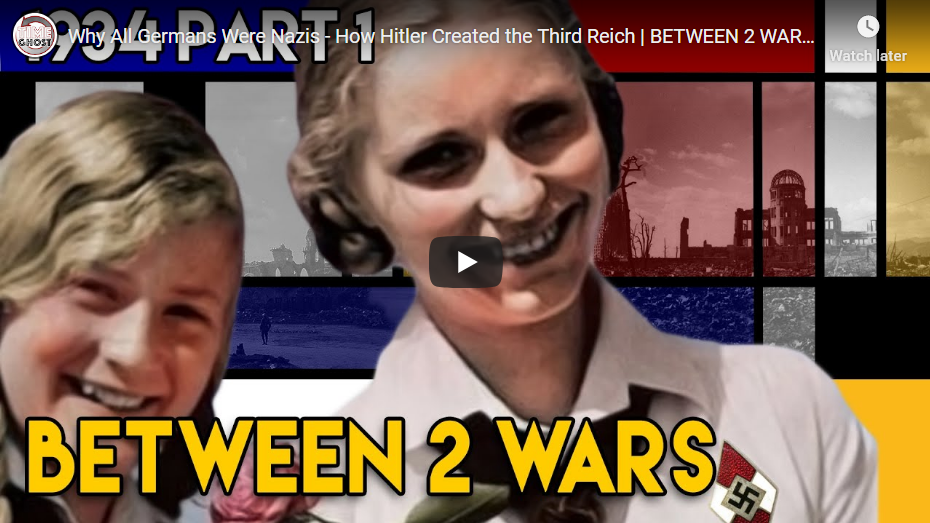
Why All Germans Were Nazis – How Hitler Created the Third Reich | BETWEEN 2 WARS I 1934 Part 1 of 4
TimeGhost History
Published 31 Oct 2019After Hitler seized power in Germany in January 1933, he rapidly transformed the Democratic Weimar Republic into a repressive, totalitarian and racist state. In 1934, Germany became Nazi Germany.
Join us on Patreon: https://www.patreon.com/TimeGhostHistory
Subscribe to our World War Two series: https://www.youtube.com/c/worldwartwo…
Hosted by: Indy Neidell
Written by: Spartacus Olsson and Francis van Berkel
Directed by: Spartacus Olsson and Astrid Deinhard
Executive Producers: Bodo Rittenauer, Astrid Deinhard, Indy Neidell, Spartacus Olsson
Creative Producer: Joram Appel
Post-Production Director: Wieke Kapteijns
Research by: Francis van Berkel and Spartacus Olsson
Edited by: Wieke Kapteijns
Sound design: Marek KamińskiImage sources: Bundesarchiv, Bundesarchiv, Bild 102-15282A / Georg Pahl, Heinz Bergschicker Deutsche Chronik 1933-1945 – Ein Zeitbild der faschistischen Diktatur
Icons from the Noun Project: Police by IconTrack, soldier by Simon Child, police man by Gregor Cresnar, hello by Universal Icons.
A TimeGhost chronological documentary produced by OnLion Entertainment GmbH.
From the comments:
Spartacus Olsson
2 hours ago
Now, this episode explains the measures that the Nazis used to gain control over the German people. It is not an attempt to justify, or be apologetic of the responsibility for the horrors committed during the Nazi regime. But it is also not a blanket condemnation of Germans. What happened in Germany starting in 1933 should serve us all as a warning to what can happen when you let loose authoritarian power, normalize lies as an acceptable part of political discourse, and make mainstream the disregard of basic human values. We should all think of that although the Nazis were especially efficient in their implementation of an authoritarian system, they are by far not the only ones that have succeeded in seducing whole a nation into blind hatred and acceptance of the suffering and death of others to forward an ideology. We should remember that freedom and democracy is essential, but also that words matters. The beginning of oppression starts with an endless stream of lies that confuse public discourse to the point that facts don’t matter anymore and truth becomes fiction. This video shows us what can happen next. Our mantra as a channel is to focus on the facts, not our opinions, not our ‘truth’ — just the facts m’am — and that is what we have presented here, for better or worse.
October 27, 2019
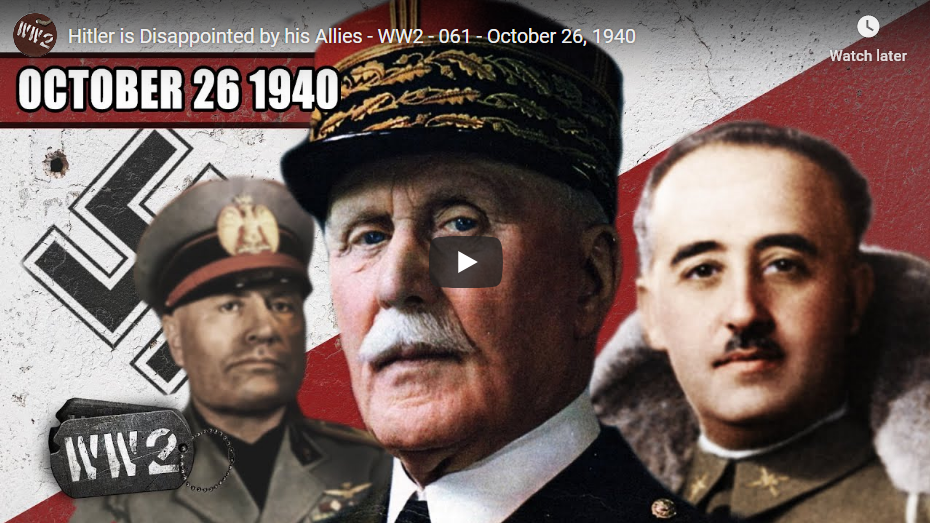
Hitler is Disappointed by his Allies – WW2 – 061 – October 26, 1940
World War Two
Published 26 Oct 2019Hitler finds out that not everyone is ready to do his bidding. Much to the frustration of Hitler, Franco, Petain and Mussolini all have their reasons to take the high road.
Join us on Patreon: https://www.patreon.com/TimeGhostHistory
Or join The TimeGhost Army directly at: https://timeghost.tvFollow WW2 day by day on Instagram @World_war_two_realtime https://www.instagram.com/world_war_t…
Join our Discord Server: https://discord.gg/D6D2aYN.
Between 2 Wars: https://www.youtube.com/playlist?list…
Source list: http://bit.ly/WW2sourcesWritten and Hosted by: Indy Neidell
Produced and Directed by: Spartacus Olsson and Astrid Deinhard
Executive Producers: Bodo Rittenauer, Astrid Deinhard, Indy Neidell, Spartacus Olsson
Creative Producer: Joram Appel
Research by: Indy Neidell
Edited by: Karolina Dołęga
Map animations: EastoryColorisations by Norman Stewart and Julius Jääskeläinen https://www.facebook.com/JJcolorization/
Sources: Biplane by Hea Poh Lin from the Noun Project
Eastory’s channel: https://www.youtube.com/channel/UCEly…
Archive by Screenocean/Reuters https://www.screenocean.com.A TimeGhost chronological documentary produced by OnLion Entertainment GmbH.
October 22, 2019
QotD: The Soviet contribution to defeating Hitler
Between 1941 and 1945 so much praise had been heaped upon Uncle Joe, the defenders of Stalingrad, heroic factory workers of the Volga and suchlike, that thereafter it proved a hard task to disabuse many people of their illusions about Mother Russia. They were not wrong in believing that hundreds of thousands of young British and American men were alive in 1945 because Red soldiers had done more than their rightful share of dying.
Any examination of the Bolshevik revolution and its legacy must linger on the Great Patriotic War, because that victory remains the only indisputable and durable achievement the rulers of Russia can boast since 1917, save the invention of some remarkable weapons systems and spacecraft.
Max Hastings, “The centenary of the Russian revolution should be mourned, not celebrated”, The Spectator, 2016-12-10.
October 20, 2019
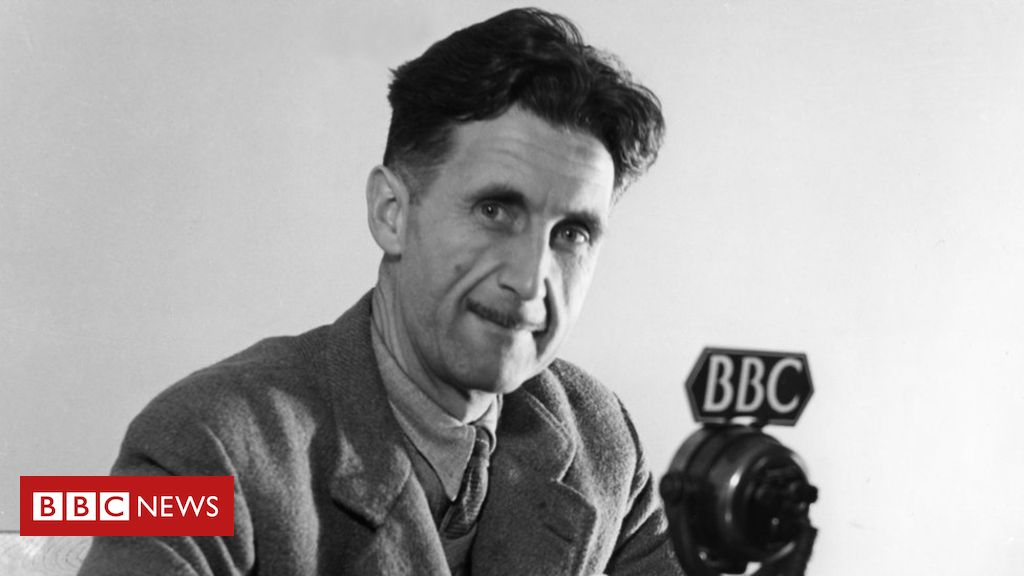
QotD: Why Orwell wrote Nineteen Eighty-Four
Many thanks for your letter. You ask whether totalitarianism, leader-worship etc. are really on the up-grade and instance the fact that they are not apparently growing in this country and the USA.I must say I believe, or fear, that taking the world as a whole these things are on the increase. Hitler, no doubt, will soon disappear, but only at the expense of strengthening (a) Stalin, (b) the Anglo-American millionaires and (c) all sorts of petty führers of the type of de Gaulle. All the national movements everywhere, even those that originate in resistance to German domination, seem to take non-democratic forms, to group themselves round some superhuman führer (Hitler, Stalin, Salazar, Franco, Gandhi, De Valera are all varying examples) and to adopt the theory that the end justifies the means. Everywhere the world movement seems to be in the direction of centralised economies which can be made to “work” in an economic sense but which are not democratically organised and which tend to establish a caste system. With this go the horrors of emotional nationalism and a tendency to disbelieve in the existence of objective truth because all the facts have to fit in with the words and prophecies of some infallible führer. Already history has in a sense ceased to exist, ie. there is no such thing as a history of our own times which could be universally accepted, and the exact sciences are endangered as soon as military necessity ceases to keep people up to the mark. Hitler can say that the Jews started the war, and if he survives that will become official history. He can’t say that two and two are five, because for the purposes of, say, ballistics they have to make four. But if the sort of world that I am afraid of arrives, a world of two or three great superstates which are unable to conquer one another, two and two could become five if the führer wished it. That, so far as I can see, is the direction in which we are actually moving, though, of course, the process is reversible.
As to the comparative immunity of Britain and the USA. Whatever the pacifists etc. may say, we have not gone totalitarian yet and this is a very hopeful symptom. I believe very deeply, as I explained in my book The Lion and the Unicorn, in the English people and in their capacity to centralise their economy without destroying freedom in doing so. But one must remember that Britain and the USA haven’t been really tried, they haven’t known defeat or severe suffering, and there are some bad symptoms to balance the good ones. To begin with there is the general indifference to the decay of democracy. Do you realise, for instance, that no one in England under 26 now has a vote and that so far as one can see the great mass of people of that age don’t give a damn for this? Secondly there is the fact that the intellectuals are more totalitarian in outlook than the common people. On the whole the English intelligentsia have opposed Hitler, but only at the price of accepting Stalin. Most of them are perfectly ready for dictatorial methods, secret police, systematic falsification of history etc. so long as they feel that it is on “our” side. Indeed the statement that we haven’t a Fascist movement in England largely means that the young, at this moment, look for their führer elsewhere. One can’t be sure that that won’t change, nor can one be sure that the common people won’t think ten years hence as the intellectuals do now. I hope they won’t, I even trust they won’t, but if so it will be at the cost of a struggle. If one simply proclaims that all is for the best and doesn’t point to the sinister symptoms, one is merely helping to bring totalitarianism nearer.
You also ask, if I think the world tendency is towards Fascism, why do I support the war. It is a choice of evils — I fancy nearly every war is that. I know enough of British imperialism not to like it, but I would support it against Nazism or Japanese imperialism, as the lesser evil. Similarly I would support the USSR against Germany because I think the USSR cannot altogether escape its past and retains enough of the original ideas of the Revolution to make it a more hopeful phenomenon than Nazi Germany. I think, and have thought ever since the war began, in 1936 or thereabouts, that our cause is the better, but we have to keep on making it the better, which involves constant criticism.
George Orwell, responding to a letter from Noel Willmett, 1944-05-18.
October 12, 2019
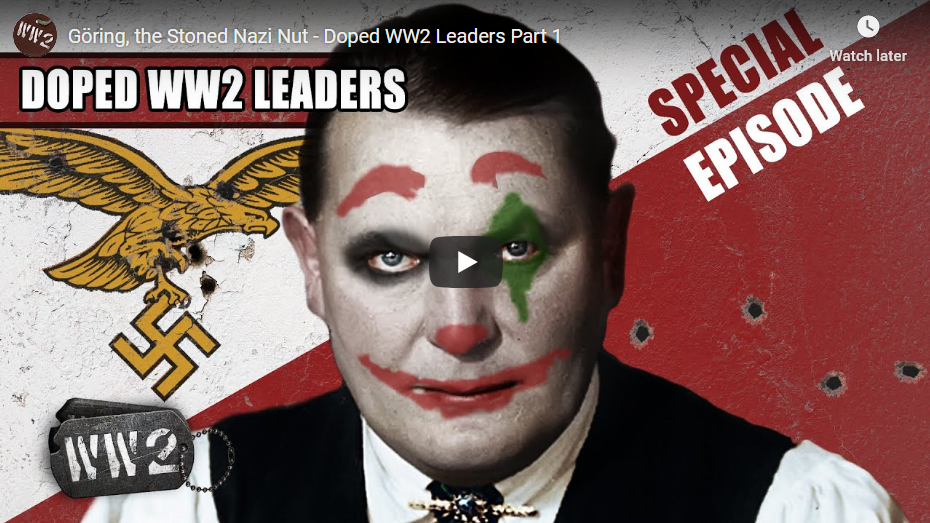
Göring, the Stoned Nazi Nut – Doped WW2 Leaders Part 1
World War Two
Published 10 Oct 2019Hermann Göring was one of the most powerful leaders of the Third Reich. He was also a drug addict with some serious problems and a remarkable lifestyle.
Join us on Patreon: https://www.patreon.com/TimeGhostHistory
Or join The TimeGhost Army directly at: https://timeghost.tvFollow WW2 day by day on Instagram @World_war_two_realtime https://www.instagram.com/world_war_t…
Join our Discord Server: https://discord.gg/D6D2aYN.
Between 2 Wars: https://www.youtube.com/playlist?list…
Source list: http://bit.ly/WW2sourcesHosted by: Indy Neidell
Written by: Joram Appel
Produced and Directed by: Spartacus Olsson and Astrid Deinhard
Executive Producers: Bodo Rittenauer, Astrid Deinhard, Indy Neidell, Spartacus Olsson
Creative Producer: Joram Appel
Research by: Joram Appel
Edited by: Iryna Dulka
Map animations: EastoryColorisations by Norman Stewart and Julius Jääskeläinen https://www.facebook.com/JJcolorization/
Eastory’s channel: https://www.youtube.com/channel/UCEly…
Archive by Screenocean/Reuters https://www.screenocean.com.Sources:
Klimbim Colorizations – https://klimbim2014.wordpress.com/A TimeGhost chronological documentary produced by OnLion Entertainment GmbH.
From the comments:
World War Two
31 minutes ago (edited)
Though this episode is mostly about the lifestyle of Hermann Göring, we will certainly get back to his more serious impact on the Nazi party, Germany and World War Two. For those of you who are new here, we are following World War Two Week by Week, in which we do pay a lot of attention to all those smaller but still significant events. If you would like to watch the series, make sure to subscribe and to click here to start watching from episode one: https://www.youtube.com/watch?v=3-A1gVm9T0A&list=PLsIk0qF0R1j4Y2QxGw33vYu3t70CAPV7XCheers,
The TimeGhost team.
October 11, 2019
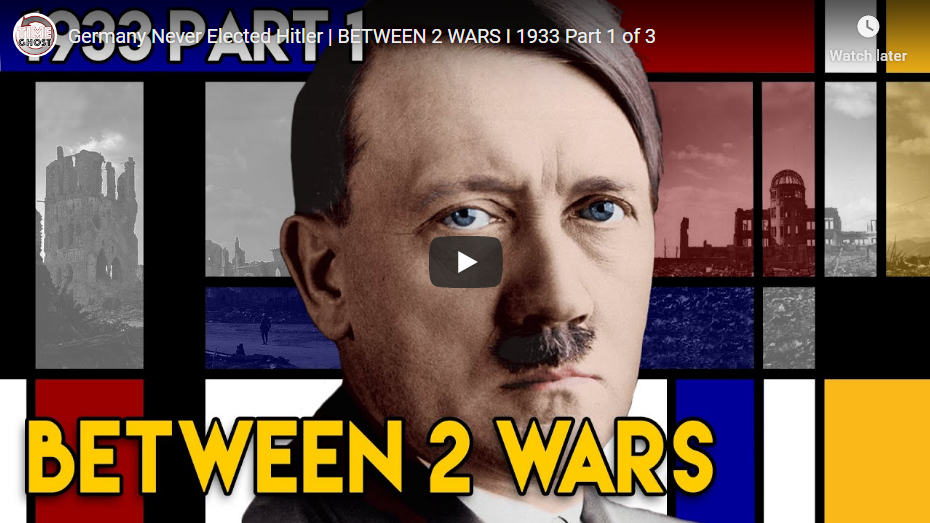
Germany Never Elected Hitler | BETWEEN 2 WARS I 1933 Part 1 of 3
TimeGhost History
Published 10 Oct 2019Hitlers rise to power, also known as the Machtergreifung, was riddled with physical and mental manipulation, political games and an exploitation of the Democratic system. This episode follows the events leading up to the Nazi takeover of Germany.
Join us on Patreon: https://www.patreon.com/TimeGhostHistory
Hosted by: Indy Neidell
Written by: Spartacus Olsson
Directed by: Spartacus Olsson and Astrid Deinhard
Executive Producers: Bodo Rittenauer, Astrid Deinhard, Indy Neidell, Spartacus Olsson
Creative Producer: Joram Appel
Post-Production Director: Wieke Kapteijns
Research by: Spartacus Olsson
Edited by: Daniel Weiss
Sound design: Iryna Dulkaimage source:
Deutsche BundesarchivA TimeGhost chronological documentary produced by OnLion Entertainment GmbH.
From the comments:
Spartacus Olsson
18 minutes ago
Hi, for those of you that don’t know me yet, I’m the lead author of this series and the author of this episode. Now, as you will, or have just seen, this episode covers an event of earth-shattering magnitude in human history. An event that is often misunderstood and glossed over. The reason for that is not that there is anything controversial, or stupendously new with what we’re documenting here. The simple fact is that its just too detailed and too complicated to cover in general history studies, especially in secondary school. The level we get into here is usually only covered in specialized lectures at college or university level. Tons and tons of books have been written on the topic and yet, many misconceptions remain. It was my goal to dispel some of the many misunderstandings that abound about how Hitler finally seized power. One of the chief myths is that Hitler was elected. As the video shows, that is not what happened. So you might ask yourself; how come the vast majority of Germans finally rallied behind him? Because they did, there’s no question. But you see, that happens after he seizes power and it will be the topic of our next episode on Germany that covers the Nazi consolidation of power.It was also my goal to cast some more light on a topic that has been weaponized in political debate in recent years: the level of Socialism in the German National Socialist Worker’s Party. I hope that I have laid the latter one to rest, but I fear that the comment section will still be full of politically biased nonsense on this topic. It’s quite tiring for our community managers to answer that misrepresenting alt-right trope over and over again. And we won’t stop you from posting it, even if it’s nonsense. Instead we will try to patiently answer, but think fifteen times about posting ‘Nazis were Socialists, duh!’ or “Dude, Nazis are left-wing, duh!’ out of respect for us. What we will not tolerate is that you post links to any of the clown videos by non-historians that try to perpetuate that myth. We are a team of actual historians. We have no interest in ‘pinning’ Naziism on anyone. We also have no interest in ‘pinning’ Socialism on anyone. Nor should you, if you have any interest whatsoever in understanding history. Revolutionary Socialism, Communism, Fascism and Nazism have all brought down a lot of suffering on humanity – if we are supporters of freedom and democracy we need to learn from that. Throwing them all in one bucket and dumping it on our perceived political opponents is not learning, it’s obfuscation, confusion, and destruction of education. So respect humanity, respect history and don’t take part in that kind of nonsense.
October 6, 2019
Hitler and the Art of the Deal – WW2 – 058 – October 5 1940
World War Two
Published 5 Oct 2019Hitler is trying to get new Axis Powers on board in his fight against Britain, promising them all huge territorial gains.
Join us on Patreon: https://www.patreon.com/TimeGhostHistory
Or join The TimeGhost Army directly at: https://timeghost.tvFollow WW2 day by day on Instagram @World_war_two_realtime https://www.instagram.com/world_war_t…
Join our Discord Server: https://discord.gg/D6D2aYN.
Between 2 Wars: https://www.youtube.com/playlist?list…
Source list: http://bit.ly/WW2sourcesWritten and Hosted by: Indy Neidell
Produced and Directed by: Spartacus Olsson and Astrid Deinhard
Executive Producers: Bodo Rittenauer, Astrid Deinhard, Indy Neidell, Spartacus Olsson
Creative Producer: Joram Appel
Post-Production Director: Wieke Kapteijns
Research by: Indy Neidell
Edited by: Iryna Dulka
Map animations: EastoryColorisations by Norman Stewart and Julius Jääskeläinen https://www.facebook.com/JJcolorization/
Eastory’s channel: https://www.youtube.com/channel/UCEly…
Archive by Screenocean/Reuters https://www.screenocean.com.Sources:
– IWM: A 220
– Photos of Herbert Morrison and John Anderson by Yousuf Karsh, Dutch National Archives
– National Library of Australia
– Narodowe Archiwum Cyfrowe
– Colorized portrait of Mao Zedong by Olga Shirnina, aka Klimbim
– Flag of Spain by SanchoPanzaXXI on Wikimedia CommonsA TimeGhost chronological documentary produced by OnLion Entertainment GmbH.
October 2, 2019
That Downfall Scene Explained – What Is Hitler Freaking Out About? I 16 Days In Berlin
The Great War
Published on 1 Oct 2019Thank you for your support for 16 Days in Berlin: https://realtimehistory.net/indiegogo
» SUPPORT THE CHANNEL
Patreon: https://www.patreon.com/thegreatwar
Merchandise: https://shop.spreadshirt.de/thegreatwar/»CREDITS
Presented by: Jesse Alexander
Written by: Jesse Alexander
Director: Toni Steller & Florian Wittig
Director of Photography: Toni Steller
Sound: Toni Steller
Editing: Toni Steller
Mixing, Mastering & Sound Design: http://above-zero.com
Maps: Daniel Kogosov (https://www.patreon.com/Zalezsky)
Research by: Jesse Alexander
Fact checking: Florian WittigChannel Design: Alexander Clark
Original Logo: David van StepholdA Mediakraft Networks Original Channel
Contains licensed material by getty images
All rights reserved – Real Time History GmbH 2019
October 1, 2019
QotD: The Great Patriotic War
The Russian people’s 21st-century notion of what they call “the Great Patriotic War” bears little relationship to our own. It ignores Stalin’s 1939-41 pact with Hitler, and the fact that the Luftwaffe planes that bombed London in the Blitz were powered by Russian fuel. President Putin has made unlawful all published mention of the unspeakable cruelties the Soviet regime inflicted on its own citizens — shooting an estimated 300,000 soldiers for alleged desertion or cowardice — in order to prevail. Antony Beevor’s books, and for that matter my own, are nowadays banned because they describe the Red Army’s 1945 campaign of rape and pillage in Germany.
I have argued elsewhere that the ruthlessness of Stalin’s tyranny was essential to contrive the defeat of Hitler’s tyranny; that if the liberation of Europe had proceeded at a pace determined by the US and British armies, we might still stand short of the Elbe.
Max Hastings, “The centenary of the Russian revolution should be mourned, not celebrated”, The Spectator, 2016-12-10.
September 29, 2019
Being a dictator is a stressful vocation
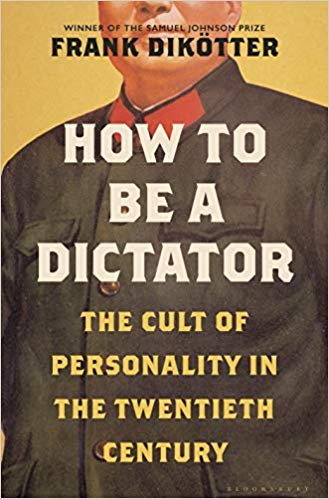
Gustav Jönsson reviews a new book by Professor Frank Dikötter on twentieth-century dictators:
One of the first things to emerge from Professor Frank Dikötter’s eagerly awaited new book How to Be a Dictator is that it is a stressful vocation: there are rivals to assassinate, dissidents to silence, kickbacks to collect, and revolutions to suppress. Quite hard work. Even the most preeminent ones usually meet ignominious ends. Mussolini: summarily shot and strung upside down over a cheering crowd. Hitler: suicide and incineration. Ceausescu: executed outside a toilet block. Or consider the fate of Ethiopia’s Haile Selassie: rumoured to have been murdered on orders of his successor Mengistu Haile Mariam, he was buried underneath the latter’s office desk. Not the most alluring career trajectory, one might say.
Dikötter’s monograph is a study of twentieth century personality cults. He examines eight such cults: those created by Mussolini, Hitler, Stalin, Mao, Kim Il-sung, Duvalier, Ceausescu, and Mengistu. For them, cultism was not mere narcissism, it was what sustained their regimes; foregoing cultism, Dikötter argues, caused swift collapse. Consider Pol Pot and the Khmer Rouge. Cambodians were unsure of Pol Pot’s exact identity for years, even after he had assumed leadership of the country. The Khmer Rouge, meanwhile, was in its initial stages merely called “Angkar” — “The Organisation.” There was no inspiring iconography. There was no ritualised leader worship. There was only dark terror. Dikötter quotes historian Henri Locard: “Failing to induce adulation and submissiveness, the Angkar could only generate hatred.” The Khmer Rouge soon lost its grip on the country. Dikötter makes an obligatory reference: “Even Big Brother, in George Orwell’s 1984, had a face that stared out at people from every street corner.”
Readers of Orwell will remember that INGSOC has no state ideology. There is only what the Party says, which can change from hour to hour. Likewise, Dikötter argues, there was no ideological core to twentieth century dictatorships; there was only the whim of the dictator. Nazism, for example, was not a coherent creed. It contained antisemitism, nationalism, neo-paganism, etc., but its essence was captured in one of its slogans: The Führer is Always Right. That is what the creed amounted to. Indeed, the NSDAP referred to itself simply as “the Hitler movement.” Nazism was synonymous with Hitlerism. Italian Fascism was perhaps even more vacuous. The regime’s slogan was simple: Mussolini is Always Right. Explaining his method of politics, Mussolini said: “We do not believe in dogmatic programmes, in rigid schemes that should contain and defy the changing, uncertain, and complex reality.”
While it is uncontroversial to argue that Nazism and Fascism were without ideology, as Dikötter writes, the “issue is more complicated with communist regimes.” Naturally, Marxism was connected with Stalin, Mao, Ceausescu, Kim, and Mengistu. But Dikötter rightly says that it was Lenin’s revolutionary vanguard, not Marx’s philosophical works, that inspired them. Doctrines can be interpreted in contradictory ways, creating schismatic movements — as shown throughout the history of socialism. In this regard personality cults are far safer because they are substantively empty. Marxist dictators thus subverted Marxism. Engels had said that socialism in one country was impossible, but that is what Stalin’s Soviet Union favoured. Or consider Kim’s North Korea, which in 1972 replaced Marxism with Great Leader Thought. And as Dikötter writes, “Mao read Marx, but turned him on his head by making peasants rather than workers the spearhead of the revolution.” Reading Marx under Marxism, Dikötter says, was highly imprudent: “One was a Stalinist under Stalin, a Maoist under Mao, a Kimist under Kim.” In short, Marxism was whatever the dictator said, and not what Marx had actually written.
September 20, 2019
Most Germans Reject Hitler | BETWEEN 2 WARS I 1932 Part 2 of 4
TimeGhost History
Published on 19 Sep 2019After Chancellor Brüning has run Germany’s economy into the ground, the country is once again going to the polls. It’s a wild brawl between reason and madness, populism and stability, and democracy and tyranny focused on who will unite Germany if Germany even can be united again …
Join us on Patreon: https://www.patreon.com/TimeGhostHistory
Subscribe to our World War Two series: https://www.youtube.com/c/worldwartwo…
Hosted by: Indy Neidell
Written by: Spartacus Olsson
Directed by: Spartacus Olsson and Astrid Deinhard
Executive Producers: Bodo Rittenauer, Astrid Deinhard, Indy Neidell, Spartacus Olsson
Creative Producer: Joram Appel
Post-Production Director: Wieke Kapteijns
Research by: Spartacus Olsson
Edited by: Wieke Kapteijns
Sound design: Marek KamińskiSources: Icon german parliament: Gerald Wildmoser. Graphic German Reichstag: Liambaker98. Images: Bundesarchiv.
A TimeGhost chronological documentary produced by OnLion Entertainment GmbH.
From the comments:
TimeGhost History
3 hours ago
This year it will be 85 years ago that Germany elected the Nazis to power, or will it? Well … as most events in history it isn’t quite that simple. There is no majority for anything in Germany at this point. You see, in 1932 Germany is still a diverse, democratic state. But it’s been under attack for many years now by populist, partisan interests tearing it apart into fractious, sometimes destructive opposite forces. In essence, they can be grouped into three camps:1. the mainstream centrist parties on the left and right that want a parliamentary, socially tolerant democracy.
2. the far left that wants to overthrow the parliamentary democracy and start a revolution to create an authoritarian, socially ultra-liberal, rule by the working class
3. the far right that wants to overthrow the parliamentary democracy to create a totalitarian, socially reactionary, rule by a strong man.Now, that is the left to right landscape and as you shall see that is also how the election results play out in alliances. So try your best to get rid of your prejudices and preconceived notions — because for many of you things are not the way that you have been told. And if for no other reason than saving us the trouble of having to police these comments too much — please, please try to remember our rules. They are not there to quash freedom of speech — they are there so that we can keep the comment sections turned on. When we don’t police them it never takes long for videos like this to descend into a hatefest full of death threats and calls for mass murder. You might think that’s cool, but we don’t and we know that most of the world doesn’t so respect that — for the sake of democracy if nothing else.
September 8, 2019
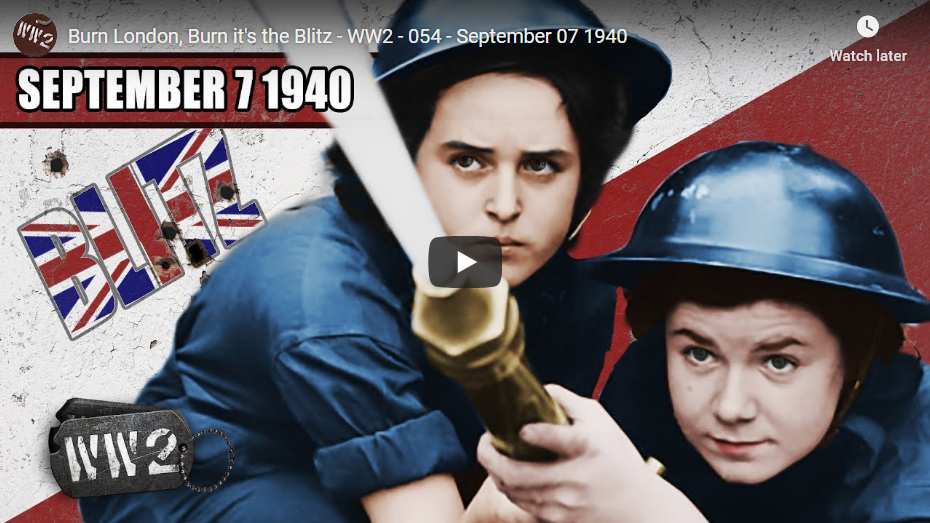
Burn London, Burn it’s the Blitz – WW2 – 054 – September 07 1940
World War Two
Published on 7 Sep 2019This week, the battle in the skies of Britain enters a new, even deadlier phase, as the crowded streets of London turn into a war zone. It is the start of the Blitz.
Join us on Patreon: https://www.patreon.com/TimeGhostHistory
Or join The TimeGhost Army directly at: https://timeghost.tvFollow WW2 day by day on Instagram @World_war_two_realtime https://www.instagram.com/world_war_t…
Join our Discord Server: https://discord.gg/D6D2aYN.
Between 2 Wars: https://www.youtube.com/playlist?list…
Source list: http://bit.ly/WW2sourcesWritten and Hosted by: Indy Neidell
Produced and Directed by: Spartacus Olsson and Astrid Deinhard
Executive Producers: Bodo Rittenauer, Astrid Deinhard, Indy Neidell, Spartacus Olsson
Creative Producer: Joram Appel
Research by: Indy Neidell
Edited by: Iryna Dulka
Map animations: EastoryColorisations by Norman Stewart and Julius Jääskeläinen https://www.facebook.com/JJcolorization/
Eastory’s channel: https://www.youtube.com/channel/UCEly…
Archive by Screenocean/Reuters https://www.screenocean.com.Sources:
– IWM: SP 2553, FL 5186, H 23836, HU 93069, CH 19
– Colorization of Hugo Sperrle by Ruffneck88
– Narodowe Archiwum CyfroweA TimeGhost chronological documentary produced by OnLion Entertainment GmbH.