Quotulatiousness

January 16, 2020

Book Review: The Ministry of Ungentlemanly Warfare by Damien Lewis

Forgotten Weapons
Published 24 Sep 2017

Get your copy on Amazon: http://amzn.to/2xwfDZ8

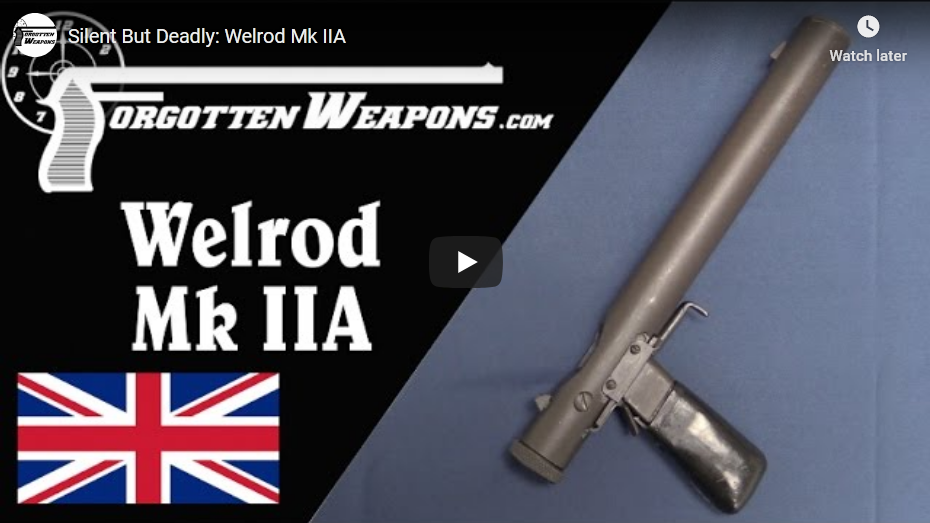
I ordered a copy of Damien Lewis’ book on the exploits of British SOE in WWII expecting to find an overview of, well, what SOE had done during the war. That’s not quite what this book is. Instead, Lewis has given us essentially a first-person view of SOE’s work through the eyes of Danish commando Anders Lassen (VC, MC with two bars). Don’t be fooled by the cover image; the North African LRDG is never mentioned. However, what Lassen was involved in was equally impressive and probably less well known.

Lassen was part of the crew for the first real SOE operation, the theft of a pair of German and Italian supply ships from the neutral Spanish port at Fernando Po. In an exploit that could be straight out of Hollywood, a band of commandoes sailed a pair of tugboats into the harbor at night while the ships’ officers were ashore at a raucous party. They blew the anchor chains with explosive charges, locked the crews below deck, and sailed the ships out to sea where they could be legally captured by a British destroyer. And they did it without a single death on either side.

The exploits only became bigger and bolder after that, with Lassen and his comrades making regular raids across the English Channel and running a freewheeling campaign of both hit-and-run raids and occupation of Greek islands in the Aegean. These were the quintessential independent Special Forces fighters, operating outside regular military command structures and supply chains, fighting as they saw fit. Lassen eventually became the commanding officer of a large group, and by the end of the war had been awarded the Military Cross three times. His last operation in Italy — where his men were hit with a shattering defeat when pushed into the role of spearheading a conventional offensive — would result in him posthumously receiving the Victoria Cross for his heroism.

I ended up reading the book almost entirely in a single sitting, and found it riveting and fascinating — far more so than the typical academic history. It offers a humbling and motivating example of what men can do when they are skilled and motivated. At the same time, it also left me a bit melancholy, as by the end we can see Lassen consumed by his combat experiences and slowly becoming removed from society. Nobody can say how Lassen would have coped had he survived the war, but one suspects he would have led a troubled life. Perhaps that is the price one must pay to become, as Churchill described, “a hand of steel which plucks the German sentries from their posts with growing efficiency.”

http://www.patreon.com/ForgottenWeapons

Cool Forgotten Weapons merchandise! http://shop.bbtv.com/collections/forg…

If you enjoy Forgotten Weapons, check out its sister channel, InRangeTV! http://www.youtube.com/InRangeTVShow

January 12, 2020

Three Variations of Party Leader PPK Pistols

Filed under: Germany, History, Weapons, WW2 — Tags: , , , — Nicholas @ 02:00

Forgotten Weapons
Published 25 Oct 2019

Note: I goofed on a detail here; “DRGM” is a trademark designation, not something related to the party. Sorry!

http://www.patreon.com/ForgottenWeapons

Cool Forgotten Weapons merch! http://shop.bbtv.com/collections/forg…

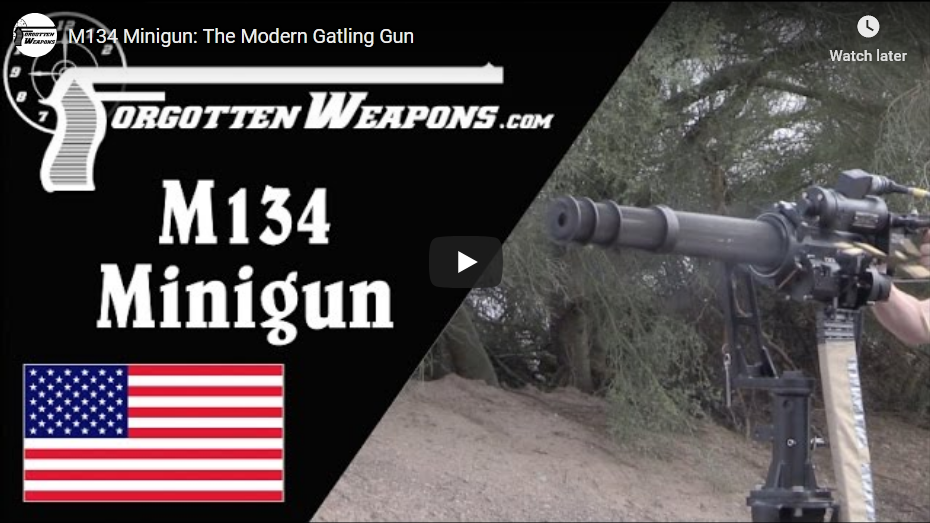
Today, courtesy of Tom from Legacy Collectibles, we are taking a look at “party leader” PPK pistols. There are three different versions of these, and we will look at all of them in sequence. They are highly valued in the collecting community, and also extremely easy to fake, making authentication quite difficult. I will give you as much information as I can to assist in this, and Tom is happy to help (free of charge) as well.

To see more about Legacy, check out their YouTube channel:

https://www.youtube.com/channel/UCesj…

Contact:
Forgotten Weapons
6281 N. Oracle #36270
Tucson, AZ 85704

January 9, 2020

Martini-Henry I.C.1 Carbine

Filed under: Britain, History, Military, Weapons — Tags: , , — Nicholas @ 02:00

Forgotten Weapons
Published 28 Dec 2014

http://www.forgottenweapons.com

Formally adopted in 1877, the I.C.1 Martini-Henry was formally designated the “Arms Interchangeable, Carbine Breech loading Rifled, with clearing rod Martini-Henry Mk1”. The word “interchangeable” refers to its use for both the artillery and cavalry services, instead of needing a separate design for each, as was typical of military forces at the time. It was chambered for the massive .577/450 cartridge, with a 21.3 inch barrel and an overall weight of 7.5 pounds.

I am shooting it today with 1950s Kynoch ammunition, a batch of which came into the US several years ago and can still be found without much trouble. However, it gave me significant hangfires and split cases, and I would not recommend it.

Theme music by Dylan Benson – http://dbproductioncompany.webs.com

January 8, 2020

Chauchat: Shooting, History, and Tactics

Filed under: France, History, Military, USA, Weapons, WW1 — Tags: , , — Nicholas @ 02:00

Forgotten Weapons
Published on 14 Sep 2015

http://www.patreon.com/ForgottenWeapons
Hammer price: $13,500

The M1915 CSRG, commonly called the Chauchat after its primary designer, has a reputation as the worst gun ever put into military service. That reputation, however, is not deserved. It was not a great weapon, but it was a very serviceable gun for its day. The French needed a light automatic rifle *right now*, and needed it in large numbers. The Chauchat answered that call, and was used to great effect by many French soldiers.

The Chauchat’s poor reputation comes from a couple places, some justified and some not. First off, many US troops trained on M1918 Chauchats built in .30-06, which were poorly made and pretty darn bad guns. They were replaced by 8mm Lebel guns before going into combat, but the bad experiences of training stuck with many Americans. The biggest mechanical flaw in the Chauchat was its magazine. All automatic weapons are heavily dependent on good magazines, and the Chauchat used a magazine that was made of thin metal, easily damaged, and open on the sides for dirt and mud to enter. If the magazines were not treated well, the gun would become hopelessly useless.

In addition, many of the Chauchat guns in the United States today were deactivated at one time, and often badly reactivated. This has nothing to do with their original reliability, but it does a lot to perpetuate their reputation. This particular example is an original gun that does not appear to have ever been deactivated, and it ran flawlessly for me. It will be an excellent example for someone who can appreciate it!

January 6, 2020

Lee Metford MkI*: Britain’s First Repeating Rifle (Almost)

Filed under: Britain, History, Military, Weapons — Tags: , , , — Nicholas @ 02:00

Forgotten Weapons
Published 26 Feb 2018

Sold for $4,025.

The first repeating rifle adopted by the British military was the Lee-Metford MkI, or as it was later redesigned, the Magazine Rifle MkI. This design combined the cock-on-closing action and detachable box magazine of James Paris Lee with the rounded-land Metford rifling pattern. Formally adopted in 1888, about 350,000 Lee-Metford rifles would be produced in total, among the LSA, BSA, Sparbrook, and Enfield factories.

It would not be long until the design began to be modified, however. The Lee-Metford we have here today was made in 1891 as a MkI pattern, but updated to the MkI* variant in 1892. This modification involved removing the manual safety, changing from Lewis pattern sights to traditional barleycorns, and modifying the upper hand guard for easier removal. Other changes would follow, with the MkII pattern adopted in 1893 with a 10-round magazine, Enfield pattern rifling adopted in 1895, and ultimately charger loading adopted in 1907.

Despite the fairly large number of Lee Metford rifles made, they are very scarce to find in original condition like this one. Typically the British military would update any older pattern rifle to meet new specifications, or convert them in to rimfire training rifles if such a conversion was not possible. Few left the military in the early configurations.

http://www.patreon.com/ForgottenWeapons

Cool Forgotten Weapons merch! http://shop.bbtv.com/collections/forg…

If you enjoy Forgotten Weapons, check out its sister channel, InRangeTV! http://www.youtube.com/InRangeTVShow
January 3, 2020

M20 75mm Recoilless Rifle: When the Bazooka Just Won’t Cut It

Filed under: History, Military, USA, Weapons, WW2 — Tags: , , , , — Nicholas @ 02:00

Forgotten Weapons
Published 8 Mar 2018

Sold for $6,325.

Note that this is a rewelded action. It should be inspected by a professional before being fired (the firing footage in the video is a different example).

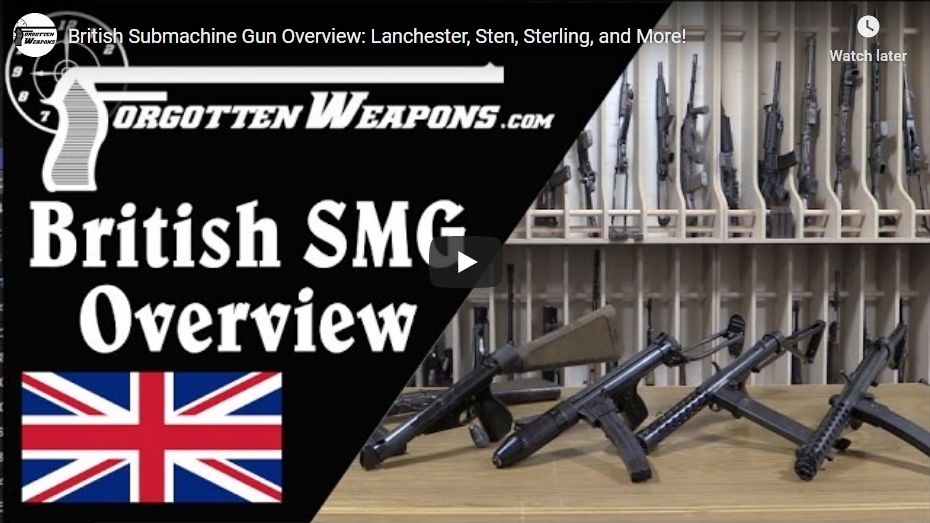
The M20 75mm Recoilless Rifle was developed starting in 1944 as a replacement for the 3.5″ bazooka in an antitank role. It was developed and produced in parallel with a 57mm recoilless rifle (the M18), and both entered service in March of 1945, seeing just a slight bit of combat use before the end of World War Two. It would be a mainstay of US troops in the Korean War, however, along with a 105mm recoilless rifle. The M20 fired HE, HEAT, and WP (smoke) rounds, with the projectiles weighing 20-22 pounds (about 10kg) and having muzzle velocities of about 1000 fps (305 m/s). The shaped charge HEAT warhead could penetrate about 4″ (100mm) of armor, and had an effective range of about 400 yards. The HE warhead could be effectively used out to about 1000 yards, and the gun was equipped with both direct fire and indirect fire optical sights in order to effectively use both types of ammunition.

By the Vietnam War, the M20 was on its way out, as were recoilless rifles in general — they were being replaced with wire-guided missiles for antitank use. However, the M20 remains in service today for avalanche control in many Western states — a neat repurposing of obsolete weaponry!

http://www.patreon.com/ForgottenWeapons

Cool Forgotten Weapons merch! http://shop.bbtv.com/collections/forg…

If you enjoy Forgotten Weapons, check out its sister channel, InRangeTV! http://www.youtube.com/InRangeTVShow
December 31, 2019

USMC Stinger Machine Gun: Medal of Honor on Iwo Jima

Filed under: History, Military, Pacific, USA, Weapons, WW2 — Tags: , , , , — Nicholas @ 04:00

Forgotten Weapons
Published 30 Dec 2019

Corporal Tony Stein
United States Marine Corps Reserve

For conspicuous gallantry and intrepidity at the risk of his life above and beyond the call of duty while serving with Company A, First Battalion, Twenty-Eighth Marines, Fifth Marine Division, in action against enemy Japanese forces on Iwo Jima, in the Volcano Island, 19 February 1945. The first man of his unit to be on station after hitting the beach in the initial assault, Corporal Stein, armed with a personally improvised aircraft-type weapon, provided rapid covering fire as the remainder of his platoon attempted to move into position and, when his comrades were stalled by a concentrated machine-gun and mortar barrage, gallantly stood upright and exposed himself to the enemy’s view, thereby drawing the hostile fire to his own person and enabling him to observe the location of the furiously blazing hostile guns. Determined to neutralize the strategically placed weapons, he boldly charged the enemy pillboxes one by one and succeeded in killing twenty of the enemy during the furious single-handed assault. Cool and courageous under the merciless hail of exploding shells and bullets which fell on all sides, he continued to deliver the fire of his skillfully improvised weapon at a tremendous rate of speed which rapidly exhausted his ammunition. Undaunted, he removed his helmet and shoes to expedite his movements an ran back to the beach for additional ammunition, making a total of eight trips under intense fire and carrying or assisting a wounded man back each time. Despite the unrelenting savagery and confusion of battle, he rendered prompt assistance to his platoon whenever the unit was in position, directing the fire of a half-track against a stubborn pillbox until he had effected the ultimate destruction of the Japanese fortification. Later in the day, although his weapon was twice shot from his hands, he personally covered the withdrawal of his platoon to the company position. Stouthearted and indomitable, Corporal Stein, by his aggressive initiative, sound judgment and unwavering devotion to duty in the face of terrific odds, contributed materially to the fulfillment of his mission, and his outstanding valor throughout the bitter hours of conflict sustained and enhanced the highest traditions of the United States Naval Service.

Harry S. Truman
President of the United States

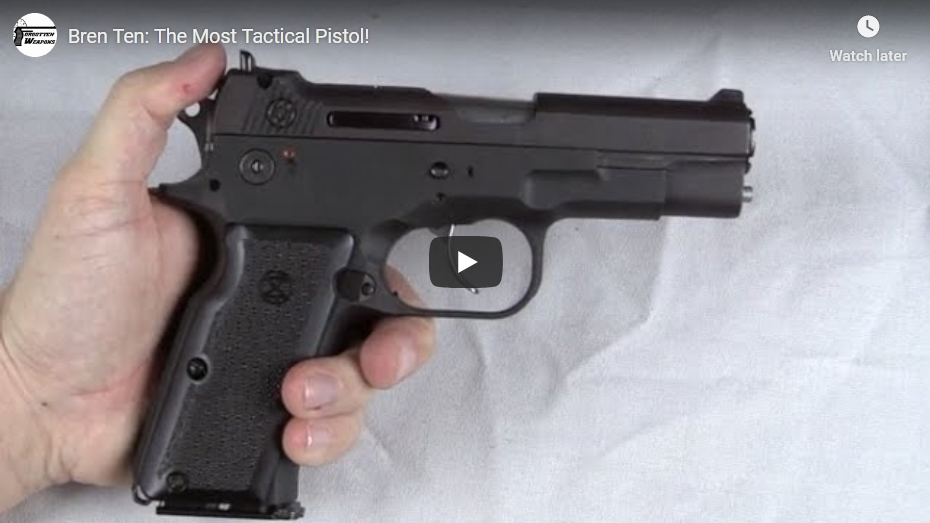
The Stinger was a Browning aircraft machine gun adapted to use an M1 Garand buttstock and BAR bipod, used as a light machine gun by the US Marine Corps during the invasion of Iwo Jima in 1945. The gun was the creation of Sergeant Mel J Grevich oof the 5th Marine Division. Six were built and used on the attack on Iwo, including one by Corporal Tony Stein, whose outstanding bravery is documented in the Medal of Honor citation above. None of the original guns survive today, but I have the privilege of showing you this reproduction created by the Canadian Historical Arms Museum with the assistance of O’Dell Engineering.

http://www.patreon.com/ForgottenWeapons

Cool Forgotten Weapons merch! http://shop.bbtv.com/collections/forg…

Contact:
Forgotten Weapons
6281 N. Oracle #36270
Tucson, AZ 85704

The DeLisle: Britain’s Silenced .45 ACP Commando Carbine

Filed under: Britain, History, Military, Weapons, WW2 — Tags: , , — Nicholas @ 02:00

Forgotten Weapons
Published 16 Sep 2017

Armament Research Services (ARES) is a specialist technical intelligence consultancy, offering expertise and analysis to a range of government and non-government entities in the arms and munitions field. For detailed photos of the guns in this video, don’t miss the ARES companion blog post:

http://armamentresearch.com/

The DeLisle carbine was a conversion of a standard SMLE rifle to the .45 ACP cartridge, feeding from modified 1911 pistol magazines. It was fitted with a 7″ (175mm) barrel and a very large integral suppressor. The combination of the subsonic cartridge, the large suppressor volume, and even a sound-dampening pad on the bolt handle made for an extremely quiet firearm. Although often compared to the Welrod silenced pistol, the DeLisle was intended specifically for special forces (Commando) use, and not for dropping into occupied territories.

The conversions were done by the Sterling company, and an order of 550 was placed, with 500 of those using a fixed wooden stock and 50 using a folding metal stock. The contract was cancelled in 1943, however, with only about 130 having been made (and only a single prototype of the folding stock model).

Today we will take a look at one of the prototypes, two of the standard production models, and the only existing folding stock example. While a number of companies have made reproduction DeLisles of varying quality, originals are very rare, and none of the reproduction have duplicated them entirely correctly.

http://www.patreon.com/ForgottenWeapons

Cool Forgotten Weapons merch! http://shop.bbtv.com/collections/forg…

If you enjoy Forgotten Weapons, check out its sister channel, InRangeTV! http://www.youtube.com/InRangeTVShow
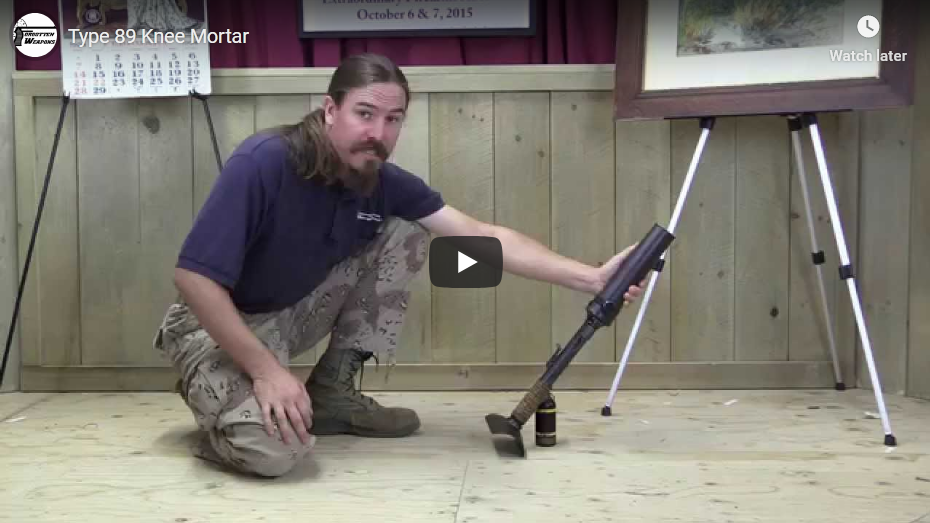
December 28, 2019

Shpagin’s Simplified Subgun: The PPSh-41

Filed under: History, Military, Russia, Weapons, WW2 — Tags: , , , , , — Nicholas @ 02:00

Forgotten Weapons
Published 15 Dec 2017

http://www.patreon.com/ForgottenWeapons

Cool Forgotten Weapons merch! http://shop.bbtv.com/collections/forg…

After making the decision to mass produce a submachine gun, the Soviet Union adopted the Degtyarev PPD-38 and PPD-40, but this design was too expensive for the huge scale of production that the USSR intended. A new design was needed, and was put into development almost as soon as the PPD was entering production.

Shpagin won the design competition with the PPSh-41, a weapon which required virtually no lathe work at all. It was assembled from a combination of heavy-gauge stampings and simple milled parts, and it fit the Soviet requirements quite well. Shpagin retained the high rate of fire and large drum magazines from the PPD, and even had a semiauto selector switch in his submachine gun, a bit unusual in a weapon intended for minimum expense.

The drum magazines proved to be the weak point of the design, being only somewhat interchangeable between weapons and being rather complex to manufacture as well as bulky to carry and fairly easy to damage. A 35-round box magazine was introduced later on which ameliorated some of these issues, although not all of them. The PPSh-41 would go on to be deemed itself too complex, and supplemented by the PPS-43 submachine gun, although it was never fully replaced during World War Two. In addition to Soviet service, it would be copied and manufactured by several other nations.

Thanks to Marstar for letting me examine and shoot their PPSh-41!

If you enjoy Forgotten Weapons, check out its sister channel, InRangeTV! http://www.youtube.com/InRangeTVShow

December 27, 2019

The Puckle Gun: Repeating Firepower in 1718

Filed under: Britain, History, Military, Weapons — Tags: , , , , — Nicholas @ 02:00

Forgotten Weapons
Published 25 Dec 2016

Want a sweet Puckle Gun shirt? Check out the new Forgotten Weapons merch store:

http://shop.bbtv.com/collections/forg…

http://www.patreon.com/ForgottenWeapons

If you enjoy Forgotten Weapons, check out its sister channel, InRangeTV! http://www.youtube.com/InRangeTVShow
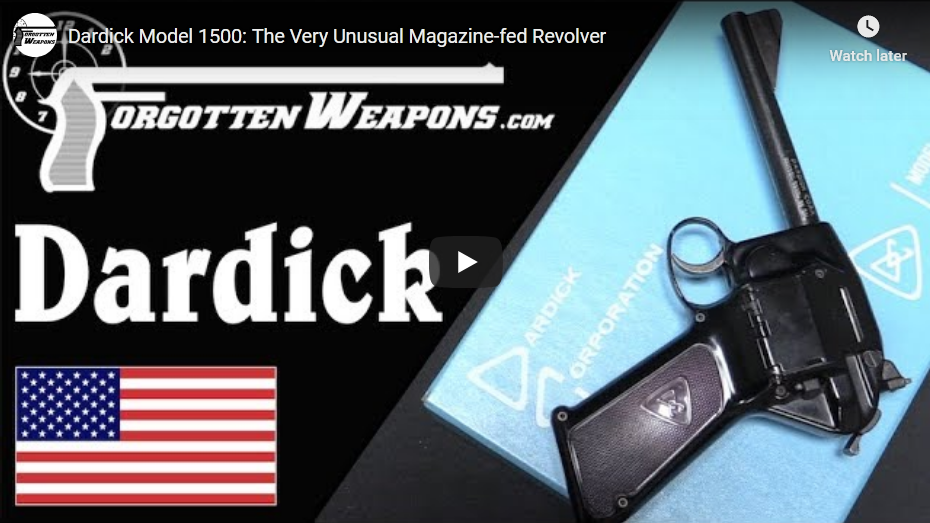
The Puckle Gun is probably best known as that thing that had round bullets for Christians and square bullets for Turks, but there is much more to it than just that (and in addition, the square bullet version was never actually built). James Puckle designed it in 1718 as a naval defensive weapon to help British vessels fight back against Ottoman pirates using fast and nimble small boats that could not be effectively engaged with large cannon. Puckle’s gun was a 9-shot repeater of about 1.25″ bore on a flexible swiveling mount which could easily track the fastest marauder.

The Puckle is basically a manual revolver, but its firing mechanism incorporates some clever functionality to allow a fast and smooth rate of fire. The gun was demonstrated in public in 1721 (after being turned down by the Royal Navy) and fired 63 shots in 7 minutes — quite the feat at that time! The only sale appears to have been a private purchase of two guns for an expedition to the West Indies, however.

Thanks to the Institute of Military Technology for allowing me to have access to this magnificent piece and bring it to you! Check them out at:

http://www.instmiltech.com

December 22, 2019

SA80 History: L85 A1 vs A2 (and the coming A3)

Filed under: Britain, Military, Weapons — Tags: , , , — Nicholas @ 02:00

Forgotten Weapons
Published 20 May 2017

Armament Research Services (ARES) is a specialist technical intelligence consultancy, offering expertise and analysis to a range of government and non-government entities in the arms and munitions field. For detailed photos of the guns in this video, don’t miss the ARES companion blog post:

http://armamentresearch.com/british-e…

At last, we have reached the L85A2, when the rifle was finally made into something reliable and effective. In 1995, after extensive public scandal from the L85A1’s shortcomings being blatantly exposed in the first Gulf War, Heckler & Koch was given a contract to retrofit the rifles. At the time H&K was owned by British Aerospace, so this remained an arguably British program. The H&K retrofit consisted largely of subtle changes to materials, tolerancing, and finish, but it would lead to very significant improvements in performance (these were the ares where the original Enfield design team had the least experience).

The new A2 rifles were introduced into service starting in 2001, and have receiver widely positive reviews. This is the rifle that the L85 could have and should have been from the very beginning. In addition, further improvements will likely lead to an A3 variant in the relatively near future. Currently the main improvement is HK’s “A3” (not yet a government designation) upper receiver, which is stronger and has an improved optics mounting rail.

http://www.patreon.com/ForgottenWeapons

Cool Forgotten Weapons merch! http://shop.bbtv.com/collections/forg…

If you enjoy Forgotten Weapons, check out its sister channel, InRangeTV! http://www.youtube.com/InRangeTVShow
December 19, 2019

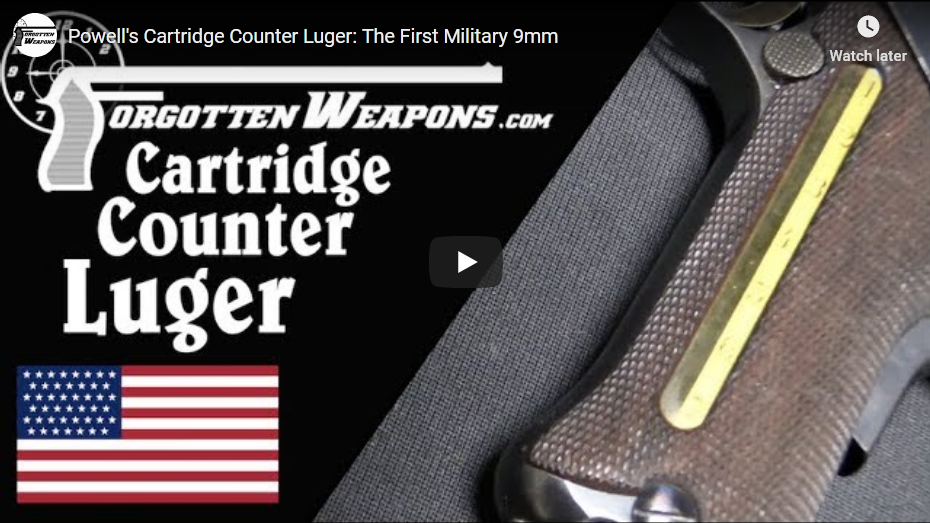
Machine Gun Terminology – LMG, MMG, SAW, LSW, HMG, GPMG

Filed under: History, Military, Weapons — Tags: , , , — Nicholas @ 02:00

Forgotten Weapons
Published 29 Dec 2017

http://www.patreon.com/ForgottenWeapons

Cool Forgotten Weapons merch! http://shop.bbtv.com/collections/forg…

Today we will look at the various different categories of machine guns — what makes them, why they exist, and what their place in military history is. Specifically …

Automatic Rifle: Shoulder or hip fired, limited magazine capacity, minimal sustained fire capacity. Examples: M1918 BAR, Chauchat.

LMG: Magazine fed, rifle caliber, bipod fired. Examples: Bren, Madsen, Lewis.

HMG: Belt fed, usually water cooled, minimal portability, fired from tripod only. Examples: Maxim, Vickers, Hotchkiss 1914. Evolved into guns of caliber 12.7mm – 20mm, like the M2 and DShK.

MMG: Air cooled, tripod fired only, belt fed. Examples: Browning 1919A4, SG-43.

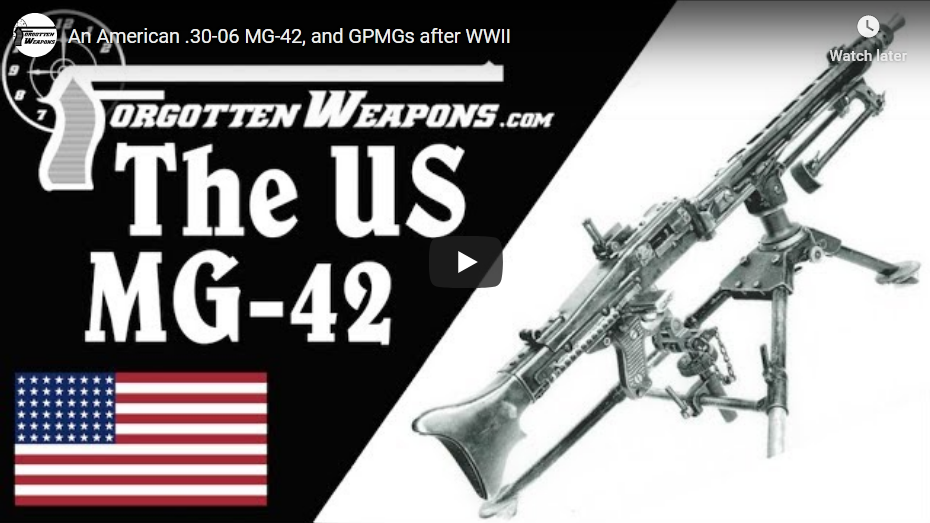
GPMG: Bipod or tripod fired, belt fed, rifle caliber, quick-change barrel. Examples: MG42, PKM, M240.

SAW/LSW: Intermediate caliber, magazine fed, bipod fired. Examples: L86A1, FN Minimi, RPK.

If you enjoy Forgotten Weapons, check out its sister channel, InRangeTV! http://www.youtube.com/InRangeTVShow
December 18, 2019

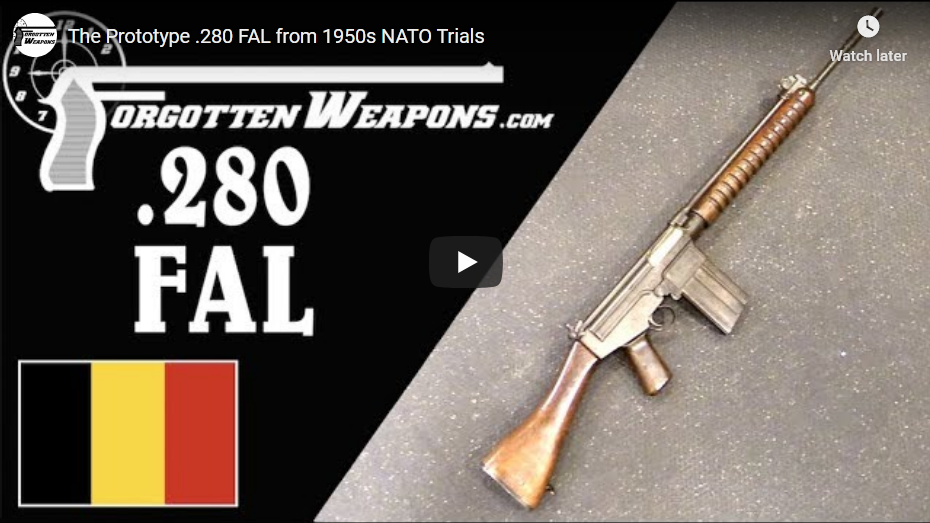
Ballester-Molina Pistols from German Pocket Battleship Armor?

Forgotten Weapons
Published 17 Dec 2019

http://www.patreon.com/ForgottenWeapons

Cool Forgotten Weapons merch! http://shop.bbtv.com/collections/forg…

There is an old gun shop tale that Argentine Ballester-Molina pistols were made form the salvaged armor plate of the pocket battleship Admiral Graf Spee. The Graf Spee was scuttled in the Rio de la Plata estuary in December 1939, only a few miles from the HAFDASA factory in Buenos Aires, and Argentina did not have the domestic steel reserves to make enough pistols…

See Michael Parker’s full article on this, including the exact results of his metallurgical analysis, here:

https://www.americanrifleman.org/arti…

Contact:
Forgotten Weapons
6281 N. Oracle #36270
Tucson, AZ 85704

December 16, 2019

Captain Fraser’s Webley-Fosbery: WWI in Microcosm

Filed under: Britain, History, Military, Weapons, WW1 — Tags: , , , — Nicholas @ 02:00

Forgotten Weapons
Published 23 Dec 2017

http://www.patreon.com/ForgottenWeapons

Cool Forgotten Weapons merchandise! http://shop.bbtv.com/collections/forg…

Captain Percy Fraser, DSO was born on January 22, 1879 and died in Ypres on the night of February 23, 1915 while attempting to aid men wounded outside their trench. His unit of the Queen’s Own Cameron Highlanders would suffer horrendous casualties at Ypres, and today we will look at his Webley-Fosbery automatic revolver and his service in the British Army.

Thanks to Mike Carrick of Arms Heritage magazine for sharing Captain Fraser’s story and revolver. See his regular column here: https://armsheritagemagazine.com

If you enjoy Forgotten Weapons, check out its sister channel, InRangeTV! http://www.youtube.com/InRangeTVShow
December 14, 2019

Huot Automatic Rifle: The Ross Goes Full Auto

Forgotten Weapons
Published 13 Dec 2019

http://www.patreon.com/ForgottenWeapons

Cool Forgotten Weapons merch! http://shop.bbtv.com/collections/forg…

During World War One, Joseph Alphonse Huot, a Canadian machinist and blacksmith living in Quebec, designed a conversion of the Ross MkIII rifle to become an automatic rifle. The Ross was the standard issue Canadian rifle at the beginning of the war, and Huot wanted to find a way to economically provide Canadian forces with an automatic weapon. His conversion functioned by mounting a gas piston onto the side of the Ross barrel, adding a large action cover and 25-round drum magazine, and a Lewis-style cooling shroud over the barrel.

In initial testing with the Canadian army, the Huot performed well. It was seriously considered for adoption, but had to undergo British testing and approval before that could happen. In British testing (by now near the end of the war), it was found to run well enough and have some positive attributes, but not sufficient to justify replacement of the Lewis Gun. It was rejected, and the Canadian Corps finished the war with the Lewis instead. Huot had spent several years privately developing the weapon and two more working on salary for the Canadian military, and had gone into considerable personal debt for the project. He had secured a deal to receive royalties on production, but that of course came to naught when the design was rejected. Ultimately, he was compensated $25,000 in 1936 (of the $36,000 he claimed to have spent).

Only five of the guns were made in total, with four known to still exist. Two of them are in Ottawa at the Canadian War Museum and one in the Seaforth Highlanders Museum in Vancouver and one in the Army Museum in Halifax.

Thanks to the Canadian War Museum for providing me access to film this Huot for you!

https://www.warmuseum.ca

Contact:
Forgotten Weapons
6281 N. Oracle #36270
Tucson, AZ 85704

« Newer PostsOlder Posts »

Powered by WordPress