Lord Chalfont tells a story about his days as a Junior Minister in the Foreign Office. He attended a very grand dinner party, and spotted a lady standing alone in a long red dress. The besotted Chalfont staggered across to ask if she would waltz with him … The lady drew herself up: “I will not waltz with you for three reasons. First this is not a waltz it is the Czech national anthem. Second, you are drunk. My third and greatest objection is that I am the Cardinal Archbishop of Prague”.
Auberon Waugh, Diary, 1976-05-02 (Posted by @AuberonWaugh_PE, 2022-05-02).
August 12, 2022
QotD: Diplomatic adventures in the British Foreign Office
August 7, 2022
QotD: The post-WW1 experiment in banning chemical weapons
This week, we’re going to talk briefly about why “we” – and by “we” here, I mean the top-tier of modern militaries – have generally eschewed the systematic or widespread use of chemical weapons after the First World War. And before you begin writing your comment, please note that the mountain of caveats that statement requires are here, just a little bit further down. Bear with me.
Now, when I was in school – this was a topic I was taught about in high school – the narrative I got was fairly clear: we didn’t use chemical weapons because after World War I the nations of the world got together and decided that chemical weapons were just too horrible and banned them, and that this was a sign of something called “progress“. In essence, the narrative I got was, we had become too moral for chemical weapons and so the “civilized” nations (a term sometimes still used unironically in this context) got together and enforced a moral taboo against chemical (and biological) weapons. And, we were told (this was, I should note, the late 90s and early aughts, long before the Syrian Civil War) that this taboo had mostly held.
Which was important, because in this narrative as it was impressed upon that younger version of me, the ban on chemical weapons showed the path towards banning all sorts of other terrible weapons: landmines, cluster-munitions and of course most of all, nuclear weapons. All we would need to do is for the “civilized” nations of the world to summon the moral courage to abandon such brutal weapons of war. Man, the end of history was nice while it lasted! But the example of the “successful” ban on chemical and biological weapons was offered as proof that the dream of a world without nuclear weapons was possible, if only we showed the same will.
When I was a child, I talked like a child, I thought like a child, I reasoned like a child. When I became a man, I put away childish things. But what was my teacher’s excuse? I guess the end of history was a hell of a drug.
[…] all three of these answers (including my high school answer) actually miss the point, because they all assume something fundamental: that chemical weapons are effective weapons, and so the decision not to use them is fundamentally moral, rather than practical.
Quite frankly, we don’t use chemical weapons for the same reason we don’t use war-zeppelin-bombers: they don’t work, at least within our modern tactical systems.
Bret Devereaux, “Collections: Why Don’t We Use Chemical Weapons Anymore?”, A Collection of Unmitigated Pedantry, 2020-03-20.
July 23, 2022
Tank Chat #152 | Swiss Centurion | The Tank Museum
The Tank Museum
Published 25 Mar 2022
(more…)
July 22, 2022
Why Did The First World War Break Out? (July Crisis 1914)
[My 2014 series on “The Origins of World War I” can be read here. Although I’d read a fair bit of history on the period, once I began researching the period, even I was surprised at how many different contributing causes there were.]
The Great War
Published 15 Jul 2022The assassination of Archduke Franz Ferdinand and his wife in Sarajevo on the 28th of June 1914 kicked off a crisis among the European Powers. Tensions that built up in the decades before erupted and in early August 1914 the world was at war. But what happened in these fateful July weeks 1914?
(more…)
July 21, 2022
Prime Minister Look-At-My-Socks shocked to discover that betraying an ally has consequences
In The Line, Andrew Potter outlines why the Ukrainian government is unhappy with Prime Minister Photo-Op’s decision to break the sanctions on Russia as a favour to Germany:
Well, one thing is for certain: There isn’t going to be a “Justin Trudeau Lane” anywhere in Ukraine any time soon.
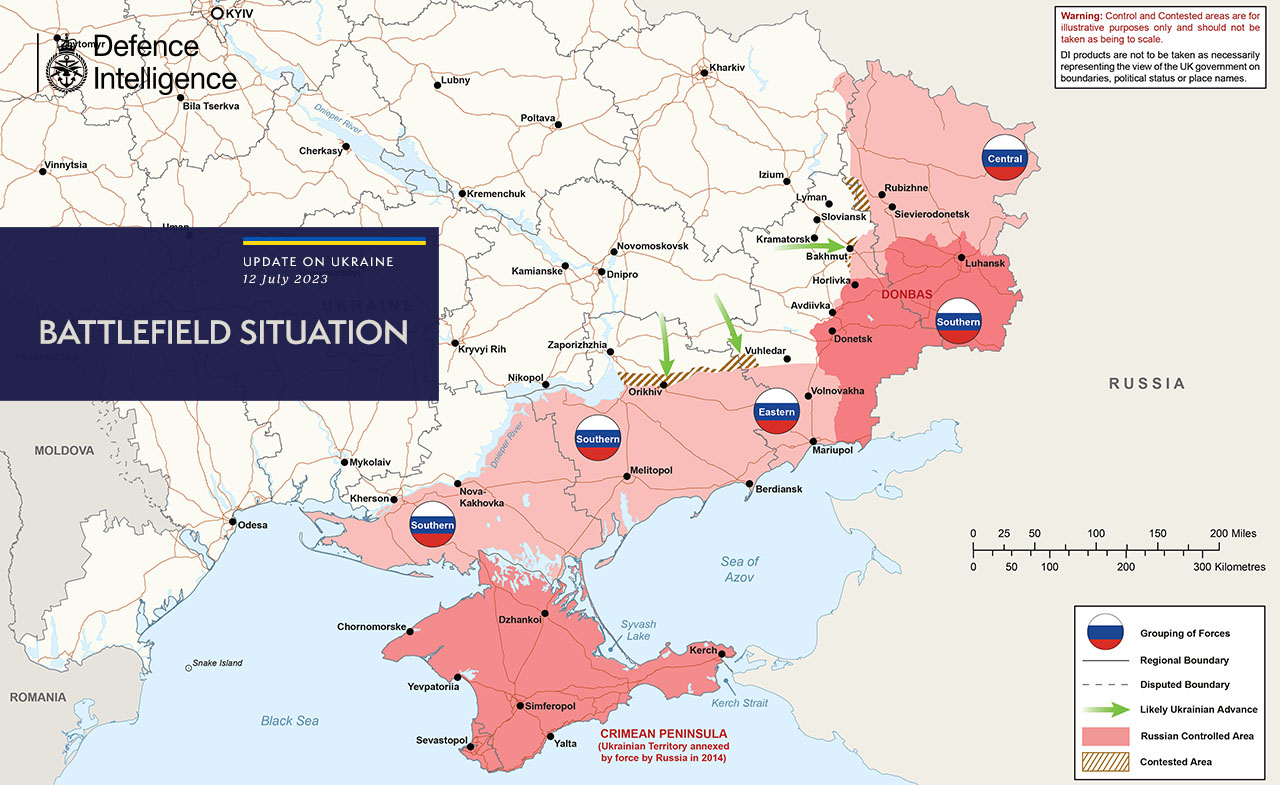
In case you missed the drama last week, Trudeau found himself on Ukraine president Volodymyr Zelenskyy’s shit list after Canada announced, on July 9, that it would allow Siemens to return to Germany up to six gas turbines for the Nord Stream 1 pipeline that were being repaired in Montreal. Russia was threatening to shut down the pipeline and cut off the flow of gas to Germany, which is facing a very serious energy crisis.
In response, a furious Zelenskyy summoned Canada’s ambassador to Ukraine for what one presumes was a solid chewing out, after which the Ukrainian president posted a video in which he lit into Trudeau for “an absolutely unacceptable exception to the sanctions regime against Russia”. As Zelenskyy put it, the problem isn’t just that Canada handed some turbines back to Russia, via Germany. It is that it was a direct response to blackmail by Russia. And if Canada is willing to bend when its sanctions become politically uncomfortable, what is to stop other countries from carving out their own exceptions to their own sanctions, when it suits? Furthermore, Zelenskyy added, it isn’t like this is going to stop Russia from shutting down the supply of gas to Europe — the turbines were always just a pretext, an opportunity to cause strife and stir dissension amongst the countries allied with Ukraine against Russia.
Trudeau — who spent the weekend flipping pancakes at the Calgary Stampede — must have woken up on the Monday wondering what had gotten into his old buddy in Kyiv. After all, hadn’t Trudeau, along with other members of his cabinet, made it clear through their many, many tweets on the subject that Canada stood by Ukraine? Hadn’t Canada sent enough money, arms and humanitarian aid to Ukraine? Hadn’t Trudeau himself paid a visit to Kyiv in May, to re-open our embassy and to underscore just how seriously Zelenskyy should understand Canada’s commitment?
[…]
Ultimately, the problem here is a serious failure by Canada to manage Ukrainian expectations, brought about by the profound mismatch between the level of our rhetoric and the clear limits of our commitment. For Ukrainians, there is a moral clarity to the Russian invasion of Ukraine that, from a Western perspective, has not been present in any other conflict since the Second World War. Zelenskyy assumed that Canadians saw that. He assumed that if Ukrainians were going to be slaughtered, the least we could do would be to stick to our principles, even if it meant asking the population to suffer economic harms and the government to manage genuine political discomfort.
He assumed wrong.
Five months into their war for survival against the genocidal Russian regime, the Ukrainians have learned something important about Canadians: When it comes to our foreign affairs, we don’t mean what we say. When we say we stand with a country, that we fully support them, that we will help defend them or hold their enemies to account, there’s always a “but” or an “until” or an “unless”. We will stand with you, unless it’s politically difficult. We will help you, but not if it means genuine sacrifice. We will support you, until the costs get too high. Then, all bets are off.
The bigger point is this: Canada doesn’t do moral clarity anymore. Whether it is our business dealings with China, our arms sales to Saudi Arabia, or sending a diplomat to a garden party at the Russian embassy in Ottawa, we are always and everywhere hedging our bets, fudging our principles, letting down our allies.
July 2, 2022
Versailles – “It will be what you make of it” – Sabaton History 111 [Official]
Sabaton History
Published 1 Jul 2022There are a great many myths and misconceptions about the Treaty of Versailles, and it has been used and even weaponized many times over the years. Today, Indy goes over the nuts and bolts of what it actually was and what it actually did.
Support Sabaton History on Patreon: https://www.patreon.com/sabatonhistory
Listen to “Versailles” on the album The War To End All Wars: https://music.sabaton.net/TheWarToEnd…
Listen to Sabaton on Spotify: http://smarturl.it/SabatonSpotify
Official Sabaton Merchandise Shop: http://bit.ly/SabatonOfficialShopHosted by: Indy Neidell
Written by: Markus Linke and Indy Neidell
Directed by: Rickard Erixon and Indy Neidell
Produced by: Pär Sundström, Astrid Deinhard and Spartacus Olsson
Creative Producer: Rickard Erixon, Indy Neidell
Set Design: Daniel Eriksson, Rickard Erixon,
Executive Producers: Pär Sundström, Joakim Brodén, Tomas Sunmo, Indy Neidell, Astrid Deinhard, and Spartacus Olsson
Post-Production Director: Marek Kamiński
Editor: Iryna Dulka
Sound Editor: Marek Kamiński
Archive: Reuters/Screenocean – https://www.screenocean.com
Colorizations by: Olga Shirnina, a.k.a. Klimbim – https://klimbim2014.wordpress.com/Sources:
IWM: 130-09+10, IWM 130-01
Auckland Libraries Heritage Collections 5-1276
Médiathèque de l’architecture et du patrimoine
hpebley3 from freesond.org
All music by: SabatonAn OnLion Entertainment GmbH and Stuffed Beaver LTD co-Production.
© Stuffed Beaver LTD, 2019 – all rights reserved.
June 25, 2022
The Public Choice Model in … grand strategy?
One of the readers of Scott Alexander’s Astral Codex Ten has contributed a review of Public Choice Theory and the Illusion of Grand Strategy by Richard Hanania. This is one of perhaps a dozen or so anonymous reviews that Scott publishes every year with the readers voting for the best review and the names of the contributors withheld until after the voting is finished:
[In Public Choice Theory And The Illusion Of Grand Strategy], Richard Hanania details how a public choice model (imported from public choice theory in economics) can explain the United States’ incoherent foreign policy much better than the unitary actor model (imported from rational choice theory in economics) that underlies the illusion of American grand strategy in international relations (IR), in particular the dominant school of realism. As the subtitle “How Generals, Weapons Manufacturers, and Foreign Governments Shape American Foreign Policy” suggests, American foreign policy is driven by special interest groups, which results in millions of deaths for no good reason.
In the unitary actor model, the primary unit of analysis of inter-state relations is the state as a monolithic agent capable of making rational decisions (forming coherent, long-term “grand strategy”) from cost-benefit analysis based on preference ranking and expected “national interest” maximisation.
In the public choice model, small special-interest groups that reap a large proportion of the benefits from a policy (concentrated interests) are much more incentivised to lobby for a policy than the general public who pay for a negligible portion of the cost of the policy (diffused interests) are incentivised to lobby against. The former can coordinate much easier than the latter that has to overcome rational ignorance (the cost of educating oneself about foreign policy outweighs any benefit an one can expect to gain as individual citizens cannot affect foreign policy) and the society-wide collective action problem (irrational for every citizen to cooperate in the prisoner’s dilemma especially if individual gain is negligible) resulting in inefficient (not-public-good-maximising) policymaking i.e. government failure.
And more specifically on the use of Public Choice Theory:
Public choice theory was developed to understand domestic politics, but Hanania argues that public choice is actually even more useful in understanding foreign policy.
First, national defence is “the quintessential public good” in that the taxpayers who pay for “national security” compose a diffuse interest group, while those who profit from it form concentrated interests. This calls into question the assumption that American national security is directly proportional to its military spending (America spends more on defence than most of the rest of the world combined).
Second, the public is ignorant of foreign affairs, so those who control the flow of information have excess influence. Even politicians and bureaucrats are ignorant, for example most(!) counterterrorism officials — the chief of the FBI’s national security branch and a seven-term congressman then serving as the vice chairman of a House intelligence subcommittee, did not know the difference between Sunnis and Shiites. The same favoured interests exert influence at all levels of society, including at the top, for example intelligence agencies are discounted if they contradict what leaders think they know through personal contacts and publicly available material, as was the case in the run-up to the Iraq War.
Third, unlike policy areas like education, it is legitimate for governments to declare certain foreign affairs information to be classified i.e. the public has no right to know. Top officials leaking classified information to the press is normal practice, so they can be extremely selective in manipulating public knowledge.
Fourth, it’s difficult to know who possesses genuine expertise, so foreign policy discourse is prone to capture by special interests. History runs only once — the cause and effect in foreign policy are hard to generalise into measurable forecasts; as demonstrated by Tetlock’s superforecasters, geopolitical experts are worse than informed laymen at predicting world events. Unlike those who have fought the tobacco companies that denied the harms of smoking, or oil companies that denied global warming, the opponents of interventionists may never be able to muster evidence clear enough to win against those in power with special interests backing.
Hanania’s special interest groups are the usual suspects: government contractors (weapons manufacturers [1]), the national security establishment (the Pentagon [2]), and foreign governments [3] (not limited to electoral intervention).
What doesn’t have comparable influence is business interests as argued by IR theorists. Unlike weapons manufacturers, other business interests have to overcome the collective action problem, especially when some businesses benefit from protectionism. By interfering in a foreign state, the US may build a stable capitalist system propitious for multinationals, but can conversely cause a greater degree of instability and make it impossible to do business there; when business interests are unsure what the impact of a foreign policy will be for their bottom line, they should be more likely to focus their lobbying efforts elsewhere.
June 21, 2022
“Schlimmbesserung is a lovely German word which means making something worse by trying to improve it”
In the New English Review, Armando Simón considers some of the oddities of American worldview that seem so often to make worse the very things they try to “fix”:
Americans’ ignorance of other countries, their cultures, their history and their geography is legendary and world renowned and the subject of countless anecdotes and jokes by foreigners. This ignorance is inexplicable, as it is not found in America’s northern or the southern neighbors, so it cannot be due to geographical isolation. It is also a fact that foreigners know more about America than Americans know of their countries. Or even their own.
It is also a paradox. One would expect logically that a country that is principally composed of immigrants and the descendants of immigrants would have an encyclopedic knowledge of other countries, as is the case with Britain, which had a world-wide empire. Not so.
And this may explain America’s unintentional policy of schlimbesserung, the worsening of something that it is trying to improve, or as Greene described it so aptly of an American character in one of his novels, “armored in his ignorance and good intentions”.
As an aside, let me also say that this naïve optimism — to put it charitably — has enabled foreign governments to easily steal diplomatic and military secrets with little trouble, according to Gordievsky’s KGB: The Inside Story of Its Foreign Operations from Lenin to Gorbachev. John Walker, an American traitor who spied for the Russians for 17 years once said in a public interview that Walmart guards a tube of toothpaste better than the Navy guards its secrets. He should know.
Many individual American philanthropists and government bureaucrats go energetically out in the world upon hearing of some terrible condition in some part of the world through the television, convinced that they, yes they, can personally correct the situation when in reality they have no idea of what the hell they’re doing, who they are dealing with, or what is really going on in that part of the world, nor of the cultural, historical, and geographical circumstances. Nor can they even speak the local language! They are simply confident that they will solve the problem. And so they will feel good about themselves (for example, there is no question in my mind that some dirt-poor African doctors, upon learning that some idiot Americans, obsessed with AIDS, were going to send millions upon millions of dollars in their countries “to combat AIDS”, and having very few actual cases of infected patients, simply falsified the statistics. Or worse.). It is as if they were hopscotching across a cultural minefield with an idiotic grin.
The cultural values that one takes so much for granted that one is not conscious of may not be present elsewhere. For example, Americans do not understand that many countries e.g., Greece, Ireland, tend to explain their present problems by blaming other countries (Turkey, Germany, England) over what happened centuries ago instead of actually solving the problems. People in other countries are backward looking in that their sights are rigidly focused on their past, whereas Americans’ eyes are always on the future (and which might explain why Americans are addicted to science-fiction) while being generally ignorant about their past.
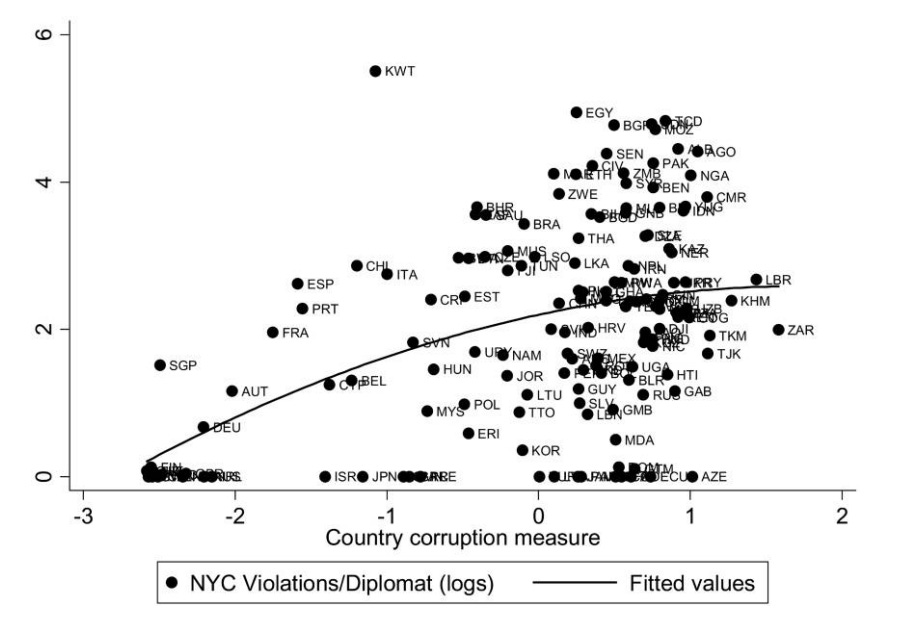
Also, it is a general truism that the majority of persons who run for office in North America and various European countries do so because they sincerely want to help and improve their communities/countries. However, in all of Africa and most of Asia, persons who seek public office do so for one purpose, and one purpose only: to steal everything that they can get away with. So when some ignorant, naïve, American shows up with buckets full of money, oblivious of the culture and the longstanding, entrenched, corruption, and with an announced intention to make the local community more like an American community, they are welcomed with open arms while suppressing their snickering. This also explains something where Americans exhibit willful blindness: other cultures don’t play fair. Honesty is seen as the trait of fools. Fools are to be taken advantage of. Especially in trade and diplomacy. Just look at China.
June 15, 2022
Istanbul: City of Spies – WW2 – Spies & Ties 18
World War Two
Published 14 Jun 2022Neutral Turkey appears to be an island of peace in a sea of war. But if you look a little closer though and there’s another story. Assassins ply their deadly trade. Spies slip in and out of occupied Europe. The Allies and Axis battle for influence. The secret war is in full swing.
(more…)
June 11, 2022
Spanish Canada: The Nootka Crisis
The History Guy: History Deserves to Be Remembered
Published 10 Jun 2022In 1789, the Spanish empire prepared to enforce their territorial claims far to the North of what they nominally controlled, and instigated a crisis that threatened to bring the great European powers to war.
Check out our new community for fans and supporters! https://thehistoryguyguild.locals.com/
This is original content based on research by The History Guy. Images in the Public Domain are carefully selected and provide illustration. As very few images of the actual event are available in the Public Domain, images of similar objects and events are used for illustration.
You can purchase the bow tie worn in this episode at The Tie Bar:
https://www.thetiebar.com/?utm_campai…All events are portrayed in historical context and for educational purposes. No images or content are primarily intended to shock and disgust. Those who do not learn from history are doomed to repeat it. Non censuram.
Find The History Guy at:
New community: https://thehistoryguyguild.locals.com/
Please send suggestions for future episodes: Suggestions@TheHistoryGuy.netThe History Guy: History Deserves to Be Remembered is the place to find short snippets of forgotten history from five to fifteen minutes long. If you like history too, this is the channel for you.
Awesome The History Guy merchandise is available at:
teespring.com/stores/the-history-guyScript by JCG
#history #thehistoryguy #Canada
June 5, 2022
Banzai Charges in Alaska – WW2 – 197 – June 4, 1943
World War Two
Published 4 Jun 2022The Chinese defeat the Japanese at Shipai Fortress and the Americans maul the Japanese in the Aleutians. The Japanese are also worried about the possibility of the USSR joining the war against them. Meanwhile the Allies still plan to invade Sicily, but have no idea what they’ll do after that.
(more…)
May 18, 2022
Trident: The Allied Plan to Win the War – Time Ghost News Flash
World War Two
Published 17 May 2022Washington, May 1943. It was the largest Anglo-American conference of the war so far. With the Axis being defeated in North Africa, the Mediterranean, and New Guinea, the need to agree on new strategic goals arose inside the Combined Chiefs of Staff. A new course of action was to be set against Italy, Japan, and Germany to capitalize on the recent successes. But debates and old dilemmas heated up when it came to resources, manpower, and the question “where to attack next”.
(more…)
May 13, 2022
Napoleon Took Moscow – Why He Didn’t Win The War
Real Time History
Published 12 May 2022Support us on Patreon: https://patreon.com/realtimehistory
After the Battle of Borodino, both sides are badly mauled. Napoleon’s army marches on and reaches Moscow, the old Russian capital. In the Emperor’s eyes, capturing the city should win him the war. But while the local Russians set fire to the city, the Tsar in St. Petersburg and the Russian army command are thinking about turning the tide of the war — and not about accepting a French victory.
» THANK YOU TO OUR CO-PRODUCERS
John Ozment, James Darcangelo, Jacob Carter Landt, Thomas Brendan, Kurt Gillies, Scott Deederly, John Belland, Adam Smith, Taylor Allen, Rustem Sharipov, Christoph Wolf, Simen Røste, Marcus Bondura, Ramon Rijkhoek, Theodore Patrick Shannon, Philip Schoffman, Avi Woolf,» SOURCES
Boudon, Jacques-Olivier. Napoléon et la campagne de Russie en 1812. 2021.
Lieven, Dominic. Russia Against Napoleon. 2010.
Rey, Marie-Pierre. L’effroyable tragédie: une nouvelle histoire de la campagne de Russie. 2012.
Zamoyski, Adam. 1812: Napoleon’s Fatal March on Moscow. 2005.» OUR STORE
Website: https://realtimehistory.net»CREDITS
Presented by: Jesse Alexander
Written by: Jesse Alexander
Director: Toni Steller & Florian Wittig
Director of Photography: Toni Steller
Sound: Above Zero
Editing: Toni Steller
Motion Design: Toni Steller
Mixing, Mastering & Sound Design: http://above-zero.com
Digital Maps: Canadian Research and Mapping Association (CRMA)
Research by: Jesse Alexander
Fact checking: Florian WittigChannel Design: Simon Buckmaster
Contains licensed material by getty images
Maps: MapTiler/OpenStreetMap Contributors & GEOlayers3
All rights reserved – Real Time History GmbH 2022
April 19, 2022
When the Germans had to surrender twice
The end of the war in Europe is usually noted as being the 8th of May, 1945, when General Eisenhower received the surrender of German forces, but the Soviets (and now the Russians) mark the anniversary on the 9th:

ADN-ZB/Archiv
II.Weltkrieg 1939-1945
Die bedingungslose Kapitulation der faschistischen deutschen Wehrmacht wird am 8. Mai 1945 in Berlin-Karlhorst unterzeichnet.
Links: Der Vertreter des Oberkommandos der Roten Armee, Marschall der Sowjetunion G. K. Shukow, am Tischende Generalfeldmarschall Wilhelm Keitel.
J 0422/600/2 N
It was at three in the morning on Tuesday, 8 May 1945, that Generaloberst Alfred Jodl of the German High Command, signed a surrender document at General Dwight Eisenhower’s headquarters in Rheims, France. The European war was over. It was VE-Day. Stalin’s representative, General Ivan Susloparov, cabled his chief the great news.
However, the Russian leader flew into a rage. He wanted his own observance and insisted on a further ceremony at the Soviet military HQ in Karlshorst, a former Wehrmacht officers’ mess, six miles south-east of central Berlin. Chosen simply because it was one of the few buildings in the capital left with windows and a roof, the formalities were presided over by the captor of the city, Marshal Georgy Zhukov.
This time, it was Generalfeldmarschall Wilhelm Keitel, Jodl’s superior, who read over a near-identical document. Susloparov was again present, along with Carl Spaatz for the Americans and Jean de Lattre de Tassigny, representing France. Newsmen were unaware of the diplomatic spat that delayed proceedings.
De Lattre refused to sign unless the French tricolore was in evidence among the standards and pennants decorating the surrender room. The first Soviet solution hilariously produced a Dutch flag. To pacify an even-more outraged de Lattre, a Red Army seamstress was summoned to run up the appropriate banner. More delays ensued while the Allies bickered over the order of signatures and witnesses, only agreed after the mollifying effects of vodka and some food.
This is why the final ceremony began shortly after midnight. Cameras captured Keitel in full dress uniform, arriving in pompous mood. Flashlights caught the glint of his many medals, and the arrogant flourish of his marshal’s baton, held with gloved hands. He gazed around the room, haughty contempt written across his face. The field marshal removed only his right glove, screwed his monocle into his left eye and applied a fountain pen to the two-page, typewritten document. It was 00:16 local time on Wednesday, 9 May, which became Soviet Victory Day and remains so in Eastern Europe.
Each subsequent year on Victory Day, Red Square has echoed to the “Hurrahs” of vast numbers of Russian soldiers, sailors, marines and paratroopers, national guardsmen and airmen. They are drawn up to listen to their commander-in-chief and inspected by generals. Banners are saluted; swords flash through the air. Serenaded by massed bands playing stirring tunes, they march past the top brass, assembled on the roof of Lenin’s Mausoleum.
April 4, 2022
The Congress of Vienna (Part 2) (1814 to 1815)
Historia Civilis
Published 2 Apr 2022Patreon | http://historiacivilis.com/patreon
Donate | http://historiacivilis.com/donate
Merch | historiacivilis.com/merch
Mailing List | http://historiacivilis.com/mailinglist
Twitter | http://historiacivilis.com/twitter
Website | http://historiacivilis.comSources:
Eric Hobsbawm, The Age of Revolution, 1789-1848
Adam Zamoyski, Rites of Peace: The Fall of Napoleon and the Congress of Vienna
Richard J. Evans, The Pursuit of Power: Europe 1815-1914
Wolfram Siemann, Metternich: Strategist and Visionary
A. Wess Mitchell, The Grand Strategy of the Habsburg Empire
Robert K. Massie, Dreadnought: Britain, Germany, and the Coming of the Great War
Adam Hochschild, Bury the Chains: Prophets and Rebels in the Fight to Free an Empire’s Slaves
Harry Dickinson, Public Opinion and the Abolition of the Slave Trade | https://bit.ly/2XRMLJC
The History of Parliament: The 5th Parliament of the United Kingdom | https://www.historyofparliamentonline…Music:
“Past,” by Nctrnm
“While She Sleeps (Morning Edit),” by The Lights Galaxia
“Mell’s Parade,” by Broke For Free
“Day Bird,” by Broke For Free
“Thomas Neutrality,” by Enrique Molano
“Infados,” by Kevin MacLeod
“The House Glows (With Almost No Help),” by Chris Zabriskie
“Hallon,” by Christian Bjoerklund