
Thus we get the “Revolutions” in America and France, where educated and newly politicised chattering classes try to find a simplistic solution to all the world’s problems. Their solution being to adopt a system which fits their preferred world order, and seems to give them an advantage that will allow them to force people into their way of thinking.
Humans being what they are, it didn’t work of course.
The American Revolution, supposedly about ‘equality for all’ – if you want to fall for idealistic propaganda – was actually a tax rebellion by Northern states (who also wanted to get rid of the English government’s treaties that kept them out of Indian land), and the Southern states (who wanted to block the English anti-slavery legislation from spreading to their nice comfy system). It was never really about equality, and all the exclusions of people from voting on the basis of colour, race, sex, religion, immigration status, etc., should have made it clear to anyone that what was being considered was really an Oligarchy. Similar in fact to the Ancient Greek and Roman slave-based societies, where some special and limited classes shared rights no one else had.
Actually all “successful” democracies in history have always been Oligarchies. The 1,000 year old “Sublime Republic of Venice” – on which large parts of the US constitution were based – for instance, being limited to a certain number of families that had the vote. Similarly the “Republics” of Ancient Greece or Rome, and modern Switzerland or Israel, being based on vote by military service – another way of ensuring the voters might put national interests above selfish ones.
The first few French republics (those squeezed in around the inevitable dictatorships and emperors that are the result of such systems) were also based on a limited franchise. In their case not a race or religion or sex one like the US, but a straight property qualification that saw a small percentage of both sexes as voters.
Unsurprisingly the Oligarchical Republics of the 18th and 19th centuries were some of the most internally violent (US Slavery, Civil War, Indian Wars, the Terror, multiple revolts and “communes”, Lynchings, Jim Crow laws, etc), and externally aggressive (Napoleonic Wars, Spanish–American Wars, “Interventions” in Central America, Occupations of Hawaii, Philippines, etc.) governments in history. Rivaling the Greek and Roman republics for their aggressive expansionism by land and sea, and certainly being no less effective than more traditional military (Russia and Germany) or trade (Britain and Netherlands) expansionist states.
(And here I would note that the one of the mitigating factors in the idea that German Nationalism was a problem in WWI, was that the populist Navy Leagues and Colonial Leagues of the newly enfranchised voting classes did in fact push Nationalism to dangerous extremes. The Kaiser was a dangerous loon, but he was a dangerous loon responding to the fervor of the dregs of the petit bourgeois who had been enfranchised in his nation, not a man with Napoleonic capabilities in his own right.)
Nigel Davies, “The Solution is… European Union/Multiculturalism/Communism… Name your poison!”, rethinking history, 2015-12-26.
April 30, 2019
QotD: Successful “democracies” in history have usually been disguised oligarchies
April 24, 2019
April 19, 2019
The next Euro-elections as “the second referendum”
Julie Cook wonders why the Remoaners seem so eager to cast the May 23 European elections as the second referendum they’ve been eager to have, as the early indications show something less than full eagerness among British voters for any of the pro-remain groups:
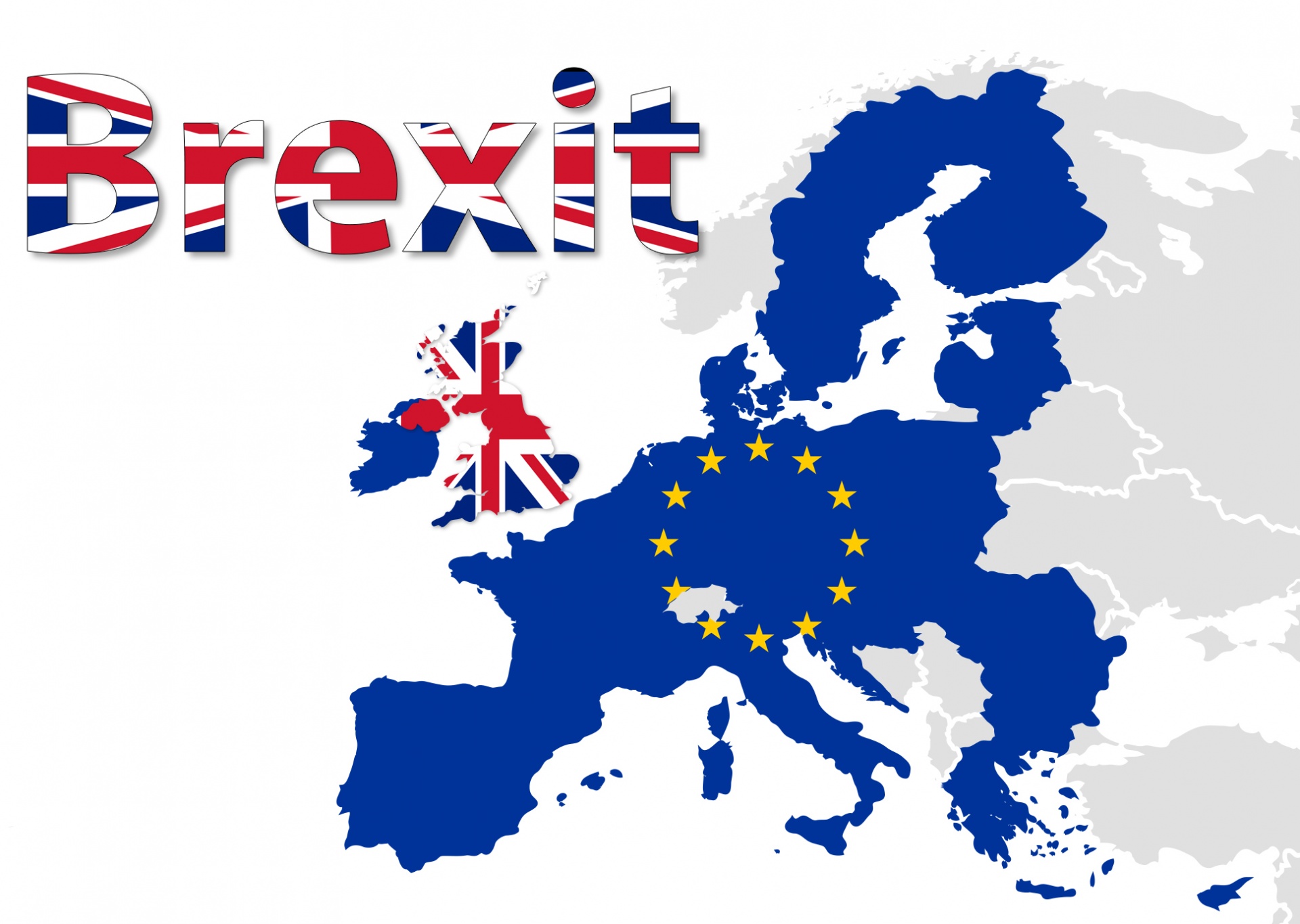
Timothy Garton Ash is, I think, making something of a mistake here. For he’s calling for the upcoming euro-elections to be seen as a second referendum on our leaving the European Union. The point being that this is going to be something of a hostage to fortune.
Perhaps more importantly the more Remoaners call for it to be seen and treated as such the more likely we are to see what lying toads they are.
Britain will have its second referendum – on 23 May. Don’t miss it
Timothy Garton Ash This is a crucial chance to show politicians how we feel now about leaving Europe. The turnout must be hugeThe point being, well, what if Leave wins?
In just five weeks’ time, Britain will have a referendum on Brexit. This will take the form of elections to the European parliament, but in reality this will be a pre-referendum, or, if you like your neologisms ugly, a preferendum. So there is now one simple task: to maximise the vote for parties that support a confirmatory referendum on Brexit, giving the British people a democratic choice between accepting the negotiated Brexit deal and remaining in the EU.
And there’s the toad bit. There’s a significant portion of the population who’d prefer to just Leave. Don’t care about the terms, the deal, let’s just leave the b’tards to stew in their own juices and we’ll get on with solving whatever problems remain after we’ve not remained. And this is a significant portion – perhaps not a majority, maybe not even a plurality but that’s going to be the interesting test
Early polls show that Nigel Farage and his new Brexit Party are in the lead over both Labour and the Conservatives. Of course, he’ll have to weather a full month of unbridled hate and slander from the media, but what can they possibly say about him or his new party that they haven’t already screamed and bellowed before? Once you’ve fired all the invective in your shot locker, you don’t stand much chance of changing anyone’s opinion if they didn’t react the first dozen times.
March 2, 2019
Liberal democracy and the ungovernable voters
In Quillette, Ross Stitt discusses the apparent weakness of western liberal democracies and the rise of the ungovernables:
2019 marks the thirtieth anniversary of Francis Fukuyama’s seminal essay for the National Interest “The End of History?” Its central hypothesis was that we were witnessing “the end point of mankind’s ideological evolution and the universalization of Western liberal democracy as the final form of human government.” That looked plausible in 1989, particularly when the Berlin Wall fell just months after the essay’s release. Thirty years later — not so much.
To be fair to Fukuyama, he never suggested that the world had seen the end of geopolitical conflict or that democracies would experience no more of Macmillan’s “events.” Today, he continues to view liberal democracy as the best form of government, but he is less optimistic about its robustness. It’s hard to disagree with him. The Brexit chaos, the Trump presidency, the collapse of support for centrist parties across Europe, and the pervasive rise of populism and nationalism, all point to the growing fragility of liberal democracy.
Why is this happening now? The usual response is to blame it all on the politicians. Leaders like Orban and Trump are subverting the institutions at the heart of liberal democracy. Political parties like Alternative für Deutschland and the National Rally are promoting illiberal and xenophobic policies. If only we had better leaders, democracy would flourish — so goes the argument.
But bad politicians are hardly a novelty. Two thousand years ago, Cicero declared that “Politicians are not born: they are excreted.” Shakespeare’s Hamlet described a politician as “one who would circumvent God.” If we’ve always had bad politicians, then there must be other explanations for the current downward trajectory of liberal democracy. The four explanations most commonly proffered are greater competition from alternative political models, the increased complexity of modern democratic politics in a post-material world, the constraints on democratic states imposed by globalisation, and the emergence of a range of international threats like climate change and terrorism.
But there is another explanation for liberal democracy’s troubles that is much less talked about and, in my view, more powerful — the fact that voters have become more difficult to govern.
February 20, 2019
History Summarized: Ancient Greece
Overly Sarcastic Productions
Published on 26 Jun 2017What’s that? Blue already did a video on the Athenian empire? Uh… well… um… LOOK, OVER THERE, A DISTRACTION!
For more Greek goodness, check out the following:
History Summarized: Alcibiades: https://youtu.be/kRLkjBUgB2o
History Summarized: Thebes: https://youtu.be/L1x9np5fys8
History Summarized: Athenian Empire: https://youtu.be/cNWDkFkcuP4This video was produced with assistance from the Boston University Undergraduate Research Opportunities Program.
PATREON: http://www.patreon.com/user?u=4664797
Find us on Twitter @OSPYouTube!
February 5, 2019
QotD: Democracy and diversity
Whether ethnic diversity is compatible with democratic republican government is open to question, though it is considered impolite, or worse, to raise that question. Democracy requires a demos. Truly free, democratic, and stable multiethnic societies are rare, as the Europeans are learning again. There’s Switzerland, sure, but a core principle of the Swiss solution is separation: the country’s four ethnicities are mostly concentrated in their own cantons. Switzerland is a highly decentralized confederacy, where most political issues get decided at the canton level, which minimizes ethnic and regional tensions. The federal government in Bern is practically invisible; most Swiss can’t name their country’s president. This is not a model easily replicated.
The history of the United States does not convincingly prove that ethnic diversity is part and parcel with democracy. Ask a random man in the street of any blue-state city what the purpose of America is, and he’s likely to tell you that it’s immigration—though the word appears nowhere in the founding documents. The U.S. was, from its beginnings, multiethnic, multiracial, multi-religious, and multilingual. But until recently, this background condition was not seen as the font of our national strength. Rather, for most of our history, it was a problem to be overcome through nation-building and assimilation, which America excelled at. By the early 1960s, United States had come close to creating its own unique national ethnicity, albeit one that starkly excluded African-Americans. But even this exception seemed to be moving rapidly toward resolution before the country gave up on nation-building in the late 1960s. One can make a strong case that the early Civil Rights movement was a product of the mid-century high-water mark of American nationalism. Listen to Martin Luther King’s “I Have a Dream” speech; it’s striking how classically nationalist it is, from its evocation of the country’s geographical features to the reaffirmation of its basic creed of freedom, equality, and individual rights, to its Old Testament rhetoric rooted in John Winthrop’s Puritanism.
E.M. Oblomov, “The Case for National Realism: Diversity is the hallmark of empires, not democracies”, City Journal, 2019-01-02.
January 30, 2019
Sun Yat-sen – A Dream of China – Extra History – #5
Extra Credits
Published on 26 Jan 2019Sun’s attempts to found democracy in China were thwarted by the chaos of the authoritarian warlords who still stayed around. But, inspired by the youth of the New Culture Movement, and (surprisingly) Soviet Russia’s aid, he pressed on, and history would remember him as “the Forerunner of the Democratic Revolution.”
Join us on Patreon! http://bit.ly/EHPatreon
January 2, 2019
In non-breaking, non-news … politicians lie
Hector Dummond explains why what might seem like a shocking revelation from a former Thatcher MP isn’t even getting a raised eyebrow from the British media:
In a highly revealing article former MP Matthew Parris admits that the Conservative Party would often lie so that it could do what it wanted. And when it didn’t lie it fudged and avoided issues in order to prevent the ‘people’ having any say in the country’s governance:
our challenge was to find ways of ducking the issue. Once I became an MP, I did so by voting for the principle and against the practice. This subversion of democracy (in Theresa May’s phrase) caused me embarrassment, but not a second’s guilt. Sod democracy: hanging was wrong …
Among ourselves we talked cheerfully about subterfuge. The Britain of 1979 and 1983 most emphatically did not vote for a massive confrontation with the coal miners. We made sure the electorate was never asked.
These candid admissions have been completely ignored by the media. One reason they’ve been ignored is, of course, that most people have come to work this out for themselves, so Parris isn’t telling us anything we don’t already know. But surely hearing it from the horse’s mouth has great value? Why hasn’t the media splashed on this? Why haven’t Parris’s old enemies in the Labour party made hay with it?
The main reason is that most of the media, and virtually all the Labour party, is on his side over this. Even newspapers like the Guardian. You might think the Guardian would be the natural enemy of a former Tory MP, especially one who worked with Thatcher, and certainly on some issues they will regard Parris as an enemy, but the fact is that the Guardian wants government to be free of restraint by the people, because its vision of the state involves a leftist government getting into power, imposing its own ideology onto society and removing the power for the people to have a democratic say from most areas of life. So it can hardly criticise Parris for having done what it longs to do. It doesn’t want to bring about anything that might lessen the freedom government currently has to ignore the voter.
December 12, 2018
Why Socrates Hated Democracy
The School of Life
Published on 28 Nov 2016We’re used to thinking hugely well of democracy. But interestingly, one of the wisest people who ever lived, Socrates, had deep suspicions of it.
October 31, 2018
Great Britain Before World War 1 I THE GREAT WAR Special
The Great War
Published on 29 Oct 2018Check out War2Glory: http://bit.ly/TheGreatWar_W2G
Great Britain was the center of a vast colonial empire and a rapidly changing world during the 19th and early 20th century. But what happened in the country in the years leading up to World War 1?
October 29, 2018
The decline of personal liberty in a social media world
Fernando del Pino Calvo-Sotelo on the slowly diminishing personal liberties in western countries and the steady expansion of state power:
… freedom around the world is more and more defined just by one measure, that is, the fact of being able to put one vote (lost among other 24 million votes, in the case of Spain) in an urn every four years. But who cares about all the other, much more relevant, civil rights? Freedom is being able to vote, but it is way more than that. However, democratic power holders have distracted us with political freedom while taking away ever higher degrees of personal freedom – while we turned a blind eye to the fragility of democracies, which soon move away from the utopian “government of the people”. Indeed, as Mill points out, “the people who exercise power are not the same people over whom it is exercised”. As stated by the Iron Law of Oligarchy, regardless of the apparent form of government (republic, monarchy, democracy, dictatorship…), all political power presupposes the power of a very small group over the vast majority of the population. Secondly, “the people can aspire to the oppression of a part of it,” that is, democracy may become the tyranny of the majority over the minority (made up of Jews, blacks, the rich…), a sort of mob rule, as the US Founding Fathers feared. For this reason, Mill recommended keeping democracy constrained by the same controls that prevent the abuse of power typical of the tyranny of an individual.
But the oppression of political power is not the only form of tyranny. As Mill described in 1861 in a remarkably prophetic paragraph, society itself can also exercise the subtlest of tyrannies, “a social tyranny more formidable than that of many models of political oppression, which affects much more details of daily life to the extent of enslaving the soul (…), that is, the tyranny of dominant opinions and feelings that seeks to impose by force its own ideas and practices as a standard of conduct to mold characters according to the preconceived model”. Today, the oppression of political correctness, decided by the global power agenda of noisy, powerful and organized minorities, is trying to stifle the once sacred freedoms of conscience, opinion and expression in an era in which free and truthful journalism is all but gone and in which social networks, the most dangerous societal control weapon ever invented, impose their slogans and release their hordes to lynch the dissident. New totalitarian ideologies want to dominate as new state religions of mandatory belief. Such is the case of the absurd and manifestly unscientific gender ideology (that would just be another stupid fad were it not for its goal of deceiving the youngest in order to “enslave their soul”), or of the ideology of the also unscientific and superstitious climate catastrophism. Not content with controlling our actions and appropriating our money through abusive taxation, the tyrants of today’s democracies seek to control what we believe and what we feel (and particularly, what we fear!).
Possibly never in history has there been such a brutal attempt to steal man’s freedom, and never has man been so blind, so sheepish and so helpless before those who openly wish to enslave him. In fact, we are being ruthlessly pushed towards a society of slaves of the State and of political correctness. Will we break the chains, now that we are still in time, or will we allow our children to be born already slaves wondering why their parents conformed and chose not to fight for their freedom?
H/T to Small Dead Animals for the link.
August 27, 2018
QotD: The trouble with term limits
I used to be a big supporter of term limits, but I think the evidence at this point is that they actually empowered lobbyists and activist groups, both because politicians going back to the “real world” needed somewhere to work after they left office, and because the politicians were too naive to recognize when they were being taken for a ride by a special interest. The longer I stay in Washington, the more skeptical I am of any silver bullet …
Megan McArdle, commenting on Facebook, 2016-11-11.
August 11, 2018
Post-coup Turkey – every move has served to increase Erdoğan’s hold on power
Austin Bay‘s recent essay for Strategika on the post-coup Turkish political situation and its NATO membership:
Ataturk bequeathed Turkey what his greatest biographer, Andrew Mango, called “the structure of a democracy, not of a dictatorship.” He authored an orientation, not an ideology, creating a political, social, and cultural process that he believed would eventually make Turkey capable of perpetual self‐modernization. Ataturk was a political giant and a superb military commander. Eighty years after his death he remains a cult historical and political figure.
President Erdogan is a canny politician and, to be fair, Turkey’s most significant political figure since Ataturk. The green-eyed monster feeds his inner fire; Recep knows he disappears in Kemal’s giant shadow. Not capable of displacing Ataturk the man, he has chosen to replace Ataturk’s state, first under the guise of extending democracy, now behind the façade of maintaining stability. Erdogan also intends to remain in office over twice as long as Ataturk. Turkey 2034 will be an Erdoganist political construct, not Kemalist.
That last paragraph sketches a novelistic interpretation of Erdoğan’s motives. It expands on the answer I gave at Hoover’s October 2017 Military History and Contemporary Conflict symposium after Barry Strauss asked me what I thought drove Erdoğan — the deep drive that might shed light on his long-term vision for Turkey and help us craft policy responses to his challenge.
Novelistic speculations have numerous weaknesses. However, over the decades Erdoğan has supplied plot points and psychologically-indicative dialog. We are able to assess action through time. Early in his career Erdoğan routinely employed Islamist poetry: “Democracy is merely a train that we ride until we reach our destination. Mosques are our military barracks. Minarets are our spears.” That poetry led to his arrest for sedition. After his release he renounced his piously seditious poetry, claiming his fundamentalist views had fundamentally altered. His sudden commitment to Turkish democracy energized his “moderate Islamist” Justice and Development Party’s (AKP) 2002 victory over a tired and corrupted Republican Peoples Party (CHP). In 2003 the AKP became Turkey’s governing party with Erdoğan serving as prime minister.
First he tested Kemal’s structure, then he began to dismantle it. Erdoğan purged the military of suspected political opponents. A cunning narrative camouflaged his operation. He claimed European Union accession rules demanded he strip the military of its political powers and make certain Kemalist military coups entered history’s dustbin. Sometime in 2008, as Erdoğan began pursuing the Ergenekon conspiracy of “secular fundamentalists” and other secret nationalist vigilante organizations, I finally realized whatever explanation du jour Erdoğan offered for his actions, the dismantling scheme always expanded his personal power and influence.
The bizarre July 2016 coup follows the same pattern. The Turkish people defeated the coup. Ironically, Erdoğan remains in office today because Turkish citizens (across Turkey’s complex political and ethnic spectrum) courageously defended their hard-won democracy — a democracy nine challenging decades in the making. In its aftermath, however, Erdogan used emergency powers to purge Gulenist Islamists and his political opponents. He dismantled elements of the democratic system that saved him and his government.
August 1, 2018
British Labour Party continues to sideline pro-Brexit MPs
Fraser Myers on the most recent pro-Brexit Labour MP deselected by local party activists:
Labour Party activists have passed votes of no confidence in two of Labour’s Brexit-backing MPs, and called for their deselection. Frank Field and Kate Hoey were censured by their local parties for voting with the government against an amendment that would have kept the UK in a customs union with the EU after Brexit. If passed, it would have killed off any prospect of Britain having an independent trade policy after Brexit, and would have kept us under the jurisdiction of the European Court of Justice. Recognising this as a betrayal of the Leave vote, Labour Brexiteers had no other choice but to vote with the government to defeat the amendment. Now, for defending the democratic choice of 17.4million voters, Field and Hoey stand accused of ‘betraying’ the Labour movement and ‘siding with the reactionary Tory establishment’.
This sends a disastrous message to voters and pits Labour against the Leave vote, the largest democratic mandate in British history. Labour’s better-than-expected result at the 2017 General Election depended on retaining Brexit-voting seats. Two thirds of Labour MPs represent Leave-backing constituencies, with some of the largest Leave votes in Labour-held seats. Labour needs to win 64 seats at the next election to form a majority government, 42 of which are dotted around blue-collar, Leave-voting England. To attack the few Labour MPs who are on the side of the Leave majority is an astonishing act of self-harm for a party that claims to represent ordinary people.
While some Blairite MPs have long feared the prospect of deselection campaigns launched by the Corbyn-backing Momentum, the no-confidence motion against Kate Hoey was initiated by members of the Blairite pressure group, Progress. And rather than stand up for Hoey, a defender of Corbyn’s leadership, Momentum sided with its erstwhile rivals against the Brexiteer MP. As Owen Jones revealingly writes in the Guardian: ‘Self-professed Blairites, soft lefties and Corbynites were united in this vote.’ While the Blairite and Corbynite wings of the party claim to agree on very little, they appear to be united in their contempt for the electorate and for democracy.
These activists seem to forget that Labour has a long history of Euroscepticism. Labour’s much-celebrated postwar prime minister, Clement Attlee, and the architect of the NHS, Nye Bevan, were against Britain joining the EU’s predecessor, the European Economic Community (EEC). When the left-winger Michael Foot led Labour into the 1983 General Election, the party’s manifesto pledged to withdraw Britain from the EEC. Tony Benn – Corbyn’s hero – opposed the anti-democratic tendencies of the EU all his life. Would Benn, Foot and Bevan face a similar fate to Hoey and Field in Labour today?
July 31, 2018
The anti-Brexit propaganda machine of “Project Fear”
Brendan O’Neill on the never-ending whinge by the Remoaners emphasizing the potential negatives of Brexit:
I can’t remember a time when the elitist politics of fear has been as cynically wielded as it has been over the past week. It wasn’t even this bad when schoolkids of my generation were made to watch The Day After, a nuclear-disaster movie in which a wholesome American family slowly die from radiation after the Soviets go mental and bomb the US. Also, at least that dread-laden propaganda was only designed to make us fear the Ruskies – the even more unhinged Project Fear of elitist Remoaners is an attempt to make us fear ourselves and our friends and family and our collective electoral stupidity that has allegedly propelled Britain to the brink of ‘self-immolation’, in the words of the increasingly bizarre figure of David Lammy, the Member of Parliament for Brussels.
Every day the fearful propaganda intensifies. One wakes wondering what unearthly horror our vote against the EU 25 months ago might now have unleashed. Gonorrhoea is the latest. If we leave the EU with No Deal, Britain will apparently become a 15th-century-style hotbed of such sexual malaise. ‘Brexit could lead to spread of infectious diseases such as super-gonorrhoea’, says a headline in the London Evening Standard, which was once a newspaper but is now a score-settling sheet for its current editor: arch Remainer and former chancellor George Osborne, who we turfed out of office with our vote for Brexit. Medical officials fear that a shortage of medicine in the event of No Deal will mean we won’t be able to treat knob rot. It’s almost Biblical. ‘Defy me and your genitals shall wither.’ Up next: plagues of locusts? Floods?
Yes, floods. Brexit could ‘water down [the UK’s] environment laws’, says a piece in the Guardian, complete with a photo of a flooded English village. We could see more ‘severe flash floods’ if we leave the EU without boosting eco-laws. Perhaps we should build arks, get some animals on board? If you don’t drown, you might be poisoned. If there’s No Deal, Britain will become a ‘dumping ground for chemicals’, claim green groups. There won’t be much food, either. Remoaners are stoking up fears of food shortages if we change our trade arrangements with the EU. Because we will struggle to import ingredients and therefore won’t be able to make bread and other essentials. Why won’t be able to do this? They never say. They just know starvation is on the cards.
In the words of chief Remoaner Alastair Campbell, ‘No deal Brexit means no food Brexit and no medicines Brexit…’. Imagine being Alastair Campbell. Imagine giving the green light to the destruction of a foreign country and the deaths of tens of thousands of people in the name of delivering democracy, only to decide 15 years later that you don’t believe in democracy after all and so you devote your entire life to overthrowing the largest democratic vote in British history. Scientists should study Mr Campbell to discover how such a human being manages to sleep at night. Also, no one is saying there will be ‘no food’ after Brexit. Campbell is lying now as surely as he was when he said Saddam could bomb Britain in 45 minutes.


