Quotulatiousness

October 3, 2023

“Just play safe” is difficult when the definition of “safe” is uncertain

Filed under: Food, Health — Tags: , , , — Nicholas @ 04:00

David Friedman on the difficulty of “playing safe”:
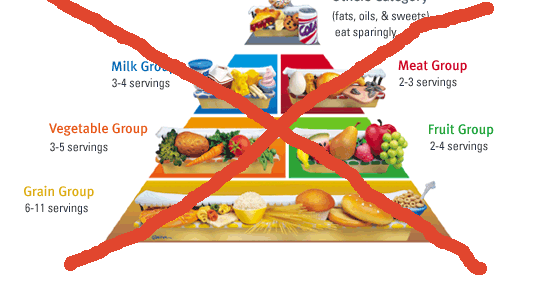
It’s a no brainer. Just play safe

It is a common argument in many different contexts. In its strongest form, the claim is that the choice being argued for is unambiguously right, eliminates the possibility of a bad outcome at no cost. More plausibly, the claim is that one can trade the risk of something very bad for a certainty of something only a little bad. By agreeing to pay the insurance company a hundred dollars a year now you can make sure that if your house burns down you will have the money to replace it.

Doing that is sometimes is possible but, in an uncertain world, often not; you do not, cannot, know all the consequences of what you are doing. You may be exchanging the known risk of one bad outcome for the unknown risk of another.

Some examples:

Erythritol

Erythritol was the best of the sugar alcohols, substitutes tolerably well for sugar in cooking, has almost zero calories or glycemic load. For anyone worried about diabetes or obesity, using it instead of sugar is an obvious win. Diabetes and obesity are dangerous, sometimes life threatening.

Just play safe.

I did. Until an research came out offering evidence that it was not the best sugar alcohol but the worst:

    People with the highest erythritol levels (top 25%) were about twice as likely to have cardiovascular events over three years of follow-up as those with the lowest (bottom 25%). (Erythritol and cardiovascular events, NIH)

A single article might turn out to be wrong, of course; to be confident that erythritol is dangerous requires more research. But a single article was enough to tell me that using erythritol was not playing safe. I threw out the erythritol I had, then discovered that all the brands of “keto ice cream” — I was on a low glycemic diet and foods low in carbohydrates are also low in glycemic load — used erythritol as their sugar substitute.

Frozen bananas, put through a food processor or super blender along with a couple of ice cubes and some milk, cream, or yogurt, make a pretty good ice cream substitute.1 Or eat ice cream and keep down your weight or glycemic load by eating less of something else.

It’s safer.

Lethal Caution: The Butter/Margarine Story

For quite a long time the standard nutritional advice was to replace butter with margarine, eliminating the saturated fat that caused high cholesterol and hence heart attacks. It turned out to be very bad advice. Saturated fats may be bad for you — the jury is still out on that, with one recent survey of the evidence concluding that they have no effect on overall mortality — but transfats are much worse. The margarine we were told to switch to was largely transfats.2

“Consumption of trans unsaturated fatty acids, however, was associated with a 34% increase in all cause mortality”3

If that figure is correct, the nutritional advice we were given for decades killed several million people.


    1. Bananas get sweeter as they get riper so for either a keto or low glycemic diet, freeze them before they get too ripe.

    2. Some more recent margarines contain neither saturated fats nor transfats.

    3. “Intake of saturated and trans unsaturated fatty acids and risk of all cause mortality, cardiovascular disease, and type 2 diabetes: systematic review and meta-analysis of observational studies”, BMJ 2015; 351 doi: https://doi.org/10.1136/bmj.h3978 (Published 12 August 2015)
August 17, 2023

“… the Chinese invented gunpowder and had it for six hundred years, but couldn’t see its military applications and only used it for fireworks”

Filed under: China, History, Military, Science, Weapons — Tags: , , , , , — Nicholas @ 05:00

John Psmith would like to debunk the claim in the headline here:

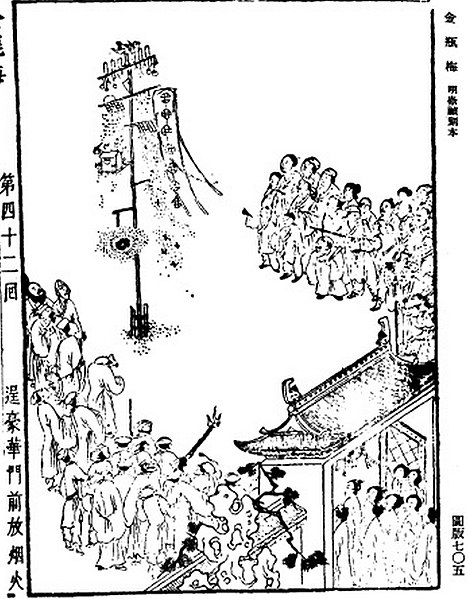
An illustration of a fireworks display from the 1628-1643 edition of the Ming dynasty book Jin Ping Mei (1628-1643 edition).
Reproduced in Joseph Needham (1986). Science and Civilisation in China, Volume 5: Chemistry and Chemical Technology, Part 7: Military Technology: The Gunpowder Epic. Cambridge University Press. Page 142.

There’s an old trope that the Chinese invented gunpowder and had it for six hundred years, but couldn’t see its military applications and only used it for fireworks. I still see this claim made all over the place, which surprises me because it’s more than just wrong, it’s implausible to anybody with any understanding of human nature.

Long before the discovery of gunpowder, the ancient Chinese were adept at the production of toxic smoke for insecticidal, fumigation, and military purposes. Siege engines containing vast pumps and furnaces for smoking out defenders are well attested as early as the 4th century. These preparations often contained lime or arsenic to make them extra nasty, and there’s a good chance that frequent use of the latter substance was what enabled early recognition of the properties of saltpetre, since arsenic can heighten the incendiary effects of potassium nitrate.

By the 9th century, there are Taoist alchemical manuals warning not to combine charcoal, saltpetre, and sulphur, especially in the presence of arsenic. Nevertheless the temptation to burn the stuff was high — saltpetre is effective as a flux in smelting, and can liberate nitric acid, which was of extreme importance to sages pursuing the secret of longevity by dissolving diamonds, religious charms, and body parts into potions. Yes, the quest for the elixir of life brought about the powder that deals death.

And so the Chinese invented gunpowder, and then things immediately began moving very fast. In the early 10th century, we see it used in a primitive flame-thrower. By the year 1000, it’s incorporated into small grenades and into giant barrel bombs lobbed by trebuchets. By the middle of the 13th century, as the Song Dynasty was buckling under the Mongol onslaught, Chinese engineers had figured out that raising the nitrate content of a gunpowder mixture resulted in a much greater explosive effect. Shortly thereafter you begin seeing accounts of truly destructive explosions that bring down city walls or flatten buildings. All of this still at least a hundred years before the first mention of gunpowder in Europe.

Meanwhile, they had also been developing guns. Way back in the 950s (when the gunpowder formula was much weaker, and produced deflagarative sparks and flames rather than true explosions), people had already thought to mount containers of gunpowder onto the ends of spears and shove them in peoples’ faces. This invention was called the “fire lance”, and it was quickly refined and improved into a single-use, hand-held flamethrower that stuck around until the early 20th century.1 But some other inventive Chinese took the fire lances and made them much bigger, stuck them on tripods, and eventually started filling their mouths with bits of iron, broken pottery, glass, and other shrapnel. This happened right around when the formula for gunpowder was getting less deflagarative and more explosive, and pretty soon somebody put the two together and the cannon was born.

All told it’s about three and a half centuries from the first sage singing his eyebrows, to guns and cannons dominating the battlefield.2 Along the way what we see is not a gaggle of childlike orientals marvelling over fireworks and unable to conceive of military applications. We also don’t see an omnipotent despotism resisting technological change, or a hidebound bureaucracy maintaining an engineered stagnation. No, what we see is pretty much the opposite of these Western stereotypes of ancient Chinese society. We see a thriving ecosystem of opportunistic inventors and tacticians, striving to outcompete each other and producing a steady pace of technological change far beyond what Medieval Europe could accomplish.

Yet despite all of that, when in 1841 the iron-sided HMS Nemesis sailed into the First Opium War, the Chinese were utterly outclassed. For most of human history, the civilization cradled by the Yellow and the Yangtze was the most advanced on earth, but then in a period of just a century or two it was totally eclipsed by the upstart Europeans. This is the central paradox of the history of Chinese science and technology. So … why did it happen?


    1. Needham says he heard of one used by pirates in the South China Sea in the 1920s to set rigging alight on the ships that they boarded.

    2. I’ve left out a ton of weird gunpowder-based weaponry and evolutionary dead ends that happened along the way, but Needham’s book does a great job of covering them.

August 10, 2023

“Ultra-Processed Food” is so bad that we need extra scare-quotes!!

Filed under: Books, Food, Health, Politics — Tags: , , , , — Nicholas @ 03:00

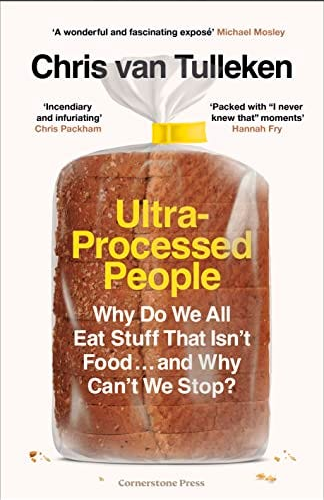
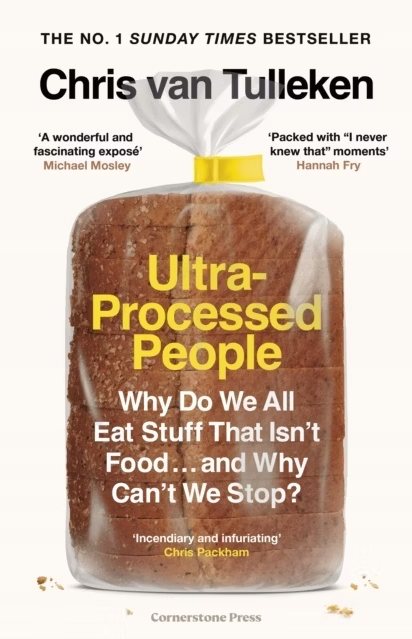
Christopher Snowden seems, for some inexplicable reason, to be skeptical about the hysterical warnings of people like Chris van Tulleken in his recent book Ultra-Processed People: Who Do We All Eat Stuff That Isn’t Food … and Why Can’t We Stop?

If Jamie Oliver is the fun police, Chris van Tulleken is the Taliban. The selling point of books like Ultra-Processed People is the idea that everything you know is wrong. Van Tulleken, an infectious diseases doctor and television presenter, takes this to extremes. In this book, almost everybody is wrong, many of them are corrupt and almost no one is to be trusted. Only Dr. van Tulleken, a handful of researchers and anyone who pays £25 to read this book knows the real truth. The problem is not sugar. The problem is not carbs. Artificial sweeteners don’t work. Exercise doesn’t work. Willpower doesn’t work. Every scientist who has published research contradicting his theory is in the pay of the food industry or — how’s this for an ad hominem argument? — has cited studies by people who are. The British Nutrition Foundation, the Academy of Nutrition and Dietetics, the British Dietetic Association, the Centre for Social Justice, the Institute of Economic Affairs, Tortoise Media, Diabetes UK, Cancer Research UK and the British Heart Foundation are all tainted by food industry funding. Even Jamie Oliver – Saint Jamie, the Sage of Essex — is guilty by his association with Tesco and Deliveroo, and because he makes ultra-processed food (“albeit fairly marginal items”).

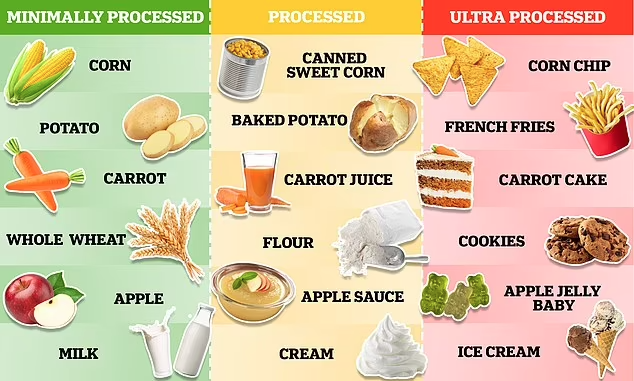
It is this ultra-processed food (UPF), argues van Tulleken, that is the real cause of obesity and diet-related diseases in the world today. Food is classified as UPF if it is wrapped in plastic and contains an ingredient you don’t have in your kitchen. This includes everything from mustard to Magnums but, counter-intuitively, doesn’t include sugar, salt or fat. Van Tulleken doesn’t quite put it like this but, in effect, anything you make at home is healthy while nearly anything you buy in a supermarket, aside from raw ingredients, is bad for you.

The evidence for this striking proposition can be briefly outlined, and van Tulleken deals with it swiftly in a single chapter. Firstly, there are a number of studies using observational epidemiology which find a correlation between diets which are high in UPF and various ailments, including not only obesity, heart disease and type 2 diabetes, but also dementia, depression, cancer and more. Secondly, there is a randomised controlled trial which gave a small group of volunteers a two-week diet of either ultra-processed food or minimally processed food. The nutritional profile of each diet was similar (the same levels of salt, sugar, etc.) and the volunteers were offered twice as much as they needed to maintain a healthy weight. The people on the ultra-processed diet ended up eating 500 calories more than the people on the minimally processed diet and put on nearly a kilogram of weight.

The randomised controlled trial was published in 2019 and already has over 1,200 academic citations. Van Tulleken considers it to be extraordinarily robust, but it only really stands out because the general standard of dietary research is so poor. The volunteers were not given ultra-processed versions of the same meals. They were given totally different meals, plus very different snacks, and they could eat as much as they wanted for free. What does it actually demonstrate? Arguably, all it shows is that if you give people unlimited quantities of tasty food, they will eat more of it than if you give them blander food. Van Tulleken assures us that “the two diets were equally delicious”, but this would seem to contradict his claims elsewhere that UPF is “hyper-palatable”, delicious and irresistible.

As for the epidemiological correlations, what is it that actually correlates? UPF is an incredibly broad category encompassing most foods that are known as HFSS (high in fat, sugar or salt) and many more besides. People who eat a lot of UPF tend to have lower incomes, which correlates with all sorts of health conditions. In the study van Tulleken cites to demonstrate that UPF causes cancer, the people who ate the most UPF had the highest smoking rate and were least likely to be physically active. Epidemiologists attempt to control for such factors, but with so much going on in the data, it is an heroic assumption to think that the effect of food processing can be teased out from the effects of fat, sugar, salt, obesity, smoking, stress, exercise and numerous socio-economic influences.

June 28, 2023

“I’ll forgive Dartnell for not writing ‘Lest Darkness Fall’ For Dummies

Filed under: Books, Europe, History, Science, Technology — Tags: , , , , , — Nicholas @ 09:25

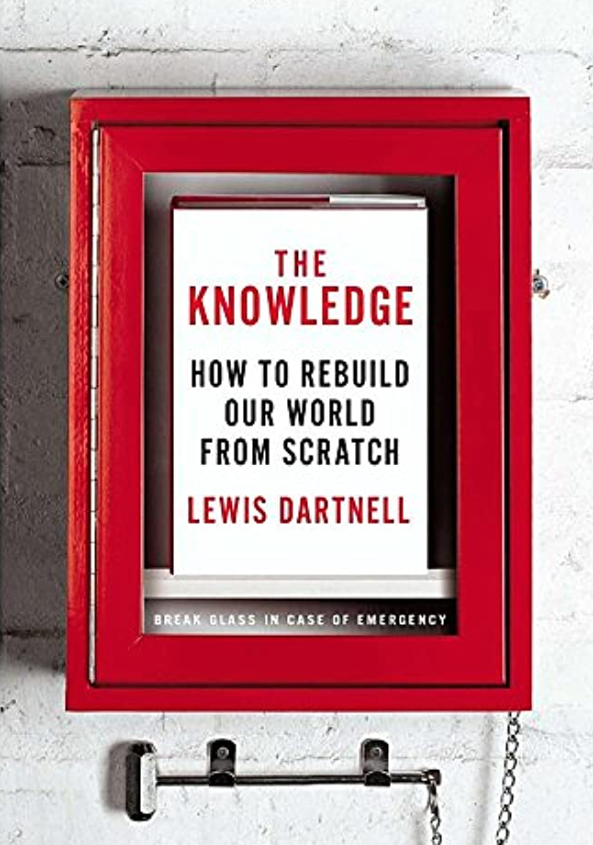
Jane Psmith reviews The Knowledge by Lewis Dartnell, despite it not being quite what she was hoping it would be:

This is not the book I wanted to read.

The book I wanted to read was a detailed guide to bootstrapping your way to industrial civilization (or at least antibiotics) if you should happen to be dumped back in, say, the late Bronze Age.1 After all, there are plenty of technologies that didn’t make it big for centuries or millennia after their material preconditions were met, and with our 20/20 hindsight we could skip a lot of the dead ends that accompanied real-world technological progress.

Off the top of my head, for example, there’s no reason you couldn’t do double-entry bookkeeping with Arabic numerals as soon as you have something to write on, and it would probably have been useful at any point in history — just not useful enough that anyone got really motivated to invent it. Or, here, another one: the wheelbarrow is just two simple machines stuck together, is substantially more efficient than carrying things yourself, and yet somehow didn’t make it to Europe until the twelfth or thirteenth century AD. Or switching to women’s work, I’ve always taken comfort in the fact that with my arcane knowledge of purling I could revolutionize any medieval market.2 And while the full Green Revolution package depends on tremendous quantities of fertilizer to fuel the grains’ high yields, you could get some way along that path with just knowledge of plant genetics, painstaking record-keeping, and a lot of hand pollination. In fact, with a couple latifundia at your disposal in 100 BC, you could probably do it faster than Norman Borlaug did. But speaking of fertilizer, the Italian peninsula is full of niter deposits, and while your revolutio viridis is running through those you could be figuring out whether it’s faster to spin up a chemical industry to the point you could do the Haber-Bosch process at scale or to get to the Peruvian guano islands. (After about thirty seconds of consideration my money’s on Peru, though it’s a shame we’re trying to do this with the Romans since they were never a notably nautical bunch and 100 BC was a low point even for them; you’ll have to wipe out the Mediterranean pirates early and find Greek or Egyptian shipwrights.) And another question: can you go straight from the Antikythera mechanism to the Jacquard machine, and if not what do you need in between? Inquiring minds want to know.3

But I’ll forgive Dartnell for not writing Lest Darkness Fall” For Dummies, which I’ll admit is a pretty niche pitch, because The Knowledge is doing something almost as cool.4 Like my imaginary book, it employs a familiar fictional conceit to explain how practical things work. Instead of time travel, though, Dartnell takes as his premise the sudden disappearance (probably plague, definitely not zombies) of almost all of humanity, leaving behind a few survivors but all the incredible complexity of our technological civilization. How would you survive? And more importantly, how would you rebuild?


    1. I read the Nantucket Trilogy at an impressionable age.

    2. Knitting came to Europe in the thirteenth century, but the complementary purl stitch, which is necessary to create stretchy ribbing, didn’t. If you’ve ever wondered why medieval hosen were made of woven fabric and fit the leg relatively poorly, that’s why. When purling came to England, Elizabeth I paid an exorbitant amount of money for her first pair of silk stockings and refused to go back to cloth.

    3. Obviously you would also need to motivate people to actually do any of these things, which is its own set of complications — Jason Crawford at Roots of Progress has a great review of Robert Allen’s classic The British Industrial Revolution in Global Perspective that gets much deeper into why no one actually cared about automation and mechanization — but please allow me to imagine here.

    4. Please do not recommend How To Invent Everything, which purports to do something like this. It doesn’t go nearly deep enough to be interesting, let alone useful. You know, in the hypothetical that I’m sent back in time.

May 23, 2023

Mustard: A Spicy History

Filed under: Cancon, Europe, Food, France, Greece, Health, History, India, USA — Tags: , , , , — Nicholas @ 02:00

The History Guy: History Deserves to be Remembered
Published 15 Feb 2023

In 2018 The Atlantic observed “For some Americans, a trip to the ballpark isn’t complete without the bright-yellow squiggle of French’s mustard atop a hot dog … Yet few realize that this condiment has been equally essential — maybe more so — for the past 6,000 years.”
(more…)

May 12, 2023

The crusade against (insert scare quotes here) Ultra-Processed Food

Filed under: Europe, Food, Health, Politics — Tags: , , , — Nicholas @ 03:00

In The Critic, Christopher Snowden traces the orthorexist journey from warning about the dangers of saturated fat, to protesting against sugar content in foods, through an anti-carbohydrate phase to today’s crusade against “Ultra-Processed Food”:

It is barely ten years since Denmark repealed its infamous “fat tax”. It was supposed to be a world-leading intervention to tackle obesity but it proved to be hugely unpopular and lasted just 15 months.

It seems almost strange now that it targeted saturated fat. In hindsight, it was the last gasp of the crusade against fat before all eyes turned to sugar. The anti-sugar crusade seemed to come out of nowhere in 2014 with the emergence of the tiny but phenomenally successful pressure group Action on Sugar. Within three years, the British government had announced a tax on sugary drinks, but by then the anti-sugar movement was morphing into a campaign against carbohydrates. That began to run out of steam a couple of years ago when many of the leading anti-carb personalities found that they could get more attention — and, dare I say, money — from being “sceptical” about COVID-19 vaccines.

They come and go, these food fads, but they all rely on the belief that there is something in the food supply that is uniquely dangerous, something hitherto unknown that only independent free thinkers can see is the cause of all our problems.

The new dietary villain is “ultra-processed food” (UPF), a concept that didn’t even exist until a few years ago but is now everywhere. There have been two books about UPF published in recent weeks and a third — Henry Dimbleby’s Ravenous — dedicated a lot of space to it.

The simple definition of ultra-processed food as used by those who are concerned about them (I am not making this up to make them sound silly) is anything that is “wrapped in plastic and has at least one ingredient you wouldn’t find in a home kitchen”. Since you probably don’t have emulsifiers, preservatives and artificial sweeteners in your kitchen, this rules out a lot of products.

The argument is that these products make you fat and should be avoided. The evidence for this comes from a study published in 2019. In a randomised controlled trial, ten people were given an ultra-processed diet and ten other people were given an unprocessed diet. Both diets were similar in their overall sugar, fat, protein and salt content, although the meals themselves were very different.

The participants were given all the food for free and they could eat as much as wanted. The people on the ultra-processed diet ended up eating 500 calories per day more than the other group and, after two weeks, had put on nearly a kilogram of weight. By contrast, the people on the unprocessed diet lost weight.

If you look at the food that was offered to the two groups, the explanation is obvious. The meals and snacks available to the UPF group were delicious whereas the food given to the other group was rather Spartan and was unlikely to make anybody ask for a second helping. If you give people tasty food for free, they will tend to eat more of it.

April 23, 2023

There’s a spectre haunting your pantry – the spectre of “Ultra-Processed Food”

Christopher Snowden responds to some of the claims in Chris van Tulleken’s book Ultra-Processed People: Why Do We All Eat Stuff That Isn’t Food … And Why Can’t We Stop?:

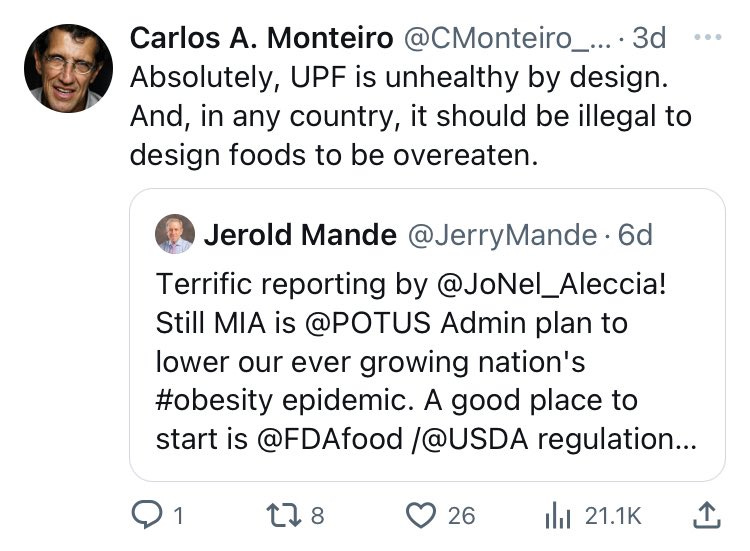
Ultra-processed food (UPF) is the latest bogeyman in diet quackery. The concept was devised a few years ago by the Brazilian academic Carlos Monteiro who also happens to be in favour of draconian and wildly impractical regulation of the food supply. What are the chances?!

Laura Thomas has written some good stuff about UPF. The tldr version is that, aside from raw fruit and veg, the vast majority of what we eat is “processed”. That’s what cooking is all about. Ultra-processed food involves flavourings, sweeteners, emulsifiers etc. that you wouldn’t generally use at home, often combined with cooking processes such as hydrogenation and hydrolysation that are unavailable in an ordinary kitchen. In short, most packaged food sold in shops is UPF.

Does this mean a cake you bake at home (“processed”) is less fattening than a cake you buy from Waitrose (“ultra-processed”)? Probably not, so what is the point of the distinction? This is where the idea breaks down. All the additives used by the food industry are considered safe by regulators. Just because the layman doesn’t know what a certain emulsifier is doesn’t mean it’s bad for you. There is no scientific basis for classifying a vast range of products as unhealthy just because they are made in factories. Indeed, it is positively anti-scientific insofar as it represents an irrational fear of modernity while placing excessive faith in what is considered “natural”. There is also an obvious layer of snobbery to the whole thing.

Taken to an absurd but logical conclusion, you could view wholemeal bread as unhealthy so long as it is made in a factory. When I saw that CVT has a book coming out (of course he does) I was struck by the cover. Surely, I thought, he was not going to have a go at brown bread?

But that is exactly what he does.

    During my month-long UPF diet, I began to notice this softness most starkly with bread — the majority of which is ultra-processed. (Real bread, from craft bakeries, makes up just 5 per cent of the market …

His definition of “real bread” is quite revealing, is it not?

    For years, I’ve bought Hovis Multigrain Seed Sensations. Here are some of its numerous ingredients: salt, granulated sugar, preservative: E282 calcium propionate, emulsifier: E472e (mono- and diacetyltartaric acid esters of mono- and diglycerides of fatty acids), caramelised sugar, ascorbic acid.

Let’s leave aside the question of why he only recently noticed the softness of fake bread if he’s been eating it for years. Instead, let’s look at the ingredients. Like you, I am not familiar with them all, but a quick search shows that E282 calcium propionate is a “naturally occurring organic salt formed by a reaction between calcium hydroxide and propionic acid”. It is a preservative.

E472e is an emulsifier which interacts with the hydrophobic parts of gluten, helping its proteins unfold. It adds texture to the bread.

Ascorbic acid is better known as Vitamin C.

Caramelised sugar is just sugar that’s been heated up and is used sparingly in bread; Jamie Oliver puts more sugar in his homemade bread than Hovis does.

Hovis Multigrain Seed Sensations therefore qualifies as UPF but it is far from obvious why it should be regarded as unhealthy. According to CVT, the problem is that it is too easy to eat.

    The various processes and treatment agents in my Hovis loaf mean I can eat a slice even more quickly, gram for gram, than I can put away a UPF burger. The bread disintegrates into a bolus of slime that’s easily manipulated down the throat.

Does it?? I’ve never tried this brand but it doesn’t ring true to me. It’s just bread. Either you toast it or you use it for sandwiches. Are there people out there stuffing slice after slice of bread down their throats because it’s so soft?

    By contrast, a slice of Dusty Knuckle Potato Sourdough (£5.99) takes well over a minute to eat, and my jaw gets tired.

Far be it from me to tell anyone how to spend their money but, in my opinion, anyone who spends £6 on a loaf of bread is an idiot. Based on his description, the Dusty Knuckle Potato Sourdough is awful anyway. Is that the idea? Is the plan to make eating so jaw-achingly unenjoyable that we do it less? Is the real objection to UPF simply that it tastes nice?

April 3, 2023

The poison garden of Alnwick

Filed under: Britain, Environment, History — Tags: , , , — Nicholas @ 02:00

Tom Scott
Published 29 May 2017

Inside the beautiful Alnwick Garden, behind a locked gate, there’s the Poison Garden: it contains only poisonous plants. Trevor Jones, head gardener, was kind enough to give a guided tour!

For more information about visiting the Castle, Garden, and poison garden: https://alnwickgarden.com/

(And yes, it’s pronounced “Annick”.)
(more…)

March 15, 2023

Irish Soda Bread from 1836

Filed under: Britain, Europe, Food, History, USA — Tags: , , , , — Nicholas @ 04:00

Tasting History with Max Miller
Published 14 Mar 2023
(more…)

November 1, 2022

What is actually inside MSG and is it Safe? | Food Unwrapped

Filed under: Food, Health — Tags: , , — Nicholas @ 02:00

Food Unwrapped
Published 26 Feb 2022

Jimmy heads to Thailand to see how MSG is made and get some expert opinions on if MSG is safe to eat.
(more…)

October 1, 2022

“Father” – Fritz Haber – Sabaton History 113 [Official]

Filed under: Germany, History, Media, Military, Science, WW1 — Tags: , , , , , , , — Nicholas @ 04:00

Sabaton History
Published 29 Sept 2022

Fritz Haber is a controversial historical figure. He was responsible for scientific advances that fed billions, yet he created weapons of mass destruction that filled millions with terror. This is his story.
(more…)

September 20, 2022

QotD: Why purple was such a rare colour in the flags of the pre-industrial era

Filed under: Europe, History, Quotations, Science — Tags: , , , , — Nicholas @ 01:00

Today, we are used to the effectively infinite range of colors offered by synthetic dyes, but for pre-modern dye-workers, they were largely restricted to colors that could be produced from locally available or imported dyestuffs. If you wanted a given color of fabric, you needed to be able to find something in the natural world which, when broken down could give you a chemical pigment that you could transfer to your fabric in a durable way. That put real limits on the colors which could be dyed and the availability of those colors. Some colors simply couldn’t be produced this way – a good example were golden or metallic colors. If something in a dress was to be truly golden (and not merely yellow), the only way to do that prior to synthetic dyes and paints was to use actual gold, weaving small strands of ultra-thin gold wire into the cloth or embroidering designs with it. Needless to say, that was something only done by the very wealthy. Alternately, if the dye for a given hue or color came from something rare or foreign or difficult to process (for instance, in all three cases, Tyrian or royal purple, which came from the murex sea snails – if you have ever wondered why no country has purple as a national color this is why, before synthetic dyes, coloring your flags and uniforms purple would have been bonkers expensive), then it was going to be expensive and rare and there just wasn’t much you could do about that.

Bret Devereaux, “Collections: Clothing, How Did They Make It? Part IVa: Dyed in the Wool”, A Collection of Unmitigated Pedantry, 2021-04-02.

April 19, 2022

QotD: “Bog iron” in ancient and medieval society

Filed under: Europe, History, Quotations, Technology — Tags: , , , , , — Nicholas @ 01:00

There are quite a lot of ores of iron, but not all of them could be usefully processed with ancient or medieval technology. The most commonly used iron ore was hematite (Fe2O3), with goethite (HFeO2) and limonite (FeO(OH)·nH2O) close behind. Rarer, but still used was magnetite (Fe3O4) and siderite (FeCO3). All of these can occur in big rock deposits, but may also occur as “bog iron” where oxidation occurs in acidic environments (in swamps and bogs) leading to the formation of small clumps of iron-rich material. Many of these ores can be spotted visually by someone who knows what they are doing; hematite can be blackish to reddish-brown but leaves tell-tale red streaks (of rust); goethite’s black-brown color is also fairly recognizable, as is limonite with its burnt yellow-orange hue. We’ll come back to these ores a few times both this week and next, because while they can all yield iron, some of them yield that iron easier than others.

One distinction here is between bog iron and iron in ore deposits. Bog iron is formed when ground-water picks up iron from iron-ore deposits, where that iron is then oxidized under acidic conditions to form chunks of iron minerals (goethite, magnetite, hematite, etc.), typically in smallish chunks. Bog iron is much easier to smelt because it contains fewer impurities than iron ore in rock deposits, but the quantity of iron available from bog iron is relatively low (although actually renewable, unlike mines; a bog can be harvested for iron again after a few decades as the processes which produce the bog iron continue). Because of its low output, bog iron tends to be an important part of the iron supply only when production is relatively low, such as during the Pre-Roman Iron Age in Europe, or the early medieval period.

But what I want to stress here at the outset is that while the local variety of iron may vary based on conditions, iron ores are sufficiently common that prior to the industrial revolution, it wasn’t generally necessary to trade or transport them over long distances because most areas have deposits. There are some exceptions (Japan is notoriously mineral poor – my limited geological understanding is that this is common in volcanic land formations – and while it does have some iron deposits, they are few and relatively small), but for the most part, getting iron ore was not hard. As we’ll see, timber availability was actually often a more pressing limitation on iron exploitation than the ore itself […]

Bret Devereaux, “Iron, How Did They Make It? Part I, Mining”, A Collection of Unmitigated Pedantry, 2020-09-18.

November 30, 2021

The Surprising and Forgotten History of Helium

Filed under: Britain, History, Science, Technology, USA — Tags: , , , , , — Nicholas @ 02:00

The History Guy: History Deserves to Be Remembered
Published 28 Jun 2019

Humanity didn’t recognize the second most abundant element in the known universe until the nineteenth century. A significant source on earth wasn’t discovered until 1903. The discovery and understanding of the element helium played a central role in some of the most important scientific discoveries of the modern era, and helium continues to change the world today.

This is original content based on research by The History Guy. Images in the Public Domain are carefully selected and provide illustration. As images of actual events are sometimes not available, images of similar objects and events are used for illustration.

All events are portrayed in historical context and for educational purposes. No images or content are primarily intended to shock and disgust. Those who do not learn from history are doomed to repeat it. Non censuram.

Find The History Guy at:

Patreon: https://www.patreon.com/TheHistoryGuy

The History Guy: History Deserves to Be Remembered is the place to find short snippets of forgotten history from five to fifteen minutes long. If you like history too, this is the channel for you.

Awesome The History Guy merchandise is available at:
teespring.com/stores/the-history-guy

Script by THG

#thehistoryguy #helium #science

October 6, 2021

Did Penicillin Win World War Two? – WW2 Special

Filed under: Britain, Health, History, Military, Science, USA, WW2 — Tags: , , , , — Nicholas @ 04:00

World War Two
Published 5 Oct 2021

We all know that penicillin is a wonder drug, it shortened the war, and assured Allied victory. Or did it, is that just a myth? The Allies are certainly much further ahead than the Axis, but even with accelerated wartime development, will it come into service quick enough to make a difference?
(more…)

« Newer PostsOlder Posts »

Powered by WordPress