The Great War
Published on 16 Dec 2017Ask your questions here: http://outofthetrenches.thegreatwar.tv
December 17, 2017
Beer Brewing – Roger Casement – Surviving Aces I OUT OF THE TRENCHES
November 11, 2017
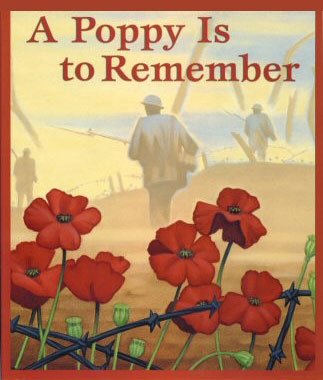
In memoriam
A simple recognition of some of our family members who served in the First and Second World Wars:
The Great War
Private William Penman, Scots Guards, died 16 May, 1915 at Le Touret, age 25

(Elizabeth’s great uncle)- Private Archibald Turner Mulholland, Argyll & Sutherland Highlanders, mortally wounded 25 September, 1915 at Loos, age 27
(Elizabeth’s great uncle) - Private David Buller, Highland Light Infantry, died 21 October, 1915 at Loos, age 35
(Elizabeth’s great grandfather) - Private Harold Edgar Brand, East Yorkshire Regiment. died 4 June, 1917 at Tournai.
(My first cousin, three times removed) - Private Walter Porteous, Durham Light Infantry, died 4 October, 1917 at Passchendaele, age 18
(my great uncle) - Corporal John Mulholland, Argyll & Sutherland Highlanders, wounded 2 September, 1914 (shortly before the First Battle of the Aisne), wounded again 29 June, 1918, lived through the war.
(Elizabeth’s great uncle)
The Second World War
- Flying Officer Richard Porteous, RAF, survived the defeat in Malaya and lived through the war
(my great uncle) - Able Seaman John Penman, RN, served in the Defensively Equipped Merchant fleet on the Murmansk Run (and other convoy routes), lived through the war
(Elizabeth’s father) - Private Archie Black (commissioned after the war and retired as a Major), Gordon Highlanders, captured at Singapore (aged 15) and survived a Japanese POW camp
(Elizabeth’s uncle) - Elizabeth Buller, “Lumberjill” in the Women’s Land Army in Scotland through the war.
(Elizabeth’s mother) - Trooper Leslie Taplan Russon, 3rd Royal Tank Regiment, died at Tobruk, 19 December, 1942 (aged 23).
A recently discovered relative. Leslie was my father’s first cousin, once removed (and therefore my first cousin, twice removed).
For the curious, the Commonwealth War Graves Commission and the Royal British Legion provide search engines you can use to look up your family name. The RBL’s Every One Remembered site shows you everyone who died in the Great War in British or Empire service (Canadians, Australians, New Zealanders, South Africans and other Imperial countries). The CWGC site also includes those who died in the Second World War.
In Flanders fields the poppies blow
Between the crosses row on row,
That mark our place; and in the sky
The larks, still bravely singing, fly
Scarce heard amid the guns below.We are the Dead. Short days ago
We lived, felt dawn, saw sunset glow,
Loved and were loved, and now we lie
In Flanders fields.Take up our quarrel with the foe:
To you from failing hands we throw
The torch; be yours to hold it high.
If ye break faith with us who die
We shall not sleep, though poppies grow
In Flanders fields.Lieutenant Colonel John McCrae, MD Canadian Army Medical Corps (1872-1918)
October 31, 2017
Strategic Bombing on the Western Front I THE GREAT WAR Special
The Great War
Published on 30 Oct 2017Bismarck’s Channel: https://www.youtube.com/user/Bis18marck70/featured
With the development of planes shortly before the Great War, the concept of strategic bombing made its debut in this conflict. Each country had different doctrines with regards to strategic bombing, and in this video we’ll be looking at British, French and German doctrines regarding the bombing of civilian targets and supply lines, as well as considering their effectiveness.
October 19, 2017
Iran vs Saudi Arabia (2017)
Binkov’s Battlegrounds
Published on 13 Oct 2017Find out how a match-up between two middle east powerhouses would unravel. With a special accent on a hypothetical scenario without other countries being a factor
September 12, 2017
Inside A British WW1 Airbase – Stow Maries Great War Aerodrome I THE GREAT WAR Special
Published on 11 Sep 2017
Visit Stow Maries Great War Aerodrome in Essex: http://www.stowmaries.org.uk/
The Royal Flying Corps and later the Royal Air Force maintained aerodromes and airfields around Great Britain for defence against German Zeppelin and Gotha Bomber raids. But would a WW1 aerodrome actually work?
September 5, 2017
Georges Guynemer – The Flying Icon of France I WHO DID WHAT IN WW1?
Published on 4 Sep 2017
George Guynemer was one of the top scoring flying aces of the entire First World War with 54 aerial victories. In his lifetime, he was celebrated as a hero, an icon and an inspiration in France. When he went missing 100 years ago, in September 1917, it was a great shock to the nation and to this day his death is not fully understood.
July 27, 2017
QotD: The Blitz
And now this stage set was illumined by incendiary bombs — their white glowings as they came down, their yellow flashes, and the rings of fire from the buildings they’d ignited. And the barrage balloons, shining bright and pink, in the clouds of pink smoke from artillery and flares. And the aircraft themselves, glowing pink, in their remorseless parade — giving the illusion they were close enough to touch. And through it all, here and there, an opening in this shroud, and a star twinkling; an old familiar star.
Seventy-five years ago; three generations. Here, you can mark them off with a ruler: 1965, 1990, 2015. And soon, not one living to remember. …
And the noise of the explosions, and the grinding of the aeroplane propellers, as if they were churning through the sea; the lady heard all this. Heard the sirens, the sirens, the sirens; heard the “all clear.” And everywhere the shouts of firemen, and of the working-class heroes in the cratered streets, dousing the flames with dirt and sand.
“It was so beautiful.”
From September to May, it was like this almost every night, and often in the daytime. It became a routine: “Oh bother, it’s the Luftwaffe again.” Fear was in the air, but compressed under boredom, and sometimes in the heat of it the fear went away. “How long can they keep this up?” Perhaps, forever.
One night, an odd thing happened. A row of old tenements came flopping down like cards, but one plumbing column remained standing. There was a man sitting on the toilet at the top, with his trousers at his knees. It was ludicrously comic. In the middle of all this pain and death, people saw him and chuckled. Somehow, eventually, he slithered down the pipes, leaping into arms as the column tilted over. Made a joke of it, the man did, when he saw his wife alive; said he was thinking about complaining to the landlord.
And people were emerging everywhere from the rubble — bloody and hurt, though patient and good-willed. Others digging, frenetically for the most part. Only names on their lips, but tears in their eyes; expecting to find corpses. “The bricklayer sounds,” the crunch of plaster, the creak of joists. But no screaming, with so much work to do. Ears being used as stethoscopes.
“We were all trying to be British,” the lady said. “One mustn’t get it started. One mustn’t be the first to wail.”
Bodies coming up from the ground; people suddenly standing. It was the end of the world, and she was watching the resurrections.
David Warren, “Seen & unseen”, Essays in Idleness, 2015-10-08.
July 24, 2017
Great Blunders of WWII: The German Blunder At Dunkirk 1
Published on 4 Nov 2016
From the History Channel DVD series “Great Blunders of WWII”
July 23, 2017
Fake Paris – Female Soldiers – Naval Warfare I OUT OF THE TRENCHES
Published on 22 Jul 2017
It’s time for the Chair of Wisdom again and this week Indy talks about fake Paris, female soldiers and the rules of naval warfare.
July 22, 2017
Dunkirk Myth vs. Reality – Operation Dynamo
Published on 7 Jul 2017
The evacuation of British, Belgian, and French troops at Dunkirk – Operation Dynamo – was a crucial event in the early stages of the Second World War. Although the Allies were ultimately severely beaten in the Battle of France, the events at Dunkirk were mostly portrayed and perceived as a victory for the British. Quite naturally various myths surround this event.
» SOURCES «
Palmer, Alice: Dunkirk: The Defeat That Inspired a Nation
http://repository.wellesley.edu/cgi/viewcontent.cgi?article=1014&context=library_awardsAlexander, Martin S.: French grand strategy and defence preparations. In: Cambridge History of the Second World War, Volume I
Frieser, Karl-Heinz: The war in the West, 1939-1940: an unplanned Blitzkrieg. In: Cambridge History of the Second World War, Volume I
Amazon.com link (affiliate): http://amzn.to/2tuFtuMGardner, W.J.R. Gardner: The Evacuation from Dunkirk: ‘Operation Dynamo’, 26 May-June 1940 (Naval Staff Histories)
Amazon.com link (affiliate): http://amzn.to/2uoqMFVHistory of The Association of Dunkirk Little Ships
http://www.adls.org.uk/t1/content/history-association-dunkirk-little-shipsMrs. Miniver
https://en.wikipedia.org/wiki/Mrs._Miniver
June 6, 2017
Where was the Luftwaffe on D-Day? – German Response to Operation Overlord, Normandy
Published on 26 May 2017
The 73 Anniversary of D-Day is nearly upon us so let us talk about the Luftwaffe‘s involvement in the Battle of Normandy!
May 29, 2017
Falklands War – Argentine Perspective – An Inevitable Defeat? (Guerra de las Malvinas)
Published on 12 Apr 2016
The Falklands War (Guerra de las Malvinas) in 1982 as seen by many as an inevitable defeat for Argentina, but taking a closer look at the preparations or better the lack of preparation on the Argentine side reveals that the British could have faced a far stronger opposition and might even had been defeated at least in their initial attacks. This video could also be seen as a how NOT to guide.
May 8, 2017
Spanish Civil War – Lessons NOT Learned – The British, French & US
Published on 28 Mar 2017
The Spanish Civil War (1936-1939) was probably the most significant war between the First and the Second World War. [M]any important lessons were learned and NOT learned by the British, French, US, German, Italian and Soviet Forces.
Military History Visualized provides a series of short narrative and visual presentations like documentaries based on academic literature or sometimes primary sources. Videos are intended as introduction to military history, but also contain a lot of details for history buffs. Since the aim is to keep the episodes short and comprehensive some details are often cut.
April 30, 2017
Fight For Air Supremacy – Bloody April 1917 I THE GREAT WAR Special feat. Real Engineering
Published on 29 Apr 2017
Check out Real Engineering and their video about WW1 airplanes: https://www.youtube.com/watch?v=MI08NGCgISE
Meet us and see original WW1 airplanes: http://bit.ly/TGWStowMaries
“Bloody April” was the result of two competing aviation strategies: The more defence oriented German Luftstreitkräfte and the more offensive oriented British Royal Flying Corps. The RFC needed air reconnaissance for the Battle of Arras and the Germans needed to deny them them. With the superior German Albatross D.III fighters, the German Jagdstaffeln inflicted heavy losses on the RFC.
February 26, 2017
Disc Grenade – Camel Corps – Austro-Hungarian Heroes I OUT OF THE TRENCHES
Published on 25 Feb 2017
Indy sits in a French Chair this time and answers your questions about World War 1. This week we talk about the German disc grenades and the heroes that were celebrated in Austria-Hungary.