
Forgotten Weapons
Published on 9 Apr 2019This Hotchkiss cannon and its accessories are lot #1116 in the upcoming April 2019 Morphy auction:
https://www.forgottenweapons.com/hotc…
Benjamin Hotchkiss was an American artillery designer who moved to Paris in 1867 in hopes of building a business for his improvements in artillery shells. He experienced the Franco-Prussian War in 1870, and understood the failure of the French Mitrailleuse multi-barrel volley guns. In his opinion, an effective rapid-fire weapon needed to fire explosive projectiles to have a real effect at extended range (unlike the Mitrailleuse which fired simple rifle bullets). So being the inventive sort, he went ahead and designed just such a gun. His revolving cannon was sized for 1-pound (450g) 37mm explosive shells (although he would also produce armor-piercing and canister ammunition). The gun looks like a Gatling gun at first glance, but its mechanical operation is quite different.
The Hotchkiss cannon would become quite popular, with major purchases by the French and American navies as well as many other nations. They would serve into World War One, including some use repurposed as antiaircraft weapons. This particular example was captured by American forces in Cuba during the Spanish-American War, most likely from San Juan Hill. It is a magnificent example of the type, and with a fantastic historical provenance to match.
http://www.patreon.com/ForgottenWeapons
Cool Forgotten Weapons merch! http://shop.bbtv.com/collections/forg…
Contact:
Forgotten Weapons
PO Box 87647
Tucson, AZ 85754
May 14, 2019
Hotchkiss Revolving Cannon from San Juan Hill
QotD: Karl Marx, noted racist
For those who see Marx as their hero, there are a few historical tidbits they might find interesting. Nathaniel Weyl, himself a former communist, dug them up for his 1979 book, Karl Marx: Racist. For example, Marx didn’t think much of Mexicans. When the United States annexed California after the Mexican War, Marx sarcastically asked, “Is it a misfortune that magnificent California was seized from the lazy Mexicans who did not know what to do with it?” Engels shared Marx’s contempt for Mexicans, explaining: “In America we have witnessed the conquest of Mexico and have rejoiced at it. It is to the interest of its own development that Mexico will be placed under the tutelage of the United States.”
Marx had a racial vision that might be interesting to his modern-day black supporters. In a letter to Engels, in reference to his socialist political competitor Ferdinand Lassalle, Marx wrote: “It is now completely clear to me that he, as is proved by his cranial formation and his hair, descends from the Negroes who had joined Moses’ exodus from Egypt, assuming that his mother or grandmother on the paternal side had not interbred with a nigger. Now this union of Judaism and Germanism with a basic Negro substance must produce a peculiar product. The obtrusiveness of the fellow is also nigger-like.” Engels shared Marx’s racial philosophy. In 1887, Paul Lafargue, who was Marx’s son-in-law, was a candidate for a council seat in a Paris district that contained a zoo. Engels claimed that Lafargue had “one-eighth or one-twelfth nigger blood.” In a letter to Lafargue’s wife, Engels wrote, “Being in his quality as a nigger, a degree nearer to the rest of the animal kingdom than the rest of us, he is undoubtedly the most appropriate representative of that district.”
Marx was also an anti-Semite, as seen in his essay titled “On the Jewish Question,” which was published in 1844. Marx asked: “What is the worldly religion of the Jew? Huckstering. What is his worldly God? Money. … Money is the jealous god of Israel, in face of which no other god may exist. Money degrades all the gods of man — and turns them into commodities. … The bill of exchange is the real god of the Jew. His god is only an illusory bill of exchange. … The chimerical nationality of the Jew is the nationality of the merchant, of the man of money in general.”
Walter E. Williams, “What Do Leftists Celebrate?”, Townhall.com, 2017-05-10.
May 13, 2019
“[T]he most famous Zulu word on the planet was invented by a New York socialist in 1951”
I had no idea there was so much back-story to the song “The Lion Sleeps Tonight” aka “Wimoweh” aka “Mbube”, which had managed to be a hit for groups as diverse as Tight Fit, Robert John, the Tokens, the Weavers, Ilonka David-Biluska, Henri Salvador, and others:
Those words about “the jungle, the mighty jungle” sit so perfectly and indivisibly on those notes they sound like they’ve belonged to each other for all time. We know the lyric is George Weiss’, but where did the tune come from?
Well, it’s obvious, isn’t it? It was a “Zulu chant” — ie, “traditional – ie, “anonymous” — ie, out of copyright. Which meant someone else could put it back in copyright. In the Fifties and early Sixties, public demand for “authentic” “traditional” music created a huge windfall for savvy Tin Pan Alleymen. You take some half-forgotten folk dirge, tweak it here and there, and then copyright your version as a full-blown composition in its own right. Everyone was doing it: in the Fifties, “Frankie And Johnny”, “Auld Lang Syne”, “Greensleeves” and a bunch of other things that had been around forever were being copyrighted as brand new songs. Huge and Luge had done it with “Can’t Help Falling In Love”, né “Plaisir d’Amour“. So the first thing they wondered, when the Tokens showed up and began doing their Zulu impressions, was where did this “Wimoweh” thing come from anyway? They looked at the song credits: “Paul Campbell” and “Albert Stanton”.
Bingo! There was no such “Paul” and no such “Albert”. Mr “Campbell” was the name Pete Seeger and the Weavers would put on the sheet music when they’d recorded a folk tune and decided they’d like to cut themselves a piece of the songwriting action. And Mr “Stanton” was the name Al Brackman at the Richmond publishing house put on the music when he wanted to do the same for his bank account. Messrs “Campbell” and “Stanton” thus became successful mid-20th century songwriters who apparently hadn’t written anything since the mid-19th century. So the minute Huge and Luge saw those names on “Wimoweh” they knew it was a plum just ripe for a second picking. If it ever came to court, Huge, Luge and George Weiss’ defense would be yes, they’d plagiarized it not from Campbell & Stanton but from the same 19th century Zulu natives Campbell & Stanton had plagiarized it from. And, because Pete Seeger, the Weavers and the Richmond organization well understood that, they never did bring it to court. So there are two entirely separate mid-20th century pop songs by two entirely separate writing teams, one called “The Lion Sleeps Tonight”, the other called “Wimoweh“.
[…]
In South Africa, it was huge. “Mbube” became not just the name of a hit record but of an entire vocal style — a high-voiced lead over four-part bass-heavy harmony. That, in turn, evolved into “isicathamiya“, a smoother vocal style that descended to Ladysmith Black Mambazo and others, taking its cue from the injunction “Cothoza, bafana” — or “tread carefully, boys”. That’s to say, Zulu stomping is fine in the bush, but when you’re singing in dancehalls and restaurants in you’ve got to be a little more choreographically restrained, if only for the sake of the floorboards.
“Tread carefully, boys” is good advice for anyone in the music business. A few years after Solomon Linda and the Evening Birds made their hit record, it came to the notice of Pete Seeger, on the prowl for yet more “authentic” “traditional” “vernacular” “folk music” for the Weavers to make a killing with. He misheard “Mbube” and transcribed it as “Wimoweh“. That’s a great insight into the “authenticity” of the folk boom: the most famous Zulu word on the planet was invented by a New York socialist in 1951
U.S. Civil War – Surprising Soldiers – Extra History
Extra Credits
Published on 11 May 2019Historians have been learning that the US Civil War armies were a lot more diverse than previously accounted for — partly because many soldiers who hailed from other countries and nations used adopted names. Chinese, Hawaiian, Hispanic, and Cherokee soldiers all participated on both sides of the US civil war — suffering even more conflict in some cases.
Researchers are beginning to learn that the makeup of the Union and Confederate armies in the US Civil War was a lot more nuanced and diverse than we had previously known. Here is an episode on the accounts of some of those surprising soldiers!
Join us on Patreon! http://bit.ly/EHPatreon
The political persecution of Vice-Admiral Norman
Conrad Black on the recently stayed prosecution of the former Vice-Chief of the Defence Staff, Vice-Admiral Mark Norman:

The RCMP, the same Palooka force that brought us the ghastly fiasco of the trial and resounding acquittal of Senator Mike Duffy, alleged that Vice Adm. Norman was the source of press leaks, and searched his house with a warrant in January 2017, a fact that was also mysteriously leaked to the press. He was suspended with full pay, and finally, in March of 2018, he was charged with a criminal breach of trust. The government barred him from the benefit of the loan of money for legal fees to accused government employees pending judgment, a capricious attempt to starve him into surrender.
Neither the media, usually pretty quick to jump on the back of any defendant, nor any other serious observers, believed the defendant, who started in the navy as a diesel mechanic and rose for 33 years to commander of the fleet and then serve as vice-chief of the defence staff, would do such a thing, or that the RCMP had any real evidence. It didn’t, inciting the suspicion that the Mounties, if they can’t raise their game, should stick to musical rides and selling ginger ale, and reinforcing the view that the Armed Forces should be funded properly, and not just in phony announcements every few years of naval construction and army and air force procurement programs that don’t happen. And It is, in any case unacceptable that police corporals get warrants to search the home of the second highest military officer in the country on grounds that are eventually shown to be unfounded.
It appears to be clear that exculpatory evidence was withheld by the prosecutors, deliberately or otherwise. Outgoing Liberal MP and parliamentary secretary Lt. Gen. (Rt.) Andrew Leslie (a grandson of two former defence ministers, Gen. Andrew McNaughton and Brooke Claxton), had announced he would testify on behalf of Vice Adm. Norman. The prime minister ducked out of question period for two days as this contemptible abuse of prosecution collapsed. Instead, he should, if conscientiously possible, have blamed it on the former attorney general, Jody Wilson-Raybould. That would have been believable, given some of her other antics in that office.
If he can’t do that, then this rotten egg falls on him and could be a politically mortal blow. The SNC-Lavalin affair was an attempt to save jobs in Canada and avoid over-penalization of a successful international company where there is a legal right for the justice department to choose between a fine and criminal prosecution. It was bungled, a ludicrous amateur hour that brought down senior civil servants and led to expulsions of ex-cabinet ministers as Liberal MPs, but it was not a show-stopper unless the prime minister lied to Parliament.
This appears to be a malicious and illegal prosecution of a blameless senior serving officer, who fought his corner as a brave man must. If that is what it is, heads should roll, not of scapegoats, token juniors, or fall-guys, but of those responsible for this outrage.
Clamp Retrofit | Paul Sellers
Paul Sellers
Published on 15 Jul 2016Clamps are an essential piece of equipment around the workshop. Paul shows how he retrofits a standard aluminium sash clamp to be much more effective.
For more information on these topics, see https://paulsellers.com or https://woodworkingmasterclasses.com
QotD: The Church of Environmentalism
Julian Simon, the economist who was legendarily skeptical about environmental doom, once posed a question at an environmental forum: “How many people here believe that the earth is increasingly polluted and that our natural resources are being exhausted?” Almost every hand shot up. He then said, “Is there any evidence that could dissuade you?” There was no response, so he asked again, “Is there any evidence I could give you — anything at all — that would lead you to reconsider these assumptions?” Again, no response. Simon concluded, “Well, excuse me. I’m not dressed for church.”
Jeremy Carl, “The Church of Environmentalism”, Claremont Review of Books, 2016-02-25.
May 12, 2019
History-Makers: Homer
Overly Sarcastic Productions
Published on 10 May 2019Visit PhilosophicalPhridays.com to learn more about Blue’s BOOK!
“History-Makers” is a new series from Blue, digging into the backstories of history’s most influential writers and their great works. We begin at the beginning, with the Greek poet Homer, trying to figure out how exactly he wound up with the Iliad and Odyssey!
Let me know which History-Maker you’d like me to cover in the comments below!
PATREON: https://www.Patreon.com/OSP
Mechanisms for redressing employment gender imbalances
We’ve often been told that too many men occupy positions of power and influence in the working world, but what would it take to meaningfully address those imbalances?

Equity … is based on the idea that the only certain measure of “equality” is outcome — educational, social, and occupational. The equity-pushers axiomatically assume that if all positions at every level of hierarchy in every organization are not occupied by a proportion of the population that is precisely equivalent to that proportion in the general population that systematic prejudice (racism, sexism, homophobia, etc.) must be at play. This assumption has as its corollary the idea that there are perpetrators (the “privileged,” for current or historical reasons) who are unfair beneficiaries of the system or outright perpetrators of prejudice and who must be identified, limited and punished.
[…]
Now it doesn’t seem like mere imagination on my part that all the noise about “patriarchal domination” is not directed at the fact that far more men than women occupy what are essentially trade positions. Nor does it seem unreasonable to point out that these are not particularly high-status jobs, although they may pay comparative well. It is also obvious that none of these occupations and their hierarchies, in isolation, can be thoughtfully considered the kind of oppressive patriarchy supposed to constitute the “West,” and aimed at the domination and exclusion of women. By contrast, the trade occupations are composed of cadres of working men, with difficult and admirable jobs, who keep the staggeringly complex, reliable and essentially miraculous infrastructure of our society functioning through rain and snow and heat and gloom of night and who should be credited gratefully with exactly that.
Let’s assume for a moment that we should aim at equity, nonetheless, and then actually think through what policies would inevitably have to be put in place to establish such a goal. We might begin by eliminating pay scales that differ (hypothetically) by gender. This would mean introducing legislation requiring companies to rank-order their sex representation at each level of the company hierarchy, adjust that to 50:50, and then adjust the pay differential by gender at every rank, so that the desired equity was achieved. Companies could be monitored over a five-year period for improvement. Failure to meet the appropriate targets would be necessarily met with fines for discrimination. In the extreme, it might be necessary to introduce staggered layoffs of men so that the gender equity requirements could be met.
Then there are the much broader social policy implications. We could start by addressing the hypothetical problems with college, university and trade school training. Many companies, compelled to move rapidly toward gender equilibria, will object (and validly) that there are simply not enough qualified female candidates to go around. Changing this would mean implementing radical and rapid changes in the post-secondary education system, implemented in a manner both immediate and draconian — justified by the obvious “fact” that the reason the pipeline problem exists is the absolutely pervasive sexism that characterizes all the programs that train such workers (and the catastrophic and prejudicial failure of the education system that is thereby implied).
The most likely solution — and the one most likely to be attractive to those who believe in such sexism — would be to establish strict quota systems in the relevant institutions to invite and incentivize more female participants, once again in proportion to the disequilibria in enrollment rates. If quotas are not enough, then a system of scholarship or, more radically (and perhaps more fairly) women could be simply paid to enroll in education systems where their sex is badly under-represented. Alternatively, perhaps, men could be asked to pay higher rates of tuition, in some proportion to their over-representation, and the excess used to subsidize the costs of under-represented females.
Hitler Strikes in the West – WW2 – 037 – May 11 1940
World War Two
Published on 11 May 2019As the Allied troops in central Norway are evacuated and the Norwegian troops there surrender to the Germans, the Allied position around Narvik is still quite strong. With the addition of roughly 5000 Polish soldiers, the French, British and Norwegian force will prove to be a formidable foe for the Germans up North. This week however, the war drastically changes as not three but four Neutral countries are invaded. The Phoney War is ultimately over.
Join us on Patreon: https://www.patreon.com/TimeGhostHistory
Or join The TimeGhost Army directly at: https://timeghost.tvFollow WW2 day by day on Instagram @World_war_two_realtime https://www.instagram.com/world_war_t…
Join our Discord Server: https://discord.gg/D6D2aYN.
Between 2 Wars: https://www.youtube.com/playlist?list…
Source list: http://bit.ly/WW2sourcesWritten and Hosted by: Indy Neidell
Produced and Directed by: Spartacus Olsson and Astrid Deinhard
Executive Producers: Bodo Rittenauer, Astrid Deinhard, Indy Neidell, Spartacus Olsson
Creative Producer: Joram Appel
Research by: Indy Neidell
Edited by: Ben Ollerenshaw and Wieke Kapteijns
Map animations: EastoryColorisations by Norman Stewart and Julius Jääskeläinen https://www.facebook.com/JJcolorization/
Sources: IWM (A 7644), IWM (A 7637), IWM HU 55505, Bundesarchiv, Photos from the Jonatan Myhre Barlien photo collection.
Eastory’s channel: https://www.youtube.com/channel/UCEly…
Archive by Screenocean/Reuters https://www.screenocean.com.A TimeGhost chronological documentary produced by OnLion Entertainment GmbH.
From the comments:
World War Two
The Phoney War is over. This is the week that many have been anxiously waiting for (how did they know something big was going to happen). We have some great episodes coming up, which are like this one only as great as they are because of the amazing effort that our team puts in creating them. As is very apparent in this episode, Eastory’s maps take these videos to the next level. Every week we’re stunned by his level of detail and the amazing value that is added by these maps. As the war enters a new phase, so do we. Next week will see the first of our roadtrip to France specials going live as well as the longest weekly episode we have written up until now.Cheers,
Joram
CRAZY easy way to straighten a rough board or cut a taper
Stumpy Nubs
Published on 9 Apr 2019When you use this link to visit our sponsor, you support us►
SaburrTooth Carving Tools: http://www.saburrtooth.com/
Subscribe (free) to Stumpy Nubs Woodworking Journal e-Magazine► http://www.stumpynubs.com/subscribe.html
QotD: The British Army between the wars
In the nineteenth century the British common soldier was usually a farm labourer or slum proletarian who had been driven into the army by brute starvation. He enlisted for a period of at least seven years – sometimes as much as twenty-one years – and he was inured to a barrack life of endless drilling, rigid and stupid discipline, and degrading physical punishments. It was virtually impossible for him to marry, and even after the extension of the franchise he lacked the right to vote. In Indian garrison towns he could kick the “niggers” with impunity, but at home he was hated or looked down upon by the ordinary population, except in wartime, when for brief periods he was discovered to be a hero. Obviously such a man had severed his links with his own class. He was essentially a mercenary, and his self-respect depended on his conception of himself not as a worker or a citizen but simply as a fighting animal.
Since the war the conditions of army life have improved and the conception of discipline has grown more intelligent, but the British army has retained its special characteristics – small size, voluntary enlistment, long service and emphasis on regimental loyalty. Every regiment has its own name (not merely a number, as in most armies), its history and relics, its special customs, traditions, etc., etc., thanks to which the whole army is honey-combed with snobberies which are almost unbelievable unless one has seen them at close quarters. Between the officers of a “smart” regiment and those of an ordinary infantry regiment, or still more a regiment of the Indian Army, there is a degree of jealousy almost amounting to a class difference. And there is no question that the long-term private soldier often identifies with his own regiment almost as closely as the officer does. The effect is to make the narrow “non-political” outlook of the mercenary come more easily to him. In addition, the fact that the British Army is rather heavily officered probably diminishes class friction and thus makes the lower ranks less accessible to “subversive” ideas.
But the thing which above all else forces a reactionary view-point on the common soldier is his service in overseas garrisons. An infantry regiment is usually quartered abroad for eighteen years consecutively, moving from place to place every four or five years, so that many soldiers serve their entire time in India, Africa, China, etc. They are only there to hold down a hostile population and the fact is brought home to them in unmistakeable ways. Relations with the “natives” are almost invariably bad, and the soldiers – not so much the officers as the men – are the obvious targets for anti-British feeling. Naturally they retaliate, and as a rule they develop an attitude towards the “niggers” which is far more brutal than that of the officials or business men. In Burma I was constantly struck by the fact that the common soldiers were the best-hated section of the white community, and, judged simply by their behaviour, they certainly deserved to be. Even as near home as Gibraltar they walk the streets with a swaggering air which is directed at the Spanish “natives.” And in practice some such attitude is absolutely necessary; you could not hold down a subject empire with troops infected by notions of class-solidarity. Most of the dirty work of the French empire, for instance, is done not by French conscripts but by illiterate Negroes and by the Foreign Legion, a corps of pure mercenaries.
To sum up: in spite of the technical advances which do not allow the professional officer to be quite such an idiot as he used to be, and in spite of the fact that the common soldier is now treated a little more like a human being, the British army remains essentially the same machine as it was fifty years ago.
George Orwell, “Democracy in the British Army”, Left, 1939-09.
May 11, 2019
The Three Kingdoms – Yellow Turban Rebellion – Extra History – #1
Extra Credits
Published on 9 May 2019This series is brought to you by Total War: THREE KINGDOMS, a brand new strategy game set during this time period. https://store.steampowered.com/app/77…
Fierce duels. Great armies. Love, brotherhood and betrayal. These are the images conjured when we speak of the Three Kingdoms.
Liu Bei, Zhang Fei, Guan Yu — these were the men who would define the Three Kingdoms period. Even though the actual history of this period is often conflated with the events of the historical novel, Romance of the Three Kingdoms, there was still a lot of compelling drama and intrigue we can explore — let’s delve in to the Yellow Turban Rebellion, which really did happen!
Thanks to Jordan Martin for the guest art! https://www.jordanwmartin.com/
Join us on Patreon! http://bit.ly/EHPatreon
Jonathan Haidt – Social media has altered a fundamental constant of the universe
Katie Herzog attended the first Heterodox Academy conference and reports on Haidt, the academy’s founder, and other attendees at the event:
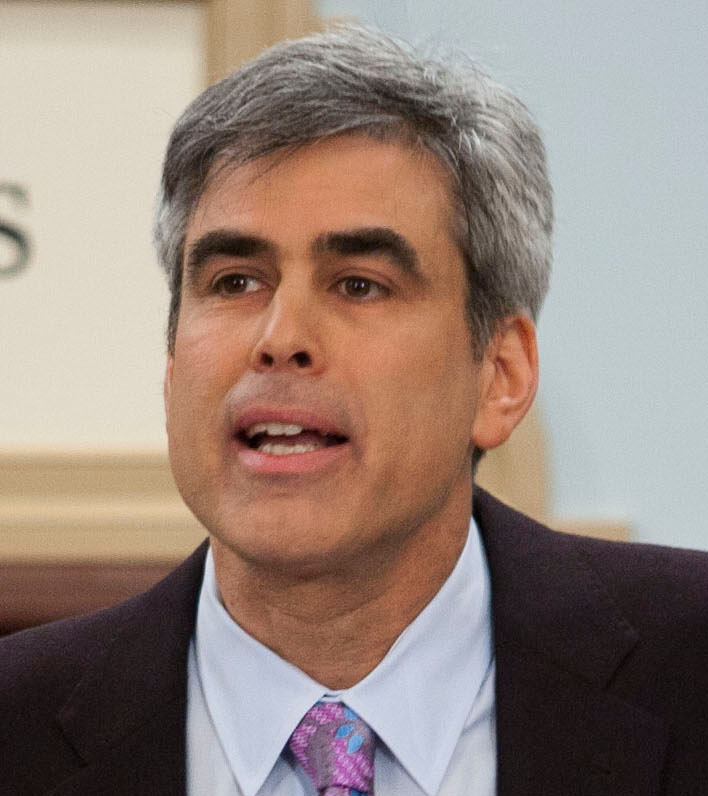
Jonathan Haidt at the Miller Center of Public Affairs in Charlottesville, Virginia on 19 March, 2012.
Photo via Wikimedia Commons.
I told three people that Jonathan Haidt will be speaking in Seattle this week. One is a left-leaning university professor, another is an apolitical meditation teacher, and the last is a conservative talk radio host. Despite the chasm between their personal politics, they were all equally enthusiastic to hear Haidt speak. He seems to have that effect on people, and is one of the rare political thinkers who manages to both appeal to (and occasionally enrage) people across the political spectrum.
A professor of social psychology at NYU’s Stern School of Business, Haidt is also the author of best-selling book, The Coddling of the American Mind, which he published with First Amendment lawyer Greg Lukianoff last year. That book grew out of an article of the same name that the duo first published in the Atlantic in 2015. As anyone who was paying attention back then may recall, the article made quite a splash, and it brought some emerging trends at university campuses into the public consciousness, including the rise of trigger warnings, deplatforming speakers, and university administrators’ attempts to protect students from any perceived harm. The article, and the subsequent book, didn’t exactly make Haidt popular in some hyper-left circles, and Haidt is occasionally accused of being a conservative in disguise. What he actually is, is a centrist, which gives him a perspective outside the typically left/right binary, and much of his recent work is about tribalism and division in the U.S. It’s a trend he thinks is getting worse.
[…]
“If you are in a university that puts you into interaction with diverse ideas, that makes you smarter,” Haidt says. “You can solve more problems. You become a more critical thinker. The more you hang out with people who think like you, especially if they enforce orthodoxy, the lower your IQ gets.”
In other words, only engaging with ideas you already support can actually make you dumber. It can also damage your cause. As an example, Haidt sites student attempts to deplatform both outside speakers and faculty on campuses over the last few years. Video of protests at schools like Evergreen State were widely shared on conservative networks, and while the students may have seen themselves as warriors in the fight for social justice, those who don’t already support their ideals were more likely to see hysterical students screaming at befuddled adults. The backlash was inevitable. “The antics on campus did a lot, I think, to elect Donald Trump,” Haidt says. “Most people on the left have not seen those videos but most people on the right have seen them. And so even if you think it’s virtuous to always be fighting, in the long run, you are harming your own side.”
In an effort to reverse the trend of ideological homogeneity on campus, Haidt founded the Heterodox Academy, an organization that advocates for universities to embrace viewpoint diversity (even, yes, when those viewpoints are conservative). Last year, they hosted the first Heterodox Academy Open Minds Conference in New York, which I attended. (Full disclosure: I moderated a panel, for which I was compensated.)
The conference was remarkable: Everyone I spoke to seemed to have some story about what made them first see that the world isn’t cleanly broken up into good versus evil, from professors who’d been the subject of protests to journalists who’d been canceled. Still, this was a conference mostly made up of academics and writers, and I doubt there was a single stereotypical Trump voter or social justice warrior in attendance. For the sake of viewpoint diversity this is probably a failure, but the organization still managed to bring together a crowd that included conservatives like Bret Stephens and liberals like Alice Dreger and libertarians like Kmele Foster all in one space. There were heated discussions, to be sure, but no one called for anyone else to be fired. This, I am sure, would be appalling to a certain subset of leftist Twitter, but as Haidt reminded me, social media may be loud, but it’s not representative. “We have to distinguish between the average and the visible anecdote,” he said. “This is another thing social media has done to us: We used to have a sense of the mood in a room or the mood in our social network, and now we have no idea.”
Still, he’s not optimistic that we’ll work our way out of these divisions, at least without significant disruption in the process. “Things feel so strange to me,” he said. “It feels as though a fundamental constant of the universe has been altered. I think social media has done that.”


