
It’s statements like these that have landed Steyn on various hit lists, including, most famously, those of the Canadian Human Rights Commission, the British Columbia Human Rights Tribunal and the Ontario Human Rights Commission, which are strange quasi-judicial bodies that were stirred to action a decade ago by the Canadian Islamic Congress. Between 2005 and 2007 the weekly news magazine Maclean’s published eighteen articles by Steyn, including an excerpt from America Alone, that were all deemed “Islamophobic” by the human rights tsars. Without going into excruciating detail about the various legal jockeying that took place — who knew one country could have this many commissions and tribunals that could all attack simultaneously? — Steyn and Maclean’s were charged with inciting hatred against Muslims, setting in motion an endless process of discovery and hearings.
“We were trying to lose,” said Steyn. “We wanted them to find us guilty so that we could appeal to a real court, hopefully the Supreme Court, and prove that these hate-speech laws are more absurd than any laws outside North Korea. Before I came along, these human rights tribunals had a 100 per cent conviction rate! The fact that we fought back meant that I became an albatross around their neck. The Thought Police were exposed to massive unrelenting publicity for the first time, and they didn’t expect that. They didn’t expect us to push back. But free speech is on the retreat, and this was not a time for a faint-hearted defence.”
The Canadian Human Rights Commission eventually bowed out of their part in the imbroglio, saying the articles were “polemical, colourful and emphatic” but failed to satisfy the definition of writings “of an extreme nature” as defined by the Supreme Court. But the British Columbia Human Rights Tribunal was not so sure, holding a five-day hearing during which the Canadian Islamic Congress presented evidence that twenty articles in Maclean’s presented Islam as a violent religion and Muslims as violent people, with the Islamist lawyer using words like racist, hateful, contemptuous, Islamophobic and irresponsible. Mahmoud Ayoub, a Harvard historian of religion, testified that Steyn didn’t understand the meaning of the word jihad and that, of the 1.5 billion Muslims in the world, less than a million interpreted jihad to justify violence against non-believers. (I don’t know of any other religion in the world that has merely a million devotees willing to kill, but that’s what the man said.)
Mark Steyn, interviewed by John Bloom, “Mark Steyn, Cole Porter and Free Speech”, Quadrant, 2017-05-11.
May 17, 2019
QotD: Mark Steyn and the “Human” “Rights” Tribunals
May 16, 2019
Remembering Monte Cassino … and Wojtek the Bear, a Polish war hero
At the Daily Chrenk, Arthur Chrenkoff remembers the Polish soldiers who finally took Monte Cassino from the Germans in 1944, after earlier allied attempts by soldiers of many other nations (including Canada) had failed:
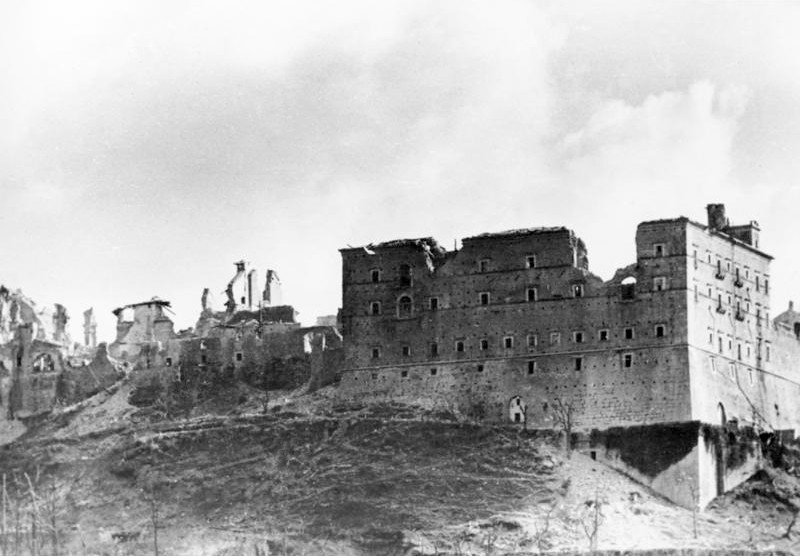
The ruins of the abbey at Monte Cassino after the 1944 battle.
Photograph credited to “Wittke” in the German Federal Archive (Bundesarchiv) via Wikimedia Commons.
On May 18, the day Australia goes to the polls, on the other side of the world we will be commemorating the 75th anniversary of the end of the bloodiest and hardest fought battle of the Italian campaign if not the whole of the Western front of WW2. On that day, a patrol from the 12th Podolian Cavalry Regiment raised the Polish flag above the ruins of the Benedictine monastery on top of Monte Cassino, bringing to an end four months and four Allied offensives against the heavily fortified Gustav (or Winter) Line, manned by crack German divisions across the entire width of the Italian boot about 100 miles south of Rome. Some of the German troops, veterans of the Eastern front, thought the fighting was worse than at Stalingrad. Others, on the Allied side, compared the conditions to Verdun. Unlike Russian cities or French fields, most of the fighting around Monte Cassino took place over an unimaginably difficult terrain of steep mountain slopes, deep valleys, wild rivers and landscape stripped bare by the artillery. It was a truly world battle in a world war: pitted against the Wehrmacht were the units from Great Britain, including British India and Rhodesia, the United States, France and its north African colonies like Morocco, Canada, Australia, New Zealand, including Maori troops, South Africa, Italy and Poland. Since the start of the Allied offensive in January 1944, waves after waves of troops of the 5th US and the 8th British armies smashed themselves against the rocks, unable to dislodge the well dug-in Germans. Finally, the fourth battle code-named Operation Diadem, which commenced with a massive bombardment on May 16, threw the British 13th Army Corp and the 2nd Polish Corp against the very linchpin of the Gustav Line at Monte Cassino and its monastery. Two days later it was over.
[…]
Churchill, right from the time of the Gallipoli disaster, remained obsessed about the vulnerability of the continental powers – primarily Germany – through what he called “the soft underbelly of Europe”. The war records are full of his harebrained schemes to attack the Axis through Italy, the Balkans or Greece and knock them out of the fight by a sharp thrust into the Central Europe. This was to be a masterstroke in place of the Normandy invasion, which Churchill strenuously opposed, and later in addition to it, to draw some of the German troops away from the northern France and indeed to get to Austria and southern Germany before the Red Army.
The problem with the soft underbelly of Europe is that it’s anything but. In fact it’s the hardest part of Europe; all rock, no roll. It’s mountains and deep valleys, fast rivers and vast forests, rudimentary roads and virtually no useful infrastructure. Unlike the northern European plains, this is the defender’s country where the Allies lost all the advantage of their numbers, their maneuverability and their armour. The two years of arduous slogfest from the southern Sicily to the Emilia-Romagna in the north might have indeed drawn valuable German troops from the other theaters of war but it was a bloody dead end. Poles were still stuck taking Bologna in April 1945, while only days later the patrols from Patton’s 3rd US Army were reaching the outskirts of Prague.
And Wojtek?
Monte Cassino is on my mind today, because entirely coincidentally I’m reading a delightful war book (that’s an oxymoron if there is one) titled Wojtek the Bear: Polish War Hero. It tells the surreal but entirely true story of a bear cub adopted by the Polish troops in northern Iran in 1942, towards the start of their anabasis from Stalin’s Siberia all the way to Italy and eventually Scotland. Accompanying the Poles through all their service in the Middle East and then southern Europe, Wojtek grew up to be a 6-foot, 500-pound ursine, who always thought he was a human. Quintessentially Polish (if only by adoption), he loved beer and cigarettes (he also ate them, but only if lit), taking showers with the troops and riding shotgun in army trucks. Some of his war-time exploits included capturing an Arab spy in Iraq and stealing underwear from a female support unit. But Wojtek truly became a legend during the battle of Monte Cassino, when to his comrades’ amazement he volunteered to carry ammunition in his paws. He was eventually made a Private in the Polish Army, and lived until 1963, continuing to win hearts in Scotland, where the Polish troops were repatriated after the war.
Bronze Age collapse
archeo atlas
Published on 3 Jan 2014The Influence of Climatic Change on the Late Bronze Age Collapse and the Dark Ages
When is an archaeological artifact merely “recyclable”?
In Sweden, they’ve got such a rich history of archaeological artifacts that they’re no longer preserving, categorizing, cleaning, displaying, or storing new artifacts that come to light … they’re dumping them in the recycling bin. Literally:

An amulet ring from the Iron Age, an example of the sort of newly found artifact that Swedish archaeologists are recycling. (Photo from Svenska Dagbladet, caption from Never Yet Melted)
In what looks like a new paroxysm of self-hatred and cultural suicide, Sweden has begun destroying artefacts from its ancient Viking history.
One might think that the country, over-run by hordes of Middle Eastern “asylum seekers”, would wish to preserve as much of its national identity and cultural heritage as it could. Even at the most mercenary level, Viking sites, museums, artefacts and souvenirs have been huge tourism money-earners. The television series Vikings shows Western man’s fascination with the hairy old sea-rovers. The immensely popular books and films of The Lord of the Rings drew in large part upon Norse mythology as well as Christianity, showing its deep resonances even for modern man.
Now an angry archaeologist has blown the whistle on the fact that the curators of Stockholm’s Länsmuseum have been ordering the systematic destruction of newly-found artefacts from the Iron Age and the Viking period with the weak excuse that the material would be too burdensome to process. This is despite the fact that preservation of the past is what being a museum curator is meant to be all about.
Coins, arrow-heads, ritual amulets, weapons, jewellery and weights that were kept in the past are now dumped into metal-recycling bins upon discovery instead of being cared for and displayed. Museum excavators are instructed to recycle unearthed iron elements into scrap metal on the weak pretext that “it would take too many resources to process, identify and store them”. The findings are usually quickly disposed of in order to make way for construction machines and building workers.
Ironically yet appropriately, the boom in excavation which has led to the doomed artefacts being unearthed has largely been to provide housing for the asylum seekers flooding into the country, and who are now pushing the crime-rate back towards, well, towards Viking levels.
This process was kept secret until a declaration by Johan Runer, the museum’s archaeologist. He had tried to raise the alarm before but only met indifference from the liberal Swedish media. According to Runer, this has been going on since at least 2016. He claims an entire ancient settlement was secretly levelled to allow roadworks.
If this story seems familiar, it’s because it’s not a new phenomenon … I blogged a similar story back in 2017.
Boys Anti-Tank Rifle: Mk I and Mk I* Improvements
Forgotten Weapons
Published on 11 Apr 2019These rifles are lots #1087 and #1088 at Morphy’s April 2019 auction:
https://www.forgottenweapons.com/boys…The Boys Anti-Tank Rifle was adopted by the British military in 1937, and remained in production until 1943 when it was replaced by the PIAT. During that time more than 114,000 were made, both in the UK and in Canada. Canadian engineers at the John Inglis company devised a number of improvements to the rifle in 1942, which were adopted as the Mk I* pattern that year. Today we are looking at these improvements with examples of each type side by side. They are a new style of muzzle brake, simplified rear sight, and improved bipod design.
http://www.patreon.com/ForgottenWeapons
Cool Forgotten Weapons merch! http://shop.bbtv.com/collections/forg…
Contact:
Forgotten Weapons
PO Box 87647
Tucson, AZ 85754
QotD: Reacting appropriately to criticism
Ich sitze in dem kleinsten Zimmer in meinem Hause. Ich habe Ihre Kritik vor mir. Im nächsten Augenblick wird sie hinter mir sein! (“I am sitting in the smallest room of my house. I have your review before me. In a moment it will be behind me!”).
Max Reger, responding to a review of his work by Rudolf Louis in the Münchener Neueste Nachrichten, 1906-02-07, as reported by Nicolas Slonimsky, Lexicon of Musical Invective, 1965.
May 15, 2019
1984 – Dystopias and Apocalypses – Extra Sci Fi
Extra Credits
Published on 14 May 2019What makes 1984 still relevant to modern readers is that it serves as a warning against fascism in all its possible forms. George Orwell’s service fighting in the Spanish Civil War led him to see that the heart of totalitarianism is about xenophobia and nationalism no matter which kind of government it came from.
The idea that Orwell presents us in 1984 is that people subtle enough and brutal enough can take the undirected dissatisfaction and anger of a society and point it at whatever they will, using us to damn ourselves.
Mussolini and D’Annunzio On The Rise – Allies in Crisis Over Italy I THE GREAT WAR April 1919
The Great War
Published on 14 May 2019» SUPPORT THE CHANNEL
Patreon: https://www.patreon.com/thegreatwar
Merchandise: https://shop.spreadshirt.de/thegreatwar/Italy joined World War 1 in 1915 after it had been promised territorial gains in the Treaty of London. Now that the Central Powers had been defeated, the Italian government and the Italians themselves expected that their contribution would be honored at the Paris Peace Conference. But France, Great Britain and the US had other plans and so the Italian government was caught between the new realities at Paris and the nationalists at home.
» SOURCES
Gerwarth, Robert. The Vanquished. Why the First World War Failed to End, 1917-1923 (Penguin, 2017).Leonhard, Jörn. Der überforderte Frieden. Versailles und die Welt 1918-1923 (CH Beck, 2018)
Macmillan, Margaret. The Peacemakers: Six Months that Changed the World (London: John Murray, 2001).
Report: Disorders Inquiry Committee 1919-1920 (Calcutta: Superintendent of Government Printing, India: 1920)
Sullivan, “Vittoria Mutilata” in 1914-1918 online. International Encyclopedia of the First World War https://encyclopedia.1914-1918-online…
Thompson, Mark. The White War: Life and Death on the Italian Front 1915-1919 (London: Faber, 2008).
» SOCIAL MEDIA
Twitter: https://twitter.com/WW1_Series
Reddit: https://reddit.com/r/TheGreatWarChannel»CREDITS
Presented by: Jesse Alexander
Written by: Jesse Alexander
Director: Toni Steller & Florian Wittig
Director of Photography: Toni Steller
Sound: Toni Steller
Editing: Toni Steller
Mixing, Mastering & Sound Design: http://above-zero.com
Motion Design: Christian Graef – GRAEFX
Maps: Daniel Kogosov (https://www.patreon.com/Zalezsky)
Research by: Jesse Alexander
Fact checking: Florian WittigChannel Design: Alexander Clark
Original Logo: David van StepholdA Mediakraft Networks Original Channel
Contains licensed material by getty images
All rights reserved – Real Time History GmbH 2019
Modern architecture as a generations-long art crime spree
Theodore Dalrymple is clearly quite a fan of Making Dystopia: The Strange Rise and Survival of Architectural Barbarism by James Stevens Curl, as this is at least the third review of the book I’ve seen by him (and you can probably tell I agree with much of his viewpoint that I’m blogging it yet again…)
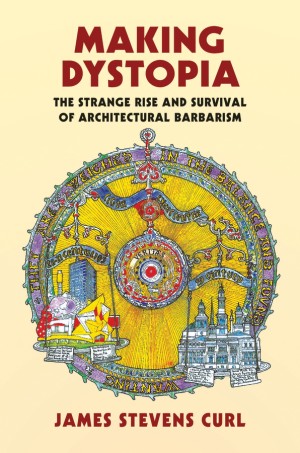
In a recent debate in Prospect magazine on the question of whether modern architecture has ruined British towns and cities, Professor James Stevens Curl, one of Britain’s most distinguished architectural historians, wrote as his opening salvo:
Visitors to these islands who have eyes to see will observe that there is hardly a town or city that has not had its streets — and skyline — wrecked by insensitive, crude, post-1945 additions which ignore established geometries, urban grain, scale, materials, and emphases.
This is so self-evidently true that I find it hard to understand how anyone could deny it, but modern architects and hangers-on such as architectural journalists do deny it, like war criminals who, for obvious reasons, continue to deny their crimes in the face of overwhelming evidence.
This is true not only of Britain but of many, perhaps most, other countries that have or had any towns or cities to ruin. Anyone who rides into the center of Paris from Charles de Gaulle Airport, for example, will be appalled at the modernist visual hell that scours his eyes as he goes.
Nor is this visual hell the consequence of the need to build cheaply. Where money is no object, contemporary architects, like the sleep of reason in Goya’s etching, bring forth monsters. The Tour Montparnasse (said to be the most hated building in Paris), the Centre Pompidou, the Opéra Bastille, the Musée du quai Branly, the new Philharmonie, do not owe their preternatural ugliness to lack of funds, but rather to the incapacity, one might say the ferocious unwillingness, of architects to build anything beautiful, and to their determination to leave their mark on the city as a dog leaves its mark on a tree.
Professor Curl’s magnum opus is both scholarly and polemical. He has been observing the onward march of modernism and its effects for sixty years and is justifiably outraged by it. British architects have managed to reverse the terms of the anarchist Bakunin’s dictum that the urge to destroy is also a creative urge: Their urge to create is also a destructive urge. I could give many concrete examples (no pun intended).

Philharmonie at the Parc de la Villette, Paris.
Photo by Zairon via Wikimedia Commons.
Curl knows that he is arguing not against an aesthetic, but against an ironclad ideology. The architectural Leninists have been determined so to indoctrinate the public that they hope and expect a generation will grow up knowing nothing but modernism, and therefore will be unable to judge it. (All judgment is comparative, as Doctor Johnson said.) In Paris recently, I saw an advertisement on the Métro (a few days before the fire in Notre-Dame) to the effect that Paris would not be Paris without the Centre Pompidou — which, of course, has a good claim to be the ugliest building in the world. In the face of such an advertisement promoted by the cultural elite, what ordinary person would dare demur?
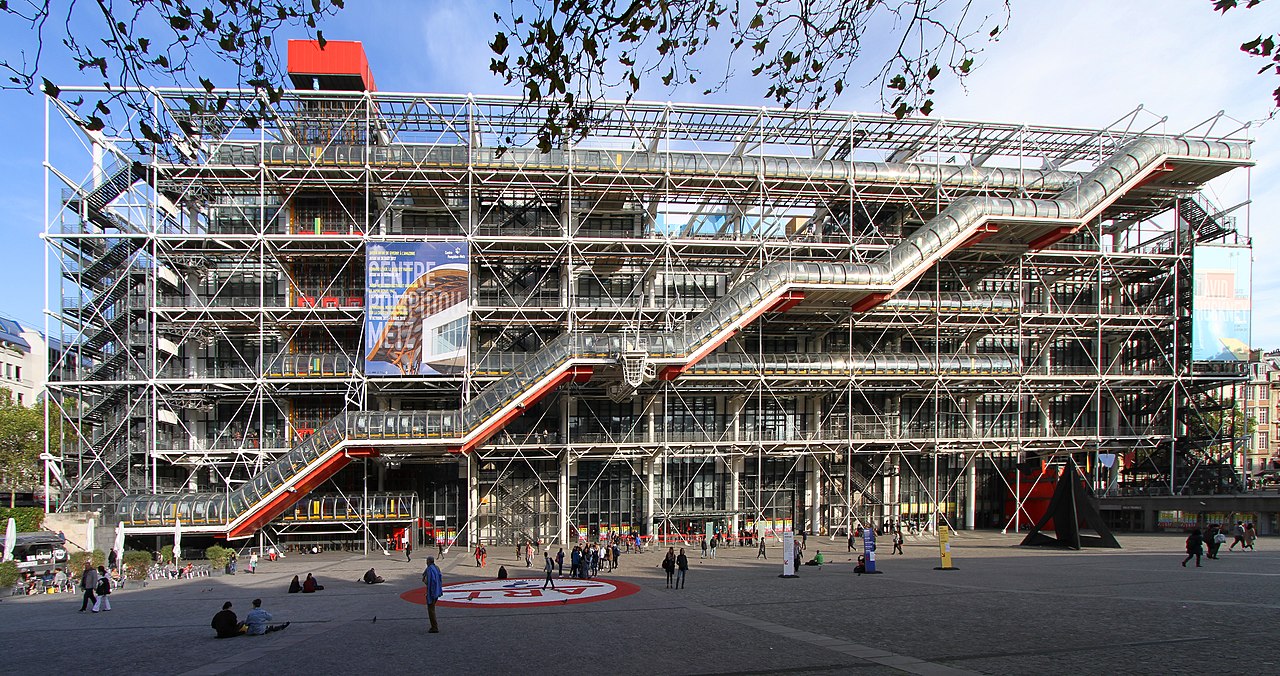
Centre Georges-Pompidou (no, this isn’t an under construction image … it’s from 2017 and the construction was technically complete in 1977)
Gerd Eichmann photo via Wikimedia Commons.
Could anyone imagine a worldwide outpouring of genuine and heartfelt grief, such as that which greeted the burning of Notre-Dame de Paris, if any building of the last seventy years burnt down? Indeed, the destruction of many would be a cause almost for rejoicing. Modernist buildings will never age as Notre-Dame aged; they will merely deteriorate, and usually do deteriorate even before completion.
Jade of the Maya
Lindybeige
Published on 10 Apr 2019Guatemala – another video from my trip there, this time looking at the jade in the local museum, plus obsidian, idols, and 1970s fashion tips.
Support me on Patreon: https://www.patreon.com/Lindybeige
Camera: Jeremy Lawrence (https://www.futtfuttfutt.com)Lindybeige: a channel of archaeology, ancient and medieval warfare, rants, swing dance, travelogues, evolution, and whatever else occurs to me to make.
▼ Follow me…
Twitter: https://twitter.com/Lindybeige I may have some drivel to contribute to the Twittersphere, plus you get notice of uploads.
website: http://www.LloydianAspects.co.uk
QotD: Women competing against other women
There are women out there who still see dressing to please a man as some sort of Stockholm syndrome thing — participating in your own (flouncy, spaghetti-strapped) subjugation. So, it’s possible that those advising you “Don’t change for a man!” are just trying to help you be a modern and empowered woman. Of course, one could argue that actually being a modern and empowered woman means you don’t have to dress like you’re hoping to get a call to clean out a sewer line.
Maybe those in your advice coven really do believe they’re acting in your best interest. Maybe. Social psychologists Roy Baumeister and Jean Twenge report that it’s widely believed that men drive the “cultural suppression of female sexuality” — which could include shaming women for how they dress. However, in reviewing the research, they make a persuasive case that it’s primarily women (often without awareness of their motives) who work to “stifle each other’s sexuality.”
This is right in keeping with research on female competition. While men fight openly — “Bring it! I will ruin you!” — women take a sneakier approach. As female competition researcher Tracy Vaillancourt explains it, women fight for their interests using “indirect aggression,” like gossip, mean looks, disparaging remarks, and other underhanded tactics to “reduce the mate value of a rival.” Underhanded tactics? You know — like suggesting you’re selling out womankind if you wear a skirt or winged eyeliner.
Amy Alkon, “Casual Coroner”, The Science Advice Goddess, 2016-09-20.
May 14, 2019
Is Canada ready for a New Green Democratic Party?
Ali Taghva explores the notion of the federal NDP and Green parties joining together:

With fundraising and polling numbers in sharp decline at the same time that experienced MPs and staff leave the party, it is evident, even the base of the NDP is beginning to lose faith in the current direction led by Jagmeet Singh.
Worryingly for every single NDP member in the country, this is occurring even when Justin Trudeau’s post-election honeymoon has long ended.
As a result, it appears that the Green Party has become the progressive vehicle gaining the most federal momentum. Their fundraising numbers are on the upswing, and if the trend in the latest by-election in B.C. holds up, they may be the preferred refuge for disenfranchised Liberal voters.
While the Green Party does have momentum, it will not be able to push forward as Canada’s progressive alternative, at least not alone.
The party is still astronomically behind the Conservatives and Liberals when it comes to fundraising, quality of candidates, and polling support.
Even in comparison to the NDP, the Greens are still behind in fundraising and polling, although the distance between the two parties is far more negligible.
With both parties too far back to do anything other than reducing the Liberal vote, ensuring a Conservative majority, it may be time for Canadian progressives to seriously consider a merger between the Green party and the New Democrats.
Okay, but why now? What would be the big draw … oh:
Perhaps most interestingly though, a united alternative progressive party could easily bring on-board the two highest-profile individuals who still have no declared party for the federal election, Jane Philpott and Jody Wilson-Raybould.
With most Canadians believing Jody Wilson-Raybould’s account over that of the Prime Minister’s, her entrance into the race along with Jane Philpott’s could be the final piece which catapults the party into contention for the role of governing party.
Of course, of course … the old celebrity candidates trick. That always works. Well, in urban downtown ridings, anyway.
The Broad Fourteens – Royal Navy Motor Torpedo Boats In WWII
PeriscopeFilm
Published on 20 Sep 2017Support Our Channel : https://www.patreon.com/PeriscopeFilm
Made in 1945, THE BROAD FOURTEENS is one of the excellent, dramatized accounts of WWII made by the Ministry of Information for morale purposes. The film shows the first posting, and eventual first action, of a newly-trained motor torpedo boat (MTB) crew. (‘The Broad Fourteens’ is the name given to a patrol area of the North Sea off the Dutch coast.) The film joins the boat and crew at the end of their training (probably HMS Bee, the Coastal Force working up base at Weymouth). The boats featured include 70’ Vosper 1942 class boats, 70’ British Power Boat motor gunboats and MTB 210 — a J Samuel White-built 70’ Vosper which later joined the 13th MTB Flotilla at Dover. The fictional MTB 181 is probably MTB 352, commanded by Lieutenant John M Moore RNVR which joined the 11th MTB Flotilla at Felixstowe after completing her work up. Also featured is MTB 354, commanded by Lieutenant Roland Plugge RN which was the SO’s boat, 5th MTB Flotilla, at Dover. The German flak trawler is in fact an RN Isles Class trawler standing in.
(0:48) Introduces the viewer to how the “broad fourteens” came to exist. Navy training is depicted (2:15). At the training commander’s office (2:25) the film shows the commander and the captain conversing about torpedo and battle experiences and strategies. [Note that they emphasize that Lieutenant Howard is Canadian, although clearly serving in the Royal Navy, as he doesn’t have a “Canada” patch on the shoulder of his uniform.] The crew is shown going through their regular activities. They discuss the previous battles as they are called together. The commander and the captain (5:10) discuss the boat’s impending departure. 5:40 shows the operational base as crews and the commander busily arrive the base. (6:48) operation room as a crew brings a report to the commander. The captain talks about his crew alongside another (7:28). At mark 8:00 the film shows the crew’s residential life. The crew are shown prepping for the first operation as their boats head offshore (9:15) and into the deep sea. The captain is shown calculating the boat’s navigation on his map (10:20). A communication link is established (11:18) and the captain discusses how much longer it is till they get to the operation site. Back at the base (12:20) the crews left converse. The crews are seen at the starmouth arms (14:30), they enjoyed listening to their music at (15:00). The crew takes care of their ship (16:05).
The commander converses with the captain (16:45). The crew are shown in their rooms (17:18). (17:27) is the Starmouth Arms where the crew talk among themselves. The Starmouth Arms manager receives a call which got all crews back to their base (18:40). The commander gives a report (19:20) on the mission and key targets. The meeting closes (20:00) as all crew member are set as they start their engine and move on (21:15). On the deep sea is the navigation map (21:50). At mark 22:20, the crews stops for awhile and takes a break. They move on (22:53). The key target is seen (23:10) and the troops get ready for firing. All crew on set as they wait on the captain to give the go ahead to shoot (23:50). The captain makes the key calculations as the crew stands by for the torpedo release. He gives the go (24:47) and the torpedo is launched out. The torpedo engages the target (25:06). Reports about the operation are documented (25:30) as they proceed to rendezvous point. Two German gun boats are sighted (25:47) as they appear and fire at the crew (26:03). Firing continues till 26:45. There is alarm about fire at the cargo base as a crew is injured (27:00). The fire is attended to as firing continues (27:50). The report about the casualty and the op is documented (28:30). Explosives are launched across the sea towards the enemy gun boats (29:15) as they cool down the heat on them.
Meanwhile back at the base, the film shows the commander (30:00) receiving a visit from his superior, who asks about the mission report as he looks towards the map (30:40). At the battle front, the captain asks about news on the gun boats (31:11) as his underlings all wait in anxiety. The gun boats are sighted (31:38) as they closes on fast towards the crew. At mark 31:53, they opened fire against the boat. A crew is hit (32:15). A gun boat comes in their rescue (33:00) and defeats the enemy boat. Gregory and Johnny are shown wounded. The gun boat (34:00) makes reports and request the course as they depart for home port.
This film is part of the Periscope Film LLC archive, one of the largest historic military, transportation, and aviation stock footage collections in the USA. Entirely film backed, this material is available for licensing in 24p HD, 2k and 4k. For more information visit http://www.PeriscopeFilm.com
Bullshit in science
An older article by Brian D Earp looks at the problem of bullshit in scientific publications:
… if you love science, you had better question it, and question it well, so it can live up to its potential.
And it is with that in mind that I bring up the subject of bullshit.
There is a veritable truckload of bullshit in science. When I say bullshit, I mean arguments, data, publications, or even the official policies of scientific organizations that give every impression of being perfectly reasonable — of being well-supported by the highest quality of evidence, and so forth — but which don’t hold up when you scrutinize the details. Bullshit has the veneer of truth-like plausibility. It looks good. It sounds right. But when you get right down to it, it stinks.
There are many ways to produce scientific bullshit. One way is to assert that something has been “proven,” “shown,” or “found” and then cite, in support of this assertion, a study that has actually been heavily critiqued (fairly and in good faith, let us say, although that is not always the case, as we soon shall see) without acknowledging any of the published criticisms of the study or otherwise grappling with its inherent limitations.
Another way is to refer to evidence as being of “high quality” simply because it comes from an in-principle relatively strong study design, like a randomized control trial, without checking the specific materials that were used in the study to confirm that they were fit for purpose. There is also the problem of taking data that were generated in one environment and applying them to a completely different environment (without showing, or in some cases even attempting to show, that the two environments are analogous in the right way). There are other examples I have explored in other contexts, and many of them are fairly well-known.
But there is one example I have only recently come across, and of which I have not yet seen any serious discussion. I am referring to a certain sustained, long-term publication strategy, apparently deliberately carried out (although motivations can be hard to pin down), that results in a stupefying, and in my view dangerous, paper-pile of scientific bullshit. It can be hard to detect, at first, with an untrained eye — you have to know your specific area of research extremely well to begin to see it — but once you do catch on, it becomes impossible to un-see.


