
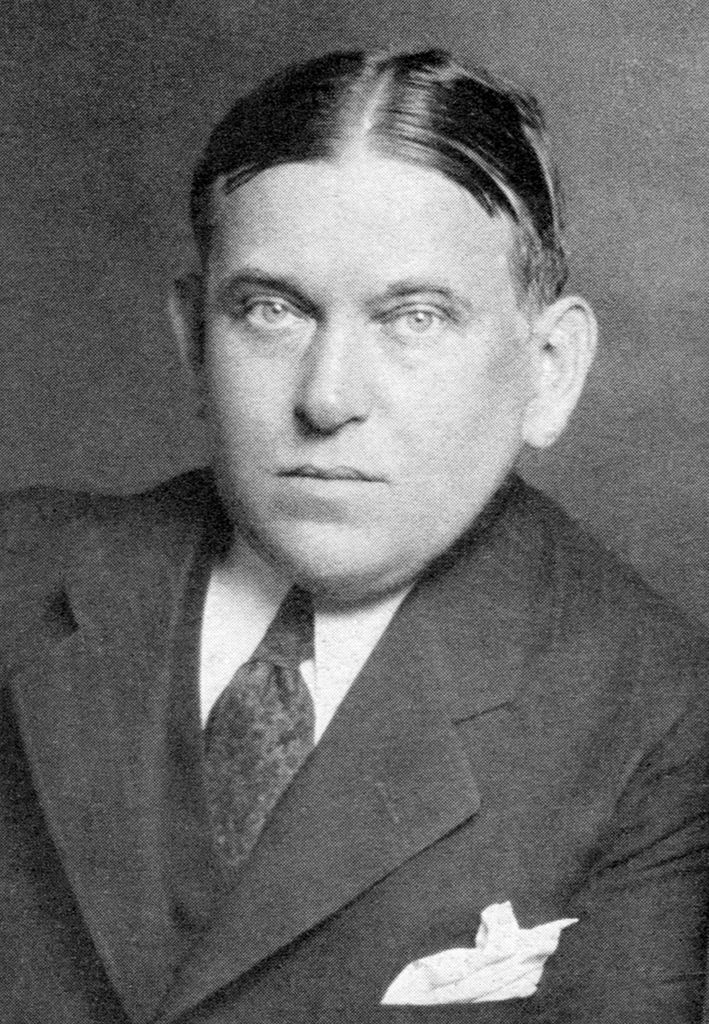
H.L. Mencken in 1928.
Photo by Ben Pinchot for Theatre Magazine, August 1928.
Since Philip Dormer Stanhope, Earl of Chesterfield, published his celebrated letters to his morganatic son, in 1744, there has been no adequate book, in English, of advice to young men. I say adequate, and the adjective tells the whole story. There is not, of course, a college president or a boss Y.M.C.A. secretary, or an uplifting preacher in the United States who has not written such a book, but all of them are alike filled with bilge. They depict and advocate a life that no normal young man wants to live, or could live without ruin if he wanted to. They are full of Sunday-school platitudes and Boy Scout snuffling. If they were swallowed by the youth of today the Republic of tomorrow would be a nation of idiots.H.L. Mencken, “Another Long-Awaited Book”, Chicago Tribune, 1926-09-12.
June 11, 2019
QotD: Advice to young men
Comments Off on QotD: Advice to young men
June 10, 2019
Bomb the Children – WW2 – WaH 003 – May 1940
World War Two
Published on 9 Jun 2019When WW2 breaks out, the belligerents promise to not bomb civilians. The promise is broken, literally within minutes by the Nazis and within weeks by the Soviets. Now, nine months later the Allies are about to follow suite.
Join us on Patreon: https://www.patreon.com/TimeGhostHistory
Or join The TimeGhost Army directly at: https://timeghost.tvFollow WW2 day by day on Instagram @World_war_two_realtime https://www.instagram.com/world_war_t…
Join our Discord Server: https://discord.gg/D6D2aYN.
Between 2 Wars: https://www.youtube.com/playlist?list…
Source list: http://bit.ly/WW2sourcesWritten and Hosted by: Spartacus Olsson
Produced and Directed by: Spartacus Olsson and Astrid Deinhard
Executive Producers: Bodo Rittenauer, Astrid Deinhard, Indy Neidell, Spartacus Olsson
Creative Producer: Joram Appel
Post Production Director: Wieke Kapteijns
Research by: Spartacus Olsson
Edited by: Wieke KapteijnsArchive by Screenocean/Reuters https://www.screenocean.com.
A TimeGhost chronological documentary produced by OnLion Entertainment GmbH.
From the comments:
World War Two
16 hours ago
Strategic Bombing is what it’s called, but in reality the strategic part is just theory – the simple reality is that people not involved in the fighting are going to die. This is a hot topic to this day. Who started? Was it justified to retaliate? Is it an acceptable method because the end justifies the means, that it might help win the war by breaking an enemy country? Does one strategic bombing of civilians make another murder of a thousand innocent victims less atrocious? Pretty absurd questions when you think about it. No matter who did it, no matter why they did it, no matter who started it, it’s really hard to justify the murder of children and unarmed adults – individuals that could not have any real influence on the outcome of the war.

Comments Off on Bomb the Children – WW2 – WaH 003 – May 1940
The DEFINITIVE Guide to Setting up a BANDSAW
Matt Estlea
Published on 8 Jun 2019In this video, I show you how to set up your bandsaw for optimum performance. I’ll take you through everything from blade selection to tensioning, tracking, bearing adjustment and fence alignment to get your bandsaw performing as it should do!
____________________________________________________________________Videos Mentioned:
Cutting up a Log:
https://www.youtube.com/watch?v=KfCR2TOrdwEAlex Snograss Bandsaw Setup:
https://www.youtube.com/watch?v=bxVyKsbuwZQSandpaper Rack:
https://www.youtube.com/watch?v=LHBrhCxhi6cBandsaw VS. Table Saw
https://www.mattestlea.com/post/should-i-get-a-bandsaw-or-a-table-saw
____________________________________________________________________Support what I do by becoming a Patron! This will help fund new tools, equipment and cover my overheads. Meaning I can continue to bring you regular, high quality, free content. Thank you so much for your support! https://www.patreon.com/mattestlea
____________________________________________________________________See what tools I use here: https://kit.com/MattEstlea
My Website: http://www.mattestlea.com
____________________________________________________________________My name is Matt Estlea, I’m a 23 year old Woodworker from Basingstoke in England and my aim is to make your woodworking less s***.
I come from 5 years tuition at Rycotewood Furniture Centre with a further 1 year working as an Artist in Residence at the Sylva Foundation. I now teach City and Guilds Furniture Making at Rycotewood as of September 2018.
I also had 5 years of experience working at Axminster Tools and Machinery where I helped customers with purchasing tools, demonstrated in stores and events, and gained extensive knowledge about a variety of tools and brands.
During the week, I film woodworking projects, tutorials, reviews and a viewer favourite ‘Tool Duel’ where I compare two competitive manufacturers tools against one another to find out which is best.
I like to have a laugh and my videos are quite fast paced BUT you will learn a lot, I assure you.
Lets go make a mess.
Comments Off on The DEFINITIVE Guide to Setting up a BANDSAW
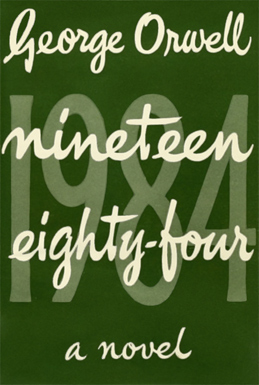
The intended message of George Orwell’s Nineteen Eighty-Four
There are few novels which have been so enthusiastically claimed by partisans of both the right and the left — sometimes simultaneously — for misunderstood reasons. Orwell wasn’t warning us about technology (although he brilliantly illustrated how technology can be harnessed in service of the state), nor was he somehow warning us about the evils of current or recent politicans (Reagan, Bush, Trump). Orwell, a dedicated life-long socialist, was warning us of the dangers of totalitarianism, particularly the communist style of totalitarianism:
June 8, 2019, marks the 70th anniversary of George Orwell’s dystopian novel 1984. There will be no shortage of think pieces that will misinterpret its legacy. They will focus on social media, security cameras, data collection, and “fake news.” The problem? The novel was not a commentary on the downside of technology. It was meant to warn against the growing spread of communism.
In the decades since the time of its publication, the context of Orwell’s magnum opus has been lost. What remains in the cultural memory are simply fragments of the larger picture: government censorship, ubiquitous surveillance cameras, and Orwell’s clever neologisms (Newspeak, doublethink, and thoughtcrime, among others). This selective recall has led to a widespread misreading of the book’s original warning.
[…]
From the left, most present-day articles and blog posts project the character “Big Brother” onto President Donald Trump, like Eliot Namay’s column in the May 6 edition of the Charleston Gazette-Mail. They typically focus on Trump’s fevered populism and his penchant for impulsive speech, which can lead him to play fast and loose with facts.
Sales of 1984 spiked dramatically after his inauguration in 2017 when White House Press Secretary Sean Spicer (incorrectly) touted the “largest audience ever to witness an inauguration.” Trump advisor Kellyanne Conway later defended the claim on Meet the Press, blurting out the now infamous phrase, “alternative facts.” Scores of news stories compared her gaffe to Orwell’s “Newspeak” and “doublethink.” It’s also fairly common to read comparisons of Trump’s rallies to the “Two Minutes Hate” depicted in 1984.
Comparisons from the right, on the other hand, generally focus on the politically correct speech codes of colleges and universities or on the massive data gathering of big tech companies like Facebook and Google, warning readers that “Big Brother is Watching You.” Kalev Leetaru explores both of these issues in his May 6 column in Forbes, where he compares the social media de-platforming trend to Orwell’s “unperson” status. Notably, sales of 1984 also spiked in 2013 after Edward Snowden leaked details of the NSA’s mass collection of internet and phone records. A slew of articles followed, asserting that 1984 had arrived.
A certain amount of hyperbole is a characteristic of today’s reporting and commentary, but current comparisons to 1984 are inappropriate. Again, George Orwell was writing about a specific regime. Big Brother was an obvious reference to “Uncle Joe” Stalin, a uniquely evil dictator. Trump has his shortcomings, but he is no Stalin. A president who is prone to exaggeration does not equal a government-controlled press (which the Soviet Union had). The “Two Minutes Hate” recalled Stalin’s public demonization of Trotzky, who dared to criticize Stalin’s tactics. Data collection is a growing concern, to be sure, but it doesn’t precede a terrifying knock on the door from the KGB.
Comments Off on The intended message of George Orwell’s Nineteen Eighty-Four
Pak-40 German 75mm AT Gun Firing
Forgotten Weapons
Published on 30 Mar 2014Cool Forgotten Weapons Merch! http://shop.bbtv.com/collections/forg…
Intro music by Dylan Benson – http://dbproductioncompany.webs.com
While we normally stick to small arms here, this beast of a gun was just way too impressive for me to not pay attention to. I was at a cannon and machine gun shoot just recently where some folks brought out what is (I believe) the only functional Pak-40 in the United States. And shot it.
The Pak-40 was the backbone of German antitank guns during WWII, and fired a 75mm AP shell out to an effective range of about a mile in a direct-fire role, with enough energy to defeat pretty much any Allied tank except the late-war Russian heavies. It was fairly light weight given its effectiveness, and makes one hell of a concussion when fired.
Thanks to the gun’s owners for being awesome!

Comments Off on Pak-40 German 75mm AT Gun Firing
QotD: Robert Heinlein on “honest work”
The beginning of 1939 found me flat broke following a disastrous political campaign (I ran a strong second best, but in politics there are no prizes for place or show).
Robert A. Heinlein at the 1976 World Science Fiction Convention
Via Wikimedia Commons.I was highly skilled in ordnance, gunnery, and fire control for Naval vessels, a skill for which there was no demand ashore — and I had a piece of paper from the Secretary of the Navy telling me that I was a waste of space — “totally and permanently disabled” was the phraseology. I “owned” a heavily-mortgaged house.
About then Thrilling Wonder Stories ran a house ad reading (more or less):
GIANT PRIZE CONTEST —
Amateur Writers!!!!!!
First Prize $50 Fifty Dollars $50In 1939 one could fill three station wagons with fifty dollars worth of groceries.
Today I can pick up fifty dollars in groceries unassisted — perhaps I’ve grown stronger.
So I wrote the story “Life-Line.” It took me four days — I am a slow typist. I did not send it to Thrilling Wonder; I sent it to Astounding, figuring they would not be so swamped with amateur short stories.
Astounding bought it… for $70, or $20 more than that “Grand Prize” — and there was never a chance that I would ever again look for honest work.
(“Honest work” — an euphemism for underpaid bodily exertion, done standing up or on your knees, often in bad weather or other nasty circumstances, and frequently involving shovels, picks, hoes, assembly lines, tractors, and unsympathetic supervisors. It has never appealed to me. Sitting at a typewriter in a nice warm room, with no boss, cannot possibly be described as “honest work.”)
Robert A. Heinlein, 1980.

Comments Off on QotD: Robert Heinlein on “honest work”
June 9, 2019
History of England – The Devastation of France – Extra History – #3
Extra Credits
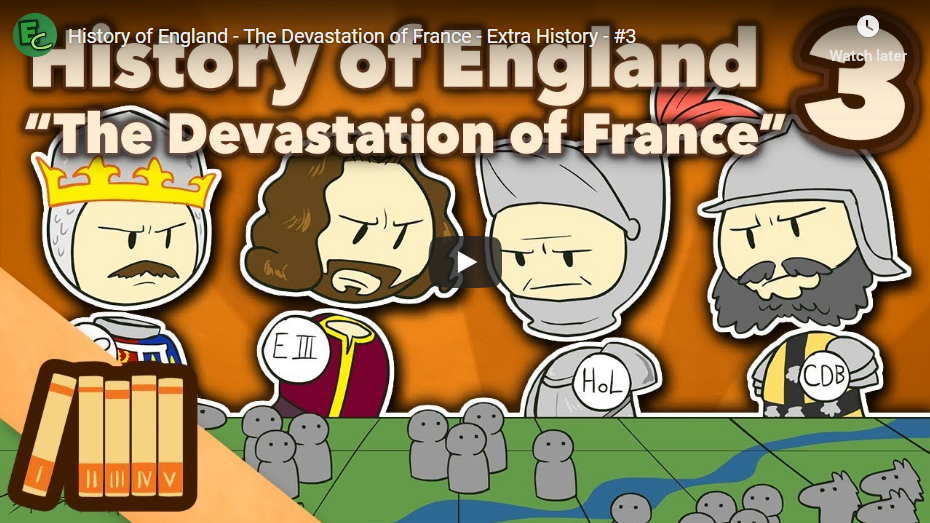
Published on 8 Jun 2019From the end of the battle of Crecy, Edward charged on to besiege Calais (successfully), and then returned home. Right about then was when the Black Plague hit Europe head-on. But Edward carried on as king establishing order among his subjects, forming the Knights of the Garter. In France, John le Bel, son of Philip, had learned from the French defeats and was making small victories here and there…
In the middle ages, pillaging and murdering your way across Northern France was clearly considered an appropriate father-son bonding opportunity.
Thanks again to David Crowther for writing AND narrating this series! https://thehistoryofengland.co.uk/pod…
Join us on Patreon! http://bit.ly/EHPatreon
Comments Off on History of England – The Devastation of France – Extra History – #3
The blog as a modern “commonplace book”
I’ve been blogging continuously for over fifteen years, but I’ve never found — or even considered — a single unifying theme for the blog. There are consistencies over the years, like the QotD posts, but in general the blog acts as a place for me to note things that interest, excite, or agitate me. After my grandfather died in 1979, I inherited a few of his notebooks, which included scores of lists on all kinds of things … my grandmother said it was all gathered to help with crossword puzzles, but the range of information was much wider than you’d normally find in crosswords. I think, had he lived long enough, my grandfather would have been a dedicated blogger. The blogging world has a lot of blogs like mine, where the blogger notes seemingly random bits of information, and this is far from new: they used to be called “commonplace books“:
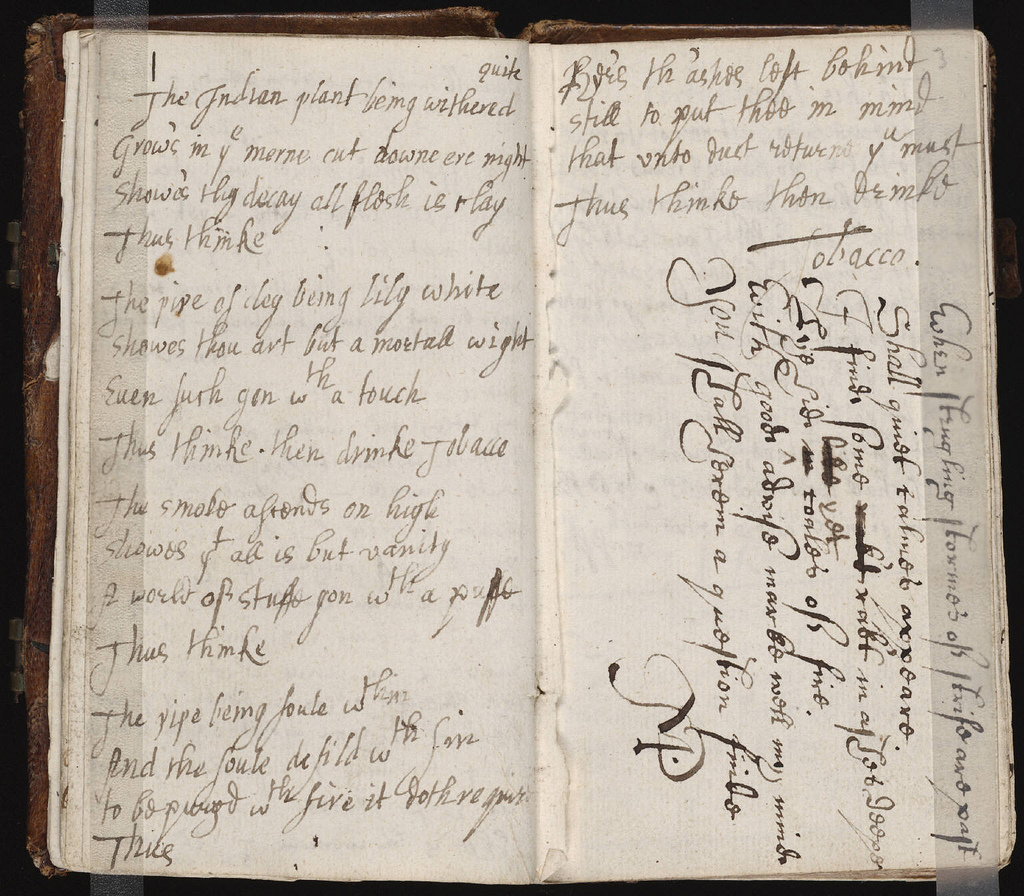
Anonymous mid-17th century manuscript containing poems by various authors, in various hands, including Shakespeare’s second sonnet.
Wikimedia Commons.
Commonplace books (or commonplaces) are a way to compile knowledge, usually by writing information into books. They have been kept from antiquity, and were kept particularly during the Renaissance and in the nineteenth century. Such books are essentially scrapbooks filled with items of every kind: recipes, quotes, letters, poems, tables of weights and measures, proverbs, prayers, legal formulas. Commonplaces are used by readers, writers, students, and scholars as an aid for remembering useful concepts or facts. Each one is unique to its creator’s particular interests but they almost always include passages found in other texts, sometimes accompanied by the compiler’s responses. They became significant in Early Modern Europe.
“Commonplace” is a translation of the Latin term locus communis (from Greek tópos koinós, see literary topos) which means “a general or common topic”, such as a statement of proverbial wisdom. In this original sense, commonplace books were collections of such sayings, such as John Milton’s example. Scholars now understand them to include manuscripts in which an individual collects material which have a common theme, such as ethics, or exploring several themes in one volume. Commonplace books are private collections of information, but they are not diaries or travelogues.
In 1685 the English Enlightenment philosopher John Locke wrote a treatise in French on commonplace books, translated into English in 1706 as A New Method of Making Common-Place-Books, “in which techniques for entering proverbs, quotations, ideas, speeches were formulated. Locke gave specific advice on how to arrange material by subject and category, using such key topics as love, politics, or religion. Commonplace books, it must be stressed, are not journals, which are chronological and introspective.”
By the early eighteenth century they had become an information management device in which a note-taker stored quotations, observations and definitions. They were used in private households to collate ethical or informative texts, sometimes alongside recipes or medical formulae. For women, who were excluded from formal higher education, the commonplace book could be a repository of intellectual references. The gentlewoman Elizabeth Lyttelton kept one from the 1670s to 1713 and a typical example was published by Mrs Anna Jameson in 1855, including headings such as Ethical Fragments; Theological; Literature and Art. Commonplace books were used by scientists and other thinkers in the same way that a database might now be used: Carl Linnaeus, for instance, used commonplacing techniques to invent and arrange the nomenclature of his Systema Naturae (which is the basis for the system used by scientists today). The commonplace book was often a lifelong habit: for example the English-Australian artist Georgina McCrae kept a commonplace book from 1828-1865.
Comments Off on The blog as a modern “commonplace book”
Will Britain Remain?! – WW2 – 041 – June 8 1940
World War Two
Published on 8 Jun 2019As the battle for France is still raging but looks like a ringing victory for Nazi Germany, and the encircled troops in Dunkirk have been evacuated, will Great Britain remain in the war? If so will British forces remain in continental Europe? In fact will Great Britain even be able to remain an independent nation, or also fall to the Nazis?
Join us on Patreon: https://www.patreon.com/TimeGhostHistory
Or join The TimeGhost Army directly at: https://timeghost.tvFollow WW2 day by day on Instagram @World_war_two_realtime https://www.instagram.com/world_war_t…
Join our Discord Server: https://discord.gg/D6D2aYN.
Between 2 Wars: https://www.youtube.com/playlist?list…
Source list: http://bit.ly/WW2sourcesWritten and Hosted by: Indy Neidell
Produced and Directed by: Spartacus Olsson and Astrid Deinhard
Executive Producers: Bodo Rittenauer, Astrid Deinhard, Indy Neidell, Spartacus Olsson
Creative Producer: Joram Appel
Research by: Indy Neidell
Edited by: Iryna Dulka
Map animations: EastoryColorisations by Joram Appel, Spartacus Olsson and Norman Stewart.
Eastory’s channel: https://www.youtube.com/channel/UCEly…
Archive by Screenocean/Reuters https://www.screenocean.com.Sources:
IWM: H 1622, H 1686, HU 1150, COL 294, H 1631, H 1700, HU 41240
The Royal Court Photo ArchivesA TimeGhost chronological documentary produced by OnLion Entertainment GmbH.
From the comments:
World War Two
3 days ago
Insecurity reigns in Europe now that the Germans have managed to take the Netherlands, Belgium and force a large part of the British army out of mainland Europe. Is this it? Not much seems to stand in the way of a total German victory, and that raises questions in France and Britain. Many of you already know this, but it’d be a waste if not everyone does, so I’d like to point you all to our second YouTube Channel called ‘TimeGhost History’. We’re currently making a Between Two Wars series about the interwar years, which gives a lot of context and background to the things we tell on this channel. You can check that out right here: https://www.youtube.com/channel/UCLfMmOriSyPbd5JhHpnj4Ng

Comments Off on Will Britain Remain?! – WW2 – 041 – June 8 1940
People who call for higher taxes are almost always hypocrites
And the numbers prove it:
There are many people who tell us that taxation in the UK is too low. Just think of all the gorgeously bureaucratic things that could be done if only the government had more money! Then there’s the number of people who actually do pay more tax on the basis that they think the government should have more money. The second being a rather smaller number than the first.
Which does bring us to that basic point that economists do insist upon making. Revealed preferences are a much better guide to what people do in fact believe than are expressed. Or, as folk wisdom has it, talk is cheap. That many shout that taxes should be higher – usually to insist that them over there should be taxed more – is interesting and amusing. But the actual number of people who really believe taxes should be higher is the number of people who voluntarily offer up more of their own hard earned to the government.
Which means that, according to the aggregate views and actions of the population of Britain taxes last year were too low by exactly the amount of £11,069. Everyone else is just virtue signalling:
Donations to the Treasury have dwindled in recent years, however, even as the country’s debt remains relatively high. There were just 14 donations and bequests to reduce the national debt in the 2018-19 tax year, totalling £11,069, the UK Debt Management Office said.
That is the revealed preference of us all in aggregate.
It’s not just the UK where the number of people demanding higher taxes don’t actually put their own money where their mouths are — it’s true in Norway, the USA, and even the City of Toronto.
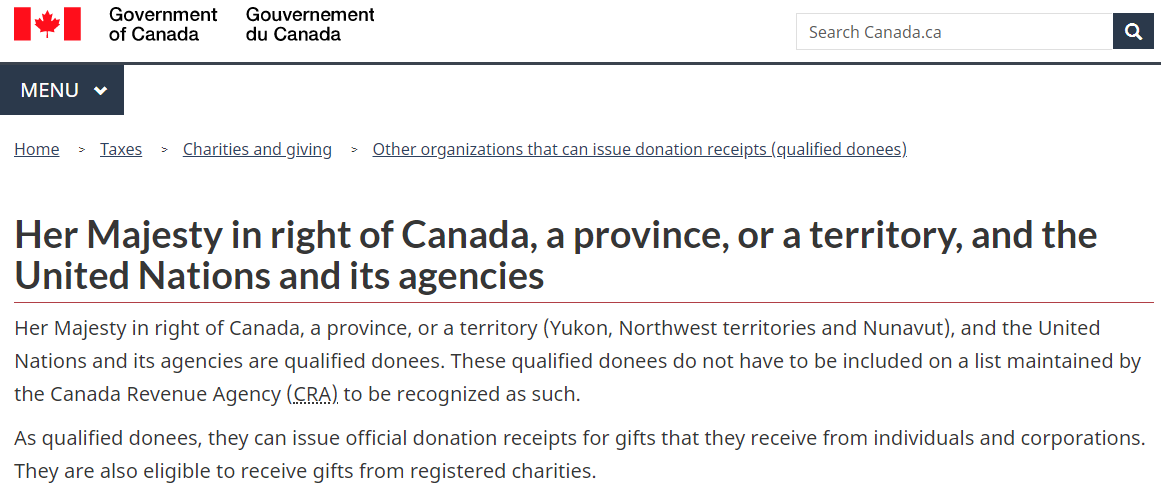
For ultra generous Canadians, Her Majesty will happily accept your donations here. To prove that you’re even more devoted to the challenge, you can even forego the tax credit, too!
Comments Off on People who call for higher taxes are almost always hypocrites
Making the legendary service Khukuri/Kukri of British Gurkhas – KHHI Nepal
KHHI Nepal
Published on 26 Mar 2018See how a scrap of steel is converted into a piece of mastery craft by our men @ duty. All bear hands, hard labor, years of experience and great skill. Pls enjoy it!!
Is the original 2016-17 British Gurkhas Issue issued to the new recruits as their training, exercise, utility and even as a combat knife.
Product link :
https://www.thekhukurihouse.com/2016-17-british-standard-issue-bsi-2-kukri#makingkhukuri #bsikukri #servicekukri #gurkhaknife

Comments Off on Making the legendary service Khukuri/Kukri of British Gurkhas – KHHI Nepal
QotD: What is economics?
Probably the most common definition is “the science of allocating scarce resources to diverse ends.” [Michael] Watts offers Marshall’s definition: The study of mankind in the ordinary business of life. Neither of those is what I think of as economics. Still less is it the study of the economy, which I suspect would come closest to what most people think the word means.
To me, economics is that approach to understanding behavior that starts from the assumption that individuals have objectives and tend to take the acts that best achieve them. That is what economists mean by “rationality,” and it is the assumption of rationality that is, in my view, the distinguishing characteristic of economics. What I am looking for are works that tell us something interesting about the implications of that assumption.
Someone at some point suggested Orwell’s Down and Out in Paris and London. It is an interesting book, although much too long for my purposes. But what makes it interesting, economically speaking, is not the vivid picture of poverty in the period between the wars but particular details relevant to implications of rational behavior.
I can give, by memory, an example. Orwell observed waiters in a fancy Paris restaurant, out of sight of the diners, spitting in the dishes they were going to serve. In an idealized market context, the waiter would never spit in the dish unless the value to him of doing so was more than the disvalue to the patron he was serving, which is unlikely. But throw in the inability of either the patrons or the waiter’s employers to monitor the waiter’s behavior and any benefit to the waiter of expressing his hostility is a sufficient incentive to make him do it. That suggests the further point that, when you cannot monitor someone’s behavior, his preferences matter — you want the job he is doing for you to be done by someone whose preferences are close enough to yours so that he will want to do what you would want him to do — even if nobody is watching.
Economics is not the study of the economy. A picture of poverty, or unemployment, or wealth, or economic growth, however accurate and vivid, does not in itself teach you any economics. A story such as Poul Anderson’s “Margin of Profit,” which deals with a wholly fictional future, does, because it demonstrates in that world an important implication of rationality that holds in our world as well — that in order to prevent someone from doing something you do not want him to do it is not necessary to make it impossible, merely unprofitable.
David Friedman, “Thoughts on Literature, Economics and Education”, Ideas, 2017-05-01.
Comments Off on QotD: What is economics?
June 8, 2019
The sad economics of recycling
Kim du Toit on the actual economic value of most recycling efforts:

Turns out that aluminum cans are actually worth recycling — in that they are 100% recyclable (requiring nothing other than melting and reformulating) and it costs less — much less — to recycle than to produce new aluminum.
That’s almost true of newsprint too, except that while pulping it is fine — hardly any energy is used for that — the pulp also has to be bleached, and in the pulping / bleaching process, about 15% of the original paper is lost. And as raw paper production (i.e. from logged wood) has become more efficient over the years, and as trees can be grown to replace those felled, the only real benefit from recycling paper is that overall paper production is less vulnerable to hiccups in supply of fresh wood — such as caused by forest fires, disease and drought.
And, he added, when it comes to recycling other stuff, glass is little better than plastic — which surprised me, but it actually costs much more to recycle glass than simply to produce it new. And the old “plastic into park benches” spiel is likewise stupid, because it costs so much to produce such stuff, and creates so much atmospheric pollution thereby, that it’s easier just to toss plastic into a properly-lined landfill and let nature take its course.
Knowing all that, I’ve always been skeptical of the benefits of recycling — it’s always been about feeewings rather than utility
Comments Off on The sad economics of recycling
Blue’s Top Five Domes!
Overly Sarcastic Productions
Published on 7 Jun 2019There are questions any self-respecting YouTube Historian must ask: “How do you balance entertainment and educational value?”, “What’s the split between your area of expertise and more foreign topics?”, and, of course, the most important of all: “Which Dome is the best dome?”
Today, Overly Sarcastic Productions takes a stand on this critical issue — and proceeds to shitpost about it.
PATREON: https://www.Patreon.com/OSP
OUR WEBSITE: https://www.OverlySarcasticProduction…
Find us on Twitter @OSPYouTube!

Comments Off on Blue’s Top Five Domes!
Differentiating between actual security and security theatre
Alistair Dabbs has a security tale of woe:

“Keypad Entry”by Victor Frost is licensed under CC BY-NC-SA 2.0


Access denied. Enter Access Code.That’s a good start. Just a few moments ago I was handed a card on which is written, in blue ballpoint, a newly compiled string of alphanumerics that is supposed to identify me as a unique user. Oh well, maybe I fumbled the buttons. Let’s try again.
Access denied. Enter Access Code.I am standing in the driving rain – this is London in the summer – in front of a large electronically operated vehicle barrier that keeps the riff-raff from getting anywhere near the car park and loading bay behind the building where I am to be working this week.
The vertical stainless steel keypad into which I am pushing my access code is weather-resistant. I am not. You’d think they could have installed the keypad at car-window level but no, it’s at lorry level. And it’s not on the driver’s side anyway, so anyone not rolling up in an unmodified US or continental import vehicle is forced to exit and walk over to the access terminal.
Access denied. Enter Access Code.As far as it is concerned, I am riff-raff. I look behind me to see a steel-grey car has pulled up behind mine. Steel-grey = bland, unimaginative, company car, must be management. As I trudge back towards the street entrance around the corner to ask the security desk for an alternative access code, remembering this time to express an explicit preference for one that actually provides access, I notice the driver in the grey car has started to harrumph.
Security systems like this exist to protect me and my possessions, whether physical or electronic. They keep out the nasties and foil the mischievous. They allow access to the honest and prevent it to the unauthorised.
They are a pain in the arse.
Security is essential, of course, but only for other people. Not me. I’m the nice guy here and this sodding keypad is stopping me from getting in.
But then security authentication is one of those functions whose philosophical concept is hampered by self-contradictory details of its own design. To pick a topical example, it is the right of European Union citizens to enjoy free movement between EU countries without being stopped by border controls. However, how can the border controls know whether you are an EU citizen or not unless they stop you to ask for your EU identification? So it’s only by presenting your passport or ID card that you can exercise your right not to have to present your passport or ID card.
The forces of law and order, from police to night club bouncers, face the same recursive logic. Why do they insist on frisking me? Why can’t they concentrate their stop and search efforts only on those who are carrying concealed weapons?
Comments Off on Differentiating between actual security and security theatre


