
Beyond the Fringe, Forty Years On and TW3 created a tradition of “anti-establishment” comedy which continued long after its roots were forgotten. There may still have been an “establishment” of snobbery, church, monarchy, clubland and old-school-tie links in 1961. There was no such thing ten years later, but it suited the comics and all reformers to pretend that there was and to continue to attack this mythical thing. After all, if there were no snobbery, no crusty old aristocrats and cobwebbed judges, what was the moral justification for all this change, change which benefited the reformers personally by making them rich, famous and influential?
[…]
It also made the middle class, especially the educated and well-off middle class, despise themselves and feel a sort of shame for their supposedly elitist prejudices, based upon injustice and undermined by their failure to defend the nation from its enemies in the era of appeasement. Thanks to this, in another paradox, they have often felt unable to defend things within Britain which they value and which help to keep them in existence, from the grammar schools to good manners. They are ashamed of being higher up the scale, though for most middle-class people this is more a matter of merit than birth, and nothing to be ashamed of at all.
[…]
Since the 1960s, when the Left began its conquest of the cultural battlements, it has always been surprised and annoyed by Tory election victories. The 1970 Tory triumph, though entirely predictable, took the cultural establishment by surprise. The 1979 Tory win, though even more predictable, infuriated them. They had won control of broadcasting, of the schools, of the universities, the church, the artistic, musical and architectural establishment? How was it possible that they could not also be the government? Their rage was enormous, and increased with each successive Labour defeat. It was an injustice. How could the people be so foolish? Now, instead of aristocratic snobs misgoverning the country, the establishment was portrayed as a sort of fascistic semi-dictatorship, hacking at the NHS and the welfare state, waging aggressive wars abroad and enriching itself while the poor lived in misery.
This series of falsehoods has now become a weapon ready and waiting for unscrupulous demagogues to harness, and perhaps use against the new “establishment” which has benefited so much from the satire boom and the alternative comedians. Once you have begun to use dishonest mockery as a weapon, you can never be entirely sure that it will not eventually be turned against you, by others who have learned that abuse and jeering pay much easier and swifter dividends than hard fact or serious argument. It could be that the civilized mirth of the sixties leads in a direct line to the crude hyena cackling of the mob. In any case, there is no sign of the humour industry taking the side of traditional morality, patriotism or civility. The best it can do is dignify itself with noisy and public collections for sentimental and prominent charity. Once you step beyond the fringe, you sooner or later find yourself in very wild country indeed.
Peter Hitchens, The Abolition of Britain, 1988.
December 13, 2021
QotD: Cultural undermining of the British “establishment” was effectively complete by 1970
December 12, 2021
“[T]oday’s antiracism paradoxically requires the crudest of racist categories to justify and explain itself”
Andrew Sullivan on the racism of modern “anti-racist” movements and his hope that Hispanic Americans may provide a way out of the current political deadlock:
Of all the acronyms, euphemisms and sophisms pioneered by critical theory, one of the most revealing is the term “black and brown people”. You hear it all the time now. Whether it’s about “the lack of Black and brown representation in Hollywood”, vaccine hesitancy in “Black and brown neighborhoods in large cities”, the right to vote for “Black and brown people”, or “allyship between Black and brown people”, the “B&b” formula is now yet another ubiquitous media virtue-signal. It’s subtler than some others. It doesn’t shriek woke like “BIPOC”; it isn’t as instantly risible as “2SLGBTQIA+”; it gives “Black” a Capital Letter, and “brown” feels a bit like a lower-case add-on — but at least it uses actual English words, and doesn’t end in an X.
Still: what does it tell you that a staggering and brilliant array of totally different ethnicities, races, religions, histories and cultures can now routinely be reduced to just two drab colors?
I think it speaks to two things. The first is that today’s antiracism paradoxically requires the crudest of racist categories to justify and explain itself. A whole kaleidoscope of immigrant difference — from Kurds and Mexicans and Somalis to Dominicans, Chileans, Nigerians, and Pakistanis — has now been turned into one monochrome racial “brown” — just to fit into an oppressor/oppressed, white/black narrative.
Equally, a diverse African diaspora — ranging from Nigerian immigrants to descendants of Southern slaves to biracial men and women with mainly European ancestry who go back to this country’s miscegenated origins — is now just “Black”. And this new racial unit has one politics: left-Democrat. Individuals disappear; diversity of opinion within groups evaporate; all that matters is a single skin color and oppression.
The second aspect of critical theory that “B&b” helps reveal is that the crude binary of “black” and “white” simply has less salience with every passing day, as more and more races, ethnicities and cultures complicate and enrich our society, and render it structurally, demographically and culturally unrecognizable from even the recent past. To give one example: 60 years ago, four percent of Americans approved of inter-racial marriage; today, it’s 94 percent. Or check out the rapid decline in the “white Christian” share of the population — from 80 percent in 1996 1976 to 44 percent today. Look around you and you’ll see how the crude rubric of “white supremacy” is, in fact, wildly out of date.
This is why so many of the most passionately woke are so obsessed with history in America, and the further back the better, as the 1619 Project shows. The past is a world they are much more comfortable in than the present, a place where the racial divide was infinitely simpler, and racial inequality both brutal and actively enforced by the government. Before the Civil Rights Act in 1964, before mass non-white immigration began in 1965, before mass non-white illegal immigration since the 1990s, the “white supremacy” rubric had some lingering traction.
But in the 21st Century, it’s been hopelessly compounded by layer upon layer of mass immigration from every conceivable corner of the planet. The Latino population in the US is now larger than the African-American one; and Asians, of many different varieties, are now immigrating in higher numbers than Latinos. Before too long, the black/white dynamic may disappear into the multi-colored, multi-hued background entirely.
One Year Since Pearl Harbor – WW2 – 172 – December 11, 1942
World War Two
Published 11 Dec 2021The Japanese try and fail to supply their starving soldiers. The Allies fail to break through in Tunisia and New Guinea. The fighting in the USSR is bloody, but the Axis prepare for a new offensive there.
(more…)
“Say what you will about Rand, nobody ever described her as a light read”
In Quillette, David Cohen notes that we’re coming up on the 40th anniversary of Ayn Rand’s death, which will almost certainly help expose her work to a renewed audience of disaffected teens and freshman university students:
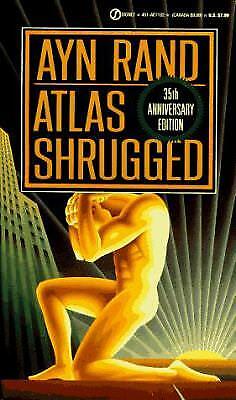
More than a half-century ago the great — and, alas, irreplaceable — American scholar Allan Bloom became aware of the spell she could cast. He first started noticing it around the time he became aware of a decline in serious reading among his students. As the University of Chicago professor later recounted in The Closing of the American Mind, it became particularly evident whenever he asked his large introductory classes which authors and books really mattered to them. Most of the undergrads fell silent, he wrote, or else were puzzled by the question. There was generally no text to which they looked “for counsel, inspiration or joy,” he remarked. But one exception kept popping up.
There always seemed to be, he marvelled, a student who mentioned Atlas Shrugged, a work “although hardly literature, which, with its sub-Nietzschean assertiveness, excites somewhat eccentric youngsters to a new way of life.” And rather more of them than did Allan Bloom or, indeed, pretty much anyone else in the United States who has ever tried to hawk philosophy to the masses. Rand’s book sales overall stand at around 30 million, with hundreds of thousands more each year, and probably rather more this coming year.
Not only is she sought-after for her two best-known novels — the other being The Fountainhead — but also for her nonfiction. Her slim volumes of collected essays and old newspaper columns and other outtakes comprise an apparently fathomless vault from which the Ayn Rand Institute routinely cobbles together regular offerings for the lucky kids. One survey by the Library of Congress listed Atlas Shrugged as second only to the Bible in terms of campus popularity; an incredible accomplishment. All the more so in an era of Twitter, Facebook, and all the other intimations of the shortened attention-span. Say what you will about Rand, nobody ever described her as a light read.
A random internet search throws up an impressive litany of fans from the entertainment world, including Oliver Stone, Rob Lowe, Jim Carrey, and Sandra Bullock. Even the late professional wrestler James Hellwig, better known as The Ultimate Warrior, bellowed her praises, which might add some context to those rollickingly individualistic pre-fight interviews he used to do back in the WWE glory days. Oh, and let’s not forget Brad Pitt and Vince Vaughn. Which is particularly interesting, I think, since Jennifer Aniston (also a Rand fan) replaced the first with the second after Pitt ran off with Angelina Jolie, who’s also on record enthusing about Rand’s “very interesting” take on the good life.
In politics and economics, Rand had her youthful followers, too, and here again one sees the youth-appeal angle. Probably her best-known disciple is the former Federal Reserve chairman Alan Greenspan, who is rather ancient now. But back when dinosaurs still roamed the Earth, Greenspan declared that the high empress of the libertarian Right “taught me that capitalism is not only practical and efficient but also moral.” Like the young and philosophically restless undergrads in Allan Bloom’s classes, the British health secretary Sajid Javid also discovered her early on, and apparently still reads the courtroom scene in The Fountainhead every year. Or rather, as the cool libertarian kids in the black jeans might prefer to put it, it still reads him.
How They Did It – Pet Dogs in Ancient Rome
Invicta
Published 12 Sep 2018Our history with man’s best friend stretches far into the past. Today we take a look at the lives of dogs in ancient Rome; how they named, trained, and raised them.
Bibliography:
Xenophon and Arrian: On Hunting (1999) translated by A. A. Phillips and M. M. Willcock
Metamorphoses Book III by Ovid
Names of Dogs in Ancient Greece by Adrienne Mayor
Greek and Roman Household Pets by Francis D. LazenbyArtwork:
Beverly Johnson (https://www.behance.net/bevsi)Music:
“Strings and Drums Comedy” by 8th Mode Music
“Emotional” by 8th Mode Music#RomanHistory
#HowTheyDidIt
QotD: Britain’s alienated intelligentsia of the 1930s
It is clear that the special position of the English intellectuals during the past ten years, as purely negative creatures, mere anti-Blimps, was a by-product of ruling-class stupidity. Society could not use them, and they had not got it in them to see that devotion to one’s country implies “for better, for worse”. Both Blimps and highbrows took for granted, as though it were a law of nature, the divorce between patriotism and intelligence. If you were a patriot you read Blackwood’s Magazine and publicly thanked God that you were “not brainy”. If you were an intellectual you sniggered at the Union Jack and regarded physical courage as barbarous. It is obvious that this preposterous convention cannot continue. The Bloomsbury highbrow, with his mechanical snigger, is as out-of-date as the cavalry colonel. A modern nation cannot afford either of them. Patriotism and intelligence will have to come together again. It is the fact that we are fighting a war, and a very peculiar kind of war, that may make this possible.
George Orwell, “The Lion And The Unicorn: Socialism and the English Genius”, 1941-02-19.
December 11, 2021
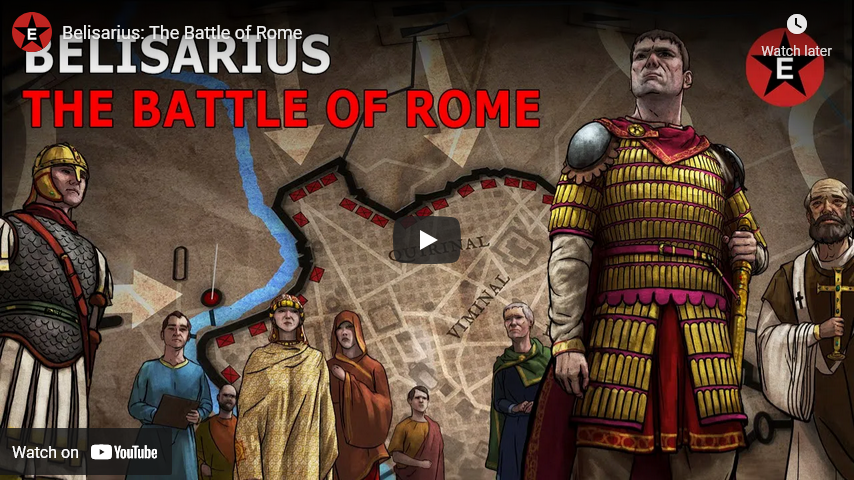
Belisarius: The Battle of Rome
Epic History TV
Published 10 Dec 2021Thank you to our sponsor Private Internet Access.
Get the Epic History TV special offer using this link: https://www.privateinternetaccess.com…Big thanks to Legendarian for Total War: Attila gameplay footage, check out his YouTube channel here: https://www.youtube.com/channel/UCOI2…
Thanks also to our series consultant Professor David Parnell of Indiana University Northwest, who you can follow on Twitter here: https://twitter.com/byzantineprof
Total War: Attila gameplay footage used with kind permission of Creative Assembly — buy the game here: https://geni.us/qDreR
Support Epic History TV on Patreon from $1 per video, and get perks including ad-free early access & votes on future topics https://www.patreon.com/EpicHistoryTV
🎨 Original artwork by Miłek Jakubiec https://www.artstation.com/milek
📚Recommended reading (as an Amazon Associate I earn from qualifying purchases):
📖 Procopius, History of the Wars https://geni.us/L3Pgc
📖 The Wars of Justinian by Michael Whitby https://geni.us/Xxrd3
📖 Rome Resurgent by Peter Heather https://geni.us/ZFoU1
📖 The Armies of Ancient Persia: the Sassanians by Kaveh Farrokh https://geni.us/jMQo3z
📖 Late Roman Cavalryman AD 236–565 (Osprey) by Simon MacDowall https://geni.us/XMGl👕 Buy EHTV t-shirts, hoodies, mugs and stickers here! teespring.com/en-GB/stores/epic-histo…
🎶Music from Filmstro: https://filmstro.com/?ref=7765
Get 20% off an annual license with this exclusive code:EPICHISTORYTV_ANN#EpicHistoryTV #RomanEmpire #EasternRomanEmpire #Justinian #Belisarius #ByzantineEmpire #Romans
Another front opens in the “War On Christmas”
In The Line, Jen Gerson looks at the latest offence against mainstream views of the Christmas season:
it was impossible not to get sucked into the blossoming horror of Santa Inc.
The eight-part television show made for HBO Max by comedians Sarah Silverman and Seth Rogen may soon attain the record of one of the most poorly rated television series of all time. And watching but a brief trailer, it’s not hard to see why.
I mean … Jesus. If you were trying to craft a perfect example of hate-bait for the reactionary right in a lab, this is pretty much what it would look like. It’s got woke politics, feminism, hatred of white guys and a pot shot in the War on Christmas neatly tied up in a claymation bow. The fact that the show is fronted by comedians who are Jewish has dug this mess into the very ugliest, muddiest trench of the culture war.
[…]
If you want to create an outrageous, bawdy Christmas movie that features a miserable and bored Mrs. Claus giving head to Santa, or a gag with a miner’s hat filled with dildos, there’s nothing wrong with that. But there’s a very specific audience for “sausage party” humour — lacrosse-playing young white men, and older white men who wish they were still young white men who could play lacrosse. In other words, people who look like Seth Rogen.
And do you know what that crowd doesn’t generally enjoy?
Thinly veiled manifestos on how awful white men are; the terribleness of corporate America, and a show featuring a lot of downtrodden women complaining about health insurance and lack of maternity leave.
On the other hand, if Santa Inc. was trying to appeal to the #resistence pussy hat and rainbow tattoo crowd, certainly a woke-appropriate message is here for them. But, does this crowd need to be so lectured? Meanwhile, the juvenile humour is off-putting. Is the feminist set going to keel over laughing because one of the female reindeer characters brags about having a threesome with Donner?
Lol. Thud.
There’s no sophistication here. No clever set up or punch line. It’s just a story about an angry female elf who wants to be Santa Claus that pretends to be funny by leaning on sex jokes.
Raunchiness is fine for a cheap laugh. It relies on the taboo of shock and sex to generate an emotional reaction. But, man, one of the most popular music videos of the last few years was Wet Ass Pussy. Who even notices swearing anymore? Who is shocked by a scene in which the main character’s mother bangs the Easter bunny?
This kind of lazy humour is old hat. It’s boring.
So, no, Santa Inc. is not good.

The Stahlhelm
World War Two
Published 10 Dec 2021The Stahlhelm. Perhaps the most iconic symbol of German military power, ever present in images of the war. Hitler believes it strikes fear in his enemies and makes his own troops fearless. But where does it come from and why is it so enduring?
(more…)
Pretendians in Canadian academia may resemble “those legendary Klan gatherings where everyone is an uncover FBI agent”
After recounting the rise and fall of Carrie Bourassa, Ed West looks at other examples of white people deliberately passing themselves off as members of First Nations groups and other disadvantaged groups:

Carrie Bourassa with media.
Lead photo in Geoff Leo’s article for the CBC – https://www.cbc.ca/newsinteractives/features/carrie-bourassa-indigenous
… then some serious allegations came to light casting doubt on Morning Star Bear’s fitness for office: Bourassa, it turned out, was white. Her forebears were all Russian, Czech and Polish farmers, who while the Metis struggled with the arrival of the Europeans were back in Tsarist Russia, living lives of unbridled white privilege as agricultural workers.
The response was merciless anger. Bourassa’s colleague Winona Wheeler, an associate professor of Indigenous Studies at the University of Saskatchewan, told the Canadian Broadcasting Corporation that what she did was “abuse” and “theft”, “colonialism in its worst form and it’s a gross form of white privilege.”
Another called her “the modern-day Grey Owl” in reference to the famous early 20th century English conservationist who had managed to convince the world he was Native American, rather than being Archibald from Hastings.
Bourassa’s outing was followed last weekend by that of Jessica Bardill, an “indigenous” language speaker at Montreal University who was reportedly suspended because of doubts about her race. And who could have suspected she was white?
Bourassa and Bardill are hardly exceptional: the past two years have seen at least half a dozen similar racial unmaskings, almost all female academics. Is this the result of the strange racial spoils system created by affirmative action, or does it reflect the cultural emptiness felt by some North Americans, the unbearableness whiteness of being?
Among them is Suzy Kies, an indigenous “expert” in – yet again – Canada, on whose advice a Catholic school district burned 30 library books about indigenous people, removing another 4,700. Kies had become quite a prominent figure on all matters indigenous; again, how could they have possibly noticed?
One suspects that a conference of Canada’s indigenous educators would turn out like those legendary Klan gatherings where everyone is an uncover FBI agent, or that meeting of Holocaust survivor memoir writers where both were fake.
Many of these “indigenous” experts had risen far by telling white liberals what they wanted to hear, confirming their worldview. The same was true of @Sciencing_Bi, who enthralled Twitter last spring with her powerful denunciations of sexual misconduct in higher education. The mysterious young woman had grown up in Alabama, a member of the Hopi tribe, but had “fled the south because of their oppression of queer folk”. Sadly, Sciencing Bi contracted Covid in April 2020, having been forced by her cruel university to do in-person teaching just at the point when that issue was becoming a culture war hot topic, and died, quite unusually for someone so young.
Suppressed OSS M3 Grease Gun and Bushmaster Booby Trap Trigger
Forgotten Weapons
Published 9 May 2017Today, we have a chance to take a look at a suppressed M3 “Grease Gun”, as purchased and issued by the Office of Strategic Services (the OSS; predecessor to the CIA). Thanks to its readily removable barrel, the M3 (and M3A1) submachine gun was an easy gun to adapt to use with a suppressor (or as it was called at the time, a silencer). During World War 2, such a unit was developed for clandestine use by OSS and British SOE agents in occupied Europe, and they would see use for many decades in all manner of conflicts.
The suppressor itself is quite different than modern designs, being a two-part device using tight wire mesh instead of baffles. The barrel itself is heavily perforated, and extends only through the large diameter section of the suppressor. Around it is wrapped a large roll of wire mesh, which acts as an expansion chamber to slow down the exit of gas from the muzzle. The smaller front section of the unit is filled with small discs of the same wire mesh, similar to wipes but made of mesh.
Allegedly, the suppressor was effective enough to reduce the noise of the gunshots below the level of the action cycling, which is all that one can reasonable want from a suppressor. This particular example has an excellent provenance, having been provided by OSS to a European resistance fighter for a specific mission right at the end of WW2.
In addition, we also have a piece of the OSS sneaky tricks catalog to see. Specifically, a “Bushmaster” remote trigger mechanism to allow the M3 (silenced or otherwise) to be made into an autonomous booby trap in conjunction with a time delay, tripwire, or other triggering device.
Many thanks to the anonymous collector who let me take a look at this piece and bring you a video on it!
Cool Forgotten Weapons merchandise! http://shop.bbtv.com/collections/forg…
http://www.patreon.com/ForgottenWeapons
If you enjoy Forgotten Weapons, check out its sister channel, InRangeTV! http://www.youtube.com/InRangeTVShow

QotD: In praise of getting stinkin’ drunk
Slingerland admits the problem of problem drinking. Yet he convincingly argues that the downside of booze has been addressed at length over the last 30 or 40 years. It’s time, he observes, for some pushback against the “puritanical discomfort with pleasure lurking in the background of scholarly discourse.” Slingerland decries “our current age of neo-prohibition and general queasiness about risk,” and exports “the simple joy of feeling good.”
Slingerland, a philosopher at the University of British Columbia in Canada, then goes even further, positing that by causing humans “to become, at least temporarily, more creative, cultural, and communal … intoxicants provided the spark that allowed us to form truly large-scale groups.”
That is to say, without Budweiser and red wine, civilization might not have been possible. For our ancestors, intoxication was “a robust and elegant response to the challenges of getting a selfish, suspicious, narrowly goal-oriented primate to loosen up and connect with strangers.” Brewing vats and drinking vessels were found at a 12,000-year-old site in Turkey. When humans began to sow crops and domesticate livestock, it allowed us to get over distrust and work in larger numbers, giving rise to towns and then cities. Slingerland: “It is no accident that, in the brutal competition of cultural groups from which civilizations emerged, it is the drinkers, smokers and trippers who emerged triumphant.”
Mark Judge, “Drunk: The Vital Pleasure of Getting Hammered”, SpliceToday, 2021-09-01.
December 10, 2021
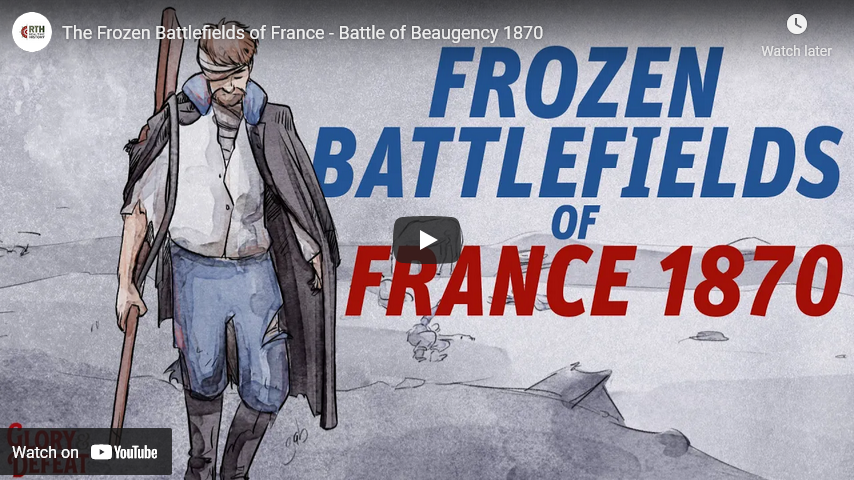
The Frozen Battlefields of France – Battle of Beaugency 1870
Real Time History
Published 9 Nov 2021Support us on Patreon: https://patreon.com/realtimehistory
On the frozen battlefields of France, the exhausted German and French armies are still fighting. The Battle of Beaugency sees a desperate struggle in which soldiers on both sides suffer from the harsh winter conditions. Meanwhile, the Siege of Paris continues to starve the population of the French capital.
» THANK YOU TO OUR CO-PRODUCERS
John Ozment
James Darcangelo
Jacob Carter Landt
Thomas Brendan
James Giliberto
Kurt Gillies
Albert B. Knapp MD
Tobias Wildenblanck
Richard L Benkin
Scott Deederly
John Belland
Adam Smith
Taylor Allen
Jim F Barlow
Rustem Sharipov» OUR PODCAST
https://realtimehistory.net/podcast – interviews with historians and background info for the show.» LITERATURE
Arand, Tobias: 1870/71. Der Deutsch-Französische Krieg erzählt in Einzelschicksalen. Hamburg 2018Buk-Swienty, Tom: Feuer und Blut. Hauptmann Dinesen. Hamburg 2014
Gouttman, Alain: La grande défaite. 1870-1871. Paris 2015
» SOURCES
Chanzy, Général: La deuxième Armée de la Loire. Paris 1872Goncourt, Edmond de: Journal des Goncourts. II.1. 1870-1871. Paris 1890
Horne, Alistair: Es zogen die Preußen wohl über den Rhein. Bern, München, Wien 1967
Kühnhauser, Florian: Kriegs-Erinnerungen eines Soldaten des königlich bayerischen Infanterie Leibregiments. Partenkirchen 1898
Sarcey, Francisque: Le siege de Paris: impressions et souvenirs. Paris 1871
» OUR STORE
Website: https://realtimehistory.net»CREDITS
Presented by: Jesse Alexander
Written by: Cathérine Pfauth, Prof. Dr. Tobias Arand, Jesse Alexander
Director: Toni Steller & Florian Wittig
Director of Photography: Toni Steller
Sound: Above Zero
Editing: Toni Steller
Motion Design: Philipp Appelt
Mixing, Mastering & Sound Design: http://above-zero.com
Maps: Battlefield Design
Research by: Cathérine Pfauth, Prof. Dr. Tobias Arand
Fact checking: Cathérine Pfauth, Prof. Dr. Tobias ArandChannel Design: Battlefield Design
Contains licensed material by getty images
All rights reserved – Real Time History GmbH 2021
Shovel-ready infrastructure we’re already busy working on … the superhighway to serfdom
Jacob T. Levy considers the warning about authoritarian solutions to societal problems given by Friedrich A. Hayek in The Road to Serfdom and shows just how little we heeded his concerns:
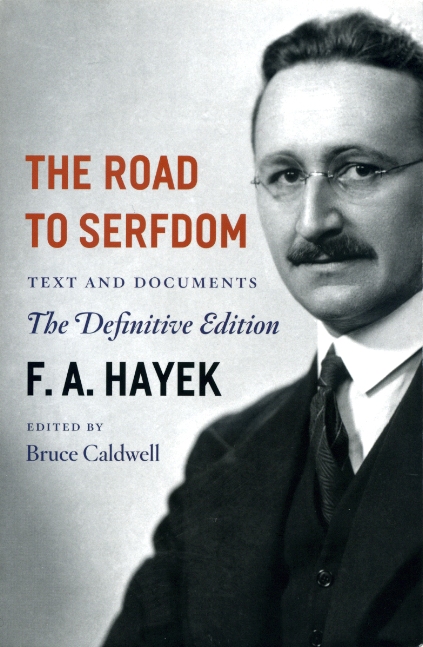
It is well-known that the classical liberal economist F.A. Hayek dedicated The Road to Serfdom to “socialists of all parties”, and wrote the book “as a warning to the socialist intelligentsia of England.” I suspect we now understate the importance of these facts. After decades of the Cold War and self-conscious conservative-libertarian “fusionism” in both the U.S. and Britain, what sticks in our memory of The Road to Serfdom is its defense of liberal open markets against economic planning and regulation of the sort advocated on the left. That is of course how it was wielded in the post-2008 surge in interest in it, in the wake of the financial crisis and the subsequent bailouts and stimulus packages: as a weapon of the right.
But if Hayek’s argument characterized socialist planning and regulation as a slippery slope, the slope did not only slope down toward the left. Fascist Italy and Germany figure even more prominently than the USSR in the book’s image of the despotism being risked:
It is necessary now to state the unpalatable truth that it is Germany whose fate we are now in some danger of repeating … students of the current of ideas can hardly fail to see that there is more than a superficial similarity between the trend of thought in Germany during and after [World War I] and the present current of ideas in the democracies … And at least nine out of every ten of the lessons which our most vociferous reformers are so anxious we should learn from this war are precisely lessons which the Germans did learn from the last war and which have done so much to produce the Nazi system … [A]t an interval of fifteen to twenty-five years we seem to follow the example of Germany.
In the face of resurgent right-wing populist and nationalist authoritarianism in the world, it is worth reconsidering the legacy of The Road to Serfdom and of Hayek’s work to bolster liberalism.
Hayek warned of centralizing and authoritarian urges of both the left and the right, but it’s in the “permanent” government — the civil servants who remain in office regardless of electoral outcomes — that much of the danger to individual liberty lies:
Throughout Hayek is concerned for constitutional parliamentary government and the rule of law, and their protection against arbitrary government. The idea that freedom requires clear and general rules of conduct anonymously applicable to all — that government run by ad hoc edict is oppressive — was to be the major theme of his subsequent works in political theory, The Constitution of Liberty and Law, Legislation, and Liberty; but it is central to the argument of Road to Serfdom as well.
In the preface to the 1956 edition, Hayek described the postwar Labour government as having created a bureaucratic “despotism exercised by a thoroughly conscientious and honest bureaucracy for what they sincerely believe is the good of the country. But it is nevertheless an arbitrary government, in practice free from parliamentary control; and its machinery would be as effective for any other than the beneficent purposes for which it is now used.”
Here one hears a predecessor of the widespread classical liberal “we told you so” after the election, blaming the Obama administration for increasing the presidential power that the Trump administration would now inherit. But it is worth emphasizing that Hayek still called the purposes pursued by the left-wing bureaucratic state “beneficent”.
The tone Hayek adopts here is not the schadenfreude of contemporary whataboutism. Now that “hot socialism is probably a thing of the past” (hardly what one would expect Hayek to say were he the determinist caricature sometimes embraced by fans as well as critics), the welfare state calls for “careful sorting out” in the pursuit of its “practical and laudable” aims. He calls for the welfare state and social insurance to be implemented through general rules and fiscal policy rather than administrative coercion, nationalization, and direct economic planning, because the latter instruments “are not compatible with the preservation of a free society.”
H/T to Tamara Keel for the link.


